CLUSTER BASED ENERGY EFFICIENT ROUTING
WIRELESS SENSOR NETWORKS
Mohit Kumar
1, Dr. Vinay Kumar Singh
21
Lecturer,
2Assistant Professor, HOD (CS & IT Deptt., Anand Engineering College (India)
ABSTRACT
The popularity of Wireless Sensor Networks (WSN) have increased tremendously in recent time as WSN has
the potentiality to connect the physical world with the virtual world by forming a sensor network. Sensor
networks are composed of thousands of resource constrained sensor nodes and resourced base stations which
communicate with each other via wireless communication.
Here, sensor nodes are usually battery-operated devices, and hence energy saving of sensor nodes is a major
design issue. Moreover, the energy required to transmit a message is about twice as great as the energy needed
to receive the same message. Therefore, the route of each message destined to the base station is really crucial in
terms of network lifetime.
In cluster-based routing, special nodes called cluster heads form a wireless backbone to the sink. Each cluster
heads collects data from the sensors belonging to its cluster and forwards it to the sink. Energy saving in these
approaches can be obtained by cluster formation, cluster-head election, data aggregation at the cluster-head
nodes to reduce data redundancy and thus save energy.
I. INTRODUCTION
A sensor network consists of multiple detection stations called sensor nodes, each of which
is small, lightweight and portable. Every sensor node is equipped with a transducer,
microcomputer, transceiver and power source. The transducer generates electrical signals based on
sensed physical effects and phenomena. The microcomputer processes and stores the sensor output. The
transceiver receives commands from a central computer and transmits data to that computer. The power
for each sensor node is derived from a battery.
Wireless sensor networks satisfy these requirements. Desirable functions for sensor nodes include: ease of
installation, self-identification, self-diagnosis, reliability, time awareness for coordination with other nodes,
some software functions and DSP, and standard control protocols and network interface. The development of
low-cost, low-power, a multifunctional sensor has received increasing attention from various industries. Sensor
nodes or motes in WSNs are small sized and are capable of sensing, gathering and processing data while
communicating with other connected nodes in the network, via radio frequency (RF) channel.
WSN term can be broadly sensed as devices range from laptops, PDAs or mobile phones to very tiny and simple
sensing devices. At present, most available wireless sensor devices are considerably constrained in terms of
computational power, memory, efficiency and communication capabilities due to economic and technology
utilize their computation and communication resources for complex algorithms and as gateways to other
networks.
Much more important to sensor network operation is energy-efficiency, which dictates network lifetime, and the
high level QoS, or fidelity, that is met over the course of the network lifetime. This QoS is application-specific
and can be measured a number of different ways. For example, in a typical surveillance application, it may be
required that one sensor remains active within every sub region of the network, so that any intruder may be
detected with high probability. In this case, QoS may be defined by the percentage of the environment that is
actually covered by active sensors. In a typical tracking application, this QoS may be the expected accuracy of
the target location estimation provided by the network
II. PROBLEM FORMULATION
2.1 Problem of Security
In the wireless sensor network, all nodes placed randomly, the neighbor node set of any node is not predefined
or fixed. At a time of placed A node can be sense its neighbor nodes and evaluates their behaviors of
communication. When the node detects there is a ma-licious node that wants to communicate from the neighbor,
the node try to eliminate the malicious node from the neighbor nodes and no longer communicates with the
malicious node. But the malicious node is always try to move to a new location to continue to implement the
attacks. So, when the node detects if there is malicious node, the node try to notify the entire network of the ID
of the malicious node. Considering a more complicated situation, the malicious node is detected, and after that
the malicious node changes its ID, and after change the id then moves to a new location to attacks. Because the
malicious node has a new ID now,and behave like a new node, and other nodes think that the malicious node is
a normal node of their group. As shown in Figure 1, this arise a serious problems to the monitoring of malicious
nodes.
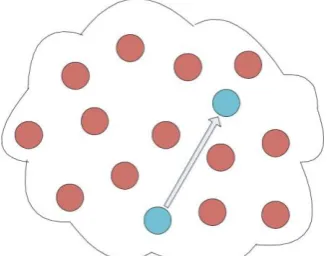
Figure 1. The Malicious Node Moves and Changes its ID.
2.2 Problem of Limited Energy
The Path decision in EBRP is decided According to the energy density of the node.
The algorithm try to achieve efficient energy-balanced effect in immobile wireless sensor network, but there
may be some problems arise in mobile wireless sensor network. In EBRP, the following formula calculating
The j is the neighbor node of the node i, E(j) is the residual energy of the node j, S(i) is the area of
communication coverage of the node i.
The neighbor nodes of the node i change rapidly, Due to node mobility. when every time the neighbor nodes
change, the values in Formula (1) are calculated again for a sum operation, this calculation may be some time
complex. Because whenever the location of neighbor nodes change, the neighbor node has to set either adds a
new node or reduces an old node. So the energy density is also change because, needs to add the value of the
new node or subtract the value of the old node.
III. ENERGY FACTOR
The node needs to consider the energy factor when making the routing decision. The energy factor includes the
residual energy and energy density.
The detail energy model is shown in Figure 5 .
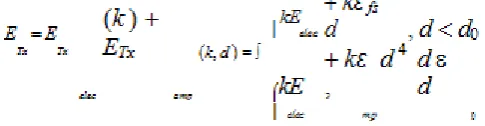
If A k-bit message Forwarding consumes energy as follows:
To receive a k-bit message, the energy consumption is computed by:
Figure 4. Tracing Technique Through Neighbor Nodes
(13)
In Wireless Sensor Networks, energy consumption is happened due to the communication and calculation, but
communication is the main energy consumption. So, Formula (12) and (13) will be used in simulation
experiments to calculate the energy consumption of sensor nodes.
Formula (14) is to calculate the energy density of the node:
(14)
J is the parent nodes and sibling nodes, their depths are less than or equal to the depth of the node i, E(j) is the
residual energy of the node j, S(i) is the area of communication coverage of the node i.
IV. SECURE AND ENERGY-BALANCED ROUTING ALGORITHM
This improved genetic algorithm uses three basic genetic operators. Shown in Fig. 4.1 the description of the
main operational process is:
Step 1: Data Initialization. This step includes: setting the counter of the evolutionary generation as zero(t<-0),
setting the maximal evolutionary generation T, coding, converting the feasible solution space into the search
space, producing M Individuals(namely chromosomes) randomly as the initial population P(0).
Step 2: Local Routing Repair. This step removes the routing loop through the repair function.
Step 3: Evaluating Individual Fitness. This step mainly computes the each individual fitness in the population
P(t) through the fitness function.
Step 4: Selection Operation. This step selects the better individuals according to the corresponding selection
operator.
Step 5: Crossover Operation. This step produces the new individuals to complete the global search according to
the corresponding crossover operator.
Step 6: Mutation Operation. This step produces the new individuals to complete the local search according to
the corresponding mutation operator.
Step 7: Producing the New Population. This step takes charge of integrating all the individuals into the new
population P(t+1).
Step 8: Judging Whether to Terminate the Program. If t <T, the program goes to Step 5 and t<-t+1. If t>T, the
program goes to Step 9.
Step 9: Outputting the Result. In this step, the program outputs the best individual, and then the program is
V. ANALYSIS OF SIMULATION RESULTS
180 (R o u n d s ) 160 140 120 L ife ti m e 100 N e tw o rk 80 60 4015 20 25 30 35 40 45 50
10
Number of Generations
1.2
1
(J
) 0.8
E n e rg y 0.6 Rou n d 0.4 T h e 0.2 0 -0.20
2 4 6 8 10 12 14 16 18 20
Node Serial Number
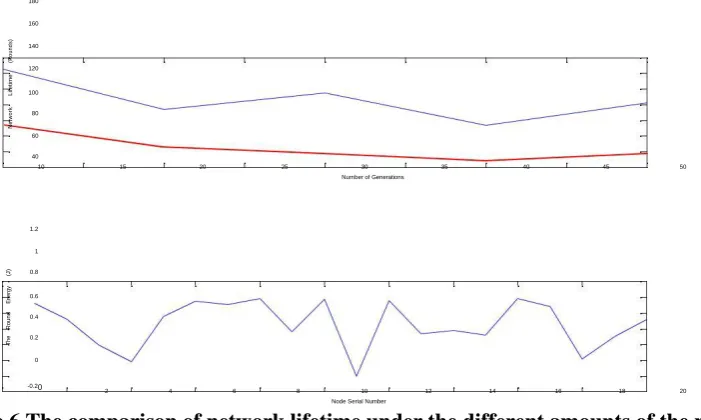
Figure 6 The comparison of network lifetime under the different amounts of the nodes
Figure 6.shows two diagrams. The first one show respectively the results of network lifetime among the above
two situations for 100mx 100m area, for the different amounts of the nodes.
The second graph shows the residual energy of twenty nodes for 100m X 100m network area when the first dead
node appears.
VI. CONCLUSION & FUTURE SCOPE
In this Dissertation work, the energy efficient clustering algorithms related to WSNs are discussed.
The work reported herein investigates two aspects of WSN.
(a) Energy efficient routing algorithm for WSN.
(b) Deployment of WSN in Environmental monitoring of Food products’ Warehouses using energy efficient
routing and Genetic Algorithm.
The basic genetic algorithm for the design of energy-efficient routing in the wireless sensor network has been
improved and simulated. The improved genetic algorithm can overcome the problem of energy imbalance
caused by the connection of multi-node to one node in the wireless sensor network, so as to greatly prolong the
network lifetime.
The future work will focus on how to further improve the convergence of genetic algorithms. It will shorten the
time used to find the best routing and reduce the delay caused by processing.
In this thesis, genetic algorithm has been used. Other algorithms can also be compared to genetic algorithm to
reduce the computational complexity; but the challenge of significantly reducing time and power consumption
REFERENCES
[1] Ahn,C.W. and Ramakrishna, R.S. “A Genetic algorithm for Shortest Path Routing Problem and the Sizing
of Populations”, IEEE Transactions on Evolutionary computation, vol.6(6), (2002).
[2] Glenn Fung, “A Comprehensive Overview of Basic Clustering Algorithms”,June 22, 2001
[3] Guo Wenliang, Shi Huichang, Yan Jun, Zhou Yifei, “Application of Genetic Algorithm in
Energy-Efficient Routing”, School of Communication and Information Engineering, Shanghai University,
Shanghai 200072, China
[4] Juhana Yrjölä, “Energy-Efficient Communication Protocol forWireless Microsensor Networks”, T-79.194
Seminar on theoretical computer science 2005 Algorithmics of sensor networks
[5] S.Mohanty and S.K.Patra, “A novel Bio-inspired Clustering algorithm for Wireless Sensor Networks”,
accepted in 3rd International Conference onIntelligent and Advanced Systems, Kuala Lumpur, Malaysia
(ICIAS 2010).
[6] S. Misra, S. C. Misra, I. Woungang, Guide to Wireless Sensor Networks.: Springer, 2009.
[7] Shah.R.C. Rabaey.J.M. “Energy aware routing for low energy ad hoc sensor networks”, Wireless
Communications and Networking Conference, (WCNC2002), IEEE, vol.1, pp.350- 355, (2002).
[8] W. Heinzelman, A. Chandrakasan and H. Balakrishnan, “Energy-efficient communication protocol for
wireless microsensor networks,” in Proc. of the 33rd Annual V Hawaii International Conference on
System Sciences (HICSS), Maui, HI, Jan. 2000, pp. 3005 – 3014.
[9] Zhen Jiang, Junchao Ma, Wei Lou, Jie Wu, "A Straightforward Path Routing in Wireless Ad Hoc Sensor
Networks," 29th IEEE International Conference on Distributed Computing Systems Workshops