417 | P a g e
B. monnieri -
MICROPROPAGATION USING
VERMICOMPOST, ELUANT AND EXTRACTS OF
VERMICOMPOST IN PLANT TISSUE CULTURE
MEDIA
Suman Kashyap
1, Neera Kapoor
2, Radha D Kale
31
Department of Biotechnology and Centre for Scientific Research and Advanced Learning,
Mount Carmel College, Bengaluru, (India)
2
School of Sciences, Indira Gandhi National Open University (IGNOU),
Maidan Garhi, New Delhi, (India)
3
Centre for Scientific Research and Advanced Learning, Mount Carmel College, Bengaluru, (India)
ABSTRACT
Vermicompost produced by the activity of earthworms is rich in macro and micronutrients, vitamins and growth hormones. Vermicompost was evaluated with different methods of extractions like vermicompost only, eluant and vermicompost extract to use in the tissue culture media for micropropagation of B. monnieri. ANOVA, Student’s t-test and Tukey’s Honestly Significant Difference (HSD) Test were considered for analyses of
significance of various parameters. The values for number of roots ranged from 4 in only vermicompost medium to 7 in vermicompost extract medium. This had F value of 92.67 and Pr > F of < 0.0001. The mean number of shoots formed in medium having vermicompost was 3.0 whereas in vermicompost extract it was 1.2. The level of significance has given the F value of 91.00 and Pr > F of <0.0001. Vermicompost extract has significantly supported higher nodes and leaves compared to eluant and only vermicompost. The significance level was Pr > F of 0.0011 and 0.0012 respectively. Significant increase in the weight of the plantlets (in milligrams) was observed in vermicompost extract as compared to other two treatments. The value for significance was at < 0.0001. Test for percentage response of survival of plantlets has shown that in all the three treatments there was 100 per cent survival of the explants. The results have shown that the response in vermicompost extract medium was significantly higher.
Keywords: B. monnieri, Eluant, Economical Plant Media, Vermicompost, Vermicompost Extract.
I. INTRODUCTION
Bacopa monnieri (L.), commonly known as ―Brahmi‖ is a glabrous, sprawling succulent herb with ayurvedic medicinal importance in Indian subcontinent. The perennial creeper is a member of the family Scrophulariaceae
and grows in damp and marshy places and on the banks of slow flowing rivers and lakes, ascending up to an
altitude of 1,320 meters1.The herb is known to improve memory cells and thus known as ―memory booster‖ or
―thinking person‘s herb‖. The rejuvenating herb with reputed drug value is used in folk and traditional system of
418 | P a g e
two steroidal saponins, bacosides A and B (―memory chemicals‖), that help repair damaged neurons by
enhancing proteins involved in the regeneration of neural-cell synapses3. Two new dammarane-type jujubogenin
bisdesmosides, bacosaponins E and F of biological interest have also been isolated from this herb4. In India,
brahmi is used to prepare important ayurvedic preparations like ―Brahmighritam‖ and ―Brahmirasayanam‖5. On
the basis of medicinal importance and potential for future research and development, B. monnieri is placed second in a priority species list of the most important medicinal plants6. This is one among 32 medicinal plants
identified for cultivation and conservation by the NMPB7, In recent years, the release of brahmi-based Memory
Plus product-containing bacoside extracts increased the demand in the Indian market, which led to
over-collection of the plant from the natural habitat. Multiple numbers of brahmi-based commercial ayurvedic
preparations are already available in the market due to its therapeutic values8. In vitro regeneration and micropropagation of brahmi was reported by many researchers9-15 and synthetic seed mediated plant
conversion16.
Vermicompost produced by the activity of earthworms is rich in macro and micronutrients, vitamins, growth
hormones, enzymes such as proteases, amylases, lipase, cellulase and chitinase and immobilized microflora. The
enzymes continue to disintegrate organic matter even after they have been ejected by the earthworms17-21.
Vermiwash, a liquid nutrient obtained during vermicomposting has significant influence on plant growth and
yield attributes22-24. Due to this, these vermiproducts have become key components of crop nourishment in
organic and sustainable farming systems. Of the many species of earthworms evaluated for vermicomposting,
Eudrilus eugeniae(Kinberg.), Eisenia fetida (Savigny) and Perionyx excavatus (Perrier) have been considered as the key species for organic matter recycling, throughout the world 25-30.
The present investigation was planned to report a simple and rapid but novel method for in vitro multiplication of B. monnieri by using highly economical nutrient tissue culture media. All available medical literature31 confirms that there has been no toxicity report associated with the use of Bacopa as a dietary supplement in children or adults32. Brahmi is especially suitable for students as it enhances the mind‘s ability to learn and to
focus33.
II. MATERIALS AND METHODS
2.1 Collection of Medicinal Plant Sample (Explants)
Explants from certified disease-free medicinal plants were obtained from Botanical Garden of University of
Agricultural Sciences (UAS), Gandhi Krishi Vigyan Kendra, Bangalore. Plants were planted in potted soil at the
institution.
2.2 Preparation of the MS Medium
Murashige and Skoog‘s 34
medium was used for the cultivation of B. monnieri, under in vitro conditions as reference standard medium.
The MS medium was purchased from the Sigma and final volume was made up with distilled water. The pH of
the medium was adjusted to 6.0 using 1 N NaOH / HCl. About 20 ml of the medium was poured into sterile
419 | P a g e
2.3 Use of aqueous extract of vermicompost as nutrient plant tissue culture medium
Three grams of vermicompost was mixed with 10 ml of distilled water, homogenized and the volume was made
up to 10 ml with distilled water. Tubes were centrifuged at 3000 rpm for 10 minutes. The pH of the supernatant
(extract) was made upto10 ml with distilled water and agar was added.
2.4 Modified method
Fresh vermicompost (30 per cent) was suspended in sterile distilled water and was placed on a stirrer for
continuous agitation for 8 hours. After 24 hours, aqueous extract was collected containing humic and fulvic
acids and was used to prepare the medium. This was supplemented with 9 grams / Litre of agar. Explants of B.
monnieri were innoculated into this sterile medium under aseptic conditions.
2.4 Use of eluant as nutrient in plant tissue culture medium
Vermicompost (30 per cent) was suspended in known volume of distilled water and left undisturbed for 24
hours. Filtrate (eluant) was collected and used for media preparation.
2.5 Use of vermicompost as nutrient plant tissue culture medium
Vermicompost produced by the activity of epigeic earthworms on organic waste mix of plant litter, vegetable
waste and cow dung slurry at the college campus was used for the present study. Vermicompost was sieved for
collecting only the castings. Vermicompost (30 per cent) containing humic and fulvic acids were used to prepare
the medium. Known volume of distilled water was added to vermicompost (30 percent).
All the above media samples were prepared and pH was maintained at 6.0 and was supplemented with 9 grams
/Litre of agar and autoclaved. The medium was poured into washed and dried jars (approximately 50 ml) or test
tubes (approximately 20 ml). They were then autoclaved at 121°C for 20 minutes at 15 psi pressure and
transferred to the media storage room where they were kept under aseptic conditions till their further use.
2.6 Explant sterilization
B. monnieri chosen for in vitro micropropagation were washed under running tap water for 30 minutes in order to wash off the externally adhered soil, dust and other contaminants.
The nodal segments were cut into 1.5 cm to 2.0 cm length with single node and internode intact. These nodal
and internodal cuttings were washed with 5 per cent (v/v) detergent solution (Teepol) for 10 minutes followed
by a rinse with running tap water for several times.
In the laminar chamber the nodal segments of B. monnieri were further treated with 70 per cent alcohol for one minute followed by 0.1 per cent (w/v) Mercuric chloride treatment for 5 minutes. Aseptically explants were
washed with sterile distilled water for three to four times and leaves were removed using sterile blade.
Sterile explants of B. monnieri were inoculated into the MS, vermicompost, vermicompost extract and eluant media jars. The experiments were carried out in culture rooms under 16 hours cycled cool white fluorescent
1ight of average 2500 lux (cool white fluorescent tube light 40 W) and at 25± 2 °C, with a photoperiod of 16
hours day light and 8 hours night breaks.
After 10 – 14 days of culture on rooting media, the rooted plantlets were transplanted to pots or trays for
hardening prior to their final transfer to soil. After this the plants were carefully planted in the polybags
420 | P a g e
2.7 Experimental Data Analysis
ANOVA, Student‘s t-test and Tukey's Studentized Range or Tukey‘s Honestly Significant Difference (HSD)
Test were considered for analyses of significance of various parameters and were carried out to compare the
mean number of nodes, leaves, roots and shoots formed in the vermicompost extract, eluant and vermicompost
media with respect to B. monnieri. The ‗P‘ values less than 0.05 were considered as indicative of significance.
The analysis was performed using SAS statistical software.
III. RESULTS AND DISCUSSION
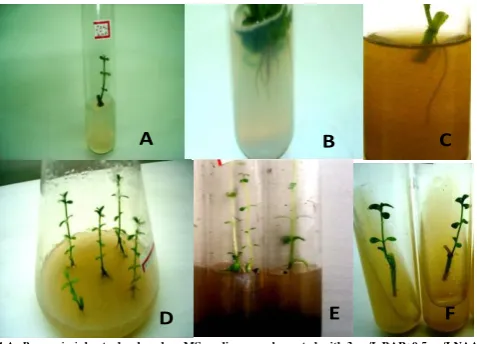
Adventitious shoot buds were induced from nodal and stem explants of B.monnieri on MS basal medium supplemented with 3.0 mg/L BAP alone which showed highest rate of shoot regeneration with this treatment
(Fig 1A, 1B). Low concentration of NAA combined with high concentrations of BAP resulted in shoot
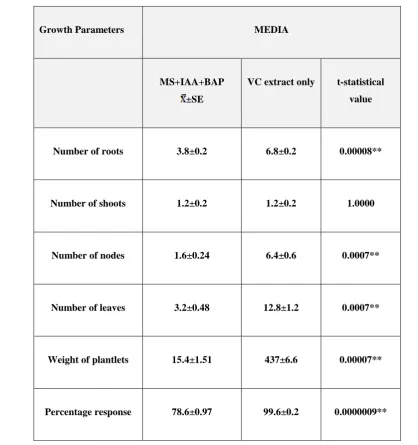
initiation, whereas root induction required low concentration of BAP and high amount of IAA (Table 1). It was
found that the response of the explants to BAP or IAA individually or in combination with MS media was more
or less the same and the final weight of the plantlets ranges 131.4 milligram to 154.0 milligram. The results have
shown that the growth response in vermicompost medium was significantly higher than those from MS medium
(Table 2).
Vermicompost was evaluated with different methods of extractions like use of vermicompost only, eluant and
extract of vermicompost to use in the tissue culture media for micropropagation of B. monnieri (Fig 1D, 1E, 1F).
Vermicompost extract has supported significantly higher growth of roots, shoots, nodes and leaves over the
eluant and vermicompost media. The values for number of roots ranged from 4 in only vermicompost medium
to 7 in vermicompost extract medium. This had F value of 92.67 and Pr > F of < 0.0001 (Table 3). Use of
vermicompost as such in medium was significantly higher in the formation of shoots (Table 4). This indicates
that some biomolecules that are in vermicompost to help in shoot initiation has not been extracted into
vermicompost extract medium. This mean number of shoots formed in medium having vermicompost was 3.0
whereas in vermicompost extract it was 1.2. The level of significance has given the F value of 91.00 and Pr > F
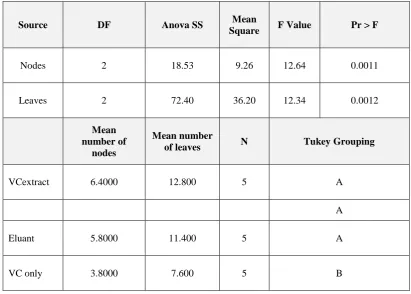
of <0.0001. In case of the development of nodes and leaves from the nodal explants of B.monneiri, vermicompost extract has significantly supported higher growth compared to eluant and only vermicompost
(Table 5). The significance level was Pr > F of 0.0011 and 0.0012 respectively. Plantlets have shown significant
variation among the treatments. Significant increase in the weight of the plantlets (in milligrams) was observed
in vermicompost extract as compared to other two treatments (Table 6). The value for significance was at <
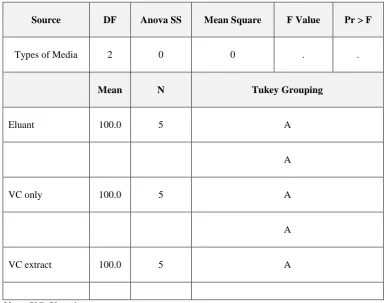
0.0001. Tukey's Studentized Range (HSD) Test for percentage response of survival of plantlets has shown that
in all the three treatments there was 100 per cent survival of the explants (Table 7).
Some studies speculated that the growth responses of plants from vermicompost appeared more like hormone-
induced activity associated with the high levels of nutrients, humic acids and humates in vermicompost35-36.
Some studies have also reported that vermicompost contained growth promoting ‗auxins‘, ‗cytokinins‘ and
flowering hormone gibberellins37-39. Growth regulators were analysed in worm castings40. It contained
gibberellins (GA3) 2.75 microgram/gram, cytokinins (IBA) 1.05 microgram/gram and auxins (IAA) 3.80
microgram/gram. Bano et al. (1987) studied the nutrient status of the vermicompost (Vee Comp E 83 UAS). It
421 | P a g e
Mg (0.38 per cent), Zn (0.16 per cent), Cu (0.02 per cent), Fe (1.38 per cent) and organic carbon (4.0 to 5.04 per
cent). Vermicompost is rich in vitamins, enzymes, antibiotics and growth hormones, which provides balanced
nutrients to the plant making them resistant against pests41.
Growth promoting activity of vermicompost was tested using a plant bioassay method. The plumule length of
maize (Zea mays) seedling was measured 48 hours after soaking in vermicompost extract and in normal water.
The marked difference in plumule length of maize seedlings indicated that plant growth promoting hormones
are present in vermicompost42-43.
The addition of vermicompost, including that produced from agrowastes, medicinal, and aromatic plants44 to
soil can increase the population of beneficial microbes45. The earthworm castings contain higher percentage
(nearly two fold) of both macro and micronutrients than the garden compost.
A two-stage culture procedure has been developed46 for highly efficient shoot regeneration from leaf and
internode explants of B. monnieri. Adventitious shoot buds were obtained on the shoot induction medium containing Murashige and Skoog‘s (MS) basal salt supplemented with 1.5 mg/L thidiazuron and 0.5 mg/L
naphthalene acetic acid (NAA). Further subcultured on multiplication medium containing 0.5 mg/L BAP
produced more shoots (13.5) and longer shoots (7.8 cm) with more nodes (6). Best response of root induction
with more number of roots (16.5) and longer roots (8.7 cm) was observed in half strength MS basal medium
supplemented with 1.0 mg/L IBA (indole-3-butyric acid) and 0.5 mg/L phloroglucinol. In vitro obtained plants were transferred to the field after hardening with a 100 per cent survival rate 46.
Bud initiation was seen immediately after two days of inoculation on vermicompost extract, humin and
vermicompost media by showing a small newly sprouted bud, which proliferates into shoot buds with leaves
during 21-25 days which were placed in the culture room under the standard conditions of temperature (25 ±
2°C). Shoot bud initiation was observed visually on the ninth day of incubation in all replicates in the MS media
having different concentrations of BAP and KIN47. The response of the explant to the new test media is much
easier than that is observed in the regular MS media used in tissue culture studies.
IV. CONCLUSION
The growth responses were most probably due to hormone-like activity of humic acids from the vermicompost.
The study has indicated that by standardizing the technique, it is possible to develop the plants through
micropropagation in an economical way. Cost analysis carried out during this study confirms that vermicompost
is more economical (Rs. 10.227/- per litre) compared to conventional MS medium (Rs. 66.576/- per litre) used
in plant tissue culture48. It can reach farmers as affordable plantlets, to develop in agricultural fields for mass
production.
V. ACKNOWLEDGEMENTS
The authors thank Prof Rajanna (Botanical garden, Gandhi Krishi Vigyan Kendra, Bengalure) for supplying the
plant samples to conduct research work. Authors thank Mount Carmel College, Bengaluru for providing lab and
422 | P a g e
REFERENCES
[1.] National Medicinal Plants Board. Agrotechniques of selected medicinal plants. National Medicinal Plants
Board, Department of Ayush, Ministry of Health and Family Welfare, Govt of India. TERI Press, New
Delhi, 2008, 33–38.
[2.] Singh, R. H. and Singh, L. Studies on the anti anxiety effects of the medhya rasayana drug Bacopa
monniera Wettst. J Res Ayurveda and Siddha. 1980, 1, 33–148.
[3.] Sivaramakrishna, C., Rao, C.V., Trimurtulu, G., Vanisree, M., Subbaraju, G.V. 2005. Triterpenoid
glycosides from Bacopa monnieri. Phytochemistry. 2005, 66, 2719–2728.
[4.] Chakravarty, A. K., Garai, S. and Masuda, K. Bacopasides III - V : three new triterpenoid glycosides from
Bacopa monnieri. Chemistry and Pharamaceutical Bulletin, Tokyo. 2003, 51, 215-217.
[5.] Prasad, R., Bagde, U. S., Puspangadan, P., Varma, A. Bacopa monniera L. pharmacological aspects and
case studies involving Piriformospora indica. Int J Integr Biol. 2008, 3, 100–110.
[6.] Rajani, M. Bacopa monnieri, a nootropic drug. In: Ramawat KG, Merillon JM (eds) Bioactive molecules
and medicinal plants. Springer, Berlin. 2008, 175–195.
[7.] National Medicinal Plants Board. 32 Prioritized Medicinal Plants, National Informatics Centre, Ministry of
Health and Family Welfare, Department of Ayush, Government of India. 2004.
[8.] Pravina, K., Ravindra, K.R., Goudar, K.S., Vinod, D.R., Joshua, A.J., Wasim, P., Venkateswarlu, K.,
Saxena, V.S. and Amit, A. Safety evaluation of BacoMind™ in healthy volunteers: a phase 1 study.
Phytomedicine. 2007, 12, 301–308
[9.] Tiwari, V., Singh, B. D. and Tewari, K. N. Shoot regeneration and somatic embryogenesis from different
explants of Brahmi (Bacopa monniera (L.) Wettst). Plant Cell Rep. 1998, 17, 538–543.
[10.]Tiwari, V., Tewari, K. N. and Singh, B. D. Suitability of liquid cultures or in vitro multiplication of
Bacopa monnira (L.) Wettst. Phytomorphology. 2000, 50, 337–342.
[11.]Tiwari, V., Tewari, K. N. and Singh, B. D. Comparative studies of cytokinins on in vitro propagation of
Bacopa monniera. Plant Cell Tissue Organ Cult. 2001, 66, 9–16.
[12.]Tiwari, V., Tewari, K. N. and Singh, B. D. Shoot bud regeneration from different explants of Bacopa
monniera (L.) Wettst.by trimethoprim and bavistin. Plant Cell Rep. 2006, 25, 629–635.
[13.]Mohapatra, H. P and Rath, S.P. In vitro studies of Bacopa monnieri—an important medicinal plant with
reference to its biochemical variations. Indian J Exp Biol. 2005, 43, 373-376.
[14.]Ramesh, M., Saravanakumar, R. M. and Pandian, K. S. Benzyl amino purine and adenine sulphate induced
multiple shoot and root induction from nodal explants of Brahmi, Bacopa monnieri (Linn.) Penn. Nat Prod
Radiance. 2006, 5, 44–51.
[15.] Praveen, N., Naik, P. M., Manohar, S. H., Nayeem, A. and Murthy, H. N. In vitro regeneration of brahmi
shoots using semisolid and liquid cultures and quantitative analysis of bacoside A. Acta Physiol plant.
2009, 31, 723–728.
[16.]Ramesh, M., Marx, R., Mathan, G. and Pandian, K.S. Effect of bavistin on In vitro plant conversion from
encapsulated uninodal microcuttings of micropropagated Bacopa monnieri (L.)—an ayurvedic herb. J
Environ Biol. 2009, 30: 441–444.
[17.]Kale, R. D., Bano, K. and Krishnamoorthy, R. V. Potential of Perionyx excavatus for utilizing organic
423 | P a g e
[18.]Barik, T., Gulati., Garnayak, J. M. L. and Bastia, D. K. Production of Vermicompost from Agricultural
Wastes- A Review. Agric. 2011, 31, 172 -183.
[19.]Bano, K., Kale, R. D. and Gajanan, G. N. Culturing of earthworms Eudrilus eugeniae for cast production
and assessment of worm cast as biofertilzier. J. Sol. Biol. Ecol. 1987, 7, 98-104.
[20.]Kale, R. D. Earthworm Cindrella of organic farming. Prism Books, Pvt. Ltd. Bangalore, India, 1998.
[21.]Ghosh, M., Chatopadhyay, G. N. and Baral, K. Transformation of phosphorous during vermicomposting.
Bioresource Technol. 1999, 69, 149-154.
[22.]Lozek, O. and Gracova, A. The influence of vermisol on the yield and quality of tomatoes. Acta-Hort. et .
Regirtecture. 1999, 12, 17-19.
[23.]Ranijasmin, Ushakumari, M. and Sailaja, K. Soil application of vermiwash on growth, yield and quality of
tomato. J. agric. Res..mgt. 2003, 2, 80-82.
[24.]Thangavel, P., Balagurunathan, R., Divakaran, J. and Prabhakaran, I. Effect of vermiwash and vermicast
extract on soil nutrient status, growth and yield of paddy. Adv. Pl. Sci. 2003, 16, 187-190.
[25.]Lee, K.E. 1985. Earthworms, their Ecology and Relationship with Soils and Land Use. Academic Press,
London, United Kingdom
[26.]Reinecke, A.J., Viljoen, S. A. and Saayman, R. J. The suitability of Eudrilus eugeniae, Perionyx excavatus
and Eisenia fetida (Oligochaeta) for vermicomposting in southern Africa in terms of their temperature
requirements. Soil Biol. Biochem. 1992, 24, 1295-1307.
[27.]Edwards C A. The use of earthworms in processing organic wastes into plant growth media and animal
feed protein. In: Earthworm Ecology, ed C A Edwards, 1998, 327-354. CRC Press: Boca Raton, Florida.
[28.]Kale, R. D. and Bano, K. Earthworm cultivation and culturing techniques for production of vermicompost,
83E USA, Vee Meel. 83 p UAS. Mysore J. Agric. Sci. 1988, 22: 339-344.
[29.]Chaudhuri, P. S., Pal, T. K., Bhattacharjee, G. and Dey, S. K. Suitability of rubber leaf litter (Hevea
brasiliensis var. PRIM 600) as substrate for epigeic earthworms, Perionyx excavatus, Eudrilus eugeniae
and Eisenia fetida. Proceedings of VII Nation. Soil.Biol.Ecol. 2001, 7-9: 18-26.
[30.]Reddy M. V. and Ohkura K. 2004. Vermicomposting of rice-straw and its effects on sorghum yield. Trop.
Ecol. 2004, 45, 327-331.
[31.]Shukla, S.P. Preliminary chemical and pharmacological screening of an indigenous drug Brahmi (B.
monniera). Nagarjun. 1983, 267, 154-56.
[32.]Chopra, R., Chopra, I., Handa, K. and Kapur, L. In Indigenous Drugs of India, Academic Publishers, Calcutta,
India, 1994.
[33.]Singh, H.K. and Dhawan, B.N. Effect of Bacopa monniera Linn.(brahmi) extract on avoidance responses in
rat. J Ethnopharmacol. 1982, 5, 205-214.
[34.]Murashige, T. and Skoog, F. 1962. A revised medium for rapid growth and bioassay with tobacco tissue
cultures. Physiology and plants. 1962, 15, 472-497.
[35.]Atiyeh, R. M., Subler, S., Edwards, C. A., Bachman, G., Metzger, J. D. and Shuster, W. Effects of
Vermicomposts and Composts on Plant Growth in Horticultural Container Media and Soil. Pedobiologia.
424 | P a g e
[36.]Edwards, C. A. and Burrows, I. The potential of earthworms composts as plant growth media. In: Edward C A
and Neuhauser E F. Eds., ‗Earthworms in Waste and Environmental Management‘, SPB Academic Publishing,
The Hague. 1988, 21-32.
[37.]Suhane, R. K. Vermicompost. Publication of Rajendra Agriculture University, Pusa, Bihar, India. 2007, 88.
[38.]Tomati, U., Grappelli, A. and Galli, E. The Presence of Growth Regulators in Earthworm-Worked Wastes.
Proceeding of International Symposium on ‗Earthworms‘, Bologna-Carpi. 1987, pp.423-436.
[39.]Tomati, V., Grappelli, A. and Galli, E. The Hormone like Effect of Earthworm Casts on Plant Growth.
Biology and Fertility of Soils. 1995: 5, 288-294.
[40.]Grapelli, A., Tomati, V. and Galli, E. Earthworm castings in plant propagation. Hort. Sci. 1985, 20, 874-876.
[41.]Atlavinyte, O. and Vanagas, J. The effect of earthworms on the quality of barley and rye grain. Pedobiologia,
1982, 23, 256-262
[42.]Nagavallemma, K. P., Wani, S. P., Lacroix, S., Padmaja, V. V., Vineela, C., Rao, B. M. and Sahrawat, K. L.
2006. Vermicomposting: Recycling wastes into valuable organic fertilizer; An Open Access Journal published
by ICRISAT. 2006, 2, 20.
[43.]Mahale, V.G., Ashok, T.H. and Kale, R.D. Vermicompost as rooting medium for Carnation (Dianthus
caryophyllus L.). Journal of Plant Biology. 2002, 29, 175-178.
[44.]Chandra, M., Kumar, A., Wasnik, K., Kalra, A., Ahmed, S. and Ram, G. Microbial inoculants hastening the
vermicomposting process and improving population of Eisenia fetida. 18th All India Congress of Zoology and
National Seminar on ‗SCIAZE‘, 2007.
[45.]Kumari, M. S. S. and Ushakumari, K. Effect of vermicompost enriched with rock phosphate on the yield and
uptake of nutrients in Cowpea (Vigna unguiculata L. Walp). J Trop Agricul. 40, 2002, 27-30.
[46.]Ceasar, A. S., Maxwell, L. S., Prasad, B. K., Karthigan, M. and Ignacimuthu, S. Highly efficient shoot
regeneration of Bacopa monnieri (L.) using a two-stage culture procedure and assessment of genetic integrity
of micropropagated plants by RAPD. Acta Physiologiae Plantarum. 2009, 32, 443-452.
[47.]Shrivastava, N. and Rajani, M. 1999. Multiple shoot regeneration and tissue culture studies on Bacopa
monnieri (L.) Pennell. Plant Cell Rep. 18: 919–923.
[48.]Kashyap S,Kapoor N, Kale RD. Callus Induction and Tissue Differentiation of Tinospora cordifolia on Using
Vermicompost and its Extracts along with Coelomic Fluid as TissueCulture Media Horizon Journal of Micro.
425 | P a g e
ABBREVIATIONSAbb1: MS—Murashige and Skoog
Abb2: KIN—kinetin
Abb3: 2,4-D-2,4—Dichlorophenoxy acetic acid
Abb4: GAEs—gallic acid equivalent
Abb5: QE—Quercetin equivalents
Abb6: BA—butyric acid
Abb7: NAA—Naphthalene acetic acid
Abb8: IAA—Indole acetic acid.
Abb9: IBA- Indole-3-butyric acid
Abb10: BAP- 6-Benzyl amino purine
Table 1: Growth parameters of B. monnieri analysed after third week of incubation on MS Basal medium containing growth regulators
Growth Parameters MEDIA
MS+IAA+BAP ±SE
VC extract only t-statistical value
Number of roots 3.8±0.2 6.8±0.2 0.00008**
Number of shoots 1.2±0.2 1.2±0.2 1.0000
Number of nodes 1.6±0.24 6.4±0.6 0.0007**
Number of leaves 3.2±0.48 12.8±1.2 0.0007**
Weight of plantlets 15.4±1.51 437±6.6 0.00007**
426 | P a g e
Note: MS - Murashige and Skoog mediumIAA - Indole3-acetic acid BAP - 6-Benzyl amino purine
Table 2: Student’s t-test to compare the means of growth parameters of B.monnieri
micropropagated on MS medium with hormones and vermicompost extract medium without chemical supplements
VC=Vermicompost
Note: P≤0.05: * Significance at 5per cent level ** Significance at 1per cent level
Table 3: Tukey's Studentized Range (HSD) Test for development of roots from nodal explants B.monnieri grown on vermicompost extract, eluant and vermicompost media.
Source DF Anova SS Mean Square F Value Pr > F
Types of Media 2 18.53 9.26 92.67 <.0001
Mean N Tukey Grouping
VC extract 7.0000 5 A
A
Eluant 5.0000 5 B
A
VC only
( 30 per cent) 4.4000 5 C
Note: VC=Vermicompost.
427 | P a g e
Source DF Anova SS Mean Square F Value Pr > FTypes of Media 2 12.13 6.06 91.00 <.0001
Mean N Tukey Grouping
VC only
(30 per cent) 3.0000 5 A
VC extract 1.2000 5 B
B
Eluant 1.0000 5 B
Note: VC=Vermicompost.
Table 5: Tukey's Studentized Range (HSD) Test for development of nodes and leaves from nodal explants of B.monnieri grown on vermicompost extract, eluant and vermicompost media.
Source DF Anova SS Mean
Square F Value Pr > F
Nodes 2 18.53 9.26 12.64 0.0011
Leaves 2 72.40 36.20 12.34 0.0012
Mean number of
nodes
Mean number
of leaves N Tukey Grouping
VCextract 6.4000 12.800 5 A
A
Eluant 5.8000 11.400 5 A
VC only 3.8000 7.600 5 B
428 | P a g e
Table 6: Tukey's Studentized Range (HSD) Test for development weight of B.monnieri plantlets grown on vermicompost extract, eluant and vermicompost media.Source DF Anova SS Mean Square F Value Pr > F
Types of Media 2 134314.53 67157.26 39.29 <.0001
Mean N Tukey Grouping
VC extract 371.20 5 A
Eluant 276.20 5 B
VC only 140.60 5 C
Note: VC=Vermicompost.
Table 7: Tukey's Studentized Range (HSD) Test for percentage survival of hardened plantlets of B. monnieri micropropagated on vermicompost extract, eluant and vermicompost media.
Source DF Anova SS Mean Square F Value Pr > F
Types of Media 2 0 0 . .
Mean N Tukey Grouping
Eluant 100.0 5 A
A
VC only 100.0 5 A
A
VC extract 100.0 5 A
429 | P a g e
A B C
E F
D
Fig 1 A: B.monnieri shoots developed on MS medium supplemented with 3mg/L BAP+0.5mg/I NAA B: Rooting of B.monnieri on MS medium supplemented with 1mg/L BAP+3mg/L IAA
C: Rooting of B.monnieri on vermicompost extract medium. D: B.monnieri shoots developed on vermicompost extract medium. E: Micropropagation of B.monnieri on only vermicompost medium.