University of South Carolina
Scholar Commons
Theses and Dissertations
2018
Predicting Post-Treatment Recurrence Of Child
Maltreatment Among Substance-Abusing Parents
Emily Noel Neger University of South Carolina
Follow this and additional works at:https://scholarcommons.sc.edu/etd
Part of theClinical Psychology Commons, and theCommunity Psychology Commons
This Open Access Dissertation is brought to you by Scholar Commons. It has been accepted for inclusion in Theses and Dissertations by an authorized administrator of Scholar Commons. For more information, please [email protected].
Recommended Citation
P
REDICTINGP
OST-T
REATMENTR
ECURRENCE OFC
HILDM
ALTREATMENTA
MONGS
UBSTANCE-A
BUSINGP
ARENTSby
Emily Noel Neger
Bachelor of Arts Tufts University, 2009
Master of Arts
University of South Carolina, 2015
Submitted in Partial Fulfillment of the Requirements
For the Degree of Doctor of Philosophy in
Clinical-Community Psychology
College of Arts and Sciences
University of South Carolina
2018
Accepted by:
Ron Prinz, Major Professor
Kate Flory, Committee Member
Alberto Maydeu-Olvares, Committee Member
Robert Brame, Committee Member
ACKNOWLEDGMENTS
First, I would first like to thank my colleagues and professors at the University of
South Carolina for their invaluable collaboration. You supported me, challenged me and
invested your time in my learning. I would particularly like to thank my mentor, Ron
Prinz, for the many opportunities and wise counsel he provided me along this journey.
Next, I would like to thank Donita White for her guidance, good cheer and innumerable
words of affirmation throughout my graduate studies. I would also like to thank my many
peers who have become my South Carolina family. We have been through so much
together, from the heartaches of natural disasters and personal losses to the joys of
marriages, babies and new careers. I cannot wait to witness all you will accomplish in
this field and in your lives. I am lucky call you my friends.
Finally, I would like to thank my family. To my mother and father, thank you for
demonstrating how to balance personal and occupational success with humility and grace.
You have given me a wonderful secure base to explore from when times were good and
to find comfort in when times were hard. To my sister, Hillary, thank you for your
humor, for keeping me grounded and for not rubbing it in my face that you finished
graduate school before me. To my fiancé, Rob, thank you for taking a chance on this girl
from the dog park. You have made every second of this process worthwhile. No matter
my level of frustration or my feelings of self-doubt, knowing you were there to support
ABSTRACT
Approximately one quarter of parents identified by Child Protective Services
(CPS) as having committed child maltreatment will be reidentified within a year.
Children who are multiply victimized are at the greatest risk for detrimental outcomes
across development. This study looked to determine whether four predictors of interest
could help differentiate parents who recommitted maltreatment within an 18-month
follow-up period from those who did not. Predictors assessed were the severity of a
parents’ substance use, parents’ level of social conflict, parents’ belief in the use of harsh
parenting practices and parents’ overall quality of life. Covariates of interest included a
parent’s age, race, monthly income, education level and the number of children in the
home. This study used a sample of 117 parents of children ages 2 to 8 years who had
open CPS cases for substantiated child maltreatment as well as substance use concerns.
Analyses consisted of binary logistic regression. Results indicated that parents’ belief in
harsh parenting practices significantly predicted child maltreatment recurrence, χ2(1,
n=117) = 3.78, p=.046, with each standard deviation increase in belief in harsh parenting
associated with an increase of 1.54 in the odds of maltreatment recurrence. Number of
children in the home was also a significant predictor, χ2(1, n=117) = 4.00, p=.045, with
each additional child in the home increasing the odds for maltreatment recurrence by a
factor of 1.50. There was also a significant interaction effect such that for families with
fewer children, belief in harsh parenting had a smaller effect on the probability of
TABLE OF CONTENTS
Acknowledgements ... ii
Abstract ... iii
List of Tables ...v
List of Figures ... vi
Chapter 1. Introduction ...1
Chapter 2. Method ...19
Chapter 3. Results ...29
Chapter 4. Discussion ...47
LIST OF TABLES
Table 2.1 Measures and timing of data collection ...27
Table 3.1 Descriptive data for study sample ...30
Table 3.2 Original CPS incident finding categories ...31
Table 3.3 New CPS incident finding categories ...32
Table 3.4 Correlations among the predictors and covariates ...33
LIST OF FIGURES
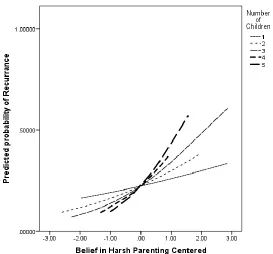
Figure 3.1 Interaction of belief in harsh parenting and number of children in the home. ...39
CHAPTER 1. INTRODUCTION
Recurrence of child maltreatment after parents have been identified by social
service agencies is common (Drake et al., 2003). Recent research has found that after a
substantiated case of physical abuse or neglect, children are likely to be re-victimized by
their parents at rates ranging from 20% within 18 months to 40% within four years (Bae
et al., 2010; Cheng & Lo, 2015). Data from a 2010 U.S. Department of Health and
Human Services report indicate that, each year, approximately 25% of families with
previously substantiated maltreatment cases are identified for maltreatment again
(Proctor et al., 2012). Furthermore, past incidence of maltreatment remains one of the
strongest predictors of future maltreatment (DePanfilis & Zuravin, 1999; Fuller & Wells,
2003; Hindley, Ramchandani & Jones, 2006; Sledjeski, Dierker, Brigham & Breslin,
2008).
Cases of maltreatment recurrence cost child protective service (CPS) agencies
seven times more than cases without recurrence (Proctor et al., 2012), and children who
are multiply victimized show the poorest developmental outcomes, including increased
rates of behavioral problems, emotional difficulties and delinquency (Staton-Tindall et al.
2013; Proctor et al., 2012; Solomon & Asberg, 2012).
Many factors within the ecological system have been studied in relation to risk for
maltreatment recurrence. Among the factors studied, those that appear most robustly
associated with recurrence of child maltreatment include: parental substance abuse
2008; Proctor et al., 2012), parental stress (DePanfilis and Zuravin, 1999), parents’ level
of social support (Casanueva et al., 2015; DePanfilis and Zuravin, 1999; Proctor et al.,
2012), the number of children living in the home (Bae, Solomon and Gelles, 2009;
Proctor et al,., 2012), low socioeconomic status (Drake and Pandey, 1996; Gillham,
Tanner, Cheyne, Freeman, Rooney, and Lambie, 1998; Pereira, Negrão, Soares and
Mesman, 2015), low parental educational attainment, younger parent aage status
(Brown, Cohen, Johnson, and Salzinger, 1998), younger child age (Bae et al., 2009) and
child developmental disability status (DePanfilis, & Zuravin, 2002; Fluke et al., 2008).
While the above factors have provided some direction for assessing risk, case
workers still struggle to identify which families are at greatest risk for recurrence. In a
study of caseworkers’ abilities to assess risk for maltreatment recurrence using a
nationally representative dataset of over 2,000 families, Dorsey et al. (2008) found that
caseworkers were only slightly better than chance at predicting which families would
have recurrence. Implications of this finding are notable given that the primary function
of CPS is prevention of ongoing maltreatment (Drake, Jonson-Reid, Way, & Chung,
2003). CPS agencies are traditionally under-funded and must make difficult decisions
regarding how to best distribute their limited resources.
Past research on child maltreatment has centered around two nationally
representative surveys, the National Child Abuse and Neglect Data System (NCANDS)
and the National Survey of Child and Adolescent Wellbeing (NSCAW II) (Fluke, 2008).
The NCANDS is based on a federal reporting system that receives data from all
investigated cases of suspected child maltreatment from child welfare agencies across all
on a cohort of 5,872 children age birth to 17.5 years across 83 counties between February
2008 and April 2009 who were involved in both substantiated and unsubstantiated
investigations of maltreatment. A number of methodological limitations regarding the
NCANDS and NSCAW II datasets should be noted. In both data sets, variables of
interest such as parental substance abuse and social support were dichotomized rather
than measured on a continuum. For example, in the NSCAW II study, data was collected
via caseworker interview. Caseworkers were asked of each family “Was there low social
support?” and “Was there active alcohol or drug abuse by the caregiver?” Beyond the
potential to introduce reporter bias by having third parties report on the family’s
functioning, phrasing the survey items as dichotomous yes/no questions leaves significant
room for subjective responding and does not capture the degree or extent of parent’s
social support or substance use concerns. Furthermore, these large heterogenous surveys
have not investigated the relative predictive value of the different risk factors assessed.
The current study looks to contribute to knowledge in this area by using a
prospective design to assess the role of four potential predictor variables in differentiating
cases that are re-identified by CPS for child maltreatment recurrence during an 18-month
follow-up period from those that are not. The study utilizes nuanced measurement of
potential predictors in a unique population of parents with co-occurring open CPS cases
for child maltreatment as well as substance abuse concerns severe enough to warrant
treatment in an intensive outpatient rehabilitation program.
While including only parents with both open CPS cases and substance abuse
concerns may limit the generalizability of the outcomes across a more general sample, the
exception. According to the National Center on Addiction and Substance Abuse (2005),
up to 70% of child maltreatment cases involve parental substance abuse. Parents with
substance abuse concerns often face additional challenges and have unique needs when it
comes to mitigating risk for maltreatment recurrence (Neger & Prinz, 2015).
Furthermore, while parental substance abuse is consistently recognized as among the
most robust risk factors for child maltreatment (Staton-Tindall et al., 2013), little research
has looked at what differentiates parents with substance-abuse concerns who maltreat or
repeatedly maltreat their children from those who do not. The current study looks to
contribute to our knowledge in this area and to help elucidate the specific needs of this
particularly high-risk population.
Specific factors of interest examined in this study are: 1) severity of parental
substance abuse, 2) level of parental social conflict, 3) parental belief in punitive
parenting practices, and 4) overall parental quality of life. These predictors were chosen
as they represent possible targets of intervention Other factors that have been found to
relate to involvement with CPS for child maltreatment but lack malleability were
included in the current analyses as covariates. These include parent race, parent income,
parent education attainment, number of children in the home and parent age at
enrollment. Greater understanding of how these factors contribute individually and
collectively to the recurrence of child maltreatment in this population may inform future
avenues of research and improve prevention and intervention services. Background on
1.1 Substance Abuse and Child Maltreatment
Parental substance use has consistently been identified as among the most robust
influences for both initial incidence and recurrence of child maltreatment. Research has
regularly found that parents with substance abuse disorders are at greater risk of engaging
in maltreatment (Fuller and Wells, 2003). Specific data indicate that such parents are
approximately three times more likely to physically abuse their children and four times
more likely to neglect their children than are parents who do not abuse substances
(Chaffin, Kelleher, & Hollenberg, 1996; Murphy, Jellinek, Quinn, & Smith, 1991;
Ondersma, 2007). Substance abuse has been found to be a factor in more than 70% of
reported cases of maltreatment (National Center on Addiction and Substance Abuse,
2005; Staton-Tindall, Sprang, Clark, Walker, & Craig, 2013) and is among the most
common factors found in studies of recurrence (Fluke, 2008).
There are a number of proposed explanations for the connection between parental
substance abuse and risk for child maltreatment. In terms of physical abuse, substance
use has been found to lower a parent’s ability to regulate impulses, control anger, handle
frustration and cope with negative emotional states in adaptive ways (Borelli, West,
DeCoste, & Suchman, 2012). Under the influence of alcohol or illicit drugs, parents may
struggle to separate their feelings of anger towards their situation from anger towards
their child (Dunn et al., 2002; Suchman, DeCoste, Leigh et al., 2010). Compared with
their non-substance-abusing counterparts, parents with substance abuse disorders have
been found to engage in harsher and more hostile parenting characterized by reduced
warmth and sensitivity and increased use of punitive parenting practices such as yelling,
Stanton-Tindall, 2013; Suchman, DeCoste, Castiglioni, Legow, & Mayes, 2008). During
times of acute intoxication or withdrawal, parents may escalate to physical abuse due to
their reduced impulse control and lack of cognitive capacity to consider the consequences
of their actions.
In terms of neglect, the neurological effects of substance abuse have been shown
to diminish a parent’s ability to recognize and respond to his or her child’s emotional and
physical needs. Periods of intoxication or withdrawal can impair a parent’s emotional
and cognitive availability (Kelley et al. 2015) such that parents do not respond quickly or
effectively to a child’s cries for help. Furthermore, the addictive nature of alcohol and
illicit substances may render parents unable to prioritize fulfilling their child’s needs over
procuring drug fixes (Barnard & McKeganey, 2004; Lussier et al., 2010; Dunn et al.,
2002).
While parents may intend to care for and provide for their children, they may be
physically unable to do so due to the chemical effects of drugs. Neurologically, drug
states have been shown to corrupt the motivational center of the brain through altering the
sensitivity of dopamine receptors in the nucleus accumbens. With repeated drug use, the
nucleus accumbens becomes so sensitized to the drug stimulus that the user is unable to
override the motivation to continue to take drugs via either logic or rationality (Robinson
and Berridge, 2003).
In studies using functional magnetic resonance imaging (fMRI), researchers have
observed naturally-occurring changes in mothers’ brains following childbirth that result
in heightened sensitivity of the dopamine and oxytocin reward centers that are triggered
performing caretaking behaviors more rewarding (Kim et al., 2015). These same reward
pathways have been implicated in substance abuse and it is hypothesized that for mothers
who abuse substances, the natural changes in the brain that occur at the transition to
motherhood may be co-opted by the effects of the illicit chemicals and may alter the
mother’s sensitivity to infant cues (Kim and Streathearn, 2015).
Additionally, researchers have theorized that as tolerance escalates such that
greater and greater amounts of drug are needed to achieve desired feelings of pleasure, a
process known as allostatic loading, the threshold for experiencing pleasure on a
neurological level, increases. Naturally rewarding activities such as interacting with
one’s child do not provide sufficient stimulation to compete with the effects of drugs
(George, Le Moal, & Koob, 2012). Decreased pleasure garnered from the parent-child
relationship may reduce parents’ motivation to interact with and care for their children,
increasing the risk for abuse and neglect.
In a lab study using rat models, Johns, Nelson, Meter et al., (1998) found that
maternal rats who were injected subcutaneously with cocaine at regular intervals after
giving birth displayed reduced maternal behaviors towards their pups compared to
control group rats and were less likely to protect their pups from an aggressive intruder.
They also found a dose effect in which maternal rats who received greater doses of
cocaine showed less maternal activity.
Human subject studies have also found that parents with substance-abuse
concerns spend less time interacting with their children, are less responsive to their
Morrow, Accornerro, et al., 2002; Mayes & Truman, 2002; Pajulo, Savonlahti,
Sourander, Ahlqvist, Helenius, & Piha, 2001).
One potential explanation for this finding suggested by Suchman, DeCoste,
Castiglioni, McMahon, Rounsaville and Mayes (2010) is that the demands of parenting
cause stress for parents with poor emotion regulation and coping skills. That stress can
cause parents to turn to substance abuse as a psychological escape, thus rendering
themselves less available to respond to their children’s cues. That, in turn, increases
children’s signaling, leading to more stress and more substance use, creating a
maladaptive cycle.
Taken together, there are multiple levels and pathways of influence connecting
substance abuse and the risk for child maltreatment. However, it has not been clear how
the severity of parental substance abuse difficulties may affect this risk.
1.2 Parent’s Social Support and Conflict
The connection between low levels of social support and involvement with the
child welfare system has been identified in a growing number of studies (Stith, Liu,
Davies, Boykin, Alder, Harris, et al., 2009; Brown et al., 1998; Jackson et al., 1999;
Rajendran et al., 2015). Past prospective research has found that, parents involved with
the child welfare system reported less social support and less satisfaction with their social
support than parents who did not become involved with the child welfare system
(Albarracin, Repetto & Albarracin, 1997; Rajendran et al., 2015). The Department of
Health and Human Services’ Emerging Practices Report (2003) found that mothers who
had previously maltreated their children reported diminished social support networks,
Dorsey et al. (2008) found that parents with low social support were more likely
to re-commit child maltreatment at an increased odds ratio of 1.93 compared to those
parents with higher social support. Interestingly, Dorsey et al. (2008) also found that
level of social support was often overlooked by case workers when assessing risk for
maltreatment recurrence.
One hypothesis for this connection is that parents with low social support receive
little socialization regarding healthy parenting practices and have limited buffers on life
stresses (Rajendran, K., Smith, B. D., Videka, L., 2015; Thompson, 2014). Chronic
stress causes persistent cortisol release which has been found to effect gene expression in
multiple brain regions with behavioral consequences such as increased emotional
reactivity and reduced cognitive flexibility and self-regulation (Lupien, McEwen,
Gunnar, & Heim, 2009). All of those can lead to abuse. Relatedly, Taylor (2011)
demonstrated that social contact reduced adults’ physiological reactions to stressful
situations and enhanced the function of the prefrontal cortex which aids with
self-regulation.
In addition, parents with higher levels of social support enjoy greater access to
tangible benefits such as help with child care, transportation or financial assistance that
increases their likelihood of providing safe and nurturing environments for their children
(Dominguez & Watkins, 2003). Kepple (2015) found that increased tangible social
support significantly reduced frequencies of both physical abuse and neglectful behaviors
among parents.
Other hypotheses on the connection between social support and child
psychological functioning. Individuals who are socially isolated may have mental health
or personality problems that involve pervasive distrust of others, hostile attribution biases
and other antisocial traits. Such symptomology may contribute simultaneously to social
isolation and a propensity for child maltreatment (Thompson, 2014).
In some circumstances, parents may be socially isolated due to a deliberate effort
to distance themselves from family members or friends for reasons of disagreement or
distrust. Many parents who maltreat their children were victims of maltreatment
themselves (Dorsey et al., 2008; Conners et al., 2004) and thus may attempt to disengage
from their abusive families of origin. However, these parents may not have the skills,
resources or opportunities to establish prosocial networks and may still engage in abuse
towards their children because they are unaware of alternative parenting skills or coping
mechanisms.
Finally, parents who lack social support may also lack positive social influences
to seek out or commit to getting help for substance abuse concerns or stress management
(Gregoire & Schultz, 2001). Research has found that both substance abuse treatment
services and parenting classes are more effective when individuals are supported by
family and friends and encouraged by others to attend sessions (Rajerdran et al., 2015;
Neger & Prinz, 2015).
1.3 Belief in Harsh Parenting Practices
The third variable of interest in this study, parents’ belief in the use of harsh and
punitive parenting practices, was chosen because of the connection between parents’
cognitions regarding what is appropriate parenting and how they act towards their
practices such as corporal punishment, yelling and threatening have been found to be at
higher risk for maltreatment (Brown, Cohen, Johnson, & Salzinger, 1998). By definition,
corporal punishment is distinguished from physical abuse by the parent’s intent. Strauss
(1994) defines corporal punishment as “the use of physical force with the intention of
causing a child to experience pain but not injury for the purposes of correction or the
control of the child’s behavior.” Yet, according to the Department of Health and Human
Service’s Children’s Bureau, physical abuse is defined by outcome. Specifically, “injury
… that is inflicted by a parent, caregiver or other person who has responsibility for the
child. Such injury is considered abuse regardless of whether the caregiver intended to
hurt the child” (Dept. of Health and Human Services, 2013). Thus, parents who use
corporal punishment as a means to correct or control their children but nevertheless injure
them, have still engaged in abuse.
While parents may not intend to physically harm their children, their use of
corporal punishment can readily escalate to the point of causing injury (Gershoff, 2002),
especially when considering that punishment often results in an escalation of undesirable
behavior in children rather than improvement. According to Social Learning Theory
(Bandura, 1977), children whose parents use harsh parenting strategies often model their
parents’ methods of dealing with anger and are not taught alternative ways of responding
to negative emotions (Gershoff, 2002). Under such circumstances, children’s undesirable
behaviors continue, and parents’ frustration grows. Parents then often intensify their use
of harsh parenting strategies, resulting in escalating child misbehavior and an increased
risk that abuse will occur, especially if parents resort to physical punishment at times of
thirds of physical abuse cases, parents reported that the incidents began as an attempt to
control their children’s unwanted behavior (Coontz & Martin, 1988; Gershoff, 2002).
The association between corporal punishment and abuse has become so robust that
researchers in the field have begun to consider the relationship as existing on a continuum
rather than as discrete categories of parenting (Gershoff, 2002).
In a 2000 study, Crouch and Behl found that parenting stress was related to
likelihood of maltreatment only for those parents who believed in the use of corporal
punishment techniques. This suggests that parenting beliefs are a significant contributor
to maltreatment, beyond the role of stress. According to Social Information Processing
theory (SIP), child abuse does not occur based on the severity of child behavior or a
parent’s stress in the moment alone. Rather, parents come to each new conflict with a
pre-set schema regarding what forms of discipline are acceptable and apply these beliefs
in the course of the interaction (McElroy & Rodriguez, 2008; Rodriguez & Richardson,
2007). Thus, parents who believe that the use of harsh punishment strategies is
acceptable are more likely to access this schema during conflicts than parents who do not
hold these beliefs prior to the conflict.
In terms of child abuse recurrence, one study by Sledkeski et al. (2008) found that
among families with a history of substantiated child maltreatment, parents’ skills and
expectations for their children were a significant factor in predicting who would engage
in repeated child abuse within 18 months after the initial incident.
1.4 Quality of Life
In recent years, a global construct of overall functioning across multiple life
International Society for Quality of Life Research, 1993). This construct covers multiple
factors within the ecological system, such as one’s physical health and wellbeing,
economic stability, relationship satisfaction, occupational and leisure satisfaction and
satisfaction with one’s home, neighborhood and overall community.
Past research has suggested that rather than any one risk factor in particular, an
accumulation of multiple stressors may be most predictive of initial child maltreatment
occurrence (Brown, Cohen, Johnson, & Salzinger, 1998; Nair, Schuler, Black, Kettinger
& Harrington, 2003). It follows, therefore, that reduced QoL across multiple domains
may be a robust predictor of child maltreatment recurrence as well. As such, quality of
life is included in the current study to be explored as a potential risk factor.
1.5 Relationships Among Predictors
Correlations among the above predictor variables will be examined as it is
reasonable to hypothesize potential relationships between them. For example, higher
levels of substance use may strain an individual’s social support networks if drug use
causes rifts in family and close relationships (Kepple, 2015). Additionally, parents with
low social support may turn to substance abuse to cope with stress if they do not have
supportive others to help them manage. Alternatively, social support may reinforce
substance abuse if parents are using alcohol or drugs as a way to socialize with others
who encourage rather than discourage this behavior (Kepple, 2015, Tracy, Laudet, Min,
et al., 2012).
In addition, higher levels of substance use may correlate with diminished quality
of life scores across multiple domains. For example, substance abuse may interfere with
diminish financial security if money is being spent on drugs and alcohol, lowering QoL
ratings in these areas (Staton-Tindall, 2013). A high level of concordance is also likely
among the measures of social support and quality of life as satisfaction with social and
family relationships are included in the quality of life construct.
Finally, research on the connections between social support and parenting
practices has shown somewhat unexpected patterns. For example, some parents who have
supportive social networks report that they are more likely to use harsh parenting
practices (Lyons, Henly & Schuerman, 2005), while others report they are more likely to
engage in positive parenting behaviors (Green, Furrer, & McAllister, 2007).
1.6 Covariates
The covariates of interest included in this study are parent’s race, family’s
monthly income, parent level of educational attainment, parent’s age and the number of
children in the home. These factors were chosen as covariates based on previous
research that has found evidence relating each of them to rates of identification and
substantiation of child maltreatment. They are separated from the main factors of interest
examined in this study due to their lack of malleability from a treatment perspective.
Parent race was included due to previous findings that black families are
over-represented in the child welfare system (Drake, Lee and Jonson-Reid, 2009). Among the
theorized explanations for this finding are that black families experience higher rates of
other risk factors including being three times more likely to live in poverty than white
families. Poverty exposes families to additional ecological stressors including
neighborhood violence and reduced community resources. Additionally, researchers have
likely to be more closely monitored by social services and are less likely to be given the
benefit of the doubt than their white counterparts. Fluke, Yuan, Hedderson, and Curtis,
(2003) found that black families were over-represented in cases referred to CPS in the
investigation stage but this disproportionality reduced significantly at the substantiation
stage.
Family’s monthly income was included as a covariate as poverty status has been a
robust predictor of child maltreatment in the literature spanning the last three decades
(Drake and Johnson-Reid, 2014). Specifically, Sedlack and Broadhurst (1996) found that
families with annual incomes below the poverty line are twenty times more likely to be
identified for maltreatment than those with incomes above this cutoff. Both individual
and community factors are hypothesized to mediate the relationship between poverty and
child maltreatment, especially parental stress which may increase reactive and harsh
parenting which can lead to physical abuse, and lack of community resources which may
contribute to neglect.
Parent’s level of educational attainment was also included as a covariate as
previous research has found that parents with lower educational attainment are more
likely to engage in child maltreatment (Sidebotham and Golding, 2001). Specifically,
Brown et al., (1998) found that in a representative sample of 644 parents, those without a
high school degree were two times as likely to be identified for child maltreatment as
parents who completed high school.
Parent’s age was included as a covariate as past research has found that young
parents are more likely to be identified for maltreatment than parents who are relatively
becoming a parent at age 20 or younger was a significant predicator for identification for
child abuse. Similarly, Brown et al. (1998) found an over three-fold increase in
likelihood for child maltreatment identification for children born to mothers under
18-years of age.
Finally, the number of children in the home was included as a covariate as family
size is among one of the most robust predicators of identification for child maltreatment
in the literature (Chaffin, Kelleher, and Hollenberg, 1996; Wu, Ma, Carter, Ariet, Feaver,
Resnick, and Roth, 2004; Bae, Solomon and Gelles, 2009; Proctor et al., 2012).
1.7 The Current Study
The key question for the current study is whether the four factors described above
can help predict which parents will be identified by CPS for recurrence of child
maltreatment during the 18-month study period between the post-treatment data
collection time point and the final data collection time point. The study will examine
both the unique and combined predictive influences of these potential risk factors in a
sample of parents with open CPS cases and concurrent substance abuse concerns.
The current study addresses methodological limitations in previous research and
focuses on a specific subset of families in the child welfare system. Specifically, past
research on the relationship between parental substance abuse and child maltreatment
recurrence has relied on data from national databases such the NCANDS and NSCAW
surveys. While these resources allow for analysis of large, representative samples of
families, they tend to lack nuance in their measurement. For example, such studies have
often dichotomized a parent’s substance use as “present” or “absent” based on parent
psychometrically sound measures, (Kepple, 2015; Berger, Slack, Waldfogel & Bruch,
2010; Casanueva, 2015; DePanfilis & Zuravin, 1999; Staton-Tindall, Sprang, Clark,
Walker, & Craig, 2013). There are important discrepancies in the effect of substance use
that is simply recreational or occasional compared to disordered use. Specifically,
Kepple (2015) found that parents who met criteria for the DSM-5 diagnosis of substance
abuse disorder were significantly more likely to engage in physical abuse and neglect
compared to those whose substance use was classified as “problematic” but did not reach
the level of a disorder or those whose use was classified as “non-problematic.” The
current study addresses this limitation by utilizing the gold-standard measure of
substance-use severity which measures use on a continuum.
Similarly, when it comes to assessing social support, the large representative
surveys have often coded this variable post hoc by means of researcher review of case
reports or by interviewing caseworkers regarding their interpretations of family
functioning, rather than by asking the parents to report on these factors directly
(Casanueva, 2015; DePanfilis & Zuravin, 2002; DePanfilis & Zuravin, 1999; Dorsey,
Mustillo, Farmer, & Elbogen, 2008). The current study measures parents’ level of social
support, parenting beliefs and quality of life through use of validated self-report
instruments.
The study’s hypotheses are as follows:
Hypothesis 1: Parents who reported more severe substance abuse will be more
likely to have been identified for recurrence of child maltreatment at 18-month follow-up.
Hypothesis 2: Parents with more social conflict will be more likely to have been
Hypothesis 3: Parents who endorse higher acceptance of harsh parenting practices
will be more likely to have been identified for recurrence of child maltreatment at
18-month follow-up.
Hypothesis 4: Parents who endorse lower overall quality of life will be more
likely to have been identified for recurrence of child maltreatment at 18-month follow-up.
Hypothesis 5: Significant interactions will be found among the potential
predictors such that their combined effects predict recurrence of child maltreatment at
CHAPTER 2. METHOD
2.1 Study Design
Using a prospective design, this study assessed the relationship between four
variables (parental substance abuse, parental social conflict, parental belief in harsh
parenting practices and parental quality of life), and recurrence of child maltreatment.
Data was collected as part of a larger, NIDA-funded treatment study of substance abusing
parents with co-occurring CPS involvement. Parents of young children (ages two to eight
years) were eligible to participate if they had an open child maltreatment case and were
seeking intensive outpatient substance-abuse services, either voluntarily or due to court
order. For families that had more than one child between the ages of two and eight, the
child with the closest upcoming birthday was chosen to be the subject of data collection.
All parents received standard services from the substance abuse treatment center and
were randomized to one of four additional treatment conditions: 1) Enhanced treatment as
usual consisting of biweekly personal-goal management (PGM) with a social worker; 2)
PGM and Level-5 Advanced Triple P Positive Parenting Program (Pathways Triple P), an
intensive evidence-based parent training program for families at high risk for child
maltreatment; 3) PGM with Contingency Management, an evidence-based program that
provides participants with the opportunity to draw increasing numbers of vouchers for
tangible rewards as they maintain longer periods of sobriety; and 4) PGM, Pathways
abuse treatment center.
Regardless of treatment condition or adherence to treatment components, all
participants who provided data at the post-treatment time point were included in the
current analysis. Data on the predictors of interest collected at the post-treatment time
point were treated as the baseline data for the current study, limiting the potential role of
treatment effects. Eighteen months was chosen as the follow-up period because
recidivism rates for child maltreatment have been shown to be the highest in the first six
months after initial identification with most recurrence occurring within one year, and
rates falling precipitously after two years (Connell, Bergeron, Katz, Saunders, & Tebes,
2007; Hindley, Ramchandani & Jones, 2006; Solomon et al., 2012).
2.2 Subject Selection
Parents were enrolled from two substance abuse treatment centers in adjacent
counties. Enrollment criteria included that: 1) the parent was involved with CPS for a
substantiated case of child maltreatment including physical abuse and/or neglect of a
child between the ages of two and eight years old; 2) the parent was the primary or
significant caregiver of the child with hopes of maintaining or regaining custody; 3) the
parent was currently or had recently engaged in the use of illegal substances or alcohol or
was a poly-substance abuser, with use significant enough to warrant intensive outpatient
treatment; and 4) the parent was English-speaking.
Parents identified as having engaged in sexual abuse or who reported having
serious uncontrolled psychiatric illnesses including schizophrenia or acute psychosis
were not eligible to participate. Those in need of intensive drug detoxification services
intensive outpatient substance-abuse treatment services had begun. The sample size used
for the current study was 117 parents from unique households.
2.3 Measurement
Study procedures were approved by the home university’s Institutional Review
Board (IRB). At time of enrollment, informed consent was obtained from each
participant by study staff unaffiliated with the substance abuse treatment center.
Participants were informed that their participation was voluntary, could be stopped at any
time, and would not affect their standing at the treatment center or in any pending legal
proceedings or case dispositions. Participants were informed of the risks associated with
participating and were assured that the data they provided would not be shared with CPS,
law enforcement or any parties involved in their case or treatment. They were informed
that all study data would be kept confidential except in the case of threat of harm to
human life.
All predictor and demographic data were collected via Qualtrics survey software,
version 2002. The survey was administered electronically on a tablet to participants who
were aided in responding by study personnel. Baseline data collection occurred at the
substance abuse treatment center at the time of the enrollment in the study. At subsequent
time points, data collection occurred most frequently at the treatment center, though at
times was conducted at participant’s homes, or locations in the community such as the
local library in order to accommodate participant need and maximize study retention.
Participants were compensated at an increasing rate for providing data at each
subsequent data collection time point. For the post-treatment time point used in the
compensated for their participation in any treatment aspects of the study. Table 2.1.
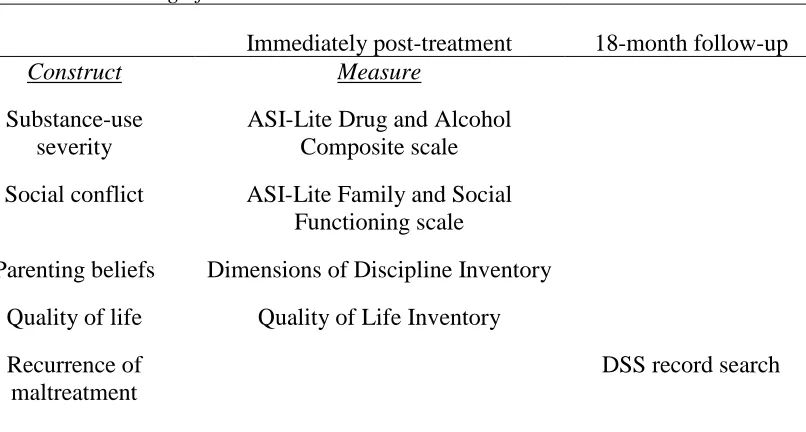
provides a summary of the instruments used and the timing of their administration.
2.3.1 Substance abuse.
Substance use severity was assessed via self-report on the ASI-Lite, Drug and
Alcohol Composite subscale administered as part of the interview conducted at the
post-treatment time point. Among the 19 items that made up this composite, respondents were
asked to disclose the number of days they had used any of a list of 10 substances or
multiple substances over the past 30 days and how many days the experienced alcohol or
drug problems out of the past 30 days. They were also asked to rate how bothered they
had been by their substance use, and how important it was for them to seek treatment for
their substance abuse on a scale from “0- Not at all” to “4- Extremely.” Summary scores
for the subscale are computed using weighted averages so that each score falls in a range
from 0 to 1 with higher scores indicating higher levels of substance abuse severity. The
measure did not differentiate between use of alcohol and illegal substances and
encompassed all types of substance use, including marijuana, cocaine, heroin,
meth-amphetamine, inhalants, abuse of prescription pills and a category for “other.”
The ASI-lite was derived from and has been found to be psychometrically
equivalent to the original full-length Addiction Severity Index (Cacciola, Alterman,
McLellan, Lin, & Lynch, 2007), which is the most commonly used clinical assessment of
substance abuse pathology and has established itself as the gold standard for research on
alcohol and drug addiction over the past 20 years (Leonhard, Mulvey, Gastfriend &
Shwartz, 2000). Interclass correlations (ICCs) for the alcohol and drug use subscale
.76 to .89 (Cacciola et al. 2007; Mäkelä, 2004). Internal consistency of the items on the
alcohol and drug composite subscale has been found to be moderate, reaching alpha
coefficients of .62 to .69 (Cacciola, Alterman, McLellan, Lin, & Lynch, 2007; Leonhard
et al., 2000; Snow & Tipton, 2009). Tests of concurrent validity with other measures of
alcohol and drug use have shown correlations ranging from .50 to .73.
2.3.2 Social conflict.
The Family and Social Relationships subscale of the ASI-Lite was used to assess
each parent’s level of social conflict. Questions from this subscale asked respondents to
indicate how many days they had had trouble getting along with significant family
members, friends and acquaintances over the past 30 days, how much their interpersonal
conflicts had bothered them and how important it was for them to get help with their
interpersonal conflicts, again on a scale of “0- Not at all” to “4- Extremely.” As above,
scores calculated using a weighted average and were computed to range from 0 to 1 with
higher scores indicating higher levels of interpersonal conflict. Inter-rater reliability
ranged from .84 to .94 while interclass correlations were less robust, only reaching .22.
2.3.3 Belief in harsh parenting practices
The Power Assertion/Punitive Discipline scale of the Dimensions of Discipline
Inventory (DDI) was administered to capture each parent’s belief in the acceptability of
harsh discipline practices. The 13 items that made up this scale were derived from
existing established psychometrically sound instruments such as the Parenting Scale
(Arnold, O'Leary, Wolff, & Acker, 1993) and the Alabama Parenting Questionnaire
(Shelton, Frick, & Woollon, 1996), providing face validity, though no data on the specific
Okay” to “4- Always Okay,” how appropriate various potential parenting behaviors are to
use with a child the age of their child targeted in this study. For example, item five asks
“How Okay or Not Okay is it to… grab or shake a child that age to get their attention?”
Parents’ answers to each of the 13 items was then averaged for an overall score with a
range of 1 to 4 with higher scores indicating more acceptance of punitive discipline
strategies. The reliability of the 13 items that comprised this subscale were found to have
a Cronbach’s alpha of .64 in an initial study, with more recent analyses finding alphas of
.81 and .82 (Straus & Fauchier, 2011). In the current study, internal consistency was
found to be .63.
2.3.4 Quality of life.
To capture parents’ self-reported quality of life, the Quality of Life Inventory
(QOLI) was used. The QOLI is a 17-item, single-construct measure of overall well-being
spanning physical health, occupational, social and environmental satisfaction.
Respondents are provided with 17 constructs such as “Health” “Relationships” “Work”
and a definition of the construct such as “Health is being physically fit, not sick and
without pain or disability.” Participants are first asked to rank how satisfied they are in
that area of their life from “-3 – Very Dissatisfied” to “3 – Very Satisfied.” Participants
are then asked to rate how important this area is to their overall well-being from “0 – Not
at all Important” to “2- Extremely Important” An overall QoL summary score is
calculated by multiplying the satisfaction score by the importance score for each domain
and averaging across all areas with non-zero importance domain scores. Summary scores
ranged from -6 to 6 with higher ratings indicating higher overall quality of life. In a
QOLI has shown internal consistency ranging from .77 to .89, test-retest reliability of .80,
treatment sensitivity and utility with culturally diverse populations (Frisch, Cornell,
Villanueva, & Retzlaff, 1992). In the current study sample, internal consistency for the
QOLI was found to be .86.
2.3.5 Maltreatment recurrence.
Based on a review of records obtained directly from the Department of Social
Services (DSS), outcomes for each family were dichotomized as either having had one or
more new incidents of child maltreatment in the 18-month follow-up period or having no
new incidents during that time frame. DSS records were reviewed by the author (EN)
and by the project administrator (DW). Cases were coded as having recurrence only if
the new reports were investigated by DSS and determined to be “Founded.” According
to DSS, the term “Founded” indicates that there is “a preponderance of evidence that
abuse or neglect is more likely than not to have occurred, evidence which, when fairly
considered, is more convincing as to its truth than the evidence in opposition” (Leeb,
Paulozzi, Melanson, Simon, & Arias, 2008).
In some cases, reports were made regarding a suspected new incident of
maltreatment, but insufficient evidence was found. In such cases, the report was
determined to be “Unfounded.” Unfounded cases are further classified by number.
“Unfounded Category 1” indicates that an investigation took place, but no evidence of
maltreatment was found. “Unfounded Category 2” indicates that some but not sufficient
evidence was found. “Unfounded Category 3” indicates the case was not investigated
because the family could not be found. “Unfounded Category 4” indicates that DSS chose
Categories of maltreatment vary across state and local jurisdictions and do not
conform to a uniform set of definitions. However, the Centers for Disease Control and
Prevention (CDC) has issued guidelines on definitions intended to increase consistency
across jurisdictions (Leeb et al., 2008). For the current study, the following categories of
maltreatment as defined by the CDC were used: 1) “Other Neglect,” including acts of
omission such as failure to provide reasonably adequate care for children and/or failure to
supervise children appropriately; 2) “Threat of Physical Harm,” when a parent or
caregiver expresses intent or gives signs or warnings through words, gestures, or weapons
to communicate the likelihood of inflicting harm to the child; 3) “Physical Environment
Inadequate,” when a caregiver fails to provide adequate nutrition, hygiene, shelter, or
clean, fitting and weather-appropriate clothing for the child; and 4) “Physical Abuse,”
such as the use of physical force against a child that results or has the potential to result in
injury, regardless of whether it has left a mark or resulted in permanent disability,
disfigurement, or death. A fifth category, labeled “Other,” was also included to capture
additional findings not covered by the preceding definitions, such as fetal abuse and
educational and medical neglect (Leeb et al., 2008).
2.4 Analyses
Analyses were conducted using IMB SPSS Statistics 24. Demographic data on
parents’ race and ethnicity, educational attainment, family income, parent’s age and
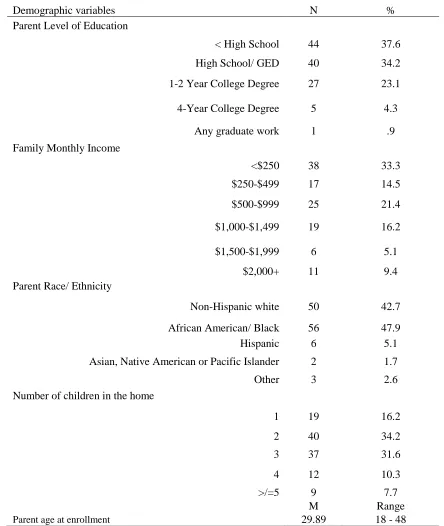
number of children in the home is provided below (see Table 3.1). Bivariate correlations
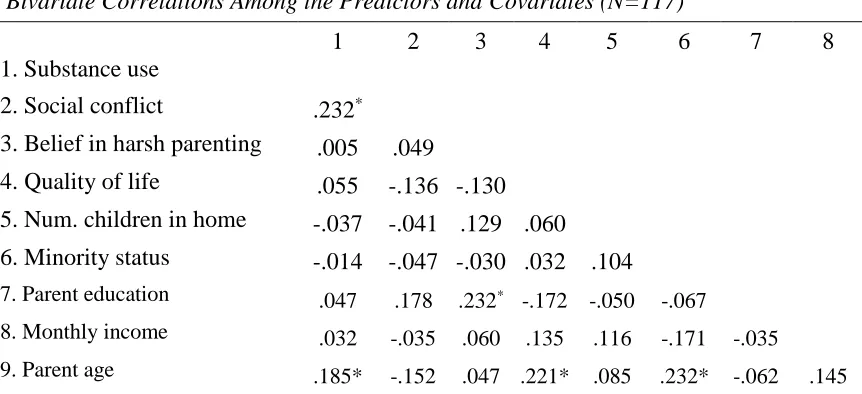
between all predictors and covariates were calculated (see Table 3.4) and descriptive data
on each of the predictors for the overall sample and by each outcome are presented in
Logistic regression was chosen because it allows for prediction of a dichotomous
outcome based on multiple scaled and categorical variables. Recurrence of child
maltreatment was the modeled outcome (coded 1) while no recurrence was the reference
outcome (coded 0). To assess the predictive value of each of the four variables of
interest, four binary logistic regression analyses were performed. A fifth logistic
regression was performed to analyze the combined effects of all covariates of interest
including number of children in the home, parents’ race, parents’ level of education, and
family monthly income. These covariates were entered in a single step as their combined
effect is more pertinent than their individual contributions. A sixth logistic regression
assessed the overall model of all potential predictors and covariates together. Each of the
predictor variables of interest was centered prior to running analyses to ease
interpretation of results. Table 2.1
Measures and Timing of Data Collection.
Immediately post-treatment 18-month follow-up
Construct Measure
Substance-use severity
ASI-Lite Drug and Alcohol Composite scale
Social conflict ASI-Lite Family and Social Functioning scale
Parenting beliefs Dimensions of Discipline Inventory
Quality of life Quality of Life Inventory
Recurrence of maltreatment
Results of each regression analysis are described separately below. Each analysis
reveals how much variance in the outcome is explained by the predictor of interest, the
direction of the predicted change in outcome and the magnitude of the expected change in
outcome in the form of an odds ratio. Data on the sensitivity and specificity of each
model are also presented to determine if the predictor improved our ability to accurately
predict which families would be identified for recurrence greater than chance. Secondary
analyses examined the nature of the interaction of significant predictors by plotting the
predicted probability of maltreatment recurrence when the other factors were held
CHAPTER 3. RESULTS
3.1 Demographic Data
The 117 cases included 115 mothers and two fathers. The sample was diverse
with respect to race and ethnicity with 42.7% of participants identifying as White, 47.9%
identifying as Black, 5.1% identifying as Hispanic, 1.7% identifying at Asian, Native
American or Pacific Islander and 2.6% identifying as Other. Family income was highly
skewed towards poverty with the largest category of participants making less than $250 a
month and a large majority making less than $1,000 a month. Parents’ level of education
was also quite low, with the largest number of parents having less than a high school
degree (37.6%) and the next largest having a high school degree or GED (34.2%). Only
5.2% of the sample had a 4-year college degree or higher. Most families had either two
or three children in the home (34.2% and 31.6%, respectively), with 16.2% reporting only
one child and 18.0% reporting four or more children (See Table 3.1).
3.2 Original CPS Incident Findings
DSS records for each case were reviewed and the types of maltreatment findings
were recorded. Each founded case qualified for at least one category of maltreatment,
and many cases qualified for more than one. When more than one category was found
all were reported. Across the sample, the most common type of maltreatment was Other
Neglect followed by Threat of Physical Harm, Physical Environment Inadequate,
Table 3.1
Demographic data for study sample (N= 117 families)
Demographic variables N %
Parent Level of Education
< High School 44 37.6
High School/ GED 40 34.2
1-2 Year College Degree 27 23.1
4-Year College Degree 5 4.3
Any graduate work 1 .9
Family Monthly Income
<$250 38 33.3
$250-$499 17 14.5
$500-$999 25 21.4
$1,000-$1,499 19 16.2
$1,500-$1,999 6 5.1
$2,000+ 11 9.4
Parent Race/ Ethnicity
Non-Hispanic white 50 42.7
African American/ Black 56 47.9
Hispanic 6 5.1
Asian, Native American or Pacific Islander 2 1.7
Other 3 2.6
Number of children in the home
1 19 16.2
2 40 34.2
3 37 31.6
4 12 10.3
>/=5 9 7.7
M Range
3.3 Outcome Coding
Review of the DSS records revealed new reports of maltreatment for 37 of the
117 cases (30.8%). Of those new reports, 28 (23.9%) were investigated and sufficient
evidence was found to conclude that maltreatment had re-occurred. One report was
investigated but maltreatment was ruled out (i.e., Unfounded Category 1.) Six cases were
investigated and some, but not enough, evidence was found to conclude maltreatment had
occurred, (i.e., Unfounded Category 2) and two cases were not investigated because the
family could not be found (i.e., Unfounded Category 3.)
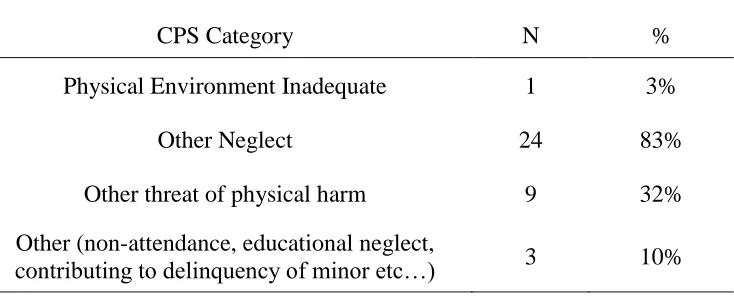
As with the original findings, the most common type of recurrent maltreatment
was Other Neglect (24 of the 28 recurrent cases), followed by Threat of Physical Harm (9
of the 28 recurrent cases) (see Table 3.3). Reliability of data coding across the DSS
records was calculated at 98%. Table 3.2.
Original CPS incident finding categories (N= 117 families)
CPS Category N %
Physical Abuse 6 3%
Physical Environment Inadequate 28 16%
Other Neglect 98 56%
Threat of physical harm 29 17%
Other (fetal abuse, educational neglect,
Table 3.3.
Recurrent CPS Incident Findings (N= 28 families)
CPS Category N %
Physical Environment Inadequate 1 3%
Other Neglect 24 83%
Other threat of physical harm 9 32%
Other (non-attendance, educational neglect,
contributing to delinquency of minor etc…) 3 10%
3.4 Correlations Among Predictors
Bivariate correlation analyses revealed five statistically significant correlations
(see Table 3.4). Severity of substance use was positively associated with social conflict
(r=.232, p=.012) and level of educational attainment was positively associated with belief
in harsh parenting practices (r=.232, p=.012). Parent age was positively associated with
substance abuse severity (r=.185, p=.045), quality of life (r=.221, p=.017) and being of
minority race (r=.232, p=.012).
3.5 Predictor Variables by Outcome
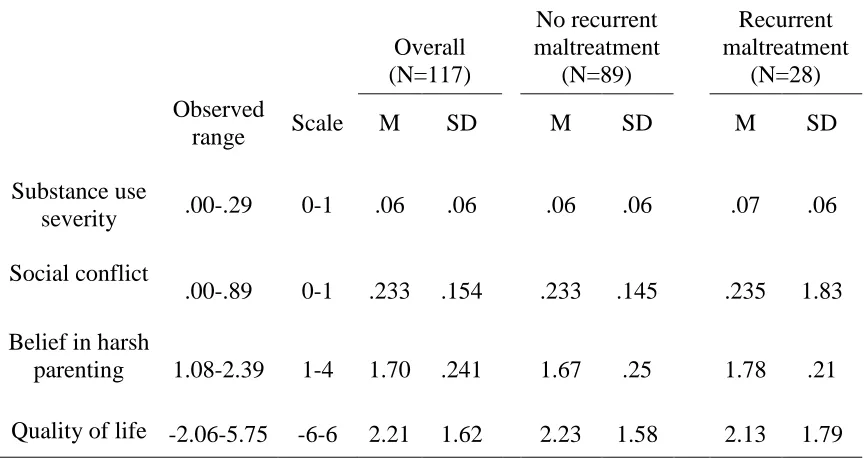
Descriptive data (range, mean and standard deviation) for each of the four
predictors of interest are presented below for the overall sample, as well as by outcome.
The range found for substance abuse severity was notably low, reaching a max score of
only .29 on a scale ranging from 0 to 1. The range observed for belief in the use of harsh
Table 3.4.
Bivariate Correlations Among the Predictors and Covariates (N=117)
1 2 3 4 5 6 7 8
1. Substance use
2. Social conflict .232*
3. Belief in harsh parenting .005 .049
4. Quality of life .055 -.136 -.130
5. Num. children in home -.037 -.041 .129 .060
6. Minority status -.014 -.047 -.030 .032 .104
7. Parent education .047 .178 .232* -.172 -.050 -.067
8. Monthly income .032 -.035 .060 .135 .116 -.171 -.035
9. Parent age .185* -.152 .047 .221* .085 .232* -.062 .145
*significant at p<.05 level.
3.6 Binary Logistic Regression Results
3.6.1 Assumptions of binary logistic regression.
The first assumption of binary logistic regression is that the dependent variable is
measured on a dichotomous scale. This assumption was met as the outcome data was
coded as presence (1) or absence (0) of maltreatment recurrence. The second assumption
is that the independent variables are either measured on a continuous scale or are
categorical. All four potential predictors of interest as well as the covariates satisfied this
assumption.
The third assumption is that the outcome variable has mutually exclusive and
exhaustive categories and that each observation is independent from the other. This
assumption was satisfied as each family was counted only once and the outcome for each
family was not dependent on that of any other.
and the dependent variable. The Box-Tidwell procedure (Box & Tidwell, 1962) was
used to assess this assumption and linear relationships were found for the natural log of
each of the four potential predictor variables and the outcome variable.
The fifth assumption of binary logistic regression is non-multicollinearity of
predictors, meaning that the independent variables are not highly correlated with each
other. While significant correlations were found between substance use severity and
social conflict (p=.012) and parents’ education and belief in harsh parenting (p=.012),
neither of these correlations was large enough to violate the tolerance window or analysis
of Variance Inflation Factor (VIF), thus the assumption of non-multicollinearity was met.
3.6.2 Probability of recurrence without predictors in model.
Given that most cases (89 of 117) were not identified for recurrence, the basic Table 3.5.
Descriptive Statistics for Predictor Variables for Overall Sample and by Outcome
Overall (N=117)
No recurrent maltreatment
(N=89)
Recurrent maltreatment
(N=28) Observed
range Scale M SD M SD M SD
Substance use
severity .00-.29 0-1 .06 .06 .06 .06 .07 .06
Social conflict
.00-.89 0-1 .233 .154 .233 .145 .235 1.83
Belief in harsh
parenting 1.08-2.39 1-4 1.70 .241 1.67 .25 1.78 .21
76.1% of cases, 100% of those that did not recur (specificity) and 0% of those that did
(sensitivity). The purpose of the following analyses was to determine if adding the
factors and covariates of interest could help to improve the sensitivity and overall
predictive power of the model. Statistical significance was set at .05 based on the
accepted standard in the field. The effect sizes and percentages of variance accounted for
by each model are also presented.
3.6.3 Substance abuse severity.
The logistic regression looking at substance abuse severity found that this variable
did not significantly contribute to our ability to differentiate the outcome, χ2(1, n=117)
=.637, p=.425. As expected, more severe substance use was associated with greater
likelihood of child maltreatment recurrence, but with a very small effect size. For each
standard deviation increase in substance abuse severity, there was an associated 1.18
factor increase in the odds of recurrence (95% CI = .77, 1.86). Severity of substance
abuse accounted for between .5% (Cox & Snell R square) and .8% (Negelkerke R
Squared) in the variance between those who were identified for recurrence of child
maltreatment and those who were not. Including substance abuse severity scores did not
change the sensitivity, specificity or overall predictive power of the model from correctly
predicting 76.1% of cases.
3.6.4 Parents’ social conflict.
Results of the logistic regression assessing the contribution of parents’ social
conflict were also non-significant, χ2(1, n=117) =.003, p=.957. Social conflict had a
negligible association with child maltreatment recurrence as each standard deviation
recurrence (95% CI = .66, 1.55). Social conflict accounted for none of the variance
between those who were identified for recurrence and those who were not, and including
social conflict scores did not change the sensitivity, specificity or predictive power of the
model from the base model.
3.6.5 Belief in harsh parenting practices.
Results of the logistic regression assessing the contribution of belief in harsh
parenting practices were significant χ2(1, n=117) = 3.78, p=.046. Greater belief in harsh
parenting practices predicted child maltreatment recurrence in the expected direction with
each standard deviation increase in belief in harsh parenting practices associated with an
increase of 1.54 in the odds of recurrence (95% CI = 1.0, 2.43). Increased belief in harsh
parenting accounted for between 3.3% (Cox & Snell R square) and 5% (Negelkerke R
Squared) of the variance between those who were identified for recurrence of child
maltreatment and those who were not. Including harsh parenting beliefs in the model
reduced the predictive utility of the classification table from correctly predicting 76.1%
of the cases to predicting 74.4% of cases correctly. The model incorrectly predicted
recurrence for two cases when recurrence was not found, reducing specificity to 97.8%.
The model did not predict any cases would recur, thus sensitivity did not change.
3.6.6 Quality of life.
Results of the logistic regression assessing the contribution of quality of life were
not significant χ2(1, n=117) =.083, p=.774. Quality of life scores had a minimal effect in
predicting child maltreatment recurrence with each standard deviation increase in quality
of life associated with a decrease in the odds of recurrence by a factor of 1.06 (95% CI =
square and Negelkerke R Squared) of the variance between those who were identified for
recurrence and those who were not. Including quality of life scores in the model did not
change the specificity, sensitivity or predictive power of the model from correctly
predicting 76.1% of the cases.
3.6.7 Covariates.
Results of the logistic regression assessing the contributions of the covariates
(parent’s race, parent’s income, parent’s education, parent’s age and number of children
in the home) were non-significant overall, χ2(1, n=117) = 7.01, p=.220, accounting for
between 5.8% (Cox & Snell R square) and 8.7% (Negelkerke R Squared) of the variance
between those who were re-identified for maltreatment and those who were not. Number
of children in the home was the most robust and only significant predictor, χ2(1, n=117) =
4.00, p=.045. Each additional child in the home was found to increase the odds for
maltreatment recurrence by a factor of 1.50 (95% CI = 1.0, 2.08). Inclusion of the all
covariates improved the sensitivity of the model from 0% to 3.6%, correctly predicting
one out of the 28 cases with recurrence, and decreased the specificity to 98.9%,
incorrectly predicting one case would have recurrence when it did not. The overall
predictive validity remained the same at correctly classifying 76.1% of cases.
3.6.8 Overall model.
Results of the logistic regression assessing the contribution of the overall model
with all predictors and covariates entered together was not statistically significant, χ2(1,
n=117)=11.98, p=.214. Together, the model accounted for between 9.7% (Cox & Snell R
square) and 14.6% (Negelkerke R Squared) of the variance between those who were
the model improved from 0% to 14.3% by correctly predicting four out of the 28 cases
with recurrence but the specificity of the model decreased from 100% to 97.8% by
predicting that two cases would have recurrence when they did not. The overall
predictive power of the model improved slightly from correctly predicting 76.1% of cases
to 77.8% of cases.
3.6.9 Interaction effects.
Two logistic regressions assessing potential interaction effects were conducted.
Based on literature suggesting a potential augmenting effect between substance abuse
severity and belief in harsh parenting practices, the combined effects of these variables
was assessed. Results revealed a non-significant finding, χ2(1, n=117)=5.57, p=.590. A
second logistic regression was e conducted to assess the interaction between the two
significant predictors: belief in harsh parenting practices and number of children in the
home. Results of this analysis indicated a significant interaction effect, χ2(1,
n=117)=5.74, p=.018 wherein belief in harsh parenting practices had a smaller effect on
the probability of recurrence in families with fewer children than in families with more
children (see Figure 3.1).
3.7 Exploratory Analyses: Including “Unfounded” cases.
Despite efforts by DSS agencies to systematically classify investigated reports of
maltreatment as “Founded” vs. “Unfounded,” research has demonstrated that children
ultimately do not differ in the amount of harm they incur based on the case’s finding
(Casenueva, 2015; Drake et al., 2003). To investigate the role of the four predictors of
analyses above were repeated, this time expanding the definition of recurrence to include
the six cases classified as “Unfounded category 2” and two cases classified as
Figure 3.1
Interaction of belief in harsh parenting practices and number of children in the home
“Unfounded category 3.” As discussed above, cases are categorized as Unfounded
category 2 when there is some – but not sufficient – evidence found to conclude that
maltreatment occurred. Cases are categorized as Unfounded category 3 when an
investigation is not able to be completed because the child or family was not locatable.