University of South Carolina
Scholar Commons
Theses and Dissertations
2018
The Inclusion Classroom: Implementing the
Olweus Bullying Prevention Program© To
Improve the Classroom Environment
Erika Lea Mooney Patterson
University of South Carolina
Follow this and additional works at:https://scholarcommons.sc.edu/etd
Part of theCurriculum and Instruction Commons
This Open Access Dissertation is brought to you by Scholar Commons. It has been accepted for inclusion in Theses and Dissertations by an authorized administrator of Scholar Commons. For more information, please [email protected].
Recommended Citation
T
HEI
NCLUSIONC
LASSROOM:
I
MPLEMENTING THEO
LWEUSB
ULLYINGP
REVENTIONP
ROGRAM©
TOI
MPROVE THEC
LASSROOME
NVIRONMENTby
Erika Lea Mooney Patterson
Bachelor of Arts Winthrop University, 2010
Master of Arts in Teaching Winthrop University, 2012
Master of Arts Winthrop University, 2014
Submitted in Partial Fulfillment of the Requirements
For the Degree of Doctor of Education in
Curriculum and Instruction
College of Education
University of South Carolina
2018
Accepted by:
Suha R. Tamim, Major Professor
Leigh D’Amico, Committee Member
Rhonda B. Jeffries, Committee Member
Jin Liu, Committee Member
DEDICATION
This dissertation is dedicated to my husband, Joe Patterson, who was my rock,
held me the days I cried, and reminded me that I was doing this to make the education of
children like our son more positive for the future. You never doubted me, and I love you
ACKNOWLEDGMENTS
Over the past three years I have received support and encouragement from a great
number of individuals. Dr. Suha Tamim has been a mentor and guide through the process
of data collection and writing. She spent countless hours proofreading and listening to me
talk about my research. She has made this a rewarding journey. I would like to thank my
dissertation committee of Dr. Leigh D’Amico, Dr. Rhonda Jeffries, and Dr. Jin Liu for
their support in the program as I developed my ideas.
Additionally, Dr. Rebecca Evers provided needed encouragement and insights.
Beth Dawson, Aubrey Caldwell, Catherine Davies, and Amy Pighin, my fellow English
teachers at York Middle School, helped me through the school year as I tried juggling
teaching and completing my dissertation. Joe Burton, my fellow bullying prevention
coordinator and friend, supported my efforts to implement the program in my classroom
and become a better leader in our school. Richard Ball, my principal, gave me
unwavering support as I worked through completing this dissertation. My sisters, Terra,
Heather, Robin, and Traci, supported me as I struggled through the heartbreaks my
students revealed to me. Finally, thank you to Dr. Josephine Koster, Dr. Matthew Fike,
ABSTRACT
At White Rose Middle School (WRMS), in the lower Piedmont of South
Carolina, students with individualized education plans (IEPs), behavioral intervention
plans (BIPs), and 504 Plans were placed in the inclusion classroom setting resulting in
repeated negative behavior patterns that drew the attention of their peers. Students
assigned to the inclusion classroom included regular education students, students
identified with a “learning disability,” and students identified as English language
learners (ELL). The negative behaviors expressed in the inclusion classroom were
categorized as bullying behaviors that disrupted the classroom environment. The purpose
of the present action research study was to determine if the Olweus Bullying Prevention
Program© had an impact on the middle level students identified with “learning
disabilities.” The Olweus Bullying Prevention Program©, funded by the school district,
was implemented for 10 weeks in the inclusion classroom as an intervention to determine
its impact on these students. The researcher collected and analyzed data in a concurrent
mixed method study. The quantitative data consisted of a bullying knowledge
pretest-posttest, a pre- and observation of bullying behavior, and a pre- and
post-questionnaire of perceived bullying in school. After calculating the differences in means
and the dependent samples t-test for each instrument, the bullying knowledge
pretest-posttest showed no significant impact on student understanding, the pre- and
post-observation of bullying showed no significant impact on bullying behavior in the
significant impact on the student perceptions of bullying in their environment. Then
qualitative data of transcripts from the Olweus classroom lessons were analyzed,
resulting in the students struggling to identify bullying situations and applying the
strategies taught during the intervention. The short-term intervention of 10-weeks had no
significant impact. The implications for further practice discussed the implementation of
the Olweus Bullying Prevention Program© in the middle school, the need to increase
teacher participation in the program, a reevaluation of the OBPP© pre- and
post-questionnaire on perceptions of bullying, and an application of an intensive approach in
the inclusion classroom for students identified as having “learning disabilities.”
Therefore, the longer commitments suggested by the implications supports the claim that
the program should be applied over an extended period of time.
TABLE OF CONTENTS
DEDICATION ... iii
ACKNOWLEDGEMENTS ... iv
ABSTRACT ...v
LIST OF TABLES ...x
LIST OF FIGURES ... xi
LIST OF ABBREVIATIONS ... xii
CHAPTER 1: INTRODUCTION ...1
BACKGROUND OF THE IDENTIFIED PROBLEM OF PRACTICE ...3
PURPOSE STATEMENT...11
PROBLEM OF PRACTICE ...12
RESEARCH QUESTIONS ...14
THEORETICAL FRAMEWORK ...15
ACTION RESEARCH METHODOLOGY ...18
ASSUMPTIONS ...21
LIMITATIONS ...22
DELIMITATIONS ...22
CONCLUSION ...22
CHAPTER 2: REVIEW OF LITERATURE ...28
BACKGROUND OF THE PROBLEM OF PRACTICE AT WRMS ...29
THEORETICAL BASE ...30
SCHOOL-WIDE POSITIVE BEHAVIOR INTERVENTION SUPPORT (SWPBIS) ...37
HISTORICAL CONTEXT ...46
SCIENTIFIC CURRICULUM MAKING AND SOCIETAL INTELLIGENCE ...53
CURRENT RESEARCH IN THE LITERATURE ...61
IMPLEMENTING THE OLWEUS BULLYING PREVENTION PROGRAM© ...67
CONCLUSION ...72
CHAPTER 3: METHODOLOGY ...74
RESEARCH DESIGN ...75
RESEARCH SITE ...85
SAMPLE ...87
PILOT STUDY ...90
DATA ANALYSIS ...91
PROCEDURES ...93
RIGOR AND TRUSTWORTHINESS ...93
POSITIONALITY...95
ETHICAL CONSIDERATIONS ...96
CONCLUSION ...99
CHAPTER 4: ACTION RESEARCH STUDY RESULTS AND FINDINGS ...101
DESCRIPTION OF DATA COLLECTION ...102
QUALITATIVE DATA ANALYSIS ...123
DATA TRIANGULATION ...141
LINK TO RESEARCH QUESTION ...145
CONCLUSION ...147
CHAPTER 5: IMPLICATIONS AND RECOMMENDATIONS ...149
PROBLEM STATEMENT ...150
PURPOSE STATEMENT ...151
RESEARCH QUESTIONS ...151
METHODOLOGY ...152
RESULTS ...155
CURRICULUM LEADER ROLE ...158
IMPLICATIONS FOR FURTHER RESEARCH ...160
ACTION PLAN AND IMPLICATIONS FOR FURTHER PRACTICE ...161
CONCLUSION ...168
REFERENCES ...170
APPENDIX A – BULLYING KNOWLEDGE PRETEST-POSTTEST ...183
APPENDIX B – TEACHER OBSERVATION ON STUDENT BEHAVIOR BEFORE/AFTER TREATMENT OF THE OLWEUS BULLYING PREVENTION PROGRAM© LESSONS ...186
APPENDIX C – OLWEUS BULLYING QUESTIONNAIRE© (STUDENT SURVEY) ...188
APPENDIX D – OLWEUS©CLASS MEETINGS OUTLINE AND SCRIPTS ...197
LIST OF TABLES
Table 3.1 Research Questions and Data Collection Instruments ...80
Table 3.2 Demographics of Student in the Inclusion Classroom at WRMS ...89
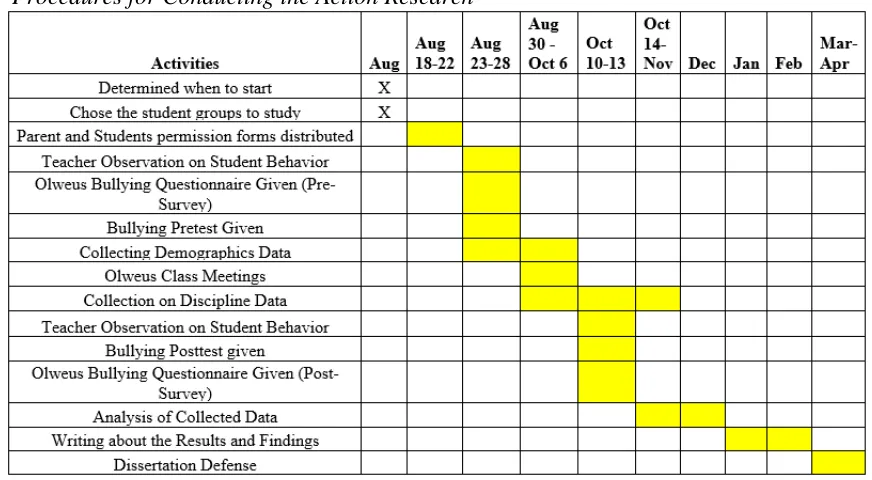
Table 3.3 Procedures for Conducting the Action Research ...93
Table 4.1 Means for Bullying Knowledge Pretest to Posttest for the Intervention ...103
Table 4.2 Pretest—Posttest Question Means for Intervention ...106
Table 4.3 Dependent t-Test for Pretest—Posttest for Intervention ...107
Table 4.4 Means for the Pre-Observation to Post-Observation of Bullying Behaviors for Intervention ...108
Table 4.5 Pre-Observation—Post-Observation of Bullying Behaviors for Intervention .110 Table 4.6 Dependent t-Test for Pre- and Post-Observation of Bullying Behaviors for Intervention ...111
Table 4.7 Means for the Pre-Questionnaire—Post-Questionnaire on Perceptions of Bullying for Intervention ...112
Table 4.8 Pre-Questionnaire—Post-Questionnaire of Perceptions on the Occurrences of Bullying in the School for the Intervention ...117
LIST OF FIGURES
LIST OF ABBREVIATIONS
ADHD ... Attention Deficit Hyperactivity Disorder
BiP... Behavioral Intervention Plan
EBD... Emotional and Behavior Disorders
ED ...Emotional Disturbance
ELL ... English Language Learner
ESOL... English Speakers of Other Languages
FBA ... Function-Based Behavioral Analysis
ISS ...In-School Suspension
IEP...Individualized Education Plans
LD ... Learning Disability
LEP ... Limited English Proficiency
OBPP ... Olweus Bullying Prevention Program©
OBQ ... Olweus Bullying Questionnaire
OSS ... Out-of-School Suspension
CHAPTER
1
INTRODUCTION
At White Rose Middle School(WRMS) (pseudonym) in the lower Piedmont
region of South Carolina, students with individualized education plans (IEPs), behavioral
intervention plans (BIPs), and 504 Plans frequently drew the gaze of their fellow students
in the inclusion classroom when they failed to attend to their work, negatively behaved in
the class, and needed special assistance from one of the two co-teachers in the classroom.
A 504 Plan is an educational plan for students who do not qualify for an IEP but have a
disability. This plan falls under Section 504 of the Rehabilitation Act of 1973 and is a
part of the federal civil rights law that prohibits discrimination against public school
students with disabilities. According to The State of South Carolina Department of
Education (SSCDE) (2004), the purpose of educating students with disabilities is “to
ensure that all children with disabilities have available to them a free appropriate public
education that emphasizes special education and related services designed to meet their
unique needs and prepare them for further education, employment, and independent
living” (p. 2). The term “learning disability” is often used in the United States to identify
students who have an official diagnosis by a medical doctor or certified psychologist in
the school system with an IEP, BiP, and/or 504 Plan. These students are legally required
to receive special services in the U.S. public school system through specifically designed
resource classes and inclusion classes. In addition to students with disabilities, students
The Elementary and Secondary Education Act (1965) defined the term limited English
proficient as the following:
An individual (a) who is aged 3 through 21; (B) who is enrolled or
preparing to enroll in an elementary school or secondary school; (C)(i)
who was not born in the United States or whose native language is a
language other than English; (ii)(I) who is a Native American or Alaska
Native, or a native resident of the outlying areas; and (II) who comes from
an environment where a language other than English has had a significant
impact on the individual’s level of English language proficiency; or (iii)
who is migratory, whose native language is a language other than English,
and who comes from an environment where a language other than English
is dominant; and (D) whose difficulties in speaking, reading, writing, or
understanding the English language may be sufficient to deny the
individual (i) the ability to meet the State’s proficient level of achievement
on State assessments described in section 1111(b)(3); (ii) the ability to
successfully achieve in classrooms where the language of instruction is
English; or (iii) the opportunity to participate fully in society. (ESEA:
Section 9101(25))
The State of South Carolina adheres to these federal requirements. The SSCDE (2014)
issued a memorandum that addressed the increasing numbers of LEP students who also
identified as having learning disabilities. According to the SSCDE memorandum (2014),
“The evaluation team must keep in mind that there must also be evidence of the disability
distinction between a language difference and a disability” (Payne, p. 1). Due to this
distinction between students with learning disabilities and LEP students, the SSCDE
distinguishes between the educational differences impacted by a learning disability and
limited English proficiency. The participant researcher of the present action research
study was involved with special services at WRMS as a core English teacher with an
inclusion classroom. In the literature review of this action research study, progressivism
through John Dewey’s experience and education, behaviorism through behavior
intervention models, historical contexts of special education in the United States
education system, the inequality in education during the Civil Rights movement, the
impact of school discipline, and the implementation of the Olweus Bullying Prevention
Program © in schools was investigated. This research was approached through a
pragmatic lens to reveal the experience of students in the inclusionclassroom as bullying
incidents increased the need for social justice.
Background of the Identified Problem of Practice
According to Morningstar et. al. (2015), criteria for implementation of inclusive
classrooms in schools should not be segregated by disabilities or needs an should
represent the natural proportion of the school. They should also provide Multi-Tiered
Systems of Support (MTSS), Response to Intervention (RtI), and Positive Behavior
Interventions and Supports (PBIS) for all students; while also involving leadership in
their staff, community, and families (Morningstar et al., 2015).
The inclusion classrooms at WRMS, where students identified with learning
disabilities represent between 45-55% of the population in the inclusion classrooms, were
not receive special education services. Inclusion classesconsist of a class that is
populated by students with learning disabilities, developing language skills, and students
without learning disabilities that are capable of functioning in a regular English or Math
class. The inclusion classroomrequired a regular education teacher co-teaching with a
special education teacher, which involved the teachers taking turns teaching elements of
the lessons, providing small-group instruction by splitting the class in half, and tutoring
students to meet their differentiation needs in the classroom. Inclusion classroomsare
supposed to represent the natural population of the school for students with learning
disabilities. At WRMS, students with identified learning disabilities comprised 13.4
percent of the total school population, while the inclusion classroom was populated with
44-55 percent of students who were identified as having a learning disability. WRMS
practiced placing English language learners (ELL) into the inclusion classroom along
with students with learning disabilities. ELL students were not supposed to be assigned to
special education classes unless they are identified with a learning disability, but since
inclusion classroomswere not only for students with learning disabilities the ELL
students are assigned these classes. This proved a challenge, since the co-teaching
assignments did not require the teachers to be fluent in the ELL’s native language.
WRMS incorporated the use of resource classes for students with learning disabilities
instead of creating a complete inclusive implementation in the school. Resource classes
were elective classes in WRMS that students with IEPs were required to take for extra
assistance in their core courses that are not in the inclusive setting. This course
requirement prevented these students from participating in Band or Chorus, which are
Physical Education. The difficulty with creating a complete inclusion modelat WRMS
may have been due to lack of funding to hire paraprofessionals to work within those
classes. While the general education teachers and special education co-teachers were
implementing differentiation practices within the classroom, the implementation of
inclusion at WRMS proved difficult without the needed additional support. Due to
WRMS not implementing inclusive practices effectively, students with learning
disabilities experienced frustration and feelings of inability in response to more difficult
material and the lack of necessary support, which led to these students disrupting the
classroom environment and attracting the gaze of their peers who see them as different in
the inclusion classroom.
The gaze of student peers toward students with learning disabilities, behavioral
and emotional disorders, and English language learners occurred through different
incidents during instruction in the inclusion classroom. These incidents frequently led to
bullying behaviors between students in the classroom.Students with learning disabilities
required extra assistance to gain understanding, so when they attempted to ask a question
during whole-group instruction, students who had already gained an understanding of the
material responded openly with rude comments about the validity of the question. While
the behavior was addressed as inappropriate, these students failed to understand their
impact on their peers and continued the behavior. Additionally, English language learners
in the inclusion classroom corresponded verbally with each other during instruction and
group work. Their interactions involved using profanity in Spanish, which drew the
attention of other students suspecting the ELL students were talking negatively about
in English proved ineffective when they understood only a portion of the instruction.
Emergent readers were learning through sound and symbol relationships and were
developing their reading skills by connecting their learning through their own
experiences. ELL students who are emergent readers are considered level 1 or 2 and
know little to no English but are placed in the inclusion classroom. Also, the co-teachers
were not fluent in Spanish, so the ELL students using profanity in conversation may not
have been addressed. The students with behavioral and emotional disorders also drew
their peers’ gaze. These students exhibited attention-desiring behavior resulting in
defiance, verbal outbursts in the classroom, inability to self-regulate their actions, and a
need to point out their peers’ faults. They laughed at other students when a concept was
not understood by them but got angry easily when they were redirected or got an answer
wrong themselves. These students were easily frustrated and shut down when they did
not understand a concept. Frequently, the special education and general education
teachers found that this group of students responded better in a small-group environment,
resulting in the class being divided and instruction given separately to the two student
groups.
Implementation and discipline at White Rose Middle School. At WRMS, the
school-wide positive behavior intervention support (SWPBIS) implementation tracked
office referrals through a program called PowerSchool©. WRMS implemented a Tier 1
approach to the positive behavior intervention support and provided a program on the
team iPads that served the role of instructing the students individually to target their
disruptive behavior. While this was categorized as a targeted approach to intervention,
learning the expectations in the school. Additionally, the SWPBIS program frequently
proved ineffective or failed to function properly while in use, eliminating the chance for
students to proceed through the lesson completely. The special education teacher for
eighth-grade English Language Arts worked with four different teachers. She remained
involved in co-planning with the four teachers but found that the student groups in the
four separate inclusion classes varied drastically and had different needs. Due to the
differences in teachers and the student populations in each class, the special education
teacher had difficulty in planning separately with each teacher to determine how to make
the classroom learning environment effective.
The Olweus Bullying Prevention Program© lessons addressed correlated
constraints, social synchrony, behavior as a developmental catalyst, and systems
reorganization environments as contributing factors to behavior; therefore, the students in
the inclusion classroom, who were identified as having an emotional and behavioral
disability(EBD),would investigate the impact of their environment on how they interact
with the world around them. The implementation of the Olweus Bullying Prevention
Program© as a targeted and individualized intervention for students who have Emotional
and Behavioral Disorders and disabilities was supported by the correlated constraints and
the social synchrony of students with EBD. The interaction between the systems was
evident in student behavior that had been impacted by bullying incidents, disciplinary
actions in previous classes, and negative home environments. The Olweus Bullying
Prevention Program© provided students with the opportunity to begin to develop an
understanding of the world around them and how to operate successfully in their
WRMS had some difficulties with their implementation of SWPBIS. Possibly due
to a higher rate of poverty in the community, WRMS had students with attendance
difficulties that resulted in truancy cases. Additionally, when a student had behavioral
and academic difficulty in school, parents transferred their child to another school or to
the virtual school in South Carolina for homeschooling. Therefore, the SWPBIS had
difficulty with sustainability as the student population fluctuated.
The fundamental goal in placing students in an inclusion classroom at WRMS
was to provide students with learning disabilities a mainstream education instead of
segregating them into self-contained classrooms. Many students performed below the
eighth-grade level, segregating them from assignment to other English classes with the
majority of students performing on grade level. Like the race segregation of Mexican
Americans, Asian Americans, and African Americans in the common schools, students in
the inclusion classroom faced social separation due to their assignment to the class.
Spring (2014) argued that the minority races in the United States were segregated
educationally to accept subordinate roles in society. The concern was whether the current
educational system and practices at WRMS segregated students with learning disabilities
and behavioral difficulties into subordinate roles in the twenty-first century.
Implementing the Olweus Bullying Prevention Program©. To address the
differences of students with learning disabilities and help their peers understand them
better, the Olweus Bullying Prevention Program© (OBPP) funded by the school district
was incorporated in classroom instruction. The program provided a “comprehensive
approach that included schoolwide, classroom, individual, and community components”
change to create a school climate that is safe and positive. The OBPP (2017) stated, “The
program’s goals are to reduce and prevent bullying problems among schoolchildren and
to improve peer relations at school” (para. 2). The program stated that it “has been found
to reduce bullying among children, improve the social climate of classrooms, and reduce
related antisocial behaviors, such as vandalism and truancy” (OBPP, 2017, para. 2). The
focus of the program was to change the school climate and classroom environment to
provide children with the right to be educated in a safe school community.
The Olweus Bullying Prevention Program© originated with Dan Olweus as a
professor of psychology at the University of Bergen in Bergen, Norway and affiliated
with the Research Center for Health Promotion. The program started as a large-scale
bullying project in 1970 and in the 1980’s, Dan Olweus conducted a systematic
intervention study on bullying internationally. This resulted in his creation of the original
“Bullying Prevention Program” (OBPP, 2017, www.clemson.edu/olweus). Due to his
research and efforts to eliminate the negative impact of bullying in schools, Olweus
received numerous awards, including the Distinguished Contributions to the International
Advancement of Psychology Award in 2011 and the Distinguished Contributions to
Research in Public Policy in 2012 given by the American Psychological Association
(APA) (OBPP, 2017, www.clemson.edu/olweus). Olweus and Ekblad (1986) conducted
Olweus’ Aggression Inventory to assess if there were differences in aggression and
behavior of Chinese primary students to Western European children. Their findings
resulted in differences, showing that the Chinese students tended to control their
aggression and behavioral tendencies. Olweus (2007) implemented his research in a
that three data points should be taken over a course of 20 months for students in grades 5
through 8 to determine the implications of a bullying prevention program. In his
hypothesis, he projected that the implementation of a bullying prevention program will
show a decrease in bullying behaviors two years after intervention. After implementation
in two separate programs, Olweus (2007) showed that the bullying prevention program
resulted in a decrease of bullying behavior after two years.
The following studies on the appropriate implementations of the Olweus Bullying
Prevention Program were discussed in detail in the Literature Review. Black and Jackson
(2007) implemented the Olweus Bullying Prevention Program© to determine if it was
effective for urban youth in the United States. Their findings indicated that the program
decreased their incident density by 65 percent over a course of four years (Black and
Jackson). Hong (2009) also addressed the use of the Olweus Bullying Prevention
Program© for students in low-income schools and whether it proved effective and an
appropriate intervention. He determined that urban inner-city schools tend to have student
violence, teachers less willing to address bullying issues, administrators who fail to
engage students, and home environments that increase violence in the students’ lives, and
concluded the Olweus Bullying Prevention Program© takes a whole-school approach,
that it is an appropriate intervention for low-income schools with high incidents of
bullying in the schools. Black et. al. (2010) applied the Olweus Bullying Prevention
Program© to a large urban district with obstacles to implementation. They found that
funding over the course of a few years impacted the program, and determined without
they were able to provide community support, which proved the bullying prevention
program to be successful.
Purpose Statement
The Olweus Bullying Prevention Program©, funded by the school district and
approved by the administration of White Rose Middle School, was incorporated in
classroom instruction. The goal of the action research was to help all students in the
inclusion classroom to better understand each other’s differences to decrease incidents of
bullying in the classroom. Implementing the OBPP© in the inclusion classroom
investigated the impact of the program on behavior for students within the classroom.
Secondary students with individualized education plans (IEPs) received
accommodations to their learning for use in the regular education classroom.
Accommodations included extended time for testing and behavioral accommodations to
help a student meet goals towards positive behavior in the school. There were also
students with severe emotional and behavioral disorders who receive 504 Plans and
behavioral intervention plans (BIPs) to help them meet social and emotional goals
through the year. When a student with an IEP or BIP disrupts the classroom, he or she
was expected to conform to the structure of the controlled classroom, as did their peers
without learning disabilities, to maintain a healthy learning environment for all students.
If disruptive students failed to meet the behavioral expectations, the school guidelines
stated that they should be sent to an administrator or to behavioral intervention (BI),
which was the school’s in-school suspension room. The issue of concern at White Rose
Middle School focused on the expectations for students with IEPs and BIPs to
while facing their own personal challenges and disabilities. According to Ingram,
Lewis-Palmer, and Sugai (2005), while “time-out is an effective punishment procedure” for
some students, for other students it is ineffective due to their behaviors “being maintained
by escape” (p. 225). This problem was evident in students with IEPs and BIPs at White
Rose Middle, since teachers stated that students who find the material difficult tended to
request to go to ISS or pushed the limits of the classroom rules to receive ISS, which took
them out of the classroom and separated them from the work expected of them.
Problem of Practice
WRMS incorporated a School-wide Positive Based Intervention System (PBIS),
where coins were given out for positive behavior to reinforce and influence students to
behave and interact in positive ways. While some students had an interest in receiving
coins for positive behavior, many of the students with negative classroom behaviors
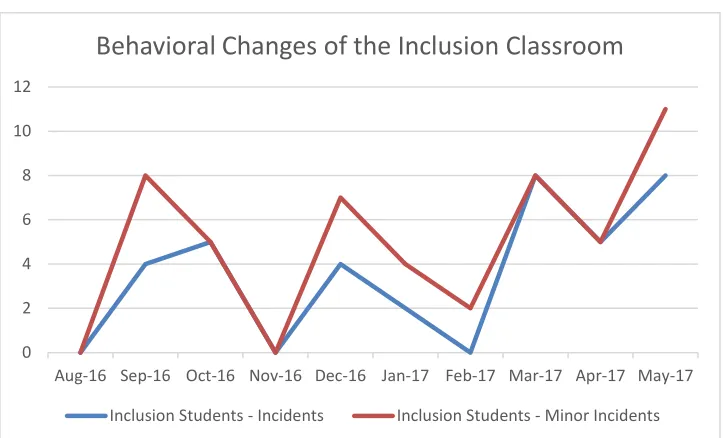
targeted and harassed the students earning coins. During the 2016/2017 school year at
WRMS, the inclusion classroom had a rise in incidents before the School-wide PBIS
program was introduced in November of that school year. Minor incidents included
classroom disruptions and cell phone violations, while incidents that required In School
Suspension included profanity, racial slurs, continued class disruptions, disrespect,
physical violence, and bullying behavior towards other students. After the School-wide
PBIS was introduced, inclusionstudents continued with disruptive behavior, defiant
behavior, physical aggression, and disrespect towards the instructor and other students.
The decrease in behavioral incidents in February 2017, were due to changes in two
students being removed from the class to receive different accommodations in the school,
of the school year approached. The rise in negative behavior after the School-wide PBIS
model was implemented, indicates that it is ineffective for inclusion students at WRMS.
Previous implementations of behavioral interventions also proved ineffective in
improving student behavior.
Figure 1.1. Behavioral Changes of the Inclusion Classroom
These student interactions led to conflicts that they have not previously been
taught how to navigate to resolve. The conflicts frequently led to physical aggression, a
lack of empathy, and verbal abuse. The behaviors between students were brought into the
classroom, which negatively impacted the learning environment. In the inclusion
classroom, these behaviors and peer interactions were compounded by the population of
students identified as having a "learning disability." These students had difficulties with
self-regulation, which resulted in them being impulsive in the classroom with both the
lesson and their peers. they had difficulty in understanding empathy, so tended to not
show empathy to their classmates. They communicated with each other as if they were
on social media, which impacted their ability to understand that their harsh reactions to 0
2 4 6 8 10 12
Aug-16 Sep-16 Oct-16 Nov-16 Dec-16 Jan-17 Feb-17 Mar-17 Apr-17 May-17
Behavioral Changes of the Inclusion Classroom
each other could result in peers perceiving that they are not accepted or liked by the
classroom community. The researcher identified these behaviors and reactions as
disruptions that led to further conflict and future bullying behaviors.
Due to a continued reactionary approach to disruptive behavior in the classroom
and the proactive approach of PBIS failing in the school, the Olweus Bullying Prevention
Program© was incorporated to determine if it had a positive effect on student behavior.
The present action research study had the general education teacher implementing the
Olweus Bullying Prevention Plan© to attempt to decrease the incidences of negative
behaviors within the inclusion classroom. The action researcher applied the method of a
pretest-posttest, pre-and post-observations, pre- and post-questionnaire, and the
implementation of the OBPP© intervention to show the program’s impact on behavior in
the inclusion classroom.
Research Questions
The present action research study focused on the issues surrounding
implementation of a behavior-modification model called the Olweus Bullying Prevention
Program (OBPP)© on middle-level students in an inclusion classroom. These students
were identified by the school district as “learning disabled” and are documented in the
school as having behavior problems in the traditional classroom structure; therefore, the
research question is as follows:
RQ1: What is the short-term impact of the Olweus Bullying Prevention Program
(OBPP)© on middle-level students who have been identified as “learning
disabled?”
SRQ1: What is the short-term impact of the Olweus Bullying Prevention Program
(OBPP)© on theknowledge about bullying of middle-level students who have
been identified as “learning disabled”?
SRQ2: What is the short-term impact of the Olweus Bullying Prevention Program
(OBPP)© on thebullying behavior of middle-level students who have been
identified as “learning disabled”?
SRQ3: What is the short-term impact of the Olweus Bullying Prevention Program
(OBPP)© on theperception of the school bullying of middle-level students who
have been identified as “learning disabled”?
SRQ4: How do middle-level students who have been identified as “learning disabled”
react to the Olweus Bullying Prevention Program (OBPP)©?
Theoretical Framework
The theoretical framework for this action research study was based upon the ideas
of experience in progressivism and social reform in social reconstructionism. The
progressivist theory, specifically John Dewey’s (1938) Experience in Education and
(1910) Democracy and Education, and the historical impact on education during the
Essentialist movement directly affects special education. The discrimination of special
education within educational reform that stratified racial and social classes and the impact
of the Civil Rights movement on education will be further discussed in detail in Chapter
Two.
Freire, Dewey, and experience in the inclusion classroom. Paulo Freire (1970)
stated, “There is no true word that is not at the same time a praxis. Thus, to speak a true
are to guide their students toward this ability to speak a “true word,” not as telling the
truth but towards the action of changing their world. Freire’s argument directly relates to
the teaching practices of the OBPP, which instructs the teacher to act as a moderator by
asking students questions about bullying issues they see in their schools and helping to
guide them toward a conclusion on what they can do positively to change their world
through love humility, and faith in their students through dialoguing about bullying
prevention. The OBPP places the teacher in the position of moderator and the students in
position of communicating with each other about their experiences and must be willing to
take action towards the improvement of their experiences in both the classroom and the
school to succeed.
An improvement in experience between students by working towards alleviating
bullying incidents in the school, should improve their experiences in education. Dewey
(1938) stated, “Every experience lives on in further experiences. Hence the central
problem of an education based upon experience is to select the kind of present
experiences that live fruitfully and creatively in subsequent experiences” (pp.27-28). The
OBPP focuses on the students’ experiences, without focusing on how it improves
classroom instruction and classroom management. In the inclusion classroom, growth is
measured in multiple ways, due to the needs of the students’ IEPs and BiPs; yet, one of
the constant issues in the classroom at WRMS is the previous external experiences the
students have had before entering the school building. Dewey (1938) stated that the
principle of continuity can work in varying ways, either negatively when the experience
“renders [a child] averse to and comparatively incompetent in situations which require
experience arouses curiosity, strengthens initiative, and sets up desires and purposes that
are sufficiently intense to carry a person over dead places in the future” (p.38). WRMS is
at a 74% poverty rate; therefore, students in the inclusion classroom not only deal with
issues of poverty, but also issues of disability, which impacts their motivation and
perspective toward their educational capabilities. The incorporation of the OBPP in the
inclusion classroom instruction should promote the environment necessary to help these
students experience positive dialogue and communication with their peers and their
teachers.
Progressivism. Progressivist theory aims at promoting a democratic society in
schools in order to help children become actively engaged in their learning. The
instruction needs to be relevant and the teachers serve as guides to help students through
inquiry processes. John Dewey addressed curriculum that incorporated student interest
into education. Dewey (1897) stated that “true education comes through the stimulation
of the child’s powers by the demands of the social situations in which he finds himself”
(p.77-80). Dewey (1897) determined that the experience of the child and the education of
the child should revolve around his social situation, that you could not separate the child
from the experiences he brings from home and society, and that teachers should use the
experiences of the child to make his learning relevant to his interests in order to help him
become an agent for change.
Multiculturalism. Multiculturalism involves a curriculum that incorporates
diverse curriculum to promote social and societal change. It focuses on teaching students
to critically think about their studies and to attempt to understand the marginalized
make learning relevant. Counts (1932) believed that education and the curriculum that
teachers choose will “influence the social attitudes, ideals, and behavior of the coming
generation” (p.26). Through critical theory and a multicultural curriculum, teachers return
to Progressivist ideals that ground education in experience and relevance to promote
change in society. The Olweus Bullying Prevention Program© lessons addressed the
marginalized students in WRMS who are bullied or excluded by their peers. The lessons
taught students about empathy, standing up to bullying in their school, and to include
those students who are left out. Through this, students learned how to identify and report
bullying in their environment to promote social change through the Olweus curriculum.
Action Research Methodology
In this action research methodology, the researcher’s role will be discussed to
address her positionality as both a researcher and a participant. Second, the site and
participants are introduced to frame the community of school and community that the
research takes place in. Finally, the procedures that the data was collected are discussed
to show the mixed methods incorporated in the study.
Researcher Role. The researcher’s role in the action research study was as the
inclusion classroom teacher for eighth grade English Language Arts. In the role of
teacher and researcher, she served as an active participant in the concurrent mixed
methods design (Coe et al., 2017). The Olweus Bullying Prevention Program© lessons
were taught by the researcher as an active participant guiding her students through
discussions on bullying prevention. The role of participant provided the researcher with a
full knowledge of the needs of her students and what they directly experienced in the
pretest-posttest design. For this collection of data, the researcher collected quantitative data
through a bullying knowledge pre- and posttest, a pre- and post-observation of bullying
behavior, and the Olweus Bullying Questionnaire as a pre- and post-questionnaire on the
perceptions of bullying. The Olweus Bullying Prevention Program© classroom lessons
served as the intervention, in which the researcher created transcripts from the
audio-recorded student responses. The researcher also kept an audit trail of her observations
from the classroom lessons, which placed her in the position of being both an insider as
she participated and an outsider as she reflected on her interactions with the students. In
the data collection role, the researcher was able to analyze the data outside of the
classroom to reflect on her findings. This analysis placed the researcher in the position of
looking at the student data objectively to determine the impact of the intervention on
students identified with a learning disability.
Site. The research was conducted in an Eighth-grade English Language Arts
inclusion classroom at White Rose Middle School. The school was in the Piedmont area
of South Carolina. The school had a population of 761 students, 61 teachers, and served
the seventh and eighth grade (SC AYP, 2016). It was the only middle school that
instructed seventh and eighth grades. The school had a technology emphasis, where it
provided each faculty member with an iPad and each core instructional team with an iPad
or Chrome Cart for students to use in the classroom (SC AYP, 2016). The school
provided extra time and extra help through homeroom time and an afterschool tutoring
program. It was a partner with the local Relay for Life organization through the American
Seventeen students qualified for South Carolina Junior Scholars and inducted
twenty students in the National Junior Honor Society (SC AYP, 2016). The eighth grade
girls’ basketball team won a local division championship, the girls’ softball team claimed
the local championship, the middle school chorus was named grand champions of the
Time to Travel Music Festival, and the band named five students to the SCBDA Honor
Band (SC AYP, 2016). There were twenty-five perfect scores on the Algebra I
End-of-Course exam and twenty-five perfect scores on the English I End-of-End-of-Course Exam for
Spring 2015 (SC AYP, 2016). The school hosted a vehicle career fair, a job shadowing
day, a college door decorating contest, astronomy night, art exhibit, and a STEM
inventor’s fair (SC AYP, 2016).
Participants. Historically, inclusion classrooms in both English Language Arts
and Trans-Algebra were populated by 45%-55% special education students. The special
education students’ learning disabilities were documented through Individualized
Education Plans (IEP), Behavioral Intervention Plans (BIP), and 504 Plans. In addition to
this population, the inclusion classroom was also populated with English language
learners (ELL) that may also have an IEP or BIP. Frequently, students with IEPs who
have Emotional Disturbance (ED) or receive frequent disciplinary actions also had a BIP
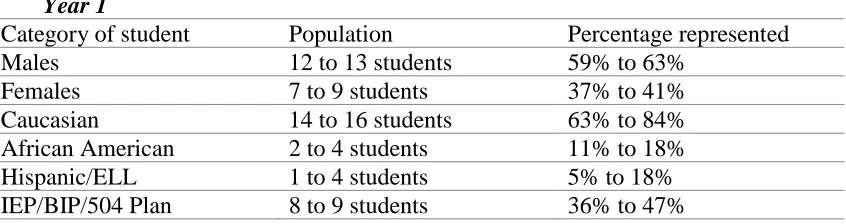
attached to their IEP. Historically, the demographics of the inclusion classroom at
WRMS was between 19-22 students with the following identifying factors: 12-13 males
at 59%-63%, 7-9 females at 37%-41%, 14-16 Caucasian students at 63%-84%, 2-4
African American students at 11%-18%, 1-4 Hispanic/ELL students at 5%-18%, and 8-9
student population to receive Free and Reduced Lunch, which placed the students in a
school with high poverty rates.
Data collection methods. The action research study followed a concurrent mixed
methods design (Coe et al., 2017). Quantitative data was collected through a one-group
pretest-posttest design. The pretest and posttest consisted of an assessment to determine
student understanding of bullying before and after the treatment. The researcher
conducted a pre- and post-observation of student behavior to determine changes in
student behavior and peer interaction. A pre- and post-questionnaire was given before
and after the intervention of the Olweus Bullying Prevention Program© lessons to
determine students’ perceptions of the rates and types of bullying they were experiencing
The Olweus Bullying Prevention Program© classroom lessons were the treatment.
Qualitative data was collected through lessons audio recorded that were later transcribed
for analysis to determine what the student reactions to the program were.
Assumptions
The researcher assumed that students in the study would accurately respond to the
Bullying Survey Questions in the pre- and post-questionnaire. The researcher also
assumed that students in the study would be actively involved in discussing bullying
incidents in the school during the classroom lessons. The researcher assumes that the
Olweus Bullying Prevention Program© will show an impact in the inclusionclassroom
beyond the School-wide PBIS program. Additionally, the researcher assumed that the
administration of the school would provide her access to discipline and special education
Limitations
The limitations the researcher faced involved access to data and testing schedules
in WRMS. The researcher was not a special education teacher, therefore the data she had
access to as an English teacher only addressed her students. She was reliant on receiving
IEPs from the special education teachers to know the goals of students with learning
disabilities. The researcher did not have access to discipline data from the previous year
and was reliant on the school administration to provide her with that data. The researcher
also discovered that the school’s daily schedule had changed for the implementation year,
so scheduling the OBPP Classroom Lessons would need to be incorporated into
classroom instruction instead of during the previous homeroom time. MAP testing in the
English classroom and Benchmark testing also limited instructional time for the
implementation, unless the OBPP classroom lessons could be incorporated into
instructional activities that met South Carolina College and Career Readiness standards
for eighth grade English.
Delimitations
This action research study took place at WRMS, with participants in the eighth
grade English inclusion classroom that the researcher was assigned to. Only the students
who signed and return the permission forms would be included in the study. The findings
of the study represented the perspectives and documented behavior of these students in
the two classrooms.
Conclusion
resulted in an increase of behavioral disruptions and discipline. To address the problem of
practice, the implementation of the Olweus Bullying Prevention Program© was
discussed in comparison to the school wide PBIS program. A rationale for the study,
purpose for the study, and methodology were discussed briefly and supported by the
background of the problem of practice at WRMS. Additionally, conceptual and
theoretical frameworks for the study were provided to situate the problem of practice in
Dewey’s progressivism as students experience social justice through the OBPP©
classroom lessons.
The limitations and assumptions of the researcher and the problem of practice
were discussed to foresee future difficulties with the study as it was conducted. Though
there were some limitations, the goal of decreasing negative experiences with behavior in
the inclusion classroom was beneficial to all the students, since the goal aimed at
improving the classroom environment to increase the productive learning. Students in the
inclusion classroom had the opportunity to excel within a positive environment, therefore
the adoption of the Olweus Bullying Prevention Program© lessons into classroom
instruction to create safe interactions between students were implemented at WRMS in
hopes that students with learning disabilities gained the same educational rights to learn
as students outside of the inclusion classroom, resulting in lower numbers of students
with IEPs and BIPs to lose educational time in the classroom due to discipline referrals.
Chapter Two, the literature review for this action research study, addressed
conceptual and historical research that grounded the study in theory and social justice. It
also discussed current trends in behavioral implementations and school discipline for
approaches to eliminating bullying within schools. Chapter Three discussed the
methodology used to plan the implementation of the Olweus Bullying Prevention
Program©. It discussed the data collection procedures and the measurements used to
analyze the data collected during the research study. Chapter Four discussed the research
study in detail, which included the results, data analysis, findings, a discussion on how
the research should continue in the future, and the changes that needed to be made to
improve the study. Chapter Five reflected on the researcher as a leader within the school.
This chapter addressed the researcher’s philosophy and personal values, her role in
developing curriculum, and her reflection on the process of conducting the action
research study.
Glossary of Key Terms
504 Plan – Students who qualify for services under Section 504 of the rehabilitation act
of 1973 are entitled to receive individualized services that are included on a 504
Plan. (Speil & Evans 2014, p.453)
Ableism – The discrimination against someone based on perceived “ability” (Ferri and
Connor 2005).
Behavioral Intervention Plans (BiP) – An intervention plan based on a child with a
disability’s disciplinary action that is put into place after an IEP team “conduct[s]
a functional behavioral assessment, [or] unless the LEA had conducted a
functional behavioral assessment before the behavior that resulted in the change
of placement occurred” in order to implement modifications and strategies to help
a student function socially and emotionally in appropriate ways (State Register
Bullying – “Bullying is aggressive behavior marked by an imbalance of power occurring
repetitively with intent to harm [1,2] and can be either physical (e.g., fighting,
pushing) or relational (e.g., social exclusion, spreading rumors). Bullying is a
social phenomenon, with each child’s role— bully, victim, bully-victim, or
bystander [1,3]— dependent on the situation” (Bauer et. al. 2006, p. 266).
Emotional and Behavior Disorders (EBD) – Students with ED or E/BD demonstrate
problem behavior on a consistent basis that is much more severe, intense, and of
longer duration. The inappropriate behaviors are chronic, significantly interfere
with academic achievement, and inhibit their ability to establish and maintain
appropriate social relationships across settings such as home, school, and
community. (Evers and Spencer 2011, p. 38)
Emotional disturbance (ED) – A condition exhibiting one or more of the following
characteristics over a long period of time and to a marked degree that adversely
affects a child’s educational performance: (A) An inability to learn that cannot be
explained by intellectual, sensory, or health factors; (B) An inability to build or
maintain satisfactory interpersonal relationships with peers and teachers; (C)
Inappropriate types of behavior or feelings under normal circumstances; (D) A
general pervasive mood of unhappiness or depression; [and] (E) A tendency to
develop physical symptoms or fears associated with personal or school problems.
(State Registrar 2011, pp. 4-5)
Functional Behavior Assessment – Functional behavioral assessment (FBA) has been
suggested for facilitating the development and effectiveness of behavior
Function-Based Intervention – The identification and development of function-based on
individualized FBA information, paying particular attention to factors that
maintained occurrences of problem behavior (function). Function-based
intervention strategies emphasized ways to neutralize setting events, make
antecedents irrelevant, reduce effectiveness of problem behavior by teaching new
behaviors, and provide access to maintaining consequences for appropriate
behavior while not allowing access to maintaining consequences for inappropriate
behavior. (Ingram et. al. 2005, p. 227)
In School Suspension – A "disciplinary action that is administered as a consequence of a
student's inappropriate behavior, requires that a student absent him/herself from
the classroom or from the school for a specified period of time" (Costenbader and
Markson 1998, p. 62; Smith et. al. 2012, p. 175).
Inclusion – Seeking to provide appropriate educational supports for diverse learners in
the context of high standards, increasingly diverse classrooms and the demands
and opportunities of what has come to be coined “21st century learning” and
“empowering the classroom teacher with the knowledge, skills and supports to
identify the authentic needs of students and to differentiate instruction to respond
to those needs (Philpott, 2007; Howery et. al. 2013, p. 273).
Individualized Education Plans (IEP) – Individualized education program. Individualized
education program or IEP means a written statement for a child with a disability
that is developed, reviewed, and revised in accordance with Secs. 300.320
Learning Disability – (1) Intellectual disability means significantly subaverage general
intellectual functioning, existing concurrently with deficits in adaptive behavior
and manifested during the developmental period, that adversely affects a child’s
educational performance. (2) Specific learning disability means a disorder in one
or more of the basic psychological processes involved in understanding or in
using language, spoken or written, that may manifest itself in the imperfect ability
to listen, think, speak, read, write, spell, or to do mathematical calculations,
including conditions such as perceptual disabilities, brain injury, minimal brain
dysfunction, dyslexia, and developmental aphasia. (State Registrar 2011, p. 5)
Other – “A term used in feminist criticism (the “not male” and thus unimportant) and
postcolonialism (the colonized) to mean “different from” and unimportant, that
which is dominated” (Bressler, 2011, p. 320)
CHAPTER
2
REVIEW OF LITERATURE
A literature review addresses previous research and theoretical perspectives of a
problem to review what other researchers in the field have implemented that is similar
(Leedy & Ormond, 2005). The benefits of a literature review offer new perspective to the
research, inform a researcher about what others are conducting in the area, and show
what methodologies others have used to address the problem. A literature review also
reveals sources for data and measurement tools others have effectively developed, reveals
problems and solutions found in the research, and helps with interpreting findings based
on any previous research (Leedy & Ormond, 2005).
In this literature review, the researcher began her investigation through the
University of South Carolina’s online database with Boolean phrases that addressed
bullying prevention in schools, discipline practices, and the behavior of students within
special education. The databases used were ERIC and ERIC ProQuest, Education Source,
Psychology and Behavioral Sciences Collection, Education Full Text, Academic Search
Premier, and Dissertations and Theses. The researcher extended her initial investigation
into additional subjects that specifically addressed the study. The additional topics
investigated were research on the Olweus Bullying Prevention Program© (OBPP) and its
implementations, special education and behavioral interventions in schools, and English
identified the commonalities within each trend. The researcher also used texts that
addressed historical patterns and developments in education, while also incorporating
foundational texts from theorists in education.
This literature review focuses on the research surrounding bullying prevention,
the development of special education discipline and intervention practices, and the impact
of social justice issues in special education. The first section of this literature review
addressed the theory surrounding educational experiences and bullying prevention
education in theinclusion classroom. The second section addressed the implications of
behavior interventions for students with learning disabilities. The third section addressed
the history of inclusive and exclusive education in the United States. The fourth section
discussed inequalities in education during the Civil rights movement and the
development of individualized education plans (IEP) for students with learning
disabilities. The fifth section addressed current trends in interventions for students with
learning disabilities. The final section discussed the implementations of the Olweus
Bullying Prevention Program© in schools with discipline and bullying incidents.
Background of the Problem of Practice at WRMS
At White Rose Middle School(WRMS) identified special education students drew
the gaze of their fellow students in the inclusion classroom when they displayed negative
behavior and interrupted the classroom environment, resulting in altercations, rumors,
and teasing students at a disadvantage. The conflicts frequently led to physical
aggression, a lack of empathy, and verbal abuse and led to bullying behaviors. In the
inclusion classroom, these behaviors and peer interactions were compounded by the
with self-regulation and were impulsive in the classroom with both the lesson and their
peers. For the present action research study, the participant researcher was a core English
teacher with an inclusionclassroom at WRMS, who was also responsible for providing
special education services to students with documented learning disabilities. The
identified problem of practice (PoP) for the present action research study has the general
education teacher implementing the Olweus Bullying Prevention Program© to attempt to
decrease the incidences of negative behaviors within the inclusion classroom.
Theoretical Base
The following research addressed Progressivism theory that connectd experience
and education through Dewey’s (1938) perception that education should provide learners
with positive educational experiences “that live fruitfully and creatively in subsequent
experiences” (pp. 27-28). Like Dewey, the Olweus Bullying Prevention Program© uses
the impact of experience to teach students how to recognize and prevent bullying in their
environment. Therefore, the OBPP© incorporated progressivism as its foundation in its
lessons and classroom discussions.Second, multicultural curriculum and social theory
was discussed to address issues of desegregation and the ways school curriculum
included and then eliminated relevant experiences for students of color. In the final
section, behavior interventions for students with disabilities were suggested and
discussed to determine the difficulties these students face in disciplinary practices in
schools.
Progressivism theory. Progressivism aims to promote democratic social living
that fosters self-learning through interdisciplinary instruction (Dewey 1938). The
social, and global problems in their learning. While students apply their experiences to
their learning, the teacher serves as a facilitator to their inquiry learning. Freire (1970)
believed teachers could guide their students to change the world around them through
dialogue and interaction, and Dewey (1938) believed that students’ experiences both in
school and outside of school impacted their education. The focus on dialogue and
students’ experiences laid the foundation for progressivism education.
Paulo Freire (1970) stated, “There is no true word that is not at the same time a
praxis. Thus, to speak a true word is to transform the world” (as cited in Flinders &
Thorton, 2013, p. 157). The teaching practices of the OBPP© helps teachers act as
moderators for their students so they can gain the ability to speak their “true word” to
help them change their world. Freire incorporated the act of dialogue as the culminating
path toward speaking the true word. He determined that people who have been denied
their right to voice their truth must reclaim it to prevent dehumanizing aggression in their
environment (Freire 1970). Freire determined that dialogue cannot occur without the
following: “a profound love for the world and for men,” “humility,” and “an intense faith
in man” (as cited in Flinders & Thorton, 2013, p. 158). Through dialogue, teachers guide
their students and must demonstrate Freire’s three aspects of love, humility, and faith in
their students. The OBPP© lessons help the teacher lead her students through topics with
each other that address their experiences, which through dialogue helps her students
prevent acts of bullying aggression in the environment.
To be able to question the world around them and to become the knower, students
must understand the rules in their classroom society to maintain order. Dewey (1938)
rules, and these rules order their conduct” (p. 52). Like the games children play, the
classroom also needs rules of order for learning to occur. He determined that when an
adult changed the rules of their game, the children modeled the change in their own
games. This modeling is a part of classroom instruction, in which the teacher models
what the students are expected to perform before assigning the activity. Dewey (1938)
concluded that an individual’s actions can impact the environment for the group they are
interacting within. Dewey (1938) stated the following:
There are likely to be some who, when they come to school, are already victims
of injurious conditions outside of the school and who have become so passive and
unduly docile that they fail to contribute. There will be others who, because of
previous experience, are bumptious and unruly and perhaps downright rebellious.
But it is certain that the general principle of social control cannot be predicted
upon such cases. It is also true that no general rule can be laid down for dealing
with such cases. The teacher has to deal with them individually. (p. 56)
Dewey (1938) suggested, the unruly students should be excluded to prevent them from
impeding the education of others.
The inclusion classroomat WRMS incorporated co-operative groups, pairs, and
whole group learning, resulting in a classroom society expected to learn through
experience together. Yet, when there were students with severe behavioral disabilities,
students who participated in fighting in the school, and students who functioned below
their grade level due to learning disabilities, the classroom society and established rules
were challenged. The classroom environment suffered, and instruction was delayed,
they leave the eighth grade. In turn, this adversely impacted the Special Education
teacher and the general education teacher through standardized test scores. This resulted
in unfavorable experiences for both the students and instructors in the inclusion
classroom as they were impacted by students presenting with disruptive behaviors.
Positive experiences between students works towards alleviating bullying
incidents in the school. Dewey (1938) stated that experience that is well planned proves
valuable in education and promotes continued learning. The OBPP© focused on the
students’ experiences school-wide, in the classroom, and in the community. Dewey
(1938) determined that the negative experiences students have impact a principle of
continuity, which can be influenced by both the negative and positive experiences.
Students in the inclusion classroom dealt with issues of poverty alongside their
disabilities, impacting their motivation to learn. Implementing the OBPP© in the
inclusion classroom provided the environment necessary to help these students
experience positive dialogue and communication with their peers and their teachers.
Multicultural curriculum and social theory. Multiculturalism involves a
curriculum that challenges the Eurocentric canon to include pluralism, diversity,
multiplicity with the aim to empower students to investigate the human condition from a
global and social perspective (Counts 1932). It focused on teaching students to reflect and
attempt to understand the experiences of historically marginalized groups, including
women, people of color, and people with disabilities. The students are challenged to
dialogue across differences while instructors create curriculum that challenges the ideas
of cultures. The OBPP© helped students engage in dialogue that allowed them to reflect