
The Effect of Osteopathic Manipulative Therapy Applied to the Lumbar Spine on Postural Stability: A Pilot Study
36
0
0
Full text
(2) ABSTRACT. Background: Lumbar spine dysfunction has been shown to decrease postural stability. It has been hypothesized that applying manual therapy to the lumbar spine may have an effect on improving postural stability.. Objective: The aim of this study was to investigate the effects of an osteopathic manipulative therapy (OMT) treatment protocol applied to the lumbar spine on postural stability as measured. ( or c) ia 20 U 04 ni ve rs i. ty. by average centre of pressure velocity (COPV) on a vertical force platform measurement system.. Methods: 43 asymptomatic subjects between the age range of 18-29 years were randomly allocated into an intervention (n=20) or control (n=21) group. The intervention group was administered with an OMT treatment protocol to the lumbar spine consisting of high-velocity low-amplitude (HVLA), muscle energy technique (MET) and myofascial technique (MT). The. ct. control group received no intervention. Measurements of average centre of pressure velocity. Vi. (COPV) were taken immediately pre- and post-intervention under six different stance conditions.. Results: Significant reduction in average COPV was demonstrated during tandem stance for the intervention group with both eyes-open and eyes-closed. No significant changes in average COPV were observed during bipedal or unipedal stance for either group.. 2.
(3) Conclusion: Results of this study suggest that OMT applied to the lumbar spine may have an effect on postural stability. Further research with a larger sample size, symptomatic patients and a longer-term treatment protocol is needed to extrapolate these findings into the clinical setting.. Vi. ct. ( or c) ia 20 U 04 ni ve rs i. ty. Key Words: osteopathy, lumbar spine, postural stability, centre of pressure sway velocity. 3.
(4) INTRODUCTION Maintenance of upright body posture and balance is achieved through the integration of sensory, mechanical, and motor processing strategies within the postural control system.1 The ultimate goal of this system is to maintain horizontal and vertical alignment of the body with respect to the individuals intent, instruction and environment. To achieve this goal the postural control system relies on three major subsystems: a sensory system to report postural and environmental status, a central control system for processing information, and a motor control system for effecting a. ty. stable posture.2. ( or c) ia 20 U 04 ni ve rs i. The sensory component of the postural control system has three major inputs; somatosensory, vestibular and visual. Somatosensory input provides proprioceptive information regarding body position and weight distribution via receptors found in joints, muscles and skin. Vestibular input reports information about movement and position of the head via cells of the middle ear, while the visual system provides feedback about threats to postural stability in the surrounding. Vi. ct. environment.3. Somatosensory input is integrated centrally with the motor control system at the levels of the cerebral cortex, brain stem and spinal cord. On the basis of information delivered by the sensory system, the motor control system makes continual adjustments to ensure the body remains upright against gravity and is aligned over its base of support.4 The terminal element of the postural control system is the postural muscles and the descending motor nerves supplying them.5. 4.
(5) Posture can be evaluated through many different parameters. The measurement of postural sway is commonly used for assessment of postural stability and control.1,5-10 For force platform analysis, postural sway is determined by the movements of an individual’s centre of pressure (COP) over a given time period. COP is a theoretical point where the center of gravity and muscular force from an individual is thought to act on the ground they are standing on.11 Musculoskeletal disorders including lower back dysfunction,1,9,10 cervical dysfunction,7,12 ankle injury,13 and arthritis of the lower limb,8 have been shown to increase postural sway characteristics. Other populations with a compromised postural stability include the elderly14,15. ( or c) ia 20 U 04 ni ve rs i. ty. and those with neurological disorders such as Parkinson’s disease16 and stroke.17. There are several studies that suggest low-back pain (LBP) and dysfunction decrease postural stability and alter proprioceptive function. Byl and Sinnot1 compared postural sway characteristics of middle aged non-symptomatic individuals to those with LBP caused by disc pathology, low-back strain and sacro-iliac joint dysfunction. These researchers demonstrated that. ct. individuals with LBP had an overall increase in postural sway characteristics and in particular. Vi. poor unipedal balance. The LBP group also had difficulty maintaining an upright posture during difficult balance tasks, such as those involving visual and sensory disturbances, when compared to the group with no LBP. Luoto et al.9 compared postural stability and psychomotor speeds in individuals with chronic LBP compared to those free from back pain. The LBP group was found to have slower psychomotor reaction times when compared to the control group. Also, the study found that women with severe LBP had poorer postural stability than women in the control group. Leononen et al.10 investigated the associations between impairment in lumbar movement perception and postural stability in individuals with lumbar spinal stenosis. These researchers. 5.
(6) demonstrated that individuals with stenosis had difficulties in sensing lumbar rotational movement however, correlations between proprioceptive ability and postural stability measures were inconsistent.. Whilst there is literature demonstrating the effects of LBP and dysfunction on postural stability there is little published research investigating the interaction between manual therapy applied to the low-back and its effects on postural stability.. ty. OMT is a collective expression used to describe a variety of treatment techniques employed by. ( or c) ia 20 U 04 ni ve rs i. osteopathic practitioners. While there are many different techniques that are classified as OMT this study is only concerned with three; high-velocity low-amplitude (HVLA) thrust manipulation, muscle energy technique (MET) and myofascial technique (MT). HVLA thrust manipulation involves the application of a high velocity ‘impulse’ or ‘thrust’ to a synovial joint over a very short amplitude often producing an audible ‘popping’ or ‘clicking’ sound associated. ct. with cavitation of a joint.18 MET is an active technique that utilizes the patient’s own muscle. Vi. contraction against an operator applied force in order to stretch soft tissues, enhance drainage and increase joint range of motion,19 while myofascial techniques (MT) involve cross-fiber kneading to soft tissues of the body, particularly the muscles and fascia.20. Evaluation of standing posture is commonly advocated by authors in the field of osteopathy as an assessment tool and post-treatment outcome measure.21 Greenman22 states one goal of OMT as being to restore musculoskeletal alignment and optimal balance posture. However there is little research to quantify the effects of OMT on postural stability or balance. It has been proposed that. 6.
(7) OMT, when applied to the spinal joints and surrounding musculature, may alter afferent feedback to the central nervous system to increase proprioception, improve motor control and improve postural stabiltiy.23 Individually applied, manual therapy techniques have been shown to alter short-term motor neuron activity,24 enhance performance in proprioception-dependant activities,25 increase range of motion,26-28 alter markers of autonomic nervous system activity,29 and facilitate an immediate increase in mean voluntary contraction of the paraspinal muscles.30 It has been hypothesized that through these mechanisms OMT may influence postural sway.23. ty. Several studies have examined the effects of therapeutic intervention on postural stability. ( or c) ia 20 U 04 ni ve rs i. measurements. Karlberg et al.7 investigated the effects of a cervical physiotherapeutic intervention on measurements of postural sway during bipedal stance. In a randomized and controlled trial, individuals suffering from dizziness of suspected cervical origin were given a manual treatment protocol including mobilization, soft tissue treatment, exercise and general relaxation advice weekly for up to 20 weeks. The study showed that postural stability was. ct. increased in the group receiving physiotherapeutic intervention when compared to the control. Vi. group. Kollmitzer et al.5 investigated the effects of a one-month back extensor strength training versus balance training on postural stability and control efforts when standing on unstable surfaces. Participants in the study were between 16 and 17 years old, free from any low back-pain or pathology and randomly assigned into a balance training or exercise group. This study demonstrated an increase in postural stability in the balance training group while strength training group had an increase in postural control efforts as measured by postural sway. Kuukkanen et al.6 performed a study to investigate the effects of therapeutic exercise on postural sway characteristics in individuals with non-specific LBP. Exercises were prescribed to increase. 7.
(8) strength and endurance of trunk and lower limb musculature and included resistance training along with balance training. After a three-month regime of exercises, no significant changes in measurements of postural stability were found.. General exercise has also been reported to improve postural stability. Research has demonstrated reductions in postural sway characteristics following aquatic exercise intervention and general aerobic exercise programs in both women with lower extremity arthritis and the elderly.8,14. ty. Other researchers have examined the effects of manipulative therapy on postural stability using. ( or c) ia 20 U 04 ni ve rs i. measures asides from postural sway. Childs et al.31 completed a study investigating the effects of manual therapy to the lumbar spine on side-to-side weight bearing and iliac crest symmetry in individuals with LBP. Following HVLA manipulation combined with range of motion exercises to the lumbar spine, these researchers demonstrated an immediate improvement in weight bearing. ct. symmetry along with iliac-crest height symmetry.. Vi. Although there is growing evidence of the beneficial effects of manual therapy techniques on pain and range of motion,26-28,32 it is possible that manual techniques may produce therapeutic benefits and performance enhancement by improving postural stability and control. Fryer23 has called for researchers to examine the effects of OMT on proprioception and postural stability. This study aims to preliminarily investigate the effects of applying an osteopathic manipulative therapy (OMT) protocol to the lumbar spine on postural stability as measured through postural sway during static stance.. 8.
(9) METHODS Participants Forty-nine individuals (N=49) volunteered for the study from the student population at Victoria University. After volunteering for the study participants were screened using a questionnaire to ensure they met the inclusion criteria. To be included in the study all participants must have been free from: any spinal pain, history of diagnosed spinal or lower limb pathology, any conditions that affect balance or postural stability including lower limb arthritis, vestibular disease or neurological disease.. ty. Following this screening process eight volunteers were excluded. Two were excluded due. ( or c) ia 20 U 04 ni ve rs i. history of ankle fracture, three due to history of diagnosed ankle ligament damage and three due to being symptomatic for lumbosacral spine pain. Forty-one (N=41) participants between the ages of 18 and 29 years (mean age 22.5±5.7) were included in the study (19 male and 23 female). Prior to commencement of the study, subjects were given written and verbal explanation of the study procedures and signed a written consent form. The study was granted. Vi. ct. ethical approval by the Victorian University Human Research Ethics Committee. Equipment and Measures. Participants were measured for postural sway characteristics on a vertical force platform measurement system (Advanced Medical Technology, Inc. California). The system consisted of a vertical force platform that was interfaced with a computer containing software for analysis of recorded postural sway measurements (BEDAS-2: Biomechanics Data-Acquisition and Analysis Software V 2.016). The system recorded the three-dimensional movement of participants’ center of pressure (COP) around an X, Y and Z axis during each stance trial. To determine postural. 9.
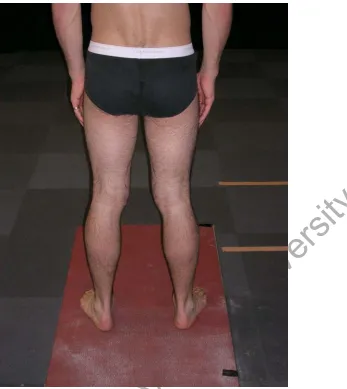
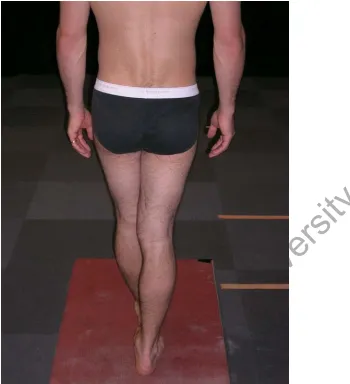
(10) stability in this study the outcome measure of average centre of pressure velocity (COPV) was used.. Average Centre of Pressure Velocity Average COP velocity (COPV) is calculated by dividing the total distance traveled by the COP during a stance trial by the trial duration (cm sec-1). Average COPV reflects the amount of muscular activity required during the trial to maintain the COP within the base of support. If rapid movements or a large amounts of movements are required to maintain balance during. ty. stance the COPV will increase. A decrease in average COPV indicates an increase in postural. ( or c) ia 20 U 04 ni ve rs i. stability whilst an increase in average COPV indicates a decrease in postural stability9. Average COPV is a two-dimensional measure that represents combined postural stability in both anteriorposterior (AP) and medial-lateral (ML) directions. Previous researchers have used this parameter to measure postural stability.9,10 The use of this parameter has been validated for reliability9 and. Vi. Stance Positions. ct. been demonstrated to be repeatable between testing sessions.33. Three variations of static posture were used in this study allow for assessment of stability during stance positions of various difficulty. The following three variations of static posture were used: 1. Static bipedal stance (Figure 1): feet shoulder-width apart facing forwards 2. Static bipedal tandem stance (Figure 2): one foot in front of the other, with the toes of the back foot in slight contact with the heel of the front foot. Order of foot position (i.e. which was at the front/back) was the same for pre- and post-intervention measurements.. 10.
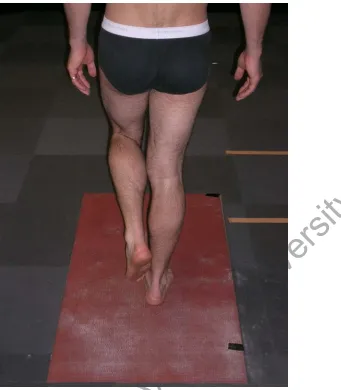
(11) 3. Static unipedal stance (Figure 3): standing on one foot. The foot was chosen by the participants and was the same for pre- and post-intervention measures. Each participant completed the above stance positions with both eyes open and eyes closed to allow for assessment of stability with and without visual input. The absence of visual input was considered to increase the difficulty of a stance position. The order of stance position testing was bipedal stance first, tandem stance and then unipedal stance. For the eyes-open testing participants were instructed to fix their vision on a large red dot placed at eye level approximately four meters in front of the force platform. All stance conditions were completed with participants. ty. in bare feet. In the event that a participant moved foot position during the testing time, or placed. ( or c) ia 20 U 04 ni ve rs i. two feet on the force platform during unipedal tasks, the data was considered void and the participant was asked to repeat the stance condition.. INSERT Figure 1 INSERT Figure 2. Procedure. Vi. ct. INSERT Figure 3. Pre-Intervention Participants were randomly assigned into either a control (n=21) or intervention group (n=20) via lottery draw. All participants were analysed for average COPV under every stance positions (with both eyes-open and eyes closed) before administration of any intervention to obtain baseline data. The order of stance position testing was bipedal stance, tandem stance and unipedal stance with. 11.
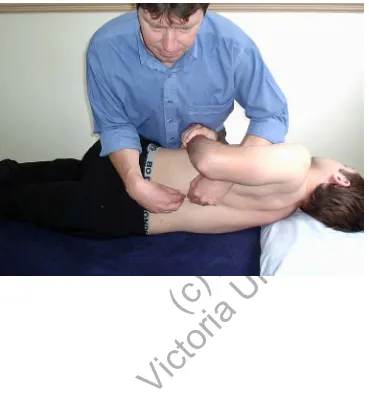
(12) eyes-open and then the same order with eyes closed. Following baseline testing participants were directed to an adjacent room where they received intervention or no intervention.. Intervention The intervention group was given an OMT treatment protocol administered by an experienced registered osteopath. The protocol included the following: 1. HVLA thrust (Figure 4) applied to the lumbar region of the spine between the L1 and L5 vertebrae. The exact level thrusted was at the discretion of the treating practitioner determined. ty. by the level with the greatest perceivable motion restriction. The HVLA thrust was performed. ( or c) ia 20 U 04 ni ve rs i. with the patient side lying in a neutral position as described by Gibbons and Tehan.34 2. A generalized rotational MET (Figure 5) administered to the lumbar spine in a prone position. The technique was performed by applying a seven second isometric contraction for three repetitions with the degree of rotation marginally increasing for each repetition. The technique was performed into both left and right rotational directions.22. ct. 3. MT (Figure 6) was a passive technique to the entire lumbar paraspinal muscles bilaterally. The. Vi. technique involved cross fiber stretching and kneading of the muscles and has been described by DiGiovanna and Schiowitz.20 The MT was applied for duration of 45 seconds on both left and right paraspinal musculature.. INSERT Figure 4 INSERT Figure 5 INSERT Figure 6. 12.
(13) Control The control group received no treatment. After their initial baseline testing was completed the control group participants were instructed to lie flat on a treatment table for approximately three minutes, which was the average time it took to administer the OMT to the intervention group.. Post-intervention Following intervention both groups were immediately re-tested on the force platform under the same stance conditions as pre-intervention testing to obtain post-intervention data. The order of. ( or c) ia 20 U 04 ni ve rs i. ty. stance position was the same a pre-intervention.. Statistical Methods. Data was reported as mean (M) ± standard deviation (SD) to identify differences in postural sway characteristics within and between groups for each stance condition. Each individual stance condition was treated as being independent, therefore no between-stance condition analyses were. Vi. ct. completed. All data was analysed using SPSS for Windows V 11 (SPSS Inc, Chicago).. Within Group Differences. Descriptive statistics, including mean changes were reported to show within-group trends in average COPV. Paired samples t-tests were used to identify significant within-group differences over time. A Bonferonni-type adjustment was made and statistical significance (alpha) was set at p<0.025.. 13.
(14) Between Groups Between-group comparison was completed using an analysis of co-variance (ANCOVA) to identify any significant differences in average COPV at post-intervention measures. ANCOVA has been described at the most robust statistical technique for a pretest-postest controlintervention study design.35 The co-variate used in the ANCOVA was pre-intervention baseline measures of postural sway for each respective group. By using pre-intervention measures as the covariate ANCOVA reports levels of variance after adjusting for baseline differences between groups. Furthermore it eliminates systematic bias and reduces within group error variance in the. ty. outcome measure.36,37 Statistical significance (alpha) was set at P<0.05 for all ANCOVA. Effect. ( or c) ia 20 U 04 ni ve rs i. size for the ANCOVA was also reported. A standard convention for reporting effect size in analysis of variance is eta squared (η2) which is the proportion of variance accounted for by the independent variable.38 Using eta squared was chosen over a between groups Cohen’s d measure of effect size as Cohen’s d does not take into consideration differences that existed at baseline. Cohen’s conventions for η2 values are 0.01, a small effect; 0.06 a medium and greater than 0.14 a. RESULTS. Vi. ct. large effect.38. Means, standard deviations, mean changes and significance values of paired samples t-test are reported in Table 1. Results of this study demonstrate that each stance condition had differing levels of average COPV. Trends in the data show that average COPV was least during bipedal stance, increased during tandem stance and greatest during unipedal stance for both groups. An increase in average COPV was observed during eyes-closed conditions when compared to the respective eyes-open conditions.. 14.
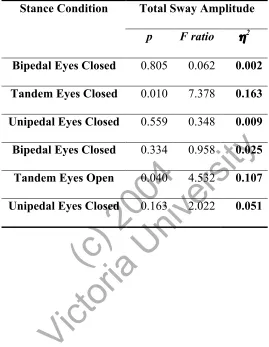
(15) INSERT Table 1. Within-Group Comparison A significant reduction in average COPV was observed during tandem stance with eyes open (P=0.003) and eyes closed (P=0.001) for the OMT group. Mean changes for average COPV for these conditions were -0.26cms sec-1 and -0.44 cms sec-1 respectively. Comparative mean changes in average COPV for the control group under the same conditions were +0.19 cms sec-1 and -0.02 cms sec-1 respectively. No significant within-group changes were observed during. Between-Group Analysis. ( or c) ia 20 U 04 ni ve rs i. ty. bipedal or unipedal stance for either group and the mean changes for these conditions were small.. All assumptions underlying ANCOVA were met. Within-group significance scores, F ratios, effect size (η2) and are reported in Table 2. A statistically significant difference in average COPV was observed between the OMT and control group under the conditions of tandem stance with. ct. both eyes-open (F1,39=7.387, p=0.010) and eyes-closed (F1,39=4.570, p=0.040) along with large. Vi. (η2=0.163) and large-medium (η2=0.107) effects sizes respectively. No significant differences were found between groups for bipedal or unipedal stance and the effect sizes for these stance conditions were small.. INSERT Table 2. 15.
(16) DISCUSSION The aim of this study was to investigate the effects of applying OMT to the lumbar spine on postural stability, as measured by average COPV. The results demonstrated that the application of OMT to the lumbar spine reduced average COPV sway during tandem stance with both eyes open and eyes closed. No significant difference in average COPV was found within or between groups during bipedal and unipedal stance conditions.. ty. The OMT group had a significant difference in average COPSV during tandem stance with both. ( or c) ia 20 U 04 ni ve rs i. eyes open (p=0.010) and eyes closed (p=0.039) when compared to the control group along with large (η 2=0.163) and medium (η2=0.107) effect sizes respectively. Within-group differences demonstrated the OMT group to also have a significant pre-post intervention reduction in average COPV during tandem stance eyes-open (p=0.003) and eyes-closed (p= 0.001). No significant within-group changes in average COPV was observed for the control group during any stance. ct. condition. Results from this study are in agreement with other studies in showing that postural. Vi. stability is decreased when the eyes are closed5,8,10 and during more difficult stance positions such as tandem and unipedal stance.1. Until now there has not been any studies investigating the effects of manual therapy applied to the lumbar spine on postural stability, as measured by average COPV. Related studies have shown increases in bilateral weight-bearing symmetry following manual therapy to the lumbar spine in LBP patients.31 and decreases in postural sway velocity following cervical manipulative therapy in those with dizziness of cervical origin.7 The results from the present study are. 16.
(17) consistent in demonstrating that manual therapy applied to the spinal column effects markers of postural stability. However in the present study, significant changes were only observed during tandem stance, whereas the aforementioned studies reported changes in postural stability during normal bipedal stance.. The lack of significant changes to postural stability found during bipedal stance may have been related to the study design and participant population. In the present study, a single short OMT protocol was applied to asymptomatic participants. During normal bipedal stance, young healthy. ty. individuals are assumed to be inherently stable and little muscular effort is required from the. ( or c) ia 20 U 04 ni ve rs i. postural control system to maintain balance.4 While the treatment in this study caused an increase in postural stability during tandem stance, it is hypothesized that a short treatment to the lumbar spine may not have had a significant enough influence to enhance postural stability during bipedal stance. Previous studies that have demonstrated significant changes in postural stability during bipedal stance have utilized long-term balance exercise programs in asymptomatic. ct. individuals5 or longer-term manual treatment protocols for symptomatic individuals.7 To this end,. Vi. it is thought that using symptomatic patients and a longer-term intervention may facilitate increases in postural stability during stance conditions such as normal bipedal stance.. The significant differences found in this study occurred only during tandem stance. Tandem stance is a more challenging task than bipedal stance and the results of the present study support this notion, and show that average COPV was increased during tandem stance when compared to bipedal stance. Tandem along with unipedal stance reduces the base of support and consequently more accurate postural adjustments are required to maintain stability.39 Standing in this position. 17.
(18) challenges all components of the postural control system including the neuromusculoskeltal system. Fryer23 has hypothesized that OMT applied to the spinal column may improve regional proprioception, alter afferent neural activity, increase motor control and improve postural stability. It is possible that OMT applied to the neuromusculoskeletal system was able to exert effects on postural sway when an increased control effort was required from this system. Such inferences are only speculative and cannot be confirmed from this study.. There was no significant change observed during unipedal stance. Like tandem stance, unipedal. ty. stance presents an increased challenge to the postural control system and greater effort is required. ( or c) ia 20 U 04 ni ve rs i. to maintain a stable upright posture. Unipedal stance however is more challenging than tandem stance as indicated by an increased average COPV during unipedal conditions in the results. While the application of OMT increased postural stability during tandem stance, it did not demonstrate an increase during unipedal stance. It cannot be determined why the application OMT increased postural stability during tandem stance and not unipedal stance, but it is. ct. hypothesised that a short OMT protocol may not have the capacity to increase postural stability. Vi. in such a difficult stance position such as unipedal stance. OMT applied to the lumbar spine may have had enough of a relative influence to increase postural stability during tandem stance, but not during unipedal stance. It is thought that a longer and more extensive treatment may be required to facilitate a significant increase in postural stability during this more challenging stance condition.. In the present study the order of testing and participant fatigue may have had an influence on results obtained. Testing was completed in a set order beginning with bipedal stance, followed by. 18.
(19) tandem stance and finishing with unipedal stance. Significant changes in average COPV were only observed during tandem stance. This demonstrates an order effect, with significant changes in average COPV only observed in the middle of the three stance tasks. During the first task of bipedal stance participants may have been familiarizing themselves with the surroundings and effectively warming up to the task of standing on the force platform. This may have allowed them to be in optimal stead for the following stance task of tandem stance, where significant results were shown for reducing average COPV during both eyes open and eyes closed tasks. It is possible that after completing the bipedal and tandem stance positions participants may have. ty. experienced some fatigue and this fatigue could have affected their performance during unipedal. ( or c) ia 20 U 04 ni ve rs i. stance where no significant changes in average COPV were observed. Such inferences are only speculative and follow-up research may be completed to evaluate the effect of testing order and fatigue on average COPV.. The mechanisms behind why OMT allowed for an increase in postural stability cannot by. ct. completely understood from this study. Postural control is a complex process that involves. Vi. integration of both sensory information and motor processing strategies. The somatosensory component of this system relies on information from receptors found in the skin, muscles and joints,3 while the terminal pathway in the motor system is the postural muscles. Treatment in this study was aimed at the lumbar spinal joints and paraspinal musculature which are richly innervated with proprioceptors.40 Changes brought about by OMT in this study may have occurred due to the potential effects that OMT has on afferent input to the CNS and local effects on muscle function. Authors in the field of osteopathy propose that OMT may modulate spinal reflex pathways by the stimulation of mechanoreceptors and proprioceptors in soft tissues.22. 19.
(20) Furthermore preliminary research has shown that HVLA spinal manipulation increases mean voluntary contraction force of paraspinal musculature immediately following administration.30 Osteopathic authors also state that following osteopathic treatment individuals often volunteer feelings of being more balanced.23 It is thought that through a combination of these mechanisms that applying OMT to the lumbar spine allowed for greater postural control leading to an increase in stability. Further research is required to investigate such claims.. Limitations and Recommendations for Future Research. ty. Several limitations exist in the study design. Due to length of time taken to record data and. ( or c) ia 20 U 04 ni ve rs i. administer intervention, testing was completed over a two day period. Subjects were randomly allocated into respective group upon being accepted into the study. The entire intervention group was tested on one day and the control group tested on the following day. While every effort was made to replicate conditions during both days, the treating practitioner did not attend on the control group testing day. Consequently, participants in the control group did not interact with the. ct. treating practitioner during their testing time, essentially creating a difference between the. Vi. experiences of the two groups. Furthermore it is impossible to blind participants from receiving manual therapy intervention. Upon receiving intervention or no intervention (control) participants were aware of what group they had been allocated into. It is recommended that in future a ‘sham’ group be used to take into account any effects occurring due to placebo.. Results obtained in this study have several limitations. Firstly, participants were all within a narrow age range (18-29yrs). Postural stability has been shown to steadily decline with age14,41 and therefore the results form this study are only applicable to a younger population. Participants. 20.
(21) in this study were also asymptomatic and free from any spinal pain or dysfunction. It is possible that OMT affects asymptomatic patients differently than symptomatic patients and the results of this study are limited to an asymptomatic population. Symptomatic patients are a common presentation in manual therapy practice and results from this study do not describe how the postural stability of such individuals may be affected by OMT. More valuable results may be achieved in using a population with low back pain or dysfunction. Furthermore, significant results in this study were only yielded during tandem stance and not during bipedal stance. Tandem stance is not commonly employed during everyday tasks and the clinical or practical. ( or c) ia 20 U 04 ni ve rs i. ty. application of the results from this study are limited.. Another limitation of this study was the use of a generalised OMT protocol. The study showed that a combined treatment of HVLA, MET and MT exerted some effects on postural sway characteristics. It is difficult to determine from this study which individual aspects of the OMT treatment (HVLA, MET or MT) exerted the greatest effects. Further research may be directed at. Vi. ct. determining the relative influence of the individual techniques on postural stability.. In the present study postural sway was measured once for each stance condition during a 15 second trial. Postural sway can be influenced by many different factors including auditory and visual disturbances. While effort was made to reduce such distractions it was difficult to completely nullify such factors, particularly when there were many participants involved in the study. With only one measure taken for each stance condition, it is possible that if any small distractions occurred during testing time, recording of average COPV may have been affected. Also because postural sway can be influenced by many factors, one measure may not have been a. 21.
(22) absolute reflection of an individual’s stability, particularly if they were distracted during testing. It is recommended in future that several recordings be made for each stance condition and these measurements be pooled for a mean value. In addition, follow-up measures in this study were taken immediately post-intervention. The effects of OMT on postural stability over a long-term period cannot be determined from this study and it is recommended that future studies explore the longevity of changes brought about by OMT.. The present study was focused on investigating the effects of OMT during static standing. ty. positions. Future investigation of postural stability might explore postural responses to. ( or c) ia 20 U 04 ni ve rs i. perturbations and postural stability while standing on moving or unstable surfaces.. Other directions for future research should be to correlate postural stability measurements with important outcome measures such as functional capacity and disability in a wide range of patients with LBP and dysfunction. While there is substantial literature linking low-back pain with. ct. decreases in postural stability, there is inconclusive evidence relating decreases in stability with. Vi. level of disability and pain. It should be established whether an improvement in postural stability following intervention is correlated with a reduction in pain or improvement in functional capacity to determine the value of findings such as an increase in postural stability.. Future research may also investigate the abilities of OMT to improve postural stability in populations such as the elderly, who have been shown to have decreases in stability14,41. Other populations who have been shown to have a decrease in postural stability, such as those with lower limb rheumatoid and osteoarthritis8 may also yield interesting changes following OMT.. 22.
(23) Treatment may be directed not only at the spinal column but also to other relevant areas such as peripheral joints.. CONLUSION This study investigated the effects of applying an OMT treatment protocol to the lumbar spine on postural stability as measured by average COPV. It was found that postural stability significantly increased following the administration of OMT during tandem stance with both eyes-open and eyes closed. No significant changes in postural stability were observed during bipedal or unipedal. ty. stance. Future research is required to further evaluate the effects of OMT on postural stability. ( or c) ia 20 U 04 ni ve rs i. with larger subject numbers, symptomatic participants, more follow-up measurements and. Vi. ct. longer-term treatment protocols.. 23.
(24) REFERENCES 1. Byl NN, Sinnot PL. Variations in balance and body sway in middle aged adults: subjects with health backs compared with subjects with low-back dysfunciton. Spine. 1991; 16(3): 325-330 2. Winters JM, Crago PE. Biomechanics and neural control of posture and movement. New York: Springer; 2000: 301 3. Latash ML. Progress in motor control. Champaign: Human Kinetics; 2002: 54 4. Tyldesley B, Grieve JI. Muscles, nerves and movement in human occupation. Blackwell Publishing; 2002: 180-181, 190. ty. 5. Kollmitzer J, Ebenbichler GR, Sabo A, Kerschan K, Bochdansky K. Effects of back extensor. exercise. 2000; 32: 1770-1776. ( or c) ia 20 U 04 ni ve rs i. strength training versus balance training on postural control. Medicine and Science in Sports. 6. Kuukkanen A, Tiina M, Malkia J, Esko A. An experimental controlled study on postural sway and therapeutic exercise in subjects with low back pain. 2000. Clinical Rehabilitation. 2000; 14(2): 192-203. ct. 7. Karlberg M, Magnusson M, Malmstrom EM, Melander A, Moritz U. Postural and. Vi. symptomatic improvement after physiotherapy in patients with dizziness of suspected cervical origin. Archives of Physical Medicine and Rehabilitation. 1996; 77(9): 874-882 8. Suomi R, Koceja DM. Postural sway characteristics in women with lower extremity arthritis before and after an aquatic exercise intervention. Archives of Physical Medicine and Rehabilitation. 2000; 81: 780-784 9. Luoto S, Taimela S, Hurri H, G Aalta., Pyyko I, Alaranta H. Psychomotor speed in postural control in chronic low back patients: a controlled follow up study. Spine. 1996; 22: 2621-2627. 24.
(25) 10. Leinonen V, Maatta S, Taimela Sand co-workers. Impaired lumbar movement perception in association with postural stability and motor- and somatosensory evoked potentials in lumbar spine stenosis. Spine. 2002; 27(9): 975-983 11. Norkin CC, Levaingie PK. Joint Structure and Function: A Comprehensive Analysis. Canada: Macclennan & Petty; 2000:13 12. Sjöström H, Allum JHJ, Carpenter MG, Adkin AL, Honegger F, Ettlin T. Trunk sway measures of postural stability during clinical balance tests in patients with chronic whiplash injury symptoms. Spine. 2003; 28(15): 1725-1734. ( or c) ia 20 U 04 ni ve rs i. American Podiatry Medical Association. 1991; 81(4): 243-247. ty. 13. Cornwall MW, Murell P. Postural sway following inversion sprain of the ankle. Journal of. 14. Lord S, Castell S. Effect of exercise on balance, strength and reaction time in older people. Australian Journal of Physiotherapy. 1994; 40(2): 83-88. 15. Hamman R, Longridge N, Mekjavic I, Dickson J. Effect of age and training schedules on balance improvement exercises using visual biofeedback. Journal of Otolayngology. 1995; 24(4):. ct. 222-229. Vi. 16. Visser M, Marinus J, Bloem BR, Kisjes H, Berg BM van den, Hilten JJ van. Clinical tests for the evaluation of postural instability in patients with Parkinson's disease. Archives of Physical Medicine and Rehabilitation. 2003; 84(11): 1669-1674 17. Sumway-Cook A, Anson D, Haller S. Postural sway biofeedback: its effect on reestablishing stance stability in hemiplegic patients. Archives of Physical Medicine and Rehabilitation. 1988; 69(6): 395-400. 25.
(26) 18. Evans DW. Mechanisms and effects of spinal high-velocity, low amplitude thrust manipulation: Previous theories. Journal of Manipulative and Physiological Therapeutics. 2002; 25(4): 212-218 19. Fryer G. Muscle energy concepts- a need for change. Journal of Osteopathic Medicine. 2000; 3(2): 54-95 20. DiGiovanna EL, Schiowitz S. An osteopathic approach to diagnosis and treatment. Philadelphia: Lippincott-Ravan; 1997:171 21. Sammut E, Searle-Barnes P. Osteopathic Diagnosis. Cheltnam: Stanley Thornes; 1998:108-. ty. 109. Wilkins; 1996:46,75,. ( or c) ia 20 U 04 ni ve rs i. 22. Greenman PE. Principles of Manual Medicine. Pennsylvania: Lippincott, Williams and. 23. Fryer G. Intervertebral dysfunction: a discussion of the manipulable spinal lesion. Journal of Osteopathic Medicine. 2003; 6(2): 64-73. 24. Dishman J, Brian M, Jeanmarie B. Comparrison of tibial nerve H-reflex excitability after. Vi. 2002; 24(4): 333-339. ct. cervical and lumbar spine manipulation. Journal of Manipulative and Physiological Therapeutics.. 25. Rogers RG. The effects of spinal manipulation on cervical kinesthesia in patients with chronic neck pain: a pilot study. Journal of Manipulative and Physiological Therapeutics. 1997; 20(2): 80-85 26. Gibbons P, McLaughlin P, Surkitt D. High Velocity Low Amplitude Manipulation of the Atlanto-Axial Joint: Effect on Atlanto-Axial and Cervical Spine Rotation Asymemetry in Asymptomatic Subjects. Journal of Osteopathic Medicine. 2000; 3(1): 13-19. 26.
(27) 27. Casidy JD, Quon JA, LaFrance LJ, Yong HK. The effect of manipulation on pain and range of motion in the cervical spine. Journal of Manipulative and Physiological Therapeutics. 1992; 15: 495-500 28. Schenk R, Adelman K, Rousselle J. The effects of muscle energy technique on cervical range of motion. Journal of Manipulative and Physiological Therapeutics. 1994; 2(4): 149-155 29. Gibbons PF, Gosling CM, Holmes H. Short-term effects of cervical manipulation on edge light pupil cycle time: A pilot study. Journal of Manipulative and Physiological Therapeutics. 2000; 23(7): 465-469. ty. 30. Keller TS, Christopher J. Mechanical force spinal manipulation increases trunk muscle. ( or c) ia 20 U 04 ni ve rs i. strength assessed by electromyography: A comparative clinical trial. Journal of Manipulative and Physiological Therapeutics. 2000; 23(9): 585-595. 31. Childs JD, Piva SR, Erchard RE. Immediate improvements in side-to-side weight bearing and iliac crest symmetry after manipulation in patients with low back pain. Journal of Manipulative and Physiological Therapeutics. 2003; 27(5): 306-313. ct. 32. Lenehan KL, Fryer G, McLaughlin P. The effect of muscle energy technique on gross trunk. Vi. range of motion. Journal of Osteopathic Medicine. 2003; 6(1): 13-18 33. Clair K Le, Riach C. Postural stability measures- what to measure and for how long. Clinical Biomechanics. 1996; 11(3): 176-178 34. Gibbons P, Tehan P. Manipulation of the spine, thorax and pelvis: An osteopathic perspective. London: Churchill Livingstone; 2000: 213 35. Huck SW, McLean RA. Using a repeated measures ANOVA to analyze the data from a pretest-posttest design: A potentially confusing task. Psychological Bulletin. 1975; 82(4): 511518. 27.
(28) 36. Munro BH. Statistical methods for health care research. Philadelphia: Lippincott; 2001:189193 37. Stevens J. Applied multivariate statistics for the social sciences. New Jersey: Lawrence Erlbaum Associates; 1992 38. Aron A, Aron EN. Statistics for Pyschology. New Jersey: Prentice Hall; 2003 39. Kreighbaum E, Barthels KM. Biomechanics: A qualitative approach for studying human movement. Boston London Toronto Sydney Toykyo Singapore: Allyn and Bacon; 1996. 136 40. Chaitow L, Walker-DeLany J. Clinical applications of neuromuscular techniques. Churchill. ty. Livingstone; 2002. 63. ( or c) ia 20 U 04 ni ve rs i. 41. Pasquier RA Du, Blanc Y, Sinnreich, Landis T, Burkhard P, Vingerhoets FJ. The effect of. Vi. 2003; 33(5): 213-218. ct. aging on postural stability: a cross sectional and longitudinal study. Clinical neurophysiology.. 28.
(29) Table 1. Group means, standard deviations and significance values for average COPV (cms sec-1) Post. Intervention. Intervention. Mean. Mean (SD). Mean (SD). change*. P-value. Control. 0.40 (±0.12). 0.43 (±0.18). +0.03. 0.524. Open. OMT. 0.45 (±0.17). 0.44 (±0.13). -0.01. 0.750. Tandem Eyes. Control. 1.36 (±0.36). 1.55 (±0.76). +0.19. 0.173. Open. OMT. 1.47 (±0.55). 1.20 (±0.44). -0.26. 0.003. Unipedal Eyes. Control. 1.86 (±0.66). 1.67 (±0.59). -0.19. 0.233. Open. OMT. 1.73 (±0.61). 1.70 (±0.36). -0.02. 0.825. Bipedal Eyes. Control. 0.48 (±0.20). 0.51 (±0.25). +0.02. 0.393. Closed. OMT. 0.60 (±0.22). 0.54 (±0.30). -0.06. 0.301. Tandem Eyes. Control. 2.95 (±0.84). 2.93 (±1.14). -0.02. 0.937. Closed. OMT. 2.58 (±0.96). 2.14 ± (0.81). -0.44. 0.001. Unipedal Eyes. Control. 4.46 (±1.32). 4.33 (±1.15). -0.14. 0.681. Closed. OMT. 3.86 (±1.15). 3.54 (±1.19). -0.32. 0.730. ct. ( or c) ia 20 U 04 ni ve rs i. ty. Bipedal Eyes. Vi. Stance Condition Group. Pre. * Negative values for mean change indicates a reduction in average COPV. 29.
(30) Table 2. Results from analysis of co-variance for between groups effects: significance values, Fvalues and estimates of effect size (η2). Stance Condition. Total Sway Amplitude p. F ratio. η2. 0.805. 0.062. 0.002. Tandem Eyes Closed. 0.010. 7.378. 0.163. Unipedal Eyes Closed. 0.559. 0.348. 0.009. Bipedal Eyes Closed. 0.334. 0.958. 0.025. ( or c) ia 20 U 04 ni ve rs i. ty. Bipedal Eyes Closed. 0.040. 4.532. 0.107. Unipedal Eyes Closed. 0.163. 2.022. 0.051. Vi. ct. Tandem Eyes Open. 30.
(31) Vi. ct. ( or c) ia 20 U 04 ni ve rs i. ty. Figure 1: Participant position during bipedal stance condition. 31.
(32) Vi. ct. ( or c) ia 20 U 04 ni ve rs i. ty. Figure 2: Participant position during tandem stance condition. 32.
(33) Vi. ct. ( or c) ia 20 U 04 ni ve rs i. ty. Figure 3: Participant position during unipedal stance condition. 33.
(34) Figure 4. High velocity low amplitude (HVLA) manipulation applied to the lumbar. Vi. ct. ( or c) ia 20 U 04 ni ve rs i. ty. spine. 34.
(35) Vi. ct. ( or c) ia 20 U 04 ni ve rs i. ty. Figure 5. Generalised rotational muscle energy technique (MET) applied to the lumbar spine. 35.
(36) Vi. ct. ( or c) ia 20 U 04 ni ve rs i. ty. Figure 3. Myofascial technique (MT) applied to the lumbar spine. 36.
(37)
Figure

+5


Related documents
The purpose of the present study is to examine the spatial distribution of dengue cases and identify hot spots of dengue in Andhra Pradesh by applying the spatial cluster
The following were compared between groups using factorial analysis of variance: demographic characteristics; anthropometric measurements; FPG and FPI; lipoprotein profile (i.e.,
Evaluation of renal function in human visceral leishmaniasis (kala-azar): a prospective study on 50 patients from Brazil.. Rodrigues MLO, Costa RS, Souza CS, Fossi NT, Roselino
children who were given the level A rubella vaccine became infected, developed rubella antibody, and were found to excrete rubella virus from their throats for 5 to 13 days fol-
Courts in other states have also recognized exceptions to the immu- nity in cases involving nonnegligent torts. For instance, Arkansas courts have abrogated the
Given CA 2nd, Burdette JH, Elster AD, Williams DW 3rd: Pseudo-subarachnoid hemorrhage: a potential imaging pitfall associated with diffuse cerebral edema. Spiegel SM, Fox AJ, Vinuela
Answer-Separated Passage Encoder Rather than feed- ing the passage encoder with additional features to empha- size the answer position, we first extract the target answer inside
