University of South Carolina
Scholar Commons
Theses and Dissertations
2015
Foundations of Memory: Effects of Organizations
on the Preservation and Interpretation of the Slave
Forts and Castles of Ghana
Britney Danielle Ghee
University of South CarolinaFollow this and additional works at:https://scholarcommons.sc.edu/etd Part of thePublic History Commons
This Open Access Thesis is brought to you by Scholar Commons. It has been accepted for inclusion in Theses and Dissertations by an authorized administrator of Scholar Commons. For more information, please [email protected].
Recommended Citation
Foundations of Memory:
Effects of Organizations on the Preservation and Interpretation of the Slave Forts and Castles of Ghana
By
Britney Danielle Ghee
Bachelor of Arts Rice University, 2013
Submitted in Partial Fulfillment of the Requirements
For the Degree of Master of Arts in
Public History
College of Arts and Sciences
University of South Carolina
2015
Accepted by:
Allison Marsh, Director of Thesis
Kenneth Kelly, Reader
ii
Acknowledgements
Without the constant support of those who have mentored me throughout my life, this
work would never have been written. For sparking my interest in the trans-Atlantic slave
trade I have to thank a young professor who was willing to offer a tutorial class when I
was the only student enrolled; Dr. Stephanie Camp was the spark that ignited my passion
and I am forever grateful for her commitment to my education. Dr. Allison Marsh has
been an amazing and energetic advisor, who always encouraged my writing style and
developed my museum philosophy, I am eternally grateful. Dr. Ken Kelly challenged my
writing, pushing me to place my argument into a larger conversation on memory and
anthropology, proving the importance of interdisciplinary collaborations. Without the
mental and editorial support of my roommate, Alyssa Constad, I fear that graduate school
would have left me humorless. And lastly to Sylvia Ming-Ghee and Heather Ghee, I
thank you for a lifetime of editing. Without the SPARC grant from the University of
South Carolina, it would have been impossible to gather my notes on tour narratives as
well as collect the images which will be used in the National Museum’s revision of their
iii
Abstract
The historical understanding of a place is bent to the will of the passage of time, but is
susceptible to the pressures of entities that lay claim to the space. The memory of forts
and castles dispersed along the tropical shorelines of Ghana have been remembered,
forgotten, and rediscovered several times over the span of five centuries. But how has
their story been changed? What is privileged and created for the collective memory and
what has been concealed? The buildings currently serve as memorials to the
trans-Atlantic slave trade, but this understanding is complicated by the previous preservation
motives and interpretations which impacted the interpretation, and therefore the
collective memory, of the forts and castles. Through an examination of the institutional
motivations, the changing political atmospheres, and the narratives crafted and told, the
evolution of the interpretation of the buildings from the emphasis on European
architectural deeply researched by the British colonial government, the post-colonial
stress on the Afro-European equitable trade, to transnational transformation of the
buildings into memorials to the trans-Atlantic slave trade can be determined. An
examination of the development of the narrative surrounding the buildings offers a long
history of the preservation of the forts and castles. But it also illuminates the interesting
ways interpretations created by twentieth century organizations charged with the
preservation of the buildings complicate the already complicated trans-Atlantic
iv
Table of Contents
Acknowledgements ... ii
Abstract ... iii
List of Figures ... v
List of Abbreviations ... vii
Chapter 1. Introduction ... 1
Chapter 2. The Colonial, Post-Colonial, and Global ... 6
Chapter 3. The Forts and Castles of Ghana ... 10
Chapter 4. Model Architecture ... 24
Chapter 5. Pan-African Heritage and Identity Formations ... 36
Creating Ghanaian ... 37
Connecting African Diasporan ... 47
Chapter 6. Conclusion ... 60
v
List of Figures
Figure 1.1 View of sea towards Elmina Castle from Cape Coast Castle ... 1
Figure 3.1 Map of extant forts and castle in Ghana ... 10
Figure 3.2 St. George’s (Elmina) Castle from Fort Saint Jago... 13
Figure 3.3 Interior View of Cape Coast Castle ...15
Figure 3.4 Interior View of Fort Amsterdam... 17
Figure 3.5 Remains of Fort Nassau ... 19
Figure 3.6 Africa Through a Lens Quarters, Fort Nassau, Moru ... 19
Figure 3.7 Interior View of Fort William ... 21
Figure 4.1 Interior View of Ft. Friedrichsburg ... 25
Figure 4.2 Fort Keta’s Wall ... 27
Figure 4.3 Detailed Interior of Fort Amsterdam... 31
Figure 5.1 Male Dungeon Fort Prizenstein ... 38
Figure 5.2 Doors of No Return ... 50
vi
Figure 5.4 Door of No Return... 57
vii
List of Abbreviations
GMMB ... Ghana Museums and Monuments Board
MOT ... Ministry of Tourism, Ghana
MRCGC ... Monuments and Relics Commission of the Gold Coast
PWD ... Public Works Department, Gold Coast
UNESCO ... United Nations Education, Scientific, and Cultural Organization
1
Chapter 1. Introduction
“Like the deadseeming cold rocks, I have memories within that came out of the material that went to make me. Time and place have had their say.”
- Zora Neal Hurston, Dust Tracks on a Road
A warm, orange sun sets over the Gulf of Guinea as the silhouetted figures of
fishermen pull their painted canoes onto the sandy shoreline. The waves break one
hundred meters from the coast, yet nearby waves crash hard against a seemingly
impenetrable force overwhelming the serene scene. The building has stood the test of
time: existing across centuries, surviving military attacks, and lasting longer than any
one entity could control it. It is a source of both memory and forgetting - a physical
manifestation of a traumatic past that bears witness to its history. It disrupts the natural
shoreline, protruding out from its tropical surroundings; it is isolated, yet it does not
stand alone. More than twenty structures like it are dispersed across the coastline of
Ghana, connected to one another by their shared historical purpose and now their
monumental standing.
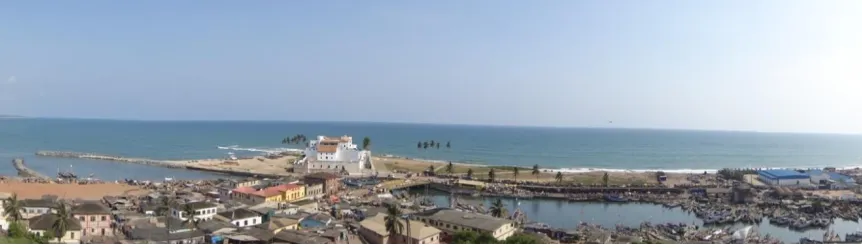
Figure 1.1 View of the sea towards Elmina Castle from Cape Coast Castle
2
The status of the forts and castles of Ghana varies across time as their functions
develop and evolve according to official and collective memory; described by Alon
Confino as “who wants whom to remember what and why,” collective memory is
controlled by who owns that memory.1 More than eighty forts and castles were
constructed on the Gold Coast’s sandy and rainforest covered shores across three
centuries by seven different European states beginning with the Portuguese construction
of Elmina Castle in 1482.2 The castles, which were a large network of buildings opposed
to the smaller fort building classification, served as administrative, in addition to, trade
centers for the various European entities. Most fortifications changed hands as European
and Ghanaian states battled for control of the Gold Coast shoreline, all fighting for
dominion over trade. However, this is not a chronological survey of who owned what.
Rather, it is an analytical interpretation of the narrative surrounding these buildings that
examines the formation, mission, and interpretation of three twentieth century
organizations that claimed responsibility for the preservation of the historic buildings.
The forts and castles perfectly encapsulate Pierre Nora’s foundational interpretation of
lieux de mémoire becausethese buildings represent “a particular historical
moment…where consciousness of a break with the past is bound up with the sense that
memory has been torn…. in such a way as to pose the problem of the embodiment of
memory in certain sites where a sense of historical continuity persists.”3 Their emergence
1
Although I prefer the terms slave fort, slave castle, or castle-dungeon, for the purpose of this paper the buildings will be referred to with the official terminology of fort and castle so that historical emphasis is not incorrectly placed. (Richardson 2005, 617) Alon Confino, “Memory and Cultural History: Problems of Method.” The American Historical Review 102:2386-403.
2
Kwesi J. Anquandah, Castles and Forts of Ghana (Accra: Ghana Museum and Monuments Board, 1999) 10; Albert van Dantzig. Forts and Castles of Ghana. (Accra: Sedco, 1980) 3;Also note that at least one fort, Ft. Ruychaver, was built inland on the Ankobra River (Ibid., 27).
3
3
as memorials to the transatlantic history is a result of their violent history, which typically
and “simultaneously destroys and creates history,” must be placed within trends of
globalization and the proliferation of heritage in order to understand the development of
their narrative.4 Furthermore, the history of the forts and castle’s preservation must also
be examined in order for foundational interpretations to be examined.
The forts and castles discussed in this paper are no strangers to scholarly attention
and investigation. In fact, the earliest non-commercial survey of the forts and castles is
used as a primary source in this paper. A. W. Lawrence’s Trade Castles and Forts of
West Africa, published in 1963, offers readers an architectural examination of many of
the forts now within the bounds of Ghana. His use of historical records and architectural
plans is comprehensive, but the investigation of the relationship between the structures
and the towns, although brief, is an excellent source that many scholars have used as
foundations for their own projects. Christopher DeCorse’s An Archeology of Elmina:
Africans and Europeans on the Gold Coast, 1400- 1900 develops Lawrence’s brief
examination of the role the castle played in the local community through an
archaeological excavations conducted to discover the material culture of the now vacant
land adjacent to the castle. DeCorse’s work completely reoriented the role of Elmina
township and Africans within trade along the coast, proving the importance of
archaeological work in understanding place. A crucial historical and architectural book
published in 1980, Forts and Castles of Ghana by Albert van Dantzig, offers a concise
and well-crafted overview of the developmental history of the forts and castles. These
works provide historical context by examining the history of construction and the social
4
4
life of the forts through the nineteenth century, providing with subsequent scholars with a
strong historically researched source of secondary literature.
The Grand Slave Emporium: Cape Coast Castle and British Slave Trade and The
Door of No Return: The History of Cape Coast Castle and the Atlantic Slave Trade by
William St. Clair are extensive investigations into the actual process of transit within the
trans-Atlantic slave trade, shedding light on the role of the second largest structure, Cape
Coast Castle. St. Clair depicts life inside the castle at various levels of power through the
use of unpublished letters and reports. In Stephanie Smallwood’s Saltwater Slavery: A
Middle Passage from African to American Diaspora, the experience of the trans-Atlantic
passage is depicted using Cape Coast Castle as its primary point of departure from
African shores.
Many works published on diaspora memory include the forts and castles, like
Bayo Holsey’s Routes of Remembrance: Refashioning the Slave Trade in Ghana and Ann
Reed’s Pilgrimage Tourism: of African Diasporans to Ghana. Ann Reed’s in-depth
analysis of the relationship between African Diasporans and the interpretation of the
slave forts and castles questions the implementation and realities of the rhetoric
surrounding the pan-African motivation for tourism. Routes of Remembrance thoroughly
examines the collective memory of coastal Ghana’s through interviews, classroom
shadowing, textbook and tour analysis. Holsey’s work concentrates on current costal
perceptions of the forts and castles, while this thesis examines the historical origin of the
5
Through the use of organizational papers, published surveys, and tour narratives
and notes, the varying emphasis on historical importance can be directly correlated to
institutional purpose and responses to the political climate. While a chronological
approach may offer a perspective on the evolution of the different motivations, an
examination of interpretation will lead to a deeper understanding of the themes that
emerged as the intersections of the power of ownership, historical legacy, and political
placement are understood. Two primary interpretations emerge when analyzing the
motivation for the preservation of the buildings over time: architectural significance and
identity formation, both have national and international implications. It is imperative to
understand how and why the various organizations approached each interpretative theme
differently in order to understand the current interpretation of these historic sites. Other
works concerned with the history and memory of the buildings focus on present-day
interpretation of these sites by investigating tour narratives and preservation methods, but
do not question why these structures have been deemed worthy of preservation.5 Before
examining the different interpretive themes, a brief introduction to the twentieth
organizations responsible for the buildings allows for a better understanding of how these
themes are interwoven by allowing for organizational commonalities and differences to
be examined.
5
See Bayo Hosley. Routes of Remembrance: Refashioning the Slave Trade in Ghana. Chicago: University of Chicago, 2007; Brempong Osei-Tutu, “Slave Castles, African American Activism and Ghana’s
6
Chapter 2. The Colonial, Post-Colonial, and Global
“As much as we live in a society of organizations, then, it seemed to me that it is
as true, or even more so, that we live in a society of narratives.” Jeffrey K. Olick,
The Politics of Regret: On Collective Memory and Historical Responsibility
There, at the end of the road that ran through Kotokraba market and the heart of Cape
Coast, stands a giant fortress; the sunlight bounces off its the white washed
unsurmountable walls. A taxi driver, awaiting customers eagerly asks, “Where are you
going?” while leaning on his taxi which sits on the paved road in front of massive
building. I point toward the castle to decline his offer. As I walk through the main
entrance past a small art market filled with woodcarvings and oil paintings peddled as
souvenirs for tourists, I take a deep breathe, trying to take it all in. I had returned to this
castle for the third time in my life; at first I was a tourist, then a curious undergraduate,
but now a serious researcher. I knew what to anticipate and I looked for details I hadn’t
noticed before like the giant UNESCO symbol on the entry wall that leads to castles open
courtyard. Who will be in my tour group and what information will be told? A fellow
American intern had traveled with female museum staff the previous week and was
shocked at the insensitive laughter and jokes made during the discussion of rape. I
wondered why I empathized with the female slave stories, when my co-workers did not. I
began to question if it was even possible to empathize with the experience of people
transformed into chattel through the dehumanizing process of enslavement. It was on my
7
obvious role identity played in the tour. While questions of identity still remained in the
forefront of my mind, I now questioned why was the castle still here, who sought to
preserve it, and why? I was fascinated by the stories surrounding the ownership of the
building. Outcries about the whitewashing of the walls from the African Diasporan
community, plaques donated by local chiefs apologizing for Ghanaian involvement in the
slave trade, and an international organization’s logo branding the building. This
building was much more than a historic place; its layered history seemed so transparent.
Yet, multiple complex narratives with conflicting voices created for this historic site
overlapped and inundated the memory landscape resulting in chaos. How can this
pandemonium subside without understanding all of the components that led to its
emergence in the first place?
To delve past the traditional history told about these sites, an investigation and
analysis of the various motivations for preserving these historic structures. This is
possible through an examination of the three different organizations that have taken
charge of their memory. The difference in these twentieth century organization’s
interpretations can be examined through an institutional case study that examines the
ordinances responsible for their creation and scholarship produced by and about the
organizations. The Monuments and Relics Commission of the Gold Coast (MRCGC)
which serves as the flagship organization during the colonial period, the Ghana Museum
and Monuments Board (GMMB) whose interpretation initially stems from a reaction to
the immediate colonial past, and the United Nations Educational, Scientific and Cultural
8
today, have disparate historical perceptions ranging from an emphasis on the architectural
form to the role of the economy to the international memorialization of slavery.
Each organization had a different mission, yet their interpretations are
intertwined: the MRCGC sought to protect the archaeological heritage of the Gold Coast
for the British, the GMMB was formed to protect the cultural heritage of Ghana for
Ghanaians, and UNESCO was created to protect the cultural and natural heritage of
humanity for all of humanity. The periodization terminology (Colonial, Post-Colonial,
and Global) uncomplicates the overlap found when examining the larger themes by
allowing for multiple organizations, not just the aforementioned key institutions to also
be addressed.
During the Colonial period, there are two documented cases of the forts and
castles being deemed historically important. The Dutch noted near the end of their time in
Ghana that the forts should be repaired for reasons other than maintenance, mainly
architecture, but no work was actually done.6 The first preservation work done was by the
Public Works Department of the British Colonial Government in the early 20th century;
district commissioners were charged with “assessing the site’s condition, indicating
improvements that need to be made, and prioritizing repairs” in conjunction with “three
leading Natives.”7
While mainly concerned on buildings being used in some
governmental capacity, a letter from Chief Amonu V to the district commissioner written
on behalf of Ft. William’s state asked that “the fort is well repaired, for there are many
historical objects which are known by few persons… the entrance gate was on the
6
Michel R. Doortmont. Castles of Ghana: Historical and Architectural research on three Ghanaian forts (Axim, Butre, Anomabu)
7
9
Western side but where it is at present is the passage through which slaves were sent to
Europe.”8
So while the first official organization charged with maintain the forts solely
due to their historical importance was the MRCGC, it is important to note that physical
maintenance was conducted on some buildings by the PWA and the transatlantic history
associated with the forts and castles was not forgotten.
Another example of an organization that falls within the period, but is not
necessarily covered in the three institutions discussed later is the Ghanaian Ministry of
Tourism (MOT). Developed in 1993 in order to regulate “one of the fastest-growing
sectors of the economy,” the MOT initiated the Joseph Project which provides a state
based globalization effort juxtaposed to the Slave Route Project conducted by UNESCO.
These projects work with one another, but are developed by separate governmental
agencies and as a result their mission and implementation vary.9
The different proposed beneficiaries of the memory certainly affect the motives
for preserving the forts and castles. The varying emphases of historical significance
across the organizations sometimes overlap. The extreme emphasis each organization
placed upon architecture, the gold trade, or the slave trade, demonstrates the evolution of
the understanding of the forts and castles; it also highlights the problems that plague their
memory best understood as a metaphysical tug-of-war for control of the space. So while
fifteenth, sixteenth, seventeenth, eighteenth, and nineteenth Europeans struggled to
control the buildings for trade purposes, these twentieth century organizations fought for
control of the forts and castles interpretation.
8
Ann Reed. Pilgrimage Tourism. 886; this passage would later be interpreted as the “Door of No Return” which is discussed in the section on African Diasporan Identity.
9
10
Chapter 3. The Forts and Castles of Ghana
Although other trading fortifications were built along the west coast of Africa,
historically referred to as the Guinea Coast, the concentration of buildings was densest
along the Ghanaian coastline with an average of one fortification every ten miles.10
Ghana’s geological composition is responsible for the proliferation of these European
structures for two different reasons; Ghana is uniquely endowed with gold, and the
Ghanaian coast is rich with an abundance of capes and promontories.11 While access to
trading opportunities remained the most crucial element when selecting a location for a
trading post, the strategic placement on an elevated area or coastline that protruded into
10
Kwesi J. Anquandah, Castles and Forts of Ghana (Accra: Ghana Museum and Monuments Board, 1999) 20.
11
The Grain Coast roughly stretched from Sierra Leone to western Ghana and was named for the export of melegueta pepper referred to as the grain of paradise. The Slave Coast is commonly used in conjunction with the coast of the Bight of Benin, which is part of the Gulf of Guinea, begins in eastern Ghana and ends in southwestern Nigeria; however due to the proliferation of plantations in the New World the boundaries of the Slave Coast seemed to expand to include all of the Gold Coast. Gold would continue to be an export but by the early eighteenth century the export to England accounted for £ 200,000.11
Figure 3.1 Map of the extant forts and castles of Ghana
11
the gulf was also given great consideration due to its ideal defensive position.12 During
the seventeenth and eighteenth centuries, the forts and castles built along the coast were
used to facilitate the trade of black bodies. The amount of slaves from the gold coast, the
fifth largest slave-exporting area, was still extremely high illustrating the amount of trade
occurring along the coast. Of the estimated 12.2 million slaves shipped across the
Atlantic to the Americas, 1.2 million embarked from the Gold Coast.13 The rise in
competition between the different European powers, which increased over time as the
New World plantation system developed, resulted in a rapid buildup of fortifications
along the coast. While the slave trade is mentioned in all three institutional case studies, it
becomes the secondary story to architecture and trade relationships until the memory of
these sites is stretched to a global level.
Along 255 km of Ghana’s topical shoreline, twenty-three European buildings
stand out compared to the vernacular buildings that surround them. They are the remnants
of a once lucrative trade which shaped the entire region of West Africa. Varying in size
and style, the forts and castles of Ghana now provide local communities with a revenue
stream and constitute the nation’s thirds largest industry after cocoa and gold, through the
tourism industry created by both the Ghanaian government and international bodies.14
This source of tourism is built upon the memorialization and representation of the
trans-Atlantic slave trade.
12
Kwesi J. Anquandah, Castles and Forts of Ghana (Accra: Ghana Museum and Monuments Board, 1999) 20.
13 Emory University’s Voyages: The Trans-Atlantic Slave Trade Database (Atlanta: np, 2009).
http://www.slavevoyages.org/tast/database/search.faces
14
12
The forts and castles were the major point of departure from the Ghanaian
coastline and were used to stock pile goods for ships, allowing for ships to fill their decks
with cargo in days instead of weeks. Although the first forts and castles were built to
facilitate the gold trade, most were eventually converted their warehouses for the
emergence of a new commodity, black bodies. Over one million Africans would be
shipped from the Gold Coast across 300years, resulting in a disruption of African
population growth, a hemispherical dissemination of African cultures, and the
development of an increasingly prominent capitalistic economy.
These twenty-three buildings are in four various stages of preservation:
tourism-driven rehabilitation, general preservation, neglected preservation, and repurposed
rehabilitation. The journey to each fort and castle proved to be instrumental in
understanding the variation within the preservation of the forts and castles as well as
providing a small snapshot of local knowledge surrounding the sites. Elmina and Cape
Coast Castles are the most accessible because of the well-developed infrastructural
support provided to assure the continued growth of the tourism industry. Truly the only
issue that seemed to plague the journey, in the minds of those charged with presenting the
13
The first time I travelled from Cape Coast to Elmina, I had an entirely unplanned day so I
chose to walk. As I passed a group of young coconut sellers masterfully scaling trees,
knocking their livelihoods from the palms, the outline of Elmina Castle began to emerge
from the coastline. The fortress sparkled thanks to mid-day sun beaming down upon its
whitewashed walls. I finally reached the beginnings of Elmina, a corruption of the
Portuguese name for the area El Mina translated as the Mine. Although it is just a town,
traffic congestion of the painted boats in the lagoon that cuts through the promontory
proves that Elmina is a hub of the local fishing industry. Forced to walk along the street,
I walk past old men teaching youth to mend on nets for tomorrow’s venture. I buy a quick
snack of groundnuts and a water sachet from a girl just outside the wall that surrounds
the castle. On the wall a sign states that only those continuing to the castle are allowed;
getting to Elmina Castle is only difficult if you are a peddler trying to sell painted sea
shells and beaded bracelets. The whitewash creates a perfect contrast between a
Figure 3.2 St. George’s (Elmina) Castle from Fort Saint Jago
14
cloudless, blue sky and a glimmering St. George’s Castle; surrounded by the booming
fishing industry of Elmina which crowds the lagoon with brightly painted longboats, St.
George’s Castle, more commonly known as Elmina Castle, triumphantly stands out
amongst the sprawling local architecture and a few remaining colonial buildings. The
status of the forts and castles vary from building to building as do size and style. One of
the crowning jewels of the Ghanaian tourism industry, St. George’s Castle is the largest
and oldest fortification. Built by the Portuguese in 1482, the original purpose of this fort
is still debated; while it is agreed that it was established to gain a foothold in the West
African gold trade, it has been suggested by van Dantzig that it could have also been built
as a base for potential military campaigns when size of Africa was still unknown.15 Walls
surround a couple of empty acres just outside the castle where archaeological excavations
unearthed the untold history of the relationship between the castle and the town, as well
as the everyday life of Elmina during the height of the trade.16 Subsequently, these walls
that were built to protect the archaeological remains of Elmina’s integral contribution to
the castle now separate the town from the historic building; in addition it has created a
buffer between tourists and the local Elmina population. A 1998 State of Conservation
report conducted by UNESCO sites the lack of buffer zone, which prevents “the
encroachment of human settlements and activities on the areas in the direct vicinity of the
World Heritage sites,” as one of three main threats to the forts and castles of Ghana.17
While the erection of this wall may have been spurred by the desire to create a buffer
15
Van Dantzig. Forts and Castles of Ghana. 5.
16
Christopher DeCorse, An Archaeology of Elmina: Africans and Europeans on the Gold Coast, 1400-1900, Washington, DC: Smithsonian Institution, 2001.
17
15
zone in order to safeguard the buildings, many believe that this created to make tourists
more comfortable.18
Although the terminology may create a grander image than the actual building,
the castle is over 9,000 square meters, making it the largest in Ghana.19 Its purpose has
changed over time, but has consistently been used in an administrative capacity. It began
as the only trading post along the newly discovered Gold Coast, but later became a
storehouse that maintained the slave populations held within its storage spaces.20
Following the end of the trans-Atlantic slave trade, the castle would become a European
center of power, house a post office, a prison, the Ghanaian police training academy, and
ultimately a museum which focuses on the history of Elmina.
18
Brempong Osei-Tutu, “Slave Castles, African American Activism and Ghana’s Memorial Entrepreneurism” (PhD diss., Syracuse University, 2009),66.
19
Judith Graham, “The Slave Fortresses of Ghana,” New York Times, November 25, 1990, accessed March 20, 2015, http://www.nytimes.com/1990/11/25/travel/the-slave-fortresses-of-ghana.html.
20
Elmina has the distinction of having an early limited role in the Gold Coast slave trade due to the Portuguese wanting to maintain the amiable gold trade relationship established and the ability to purchase slaves from Benin. (Routes of remembrance location 391, taken from Rodney 1969,14).
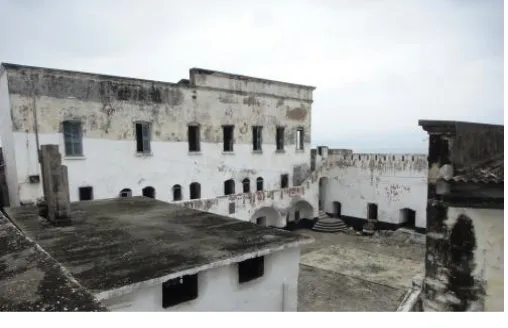
Figure 3.3 Interior view of Cape Coast Castle
16
Tourists don’t travel to Elmina for the museum located within the former Dutch
church that tells the history of Elmina the town, but for the tour that is offered of the
castle which allows visitors to explore practically every corner of the building with a tour
guide. Dark, airless cells where rebellious slaves were punished are compared to the tall,
damp rooms where male slaves were housed. An open courtyard where female sla ves
were held and could be selected from an above balcony for the physical comforts of high
ranking European officers is juxtaposed against the nearby Dutch church in the courtyard
of the castle. But this well-preserved building is not typical when discussing the forts and
castles; its unique position as a hub of tourism has led to its now costly, conserved state
funded by the Central Region Integrated Development Programme.21
Elmina Castle’s level of preservation and representation is indicative of the
tourism-driven rehabilitation preservation that surrounds the site and can be seen by
tourists at three other sites: thirteen kilometers east at Cape Coast Castle the other jewel
of Ghanaian tourism, 100 kilometers west at Fort St. Jago where tourism is an emerging
market, and 140 kilometers west at Fort Apollonia where an Italian collaboration has
converted the fort into a museum about local history and culture. Tourism has driven the
large-scale, high-cost preservation methods used at this small selection of the forts and
castles like buying the proper, and more expensive, paint to preserve the cannons and
cannon balls.22
21
This program will be further discussed in the section on African Diasporan Identity. And while it was funded by the CRIDP, the real funding sources are the UNDP and USAID.
22
17
Two years later, I returned to Ghana to help document the forts and castles and travelled
to each site. Getting to Fort Amsterdam proved more challenging than Elmina Castle, but
it was not impossible. I alighted from a bus heading from Accra to Cape Coast at
Abandze, crossed the busy highway, and began to walk towards the large structure
visible from the street. I was stopped as I started to climb the hill by a group of older men
playing Damii; they asked where I was going and what I was doing. When I told them I
wanted to tour the fort, one yelled across the street to a small boy working at a store and
told him to go and fetch my guide. While I waited for my tour guide an afternoon rain
began, I took refuge underneath a nearby canopy and the men continued to play while
boisterously laughing and loudly shouting at one another. As I look up the hill, I can’t
help but compare the imagery of Elmina, a clean, local-free, white washed building, with
that of Fort Amsterdam, an open, dark façade against a grey stormy sky.
Thirty kilometers from Elmina on the highway that stretches across Ghana’s
coast, Fort Amsterdam sits overlooking the ocean from atop a large hill. Fort Amsterdam
Figure 3.4 Interior view of Fort Amsterdam
18
was the infamous source of rebellious Cormantin slaves; Cormantin slaves received that
name from the original plan to construct the fortification in Cormantin. However, local
people stole bricks at night, delaying process, so the fort was moved to Abandze. The
lack of whitewash exposes the local and European stones, oyster shells, and palm oil that
comprise the buildings walls which now form around an overgrown courtyard. While not
quite a ruin thanks to the substantial amount of extant walls and partially collapsing
staircases, this fort’s preservation and conservation sharply contrasts with that of the
glimmering, complete walls of Elmina Castle. Deviating from the typical tour discussed
later, the tour of Fort Amsterdam heavily emphasized the history specific to the fort; a
thorough discussion of the forts contested construction, the detailed accounts of battles
between European nations and their Africans allies, and a tour of the architectural
layering are examples of the narrative that speaks directly to Fort Amsterdam, not to the
forts and castles as a whole. While the history of the fort’s location differentiates it from
the other forts and castles resulting in another narrative experience for curious travelers,
the tour still focuses on the fort’s use during the trans-Atlantic slave trade. This fort’s
status emblemizes the general preservation state of most fortifications along the coast; it
has been actively protected and efforts are made to continue its conservation and
interpretation by local representatives of the governmental body which owns the
property. While ideally the positions are given to local community members, the hiring
process for guardianship is unclear. At Fort Amsterdam, my tour was conducted by a
recently graduated high school student as his father, who was the custodian, shadowed us.
19
Figure 3.5 Remains of Fort Nassau
A white sign warns visitors and residents that Fort Nassau is state property, but various buildings have been constructed immediately surrounding it.
Figure 3.6 Africa Through a Lens Quarters For Nassau, Moru
A photograph from the 1890s shows a significant amount of the fort intact..
From the National Archives UK – CO 1069/34
lacked signs indicating the price of a tour illustrating the inconsistent policies of
preservation, and presentation, of the forts and castles.
My trip to Abandze followed my journey to find Fort Nassau. Located next to the Cape
Coast metropolitan of Morre, Fort Nassau was one of the forts in ruins. Unsure of where
the fort was, I headed towards the largest hill I could find; my travels had turned me into
a landscape whisperer, I began to look for the geographic cues indicating where a fort
might be found. I started weaving through dirt paths while goats and children chased
after one another in between small concrete and wood homes. I spotted a large piece of a
yellow brick foundation at the top of a nearby ledge. After struggling to climb up red
clay, I had finally found the remains of Fort Nassau; more than the foundation, pieces of
the fort protruded up from the ground sporadically. I then walked around the visible
pieces which had remnants of whitewash clinging to the brick and found a white sign
20
Between Elmina Castle and Fort Amsterdam, lies an extreme case of
conservation neglect; on top of eroding clay hill remnants of Fort Nassau sporadically jut
into the sky. Considered to be ruins, the remains of the building have a sign noting what
they are and warn against tearing the building down. Fort Nassau’s condition was
worsened over time as the town of Moree began to develop in the nineteenth century
when the fort because a source of building materials due its vacant appearance and lack
of use. Following the end of the trans-Atlantic slave trade, these forts were either left as
vacant structures or, in rarer instance, repurposed by locals. These smaller, less centrally
located forts were frequently left as vacant structures due to fear of the spiritual qualities
that some local communities associated with the building’s history. Tours are not given
and information beyond the name of the fort is unattainable at the site; intrigued children
peer out at me from underneath a nearby unfinished building, suggesting that the site is
rarely visited by outsiders.
These physical state of these forts, the ones that lack tourists, illustrate the
problematic way that funds are distributed across all the forts and castles; forts without a
tourism base, which include the majority of the forts, lack funding resulting in the
neglected preservation stage, while tourist hubs like Elmina Castle and Cape Coast
constitute the majority of the GMMB’s current spending.
Accra, the capital of Ghana, with almost 3.8 million people has the largest
population in the country and its sprawling expansion ranks it as the eleventh largest
metropolitan in Africa and the 93rd largest in the world.23 It is the seat of Ghanaian
23“World City Populations,” World Atlas, accessed May 1, 2015,
21
government and home to two historic buildings: Osu Castle, formerly known as Fort
Christiansborg, and James Fort. Both are rehabilitated and repurposed in unique ways.
Most of the forts and castles have been repurposed, predominately as heritage tourism
sites, but Osu Castle and James Fort are used for entirely different purposes. James Fort
is one of Ghana’s forty- five prisons and because it is a prison, it is not open to the public.
It has been physically preserved for its utilitarian use as a prison which began during the
colonial period. Fort William in Anomabu was used as a prison during the colonial period
as well, but has been repurposed for tourism since 1993. As a result of its colonial
function, additional buildings were added to provide service to the inmates.24 Fort
William’s current stage of preservation should qualify as general preservation as a result
of its unpopularity with tourists, but its actual state of physical preservation would
suggest that it has received more attention. It should be expected that James Fort would
parallel Fort William following its unforeseeable closure as a prison. Osu Castle was the
seat of colonial power was located at Cape Coast Castle, but moved to Accra in 1887. Its
24
Fort William Tour. Fort William. Anomabu, Ghana. 10 July 2014. Figure 3.7 Interior view of Fort William
22
function as the seat of government was continued when Ghana gained its independence
and it was converted into the president’s residence; as a result, this fort has had the most
restoration and its architectural style was greatly compromised during a modern
reconstruction of its upper levels.25 This building is also closed to the public, due to its
function, but it has been used as the site to discuss the current state of the forts and castles
with international governments. These three buildings have been physically preserved in
distinct ways due to their different repurpose roles, but are better preserved than most of
the forts and castles.
Following the end of the trans-Atlantic slave trade, the forts and castles of Ghana
entered into historical limbo. With the various dates of abolishment of the slave trade,
beginning with the British in 1807, the amount of slaves leaving the Gold Coast rapidly
decreased from 178,480 slaves from 1776 to 1800 to 4,624 slaves from 18186 to 1830.26
Caught in between their purpose as trade centers and their later iterations as memorials to
that same trade, some became vacant buildings used for construction materials, others
were cast aside and forgotten, and many were used by the remaining European powers
still interested in laying claim to the Gold Coast. Their various physical states attest to
varied nature of their histories, but what accounts for their current purpose? Their
historical limbo ended upon the emergence of governmental powers that sought to
preserve their memory. Now these sites are visited by various groups from African
American tourists interested in pilgrimages to German non-profit volunteers to Ghanaian
school groups, but the narrative is primarily concerned with thoughts of an audience
25
Implications of this repurpose are further discussed in the section on Ghanaian identity formation.
26
23
intent on learning about their trans-Atlantic slave trade pasts, made possible through the
evolution of their historical narratives.27 While evolution suggests a linear progression,
the historical memory constructed for and around the forts and castles of Ghana is truly a
story of adaptation. The memory changes as the organizations react to the political
atmosphere and national and international pressures.
27
24
Chapter 4. Model Architecture
“Architecture is to make us know and remember who we are.” – Sir Geoffrey Jellicoe
My itinerary was set; I knew the coastal towns and cities where the remnants of the forts
and castles were located. I was dependent upon the hospitality and generosity of my
fellow travelers and the tro-tro drivers and mates to actually reach my destinations. On
the way to the Brandenburg-Prussian fort, Groß Friedrichsburg, the dirt road had
transformed into a muddy pit, where a large truck carrying the town’s water supplies was
trapped. The driver told everyone to get out, turned the van around, and headed back
towards the main road. I asked a fellow passenger how far Princesstown was: four
kilometers and the only option was to walk unprotected from the high afternoon sun.
After navigating past the mud, the road emerged once more and I began to calculate my
arrival time. A small boy passed boy on a bike much too large for his small legs. I wished
him a good afternoon in Twi, and he slowed in curiosity; an obroni speaking Twi while in
a Fante area would have piqued anyone's curiosity. We ran through the phrases I knew
and he asked if I knew how to drive a bike. It had been a while since I last rode a bike,
but I seized the opportunity to get to Princesstown faster. Jonathan masterfully hopped
onto the back of the bike as I began to pedal and our conversation continued as we made
our way on the relatively flat road. I asked him about his knowledge of the fort and he
explained that he had gone once with his school. Houses began to line the road as we
25
companions we made; some called out to Jonathan, others I greeted in Twi which usually
resulted in laughter. Princesstown was visited by obronis from time to time as a result of
the fort’s conversion into a guesthouse, but few make the “arduous” journey from the
typical centers of tourism.
Once I climbed the hill along a beaten path and entered into the freshly macheted
courtyard, the architectural distinction of Fort Friedrichsburg immediately struck me.
While the journey to this fort was certainly unique, its architectural features truly
distinguished it from the other buildings I had encountered. This was the sixteenth fort I
had traveled to in the past three weeks and it was unlike any of the others. The stone
finish contrasted with the usually whitewashed walls I had grown accustomed to seeing;
the layout of the fort which used several multi-storied buildings instead of the usual one
large multi-storied building, and the location on a steep hill were also incredibly
different. Upon seeing its unique features like the small shuttered windows and the
separated round tower, I finally realized how important architecture is to studying the
forts and castles. In addition to visually understanding their layered history,
architectural studies allow for the historic specificity of the forts to truly be examined.
Figure 4.1 Interior view of Fort Friedrichsburg
26
The forts and castles vary in type, size, and style; these variations would be the
initial catalyst for preserving the buildings. The Portuguese were the first Europeans to
arrive on the Gold Coast in the mid-fifteenth century; their first permanent trading post
became the trade model for all subsequent European countries including the Netherlands,
England, Denmark, Portugal, Sweden, France, and Brandenburg-Prussia.28 The arrival of
these other European nations spurred the innovation of new architectural styles based
upon medieval fortifications, but also having to adapt to the unfamiliar environment of
the Gold Coast.29 The 1979 World Heritage List extends protection to “three castles,
fifteen forts in a relatively good condition, ten forts in ruins, and seven sites with traces of
former fortifications.”30
A brief discussion of basic architectural distinctions is necessary
when discussing the importance of architecture in the narrative surrounding the buildings.
There werethree different structures used as trading fortifications in Ghana: the lodge,
the fort, and the castle. Lodges were small, temporary structures usually constructed from
“earthen materials,” and were used while a fort was being constructed. As a result of their
temporary function and construction materials there are no surviving lodges, but many
were located near the sites of later fortifications.31 Most extant structures are forts that
were made of brick or stone and had multiple rooms for storage, offices, and garrisons.
The largest and most rarely built were castles which consisted of the same elements of a
fort but on a grander scale and featured a “network of buildings” that were capable of
28 Kwesi J. Anquandah, Castles and Forts of Ghana (Accra: Ghana Museum and Monuments Board, 1999) 20.
29
Van Dantzig, 13.
30
UNESCO, World Heritage Status Of Conservation Report, Forts and Castles, Volta Greater Accra, Central and Western Regions, by WHC, 1998 (n.p.: UNESCO WHC, 1998).
27
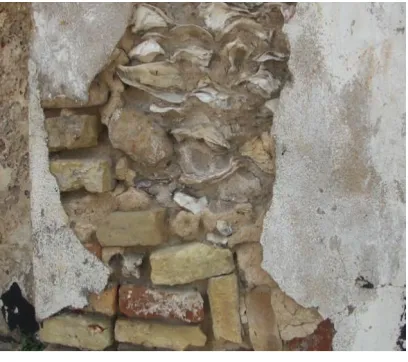
sustaining a much larger population.32 Both forts and castles were made from brick or
stone that were usually imported due to local stone being too weak and bricks being too
difficult to manufacture locally; some methods of construction included native materials
and methods such as the use of oyster shells in outer walls and palm oil for
waterproofing.33 Castles, in addition to their roles as a fort, were used as headquarters and
were commonly paired with a defensive fort. Although it could be argued that they did
help facilitate trade and were therefor built for that purpose, defensive forts were the only
exceptions when discussing the universal purpose of the fortification as trade. Because of
the central focus trade relations play in the overall interpretation of the site, it is important
to distinguish that the vast majority of the buildings were either constructed or
repurposed to facilitate in the trade of black bodies. The construction of defensive forts
emerged after other European countries began to compete for control of Gold Coast trade.
32
Kwesi J. Anquandah, Castles and Forts of Ghana (Accra: Ghana Museum and Monuments Board, 1999), 11.
33
A. W. Lawerence, Trade Castles and Forts of West Africa, (London, 1963); Notes from tour James-Ocloo Akorli, tour for Fort Prizenstein, Keta, Ghana. 9 July 2014.
Figure 4.2 Fort Keta’s Wall
28
An explanation of the variation within architectural styles and types is available
within an exhibition at Cape Coast Castle; other tours of the buildings may explain the
difference between a fort and castle, while some delve into more detail about the types of
building material, but as a whole the narrative surrounding the architecture of the
buildings is neglected. A rise in competition for control of the trade resulted in the
proliferation of fortification construction along the coast of Ghana; the architectural
layout depends on what time period the building is created for trade and what European
entity is responsible for its construction. Meaning that the impact of what is being traded
and who constructs the fortification directly impacts its architectural style. It is this
diversity of architecture, most specifically the diversity of European fortification
architectural style that sometimes appears in layers as the buildings exchanged hands,
was the preservation catalyst for the administration of the Colony of the Gold Coast.
The first organization that charged itself with the preservation of the forts and
castles for non-utilitarian purposes was the Monuments and Relics Commission of the
Gold Coast (MRCGC). Monument and relics commissions were commonly established
by the British Empire for its colonies as seen in Sierra Leone and South Africa, but the
forts and castles are a unique case due to their size. While these government
organizations created the infrastructure for current models of preservation, most were
exploitative of archaeological artifacts. An unsurprising program of imperial and colonial
aggression was the raiding of a colonized country’s most valuable archaeological
artifacts. This practice was not limited to the marbles of the Parthenon, but occurred
throughout all British holdings including Ghana. While terracotta figures from Northern
29
forts and castles were saved because they were impossible to move. However, the
inability to extract did not mean that the MRCGC was not interested in the buildings.34
The commission was created by an ordinance of the same name in 1945 at the request of
the research department of the colonial office. The MRCGC was formed for “the
preservation of antiquities and the restoration of architectural monuments.”35
Transactions of the Gold Coast and Togoland Historical Society was a journal created in
1952 as a conduit for the research findings of commission members.36 The commission
was comprised of British archaeologists and ethnologists who taught for various
universities in Ghana. These commission members were also the first to produce
historical and archaeological accounts of Ghana.
MRCGC sought to preserve the forts and castles in order to save medieval
European fortification architecture; certainly they also were conducting historical
research about the forts, but it was mostly concerned with how land was acquired and
unsurprisingly focuses on the European experience. The two sources for understanding
the MRCGC’s motivation and interpretation of the forts and castles are located in the
work its members produced, books and academic journals that introduced scholars to the
history of Ghana, and in B.H. St. J. O’Neil’s 1951 “Report on Forts and Castles of
Ghana.” Between 1952 and 1959, three different articles were published by the historical
society charged with discussing and protecting the history of the Gold Coast. All three
34
The emphasis on studying architecture can also be seen in British accounts and research of medieval castles, like Kenilworth Castle, being produced in this period. However, these studies also go into great detail on the history of the places illustrating that the lack of history included in the Gold Coast studies is not indicative of the period.
35
Benjamin W. Kankpeyeng and Christopher R. DeCorse, “Ghana’s Vanishing Past: Development, Antiquities, and the Destruction of the Archaeological Record,” African Archaeological Review 1:2, (2004): 94.
36
30
concentrate on the architectural components of the forts and slight the forts’ non-military
functions. The first published essay by W. J. Varley, a member of the MRCGC, states
that “the nature of the trade, the rivalries it engendered, and their effects upon the history
of the Gold Coast” is not in the scope of the essay because of the amount of literature
already established on the topic.37 However, Varley avoids discussing the economic
origins for the rise in European rivalries when explaining the evolution of the
architectural features of the forts.38 Fort William in Anomabu is the focus of the second
essay, but this time archaeological examination of architecture is used to understand the
fort’s name. A thorough discussion of the European entities that fought for control of
Anomabu, as well as a brief history of European monarchs, produces an answer to the
question of why is it named Fort William; European interactions make up the bulk of the
argument, but an analysis of the architectural layering is used as a primary source.39
The best example of the MRCGC’s understanding of the forts and castles is A. W.
Lawrence’s 400-page monograph, complete with historical drawings and architectural
plans, of the architectural development of the forts and castles of West Africa.
Commonly cited by those who now study these structures, Lawrence’s in-depth analysis
of the influence of medieval military fort architecture is truly the epitome of MRCGC’s
historical understanding of the structures as examples of European fortification
architecture. While most of these publications mention the trans-Atlantic slave trade, the
emphasis on the architectural value of the sites overwhelms the interpretation
37
See van Dantzing, Lawerence, Reed, Hosley
38
W. J. Varley, “The Castles and Forts of the Gold Coast,” Transactions of the Gold Coast & Togoland Historical Society 1 (1952): 1.
39 M. A. Priestley, “A Note on Fort William, Anomabu,”
31
demonstrating that the MRCGC wanted to save the forts and castles for their European
architecture.
Certainly an investigation of the architecture of the structures provides another
historical resource; by using the buildings as material culture, the narrative created
examines “the relationship between different cultural areas at a given moment.”40
However, assuming the notion of “structure as constant and history as process” in which
an architectural study requires an admission of the historians influence on interpretation
because the “history provides architects with a set of existing building forms and a set of
factors that have enabled or restricted possibilities.”41The architecture of the forts and
castles serve as a piece of material culture; it is up to the archaeologist, the historian, and
interpreters to engage with the “constant structures” that offer literal layers of history. So
while they may not be documents in an archive to be read, they are historical evidence to
by analyzed.
40
Sophia Psarra, Architecture and Narrative: The Formation of Space and Cultural Meaning, London: Routledge, 2009.
41
Sophia Psarra, Architecture and Narrative: The Formation of Space and Cultural Meaning, London: Routledge, 2009.
Figure 4.3 Detailed Interior of Fort Amsterdam
32
This architectural understanding is further elaborated upon in “Report to the
Chairman and Members of the Monuments and Relics Commission of the Gold Coast
upon the historical growth, archaeological importance, the general condition and the
present use of the castles and forts of the Gold Coast with a view to their better
preservation as ancient and historic monuments” written by Great Britain’s 1951 Chief
Inspector of Ancient Monuments, B.H.S. J. O’Neil. As a result of time constraints and
accessibility, O’Neil’s report covers nineteen of the then twenty-nine extant buildings.
Appalled at the state of disrepair, O’Neil’s report is concerned with the appearance of the
structures stating that “On a tropical shore with the blue of the sea, the yellow sand and
the green coconut palms, the staring whiteness of the building is needed to complete the
picture. It used to do so, it should do so again… the absence of whitewash which makes
Cape Coast Castle so depressing to the visitor.”42
The whitewashing of the structures has
been heatedly discussed due to the perception of the whitewash as whitewashing the
slave trade history; while the whitewash is the appropriate preservation tactic used to
protect the buildings from humidity, O’ Neil’s comment on the whitewash as a source of
beauty, not as a necessary prevention, would certainly bolster modern arguments on the
subject.43 His report details the European arrivals to the Guinea coast. It mentions that
further elaboration on the slave trade seemed unnecessary due to its discussion in
previous scholarly works, “although it was the raison d’etre of most of the forts.”44 The
rest of his report focuses on the physical condition of the forts and castles, while also
42
Bryan Hugh St. John O’Neil, “Report on Forts and Castles of Ghana,” Accra: Ghana Museum and Monuments Board, 1951, 3.
43
“Is the Black Man’s History Being ‘White Washed’: The Castles/Dungeons of the African Holocaust” (1994, 48) from Routes and remembrance location 2275
44
33
offering initial architectural evaluation; because the buildings exchanged hands across
centuries and because they were repurposed for trading in human beings instead of gold,
a layering of architecture occurs. For instance, when examining Elmina Castle traces of
Portuguese, Dutch, and English architectural fortification styles can be seen, offering
visual evidence of the contingent ownership of the slave castle. The forts and castles of
the Gold Coast were isolated examples of European medieval forts that could not be
found elsewhere due to the development, repurposing, and destruction of European forts
on the European continent. It was their uniquely European architecture that served as the
first motivation for their consideration as both an important historical and monumental
site.
Days before Ghana’s independence, March 6, 1957, Ordinance 20 merged the
MRCGC with the interim Council of the National Museum, creating the Ghana Museums
and Monuments Board (GMMB).45 The forts and castles were the first sites to be
proclaimed national monuments due to the age of the structures as well as the emphasis
previously placed upon them by the MRCGC.46 In 1969, the GMMB was further defined
by the National Museum Act which explained the duties of the board; while focused on
the maintenance of museum, this act also required the board to “preserve, repair or
restore any antiquity which it considered to be of national importance,” making the
GMMB the official organization responsible for the preservation of the forts and
castles.47 Being listed as National Monuments afforded a level of protection to the forts
45“Ghana Museums and Monuments Board,” Cultural Heritage Connections, accessed September 30, 2014,
http://www.culturalheritageconnections.org/wiki/Ghana_Museums_and_Monuments_Boards.
46
National Liberation Council Decree 387 of 1969, Establishing the Duties of the Board, National Museum Act, section 14 (1969).
47
34
and castles; local authorities, usually elders and chiefs, were notified and signs were
posted to remind would-be vandals that the properties belonged to the government.48 The
GMMB continued to justify the preservation of the forts and castles as a result of their
architectural significance which is seen in their nomination of the sites in 1979 to the
World Heritage Committee (WHC) hoping to see the inclusion of Ghana on the World
Heritage list.
World Heritage properties are divided into two different categories, cultural and
natural, although a site can claim both. Cultural heritage sites, like the forts and castles,
are defined by UNESCO as “monuments… architectural works, elements or structures of
an archaeological nature,” that are either “works of man or the combination of nature and
man… [with] outstanding universal value from the historical, aesthetic, ethnological or
anthropological point of view.”49
Properties are selected by the World Heritage
Committee from a list of state-submitted inventories of heritage, guaranteeing that sites
inducted have the consent of the state in which the property is found. Funding for the
preservation and management of World Heritage sites is funded from less than one
percent of contributions to UNESCO, private and public foundations, the state in which
the property is located, and international assistance.50 The first list was completed in 1978
and consisted of eight cultural properties; the current list has 779 cultural properties.
Although it has an ambitious mission, UNESCO’s World Heritage List is an international
also inscribed on the World Heritage List; archaeological sites in northern Ghana; the Ancient Mosques of the three Northern Regions; Wa Naa’s Palace; Gwollu and Nareligu Defence Walls used to prevent enslavement; and the Old Nacrongo Catholic Cathedral.
48
Ebenezer Bordoh, e-mail message to author, November 17, 2014.
49
UNESCO, Convention Concerning the Protection of the World Cultural and Natural Heritage (Paris: n.p., 1972), Article 1.
50
35
collection of properties that strives to encapsulate the natural and cultural experiences of
mankind across the globe. The interesting element on the GMMB’s nomination form is
the reasoning for the choice of cultural; the forts and castles are listed under section (IV)
which claims the property is, “an outstanding example of a type of building, architectural
or technological ensemble or landscape which illustrates (a) significant stage(s) in human
history.”51
The justification for section iv must be attributed to the architecturally historic
understanding of the forts and castles, as first argued by the GCRMC, but can also be
attributed to the GMMB’s shift from architecture to the equitable relationship between
Africans and Europeans that occurred prior to colonialization.
The impressive size and physical presence of the forts and castles demands an
appreciation for their architecture. The initial catalyst would be the history of design and
evolution of style seen in the layering of architecture. This architectural emphasis ensured
that the buildings were physically preserved later allowing for their interpretation to
penetrate past their stone facades to the core of their power of memory.
51
36
Chapter 5. Pan-African Heritage and Identity Formations
An examination of “who want whom to remember what and why” through an
analysis of the development of the field of memory studies, the impact of globalization,
and the advent and surge of heritage tourism, is a fundamental to understanding the ways
in which the commemoration of the transatlantic slave trade takes place within Africa
.
52Although group memory can be traced back to the Archaic Greek, collective memory
used in a contemporary sense is typically traced to Emile Durkheim
.
53 Considered to bethe father of sociology, Durkheim’s discussion of commemorative rituals led to his
student, Maurice Halbwach, coinage of the term collective memory in the early twentieth
century
.
54By discounting the biological conception of memory and ascribing an
understanding of memory within the context of society, Halbwach was able to theorize
that memory is acquired through socialization and is subsequently produced and
performed in society
.
55 Halbwach made a crucial distinction between history andcollective memory stating that “history is the remembered past to which… is no longer
and important part of our lives – while collective memory is the active past that forms our
52
Alon Confino, “Memory and Cultural History: Problems of Method.” The American Historical Review 102:2386-403.
53
Nicolas Russell. “Collective Memory before and after Halbwachs.” The French Review 79: 792-804.
54
Maurice Halbwachs. The Social Frameworks of Memory. 1925.
55
37
identities
.
”56 This interpretation of collective memory is pivotal to the approach ofcommemorating the transatlantic slave trade because those memory rituals require
self-identification, whether as an African, African Diasporan returning home, or an
international tourist on holiday
.
Creating Ghanaian
“Until the Lion has his historian, the hunter will always be a hero.”
– African proverb
As I begin to dig into the rough, yet moist ball of kenke in front of me, my co-workers
from the National Museum continue my informal Twi lessons. I finally mastered common
greetings and responses when the librarian interrupts the conversation. “Ah! Why do you
learn Twi? You are in Accra and should learn some Ga!” Immediately everyone begins
to laugh, knowing that Ga is much more difficult to speak. I heard Twi being spoken
around me the most, and had previously studied another Akan dialect while in Cape
Coast, so navigating basic phrases wasn’t too difficult. She begins to teach me basic Ga
56
Jeffery K. Olick. “Collective Memory: The Two Cultures.” Sociological Theory 17: 335.HL Figure 5.1 Male Dungeon at Fort Prizenstein