© 2018 IJSRCSEIT | Volume 3 | Issue 5 | ISSN : 2456-3307
Machine Learning based Early Detection of Red Palm Weevil
using Remote Sensing Technology in Saudi Arabia
M.A.H. Farquad
Department of Information System, Faculty of Computer and Information Systems, Islamic University of Madinah, Saudi Arabia
ABSTRACT
Saudi Arabia is known to be the home land of date palm trees and it is one of the leading exporters of dates to the world. Aim of Ministry of Environment, Water and Agriculture is to develop and safeguard the natural resources of the kingdom. Saving and development of the agricultural resources of Saudi Arabia region is one of the main objectives of Vision 2030. The strategic objectives scheduled to achieve by 2020 by authorities in Saudi Arabia include the Controlling of pests and saving & developing the agricultural land in the kingdom. Red Palm Weevil (RPW, Rynochophorus Ferrugineus) is found to be one of the most dangerous threats to palm trees around the globe. Early detection of RPW is not easy because palm trees do not show any visual evidence of infection. Acoustic monitoring is one of the many approaches proposed in the literature for early detection of the RPW which is based on the audible sound of RPW larvae activity inside palm trunk. Later, autonomous bioacoustics sensors have been used to analyze the audio signal for longer period of times. In this research, we propose the use of Thermal Remote Sensing Technology (thermography) for early detection of the RPW resulting in acquiring remedial measures at the earliest possible to reduce the possible loss. Thermography is gaining popularity as it is cost effective and determines thermal properties of any object of interest. The principle of thermal remote sensing is to convert invisible radiation pattern of objects to visible images (thermal images). These images can be acquired using portable, handheld or thermal sensors that are coupled with optical systems mounted on satellite. For analysis, an image of relative radiant temperatures (a thermography) is depicted in gray levels, with warmer temperatures shown in light tones, and cooler temperatures in dark tones. The proposed research project will analyze the thermal image data acquired from various date palm fields around Saudi Arabia using machine learning algorithms for early identification and prediction of Red Palm Weevil. Root means squared error measure is used to evaluate the efficiency of early detection of RPW infestation in date palms using machine learning algorithms. The proposed research is expected to help the authorities to plan the controlling of pests ahead of times and reduce possible losses and also take precautionary measures to develop the agricultural initiatives in the kingdom of Saudi Arabia.
Keywords: Machine Learning, Early Detection, Red Palm Weevil, Remote Sensing Technology.
I.
INTRODUCTION
Dates are considered to one of the most important national products of Saudi Arabia. Saudi Arabia is the largest consumer of dates and also known as the home land of Date Palms. According to survey Saudi
Kingdom put more importance on exports (Al-Abbad et al., 2011). Saudi Arabia’s economic structure is also depending on production, consumption and marketing of the dates. 152% increase in the area of date palm trees in the kingdom is recorded from year 1997 to 2009 and 153% growth recorded in the production. Regions like Riyadh, Qassim, Eastern Province and Madinah are some major cities in the kingdom where palm tree growth is worth mentioning. Factors influencing the growth of date palm includes; limited water resource, low soil fertility, low quality of date palm varieties, newly emerged pests and diseases, high density plantation, etc. Many diseases have been reported in the literature resulting in the decrease in the productivity and quality of the fruit.
RPW is considered to be the world's worst pest of palm trees discovered. RPW infestation usually results in the death of the tree. Female RPW bore into palm tree and lay eggs i.e. approximately 250 eggs which takes just three days to hatch. Larvae emerges and tunnel into the interiors of the tree and restrict the transport of nutrients to the top of the tree (Hetzroni et al., 2014). Identification and prevention management of any pest involves accurate monitoring of pest population and penetration. Early detection of Red palm weevil (RPW, Rhynchophorus ferrugineus Olivier, 1790) is essential before the damage of epical meristem (the palm heart) can be treated and recover easily. However, as RPW penetrate inside the palm trunk and invisible to human eye, identification and detection becomes very challenging. RPW monitoring becomes mandatory at various ports of entry and at new infestation foci to restrict the penetration further. Infestation detection has been the area of interest of researchers and agricultural research institutes. Previously, researchers have proposed the use of visual examination of the tree could help the officials predict the possible infestations (faleiro, 2006). Later, keeping the shortcomings of the visual examination, Chemical
cues (Schlyter, 2012), Acoustic (Schlyter, 2012) and Thermal Imaging techniques (Ben-Gal et al., 2010) have been proposed and successfully applied.
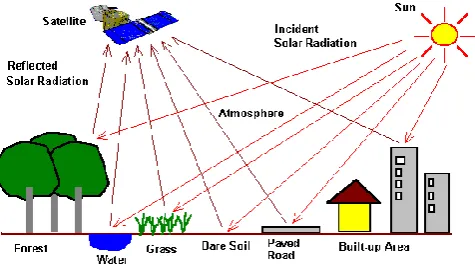
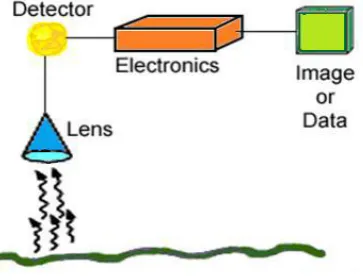
Remote sensing technology is the process of acquiring information about the interested object without coming into direct contact with the object itself (refer Figure 1). Various sensors are used to measure and record the reflected and emitted electromagnetic radiations from the object of interest (Campbell 2002; Lillesand and Chipman, 2014). Most common remote sensing instrument that detect and record radiation include digital camera, thermal camera and electro-mechanical scanners and radar systems etc. (Jones, 1999). Six categories have been evolved based on remote sensors such as Visual Remote Sensing System, Optical Remote Sensing, Thermal Remote Sensing, Microwave Remote Sensing, Radar Remote Sensing and Synthetic Aperture Radar (Lillesand and Chipman, 2014). Figure 2 shows various components thermography. During last couple of decades researchers have reported the use of remote sensing technology for the purpose of pest detection (Ishimwe et al., 2014). Because these systems provide information about physiological processes (thermal energy dissipation) and chemical parameters of plant (leaf pigments, water content and chlorophyll) when healthy and when affected. However, the thermal remote sensing is been used slightly.
The objective of the proposed project is to make the best use of the advanced technology i.e. remote sensing and soft computing in order to detect RPW in its early stages to avoid huge losses. Novel approach employing machine learning algorithms for early detection of infested date palm is proposed in this research. The dataset is acquired from Satellite data from Saudi Government and also local date palms of Saudi Arabia and analysis is carried out. Based on the yielded Root mean squared error the efficiency of the proposed procedure is evaluated.
Figure 2. Components of Thermography
II.
OBJECTIVES OF THE RESEARCH
In order to achieve the proposed objectives in this research, previously reported works will be studied and analyzed. In this research work we will employ artificial neural networks and support vector regression keeping in view their robustness, prediction accuracy, diversified applications and their suitability to the present application.
The objective also includes the model development is to validate and improve the current available approaches. One of the important requirements for the development of the model is a reliable and objective data. The data is taken from Saudi Government and UNDP program. The available data is spread over 30 years from year 1980 to 2017, which is collected and analyzed in order to identify and detect RPW in its earliest stages possible.
The proposed project report would help the authorities to understand the infestation of RPW in
date palms and take timely precautionary measures to safeguard date palms and improve the quality of the fruits. The proposed project is expected to provide early warning about the RPW in date palms to the authorities to take necessary precautions to safeguard the nation's asset. The proposed project objectives and achieving objective approaches are as following;
Conducting previous studies about Red Palm Weevil and its infestation: This is done by extensive survey about the RPW infestation in date palm trees and its effect on the tree as well as on society. During the survey, interest would also cover the RPW infestation on other trees also such as coconut trees.
Literature survey for use of Remote Sensing Technology in agriculture: Application of remote sensing technology and various approaches employed for detection and identification of infestation is carried out. This survey also covers the use of advanced technology in agriculture betterment over the globe generally and in Saudi Arabia region specifically.
Sample collection, Sample Pre-processing according to the design of experiments and sample preservation: This is one of the crucial objective of the proposed research, where data selection and other pre-processing of the data is done and data is prepared for empirical analysis using machine learning algorithms.
Data Analysis and model development for RPW identification: Evaluation of the proposed approach is carried out and the efficiency of the proposed architecture of early detection and identification of the RPW infestation is analyzed.
Writing detailed reports including conference and journal papers: Once the analysis is done, detailed report will be made and published accordingly in high impact journals and conferences.
According to Saudi Arabia’s Vision 2030, much importance has been put upon developing the agricultural resources as well as improve upon the same. Strategic objective #3 of Vision 2030 emphasizes on Monitoring and controlling spread of cross-border agricultural pests. This strategy is made to safeguard the nation's agricultural resource and environment. Early detection and identification of Red Palm Weevil will help Ministry to achieve this objective. Further, the proposed project also helps the Ministry in achieving Strategic Objective #7 that is Improve land utilization and management in the agricultural sector. It has been observed that the RPW infestation has immense effects on the tree and the society which spoils the use of the affected land for future agricultural developments. Early detection and identification would help the Ministry to take remedial actions and safeguard the nation's assets and land as well. The proposed detection and identification of RPW makes use of the advanced technology i.e. Remote Sensing Technology for acquiring the required data and machine learning algorithms are then trained to understand the behavior of the tree and predict the infested tree in its earliest stages because identification of RPW in later stages does not provide the space to recover the damage caused.
III. LITERATURE SURVEY
RPW is considered to be the world's worst pest of palm trees discovered. RPW infestation usually results in the death of the tree. RPW larvae emerges and tunnel into the interiors of the tree and restrict the transport of nutrients to the top of the tree (Hetzroni et al., 2014). Identification and prevention management of any pest involves accurate
monitoring of pest population and penetration. Early detection of Red palm weevil (RPW, Rhynchophorus ferrugineus Olivier, 1790) is essential before the damage of epical meristem (the palm heart) can be treated and recover easily. Risk and implications of RPW infestation is risky not only production of the palm but also on society. Approximately 30% of the world’s date production comes from Gulf region of the Middle East. RPW infestation might affect 1% to 5% loss, making it 5.18 to 25.92 million USD, respectively. Hence, the Ministry of Environment, Water and Agriculture has dedicated a research team towards managing the date palms and produce quality fruit.
Over the year various approaches have been reported for early detection of RPW infestation. Visual examination of a tree (oozing of thick brown liquid, remains of weevils and their pupae cocoons around the tree and in the most severe cases of infestation breaking of trunk or the topping) is the most obvious approach to detect the infestation (faleiro, 2006). Early symptoms are mostly depend on the site of infestation, status of the infected palm such as lower or upper part of the truck and also on palm species. Further, to overcome the issues of visual examination, various other procedures have been proposed such as chemical cues, acoustic and thermal imaging techniques. Sniffing dogs’ ability to detect scents has been proposed and explored for early detection of infestation in trees (Welch, 1990; Schlyter, 2012). Later, a variety of dog breed such as Labradors, Rottweilers, Beagles and Golden Retriever have been employed for sniffing tasks. Nakash et al. (2000) reported that Golden Retrievers successfully detect the oozing secretion gathered from RPW infested date palm. It has been observed that employing dogs for detection purposes is an effective and rather inexpensive tool. However, it does not seems applicable on large scale operation with hundreds or thousands of palms.
palms various RPW larvae activities were suggested. Acoustic detection of audios has been reported to monitor RPW in suspected coconut palm trees (Siriwardena et al., 2010). In case of large number of larvae residing in the palm tissue the sounds they make can even be detected by naked trained ear but the issue is to detect the infestation in the early stages where the generated sound is very low. Pinhas et al. (2008) found that the human detection of infestation is unreliable.
Since direct visual detection of the infestation is quite difficult, researchers have proposed the analysis of temperature elevations at the trunk of infested palm detected using an infrared camera. Infested trunk is observed to increase the local temperature inside the trunk above the ambient levels i.e. from 30 to 45 degrees (Suma and Longo, 2009; Abe et al., 2010). Recent advances in remote thermal image processing has the ability to capture the spatial information on surface temperature and facilitates the mapping of canopy temperature variability over large areas. The basic advantage of using thermal imaging is its ability to capture the temperature of the whole field. Using this image the map of the plant water status distribution in the field can be produced. High-resolution thermal imaging systems have been used to evaluate water status of cotton (Meron et al., 2010) and olives (Ben-Gal et al., 2010).
Due to the reduced cost of the thermal imaging equipment and simple operating procedure that initiated its use in various fields including agriculture (Lloyed, 2013). It has been reported that aerial thermal images are a promising tool to map water status of date palm trees. Cohen et al. (2012) has proposed a semi-automated procedure based on the watershed segmentation analysis. They reported that semi-automated procedures can be used to map potential infestation in palm trees in homogeneous plantations on a wide area scale. Detection of RPW larare areal thermal images using semi-automated procedures were employed to map potential affected palm trees on wide area scale (Soroker, 2013).
Thermal imagery, remote sensing has been successfully applied to analyze Australian Fire-Beetle's behavior, detection and progression (Schmitz et al., 2015).
IV. ANALYSIS USING MACHINE LEARNING
TECHNIQUES
Early detection of the RPW infestation becomes crucial in order to save the tree itself. Various approaches pertaining to agriculture has been proposed in the literature. Further, the advancement in Remote Sensing Technology has invited the interest of the Computer Science and Mathematics expert to make use the advanced technology for early detection of the RPW infestation. In this research, we make use of the thermal imaging technique of remote sensing technology for early detection and identification of infestation in order to provide the Ministry of Environment, Water and Agriculture with early warning resulting in precautionary measure by the Ministry to eradicate the penetration of the RPW in data palms. We make use of the data set available with Saudi Government for empirical analysis using machine learning techniques.
Date production is reported to be one the main national economic source of Saudi Arabia. It is also worth mentioning that the kingdom consumes most the dates produced. Supply of dates has to be according the demand created by the consumers in the kingdom. It has been observed that RPW is one of the most dangerous insect infesting palm trees and spoiling its fruit production ability and killing the plant completely. Early detection would help the agriculture department to take some precautionary measures to safeguard the nation’s asset. Below is the list of beneficiaries of the proposed research project;
composed of palm trees. Early detection would help the ministry to plan accordingly.
b. Owners of the Date Palm fields: As the owner he would not have proper measures to identify RPW infestation at the early stages to take precautions. Ministry will help such owners if they could identify and detect the infestation in early stages.
c. Consumer and Society: It would be very useful for the users and the society to eradicate the infestation and keep the society free of infestation. Early detection and prevention of RPW in palms would provide the consumers good quality fruit and also keeps the environment healthy.
d. Researchers and Academicians: They analyze various parameters of the technology used for infestation detection and can suggest better use of the parameters or propose new parameters to be considered for early detection of infestation. This provides the opportunity for the technical experts to understand the agricultural use of technology.
e. Advanced Technology: Machine Learning algorithms are employed for prediction purposes which uses the data provided using Remote Sensing Technology. Conclusion of the research can be a detailed study about the use of technology for RPW infestation detection or research would put some light on the parameters to be considered important while analyzing the available data. At times, research provides the insight towards the direction which was never explored earlier.
V.
PROPOSED RESEARCH
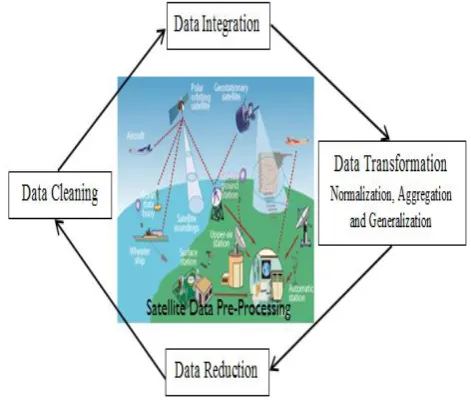
The approach followed in the proposed research include collection and analysis of satellite data that is obtained from Saudi Government satellite data. The acquired data is then pre-processed according to the requirement of experimentation as shown in Figure 3. Data cleaning includes removal of irrelevant
information from the data or dealing with missing values is carried out. Later, data integration is done to integrate other data set which is useful for proper analysis. Data transformation and data reduction is also analyzed and employed if necessary according to the research carried out.
Figure 3. Satellite Data pre-processing
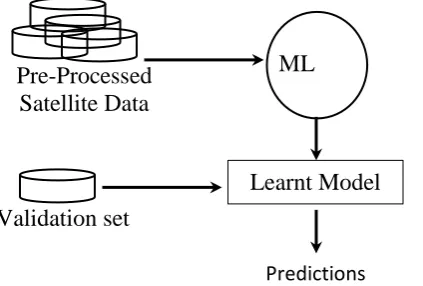
Figure 4. RPW infestation identification using machine learning algorithms
VI. CONCLUSION
Remote sensing technology is the process of acquiring information about the interested object without coming into direct contact with the object itself. In this research, we propose the use of Thermal Remote Sensing Technology (thermography) for early detection of the RPW resulting in acquiring remedial measures at the earliest possible to reduce the possible loss. Thermography is gaining popularity as it is cost effective and determines thermal properties of any object of interest. The principle of thermal remote sensing is to convert invisible radiation pattern of objects to visible images (thermal images). These images can be acquired using portable, handheld or thermal sensors that are coupled with optical systems mounted on satellite. For analysis, an image of relative radiant temperatures (a thermography) is depicted in gray levels, with warmer temperatures shown in light tones, and cooler temperatures in dark tones. The proposed research project will analyze the thermal image data acquired from various date palm fields around Saudi Arabia using machine learning algorithms for early identification and prediction of Red Palm Weevil. Root means squared error measure is used to evaluate the efficiency of early detection of RPW infestation in date palms using machine learning algorithms.
VII.
REFERENCES
[1]. Abe F., Ohkusu M., Kubo T., Kawamoto S., Sone K., Hata K., (2010) "Isolation of yeast from palm tissues damaged by the red palm weevil and their possible effect on the weevil overwintering", Mycoscience, Vol. 51, pp. 215-223.
[2]. Abbad A, Jamal M, Elaiw Z, Al-Shreed F, Belaifa H (2011) "A study on the economic feasibility of date palm cultivation in the AlHassa oasis of Saudi Arabia", Journal of Development and Agricultural Economy, Vol. 3, Issue 39, pp. 463-468.
[3]. Baloch MK, Saleem SA, Ahmad K, Baloch AK, Baloch WA (2006) "Impact of controlled atmosphere on the stability of Dhakki dates", Swiss Society of Food Science and Technology, Vol. 39, pp. 671-676.
[4]. Ben-Gal A., et al., (2010) "Whole-tree water balance and indicators for short-term drought stress in non-bearing ‘Barnea’olives", Agricultural Water Management, Vol. 98, pp. 124-133.
[5]. Campbell, J. B. (2002), "Introduction to remote sensing", CRC Press.
[6]. Cohen Y., Alchanatis V., Prigojin A., Levi A., Soroker V., Cohen Y., (2012) "Use of aerial thermal imaging to estimate water status of palm trees", Precision Agriculture, Vol. 13, pp. 123-140.
[7]. Faleiro J. R., (2006) "A review of the issues and management of the red palm weevil Rhynchophorus ferrugineus (Coleoptera: Rhynchophoridae) in coconut and date palm during the last hundred years", International Journal of Tropical Sciences, Vol. 26, pp. 135-154.
[8]. Hetzroni A., Mizrach A., Nakache Y., Soroker V., (2004) "Developing spectral model to monitor activity of red palm weevil", Alon Hanotea, Vol. 58, pp. 466-469.
ML
Algo.
Learnt Model
Pre-Processed
Satellite Data
Predictions
[9]. Ishimwe, R., Abutaleb, K., & Ahmed, F. (2014) "Applications of thermal imaging in Agriculture—A review", Advances in Remote Sensing, Vol. 3, Issue 3, pp. 128-140.
[10]. Jones, H.G. (1999) "Use of infrared thermometry for estimation of stomatal conductance as a possible aid to irrigation scheduling", Agricultural and Forest Meteorology, Vol. 95, pp. 139-149.
[11]. Lillesand, T., Kiefer, R. W., & Chipman, J. (2014) "Remote sensing and image interpretation" John Wiley & Sons.
[12]. Lloyd, J. M. (2013) "Thermal imaging systems", Springer Science & Business Media.
[13]. Meron M., Tsipris J., Orlov V., Alchanatis V., Cohen Y., (2010) "Crop water stress mapping for site-specific irrigation by thermal imagery and artificial reference surfaces", Precision Agriculture, Vol. 11, pp. 148-162.
[14]. Suma P., Longo S., (2009) "Applicazioni di termografia, endoscopia ed analisi indiretta per la diagnosi precoce degli attacchi di punteruolo rosso", In: Regione Siciliana - Assessorato Agricoltura e Foreste. La ricerca scientifica sul Punteruolo rosso e gli altri fitofagi delle palme in Sicilia. Vol. 1, pp 103-106. SBN Pal0217180. [15]. Welch J.B., (1990) "A detector dog for
screwworms", Journal of Economic Entomology, Vol. 83, pp. 1932-1934.
[16]. Sharma, Abhilash, Tanweer Alam, and Dimpi Srivastava. "Ad Hoc Network Architecture Based on Mobile Ipv6 Development." Advances in Computer Vision and Information Technology (2008): 224.
[17]. T. Alam and M. Aljohani, "An approach to secure communication in mobile ad-hoc networks of Android devices," 2015 International Conference on Intelligent Informatics and Biomedical Sciences (ICIIBMS), Okinawa, 2015, pp. 371-375. doi: 10.1109/ICIIBMS.2015.7439466
[18]. T. Alam and M. Aljohani, "Design and implementation of an Ad Hoc Network among
Android smart devices," 2015 International Conference on Green Computing and Internet of Things (ICGCIoT), Noida, 2015, pp. 1322-1327.doi: 10.1109/ICGCIoT.2015.7380671 [19]. M. Aljohani and T. Alam, "An algorithm for
accessing traffic database using wireless technologies," 2015 IEEE International Conference on Computational Intelligence and Computing Research (ICCIC), Madurai, 2015, pp. 1-4. doi: 10.1109/ICCIC.2015.7435818 [20]. M. Aljohani and T. Alam, "Design an
M-learning framework for smart M-learning in ad hoc network of Android devices," 2015 IEEE International Conference on Computational Intelligence and Computing Research (ICCIC), Madurai, 2015, pp. 1-5. doi: 10.1109/ICCIC.2015.7435817
[21]. Alam, Tanweer. "Middleware Implementation in Cloud-MANET Mobility Model for Internet of Smart Devices." IJCSNS 17.5 (2017): 86. [22]. Aljohani, Mohammed, and Tanweer Alam.
"Real time face detection in ad hoc network of android smart devices." Advances in Computational Intelligence. Springer, Singapore, 2017. 245-255.
[23]. Alam, Tanweer. "Fuzzy control based mobility framework for evaluating mobility models in MANET of smart devices." ARPN Journal of Engineering and Applied Sciences 12.15 (2017): 4526-4538.
[24]. Singh, Parbhakar, Parveen Kumar, and Tanweer Alam. "Generating Different Mobility Scenarios in Ad Hoc Networks.", International Journal of Electronics Communication and Computer Technology, 4(2), 2014
[25]. Alam, Tanweer, and B. K. Sharma. "A New Optimistic Mobility Model for Mobile Ad Hoc Networks." International Journal of Computer Applications 8.3 (2010): 1-4.
Advanced Research in Computer Engineering 3.1 (2009): 13-17.
[27]. Alam, Tanweer, et al. "Scanning the Node Using Modified Column Mobility Model." Computer Vision and Information Technology: Advances and Applications (2010): 455.
[28]. Bello, Oladayo, and Sherali Zeadally. "Intelligent device-to-device communication in the internet of things." IEEE Systems Journal 10.3 (2016): 1172-1182.
[29]. Alam, Tanweer. " A reliable framework for communication in internet of smart devices using IEEE 802.15.4." ARPN Journal of Engineering and Applied Sciences 13.10 (2018) [30]. Tanweer Alam, "A Reliable Communication
Framework and Its Use in Internet of Things (IoT)", International Journal of Scientific Research in Computer Science, Engineering and Information Technology (IJSRCSEIT), ISSN : 2456-3307, Volume 3, Issue 5,
pp.450-456, May-June.2018 URL :
http://ijsrcseit.com/CSEIT1835111
[31]. Nakash J., Osem Y., Kehat M., (2000) "A Suggestion to Use Dogs for Detecting Red Palm Weevil (Rhynchophorus ferrugineus) Infestation in Date Palms in Israel", Phytoparasitica, Vol. 28, Issue 2.
[32]. Pinhas J., Soroker V., Hetzroni A., Mizrach A., Teicher M., Goldberger J. (2008) "Automatic Acoustic Detection of the Red Palm Weevil", Computers and Electronics in Agriculture, Vol. 63, pp. 131-139.
[33]. Schlyter F., (2012) "Detection dogs recognize pheromone from spruce bark beetle and follow it source", ESA 60th Annual Meeting Knoxville Presentation 1600.
[34]. Schmitz, A., Schneider, E. S., & Schmitz, H. (2015) "Behaviour of the australian'fire-beetle'merimna atrata (coleoptera: Buprestidae) on burnt areas after bushfires", RECORDS OF The Western Australian Museum, Vol. 1, Issue 11.
[35]. Siriwardena K. A. P., Fernando L. C. P., Nanayakkara N., Perera K. F. G., Kumara A., Nanayakkara T., (2010) "Portable acoustic device for detection of coconut palms infested by Rynchophorus ferrugineus (Coleoptera: Curculionidae)", Crop Protection, Vol. 29, pp. 25-29.