R E S E A R C H A R T I C L E
Open Access
Facilitating informed decisions about breast
cancer screening: development and
evaluation of a web-based decision aid for
women in their 40s
Elena B. Elkin
1*, Valerie H. Pocus
1, Alvin I. Mushlin
2, Tessa Cigler
3, Coral L. Atoria
1and Margaret M. Polaneczky
4Abstract
Background:Expert groups and national guidelines recommend individualized decision making about screening mammography for women in their 40s at low-to-average risk of breast cancer. We createdBreast Screening Decisions (BSD), a personalized, web-based decision aid, to help women decide when to start and how often to have routine screening mammograms. We evaluatedBSDin a large, prospective pilot trial of women and their clinicians.
Methods:Women ages 40–49 were invited to useBSDbefore a scheduled preventive care visit. One month post-visit, users were asked about decisional conflict, knowledge, perceptions and worry about breast cancer and screening. They were also asked whether they had a screening mammogram since their visit, scheduled an appointment for a screening mammogram, or if they were planning to schedule an appointment within the next six months. Women who responded
“no”to each of these successive questions were considered to have no plan for a screening mammogram within the next 6 months, unless they explicitly stated that they were unsure about screening mammography. Clinicians were surveyed regarding mammography discussions and perceived patient knowledge and anxiety.
Results:Of 1,100 women invited to useBSD, 253 accessed the website, and 168 were eligible to participate in the pilot study. One-fifth had a family history of breast cancer, and at least 76% had any prior mammogram. At follow-up, 88% of BSDusers reported discussing mammography at their visit, and 77% said they had a screening mammogram since the visit or that they made or were planning to make a screening mammogram appointment. The average decisional conflict score was 22.5, within the threshold for implementing decisions. Decisional conflict scores were lowest in women who said that they had or planned to have a mammogram (mean 21.4, 95% CI 18.3-24.6), higher in those who did not (mean 24.8, 95% CI 19.2-30.5), and highest in those who were unsure (mean 31.5, 95% CI 13.9-49.1). MostBSDusers expressed accurate perceptions of their breast cancer risk and the benefits and limitations of screening.
Conclusions:A web-based decision aid may support informed, individualized decisions about screening mammography and facilitate discussions about screening between women in their 40s and their clinicians.
Keywords:Breast cancer, Screening, Mammogram, Decision aid, Shared decision making
* Correspondence:[email protected]
1Department of Epidemiology and Biostatistics, Memorial Sloan Kettering Cancer Center, New York, NY, USA
Full list of author information is available at the end of the article
Background
Screening mammography reduces breast cancer mortal-ity by about 15% in women ages 40–49 [1], somewhat less than the 20–30% mortality reduction in women ages 50–69. Considering the balance of benefits and harms, in 2009 the US Preventive Services Taskforce (USPSTF) recommended against routine screening mammograms for women in their 40s, advising them instead to make individual decisions about screening with their physi-cians in the context of their personal breast cancer risk, values and preferences [2]. The USPSTF reaffirmed this recommendation in 2016 following an updated review of the evidence [3]. The American Medical Association, American College of Physicians, American Academy of Family Physicians and the American College of Prevent-ive Medicine supported the panel’s 2009 recommenda-tion. The American Congress of Obstetricians and Gynecologists (ACOG) and the American College of Radiology expressed opposition and recommended an-nual screening mammography starting at age 40. Until recently, the American Cancer Society also recom-mended annual screening for women 40 and older [4].
Controversy and conflicting guidelines have led to confusion among women and their clinicians about screening mammography [5–7]. We created Breast Screening Decisions (BSD), a web-based tool to help women in their 40s at low-to-average risk of breast can-cer decide when to start and how often to have screen-ing mammograms, in the context of a shared decision-making process with their clinicians. The goal ofBSDis not necessarily to change screening behavior, but rather to help women make decisions about screening mam-mography that are informed and consistent with their values and preferences [8], and to serve as a foundation for discussions about screening mammography between women and their health care providers. We conducted a large pilot trial ofBSDto assess its feasibility and accept-ability in clinical practice, and to evaluate decisional conflict, knowledge and worry about breast cancer and screening mammography inBSDusers.
Methods
Decision aid development
BSD was created using the Ottawa Decision Support Framework [9] and evidence-based recommendations for communication of health-related risk information [10].BSDcontent was developed with input from breast oncologists and radiologists, internists and gynecolo-gists. Prior to using BSD in this study, usability test-ing was conducted with clinicians and volunteers in the target age group, and the site was modified per their feedback. BSD meets fully 26 of 28 International Patient Decision Aid Standards (IPDAS) Content Cri-teria and 17 of 20 relevant IPDAS Development
Process criteria (see Additional file 1: Table S1) [11]. Five of six criteria for internet-based decision aids were fully met and one was partially met.
The landing page ofBSDframes the two decisions the tool is designed to address: when to start (age 40 or age 50) and how often to have (every year or every other year) routine screening mammograms. BSD users next complete a breast cancer risk assessment based on the Gail model [12, 13]. In addition to eliciting the Gail model risk factor information, BSD identifies women at increased risk due to: 1) a first-degree relative diagnosed with breast cancer before age 50 or ovarian cancer at any age; 2) a prior diagnosis of ductal carcinoma in situ or lobular carcinoma in situ; 3) a prior diagnosis of atyp-ical ductal hyperplasia; 4) a known BRCA1/2 mutation; or 5) a history of chest radiation. Women who report any high-risk criteria and women with a predicted five-year breast cancer risk ≥1.66% – consistent with ac-cepted definitions of high risk [14] – may not proceed with the decision aid. Instead, they are told that based on the information they provided, they may be at greater-than-average risk of developing breast cancer, and that for women like them, routine mammography and possibly other screening tests may be recommended. They are encouraged to speak with their doctors about their breast cancer risk and screening options.
For women who report no high-risk criteria, BSD dis-plays their personal predicted risk of developing breast cancer in the next 5 years. Risk information is presented using female icon arrays, percentages and numeric fre-quencies with explanatory text (“Of 1,000 women like you,Xwill develop breast cancer in the next 5 years”).
In subsequent pages, BSD provides information about the accuracy of screening mammograms and the benefits and harms of routine screening. Mammogram accuracy is expressed with icon arrays and frequencies to describe test results and true cancer status in 1,000 women in their 40s who have a screening mammogram, based on published estimates from the Breast Cancer Surveillance Consortium [1, 15].
Quantitatively, benefit is described as reduction in the number of deaths from breast cancer associated with the four different screening schedules reflecting different starting ages (40 vs. 50) and screening intervals (every year vs. every other year). This information, based on published estimates from the Cancer Intervention and Surveillance Modeling Network [16], is displayed using female icon arrays and frequencies with explanatory text. Differences in breast cancer death rates are estimated as a function of the relative risk reduction associated with each screening schedule and the underlying breast can-cer mortality risk for women ages 40–49 [1].
false-positive results; overdiagnosis and unnecessary treat-ment; delayed cancer diagnosis and false reassurance as-sociated with false-negative results; and cumulative radiation exposure associated with repeat screening, which is described as“extremely low.”False-positive and false-negative rates are given quantitatively. Other harms are described qualitatively and in plain language, with links to additional information about these outcomes.
Following the information about benefits and harms of screening,BSD users can explore their attitudes toward breast cancer, screening and involvement in health care decisions in a values-clarification exercise. Users are asked to consider a series of 10 statements and indicate their level of agreement or disagreement with each state-ment. Finally, BSDprovides a one-page summary of the session, with options to save and print the summary document, which users are encouraged to share with their clinician.
A public-use version of BSD is available at www.breastscreeningdecisions.com.
Decision aid evaluation Subjects and recruitment
BSDwas evaluated in a prospective, single-arm trial at a large, urban, academic medical center between March 2013 and April 2014. The study was approved by the In-stitutional Review Board at Weill Cornell Medical College.
We identified women ages 40–49 with a scheduled ap-pointment for routine preventive care at one of three participating primary care and gynecology practices. Electronic health records (EHRs) were screened to ex-clude women with a personal history of breast cancer and women at increased risk of breast cancer due to one of the five aforementioned high-risk criteria. All other women were invited to participate and to use BSD at their convenience before their scheduled visit. Invita-tions, mailed and emailed 4–6 weeks before the sched-uled visit, included a personalized letter signed by the woman’s physician with instructions for accessing the BSDwebsite and a unique username and password. On-site access to BSD at each participating clinic was of-fered to women who did not have internet access elsewhere.
Informed consent was obtained immediately after log-ging into the BSD website. Women could log in more than once and resume or repeat a session any time prior to their scheduled visit. Women who logged in, gave consent, met eligibility criteria and used the decision aid (BSD users) received follow-up as described below. There was no active follow-up with women who were invited to use BSD but did not log in and give consent prior to their scheduled visit (non-users), although infor-mation in the EHR about their age and mammography
history was collected for eligibility screening and com-parison withBSDusers.
Assessments
At the conclusion of the BSD session, users completed an online survey about their impressions of the site, with seven statements about ease of navigation, clarity and importance of information, usefulness of graphs and fig-ures, time burden, and whether they would recommend the site to other women. Responses to each statement were given on a 5-point scale from “strongly agree” to “strongly disagree.”
One month after each user’s scheduled preventive care visit, she was contacted by telephone and asked to complete a follow-up survey by phone or online. In order to identify potential unintended impacts of the de-cision aid on behavior, actual or intended use of screen-ing mammography was ascertained by askscreen-ing women whether they had a screening mammogram since their visit, scheduled an appointment for a screening mam-mogram, or if they were planning to schedule an ap-pointment within the next six months. Women who responded “no” to each of these successive questions were considered to have no plan for a screening mam-mogram within the next 6 months, unless they explicitly stated that they were unsure about screening mammog-raphy in response to the final question. Decisional con-flict was assessed using O'Connor’s Decisional Concon-flict Scale (DCS), a 16-item instrument developed to evaluate health care decision support interventions [17]. The DCS has high reliability, and DCS scores below 25 have been associated with implementing decisions. Breast cancer worry was assessed using items adapted from McCaul’s Breast Cancer Worry Scale (BCWS) [18]. Sub-jects were asked how often they worry about breast can-cer, how often worry about breast cancer affects their mood, and how often worry about breast cancer affects their performance of daily activities, with responses given on a 5-point scale from “not at all” to “almost all the time”. Knowledge and beliefs about breast cancer and screening mammography were assessed using indi-vidual items developed for this study or selected from existing instruments [19]. Information about each sub-ject’s age, race, marital status, number of children, type of health insurance and prior use of mammography – for screening or diagnostic purposes – was obtained from the EHR.
cancer. Responses to these questions were given on a 5-point scale. Clinicians were blinded to information about each woman’s use of the decision aid, unless a woman volunteered this information during her scheduled visit. Thus, clinician assessments were conducted for both BSDusers and non-users.
Analysis
All survey responses were analyzed using descriptive sta-tistics, including frequencies, means and medians. DCS scores were estimated using that instrument’s scoring al-gorithm. Associations between predicted breast cancer risk and responses to selected items in the follow-up survey were assessed using one-way analysis of variance (ANOVA). Analysis of associations between between other outcomes were assessed using Fisher’s exact test. All analyses were performed in SAS (version 9.4, Cary, NC).
Results
Characteristics of the Sample
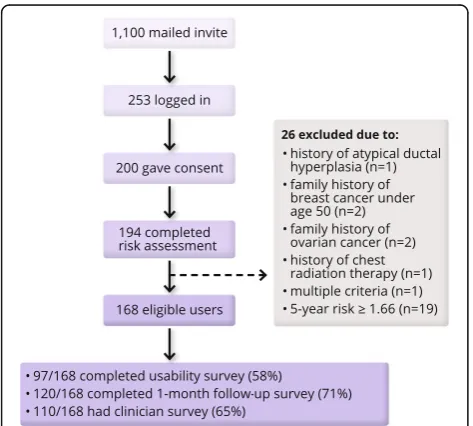
From March 1, 2013 through June 30, 2014, invitations were mailed to 1,100 women ages 40–49 with a sched-uled preventive care visit who had no study exclusion criteria identified in the EHR. Of these women, 253 logged in to theBSDwebsite and 194 provided consent, of whom 168 met criteria for low-to-average breast can-cer risk (Fig. 1).BSD users and non-users had the same median age (44 years). Among women with information available in the EHR, the probability of any prior mam-mogram (screening or diagnostic) was similar in BSD users (76%) and non-users (84%).
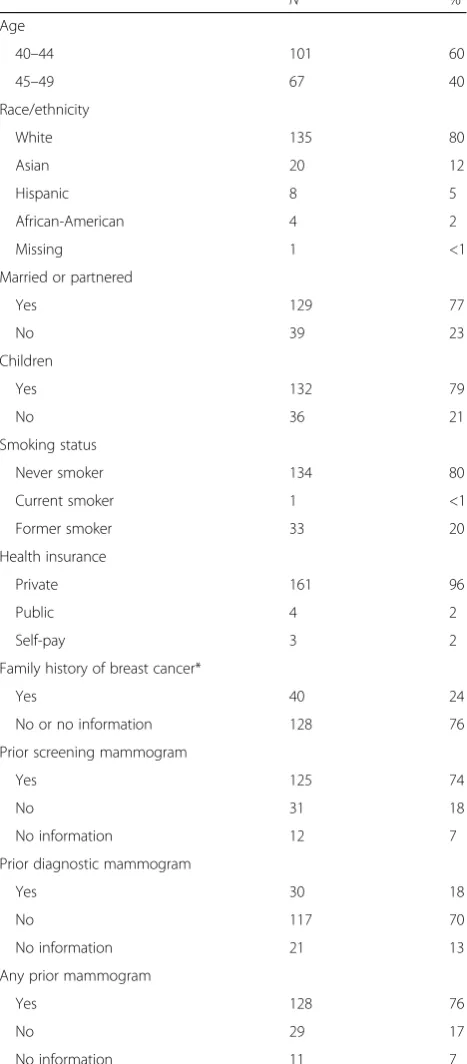
BSDusers were predominantly white, most were mar-ried, had at least one child, and were non-smokers (Table 1). Nearly all had private, commercial health in-surance. At least 24% of BSD users had any family his-tory of breast cancer in someone other than a first-degree relative diagnosed at age 50 or younger, and at least 74% had a prior screening mammogram. Based on the information entered in the decision aid by users, predicted 5-year breast cancer risk varied from 0.4% to 1.6%, with a median of 1.0%. Median lifetime breast can-cer risk was 12.5%.
Impressions of the site
At least 97 of the 168 eligible users (58%) completed the exit survey on the final page of BSD, and therefore viewed all prior pages. A majority of these women expressed favorable impressions ofBSD. More than 95% agreed or strongly agreed that the site was easy to navi-gate, that the information was presented clearly, and that the information was important for women like them. Seventy-six percent said that graphs and illustrations helped them understand the information presented. No users said that information in BSD was confusing, and only 5% reported that the website was too slow. Almost 80% said they would recommend BSD to other women in their 40s.
Screening decisions and decisional conflict
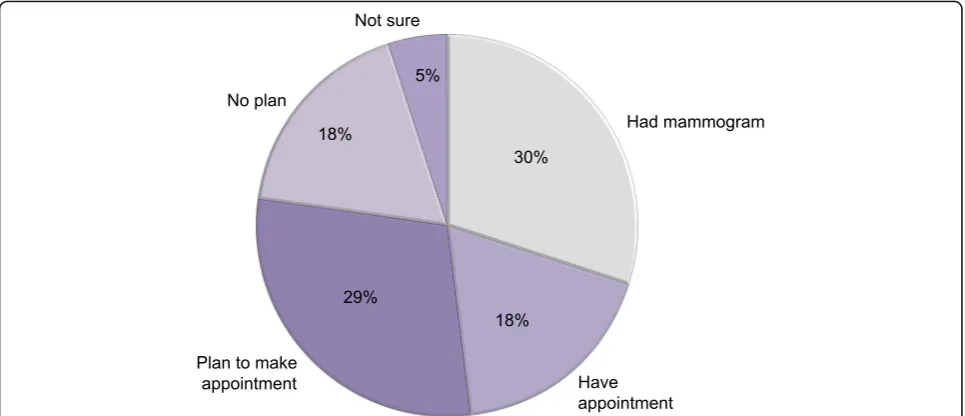
Of the 168 eligible women who gave consent and used BSD, 120 responded to at least one item in the follow-up survey. Of these women, 88% reported that they discussed screening mammography at their scheduled visit, and 77% said they had a screening mammogram since the visit, had scheduled an appointment for a screening mammogram, or were planning to make an appointment in the next 6 months (Fig. 2). The average decisional conflict score was 22.5, below the threshold score of 25 associated with implementing decisions [17, 20]. Decisional conflict scores were lowest among women who reported that they had or planned to have a mammogram (mean 21.4, 95% CI 18.3-24.6) higher in those who did not (mean 24.8, 95% CI 19.2-30.5), and highest in those who were unsure (mean 31.5, 95% CI 13.9-49.1) (Table 2).
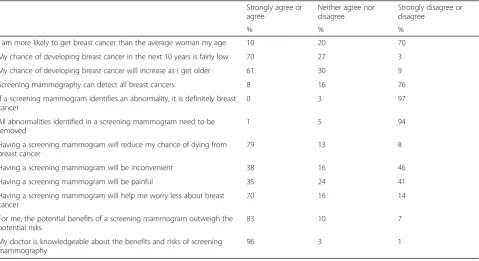
Knowledge and worry about breast cancer and screening BSD users generally expressed accurate perceptions of their own breast cancer risk and the benefits and limita-tions of screening (Table 3). However, 10% believed that they were more likely to get breast cancer than the aver-age woman their aver-age. Eighty-three percent agreed or strongly agreed that, for them, the benefits of screening outweighed the potential risks. Women who expressed this belief were considerably more likely than those who disagreed to report that they had a screening
mammogram, had an appointment for screening or planned to make an appointment within the next 6 months (84% vs. 25%). Women with no plan for a screening mammogram were more likely to disagree or strongly disagree with the statement that the benefits of screening outweighed the risks, compared with BSD users who had or planned to have a mammogram (20% vs. 2%, p< 0.01 by Fisher’s exact test). Nearly all BSD users (96%) said that their doctor was knowledgeable about the benefits and risks of screening mammography. When asked how often they worry about breast cancer, more than one-fifth of BSD users said not at all, while only one user said almost all of the time. When asked how often breast cancer worry affected their mood and how often it affected their performance of daily activ-ities, 69% and 86% of users, respectively, said not at all. However, 70% agreed or strongly agreed that having a screening mammogram would help them worry less about breast cancer.
Role of predicted risk
There was no association between a user’s predicted breast cancer risk, based on the Gail model and given to her in BSD, and actual or intended use of screening. However, risk perception and worry about breast cancer varied with predicted risk. Women with higher predicted risk were more like to agree with the statement, “I am more likely to get breast cancer than the average woman my age,” while those with lower predicted risk were more likely to (correctly) disagree with this statement (p < 0.01 by ANOVA). Women with higher predicted risk were also more likely to report more frequent worry about breast cancer (p< 0.01 by ANOVA).
Clinician perceptions
Clinician surveys were available for 110 of the 168 BSD users (65%) and for 618 non-users who met study eligi-bility criteria based on information found in the EHR. For 87% of BSD users and 84% of non-users, clinicians reported that the patient seemed well-informed about screening mammography. For 88% of BSD users and 94% of non-users, clinicians disagreed or expressed neu-trality with the statement that the patient seemed anx-ious about screening mammography. Rates of clinician-reported mammography discussion were similar in users and non-users (90% and 92%), and for both groups the average time that clinicians reported discussing mam-mography was four minutes. Differences between users and non-users for these clinician-reported endpoints were not statistically significant.
Discussion
Users of our personalized, web-based decision aid re-ported low levels of decisional conflict and high levels of
Table 1Characteristics of decision aid users
N %
Age
40–44 101 60
45–49 67 40
Race/ethnicity
White 135 80
Asian 20 12
Hispanic 8 5
African-American 4 2
Missing 1 <1
Married or partnered
Yes 129 77
No 39 23
Children
Yes 132 79
No 36 21
Smoking status
Never smoker 134 80
Current smoker 1 <1
Former smoker 33 20
Health insurance
Private 161 96
Public 4 2
Self-pay 3 2
Family history of breast cancer*
Yes 40 24
No or no information 128 76
Prior screening mammogram
Yes 125 74
No 31 18
No information 12 7
Prior diagnostic mammogram
Yes 30 18
No 117 70
No information 21 13
Any prior mammogram
Yes 128 76
No 29 17
No information 11 7
All information obtained from electronic health records, except for race/ ethnicity, which was reported by users in the breast cancer risk assessment portion of the decision aid
knowledge about breast cancer risk and screening. Most discussed breast cancer screening with a physician, and their clinicians perceived them to be well informed about screening mammography.
Many women overestimate the benefits of mammog-raphy, some even holding the mistaken belief that screening can prevent breast cancer [21]. Most BSD users in our study (79%) agreed that having a screening mammogram would reduce their chance of dying from breast cancer, a fact stated in the decision aid. Contrary to information presented in BSD, 8% of users said that screening mammography can detect all breast cancers. It is not clear whether these women were unable to process or retain information presented in the decision aid, or whether their beliefs about screening mammog-raphy were too strong to counteract conflicting information.
BSDwas designed for women at low-to-average risk of developing breast cancer, and eligible users are told that they are at low-to-average risk based on their personal-ized risk prediction. Despite this, 10% ofBSDusers per-ceived that they were “more likely to get breast cancer than the average woman” their age. Thus, for some women there is discordance between perception and in-formation, even when breast cancer risk estimates are personalized and stated explicitly, perhaps due to lack of confidence in those estimates [22].
In the context of disease screening, decision aids have been shown to improve knowledge, reduce decisional conflict and anxiety, allow patients to be active partici-pants in their care and lead to informed, values-based decisions [23–25]. A screening mammography decision aid for Australian women under 50 increased knowledge
and reduced indecision without increasing feelings of anxiety [26], and information about “overdetection” of breast cancer further enhanced the likelihood of making an informed decision [27].
In the absence of a comparison or control group in our study, we cannot make causal inferences aboutBSD and its relationship with decision-making outcomes. BSD users were a self-selected group, and their prior knowledge, attitudes and beliefs about screening may have differed from those of non-users. However, the high levels of knowledge we observed, and relatively low levels of decisional conflict and worry, suggest thatBSD did not have a detrimental impact on these important outcomes. Similarly, we did not find a large difference between the proportion of users with evidence of prior screening (74%), and the proportion of users who re-ported actual or intended use of screening mammog-raphy following their post-BSD preventive care visit (77%), suggesting thatBSDwas not biased for or against any particular screening strategy and did not cause dra-matic changes in behavior.BSDdid not appear to influ-ence clinician perceptions of patient knowledge, but perhaps more importantly, it did not significantly in-crease clinician-perceived patient anxiety about screen-ing or the length of discussions about screenscreen-ing. These results suggest that BSD did not add a burden to the clinical encounter or adversely affect the clinician-patient interaction from the provider perspective.
Our study included women of different racial and eth-nic backgrounds, who also likely varied in their socio-economic status. However, 80% of the sample was white, 77% were married, and 96% had commercial health in-surance, and our findings may not be generalizable to
different populations, particularly those with a greater proportion of African-American women or a greater proportion of uninsured women. Similarly, the numer-acy, health literacy and internet comfort of our sample may not be generalizable to all US women in their 40s. Socially disadvantaged groups, including those with lim-ited education or low literacy, may benefit from decision aids specifically tailored to their needs [28].
BSDitself has several limitations, some due to limita-tions of available evidence. For example, breast cancer risk estimates were personalized, but estimates of screening benefit were age group-specific. Other limita-tions reflect deliberate decisions to maximize user com-prehension and reduce confusion. For example, breast cancer risk and screening benefit are presented as point estimates without ranges or confidence intervals. Effect-ively communicating uncertainty with lay audiences is challenging, and there is currently no consensus on best practices [29]. Although we reviewed many decision aids
for cancer screening as we developed BSD, we cannot say whetherBSDis superior to other web-based decision aids for breast cancer screening or even if a web-based tool is appropriate for all women in their 40s at low-to-average risk of breast cancer.
There are approximately 22 million women ages 40– 49 in the US, each of whom is advised, by the USPSTF and others, to make an individualized decision regarding screening mammography in consultation with her phys-ician. While some expert groups continue to recom-mend that women ages 40–49 be offered annual mammography, not all women accept this offer. Use of a decision aid could alleviate medico-legal concerns that some clinicians have in supporting their patients’ indi-vidualized screening mammography decisions, especially amid conflicting and often sensationalized reports in the popular press [30]. Even ACOG, which recommends an-nual screening mammograms, recently advised that deci-sions about screening start age and frequency“should be made through shared decision making,”and that“health care providers should work with patients to determine the best screening strategy based on individual risk and values” [31]. BSD directly addresses this recommenda-tion, offering women personalized estimates of their breast cancer risk and an opportunity to explore their values and preferences. BSD also provides balanced, evidence-based information about screening options, consistent with recent calls for patient-centered, in-formed consent that meets a“reasonable patient” stand-ard and advances shared decision making [32].
Table 3Knowledge, attitudes and beliefs about breast cancer risk and screening mammography Strongly agree or
agree
Neither agree nor disagree
Strongly disagree or disagree
% % %
I am more likely to get breast cancer than the average woman my age 10 20 70
My chance of developing breast cancer in the next 10 years is fairly low 70 27 3
My chance of developing breast cancer will increase as I get older 61 30 9
Screening mammography can detect all breast cancers 8 16 76
If a screening mammogram identifies an abnormality, it is definitely breast cancer
0 3 97
All abnormalities identified in a screening mammogram need to be removed
1 5 94
Having a screening mammogram will reduce my chance of dying from breast cancer
79 13 8
Having a screening mammogram will be inconvenient 38 16 46
Having a screening mammogram will be painful 35 24 41
Having a screening mammogram will help me worry less about breast cancer
70 16 14
For me, the potential benefits of a screening mammogram outweigh the potential risks
83 10 7
My doctor is knowledgeable about the benefits and risks of screening mammography
96 3 1
Table 2Decisional conflict and use of screening
Actual or Intended Use of Screening Mammography*
Yes No Unsure
n = 89 n = 20 n = 6
DCS score 21.4 24.8 31.5
95% CI 18.3–24.6 19.2–30.5 13.9–49.1
*Yes: respondent reported having mammogram since post-decision aid visit, having appointment for mammogram, or planning to schedule appointment within six months
Conclusions
In a large pilot study, users of Breast Screening Deci-sions, a web-based decision aid, reported high levels of knowledge about breast cancer risk and screening and low levels of decisional conflict and worry. Most users subsequently discussed breast cancer screening with a clinician, andBSDdid not appear to adversely affect the patient-clinician interaction from the clinician’s perspec-tive. Our results suggest that decision aids likeBSDmay help women in their 40s make informed, personalized decisions about screening mammography.
Additional file
Additional file 1: Table S1. IPDAS Criteria. The supplemental table shows howBreast Screening Decisionsmeets the content and development criteria in the International Patient Decision Aid Standards (IPDAS) checklist. (PDF 74 kb)
Abbreviations
ACOG:American Congress of Obstetricians and Gynecologists; BCWS: Breast cancer worry scale;BSD:Breast Screening Decisions; DCS: Decisional conflict scale; EHR: Electronic health record; IPDAS: International patient decision aid standards; USPSTF: US Preventive Services Task Force
Acknowledgements
The authors gratefully acknowledge the contributions of J. Paige Nobles, Marwan Shouery and Mohammad Mansour to the design and development ofBreast Screening Decisions.
This work was presented in part at the Clinical Meeting of the American Congress of Obstetricians and Gynecologists, May 4-8, 2013, New Orleans, LA and at the 35th Annual North American Meeting of the Society for Medical Decision Making, October 19-23, 2013.
Funding
Funding for this work was provided by a grant from the Clinical and Translational Science Center of Weill Medical College of Cornell University and by a Cancer Center Support Grant from the National Cancer Institute (P30 CA008748).
Availability of data and materials
Breast Screening Decisionsis available online at http:// www.breastscreeningdecisions.com/
Authors’contributions
Designed and developedBreast Screening Decisions: EBE, VHP, AIM, TC, MMP. Conceived and designed the study: EBE, VHP, AIM, MMP. Coordinated data collection: EBE, VHP, MMP. Analyzed and interpreted data: EBE, VHP, CLA, MMP. Drafted the article or revised it critically for important intellectual content: EBE, VHP, AIM, TC, CLA, MMP. Obtained funding: EBE, MMP. All authors read, contributed to and approved the final manuscript.
Competing interests
The authors have no competing interests.
Consent for publication
Not applicable.
Ethics approval and consent to participate
This study was approved by the Institutional Review Board at Weill Cornell Medical College, and all subjects provided informed consent to participate. Consent was provided online or verbally, and these methods of consent were approved by the IRB.
Author details
1Department of Epidemiology and Biostatistics, Memorial Sloan Kettering Cancer Center, New York, NY, USA.2Department of Healthcare Policy and Research, Weill Cornell Medical College, New York, NY, USA.3Department of Medicine, Weill Cornell Medical College, New York, NY, USA.4Department of Obstetrics and Gynecology, Weill Cornell Medical College, New York, NY, USA.
Received: 14 June 2016 Accepted: 23 February 2017
References
1. Nelson HD, Tyne K, Naik A, Bougatsos C, Chan BK, Humphrey L. Screening for breast cancer: an update for the U.S. Preventive services task force. Ann Intern Med. 2009;151(10):727–37. W237-742.
2. U.S. Preventive Services Task Force. Screening for breast cancer: U.S. Preventive services task force recommendation statement. Ann Intern Med. 2009;151(10):716–26.
3. Siu AL, Force USPST. Screening for breast cancer: U.S. Preventive services task force recommendation statement. Ann Intern Med. 2016;164(4):279–96. 4. Oeffinger KC, Fontham ET, Etzioni R, Herzig A, Michaelson JS, Shih YC,
Walter LC, Church TR, Flowers CR, LaMonte SJ, et al. Breast cancer screening for women at average risk: 2015 guideline update from the american cancer society. J Am Med Assoc. 2015;314(15):1599–614.
5. Davidson AS, Liao X, Magee BD. Attitudes of women in their forties toward the 2009 USPSTF mammogram guidelines: a randomized trial on the effects of media exposure. Am J Obstet Gynecol. 2011;205(1):30 e31–37. 6. Squiers LB, Holden DJ, Dolina SE, Kim AE, Bann CM, Renaud JM. The public's
response to the U.S. Preventive services task Force's 2009 recommendations on mammography screening. Am J Prev Med. 2011;40(5):497–504. 7. Pace LE, Keating NL. A systematic assessment of benefits and risks to guide
breast cancer screening decisions. J Am Med Assoc. 2014;311(13):1327–35. 8. Stefanek ME. Uninformed compliance or informed choice? a needed shift in
our approach to cancer screening. J Natl Cancer Inst. 2011;103(24):1821–6. 9. Legare F, O'Connor AM, Graham ID, Wells GA, Tremblay S. Impact of the Ottawa
decision support framework on the agreement and the difference between patients’and physicians’decisional conflict. Med Decis Mak. 2006;26(4):373–90. 10. Fagerlin A, Zikmund-Fisher BJ, Ubel PA. Helping patients decide: ten steps
to better risk communication. J Natl Cancer Inst. 2011;103(19):1436–43. 11. Elwyn G, O’Connor AM, Bennett C, Newcombe RG, Politi M, Durand MA,
Drake E, Joseph-Williams N, Khangura S, Saarimaki A, et al. Assessing the quality of decision support technologies using the international patient decision Aid standards instrument (IPDASi). PLoS One. 2009;4(3):e4705. 12. Gail MH, Brinton LA, Byar DP, Corle DK, Green SB, Schairer C, Mulvihill JJ. Projecting
individualized probabilities of developing breast cancer for white females who are being examined annually. J Natl Cancer Inst. 1989;81(24):1879–86.
13. Gail MH, Costantino JP, Pee D, Bondy M, Newman L, Selvan M, Anderson GL, Malone KE, Marchbanks PA, McCaskill-Stevens W, et al. Projecting individualized absolute invasive breast cancer risk in African american women. J Natl Cancer Inst. 2007;99(23):1782–92.
14. McCaskill-Stevens W, Wilson JW, Cook ED, Edwards CL, Gibson RV, McElwain DL, Figueroa-Moseley CD, Paskett ED, Roberson NL, Wickerham DL, et al. National surgical adjuvant breast and bowel project study of tamoxifen and raloxifene trial: advancing the science of recruitment and breast cancer risk assessment in minority communities. Clin trials. 2013;10(2):280–91. 15. Ballard-Barbash R, Taplin SH, Yankaskas BC, Ernster VL, Rosenberg RD, Carney
PA, Barlow WE, Geller BM, Kerlikowske K, Edwards BK, et al. Breast cancer surveillance consortium: a national mammography screening and outcomes database. AJR Am J Roentgenol. 1997;169(4):1001–8.
16. Mandelblatt JS, Cronin KA, Bailey S, Berry DA, de Koning HJ, Draisma G, Huang H, Lee SJ, Munsell M, Plevritis SK, et al. Effects of mammography screening under different screening schedules: model estimates of potential benefits and harms. Ann Intern Med. 2009;151(10):738–47.
17. O’Connor AM. Validation of a decisional conflict scale. Med Decis Mak. 1995; 15(1):25–30.
18. McCaul KD, Branstetter AD, O’Donnell SM, Jacobson K, Quinlan KB. A descriptive study of breast cancer worry. J Behav Med. 1998;21(6):565–79. 19. Haakenson CP, Vickers KS, Cha SS, Vachon CM, Thielen JM, Kircher KJ, Pruthi
20. O’Connor AM. User manual - decisional conflict scale. Ottawa: Ottawa Hospital Research Institute; 1993 [updated 2010].
21. Domenighetti G, D’Avanzo B, Egger M, Berrino F, Perneger T, Mosconi P, Zwahlen M. Women’s perception of the benefits of mammography screening: population-based survey in four countries. Int J Epidemiol. 2003; 32(5):816–21.
22. Scherer LD, Ubel PA, McClure J, Greene SM, Alford SH, Holtzman L, Exe N, Fagerlin A. Belief in numbers: when and why women disbelieve tailored breast cancer risk statistics. Patient Educ Couns. 2013;92(2):253–9. 23. Stacey D, Legare F, Col NF, Bennett CL, Barry MJ, Eden KB, Holmes-Rovner
M, Llewellyn-Thomas H, Lyddiatt A, Thomson R, et al. Decision aids for people facing health treatment or screening decisions. Cochrane Database Syst Rev. 2014;1:CD001431.
24. O’Connor AM, Bennett CL, Stacey D, Barry M, Col NF, Eden KB, Entwistle VA, Fiset V, Holmes-Rovner M, Khangura S, et al. Decision aids for people facing health treatment or screening decisions. Cochrane Database Syst Rev. 2009; 3:CD001431.
25. O’Connor AM, Rostom A, Fiset V, Tetroe J, Entwistle V, Llewellyn-Thomas H, Holmes-Rovner M, Barry M, Jones J. Decision aids for patients facing health treatment or screening decisions: systematic review. BMJ. 1999;319(7212):731–4. 26. Mathieu E, Barratt AL, McGeechan K, Davey HM, Howard K, Houssami N.
Helping women make choices about mammography screening: An online randomized trial of a decision aid for 40-year-old women. Patient Educ Couns 2010;81(1):63–72.
27. Hersch J, Barratt A, Jansen J, Irwig L, McGeechan K, Jacklyn G, Thornton H, Dhillon H, Houssami N, McCaffery K. Use of a decision aid including information on overdetection to support informed choice about breast cancer screening: a randomised controlled trial. Lancet. 2015;385(9978): 1642–1652.
28. Enard KR, Dolan Mullen P, Kamath GR, Dixon NM, Volk RJ. Are cancer-related decision aids appropriate for socially disadvantaged patients? a systematic review of US randomized controlled trials. BMC Med Inform Decis Mak. 2016;16(1):64. 29. Politi MC, Han PK, Col NF. Communicating the uncertainty of harms and
benefits of medical interventions. Med Decis Mak. 2007;27(5):681–95. 30. Weeks BE, Friedenberg LM, Southwell BG, Slater JS. Behavioral
consequences of conflict-oriented health news coverage: the 2009 mammography guideline controversy and online information seeking. Health Commun. 2012;27(2):158–66.
31. Practice Advisory: Breast Cancer Screening. http://www.acog.org/About-ACOG/ News-Room/Practice-Advisories/Practice-Advisory-Breast-Cancer-Screening. 32. Spatz ES, Krumholz HM, Moulton BW. The New Era of informed consent:
getting to a reasonable-patient standard through shared decision making. J Am Med Assoc. 2016;315(19):2063–4.
• We accept pre-submission inquiries
• Our selector tool helps you to find the most relevant journal
• We provide round the clock customer support
• Convenient online submission
• Thorough peer review
• Inclusion in PubMed and all major indexing services • Maximum visibility for your research
Submit your manuscript at www.biomedcentral.com/submit