SPECIAL ARTICLE
Guidelines for Implementation of Cystic Fibrosis
Newborn Screening Programs: Cystic Fibrosis
Foundation Workshop Report
Anne Marie Comeau, PhDa, Frank J. Accurso, MDb, Terry B. White, PhDc, Preston W. Campbell, III, MDc, Gary Hoffman, BSd, Richard B. Parad, MD, MPHa,e,f, Benjamin S. Wilfond, MDg,h, Margaret Rosenfeld, MD, MPHi, Marci K. Sontag, PhDj, John Massie, MBBS, FRACP, PhDk, Philip M. Farrell, MD, PhDl, Brian P. O’Sullivan, MDm
aNew England Newborn Screening Program and Department of Pediatrics, University of Massachusetts Medical School, Worcester, Massachusetts;bDepartment of Pediatrics, Mike McMorris Cystic Fibrosis Research and Treatment Center, University of Colorado Health Sciences Center and Children’s Hospital, Denver, Colorado;cCystic Fibrosis Foundation, Bethesda, Maryland;dState Laboratory of Hygiene andlDepartment of Pediatrics, University of Wisconsin, Madison, Wisconsin;eDepartment of Newborn Medicine, Brigham and Women’s Hospital, Boston, Massachusetts;fDepartment of Newborn Medicine, Children’s Hospital, Boston, Massachusetts;gSocial and Behavioral Research Branch, National Human Genome Research Institute, andhDepartment of Clinical Bioethics, Warren G. Magnuson Clinical Center, National Institutes of Health, Bethesda, Maryland;iDepartment of Pediatrics, University of Washington School of Medicine, Seattle, Washington;jDepartment of Preventive Medicine, University of Colorado Health Sciences Center, Denver, Colorado;kDepartment of Respiratory Medicine, Royal Children’s Hospital, Melbourne, Australia;mDepartment of Pediatrics, University of Massachusetts Medical Center, Worcester, Massachusetts
The authors have indicated they have no financial relationships relevant to this article to disclose.
ABSTRACT
Newborn screening for cystic fibrosis offers the opportunity for early intervention and improved outcomes. This summary, resulting from a workshop sponsored by the Cystic Fibrosis Foundation to facilitate implementation of widespread high quality cystic fibrosis newborn screening, outlines the steps necessary for success based on the experience of existing programs. Planning should begin with a workgroup composed of those who will be responsible for the success of the local program, typically including the state newborn screening program director and cystic fibrosis care center directors. The workgroup must develop a screening algorithm based on program resources and goals including mechanisms available for sample collection, regional demographics, the spectrum of cystic fibrosis disease to be detected, and acceptable failure rates of the screen. The workgroup must also ensure that all necessary guidelines and resources for screening, diagnosis, and care be in place prior to cystic fibrosis newborn screening implementation. These include educational materials for parents and primary care providers; systems for screening and for providing diagnostic testing and counseling for screen-positive infants and their families; and protocols for care of this unique population. This summary explores the benefits and risks of various screening algorithms, including complex situations that can occur involving unclear diagnostic results, and pro-vides guidelines and sample materials for state newborn screening programs to develop and implement high quality screening for cystic fibrosis.
www.pediatrics.org/cgi/doi/10.1542/ peds.2006-1993
doi:10.1542/peds.2006-1993
Key Words
newborn screening, cystic fibrosis, genotype, sweat test, guidelines
Abbreviations
CF— cystic fibrosis NBS—newborn screening PCP—primary care provider MI—meconium ileus
IRT—immunoreactive trypsinogen
CFTR—Cystic Fibrosis Transmembrane Conductance Regulator
CLSI—Clinical and Laboratory Standards Institute
QNS— quantity not sufficient Cl⫺— chloride
Accepted for publication Oct 10, 2006 Address correspondence to Terry B. White, PhD, Cystic Fibrosis Foundation, 6931 Arlington Rd, Bethesda, MD 20814. E-mail: [email protected]
C
YSTIC FIBROSIS (CF) is one of the most common life-shortening genetic diseases in the United States, affecting ⬃30 000 children and young adults. Because early treatment improves outcome1–15 and theCenters for Disease Control and Prevention has stated that the addition of CF to state newborn screening (NBS) programs is justified,16there has been increased interest
in adding CF to state NBS programs. Individuals who are diagnosed with CF through NBS have improved nutri-tional status,17 better growth,14 and fewer
hospitaliza-tions,17–19whereas a delayed diagnosis can result in
sig-nificant cognitive dysfunction20and nutritional failure.4
NBS has been shown to decrease the risk of life-threat-ening complications21or death21,22from CF in infancy or
early childhood. Families of those with CF also benefit substantially from CF NBS, because they avoid the av-erage 15-month delay between onset of symptoms and diagnosis17along with the accompanying anxiety,
frus-tration, and emotional distress.23Costs of diagnosis, and
possibly treatment (through fewer hospitalizations), are reduced by NBS.24 Finally, families can benefit from
genetic counseling and identification of CF in older sib-lings as a result of NBS discovery of CF mutations.
Although CF NBS offers tremendous benefits for in-dividuals diagnosed with CF and their families, it is accompanied by risks that also must be considered for optimal NBS-program design. These risks include the potential that infants with CF could have a delayed diagnosis by primary care providers (PCPs) who believe a negative NBS result is definitive,25and that infants who
are properly identified with CF by the screen could be exposed to health care–acquired infections during the diagnostic evaluation or early treatment.23 The families
of infants with a positive screening result but not CF could experience unnecessary anxiety before the diag-nostic result,26,27and doubts regarding the health of their
normal infant may persist even afterward.28–31
Recogni-tion of these risks is vital for optimal NBS-program de-sign.
Components of a well-designed system necessary to address these issues successfully, as determined at a workshop held by the CF Foundation and attended by representatives from numerous state and international NBS programs, government agencies, and CF Founda-tion–accredited care centers (see “Acknowledgments”), are described here. The CF Foundation recommends implementation of CF screening in all newborns, with appropriate attention to these guidelines to reduce risks and maximize benefits for all participants
The goal of CF NBS programs should be to provide infants with CF an early opportunity to receive special-ized medical care that will assist them in maintaining normal growth and development and delay pulmonary infection, with its associated subsequent decline of lung function. To that end, CF NBS programs should be inte-grated within established systems such as state-based
NBS programs to assure comprehensive education, test-ing, tracktest-ing, follow-up, and outcomes assessments. These NBS programs provide opportunity for early iden-tification and treatment of infants who have disorders that otherwise would go unrecognized before irrevers-ible clinical damage. This early opportunity is possirrevers-ible because indicators of disorders are detectable in the dried blood spot specimens that are collected universally from the newborn population at ⬃2 days of age during a presymptomatic period. NBS as a successful population-based public health service began in the early 1960s when statewide screening for phenylketonuria was first implemented.32Since that time, it has become a service
offered by all states and most industrialized nations and includes screening for a variety of disorders.
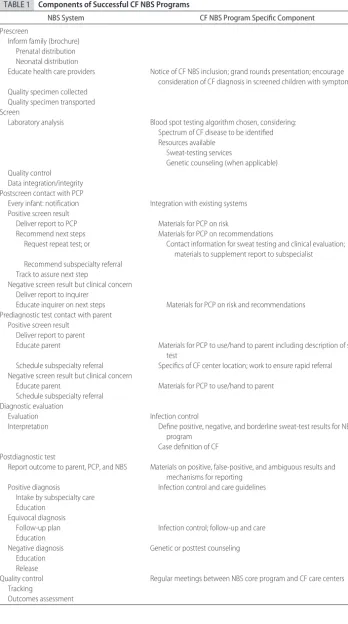
NBS programs support sophisticated systems for co-ordination of their educational, laboratory, communica-tions, and clinical services (ref 33 and Table 1). The particular disorders that are screened by each state’s program are determined by state authority (state lists are available at http://genes-r-us.uthscsa.edu/nbsdisorders. htm). NBS programs can and do add new disorders, some of which are universally required and some of which are optional. The determination of whether CF is included in a state’s NBS panel and, if so, whether it is included as a required (mandatory) or optional screen is in the purview of the state authority.
This document provides a guide to some initial pro-cesses involved in the implementation of CF NBS. The best way to conduct CF NBS in a particular region will depend on a number of complex issues. Systematic plan-ning by the state and a CF NBS advisory body will maximize opportunity for success.
SYSTEMATIC PLANNING FOR CF NBS
TABLE 1 Components of Successful CF NBS Programs
NBS System CF NBS Program Specific Component
Prescreen
Inform family (brochure) Prenatal distribution Neonatal distribution
Educate health care providers Notice of CF NBS inclusion; grand rounds presentation; encourage consideration of CF diagnosis in screened children with symptoms Quality specimen collected
Quality specimen transported Screen
Laboratory analysis Blood spot testing algorithm chosen, considering: Spectrum of CF disease to be identified Resources available
Sweat-testing services
Genetic counseling (when applicable) Quality control
Data integration/integrity Postscreen contact with PCP
Every infant: notification Integration with existing systems Positive screen result
Deliver report to PCP Materials for PCP on risk
Recommend next steps Materials for PCP on recommendations
Request repeat test; or Contact information for sweat testing and clinical evaluation; materials to supplement report to subspecialist Recommend subspecialty referral
Track to assure next step
Negative screen result but clinical concern Deliver report to inquirer
Educate inquirer on next steps Materials for PCP on risk and recommendations Prediagnostic test contact with parent
Positive screen result Deliver report to parent
Educate parent Materials for PCP to use/hand to parent including description of sweat test
Schedule subspecialty referral Specifics of CF center location; work to ensure rapid referral Negative screen result but clinical concern
Educate parent Materials for PCP to use/hand to parent Schedule subspecialty referral
Diagnostic evaluation
Evaluation Infection control
Interpretation Define positive, negative, and borderline sweat-test results for NBS program
Case definition of CF Postdiagnostic test
Report outcome to parent, PCP, and NBS Materials on positive, false-positive, and ambiguous results and mechanisms for reporting
Positive diagnosis Infection control and care guidelines Intake by subspecialty care
Education Equivocal diagnosis
Follow-up plan Infection control; follow-up and care Education
Negative diagnosis Genetic or posttest counseling Education
Release
Quality control Regular meetings between NBS core program and CF care centers Tracking
overarching state NBS advisory committee,34 which
should include representation from a wider variety of stakeholders including parent advocates, primary care professionals, staff from birth hospitals with obstetrical services, and insurers. All members of the CF NBS work-group will have to become familiar with the various elements of a CF NBS program (Table 1). For each ele-ment, the workgroup must determine the extent to which (1) the basic standard of care is followed or ex-ceeded, (2) compromises resulting from sociogeographic
or socioeconomic considerations are incorporated, and (3) data are collected for quality improvement and re-search purposes.
Among the first tasks of the CF NBS workgroup should be to determine the spectrum of CF disease that the program will aim to identify. A successful CF NBS program must balance the desire to identify all infants with CF, whose disease can vary from extremely mild to severe, with the realities of subjecting large portions of the population to diagnostic tests and limited resource
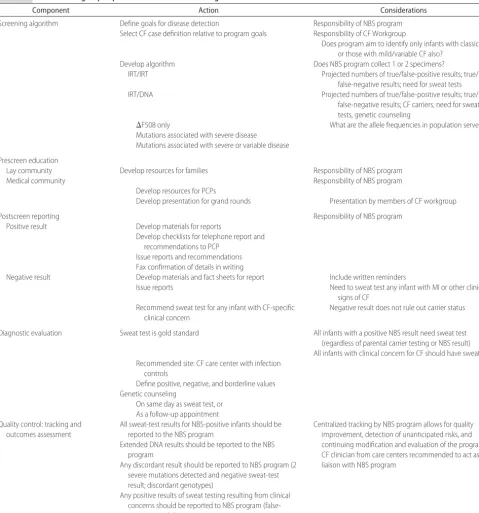
TABLE 2 CF NBS Workgroup Topics for Successful CF NBS Programs
Component Action Considerations
Screening algorithm Define goals for disease detection Responsibility of NBS program Select CF case definition relative to program goals Responsibility of CF Workgroup
Does program aim to identify only infants with classic CF, or those with mild/variable CF also?
Develop algorithm Does NBS program collect 1 or 2 specimens?
IRT/IRT Projected numbers of true/false-positive results; true/
false-negative results; need for sweat tests
IRT/DNA Projected numbers of true/false-positive results; true/
false-negative results; CF carriers; need for sweat tests, genetic counseling
⌬F508 only What are the allele frequencies in population served? Mutations associated with severe disease
Mutations associated with severe or variable disease
Prescreen education
Lay community Develop resources for families Responsibility of NBS program
Medical community Responsibility of NBS program
Develop resources for PCPs
Develop presentation for grand rounds Presentation by members of CF workgroup
Postscreen reporting Responsibility of NBS program
Positive result Develop materials for reports
Develop checklists for telephone report and recommendations to PCP
Issue reports and recommendations Fax confirmation of details in writing
Negative result Develop materials and fact sheets for report Include written reminders
Issue reports Need to sweat test any infant with MI or other clinical signs of CF
Recommend sweat test for any infant with CF-specific clinical concern
Negative result does not rule out carrier status
Diagnostic evaluation Sweat test is gold standard All infants with a positive NBS result need sweat test (regardless of parental carrier testing or NBS result) All infants with clinical concern for CF should have sweat test Recommended site: CF care center with infection
controls
Define positive, negative, and borderline values Genetic counseling
On same day as sweat test, or As a follow-up appointment Quality control: tracking and
outcomes assessment
All sweat-test results for NBS-positive infants should be reported to the NBS program
Centralized tracking by NBS program allows for quality improvement, detection of unanticipated risks, and Extended DNA results should be reported to the NBS
program
continuing modification and evaluation of the program; CF clinician from care centers recommended to act as Any discordant result should be reported to NBS program (2
severe mutations detected and negative sweat-test result; discordant genotypes)
liaison with NBS program
availability. The CF NBS workgroup should determine the resources available and develop a screening algo-rithm that will optimize the use of these resources to identify those infants who are likely to receive the great-est benefit. Some states may choose to identify infants with all possible CF indications, because even mildly affected infants may experience life-threatening salt loss,35although this is rare. Such decisions also increase
the likelihood of identifying infants who either will not develop any CF symptoms or will only develop mild symptoms later in life. Other programs, with more lim-ited resources, may choose to focus on a subset thought to have a prognosis of severe disease.
Finally, the CF NBS workgroup should ensure that all necessary guidelines for systems and care are in place before CF NBS implementation. A manuscript detailing the protocol for care of the newborn diagnosed with CF through NBS is under preparation by the CF Founda-tion.
SPECIFICATIONS FOR SUCCESSFUL CF NBS PROGRAMS
Prescreen Education
In addition to the standardized educational materials distributed by NBS programs to expectant parents and to parents immediately after the birth of their infant, the following types of CF-specific information should be developed or accessed for distribution:
● Notice to parents of availability of CF NBS: Typically coordinated by the state NBS program, this notice may be in the form of public service announcements, fly-ers, and educational materials distributed to prenatal services and educational brochures distributed to nurseries. Notices that reach parents prenatally may help them understand that prenatal and neonatal screening services are different and that both are avail-able.
● Notice to pediatric health care providers of CF NBS: This task is usually coordinated by the state NBS pro-gram. A model notice, incorporating some educational material about CF, is shown in Appendix 1. Alterna-tively, notification may be in the form of a “legal notice” or public service announcement, especially if the state is adding several disorders to its screening program at once. Proper education of the primary care community is helpful in accomplishing the objectives of the CF NBS program and diminishing misunder-standing about the abilities and limits of the screen. Although state-of-the-art screening will identify 96% to 99% of CF-affected infants,36–38 false-negative
re-sults could cause a significantly delayed diagnosis be-cause of complacency of the PCP, who may ignore clinical signs of the disease.25 Regardless of CF NBS
results, diagnostic evaluation including sweat testing should be performed on any infant who evokes
clin-ical concern, including all infants with meconium il-eus (MI), and any infant whose parents are both car-riers.
● Standardized presentations: These should be devel-oped by the CF NBS workgroup to ensure that the information being provided in local educational sem-inars for physicians about CF NBS is accurate and representative of the protocol developed by the CF NBS workgroup. It is helpful when health care pro-viders can be assured by the presenter that consulta-tion with the CF NBS program is available in the event of a positive screening result, providing them with a support system.
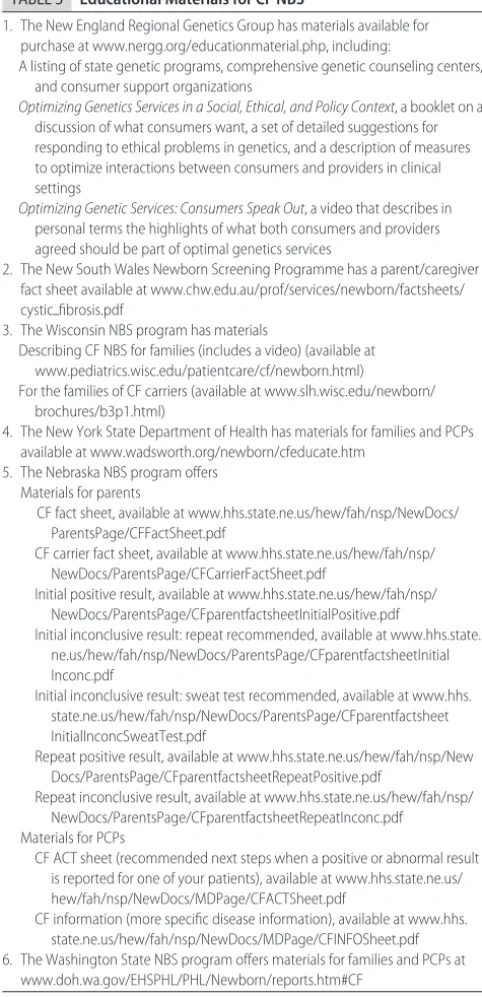
These and other educational materials designed for CF NBS are available in those programs that have al-ready initiated screening programs (see Table 3 and Ap-pendices 1–3).
Blood Spot Testing Algorithms for CF NBS
All screening algorithms in current use in the United States rely on testing for immunoreactive trypsinogen (IRT) as the primary screen for CF.39 The presence of
high levels of IRT, a pancreatic protein typically elevated in CF-affected infants, indicates the need for a second tier of testing, which determines the positive or negative outcome of the screen. The second-tier test may rely on IRT again or DNA testing; within these 2 categories, a variety of modifications are used40 because no single
algorithm is perfect. For example, 2 different algorithms using DNA in the second tier could eventually identify a similar number of affected infants; however, one algo-rithm that tests for more Cystic Fibrosis Transmembrane Conductance Regulator (CFTR) mutations might result in quicker diagnosis and allow for earlier intervention, whereas the other might identify fewer carriers. In choosing an algorithm, consideration should be given to the goals of the program, the demographics of the pop-ulation to be served, and the capacities of the screening laboratory, the clinical care programs, and the follow-up system. The incidence, prevalence, and (for algorithms using DNA) mutant allele distribution must be estimated to determine if facility and personnel needs resulting from a particular screening algorithm can be met. In considering these needs, it is useful to realize that an early diagnosis is important, but hours or days are not as critical in identification of CF as in that of several other standard newborn-screened disorders such as galac-tosemia or congenital adrenal hyperplasia.
IRT Analysis: A Cautionary Note
Because newborns with CF and MI may have low initial IRT values,41,42 resulting in a false-negative screen, all
study) are black may display high IRT values, resulting in false-positive newborn screen results.36,43 The urgency
associated with the report or follow-up protocol for in-fants with these risk factors may need modification.
IRT/IRT Algorithms
The choice of screening algorithms will be driven par-tially by whether the community NBS program rou-tinely and universally collects 2 specimens or only a single specimen. If 2 specimens are universally collected, the community has the option to assay IRT in both primary and second-tier tests on specimens collected at
⬃2 days and then again at 14 days of age (IRT/IRT algorithm). Use of an IRT/IRT algorithm avoids the iden-tification of large numbers of CF carriers from DNA analysis and the associated needs for genetic counseling. However, if only a single specimen is routinely collected, use of an IRT/IRT algorithm would require a specific request for a second sample and an acknowledgment that the first specimen screen result was positive. Be-cause IRT levels decrease after the first weeks of life, the timing of sample collection is important and laboratory cutoffs for age-specific ranges must be established. In keeping with routine laboratory quality assurance, cut-off levels must be determined by each NBS laboratory to meet the desired sensitivity and specificity of the screen and should be evaluated periodically. Some laboratories may choose to use an absolute IRT value for a cutoff, whereas others may identify a percentage of the daily values as the cutoff.44The latter method avoids the
prob-lem of seasonal variations in IRT values that may be caused by lability of the sample during shipment to the processing laboratory45but may be more subject to
vari-ation as a result of daily populvari-ation shifts.
IRT/DNA Algorithms
Some CF NBS programs may prefer to use a screen that includes DNA analysis. In fact, if the NBS program col-lects only a single specimen universally, then an algo-rithm with IRT as the primary screen followed by a DNA analysis on the specimens with elevated IRT concentra-tions (IRT/DNA algorithm) is typically chosen. The IRT cutoff that is selected to prompt DNA testing is a factor in producing false-positive and false-negative results that must be considered by the CF NBS workgroup.
Use of DNA analysis in the second tier of screening necessitates the selection of mutations in theCFTRgene for testing. A decision can be made to test for only the most common CFTR mutation, ⌬F508; for ⌬F508 and multiple mutations associated with severe disease; or for a panel of multiple mutations that includes some vari-ants associated with mild or variable phenotypes. This decision must be based on a number of considerations, including those that are philosophical (the purpose of screening), scientific (current understanding of geno-type-phenotype relationships), clinical utility (benefit to the infant and family), and practical (cost, system capac-ity for increased numbers of positive-screened infants).
The choice of whether to use a multiple-mutation panel or an assay for⌬F508 alone is the first consider-ation. The frequency of ⌬F508 in the community will help determine the usefulness of a single-mutation assay in the second tier of the screen. In the Massachusetts CF NBS program, the use of a multiple-mutation panel (16 –27 mutations) rather than just the single most com-mon mutation increased the detection of affected infants by 50% and reduced the false-negative rate fourfold, although it also increased detection of carrier
false-pos-TABLE 3 Educational Materials for CF NBS
1. The New England Regional Genetics Group has materials available for purchase at www.nergg.org/educationmaterial.php, including:
A listing of state genetic programs, comprehensive genetic counseling centers, and consumer support organizations
Optimizing Genetics Services in a Social, Ethical, and Policy Context, a booklet on a discussion of what consumers want, a set of detailed suggestions for responding to ethical problems in genetics, and a description of measures to optimize interactions between consumers and providers in clinical settings
Optimizing Genetic Services: Consumers Speak Out, a video that describes in personal terms the highlights of what both consumers and providers agreed should be part of optimal genetics services
2. The New South Wales Newborn Screening Programme has a parent/caregiver fact sheet available at www.chw.edu.au/prof/services/newborn/factsheets/ cystic㛭fibrosis.pdf
3. The Wisconsin NBS program has materials
Describing CF NBS for families (includes a video) (available at www.pediatrics.wisc.edu/patientcare/cf/newborn.html)
For the families of CF carriers (available at www.slh.wisc.edu/newborn/ brochures/b3p1.html)
4. The New York State Department of Health has materials for families and PCPs available at www.wadsworth.org/newborn/cfeducate.htm
5. The Nebraska NBS program offers Materials for parents
CF fact sheet, available at www.hhs.state.ne.us/hew/fah/nsp/NewDocs/ ParentsPage/CFFactSheet.pdf
CF carrier fact sheet, available at www.hhs.state.ne.us/hew/fah/nsp/ NewDocs/ParentsPage/CFCarrierFactSheet.pdf
Initial positive result, available at www.hhs.state.ne.us/hew/fah/nsp/ NewDocs/ParentsPage/CFparentfactsheetInitialPositive.pdf
Initial inconclusive result: repeat recommended, available at www.hhs.state. ne.us/hew/fah/nsp/NewDocs/ParentsPage/CFparentfactsheetInitial Inconc.pdf
Initial inconclusive result: sweat test recommended, available at www.hhs. state.ne.us/hew/fah/nsp/NewDocs/ParentsPage/CFparentfactsheet InitialInconcSweatTest.pdf
Repeat positive result, available at www.hhs.state.ne.us/hew/fah/nsp/New Docs/ParentsPage/CFparentfactsheetRepeatPositive.pdf
Repeat inconclusive result, available at www.hhs.state.ne.us/hew/fah/nsp/ NewDocs/ParentsPage/CFparentfactsheetRepeatInconc.pdf
Materials for PCPs
CF ACT sheet (recommended next steps when a positive or abnormal result is reported for one of your patients), available at www.hhs.state.ne.us/ hew/fah/nsp/NewDocs/MDPage/CFACTSheet.pdf
CF information (more specific disease information), available at www.hhs. state.ne.us/hew/fah/nsp/NewDocs/MDPage/CFINFOSheet.pdf 6. The Washington State NBS program offers materials for families and PCPs at
itive results by 43%.36In other communities, the choice
of using a single mutation in the second tier of the screen may adequately meet the needs set forth by that state’s CF NBS workgroup.
The selection of mutations for a multiple-mutation panel can pose challenges, including:
● Reagent availability: Most NBS programs will use commercially available reagents, which have largely been developed for prenatal testing. However, these reagents are not completely compatible with CF NBS, because the goal of prenatal testing is detection of parent carriers rather than detecting infants with CF. Recently, commercial reagents that allow flexibility in selecting mutations for testing have come onto the market and will allow development of NBS- and pop-ulation-specific instruments.
● CF genotype variation: Ideally, the mutation panel for screening should be based on the frequency of CF mutations present in the state CF population. A list of CF genotypes and frequencies observed in the CF care centers serving a community can be obtained from the CF Foundation. However, measurement of CF geno-types in nonnewborn clients of CF clinical care centers can only approximate the frequency in the newborn population. The validity of using these frequencies is limited as a result of issues that include ascertainment bias of CF in nonwhite populations, the extent of the CF population genotyped, population shifts, and the pattern of genotypes associated with diagnoses in symptomatic infants.
● Genotype/phenotype relationships: SomeCFTR muta-tions, particularly those in classes IV (such as R117H) and V (such as A455E or 3849 ⫹ 10 kb C3T or IVS8-5T) (see the Cystic Fibrosis Mutation Database [www.genet.sickkids.on.ca/cftr]) may be associated with milder phenotypes,46 and the benefit from
screening algorithms that include these mutations has not been proven. Longitudinal epidemiologic data on individuals with classes IV and V mutations are quite limited, particularly with regard to lung disease, and few studies have included enough patients with a comprehensive analysis of outcome.47 Inclusion of
DNA variants with undocumented pathogenicity in NBS mutation panels risks the detection of asymptom-atic infants who may have late-onset mild disease for which the clinical utility of NBS is unproven and who may also incur insurance barriers. Projections of the rates of false-negative screens should be considered in relation to the specific objectives of the CF NBS pro-gram in making a decision to exclude these mutations from a screening panel. Use of these mutations in NBS is considered in more detail in “Special Consider-ations” below.
Fail-safe for IRT/DNA Protocols
Some NBS programs may choose to define the presence of ultrahigh IRT levels as a positive CF NBS result re-gardless of DNA-analysis results. The Massachusetts NBS protocol uses ultrahigh IRT values (eg, the top 0.2% of the population values,36recently raised to the top 0.1%)
as a fail-safe protocol to identify infants with CF who have mutations that are not detected by the multiple-mutation DNA panel. To increase specificity of this fail-safe protocol, the IRT values of serial specimens are evaluated when infants have multiple samples submit-ted; if the value decreases to within reference levels within the first month of life, the infant is excluded from the recommendation for a sweat test.36Because high IRT
values are associated with multiple causes, some NBS programs may not consider ultrahigh IRT levels as a positive screen result.48 In California, the proposed CF
NBS algorithm depends on a regionally customized DNA panel to maximize sensitivity and specificity of the new-born CF screen. In this algorithm, an IRT-level cutoff of 98.4% and at least 1 DNA mutation detected is projected to produce 661 sweat-test referrals, revealing 70 diag-nosed cases of CF. Although including ultrahigh IRT levels with no DNA mutations in the positive screen results is projected to detect 2 additional infants with CF, it would also increase the number of sweat-test referrals by an additional 426 and, therefore, is not incorporated into the algorithm (M. Kharrazi, PhD, MPH, written communication, 2005). However, when the California algorithm was examined by retrospective application to the 110 CF-affected infants identified from a 4-year Mas-sachusetts birth cohort,36 12 (11%, including 4 ⌬F508
homozygotes) would have been missed by the 98.4% IRT-level cutoff, and another 3 (3%) would have been missed by the requirement for detection of at least 1 mutation (A.M.C., unpublished data). This would have been outside the 95% detection rate that the Massachu-setts program set as its goal.
Each CF NBS workgroup must decide whether the community it represents will receive more benefit from such fail-safe protocols or from protocols that require development and maintenance of population-specific mutation panels for potentially changing populations.
Summary
NBS programs, a balance must be struck between sensi-tivity, specificity, and clinical utility.
Postscreening Report and Education
The responsibility for finding and notifying the PCP of the infant with a positive CF screen result is typically that of the state NBS program or its associated maternal and child health bureau, although models exist in which the CF care center or the birth hospital is assigned to this role (Table 4). Because these processes can be very labor intensive, adding a large burden to the reporting system, lines of responsibility and available resources should be well defined before CF NBS implementation.
Positive CF NBS Report
In keeping with the overall NBS notification and report-ing practices, the designated follow-up person from the CF NBS program should identify the PCP, notify that person of the positive screen result, and recommend that the infant be given a sweat test. Ideally, the PCP will be contacted by telephone, followed by timely confirmation of details in writing (eg, fax reports).49 The CF NBS
follow-up person should be prepared to explain the screening process and the risk of CF for the particular infant and provide contact information for diagnostic evaluation while collecting information as to the likely preferred site for this evaluation. The educational mate-rials that are used to introduce CF NBS (Appendix 1) can be used to refresh and update general information to the health care provider. Other materials, aimed at explain-ing the CF newborn screen to the public, can be provided to the health care provider to give to the family (Appen-dix 2).
Family counseling before the sweat test typically be-gins with the PCP and may or may not be offered again at the CF care center. In the event that the PCP is not comfortable providing this information or is unavailable, the CF care center may need to assume this responsibil-ity. After obtaining a complete family history, the coun-selor should be able to:
● explain the CF NBS process;
● provide a general description of CF;
● explain the positive CF NBS result and its implications;
● relate the relative risks of a positive, negative, border-line, or insufficient-quantity sweat-test result and risk of a positive or equivocal diagnosis associated with the individual report, including less typical reports such as an ultrahigh IRT level with no identified mutations;
● provide the location of the diagnostic evaluation;
● describe the services (sweat testing, nursing, genetic counseling) and personnel the family can expect to encounter at the diagnostic-evaluation visit;
● form a plan for follow-up of the sweat-test result; TABLE
● explain the significance of the presence of a single
CFTR mutation, if relevant, for future reproductive decision-making for both the child and other family members, including parents and siblings,30 and
ar-range for testing of the parents and family members if desired; and
● provide educational materials that can answer some of the family’s questions.
Once the site for diagnostic testing has been identi-fied, the follow-up person should provide detailed screening reports to the diagnostic site and the genetic counselor, if applicable. Efficient scheduling and com-munication with the sweat-test laboratory, genetic counselors, and clinicians will be promoted if an indi-vidual at the diagnostic center is identified to receive the CF NBS report and coordinate the follow-up evaluation.
Negative CF NBS Report
A negative result generated by a routine CF NBS may be reported in a manner that is consistent with overall NBS-program practice and in conjunction with routine reporting of other NBS tests. However, if clinical concern has prompted a request for the newborn screen result by the PCP, the CF NBS follow-up person should provide NBS results within the context of recommendations for diagnostic evaluation that are appropriate for each unique set of circumstances. Timely response to such inquiries, especially at the beginning of implementation, helps educate the medical community. Sample fact sheets to accompany the CF NBS report in response to these inquiries are provided in Appendix 3.
Diagnostic Testing of Infants After a Positive CF NBS Result: The Sweat Test
Confirmatory sweat tests are the gold standard for diag-nosis and should be conducted on all infants with a positive NBS result, including those with 2 mutations detected. A positive screen result is not a diagnosis and should always be confirmed by a diagnostic test. Infants with a positive screen result whose mother or father had negative carrier-testing results are at lower risk of having CF, but their elevated IRT value must be investigated by sweat testing.
Sweat-Test Laboratory Qualifications
The diagnostic quantitative pilocarpine iontophoresis sweat-chloride test should be performed according to the Clinical and Laboratory Standards Institute (CLSI, for-merly the National Committee for Clinical Laboratory Standards) guidelines at a College of American Patholo-gists–accredited laboratory,50as recommended by the CF
Foundation. Optimally, the testing should be performed at a laboratory in affiliation with a CF Foundation– accredited care center, where the test can be coordinated with timely and appropriate genetic counseling and
clin-ical follow-up. If the sweat-test result is positive, it is helpful for a CF clinician to be available for immediate intervention. A CF clinician can also help with interpre-tation of a complex diagnostic profile such as a border-line or negative sweat-test result in the presence of 2
CFTR mutations. Access to a genetic counselor and CF clinician is also helpful if there is a family history of CF, a genotype requiring literature review, or information on sensitive issues such as misattributed paternity. In addition, because infants with CF could be subjected to health care–acquired infection during their diagnostic evaluation or early treatment,23testing and clinical care
should take place at sites where this risk is recognized and rigorous CF infection-control guidelines are fol-lowed carefully.51Ideally, the sweat test should be
avail-able within 2 to 3 hours’ driving distance for the family. In regions where greater distances are unavoidable, it may be necessary to establish CLSI guideline–proficient satellite laboratories at which sweat can be both col-lected and tested or colcol-lected and sent to a College of American Pathologists–approved laboratory for analysis. Although not ideal (as shown in one non-US study),52,53
such arrangements could ensure acceptable testing stan-dards and may prevent long delays in testing as well as provide a safe alternative for situations when long trips are difficult.
Minimum Age and Weight of the Infant for Valid Sweat Testing
Sweat electrolytes are high on the first day of life, but by the third day they have declined to levels seen outside the newborn period.54The CLSI guidelines permit sweat
testing after 48 hours of age. Because CF NBS results are unlikely to be available before 48 hours, the threshold for sweat testing is more likely to be related to weight rather than age; infants weighing⬍2 kg are more likely to provide insufficient sweat for analysis (quantity not sufficient [QNS]).
Other infants are also at increased risk for invalid test results as a result of generation of insufficient sweat. Premature infants or infants who are black exhibit a higher frequency of QNS reports.43,55,56Newer methods
of conductance determination on microsamples have been developed but are not yet adequately standardized. Because waiting for the sweat test to be performed leads to family anxiety,37the test should be scheduled as soon
as possible and parents should be informed of the risk of QNS. Sweat testing is not considered an emergency, but guidance by a CF specialist should be available for the PCP at all times.
Diagnostic Interpretation After the Sweat Test
subset of infants whose diagnostic status cannot be re-solved without additional guidance. A planned CF Foun-dation–sponsored workshop will update the published consensus case definition of CF57and may provide
assis-tance in addressing some of these diagnostic dilemmas. Regardless, it is most helpful to have specific diagnostic protocols developed by the state CF NBS workgroup in place before implementation so that the lines of action and responsibility are clear.
Positive Sweat-Test Result
In keeping with CLSI guidelines, sufficient quantities of sweat yielding chloride (Cl⫺) values of ⱖ60 mEq/L is considered diagnostic for CF.50Exceptions to this rule are
familiar to clinicians who practice at CF care centers.58,59
Negative Sweat-Test Result
In the absence of significant clinical concern for CF, a negative sweat-test result (Cl⫺ value of⬍30 mEq/L at
⬍6 weeks of age) confirms a negative diagnosis. Clinical signs and symptoms consistent with CF or the detection of 2 pathogenic mutations in the CF newborn screen should result in reexamination of the diagnosis by a qualified CF clinician.
Borderline Sweat-Test Result
In older children and adults, a sweat Cl⫺value between 40 and 60 mEq/L has been termed ambiguous or “bor-derline” and is not clearly diagnostic. However, results from several NBS programs indicate that newborns with CF from 1 to 6 weeks of age tend to have sweat Cl⫺ levels lower than those found in older infants and chil-dren with CF.55,60 Thus, some screening programs
rec-ommend that a lower limit of 30 mEq/L (still 5 SD above the normal mean61) be adopted as the lower limit of the
borderline range in infants. In Massachusetts, lowering the cutoff from 40 to 30 mEq/L resulted in an increase from 1.1% to 3.5% in the number of screen-positive infants with a borderline sweat-test result, who then required additional monitoring before diagnostic resolu-tion (A.M.C., unpublished data). Evaluaresolu-tion of any in-fant with a borderline sweat-test result should include repeat sweat testing scheduled for a later date. If 2CFTR
mutations were detected by the newborn screen, a CF specialist should be consulted to determine the appro-priate next steps. If 1CFTRmutation was detected by the screen, a genetic counselor should be consulted to de-termine if an extended panel ofCFTRmutations should be used in additional testing.62
For more detailed discussion of recommendations af-ter borderline sweat-test results, see “Diagnostic Dilem-mas: Borderline Sweat-Test Results” under “Special Considerations” below.
Communicating Diagnostic-Evaluation Results to the Parents
CF NBS is optimized by effective communication of di-agnostic results, including well-developed counseling and education resources.23,29,30,63–65
Positive CF Diagnosis
When the CF NBS result indicates a high likelihood of CF, the NBS program should alert the clinical care center to allow the parents to meet with a CF clinician at the time of the sweat-test visit. Ideally, the parents of any infant with a positive sweat-test result should be able to meet with a CF clinician before leaving the clinical care center. The CF clinician should be prepared to discuss the diagnosis, prognosis, immediate next steps for the parents, and a short-term plan that includes a visit to meet with the CF team, which will coordinate care with the infant’s PCP. Presentation of these recommendations in writing is helpful.
In some cases, particularly at laboratories that expe-rience a low volume of sweat testing, parents will leave before results become available. A report of the diagnosis is then made, ideally, by a CF specialist to the PCP, who will be the primary route of communication to the par-ents. The PCP should have adequate information (or telephone numbers of relevant CF care centers) to ad-dress initial parent concerns and should facilitate the scheduling of a follow-up appointment with the CF team. For families of infants with a positive CF diagnosis, sweat tests should be arranged for all first-degree siblings and for any half-siblings who have signs or symptoms of CF or who have 2 parents known to be carriers.
Negative CF Diagnosis
As is characteristic of all NBS, most infants with a posi-tive CF NBS result will not have CF. Because families of infants with “false-positive” screen results (in which the screening result is positive and the diagnostic sweat test is negative) will have no continuing support from the CF care center, sympathetic and accurate transmission of information to allay future concerns takes on a high level of importance.
● For a positive screen result that shows no mutations, counseling may be offered by the PCP or the CF care center; no genetic counselor is required. Because the combined screening and diagnostic-test results indi-cate that the infant is unaffected, with no detected mutation, this counseling should convey the under-standing that there is no increased risk of CF but that, as with all children, significant clinical signs should be evaluated. Possible explanations for the elevated IRT level such as low birth weight or Apgar score, prema-turity, or race should be discussed.
screening and diagnostic-test results indicate that the infant is an unaffected carrier with at least 1 parent carrying a CF mutation, parent counseling should ad-dress the risk to their future pregnancies and whether the parents wish to undertake their own carrier test-ing. Implications for other family members should also be discussed, and the PCP should be informed that all first-degree siblings who display potential symptoms should have a sweat test performed. The carrier status of the infant should be kept available in the infant’s medical chart and, ideally, will be discussed with the individual when reproductive age is reached.
Insufficient Sweat for Analysis (QNS)
When a diagnosis cannot be made because of insufficient sweat collected, a person must be designated to commu-nicate the QNS result and schedule the follow-up visit. If the parents have already been scheduled for a genetic counseling session during the same visit, the genetic counselor can help explain the report. If the parents have left the center before the QNS report or if genetic counseling was not scheduled, the PCP should be the designated liaison with the family.
Diagnostic Dilemmas
Ideally, the primary communication of an inconclusive evaluation and its meaning relative to the specific clini-cal situation is delivered by a CF specialist to the parents. When the PCP must deliver a complex communication, they should facilitate scheduling a follow-up with a CF specialist as indicated by the specialist; families need to be counseled about phenotypic variability associated with specific genotypes66with relevant and accurate
in-formation about atypical or complex results.
Ambiguous diagnostic tests, discordant diagnostic tests, or inability to complete diagnostic tests heightens anxiety by prolonging the time to resolution of the pos-itive screening result. In some instances, ambiguous di-agnostic-test results may be caused by the presence of a “variant” of CF that places the family in a prolonged period of diagnostic uncertainty without a clear compen-sating benefit attributable to the screen or the evalua-tion.60,67,68Ultimately, some of these infants may show
classic signs of CF, some may never express disease, and some may develop mild phenotypes (eg, isolated con-genital bilateral absence of the vas deferens) so that the interventions prompted by CF NBS might have limited clinical value. Debate continues on the appropriateness of identifying, labeling, following up, or treating infants in the absence of a clear understanding of the prognosis of their particular disorder. Information gained from ongoing experience should help improve decision-mak-ing in choosdecision-mak-ing screendecision-mak-ing algorithms that meet NBS-program goals for level of disease to be detected.
Genetic Counseling
Genetic counseling is a necessary and vital part of fol-low-up care for parents of children who have a CFTR
mutation revealed by a positive CF NBS result. Studies have demonstrated that psychosocial sequelae of false-positive NBS results can occur, including those resulting from CF-carrier identification.69,70 Genetic counseling
promotes understanding of the results and offers parents an important venue for psychosocial support and for addressing implications regarding reproductive choices for themselves and other family members.71
Some states ensure that parents of screen-positive newborns have access to genetic counseling at CF care centers on the day of the sweat test.29,30Same-day
coun-seling may be provided before sweat testing, while par-ents await results, or (optimally) after results of the sweat testing are available. However, availability and funding of genetic counseling services varies. Some CF care centers offer genetic counseling on the day of the sweat test, and others inform families that they may speak with a genetic counselor at a later date.72 (Note
that genetic counselors who practice at a children’s hos-pital should ensure that the parents’ PCPs are included in decisions about any parent testing.) Scheduling the genetic counseling with the sweat test ensures transmis-sion of information to the parents and allows knowl-edgeable caregivers to address the parents’ immediate concerns about their child’s health and begin to establish a relationship with the family of a child with a positive or borderline sweat-test result. However, trying to coordi-nate sweat testing together with a genetic counseling appointment may result in some delay. In addition, pro-viding counseling on a subsequent day might result in longer-lasting understanding of the newborn screen re-sults and family risk if the parents’ acute anxiety from the sweat test has dissipated. On the other hand, offering genetic counseling on a separate day may result in a lost opportunity for counseling if parents cannot or do not return;⬃70% of families who were offered separate-day genetic counseling in a Massachusetts NBS program never accessed the service.73
Providers of genetic counseling related to CF NBS should have training in genetics and experience with caring for patients with CF to ensure that families re-ceive complete care. The family’s emotional needs should be addressed in a culturally sensitive manner,74
and risk assessment should include available informa-tion on families of similar ancestry.75For example, in the
families of infants who are identified as CF carriers, a parent who carries theCFTRmutation has been shown to have increased anxiety/guilt as compared with a par-ent who does not carry aCFTRmutation.31It should be
screen-positive newborn inherited a mutation from only 1 par-ent. These couples have a 25% chance that a previous child has or subsequent child will have CF. Parental CF DNA analysis can be offered to identify the carrier parent and to distinguish the 1-carrier couple from the 2-carrier couple. It is important to address this issue sensitively, because parental testing can result in detection of mis-attributed paternity.
Several states use multiple-mutation panels, which increase the number of carriers identified by the screen-ing process.36 The inclusion of alleles (such as R117H76
and I148T77) with inadequately understood effects
ne-cessitates detailed knowledge by the genetic counseling provider so that parents are properly informed of their child’s diagnostic or carrier status and are provided with correct information regarding their chances of having a child with CF in the future.
Quality Assurance of CF NBS: Tracking and Outcomes Assessments
CF NBS is beneficial only if infants identified by the screen receive a prompt diagnostic evaluation. The re-sponsibility for tracking the infant to assure compliance with the recommendation for evaluation and to docu-ment diagnostic outcome is typically that of the state NBS program or its associated maternal and child health bureau. To enable proper data collection and facilitate this tracking, the following must be reported to the state NBS program:
● diagnostic outcome on all NBS-positive infants;
● any CF diagnosis on an individual who was screened by CF NBS regardless of the screening result; and
● any diagnostic result that is discordant with the result of the CF NBS (eg, a negative sweat-test result [⬍30 mEq/L] in an infant whose NBS showed 2 severe CF mutations).
● In some models, additional data are collected for long-er-term outcomes assessments as a measure of the clinical utility of the overall program. Collection of outcomes data for such purposes constitutes human-subjects research, and protocols should be reviewed by appropriate human-subjects research boards. Out-comes assessments will help quantify the benefits of new approaches or treatments and help detect unan-ticipated risks such as the early acquisition of Pseudo-monas, which occurred in 1 CF NBS trial.23The
track-ing in that trial resulted in a critical clinical recommendation to isolate newborns with positive CF NBS results from other patients in the CF care center to prevent serious health care–acquired infections.51,78 ● CF care centers should report sweat and genetic test-ing results to the state NBS centralized system for cohort analysis, including cases in which CF is diag-nosed in children with negative NBS results.
False-negative screen results caused by an IRT level below the cutoff value, unidentifiedCFTRmutations, or hu-man error can occur. In all cases, positive results of sweat tests performed as a result of clinical concern should be reported to the centralized NBS program. This, in turn, facilitates continuing evaluation and modification of screening algorithms and consider-ation of unanticipated benefits and risks after the im-plementation of CF NBS.
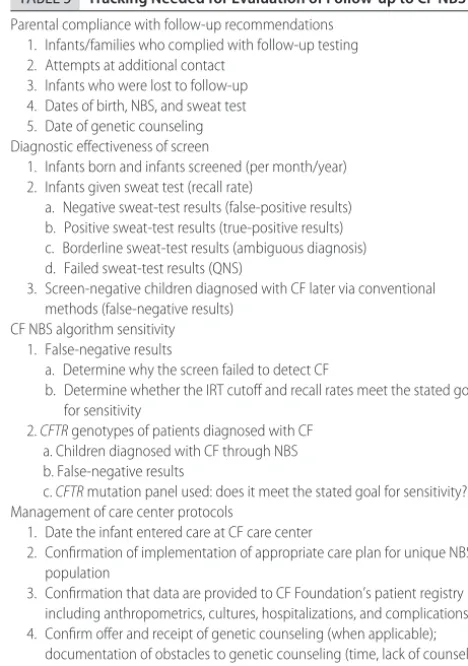
● The NBS program and the CF care centers need to work carefully as a team to collect the necessary data (Table 5); some data may need to be collected by both groups. It is beneficial for the various care centers in each state to work together to collect statewide infor-mation for the ongoing evaluation of the NBS program.
Financing CF NBS and Care
States fund NBS programs in a variety of ways.79Many
states set and collect fees for screening, and many use some public health funding to supplement fees. Spe-cialty care after a diagnosis of CF is made is funded similarly to that for children affected with other disor-ders.
TABLE 5 Tracking Needed for Evaluation of Follow-up to CF NBS
Parental compliance with follow-up recommendations 1. Infants/families who complied with follow-up testing 2. Attempts at additional contact
3. Infants who were lost to follow-up 4. Dates of birth, NBS, and sweat test 5. Date of genetic counseling Diagnostic effectiveness of screen
1. Infants born and infants screened (per month/year) 2. Infants given sweat test (recall rate)
a. Negative sweat-test results (false-positive results) b. Positive sweat-test results (true-positive results) c. Borderline sweat-test results (ambiguous diagnosis) d. Failed sweat-test results (QNS)
3. Screen-negative children diagnosed with CF later via conventional methods (false-negative results)
CF NBS algorithm sensitivity 1. False-negative results
a. Determine why the screen failed to detect CF
b. Determine whether the IRT cutoff and recall rates meet the stated goal for sensitivity
2.CFTRgenotypes of patients diagnosed with CF a. Children diagnosed with CF through NBS b. False-negative results
c.CFTRmutation panel used: does it meet the stated goal for sensitivity? Management of care center protocols
1. Date the infant entered care at CF care center
2. Confirmation of implementation of appropriate care plan for unique NBS population
3. Confirmation that data are provided to CF Foundation’s patient registry including anthropometrics, cultures, hospitalizations, and complications 4. Confirm offer and receipt of genetic counseling (when applicable);
CF care centers must be prepared to receive referrals from the screening program. Care centers and NBS-program staff should work together, therefore, to predict the number of infants who will screen positive and to outline protocols for their follow-up. In states that use IRT/DNA algorithms, the majority of screen-positive in-fants who do not have CF will be carriers45; before
ini-tiating screening, the number of carriers expected should be calculated to identify resources for the parents who should be offered genetic counseling as well. From these estimates, center directors can determine the resources that will be needed for sweat testing, special profile interpretation, genetic counseling, and clinical care for infants who are determined to be affected.80
Sweat-testing facilities may see a change in the num-ber of referrals and referral patterns as a result of popu-lation-based CF NBS. In Wisconsin, the number of sweat tests ordered decreased after CF NBS implementation, presumably because of a decrease in sweat tests ordered by the PCP for CF-like symptoms; consequently, the number of facilities offering sweat testing was greatly reduced.24In Massachusetts, the number of sweat tests
increased when screening began and then diminished somewhat,81 although PCPs still order a considerable
number of tests. CF care centers and NBS programs should work together to predict the number of sweat tests generated by CF NBS and decide where the tests would be performed to plan for appropriate staffing, while recognizing that sweat-test numbers may vary as the screen is implemented.
Screening algorithms designed to detect the highest number of infants with CF could overload resources available for communication, sweat testing, and coun-seling. Alternative screening plans may need to be con-sidered if this results in long waits or travel times. Such
alternatives might include use of mobile sweat-test lab-oratories that meet the same standards as those ap-proved by the CF Foundation for standard sweat-test laboratories, quality-controlled local sweat collection that is then sent to a certified laboratory for analysis, a change in screening algorithm, or teleconference coun-seling.
Research Opportunities
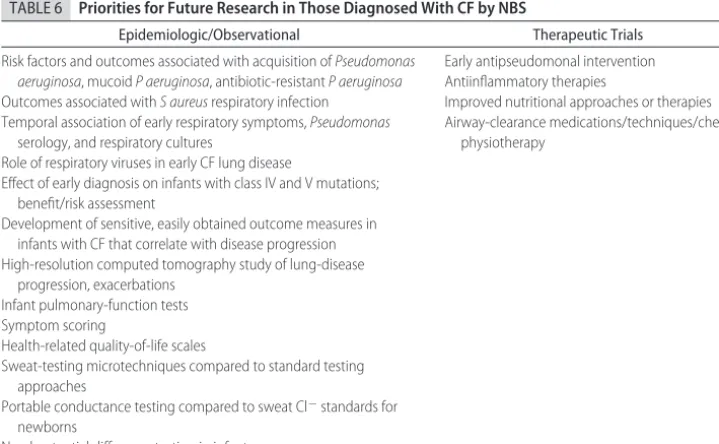
CF NBS provides the opportunity and the responsibility to conduct research to improve treatment and outcomes in CF (Table 6). Epidemiologic/observational and thera-peutic trials should be conducted. Because of the small number of infants diagnosed at each site, research projects will generally require multicenter collaboration, and some studies will require centralized coordination at the NBS-program level. NBS and early diagnosis may accelerate the adoption of new treatments for infants with CF, because it creates an opportunity to define a specific cohort from early in life for entry into clinical trials.
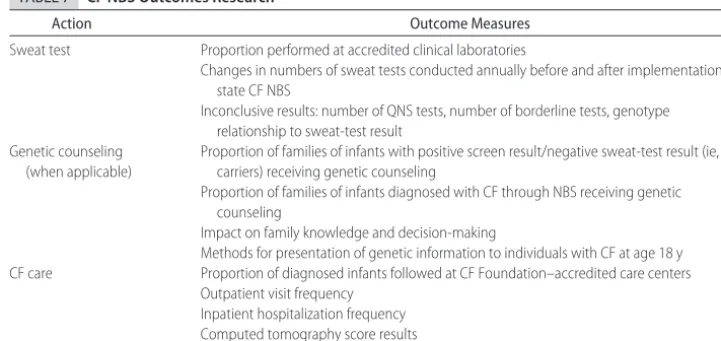
In addition to such clinical research, there must be continual evaluation of outcomes resulting from the ini-tiation of CF NBS (Table 7) based on current clinical practices. This is a crucial step to maintaining high-quality CF care for this new population and will also help support the initiation and continuation of CF NBS programs throughout the United States.
Special Considerations
Community-Customized Mutation Panel
Ideally, mutation panels for screening should be based on the frequency of alleles present in the regional pop-ulation. This can vary widely. In California, 50% of the
TABLE 6 Priorities for Future Research in Those Diagnosed With CF by NBS
Epidemiologic/Observational Therapeutic Trials
Risk factors and outcomes associated with acquisition ofPseudomonas
aeruginosa, mucoidP aeruginosa, antibiotic-resistantP aeruginosa
Early antipseudomonal intervention Antiinflammatory therapies
Outcomes associated withS aureusrespiratory infection Improved nutritional approaches or therapies Temporal association of early respiratory symptoms,Pseudomonas
serology, and respiratory cultures
Airway-clearance medications/techniques/chest physiotherapy
Role of respiratory viruses in early CF lung disease
Effect of early diagnosis on infants with class IV and V mutations; benefit/risk assessment
Development of sensitive, easily obtained outcome measures in infants with CF that correlate with disease progression High-resolution computed tomography study of lung-disease
progression, exacerbations Infant pulmonary-function tests Symptom scoring
Health-related quality-of-life scales
Sweat-testing microtechniques compared to standard testing approaches
Portable conductance testing compared to sweat Cl⫺standards for
newborns
530 000 live births are to Hispanic women, largely of Mexican origin, and 6% are to black women,82whereas
Massachusetts has a population that is 8% Hispanic and 8% black.83The spectrum ofCFTRmutation frequencies
varies in populations of each ancestry, and a large pro-portion of CFTR mutations is still unidentified in His-panic and black people. A recent study that used a 70-and 86-mutation panel reported a detection rate of 62% in black infants, 58% in Hispanic infants, 38% in Asian infants, and 81% in Native American infants in the United States compared with 85% in white infants and 95% in Ashkenazi Jewish infants.84Identification of
in-fants with CF can be enhanced by choosing an appro-priate mutation panel: a 75% detection rate can be achieved in black populations by screening for 16 “com-mon white” mutations and 8 “com“com-mon African” muta-tions.85Differing detection rates are especially significant
in states like California, where 33% of the 70 infants with CF projected to be identified each year without MI are expected to be Hispanic and 2% are expected to be black. In an attempt to detect at least 90% of newborns with CF in the 3 main ancestral groups that include Hispanic, non-Hispanic white, and black infants, the Cal-ifornia Department of Health Services Genetic Disease Branch has designed a model CF NBS algorithm using a custom mutation panel developed from an analysis of the allele frequency of a cohort of affected patients with CF.86 When implemented, results from this screening
algorithm will contribute to our understanding of the possible utility of customized population-based mutation panels for CF NBS.
CFTR Mutations and Mild Disease
The panel of CFTR mutations that the NBS program chooses for screening depends partially on the spectrum of disease that the regional program decides to detect. Because individuals with CF who have one class IV or V mutation would almost always be identified through detection of a class I, II, or III mutation on the other
chromosome,87,88some NBS programs may choose not to
include class IV or V mutations in the screening panel. Indeed, removal of the class IV R117H mutation from the Massachusetts CF NBS panel would lower the false-positive rate by 10% in that population (A.M.C., unpub-lished results). However, the proposal to detect infants with CF with a class IV or V mutation by relying on the screen finding a class I, II, or III mutation from the other chromosome also relies on those infants having an ele-vated sweat Cl⫺level. Some individuals with class IV and V mutations can develop clinical symptoms89–93even in
the absence of an elevated sweat Cl⫺concentration. Use of mutations associated with milder phenotypes may lead to results that are difficult to interpret and communicate in DNA testing of a family after positive NBS results. Because some individuals with a genotype including ⌬F508 and a class IV or V mutation may be unaffected by CF,76 testing that uses these mutations
may best be limited to families of infants who are symp-tomatic or have a positive sweat-test result.
Complex gene modifiers associated with disease ex-pression of the IVS8-5T mutation (eg, TG repeats and M470V polymorphism) have been identified,94,95but the
intricacy of the testing is beyond the current scope of NBS. Furthermore, although up to 20% of infants with an elevated IRT level, one⌬F508 mutation, and a sweat Cl⫺ level of ⬍40 mEq/L may possess 5T on the other chromosome, none have a classic CF phenotype,96which
suggests that the IVS8-5T DNA variant, at least, should not be included in mutation panels used for CF NBS.
Diagnostic Dilemmas
Borderline Sweat-Test Results
Approximately 10% of newborns with CF that was detected through NBS using current DNA-mutation panels and diagnosed with CF by a CF clinician express sweat Cl⫺concentrations ⬍60 mEq/L.28 Because sweat
Cl⫺ levels can change over time, tests resulting in a
TABLE 7 CF NBS Outcomes Research
Action Outcome Measures
Sweat test Proportion performed at accredited clinical laboratories
Changes in numbers of sweat tests conducted annually before and after implementation of state CF NBS
Inconclusive results: number of QNS tests, number of borderline tests, genotype relationship to sweat-test result
Genetic counseling (when applicable)
Proportion of families of infants with positive screen result/negative sweat-test result (ie, carriers) receiving genetic counseling
Proportion of families of infants diagnosed with CF through NBS receiving genetic counseling
Impact on family knowledge and decision-making
Methods for presentation of genetic information to individuals with CF at age 18 y CF care Proportion of diagnosed infants followed at CF Foundation–accredited care centers
borderline result should be repeated in 1 to 2 months. In the interim, the clinician should monitor nutritional sta-tus and growth for any impact by possible pancreatic insufficiency. Also, because individuals with CF and bor-derline sweat-test results may be susceptible to respira-tory disease regardless of pancreatic function, vigilant monitoring for respiratory problems remains critical to enable the early interventions that improve outcome.
A moderate percentage (17%) of infants with border-line sweat-test results are found to possess 2 CFTR mu-tations when extended mutation analysis is performed.60
Some mutations that occur in the borderline-result group, such as 3849⫹10 kb C3T or A455E, are clearly associated with a disease phenotype, and infants with these mutations should be diagnosed with CF. When R117H (7T) mutation is one of the 2 CFTR mutations, diagnosis is more problematic because only some of the individuals with this genotype develop signs and symp-toms of CF88; evaluation of prospective data will help
clarify the role of this mutation in NBS.93 It may be
prudent to defer diagnosis of CF in these individuals but continue follow-up at a CF care center so that the diag-nosis can be made if symptoms appear. Newborns with borderline sweat-test results who have only 1 or no identified CFTR mutation and newborns who have 2
CFTR mutations with sweat Cl⫺ levels ⬍30 mEq/L67
should be followed up similarly. This situation may be complicated by the lack of commonly accepted protocols for follow-up of infants in these groups. (Normal, bor-derline, and abnormal sweat-test results with suggested follow-up are discussed in more detail by Parad and Comeau.97)
In the absence of CF NBS, some infants with border-line diagnostic-test results may present later with an atypical CF diagnosis. Individuals with atypical CF tend to present with milder disease at an older age, with lower sweat Cl⫺levels, pancreatic sufficiency, and mild class IV or V mutations. These individuals also probably survive longer. However, the natural history of atypical CF is not well defined, and the early identification of such individuals by NBS may provide much information about the condition over time. Clinical follow-up proto-cols are not well established for these individuals, and the potential positive impact of CF NBS on atypical CF has not been established. Nevertheless, these infants, once brought to the attention of the CF care community, should be monitored. The follow-up proposed for such infants includes (1) a thorough evaluation by a CF phy-sician, (2) repeat sweat testing, (3) expandedCFTR mu-tation analysis for all disease-producing mumu-tations (in-cluding classes IV and V) if the sweat Cl⫺level remains elevated, and (4) continued follow-up at a minimum of 1 to 2 visits per year to monitor for any disease devel-opment.67
Negative Sweat-Test Results
A sweat-test result that is within the reference range (⬍30 mEq/L) may sometimes occur in infants with 2
CFTRmutations that were detected by CF NBS. Because the combined screening and diagnostic-test results re-quire sophisticated analysis to interpret, and because the infant continues to have a high risk of CF, a CF specialist should meet with the family to develop a plan for eval-uation and possible treatment, and genetic counseling should be offered. The NBS program must be notified immediately of the discordant result to allow an early opportunity for quality control to ensure the validity of the screening result. Genetic counseling and testing of the parents and extended family may be suggested after acute care issues have been resolved.
Some positive-screened infants with negative sweat-test results may be identified to have CF only by later clinical presentations. Clinical follow-up in parallel with repeated sweat testing and extended mutation analysis is the appropriate strategy for resolving the diagnosis in such cases. It may be more cost efficient to perform the full gene-mutation analysis immediately to establish a diagnosis for those in this group, because negative re-sults from a limited analysis would simply prompt a more extensive screen.
ACKNOWLEDGMENTS
This work was funded by the Cystic Fibrosis Foundation and National Institute of Diabetes and Digestive and Kidney Diseases grant DK61886-01.