Themed Section: Engineering and Technology
Multiple Product Aspect Ranking using Sentiment
Classification
, , ,
Dept. of Information Technology, Dhanalakshmi College of Engineering, Chennai, Tamil Nadu, India.
ABSTRACT
Consumers normally seek tone information from online reviews prior purchasing a product, while many
business firms use online customer reviews as significant feedbacks in developing, marketing and
promoting their product. The objective of our work is proposing a product aspect ranking framework,
which automatically identifies the important aspects of products from online consumer reviews, aiming at
making it easier for the consumers in buying the product by using the numerous online consumer reviews.
Millions of reviews from various websites are clustered and made visible within each website by means of
graphical representations of each aspect of different products. Therefore, our approach gives way to an
iterative visual investigation and allows fast analysis of online consumer reviews.
Keywords: Aspect rating, aspect recognition, consumer reviews, opinions, product aspects, sentient assortment, graphical representation
I.
INTRODUCTION
Our work reveals the growing importance of online reviews before making a purchase decision. More consumers are using reviews when researching, which product tops the scoreboard. So eventually, consumers get familiar and comfortable with reviews. In today’s fast moving world, it becomes almost impossible for a consumer to read all the reviews of a product to get a clear idea, except of course, the most recent ones. In order to make it possible for the consumers to check out all the reviews, we bring out a new approach of displaying graphical representations for each aspect of the products by extracting and summarizing the online consumer reviews. In this approach, all the reviews, right from the first comment, to the most recent review updated, will be plotted in the graph to ensure accurate and feasible information “by the consumer, to the consumer”. We also establish a new technique which will be referred to as the “False deduction” to highlight the commonalities of a particular feature in both its advantages and disadvantages. For example, the battery life of micromax canvas doodle2 has equal ratio of
advantages and disadvantages, the consumer who browses for its aspects would be perplexed with that specific feature. Our proposed approach will highlight such features and suggest the consumers to also consider the other aspects of the product to put the consumer in ease. In our work, we first recognize the product aspects by means of shallow dependency parser, then by making use of sentiment assortment we examine the reviews and later develop a probabilistic aspect rating algorithm which plots the classified reviews into graphs.
Our approach comprises of three main components as:
1. We propose a product aspect ranking framework to automate the important features of the products from millions of online customer reviews.
3. Finally, we establish the efficiency of aspect ranking in real- world applications.
These three layer procedures help attain the most convenient way of e-business, both for the consumer as well as the business firms.
The system architecture of the entire approach is shown below:
Fig. 1- Architecture diagram of Multiple Product Aspect Ranking Using Sentiment Classification.
Aspect ranking is expected to increase the profoundness of online purchasing and increase its usage and familiarity amongst the general public.
Just like technology helps in reducing the work of man, our approach will be reducing both work and time.
II.
METHODS AND MATERIALMultiple product aspect ranking frame work is the proposed procedure we will be using in our approach. Beginning with an overview of the three major components that we will be following:
(a) Product Aspect Recognition (b) Sentiment Assortment on Aspects (c) Probabilistic Aspect Rating
When consumer reviews are given, we, first of all, recognize the aspects in the opinions and then examine consumer reviews on the aspects by making use of the sentiment classifier.
In the end, we determine a probabilistic aspect rating algorithm to deduce the importance of the aspects by simultaneously considering aspect frequency and the influence of their general overall opinions.
Figure 2: Numerous product aspects of a specific product.
2.1 Product Aspect Recognition
A review generally comprises of pros and cons reviews, free text reviews, ratings, over all reviews and so on. In our approach, we will be working with all kinds of reviews. In the case of free text reviews, we first split the reviews into sentences and dissect each sentence and dissect each sentence using Stanford parser. Then the frequent noun terms are refined and clustered together.
In the case of pros and cons reviews, the aspects are represented in a unigram feature, and utilize every aspect to determine the Support Vector Machine (SVM). The SVM is used to recognize the clustered noun terms, such as “earphone” and “headphones”. The clustered synonyms are collected from the synonym dictionary website.
Therefore, the first step, “recognizing the product aspect”, pronounces the identification and grouping of the aspects of a product.
Figure 3: A graphical representation of product identification.
2.2 Sentiment Classification on Product Aspects
Here, the product aspects are examined by sentiment assortment. Existing techniques admit the supervised learning and lexicon based approaches.
Once the product aspects are identified, we collect the persuasions which can be used as the features of the product. Eventually, each review is represented as a
© 2015 IJSRSET | Volume 1 | Issue 1 | ISSN: 2394-4099 Themed Section: Engineering and Technology
feature vector. In our work, we will be using the Support Vector Machine to rank the consumer reviews according to its sentiment assortment.
In the case of pros and cons reviews, the aspects are represented in a unigram feature, and utilize every aspect to determine the Support Vector Machine (SVM). The SVM is used to recognize the clustered noun terms, such as “earphone” and “headphones”. The clustered synonyms are collected from the synonym dictionary website.
Therefore, the first step, “recognizing the product aspect”, pronounces the identification and grouping of the aspects of a product.
Figure 4: A graphical representation of product identification.
2.3 Product Aspect Ranking Algorithm
Finally, we will be proposing a Product Aspect Rating Algorithm in order to detect the significant aspects of a product from millions of reviews.
The general opinion in a review is a collection of impressions given to particular aspects in the review and different aspects have different shares in the aggregation. The discounted overall ratings are accepted to be generated from a Gaussian distribution, with mean and variance as:
( )
√ {
( )
}
In order to consider , we assume it as a sample from a
Multivariate Gaussian as:
( )
( ) ⁄ ∑ ⁄ { ( ) ∑ (
) }
Figure 5 : Product aspect rating .
Where are the mean vector and covariance matrix.
Thus, we formulate the distribution N ( ) based on its Kullback- Leibler (KL) divergence to N ( ) as:
( ) = ( )
( ) ∑ ( )
( ( ∑ ) ( ))
Log ( ∑ ⁄ ( ) )
Can thus be optimized through MAP estimation as follows:
Max {
( )
( ) ∑ ( )
}
Taking the derivative of L( r) with respect to:
( ) =
( )
∑ ( )
( ) This gives,
= ( + ∑ ) ( ∑ ( )
Optimizing { } given r:
They are estimated by maximizing the log- likelihood function over the whole review corpus R as follows. For the sake of simplicity, we denote { } as
= max L ( ) max ∑ ( | ∑ )
(10)
By substituting eq.1-3, we get
∑ { ( ) ∑ ( )
( )
( ( ∑ ) ( ))
Taking the derivative of L(R),
( )
= ∑ (- +
( )
) = 0 (12)
We get the following:
=
∑ ( )
(13)
Algorithm
Input: The consumer review corpus R, each review r R is related with an overall ranking and a vector of opinions on specific aspects.
Output: Graphical representations of all the aspects.
III.
RESULTS AND DISCUSSION
Reviews influence both attitude and resultant actions of consumers. Today, consumers prefer to read at least fewer reviews before they make any purchase. So in order to make it more convenient for the consumers, aspect ranking will be beneficial to a wide range of real world applications.
Related works
Here, we will be reviewing the existing works related to our approach. Existing techniques for aspect recognition include supervised and unsupervised models. An extraction model is used to identify product aspects in recent reviews.
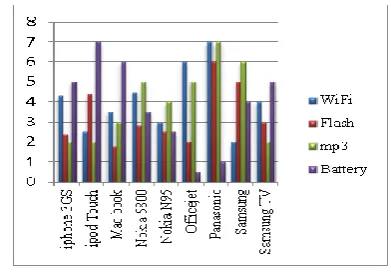
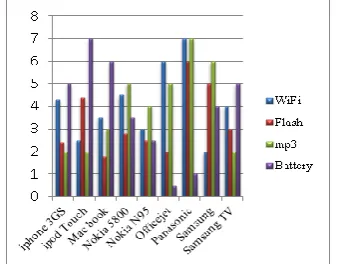
Figure 6: Aspect ranking
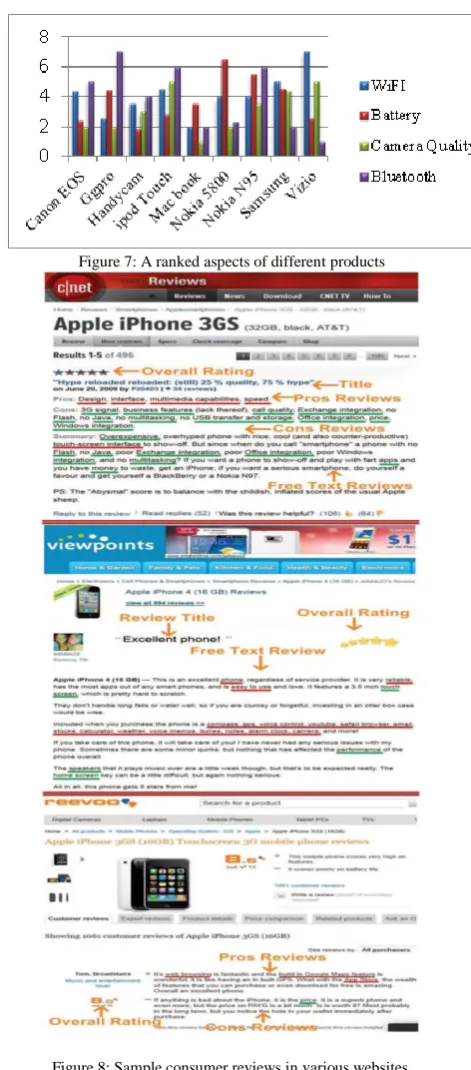
Figure 7: A ranked aspects of different products
Figure 8: Sample consumer reviews in various websites.
Figure 9: Numerous aspect assortment and ranking
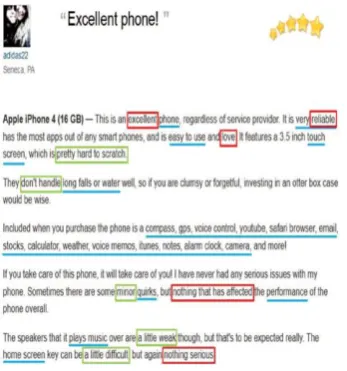
Figure 10: Sample review document on product I Phone
IV.
CONCLUSION
Word of mouth is a proven way of driving sales when product buyers give thumbs - up, the endorsement carries powerful credibility that retailers and manufactures cannot duplicate in product descriptions. Little wonders, then that consumer reviews can pack the same punch online. Maybe more, because of the internet’s power to distribute consumer comments more widely and rapidly than word of mouth.
A review on a website is the assessment of a product or service by an individual with the intension of promoting the product for others to enjoy, or warn others to stay away. There are benefits of having online reviews and user - generated content on your website. One reason is it gives opportunity to rank for long-tail keywords and possibly non- marketing language that your audience may be using about your product. Consumers are turning to each other for answers to questions like what to buy, where to shop, how much to spend. When brands allow these conversations on their websites they are increasing on- site engagement, building trust with consumers, and capturing priceless shopper data.
Reviews not only give consumers the ability to share their opinions about their products or services they buy, but it also offers marketers a way to evaluate and track what people are saying about their business. If managed properly, the platform gives these marketers the ability to respond to and resolve any issues that may rise to the surface.
V.
ACKNOWLEDGEMENT
The authors wish to acknowledge institute administration for their support & motivation during this research. Thus, the authors thank the anonymous reviewers for their valuable remarks, which strengthened the paper. They also thank Mr. S. Siva Kumar, from the same institution for discussion regarding the situational awareness system & for producing the approach adapted for this paper. This work was supported by the “NExT Research Center” funded by MDA, Singapore, under Grant; WBS: R-252-300-001-490.
VI.
REFERENCES[1]. J. C. Bezdek and R. J. Hathaway, “Convergence of alternating
Optimization,” J. Neural Parallel Scientific Compute. vol. 11, no. 4, pp. 351–368, 2003.
[2]. C. C. Chang and C. J. Lin. (2004). Libsvm: A library for support
Vector machines [Online]. Available:
http://www.csie.ntu.edu.tw/∼cjlin/libsvm/
[3]. G. Carenini, R. T. Ng, and E. Zwart, “Multi-document summarization Of evaluative text,” in Proc. ACL, Sydney, NSW, Australia, 2006, pp. 3–7.
[4]. China Unicom 100 Customers iPhone User Feedback Report, 2009. [5]. ComScore Reports [Online]. Available:
http://www.comscore.com/Press_events/Press_releases, 2011. [6]. X. Ding, B. Liu, and P. S. Yu, “A holistic lexicon-based approach To
opinion mining,” in Proc. WSDM, New York, NY, USA, 2008, pp. 231–240.
[7]. G. Erkan and D.R. Radev, “LexRank: Graph-based lexical centrality As salience in text summarization,” J. Artif. Intel. Res., vol. 22, no. 1, pp. 457–479, Jul. 2004.
[8]. O. Etzioni et al., “Unsupervised named-entity extraction from the
Web: An experimental study,” J. Artif. Intell., vol. 165, no. 1, pp. 91– 134.Jun. 2005.
[9]. A. Ghose and P. G. Ipeirotis, “Estimating the helpfulness and Economic impact of product reviews: Mining text and reviewer Characteristics,” IEEE Trans. Knowl. Data Eng., vol. 23, no. 10, pp. 1498–1512. Sept. 2010.
[10]. V. Gupta and G. S. Lehal, “A survey of text summarization extractive techniques,” J. Emerg. Technol. Web Intell., vol. 2, no. 3, pp. 258–268, 2010.
[11]. W. Jin and H. H. Ho, “A novel lexicalized HMM-based learning framework for web opinion mining,” in Proc. 26th Annu. ICML, Montreal, QC, Canada, 2009, pp. 465–472.
[12]. M. Hu and B. Liu, “Mining and summarizing customer reviews,”in
Proc. SIGKDD, Seattle, WA, USA, 2004, pp. 168–177.
[13]. K. Jarvelin and J. Kekalainen, “Cumulated gain-based evaluation of IR techniques,” ACM Trans. Inform. Syst., vol. 20, no. 4, pp. 422–446, Oct. 2002.
[14]. J. R. Jensen, “Thematic information extraction: Image classification,”
in Introductory Digit. Image Process. pp. 236–238.
[15]. K. Lerman, S. Blair-Goldensohn, and R. McDonald, “Sentiment Summarization: Evaluating and learning user preferences,” in Proc.
12th Conf. EACL, Athens, Greece, 2009, pp. 514–522.
[16]. F. Li et al., “Structure-aware review mining and summarization,” In
Proc. 23rd Int. Conf. COLING, Beijing, China, 2010, pp. 653–661.
[17]. C. Y. Lin, “ROUGE: A package for automatic evaluation of summaries,” in Proc. Workshop Text Summarization Branches Out, Barcelona, Spain, 2004, pp. 74–81.
[18]. B. Liu, M. Hu, and J. Cheng, “Opinion observer: Analyzing and comparing opinions on the web,” in Proc. 14th Int. Conf. WWW, Chiba, Japan, 2005, pp. 342–351.
[19]. B. Liu, “Sentiment analysis and subjectivity,” in Handbook of Natural
Language Processing, New York, NY, USA: Marcel Dekker, Inc.,
2009.
[20]. B. Liu, Sentiment Analysis and Opinion Mining. Mogarn & Claypool Publishers, San Rafael, CA, USA, 2012.
[21]. L. M. Manevitz and M. Yousef, “One-class SVMs for document classification,” J. Mach. Learn., vol. 2, pp. 139–154, Dec. 2011. [22]. Q. Mei, X. Ling, M. Wondra, H. Su, and C. X. Zhai, “Topic sentiment
mixture: Modeling facets and opinions in weblogs,” in Proc. 16th Int.
Conf. WWW, Banff, AB, Canada, 2007,pp. 171–180.