247
Maximizing User Satisfaction By Improving Coding
Efficiency Of Multiple Descriptions Coded Video
P.Jagannadha Varma, Y.Pragna, P. Manoj Kumar, B.Praveen Kumar, R.Anil Kumar.
Abstract: Due to the emerging technologies for video compression and broadband Internet, video streaming services are made available. Live video streaming without delay is a reality now. However, the available bandwidth has to be allocated optimally when video streaming takes place over a multicast network. This is because users have different requirement with respect to bandwidth. Moreover, the users may need streaming to their mobile devices, PCs or high – definition TV. In order to allocate bandwidth based on user requirement, the users can be grouped into various categories. This will facilitate to manage bandwidth allocation easily. This is achieved using MDC (Multiple Description Coding) in which video source is associated with various descriptions and the receivers are associated with one of the descriptions. This will automate the process of allocating different bandwidth to different users while the same video is being streamed. However allocating optimal bandwidth is a challenging task that needs research. In this Paper we consider this as an optimization problem. The aim is to maximize user bandwidth experience and satisfaction by improving coding efficiency pertaining to MDC. We developed an algorithm to achieve this. The simulation results of our algorithm reveal that it improves user satisfaction significantly.
Index Terms: MDC video, Optimal Bandwidth Assignment, Live video streaming
————————————————————
Introduction:
Internet has been around which changed the way the businesses are operated and the applications are developed. The world has become a small village due to its communication facilities. The rapid growth of Internet and its related technologies make many dreams to be realized. Broadband Internet has paved the way for live streaming of video files across WWW. Now it is possible to have live streaming of videos such as cricket matches, live programs and so on. This has revolutionized the way content is rendered to many users at a time. It does mean that video broadcasting became a common practice. However, the videos are bulky in nature and streaming live videos need some techniques such as compression. The compression techniques and the innovative approaches made it a reality to have live video streaming over Internet. This is evident in live cricket matches and other sports being multicast over Internet. This is the reason for increased interest in live and stored video services. This has led to many companies to develop portals that exclusively deal with video services over Internet.
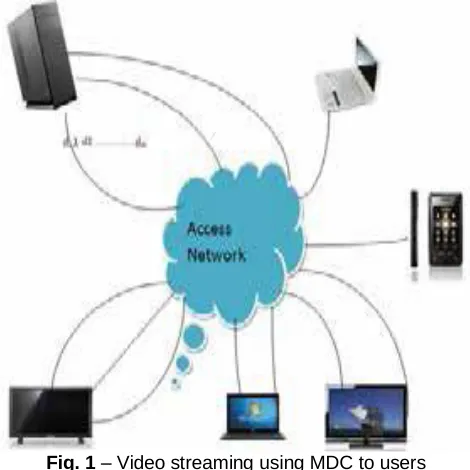
Moreover video conference software such as go to Meeting allows live video conferences to be conducted with ease. Multiple users across the globe need multicasting of a live video concurrently. This the innovation of Internet technologies now it is a reality that thousands of people across the globe can view live streaming of programs simultaneously from any corner of the world. Fig. 1 shows the video streaming being accessed by multiple users of Internet with different devices. As can be seen, it is evident that multiple users are able access video with heterogeneous bandwidth requirements. This is because each user has different bandwidth requirements. In other words the users are heterogeneous in nature in terms of bandwidth usage and basic requirements. The users are also using different devices that are having different configurations containing varied RAM and processing power.
Fig. 1 – Video streaming using MDC to users
This kind of streaming can be realized in MSN, YouTube. The video streaming of these vendors are practically using some sort of bandwidth management. Online live streaming ______________________________
$1
Assistant Professor, Department of CSE, Lendi Institute of Engineering & Technology, Vizianagaram
$2
Department of CSE, Lendi Institute of Engineering & Technology, Vizianagaram
$3
Department of CSE, Lendi Institute of Engineering & Technology, Vizianagaram
$4
Department of CSE, Lendi Institute of Engineering & Technology, Vizianagaram
$5
Department of CSE, Lendi Institute of Engineering & Technology, Vizianagaram
$1
$2
$3
$4
$5
248 such as AT&T, SplitStream, CoopNet, PPLie, IPTV and
AT&T are some of the examples [1], [2], [3], [4]. These vendors provide live streaming to their registered users across the globe. They broadcast programs to millions of netizens concurrently. When video streaming has to be made to multiple heterogeneous users across the globe, it throws various challenges. One among them is the optimum allocation of bandwidth. This is because the users are of various categories and more over they need different ranges of bandwidths. It does also mean that users’ bandwidth requirements are also not fixed. They can change from time to time based on their own requirements. Moreover the devices through which users operate are different such as laptop, smart phone, mobile, PC and so on. The allocation of bandwidth with proper quality in streaming that leads to user satisfaction is the challenging problem to be addressed. Each user in turn may use different device and with different expected bandwidth. A naïve technique to solve this problem is to produce many streams with different bitrates to which various users are associated. This may cause problem in the number of such streams to be limited. This can’t effectively cater to the needs of users who need simultaneous access to the given video at the same time. The video streaming comes under a real time network flow that can’t be stopped for some time as non-real time can be stopped. Thus this approach is not practically useful that leads to receivers to get streaming with less bandwidth than required. To solve this problem the naïve approach described here is not suitable. A very good approach is to use MDC (Multiple-Description-Coded) video that facilitates encoding of video into many descriptions that are independent and having different bandwidth to which users are associated [3], [4], [5], and [6]. This is useful as the MDC is capable of allocating heterogeneous users with required bandwidth with multiple options pertaining to bitrates. This also facilitates the users to use different devices in order to access the given resource live. Descriptions are used to know the varied requirements of users. They make the bandwidth allocation easy. Users can associate with more than a descriptor. In this case the sum of bandwidths of all these descriptors should best match the requirements of user. As seen in fig. 1 users get best match bandwidth that maximizes the quality of video. This is effectively solving the problem of bandwidth assignment for heterogeneous users. However, the process of allocation of bandwidth can be optimized. This is considered a problem to be solved. In this paper we consider this as an optimization problem and study the problem of optimal bandwidth assignments for descriptors that are nothing but encoded video stream versions. What we expect from the proposed system is the optimal assignment because of the inherent problems in the existing bandwidth allocation algorithms. Therefore we expect best overall quality in allocating bandwidth to heterogeneous users that leads to improved quality in video streaming. In this paper, our contribution lies in problem definition and its complexity analysis; a solution when description number is greater than the threshold value. The problem formulation is meant for ensuring optimal bandwidth distribution based on user requirements. The solution is made using an algorithm that optimizes bandwidth allocation while encoding the video file streaming. This algorithm makes use of a threshold for easy
allocation of bandwidth and its management. A threshold is used so as to compare with maximum and minimum bandwidth requirements. The solution provided in this paper takes computational time to set description bandwidths that match user requirements efficiently. When bandwidth is lower than specified threshold, we used a solution named SAMBA (Simulated Annealing for MDC Bandwidth Assignment). This solution is proved to be effective as it can achieve much better user satisfaction as its encoding efficiency is improved. Rest of the sections provides information about the related work, problem definition, algorithms etc.
RELATED WORK
249 Set initial state and temperature.
Move from present state to neighbor state Repeat step 2 for number of times
As per the annealing schedule, decrease the temperature
The proposed framework provides enough change for the design and implementation of annealing module. There are two steps in transition function. In the first step system gets random pick of a neighboring state. Some practical examples provided in where example considered is travelling sales person. Similar kind of problem has been solved where neighborhood is considered related to temperature. States are having transmission probabilities. The correct annealing schedule really depends in temperature.
PROBLEM DEFINITION
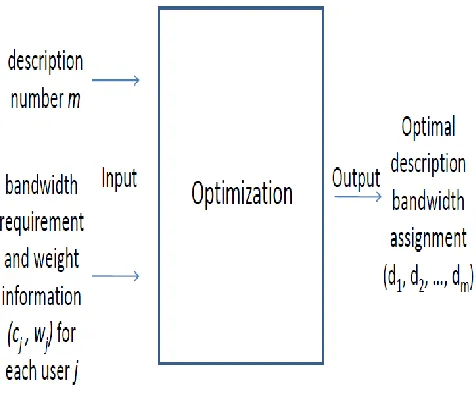
The problem considered in this paper is video streaming with a group of users who need varied bandwidth requirements and the usage for MDC. Fig. 2 shows optimization model for MDC bandwidth allocation. The description bandwidth assignment algorithm takes description numbers and bandwidth requirements as input and assigns optimal description bandwidth that improves user satisfaction and performance. Now we deduce equations pertaining to optimal bandwidth allocation.
Fig. 2 Optimization model for MDC bandwidth assignment
Where
cj bandwidth requirement for user j
wj weight for user j, which represents the user importance
di ith description bandwidth
m description number
ALGORITHMS FOR OPTIMAL BANDWIDTH
ALLOCATION
In this section we present the algorithms used to optimize description bandwidth allocation process. When description number is less than given threshold, we use an assignment algorithm that is efficient that improves user satisfaction. We also use a heuristic by name SAMBA that is meant for solving more general case.
Solution and Threshold
Assume those user bandwidths requirements change and consider a, b are the maximum and minimum user bandwidth requirements. In terms of h threshold value is calculated as [log2 h] + 2.
SAMBA
This section presents a heuristics known as SAMBA. It is especially used for a general problem when the description number is not greater than threshold given. This approach is as described in [6]. In case if the threshold is less, then the problem is to search in m-dimensional space. This is done for optimal allocation of bandwidth to heterogeneous users. SAMBA has many states and a state is nothing but a vector with description bandwidths. Every state is allocated with an internal energy which is considered to be negative of satisfaction value. SAMBA is iterative in nature. Each node has a neighborhood given by radius. The neighbor is directly used by SAMBA in order to compare states. A temperature field is considered in order to that is best example where it exponentially decreases as the given algorithm iterates.
RESULTS:
250
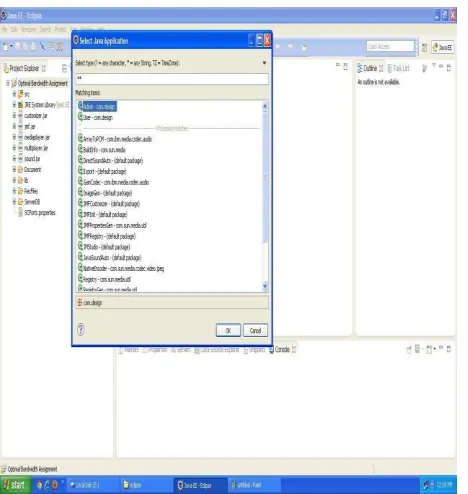
Fig 3: Using eclipse IDE import the project and run it using java application.
Fig 4: Select the admin window and then select the user window
Fig 5: This is the admin window which contains videos and also the requested user details – peer name, port,
bandwidth, requested file
251
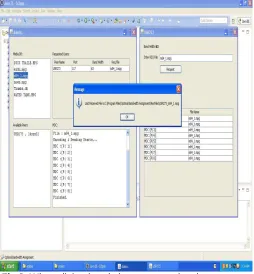
Fig 7: When user requests a file the file will be made into a number of descriptions and simultaneously send to the user
Fig 8: When all the descriptions are completed, a message box will be appeared which shows the location of the
received file
CONCLUSION
This paper presents an algorithm to assign description bandwidth for MDC. The aim is to optimize the bandwidth allocation to heterogeneous users with varied requirements for live streaming of videos. We consider this as an optimization problem and the proposed algorithm addresses it. We also proposed a heuristic by name SAMBA for optimizing description bandwidth assignment.
The simulation results revealed that the proposed algorithm achieves greater user satisfaction with respect to bandwidth allocation to large number of users.
References:
[1]. Y. T.Yun, J.-G. L. Jian-Guang, M. Z. Meng, S.-Q. Y. Shi-Qiang, and Q.Z. Qian, ―Deploying P2P networks for large-scale live video-streaming service [peer-to-peer multimedia streaming],‖ IEEE Commun. Mag., vol. 45, no. 6, pp. 100–106, Jun. 2007.
[2]. Y. F. Chen, Y. Huang, R. Jana, H. Jiang, M. Rabinovich, B.Wei, and Z. Xiao, ―When is P2P technology beneficial for IPTV services,‖ in Proc. ACM NOSSDAV, Jun. 2007.
[3]. V. N. Padmanabhan, H. J. Wang, P. A. Chou, and K. Sripanidkulchai, | ―Distributing streaming media content using cooperative networking,‖ in Proc. 12th Int. Workshop Network and Operating Systems Support for Digital Audio and Video, New York, May 2002, pp. 177–186. [Online]. Available: http://doi.acm.org/10.1145/507670.507695. |
[4]. M. Castro, P. Druschel, A. M. Kermarrec, A. Nandi, A. Rowstron, and A. Singh, ―Splitstream: High-bandwidth multicast in cooperative environments,‖ in Proc. ACM SOSP’03, Oct. 2003, pp. 298–313
[5]. E. Akyol, A. Tekalp, and M. Civanlar, ―A flexible multiple description coding framework for adaptive peer-to-peer video streaming,‖ IEEE J. Select. Topics Signal Process. vol. 1, no. 2, pp. 231–245, Aug. 2007. |
[6]. T. Tillo and G. Olmo, ―Data-dependent pre-and post processing multiple description coding of images,‖ IEEE Trans. Image Process., vol. 16, no. 5, pp. 1269–1280, May 2007
[7]. M. Wien, H. Schwarz, and T. Oelbaum, ―Performance analysis of SVC,‖ IEEE Trans. Circuits Syst. Video Technol., vol. 17, no. 9, pp. 1194–1203, Sep. 2007
[8]. Y. Zhou and W.-Y. Chan, ―Performance comparison of layered coding and multiple descriptions coding in packet networks,‖ in Proc. IEEE Global Telecommunications Conf. (GLOBECOM05), Dec. 2005, vol. 4. |
[9]. T. Tillo and G. Olmo, ―Data-dependent pre-and postprocessing multiple description coding of images,‖ IEEE Trans. Image Process., vol. 16, no. 5, pp. 1269–1280, May 2007.