DOI: 10.14738/abr.71.5840.
Shimengah, M. M., Gathenya, J. W., & Otieno, R. O. (2019). Influence Of Strategy Implementation On The Performance Of Maritime Cluster Firms In Kenya. Archives of Business Research, 7(1), 57-110.
Influence Of Strategy Implementation On The Performance Of
Maritime Cluster Firms In Kenya
Mulama Moses Shimengah
Doctor of Philosophy in Strategic Management
Jomo Kenyatta University of Agriculture and Technology, Kenya
Dr. Jane Wanjiku Gathenya
Lecturer
Jomo Kenyatta University of Agriculture and Technology, Kenya
Professor Romanus Odhiambo Otieno
Lecturer
Jomo Kenyatta University of Agriculture and Technology, Kenya
ABSTRACT
INTRODUCTION
This chapter outlines the background of the research that highlights the global view as well as the local perspective on the concepts of strategy implementation and performance of maritime cluster firms to provide a deeper understanding of the place of clusters in the Kenyan Maritime sector. The problem statement, objectives of the study, research hypotheses, significance and the scope of the study are also outlined in this chapter.
Background to the Study
Globally, an estimated 61% of the GDP in the world comes from areas within 100km of the coastline maritime. More than USD 191 billion annually is derived from seafood and some USD 161 billion annually from marine, coastal tourism and over USD 300 million livelihood from fishing, aquaculture, whereas the seafloors, yield important minerals and serve as source of energy apart from the other maritime related resources extending inland according to (Rio +20 Ocean declaration, 2012). Therefore, strategy implementation presents a key process towards success in Maritime Cluster industries given the important role maritime firms play in the economy of any given country including Kenya. This is so since organizations that adopt good strategy formulation and implement them iteratively, achieve their set goals or record higher performance (Allios, 2014). Globally, several studies have clearly articulated the need for strategy formulation and implementation with greater importance attached to strategy formulation of the organization’s growth in the 20th century (Cater & Pucko, 2012) since the level of performance and competitive position of an organization increases when the management implements effective strategies (Awino, 2013; Okwachi, Gakure & Ragui, 2013; Sage, 2015). The implementation of effective strategies has a substantial impact on the performance of organizations (Spyropoulou, Katsikeas, Skarmeas & Morgan, 2018).
Scholars of strategic management assert that between 50% and 80% of strategy implementations fail because of the managements’ inability to follow up on the strategy execution processes Jonk and Ungerath, (2013) and as confirmed also by (Rajasekar, 2014). According to Sorooshian, Norzima, Yusuf and Rosnah (2010), strategy implementation is a challenge in many companies since it consumes, demands more energy and time from the management and only 10 to 30 per cent of intended strategies ultimately succeed. Strategy implementation is regarded as a crucial process within the maritime economy and requires integration and harnessing of the natural resources in waters, associated clusters in many countries for wealth creation and generation of national employment opportunities geared towards blue economic growth (AU, 2012; OECD, 2014, UNECA, 2015). According to Papadimitriou and Stavroulakis (2016) the choice of the maritime cluster and industrial cluster concepts provides analytical bases which are attractive from a strategic management point of view. These aspects create effective ways of producing positive influences as well as superior performance as observed by (Olavarrieta & Ellinger, 2007).
In summary, strategy implementation is the summation of all activities and options necessary for the execution of strategic plans and implementation phase entailing active participation of the management team in the whole management processes in order to attain specific desired results. These include; information development, human resource management, organization structural design, resource allocation, as well as addressing areas such as reward system, accessibility to corporate staffing and leadership since such processes can also improve maritime performance (Chang, 2016).
Concept of Strategy Implementation
The concept of strategy implementation involves organizing of all the resource capabilities within an organization geared towards achieving the goals of the firm. Li and Eppler (2008) assert that the modern business environment is complex, iterative, dynamic and un-predictable. This demands that managers and employees become creative in their decision making process since they are also affected by the internal and external factors affecting businesses around the world. The first approach according to Sial, Usman, Zufiqar, Satti, and Khursheed, (2013) in the definition of strategy implementation focusing on process perspective where by the term refers to a series of sequential and carefully organized steps.
The second approach focuses on strategy implementation as a series of consecutive activities and therefore, examines activities and actions from behavioural perspective. From the behavioural perspective, implementation is defined from operational point of view as conglomeration of leadership behaviours from senior management and series of activities focusing on transforming working plan into practical concrete reality. The third aspect defines strategy implementation as a combination or hybrid of both processes and behavioural perspective. In this case, as postulated above, strategy implementation refers to step-by-step approach used in executing activities that incorporates formal decision-making approach. Therefore, the field of strategic management encompasses making plans for the organization’s future and having an effective strategy formulation and direct firm’s action plan. Therefore, assessing the strategy formulation process is of importance to policymakers and researchers in order to monitor and evaluate the strategy formulation and action process (Sial et al., 2013).
formulation is where the firm is headed to, while implementation is a blueprint of how to get to that point which proves even harder to execute (Hrebiniak, 2013). This distinction falls short of giving an accurate definition according to Zhou, Zhou, Li and Su, (2008) who describe strategy implementation as one of the most complex, dynamic, iterative and multifaceted process comprising of a sequence of decisions to be performed by both managers and employees responsible for turning strategic plans into actions.
On the other hand, strategy formulation is the work of senior management in any organization; whereas the strategy implementation is the work of the middle managers who need support from the management team in their tasks. It requires an in-depth of analysis, judgment and innovation supported by a process in which policies and strategies are executed. Supportive elements during the execution such as budgets, programs, and procedures whose aim is to make a strategy action oriented are included. In this case, the top management should give workable strategy, clear communication on implementation plans on tasks that require completion (Chelte, 2014).
Rajasekar (2014), states that strategy implementation demands for strong administrative and managerial talented skills with foresight to make clear changes and plans during the implementation process. Strategy implementation demands for various activities that include creativity in business, understanding of the arising business opportunities, the participation of the management team, resources allocation, organization composition, information systems, human resources, reward system, accessibility to leadership and staffing (Grant 2016). Strategy implementation sums up all actions and options necessary to execute and implement strategic plans entailing active participation of the management team in the whole management processes in order to attain specific desired results. These include; information development, human resource management, organization structural design, resource allocation, as well as addressing areas such as reward system accessible to corporate staffing and leadership since such processes can also improve maritime performance (Chang, 2016).
Global perspective on Maritime and Industrial Clusters performance
Clustering is one of the central concepts for analysing the competitiveness of nations, industries and firms. The clustering concept studies the clustering of maritime activities and services such as shipping, shipbuilding and port management. Maritime services are geographically concentrated in a number of maritime clusters and anchoring on ongoing internationalization and in such industries, the concentration of maritime activities in clusters is likely to increase as opined by (Langen, 2010). Industrial cluster is a set of firms and institutional bodies that are positioned in close proximity to each other and have related economic actors, with specialized services, expertise, suppliers, resources, and skills with an emphasis on increasing competitiveness and growth of a region (Porter 2011). Firms facilitate collaboration on complementary economic activities when higher education and research institutions and other public and private entities cluster together in a geographic area (Scott, 2012).
regional levels in form of integration or trading blocs, which form essential aspects in the quality-based competition to the clusters being key drivers for gaining competitive advantage since clusters are said to be interconnected in that they compete, they also share information, collaborate as well as network or form synergy within the given region (Scott, 2012).
The concept of clusters go past physical proximity since it lays more emphasis on the existing links and social ties available among the actors within the cluster population and attracts key benefits derived from maritime or industrial clusters such as information spill-overs, information transfer and shared labour mobility (Huber, 2011). These localized benefits include new products through Small Medium Enterprises (SMEs) and processes which are initial development, within geographical proximity (Scott, 2012). Thus, cluster concept has gained adoption among regional and industrial development policy initiatives around the globe since clusters form strong interdependence within firms such as suppliers, knowledge agents, research and development institutions, auxiliary service providers, service companies, brokers and consultants as well as customers through linked value chain (Chul-Hwan, 2014). Minghui, (2013) observed that there is concentration of maritime firms in Europe making the region a leading force in global market share in technological innovation, and operations whereas, Chul-Hwan, (2014) while examining the five European maritime nations: Germany, The Netherlands, The United Kingdom, Denmark and Norway, noted that their combined industry cluster number up to 103 and employs about 4.78million people and Finland maritime accounts for 2,900 firms with total revenue of Euros 13.2billion with 43,200 employees (Karvanen et al., 2008). China employs 43million people in maritime related firms with production valued at Euros, 602 billion (Minghui, 2013; Xinhuanet, 2013) which are a clear pointer to the fact that there is an increasing global interest in maritime strategy implementation. Similarly, Singapore, Dubai and Durban for instance have also experienced successful strategy implementation in Maritime cluster firms by registering good performance in shipping; port related activities, commerce and trade, service provisions, as well as providing employment opportunities (UNCTAD, 2014).
Continental perspective on maritime cluster performance
United Nations’ agency for maritime affairs International Maritime Organisation (IMO) calls for full participation in maritime affairs by all member countries. This persuades member states, agencies to pursue maritime cluster in their regions or countries (Minghui, 2013). Based on this, Africa is following suit as in pursuit of marine cluster strategy implementation (UNECA, 2004; AU & OECD, 2014). The Study by Bueger (2013) recognizes Africa as an emerging maritime cluster continent amidst immense challenges. Africa Union has now adopted Maritime Strategy 2050, which was fronted by the Heads of States in January 2014 declaring 2015 to 2025 a decade of Maritime for African Ownership of Ships. This has, established Combined Exclusive Economic Zone - EEZ areas, and forge for (Regional Maritime Strategy - RMS), and Collaboration on Maritime Trade with other Member states (AU, 2014).
There has been increasing willingness among actors within the continent and from economically empowered countries to develop the sector due to the vast natural resources on the African continent. For example, China Merchants Holdings (International) Co Ltd has invested heavily in Africa’s infrastructure development. Such investments include; USD 10billion in Tanzania, USD 13.1billion investment in Nigeria for high speed coastal railway 1,385km of single track line (Shinn & Eisenman, 2012. In addition to the above, a further financing a USD 1.2billion in natural gas pipeline (532 km) for mining coal and iron ore in Tanzania (Ng'wanakilala, 2013). African countries have also made attempts to develop the Maritime Industry and such attempts are eminent between the Nigerian and South African governments; which calls for developing of shipyards in Nigeria and operations using Nigerian labour (Oritse, 2010). Nigerian under the Nigerian Coastal and inland shipping (Cabotage Act 2003), gives exclusive rights for transportation of goods and services within Nigeria Coastland and inland waters to vessels built by Nigerians, flying Nigerian Flags, owned and crewed by Nigerian citizens (MTCN, 2007). Such endeavours ensure creation of more employment opportunities as well as improving economic growth emanating from maritime industry (Eroke, 2013).
Kenya perspective on maritime cluster performance
Government of Republic of Kenya established KMA, through the Legal Notice 76 of 2004 with the mandate of regulating, co-coordinating and overseeing maritime affairs in Kenya, through the enactment of Kenya Maritime Authority Act 2006. KMA falls under the State Department of Maritime and Shipping Affairs in The Ministry of Transport infrastructure, Housing and Urban Development (KMA, 2016). Currently, the key sectors supported by the maritime industry, include transport, tourism, fishing, mining, aquaculture, oil/ gas, and water sports. Overtime, the coastal strip plays an important role as an entry port into Eastern and Central Africa and other hinterland countries like DRC. These therefore, point to the intra firm as well as extra firm collaborations supported by innovation as stated in the investigations carried out on cross border development of maritime cluster, which identified competitiveness within similar systems presenting profitability of technology adaption for firms’ better performance (Schuster & Rueck, 2017). According to Kenya Maritime Authority (2015), there are other numbers of blue economy related resources which have not been fully exploited in both the territorial waters of the Indian ocean and within the inland water bodies; for example, aquatic resources within EEZ areas that have the potential towards contributing to blue economy, but have reported revenue losses below target of 340,866 metric tonnes worth Kshs 88 billion and only 9,134 metric tonnes worth Kshs 2.4 billion were harvested in coastal fishing production.
total earnings increased by 4.9 % between 2001and 2007. However, the support devices have had significant contribution to the economy valued at 90% of the total employment opportunities within blue economy (KMA, 2010).
The Kenyan government initiated cluster firms within the Maritime Industry with the aim of boosting productivity and competitiveness. This has been done through facilitation of the collaboration that brings together business firms, multiple government agencies, institutions and research organizations with sole purposes of enhancing performance and ultimately growth (KMA, 2010). In this case, the creation of Maritime cluster firms in Kenya was aimed at providing more productiveness in operations that includes sourcing of inputs, access to specialized information within the industry’s network that is crucial in coordinating and improving access to stakeholders. Such lack of proper strategy implementation process fails to integrate policies and leads to low level performance of Maritime cluster firms in Kenya, which eventually has slowed down returns from the blue economy (KMA, 2010). The factors that contribute to lack of proper coordination between various policy areas and supportive regulatory framework greatly interfered with the level of growth within the sector, therefore, resulting into low investment opportunities, insecurity, low off-shore / onshore exploration activities as well as slow development of maritime transport related industries, all these eventually contributes to high levels of unemployment.
The Maritime business globally as well as in Kenya faces the challenge of a shortage of technical personnel to provide services in the maritime industry as observed by (Sánchez & Wilmsmeier, 2010; Oyaro, 2013). The study shows that the concept of clustering enhances the level of competitiveness and productivity within the Maritime Industry. However, key drivers that influence transformation of business strategies into deliverable results within such Maritime Cluster firms, with mediating role of strategy implementation that ensures maximization of organizational performance have been under-utilized. In the Kenyan vision 2030 report, various domains are identified as the major platforms that significantly determine the revival and efficiency of such sectors as Marine Industry. These domains include the stability within the region in terms of security, the global economic environment as well as efficiency in the operations of State Corporations (KMA, 2010).
Statement of the Problem
Strategy implementation process presents one of the most important stages in an organization, but available evidence from majority of the scholarly articles indicate high rate existence of failure in the implementation process in most organizations. From the works of Carter and Pucko (2010), indicate that between 60 to 80% of all organization globally records good performance in strategy formulation but struggle in the strategy implementation process. On the other hand, various scholars assert that between 30 to 90% of strategy implementation fail (Raps & Kaufmann, 2005; Rajasekar et al., 2014; Candido & Santos, 2015). The study of strategy implementation on the performance of maritime cluster firms in Kenya has not been fully exhausted for economic growth despite its vast potential resources and several multi agencies quest working towards full realization of their goals (KMA, 2015). This therefore, results into low ratings especially towards Blue Economy’s contribution towards Kenyan economic development and employment creation (KMA, 2015).
the Kenyan marine transport sector is approximately Kshs 73 Billion reflecting approximately 1.5% contribution to GDP with Fisheries sector valued at approximately Kshs 20 Billion which is an approximate of 0.45% only of contribution of Kenya’s GDP (KMA, 2015). Given that Maritime Industry is anticipated to contribute significantly to the Kenya’s international trade and as a key driver of the overall national economy, it is important that the entire strategic management processes from strategy formulation to strategy implementation be formidable (KMA, 2015). According to Kenya State Department for Shipping and Maritime Affairs, the country is yet to reap full economic scale from the blue economy despite the country’s strategic geographical location along the shores of the Indian Ocean and its entire Maritime coverage including the potential resources of hinterland locations (KMA, 2015).
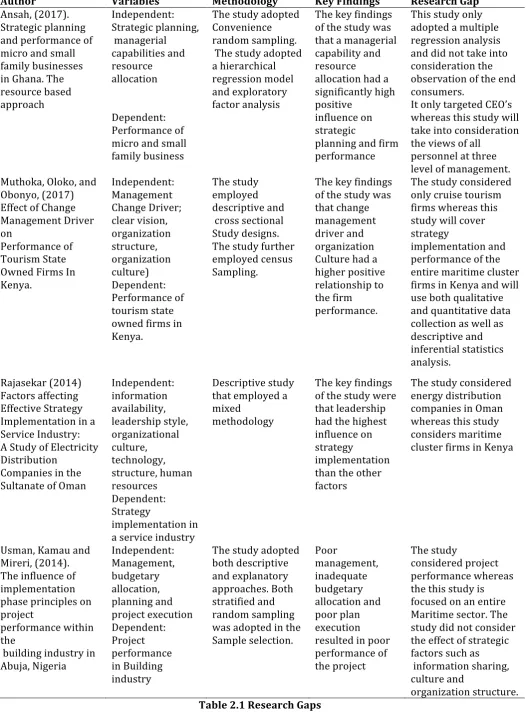
There is also limited empirical evidence examining the strategy implementation and underlying factors of low performance and growth in the entire maritime sector in Kenya. Raps and Kaufmann (2005) in their study observed that very many organizations lack iterative follow up on their proposed strategy implementation processes as their studies showed that only 10 to 30 percent succeed whereas, Rajasekar et al., (2014) also affirms that 50 to 80 percent of strategy implementation are unsuccessful hence leading to organizations operating shortfall of their anticipated goals. Ansah (2017) carried out a study on the effects of strategic planning on the performance of small businesses in Ghana. The study used the resource based approach and the results showed that managerial capability and resource allocation had a significantly positive influence on strategic planning and performance of a firm.
Rajasekar (2014) carried out a study on factors affecting effective strategy implementation in electricity distribution companies in the Sultanate of Oman. The study found that the most influential factor in the strategy implementation process is the leadership.
Khayota (2014) conducted a study on the ecletic roots of strategy implementation and the results show that operational planning was one of the major reasons why the strategy implementation process in Kenya has largely been unsuccessful. Muthoka, Oloko, & Obonyo, (2017) conducted a research on effect of Change Management Driver on Performance of Tourism State Owned Firms in Kenya and found out that the drivers of change management significantly affects the performance of state owned firms in the country.
Further, there was indication that positive organization culture, change execution as well as consistency in change vision influences performance of these state corporations in Tourism sector in Kenya (Muthoka et al., 2017). Evaluation of majority of these recent studies as indicated above show that none of them, both in local and international literature have focused on strategy implementation and its influence on the performance of maritime cluster firms in Kenya hence the gap that this study seeks to fill.
Research Objectives
The study will be guided by the following objectives:
General Objective
The general objective of the study is to establish the influence of strategy implementation on performance of Maritime Cluster firms in Kenya.
Specific Objectives
The specific objectives for this study will be:
firms in Kenya
ii. To determine the effect of strategic direction on the performance of maritime cluster firms in Kenya
iii. To evaluate the effect of organization structure on the performance of maritime cluster firms in Kenya
iv. To assess the influence of resource capability on the performance of maritime Cluster firms in Kenya.
v. To determine the influence of technology innovations on the performance of maritime cluster firms in Kenya.
vi. To analyse the moderating effect of firm characteristics on the relationship between strategy implementation and the performance of maritime cluster firms in Kenya.
Research Hypotheses
Hypothesis refers to an educated guess that attempts to give explanation for a set of facts or natural phenomena based on prior knowledge (Bradford, 2015). The concept can be tested for validity scientifically (Banerjee, Chitnis, Jadhav, Bhawalkar & Chaudhury, 2009). In this case, the study seeks to establish a causal association among objectively specified variables and the following hypotheses will be taken for the study:
Ha1 Strategic Policies have significant influence on the performance of maritime cluster firms in Kenya
Ha2 Strategic direction has significant influence on the performance of maritime cluster firms in Kenya.
Ha3 Organization structure has significant influence on the performance of maritime cluster firms in Kenya
Ha4 Resource capabilities has significant influence on the performance of maritime cluster firms in Kenya
Ha5 Technological Innovations has significant influence on the performance of maritime cluster firms in Kenya
Ha6 Firm characteristics has significant moderating effect on the relationship between strategy implementation and the performance of maritime cluster firms in Kenya
Significance of the Study
The findings of this study are important to various sectors, scholars and other researchers who are interested in the performance of maritime cluster firms. The findings will add to the body of knowledge in this field, mainly to maritime industry in Kenya and in particular, benefit the following.
Top Management of Maritime firms
The study findings are of paramount importance to management of maritime industry since they address the effects of strategy implementation on performance of maritime cluster firms. This will contribute to better understanding by the management team on the factors that facilitate strategy implementation and will assist in the designing and implementation of informed strategies that ensures enhanced and sustained performance within Kenyan Maritime Cluster firms.
Kenya Maritime Authority
The Government of Kenya
Currently, the Government of Kenya is the largest shareholder in the industry and will be interested in the findings of the study. The government has a role of supporting the industry through Policies, regulation enhancement of competition, fair play, and provision of an enabling environment for all stakeholders. Appropriate implementation process would boost productivity and competitiveness within the industry.
Scholars and Researchers
The study findings are of paramount importance to researchers, as they will gain both theoretical and practical experience on strategy implementation, which has a significant effect on performance of Maritime clusters.
Scope of the Study
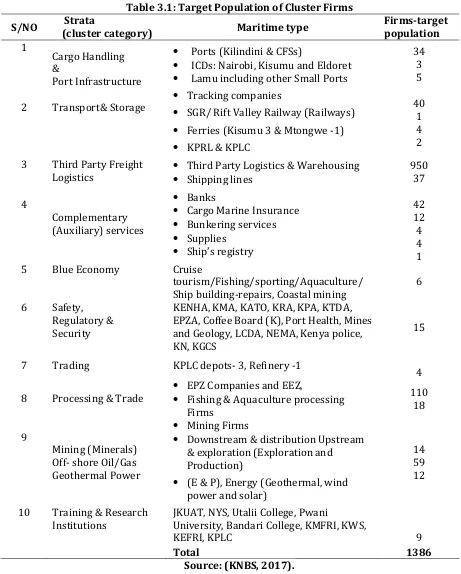
The scope of the study will be contextually limited to a review of aspects of strategy implementation in the maritime cluster firms in Kenya. The study will further be limited to the performance of the ten maritime cluster firms with target population of 1386 firms within maritime cluster and will be conducted during 2017/2018 academic years. The study will be conducted within 50 kilometres radius of the following regions; Mombasa City, Nairobi City, Kisumu City, and Athi River in Machakos County, within the republic of Kenya and will borrow partly from the global perspective, as it will be depicted in sections of the formulated questionnaires.
LITERATURE REVIEW Introduction
This chapter focuses on the theoretical review, the conceptual framework and empirical review. The chapter brings in the conceptual discussion of the study variables and the critique of the existing literature. The chapter will also look at the research gaps and chapter summary.
Theoretical Review
This chapter conceptualizes the study theories: The Agency Theory, Upper Echelon Theory, Strategic fit theory, Dynamic capabilities theory, Higgins 8’S Model and Contingency theory from which the study independent variables are drawn. The balance scorecard model is adopted from Kaplan and Norton (2001) from which dependent variable of performance is derived influencing strategy implementation on maritime cluster firms in Kenya.
Agency Theory
According to the study by Rugman and Verbeke (2008), the Agency Theory provides a theoretical framework for structure as well as management of contracts that forms one of the issues in strategic management. This therefore, explains the organizational behaviour that includes behaviour of principals as well as agents and how it relates to management performance. Krueger (2004) posits that the surplus of strategy implementation studies concern the practice of the agency theory at all levels of management. From his works, Krueger (2004) asserts that all the processes and objectives surrounding strategy from corporate to operational strategy must always be under the supervision of agents or managers. In this case, for success to be realized at every stage of strategy management from formulation to implementation there is need for collaboration between management as agents and the subordinates (Henry et al., 2006). This shows that agency theory plays a very important role in strategy implementation. There has to be synergy in the use of Agency Theory and for the purposes of achieving organizational goals it is paramount that the principal and agent have an understanding. This qualifies the use of Agency theory in this study especially in the overall strategic management process since it enhances competitive performance.
Contingency theory of Organizational Structure
Contingency theories emerged from the sociological functionalist theories of organizational structure (Reid & Smith, 2000; Chenhall, 2003; Woods, 2009). These studies hypothesized that organizational structure depends on factors like the size of the organization, the technology available and the dimensions of task environment. In simple terms, contingency theory states that there is no single best way to organize a firm, lead a company, and make decisions. The best course of action is dependent on a variety of internal and external situations or factors. Contingency theory attempts to study organization structure and attempts to explain how factors like technology, culture and the external environment influence the setup and functions of organizations to improve their performance (Woods, 2009).
The main assumption of the contingency theory is that all organizations cannot operate on one single effective organizational structure. The best organizational structure is dependent on a variety of features available in the organization such as the level of technology, environmental factors, organizational size and the information system adopted (Tillema, 2015). The contingency theory is one of the most reliable frameworks that is helpful in study of the effectiveness of organizational design (Donaldson, 1995a, 2001). According to this theory, the most effective organization structure accommodates all the contingencies. The theory attempts to find a fit between how an organization fits its structure to the contingency that affect the performance of the firm (Woods, 2005).
Structural contingency theory writings fall within a functionalist tradition of social science which state that organizations become more adaptive to the ever-changing environment. The theoretical model articulated as the Structural Adaptation to Regain Fit (SARFIT) (Donaldson, 2001) includes a process which permits organizations in fit to enjoy an increase in their performance, generate surplus resources and lead expansion (Hamilton & Shergill, 2013). These processes include expansion of geographic locations, increasing the size of the organization, encouraging increased innovation and diversification. The impact is that the firm will exhibit an increase in contingency variables, like size, resulting in an anomaly with the prevailing structure.
the changes in organizational structure due to changes in technology and market attitude. Structural contingency theory therefore, contains dynamic ideas formulated in the SARFIT theory.
In structural contingency theory, an organization is affected by constant changes which lead to misfit in the structure. This misfit arises from surplus resources in the fit-based performance structure and are responsible for the expansion of the organization or its decline. The misfit increases contingency variables necessitating change in the organization structure in order to retain the fit structure. The SARFIT theory, therefore, views fit and misfit as unavoidable changes that exist in alternate forms to each other. When an organization is in fit, it will eventually expand into misfit, forcing the organization to make structural changes in order to become fit, and this process repeats itself throughout the lifetime of the organization (Tillema, 2015). The movement of the organization between fit and misfit leads to varying levels of performance, resulting in an increase of the contingencies hence structural changes. These strategic increases in contingencies lead to the expansion of organizations from small startups to larger regional and in some cases international levels with larger geographic cover and diversification (Hamilton & Shergill, 2013). This theory will help in assessing the influence of organizational structure on performance of maritime cluster firms in Kenya.
Upper Echelon Theory
Hambrick and Mason (1984) as a framework for research on top managers developed upper echelon theory, which affirms that there are various measures of the performance of organization that are totally dependent on the characteristics of individual managers in the management hierarchy. The central idea in Hambrick and Mason (1984) paper, and the core of upper echelons theory, has two interconnected parts, namely; that executives act on the basis of their personalized interpretations of the strategic situations they face, and that these personalized constructs are a function of the executives experiences, values, and personalities (Hambrick, 2007).Consequently, the theory is built on the premise of bounded rationality, which states that informational complex and uncertain situations are not objectively knowable, but are merely interpretable (Hambrick, Frederick and Sanderson, 2015).
Upper echelons theory is based on the premise of the organizational outcome both strategies and effectiveness which reflect the values and cognitive bases of powerful actors who in this case are the strategic leaders (Carpenter, Sanders & Geletkanycz, 2013). In particular, the theory indicates that the perception of the top managers has a high influence on the organizational strategic choices that affects organizational performance (Bell, 2007). The focus of the top management is primarily values or intellectual base and is termed as strategic leadership. This is because humans have a limited capacity to process information at any particular time, personal tendencies and dispositions end up deciding which elements to attend to in the environment. There is also an argument that personal traits of senior executives highly determine the characteristics of the surroundings that they can borrow from in order to inform the decisions that they make concerning choices, strategic or not, that might affect the organizational strategic goals performance (Hogan & Kaiser, 2012).
group cognitions and behaviours (Marimuthu & Kolandaisamy, 2009). Hambrick and Mason’s (1984) as well as Hambrick’s (2007) arguments are a basis for this study which also holds that strategic leadership shape the strategy implementation of organizations consequently affecting performance of Maritime cluster firms. It is through strategic leadership that proper strategies and decisions are formulated that are in tandem with how strategic implementation process should be carried out. The central tenet of the upper echelon theory is that, organizations are a reflection of the skills, expertise and values of the senior leaders as they work at a strategic level (Phipps & Burbach, 2010). The assertion is similar to one of the specific objectives that suppose that strategic leadership can influence the performance of Maritime cluster firms.
Dynamic Capability Theory
Teece, Pisano and Shuen (1997) defined the dynamic capabilities theory in their paper on dynamic capabilities and strategic management whose concept extends the RBV theory to an approach for a dynamic environment where there is an emphasis on reducing product lifecycle and an increase in competition levels and advancement in technology (Winter, 2013). The importance of dynamic capability is that it plays a role as a safeguard between organizational resources and the changes in the business environment by allowing a firm to change its resource base to achieve a better performance through exploiting competitive advantage. The dynamic capability theory refers to organizations ability to attain renewed competitive advantage by revamping organizational resources and competences to achieve analogy with the shift in business environment.
Dynamic capabilities enable organizations to realize new opportunities a dynamic business environment by converting available resources in the organization into both tangible and intangible assets and capabilities (Easterby- Smith, Lyles, & Peteraf, 2009). The process of value-creation exploits these opportunities through effective and efficient development of new products and services. The dynamic capabilities of an organization reflect its capabilities to maximize its resource base and modify these resources for the good of the company facilitating the renewal of current processes, thus enabling the company to fit better with the environment (Zahra et al., 2006). The core dynamic capabilities are reconfiguration, leveraging, learning and knowledge creation, integration, and sensing and seizing (Barreto, 2010).
Higgins 8’ S Model
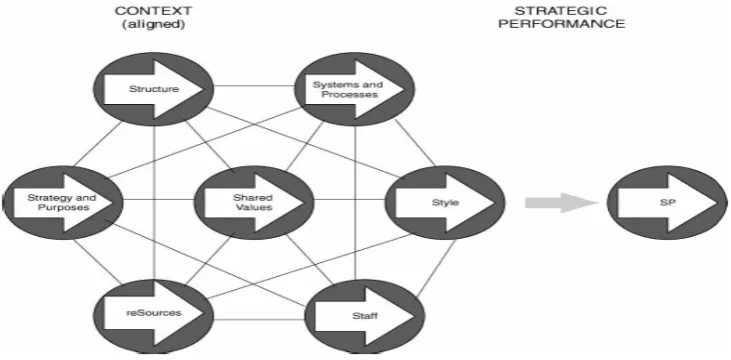
Higgins (2005) developed a model by revising the original McKinsey’s 7-S framework that was conceived and developed in 1980’s by Peters and Waterman (1982). Higgins (2005) made improvement on the McKinsey’s 7-S model by including additional S component referred to as strategic performance to come up with 8’ S model. This was ultimately referred to as 8th S
component within the model. The 8th model resulted from the interaction of the various 7-S’s
components from the Mckinsey’s 7-S model. The developed 8-S framework suits strategy implementation within organizations. In the Higgins 8-S model skills as one of the components of “S” is replaced by Re-source as key component. This is since the process of strategy implementation requires availability of sufficient resources to ensure success.
From Higgins perspective, 8-S’s framework encourages effectiveness as well as efficiency from the side of managers in the process of undertaking their duties. These managerial duties entail those that are cross-functional as well as strategy implementation activities. Moreover, from the workings of the model, the various executives that emphasize on strategy implementation and strategy formulation focus more resources on strategy execution, therefore, raising the standard of performance within their organizations. The 8-S’s framework reveals that successful strategy implementation results from the alignment of key components of the organization (8-S) and strategies for implementation within specified organization. However, it is important for the management of any organization to shape their strategies to reflect the various dynamic changes within the environment. Such processes of realigning the 8-S’s components to new strategies in different work environments possess a big challenge to majority of the managers, therefore, affecting successful strategy implementation. The nature of execution applicable for each strategy ultimately affects overall performances.
There are a number of models which have been formulated to explain the strategy implementation process which is the main framework of this research. Higgins 8’s model will be used to assess maritime clusters strategy implementation for the study since it particularly addresses the organizational factors which have an influence on the strategy implementation process as put forward by Higgins (2005). By Eight S’s model, the management team has access to a more effectively and efficiently tool to use for strategy implementation in their organizations for better performance (Bhati, 2011) which involves aligning key organizational functions or factors with the chosen strategy for strategic performance. Higgins however, noted that implementation of these strategies may not be successful due to changes in the environment and as such, have to be re-shaped marking the beginning of challenges arising from strategy implementation.
As a result, senior executives find themselves confronted with the need to integrate a number of changes in the execution of the new or revised strategy, which makes the dissemination, and integration of execution actions be especially difficult cross-functional activities.
Figure 2.1: Higgins 8’S Model
a. Strategy and Purposes
The 8-S’s model focuses on the fact that formulation of a strategy within an organization always aim at achieving a defined purpose. This means that in case of any change in purpose within the organization, there is need for adequate revision of strategies that would ultimately influence those specific purposes for success to be realized. The 8-S’s model works in accordance to different types of strategies as identified within different organization set-ups in maritime industry. These include the business level, corporate level, functional level as well as cross-functional process.
From the corporate level strategy, the entire business operations of Maritime cluster firms and the processes of their operations are the point of focus. The business strategy entails the involvement of unique ideas in business operations that would eventually provide a competitive advantage of the individual clusters within Maritime industry. In functional strategy, the various operations from departments within the cluster firms such as production, human resource, marketing amongst others are realigned to reflect organization’s business strategy. Then the process strategies entail various functional areas within the organization and their integration to processes that ultimately influences efficiency (Higgins, 2005).
b. Structure
From the perspective of the 8-S’s model, maritime cluster firm’s organizational structures comprises of five elements that include; job, authority behind performance, job groups, and proper coordination that ensures effective supervision as well as scope within which a manager can effectively manage to control. The functioning of all these elements determines the extent to which success is realized within these Maritime cluster firms that is in line with business strategy. For successful strategy implementation proper decisions should be made along these elements (Higgins, 2005).
c. System and Processes
within maritime cluster firms such as human resource department, information technology, quality control, finance and resource allocation (Higgins, 2005).
d. Style
Style is represented as leadership domain as portrayed by organization leadership in all their endeavours in ensuring harmony within processes. For instance how managers handle both employee and stakeholder relationships. The style encompasses the focus and delivery of managers in the process of delivering business objectives (Higgins, 2005).
e. Staff
The staffs represent the entire workforce population that help an organization attain to its strategic objectives. This component describes employees in details giving their background, skills and abilities including their characters. Further, the component also details issues such as training and career development, employee remuneration as well as promotion (Higgins, 2005).
f. Shared values
The component of shared values describes the organizational culture. This concept is a crucial ingredient that influences an organization towards accomplishing their strategic purposes. Organizational culture entails values that are usually shared amongst employees that help in giving them focus towards organizational goals (Higgins, 2005).It embraces corporate policies that improve an organization’s competitive edge. This should not be considered as a Social responsibility, but the modern way of maximizing the use of economic resources (Harvard ISC, 2018).
g. Resources
An organization’s resource base should be sufficient enough to support the processes and ensure successful strategy implementation. The processes on strategy implementation should have sufficient resources that help in facilitating successful performances. Such resources may be in form of finance, assets, manpower, management systems and technology innovations (Higgins, 2005).
h. Strategic Performance
This is seen as the derivative of all other 7-S’s and results from the interaction of these components identified by McKinsey’s 7-S’s framework. The performance is obtained from the entire organization process and best quantified in financial terms. Therefore, balance score card provides an appropriate tool in measuring such kind of strategic performance within an organization (Higgins, 2005). The Higgins 8-S framework provides a clear overview of the components of strategy implementation and their levels of interaction that ensures successful utilization of systems thinking within Maritime cluster firm’s organization processes. This model helps in realigning strategies within an organization for the purposes of conforming to different environmental changes. In this case, the model assists in the detection of different flaws within systems during strategy implementation processes, therefore, ensuring efficient outcome (Higgins, 2005).
organization activities that form the organizations’ performance that can be measured at any level using both financial and non-financial measures (Higgins, 2005).
Strategic Fit Theory
This theory proposed by Chorn (1991) in support to the alignment theory is also known as best fit strategic management or strategic decision theory. It explains that there are no universal prescriptions of strategic implementation. Wright, Snell and Dyer (2005) argue that the application of strategic management practices depends on the institution’s context, business strategy and culture. The proponents of this theory further observe that strategy implementation would be more effective only once they are rightfully integrated with specific institution and environmental understanding. Strategic fit theory elaborates the significance of making sure that strategy implementation is the rightful to the circumstances of the institution such as culture, structure, external environment and operational processes. The strategic implementation process must consider the specific requirements of both the institution and its stakeholders.
Barney and Clark (2007) attest that companies that apply strategic fit concept have better control over their resources resulting in a reduction of operational costs and better assessment of the organization’s environment. Kotler and Lee (2005) conclude that contingency changes foster the emergence of new pressures which have to be adapted in the long run through execution of strategic plans. Hence for maritime sector players, it is necessary to have better control over the resources available to the company, better assessment of the environment and take advantage of new opportunities, through embracing the strategic fit concept which will enhance and guide the strategy implementation process. This theory will be utilized in the study in anchoring the strategy implementation process.
Balance Scorecard Model
Kaplan and Norton (1995; 2001) developed the balance scorecard model a key concept framework of measuring organization performance. The authors posited that the balance scorecard is a strategy-based system which focusses on results and accomplishments to make informed decisions at different levels of management in an organization. To make effective use of the balanced scorecard, it is key for organizations to focus on both performance measures and the desired result accomplishment. The balanced scorecard approach aims at providing management with a combined set of measures, which give a “comprehensive but quick” view of the business.
The scorecard serves managers by providing information necessary for managers in the form of reports which prevents sub-optimization by managers (Kaplan & Norton, 1995). Therefore, balanced scorecard gives organizations a comprehensive review of their operations and by its use, organizations are offered clear prescription measures on how to “balance” the implications in all the functional areas, including the management practices that attempt to complement drivers of past performance such as financial measures. These also include other measures such as customer satisfaction, development of human and intellectual capital, and learning.
Armesh, Salarzehi and Kord (2010) define Management Control System (MCS) as a system that organizations use to collect and make use of the information to make evaluation on the organization’s performances including financial and non-financial performance, which could influence the decision behaviour of manager on implement organizations strategies.
MCS could be a system employed in a company, that collects and uses information to gauge the performance of the structure resources which will eventually influence the behaviour of the Organization to implement organizational strategies. On the other hand, on growth perspective, balanced scorecard guides in identifying, measures that link long-term growth (sales/volumes) and success, whereas on customer perspective, it is concerned with adding customer value through innovative, high quality services and the internal processes perspective (Punniyamoorthy & Murali, 2010).
The balance scorecard model will be of great importance to the study in highlighting the dependent variable, to be contextualized using two main metrics of the balance scorecard; the financial measures and the non-financial measures of performance. The balanced scorecard measures business outlook in terms of financial impacts of priorities chosen, plans executed, decisions made and actions taken in an organization. On growth perspective, it guides in identifying, measures that link to long-term growth (sales/ volumes) and success whereas on customer perspective, it is concerned with adding customer value through innovative, high quality services and the internal processes perspective (Briel, 2014). The balance scorecard model will be of great importance to the study in highlighting the dependent variable, to be contextualized using two main metrics of the balance scorecard; the financial measures and the non-financial measures of performance for the study.
Conceptual Framework
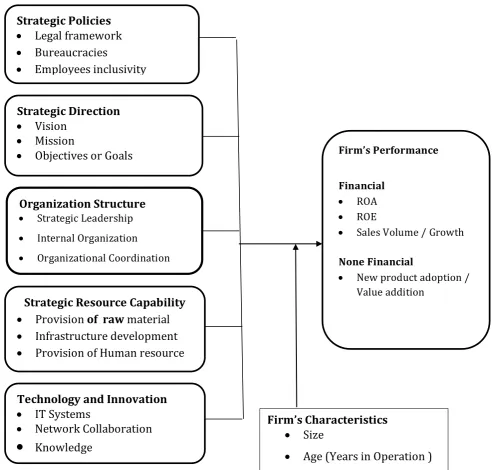
Independent Variables Moderating Variable Dependent Variable
Figure 2.2 Conceptual Framework
In this study, the influence of strategy implementation indicators are (independent variables) and performance on maritime cluster in Kenya (dependent variable). The moderating variable are the firm characteristics.
Independent, Moderating and Dependent variables
The above conceptual framework conceptualizes the relationship between the research variables. The independent variables for the study will be; strategic policies, organization structure, styles of leadership, resource capability, corporate culture, and the technology innovation. The dependent variable for the study will be performance of maritime cluster firms.
(i) The strategy and policies
These are aspects related to the governance mechanism that have been instituted within the organization and how they relate with the strategy implementation process. In the study, the
Strategic Policies
• Legal framework
• Bureaucracies
• Employees inclusivity
Strategic Direction
• Vision
• Mission
• Objectives or Goals
Organization Structure • Strategic Leadership
• Internal Organization
• Organizational Coordination
Strategic Resource Capability
• Provision of raw material
• Infrastructure development
• Provision of Human resource
Technology and Innovation
• IT Systems
• Network Collaboration
•
KnowledgeFirm’s Performance
o Financial
• ROA
• ROE
• Sales Volume / Growth
None Financial
• New product adoption / Value addition
Firm’s Characteristics
• Size
strategic policies indicators will be the legal framework, bureaucracy and employee inclusivity in policy decision making.
(ii) Strategic direction and performance
The strategic direction of a firm is rooted in its strategic vision and mission statements which happens to be the first step in formulating and implementing strategies. In this study, the strategic directions that will be discussed are vision, mission and objectives or goal on which the firms in the maritime cluster depend on in achieving their performance.
(iii) The organization structure and strategy implementation
This determines how tasks and roles are shared within the organization, enabling the firm to meet organization goals. In the current study, organization structure will be assessed by use of the internal organization, the organization coordination and leadership.
(iv) The resource capability and strategy implementation
The resource capability not only drives the strategy implementation within a firm but it also enhances the competitiveness of the firm owing to the unique resource holdings. The resource capability of the firm will be measured by the availability and provision of raw materials, infrastructure development and provision of human resources.
(v) Technological innovation and strategy implementation
Information technology has become a key driver in business functions in almost every organization which brings great expectations in terms of investment on cost reeducation, enhancement of productivity, implementation of new business strategies, bench marking of business performance and gaining of competitive advantage, Organizations apply technology on a daily basis in the process of conducting their duties as well as responsibilities and in this case, technology is embedded in almost all activities and practices within maritime cluster firms for all their processes and communications internally and externally which include; organization structure, systems processes, leadership, marketing of goods and services, which makes technology crucial ingredient in the determination of successes and competitiveness for the organization.
Therefore, adopting modern technology within the firm, fosters the creativity, innovativeness, networks and collaboration activities within maritime cluster firms that leads to the performance and in the current study, system and processes will be accessed by following indicators; IT systems, network collaboration and knowledge.
(vi) Organization performance
Performance within maritime cluster firms measures their ability to attain to set objectives or aims. For this study, performance will be evaluated based on two dimensions of the Balance Scorecard by Kaplan and Norton (2001); which will be the financial measures and non-financial measures based on firm’s size and age (years of operation). Firm’s competition performance measure will include sales volume growth and market share; financial measure will include ROA, ROE and sales volumes (growth) while non-financial measures will be new product adoption/value addition.
(vii) Size and Age of the Organization
Empirical review
Pearlson, Saunders and Galletta (2016) acknowledge that there has been growing realization among policymakers about the necessity of developing sound strategies which ensure that the structure of the organization; systems, the leadership; organization culture and human resource policies are aligned to the strategy for successful strategy implementation. Further empirical evidence has suggested that there are minimal challenges that occur in the strategy formulation and evidence has supported the notion that most problems occur during execution of the strategy (Dannenmaier & Dannenmaier, 2007). Despite organizations investing heavily in the strategy development through utilization of proposed models such as the Porter’s Five Forces, Puempin’s Strategic success, the position is that, there have been numerous challenges facing the strategy implementation as the case in the crude oil rich industry production of Niger Delta in Nigeria due to hostile environment (Courson, 2009). However, there are other internal aspects such as lack of organization structure, resource allocation, information, decision process and management of human resources aspects, which can curtail the success of strategy execution in an organization (Lewis & Sheppard, 2006).
Usman, Kamau and Mireri (2014) conducted a study on the influence that the implementation phase has on the performance of a project in the building industry in Abuja, Nigeria. The research adopted descriptive and explanatory approaches in the study. The results of the study indicated that poor planning, budgetary allocations and poor management led to poor performance of the projects. The study focussed on the building industry whereas the current study will explore the maritime sector in Kenya. Furthermore, the study by Usman, Kamau and Mireri (2014) assessed project performance whereas the current study is examining influence of performance across the maritime sector.
Isaac, Masoud, Samad, and Abdullah (2016) studied the mediating effect of strategic implementation between strategy formulation and organizational performance within government institutions in Yemen. Structured questionnaires provided the data that was used in the research. The data was analysed using structural equation modelling through AMOS. Strategy implementation was conceptualized using; strategy, structure and human resources. The results indicated that strategy implementation significantly influenced the level of performance and a moderate mediating role on strategy formulation and the organization performance. The study concentrated on government institutions whereas the current study will focus on both government and private firms in the Maritime sector in Kenya.
Alam and Islam, (2017) examined Impact of Blue Ocean Strategy on Organizational Performance: A literature review towards implementation logic. The study was premised on the notion that blue ocean strategy offers a conducive framework for creating an innovative, value-oriented and competitive market. The results of the study indicated that Blue ocean strategy positively influenced performance. It is, however, necessary for firms to examine their size, industry conditions and adaptability for optimal performance. The study did not examine the aspects of blue ocean strategy implementation and how they individually affect the organization performance.
Alharthy, Rashid, Pagliari, and Khan, (2017) conducted a study on the factors that influence strategic implementation and the effects that they have on performance. The study employed a systematic review of literature with the result being analysed using content analysis. The findings of the study indicated that the coordination between the staff members, proactive approach within the organization, maturity of policies and business partnerships were key aspects of strategy implementation that enhanced the performance of firms. The study relied on secondary data whereas the current research will utilize both primary and secondary data. Abass, Munga, and Were, (2017) examined the relationship between strategy implementation and performance in county governments of Kenya: A case study of Wajir County government. The study utilized Mckinsey7S framework, Higgins 8S framework and Resource Based View theory to form the conceptual framework of the study due to their extensive coverage of the research premises. The study utilized structured questionnaires for data collection with the data being analysed using descriptive, inferential and content analyses. The results indicated that organization culture; leadership style and organization structure had statistically significant influence on the performance while resource availability had statistically insignificant influence. The study however did not take into consideration system processes and strategic policies, which this study will examine.
Masinde (2017) examined the effect of strategic management drivers on operational performance of container terminal: a case study of Kenya ports authority. The study adopted a descriptive research design with stratified sampling utilized in selecting personnel working at KPA. The collected data was analysed using descriptive statistics. The results of the study indicated that collaboration and strategic leadership had a positive influence on operational performance whereas strategic information technology had an insignificant effect on operational performance. The study examined KPA only whereas the current research will focus on the entire maritime sector in Kenya.
Muthoka, Oloko, and Obonyo, (2017) examined the effect of change management driver on performance of Tourism in state owned firms in Kenya whose findings indicated that consistence in change vision coupled with an elaborate organization culture and structure were positively related to performance. Despite congruence in the indicators (culture and structure) utilized in the above researchers; the study did not consider aspects such as resource capability and system processes which the current study will evaluate on how they influence performance. Awino, Njeru, and Adwet, (2017) conducted a study on Strategy Implementation: Mckinsey’s 7s Framework Configuration and Performance of Large Supermarkets in Nairobi, Kenya. The study employed a descriptive research design with Pearson correlation and factor analysis utilized in the data analysis. The results of the study indicated that there was a correlation between Mckinsey’s 7s indicators and firm performance. Overall the research indicated that the Mckinsey’s 7s framework is an adequate tool for fostering the performance of firms. The current study will utilized the Higgin’s 8s model hence its will be of importance to examine if there is any variations between the two fundamental frameworks in strategy implementation.
research will explore firms’ performance from both a financial and a non-financial perspective whose gap the study seeks to fill focusing on the entire maritime cluster firms in Kenya.
Firms Performance of Maritime Cluster
Within the maritime sector, Europe is a dominion for maritime since its maritime sectors take the lead as far as market share, technological innovation, and global operations are concerned (Wijholst, 2006). Measures such as the net sales, export intensity and the Return on Assets/Equity/ investment (ROA/ROE) have been widely used to measure performance (Zeng et al., 2009). This include customer perspectives, internal business perspectives, financial perspectives, and “learning and growth” perspective through balance score card (BSC) by Kaplan and Norton (2001). This is helpful in translating the strategy of the organization into operational performance indicators and targetted objectives. Further researchers have made use of market share and growth globally as a measure of firm performance (Hult et al., 2008). Other measures used in research include satisfaction with the profits from export activities, attainment of strategic goals and the success of the firm leadership in international ventures (Tseng et al., 2007).
In reference to the Resource Based View theory, the continous performance and competitiveness of a firm is due to rationality on the management, better resource accumulation and deployment as well as industry factors (Belgraver & Verwaal, 2017). The RBV highlights the effects of heterogeneity in a firm as opposed to the effects of the external environment on the performance of a firm in both local and international markets as observed by (Tseng et al., 2007). Literature on maritime business research has indicated that researchers have concentrated on attaining knowledge on the determinants of firm performance Hult et al., (2008) while some of the researchers have indicated that it’s challenging to come up with indicators that are adequate in measuring the performance of firms within a global dimension (Zeng et al.,2009; Lu & Beamish, 2006).
Other researchers are of the view that it is necessary to measure performance using multiple indicators so as to portray the true picture of the firm performance globally (Sousa, 2004). Appropriate operationalization of performance is key when assessing the determinants of success of maritime firms, Hult et al.,(2008) whereas in some context,market share has been used widely as an indicator of the firm competitiveness and performance within a global dimension. According to the study by Henrik Sornn- Friese Rene, Taudam, Poulsen & Martin Jes Iversen, (2012) indicated that the performance of the maritime cluster firms are measured in value added. In addition, the institution setting plays a major role in fostering competitiveness within firms for example, the government regulatory policy, interest organizations and availability of education, and research institutions. The role of the government should be geared towards developing supportive legislative frameworks since successful clusters will reinforce and upgrade themselves.
other hand, China’s has 43million people employed in the maritime cluster firms with production valued at Euros, 602billion according to Minghui and Xinhuanet (2013), which proves that there is an increasing global interest in maritime strategy implementation.Since establishment of KNSL in 1988, it depends on other international shipping lines (MSC) by hiring cargo (slots) container space for its commercial activities as compared to Ethiopia’s (land locked country) with its own 14 commercial vessels and oil tankers nesting annual revenue of USD 40 million (KMA, 2015).
Furthermore, AKI (2016) maintains that Kshs 85 billion was lost for the last seven years to foreign insurance companies which could contribute to Kenya’s economic growth at Ksh 2.2billion per annum. The potential of the Port services in the provision of employment opportunities is a crucial aspect that requires close attention by the government. For instance, the traffic at the Port of Mombasa improved by 25% in the year 2011, this was a representation of the throughput value due to increased containerized traffic. However, the output value decreased by 5% within the same year. On the other hand, despite increased import rate, the export rate recorded a decline at a rate of 13%. These figures reveal an average performance of the port which still requires significant improvement to achieve the Kenyan vision 2030 goal (KMA, 2015).
Strategic policies and Performance
The role of governance or policies in the performance of maritime clusters is evident in the maritime industry. Maritime or ocean economy is subject to a multiplayer regulatory framework under United Nations Convention of the Law of the Sea (UNCLOS 1973-1982) and other national, regional and multilateral as well as governance regimes. The foregoing is evident at national and/or a regional cluster organization according to UNCTAD (2014), such as maritime cluster representing European maritime star-regions. This is clear evidence that most European countries with sea-related sectors are supported by their governments and they collaborate through maritime clusters whose approach fall into two main patterns of clustering; government-induced setup (top-down) or clustering induced by the leading organizations within a sector- bottom-up (UNCTAD, 2014). Thus, cluster policies have become a challenging aspect to measure performance mostly, due to bureaucracy and the challenges in estimating the impact of cluster policies and programs due to the fact that only a few maritime cluster organizations measure their activities on the performance since most cluster organizations are evaluated by their member based on membership contributions (Raps & Kauffman, 2005).
Rajasekar (2014) observed that there are some challenges facing effective strategic implementation such as, lack of reference, which can support firms’ performance as a whole. It gives a hint on how far the study on the challenges facing effective strategy implementation has gone and refers to the ever-changing context of the business environment and offers much insight. While Njøs and Jakobsen acknowledge that there is much known on strategic planning just as much problems encountered during implementation, they paint the gap on knowing what to do and actually doing it during implementation. Thus, point to the need for a “systematic knowledge” on how to merge a well-thought strategy into the day-to-day operation of a business therefore, despite this articulate attempt, the need to capture specific industry uniqueness opens wider gap for relating some of the suggested solutions to the specific industries and making the “systematic knowledge” specific (Njøs & Jakobsen, 2016)