RELIABILITY CENTERED MAINTENANCE
MODELLING ON POWER SYSTEMS
Ahmed Tijjani Dahiru
Department of Electrical/Electronics Technology, School of Technical Education
Federal College of Education, Bichi, Kano, Nigeria
ABSTRACT
Sound maintenance management in power systems could be influenced by application of appropriate reliability modelling. The aggressive approach needed to retract the power sector in Nigeria should include expansion, upgrading and automation in the national grid system. This is necessary in view of current generation and transmission capacities as well as operational parameters in distribution systems obtained within the national grid. The changes needed in the context of Nigeria's power system, should as well be supported by proper maintenance management. This paper therefore explore the deplorable conditions upon which Nigeria's power system operates. It also review various risk and reliability assessment tools and their effects on various fields of technological development. The paper henceforth proposes the modelling of Reliability Centred Maintenance (RCM), as an appropriate tool for reliability enhancement. The RCM approach is chosen for its advantages in reduced frequency of maintenance which could eventually reduce running cost and quick wear. The modelling is also seen to be a step towards realizing an automated control and protection as well as self healing.
Keywords:
Cost Benefits,
Energy, Maintenance, Modelling, Power Grid, Reliability Enhancement.
I. INTRODUCTION
Like many countries south of the Sahara, management of power sector in Nigeria has not been efficient enough
to maintain sufficient supply of electricity to consumers. The insufficient supply to some extent is attributed to
issues such as, government’s direct and 100% involvement in power investments, which could have had
influences on employments, contracts and other services etc.
Government’s direct involvement however could not have been the only problem in this regard, as new
techniques in procurements, maintenance etc., were not employed in maintenance management. Right now
Nigeria is battling to bring revolutions in electrical power sector through privatization of all its companies
holding stakes. When that is achieved, a well trained personnel and methods must be in place to turn things
around. Thus there should be an upgraded style in running the affairs of maintenance programmes.
To be in tune with the global style in the management of maintenance especially in power systems, studies need
to be carried out by analyzing system failures using tools such as Failure Modes Effect Analysis (FMEA),
Failure Mode Effect and Criticality Analysis (FMECA), Fault Tree Analysis (FTA), Ishikawa Diagrams etc.,
II. AN OVERVIEW OF RELIABILITY AND RISK ASSESSMENT TOOLS
Failures recorded on military hardware such as aircrafts, weaponry, during events of Korean, Vietnam wars etc.
Automobiles used before, during and after the Second World War. Then cars were increasingly used widely for
private purposes. And of recent calamities on space crafts such as Columbia were few among events that
motivated aggressive revolution in reliability engineering.
Much of the failures recorded on larger systems such an aircraft were simply traced to remote failures on parts
such as joints, components of a particular sub-system etc. For the whole system to be brought to full working
condition, the maintenance action of sub-systems, parts or components, which may cost much in terms of time
and resources, a trend not friendly for safety of personnel and consumers and for economy of investments and
patronage.
Measures taken to develop and implement changes in the system of maintenance for reliability enhancements
and risk reduction include [5][6][7];
(i) Fish Bone (Ishikawa) Diagram: This is a technique developed by Kaoru Ishikawa in 1990 to improve process of tracing of faults in a system, such as machines or part(s), production processes, and also applied
to industrial personnel managements etc.
(ii) Fault Tree Analysis: This is a bottom-up approach of a systems’ failure analysis.
(iii)Failure Mode Effect Analysis (FMEA): An analysis of failure likely to occur within a system that takes top-bottom approach.
(iv)Failure Mode Effect and Criticality Analysis (FMECA): A further analysis to FMEA, which prioritize failures as regard their severities for effective maintenance action (for systems on active use) or design
modifications (for systems on drawing boards) for the purpose of risk reduction and mitigations.
The techniques of risk assessment or risk assessment tools mentioned above are few examples developed to
improve system reliability. The unique difference or features of Reliability Centered Maintenance, RCM (not
mentioned above) is that it is focused on reduction of not failures or faults alone, but the frequency of
maintenance itself, whereas most of the tools among which the above stated belong emphasize on somehow
application of regular maintenance. This is particularly important in reducing the maintenance cost, which is
part of running cost of all investments.
Per capita energy consumption of every nation portrays its economic strength to large extent. Nigeria’s per
capita energy consumption barely 140 kw-h was far below the global average [1]. The major problem with
energy crises in Nigeria is rooted the system of power generation. While the installed capacities of the
individual generating stations were grossly inadequate when converged together on grid system for a population
roughly half that of the United States, the 4500MW (installed capacity) is incredibly one out of nearly two
hundred and sixtieth of the U.S installed capacity [15][19]. Moreover, performances of the power stations are
much below the installed capacities as stressed by Iwayemi [3] that less than 40% on average was realized
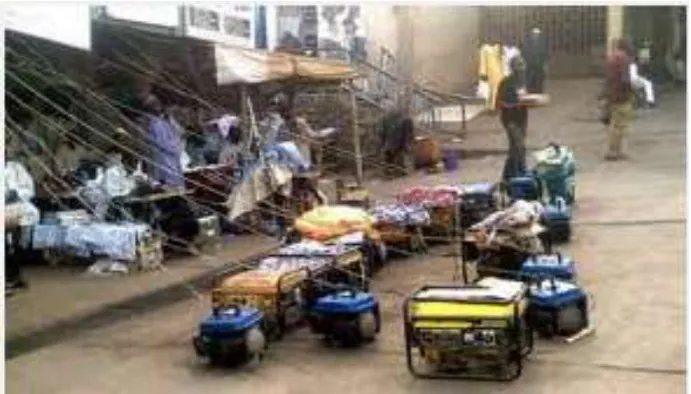
Fig. 1. Typical Unhealthy Distributed Generation Common to Nigeria's Consumer Points
The somehow poor performances of the power generating plants in Nigeria based on their installed capacities
may be attributed to all or one of the following two factors;
(i) The capacities of the transmission stations with a total capacity of 4000MW [2] which could not support
the full capacity utilization and further expansion of the generating capacities.
(ii) The outdated system of maintenance management, procurements and poor quality assurance being
applied at all the stages of power systems, namely generation, transmission and distribution.
The generation system in Nigeria has suffered neglect in terms of upgrading for many years. This is among the
primary factors contributing to the deterioration of the system. Other problems are basically operational, which
include shortages of water in the reservoirs in hydro systems and shortage of gas supplies to the turbines of the
thermal stations due to vandalism and other socio-economic factors in the Niger-Delta region and the problem
of oil and gas sectors. Thus there may be multi-facetted approaches, which issues of safety and maintainability
Conventionally transmission stages are central to in power systems. The bulk of electricity generated are
transported to the load centers using transmission facilities such as power transformers, high voltage switch
gears and circuit breakers, insulators, cable and harnesses supported by high rising towers. It is very common
scene, buildings being erected under very high voltage Nigerian transmission lines. Other factors may include
the use of obsolete equipments and continued implementation of outdated maintenance practices. While the
existing equipments cannot support modern maintenance techniques, the evolving maintenance management
system must be supported using modern equipments.
The distribution system is the most troubled portion of power system in Nigeria. It is common to have consumer
units with insufficient protection such as cut-out fuses, proper earthing, ELCBs etc. Many consumers are found
looping through other consumers in cascades to avoid tariffs, as the existing tariff is sub-standard and outdated.
The system is also plagued by the use of wrong size equipments and other materials such as cables, insulators
etc.
Individual performance of the three sectors of power system mentioned earlier resulted in frequent load
shedding and total power outages which could be linked directly to the implication of the low per capita energy
consumption recorded and mentioned earlier.
Fig. 2 Typical Maintenance Handling At Nigeria's Distribution Networks
III. THE RCM APPROACH TO IMPROVED MAINTENANCE
Now that the power sector is undergoing series of aggressive reforms through privatization and
commercialization, and National Independent Power Project (NIPP) schemes, it is expected that reliability,
safety and efficiency in Nigeria's power industry could be enhanced through a well developed and implemented
Reliability Centered Maintenance (RCM) for the improvement of per capita energy consumption and the gross
domestic product, GDP. Thus, the aim can be achieved according to the following detailed objectives;
Analyzing types of failures occurring in the generation, transmission and distribution systems of electricity
in Nigeria as a case study.
Explore various methods of failure analysis and risks assessment techniques and the suitability of the
Develop a model for maintenance management structure according to Reliability Centered Maintenance
(RCM) techniques on the case study.
The Nigerian power grid as described previously, by convention operates in stages namely generation,
transmission and distribution. Failures recorded were as a result of lapses from all the stages mentioned. Thus
development and implementation of RCM should be on all the stages. This could effectively be achieved by
sampling units making up the grid system, generating station, transmission sub-station, distribution sub-station,
Control Centre, etc. The modelling and implementations could be in phases or stages by which an illustrative
diagram of the initial phase is shown in fig. 1.
The performance of FMECA is known to precede RCM, which is a good reason for inclusion of FMECA in the
process even though it can importantly be standalone. In the process therefore it is expected that FMECA would
effectively support RCM. The RCM modelling over a grid system ensures efficiency and quality of service to
the consumers.
IV. CONCLUSIONS
As obtained in industries of developed societies such as aviation, space missions, defense, maritime,
manufacturing etc., where safety and investment securities are priorities, risks due to failures are well mitigated
over the years of evolutions of reliability engineering. It is opined that frequency of maintenance practices
somehow reduce the useful life span of an item, thus comparing to human anatomy, the more human body
experiences surgeries, the weaker the part or the entire body becomes. This implies RCM modelling proposed in
this paper could be centered around reduction in number of failures occurring in power systems and their
frequencies which contribute to the acceleration of wear and tear of equipments and parts of the system. It is
also expected that the developed technique will tremendously reduce the costs involved in traditional
maintenance practices. Other benefits to be derived include improvement of productivity through reduction in
downtime and a drive towards system automation. These achievements are made possible despite major
REFERENCES
[1] United nations Statistics Division, (2010).Gross Domestic Product Per Capita. [Online]. Available: http://www.un.org/Dept/unsd. [Accessed: 9 Mar 2012].
[2] Sambo, A.S. et al. “Electricity Generation and the present challenges in the Nigeria Power Sector”.
Presented at the world energy conference, 2010. [Online]. Available:
http://www.worldenergy.org/congresspapers/70.pdf. [Accessed: 08 Mar 2012].
[3] Iwayemi, A. “Nigerian Dual Energy Problems” Presented at the 31st IAEE International Conference. IAEE.Istanbul, 2008. [Online]. Available: http://www.ieaa.org/en/publications/proceedings.aspx.
[Accessed: 19 Feb 2012].
[4] Dhillon, B.S. A Modern Engineering Maintenance Approach, 1st ed. Boca Raton: CRC Press LLC, 2002. [5] Andrews, J.D. and Moss, T.R., Reliability and Risk Assessment, 2nd ed. London: Professional Engineering
Publishing Limited, 2002.
[6] Smith, D.J., Reliability Maintainability and Risk: Practical Methods for Engineers, 5th ed. Oxford: Butterworth-Heinemann, 1997.
[7] Kumamoto, H. and Henley, E.J., Probabilistic Risk Assessment and Management for Engineers and Scientists, 5th ed. New York: IEEE Press, 1996.
[8] Henley, E.J. and Kumamoto, H., Probabilistic Risk Assessment: Reliability Engineering, Design and Analysis, 1st ed. New York: IEEE Press, 1992.
[9] The United States Department of Defense Handbook. Designing and Developing Maintainable Products and Systems. Vol I (1997, Aug 4). [Online]. Available: http://www.barringer1.com/mil_files/MIL-HDBK-470A.pdf. [Accessed: 06 Jun 2012]
[10] Department of Army Headquarters, Washington DC. Technical Manual (2006, 22 Jul). Survey for Reliability and Availability Information for Power Distribution, Power Generation, And Heating and Ventilating and Air Conditioning (HVAC) Components for Commercial, Industrial And Utility Installation. [Online] Available: http://www.barringer1.com/mil_files/TM-5-698-5.pdf [Accessed: 06 Jun 2012]
[11] The United States Department of Defense, Military Standard: Procedure for Performing a Failure Mode Effect and Criticality Analysis. (1980, Nov 2). [Online]. Available: http://www.sre.org/Pubs/Mil-Std-1629A.pdf [Accessed: 31 Aug 2012]
[12] Fahimi, A. B., Kawasinski, A., Davoudi, A., Balog, R. S. and Kilani, M., (2012, Mar). Charge It: Power the More Electrified Planet. IEEE Power and Energy Magazine. [Online]. Available: http://www.ieee-pes.org/images/pdf/2012-pe-smart-grid-compendium.pdf. [Accessed: 3 Feb. 2013].
[13] Schulz R.W., “Maintenance Contribution to Customer Satisfaction in Electrical Power Generation,” MSc
thesis, School of Engineering Design and Technology, University of Bradford, Bradford, 2005.
[14] The US Department of Labor Occupational Safety & Health Administration, eTool: Electrical Power,
(2012, March). Underground Distribution Substation. [Online]. Available: http://www.osha.gov/SLTC/etools/electric_power. [Accessed: 23 May 2012].
[15] U.S. and World Population Clock (2010). [Online]. Available: http://www.census.gov/popclock/.
[Accessed: 02 Jan 2014].
[16] Garza, L.” A Case Study Of The Application Of Reliability Centered Maintenance (RCM) In The Acquisition Of The Advanced Amphibious Assault Vehicle (AAAV)”. M.S Thesis, Naval Postgraduate School Monterey, California, 2002. [Online]. Available:
[17] Afefy, I. H. (Oct, 2010). Reliability-Centered Maintenance Methodology and Application: A Case Study.
Scientific Research. [Online]. Available: http://file.scirp.org/Html/3_8101205_3165.htm. [Accessed: 09
Jan 2014].
[18] Martinez, J. “Application Of Reliability-Centered Maintenance in Facility Management” M.S Thesis,
Worcester Polytechnic Institute, 2007. [Online]. Available:
http://www.wpi.edu/Pubs/ETD/Available/etd-120606-132430/unrestricted/job_3074-Microsoft_Word_-_RCM_in_Facility_Management.pdf.
[Accessed: 09 Jan 2014].