Original Research Article
Evaluation of coverage, compliance of mass drug administration and
assessment of awareness about lymphatic filariasis in Tikamgarh
district of Madhya Pradesh: a cross sectional study
Ram Kumar Panika*, Rupesh Sahu
INTRODUCTION
Lymphatic filariasis is a vector borne parasitic disease caused by lymphatic dwelling nematode parasite namely Wuchereria bancrofti, Brugia malayi and Brugia timori.1 Wuchereria bancrofti is most wide spread parasite therefore disease is also known as Wuchereriasis. The disease is transmitted from person to person by bite of infective female mosquitoes. Wuchereria bancrofti is transmitted by Culex mosquito, Brugia malayi by
Mansonia mosquito and Brugia timori by either
Mansonia or by Anopheline mosquito.2 Lymphatic filariasis is one of the world's leading causes of permanent and long-term disability with an estimated 5.1 million disability adjusted life years are lost due to this disease.3 Physical disabilities due to obstructional defects (such as swelling of genitals and legs or chylous ascites) result in loss of man power. There is a social stigma attached to it. The swelling of elephantiasis produce disfiguration resulting in matrimonial handicap and inferiority complex.4 It is a major social and economic scourage affecting over 73 countries. More than 1.4
ABSTRACT
Background: Lymphatic filariasis is the second leading cause of disability worldwide accounting for more than 5 million disability adjusted life years annually. It has been a major public health problem in India which leads to irreversible chronic manifestations which are responsible for considerable economic loss and severe physical disability to the affected individuals. Mass drug administration (MDA) means administration of diethylcarbamazine and albendazole tablets to all people (excluding children <2 years, pregnant women, seriously ill persons) in endemic areas once in a year. The objective of the study was to assess coverage, compliance of MDA and awareness about lymphatic filariasis in Tikamgarh district of Madhya Pradesh.
Methods: Cross-sectional study was conducted and total 120 households were surveyed in four randomly selected clusters of Tikamgarh district of Madhya Pradesh.
Results: Out of total 743 persons 678 (91.25%) persons were eligible for MDA. Coverage rate was 86.57% and compliance rate was 74.27%. The main reason for non-compliance was not having the concerned disease (55.78%) followed by fear of side effect (22.31%). Only 40.83% among the surveyed families were aware about MDA and only 45.83% respondents had heard about lymphatic filariasis.
Conclusions: There is coverage and compliance gap and awareness about the lymphatic filariasis and MDA program is limited. Drug compliance need to be improved and awareness need to be raised. MDA program should not be confined to tablet distribution only and due importance should be given to compliance rate.
Keywords: Coverage, Compliance, Mass drug administration, Lymphatic filariasis
Assistant Professor, Department of Community Medicine, Bundelkhand Medical College, Sagar, Madhya Pradesh, India
Received: 28 December 2018
Accepted: 01 February 2019
*Correspondence:
Dr. Ram Kumar Panika,
E-mail: [email protected]
Copyright: © the author(s), publisher and licensee Medip Academy. This is an open-access article distributed under the terms of the Creative Commons Attribution Non-Commercial License, which permits unrestricted non-commercial use, distribution, and reproduction in any medium, provided the original work is properly cited.
billion people live in areas where there is a risk of infection, of whom 120 million are infected including 40 million people with overt disease.5 About 600 million people are at risk of infection in South-East Asia and 60 million are actually infected in the region. It is a public health problem in India. There are about 553 million people at the risk of infection with 48 million infected with parasite in India. It is prevalent in 250 districts in 20 states and union territories.6 Madhya Pradesh is one of the worst affected states in the country.7 Lymphatic filariasis was targeted for elimination in 1997 when the World Health Assembly called on all endemic countries to ‘strengthen efforts towards eliminating’ the disease and requested the Director General of WHO to ‘mobilize support for global and national elimination activities’. Following the World Health Assembly resolution on Elimination of lymphatic filariasis, the global program to eliminate lymphatic filariasis was established in 1999 with the objective of interrupting transmission of the parasites in all endemic countries by 2020. The current WHO strategy for global program to eliminate lymphatic filariasis includes the delivery of antifilarial drugs, either alone or in combination (diethylcarbamazine or ivermectin monotherapy, or either drug in combination with albendazole) to as many people as possible at yearly intervals until transmission has been interrupted.8 In mass drug administration approach diethylcarbamazine is given to almost everyone in community irrespective of whether they have microfilaraemia, disease manifestation or no signs of infection except children below 2 years, pregnant women and seriously ill patients.9 The Government of India in 2004 began a nationwide MDA program in all the known lymphatic filariasis endemic districts with the aim of eliminating filariasis as a public health problem by the year 2015.10 In 2007 India changed its strategy from delivery of DEC alone to delivery of DEC plus albendazole, the number of people treated with combinations has increased steadily.11 however the reports from field suggested that actual drug consumption was much lower than the reported coverage by district malaria/filarial offices. Therefore, the state government proposed mid-term evaluation of mass drug administration to review the progress of activities of mass drug administration in Madhya Pradesh.12 With this background present study was undertaken i) to evaluate the coverage, compliance and factors responsible for non-compliance to MDA and ii) to assess the awareness about MDA and lymphatic filariasis in Tikamgarh.
METHODS
A cross-sectional study was conducted in year 2017 for evaluation of mass drug administration through house survey in four randomly selected clusters (three rural and one urban) of Tikamgarh district as per National vector borne disease control program guidelines. For selection of rural clusters, one village was selected from PHCs/CHCs with low coverage i.e. below 50%, one village was selected from CHCs with medium coverage i.e. between 50%-80% and one village was selected from CHCs with high coverage i.e. above 80%. For urban
cluster one ward of was selected randomly. Selected CHCs and their representative village - in rural area were– CHC Badagaon: Dundatora village, CHC Jatara: Bamhori Khas village and CHC Nevari: Kuluaa village. In urban area – ward No. 27, Maman darwaza of Tikamgarh municipality was selected. House to house survey was carried out. In each of the selected clusters 30 houses were surveyed. Thus total 120 houses were surveyed. All the eligible population in the study area was included and pregnant and lactating mother, children below 2 years, seriously ill persons, severely debilitated patient and people of extreme age were not eligible thus excluded from study. The predesigned questionnaire (Provided by DHS, State Health Committee and NVBDCP) was used to collect information regarding consumption of DEC and other relevant information. Data was compiled analyzed using percentages and proportions.
RESULTS
Total 120 families were surveyed as per MDA methodology. In surveyed population out of total 743 persons 678 (91.25%) persons were found eligible and 65 (8.74%) were not eligible for drug distribution as per MDA exclusions. The proportion of non-eligible persons for DEC was children <2 years 28 (43.07%), pregnant ladies 17 (26.15%), illness 12 (18.46%), and extreme age 08 (12.30%) respectively. Males constituted 52.8% (358) of total eligible, rest were females (Table 1).
Table 1: Proportion of eligible population.
No. of eligible person
% of eligible person Age (in years)
2-5 72 10.61
6-14 188 27.72
>15 418 61.65
Total 678 100
Sex
Male 358 52.80
Female 320 47.19
Total 678 100
Table 2: Age and gender wise distribution of coverage rate.
No. of eligible person
No. of persons received tab
% of persons received tab Age (in years)
2-5 72 59 81.94
6-14 188 165 87.76
>15 418 363 86.84
Total 678 587 86.57
Sex
Male 358 322 89.94
Female 320 265 82.81
Table 3: Age and gender wise distribution of compliance rate.
No. of persons received tab
No. of persons swallowed tablets
% of persons swallowed tablets Age (years)
2-5 59 38 64.40
6-14 165 112 67.87
>15 363 286 78.78
Total 587 436 74.27
Sex
Male 322 245 76.08
Female 265 191 72.07
Total 587 436 74.27
Table 4: Reason for non-compliance to MDA.
Reasons for non-compliance No. of person
Percentage (%) Not suffering from
concerned disease 135 55.78
Fear of side effects 54 22.31
Forget to take tablets 23 09.50
Not present at home during
distribution of drug 18 07.43 Had any minor ailment 02 0.82
Other 10 04.13
Total 242 100
Figure 1: Awareness about lymphatic filariasisand MDA.
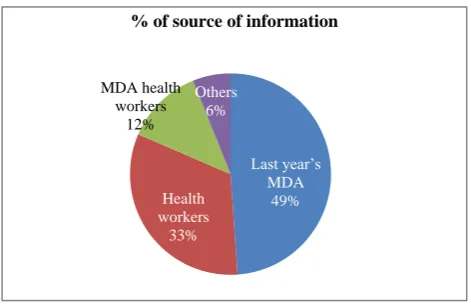
Figure 2: Source of information regarding lymphatic filariasis and MDA.
Among 678 eligible persons 587 (86.5%) received the tablets i.e. the distribution coverage rate was 86.5%. Age group wise coverage was 87.7% in 6-14 years age group and 81.9% in 2-5 years age group, Gender wise coverage was 89.94% in males and 82.81% in females (Table 2). Among 587 persons who received the tablets 436 (74.27%) consumed it i.e. compliance (consumption) rate. Age wise compliance rate was 78.78% in 15 years and above age group and 64.40% in 2-5 years age group. Gender wise compliance was 76.08% in males. Age & gender wise compliance is shown in Table 3. The reasons for non-compliance are as shown in Table 4. The bar chart (Figure 1) shows different aspects of awareness about lymphatic filariasis and MDA. Among the respondents 24 (48.97%) acquired knowledge from last year’s MDA, 16 (32.66%) gained knowledge from health
45.83%
19.16%
26.66%
36.66%
5.83% 7.5%
14.16%
40.83%
0 5 10 15 20 25 30 35 40 45 50
Last year’s MDA
49% Health
workers 33% MDA health
workers 12%
Others 6%
workers. 6 (12.44%) acquired knowledge from MDA drug distributors, 3 (6.12%) acquired knowledge from other sources like TV, Radio, News Paper etc. (Figure 2).
DISCUSSION
The evaluation of mass drug administration of Tikamgarh district was carried out by the department of Community Medicine, Bundelkhand Medical College, Sagar (M.P). The principles behind MDA is to approach every eligible individual in the target community and administer annual single dose of DEC and albendazole which is to be repeated every year for a period of 5 years or more aiming at attaining coverage more than 85% and drug compliance at least 85%.13 In present study; in surveyed population out of total 743 persons only 678 (91.25%) persons were eligible for MDA. Among eligible population 52.80% were males and 47.19% were females. The most of eligible persons 61.65% belonged to >15 years age group. The main reasons for non-eligibility for MDA was children <2 years 43.07% followed by pregnancy (26.15%) and illness (18.46%). In a similar study carried out by Anil in Gulbarga district Karnataka, revealed that out of 969 eligible populations 54.28% were females and 45.72% were males. 76.88% of the persons belonged to 15–60 years age group. In contrary to study of Anil, we found that eligibility was more in females. Similar reason of non-eligibility was shown in a study carried out by Pankaj et al in Rewa and Chindwara district in Madhya Pradesh that main reasons for non-eligibility for MDA was children <2 years of age followed by pregnancy in both the districts.12
Coverage rate of MDA
The International Task Force (WHO) has recommended that in mass treatment, DEC is given to almost everyone in the community irrespective of whether they have microfilaraemia, disease manifestations or signs of infection. In the present study, the coverage rate was 86.5% which is higher as compared to studies by Biradar, Anil, Amarnath, Abhayand lower as compared to studies by Lata and Naveenkumar.3,8-10,15,17 Coverage rate was highest (87.7%) in 6-14 years age group and lowest (81.9%) in 2-5 years age group. Gender wise coverage was higher (89.94%) in males compared to females (Table 2).
Compliance rate of MDA
In this study compliance rate was 74.27% which is lower than recommended level. Age wise compliance rate was highest (78.78%) in 15 years and above age group and lowest (64.40%) in 2-5 years age group. Gender wise compliance was maximum (76.08%) in males compared to females (Table 3). In various study conducted in different place in India by Anil, Lata et al, Naveenkumar, Kishore, Amarnath, Muralidhar et al and Nirgude et al also found low compliance rate than recommended level.8-10,14-17 There is gender wise and age group wise
differences in compliance rate in present study. A detailed inquiry into the matter might help us determine the cultural and social factors related age and gender which could have played a role in the compliance rate. There is wide coverage and compliance gap which reflects the proportion of people received drugs but not consuming.
Factors responsible for noncompliance to MDA
The main reason for non-compliance to MDA in the present study was not suffering from the concerned disease at the time of drug distribution 135 (55.78%), followed by fear of side effects 54 (22.31%) and which is in sharp contrast to studies by Biradar, Anil, Lata, Kishore and Karmakar where the main reason for noncompliance was fear of side effects of drugs.3,8,9,14,18 It is very important that people are made aware that although they are not suffering from the concerned disease but are at risk for acquiring concerned disease. People are also to be made aware about side effects of distributed drugs to take proper management and not to have any misconception or fear. Other reasons noted were household were not at home when the drug distributor visited their home, having no faith on distributed drug, forgetting to consume the drug which was given to those family members present in home at the time of drug distribution.
Awareness about lymphatic filariasis and MDA
Source of information acquired about lymphatic filariasis and MDA
In present study, among the respondent 48.97% acquired knowledge from last year’s MDA, 32.66% gained knowledge trough health workers. 12.44% acquired knowledge from MDA drug distributers, 6.12% respondent received knowledge from other sources like TV, Radio, News Paper etc (Figure 2). Karmakar observed that important sources of information were anganwadi worker, auxiliary nurse midwife (ANM) and community volunteer.18
CONCLUSION
Present study revealed that there is coverage and compliance gap and awareness about the lymphatic filariasis and MDA program is low. Coverage and compliance gap actually reflects the proportion of covered people not consuming the drugs. Drug compliance need to be improved. MDA program should not be confined to tablet distribution only and due importance must be given to compliance rate also and every possible effortshould be made by drug distributors to distribute drug when every households are at their home and convince people to consume drug in their presence. This can be done by raising awareness by explaining all about lymphaticfilariasis and the benefits of MDAto the people. Issues like not consuming tablet because people are not suffering from concerned disease and fear of side effects should be addressed through updated IEC and effective BCC strategies.
ACKNOWLEDGEMENTS
The authors are grateful to Director Health Services Madhya Pradesh for providing this project and giving us financial support and cooperation to conduct this evaluation study. We are thankful to Dean, Bundelkhand Medical College, Sagar (M.P.) for his continuous support. We are also grateful to CMHO and DMO of Tikamgarh districts for supporting and helping us all the time during our survey. We are also very thankful to our respondents who spent their time and responded to the rather lengthy questionnaires with tremendous patience.
Funding: Director Health Services Madhya Pradesh Conflict of interest: None declared
Ethical approval: The study was approved by the Institutional Ethics Committee
REFERENCES
1. Sundarlal. Text Book of Community Medicine, Preventive and Social Medicine. 4th Edition. CBS Publishers Distributors Pvt Ltd; 2018: 476-477. 2. Suryakantha AH. Community Medicine with Recent
Advances. 3rd Ed. New Delhi: Jaypee Brothers Medical Publishers (P) Ltd; 2014: 429.
3. Biradar M, Holyachi S. Coverage and compliance of mass drug administration against lymphatic filariasis in Kalaburgi district. Int J Community Med Public Health. 2017;4(7):2502-5.
4. Mahajan, Gupta. Textbook of preventive and social medicine. 4th Edition. New Delhi: Jaypee Brothers medical publishers (P) Ltd; 2013; 319.
5. Park’s textbook of Preventive and Social Medicine, 23rd Edition. Jabalpur: M/s Banarsidas Bhanhot Publishers; 2015: 270.
6. J Kishore’s National health programs of India, 11th Edition. New Delhi: Century Publications; 2011: 390.
7. Lahariya C, Mishra A. Strengthening of mass drug administration implementation is required to eliminate lymphatic filariasis from India: an evaluation study. J Vector Borne Disease. 2008;45:313-20.
8. Anil NS. Assessing Coverage of Mass Drug Administration against Lymphatic Filariasis in Gulbarga District, Karnataka. Int J Med Public Health. 2012;2(3):25-8.
9. Godale L, Ukarande B .A study on coverage evaluation, compliance and awareness of mass drug administration for elimination of lymphatic filariasis in Osmanabad district. National J Community Med. 2012;3(3):391-4.
10. Havale N. Evaluation of coverage and compliance of elimination of lymphatic filariasis by mass drug administration campaign in Gulbarga and Yadgiri districts of Karnataka state. Int J Res Medical Sci. 2015;3(8):2105-8.
11. Satapathy D, Pradhan S, Acharya H, Nayak U, Agrawal S, Naik G. Rural and Urban Differences in MDA Coverage for Filariasis in Jharsuguda District of Odisha. Int J Med Res Prof. 2016;2(5):70-4. 12. Prasad P, Arya R, Bansal M, Singh S. Mid-term
assessment of mass drug Administration of DEC for filariasis in Rewa and chhindwara districts of Madhya Pradesh. National J Community Med. 2013;4(3):520-4.
13. Mehta S, Shah V, Verma A, Patel N, Bansal R. Comparison of coverage and compliance of mass drug administration 2012 in surat, India. National J Community Med. 2012;3(3):448-72.
14. Jothula KY, Naidu NK, Malhotra V, Prasad VG, Kabra PR, Nagaraj K. Evaluation of mass drug administration programme for elimination of lymphatic filariasis in Nalgonda district, Telangana, India. Int J Community Med Public Health. 2016;3(8):2008-12.
15. Gupta A. Evaluation of mass drug administration for elimination of lymphatic filariasis in Panna district of Madhya Pradesh. Paripex Indian J Res. 2015;4(5):269-71.
17. Nirgude A, Naik P, Nagaraj K, Sidramappa R, Takalkar A, Prasad V. Evaluation of coverage and compliance of Mass drug administration programme 2011 for Elimination of lymphatic filariasis in Nalgonda district of Andhra Pradesh, India. National J Community Med. 2012;3(2):288-93. 18. Karmakar P, Mitra K, Chatterjee A, Jana P,
Bhattacharya S, Lahiri K. A study on coverage, compliance and awareness about mass drug administration for elimination of lymphatic filariasis
in a district of West Bengal, India. J Vector Borne Dis. 2011;48:101–4.