* To whom all correspondence should be addressed.
Stability of Composition of Sulfated Polysaccharides and Brown
Algae Alginic acids in Baked Goods – Criterion of its Efficiency
as a Functional Ingredient
Lydmila Nikolaevna Fedyanina, Elena Semenovna Smertina, Vladimir Alekseevich Lyakh and Christina Fanidovna Zinatyllina
Far Eastern Federal University, 8 Suhanova st., Vladivostok 690950, Russia. http://dx.doi.org/10.13005/bbra/2177
(Received: 09 May 2015; accepted: 26 July 2015)
The paper contains results of study of Fucolam efficiency as a physiologically active ingredient that is added to baked goods with therapeutic purpose. Fucolam is a composition consisting of fucoidan and alginic acid extracted in a special way from the brown alga Fucus evanescens, and calcium alginate added as a filler and source of this macronutrient. The composition has different positive biomedical properties presented in plenty of works by local and foreign scientists; it is successfully used for food fortification, bread inclusive. The goal of the paper is to determine stability of Fucolam composition in finished baked goods exposed to high heat treatment in the production process, that is a proof and criterion of its efficiency. Presence of complex components is determined in finished baked goods with Fucolam – big amount of glucose, less amount of mannose, xylose, rhamnose, and a key component – fucose that proves composition integrity in the process of high heat treatment and demonstrates its efficiency as a functional ingredient. The work is supported by the Russian Science Foundation (project No. 14-50-00034).
Key words: Baked goods, Functional food, Functional ingredient, Brown algae polysaccharides, alginates, fucoidan, stability and efficiency of use.
Introduction to problem
Nowadays, the Russian Federation, like the whole world community, actively works on improvement of population food patterns by developing functional and therapeutic food increasing human resistance to adverse environmental factors and prevention of different diseases. To this effect the most significant is fortification of mass- and daily-consumption products (baked goods, pasta, soft drinks), which not only contribute to health improvement in any
country, but solve an important strategic task – provide food security.
Baked goods play a dominant role in the mass-consumption product range almost in all countries, and bread baking is a socially important branch of economy. Baked goods stand high in food in Russia. Bread is one of the most important foodstuffs. It is included in a daily diet of vast majority of consumers as one of the main source of energy and nutrients.
Bread does not pall, everybody eats it, except babes in arms, daily and within the whole life. It is characterized by a permanent digestibility, which is not decreased at daily consumption1.
Analysis of bread nutritional value shows practicability of balancing its chemical composition, increasing its biological value, eliminating separate components deficit, supplementing it with complete proteins, vitamins, minerals, dietary fibers that enables to correct a human nutritional status quickly and effectively [1].
Thus, works aimed at solving such important issues in bread baking as improvement of baked goods quality and their nutritional and biological value have been carried out for many years2-4.
Analysis of scientific and technical literature showed that in order to improve nutritional value of baked goods they use fortificants of different nature1, 5-6, which in the light of modern terminology are used to be called as physiologically functional ingredients. Development of new-generation functional food is impossible without modern food ingredients. Market of functional food ingredients (FFI), offered to supplement foodstuffs, including baked goods, is presented by a wide range of substances of different origin that are added to food raw materials or finished products with the purpose of improving technology, preserving or getting desired properties (functional, organoleptic, etc.), extending shelf life7. Mostly, fat-containing supplements, protein supplements, dietary fibers of vegetable and animal origin, micro- and macronutrients, vitamins, different complex supplements containing above-mentioned components, phytosupplements are used as FFI.
Besides, the food supplements were used as functional ingredients – nutraceuticals and parapharmaceuticals – protein substances and food supplements on their basis, fruit and vegetable processing products and food supplements on their basis.
At present, scientists along with traditional food ingredients pay great attention to components combining specific technological properties and polyfunctional positive effect on human body. This category of functional ingredients influences not only nutritional and biological value of baked goods, but, in a varying degree, technological characteristics of raw materials, organoleptic characteristics of finished products. In this context the most valuable are so
called biologically active agents, which enable to decrease risk of some widespread diseases and increase resistance of human body to adverse environmental factors. These are the following functional ingredients: peptides, micronutrients, polyunsaturated fatty acids, phospholipids, ferments, hormones, saponins, biopolymers, pigments, food supplements (parapharmaceuticals)7.
Range of functional ingredients, used for development of healthy baked goods, is wide enough and continuously renewed, nevertheless, hydrobionts of vegetable origin are underrepresented as functional ingredients. Based on numerous literature data sea hydrobionts contain unique multidirectional biologically active agents8-10. It is connected with their existence conditions in aqueous media practically presenting a solution that contains almost all known chemical elements. Necessity to resist some factors (high pressure, low oxygen content, bad light or its absence, abnormally high or low temperatures) ensures difference of sea organisms and their metabolites from organisms with earth biology 11-13.
As natural sources, they are characterized not only by diversity and high efficiency of their biologically active agents, which often have no negative properties that belong to substances produced from traditional sources, but also by a wide and successfully reproducible raw materials base13-15. The latter may become important when it’s necessary to produce some chemicals (proteins, polysaccharides, nucleic acids, etc.) or food on their basis in industrial scale.
Vegetable hydrobionts are used both in a native form (powders, solutions, algae tinctures) and in a form of different complexes – biologically active agents, food supplements12-13.
Data received proved lack of technical risks of Fucolam use as a functional ingredient in baked goods.
We have noticed a positive dose-dependent influence of Fucolam on biotechnological properties of baker’s yeast (decrease of dough rise time when Fucolam concentration grows). It was demonstrated that Fucolam improves organoleptic and physicochemical characteristics of bread. Fucolam optimal concentration, at which bread keeps its consumer characteristics – 0.1 % of wheat flour weight, was determined. Quality check of the end product – bread with Fucolam, based on regulatory documents of the Russian Federation, Customs Union countries, international quality standards ISO 9000, showed lack of health risks at bread production with composition Fucolam – alginic acids and proved possibility of Fucolam use as a functional ingredient 16-17.
At developing functional foodstuffs irrespective of origin of the functional ingredient it is highly important and necessary to assess efficiency or preservation of its declared physiological effect in the end product.
Taking into account main principles of food supplementation, scientists have developed criteria for choosing supplementing ingredients, which include medical and biological, technological and economic aspects and relevant parameters, such as stability, deficit correction efficiency, safety, producibility, economy, and product quality in the production process.
Traditional and the most representative way of assessing components efficiency is, surely, biomedical studies with regard to in vivo or in vitro experiments. But, these studies are long-term, expensive and, in our opinion, not always needed, if the other positive parameters are available.
In some cases, when the composition or complexes of bioactive agents, having investigated chemistry, known physiological activity grounded as far as evidence based medicine is concerned, positive example of its application in other foodstuffs, is used as a functional ingredient, we think that it suffices to limit to such criterion as stability in order to assess its efficiency in end products.
Fucolam fits all the mentioned points. Besides, as is known, sulfated polysaccharides and
alginic acids are heat-resistant that is essential to bread production, when high temperature treatment is applied, nevertheless, it is important to determine this fact, as in the opinion of Peter Berry Ottaway, and we identify ourselves with it, “nutrients stability in this food matrix determines its salubrity”18.
Taking into account all the foregoing, this paper aims at determination of Fucolam complex stability in finished baked goods as a factor of its efficiency being a functional ingredient.
Grounds for choosing Fucolam composition
As is known, brown algae from the Russian Far East seas are a rich and easily renewable source of polysaccharides having unique structure and properties (laminarins, alginic acids and fucoidans). Polysaccharides are the main component of the algal biomass and fulfill number of important biological functions.
Algae Fucus evanescens – a source of composition components – have a vast habitat, grow in shallow waters, easy of access. The may be referred to renewable resources, commercial base is sufficient – algae grow along the whole coast of the Kuril Islands and Kamchatka, as well as in Primorsky Krai and Sakhalin. Brown algae Fucus evanescens have some advantages towards the other algae due to high content of fructose-containing polysaccharides (10…15 % of dry algae weight).
In recent years, fucoidans – bioactive sulfated polysaccharides synthesized by brown algae, which have not been discovered in land plants so far, have become an object of high attention and intensive research. Constantly growing interest in these sulfated polysaccharides is caused by, in the opinion of O. Berteau and B. Mulloy19 (and we endorse it), polyfunctionality and practically useful properties that attract attention of researches. Anticoagulant, antithrombotic, fibrinolytic, antiinflammatory, immunomodulating, antitumor, antisclerotic, antihypertensive activity, etc. make these bioactive agents prospective for medical and research practice, which are also used for development of medicines, food supplements and new generation innovative foodstuffs20-25.
some other products, food raw materials (jelly, granules, capsules) and cosmetic goods26.
Now, a lot of foreign and Russian companies use fucoidans as functional components to supplement gels, beverages and other products.
METHODS
Object of research
Fucolam composition27-28 and bread with Fucolam composition16-17 were the objects of research.
Fucolam composition
Fucolam is a complex of bioactive agents developed on the basis of fucoidan by the scientists of the Laboratory of Enzyme Chemistry at the Pacific Institute of Bioorganic Chemistry29. Fucolam contains the following ingredients: 20% – complex (composed of fucoidan – 60-80% and alginic acid – 20-40%, called by scientists as Fucolam-C) as a source of
polysaccharides and 80% – calcium alginate as a filler and source of calcium.
Fucoidan is extracted from the brown alga Fucus evanescens by the unique patented way30. Fucoidan extracted from the Sea of Okhotsk brown alga Fucus evanescens by Zvyagintseva T.N. et al31: 1’!3;1’!4-á– L-fucan, m.m. 20-40 kDa; monosaccharide composition is presented by fucose, galactose, xylose and glucose in the ratio 71:9:10:8, fucose and sulfate residue ratio is 1:0.9. Extraction method – extraction of polysaccharides with hydrochloric acid 0.1 N at room temperature and water at 50-60°C, separation of laminarins and fucoidans and further fractionating with hydrophobic chromatography31. Low molecular weight alginic acid is a copolymer of ß-D-mannuronic and á-L-guluronic acids in the ration 4:132.
Alginates entering into the composition are dietary fibers that are characterized by adsorbability and moisture-retaining power, coating ability; they function as enterosorbent of toxins, heavy metals, radionuclides; they regulate metabolism, motor function of a human G.I. tract, extent of fat absorption, reduce blood cholesterol level33-36.
We think that such complex represents a very successful combination of a biologically and physiologically active agent – fucoidan, traditional nutrient from the dietary fibers group – alginic acids, macronutrient – calcium.
Based on recommendations of the scientists, the composition may be used both as a Table 1. Monosaccharides content in the bread
extract hydrolysate with food supplement Fucolam
Monosaccharides Retention time Mole %
Fucose 29.728 6.392
Galactose 33.625 2.435
Xylose 39.607 14.175
Glucose 50.018 76.998
food supplement Fucolam in a daily dose (capsules 500 mg each), and as foodstuffs containing it.
Baked goods produced with Fucolam composition on the basis of a method developed by us have been used during the research16-17.
Research methods
We determined residual value of the composition components – sulfated polysaccharides (fucoidan) and alginates – as a stability indicator of the composition under study. That is, we determined their qualitative and quantitative presence in the bread test samples.
Presence of fucose showed us quantitative and qualitative content of fucoidan in bread. In our previous works we determined Fucolam quantity in bread presenting the best results in terms of its quality in compliance with all regulatory documents with regard to key quality parameters – 1% to flour weight.
For the experiment we took test samples of bread with Fucolam (amounting to 1% to flour weight) and without Fucolam. It was challenging to determine presence of fucoidan in bread due to low concentration of this bioactive agent, that’s why separation of fucose from other monosaccharides was difficult. First, fucoidan was extracted, then, acid hydrolysis took place.
Residual fucoidan and alginates in the test samples of bread were quantified by HPLC (high performance liquid chromatography) and 13C-NMR
spectroscopy (nuclear magnetic resonance spectroscopy) on the basis of the shared service center of the Pacific Institute of Bioorganic Chemistry within the Far-Eastern Branch of the Russian Academy of Science (PIBOC FEB RAS).
HPLC method (high performance liquid chromatography): monosaccharide composition was quantified by the carbohydrate analyzer Biotronik IC-5000 (Germany). In compliance with the operations manual we used column Shim-pack ISA-07/S2504 (0.4 õ 25 cm). Potassium was eluted with a borax buffer at elution rate – 0.6 ml/min. Quantification was carried out by the bicinhoninate method; integrating system – Shimadzu C-R2 AX.
Extraction of polysaccharides: to 250 g of bread (Fucolam concentration 1g/500 g of flour) we added 1 l of 1% Na2CO3. It was extracted twice in a thermostat at 60°C during 3 hours. Extract containing fucoidan and alginate was mixed, separated from the bread pulp through the close cloth using the porcelain filter, neutralized with 4 N HCl to pH 7.0, partially evaporated on the rotary evaporator to 200 ml. It was dialyzed with diH2O at 4°C during 52 hours. Then, it was concentrated to 45 ml.
Separation of fucoidan and alginic acid: solution containing mixture of these polysaccharides was acidified with HCl (pH 1.5), then, fucoidan contained in the solution was filtered
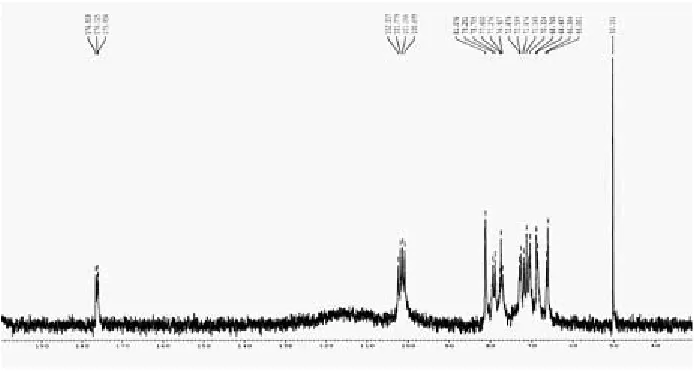
Fig. 2.13Ñ-HPL specter of alginic acid produced by the NMR spectrometer Bruker –Physic WM-300 (Bruker,
from the alginic acid residue. Solution with fucoidan was neutralized with 40 % NaOH to pH 6-7, dialyzed by ultrafiltration method with membrane Millipor 3 kDa and concentration to minimum volume (20 ml), and subjected to cool dehumidification. Alginic acid was transferred from a water-insoluble H+ -form to a water-soluble Na+-salt. For this purpose 0.2Ì NaOH was added to the residue. After that, alginic acid solution was dialyzed with diH2O during 15 hours, evaporated on the rotary evaporator to 4 ml and subjected to cool dehumidification.
13C-NMR spectroscopy, which was used
by us, gives the best results in quantifying alginates by physicochemical methods. 13C-NMR spectroscopy is one of the methods of NMR spectroscopy using carbon 13C nuclei.
13Ñ-NMR specters of alginates are very
demonstrative and enable us to distinguish easily polymers with D-mannuronic (M) and L-guluronic (G) acids dominated by character of signals of anomeric carbons37.
Method 13C-NMR spectroscopy (nuclear magnetic resonance spectroscopy):
13Ñ-NMR specter was produced by the
NMR spectrometer DRX 500 (Bruker, Germany) with operating frequency 62.9 mHz in D2O at 70 °Ñ. Methanol (50.15 ppm) was used as an internal signal. Polysaccharide sample was dissolved in D2O.
RESULTS
Results of fucoidan residual research
Please, find research results in Figure 1 and Table 1. The results are as follows: big amount of glucose, less amount of mannose, xylose, rhamnose, and fucose that proves presence of fucoidan in the test sample.
Fucoidan residual amount in the end product was quantified by fucose and glucan mixture. Final value of fucoidan and glucan mixture in bread amounted to 45 mg.
Results of alginate residual research
Sodium alginate in finished baked goods was quantified by HPLC method using HPL spectrometer Bruker-Physic AVANCE DPX – 300 (Germany) with operating frequency 62.9 mHz in D2O at 70°C. Methanol (50.15 ppm) was used as an internal signal.
In 13Ñ-HPL specter of alginic acid recovered at alkaline extraction of bread with Fucolam (1% Na2CO3, 600Ñ, ðÍ 10) with further dialysis and precipitation at pH 1.5 we have notices intensive signals with chemical shifts (Ñ-1-101.3 ppm; Ñ-2-71.1 ppm; Ñ-3-72.6 ppm; Ñ-4-79.2 ppm; Ñ-5-77.2 ppm; Ñ-6-175.9 ppm) typical for D-mannuronic acid blocks, as well as intensive signals with chemical shifts (Ñ-1-101.8; Ñ-4-81.0) typical for MGG- and GGG-blocks. As far as full signal interpretation is known in these specters, it’s possible to calculate ratio of M/G monomers using a ration of amount of C1 signals integral intensities of â-D-mannuronic acid residues (101.3 ppm) to the relevant amount of C1 signals integral intensities of á-L-guluronic acid residues (101.8 ppm). So, M/G ratio amounted to 1.1 that is practically equal blocks distribution (Figure 2).
DISCUSSIONS
Thus, qualitative and quantitative residual amount of fucoidan and alginate in finished baked goods was determined by the following methods: high performance liquid chromatography and nuclear magnetic resonance spectroscopy. Based on the findings, we may confirm that polysaccharides being a part of the composition are resistant to high temperatures conditioned by technological peculiarities of bread production, and, therefore, keep active and efficient in these products. Lack of technological and other risks of using the fucoidan-alginate composition for bread supplementation, as shown by us before, presence and stability of the main indicating components – fucoidan and alginate – in the end product guarantees preservation of their bioactivity. Our previous findings showing quality of bread with Fucolam, which complied with the criteria of the international regulatory documents, RF, Customs Union, prove efficiency and prosperity of using this composition as a functional ingredient for bake goods and enable us to range it as a general health product.
goods – antiviral, anticoagulant, antitumor or some others. Our next task is to determine specificity and direction of Fucolam baked goods effect using biological models. Once we determine direction of effect of baked goods with investigated composition, we will be able to recommend the developed goods not only to the whole population, but to the relevant designated population categories (risk groups) to prevent some diseases or include them in therapy complex.
ACKNOWLEDGMENTS
The authors acknowledge assistance in the research from the employees of the Laboratory of Enzyme Chemistry at the Pacific Institute of Bioorganic Chemistry within the Far-Eastern Branch of the Russian Academy of Science (PIBOC FEB RAS).
The work is supported by the Russian Science Foundation (project No. 14-50-00034).
REFERENCES
1. Puchkova, L., Polandova, R., & Matveeva, I. Bread production. St. Petersburg: 2005; GIORD. 2. Shlelenko, L. Bread in the population healthy
diet. Food industry, 2006; 8: 48-50.
3. Bodar, P. Bread that takes care about you. Khleboproducty, 2007; 9: 49-51.
4. Shatnyuk, L., Kodentsova, V., & Vrzhesinskaya, O. Bread and baked goods: Micronutrient sources and carriers for Russians. Baking in Russia, 2012; 3: 20-23.
5. Auerman, L. Bread baking technology: Textbook. 9th ed.; rev. and enl. Under the general editorship
of L.I. Puchkova, 2009; St. Petersburg: Professija.
6. Matveeva, T., & Koryachkina, S. Physiologically functional food ingredients for baked and confectionary goods. Orel: FSBEI HPE State University – ESPC 2012.
7. Tutelyan, V., & Nechaev, A. (Eds.). (2014). Food ingredients in modern foodstuffs. Ìoscow: DeLi plus.
8. Aneiros, A., & Garateix, A. Bioactive peptides from marine sources: pharmacological properties and isolation procedures. J. Chromatogr. Analyt. Technol. Biomed. Life Sci., 2004; 1(803): 41-53. 9. Miyaoka, H., Shimura, M., Kimura, H., et al. Antimalarial activity of kalihinol A and new relative diterpenoids from the okinawan sponge, Acanthella sp. Tetrahedron, 1998; 54:
13467-13474.
10. Mourao, P., Giumaraes, B., & Mulloy, B., et al. Antithrombotic activity of a fucosylated chondroitin sulphate from echinoderm: sulphated fucose branches on the polysaccharide account for its antithrombotic action. Br. J. Haematol, 1998; 101: 647-652.
11. Pereira, C., Modolell, M., Frey, J., et al. Gene expression in IFN-gamma-activated murine macrophages. Braz. J. Med. Biol. Res., 2004; 12: 1795-1809.
12. Haefner, B. Drugs from the deep: marine natural products as drug candidates. Drug Discov. Today, 2003; 8: 536-544.
13. Mayer, A., & Lehmann, V. Marine pharmacology in 1999: antitumor and cytotoxic compounds. Anticancer Res., 2001; 4(21): 2489-2500. 14. Pozdnyakova, Y. (2003). Technology of food
supplements based on gonad hydrobionts enzymic hydrolysis. PhD thesis, TINRO-center, Vladivostok.
15. Mezenova, Î. (Ed.). (2013). Biotechnology of hydrobionts rational use: textbook. St. Petersburg: Lan.
16. Kalenik, T., Smertina, E., Fedyanina, L., Shevchenko, N., Zvyagintseva, Ò., & Imbs, T. (2010, September 20). Pat. 2399209 Russian Federation, MPK À21D 2/36, 8/02 Composition for the wheat bread dough “Dary Morya”. Applicant and patent holder Federal Education Agency State Higher Education Institution Pacific State Economical University (PSEU), Pacific Institute of Bioorganic Chemistry within the Far-Eastern Branch of the Russian Academy of Science (status of state institution) (PIBOC FEB RAS). No. 2009112903/13, appl. 06.04.2099; publ. 20.09.2010, Bul. No. 26. 17. Smertina, Å., Kalenik, T., Fedyanina, L.,
Shevchenko, N., & Zvyagintseva, T. Bake goods with brown algae supplement. Food industry, 2009; 12: 66-67.
18. Ottaway, P. (2008). Food Fortification and Supplementation. Technological, safety and regulatory aspects. Woodhead Publishing. 19. Berteau, O., et al. Sulfated fucans, fresh
perspectives: structures, functions, and biological properties of sulfated fucans and an overview of enzymes active towards this class of polysaccharide. Glycobiology, 2003; 2(6): 29-40.
20. Ellouali, M., Boisson-Vidal, C., Durand, P., & Jozefonvicz, J. Antitumor activity of low molecular weight fucans extracted from brown seaweed Ascophyllum nodosum. Anticancer Res., 1993; 13: 2011-2019.
heðarin and fucoidan on arterial smooth muscle cell proliferation a thrombospondin and fibronectin metabolism. Eur. J. Cell. Biol. 1991; 54: 407-414.
22. Zaporozhets, Ò. Immunomodulatory cellular and molecular mechanisms of the sea hydrobionts biopolymers, 2006; Synopsis of a thesis, Vladivostok.
23. Nezgovorov, D., et al. Immunocorrecting therapy with fucoidan at secondary immunodeficiencies. Med. Immunology, 2005; 2-3(7), 150.
24. Zaporozhets, T., et al. Immunotropic and anticoagulant properties of fucoidan from the brown algae Fucus evanescens: prospects for application in medicine. Mag. Microbiology, 2006; 3: 54-58.
25. Nezgovorov, D. Bodily machinery of immune homeostasis under fucoidan influence. Synopsis of a thesis, 2005; Arkhangelsk.
26. Sagawa, T., & Kato, I. Fucoidan as functional foodstuff. Structure and biological potency. Japan J. Phycol. (Sorui.), 2003; 51: 19-25.
27. Shevchenko, N., Imbs, T., Urvantseva, A., Kusaykin, M., Kornienko, V., Zvyagintseva, T., & Elyakova, L. (2004, November 27). Pat. 2240816 Russian Federation, MPK À61K35/80, K31/715 Complex processing of brown algae resulting in products for medicine and cosmetology. Applicant and patent holder Pacific Institute of Bioorganic Chemistry within the Far-Eastern Branch of the Russian Academy of Science. No. 2003123744/15, publ. 27.11.2004. 28. Expert findings of SI Nutrition Research Institute RAMS No. 72/E-1024/b-11. (2011, September 29). State registration certificate No. RU.77.99.11.003.Å.054521.12.11 dated 30.12.2011 issued by the Federal Service for Surveillance on Consumer Rights Protection and Human Wellbeing.
29. Shevchenko, N., Imbs, Ò., Zvyagintseva, T., Kusaykin, M., Kuznetsova, Ò., Zaporozhets, T., Besednova, N., Gafurov, Y., Raskazov, V., & Taran, V. (2008, January 27). Pat. 2315487 Russian Federation, MPK À 23 L 1/30, 1/337, 2/ 38, 2/52, À 61 K 8/73 Bioactive product from brown algae, food supplement, soft drink, perfume-cosmetic product. Applicant and patent
holder Pacific Institute of Bioorganic Chemistry within the Far-Eastern Branch of the Russian Academy of Science (PIBOC FEB RAS). No. 2006115454/134 appl. 04.05.2006; publ. 27.01.2008, Bul. No. 3.
30. Zvyagintseva, T., Shevchenko, N., Popivnich, I., Svetasheva, T., Isakov, V., Skobun, A., & Elyakova, L. (1999, August 27). Pat. 2135518 Russian Federation, MPK C08 B37/00, 37/18, C07H1/08 Production process for brown algae water-soluble polysaccharides. Applicant and patent holder Pacific Institute of Bioorganic Chemistry within the Far-Eastern Branch of the Russian Academy of Science (PIBOC FEB RAS). No. 98111675/04 appl. 17.06.1998; publ. 27.08.1999.
31. Zvyagintseva, T., Shevchenko, N., Chizhov, A., Krupnova, T., Sundukova, E., & Isakov, V. Water-soluble polysaccharides of some far-eastern brown seaweeds. Distribution, structure, and their dependence on the developmental conditions. J. Exp. Marine Biol. And Ecol., 2003; 294: 1-13.
32. Shevchenko, N. (2001). Structure and bioactivity of polysaccharides from some brown algae and product of their enzymatic transformation. PhD thesis, Vladivostok.
33. Smit, A. Medicinal and pharmaceutical uses of seaweed natural products: A review. Journal of applied Phycology, 2004; 16: 245-262. 34. Warrand, J. Healthy polysaccharides. Food
technology and Biotechnology, 2006; 3(44), 355-370.
35. Usov, À., Kosheleva, Å., Yakovlev, À. Algae polysaccharides. Polysaccharide composition of some brown algae from the Sea of Japan. Bioorg. chem., 1985; 6(11), 830-836.
36. Okai, Y., Higashi-Okai, K., Ishizaka, S., & Yamashita, U. Enhancing effect of polysaccharides from an edible brown alga, Hijikia fusiforme on release of tumore necrosis factor-alpha from macrophages of endotoxin-nonresponder C3H/He mice. Nutr. Cancer, 1997; 27: 74-79.