Original Research Article
Diabetes distress and self-management in primary care in Singapore:
explorations through illness perception
Janice Quek
1, Grace Tan
1, Kokkwang Lim
1, Chee Khong Yap
2*, Meiyin Wong
2, Jiaying Soon
2INTRODUCTION
Type 2 diabetes mellitus (T2DM) is a common chronic illness that is increasingly prevalent around the world.1 The higher the HbA1c is, the greater the risk is of
developing diabetes-related complications. The treatment of T2DM involves a variety of treatment approaches with the aim to prevent, delay, and reduce the risk of diabetes and related complications.2
Diabetes self-management
Among the spectrum of self-care activities, regular physical activity, dietary control, self-monitoring of
blood glucose levels, and healthcare utilisation are factors identified as crucial in attaining optimal levels of HbA1c
for diabetes management.3 First, engaging in physical activity promotes physical health. Moderate-intensity aerobic or resistance exercise could reduce or delay advancement from impaired glucose tolerance to Type 2 diabetes by 50%, as well as increases insulin sensitivity and reduces blood glucose levels.4 Second, nutritional care and individualised lifestyle modifications for diabetic patients play a significant role in glycaemic control through healthy food intake and achieving optimal body weight.5 Third, self-monitoring of blood glucose (SMBG) promotes significant improvements in HbA1c and the effectiveness of lifestyle interventions
ABSTRACT
Background: Singapore was recently ranked the second highest in the percentage of diabetic individuals among developed countries’ populations. This study explored possible associations among type 2 diabetes mellitus (T2DM) patients’ perception of having this condition (illness perception), diabetes-related distress, and diabetes self-management with a view to understanding potentially useful emphases in health education and counselling for these patients in primary health care.
Methods: A cross-sectional sample of 75 adults diagnosed with T2DM at five primary care clinics under National Healthcare Group Polyclinics completed three research questionnaires in English and Mandarin which assessed the participants’ perception of their own diabetic condition, experience of diabetes distress, and self-management behaviour.
Results: Illness perception has specific dimensions (identity, consequence, and emotional representation) that correlated with specific aspects of diabetes distress (emotional burden, interpersonal distress, regimen distress, and overall diabetes distress). Further, overall diabetes distress correlated negatively with dietary control, physical activity,and overall self-management.
Conclusions: Patients with TSDM may benefit most from health education and guidance that aim to reduce both their perception of diabetes’ impact on their lives and emotional reactivity in managing their diabetic condition.
Keywords: Emotional adaptation, Perception, Primary health care, Self-care, Singapore, Type 2 diabetes mellitus
1James Cook University, Singapore 2
National Healthcare Group Polyclinics, Singapore
Received: 13 November 2018
Revised: 30 December 2018
Accepted: 01 January 2019
*Correspondence:
Mr. Chee Khong Yap,
E-mail: [email protected]
Copyright: © the author(s), publisher and licensee Medip Academy. This is an open-access article distributed under the terms of the Creative Commons Attribution Non-Commercial License, which permits unrestricted non-commercial use, distribution, and reproduction in any medium, provided the original work is properly cited.
could be amplified through immediate SMBG feedback.6 Finally, greater healthcare utilisation, such as seeking physician assistance, is also associated with more effective diabetes control.7
Despite the benefits, keeping to a treatment regimen can be challenging. Patients are often bombarded by the burden of treatment and demands of self-management, especially when these impact on their lifestyles. Consequently, living with diabetes can be stressful and overwhelming, giving rise to greater risk of developing emotional and mental issues, which in turn could compromise patients’ capacity for self-management.8
Diabetes distress
People with diabetes reported three times more anxiety or depressive symptoms than the general population.9 In addition, people with both diabetes and depressive symptoms displayed poorer self-management behaviour and poorer glycaemic control compared to patients with diabetes alone.10
Experiencing diabetes distress could impair the patients’ ability to care for their own diabetic condition. Diabetes distress is negatively linked to diabetes self-management (e.g., physical activity, glycaemic control, frequency of blood glucose testing and poorer dietary habits).11 Furthermore, diabetes distress if unaddressed for a prolonged period, may also escalate to more serious mental health problems such as major depressive disorder.12,13 Diabetes distress has then been shown to be a better predictor than nondiabetic clinical depression for diabetic patients’ self-management.14
Research has largely focused on the effects of depression on diabetes self-management with much less attention on diabetes distress. Diabetes distress is relatively unique in that it can be ameliorated with diabetes-specific, educational, and psychological interventions, which have a greater impact on diabetes outcomes than on depressive symptoms per se. Research has also identified moderate to high levels of diabetes distress as a key patient-centred indicator for clinical screening and primary prevention of psychological problems.15,16 Hence, gaining a deeper understanding of diabetes distress could help to enhance the patients’ self-management and diabetic outcomes.
Illness perception
T2DM coping behaviours have also been shown to be influenced by one’s beliefs and attitudes.17 Leventhal and Cameron’s self-regulation model (SRM) stated that each person develops beliefs and emotions about their illness, i.e., illness perception (IP) with the following categories: identity, timeline, consequence, cause, and cure/control.18 Emotional representation, concern, and coherence (i.e., whether the illness is overall comprehensible to the person) were later added to highlight the importance of emotional representations (responses) in patients’ illness beliefs.19
Based on the common sense model (CSM), patients with more threatening illness beliefs have increased likelihood of falling into a negative feedback loop with their coping behaviour, fuelled by learned helplessness which occurs as a consequence from the belief that diabetes has no known cure.19-21 Past research reported positive associations between maladaptive coping and identity as well as maladaptive coping and consequence along with a negative association between personal control and experience of depression or an inability to be reassured.
22-28 In other words, when negative symptoms persist
despite efforts in self-management, patients are likely to believe that the illness is threatening and uncontrollable.29 These beliefs, coupled with an inability to be reassured, exacerbates feelings of being overwhelmed, increasing overall negative emotions pertaining to T2DM, and subsequently hindering ability to execute daily diabetes self-management tasks.30
This negative feedback loop may occur in the presence of distress in merely one aspect of a patient’s life. When such distress is not adequately addressed, it may become pervasive in all domains or even escalate to mental illness like depression.14 It is then important to disrupt this negative feedback loop as early as possible in promoting positive coping for T2DM patients.
The SRM and related research also suggest that patients with higher personal control and self-efficacy perceive themselves as having a greater influence over their illness and are therefore more likely to be proactive in exercising self-care behaviour and experience lower levels of distress.25,29,34
While research has examined the importance of illness perception, self-care behaviour and diabetes distress for good glycaemic control in isolation, little is known about their combined effects and importance to patients’ glycaemic control. Most studies have also been done in Western countries, and their results may not be applicable to Asian countries, which are ethnically diverse with different living habits.
METHODS
Study design
This was a cross-sectional study on possible associations among illness perception (IP), diabetes distress (DD) and diabetes self-management behaviour (DSM) among patients with T2DM. A series of Pearson product-moment correlation coefficients were conducted to examine their relationship. It was conducted in five primary care clinics under National Healthcare Group Polyclinics throughout Singapore from March 2017 to April 2017. Data was analysed using Microsoft Excel and SPSS (version 20.0).
Participants
Seventy-five patients with T2DM (31 males, 44 females), aged between 26 and 78 years (M= 58.7, SD=11.3), were recruited. Exclusion criteria were being under 21 years of age, being pregnant, and showing a high risk of hurting oneself. These participants represented diverse ethnic groups (43 Chinese, 15 Indian, 10 Malay, and seven of other ethnicities) and were diagnosed by their general practitioners to be having mild to moderate diabetes symptoms.
Measures
The participants were administered the following questionnaires: (1) Brief illness perception questionnaire (BIPQ), (2) diabetes distress scale (DDS), and (3) diabetes self-management questionnaire (DSMQ). All questionnaires and informed consent forms were available in English and Mandarin to facilitate each patient’s comprehension of the questions. The Mandarin translations of the questionnaires were performed by two independent bilingual speakers (in English and Mandarin) and approved by clinical psychologists at the polyclinics where the data were collected. This study was approved by both the Ethics Committee of the National Healthcare Group Domain Specific Review Board and the James Cook University Ethics Committee.
BIPQ
The BIPQ is a nine-item self-report questionnaire that assesses cognitive and emotional components of illness perception using based on a Likert scale.31 Each item on the scale measures a unique dimension of one’s perception of a given illness: (1) consequences measures the perceived impact from the illness on daily occupational and social functioning, (2) timeline measures the perceived illness duration, (3) personal control measures the perceived control that one has over the illness, (4) treatment control measures the perceived treatment effectiveness, (5) identity measures the amount of symptoms experienced from the illness, (6) concern measures the extent of concerns and worries one has about the illness, (7) emotional representation measures the negative emotional impact from illness, (8) coherence
measures how much one believes that they understand the illness, and (9) causes is an open-ended question that examines one’s belief about the causes of the illness. BIPQ was reported to have test-retest reliability as well as concurrent, predictive, and discriminant validity for patients with chronic illness.31
DDS
The DDS is a 17-item self-report questionnaire.13 Each item is scored on a Likert scale concerning distress experienced over the last month. In addition to a total DDS score, it has four subscales: (1) emotional burden measures the distress related to feelings of being overwhelmed by life with diabetes, (2) physician-related distress measures the distress related to the accessibility of quality care from a physician, (3) regimen-related distress measures the distress related to diabetes treatment and self-care regimen, and (4) interpersonal distress measures distress related to any perceived lack of social support from friends and family. The four subscales and the total score were reported to have high alpha coefficients.13
DSMQ
The DSMQ is a 16-item self-report questionnaire that assesses self-care behaviour in relation to one’s glycaemic control based on a Likert scale.3 It has four subscales and a mean sum scale: (1) glucose management measures how much one monitors one’s own blood glucose level and medication intake, (2) dietary control measures how much one changes diet in order to achieve better glycaemic control, (3) physical activity measures how much one uses exercise to control one’s own HbA1c,
and (4) healthcare use measures how much one adheres to one’s appointments with healthcare professionals. For glucose management, there is an additional option to check “is not required as a part of my treatment” to allow for individual adjustments regarding medical treatment. The DSMQ was reported to be a reliable and valid assessment of diabetes self-management behaviours related to glycaemic control.3,33,34
Procedure
Clinical psychologists at the five polyclinics (1) screened their patients for eligibility to participate in this study, (2) invited the eligible patients to participate in this study, (3) obtained informed consent from the patients who agreed to become participants, and (4) escorted the participants to a co-investigator to individually administer to them the BIPQ, DDS, and DSMQ. Demographic data (i.e., age, gender, and ethnicity) were retrieved from the participants’ medical records.
RESULTS
half of them (46.7%) perceived their T2DM condition as threatening and severe. Notably, 38.7% of respondents experienced moderate to high levels of distress due to their T2DM.
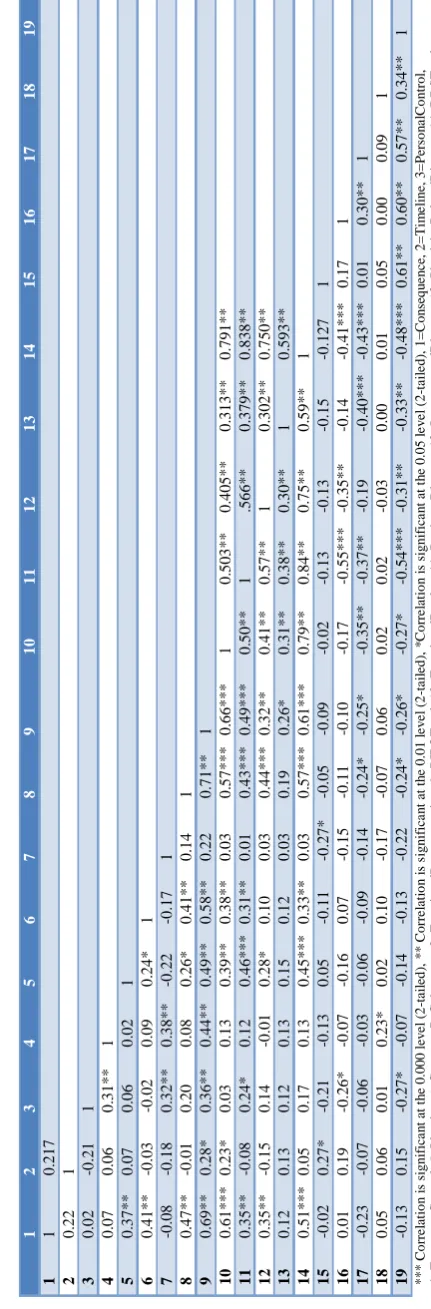
Multiple Pearson product-moment correlations were computed, Bonferroni correction (0.05/104) was employed to account for inflated type 1 error.36 Hence, a p value of 0.000 (two-tailed) is considered significant. The examined bivariate correlations coefficients are presented in Table 1.
There were several significant associations between BIPQ dimensions and subscales of DDS. Emotional burden was positively and strongly correlated with consequence, r (75)=0.61, p<0.000 and emotional representation, r (75)=0.57, p<0.000. Regimen distress showed moderately positive correlations with emotional representation r (75) =0.43, p<0.000; identity r (75) =0.46, p<0.000; and overall IP r (75)=0.49, p<0.000, while interpersonal distress was positively and moderately correlated with emotional representation r(75)=0.44, p<0.000. DDS Total showed moderately positive correlations with emotional representation, r (75) =0.57, p<0.000; consequence r(75) =0.51, p<0.000; and identity, r (75) =0.45, p<0.000.
Overall, these findings showed that participants, who (1) identified themselves as having more diabetic symptoms, (2) perceived more negative consequences from T2DM in their lives, and (3) had more negative emotions due to their diabetic condition were likely to experience higher overall diabetes distress, emotional burden, distress relating to their diabetes self-care regimen, and interpersonal distress.
Between DDS and DSMQ, DSMQ sum negatively correlated with both regimen distress r (75)=-0.54, p<0.000 and DDS total r (75)=-0.48, p<0.000. For the subscales of DSMQ, dietary control negatively correlated with both regimen distress r (75)=-0.55, p<0.000 and DDS total r (75)=-0.41, p<.000, while physical activity negatively correlated with DDS total r (75)=-0.43, p<0.000 only.
These findings reflected that most of the participants’ diabetes distress was related to their difficulties in managing their treatment regimen along with dietary control and physical activity.12
DISCUSSION
The present study explored primary care patients’ perception of their T2DM and its potential associations with diabetes distress and diabetes self-management in Singapore. Understanding associations among cognitive beliefs, emotional responses, and self-management behaviour of T2DM could help to guide clinical effort in enhancing diabetes management.
Although personal control was rated relatively low in this sample of patients, suggesting that they would attribute the causes of the outcomes of their diabetic condition to factors that they could not control (i.e., having an external locus of control), the participants reported reasonable self-management behaviour.35 This apparent conundrum might have resulted from the participants interpreting personal control to be their capacity to gain full recovery from diabetes rather than incremental improvements in dealing with this condition (i.e., self-management behaviour).36
This exploratory study did not track whether the participants had comorbidity with stressful medical conditions apart from T2DM or psychiatric conditions which might have complicated their measures of diabetes distress or self-management behaviour.
Further, the sample size of this study (n=73) was distinctly smaller than those in other related studies (100 <n<300).24,28,33 Post hoc power analysis in this study revealed low statistical power at 31% which was lower than the often reported 80% power for other studies using IP and DD with diabetic patients.37 Along with an overly conservative Bonferroni correction for type 1 error in multiple comparisons, this study might be underpowered to detect small or moderate-sized effects.38 This might partly explain the lack of significant correlations between BIPQ and DSMQ.
In retrospect, the acceptance rate in recruitment (i.e., the number of patients who participated in this study versus the number of patients who were invited to participate in it) was recognised as not having been monitored, leaving it unclear whether there was a sampling bias (e.g., some patients might have agreed to become participants for various situational reasons).
Research effort could explore diabetes self-management and illness perception by diabetes type (i.e., type 1 diabetes versus T2DM) in the future. Factors such as illness duration and severity were unexamined in this exploratory study and could also be included in future studies.
Health education for patients with T2DM may consider paying closer attention to illness perceptions regarding identity, consequence, and emotional representation as potentially useful targets for reducing diabetes distress and enhancing self-management behaviour. DSM education can be improved by aiming to not only disseminate technical information on T2DM and its management but also directly address and decrease feelings of helplessness, worries, and depressive symptoms.40
Finally, guiding diabetic patients in developing personalised action plans can also empower their sense of personal control and thereby reduce their maladaptive
perceptions, emotions, and behaviours in managing their diabetic condition.
ACKNOWLEDGEMENTS
This research was supported by the National Healthcare Group Polyclinics and James Cook University in Singapore.
Funding: No funding sources Conflict of interest: None declared
Ethical approval: The study was approved by the NHG DSRB reference number: 2016/01384
REFERENCES
1. International Diabetes Federation. Diabetes Atlas – Seventh Edition. Vol. 153, IDF. 2015;153:1772. 2. Spellman CW. Achieving glycemic control:
cornerstone in the treatment of patients with multiple metabolic risk factors. JAOA J Am Osteopath Assoc. 2009;109(5):8-13.
3. Schmitt A, Gahr A, Hermanns N, Kulzer B, Huber J, Haak T. The Diabetes Self-Management Questionnaire (DSMQ): Development and evaluation of an instrument to assess diabetes self-care activities associated with glycaemic control. Health Qual Life Outcomes. 2013;11(1):138. 4. Sanz C, Gautier JF, Hanaire H. Physical exercise for
the prevention and treatment of type 2 diabetes. Diabetes Metab. 2010;36(5):346–51.
5. Franz MJ, Monk A, Barry B, McClain K, Weaver T, Cooper N, et al. Effectiveness of medical nutrition therapy provided by dietitians in the management of non-insulin-dependent diabetes mellitus: a randomized, controlled clinical trial. J Am Diet Assoc. 1995;95(9):1009–17.
6. St John A, Davis WA, Price CP, Davis TME. The value of self-monitoring of blood glucose: a review of recent evidence. J Diabetes Complications. 2010;24(2):129–41.
7. Mayo-Gamble TL, Lin HC. Healthcare utilization and diabetes management programs: Indiana 2006-2010. Am J Manag Care. 2014;20:461-8.
8. Center for Control Disease and Prevention. National Diabetes Statistics Report. Natl Cent Chronic Dis Prev Heal Promot. 2014. Available at: https://www.cdc.gov/diabetes/pdfs/data/2014- report-estimates-of-diabetes-and-its-burden-in-the-united-states.pdf. Accessed on 3 September 2018. 9. Anderson RJ, Freedland KE, Clouse RE, Lustman
PJ. The prevalence of comorbid depression in adults with diabetes: A meta-analysis. Diabetes Care. 2001;24(6):1069-78.
10. Lustman PJ, Anderson RJ, Freedland KE, De Groot M, Carney RM, Clouse RE. Depression and poor glycemic control: A meta-analytic review of the literature. Diabetes Care. 2000;23(7):934–42. 11. Pintaudi B, Lucisano G, Gentile S, Bulotta A,
diabetes-related distress in type 2 diabetes: Findings from the benchmarking network for clinical and humanistic outcomes in diabetes (BENCH-D) study. J Psychosom Res. 2015;79(5):348–54.
12. Fisher L, Hessler DM, Polonsky WH, Mullan J. When is diabetes distress clinically meaningful? Establishing cut points for the diabetes distress scale. Diabetes Care. 2012;35(2):259–64.
13. Polonsky WH, Fisher L, Earles J, Dudl RJ, Lees J, Mullan J, et al. Assessing Psychosocial Distress in Diabetes. Diabetes Care. 2005;28(3):626–31. 14. Fisher L, Skaff MM, Mullan JT, Arean P, Mohr D,
Masharani U, et al. Clinical depression versus distress among patients with type 2 diabetes: Not just a question of semantics. Diabetes Care. 2007;30(3):542–8.
15. Chew B-H, Mohd-Sidik S, Shariff-Ghazali S. Negative effects of diabetes–related distress on health-related quality of life: an evaluation among the adult patients with type 2 diabetes mellitus in three primary healthcare clinics in Malaysia. Health Qual Life Outcomes. 2015;13(1):187.
16. Xu C, Zhang Li Y, Liu Q, Wu H, Xu Z, Gao Q, et al. Comparative study of the influence of diabetes distress and depression on treatment adherence in Chinese patients with type 2 diabetes: a cross-sectional survey in the People’s Republic of China. Neuropsychiatric Dis Treatment. 2013;9:1289-94. 17. Harvey JN, Lawson VL. The importance of health
belief models in determining self-care behaviour in diabetes. Diabetic Med. 2009;26:5–13.
18. Moss-Morris R, Weinman J, Petrie K, Horne R, Cameron L, Buick D. The revised Illness Perception Questionnaire (IPQ-R). Psychol Heal. 2002;17(1):1–16.
19. Leventhal H, Diefenbach M, Leventhal EA. Illness cognition: Using common sense to understand treatment adherence and affect cognition interactions. Cognit Ther Res. 1992;16(2):143–63. 20. Maier SF, Seligman ME. Learned helplessness:
Theory and evidence. J Exp Psychol Gen. 1976;105(1):3–46.
21. Taylor R, Barnes AC. Translating aetiological insight into sustainable management of type 2 diabetes. Diabetologia. 2018;61:273–83.
22. Broadbent E, Wilkes C, Koschwanez H, Weinman J, Norton S, Petrie KJ. A systematic review and meta-analysis of the Brief Illness Perception Questionnaire. Psychol Heal. 2015;30(11):1361–85. 23. Mc Sharry J, Moss-Morris R, Kendrick T. Illness perceptions and glycaemic control in diabetes: A systematic review with meta-analysis. Diabetic Med. 2011;28:1300–10.
24. Paddison C, Alpass FM, Stephens C V. Deconstructing distress: The contribution of cognitive patterns to elevated distress among people with type 2 diabetes. Eur Diabetes Nurs. 2007;4(1):23–7.
25. Paschalides C, Wearden AJ, Dunkerley R, Bundy C, Davies R, Dickens CM. The associations of anxiety,
depression and personal illness representations with glycaemic control and health-related quality of life in patients with type 2 diabetes mellitus. J Psychosom Res. 2004;57(6):557–64.
26. Voigt A, Madrid E, Pacheco-Huergo V, Rastello A, Castro D, Navarro-Brito I, et al. Association of glycaemia with perceived threat of illness in patients with type 2 diabetes. Prim Care Diabetes. 2015;9(6):426–31.
27. Hagger MS, Orbell S. A meta-analytic review of the common-sense model of illness representations. Psychol Health. 2003;18:141–84.
28. Fritschi C, Quinn L. Fatigue in patients with diabetes: A review. J Psychosomatic Res. 2010;69:33–41.
29. Bridges HA, Smith MA. Mediation by illness perceptions of the association between the doctor-patient relationship and diabetes-related distress. J Health Psychol. 2016;21(9):1956–65.
30. Goh CSY, Mohamed A, Lee YS, Loke KY, Wee HL, Khoo EYH, et al. The associations of self-care, illness perceptions and psychological distress with metabolic control in Singaporean adolescents with Type 1 Diabetes Mellitus. Heal Psychol Behav Med. 2016;4(1):1–14.
31. Broadbent E, Petrie KJ, Main J, Weinman J. The Brief Illness Perception Questionnaire. J Psychosom Res. 2006;60(6):631–7.
32. Broadbent E, Ellis CJ, Thomas J, Gamble G, Petrie KJ. Further development of an illness perception intervention for myocardial infarction patients: A randomized controlled trial. J Psychosom Res. 2009;67(1):17–23.
33. Huber JW, Hood G, Schmitt A, Fang M, Callender M, Hermanns N. Introducing an effective predictor of HbA1c for research and clinical care: the DSMQ (Diabetes Self-Management Questionnaire). Diabet Med. 2014;31(287):112.
34. Schmitt A, Reimer A, Hermanns N, Huber J, Ehrmann D, Schall S, et al. Assessing diabetes self-management with the diabetes self-self-management questionnaire (DSMQ) can help analyse behavioural problems related to reduced glycaemic control. PLoS One. 2016;11(3).
35. Büyükkaya Besen D, Günüşen N, Arda Sürücü H, Koşar C. Predictor effect of Locus Of Control (LOC) on self-care activities and metabolic control in individuals with type 2 diabetes. Peer J. 2016;4:e2722.
36. Van Oort L, Schröder C, French DP. What do people think about when they answer the brief illness perception questionnaire? A “think-aloud” study. Br J Health Psychol. 2011;16(2):231–45. 37. Islam M, Karim M, Habib S, Yesmin K. Diabetes
distress among type 2 diabetic patients. Int J Med Biomed Res. 2013;2(2):113–24.
39. Delahanty LM, Grant RW, Wittenberg E, Bosch JL, Wexler DJ, Cagliero E, et al. Association of diabetes-related emotional distress with diabetes treatment in primary care patients with Type 2 diabetes. Diabet Med. 2007;24(1):48–54.
40. Zagarins SE, Allen NA, Garb JL, Welch G. Improvement in glycemic control following a diabetes education intervention is associated with change in diabetes distress but not change in
depressive symptoms. J Behav Med. 2012;35(3):299–304.
Cite this article as: Quek J, Tan G, Lim K, Yap CK, Wong M, Soon J.Diabetes distress and