http://www.ijcmph.com pISSN 2394-6032 | eISSN 2394-6040
Original Research Article
Prevalence of chronic hepatitis B infection among residents of hilly
tribal district in northern India
Deepesh Barall
1*, Anmol Gupta
2, Brij Sharma
3, Salig R. Mazta
1, Sudhir Singh
2INTRODUCTION
Viral hepatitis is a systemic infection affecting predominantly the liver, caused by infection with one of the hepato-tropic viruses, hepatitis A through E.1 The cause of viral hepatitis B is a HBV (Hepatitis B virus), a type 1 DNA virus of a family Hepadnaviridae.
The course of hepatitis B may be extremely variable.2 The incubation period varies from 30–180 days. If HBsAg
(Hepatitis B surface antigen) remains positive for more than 6 months it is called chronic hepatitis B virus infection. The diagnosis of HBV infection is accomplished by testing for a series of serological markers of HBV.3 In absence of other tests, presence of HBsAg is usually taken as a marker for chronic HBV infection. HBeAg (Hepatitis B virus envelope antigen) is an indicator of active intra-hepatic viral replication therefore its presence in blood is a marker for its infectivity.
ABSTRACT
Background: Viral hepatitis B is a systemic infection affecting predominantly the liver, caused by hepatitis B virus. The similarity of hilly tribal’s in spiti and the Tibetans with documented high prevalence of HBsAg encouraged us to explore the burden of the hepatitis B infection in them as well. So the study was designed to document the prevalence of the chronic hepatitis B infection for timely intervention with the required prevention and control measures.
Methods: 30 cluster villages from the 82 inhabitated villages were taken with 37 samples from each cluster village. Data was collected using interview schedule. Serum samples were taken and subjected to sandwich ELISA for the detection of HBsAg and positive samples were tested for the HBeAg then after.
Results: The study included 1110 participants with 424 males. 99.7% of them were Buddhist and 98.5% belonged to Scheduled Tribe category. 60.1% were educated up to the middle and18% were illiterates. The prevalence of HBsAg was 21.9% (CI 19.6-24.6) with 22.6% in females and 20.9% in males. HBeAg was positive in 24.4% of HBsAg positive cases, higher in the 15-24 years age group and 30.5% in the reproductive females.
Conclusions: The current study has reported hyper endemic (21.9%) sero-prevalence of HBsAg with infectivity rate of 24.4%, more in the young and reproductive population. The infection is homogenously distributed among the Buddhist tribal population in the study area.
Keywords: HBsAg sero-prevalence, HBeAg sero-prevalence, Hepatitis B in lahaul Spiti, Hepatitis in Hilly tribal Buddhist community
Department of Community Medicine, 1Dr YSP Govt. Medical College, Nahan, 2Indira Gandhi Medical College, Shimla, Himachal Pradesh, India
3Department of Gastroenterology, Indira Gandhi Medical College, Shimla, Himachal Pradesh, India
Received: 12 April 2018
Revised: 24 May 2018
Accepted: 25 May 2018
*Correspondence:
Dr. Deepesh Barall,
E-mail: [email protected]
Copyright: © the author(s), publisher and licensee Medip Academy. This is an open-access article distributed under the terms of the Creative Commons Attribution Non-Commercial License, which permits unrestricted non-commercial use, distribution, and reproduction in any medium, provided the original work is properly cited.
In 1992 the World Health Organization (WHO) recommended the integration of hepatitis B vaccine in all countries of high HBV endemic rate.4 India started in the phased manner with Himachal in the second phase in 2008-09 and hepatitis B vaccine has been fully integrated into routine infant immunization schedule by the year 2011.
Lahaul Spiti is one of the two tribal districts of Himachal Pradesh with Lahaul and Spiti as its two tehsils. Spiti (means “The midland” i.e. the land between India and Tibet) is separated from Lahaul by the Kunzum pass (4596m) which remains snow bound and is inaccessible for most of the year.5 The region is a vast cold desert and stretches to almost 200 kms, while the population is scattered with average density of only 2 person/sq.km.6
The community has many similarities with the people on the opposite side of international border with Tibet, may it be the topography, dialects or their social and cultural festivities. History has also documented the trade and cultural exchanges between these areas.7
The practices of taking treatment from local Amchi
(traditional healer) are very common in this part of the state due to high value for their traditional and cultural mode of treatment. The custom of polyandry (fraternal) i.e. sharing one wife by all brothers is a distinct socio-cultural practice in the area.8
The similarity of our tribal’s and the Tibetans with documented high prevalence of HBsAg in the Tibet and the immigrants from this part of the worldencouraged us to explore the burden of the hepatitis B infection in them as well.9,10
So the present study was designed with the Department of Gastroenterology to document the prevalence of the chronic hepatitis B infection in this part of state and to timely intervene with the required prevention and control measures.
Objectives
To estimate the prevalence of HBsAg as a marker for Chronic Hepatitis B infection in the people of spiti tehsil in tribal district Lahaul Spiti in Himachal Pradesh, India.
To estimate the prevalence of HBeAg amongst the chronic HBV infected population as a marker of their infectivity.
To study the socio demographic characteristics of the study population.
METHODS
In the district Lahaul Spiti, the more remote and landlocked tehsil “Spiti” was our study area with its headquarter located at Kaza (Figure 1). The valley is
situated at an average elevation of 3,650 meters (11,980 ft) above mean sea level.11
Figure 1: Map of tehsil spiti in district Lahaul Spiti in Himachal Pradesh, India.
All permanent residents irrespective of their age and gender who were living in Kaza continuously for a period of past six months at the time of study and who gave consent and were found fit were included in the study. It was an observational epidemiological study with an analytical cross-sectional study design conducted from September 2015 to August 2016.
Sample size was calculated using Epi Info version 7 for population survey with the prevalence assumptions of 16% with confidence limit of 3%.12 Sample size was calculated to be 1096 with design effect of 2.0 for cluster sampling with 95% confidence interval. The sample size was rounded off to the nearest figure of 1110 for cluster uniformity.
We took 30 cluster villages from the 82 inhabitated villages (population of 11869 as per census data, 2011) with probability of their selection proportionate to the size of the population and 37 samples from each cluster village. List of the households were verified from the head of the village locally known as Lambardar.
First household was chosen randomly. Subsequent households were chosen nearest to previous one defined as the one reachable in the shortest time on foot from the last household just visited. In case of two or more equally near households, the one on the immediate right as one stood in the doorway looking out, was selected.13 Sample size was completed from the nearest adjacent village following the same method if there were lesser number of households in the village.
A pretested semi-structured interview schedule was used for collecting information. After the interview schedule, 5 ml of venous blood, following aseptic techniques and approved guidelines of sample collection was collected.14 It was systematically handled till separation of serum which was then vigilantly relabeled, stored and transported in cold chain at suitable temperature to Department of Microbiology at IGMC Shimla for further analysis.
Initially all the serum samples were subjected to sandwich ELISA (Enzyme Linked Immuno Sorbent Assay) technique for the qualitative detection of HBsAg using commercially available ERBA LISA Hepatitis B kits (Transasia Bio-Medicals Ltd.). Samples with an optical density equal to or more than the cut-off value were retested in duplicate before labeling as HBsAg positive. HBsAg positive samples were then after tested for the presence of HBeAg.
All the ethical issues related to the study were presented before the institutional ethical committee and the study was commenced only after their due approval. All the wastes generated were separately collected, stored and disposed following the latest standard guidelines of biomedical waste management.15
The information collected was transferred to Microsoft excel software. Descriptive statistics, frequency percentages were determined for categorical variables. Mean, median and range were calculated along with standard deviations and IQR. Percentage prevalence was calculated for each categorical variable with 95% confidence interval. A p value of <0.05 was considered as statistically significant. The statistical analysis was done using statistical software EPI INFO for Windows version 7.0.
RESULTS
This study included 1110 participants out of which 424 were the males. The youngest participant was 15 days old male child and the eldest was 90 years old female.
Table 1: Age and gender wise distribution of study participants.
Age group (in completed years)
Males (%) Females (%) Total (%)
0 to 4 10 (2.4) 10 (1.5) 20 (1.8)
5 to 14 99 (23.4) 129 (18.8) 228 (20.5)
15 to 24 64 (15.1) 122 (17.8) 186 (16.7)
25 to 34 64 (15.1) 132 (19.3) 196 (17.6)
35 to 44 70 (16.5) 108 (15.7) 178 (16.1)
45 to 54 71 (16.7) 114 (16.6) 185 (16.7)
55 to 64 31 (7.3) 41 (5.9) 72 (6.5)
65 and above 15 (3.5) 30 (4.4) 45 (4.1)
Total 424 (38.2) 686 (61.8) 1110
Table 2: Measures of dispersion and central tendency of study population.
Male Female Total
Mean age* 31.21 31.93 31.65
SD* 18.24 17.59 17.84
Median age* 31 30 30
IQR* 14-45.5 16.5-45.5 15-45
Range* 0.04-79 1-90 0.04-90
* In years
Almost all of them were Buddhist (99.7%) and belonging to Scheduled Tribe category (98.5%). Majority had the education only up to the middle standard (60.1%) and illiterates contributing to almost 18% of the population. 57.1% were married but only one in every 5 (19.9%) was currently living with the sexual partner (spouse or other). Majority of the people depends on agriculture for their livelihood.
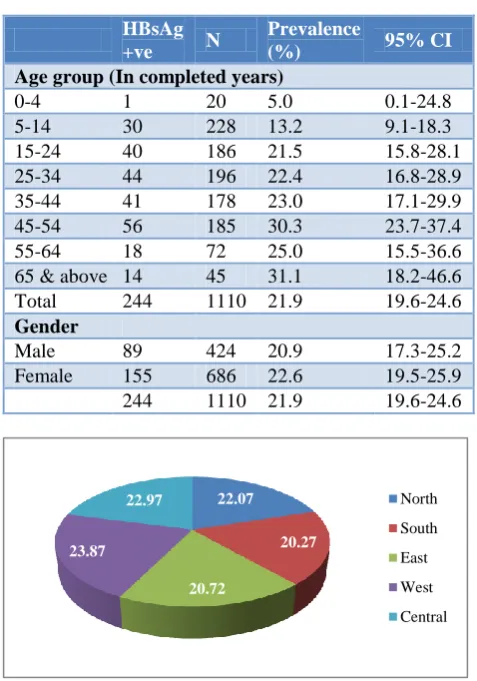
Table 4: Age and gender wise sero-prevalence of HBsAg.
HBsAg
+ve N
Prevalence
(%) 95% CI
Age group (In completed years)
0-4 1 20 5.0 0.1-24.8
5-14 30 228 13.2 9.1-18.3
15-24 40 186 21.5 15.8-28.1
25-34 44 196 22.4 16.8-28.9
35-44 41 178 23.0 17.1-29.9
45-54 56 185 30.3 23.7-37.4
55-64 18 72 25.0 15.5-36.6
65 & above 14 45 31.1 18.2-46.6
Total 244 1110 21.9 19.6-24.6
Gender
Male 89 424 20.9 17.3-25.2
Female 155 686 22.6 19.5-25.9
244 1110 21.9 19.6-24.6
Figure 2: Zone wise prevalence.
The prevalence of HBsAg in our study was 21.9% overall (CI 19.6-24.6). Female population had 22.6% point prevalence, which was slightly higher than in males (20.9%).
22.07
20.27
20.72 23.87
22.97 North
South
East
West
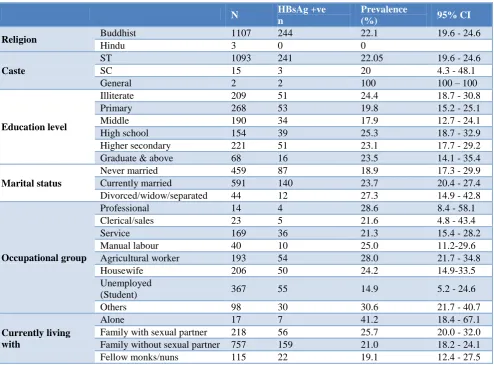
Figure 3: Cluster wise HBsAg positive cases (Prevalence %). Table 5: Socio-demographic variables wise prevalence of HBsAg.
N HBsAg +ve
n
Prevalence
(%) 95% CI
Religion Buddhist 1107 244 22.1 19.6 - 24.6
Hindu 3 0 0
Caste
ST 1093 241 22.05 19.6 - 24.6
SC 15 3 20 4.3 - 48.1
General 2 2 100 100 – 100
Education level
Illiterate 209 51 24.4 18.7 - 30.8
Primary 268 53 19.8 15.2 - 25.1
Middle 190 34 17.9 12.7 - 24.1
High school 154 39 25.3 18.7 - 32.9
Higher secondary 221 51 23.1 17.7 - 29.2
Graduate & above 68 16 23.5 14.1 - 35.4
Marital status
Never married 459 87 18.9 17.3 - 29.9
Currently married 591 140 23.7 20.4 - 27.4
Divorced/widow/separated 44 12 27.3 14.9 - 42.8
Occupational group
Professional 14 4 28.6 8.4 - 58.1
Clerical/sales 23 5 21.6 4.8 - 43.4
Service 169 36 21.3 15.4 - 28.2
Manual labour 40 10 25.0 11.2-29.6
Agricultural worker 193 54 28.0 21.7 - 34.8
Housewife 206 50 24.2 14.9-33.5
Unemployed
(Student) 367 55 14.9 5.2 - 24.6
Others 98 30 30.6 21.7 - 40.7
Currently living with
Alone 17 7 41.2 18.4 - 67.1
Family with sexual partner 218 56 25.7 20.0 - 32.0
Family without sexual partner 757 159 21.0 18.2 - 24.1
Fellow monks/nuns 115 22 19.1 12.4 - 27.5
There is almost uniform prevalence (20.27% - 23.87%) in all the descriptive five zones of the tehsil but there were intra zonal variation between the clusters in a particular zone (Figure 3).
The prevalence was higher among the illiterates (24.4%). With the attainment of education, the one getting higher education had marginally higher prevalence. It was also higher in married people (23.9%). Prevalence was high in
7 5
8 10 7 12
7 4
14
7 9 4
9 10 7
10
6 4
3 14
6 12 13
5 8
4 15
4 10 10
0 5 10 15 20 25 30 35 40 45
people living alone (41.2%) with males living alone having a significant prevalence {p 0.01, OR 6.58 (CI 1.54-28.11)}. All the positive cases were Buddhist and except for the 3 cases that belonged to SC category; all positive cases (241) were from ST category. Married individuals had more prevalence than the unmarried one. People from all classes of occupation were infected although those involved in agriculture were the maximum (n=54). Young school going children (n=54) and the housewives (n=48) were the next most vulnerable group. Comparing employed individuals with unemployed, employed individuals had significantly higher prevalence.
HBeAg sero- prevalence
Out of 244 HBsAg positive cases, we could test HBeAg status for 201 cases only. In rest of the cases, there were not sufficient sample to carry out further tests.
Overall, HBeAg is positive in 24.4% of HBsAg positive cases. Sero prevalence of HBeAg is 26.7% in females and 20.0% in males. It is higher in the younger age group (significant in 15-24) and 30.5% in the reproductive age groups (more so in females).
Figure 4: Current living partner and seroprevalence of HBsAg (%).
Table 6: HBeAg prevalence in HBsAg positive individuals (n=201).
HBeAg +ve
HBsAg +ve
Prev
(%) 95% CI P value
Odds
Ratio 95% CI
Age group
0-4 1 1 100 100-100 0.24 Undef
5-14 8 22 36.4 17.2-59.3 0.19 1.92 (0.75-4.91)
15-24 18 36 50.0 32.9-67.0 <0.001 4.32 (2.01-9.25)
25-34 8 38 21.1 9.5-37.3 0.67 0.79 (0.33-1.86)
35-44 7 34 20.6 8.7-37.9 0.66 0.77 (0.31-1.91)
45-54 6 44 13.6 5.2-27.3 0.07 0.41 (0.16-1.06)
55-64 1 14 7.2 0.2-33.8 0.19 0.22 (0.02-1.74)
65 & Above 0 12 0.0 -NA- 0.04 Undef
Total 49 201 24.4 18.6-30.9 <0.001
Gender Female 35 131 26.7 19.4-35.1 0.30 1.46 (0.72-2.94)
Male 14 70 20 11.4-31.3
DISCUSSION
This study provided an up-to-date assessment of the status of chronic hepatitis B infection in the study area during the year 2015. To our knowledge, this is the first community-based study ever conducted in our state.
The tribal population of the country, as per 2011 census, is 10.43 crores, constituting 8.6% of the total population. 89.97% of them live in rural areas and 10.03% in urban areas across all the states.16 The current study has reported the HBsAg sero-prevalence of 21.9% in the study population. Similar study done in the Idu Mishmi tribe of arunachal Pradeshhad the prevalence of 21.2%.17 Similarly the prevalence was 22.2% in mongloid tribe of Andaman.18 The reported HBsAg prevalence ranged from 1.86% among the tribes of Kolli Hill area of Tamil nadu to 65.60% among the Jarawa tribes in the Andaman islands.19 Also the systematic review and meta-analysis estimated the point-prevalence of hepatitis B among Indian tribal populations as 11.85% (CI 10.76 -12.93).20,21 So the prevalence reported in our study further strengthen the earlier analogous reports of need to explore high
prevalence of HBV infection in the schedule tribes beside effective implementation and monitoring of the vaccination program to tackle the challenges of infection in these impoverished areas.
Other community based studies across the globe have reported 15.2% in the five primitive tribal groups of Orissa, 14.8% in yupik Eskimos in Alaska and 9.75% in the china.22-24 Other studies have reported the prevalence of 6.6% in Mexico,2.97% in the West Bengal and 2.1% in HIV negative adults of Kenya.25-27 All these studies reporting prevalence different than in our study could be due to difference in the characteristics of the study population and sampling methods.
In our study, 61.8% participants were females, higher than the expected as per the census report of the district (46.3%, census 2011). It is similar to the study in Mexico by Cisneros et al (65%). The difference in gender composition in our study was statistically significant (p value 0.03, chi sq. 5.12) and can be explained on the fact that majority of the families in our study area are having dual households at separate places (mainly in the
21
25.7
19.1 41.2
Current living partner (%)
Family without sexual partner
Family with sexual partner
Fellow monks/ Nun/ friends
neighboring districts) due to better education or occupation amenities. Also, we visited the households in the day time when most of adult males are usually out of their home for work or other reasons. We strictly followed the protocol of participant selection as defined in the methodology and the enrollment of higher proportion of females in our study was totally factual and unbiased. It only added to the number of households we had to visit to complete our sample size in a cluster without disturbing much the heterogeneity of the sample. Also the literature has clearly stated of having no sex predilection for the HBV infection although the clearance is better in females.
The infection is homogenously distributed in the study area as most of them belong to the same ethnic group and follows the similar cultural practices. Hipgrave et al studied along the same thought in rural Vietnam but found that the districts and ethnicity was not having significant association.28 Whereas Ulrich V et al found the significant association between the ethnic and socio-geographical differences in the tribes of Central Africa.29
The tribal residents of this area had socio-cultural interaction in the past with the people living in adjoining areas of the Tibet across the international border. The infection could have possibly made its way through these interactions as the prevalence of 9.8% had been once reported by the study in Tibet.30 Also a recent study on Tibetan refugees in India has shown the prevalence of 11.9% in them.31
There are limited educational facilities in the area with two-third of the study population having the education level only up to 8th standard. It is substantiated by the only government senior secondary school in the tehsil headquarters. Those willing to get the education have to live away from home in either hostels or monasteries. Here the environmental and socio-economic conditions are compromised keeping them at the risk of infection. The result of our study also supports the fact with higher prevalence of HBsAg infection in the people with higher educational qualification similar to the observation made in South China.24
Majority of the adults in the valley depend on the only seasonal pea farming for their livelihood and their low socioeconomic condition compel them to live in overcrowded and poor living conditions. High prevalence in this category of occupation was also observed in South China.
In our study, the prevalence of infection significantly increases as the age advances. It is consistent and similar to the observation made by various researchers in their respective studies e.g. in the tribals of Tripura, Alaska, rural Vietnam and in Mexico. It is in contrast to the observation in Ghana where the prevalence was higher in the younger age group. The lower prevalence in the younger age group in our study can be the positive
outcome of induction of vaccine in the national immunization schedule, reducing the chances of childhood infection and thereby the chronic course of the infection. Persistence of infection in the later age groups may be due to the chronic course of infection acquired early in their life as they had no access to vaccination then. The infection was also maintained through other modes of transmission in the adults like unsafe sexual and treatment practices explained by the high infectivity in the young and reproductive population.
However, a better picture of the transmission dynamics, either vertical or horizontal within this closed community will come up only after a detailed investigation for the risk and other associated factors.
We recommended the vaccination for all who are still not infected after due screening along with strengthening of the existing health care for effective implementation of child immunization, screening of all antenatal mothers and ensuring availability of immunoglobulin’s and vaccine at every delivery point. It was further stressed for the need of extensive IEC activities to improve the knowledge and awareness of general public along with treatment, BCC and rehabilitative facilities for the infected people. All these recommendation were adopted and implemented by the National Health Mission of the state.
ACKNOWLEDGEMENTS
Sincere thanks to the people and health volunteers of the spiti for their support and hospitality to make it always feel at home despite being away from my family.
Funding: National Health Mission, Ministry of Health and Family Welfare, Government of Himachal Pradesh Conflict of interest: None declared
Ethical approval: The study was approved by the Institutional Ethics Committee
REFERENCES
1. Directorate General of Health Service, Ministry of Health & Family Welfare Government of India. Viral Hepatitis- the Silent Disease Facts and Treatment Guidelines. Available at: http://www. ncdc.gov.in/writereaddata/linkimages/guideline_hep 20158117187417.pdf. Accessed on 07 September on 2015.
2. Robinson WS. Hepatitis b virus and hepatitis d virus. In: Mandell GL, Bennett JE, Dolin R, eds. Principles and practice of infectious diseases, 4th Ed. New York: Churchill Livingstone; 1995: 1406-1439.
3. Krajden M, McNabb G, Petric M. The laboratory diagnosis of hepatitis B virus. Can J Infect Dis Med Microbiol. 2005;16(2):65–72.
4. The children’s vaccine initiative and the global
Recommendations from the special advisory group of experts. Part 1. Weekly Epidemiol Rec. 1996;71:269-73.
5. Kapadia H. Siachen Glacier: The Battle of Roses. New Delhi: Rupa publication; 1999: 209.
6. Deputy Commissioner Lahaul and Spiti at Keylong. Himachal Pradesh. Fact file, Lahaul and Spiti. Available at: http://hplahaulspiti.nic.in/fact_file.htm. Accessed on 07 September 2015.
7. Ahluwalia MS. Social, cultural and economic history of Himachal Pradesh. New Delhi: Indus Publishing Company; 1998: 89.
8. Xin C. Polyandry families in Tibet. 2016. Available at: http://www.tibettravel.org/tibetan-people/ polyandry -in-tibet.html. Accessed on 07 September on 2016.
9. Zhao S M, Hong-Chuan L, Hong L, Lu XX, Xiao-Feng Y, DangHui G, et al. High Prevalence of HBV in Tibet, China. Asian Pacific J Cancer. 2001;2:299-304.
10. Timothy D, Margaret D, Elia J, Wangchuk T, Palmo T, Tenzin T, Ngawang T. Perspectives on Hepatitis B in Tibetan Refugee Communities. 2015; Available at: http://tibetanhealth.org/wp-content/ uploads/2016/05/Perspectives-on-Hepatitis-B-in-Tibetan-Refugee-Communities.pdf. Accessed on 07 September on 2017.
11. Kaza, Himachal Pradesh. In Wikipedia, The Free
Encyclopedia. 2016; Available at:
https://en.wikipedia.org/w/index.php?title=Kaza,_H imachal_Pradesh&oldid=740790409. Accessed on 10 August on 2016.
12. Undocumented report from the office of Block Medical Officer Kaza.
13. Wanga LS, Sappirie S, Steinglass R, Stroh G, Wylie A. Immunisation coverage cluster survey- reference manual. World Health Organisation Document Production Services. Geneva. 2005;21.
14. WHO Library Cataloguing-in-Publication Data. WHO guidelines on drawing blood: best practices in phlebotomy. Bloodletting – standards. Phlebotomy – standards. Needlestick injuries – prevention and control. Guidelines. World Health Organization. 2010.
15. Gazette of India. Government Of India Ministry of Environment, Forest and Climate Change. Bio-Medical Waste Management Rules, 2016. 2016; Extraordinary, Part II, Section 3, Sub-section (i). Available at: http://mpcb.gov.in/biomedical/ pdf/BMW_Rules_2016.pdf. Accessed on 09 August on 2016.
16. Demographic Status of Scheduled Tribe Population and its distribution; 2016. Available at tribal.nic.in/WriteReadData/userfiles/file/Scheduled TribesData/Section1.pdf. Accessed on 07 September on 2016.
17. Biswas D, Borkakoty BJ, Mahanta J, Jampa L, Deouri LC. Hyperendemic Foci of Hepatitis B Infection in Arunachal Pradesh, India. J Assoc Physicians India. 2007;55:701-4.
18. Murhekar MV, Murhekar KM, Arankalle VA,
Sehgal SC. Epidemiology of hepatitis B infection among the Nicobarese - A mongoloid tribe of the Andaman and Nicobar Islands, India. Epidemiol Infect. 2002;128(3):465–71.
19. Murhekar M V, Zodpey S P. Hepatitis B virus infection among Indian tribes: need for vaccination program. Indian J Gastroenterol. 2005;24(6):269-70. 20. Batham A, Narula D, Toteja T, Sreenivas V, Puliyel JM. Systematic Review and Meta-analysis of Prevalence of Hepatitis B in India. Indian Pediatr. 2007;44(9):663-74.
21. Batham A, Gupta MA, Rastogi P, Garg S, Sreenivas V, Puliyel JM. Calculating Prevalence of Hepatitis B in India: Using Population Weights to Look for Publication Bias in Conventional Meta-analysis. Indian J Pediatr. 2009;76(12):1247-57.
22. Dwibedi B, Sabat J, Lal MH, Singh S P, Sahu P, Arora R, Shantanu KK. Molecular epidemiology of hepatitis B virus in primitive tribes of Odisha,
eastern India. Pathog Glob Health.
2014;108(8):362–8.
23. McMahon BJ, Alward WL, Hall DB, Heyward WL,
Bender TR, Francis DP, et al. Acute hepatitis B virus infection: relation of age to the clinical expression of disease and subsequent development of the carrier state. J Infect Dis. 1985;151:599–603. 24. Fangfang Z, Pi Go, Yun H, Wei X, Zhicheng D,
Shuming Z et al. Epidemiology of hepatitis B virus infection: results from a community-based study of 0.15 million residents in South China; 2016. Available at: http://www.nature.com/articles/ srep36186. Accessed on 10 August on 2016. 25. Cisneros CM, Hernández RL, Ibarra RIE, Fernández
GRH, Escobedo DLPJ. Prevalence of hepatitis B virus infection and related risk factors in a rural community of Mexico. Am J Trop Med Hyg. 2001;65(6):759-63.
26. Ghosh S, Banerjee P, Choudhury AR, Sarkar S, Ghosh A, Santra A, et al. Unique Hepatitis B Virus Sub genotype in a Primitive Tribal Community in Eastern India. J. Clin. Microbiol. 2010;48(11):4063-71.
27. Kathleen NL, Andrea AK, Mamo U, Drobenuic J, Williamson JM, Montgomery JM. Prevalence of Hepatitis B Virus Infection in Kenya, 2007. Am J Trop Med Hyg. 2016;95(2):348-53.
28. Hipgrave DB, Nguyen TV, Vu MH, Hoang TL, Do
TD, Tran NT, et al. Hepatitis B infection in rural Vietnam and the implications for a national program of infant immunization. Am J Trop Med Hyg. 2003;69(3):288-94.
29. Ulrich V, Judith MH, Aubin B, Alexandre M, Claude PM. Cross-sectional study of hepatitis B virus infection in rural communities, Central African Republic. BMC Infect Dis. 2013;13:286.
30. Zhao SM, Li HC, Lou H, Lu XX, Yu XF, Gao DH,
31. Stevens K, Palmo T, Wangchuk T, Solomon S, Dierberg K, Hoffmann CJ. Hepatitis B prevalence and treatment needs among Tibetan refugees residing in India. J Med Virol. 2016;88(8):1357-63.