Original Research Article
Identification of an anthropometric surrogate to low birth weight in
newborns: a hospital based cross sectional study
Rajesh Neeluri
1, Kiran Pamarthi
2*
INTRODUCTION
Low birth weight (LBW) is a major problem in developing countries. Birth weight in particular is strongly associated with foetal, neonatal and post-neonatal mortality and with infant and child morbidity. Low birth weight infants are approximately 20 times more likely to die than normal birth weight babies.1 Babies born with a weight less that 2500 g are labeled as “low birth weight (LBW)” babies.2
In India prevalence of low birth weight is very high and constitutes a major problem. About 28% babies in India are LBW as opposed
to about 5-7% of newborns in the west. According to Indian new born action plan (INAP, Government of India, 2014) India accounts for more than 40% of the global burden of low birth weight babies with 7.5 million LBW babies (or 30% of the country’s total annual live births). Over 80% of all neonatal deaths, in both the developed and developing countries, occur among the LBW babies.3
Low birth weight babies have less chances of survival during first year of life and those who survive have high risk of developmental disorders like mental retardation and also poor performance at school.4 Appropriate and
ABSTRACT
Background: Low birth weight babies have less chances of survival during first year of life.Appropriate and timely care of a newborn especially if he is born with low birth weight is important but this is difficult in developing countries. There is a need to develop simple, inexpensive and practical methods to identify low birth weight newborns soon after birth.
Methods: A hospital based Cross sectional study was carried out on 965 live born neonates who were born during one year period. All the anthropometric measurements are taken within 24 hours of birth. Pearson’s correlation was done to assess correlation of various anthropometric parameters with birth weight.
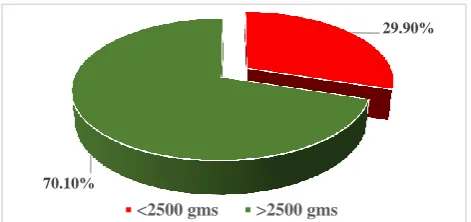
Results: Out of 965 live born neonates, 510 (52.8%) were male babies and 455 (47.2%) were female babies. 289 (29.9%) babies had birth weight less than 2500 gms. The highest correlation among all measurements was observed between birth weight and mid arm circumference while the least correlation was between birth weight and crown heel length. AUC value for ROC curves is highest for Mid arm circumference (0.917) which shows that it is a better surrogate predictor of low birth weight (<2500 gms) in our study as compared to other anthropometric parameters.
Conclusions: Measurement of mid arm circumference is easier, convenient and statistically superior to other anthropometrical parameters in detection of low birth weight newborn babies.
Keywords: Low birth weight, Anthropometry, mid arm circumference, Newborn
Department ofCommunity Medicine, 1Deccan College of Medical Sciences, Hyderabad, Telangana, 2NRI Institute of Medical Sciences, Visakhapatnam, Andhra Pradesh, India
Received: 03 March 2018
Revised: 02 April 2018
Accepted: 03 April 2018
*Correspondence:
Dr. Kiran Pamarthi,
E-mail: [email protected]
Copyright: © the author(s), publisher and licensee Medip Academy. This is an open-access article distributed under the terms of the Creative Commons Attribution Non-Commercial License, which permits unrestricted non-commercial use, distribution, and reproduction in any medium, provided the original work is properly cited.
timely care of a low birth weight newborn is important but this is difficult in developing countries like India where almost 70-80% births take place either at home or at peripheral hospitals where recording birth weight accurately is a problem due to unavailability of weighing scale and trained personnel. Even if we provide weighing scales at such places it has problems like carrying a heavy scale, as well as inability of traditional birth attendants to read them accurately as they are untrained.5 In a lancet series on neonatal survival, evidence from middle income and low income countries shows that, if extra care is given for low birth weight infants like extra warmth, hygiene and feeding it can bring down neonatal mortality by 20–40%.6 Hence, there is a constant search for newer methods which are simple, practical and inexpensive to detect low birth weight babies so that early intervention can be instituted. Anthropometric parameters can be used as surrogates to identify LBW babies. If a correlation could be found out between birth weight and anthropometric parameters and cut off values are defined, they could serve as surrogate markers of birth weight, when it is not possible to determine birth weight in difficult settings.
The objectives of the present study were: a) To determine the correlation between anthropometric parameters such as crown heel length, head circumference, chest circumference, mid-arm circumference, thigh circumference, calf circumference with birth weight of newborn babies. b) To determine if these anthropometric parameters can be used as a screening tool for detecting low birth weight babies on the basis of a cut-off level.
METHODS
A hospital based Cross sectional study was carried out in the Department of Obstetrics and Gynecology, Mamata General Hospital, Khammam on 965 live born neonates who were born during one year period from October 2011 to September 2012. All the consecutive live born neonates delivered at the hospital during one year were considered as the study population. However babies with major congenital malformations and/or birth injuries and babies who are sick requiring NICU admission were excluded. All the anthropometric measurements are taken within 24 hours of birth by the investigator to avoid any interpersonal measurement error. All anthropometric measurements are taken with the newborn lying down in supine position to the nearest 0.1 cms. Equipments used during the study were of flexible, non-stretchable measuring tapes, electronic weighing machine, and infantometer.
Birth weight
Babies were weighed naked. Birth weight was recorded to the nearest of 5 g. Periodical checking of the scale was done using a set of standard weights. Birth weight less than 2500 g was defined as low birth weight.
The following anthropometric measurements were taken on left side of body according to standard techniques described by Jellife.7
Crown heel length: The baby's supine crown-heel length was recorded by placing him in an infantometer, with knees fully extended and soles of feet held firmly against the foot board.
Head circumference: The head circumference was measured by using a flexible non-stretchable tape anteriorly at the glabella, posteriorly along the most prominent points.
Chest circumference: The chest circumference was measured at the level of nipples.
Mid-arm circumference: The mid-arm circumference was measured in the left arm at the point midway between tip of the acromion process and the olecranon process of ulna.
Thigh circumference: In supine infants, the maximum thigh circumference recorded at the level of the lowest furrow in the gluteal region with the tape being placed perpendicular to the long axis of the lower limb.
Calf circumference: The calf circumference was measured at the most prominent point in semi flexed position of the leg.
The study was initiated after obtaining approval of the institutional ethics committee. Informed consent was taken from the parents. Data was entered, validated and analysed using Statistical Package for Social Sciences (SPSS) software version 20. Continuous variables are reported as mean and standard deviation while categorical variables are given as number or percentages. Pearson’s correlation was done to assess correlation of various anthropometric parameters with birth weight. Receiver operating characteristic (ROC) curves were used to evaluate the accuracy of different anthropometric measurements to predict LBW coded as dichotomous (1=yes; 0=no). For validity testing, the sensitivity and specificity values were calculated at serial cut-off points. To define the cut-off point which best discriminates between low birth weight and normal birth weight, the value which yielded the highest accuracy, or percentage of correct classification was determined. P<0.05 was considered as significant and value p<0.01 was considered as highly significant.
RESULTS
age (AGA). 289 (29.9%) babies had birth weight less than 2500 g i.e., low birth weight and 676 (70.1%) babies had birth weight more than 2500 g.
The birth weight of the newborns ranged from 1400-3900 g. The mean birth weight of the study group was 2667.44±365.65 g.
Table 1: Mean, standard deviation and range of the study population for various parameters.
Variable (N=965) Mean Std. dev Range Minimum Maximum
CHL (cm) 49.008 1.48 20 41 61
HC (cm) 34.089 1.28 9 29 38
CC (cm) 31.403 1.37 9 27 36
MAC (cm) 10.623 0.99 4 8 12
TC (cm) 15.438 0.97 7 12 19
Ca C (cm) 10.559 0.90 5 8 13
CHL: Crown Heel Length, HC: Head Circumference, CC: Chest circumference, MAC: Mid arm Circumference, TC: Thigh circumference, Ca C: Calf Circumference.
Table 2: Correlation of birth weight with various anthropometric measurements.
Anthropometric variable Pearson correlation (r) P value
CHL 0.549 0.001
HC 0.710 0.001
CC 0.609 0.001
MAC 0.845 0.001
TC 0.777 0.001
Ca C 0.833 0.001
Table 3: Area under the curve values for ROC curves of various anthropometric measurements.
Variables Area under
curve P value
95% Confidence Interval
Lower Bound Upper Bound
CHL 0.765 0.001 0.730 0.800
HC 0.870 0.001 0.848 0.892
CC 0.823 0.001 0.796 0.850
MAC 0.917 0.001 0.900 0.933
TC 0.874 0.001 0.853 0.896
Ca C 0.912 0.001 0.893 0.930
Table 1 shows the descriptive statistics of various anthropometric parameters of the study group.
Figure 1: Low birth weight babies among the study population.
Table 2 shows the correlation of birth weight to anthropometric measurements.
The 'r' value of crown heel length is 0.549, for head circumference it is 0.710, for chest circumference it is 0.609, for the mid arm circumference it is 0.845, for thigh circumference it is 0.777 and for calf circumference it is 0.833. All the co-relations are statistically highly significant (p<0.01). The highest correlation among all measurements was observed between birth weight and mid arm circumference while the least correlation was between birth weight and crown heel length.
From Table 3 it is evident that AUC value for ROC curves is highest for Mid arm circumference (0.917) which shows that it is a better surrogate predictor of low birth weight (<2500 g) in our study as compared to other anthropometric parameters.
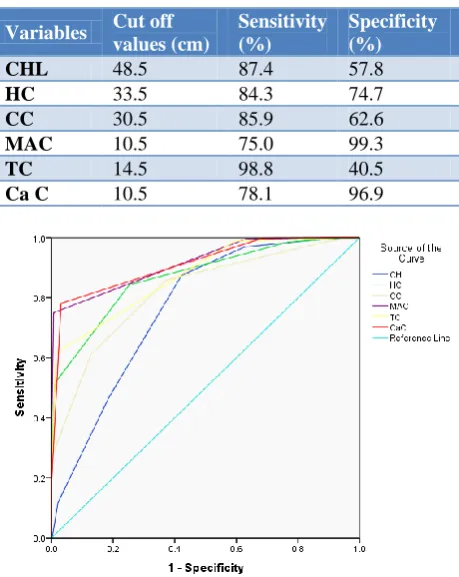
Table 4 shows the best cut off points of various anthropometric indicators for detecting neonates with birth weight less than 2500 g.
29.90%
70.10%
Table 4: Best cut-off points of anthropometric indicators for detecting neonates with birth weight
less than 2500 g.
Variables Cut off values (cm)
Sensitivity (%)
Specificity (%)
CHL 48.5 87.4 57.8
HC 33.5 84.3 74.7
CC 30.5 85.9 62.6
MAC 10.5 75.0 99.3
TC 14.5 98.8 40.5
Ca C 10.5 78.1 96.9
Figure 2: Receiver operating characteristic curve for various anthropometric measurements.
Figure 2 shows ROC curves for various anthropometric measurements. The diagonal line is the reference line.
DISCUSSION
The high incidence of LBW and increased mortality rate is one of the important contributory factors for high-infant mortality rate in India. It is important to assess the risks involved with low birth weight like electrolyte imbalances, blood disorders, hypothermia and renal insufficiency so that we can refer them to higher centers for care in case of at risk babies.8 As surrogate anthropometric measure to determine low birth weight babies is different in different populations, it has to be determined for individual population groups. There was a need to determine best parameter in this region of country so that it can be applied in local community settings. In our study 965 live born neonates were enrolled, out of which Male babies were 510 (52.8%) as compared to female babies 455 (47.2%). The findings of the present study are similar to studies done by Taksande et al (52.2% males, 47.8% females), Negar Sajjadian et al (52.2% male and 47.8% female), LC Mullany et al (50.1% male and 49.9% females), Suneetha et al (51% males and 49% females) where proportion of male babies was more than female babies.9-12
Regarding birth weight of newborn babies it was found that 289 (29.9%) babies had birth weight less than 2500gms i.e., low birth weight and 676 (70.1%) babies had birth weight more than 2500gms in our study. In the present study, the prevalence of LBW was high (29.9%) compared to NFHS 3 data. According to NFHS 3 data LBW in India was 21.5% and Andhra Pradesh was 19.4%.13 The high prevalence rate can be because our medical college at Khammam being a referral hospital, receives high risk pregnancy cases from local PHCs and area hospitals and mothers who undergo delivery here are mostly from low socio economic class. Kumarreported a similar prevalence of LBW (29%).14 However in studies done by Taksande et al, Suneetha et al, Noor et al,Juneja et aland Nairhave reported high prevalence of low birth weight as compared to our study.9,15,12,16,17
The mean birth weight of the study group was 2667.44±365.65 g. The birth weight of the newborns ranged from 1400-3900 g. Similar findings were reported by the studies done by Jyothi et al and Suneetha et al where the mean birth weight was 2592 g and 2636 g respectively.18,12 It is also comparable to the studies done by Diamond et al, Kamaladoss and Huque et al.19-21 Comparison of anthropometric parameters of our study with other studies:
Crown heel length
Correlation value for crown heel length was 0.549 in our study. This value is less as compared to other studies quoted in the above table.
Cut off value for crown heel length in the present study was 48.5 cm with 87.4% sensitivity and 57.8% specificity for birth weight below 2500 g. Similar cut off values were reported by Sajjadian et aland Das et al.10,22
Head circumference
Correlation value for head circumference was 0.71 in our study. Higher correlation value was reported by Kadam et al and Das et al.23,22
Cut off value for head circumference in the present study was 33.5 cm with 84.3% sensitivity and 74.7% specificity for birth weight below 2500 g. Similar cut off values were reported by Kadam et al, Das et al and Jyothi et al.23,22,18
Chest circumference
were reported by Kadam et al, Das et al and Huque et al.21-23
Mid arm circumference
Correlation value for mid arm circumference was 0.845 in our study. Similar values were reported by Ramji et al.24 Also it was found that it was more as compared to correlation values from other studies.
Cut off value for mid arm circumference in the present study was 10.5 cm with 75% sensitivity and 99.3% specificity for birth weight below 2500 g. Similar cut off values were reported by Sajjadian et aland Nair et al.10,17
Thigh circumference
Correlation value for thigh circumference was 0.777 in our study. Similar values were reported by Raman et al.25 Cut off value for thigh circumference in the present study was 14.5 cm with 98.8% sensitivity and 40.5% specificity for birth weight below 2500 g. Similar cut off values were reported by Huque et al.21
Calf circumference
Correlation value for calf circumference was 0.848 in our study. Similar values were reported by Kadam et aland Jyothi et al.18,23
Cut off value for calf circumference in the present study was 10.5 cm with 78.1% sensitivity and 96.9% specificity for birth weight below 2500 g. Similar cut off values were reported by Das et al and Jyothi et al.22,18
Among all anthropometric measurements, it was found that correlation coefficient value and AUC value to detect LBW babies was highest for mid arm circumference. A cut off value of 10.5 cm has shown high validity for picking up low birth weight babies. Similar findings were reported by Sajjadian et al, Jyothi et al and Verma et al.10,18,26
CONCLUSION
It can be concluded that all the anthropometric measurements correlate significantly with birth weight. Anthropometric parameters can be considered as a useful tool to identify low birth-weight using their cut-offs in situations where weighing machine is not easily available like that in rural areas. Measurement of MAC is easier, convenient as compared to chest circumference since it does not require full undressing of baby. Also MAC unlike HC does not get altered by the process of difficult labor. All these factors have implications for use of these measurements by community health workers. We recommend use of a simple 'Tri-colored tape' for MAC to facilitate early detection of LBW newborns especially for
home deliveries in rural communities so as to provide timely management.
Funding: No funding sources Conflict of interest: None declared
Ethical approval: The study was approved by the Institutional Ethics Committee
REFERENCES
1. Kramer MS. Determinants of Low Birth Weight: Methodological assessment and meta-analysis. Bull World Health Organ. 1987;65(5):663-737.
2. WHO Statistical Information System (WHOSIS). New borns with Low birth-weight. Available at: URL:
http://www.who.int/whosis/whostat2006NewbornsL owBirthWeight.pdf. Accessed September 12, 2017. 3. Singh M. Disorders of Weight and Gestation. In:
Singh M, editor. Care of the Newborn.8th ed. New Delhi: CBS Publishers and Distributors; 2015: 299. 4. WHO. Physical Status: The use and interpretation of
anthropometry. Report of a WHO expert committee. World Health Organ Tech Rep Ser. 1995;854:121-60.
5. Kumar Sandip, K Jaiswal, M Dabral, A K Malhotra, B L Verma. Calf Circumference at birth: A screening method for detection of low birth weight. Indian J Comm Health. 2012;24(4):337.
6. Darmstadt GL, Bhutta ZA, Cousens S, Adam T, Walker N, de Bernis L, Lancet Neonatal Survival Steering Team. Evidence-based, cost-effective interventions: How many new born babies can we save? Lancet. 2005;365(9463):977-88.
7. Jelliffe DB. The assessment of the nutritional status of the community (with special reference to field surveys in developing regions of the world). Geneva: World Health Organization, 1966:64-76. (WHO monograph series no. 53)
8. Lee KG. Identifying the high risk newborn and evaluating gestational age, prematurity, post maturity, large for gestational age and small-for-gestational age infants. In: Cloherty JP, Eichenwald EC, Stark AR, editors. Manual of Neonatal Care. 6thed. Philadelphia: Lippincott Williams and Wilkins; 2008: 52-53.
9. Taksande A, Vilhekar KY, Chaturvedi P, Gupta S, Deshmukh P. Predictor of low birth weight babies by anthropometry. J Tropical Pediatr. 2007;53:420-3.
10. Sajjadian N, Shajari H, Rahimi F, Jahadi R, Barakat M. Anthropometric measurements at birth as a predictor of low birth weight. Health. 2011;3:752-6. 11. Mullany LC, Darmstadt GL, Khatry SK, LeClerq
SC, Tielsch JM. Relationship between the surrogate anthropometric measures, foot length and chest circumference and birth weight among newborns of Sarlahi, Nepal. Eur J ClinNutr. 2007;61:40-6. 12. Suneetha B, Kavitha VK. A Study of Relationship
Parameters in Neonates. IOSR-JDMS. 2016;15(2):50–7.
13. International Institute of Population Sciences, National Family Health Survey, India. 2005-06 (NFHS-3, Vol. 1) 2007:225.
14. Sunil Kumar P, Sudarshan KP, Kumari V. A comparative study of calf circumference with other anthropometric measurements to measure low birth weight babies at risk – a hospital based study. J Evolution Med Dent Sci. 2013;2(12):1958-65. 15. Noor N, Kural M, Joshi T, Pandit D, Patil A. Study
of maternal determinants influencing birth weight of newborn. Arch Med Health Sci. 2015;3(2):239-43. 16. Juneja K, Khalique N, Ansari AM, Ahmad A, Khan
MH, Shahin. Nutritional status among pregnant women of Aligarh district and its association with birth weight. Int J Reprod Contracept Obstet Gynecol. 2016;5(3):696-9.
17. Nair BT, Raju U, Mehrishi RN. Identification of a surrogate anthropometric measurement to birth weight in high-risk low birth weight newborns in a developing country. Ann Nigerian Med. 2016;10:63-7.
18. Jyothi SD, K Gopal. Utility of anthropometric measurements to predict low birth weight newborns. Int J Pediatr Res. 2016;3(11):781-91.
19. Diamond I. Use of simple anthropometric measurement to predict birth weight. Bulletin of WHO. 1993;71(2):157-63.
20. Kamaladoss T, Abel R, Sampathkumar V. Epidemiological correlates of low birth weight in
rural Tamilnadu. Indian J Paediatr. 1992;59:299-304.
21. Huque F, Hussain AM. Detection of LBW newborn babies by anthropometric measurements in Bangladesh. Indian J Pediatr. 1991;58(2):223-31. 22. Jagadish C Das, Sadiqa Tahera Khanam, Ainun
Afroze, Nibedita Paul. Comparative Evaluation of Anthropometric Parameters in Detecting Low Birth Weight Infants. Ulutas Med J. 2015;1(1):10-5. 23. Y. R. Kadam, P. Somaiya, S.V. Kakade. A Study of
Surrogate Parameters of Birth Weight. Indian J Comm Med. 2005;30(3):89-91.
24. Ramji S, Marvah J, Satyanarayana L, Kapani V, Mohan M, Bhargava SK. Neonatal thigh circumference as an alternative indicator of low birth weight. Indian J Med Res. 1986:83:653-4. 25. Raman L, Neela J, Balakrishna N. Comparative
evaluation of calf, thigh & arm circumference in detecting LBW infant’s part-ll. Indian Pediatr. 1992;29:481-4.
26. Anjali Verma, Karnail Singh, M. S. Pannu, Surender Verma. Detection of Low Birth Weight Babies by an Anthropometric Surrogate Measure: A Hospital Based Study. J Evolution Med Dent Sci. 2014;3(19):5120-6.