Scholar Commons
Theses and Dissertations
2018
Unlocking Piranesi’s Imaginary Prisons
Helen B. K. Marodin
University of South Carolina
Follow this and additional works at:https://scholarcommons.sc.edu/etd
Part of theClassical Archaeology and Art History Commons
This Open Access Thesis is brought to you by Scholar Commons. It has been accepted for inclusion in Theses and Dissertations by an authorized
administrator of Scholar Commons. For more information, please [email protected].
Recommended Citation
by
Helen B. K. Marodin
Bachelor of Architecture and Urbanism Universidade Federal do Rio Grande do Sul, 2004
Submitted in Partial Fulfillment of the Requirements
For the Degree of Master of Arts in
Art History
College of Arts and Sciences
University of South Carolina
2018
Accepted by:
Lydia Mattice Brandt, Director of Thesis
Jeanne Britton, Reader
Anna Swartwood House, Reader
Andrew Graciano, Reader
ii
iii
I would like to thank Frol Boundin, who introduced me to the technique of
etching and kindly demonstrated each step of the process. I am also grateful to Hunter
Gardner for her help with the classical literature, and to Lawrence Lane for his attentive
proofreading. My deep gratitude also goes to Jeanne Britton for her assistance during all
times and for her thoughtful comments. Finally, I am most grateful to Lydia Brandt for
iv
This thesis aims to elucidate points that remain problematic in the scholarship of
the imaginary prisons and to position Carceri d’Invenzione embedded in Piranesi’s
evolving line of works. My focus was on Piranesi’s intellectual aspirations for the
illustrations and the way in which they reflect Piranesi’s theoretical and philosophical
inclinations. I was interested in finding a proper correlation between the illustrations of
imaginary prisons and the artist’s intellectual development with the objective to provide
the work with a coherent view in tandem with Piranesi’s modus operandi. I associated the
imagery of the imaginary prisons and Piranesi’s references to specific places and
historical and contemporary events in the illustrations to specific eighteenth-century
v
Dedication ... ii
Acknowledgements ... iii
Abstract ... iv
List of Tables ... vi
List of Figures ... vii
Chapter One: Introduction ...1
Chapter Two: Formal and Iconographical Analyses ...25
Chapter Three: Roman Elements ...47
Chapter Four: Bridges, Ports and Nautical Elements ...70
Chapter Five: The Torture and the Law ...90
Chapter Six: Conclusion ...110
Bibliography ...118
Appendix A: Plates of Carceri d’Invenzione (1761) ...124
Appendix B: Plates of Invenzioni capric. di Carceri (1749-50) ...140
vi
Table 2.1 Name, number, and date of plates in Carceri d’Invezione ...26
Table C.1 Most recurrent Roman elements ...154
Table C.2 Most recurrent nautical elements ...155
vii
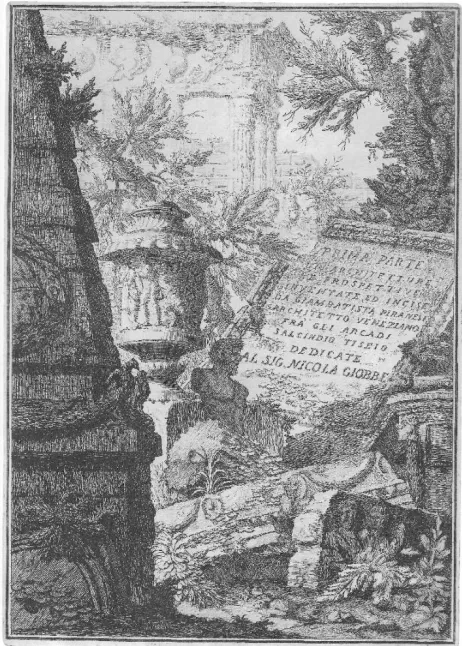
Figure 1.1 Title page of Prima Parte di Architetture e Prospettive (first state) ...20
Figure 1.2 Title page of Prima Parte di Architetture e Prospettive (second state) ...20
Figure 1.3 Pianta di ampio magnifico collegio ...21
Figure 1.4 Page of Parere su l’Architettura ...22
Figure 1.5 Horace’s villa in Diverse Maniere di Adornare I Camini ...23
Figure 1.6 Title page of Invenzione capric. di Carceri (first state), with the misprint of the name “Buzard” ...24
Figure 1.7 Title page of Invenzione capric. di Carceri (second state), with the name of Bouchard fixed ...24
Figure 2.1 Model of corvus by Martin Lokaj ...43
Figure 2.2 Reconstruction of a Roman polypastos ...43
Figure 2.3 Detail of masts/flags in plate VIII ...44
Figure 2.4 Detail of prisoners in a ship-like platform tortured by veglia in plate X ...44
Figure 2.5 Detail of prow or stern of a ship in plate XI ...45
Figure 2.6 Detail of a lighthouse in plate VII ...45
Figure 2.7 Detail of sentry boxes in plate III ...46
Figure 2.8 Detail of sentry boxes in plate XI ...46
Figure 3.1 Methods for joining beams, engraving by Francesco Rostagni from Zabaglia ...59
viii
Figure 3.4 Cavalcade for the first presentation of the Chinea, etching by Giuseppe Vasi
(1756) ...62
Figure 3.5 Detail of cloth in title page ...63
Figure 3.6 Detail of cloth in plate III ...63
Figure 3.7 Detail of cloth in plate XV ...64
Figure 3.8 Second set piece for the Chinea of 1759, engraving by Giuseppe Vasi ...65
Figure 3.9 Detail of desperate human figures in plate II ...66
Figure 3.10 Detail of human figures possibly pointing to an exit in plate II ...67
Figure 3.11 Detail of human figures leading others in plate II ...67
Figure 3.12 Detail of defeated and hopeless human figures in plate VIII ...68
Figure 3.13 Detail of human figures walking downstairs in plate VII ...68
Figure 3.14 Detail of human figures admiring the architecture in plate XIII ...69
Figure 4.1 Detail of the title page in which Piranesi signed “architetto veneziano” ...84
Figure 4.2 Cloaca Maxima in Della Magnificenza ...85
Figure 4.3 Blackfriars Bridge under construction, etching by Piranesi from a drawing by Robert Mylne ...86
Figure 4.4 Detail of shell in plate VIII (first edition) ...87
Figure 4.5 Detail of shell in plate VIII (second edition) ...87
Figure 4.6 Detail of human head inscribed in a shell-like form in plate XV ...88
Figure 4.7 Portrait of Luigi Vanvitelli (detail) ...88
Figure 4.8 Arco Traiano/Clementino in the porto of Ancona ...89
Figure 5.1 Pietro Abati after Ferdinando Bibiena, Prison Scene, c. 1705 ...104
ix
Figure 5.4 Luigi Vanvitelli, Prison Scene, 1720s ...106
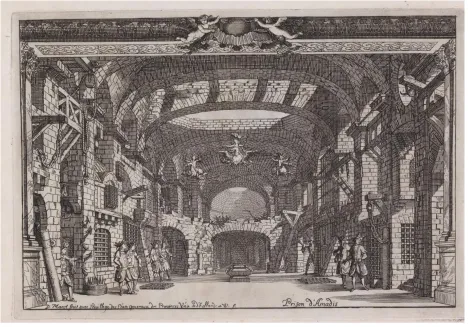
Figure 5.5 Daniel Marot, The Prison of Amadis, 1702 ...107
Figure 5.6 Carcere Oscura in Prima Parte, with antenna ...108
Figure 5.7 Detail of antenna in plate XIV ...109
Figure A.1 Title Page ...124
Figure A.2 Plate II (The Man in the Rack) ...125
Figure A.3 Plate III (The Round Tower) ...126
Figure A.4 Plate IV (The Grand Piazza) ...127
Figure A.5 Plate V (The Lion Bas-Relief) ...128
Figure A.6 Plate VI (The Smoking Fire) ...129
Figure A.7 Plate VII (The Drawbridge) ...130
Figure A.8 Plate VIII (The Staircase with Trophies) ...131
Figure A.9 Plate IX (The Giant Wheel) ...132
Figure A.10 Plate X (Prisoners on a Projecting Platform) ...133
Figure A.11 Plate XI (The Arch with a Shell Ornament) ...134
Figure A.12 Plate XII (The Sawhorse) ...135
Figure A.13 Plate XIII (The Well) ...136
Figure A.14 Plate XIV (The Gothic Arch) ...137
Figure A.15 Plate XV (The Pier with a Lamp) ...138
Figure A.16 Plate XVI (The Pier with Chains) ...139
Figure B.1 Title Page (first edition) ...140
x
Figure B.4 Plate VI (first edition) ...143
Figure B.5 Plate VII (first edition) ...144
Figure B.6 Plate VIII (first edition) ...145
Figure B.7 Plate IX (first edition) ...146
Figure B.8 Plate X (first edition) ...147
Figure B.9 Plate XI (first edition) ...148
Figure B.10 Plate XII (first edition) ...149
Figure B.11 Plate XIII (first edition) ...150
Figure B.12 Plate XIV (first edition) ...151
Figure B.13 Plate XV (first edition) ...152
1
INTRODUCTION
The Carceri d’Invenzione is probably the most famous and certainly the most
enigmatic work that Giovanni Battista Piranesi (1720 – 1778) ever produced. This
polemical book is composed of a series of sixteen etchings depicting gigantic interior
spaces of imaginary prisons. It is the result of Piranesi’s reworking of the fourteen
etchings of the previous Invenzioni capric. di Carceri, first published in 1749-50, with
the addition of two plates.
Within the more than 1,000 plates that compose Piranesi’s oeuvre, why are these
sixteen so special? Why did Piranesi create and, after more than a decade, re-create these
illustrations? What is behind these invented scenarios? Indeed, even after 250 years
passed their first publication, the answers for these questions have been lacking.
This thesis aims to elucidate points that remain problematic in the scholarship of
the imaginary prisons. I consider the traditional interpretation of the Carceri bounded
and, sometimes, even unconvincing. Recent scholarship on Piranesi seldom addresses the
illustrations of imaginary prisons. The references to the Carceri usually consist of
examples to prove tangential points about other publications. Nevertheless, in regard to
other works of Piranesi, recent studies dramatically shifted the focus from the artist’s
personality or from strictly formalist approaches towards multidisciplinary avenues of
inquiry that encompass art, architecture, archaeology, and philosophy, among other
2
the discourse that accounted for it in relation to the rest of Piranesi’s oeuvre. Qualities
highlighted in works such as Campus Martius and Antichità Romane, such as analytical
skills and a solid archaeological and architectural foundation, gave place to an almost
irrational approach in the “immediacy” of the Imaginary Prisons.1 The Romantic view of
the Carceri as an explosion of creativity would make sense if the work was composed by
only one or two etchings, not a set of fourteen plates that, more than ten years later,
became sixteen revised and reorganized illustrations. If the production of the Carceri had
been driven by a cathartic urge of creative expression, detached from deeper intellectual
aspirations, Piranesi would never had returned to them for revision. If drugs or fever had
compelled Piranesi to conceive the prisons, I assume that he would keep the illustrations
to himself. I could not see any reason for an ambitious eighteenth-century artist, architect,
antiquarian, publisher, and archaeologist, like Piranesi was, to publish and republish a set
of hallucinatory “sketches.”
In contrast to the Romantics, that sought facts in Piranesi’s biography to justify
the artist’s “disturbed psyche” expressed in the Carceri, I focused on his erudition as a
key to decipher the illustrations. I concentrated my research on Piranesi’s intellectual
activity and on his relationship with colleagues, friends, and enemies both in his
hometown Venice and in his adopted city Rome. The objective was to identify the
debates of which he took part and his opinions and convictions. A vital source in tandem
with my approach was Heather Hyde Minor’s Piranesi’s Lost Words, in that the book
1 Giovanni Battista Piranesi, Campvs Martivs antiqvae vrbis (Romae, 1762); Giovanni Battista Piranesi,
3
the investigation of the historical context, from which important keys were revealed. I
highlight his involvement with the Accademia degli Arcadi and the broad debate about
taste of the eighteenth century.
During my research, I came across Piranesi’s bold, reactive and provocative
intellectual interaction with his peers in a list of publications that I named
“response-publications.” I claim that the imaginary prisons are the first within this “genre.” As a
result, my thesis positions the Carceri d’Invenzione as embedded in Piranesi’s evolving
line of works.3 Considering the publications in which Piranesi explicitly demonstrated his
theoretical and philosophical views, I sought to identify Piranesi’s intellectual aspirations
for the etchings depicting imaginary prisons. I was interested in finding a proper
correlation between the images and Piranesi’s artistic, intellectual, and philosophical
development with the objective to provide the Carceri d’Invenzione with a coherent view
in tandem with the artist’s modus operandi.
1.1 THE COLLECTION OF THE UNIVERSITY OF SOUTH CAROLINA
The University of South Carolina has the privilege of being one of a few
institutions in the world to hold among its collections of rare books a complete set of the
Opere by Giovanni Battista Piranesi (1720-1778). The Opere is a posthumous edition
that encompasses twenty-nine elephant-folio volumes with all of Piranesi’s publications.
2 Heather Hyde Minor, Piranesi’s Lost Words (University Park, Pennsylvania: The Pennsylvania State
University Press, 2015).
3 The Romantics first stressed Piranesi’s biographical features to justify the Carceri. The Modernists, in
contrast, focused on the formalist aspects of the Carceri, associating its spaces with Cubism and
4 Didot.4
Volume eight of Opere Varie comprehends the c. 1750 Opere Varie di
Architettura, Prospettiva, Grotteschi, Antichità, plus Carceri d’Invenzione of 1761,
Alcune Vedute di Archi Trionfali of 1765, and Trofei di Ottaviano Augusto of 1753.5
To develop my thesis, I greatly benefited from the physical availability of the
twenty-nine volumes for firsthand inspection in the Ernest F. Hollings Library.6 I also
took advantage of the digital copies of this collection in ultra-high resolution. A project
of digitalization of the entire collection through an ASPIRE II grant resulted in images of
astonishing quality, which allowed me to distinguish relevant details that even a
magnifying lens would not.
1.2 HISTORIOGRAPHICAL REVIEW
The previous scholarship on the Carceri presents considerable gaps and did not
follow the evolution of Piranesian studies. Piranesi’s historiography first focused on his
biography, followed by his technical and formalist virtuosity, then on his architectural
postulations, and, finally, on his intellectual, ideological, and philosophical contributions.
4 Firmin-Didot bought the copperplates and the publishing rights from Giovanni Battista’s heirs and
continued to print issues until the 1830s. In 1839, Pope Gregory XVI acquired the entire collection of plates and took it back to Rome, where it still is located as part of the Papal Staes. The copperplates are currently in the Calcografia dell’Instituto Nazionale per la Grafica, “arranged in the same order in which they were received from Firmin-Didot.” See Giovanni Battista Piranesi, Luigi Ficacci, and Petra Lamers-Schütze,
Giovanni Battista Piranesi: the etchings, Icons (Köln: Taschen, 2006), 39.
5 The Opere Varie di Architettura, Prospettiva, Grotteschi, Antichità; inventate, ed incise da Giambattista
Piranesi Architteto Veneziano is a reprint of Piranesi’s first book Prima Parte di Archittetura e Prospettive (1743), except for one plate, with additions. Carceri d’Invenzione is a reworking of Invenzione capric. di Carceri (1749-50) with two additional plates. Alcune Vedute di Archi Trionfali is a reprint of Antichità Romane de’ Tempi della Repubblica e de’ Primi Imperatori of 1748.
6 The publication belongs to the Irvin Department of Rare Books & Special Collections under the
5 disconnected from the logic that drove other works.
Piranesi’s biographies formed the first corpus of Piranesian studies which began
in the eighteenth-century.7 It was on these biographies that the Romantic movement
created an avenue of inquiry completely detached from the rest of the oeuvre of Piranesi
in the nineteenth-century. Together with the development of the concept of the Sublime,
the Romantics interpreted the distinct nature of the Carceri as the result of neurosis, fever
or drug-induced hallucinations, neglecting the intellectual, methodical, and analytical
approach that Piranesi demonstrated in the rest of his oeuvre.8
The Carceri was hugely influential for the Romantic movement. Many scholars
even categorize Piranesi as a forerunner of Romanticism. A dominant Romantic
interpretation for the Carceri read the illustrations as an expression of the artist’s internal
7 Robin Middleton listed the many biographies of Piranesi that popped up in the eighteenth and
nineteenth-centuries, and briefly exposed their biases, including Giovanni Ludovico Bianconi, “Elogio Storico Del Cavaliere Giambattista Piranesi Celebre Antiquario Ed Incisore Di Roma,” Antologia Romana 5, no. 34 (1779): 265–67; no. 35 (1779): 273–75; no. 36 (1779): 281–84; J. G. Legrand, “Notice Sur La Vie et Les Ouvrages de J. B. Piranesi ... Rédigée Sur Les Notes et Les Pièces Communiquées Par Ses Fils, Les Compagnons et Les Continuateurs de Ses Nombreux Travaux’,” 1799, nouv. acq. fr. 5968, Paris, Bib. Nat. MSS (printed inaccurately in G. Morazzoni, Giovanni Battista Piranesi: notizie biografiche, Milan, n.d. [1921]; reprinted in Nouvelles de l’estampe, no. 5, 1969, pp. 191ff.); Pietro Biagi, Sull’incisione e Sul
Piranesi (Venice, 1820). See Middleton, 1982.
6
interpretation is as fascinatingly appealing as a good fiction novel. It became very
popular after a citation of the imaginary prisons in Thomas De Quincey’s Confessions of
an Opium Eater.10 The Carceri deeply impacted authors such as Johann Wolfgang von
Goethe (1749-1832), Victor Hugo (1802-1885), and Charles Baudelaire (1821-1867), just
to name a few. In turn, albeit instilled with their perspective, they promoted Piranesi’s
reputation as a great artist. The Romantic perspective was so influential that survived up
to the twentieth century. In 1949, Aldous Huxley still largely relied on Piranesi’s
biographical approach of the Carceri in the “splendid literary exercise” that characterized
9 In 2015, David R. Marshall offered a brief list of the authors of this perspective, but he still proposed an
interpretation of Piranesi as an "artist devoted to the production of paradoxically irrational spatial
constructions" in the Carceri, like an "eighteenth-century M. C. Escher."See David R. Marshall, “Piranesi’s Creative Imagination: The Capriccio and the Carceri,” in The Piranesi Effect, ed. Kerrianne Stone and Gerard Vaughan (Sydney, NSW: NewSouth Publishing, 2015), 118–20. Keneth Clark attributed to Bianconi the construction that the illustrations of the Carceri were the “result of a feverish dream.” But he
could not free himself from this perspective, asserting that Piranesi was a “strange and solitary figure.” Clark added that he could not “help wondering if this solitary dreamer did not intensify his dreams by the use of opium.” See Kenneth Clark, The Romantic Rebellion: Romantic versus Classic Art (London: Murray, 1976), 56; For Bianconi's biography, see Giovanni Ludovico Bianconi, “Elogio Storico Del Cavaliere Giambattista Piranesi Celebre Antiquario Ed Incisore Di Roma,” Antologia Romana 5, no. 34 (1779): 265–67; no. 35 (1779): 273–75; no. 36 (1779): 281–84; Marguerite Yourcenar mentioned a supposed malaria that inflicted Piranesi in 1742, his “crisis of agoraphobia and claustrophobia combined,” and “the anguish of captive space from which the Prisons certainly resulted.” See Marguerite Yourcenar,
The Dark Brain of Piranesi and Other Essays (New York: Farrar, Straus, Giroux, 1984), 104–5.
7
In the twentieth century, scholars began to discover Piranesi as an artist and
heavily used the methodology of Formalism and Connoisseurship to interpret his oeuvre.
Due to the distinct formal aspects of the Carceri, this approach kept the imaginary
prisons apart from Piranesi’s body of works. Nonetheless, scholars such as Henri Focillon
presented an invaluable work of dating, classifying, and cataloguing Piranesi’s etchings.12
With this approach, the different editions and states of the Carceri began to receive the
necessary temporal perspective.
The identification and examination of the theories and debates that Piranesi
conveyed in the Carceri started relatively recently. The most important body of research
on the impact of Piranesi’s erudition, including in the Carceri, started only in the second
half of the twentieth century. Scholars such as Ulya Vogt-Göknil and Patricia May Sekler
produced the first analyses concerning architectural postulations in the Carceri.13
Maurizio Calvesi, whose work was an important source for my thesis, was a pioneer
scholar that identified many theoretical and philosophical arguments that Piranesi
addressed in the Carceri.14
11 Aldous Huxley and Jean Adhémar, Prisons [with the Carceri Etchings by G. B. Piranesi, with a Critical Study by Jean Adhemar] (London: Trianon Press, 1949); The expression “splendid literary exercise” is a quote of Jonathan Scott in Ian Jonathan Scott, Piranesi (London: New York: Academy Editions; St. Martin’s Press, 1975), 397 fn 14.
12 Henri Focillon, Giovanni-Battista Piranesi, 1720-1778 (Paris: H. Laurens, 1918); Arthur Mayger Hind,
Giovanni Battista Piranesi; a Critical Study, with a List of His Published Works and Detailed Catalogues of the Prisons and the Views of Rome (London: The Cotswold Gallery, 1922); Arthur Michael Samuel and Giovanni Battista Piranesi, Piranesi (London: B.T. Batsford, 1912); Albert Giesecke, Studien über Giov. Batt. Piranesi (Leipzig, 1911).
13 Ulya Vogt-Göknil and Giovanni Battista Piranesi, Giovanni Battista Piranesi “Carceri” (Zuerich: Origo
Verl., 1958); Patricia May Sekler, Notes on Old and Modern Drawings. Giovanni Battista Piranesi’s Carceri Etchings and Related Drawings. (Haarlem: Pr. y. Enschedé, 1962).
14 In the Introduction of the first Italian edition of Henri Focillon, Maurizio Calvesi set the correspondence
8
especially in the 1970s and 1980s, shed new light on him and stimulated scholarship that
incorporated the theoretical nature of his work. For instance, in 1978 the Venetian
Fondazione Giorgio Cini organized a symposium to commemorate the 200th anniversary
of Piranesi’s death. The event represented a large step towards a scholarship free of the
biases of Romanticism. Many scholars from different nationalities, including Calvesi,
contributed with new sources and approaches to Piranesian studies. The event culminated
with the book Piranesi Tra Venezia e L’Europa - a vital item in my bibliography.15
Documents formerly ignored or unknown have also contributed to a new avenue
of investigation on Piranesi and to the scholarship of the Carceri. Mario Bevilacqua, for
instance, in the book Taccuini di Modena of 2008, published the reproduction of one of
Piranesi’s notebooks, which is currently in the Biblioteca Estense Universitaria in
Modena, Italy.16 Bevilacqua’s analysis accompanied the reproductions of years of the
artist’s preparatory drawings, quick sketches, and notes on various subjects, revealing his
strong involvement with intellectual debates once more.
The most recent studies considerably boosted the scholarship on Piranesi, but the
Carceri received very scarce or no attention. In the twentieth-first century, the rich
lineage of Piranesian studies continued focusing on Piranesi’s erudition. John Pinto
published the book Speaking Ruins in 2012 focusing on the architectural heritage of
classical antiquity that Piranesi provided and the fundamental role he played in shaping
15 Maurizio Calvesi, “Ideologia e Riferimenti delle ‘Carceri,’” in Piranesi tra Venezia e l’Europa, ed.
Alessandro Bettagno and Istituto di storia dell’arte (Fondazione “Giorgio Cini”) (Firenze: L.S. Olschki, 1983), 339–60; Maurizio Calvesi and Calcografia Nazionale (Rom), Giovanni Battista e Francesco Piranesi: Calcografia Nazionale, 1967 - 1968 (DeLuca, 1967).
16 Mario Bevilacqua, Piranesi: Taccuini di Modena, 2 vols., Biblioteca estense (Modena, Italy) (Roma:
9
Grandest Tour from Europe to Australia highlighting Piranesi as a printmaker and
publisher.18 The author stressed Piranesi’s importance to the Grand Tourists of the
eighteenth century, to collectors of the following centuries, and to contemporary artists in
different parts of the globe, especially in Australia and New Zealand.
Finally, two books from 2015 complete the list of recent publications about
Piranesi that either ignore or only superficially mention the Carceri. Australian
collections inspired Kerriane Stone and Gerard Vaughan, who published The Piranesi
Effect in 2015.19 The book is a compendium of essays from different scholars who found
inspiration in the works of Piranesi in the country’s museums and galleries. Although the
Carceri were object of two essays, the authors largely relied on the twentieth-century
formalist and architectural perspectives. The first analyzed the extent in which the
imaginary prisons fit into the genre of capriccio and the second focused on the
architectural possibilities that Piranesi experimented through the spaces of the Carceri.20
Digging deep into Piranesi’s writings, Heather Hyde Minor published Piranesi’s
Lost Words in that same year.21 She explores Piranesi’s ambitions and achievements as an
author. Her focus, however, was investigating Piranesi’s modus operandi in combining
images and words for “breathtakingly creative results in his books.”22
17 John A. Pinto, Speaking Ruins: Piranesi, Architects and Antiquity in Eighteenth-Century Rome, Jerome
Lectures, twenty-fourth series (Ann Arbor: University of Michigan Press, 2012).
18 Colin Holden, Piranesi’s Grandest Tour. From Europe to Australia. (Randwick: Unireps UNSW, 2014). 19 Jennifer Long, “The Piranesi Effect,” in The Piranesi Effect, ed. Kerrianne Stone and Gerard Vaughan
(Sydney, NSW: NewSouth Publishing, 2015), 44–58.
20 David R. Marshall, “Piranesi’s Creative Imagination: The Capriccio and the Carceri,” in The Piranesi Effect, ed. Kerrianne Stone and Gerard Vaughan (Sydney, NSW: NewSouth Publishing, 2015), 111–34; Warren Andrews, “Irrational Architecture in the Carceri d’Invenzione,” in The Piranesi Effect, ed. Kerrianne Stone and Gerard Vaughan (Sydney, NSW: NewSouth Publishing, 2015), 135–48.
21 Heather Hyde Minor, Piranesi’s Lost Words (University Park, Pennsylvania: The Pennsylvania State
University Press, 2015).
10
Piranesi’s intellectual achievements omitted the Carceri. The revelation of Piranesi’s
erudition and his ideological inclinations in the Carceri is part of a process that requires
the revision on the scholarship of his other works first. The goal of my thesis is to
overcome this gap, contributing to fill the blanks on the Carceri’s scholarship and
stimulating new approaches to the Carceri.
1.3 METHODOLOGIES
Formal and iconographical analyses are the cornerstones of my research.
Although an apparently obvious and embryonic step in the discipline of Art History, the
two methodologies were a game changer. Instead of just looking to the images and
assuming I had seen them enough, I described each one in text. I visually scrutinized the
sixteen etchings and identified the most recurrent objects and references to which
Piranesi alluded. Aiming at an unbiased inspection of Piranesi’s illustrations, free from
other scholars’ examinations, my preliminary approach was to temporarily put the vast
literature available aside and see the imaginary prisons with “fresh” eyes. In this sense,
the illustrations were themselves my main primary source. It was through the textual
description of each of the sixteen etchings that I could perceive the different elements
Piranesi depicted, their possible meanings, and the relationship between them. It was
through the written formal analysis that I had to define and name the ambiguous objects
of the Carceri.
After a close visual examination and the identification of the principal objects on
11
century to find precedents, analogies, and influences. I also examined Piranesi’s pertinent
previous and subsequent works. The objective was to establish relationships and
connections with the Carceri’s imagery and the rest of his oeuvre. In this phase, I used
both primary and secondary sources to decipher the meanings that Piranesi conveyed in
the illustrations.
Combining the identification of the objects in the formal and iconographical
analysis with the most recent scholarship on Piranesi, I started to connect the dots. Many
of the attitudes and inclinations Piranesi demonstrated in his “written” publications were
already present in the Carceri, albeit in images rather than words. I found the same points
he made in other publications metaphorically addressed in the imaginary prisons.
Piranesi’s main concern was with the stubborn defense of the superiority of Roman over
Greek civilization, especially through the praise of the magnificence of Rome
engineering and law.
Based on the assumption that the Carceri d’Invenzione was an intellectual
construction rather than an automatic expression of Piranesi’s psyche, I was interested in
the reasons that compelled Piranesi to create and then recreate the illustrations of
imaginary prisons. The number of editions and the radical reworking of the plates
demonstrates the degree of the artist’s devotion and commitment to the illustrations. I
investigated the context of the first edition of the fourteen etchings of Invenzioni capric.
de Carceri (1749-50) and surveyed the alterations he did for the second edition of 1761.
Then, I identified the elements that Piranesi emphasized, removed, or added as a means
12
came into play. I heavily relied on the connoisseurship and formalism of authors such as
Andrew Robinson, Luigi Ficacci, and John Wilton-Ely. These authors explored the many
states of the etchings that Piranesi produced, highlighting in side-by-side comparisons
their alterations. Robinson goes as far as examining the origin of the paper and pigments
Piranesi used to infer the locale and date of the prints. These authors also helped me to
compare Piranesi’s technical development through features such as the linework and
etching techniques in the decade that intermediate the two editions.23
I sought to trace Piranesi’s philosophical and ideological alignments through his
colleagues, patrons, collaborators, and friends to identify his thoughts about the Carceri.24
A biographical and psychological approach to his oeuvre elucidated many points during
my research. In contrast to the biographies, predominantly from the eighteenth and
nineteenth centuries that focused on Piranesi’s tormented personality to justify the
Carceri, recent biographical reviews shed light on Piranesi’s intellectual profile.
Similarly, I focused on his education and on the intellectual circles in which he
participated, in both Venice and Rome, to recognize possible sources that might have
inspired him and debates in which he participated.
1.4 THE DEBATES IN THE CARCERI
Far from a spontaneous epiphany, the illustrations are a meticulously thought-out
23 See Andrew Robison and Giovanni Battista Piranesi, Piranesi-Early Architectural Fantasies: A Catalogue
Raisonné of the Etchings (Washington: Chicago: National Gallery of Art; University of Chicago Press, 1986); Piranesi, Ficacci, and Lamers-Schütze, Giovanni Battista Piranesi; John Wilton-Ely, The Mind and Art of Giovanni Battista Piranesi (London: Thames and Hudson, 1978).
24 Heather Hyde Minor’s book Piranesi’s Lost Words was a source of paramount relevance. She focuses on
13
comprehension of Piranesi’s own time. No aspect of cultural production went unnoticed
by the loud Piranesi. Piranesi located himself in the very heart of all of the mainstream
debates of the settecento. Marguerite Yourcenar, author of The Dark Brain of Piranesi,
states that “all the eighteenth-century angles of incidence and reflection intersect in the
strange linear universe of Giovanni Battista Piranesi.”25 He actively and sometimes
furiously participated in the discussions that ranged from the appropriateness of styles in
Architecture to the origins of Italic civilization; from the superiority of classical over
modern culture to the Greco-Roman controversy. It was with this censorious Piranesi in
mind that I faced the etchings of the Carceri.
Piranesi intentionally provided different clues for the different audiences of the
Carceri. The multifaceted intellectual background of Piranesi explains the intensity of the
theoretical and philosophical content of the Carceri. To access the illustrations’ content,
it is necessary to have the right keys. In this game Piranesi played, just like in a prison,
master keys unlock different stages of significance of the ambiguous objects he depicted.
Nonetheless, like his words, many of Piranesi’s keys were lost at some point. The front
door key, representing the most superficial level of significance, is independent from any
scholarship: along the centuries, his audience was always equipped with the key that
exposes the illustrations’ mysterious beauty and technical mastery. The etchings captivate
our gaze and evoke mixed feelings of fascination and strangeness.
Anchored in the historical context in which Piranesi created the etchings and,
specially, in his intellectual capability, I propose connections with contemporary debates
25 Marguerite Yourcenar, The Dark Brain of Piranesi and Other Essays (New York: Farrar, Straus, Giroux,
14
important keys to unlock the Carceri. Beyond an aesthetic debate, it encompassed a
moral lesson within the comparison of the two cradles of Western civilization. Piranesi’s
archaeological and philosophical enquiries of the origins of the Italic civilization aimed at
proving the superior character of the Romans. I claim that, in the Carceri, Piranesi went
further to demonstrate that Roman civilization reached its apogee before the influence of
the Greeks. As his oeuvre demonstrates, it was a personal matter throughout his life.
Piranesi spent his entire career trying to impose this point through many publications,
including the Carceri.
The theoretical and philosophical content addressing this debate is one of the most
important contributions of Venice to the Carceri and to Piranesi’s subsequent works. His
passion for the ancient Romans started within his family. His brother was a Carthusian
monk that provided classical books and some knowledge in Latin, not to mention the
admiration for Livy.26 It was in Venice that Piranesi developed the concept of “Romanità
and its roots in the time of the kings and early Republic; also the origins of Italic
civilization in the Etruscans,” summarizes John Wilton-Ely.27
In Rome, Piranesi replaced the intellectual circles of Venice for the Accademia
degli Arcadi, which allowed him to keep up with the debates. This academy, founded in
1690, was probably the most influential of the many literary societies in the passage of
the seventeenth to the eighteenth century. The grandiose ambition of the Arcadia’s
members went far beyond a literary reform. Besides freeing the literature from the
Baroque style, the arcadi wanted a reform of society as a whole. By vehemently rejecting
26 Bevilacqua, Taccuini di Modena, 269.
15
were to promote a wide ethical revision. “Arcadianism was a cultural fact of primary
importance in the settecento,” says Vernon Hyde Minor.28 In the eighteenth century, the
concepts of ethics, virtue, and truth were closely connected to taste, and, in this vein, the
arcadi deeply engaged in their endeavor towards the improvement of the society. Their
debates, thus, covered a broad scope of subjects, including mathematics, physics, and,
especially influential for the Carceri, jurisprudence.29
Piranesi knew that the members of the Arcadia were part of the audience of the Carceri
and directed many specific comments to some of them. The series of illustrations of
imaginary prisons and its outstanding amount of references to both past and
contemporary debates is an exemplar of how Piranesi used his works to imbue censures
to his ideological adversaries. The Carceri is, therefore, one in a long lineage of
“response-publications” that Piranesi produced with an unequivocal purpose of attacking
opponents.
Piranesi was accepted as a member of the prestigious academy circa 1744, approximately
one year after the publication of his first book, Prima Parte di Architteture e Prospettive
(1743). It is more than reasonable to assume that Piranesi directed his following works
towards subjects of arcadian interest.His election must have had a huge impact on a
young “outsider” artist struggling to establish himself in Rome. It was a way of making a
name for himself. He expressed his enthusiasm in the title page of the second issue of
28 Vernon Hyde Minor, “Ideology and Interpretation in Rome’s Parrhasian Grove: The Arcadian Garden
and Taste,” Memoirs of the American Academy in Rome 46 (2001): 184, https://doi.org/10.2307/4238785.
16
arcadian name: fra gli arcadi Salcindio Tiseio (figures 1.1 and 1.2).
The academy and its prominent members had a potential catalytic power to provide many
network opportunities to Piranesi, although they took a long time to come.30 It was a
place where the “shepherd” Piranesi, as the members were called, would rely on
theoretical debates to develop his art and to attract the prospective patrons he was
desperately seeking. Piranesi could benefit by referencing the debates in his work, relying
on the most up-to-date subjects for his production. To pay homage to the academy and
honor their membership, both artists and patrons alluded to the themes of the academy’s
interest in their works.31
The relationship between Piranesi’s acceptance and the intellectual inclinations of the
academy was worked both ways. Richard Wendorf attributes the election of the artist to
this academy to the highly valued “symbolic forms that were emerging in [Piranesi’s]
capricci.”32 The election undoubtedly denoted an intellectual alignment between him and
the academy. Nevertheless, it is important to highlight that Prima Parte had been his only
publication up to his election. Piranesi’s most “symbolic forms” came in the following
publications: the Grotteschi and the series of imaginary prisons that he appropriately
named Invenzioni capric[ciose] di Carceri (capricious inventions of prisons).
30 To highlight the importance of the academy, figures from the highest echelon of the Roman intellectual
scene were Arcadia’s members. Besides the founders Giovan Mario Crescimbeni and Gianvincenzo Gravina, the society counted with Gian Francesco Albani (Pope Clement XI from 1700 to 1721), Michelangelo dei Conte (Pope Innocent XIII from 1721 to 1724), Francesco Bianchini (acquaintance of Piranesi), the famous impprovisatore Mestastasio, Ludovico Antonio Muratori, among others. Vernon Hyde Minor, in an article in which the author explores the iconography of the academy’s gardens, proposes a parallel between these pastore and the Florentine humanistic circles of Marsilio Ficino, Lorenzo de’ Medici, Cristofero Landino, and Pico della Mirandola in the fifteenth-century. They were in the foremost rank in the intellectual production and debate in Settecento Romano.
31 Liliana Barroero and Stefano Susinno, “Arcadian Rome, Universal Capital of the Arts,” in Art in Rome in the Eighteenth Century, ed. Edgar Peters Bowron and Joseph J Rishel, n.d.
17
theoretical influence of the Arcadi on Piranesi.33 Names that will appear throughout the
thesis, such as Giambattista Vico (1668 – 1744), Gian Vincenzo Gravina (1664 – 1718),
Ludovico Antonio Muratori (1672 – 1750), Luigi Vanvitelli (1700 – 1773), Giovanni
Gaetano Bottari (1689 – 1775), among many others, were all shepherds of the Arcadia
and figures to whom Piranesi was directing image-based commentary. Piranesi
incorporated the debates and criticisms of the Carceri in his subsequent works throughout
his life.
1.5 THESIS STRUCTURE
I structured the body of my thesis in four chapters. Following Chapter One
(Introduction), Chapter Two accounts for the formal and iconographical analyses. I
identified the most recurrent objects and separated them in three main categories: (1)
ancient Roman elements, (2) nautical elements, and (3) torture devices. I analyzed
Piranesi’s references to specific places and historical and contemporary events within the
categories and associated one particular debate to each. The debates Piranesi addressed,
in turn, are not exclusive of the Carceri. On the contrary, they are found elsewhere in
Piranesi’s works and correspond to broad debates of the eighteenth century.
Due to the ambiguity of the objects and the wide range of possible interpretations
that they offer, the three categories intersected and even overlapped each other in many
33 Among the members that played a more specific role to Piranesi’s career are Giovanni Battista Vico, for
example. In close alignment with Piranesi, Vico, a “philosopher of the origins,” defended the independence of Latin’s original language, philosophy, and law from Greeks, attributing, instead, the Italic civilization’s origins to the Ionians and Etruscans. In addition, this author stressed “the important role played by
18 subsequent chapters (Three, Four, and Five).
In Chapter Three, I covered the Roman elements and the association with the
debate on taste. Piranesi positioned himself in this debate by attacking Baroque and the
philhellenism that strongly emerged with authors such as Le Roy, Allan Ramsay, and
Winckelmann. I also addressed Piranesi’s criticism of the patronage system of
eighteenth-century Rome.
In Chapter Four, I analyzed the presence of nautical elements in the Carceri and
Piranesi’s references to the magnificence of Roman engineering. The nautical elements
are also associated to the environment of Venice. Piranesi employed not only the visual
repertoire he witnessed in his hometown, but also the theoretical precepts that he
absorbed during his Venetian education. Additionally, in this chapter I examined the
difficult times that Piranesi experienced in the beginning of his career and how his
comings and goings between Venice and Rome influenced the imagery of the Carceri.
Finally, in Chapter Five, I analyzed Piranesi’s discourse on the correspondence
between law and taste to affirm the superiority of Rome over Greece. Additionally,
Piranesi wanted to demonstrate the pernicious influence of the Greek culture in Rome.
Through the depiction of torture devices and the reference to specific episodes on the
history of ancient Rome, Piranesi proposed an analogy between ancient Rome and his
own time.
At last, it is vital to highlight the distinction between the two main editions of the
illustrations of the imaginary prisons. My analysis focused mainly in the second edition,
19
of Piranesi. The analysis of the first edition, Invenzioni capric. di Carceri (Appendix B –
Figures B.1 to B.14) was a support material to anchor my inferences. Therefore, unless
20
Figure 1.2 Title page of Prima Parte di Architteture e Prospettive (first state). From: Prima Parte di Architettura, e Prospettive inventate, ed incise da Giambatista Piranesi Architetto Veneziano. Roma, 1743.
21
Figure 1.3 Pianta di ampio magnifico collegio. From: Robison, Andrew, and Giovanni Battista Piranesi. Piranesi-Early Architectural Fantasies: A
22
Figure 1.4 Page of Parere su l’Architettura. From: Osservazioni di Gio. Batista Piranesi sopra la Lettre de M. Mariette aux auteurs de la Gazette de l’Europe: inserita nel supplemento dell’istessa gazzetta stampata Dimanche 4, Novembre MDCCLIV & parere su
23
24
Figure 1.6 Title page of Invenzioni capric. di Carceri (first state), with the misprint of the name “Buzard.”
25
CHAPTER TWO
FORMAL AND ICONOGRAPHICAL ANALYSES
The sixteen plates that constitute the Carceri d’Invenzione (1761), depicting what
Piranesi himself called “prisons of imagination,” are large etchings that the artist created
between the 1740s and 1760s.34 The publication had several issues in two different
editions during Piranesi’s life, and a third posthumously edition. The first edition was
published in 1749-50 with fourteen plates. Piranesi published a second edition in 1761 in
which he revised the existing fourteen plates and added two new ones.
The classical nomenclature of the plates comes from Andrew Robinson’s
catalogue raisonné.35 On the right column, I presented an alternative nomenclature that
suggests a slight change in the illustrations’ perception.36 I do not intend to problematize
the attribution of titles to the etchings. Nonetheless, it is important to take into account
that titles reveal and inform a specific way of looking and defining the illustrations.
Andrew Robinson’s titles show a permanence of the Romantic perspective on the
interpretation of the illustrations and a strong root in the Formalist approaches of the
beginning of the twentieth century. In some plates, the title focuses on secondary
elements in terms of significance, as in plate XVI. Although not completely unimportant,
“The Pier with Chains,” as we shall see, are accessories to a rich set of references and
34 For the etching technique of Piranesi in the Carceri, see Silvia Gavuzzo-Stewart, Nelle Carceri Di G.B. Piranesi, Italian Perspectives 2 (Leeds, UK: Northern Universities Press, 1999), chap. 1. L'acquaforte: la tecnica di Piranesi.
35 Robison and Piranesi, Piranesi--Early Architectural Fantasies.
26
debates that are paramount to understand the whole series of the Carceri.
Table 2.1 Number, name, and date of plates in Carceri d’Invenzione.
Number Name (Robinson/Ficacci) Name (Howe and Hofer)37 Date
I Title-page Title-page 1749/50
II The Man in the Rack Carcere, with a Larger Number of Human
and Sculptured Figures 1761
III The Round Tower Carcere, with a Circular Tower 1749/50
IV The Grand Piazza
Carcere, with a View Through an Arch Toward a Bridge with a Sculptured Frieze. Below, a Colonnade Reminiscent of St. Peter’s Square in Rome
1749/50
V The Lion Bas-Reliefs Carcere, like plate II, with Similar
Elaborate Paraphernalia 1761
VI The Smoking Fire Carcere, with Arches and Pulleys and a
Smoking Fire in the Center 1749/50
VII The Drawbridge Carcere, with Numerous Wooden Galleries
and a Drawbridge 1749/50
VIII The Staircase with Trophies Carcere, with a Staircase Flanked by
Military Trophies 1749/50
IX The Giant Wheel Carcere, with a Doorway Surmounted by a
Colossal Wheel-shape Opening 1749/50
X Prisoners on a Projecting Platform Carcere, with a Group of Captives Chained
to Posts 1749/50
XI The Arch with a Shell Ornament Carcere, with a Central Hanging Lantern 1749/50
XII The Sawhorse Carcere, with a Platform Approached by
Steps 1749/50
XIII The Well Carcere, with Several Straight, Broad
Central Staircases 1749/50
XIV The Gothic Arch Carcere, with a Staircase Ascending to the
Left 1749/50
XV The Pier with a Lamp Carcere, with Vaults Springing from a
Monumental Pier 1749/50
XVI The Pier with Chains Carcere, with a High Gallery Beyond a
Low, Timbered Anteroom 1749/50
Piranesi had not numerated the plates until the second issue of the second
edition.38 The use of Roman numbers was an essential move towards clarifying the
37 Giovanni Battista Piranesi, John Howe, and Philip Hofer, The Prisons / Le Carceri, Bilingual edition
(Mineola, N.Y: Dover Publications, 2010).
27
narrative of the illustrations. The sequence of plates as Piranesi assigned follows a
reversed chronological order that goes from the Julio-Claudian Empire (27 BCE – 68 CE)
back to the regal period of Tullus Hostilius (reign 673 – 642 BCE). Piranesi represented
the former through the reference to the enemies of the emperor Nero in plate II. He
represented the latter through the reference to the construction of the Mamertine prison
and to the trial of the Horatii brothers in plate XVI. The events that composed this
temporal line brought up important arguments for the Greco-Roman controversy.
All the etchings have similar measurements, either in vertical or horizontal
orientations, with the largest side varying between 560 and 540 mm and the smallest
ranging from 420 to 400 mm. In this epoch, Rome’s publishing industry was famous for
illustrated books with elephant folios and Piranesi cleverly took advantage of this
expertise.39
2.1COMPOSITIONAL STRATEGIES
In terms of compositional schemes, Piranesi used a very theatrical approach to the
illustrations. He created a metaphorical play in which his prisons constituted the stage,
while his audience was under the proscenium arch. Through his deliberate manipulation
of the audience’s view and emotions, Piranesi reached the highly dramatic effect of his
compositions. In the foreground, very close to the observer’s point of view, he depicted
parts of an architectural element, be it a pillar, an archway, a pier, a wall, etc. By
positioning the viewer on this strategic place within the composition, he framed the
whole illustration. Like spotlights in a theatrical play, Piranesi used the light to
28
emphasize the elements he desired. He achieved a sense of intimacy and an almost tactile
connection between the beholders and the scenes. Many scholars attribute Piranesi’s
“envelopment” method to his previous experience with theater design.40 Concerning the
vedute, John Pinto asserts that “Piranesi encourages the observer to view Roman
architecture directly, from within, thus heightening the immediacy of the experience.”41
Before the vedute, nonetheless, Piranesi had experimented with this technique with
outstanding results in the Carceri.
Except for plate IX, the illustrations show the point of view of a hypothetical
observer positioned in an interior space where the exits are inaccessible or non-existent.
However, most of the etchings do not bring any reference to a possible escape. Instead,
they show an agonizing succession of flights of stairs, bridges, archways, and doors that
lead nowhere. Even when looking towards the outside of the building, as in plate IV, the
exterior does not suggest freedom. Piranesi inverted exterior and interior, creating infinite
interiors confined in limited exteriors.
The spaces Piranesi depicted are vast, both horizontally and vertically. Some
authors call attention to the vastness of Piranesi’s prisons in contrast to the claustrophobic
configuration that any incarceration space presents. Nonetheless, prisons with cells were
not standard in medieval and early modern Europe.42 There is a sense of confinement in
the paradoxical vastness of the inviable architecture Piranesi created for the etchings.
The illustrations of the Carceri exhibit three main categories of elements that, in
40 I borrowed the term “envelopment” from John Pinto in Speaking Ruins. See Pinto, Speaking Ruins, 111. 41 Pinto, 111.
42 Hanns Gross, Rome in the Age of Enlightenment: The Post-Tridentine Syndrome and the Ancien Regime,
29
turn, define the themes that Piranesi wanted to address. Below, I identified these
categories and demonstrated their recurrence, associating them with the historical
context. Each theme will be properly examined in the following chapters.
2.2ROMAN ELEMENTS
Piranesi used the history of ancient Rome as a guide to model and promote good
taste, “the great debate of the eighteenth-century.”43 In its broad connotation, taste
surpasses the arts and architecture realm and incorporates ethical concepts such as
morals, politics, and justice. The rejection of the baroque, the recent discoveries of
Herculaneum and Pompeii, and the arousal of neoclassicism greatly increased the debate
about taste. And, of course, Piranesi was deeply engaged in all of these debates.
Plates II and XVI present the most direct references to ancient Roman history and
constitute decisive keys to comprehend Piranesi’s intentions with the Carceri. On the top
of plate II, over a stone arch, Piranesi depicted two plaques attached to the wall. The
plaque to the right presents three busts with their corresponding names incised below
them. To the left side, only the bottom part of the bust and the name are visible. The
symmetrical arrangement that the arch suggests indicates the continuity of the left plaque
out of the pictorial space of the etching. It is implicit, therefore, that two more busts
belong to that plaque. From the left to the right, the first name that appears is
“GRACVS”. In the right side, the lettering reads “PANICIVSCER,” LANNAEYSMEL,”
and “CPETRONIVS.”
Piranesi used the references to conjure up subjects that he wished to call into
43 Vernon Hyde Minor, The Death of the Baroque and the Rhetoric of Good Taste (Cambridge University
30
question, inviting his audience to meditate on them. He depicted four Roman figures that
have in common the fact that they were reformists that challenged Romans’ status quo.
They all had fallen under the lex maiestatis, or Law of Treason, and were punished with
similar death penalties.44
GRACVS is a reference for Tiberius Gracchus (c. 169-164 – 133 BCE), a Roman
politician who promoted agrarian reforms in the Roman Republic 45 The other three, on
the other side of the arch, belong to the imperial period. PANICIVSCER refers to the
Roman senator Gaius Anicius Cerialis (d. 66 CE). LANNAEVSMEL is Lucius Annaeus
Mela, or Seneca the Younger (c. 4 BC – 65 CE), another Roman political agitator.
Finally, CPETRONIVS is Gaius Petronius Arbiter (c. 27 – 66 CE), a Roman courtier,
attributed author of the Satyricon. Gracchus was murdered by members of the Roman
Senate. The punishment of the convicted Anicius Cerealis, Annaeus Mela, and Petronius
was mandated suicide.
On the lower portion of the illustration, Piranesi incised three more names on the
tablets attached to a pilaster, corresponding to the heads in bas-relief above the names: L
BAREA… ORAN (Barea Soranus), MTRASE…PAE (Thrasea Paetus), and
…TISTIVS…(Antistius).46 They are all figures that the historian Tacitus cited in
Annals.47
44Lex maiestatis, or Law of Majestas, encompasses Roman Imperial and Republican laws dealing with
crimes against the Roman people, state, or Emperor.
45 Gavuzzo-Stewart proposes that, instead of GRACVS, Piranesi incised GRATVS, referring to Munatius
Gratus, an opponent of Nero. Considering the timeline that Piranesi suggested, I believe that, as Piranesi referred to two different periods in plate XVI (Kingdom and Republic), so he referred to two periods in plate II (Republic and Empire). Moreover, with Gracchus Piranesi could be demonstrating the beginning of the Hellenist culture in Rome, which culminated with the emperors of the Julio-Claudian dynasty,
especially Nero. See Gavuzzo-Stewart, Nelle Carceri Di G.B. Piranesi, 137.
46 For the identification of the names on the tablets, I followed Andrew Robinson’s interpretation. For the
names at the top of the plate, nonetheless, the author misread GRACUS as “GRATVS” in Piranesi – Early Architectural Fantasies.
31
With the citation of Tacitus, Piranesi situated his audience in a specific time of the
Roman Empire. The collection of books that constitute the Annals covered the history of
Rome from 14 to 68 CE, encompassing, except for Augustus, the reigns of the emperors
of the Julio-Claudian dynasty Tiberius, Caligula, Claudius, and Nero.
Likewise, in plate XVI, Piranesi provided three references to specific points on
the timeline of ancient Roman history. He located the first clue almost in the center of the
plate, in a prominent gravestone which darker tone stands out against its bright
background. On the upper portion of the slab, he depicted two heads installed in two
separate niches. Scholars associate the heads with an episode in Livy’s History of Rome
(Ab Urbe condita libri).48
Piranesi was positioning his viewer among certain Roman historical actors,
places, or epochs to make points about his own opinion about their past actions. The
heads belonged to Titus and Tiberius Junius Brutus. Beheaded by the order of their own
father, the founder of the Roman Republic Lucius Junius Brutus, the two brothers and
their uncles Vitellii were caught in a conspiracy to restore the monarchy in Rome. The
consul Lucius not only presided the trial of his sons but also witnessed their torture and
execution.
The second clue is on the top of the etching and, chronologically, goes back to the
transition between the Roman Kingdom to the Republic. Under the capital of a palmform
Egyptian column, Piranesi inscribed the lettering “AD TERROREM INCRESCEN
AVDACIAS.” Taken from Livy, Ad terrorem increscentis audaciae translates as “to
48 The book was the most cited publication in Piranesi’s Campus Martius, for instance, and Livy was
32
terrify the increasing audacity.”49 It is a quotation attributed to Ancus Martius (642 – 617
BCE), the king elected by the people, when ordering the construction of the first Roman
prison, the current Carcere Mamertino (Mamertine Prison).
Piranesi evoked not only specific episodes of the history of ancient Rome but also
specific ancient Roman places in these imaginary scenes. A metaphorical analogy of the
Mamertine Prison and the Carceri emerges.50 The famous Roman prison, called
Tullianum in its epoch, was a temporary prison for to those sentenced to capital
punishment, especially for political crimes such as treason. Gracchus, for instance, cited
by Piranesi in plate II, remained incarcerated in this prison.
The Mamertine prison is a surviving subterranean construction that Piranesi’s
contemporaries would have recognized. Correspondingly, Piranesi gave a subterranean
feel to most of the spaces of the Carceri by pushing down the observer’s point of view, in
an almost di sotto in sù perspective. Through this low angle, the perspective he depicted
is that of someone looking upwards. As beholders, our gaze seeks for an exit that Piranesi
supposedly located above us, reinforcing the theatrical construction.
One major Roman reference is very specific to the political and judicial system in
which commoners could participate in Rome.51 Occupying the place of the capital of
another column, Piranesi inscribed INFAME. SCEIVSS … RI . INFELICI . SVSPE right
49 Robinson translates sceiuss (scelus) as either wickedness or an “immoral act.” Since he did not find a
quotation that referred to this word in Livy, he proposes a correspondence of scelus with Tullia Minor, that infamously murdered her own father to secure the Roman throne to her husband, Nero. Nonetheless, Robinson seems to ignore that scelus can also be translated as “crime” in Latin. Thus, infame scelus can be read as “infamous or ill crimes.” See Robinson and Piranesi, Piranesi – Early Architectural Fantasies. 50 Maurizio Calvesi is one of the authors that associates the Carceri with the Mamertine Prison. See
Calvesi, “Ideologia e Riferimenti delle ‘Carceri.’”
51 The Curiate Assembly was presided by an elected Consul. It formulated laws and tried judicial cases.
Plebeians (commoners) could participate of the assemblies, although they could not vote.
33
above a relief.52 The words compose the verdict for one of the Horatii brothers for the
murder of his sister. Horacius’ appealed. The fair Roman law delegated the case to the
people. Through this resource, the deliberation was to replace the capital penalty by a
symbolic punishment. I scrutinized the reference and proposed connections with
Piranesi’s contemporary debates in Chapter Five.
In plate V, Piranesi created an architecture that resembles in many ways the
Colosseum. The space splits into two flanks, one of each side of a moat-like feature on
the building’s basement. At the bottom right of the composition, on the lower level of this
underground floor, successive structures of massive rectangular stones bear reliefs of
lions. The configuration of this space alludes to an amphitheater’s basement, such as the
famous Colosseum.
Some facts help to justify Piranesi’s reference to the Colosseum. First, the edifice
was and still is a masterpiece of Roman architecture and engineering and carries a highly
symbolic significance of Roman power and capability. Second, the reliefs of lions allude
to the battles of the gladiators and other spectacles in which these animals were raised
upward to the arena.
Piranesi repeatedly used references to ancient Roman artifacts like the corvi,
fragments of equipment such as polypastos, and incised letters into stone, matching the
visual appearance of the Roman letterings (figures 2.1 and 2.2).53 The corvus and the
52 The complete sentence, that the circular shape of the column hides, is “Caput obnube liberatoris urbis
huius; arbori infelici suspende.”
53 The lettering Piranesi creates for the second state of this plate is radically different. Piranesi “raised”
them from the slab of stone, in an inventive fashion that does not reproduced none of the techniques of the Romans. Nonetheless, the overall appearance, including the typography, alludes to the Roman technique. See Minor, Piranesi’s Lost Words; Armando Petrucci, Public Lettering: Script, Power, and Culture
34
polypastos are ambiguous elements in many of the illustrations. Their forms resemble,
respectively, regular wooden bridges and ancient cranes.
Piranesi made a direct reference to ancient Rome through the two trophies he
depicted in plate VIII. He located these very symbolic items at the bottom of both sides
of a monumental double-return stair. Romans, like Piranesi, were obsessed with
triumphal marches, monuments, and the symbolism that they carried. The suggestion of
the corvus, the drawbridge that Romans used to invade enemies’ warships, are
characteristic of the First Punic War, which ocurred between 264 and 261 BCE.
In short, Piranesi enveloped his audience in an ancient Roman environment. The
classical vocabulary that Piranesi applied to the architecture is very “Roman.” Arches,
usually semicircular, abound. Friezes with reliefs, obelisks, commemorative columns,
and fragments of columns are recurrent objects that Piranesi depicted based on his
diligent antiquarian studies (see Table C.1 in the Appendix C).
2.3 NAUTICAL ELEMENTS AND PORTS
There is an astonishing number of nautical or correlated elements throughout the
sixteen etchings of the Carceri (See Table C.2 in the Appendix C). Surprisingly, the
scholarship on the series neglects these objects. The environment that Piranesi created for
the illustrations resembles a colossal ruined port in which the water is (strangely) no
longer present. Nonetheless, the tools and equipment remain there, either useless or with
new purposes. The thick ropes that once tied magnificent galleys used in glorious battles
now torture human figures in distressing expressions. Formerly imposing masts and sails
35
beakheads are now broken, rotten pieces of wood thrown to the floor or embedded in the
walls and arches. Piranesi depicted fragments of vessels throughout the illustrations as a
butchered body, signaling misery and despair. These are the elements, although present in
some of the first states, that Piranesi repetitively and restlessly added to the second
edition of the etchings.
Depicting nautical and port elements must have been an easy task for Piranesi,
especially while he was in Venice. The city, literally formed by a bunch of islands on a
lagoon, is famous for its many vessels and bridges. Considering that Piranesi started
producing the illustrations of the Carceri while in Venice circa 1745, he was surrounded
by a rich repertoire of nautical elements. Interestingly, the Arsenal, the great naval
factory, went through an intensive redevelopment from 1684 to 1745 in order to allow the
construction of larger vessels.
In most of the etchings, Piranesi mixed the Roman references to the nautical
elements in a symbiotic relationship. The nautical elements combined with the trophies of
the plate VIII evokes a special kind of Roman event: the naval triumph.54 Both Livy and
the Greek Polybius, whom Piranesi referenced many times in his works, described this
type of celebration in their histories.
The numerous fragments of ships that Piranesi depicted throughout the sixteen
etchings relate to Roman naval trophies. The chronology of the first and last naval
triumphs goes from the Republic to the Julio-Claudian Empire.55 The first naval triumph
54 Legend has it that, in victories of naval battles, bows or beaks of defeated ships (and sometimes, whole
ships) were added to traditional trophies.
55 Concerning the chronology of the Roman period according to the plates of the Carceri, “Piranesi’s