Executive Function in Multiple Sclerosis
YAMNA SATGUNASINGAM
A thesis submitted in partial fulfilment of the requirements for the degree of
Doctor of Clinical Psychology
D. Clin. Psy. 2003
ProQuest Number: U642380
All rights reserved
INFORMATION TO ALL USERS
The quality of this reproduction is dependent upon the quality of the copy submitted. In the unlikely event that the author did not send a complete manuscript and there are missing pages, these will be noted. Also, if material had to be removed,
a note will indicate the deletion.
uest.
ProQuest U642380
Published by ProQuest LLC(2015). Copyright of the Dissertation is held by the Author. All rights reserved.
This work is protected against unauthorized copying under Title 17, United States Code. Microform Edition © ProQuest LLC.
ProQuest LLC
789 East Eisenhower Parkway P.O. Box 1346
ACKNOWLEDGEMENTS
I would like to thank the following people for their valuable contribution to this study.
I wish to thank my supervisors, Dr s. Dawn Langdon and Shelley Channon, for their knowledge and valuable guidance. In particular, to Dawn for her continued support.
I am very grateful to Dr. Raj Kapoor and Dr. Peter Rudge, Consultant Neurologists at Northwick Park Hospital and the National Hospital, for giving me permission to approach their patients without whom this project would not have been possible.
I would like to thank Jasu and Linda at Northwick Park Hospital for giving me their time in finding medical records and patient details. Also, a big thank you to the staff in the medical records department for their valuable help.
I am indebted to all the participants, including all the staff at Crown Agents in Sutton, Surrey, who contributed to the study. I would especially like to thank the participants with MS who, in giving their valuable time and patience, allowed me the opportunity to undertake this project.
Abstract
Executive function in Multiple Sclerosis
Executive function refers to mechanisms which optimise performance in situations requiring multiple cognitive processes and is associated with the frontal lobes of the brain. There are various competing theories of executive function but current thinking in this area has moved towards identifying separable executive processes.
It is well established that executive skills are compromised in patients with Multiple Sclerosis. This is thought to arise as a result of the effects of the disease process on the frontal regions of the brain, in the context of a disseminated pathology. An executive process that appears to have received relatively little attention in the MS research literature is the ability to initiate and suppress undesired verbal responses, despite clinical reports of disinhibition in some patients with MS. There is also evidence for impairment in the ability to switch between task demands and to manipulate information in working memory in this patient group. This thesis sets out to examine these executive processes in a group of people with MS.
The MS participants showed evidence of verbal disinhibition compared to the healthy controls, particularly when inhibitory demands were higher. There was further evidence of impairment in other executive functions in the MS group including working memory, in the context of poor performance on tasks of information processing speed. The MS group’s ability to switch between task demands, however, appeared to be relatively preserved.
LIST OF TABLES
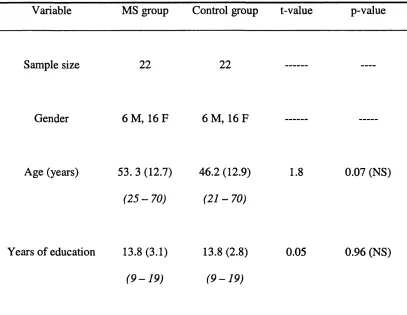
Page Table 1: Descriptive demographic variables for MS and control group 95
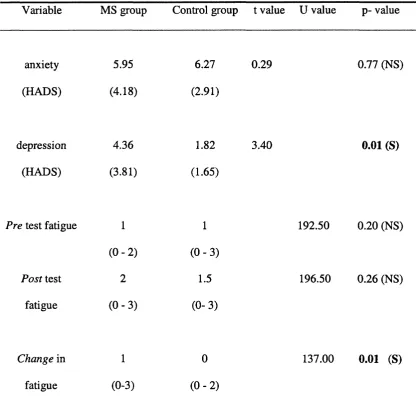
Table 2: Mood (HADS scale) and fatigue ratings 97
Table 3: Self-ratings of executive type difficulties encountered in everyday
life (DEX, Wilson et al., 1996) 98
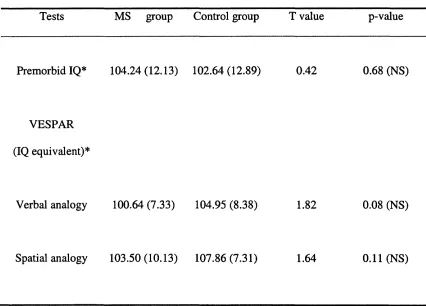
Table 4; Raw scores of tests of premorbid and current intelligence 99
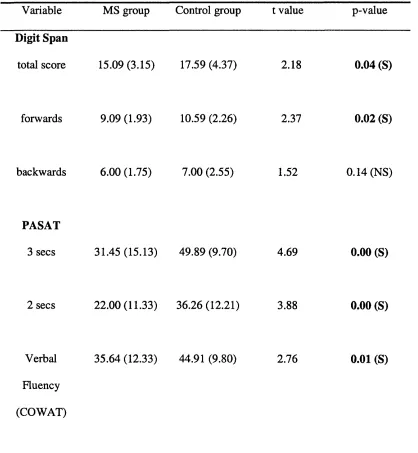
Table 5: Raw scores for baseline cognitive measures 101
Table 6: Raw score of the Hayling test performance for sections A & B variables 103
Table 7: Experimental switching task: sensible versus unconnected completions (Time) 105
Table 8: Experimental switching task: sensible versus unconnected completions (Error) 106
Table 9; Experimental switching task: sensible completions (Time) 109
Table 10; Experimental switching task: unconnected completions (Time) 110
Table 11: Experimental switching task: unconnected completions (Error) 111
Table 12: Experimental Proverbs task (Time) 113
Table 13: Experimental Proverbs task (Error) 114
Table 14: Intercorrelations between age, mood, self-rating of difficulties, disease duration,
and baseline cognitive measures for the MS group 117
Table 15: Intercorrelations between age, mood, self-rating of executive difficulties, and
baseline cognitive measures for control group 118
Table 16: Intercorrelations between fatigue, disability, and baseline cognitive measures
for MS group 119
Table 17: Intercorrelations between fatigue and baseline cognitive measures for the
LIST OF FIGURES
Page Figure 1: A classical model of processing demands of switching
APPENDICES
Appendix 1. Ethics Permission Page
1.1 Letter of Ethical approval from Harrow Research Ethics Committee 191
1.2 Letter confirming protocol amendments, Harrow Research Ethics
Committee 192
1.3 Letter of Ethical approval from Royal Holloway, University of
London Ethics Committee 193
Appendix 2. Information sheets & Consent forms
2.1 Patient Information Sheet 194
2.2 Patient Consent Form 196
Appendix 3. Questionnaires and Experim ental Measures
3.1 Participant Questionnaire 197
3.2 Visual Analogue Scale 199
3.3 Experimental Switching Task
3.3.1 Instructions to participant 200
3.3.2 Example of Recording sheet 202
3.3.3 Scoring criteria given to ‘blind’ raters 203
3.4. Experimental Proverbs Task
3.4.1 List of well-known English proverbs matched with Romanian &
rare English proverbs 204
CONTENTS
Page
ACKNOWLEDGEMENTS 2
ABSTRACT 3
LIST OF TABLES 5
LIST OF FIGURES 6
LIST OF APPENDICES 7
TABLE OF CONTENTS 8
CHAPTER 1: Introduction 13
1.1. Multiple Sclerosis (MS) 14
1.1.1. The nature of MS 14
1.1.2. Prevalence 15
1.1.3. Cause 15
1.1.4. Symptoms 16
1.1.5. Subtypes 16
1.1.6. Diagnosis 17
1.1.7. Prognosis 17
1.1.8. Impact of MS on daily living 17
1.1.9. Treatment 17
1.2. Cognitive function in MS 18
1.2.1. Overview 18
1.2.2. MS and subcortical dementia 19
1.2.3. Intellectual functioning 20
1.2.4. Memory 21
1.2.5. Speed of information Processing 22
1.2.6. Executive function in MS 23
1.2.6.1. Response initiation/ generation 23
1.2.6.2. Response inhibition 24
1.2.6.3. Set shifting 25
1.2.6.4. Working Memory 27
1.2.6.5. Attention 28
1.2.7. Further factors affecting cognition in MS 28
1.2.7.1. Affective and psychiatric disturbances 28
1.2.7.2. Fatigue 30
1.3. The relationship between executive function and frontall lobe pathology in MS 32
1.4. The impact of impaired abilities in the every day functiconing of people with MS 35
CHAPTER 2: The nature of executive function 38
2.1. Overview 38
2.2. Do the frontal lobes play an exclusive role in executive function? 39
2.3. Theoretical models of executive function 43
2.3.1. Overview of earlier models 43
2.3.1.1. Luria (1966,1973) 43
2.3.1.2. Norman & Shallice (1986) Supervisory Attentional Syystem / Contention Scheduling 44
2.3.1.3. Baddeley’s model of working memory and the Centrall Executive 45
2.3.2. A new understanding of executive function- the fractimnation of executive processes 46
2.3.3. Executive theory: the way forward 47
2.3.4. Executive function and inhibitory control 48
2.3.4.1. Response initiation 48
2.3.4.2. Response inhibition 48
2.3.4.3. The Hayling Test 50
2.3.5. A cognitive perspective to the understanding of initiatiion and inhibitory mechanisms 51
2.3.5.1. Information processing model (Posner & Snyder, 1975) 52
2.3.5.2. Working memory and inhibition 52
2.3.5.3. Production-system model and inhibition 53
2.3.5.4. Neural Network Model (Houghton & Tipper, 1996) amd inhibition 53
2.3.6. Executive function and set shifting 55
2.4. Proverbs and Metaphors 61
CHAPTER 3: Methodological issues in Executive research; 63
3.1. Executive function research 63
3.1.2. Ecological validity of neuropsychological measures 66
3.2. Issues pertinent to research in Multiple Sclerosis 67
CHAPTER 4: Rationale, Aims & Hypotheses of the thesis 69
4.1. Rationale and Aims 69
4.2. Research hypotheses 70
CHAPTER 5; Method 71
5.1. Participants 71
5.1.3. Healthy control participants 73
5.2. Effect of disability on performance 74
5.3. Background measures 74
5.3.1. Disability 74
5.3.1.1 .The Hauser Ambulation Index (AI) 74
5.3.1.2. The Troiano Scale (TS) 75
5.3.2. Fatigue 75
5.3.3. Mood 76
5.3.4. Subjective rating of difficulties 77
5.4. Baseline cognitive measures 77
5.4.1. General Intellectual functioning 77
5.4.1.1. The National Adult Reading Test (NART) 78
5.4.1.2. The Visual Spatial Reasoning Test (VESPAR) 79
5.4.2. Attention/ Concentration and working memory 79
5.4.2.1. Digit Span test (forwards and backwards) (WMS-III) 79
5.4.2.2. Paced Auditory Serial Addition Test (PASAT) 80
5.4.3. Executive Functioning 81
5.4.3.1. The Controlled Oral Word Association Test (COWAT) 81
5.4.3.2 The Hayling Test 81
5.5. Experimental tasks 82
5.5.1. Experimental Task 1- Switching test 82
5.5.2. Experimental Task 2- Proverbs task. 84
5.5.3. Consistency between both experimental tasks 87
5.6. Piloting the study 88
5.7. Procedure 89
5.8. Rationale for testing 91
CHAPTER 6: Results 92
6.1. Overview 92
6.2. Data Preparation 92
6.2.1. Missing data 93
6.2.2. Normality of distribution 93
6.2.3. Statistical analysis 93
6.3. Background measures 94
6.3.1. Demographics of MS and control group 94
6.3.2. Disease variables of the MS group 95
6.3.3. Mood 96
6.4. Baseline cognitive measures 98
6.4.1. General intelligence 98
6.4.2. Further baseline cognitive measures 100
6.5. Hayling test 102
6.6. Experimental tasks 104
6.6.1. Experimental switching task 104
6.6.1.1. Experimental switching task Part A: sensible - unconnected completion task demand 104
6.6.1.2. Experimental switching task Part B: switch/ non-switch task demand 107
6.6.2. Experimental proverbs task 111
6.7. The relationship between performance on baseline cognitive tests and other variables 116
CHAPTER 7: Discussion 122
7.1. Demographics of the present MS sample 122
7.2. Premorbid and current level of intellectual functioning 123
7.3. Hypotheses of the study and summary of the findings 124
7.3.1. Hypothesis 1 124
7.3.1.1. The Hayling Test 124
7.3.1.2. Experimental switching task 125
7.3.1.3. Experimental Proverbs Task 125
7.3.2. Hypothesis 2 127
7.3.3. Hypothesis 3 129
7.4. Validity of the Experimental proverbs task 129
7.5. Discussion of the findings in the context of the hypotheses and the research
literature 132
7.5.1. Response initiation and inhibition 132
7.5.1.1. Response initiation in MS 132
7.5.1.2. Response inhibition in MS 132
7.5.1.3. Effects of increasing inhibitory demands on response suppression. 133
7.5.1.4. Theoretical underpinnings of response initiation and inhibition in MS participants 134
7.5.1.4.1 Response initiation 134
7.5.1.4.2 Response inhibition 135
7.5.2. Task switching 137
7.5.2.1. Performance of the MS group in the set switching task 142
7.5.3. Working memory in MS 144
7.5.4. Working memory and response inhibition 145
7.6. Further consideration of cognitive functions in MS 148
7.6.1. Executive dysfunction 148
7.7.1. Mood 150
7.7.2. Fatigue 151
7.7.3. Disease variables 151
7.7.3.1. Disability rating 151
7.7.3.2. Disease duration 152
7.7.4. Duration of testing 152
7.8. Relating the present findings to the area of Executive function:
consideration of the relationship between different executive processes 153
7.9. Limitations of the study 154
7.10. Clinical implications of the study 157
7.11. Suggestions for future research 159
7.12. Conclusion 160
REFERENCES 161
C H A P T E R 1
INTRODUCTION
The presence of cognitive deficits in Multiple Sclerosis (MS) has long been recognised and impairment has been noted even at the early stages of the disease (Amato, Ponziani, Pracucci, Bracco, Giamfranco & Amaducci, 1995). Studies have highlighted the
presence of cognitive deficits in a number of areas of brain functioning including memory, attention, and information processing.
Impairment in executive functions such as self- monitoring, planning, sequencing & problem solving (Brassington & Marsh, 1998), has been established in patients with MS (e.g. Arnett, Rao, Bernardin, Grafman, Yetkin & Lobeck, 1994; Swirsky-Sacchetti et al.,
1992) and these deficits can impact significantly on peoples' everyday lives, causing distress and reducing quality of life. One executive process that appears to have received little attention within the MS literature is the ability to initiate and suppress verbal responses. Should an impairment in this ability be established in people with MS, then clinical approaches may be developed to help manage disinhibition in a rehabilitation setting.
executive ability of MS patients to switch from one task demand to another, a process that requires a degree of cognitive flexibility (Amett et al., 1994; Comi, Rovaris,
Falautano, Santuccio, Martinelli, Rocca et al., 1999). The ability to hold and manipulate information in very short term (working memory) has further been shown to be
compromised in this patient group (Ruchkin, Grafman, Krauss, Johnson, Canoune & Ritter, 1994). Since these impairments are known to have an adverse effects on health and quality of life of people with MS (Langdon, 1998), task switching and working memory will also be examined.
The review will begin by describing the nature of Multiple Sclerosis and cognitive function in this patient group, before moving onto describing executive functioning in MS and how impaired executive functions affect thinking and behaviour in daily life, drawing on clinically relevant studies (Chapter 1). An overview of theoretical models of executive function will be provided in the second part of the review, reviewing studies addressing theoretical issues (Chapter 2). In particular, the discussion will focus on response initiation and suppression, task switching and working memory. Finally, the aims and hypotheses of the study will be considered (Chapter 4). Some of the
methodological issues in undertaking research into executive functioning and in MS that are relevant to the present study will be outlined in Chapter 3.
1.1. MULTIPLE SCLEROSIS
1.1.1. The nature of Multiple Sclerosis
autoimmune disorder of the Central Nervous System in which parts of the nervous system known as nerve axons become inflamed. This leads to the loss of axons and the demyelination of sheaths that serve to insulate the axons (Kalkers, Vrenken, Uitdehaag, Polman & Bbarkhof, 2002). Where demyelination of fibres has occurred, sclerotic plaques or scar-like lesions within the brain white matter and spinal chord form (Brassington & Marsh, 1998). The transmission of nerve impulses is prevented which results in the neurodegeneration of the central nervous system and the development of a variety of clinical symptoms which contribute to an unpredictable disease course (Compston & Coles, 2002).
1.1.2 Prevalence
It has been estimated that approximately 2.5 million individuals suffer from Multiple Sclerosis worldwide. It is possible that the variability in the prevalence rates of MS may be reflective of better case recognition in some areas of the world than others. Twice as many women as men are diagnosed with the disorder (Compston & Coles, 2002).
1.1.3. Cause
Although the exact nature of the cause of MS remains unknown, research has suggested that an interaction between genes and the environment contributes to the onset of the disease (Brassington & Marsh, 1998). In terms of hereditability, the recurrence rate of MS in families has been estimated to be about 15% and in monozygotic twins it is approximately 35% (Compston & Coles, 2002). Speculations as to possible
environmental factors causing onset of MS include a viral infection (Compston & Coles,
1.1.4 Symptoms
Symptoms of MS vary from individual to individual because lesions may develop anywhere in the Central Nervous System (Brassington & Marsh, 1998). Symptoms include sensory, visual and motor difficulties and range from a blurring or loss of vision due to inflammation of the optic nerve (optic neuritis), dysarthria (impaired speech), pain, spasms or numbness in the limbs, impaired balance, coordination or gait (ataxia), and bladder dysfunction (Compston & Coles, 2002). Fatigue following physical activity or cognitive tasks is a common symptom (Compston & Coles, 2002).
1.1.5. Subtypes
Within MS different subtypes of disease course have been defined (Brassington & Marsh, 1998). Three subtypes are commonly recognised (Compston & Coles, 2000):
• Relapse-remitting type- involves episodes of relapse at random intervals with full recovery following a relapse. This type of MS is most common in young women and occurs in approximately 80% of presenting MS cases.
• Primary-progressive type- progression of the disability occurs from onset. There are no (or possibly a few minor) relapses.
• Secondary-progressive type- this follows an initial relapse-remitting phase (remitting type, see above) in which relapses become more frequent and
in this type of MS (Compston & Coles, 2002).
1.1.6. Diagnosis
A diagnosis of clinically definite MS is made following at least two episodes or attacks of neurological symptoms. There should be a minimum period of a month between both episodes with each episode lasting for at least 24 hours. Neurological symptoms
associated with the attacks should arise from two separate areas of the CNS (Poser et al., 1983). Patients may be classified according to different diagnoses subtypes (clinically definite, clinically probable or clinically possible MS). However it has been suggested that only patients with clinically definite or clinically probable diagnoses of MS be included in research studies (Poser, 1994).
1.1.7. Prognosis
Prognosis has been considered to be better where there are less motor difficulties and where sensory or visual problems dominate (Compston & Coles, 2002). The disease tends to progress at a faster rate in people who have been diagnosed after the age of 40 (late onset MS).
1.1.8 Impact of MS on daily living
It has been reported that MS affects activities of daily living in about 75% of patients. MS sufferers experience a range of degrees of disability reflecting their varying symptomology.
1.1.9. Treatment
preventing further progression of the disease (Compston & Coles, 2002). Use of Bete- Interferon is one of the immunomodulatory drugs used in the treatment of remitting- remitting type. Corticosteroids have been used to reduce inflammation during relapses (Brassington & Marsh, 1998) and other symptomatic treatments are available.
1.2. COGNITIVE FUNCTION IN MS
1.2.1 Overview
Cognitive impairments in MS were initially identified more than a century ago (Charcot, 1877). Since the 1980s, however, cognitive functioning in MS has been a rapidly
growing area of research as impairments are known to have widespread effects on daily functioning (Barak & Achiron, 2002).
Prevalence rates of cognitive impairment have been reported to vary between 40% and 60% (Hohol et al., 1997; Rao, Hammeke, McQuillan, Kahtri & Lloyd, 1984). The variation in rates have been attributed to factors such as type and number of neuropsychological tests used, the influence of clinical variables such as disease duration and degree of disability, and criteria for patient selection (Nocentini et al., 2001).
greater extent of lesion sites (Beatty, 1999; Brassington & Marsh, 1998; Heaton, Nelson, Thompson, Burks & Franklin, 1985). Other studies have found little relationship
between degree of cognitive impairment and these factors (Amato et al., 1995; Penman, 1991).
Similarly, there are contradictory findings in relation to an association between disease subtype and degree of cognitive impairment, yet there appears to be some degree of association in patients with the progressive type MS (Camp et al., 1999; Comi, Filippi, Martinelli, Campi, Rodegher & Alberoni, 1995; Heaton et al., 1985). Other studies, however, have provided little or no support for this relationship (Amato et al., 1995; Beatty, Goodkin, Beatty & Monson,1989; Rao, Grafman, DiGiulio, Mittenberg,
Bernardin & Leo, 1993). Impaired cognitive function has been observed in patients who are at the early stage of onset (Amato, Ponziani, Siracusa & Sorbi et al., 2001), and even where there are as yet few noticeable physical symptoms (Hotopf, Pollock & Lishman,
1994). Similarly cognitive deficits have been established in people at the later or more advanced stages of MS (Ryan, Clark, Klonoff, Li & Paty, 1996).
1.2.2 MS and subcortical dementia
The issue of whether or not MS is a subcortical dementia remains a continuing debate (Brassington & Marsh, 1998). Certainly there appear to be aspects of MS that are
consistent with that of a sub cortical dementia. These include cognitive slowing, reduced insight, forgetfulness, emotional difficulties such as depression, and executive
are lesions to these areas (Brassington & Marsh, 1998).
Studies examining cognitive function in MS have highlighted the relative preservation of language functions in the context of impaired memory and learning, attention, speed of information processing and executive abilities (Rao et al., 1991a; Ron, Callanan & Warrington, 1991). Each of these areas of cognitive function will be addressed in turn before focusing more specifically on executive function in this patient group.
1.2.3 Intellectual Functioning
Intellectual functioning is relatively well-preserved in MS although there may be a small decline over time (Rao, 1986). Impaired sensory and motor skills as a result of the disease process may interfere with performance on intellectual tasks such that
performance IQ scores are frequently found to be significantly lower than verbal scores (Penman, 1991). Various versions of the Wechsler Adult Intelligence test (WAIS) have been used in MS research studies to obtain a current level of intellectual functioning. However, the Verbal and Spatial Reasoning Test (VESPAR) (Langdon & Warrington, 1995) has been employed in a growing number of studies (Camp et al., 1999; Langdon & Thompson, 1999) to ascertain inductive reasoning ability in people with MS.
Premorbid intellectual level is commonly estimated in the UK in MS patients using the National Adult Reading Test (NART) (Brassington & Marsh, 1998; Camp et al., 1999; Foong, Rozewicz, Quaghebeur, Thompson, Miller & Ron, 1998; Langdon & Thompson,
1.2.4 Memory
Between 40% -60% of people with MS are reported to suffer from memory difficulties (Rao et al., 1993). Memory is one o f the most significant areas of cognitive function to be affected in this disorder (Brassington & Marsh, 1998). Minden, Moes, Orav, Kaplan & Reich (1990) reported up to 60% of their sample of MS patients to experience moderate or severe memory difficulties.
Studies have highlighted a variability in the type of memory affected in MS.
Recognition memory, implicit learning and the storage and encoding of information into long term or secondary memory appears to remain relatively intact. In contrast to this, impairment in working or immediate memory, recent and remote memory, and recall of information from long term memory that requires effort and the development of
strategies to aid retrieval have been highlighted (Grafman, Rao, Bernardin & Leo, 1991; Rao et al., 1993).
1.2.5. Speed of information processing
Studies have supported a slowing in cognitive processing speed in this group (Beatty, Goodkin, Monson, Beatty & Hertsgaard, 1988; De Sonneville, Boringa, Reuling,
Lazeron, Ader & Polman, 2002), and it is particularly salient for patients who have mild cognitive deterioration (Kujala, Portin, Revonsuo & Ruutiainen, 1995). Longer disease duration and greater plaque involvement have been associated with a slowing of
processing speed (Rao, Leo, Haughton, St. Aubin-Faubert & Bernardin, 1989).
The Paced Auditory Serial Addition Test (PASAT) (Gronwall, 1977) (see section
5.4.2.2.) has been commonly employed to examine the efficiency and speed of cognitive processing, sustained attention and working memory in MS patients (Archibald & Fisk, 2000; Brassington & Marsh, 1998; Hohol et al., 1997; Rao et al., 1991a). It was
originally developed for assessing information processing in brain injured patients for the purpose of rehabilitation (Gronwall, 1977).
Rao et al. (1991a) demonstrated the PAS AT to be one of the four most sensitive tests for detecting cognitive impairment in MS. DeLuca, Johnson & Natelson (1993) found patients with MS to be more impaired on all rates of information presentation of the PAS AT than control participants, particularly when information was presented at faster rates and was thus more demanding (Litvan, Grafman, Vendrell, Martiner, Junque & Venrell, 1988). An association between verbal memory impairment and poor
executive (D’Esposito, Onishi, Thompson, Robinson, Armstrong & Grossman, 1996) or articulatory loop (Litvan et al., 1988)). The PASAT has, however, been criticised for lacking in ability to vary the operational or structural capacities of working memory and for focusing solely on speed of information processing (Archibald & Fisk, 2000).
1.2.6. Executive function in MS
Executive functions in MS have shown to be compromised in patients with Multiple Sclerosis. In recent years there has been a growing number of neuropsychological studies that have highlighted difficulties patients with MS can have with abstract concept formation and set shifting (Heaton et al., 1985), abstract reasoning (Amato et al., 2001; Nocentini et al., 2001), sequencing tasks (Beatty & Monson, 1994), and verbal abstracting ability (Beatty, Hames, Blanco, Paul & Wilbanks, 1995). This section will discuss clinically-relevant articles addressing executive functions.
It would be important to uncover the nature of the cognitive processes that underlie the executive deficits highlighted in this neurological condition. However it appears that few studies have focused specifically on the precise cognitive processes or particular
mechanisms that are impaired in patients with MS, particularly the ability to shift set or task demand, the ability to inhibit prepotent responses, or working memory ability. These executive processes in MS will now be discussed as they are considered to be relevant to the current research study.
1.2 6.1. Response initiation/generation
& Ron, 1997; Heaton et al., 1985; Pozzilli et al., 1991; Swirsky-Sacchetti et al., 1992), which indicates that there is an impairment in the ability to initiate or retrieve items from semantic memory (see section 2.3.4.1). The Controlled Oral Word Association Test (COWAT) (see section 5.4.3.1) has been frequently used in MS studies. Beatty (2002) compared the usefulness of three verbal fluency measures (letters beginning with F, A or S or were examples of the categories of animals or parts of the body) in patients with MS. The study highlighted that all three measures were similar in sensitivity and
specificity in discriminating MS patients from controls. The COWAT was found by Rao et al. (1991a) to be one of the four most sensitive tests of cognitive impairment in MS.
1.2.6.2. Response inhibition
matched for age, sex and education. The findings suggest that the MS patients were able to inhibit distracter items but that a partial breakdown in inhibitory processes may be a plausible explanation for findings which included increased Stroop interference. The authors suggest that a greater sample size may be one factor to ensure that findings are robust. They also consider the potential effects of depression on performance, as negative effects have previously been found (Arnett et al., 1999; Filippi et al., 2000). Although the increased interference effects on the Stroop task did not appear to relate to depression scores in the MS group, it is possible that fatigue may have affected
performance in some patients more than others which contributed to the tentative findings. It may therefore have been worthwhile to have included a measure of fatigue in the study in order to explore the relationship between fatigue and Stroop interference.
To date there appear to be few studies that have explored the ability of patients with multiple sclerosis to inhibit over learned responses whilst generating new words to replace them. This suggests that executive functioning in Multiple Sclerosis remains a relatively under researched area.
1.2.6.3 Set-shifting
the new rule. The ability to change or shift category and the number of perseverations made are observed. A difficulty in utilising feedback may underlie the inability to shift to a new category (Kimberg & Farah, 1993).
The ability of each MS group to shift set and to form concepts was compared to a control group of back pain patients matched for age and education. A patient control group was used to control for factors such as effects of medication and emotional distress as a result of chronic illness, on cognitive performance. The chronic progressive group, unlike the relapse-remitting group, exhibited impaired performance on the WCST, making significantly more perseverative errors and hence achieving fewer categories. Differences between groups are unlikely to have been the effect of illness- related factors such as duration and severity, or medication. However subtype of course of MS, more specifically chronic progressive type, appears to relate to level of
performance. This has been supported by Mahler (1992) and suggests that future research should focus on conducting research using homogenous groups of patients (for example, only patients with secondary progressive MS). This methodology would perhaps allow for a more accurate understanding of the nature of cognitive impairment in MS to be gained.
1.2.6.4 Working Memory
Studies have highlighted an impairment in immediate memory for verbal material (verbal working memory) (Rao et al., 1993; Ruchkin et al., 1994). Impaired performance on the Digit Span Backwards test of the Wechsler Memory Scale-Revised (WMS-R) (see section 5.4.2.1.) has been highlighted in various studies (Ruchkin et al., 1994; Rao et al., 1993). This immediate memory deficit for verbal information has been linked to an impairment in the articulatory loop in terms of Baddeley’s (1986) model of working memory (Li tv an, 1988; Rao et al., 1993; Ruchkin et al., 1994) (see section 2.3.1.3). On the contrary, visuospatial working memory remains relatively preserved (Brassington & Marsh, 1998). There is support for an impaired Central Executive System (CBS) of Baddeley’s working memory in patients with MS as reflected by poorer performance on a dual paradigm task than a healthy control group (D’ Esposito et al., 1996).
1.2.6.5. Attention
Impaired attention and poor short term capacity span are frequently observed in patients with MS even in mild stages of the disease (Kujala et al., 1995). Impairment in both visual and verbal attention has been highlighted (Litvan et al., 1988; Ron et al., 1991). Kujala et al. (1995) suggest that tests of attention should be used systematically when examining cognitive functioning in this patient group. Commonly employed measures of attention in studies of MS include the Digit Span task (Amato et al., 2001; Beatty, Wilbanks, Blanco, Hames, Tivis & Paul, 1996; Pozzilli et al., 1991) as well as the PASAT (Litvan et al., 1988). Beatty et al. (1996) suggest that attentional impairment may underlie the memory difficulties observed in their MS group.
However, performance on the forward digit span task by MS patients has frequently been found to remain intact (De Luca et al., 1993; Klonoff, Clark, Oger & Paty, 1991; Litvan et al., 1988; Pozzilli et al., 1991; Rao et al., 1984). Similarly, Archibald and Fisk (2000) failed to find a significant difference between MS patients with mild to moderate MS and cognitive complaints, and a neurologically intact group, in terms of immediate memory span.
1.2.7. Further factors affecting cognition in MS
1.2.7.1 Affective and Psychiatric disturbances
with the process of adjustment to living with MS. It is speculated that in people with a vulnerability to developing emotional difficulties, MS may serve as a contributing factor or stressor (Brassington & Marsh, 1998).
Depression is commonly experienced by people with MS (Brassington & Marsh, 1998). Studies have reported lifetime prevalence rates of depression of approximately 50% (Kroencke, Denney & Lynch, 2001). Studies have provided support for the lack of a significant relationship between depression and impaired cognitive function (Camp et al., 1999; Krupp, Sliwinski, Masur, Friedberg & Coyle, 1994; Moller, Wiedemann, Rohde, Backmund & Sonntag, 1994; Rao et al., 1991a). Depression has not been associated with degree of disability, disease duration or clinical course / disease subtype (Moller et al., 1994). Nevertheless, other studies have provided support for a significant relationship between depression and information processing speed, working memory and executive skills (Amett et al., 1999).
Measures commonly used to assess affect in MS include the Beck Depression Inventory (BDI; Beck & Steer, 1987) and the Zung Self-Rating Depression Scale (Zung, 1995). However items in measures such as the BDI may be rated according to
physical symptomology rather than in terms of mood per se. The Hospital Anxiety and Depression Scale (HADS) (Zigmond & Snaith, 1983) overcomes this limitation by including items that are more likely to be rated according to mood. Crawford, Henry, Crombie & Taylor (2001) provide normative data for the HADS from a large non- clinical sample considered to be relatively representative of the general adult population of the UK in terms of age, gender and occupational status. The HADS has been
Thompson & Langdon, 2001; Foong et al., 1998; Foong, Rozewicz, Davie, Thompson & Ron, 1999).
1.2.7.2 Fatigue
Fatigue is one of the most serious complaints by people with MS and can affect up to 90% of individuals (Brassington & Marsh, 1998), particularly patients with progressive type MS (Iriarte & Carreno, 1996). Different types of fatigue have been
delineated. Motor fatigue is described as a decline in strength during muscle
contractions. Cognitive fatigue is a decline in mental or cognitive performance during tasks that demand sustained attention. Lassitude is the subjective sense of reduced energy (Schwid, Covington, Segal & Goodman, 2002).
There are variable findings to support a relationship between fatigue and cognitive impairment. Several studies have failed to find fatigue to affect cognitive function (Geisler, Sliwinski, Coyle, Mauser, Doscher & Krupp, 1996; Parmenter, Denney & Lynch, 2003) which contrasts with Sandroni, Walker & Starr (1992) who found an effect of fatigue on memory task performance, more specifically in slowing down reaction times. People with MS also report that their cognitive abilities are affected by fatigue (Schwartz, Coulthard-Morris & Zeng, 1996).
by asking the patient to indicate the degree of fatigue on a scale. In a recent study Archibald and Fisk (2000) included a visual analogue rating scale of fatigue severity where patients rated their current level of fatigue at the beginning and end of each test session from a scale of 0 (no fatigue) to 10 (extreme fatigue). The scale highlighted a significant difference between the patient and control group with patients reporting greater fatigue.
1.2.7.3 Disability
Various measures have been employed within research studies in order to examine the degree of disability experienced by individuals which can allow for comparison with the degree of cognitive impairment. The most widely used measure of disability in MS is the Kurtze Expanded Disability Scale (Kurtze, 1983). However this tool has been criticised for its poor reliability and its focus on mobility as the primary indication of degree of disability. It is considered to lack sensitivity to clinical changes that occur in other areas of physical functioning (Amato et al., 2001; Brassington & Marsh, 1998). Various other measures have since been developed such as the Neurological Rating Scale (Sipe, Knobler, Braheny, Rice, Panitch & Oldstone, 1984) and the Ambulation Index (Hauser, Dawson, Lehrich & Cohen, 1983). The latter tool has been employed in a more recent study to measure degree of disability (Aupperle, Beatty, Shelton & Grontkovsky, 2002).
1.2.7.4. Medication
function in MS (Brassington & Marsh, 1998) and thus the potential effects of such medication should be taken into consideration when carrying out research into cognitive function in this patient group. Turning to the immunomodulatory drugs, Interferon-beta
la has been shown to slow cognitive deterioration (Barak & Achiron, 2002).
1.3. The relationship between executive function and frontal lobe pathology in MS
In the light of the research findings in the literature which have highlighted impairment in executive processes in patients with MS (see section 1.2.6), the question has been raised as to the role of focal pathology, or presence of lesions in the frontal lobe, in contributing to executive deficits in the context of evidence of widespread brain abnormalities in MS (Foong et al., 1997; Foong et al., 1999). Clinical and imaging studies have provided support for a relationship between frontal pathology and executive dysfunction in this patient group.
Amett et al. (1994) demonstrated that patients with a preponderance of lesions in the frontal lobe were impaired on the WCST. The authors found that patients made significantly more errors on the test and achieved fewer categories overall than did patients with lesions that were not predominantly located in the frontal lobe.
Foong et al. (1997) further investigated the role of frontal lobe lesion load in
executive functions, more specifically in working memory, verbal fluency, planning and use of strategy, cognitive estimation and performance on the Stroop test, independent of intellectual decline, psychiatric symptomology or other physical health factors such as impaired vision that ordinarily may have affected performance (Foong et al., 1997). Significant correlations between frontal lesion load and scores on executive tests were established.
Swirsky-Sacchetti et al. (1992) found evidence for a relationship between left frontal lobe pathology and reduced performance on executive tasks of abstract problem solving and verbal fluency in 40 patients with either relapse-remitting or chronic progressive MS. However total lesion load as a result of widespread demyelination was not controlled for in this study.
A more recent study by Benedict, Bakshi, Simon, Priore, Miller & Munschauer (2002) examined the ability of a group of 35 MS patients of progressive and relapse-remitting subtypes on tests of executive function which formed part of a general
neuropsychological battery of memory and learning tests and a measure of information processing (PASAT, see section 5.4.2.2.). The WCST was also incorporated and the results highlighted impairment in conceptual reasoning, attention, verbal- and spatial- leaming. When controlling for total lesion load in this study, amongst other factors, a strong relationship between the executive process of conceptual reasoning and the superior frontal area of the cortex was nevertheless established using MRI. Although caution has been suggested when generalizing these findings to the rest of the MS
supporting a specific relationship between frontal lobe pathology and executive performance (Comi et al., 1999; Pozzilli et al., 1991).
Turning to the natural history of executive dysfunction in MS, Amato et al. (2001) measured the progress of the disease in patients over a ten year period and found memory and abstract reasoning (an executive ability) to be the first cognitive functions to be affected. Linguistic processes appear to become compromised later in the disease process although linguistic functions are generally considered to remain relatively intact in MS. Linguistic processes can be characterized as less distributed in the cerebral cortex and are therefore less vulnerable at any given cerebral lesion load. Conversely, executive processes rely on more distributed networks (see section 2.2) and are therefore more likely to be affected at any given lesion load.
Although the exact nature of the damage to the frontal lobe as a result of the disease process and the subsequent deficits on executive task performance do not appear to have been fully clarified in MS research, it is likely that frontal cortico-subcortical circuits that link areas of the frontal cortex with other brain regions such as the thalamus, basal ganglia and striatum (Alexander, DeLong, & Strick, 1986; Tekin and Cummings, 2002) are particularly affected by the demyelinating process. These subcortical areas are predominantly white matter and especially vulnerable to the pathological processes in MS.
selective attention (Brassington & Marsh, 1998). Similarly, Comi et al. (1999) consider the ‘selective involvement of frontal lobe executive functions’ as resulting from the
‘disruption of neural connections among cortical associative areas, as well as between cortical and subcortical structures’ as a consequence of lesions to the white matter (p. 135). Further studies have reported subcortical and frontal involvement in patients with MS with lesions present in these areas (Brassington & Marsh, 1998).
Nevertheless, there appears to be evidence to support the hypothesis that specific frontal lobe pathology contributes to executive impairment in patients with MS in the context of a widespread disease process, and that anterior brain areas may be one of the initial areas to be affected by the disease (Rao et al., 1991a). In particular, an impairment of response initiation and inhibition processes, and in the ability to switch between task demands, as has been highlighted in the MS literature (Amett et al., 1994; Comi et al., 1999), is possibly associated with underlying frontal lobe pathology in MS. Given that there is evidence for an impairment of executive processes in this patient group, it is likely that these deficits will impact on the everyday lives of people with MS. This issue will be now be considered in relation to the present study.
1.4. The impact of impaired abilities in the everyday functioning of people with MS
previously active, enthusiastic and even-tempered (Ahola et al., 1996), Dysexecutive syndrome is associated with focal anterior lesions (Bryan & Luszcz, 2000; Crawford, 1998a; Fuster, 1989; Weinberger, 1993). The precise role of the frontal lobes is discussed in section 2.2.
The inability to inhibit inappropriate verbal responses or behaviour is observed in dysexecutive syndrome. Verbal disinhibition may take the form of ‘slips of the tongue’, strong habit intrusions, or tactless or inappropriate sexual comments that cause social embarrassment but which are difficult to stop from saying (Reason, 1979). Verbal disinhibition may reveal an underlying dysexecutive syndrome or impairment in inhibitory control mechanisms, particularly when the supervisory attentional system becomes overloaded (Roberts, Hager & Heron, 1994). Patients with frontal lobe pathology or damage, following a head injury for example, have been noted to have difficulties with social disinhibition which cause major difficulties in every day life, particularly in the work place and in social settings (Deb, Lyons & Koutzoukis, 1999). Emotional and cognitive deficits such as these are considered to be the most important factors in determining an individual’s ability to return to work and social activities (Van den Broek, 1999). In clinical settings, rehabilitation often targets these difficulties.
(Diaz-Olavarrieta et al., 1999; Chiaravalloti & Luca, 2003). Disinhibition has taken the form of sexual disinhibition (Frohman, Frohman & Moreault, 2002), uninhibited talking, the blurting out inappropriate comments and a failure to respond to normal social cues (Lou et al., 2002). It is possible that underlying this evidence of disinhibition is an impairment in inhibitory control processes which may be associated with frontal lobe pathology.
Further impairments such as a lack of flexibility in the cognitive style of patients with MS that can lead to ineffective everyday problem solving and a difficulty in stopping actions which are no longer appropriate to current task demands. A reduced working memory ability can lead to difficulties with tasks that demand planning, organizing and multi-tasking (Langdon, 1998). These executive difficulties can impact on the
individual's family and work life. Consequently, a move towards understanding such processes at a cognitive level is likely to provide a more sound basis on which to base rehabilitation techniques that will help people with MS to better manage their cognitive difficulties and will contribute to an improvement in their quality of life (Langdon,
1997).
C H A P T E R 2
TH E NATURE O F EXECUTIVE FUNCTION
2.1 Overview
Theoretical models of executive function posit mechanisms which optimize performance in situations requiring the control of multiple cognitive processes (Bryan & Luszcz, 2000). The model includes mechanisms involved in providing appropriate responses to novel situations and mechanisms involved in problem-solving (Christ, White, Brunstrom & Adams, 2003). Also included are abilities to plan, organise, sequence, monitor and correct behaviour, to attend selectively to information and to suppress unwanted or strong habitual responses. Processes associated with working memory also involved (Petrides, 2000b).
Various studies have been conducted to examine how aspects of the theoretical model of executive processes underlie our everyday behaviour. The three executive processes that are considered to be most commonly referred to in the literature include the inhibition of inappropriate responses, shifting of mental set and the monitoring and updating
2.2. Do the frontal lobes play an exclusive role in executive functioning?
The current literature continues to reflect the debate on whether the frontal lobes play an exclusive role in executive functioning, or whether there is involvement of other brain regions (Andres & Van Der Linden, 1998; Garavan, Ross, Li, & Stein, 2000).
Frontal subcortical circuits that link the frontal cortex of the brain to other brain areas are believed to play an important role in mediating behaviour. These circuits originate from frontal cortical areas including the dorsolateral and orbital frontal regions and the cingulate gyrus (Tekin & Cummings, 2002). Executive problems are believed to arise from lesions to the dorsolateral prefrontal cortex and include difficulties with shifting set, mental flexibility, generating or initiating motor programmes and strategies, attending to information, organizing behaviour, monitoring in working memory, and ordering events within the correct time sequence. Lesions to the orbitofrontal cortex are thought to result in changes of personality, for example increased disinhibition. Apathy and reduced motivation are associated with damage to the anterior cingulate gyrus
(Tekin & Cummings, 2002).
Several studies, including functional imaging studies, have provided support for a link between executive process and the frontal lobes (Burgess & Shallice, 1996a; Burgess & Shallice, 1996b; Miller, 1984; Regard, 1981). Duncan and Owen (2000) employed functional imaging methods to highlight the involvement of three regions of the
prefrontal cortex of the frontal lobes, the mid-dorsolateral, mid ventrolateral and dorsal anterior cingulate cortex and executive functions such as problem solving,
and initial learning of novel tasks. The mid-dorsolateral prefrontal cortex has been found to play a role in the monitoring of information in visual working and spatial memory (Alexander et al., 1986, Monchi, Petrides, Petre, Worsley, & Dagher, 2001; Petrides, 2000a). The mid-ventrolateral prefrontal cortex is involved with executive processes associated with memory processes such as comparing and judging stimuli (Petrides, 2000b) and active retrieval of visual information (Cadoret, Pike & Petrides, 2001).
The anterior cingulate gyrus is located on the medial surface of the frontal lobes (Carter, Botvinick & Cohen, 1999) and is considered to play an important role in the allocation of attention, for example when there is the need to inhibit a prepotent responses or to detect conflicts, motivated attention and error detection (Carter et al., 1999). It is believed that the mid-dorsolateral, mid ventrolateral and dorsal anterior cingulate cortical regions of the frontal lobe collaborate in dealing with complex cognitive demands, lending support to the theory of specialization of function within a particular brain region (Duncan & Owen, 2000). The ACC is also thought to play a role in verbal fluency tasks where several responses are cued or initiated and there is competition in the production of responses. Duncan and Owen describe electrophysical studies in which neurones spread across the dorsal and ventral regions of the frontal cortex are found to adapt the type of information they carry to the demands of the executive task.
dorsolateral prefrontal cortex have been implicated (Barch, Braver, Sabb & Noll, 2000; Frith et al., 1991; Warburton et al., 1996).
Further experimental and clinical evidence suggests that the frontal lobes play a central role in set shifting ability (Metzler & Parkin, 2000; Monsell, 2003), more specifically, the dorsolateral region of the prefrontal cortex (Milner, 1963; Milner, 1964; Monsell, 2003; Sandson & Albert, 1984; Stuss et al., 2000). Patients with frontal lobe lesions have often been observed to have difficulty switching from use of a previous strategy to use of a novel strategy when sorting a series of cards on the WCST (Kimberg & Farah,
1993). ‘Stuck-in-set’ perseveration is considered to be related more specifically with the left frontal cortex (Monsell, 2003; Sandson & Albert, 1984).
Contrary to the above findings, however, executive function has also been associated with a ‘distributed set of neural networks’ (Andres & Van Der Linden, 2001). It has been considered that ‘supervisory attentional functions, including inhibition (Norman & Shallice, 1986), are sustained by a cortical-subcortical network, and not by a localised region such as the frontal lobes’ (p. 39, Andres & Van der Linden, 1998).
Several studies have provided little evidence to support the exclusive involvement of the frontal lobes in response inhibition (Anderson, Damasio, Jones & Tranel, 1991). A review of the literature by Andres and Van Der Linden (1998) in which studies
not less accurate.
Andres and Van Der Linden (2001) examined the performance of patients with focal lesions located exclusively in the frontal lobes on executive tests such as planning, rule detection and inhibition previously employed by Shallice and others (Shallice, 1982; Burgess & Shallice, 1996a; Burgess & Shallice, 1996b). The findings showed that although this patient group was slower than the control group on two of the executive measures, the groups did not differ in terms of accuracy of performance on all three executive tasks as might be expected in patients with lesions exclusive to the frontal lobe. Shallice and Burgess found that significantly more errors and slower responses latencies were produced by the patient group who had lesions that were not exclusively located in the frontal cortex when compared to the control group (Burgess & Shallice, 1996b). This suggests that there is not necessarily an exclusive relationship between the frontal cortex and executive processes and that there may be relative sparing of some executive processes in patients with damage to the frontal lobe (Andres & Van Der Linden, 2001). Andres & Van der Linden (2002) suggest that the frontal cortex ‘cannot serve, on its own, as the CE (Central Executive) of the brain’ (p. 843). Neuroimaging studies by Garavan, Ross, Li and Stein (2000) have provided further evidence for activation of cortical areas outside of the frontal lobes during performance on executive tests. Involvement of the parietal lobe has also been implicated (Miyake et al., 2000).
Brain regions outside of the frontal cortex have also been implicated in the process of set switching through brain imaging studies. These areas include the parietal lobes,
There have been several competing theories of executive function that have been proposed by those working in the field of cognitive and neuropsychology. This section will provide an overview of models of executive function to date,
2.3. Theoretical Models of Executive Function
2.3.1. Overview of earlier models
Examples of important models that have shaped our understanding of the role of the frontal lobes in our ability to plan, implement and monitor complex thoughts and actions have been proposed by Luria (1966; 1973) and Norman and Shallice (1980).
2.3.1.1. Luria (1966,1973)
Among L una’s many important proposals to the area of neuropsychology, he made a further valuable contribution to the understanding of the frontal lobes in speech and language functions, focusing on the disturbances in language that result from damage to the frontal lobes (Stuss & Benson, 1990).
2.3.I.2. Norman and Shallice (1986)
Supervisory Attentional System (SAS)/Contention Scheduling
Since Luria’s earlier account of frontal lobe functioning was proposed, the model that dominated our understanding of executive functions until more recently is one that has been developed by Norman and Shallice (1986). The model attempts ‘to characterise the cognitive operations of the frontal lobes and their architecture’ (p. 2, Godfrey et al.,
1999). Norman and Shallice have proposed a single, or unitary, mechanism that underlies the control of attention and behaviour and provides an understanding of how people might perform in routine and novel, non-routine tasks that involve planning and decision-making. The model comprises of two parts, the Contention Scheduling System (CSS) and Supervisory Attentional System (SAS).
When an individual enters a non-routine, novel situation, or one where schemata are conflicting, the SAS (the ‘higher level’ system) becomes involved in directing attention so that automatic responses of the CSS (the ‘lower level’ system) are prevented or inhibited from influencing non-routine actions. The SAS, which is believed to be of limited capacity, is hence thought to be involved in situations where there is a strong habitual response to be overcome or where temptation is to be resisted. It is also thought to allow for the planning, organisation and direction of actions towards goals in non routine, novel situations, and where intervening with difficulties associated with automatic processes is required. Further roles of the SAS include involvement in
situations thought to be dangerous, and in allowing for one schemata to be favoured over another. It is also believed to be involved in monitoring of errors. Impairment in these functions of the SAS is thought to result in disorganised behaviour and problems in executing every day tasks such as making a cup of coffee or brushing one’s teeth (Forde & Humphreys, 2000).
The SAS is believed to be associated with the frontal lobes since studies of patients with frontal lobe damage have frequently highlighted impairment in their ability to inhibit over-learned or prepotent responses in tasks where novel responses are expected (Forde & Humphreys, 2000) (see section 2.2, chapter 2). The SAS appears to have difficulty ‘switching o ff a dominant schema which leads to perseverative behaviour.
2.3.1.3. Baddeley’s model of Working Memory and the Central Executive
loop and visual-spatial scratchpad), and the central executive. The phonological loop is believed to hold and manipulate verbal or speech based information, and the visuospatial scratch pad is involved in the manipulation of visual information and images. The central executive is proposed to act as an attentional control system whose remit is to control the two slave systems. The central executive is thought to be brought into play when coordinating two simultaneous tasks. Norman and Shallice’s (1986) SAS was brought into the model by Baddeley (1986) as a mechanism involved in controlling and diverting attention where required (Barnard, Scott & May, 2001).
Baddeley (1996) has suggested that the central executive may be used as a structure or component through which executive processes may be further studied and analysed. The central executive has been associated with the frontal lobes (Baddeley, Della Sala, Papagno & Spinnler, 1997b), more specifically the prefrontal cortex, as supported by brain scanning studies (Braver, Cohen, Nystom, Jonides, Smith & Noll, 1997).
2.3.2. A new understanding of Executive Function- the fractionation of executive
processes
While both Norman and Shallice’s (1986) and Baddeley's (1986) models of cognitive function have been able to explain the reason for impaired performance of patients with frontal lobe lesions on some executive-type tasks, both models fail to account for why these patients can show variability of performance on executive tests, often attaining scores within the normal range on some but not all executive tasks (Godefroy, Cabaret, Petit-Chenal, Pruvo, & Rousseaux, 1999; Shallice, 1988).
separable processes or fractionated subprocesses that may underlie the control of cognitive functions. This has been provided as an alternative approach to understanding executive function and has been central to a current debate within the field (Miyake, Freidman, Emerson, Witzki, & Howerter, 2000). These authors have cited various studies that have provided evidence in support of this argument including studies employing tests of executive function that tap specific executive processes, and functional neuroimaging and lesion studies (Duncan, Johnson, Swales, & Freer, 1997; Duncan & Owen, 2000; Petrides, 2000a).
Godefroy et al. (1999) suggest that such uncertainty about executive function still persists because of an ‘underspecification of the control operations themselves’ which results in ‘a severe limitation of any theoretical account ‘ (p. 2). Further research is thus required to continue to work towards a better understanding of this area and, in
particular, to identify or specify the key cognitive processes involved in the control of complex thoughts and behaviour. This has been supported by other theorists such as Smith and Jonides (1999) who state that the ‘highest priority is to turn now further attention to executive processes and their implementation in the frontal cortex’ (p. 1660).
2.3.3. Executive Theory: the way forward
More recently, there has been increasing emphasis on the importance of inhibition as an executive function. Miyake et al. (2000) quote that this process ‘deserves further
further focus of the present study.
2.3.4. Executive function and Inhibitory Control
2.3.4.1. Response Initiation
A process that is associated with inhibitory control is the ability to initiate appropriate responses (response initiation) (Burgess & Shallice, 1996a). Studies examining this ability have highlighted how patients with frontal lobe lesions have shown poorer performance on tests of verbal fluency that examine response initiation when compared to patients with lesions to other areas of the brain (Burgess & Shallice, 1996a; Miller, 1984). The Verbal Fluency task is considered to be a classic test of executive
functioning because of its reliability and good discriminatory power (Phillips, 1997) (see section 5.4.3.1.). It is thought to involve processes of selecting, generating or initiating stimuli from a larger set (animal names or words beginning with a particular letter). Both the maintenance and monitoring of word production, and the generation and control of strategies in retrieving items from longer term memory, are also thought to be involved (Fletcher & Henson, 2001).
2.3.4.2. Response Inhibition
There are several neuropsychological tests commonly used in neuropsychological studies to examine the ability to both initiate and suppress responses. Traditionally Go/No-Go tasks (Drewe, 1975) have been employed to examine inhibitory control and response selection. Smith and Jonides (1999) have described use of the Stroop task (Stroop, 1935) to consider the relationship between inhibition and attention. This task consists of names of colours which are presented in different coloured print in relation to two conditions. In the first condition colour names are presented in the same colour print. The second condition involves colour names presented in different colour print. Performance in the latter condition is usually poorer due to competition arising between two conflicting executive processes. Attention is automatically focused on naming the word that is in conflict with the process of naming the colour of the print (the weaker process of the two). Attention and inhibition processes are subsequently brought into play and attention is diverted to processes relevant to the task (that is, naming the print colour and to deliberately inhibiting the irrelevant but automatic and more dominant process of naming the colour word) to ensure that the task performance is successful (Smith & Jonides, 1999). See section 2.2 for discussion of the relationship between response inhibition and the frontal lobes.
effect of background factors that may interfere with the findings.
2.3.4.3. The Hayling Test
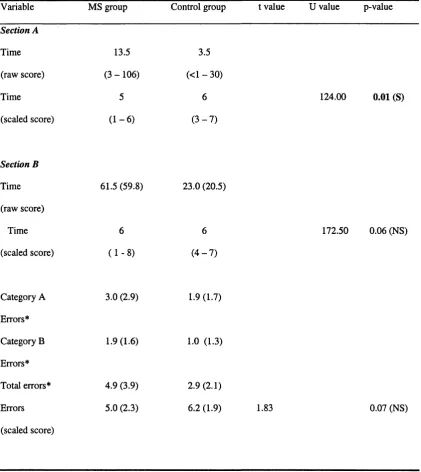
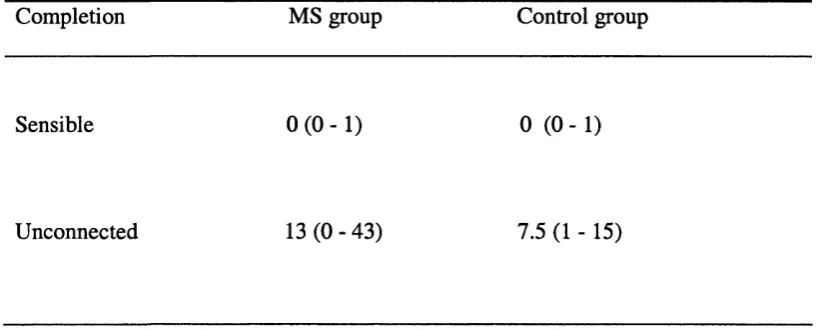
The Hayling test involves two sections, both of which involve the presentation of 15 sentences in which the last word is missing. The individual is required to complete each sentence with a missing word; the missing word is expected to be strongly cued by the sentence itself with a ‘high probability of a particular response occurring’ (p. 264). Section A involves completing the sentence as quickly as possible with a word that best completes the sentence, thus examining the ability to initiate automatic responses. Section B, however, requires the individual to complete the sentence with a word that does not make sense in the context of the sentence, for example, by using a nonsensical word. This condition examines the ability of the individual to initially suppress an automatic, strongly cued, well-learned response prior to generating a novel word that makes no sense in the context of the sentence. Responses in section B are categorised according to whether they were unrelated to the sentence (as required by the
instructions), were connected to the sentence (a sensible completion) thus breaking the test instructions, or were semantically related to the sentence in some way. Response latencies are also examined to provide a measure of response initiation speed (sum of the response latencies) for each section. In particular, the difference between section B latencies minus section A latencies is calculated. This is thought to represent the thinking time required to generate an inappropriate, novel response compared to a word that best fits the context of the sentence as in section A.
(see section 2.3.1.2.). In comparing patients with damage to the frontal lobe (the 'anterior' group) with the patient control group (posterior group with no frontal
involvement) that were matched for age and IQ, the anterior group were more impaired in their ability to initiate verbal responses and to suppress habitual responses as expected (see section 2.2). The anterior group appeared to have used their ’thinking time’ less effectively by taking significantly longer in both sections than the patient control group. The importance of considering both errors rates and response latencies in understanding the nature of spared abilities in tasks of inhibition has been supported by Christ et al. (2003).
To date there appears to be only one (unpublished) study that has applied the Hayling test to an MS group (Nathaniel-James, 2000). The study found MS participants to perform significantly worse on Part B of the Hayling test in term of response
suppression (number of errors) and efficiency in suppressing inappropriate responses (time latency). No differences were observed between the groups in terms of response initiation (part A).
Two perspectives will now be outlined in providing a theoretical underpinning to an understanding of response initiation and suppression.
2.3.5. A Cognitive Perspective to the understanding of initiation and inhibitory
mechanisms
‘demonstrations of frontal disinhibition are not linked to any formal specified account of inhibitory processing’ (p. 364). Consequently relevant theoretical accounts of inhibitory processing that take a cognitive perspective will now be reviewed.
2.3.5.1. Information Processing Model (Fosner & Snyder, 1975)
According to this model, two processes of ’spreading activation’ and strategic conscious attention can be both called into play when single word items are retrieved from long term memory. Nathaniel-James et al. (1997) have applied this theory to better
understanding the role of response initiation and suppression processes during completion of the Hayling test as follows.
‘Spreading activation’ involves an association process that is automatically initiated by presentation of a stimuli. Nathaniel-James et al. have hypothesised that when sentences are presented in the first part of the Hayling task, related or connected words that best complete the sentence are retrieved from long termed memory via this automatic, non attention demanding cognitive process where strategic processes play little role. The second process, involving conscious attention, is thought to be called upon in the second part of the Hayling task. It is suggested that this second condition requires the
employment of attention demanding strategies to allow for the suppression of automatic prepotent responses and the generation of an unrelated, inappropriate word.
2.3.5.2. Working memory and inhibition
Working memory in MS is a further focus of the present study, yet there remains relatively little understanding about the relationship between working memory
two processes are ‘intimately’ related such that a reduction in the efficiency in one of these processes (for example, working memory) can reduce the ability to inhibit prepotent responses (Roberts et al., 1994). Similarly, greater activation of working memory may be required when inhibition of stronger prepotent responses is required (Cohen & Servan-Schreiber, 1992). Roberts et al. (1994) suggest that there are two minimum requirements to successfully prevent disinhibition; to keep in mind information that is required in making an appropriate response and then to use that information in order to guide actions appropriately.
2.3.5 3. Production-system model and inhibition
According to this connectionist model by Kimberg and Farah (1993), the likelihood of prepotent responding increases as working memory associations weaken and there is difficulty in coping with competition between responses. Consequently, success in inhibiting responses efficiently is considered to be ‘a function of the strength of the prepotency, the current functioning of working memory processes, and the working- memory demand of the task’ (p.376, Roberts et al., 1994).
2.3.S.4. Neural Network Model (Houghton and Tipper, 1996) and inhibition
A model that has been developed in recent years to allow for a better understanding of the procedure involved in the selection of appropriate responses is that by Houghton and Tipper (1994; 1996). Metzler and Parkin (2000) have outlined how the model