University of South Carolina
Scholar Commons
Theses and Dissertations
2018
The Effect Of 7E Model Inquiry-Based Labs On
Student Achievement In Advanced Placement
Physics: An Action Research Study
Vaughn C. Vick
University of South Carolina
Follow this and additional works at:https://scholarcommons.sc.edu/etd
Part of theCurriculum and Instruction Commons
This Open Access Dissertation is brought to you by Scholar Commons. It has been accepted for inclusion in Theses and Dissertations by an authorized administrator of Scholar Commons. For more information, please [email protected].
Recommended Citation
T
HEE
FFECT OF7E
M
ODELI
NQUIRY-B
ASEDL
ABS ONS
TUDENTA
CHIEVEMENT INA
DVANCEDP
LACEMENTP
HYSICS:
A
NA
CTIONR
ESEARCHS
TUDYby
Vaughn C. Vick
Bachelor of Science Presbyterian College, 2002
Master of Education
Western Governors University, 2005
Submitted in Partial Fulfillment of the Requirements
For the Degree of Doctor of Education in
Curriculum and Instruction
College of Education
University of South Carolina
2018
Accepted by:
Nathaniel Bryan, Major Professor
Rhonda Jeffries, Committee Member
Christine Lotter, Committee Member
Kamania Wynter-Hoyte, Committee Member
DEDICATION
ACKNOWLEDGEMENTS
I would like to thank my major professor, Dr. Nathaniel Bryan, for his wisdom,
support, and advice throughout this process. With utmost gratitude, I extend thanks as
well to my committee members, Dr. Rhonda Jeffries, Dr. Kamania Wynter-Hoyte, and
Dr. Christine Lotter, for giving of their time and expertise. Finally, I would like to thank
ABSTRACT
This dissertation involved an action research study of the effects of 7E Model
inquiry labs in Advanced Placement (AP) Physics on students’ performance on AP exam
inquiry lab-based questions. The study, which is described in detail, employed a
one-group, pretest-posttest design to answer the research question regarding the effects of the
inquiry-based AP Physics labs on students’ achievement on AP exam inquiry lab
questions as measured by unit assessments. Data collection and analysis strategies are
also discussed. Sources of data included a pretest, lab reports, and a posttest. The data
were analyzed using descriptive statistics, specifically a t-test comparison of pretest and
posttest results. Reflection upon the data and formation of an action plan after its analysis
were the last steps in the action research process. Through this process, it was
demonstrated that the 7E Model inquiry labs did have a positive effect on student
TABLE OF CONTENTS
Dedication ... iii
Acknowledgements ... iv
Abstract ...v
List of Tables ... vii
Chapter 1: Background ...1
Chapter 2: Theoretical Framework ...13
Chapter 3: Methodology of the Study ...52
Chapter 4: Findings from the Data Analysis...68
Chapter 5: Summary and Discussion ...92
References ...105
Appendix A: Conceptual Framework ...116
Appendix B: Pretest with Rubric ...117
Appendix C: Lab Report Rubric ...120
Appendix D: Posttest with Rubric ...121
Appendix E: Lab 2 Student Handout ...123
Appendix F: Lab 2 Extension Activity ...126
LIST OF TABLES
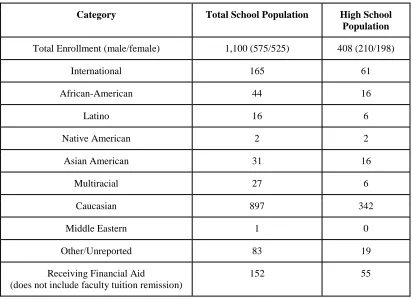
Table 3.1 Enrollment Statistics for Monarch K-12...55
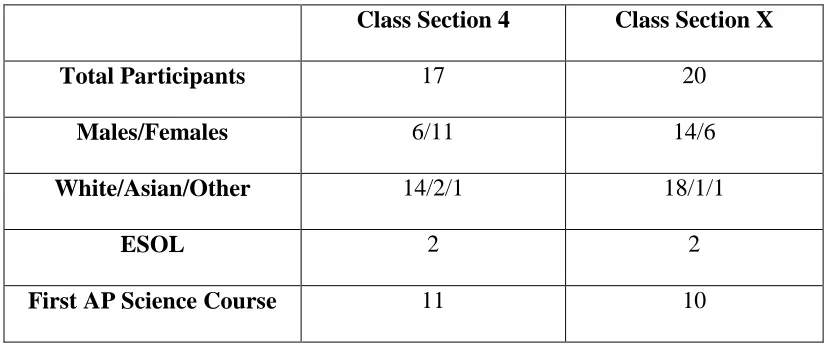
Table 3.2 Demographic Information for Class Sections ...56
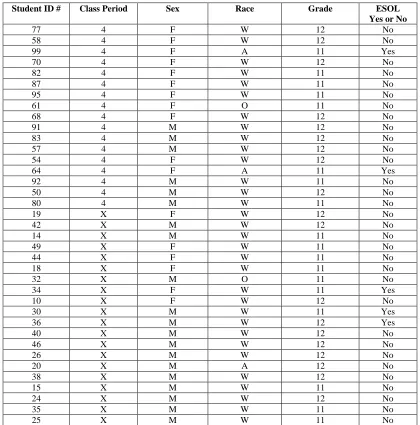
Table 3.3 Student Participant Information ...57
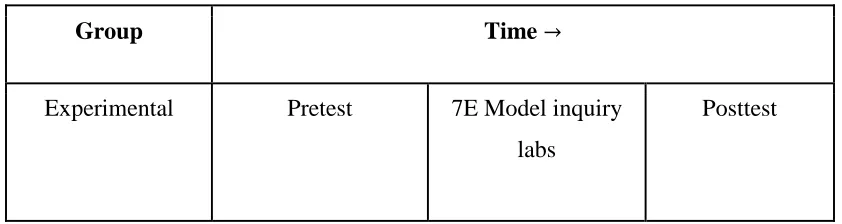
Table 3.4 One-group, pretest-posttest design ...61
Table 3.5 7E Model Used in the Study ...62
Table 4.1 Summary of Pretest Scores by Point Criteria ...70
Table 4.2 Total Points Earned by Individual Students with Comments on Answers ...72
Table 4.3 Student Performance on Science Practices (SPs) in Lab 1 ...75
Table 4.4 Student Performance on Science Practices (SPs) in Lab 2 ...77
Table 4.5 Student Performance on Science Practices (SPs) in Lab 3 ...80
Table 4.6 Student Performance on Science Practices (SPs) in Lab 4 ...82
Table 4.7 Student Performance on Posttest by Points Awarded ...85
Table 4.8 Average Student Performance on Posttest Question by Points Awarded ...87
Table 4.9 Class Averages for Each of the Four Labs ...88
CHAPTER
1:
BACKGROUND
Implementation of inquiry labs is not new to the science classroom. Since the
1940s, many science educators have called for the use of inquiry to further science
education and to help the United States to maintain its status as a leader in science and
technology (Spring, 2014). From the 1950s through the 1980s, the era of the Cold War,
efforts to surpass the Soviet Union caused federal funding of science education skyrocket
(Chiappetta, 2007). U.S. government-sponsored textbooks were better than commercial
ones, and they advocated that science be taught as inquiry (Chiappetta, 2007).
Even today, inquiry continues to play a large role in science education. In 2013, in
an effort to maintain American competitiveness in an ever-expanding global market, the
National Research Council furthered the understanding of inquiry with release of the
Next Generation Science Standards (NGSS) (NGSS Lead States, 2013). The NGSS
provided a framework for describing behaviors in which scientists engage and set out to
explain better what is meant by the term “inquiry” (NGSS Lead States, 2013).
Most recently, in 2014, the College Board has adopted a newly-revised
curriculum for Advanced Placement (AP) Physics that includes inquiry as a standard. In
order to clarify the new inquiry recommendations, the Board has developed Science
Practices (SPs). These SPs “align to the . . . curriculum framework to capture important
aspects of the work that scientists engage in, at the level of competence expected of AP
an idea to include. It is a standard and requirement of the AP Physics curriculum, with as
much value as much of the content knowledge of the course.
Statement of the Problem of Practice
The College Board has recently introduced a new form of the AP exam that
requires students to design and evaluate inquiry-based physics labs. The 7E Model
(Eisenkraft, 2003) has been the basis for the inquiry labs suggested by the Board. The
identified problem of practice (PoP) for the present action research study involved
Advanced Placement (AP) Physics at the teacher-researcher’s high school, where
typically students have scored well on the traditional AP exams. With the introduction of
new inquiry-based lab questions, however, students found it difficult to maintain their
levels of achievement. The teacher-researcher also needed to develop the pedagogical
skills to conduct the labs successfully for the students in the class. In order to prepare
students for the new exam, she implemented 7E Model structured inquiry labs in her two
AP Physics sections in the fall of 2017. The impact of the inquiry labs on the exam
performance of the students in these classes was the focus of the study.
The AP development committee based the new AP Physics inquiry labs on the 7E
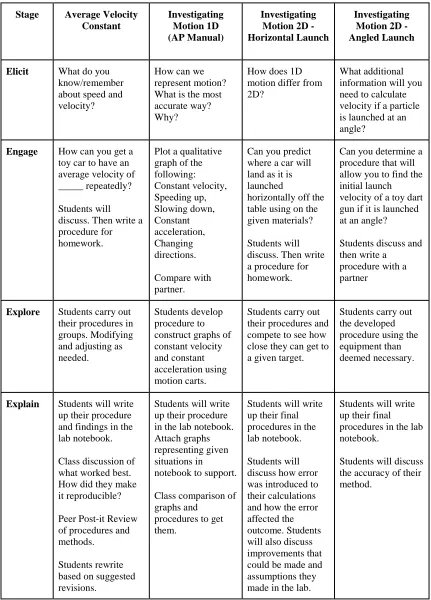
model (College Board, 2015). This model or learning cycle consists of seven stages:
elicit, engage, explore, explain, elaborate, evaluate, and extend (Eisenkraft, 2003). It
allows teachers to present lessons that incorporate inquiry labs and activities into their
curriculum in a cycle that promotes a student-centered classroom (2003). The
research-based 7E model employed a constructivist approach to challenge students’
The teacher-researcher was concerned that a lack of exposure to the new 7E
model inquiry labs would hinder her students’ success on the AP physics exam. It would
be unfair for the students not to participate in the inquiry labs in contravention of the new
College Board learning objectives. She was also concerned that, even though her students
may have known the content, they would be unable to communicate their knowledge to
an AP exam grader appropriately. Traditionally, AP Physics students in the
teacher-researcher’s classes have been very strong in mathematical skills but weaker in their
ability to explain concepts and other processes involving scientific communication.
Because few of their previous courses included inquiry labs, which are
time-consuming and complex, most students entering AP Physics had had little actual
experience with them. They expected lab experiences to involve following a set of
directions prescribed by the teacher in order to arrive at an expected result. Owing to this
lack of experience with inquiry labs, the behavior, participation, and techniques of the
students needed to be observed during them. Students may have shown positive attitudes
toward inquiry labs, but if they were observed exhibiting poor behavior and techniques,
then the full purpose of the labs would not have been achieved.
An inquiry lab is a challenge in itself; in addition, students must communicate
procedures, analyses, and conclusions clearly. In most of their previous science classes,
many students had only been asked to write to demonstrate knowledge gained through
short-answer and essay-assessment questions (Yore, Bisanz, & Hand, 2003). With the
new AP revisions, students had not only to become proficient in problem-solving for lab
of writing, explaining, and justifying their procedures and conclusions in their lab reports
and on the AP exam inquiry lab questions.
This teacher-researcher began to wonder whether there was a connection between
7E Model inquiry labs and the development of scientific communication skills, that is,
whether students, by participating in the labs, could strengthen and improve their
scientific communication skills. Further, it seemed students’ skills in and familiarity with
inquiry labs could improve their achievement on AP inquiry lab-based exam questions.
Given that students can earn college credit for passing AP exam scores, doing well on
these exams can save them money by reducing the number of college courses required to
obtain a degree. Beyond the test score, developing the problem-solving skills used in
inquiry labs can help students to be successful in future endeavors, when as adults they
find themselves able to use prior knowledge to develop a plan to solve problems that they
encounter. Effective communication is also crucial for any person, scientist or otherwise.
By increasing their proficiency in problem-solving and communication skills, then,
students can be better prepared for future careers and educational pursuits in science and
technology.
The teacher-researcher was discouraged by the predominantly white and male
make-up of her classes and sought to use 7E model inquiry labs to encourage more
students from traditionally underrepresented groups, such as female students, to take AP
Physics and succeed. The aim was for the make-up of the classes to mirror more closely
the demographics of the school. The teacher-researcher worked to diversify her
would be more accessible to all students while still adhering to the standards of
achievement.
Research Question
This action research study sought to discover the effect of the newly-developed
7E Model inquiry labs on student performance on lab-based AP exam questions. The
research question (RQ) was accordingly framed as follows:What are the effects of 7E
Model inquiry labs in Advanced Placement (AP) Physics on student achievement on AP
exam inquiry lab-based questions as measured by unit assessments?
Purpose Statement
The primary purpose of the present study was to determine the effect of 7E
Model inquiry labs on the performance of two sections of AP Physics I students on AP
exam inquiry lab-based questions. The secondary purpose was to devise an action plan
for improving the effectiveness of AP teachers in the context of the unique location and
population of high-level science students at the teacher-researcher’s school.
Brief Overview of the Methodology
The current inquiry was conducted as an action research study to answer the
research question regarding the effects of 7E Model inquiry labs on the performance of
AP Physics students on AP exam inquiry lab-based questions. Action research can be
defined as cyclical or spiral paths that a teacher-researcher takes and reflection on those
paths (Elliot, 1988). In each cycle, the teacher-researcher identifies a practical problem to
be solved, develops strategies to address the problem, implements the strategies, and
reflects on the results, which reflection may reveal other problems to be addressed (Dana
because this methodology allowed the teacher-researcher to carry out the work in her
own classroom. Action research is not meant to be generalized to a larger population, but
addresses a specific problem in a particular location (Mertler, 2014), and it served as a
means for this teacher research to explore her own classroom and better understand her
students in relation to the research question.
After identifying a broad PoP, the teacher-researcher narrowed it to a specific
research purpose. Through a review of relevant literature, the topic was further refined
and the research question determined. During the acting phase, the teacher-researcher
conducted a pretest, implemented the 7E Model inquiry labs, collected data, and
concluded with a posttest. The data were then analyzed using a t-test to determine
whether the 7E Model had an effect on student achievement. The t-test was conducted
using Excel. The percentage correct from the pretest was compared with that from the
posttest. Based on the data analysis, the teacher reflected on the study to determine its
effectiveness, problems in implementation, modifications to be made, and need for future
study. The teacher-researcher also included the subject participants, i.e., her AP Physics 1
students, in the reflection process to understand better the strengths and weaknesses of
the study design and the 7E Model. After reflection, the teacher-researcher developed an
action research plan to implement the findings of the study in her own classroom. The
current action research study was informed by a conceptual framework (Appendix A)
discussed in detail in Chapter 3.
The action research study, then, was of a one-group, pretest-posttest design. Two
sections of AP Physics 1 served as the experimental group, participating in the 7E Model
whether the 7E Model inquiry labs affected student performance on lab-based inquiry
exam questions.
Significance of the Study
This action research study was designed to contribute to the body of research on
the 7E Model and inquiry-based labs. Of the many studies consulted in the review of the
literature, none seemed to focus on groups similar to the population of high school AP
Physics 1 students examined here. Thus much of this work involved college or middle
school students or was conducted in a country other than the United States.
In fact, most of the research on the effectiveness of the 7E Model has been
conducted in Turkey, which adopted a constructivist approach to science curriculum
development and education in 2005 (Balta & Sarac, 2016). The current action research
study therefore serves to increase understanding of the effect of the 7E model on U.S.
students. Further, many of the Turkish studies (Duran & Duran, 2004; Acisil & Turgut,
2011) involved only the 5E (as opposed to 7E) Model with the inquiry labs.
Other work on inquiry and learning cycles in physics labs has focused on
populations that differ significantly from the one studied for the present research. Thus
the Investigative Science Learning Environment (ISLE) developed at Rutgers University
showed positive results with inquiry in a physics lab, but the relevant study was
conducted in a university setting rather than a high school classroom (Etkina, Karelina,
Ruibal-Villasensor, Rosengrant, Jordan, & Hmelo-Silver, 2010). The ISLE study also did
not employ the 7E Model specifically as the learning cycle.
The present study, by contrast, involved use of the 7E Model with inquiry labs in
its 2014 guidelines was the introduction of Science Practices (SPs; Appendix G), which
included inquiry-based labs based on the 7E Model (College Board, 2014a). Through the
inquiry labs, students were asked to develop procedures, analyze data, and form
conclusions based on the evidence. A key facet of these skills is the ability to
communicate what has been done and learned in the inquiry labs effectively and in a
scientifically appropriate way. A study was accordingly required to determine whether
these changes did in fact improve student’s performance on the AP inquiry lab-based
questions.
Rationale for Action Research
In science education, action research has been conducted at many levels for the
purpose of “advancing knowledge about how science teachers teach and what students
learn in science” (Capobianco & Feldman, 2010, p. 911). Capobianco and Feldman
(2010) argued that action research in the science classroom can serve as a way for science
teachers to maintain a capacity for change; they must adjust to ongoing changes in
education, and action research can serve as a mean to address and embrace these changes.
In the context of the evolving AP science curriculum, this teacher-researcher aimed to use
action research as a means to investigate changes in her current classroom and lab
practices, since the action research study of 7E Model inquiry labs in her own classroom
had the potential to enhance instructional practices for her students.
The action research, then, offered to the teacher-researcher the opportunity to
improve her classroom practice by gaining more insight into 7E Model inquiry labs and
facilitating scientific communication. She hoped to receive feedback from the data
their education, as always, is the main objective, and it was felt that any insight gained
through this research would improve the current classroom situation.
Summary of the Findings
Students were given a pretest at the beginning of the study and a posttest after
completing four 7E Model inquiry-based labs for which they submitted written lab
reports. A t-test determined that scores had significantly increased between the pretest
and posttest. The t-test results and observations made from the lab reports indicated that
the 7E Model inquiry-based labs did indeed contribute to an increase in performance on
AP inquiry lab-based type questions.
Limitations of the Study
This action research study was limited by the small number of student participants
(N = 37); for while the group of AP Physics 1 students was larger than most of the
teacher-researcher’s previous classes, it was still too small to be widely generalizable.
The study was also constrained by a short research period (approximately six weeks).
Through the use of an extended research period and a larger and more diverse sample of
participants, a study similar to this one could provide more information concerning the
impact of 7E Model, inquiry-based physics labs on students’ performance on AP
lab-based questions.
Dissertation Overview
This first chapter of the dissertation has provided an overview of the current
problem of practice, the pertinent background information concerning the problem, and
the research question. Chapter 2 provides a review of relevant literature focused on the
exam. Chapter 3 describes the action research methodology used, the role of the
teacher-researcher, and details regarding the setting and participants. The data are analyzed and
discussed in Chapter 4. In Chapter 5, the results are discussed and avenues for future
research are suggested. An action plan is also proposed in the final chapter describing the
teacher’s plans to implement the findings in her future classes.
Keyword Glossary
7E Model
Developed by Eisenkraft (2003) as an expansion of the 5E Model, the 7E Model
is a learning cycle composed of seven steps, namely elicit, engage, explore, explain,
elaborate, evaluate, and extend (2003). The model was used by the College Board (2015)
to develop inquiry labs for AP Physics.
Action Research
This kind of research is conducted by teachers for their own use, helping them to
assess their instructional practices (Mertler, 2014).
Advanced Placement (AP) Physics
These high school physics courses were developed by the College Board to focus
on topics typically included in the first and second semesters of an introductory
college-level physics course (College Board, 2014a). Students generally take a standardized,
cumulative exam at the end of the school year, their score on which can earn college
credit at some colleges and universities.
Advanced Placement (AP) exams
These standardized, cumulative exams are administered at the end of an AP
questions and free response questions. Again, a student may earn college credit with a
passing score.
College Board
This organization is responsible for developing the AP curriculum, and it designs
and assesses the AP exams. The College Board also develops and administers the
Scholastic Assessment Tests (SAT).
Inquiry lab
This is a guided inquiry activity in which the teacher provides a question and the
students design the procedure, develop explanations, and communicate their results to
answer a provided question (Miranda & Hermann, 2012).
Inquiry lab-based question
A multiple-part question on either a teacher-designed assessment or a part of an
AP exam developed by the College Board that requires a student to develop a procedure,
analyze lab results, and/or evaluate possible sources of error in addressing a given
lab-based problem. On the AP exam, such questions appear in the free response section of the
exam.
Science inquiry
This term refers to science taught by means of a learner- or student-centered
approach (Chiappetta, 2007). Students construct scientific knowledge through an “active
process of investigation” (2007, p. 21).
Science Practices (SPs)
These practices involve AP Physics objectives designed to promote students’
Integration of these practices by teachers throughout the AP Physics curriculum is
intended to facilitate students’ efforts to connect content learning objectives with inquiry
and reasoning skills (Appendix G).
Traditional lab
Traditional labs involve predetermined steps and expected outcomes. They are
often communicated in list form, much like a recipe, which is why they are sometimes
called “cookbook labs.” Such labs are generally not accepted as a part of student-centered
CHAPTER 2: THEORETICAL FRAMEWORK
Constructivism
Constructivism is a learning theory that developed in response to behaviorism and
cognitivism (Keser & Akdeniz, 2010; Harasim, 2012) during a recent period of
educational reform in the United States. Drawing on the research of Piaget, Bruner,
Goodman, and Vygotsky (Ertmer & Newby, 1993; Harasim, 2012), constructivism was
founded on the notion that learners create or construct meaning from experience (Ertmer
& Newby, 1993; Colburn, 2000). Every learning situation is viewed through learners’
previous learning and knowledge (Ertmer & Newby, 1993). Students take responsibility
for their own learning, that is, for constructing the knowledge required in various
situations (Altun & Yucel-Toy, 2015). Thus teachers, rather than controlling and
directing the learning environment, serve as coaches or facilitators (Keser & Akdeniz,
2010), supporting students so that they can discover and interpret knowledge on their
own (Altun & Yucel-Toy, 2015). Constructivist activities in the classroom involve
problem-based learning, inquiry labs, dialogues with fellow students and teachers, usage
of multiple sources of information, and various ways in which students can demonstrate
diverse understandings (Windschitl, 1999).
Vygotsky furthered this approach with his theory of social constructivism;
according to which students construct meaning about ideas and concepts through
interactions with others (Singer, Marx, & Krajcik, 2000). Ideas are explored and
sense of what is being communicated (Lederman & Abel, 2014). The four main features
of social constructivism are active construction, situated cognition, community, and
discourse. Active construction requires students to become immersed in a given context
(Singer et al., 2000), to construct knowledge by explaining, gathering evidence,
generalizing, applying concepts, and representing things in various ways (Singer et al.,
2000). When students are able to construct their own understanding of a subject actively,
they are more likely to develop a deeper understanding of it (Singer et al., 2000). Situated
cognition requires that students be immersed within the context of a subject so that new
learners can grow through social and intellectual support. Support can only come through
a community of people practicing and learning a given discipline. Discourse provides the
community with opportunities to exchange ideas, learn what counts as evidence, and
develop in the language of the subject (Singer et al., 2000).
A constructivist perspective may at first seem ill-suited to teaching science. In
practice, though, when students construct their own knowledge, the role of science
teachers is to facilitate the acquisition of the particulars of a certain concept in a manner
that is in line with scientific principles (Mulhall & Gunstone, 2012). Thus constructivism
in the science classroom does not mean a free-for-all with a multitude of student
understandings. Rather, it is the role of science teachers to link students’ construction of
meaning with scientific knowledge and the nature of science; thus they must be
introduced to the “physics way of knowing” and thereby provide opportunities for
students to discuss their ideas about physics (Mulhall & Gunstone, 2012).
Social constructivism can allow students to move away from their own
through discourse with fellow students and questioning from the teacher (Colburn, 2000;
Mulhall & Gunstone, 2012). Cooperative learning and questioning are major tenants of
social constructivism; for when students explain their viewpoints to others, they may
become aware of problems with their explanations, such as lack of sufficient information
(Colburn, 2000). Posing challenging questions to one another during a lab experience
which may be a less threatening experience for students than responding to the same
questions posed by a teacher (Colburn, 2000). If students are to learn how physics is
practiced in the real world, they must be given access, not just to physical experiences,
but also to discussion of the concepts with their peers and teachers (Driver, Asoko, &
Leach, 1994).
In creating constructivist classrooms, teachers follow five basic principles: (1)
pose interesting questions, (2) use key concepts to construct learning, (3) incorporate
student viewpoints, (4) adapt the curriculum to correct students’ misconceptions, and (5)
evaluate learning based on subject matter context (Altun & Yucel-Toy, 2015). Teachers
must ask questions that spark students’ interests and thoughts, and activities should be
based around key concepts and involve diverse ways to evaluate student viewpoints
(Altun & Yucel-Toy, 2015). Student misconceptions should be addressed within the
structure of classroom activities, and assessments should be evaluated in a way that is
consistent with the purpose of the lessons (Altun & Yucel-Toy, 2015). By participating in
such activities, students are socialized into knowing the ways of school science (Driver,
Asoko, & Leach, 1994) as they develop the necessary critical perspective on science and
purposes of scientific knowledge, limitations encountered in science, and the reasons why
scientists make certain claims (Driver, Asoko, & Leach, 1994).
So that their lab activities support constructivist principles, science teachers are
urged to provide lab activities before discussing the expected results with students
(Colburn, 2000). In other words, students benefit by participating in labs before receiving
lectures on the topics covered. Thus, for example, rather than being given data tables,
they can be encouraged to create their own ways of organizing information (Colburn,
2000). So also students can be encouraged to invent a procedure to answer a question
posed at the beginning of a lab, during which they can debate findings, discuss outcomes,
and share findings in a group context (Colburn, 2000). Throughout a lab activity, teachers
can use a questioning strategy to help students demonstrate their thoughts (Colburn,
2000). After an understanding has been developed, then mathematical problem solving
and reasoning can begin (Mulhall & Gunstone, 2012).
Dewey
John Dewey based his theory of experience on the principles of continuity and
interaction (Dewey, 1938). From this perspective, a student’s past experience influences
her present, interacting with the present moment. The present experiences must allow
students to grow and develop in their learning, and teachers, serving as guides, must be
aware of their previous knowledge in order to help them connect the past with the present
situation. The teacher helps students to create new knowledge, but cannot do the learning
for them, since this involves making connections with their past experiences (Dewey,
Prior to entering AP Physics, the majority of students at the researcher’s school
had only participated in traditional, ”cookbook” labs, which Dewey would not have
supported. These traditional labs give students step-by-step instructions and have a
known outcome. Deficiencies occur because students do not have opportunities to
connect prior knowledge to the present. Although traditional labs do involve student
movement, of which Dewey would approve, they do not allow the students to create their
own context for learning. Because every step is already predetermined, with no room for
creativity or individual experiences, students tend to miss basic concepts, fail to develop
a sense of the scientific process, and often are unable to apply what they learn to different
situations (College Board, 2015). Students in traditional labs are merely told the right
answer, which impedes construction of their own knowledge. When students do not
create a personal connection to learning, it has no meaning for them, and they have
difficulty communicating what they have done or why they did it.
In an AP Physics inquiry lab, a question or problem is posed to students, who are
asked to develop a solution to the problem or an answer to the question using physics
principles that they have learned through lecture, reading, or prior experience. There are
often numerous ways to answer a question. Consistent with Dewey’s theory of
experience, students connect prior knowledge to the present situation in order to answer
the question posed in the lab, which would occur in the “engage” and “elicit” stages of
the 7E model (Eisenkraft, 2003).
Dewey believed that scientific inquiry carried out without consideration of prior
experience, knowledge, and misconceptions could not lead to problem-solving or the
addressed in traditional physics instruction or introductory physics textbooks (Dykstra,
Boyle, & Monarch, 1992). Logical arguments about Newtonian mechanics presented by a
teacher, for example, do not encourage conceptual learning when the reasoning makes
little sense to students in the context of their current views, which means that the
traditional teaching of physics is not effective in facilitating students’ understanding of
the concepts taught in class (Dykstra, Boyle, & Monarch, 1992). By leveraging their prior
knowledge through the use of learning cycles, students can construct their own
conceptual framework, which is necessary if they are to leave a physics course having
been disabused of their misconceptions (Dykstra, Boyle, & Monarch, 1992). Dykstra et
al. (1992) argued that effective physics instruction emboldens students to learn in a way
that promotes conceptual understanding whereby the individual constructs knowledge.
Classrooms must be structured to facilitate students’ development of physics concepts for
themselves, and, in order for this to happen, teachers need to recognize students’ prior
knowledge (Dykstra, Boyle, & Monarch, 1992).
As a progressivist, one of Dewey’s main goals was to “enrich and expand
everyday experience” (Pugh, 2011, p.107). As in Dewey’s Lab School, students in AP
Physics inquiry labs are often given real-world problems to solve. The physics inquiry lab
can thus provide a transformative experience through which the student can integrate
school learning with everyday experiences (Pugh, 2011). The problems given to students
in the Lab School were often associated with work (Dewey, 1938). Many AP Physics
students wish to pursue careers in science in which they will be presented with questions
and problems to solve. Inquiry labs can help prepare them for future work by promoting
in like manner as Dewey sought to prepare his students for their future work. AP Physics
inquiry labs are designed to help students develop scientific communication and
problem-solving skills. For whether or not students actually become scientists, they need to know
how to approach problems through an experimental or scientific process, again as urged
by Dewey (Harris, 2014).
In the lab, an AP teacher ensures safety when equipment is used and answers
basic procedural questions. Dewey (1938) suggested that teachers should not provide
answers pertaining to a lab but should instead offer guidance regarding resources that
students can use to develop their own solutions. Because the teacher administers not just
the labs but instruction for the entire course, she is aware of her students’ background
with the material in other contexts. This awareness helps her to facilitate the students’
connections between prior knowledge and the current lab.
Through the use of Dewey’s principles, this action research project sought to
improve students’ true science practices, which help to develop their epistemic basis for
science and its processes (Osborne, 2014). During activities, including those elaborated
for the new AP inquiry-based labs, students ask questions and define problems, develop
and use models, plan and carry out investigations, use mathematical thinking, construct
explanations and solutions, engage in arguments from evidence, and communicate
information (Osborne, 2014). According to Osborne (2014), science practices help
teachers to clarify goals for their students’ experiences and learning during labs and to
develop professional language for communication. Through science practices in the AP
inquiry labs, students can connect previous knowledge to a current situation; therefore,
creating their own context, students should then be better able to communicate their
procedures and findings and thus to be more successful when reporting their inquiry labs
and writing answers on the AP exam.
Piaget
Piaget characterized intellectual development in terms of four stages, namely
sensory-motor, preoperational, concrete, and formal thought (Driver, Asoko, & Leach,
1994). During sensory-motor stage, occurring from birth to age two, a child’s thinking is
exhibited by such actions as reaching and sucking (Karplus, 2003). From ages two to
seven, children begin to develop language and to describe their feelings (Driver, Asoko,
& Leach, 1994). AP Physics students are in last two stages which deal directly with
secondary students; in the third, concrete thought stage, which generally occurs between
the ages of seven and twelve, a child begins to think more logically, but may be still tied
to concrete ideas (Karplus, 2003). During the final, formal thought stage, individuals
aged twelve and up use logical and formal thinking, which can include forming and
testing hypotheses (Karplus, 2003).
Many current learning cycles and inquiry models are based on the work of Piaget.
In order to move from one stage to the next, students must mature in their views and have
experience with their physical environment (Karplus, 2003) through processes of
assimilation and accommodation (Driver, Asoko, & Leach, 1994). During assimilation,
students interpret new information within their own cognitive structure, while
accommodation occurs when students adapt or reconstruct new information to make
Piaget’s theory of how students construct their knowledge has influenced many
scholars working on conceptual change and student conceptions (Driver, Asoko, &
Leach, 1994). Karplus (2003) suggested that science teachers can benefit from applying
Piaget’s theory in moving students from concrete to formal thought; however, teachers
must focus on student reasoning patterns and must not expect each student to engage
easily or entirely in either. When learning physics, students must begin to acquire formal
thought, especially when designing lab experiments. Lab designs during inquiry activities
or on lab-based exam questions are not concrete. When teachers work with students to
help them move their ideas of the natural world relating to physics principles to the
formal stage, the students enjoy greater success on inquiry labs and the AP exam.
Vygotsky and Social Constructivism
Unlike Piaget, who saw the construction of knowledge as an individual pursuit,
Vygotsky recognized that learning can involve a transfer from social contexts to
individual understanding (Driver, Asoko, & Leach, 1994). Students encounter new ideas
in the classroom, which is a social situation in the context of which they make sense of
the information individually (Chiappetta, 2007). Vygotsky developed his idea of the zone
of proximal development (ZPD) to illustrate the knowledge that can be achieved by
working in a group as opposed to working alone (Chiappetta, 2007). It becomes a
teacher’s job both to supply this social context for the ZPD and to provide opportunities
for students to make sense of the information individually after social interaction
(Chiappetta, 2007).
Learning takes place within specific communities (Driver, Asoko, & Leach,
classroom and are learning to participate in the scientific community. Through the use of
inquiry labs, these students are able to experience and learn from both communities. They
work within lab groups to communicate and construct knowledge with their peers about
the new content as teachers guide them through the use of the suggested Science
Practices to learn more about the scientific community and how scientists interact. They
begin to develop scientific communication skills through social interaction and discussion
with peers, while individual lab reports and reflections facilitate their personalization of
the new knowledge to make it their own.
Bruner and Discovery Learning
During the Cold War period, Bruner advocated that students learn through
discovery (Chiappetta, 2007). This new method of “discovery learning” was founded on
the notion that people learn by doing rather than by rote memorization of facts (Bruner,
1961). As in the inquiry-based labs of AP Physics, learning thus conceived takes place
through problem-solving activities in which students use prior knowledge to create their
own answers to a question (Bruner, 1961). Bruner argued that students need to interact
with their environment and perform experiments in order to learn (Bruner, 1961). Like
Dewey, Bruner viewed teachers as guides who encourage students to figure answers for
themselves (Chiappetta, 2007); in his own words, “success in teaching depends upon
making it possible for children to have a sense of their interaction” (Bruner 2013, p. 80).
Students accordingly should be encouraged to approach tools, not as fixed
objects, but as amplifiers of various capacities (Bruner, 2013). Thus, in an AP Physics
inquiry-based lab, students may need to think of supplies in new and different ways; a
encouraged to find alternatives tools for performing a given task; thus the measurement
of the period of an object, which is often based on time and use of a stop watch, could
alternatively be carried out by taking length measurements. In keeping with Bruner’s
(2013) suggestions, students can through discovery and inquiry-based labs come to
realize that tools are not fixed and can learn to create different meanings for common
objects.
Review of Related Literature
The review of related literature begins with a discussion of the historical context
and the evolution of inquiry in conjunction with the formation of national standards.
Attention is thus given to studies of distinctions between inquiry labs and those
traditionally used in science classrooms. Next, research into learning cycles and their
development is reviewed. Finally, changes in the AP Physics course and in AP science
more broadly are explained.
Historical Context
The first public high school opened in Boston in 1821, but such schools did not
become common until the 1920s or 1930s (Spring, 2014). High school curricula generally
emphasized the sciences, with the coursework usually being determined by the assigned
textbook (Spring, 2014). Most teachers, however, had a very weak background in science
(Chiappetta, 2007). During early 1800s, most the country’s elite students attended private
high schools in which the prevailing trend was to emphasize preparation for college
science and a focus on content and memorization was deemed appropriate for achieving
this purpose (Chiappetta, 2007). High school science teachers thus taught diluted college
The Cold War period. Founded in 1950, the National Science Foundation (NSF)
represented an effort to draw more students to scientific fields. NSF founder Vannevar
Bush was of the opinion that educating more science students was key to maintaining
national security and U.S. leadership in the world, and this meant improving instruction
and stimulating more interest in science (Spring, 2014). Responding to the launch of the
Sputnik satellite by the Soviet Union in 1957, President Eisenhower and Congress passed
the National Defense Education Act (NDEA) the following year to ensure that the U.S.
education system would not fall behind those of other countries (Chiappetta, 2007). The
NDEA accordingly advocated incentives for high-ability students to pursue studies in the
sciences, sponsored programs to increase the quality of science teachers, and increased
funding for the NSF (Spring, 2014).
These developments set the stage for revision of the science curriculum. One of
the main reformers was Joseph Schwab (Deboer, 2006), according to whom the United
States faced three main challenges in this regard, namely developing more scientists,
cultivating political leaders able to make policy based on an understanding of science,
and educating the public as to the changing nature of science (Deboer, 2006). Scientific
inquiry was the educational model favored by Schwab, who held that students should see
science “as a series of conceptual structures that should be continually revised with new
information or as evidence is discovered” (Barrow, 2006, p. 266; Deboer, 2006).
Anticipating the AP Physics inquiry labs, the thought was that students needed to study
science in the manner in which it was performed in the real world, which meant more
inquiry-type lab activities (Barrow, 2006). Science was to be seen as malleable and
2003), students were also called on to read scientific reports, analyze data, and discuss
conclusions reached by scientists (Barrow, 2006). Anticipating the “elaborate” stage of
the 7E Model, Schwab thought it more important for students to carry out their own
investigations so as to arrive at their own understanding of the nature of science (Deboer,
2006).
During the 1950s through the 1980s, the era of the Cold War and efforts to
surpass Russia saw federal funding of science education skyrocket (Chiappetta, 2007).
The textbooks sponsored by the U.S. government, which were better than those that were
commercially available, advocated science taught as inquiry, an approach that Schwab’s
work had popularized, though in fact many high schools across the country neglected to
adopt the method (Chiappetta, 2007). Though well-meaning, many of these new science
inquiry-based courses created the impression that scientific inquiry is subject-specific and
excludes many students owing to its difficulty (Deboer, 2006). In any case, by the early
1980s, federal funding for science programs, including inquiry, began to decrease and
student achievement and interest in science to decline (Chiappetta, 2007).
Formation of national standards. As it had been earlier in the Cold War era,
science education was again in the 1970s and 1980s criticized for failure to prepare
students for futures in science and technology (Chiappetta, 2007). Concern over national
defense was augmented by concern over economic competition as Japan began to emerge
as a major force in technology-related industries, such as electronics and automobiles,
that were once dominated by the United States (Chiappetta, 2007). Published by the
Reagan administration, a 1983 report titled A Nation at Risk blamed the public school
from Japan and West Germany (Spring, 2014). The report as intended elicited a call for
more rigorous academic standards, improved teacher quality, and curricular reform
(Spring, 2014).
Also during this period the National Science Foundation (NSF) sponsored Project
Synthesis (Harms & Yager, 1981), an initiative that combined several previous NSF
surveys and studies in an effort to refocus science education in the United States (Bybee,
2000). One of the findings of the study was that science educators were using the term
“inquiry” in a multitude of ways (Bybee, 2000), and it accordingly defined four goal
clusters for improving science education, namely personal needs, societal needs,
academic preparation, and career education. Along with the traditional focus on academic
content, the goals for students included being able to “(1) use science in their daily lives,
(2) deal responsibly with science related societal issues, and (3) demonstrate awareness
of science related careers” (Staver & Bay, 1987, p. 630). The notion science as inquiry in
turn played a smaller role in science education in favor of a focus on societal issues
(Chiappetta, 2007).
In 1985, F. James Rutherford and the American Association for the Advancement
of Science (AAAS) began another such initiative, Project 2061, designed to produce a
scientifically literate society by the year 2061 (Bybee, 2000). This goal was to be
achieved by identifying everything that students should know and be able to do by the
time they graduate high school (Chiappetta, 2007). Project 2061 brought inquiry back
into the science classroom by setting goals and placing specific benchmarks for teaching
the concept, thereby paving the way for inquiry to be included in the National Science
Indeed, these standards made inquiry a high priority (Chiappetta, 2007). The
NSES provided guidance regarding what students should know, how they should be
assessed, and how teachers should teach inquiry (Barrow, 2006). The concept of inquiry
was also defined more clearly, and broadly, as referring to “the diverse ways in which
scientists study the natural world and propose explanations based on the evidence derived
from their work” (NRC, 1996, p. 23). Inquiry was to be content, understood as that which
a student should know and be able to do, as well as a teaching strategy associated with
specific activities (Bybee, 2000). In an effort to clarify the NSES, the National Research
Council published the Inquiry and the National Science Education Standards (National
Research Council, 2000). This document identified five essential features of inquiry,
namely scientifically-oriented questions that engage students, student-collected evidence,
student-developed and evidence-based explanations, evaluations of these explanations,
and communication and justification of them (Barrow, 2006).
In 2013, in an effort to maintain America’s competitiveness in an ever-expanding
global market, the National Research Council again furthered the understanding of
inquiry with their release of the Next Generation Science Standards(NGSS) (NGSS Lead
States, 2013). The NGSS described behaviors in which scientists participate, such as
formulating hypotheses, procedure development, collecting and analyzing data, and peer
discussion, and set out to define “inquiry” more precisely so as to clarify for students its
relevance and that of science generally in their lives (NGSS Lead States, 2013).
Most recently, in 2014, the College Board adopted a newly-revised curriculum for
AP Physics that includes inquiry as a standard. In order to clarify the new
Appendix G) that “align to the . . . curriculum framework to capture important aspects of
the work that scientists engage in, at the level of competence expected of AP Physics
students” (College Board, 2015, p. 28). Inquiry has now become, not just an idea
mentioned in passing, but a standard, a requirement, of the AP Physics curriculum with,
according to the earlier formulation, as much worth as much of the content knowledge of
the course.
Inquiry vs. Traditional Labs
Inquiry labs are designed to increase students’ involvement and their development
of critical thinking and problem-solving skills (College Board, 2015). Labs can be seen
on a continuum ranging from teacher-structured to guided to student-directed, open
inquiries (Chang, Chen, Guo, Cheng, Lin, & Jen, 2011). At one end of this spectrum,
confirmation inquiry is closest to a traditional lab method, since the teacher provides
students with a question and method for answering it (Bianchi & Bell, 2008), so they
usually know the answer in advance. A structured inquiry lab, by contrast, asks students
to generate an explanation supported by evidence gathered based on a question and
procedure developed by the teacher (Bianchi & Bell, 2008). Moving further toward the
student-directed end of the spectrum, teachers may only provide students with a question
for which they then develop a procedure to answer in guided inquiry (Bianchi & Bell,
2008). Most of the 7E Model labs in the present action research study were rooted in
guided inquiry. At the furthest end of the spectrum is open inquiry, in which students
develop both the question and procedure (Bianchi & Bell, 2008). Advanced Placement
(AP) Physics inquiry labs naturally focus on the part of the continuum between guided
the continuum, the teacher acts more as a facilitator than as a provider of direct
instruction (Chang et al., 2011). Inquiry labs allow students and teachers to work together
in an environment resembling a true scientific community. Constructivist principles are
evident in inquiry labs because students solve higher-order thinking problems that lead
them to create their own knowledge, with the teacher serving as a guide (Chang et al.,
2011). As students become more experienced with inquiry labs, they can be expected to
develop more refined reasoning methods (College Board, 2015).
According to Chang et al. (2011), to show true proficiency in inquiry, a student
should be able to
1. ask questions and/or create a hypothesis based on experience or given
evidence;
2. use available resources to develop a method to answer the question or confirm
the hypothesis;
3. collect data with correct instruments using the developed plan; and
4. analyze and interpret data to form logical conclusions.
Instructors can easily assess a student’s competence during inquiry labs and their ability
to complete similar inquiry tasks in the future based on these four criteria (Chang et al.,
2011).
Using a posttest-only, control group design involving 20 physical science classes
in a large, urban, inner-city comprehensive high school over a period of 36 weeks,
Freedman (1997) found that participation in science laboratories improved the attitudes
of students—who in that study were of various races and ethnicities—toward science and
has been associated with improvements in three areas, namely statements of experimental
procedures, lab write-ups, and data analysis and interpretation (Szott, 2014). In a study of
his own eleventh- and twelfth-grade physics students at a high school in Alberta, Canada,
Szott (2014) observed that open-ended laboratory activities gave students opportunities to
design experiments, make models based on data, and work collaboratively with peers.
Likewise, a study of 62 high school chemistry students in a large, urban public high
school in Turkey by Acar Sesen and Tarhan (2013) found that students participating in
inquiry labs tended to have fewer misconceptions about the topic of study (in this case,
electrochemistry) than those who participated in traditional labs. Students’ procedures
also became more descriptive after participation in several inquiry labs (Szott, 2014). To
enhance the students’ procedures and ensure the correct usage of unfamiliar science
terminology, on the other hand, direct instruction was found to be needed in scientific
vocabulary and report-writing skills (Szott, 2014). Blanchard, Southerland, Osborne,
Sampson, and Annetta (2010), in a study of 1,700 students in 12 middle schools and 12
high schools designed to assess the effectiveness of guided inquiry during a one-week
forensics unit, found that those who participated in this form of learning increased their
procedural knowledge more than those who participated in traditional laboratory
activities that were solely teacher-directed.
Students participating in an inquiry lab also often collect more data than those
participating in a traditional lab. Thus Szott (2014) found that the former, having had
more time and freedom to explore during the physics labs, made insightful observations
that may have been overlooked in a traditional lab. Again, as with the procedures,
students to become proficient. The purpose of inquiry labs is not for students to obtain
correct answers, but to interpret and analyze their results.
Students beginning an inquiry lab may feel overwhelmed by having to develop
their own procedures (Szott, 2014). However, as Acar Sesen and Tarhan (2013) found,
their attitudes toward a subject and laboratory work in general may improve with the
completion of several inquiry labs; traditionally-taught students, by contrast, showed no
significant change in attitude over multiple labs. Also, Szott (2014) found that students in
his class appeared more engaged in the activities than they had during a traditional lab.
Blanchard et al. (2010) likewise found that guided inquiry could benefit students in
high-poverty schools by promoting a positive attitude toward science.
Inquiry experiments take no longer to complete than traditional labs (Szott, 2014).
A sticking point is often that teachers must be willing to let go of some control in order to
conduct them. At the same time, students require support and encouragement throughout
the process, for instance by being allowed to rewrite insufficient lab reports (Szott, 2014).
Updating the Scientific Method
Scientific inquiry has mainly been associated with the traditional view of the
scientific method, despite the fact that the history of science and experimentation has
demonstrated weaknesses with this view (Finely & Pocovi, 2000). Traditionally, the
scientific method has been taught as a series of steps, including identifying a problem,
forming a hypothesis, conducting an experiment, analyzing the data, and reaching a
conclusion. Usually at the end of a lesson a brief statement is to be found stating that
there is no real order to the steps (Finely & Pocovi, 2000). Many teachers have used the
to as inquiry, but this does not necessarily mean that they are meaningful for a student
(Wheeler, 2000). Thus many traditional AP Physics labs simply follow the steps of the
scientific method along a predetermined path toward a known answer.
The traditional scientific method differentiates scientific from faith-based
understandings of nature, which is why it is considered a revolutionary intellectual
achievement (Finely & Pocovi, 2000). However, if science is to be taught as inquiry and
to develop the richness discussed by Doll (2013), the traditional scientific method as it is
taught in textbooks must be amended (Finely & Pocovi, 2000). According to Doll (2013),
for students who use a curriculum to change their understandings, the curriculum must
allow for students to make multiple interpretations and construct multiple meanings.
Everything in a curriculum cannot be laid out for the student in a perfect order in the
manner of the traditional scientific method. Science must move beyond the collection of
facts and predetermined steps (Doll, 2013); that which is currently understood as a fact
must be shown to be fluid while students are left free to manipulate, create, and work
with facts in imaginative ways to develop richness in their own learning. One step on this
path, then, is to abandon the traditional view of the scientific method in favor of a new
way of communicating the work of scientists.
In pursuit of this latter goal, Finely and Pocovi (2000) recommend first switching
to a new form of the scientific method in which it is clear to students that their
observations, findings, and experiments are influenced by their own understandings of
the world. Students create their own meanings for a given activity. Observations are not
teachers must leverage students’ prior knowledge by helping them to see how it can
affect their understanding of the question at hand (Eisenkraft, 2003).
As students develop a hypothesis, they must learn to rely on observations and the
theories of others, knowing and using ways to collect data beyond direct experimentation
(Finely & Pocovi, 2000). In the context of the “explore” stage in the 7E Model, students
are encouraged to develop reasons for their predictions and ways to collect the
information needed to confirm their predictions. The collection of data may involve an
actual lab or researching another scientist’s work. Students need to understand that all
data has limits that can restrict how a question is solved, even as the theory that they use
as the basis for their explorations influences how they collect and analyze their data
during the “explore” stage (Finely & Pocovi, 2000).
So also students must learn that conclusions are neither certain nor final, again in
contrast with traditional approaches (Finely & Pocovi, 2000). No scientific theory is
carved in stone or absolute. Thus, even after students have collected data that confirm a
finding, they must assess their findings as described in the “explain” stage of the 7E
Model. During this self-assessment, students can judge whether an alternative theory or
model could better explain their results or analysis.
One of most misunderstood parts of the traditional scientific method is the
conclusion (Finely & Pocovi, 2000). Just because a theory proposed by a scientist is
supported by data does not mean that the theory will meet with universal approval.
Students must learn to present their ideas and to know that this is not the last step. Their
findings must be peer-reviewed, replicated, and tested in different areas. In the context of
in order to demonstrate that science does not stop at the conclusion step of the traditional
scientific method.
Through a revision of the traditional scientific method and its connection to the
7E Model, then, students can be exposed to a better inquiry-based lab in AP Physics and
gain a better understanding of how science really works. These students may not become
professional scientists, but the use of inquiry methods can foster organized thinking
habits that will serve them throughout any future educational pursuits and careers.
Students will also not be left with the misperception that memorization skills and
following the steps are sufficient for good scientific thinking (Alberts, 2000).
Investigative Science Learning Environment
Etkina et al. (2010) conducted an investigation of the effectiveness of inquiry
combined with learning cycle activities known as Investigative Science Learning
Environment (ISLE). The study of 186 participants was conducted in eight undergraduate
introductory, algebra-based physics lab sections at Rutgers University; four of the
sections participated in the inquiry labs and four in more traditional labs. Both groups
participated in the same lecture sections. Students in the inquiry group had to design their
own experiments, which were not entirely student-directed and less informal. Similar to
the AP Physics inquiry labs, ISLE students were given guiding questions to focus them
on a specific aspect of the curriculum. They also received rubrics to guide them in how to
write the lab report. After each lab design, students were assigned readings about
research that demonstrated scientific inquiry and reflection questions about the passage.
The traditional lab groups also had homework, usually in the form of practice problems
ISLE students in the inquiry group initially struggled to begin the lab in the
absence of a given procedure. They were not allowed to ask the instructor questions. The
inquiry students were required to determine whether their procedure was acceptable, and
they used their guiding questions and rubrics as information (Etkina et al., 2010). One of
the AP Physics Science Practices requires students to justify their procedures in a manner
much like this step in the ISLE study.
When using the ISLE format, the inquiry students’ lab reports contained more
analysis and interpretation of the results than the traditional student’s lab reports (Etkina
et al., 2010). The overall scientific communication scores using the lab report rubric were
also higher for the inquiry group than the traditional group. The traditional students were
able to use the mathematical representations (formulas) correctly, but could not always
interpret them clearly. They also failed to evaluate assumptions made in the lab correctly,
for example knowing that multiple trials needed to be done but not why. The inquiry
student groups communicated “evidence of a more sophisticated approach to the same
investigation compared to the report written by the student from the non-design group”
(p. 83). It was hoped that the performance of AP students participating in the 7E Model
inquiry labs would mirror the results of the inquiry students in ISLE study. In the present
action research study, students also experienced traditional lecture class sessions
followed by inquiry labs.
The ISLE study used data from numerous sources to support the underlying
hypothesis. In addition to student lab reports graded in accordance with a predetermined
rubric similar to rubrics developed by the College Board, students in both traditional and
group was familiar (Etkina et al., 2010). Students were graded on procedural
development, communication, and discussion of how they would collect and analyze
data. The graded components of the ISLE study were similar to those graded according to
the Science Practices in the current action research study.
Learning Cycle Models
According to Konicek-Moran and Keeley (2015), the learning cycle has over the
past five decades undergone more variations and revisions than any other comparable
model. For them, every learning cycle assumes a student participates in some sort of
activity involving some sort of teacher input regarding the content and a heavy emphasis
on application of this content in a different context. The first discussion of learning cycles
in print was in 1962 by Atkin and Karplus, as is discussed in detail below. Bybee and the
Biological Science Curriculum Study (BSCS) developed one of the most famous learning
cycles, the 5E Model, in 1989, which was subsequently modified into the 7E Model by
Eisenkraft in 2003 (Konicek-Moran & Keeley, 2015). The new AP Physics curriculum
was designed to “promote student learning of essential physics content and foster
development of deep conceptual understanding through an inquiry-based model of
instruction” (College Board, 2015, p. 1). Many of the laboratory activities were designed
based on learning cycles, the 5E and 7E Models included, and many of them make use of
learning cycle resources as supplementary materials to help teachers.
Soomro, Qaisrani, Rawat, and Mughal (2010) found in a study of secondary
physics students working with simple machines that use of a learning cycle in teaching
physics increased student achievement compared with traditional teacher-centered
knowledge in meaningful ways, but the learning cycle allowed students to construct their
own knowledge and to apply it to different situations, thereby making their learning
meaningful (Soomro et al., 2010).
Karplus’s Learning Cycle
In 1962, J. Myron Atkin and Robert Karplus authored an article for The Science
Teacher suggesting that students should discover scientific concepts through guided
inquiry (Konicek-Moran & Keeley, 2015). Their theory, based on the work of Piaget and
embracing Karplus’s learning cycle, grew into the Science Curriculum Instructional
Strategy (SCIS) (Konicek-Moran & Keeley, 2015). The learning cycle consists of three
instructional phases, namely exploration, concept introduction, and concept application,
which combine experience with social transmission and encourage students to
self-regulate (Karplus, 2003). The numerous versions of Karplus’ learning cycle all focus on
concept reconstruction and acknowledging students’ prior understanding
(Konicek-Moran & Keeley, 2015).
The first phase of exploration allows students to gain experience with the
environment. By learning through their own discovery and reactions, they explore new
concepts with little guidance or expectation of specific accomplishments from the teacher
(Karplus, 2003). While participating in the exploration, students are expected to begin to
generate questions that they cannot answer with their current knowledge.
Concept introduction, the second phase of the learning cycle, provides social
transmission by supplying a definition of a new concept through which students begin to
make sense of their questions from the first phase (Karplus, 2003). They thus begin to