Umbach).
Many institutions have increasingly turned to distance education as a way to meet student and institutional needs while living within a constantly shrinking budget. While distance education has the potential to meet many resource-based challenges, its presence provides additional challenges to the faculty who direct the learning environment and their instructional practices. However, the extent to which instructional format influences faculty instructional practices is unknown. Furthermore, while we know a lot about faculty cultures and their disciplinary relationships, we know little about the influence of disciplinary
affiliation on faculty instructional practices in distance education.
This study was grounded in the theories of Holland (disciplinary environments), Moore (transactional distance), Holmberg (distance education), and Chickering and Gamson (quality educational practices) to explore the individual and intersecting influences of
instructional format and disciplinary affiliation on faculty instructional practices. This study used a base of deep learning to explore faculty instructional practices because of its
relationship to quality educational practices that contributes to effective student learning. Data from the 2010 and 2011 Faculty Survey of Student Engagement (FSSE) was used to quantitatively explore the impact of instructional format and academic disciplinary affiliations on the extent to which faculty emphasize deep approaches to learning. Two primary independent variables, instructional format and faculty disciplinary environment, were used to explore faculty deep learning approaches. The dependent measure was
The study found that faculty in distance education environments are more likely to emphasize deep approaches to learning than faculty who instruct in classroom environments. The results also indicated varying degrees of disciplinary effect on the extent to which
faculty are likely to emphasize deep approaches to learning in distance education. In particular, the results suggested that faculty in the Social disciplinary environment are most likely to emphasize deep approaches to learning. The results also indicated that faculty in Realistic and Conventional (incongruent) disciplinary environments are least likely to emphasize deep approaches to learning when referenced to the Social disciplinary category. Furthermore, when controlling for all other variables in the models, the results suggested the presence of interaction effects between instructional format and disciplinary environments on faculty emphasis on deep approaches to learning. Overall, the results suggested that faculty emphasis on deep approaches to learning is likely to be similar between disciplines and the Social disciplinary category in distance education. However, there is a substantial difference of emphasis on deep approaches to learning in on-campus environments when referenced to the Social disciplinary environment, particularly between the Investigative and Social disciplinary environments, which confirms the interaction effects.
by
David Andrew Bucci
A dissertation submitted to the Graduate Faculty of North Carolina State University
in partial fulfillment of the requirements for the degree of
Doctor of Education
Higher Education Administration
Raleigh, North Carolina 2014
APPROVED BY:
_________________________ _________________________
Paul D. Umbach Duane R. Akroyd
Committee Chair Committee Member
_____________________________ _____________________________
Alyssa B. Rockenbach Kevin Oliver
DEDICATION
BIOGRAPHY
I was born in Castleton, Vermont, where I spent the first years of my life before moving to New Jersey. While the Garden State would be my home through high school, I have spent most of my adult life in Greenville, North Carolina where I earned both a BA in Psychology and MS in Counselor Education at East Carolina University, and subsequently, have worked for over eight years as an Academic Advisor.
Working in higher education was not my primary goal. In fact, my original post-graduate plan was to become a school counselor in Eastern North Carolina. However, a practicum experience in advising provided the opportunity to explore an area of higher education outside of counseling that still provided the opportunity to have a positive impact on student growth and development. My professional role as an Academic Advisor has also provided numerous occasions to interact and collaborate with university leadership in both Academic and Student Affairs, each that contributed to my decision to seek a doctorate and seek advanced positions in higher education leadership. It is my professional goal to have a direct role in guiding institutional policies and processes to benefit both students and the institution. I welcome each new challenge and whatever the future may hold for me and my family.
various technologies in higher education also provides many considerations for faculty instruction, academic policy, and student learning. My interest in educational technologies, particularly distance education, has materialized in numerous presentations and committee experiences, and most importantly at this point, my dissertation.
ACKNOWLEDGMENTS
As I often found myself staring blankly at my laptop, pondering my next keystrokes, my thoughts would drift to the path that I had taken. Despite the highs and lows that come on the roller coaster of life, I am thankful for where I am, and to all who have helped challenge and support me along the way. With that, there are a number of individuals that I would like to thank.
First, I would like to thank my family. Without your love, support, and ceaseless nodding of your heads in feigned understanding, I would not have been able to make it through the rough spots of this process. My wife and love of my life, Suzie, gave me the most important gifts one could give, never-ending support. I thank you for accepting my place on the couch with the laptop sitting idly by as “real” work. I thank you for listening as I ran through any random ideas that came to mind (many of which were highly nonsensical). In sum, I thank you for being there for me since the beginning, and through every step of this journey. You have been and always will be my life-line. I thank my parents, Ralph and Sharon. Without them, I would neither have considered nor had the opportunity to move away to North Carolina for college or advance my education. It was their tireless efforts that forged my values and work ethic. I thank them for everything that I am, and everything I will be.
guidance I needed each step of the way to keep moving forward. I am thankful for his contributions to not only my dissertation, but also helping me to see higher education from diverse perspectives through the various courses I had taken with him during my doctoral path. His classes were valuable in my understanding of higher education, and his guidance has been invaluable as I make strides to grow as a researcher and as a professional in higher education. I am thankful for his continued patience and guidance. Dr. Duane Akroyd has been a consistent and driving presence in my doctoral path as well. In my first semester as a doctoral student, he laid the foundation for my understanding of higher education and its place in the world. In my final semester of coursework, he laid the foundation for my dissertation by getting me to write the first (and hardest) of many sentences. Dr. Akroyd has been a fixture in my doctoral journey, and I am thankful for the guidance he has provided over my years at NC State. Dr. Alyssa Rockenbach was the first instructor I had the pleasure of working with at NC State, and set the tone for an intense, but positive, journey of research. Her guidance has been integral to my current standing as a soon-to-be graduate of this
program and as a growing researcher. Dr. Kevin Oliver was a welcome addition to my committee with his knowledge and understanding of the technology component that I had previously lacked. His guidance and support was critical at the beginning, and throughout the dissertation process. In sum, I am thankful for my committee, as each has been integral to my steps towards graduation.
everything else in the department, and has done so always with a smile on her face. I have enjoyed our many conversations over the years. I would also like to acknowledge Dr. Thomas Nelson Laird, the Project Manager for the FSSE, and the Indiana University Board, for granting me permission to use FSSE data. Without his assistance and their approval, it is safe to say that this dissertation would not have happened. I also would like to acknowledge the countless hours spent by Ms. Joyce Newman and Dr. Hui Bian to help me improve my writing (certainly, a tall task) and understanding of the statistical methods that guided this study.
While everyone in my department at NC State has been valuable to completion of this dissertation, I also would like to acknowledge the support granted by the College of
Technology & Computer Science at East Carolina University during this journey. Without the blessing from Dr. Ralph Rogers, I would not have had the opportunity to attend NC State. Without the continued support of my supervisor, Ms. Mary Gabrielsen, I would not have been able to continue working towards my goal.
TABLE OF CONTENTS
LIST OF TABLES ... xi
LIST OF FIGURES ... xii
CHAPTER ONE: INTRODUCTION ...1
Distance Education….. ...4
Deep Approaches to Learning….. ...8
Academic Disciplinary Affiliations….. ...13
Purpose of Study ….. ...15
Research Questions ….. ...17
Outline of Study ….. ...22
Limitations and Delimitations ….. ...24
CHAPTER TWO: REVIEW OF THE LITERATURE AND THEORY ...31
Context of Distance Education ….. ...32
Terminology ….. ...33
History of Distance Education and the Faculty Role ….. ...35
Current Context of Distance Education ….. ...41
Role of Deep Learning in Distance Education ….. ...43
Terminology ….. ...45
No Significant Difference …...48
Theories of Distance Education and Deep Learning ….. ...51
Academic Disciplines, Distance Education, and Deep Learning ….. ...59
Context of Faculty Cultures ….. ...60
Academic Disciplinary Faculty Subculture ….. ...64
Academic Disciplines and Distance Education ….. ...68
Academic Disciplines and Deep Learning ….. ...70
Summary ……….. ...73
CHAPTER THREE: DATA AND METHODOLOGY ...76
List of Figures... xii
Instrument……… ...77
Data……….. ...82
Independent Variables ...85
Dependent Variables ...91
Control Variables ...97
Methods ...98
Descriptive Analysis ...99
Missing Data ...100
Factor Analysis ...104
Ordinary Least Squares Regression Analysis ...105
Individual Effects ...105
Interaction Effects ...106
CHAPTER FOUR: RESULTS ...108
Summary of Methodologies……… ...108
Descriptive Analysis……….. ... 111
Factor Analysis Results……….. ... 116
Regression Analysis of Data……….. ...123
Instructional Format (RQ1) ...124
Disciplinary Environments in Distance Education (RQ2) ...129
Interaction Effects (RQ3) ...134
Summary……….. ...144
CHAPTER FIVE: FINDINGS, CONCLUSIONS, AND IMPLICATIONS ...146
Discussion of Results……… ...147
Discussion of Descriptive Results……… ...147
Discussion of First Research Question ...151
Discussion of Second Research Question ...153
Discussion of Third Research Question ...158
Summary ...163
Implications for Theory ……….. ...163
Implications for Future Research ……….. ...167
Implications for Policy and Practice ……….. ...174
Conclusion ……….. ...179
REFERENCES ...182
APPENDICES ...204
Appendix A: Best Practices in Distance Education ... 205
Appendix B: Chickering & Gamson, Deep Learning Parallell ...208
Appendix C: Constructs & Variables ...209
Appendix D: Control Variables ... 211
Appendix E: Full Regression Table: RQ 1 ...213
Appendix F: Full Regression Table: RQ 2 ...215
Appendix G: Full Regression Table: RQ 3 ...218
Appendix H: Complete FSSE Survey ...221
Appendix I: IRB Documentation ...225
Appendix J: FSSE Data Approval ...231
LIST OF TABLES CHAPTER THREE: DATA AND METHODOLOGY
Table 3.1 Crosstabulations: Academic Discipline by Instructional Format ...84
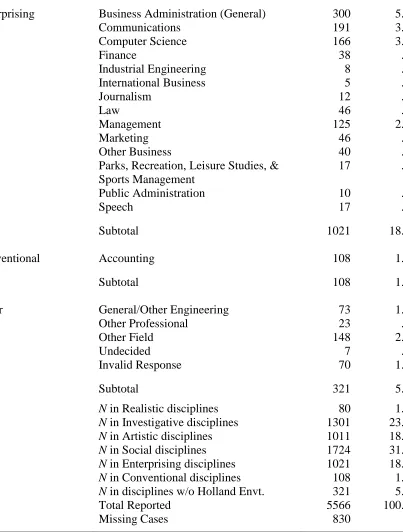
Table 3.2 Disciplinary Affliliations and Frequencies ...88
Table 3.3 Predictor and Control Missing Data ...103
CHAPTER FOUR: RESULTS Table 4.1 Descriptive Information of Data ... 112
Table 4.2 Frequency Statistics of Data ... 113
Table 4.3 Factor Analysis Results and Reliability ...122
Table 4.4 Regression Table for RQ1 ...128
Table 4.5 Regression Table for RQ2 ...133
LIST OF FIGURES CHAPTER ONE: INTRODUCTION
Figure 1.1. Deep Approaches and Quality Educational Practices ...19
CHAPTER TWO: LITERATURE REVIEW Figure 2.1. Holland Hexagon ...67
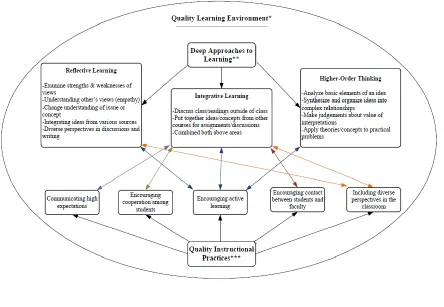
CHAPTER TWO: LITERATURE REVIEW Figure 3.1. Quality Learning Environment ...94
Figure 3.2. Summary of Missing Values ...101
CHAPTER FOUR: RESULTS Figure 4.1. Factor Analysis 1 Scree Plot ... 117
Figure 4.2. Interaction Estimated Means DAL ...139
Figure 4.3. Interaction Estimated Means RL ...140
CHAPTER ONE: INTRODUCTION
Decreasing federal support, declining state budgets, increased institutional
competition, increased societal demand for advanced education, and escalating institutional expenditures are just some of the current challenges that contribute to the overall conundrum of resource management, maintenance, and growth issues across higher education (Winston, 1999; Prisco, Hurley & Carton, 2002; Hanna, 2003; Swail, Redd, & Perna, 2003; Slaughter & Rhoades, 2004; Cronin & Bachorz, 2005; Weerts & Ronca, 2006; Cole, 2009).
Institutions forced to stretch already scarce resources have increasingly turned to distance education as a way to meet student and institutional needs while living within a constantly shrinking budget (Bray, 2007). While distance education has the potential to meet many resource-based challenges, its presence provides additional challenges to the faculty who direct the learning environment.
The perceived benefits and limitations of distance education as a viable alternative to traditional on-campus models have been widely debated (Bower, 2001; Bernard et al., 2004; Tabata & Johnsrud, 2008), but the consensus of research indicates that distance education will become a much larger part of public institutions in the coming years (Hanna, 2003; Saba, 2003; Howell, Saba, Williams & Lindsey, 2004; Bray, Harris, & Major, 2007; Wolcott & Shattuck, 2007; Betts, 2009; Simonson et al., 2009; Moore & Kearsley, 2011) and
administrators to understand how implementing distance education impacts both the learning environment and the role of faculty within this environment. Despite the growing presence of distance education in public higher education, there is much that remains unknown about its influence, if any, on the faculty population and faculty behaviors. The primary goal of this study is to examine the relationship between instructional format (distance education and on-campus) and the faculty instructional practices that contribute to quality educational outcomes (i.e., deep approaches to learning), in order to gain a better understanding of distance education and its current context in four-year institutions.
It has been suggested that quality interactions in the classroom are critical to student engagement, the learning environment, and positive educational outcomes (Pascarella and Terenzini, 2005). As a central part of the learning environment, faculty have a critical role in guiding classroom interactions and outcomes through their instructional practices. Some researchers point to the extent to which faculty provide deep approaches to learning as an important factor in quality interactions and learning outcomes (Marton and Säljö, 1976; Prince, 2004; Nelson Lair, Shoup & Kuh, 2005; Nelson Laird et al., 2008; Nelson Laird & Garver, 2009). Whereas surface approaches to learning include instructional practices that largely emphasize memorization and substance of material and lead to surface learning, deep approaches to learning include instructional practices that emphasize “analyzing and
Laird, et al., 2008). Simply put, surface learning is the learning process that emphasizes knowledge and recitation of information, whereas deep learning entails understanding the broader scope of information.
Although the importance of faculty to the learning environment has been well documented through research, there is little available research that explores the role of deep approaches to learning across instructional formats. Kuh and Ikenberry (2009), in their assessment of learning outcomes across higher education, acknowledged that despite a noted relationship between engaged faculty and a positive learning environment, a majority of institutional administrators reported greater overall faculty engagement as both their “number
one challenge” and as being at the top of their “wish list” (p. 9). Other researchers have noted that while faculty engagement is a concern of administrators (Chen, Lattuca & Hamilton, 2008; Rhoades, 2009), the focus is often on faculty contributions to community and institutional endeavors rather than on their instructional activities. However, minimal research has delved into the role of faculty in the learning environment and their
contributions to quality learning experiences within diverse instructional formats (Betts, 2009).
engagement is supported through the research of Umbach (2007b) and Smerek (2010) which suggests that academic disciplinary affiliations may transcend institutional affiliation. Others (Holland, 1973, 1985, 1997; Smart & Umbach, 2007; Reason et al., 2010) have produced empirical research that indicates that there are significant relationships between disciplinary affiliations and faculty behaviors. Furthermore, because distance education programming and course offerings have increased and the academic environment has become disconnected from the physical campus (Bruner, 2007), this study incorporates faculty disciplinary
affiliations to examine the strength of the cultural bonds of faculty within diverse
instructional formats. To examine the strength of disciplinary affiliations and instructional formats and their influence on the learning environment, I used deep approaches to learning as examined through faculty instructional practices that contribute to quality educational outcomes. This chapter will briefly discuss the current context and challenges of distance education and faculty disciplinary relationships in four-year public institutions as they relate to faculty engagement and will provide a foundation for the remaining chapters.
Distance Education
In 2005, Cronin and Bachorz declared that an “internet revolution is transforming higher education worldwide” (p. 11). Almost a decade later, this has become evident across
online educational environments are inherently similar to traditional instructional methods is short sighted. There are a variety of challenges in the growth of distance education, for both the faculty and the learning environments they control.
In a review of the literature, Schlosser and Simonson (2006) define distance
education as “a generic, all-inclusive term used to refer to the physical separation of teachers and learners” (p. 61). To account for technological improvements in communication,
Simonson et al. (2009) further defined distance education as an “institution-based, formal education where the learning group is separated and where interactive telecommunications systems are used to connect learners, resources, and instructors” (p. 1). Distance education may vary between asynchronous formats, where instruction and access of information are held at separate times, and synchronous formats, where instruction and discussions are held in real time. There are currently wide selections of platforms that facilitate the offering of distance education courses. The primary difference between distance education and its traditional on-campus format, however, is the physical separation between the instructor and the learner in the learning environment (Rickman & Wiedmaier, 2011; USDLA, 2012). Consequently, the physical separation that defines distance education also evokes additional considerations of how faculty provide quality educational outcomes in such environments.
postsecondary institutions has been an educational option for the general public, albeit in a vastly different state, since the mid-1800s. Distance education was originally delivered in the form of correspondence courses conducted through the mail and remained dominant in that form for over 100 years (Moore & Kearsley, 1996, 2011; Taylor, 2001; Saba, 2004; Peters, 2007; Simonson et al., 2009). The expansive growth of technologies over the past 30 years, however, has provided the grounds for an unparalleled growth of distance education in the higher education environment. Within a relatively short period, distance education evolved from its initial mail-based format to more easily accessible delivery methods, such as radio and television in the mid-1900s and its current web-based format (Moore & Kearsley, 1996; Burgan, 2006; Peters, 2007; Simonson et al., 2009). Accordingly, although distance education has been an academic option for citizens for over 150 years, it has gained an imposing presence in many traditional post-secondary institutions within the past two decades with the development of fiber optics, which led directly to internet (web/online) technologies and provided instant accessibility and interaction between faculty and students (Moore & Kearsley, 1996, 2011; Taylor, 2001; Billings, 2007; Rickman & Wiedermaier, 2011). Consequently, the rapid development of technologies has contributed substantially to the current representation of web-based distance education across public four-year
undergraduate students within 80% of U.S. postsecondary institutions (NCES, 2011). Notably, 40% of the distance education course offerings are delivered by non-profit
institutions (NCES, 2011). Within that 40%, four-year institutions comprise almost half, or over a million undergraduate students, of the distance education population (NCES, 2011). As the numbers of distance education courses and learners have increased, the number of faculty who instruct in distance education has also risen substantially (Moore & Kearsley, 2011). Based on statistics alone, even the most ardent detractors of distance education would be hard pressed not to acknowledge its increasing presence in higher education.
1995, 2003) and Moore’s theory of transactional distance (1972, 1994; Moore & Kearsley,
2005). The theories of Holmberg and Moore avoid the challenges of technological change with a focus on the interactions and experiences in the distance learning environment that contribute to outcomes. Ultimately, the current literature provides an incomplete view of distance education despite unique challenges that have become prominent as a result of its growing presence in four-year institutions and its potential influence on the faculty
population.
This study adds to the distance education literature in three ways. First, I examine the strength of faculty instructional practices in diverse learning environments (i.e., distance education and on-campus) that contribute to faculty approaches to deep learning.
Furthermore, this study includes academic disciplinary affiliations to understand better the strength of faculty cultural bonds in diverse learning environments. Finally, my study includes a theoretical base and empirical support that are lacking in much of the recent distance education literature. To examine the relationships of academic disciplinary affiliations and distance education on faculty instructional practices, I use a base of deep learning because of its role in guiding faculty behaviors that contribute to quality learning outcomes.
Deep Approaches to Learning
importance of student attention, interest, involvement, and active participation in learning as primary components of quality learning experiences. Similarly, deep approaches to learning are practices encouraged by faculty that emphasize reflective learning, integrative learning, and higher order thinking, and provide the platform for quality student learning experiences (Nelson Laird et al., 2008; Chen, Lambert & Guidry, 2010). In their Principles of Good Practice for Undergraduate Education, Chickering and Gamson (1987) pointed to seven factors that have a direct influence on student educational experience and learning outcomes (see Umbach & Wawrzynski, 2005) and emphasize similar principles to approaches that contribute to deep learning. Researchers have consistently connected student involvement and the academic (institutional and class-based) environment to student learning outcomes (Astin, 1993; Kuh, Kinzie, Schuh, & Whitt, 2005; Pascarella & Terenzini, 2005; Krause & Coates, 2008). A consistent theme in many studies of student learning and deep learning is the importance of faculty in providing an academic environment that engages students and contributes to quality learning outcomes (Pascarella & Terenzini, 2005; Pike & Kuh, 2005; Umbach & Wawrzynski, 2005; Kuh, Bridges, & Hayek, 2006; Chen, Lattuca, & Hamilton, 2008; Nelson Laird et al., 2008; Chen, Lambert & Guidry, 2010).
Because faculty have a prominent role in student learning, it is important to
to student learning (Chen, Lattuca & Hamilton, 2008; Kuh & Ikenberry, 2009; Rhoades, 2009; O'Meara, Terosky, & Neumann, 2008; Livingston, 2011), changes to the institutional hiring practices within many institutions, along with an increased reliance on distance education, have further clouded understanding of how faculty instructional practices contribute to a quality learning environment.
Although the overall faculty population across higher education has increased over the past 50 years to serve growing student enrollments, this snapshot of the academic landscape is deceiving. Recent literature has indicated a disproportionate hiring of contingent faculty versus full-time tenure-track faculty (Umbach, 2007a), which has
coincided with the rise of distance education (Tomei, 2004). As institutions seek to do more with less (Gumport & Chunn, 1999), the burden of heightened research and academic expectations falls primarily on the tenured and tenure-track faculty, albeit often without substantial support or rewards for their work (Olsen & Crawford, 1998; Bland et al., 2006; Plater, 2008). The concern is that without adequate support systems in place for either population, distance education has the potential to impact both faculty attitudes towards participating in distance education coursework (Maguire, 2005; Tabata & Johnsrud, 2008; Puzziferro & Shelton, 2009) and their engagement in the learning environment (Spodark, 2003; Ulmer, Watson & Derby, 2007; Betts, 2009).
environments (Howell et al., 2004; Tabata & Johnsrud, 2008; Simonson, Schlosser & Orellana, 2011). Research that examines the influence of both on-campus and distance education environments on how faculty engage students in quality learning, however, has been limited. Nonetheless, a consistent measure of faculty behaviors in studies of on-campus (see Kuh, 2001; Umbach & Wawrzynski, 2005; Kuh et al., 2006; Umbach, 2007a) and online (see Thurmond & Wambach, 2004; Betts, 2009; Puzziferro & Shelton, 2009) environments has been Chickering and Gamson’s (1987) principles of quality practices in undergraduate education. In particular, Umbach (2007b) noted that of the seven principles conceptualized by Chickering and Gamson, five relate directly to faculty behaviors and attitudes:
“encouraging cooperation among students, encouraging active learning, communicating high
expectations, encouraging contact between students and faculty, and including diverse perspectives in the classroom” (p. 282).
Overall, the literature of faculty contributions to the learning environment and student learning has been well documented (see Pascarella & Terenzini, 2005). Furthermore,
in the distance learning environment. With a changing academic environment that is influenced by the disproportionate hiring of contingent to tenure-track faculty, increased scrutiny of instructional practices and learning outcomes, and an exponential growth in distance education, it has become even more important to understand the factors that contribute to and affect faculty instructional practice.
To organize deep approaches to learning and to explore its role in diverse learning environments, this study applies five of Chickering and Gamson’s (1987) Seven Principles of
Good Practice for Undergraduate Education per the previous research of Umbach (2007b). Research by Kuh, Nelson Laird and Umbach (2004) suggests that application of these principles provides an empirical connection to the processes that are “most likely to bring about these desired outcomes” (p. 26); this has been supported through various studies of
how faculty emphasize approaches that contribute to deep learning, however, has not received much attention in the literature.
Although some point to external factors, such as compensation in the forms of time and money, that influence the extent to which faculty are engaged in diverse instructional formats (Bower, 2001; Howell, Saba, & Williams, 2003; Puzziferro & Shelton, 2004; Tabata & Johnsrud, 2008), many also point to the intrinsic characteristics that make a significant contribution to faculty instructional practices (Kearsley & Schneiderman, 1999; Schifter, 2000; Lee, 2001; Wolcott & Shattuck, 2007; Moore & Kearsley, 2005, 2011; Schlosser & Simonson, 2009; Simonson et al., 2009). In particular, faculty disciplinary affiliations provide an interesting perspective on faculty engagement with students in the learning environment that has been lacking in the distance education literature, because of the potential for disciplinary bonds to supersede institutional boundaries and influence faculty behaviors (Mulkey, Dougan, & Steelman, 2005; Umbach, 2007b).
Academic Disciplinary Affiliations
extends the research of academic disciplinary affiliations to include instructional format as an additional level of consideration.
Academic disciplinary affiliations represent an ingrained faculty culture that is comprised of those with similar personality traits, research interests and educational areas, and is often guided by peers and the surrounding institution (Umbach, 2007b). With a changing environment in higher education represented by a growing contingent faculty population, an increased disconnect of faculty from the campus environment and the growth of distance education (Bruner, 2007), it has become increasingly important to understand the influence of campus cultures and their role in the academic environment to ensure that policy and procedures meet diverse needs without sacrificing the academic core.
To gain a better understanding of the potential impact of culture on faculty
disciplinary affiliations and faculty behaviors, the extent to which instructional format intersects with disciplinary affiliations to influence faculty practices that contribute to deep learning has gone unstudied.
Various studies have provided evidence that instructional format influences faculty behaviors to some extent (Shachar & Neeumann, 2003; Bernard et al., 2004; Allen et al., 2010; Moore & Kearsley, 2011). Others have addressed the relationship between academic disciplinary affiliations and faculty behaviors in the learning environment (Holland, 1997; Umbach, 2007b; Smart, Ethington & Umbach, 2009; Jones, 2011). However, there has been no research found that connects instructional format and academic disciplinary affiliations to faculty approaches to deep learning. My study attempts to bridge this gap in the research and to contribute considerations for administrators who seek to expand distance education
programming and for researchers who seek to understand better the influence of diverse instructional formats on faculty instructional practices that contribute to quality learning experiences.
Purpose of Study
deep approaches to learning. This study also detailed relationships within and between academic disciplines within diverse instructional formats to explore the extent to which these relationships impact faculty instructional practices that contribute to deep learning.
The transition of higher education to an increased reliance on distance education, however, has provided grounds for an alternate line of inquiry through an examination of the faculty role and how faculty disciplinary affiliations impact the classroom environment to attain quality outcomes. Arguably, distance education represents a potentially imposing factor on how faculty provide deep learning by requiring drastic changes to their instructional practices. Alternatively, it is also possible for faculty disciplinary affiliations to transcend not only their institutional affiliations, but also their instructional practices in the learning
environment and interactions with the students therein. Through this line of research, it is the intent of this study to expand upon research about distance education and deep learning to clarify the current relationships of instructional format and the role of faculty in the learning environment.
It has been common practice for researchers to designate best practices for faculty training and programming within distance education (see Appendix A), albeit often without empirical support. Many researchers of distance education propose best practices for faculty instruction with the argument that institutions follow isomorphic tendencies, mimicking surrounding institutions, and are therefore similar across higher education (Lahaie, 2007). However, the nature of faculty characteristics and their influence on the learning
many of these studies apply Chickering & Gamson’s (1987) principles to measure the extent
to which faculty provide best practices in distance education. This study delved beyond the broad reach of best practices in distance education research to an empirical exploration of the influence of academic disciplinary affiliations on deep approaches to learning.
Research Questions The research was guided by the following research questions:
1- To what extent is instructional format (distance education or on-campus) associated with faculty use of deep approaches to learning (i.e., deep learning)?
2- To what extent is academic discipline related to faculty approaches to deep learning in distance education environments?
3- Is there an interaction between instructional format and faculty academic disciplinary affiliations in deep learning?
To address my research questions, data from the Faculty Survey of Student Engagement (FSSE) was used. With a surveyed population that includes over 100 institutions and almost 20,000 faculty each year, the FSSE provides a comprehensive
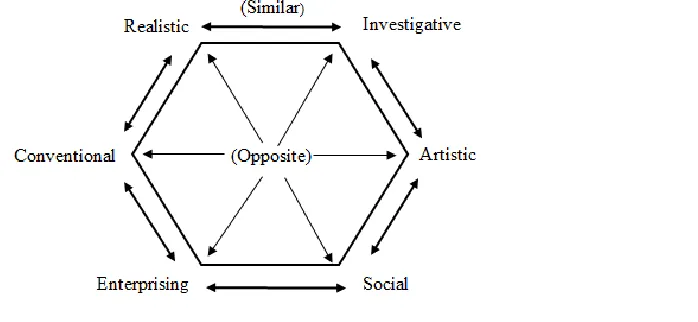
factors of how faculty engage students in quality educational practices within the classroom environment. To examine disciplinary affiliations, I organized the various disciplinary groups into Holland coding (RIASEC).
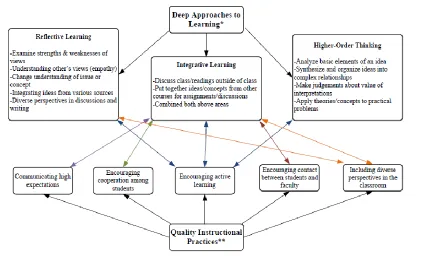
For the purpose of this study, deep approaches to learning were examined as a
combination of sub-constructs from the FSSE that are congruent with the five principles from Chickering and Gamson’s quality educational practices noted by Umbach (2007b) as being
relevant to faculty behaviors. These five principles of quality educational practices include those that encourage cooperation among students, encourage active learning, communicate high expectations, encourage contact between students and faculty, and include diverse perspectives in the classroom. Although deep learning has not been directly connected to these five principles in the literature, the deep approaches to learning construct included within the FSSE parallels each principle in terms of the faculty role in providing quality educational practices (see Appendix B). For the purpose of this study, the Deep Approaches to Learning construct was comprised of eleven items that are organized into three sub-constructs: Importance of Reflective Learning, Emphasis on Integrative Learning, and Emphasis on Higher-Order Thinking (FSSE, 2011). Each survey item within the deep approaches to learning construct includes multiple principles of quality educational practices that are guided by faculty who provide quality interactions with students through their
representation of these items as they relate to quality educational practices and the constructs used in this study.
*Guided by the “Deep Approaches to Learning” construct from the Faculty Survey of Student Engagement (FSSE, 2011) and the research of Nelson Laird (2005) and colleagues (2005, 2008, 2009)
**Guided by the research of Umbach (2007b)
Figure 1.1: Deep Approaches and Quality Educational Practices
Houweling, 2002; Chen, Lambert & Guidry, 2010). Nelson Laird and colleagues (Nelson Laird et al., 2008; Nelson Laird & Garver 2009) suggested that faculty who encourage deep approaches to learning are more likely to provide quality educational experiences and outcomes. Kuh et al. (2004) also suggested that faculty who emphasize active learning (i.e., deep approaches to learning) have stronger student participation in those activities.
Alternatively, faculty who provide an engaging learning environment are more likely to have engaged students with stronger performance in academic outcomes and better educational experiences. Thus, application of the deep approaches to learning construct in the FSSE provides a suitable measurement in this study to explore faculty instructional practices that contribute to quality learning experiences.
institutions. Furthermore, some have indicated that ANOVA modeling would produce results similar to those from OLS models (Field, 2009). However, OLS provides additional benefits that are not available through ANOVA analysis. First, this study was interested in relationships of the independent variables to the dependent variable with controls, which are not available with ANOVA. Moreover, ANOVA provides a generalized picture of the model without the ability to explore the influence of additional variables through data analysis. Thus, OLS provided the ideal model for this study.
The first analysis of the regression model examined the main effects of instructional format and academic disciplinary affiliation on deep approaches to learning. The second analysis examined the interaction effects between the instructional format and academic disciplinary affiliation on deep approaches to learning. Interaction effects were an important part of this study to determine the extent to which both instructional format and academic disciplinary affiliations relate to influence deep approaches to learning. By addressing these questions, this study sought to extend the research on distance education in four ways. The first was through inclusion of faculty academic disciplinary affiliations and the extent to which these affiliations impact faculty use of deep approaches to learning in diverse
and intersecting effects between instructional format and faculty academic disciplinary affiliations.
Outline of Study
This study examined three primary research areas: distance education, faculty academic disciplinary affiliations, and deep learning. Chapter two extends the introduction to delineate each area and its relevant literature. It is through this discussion that the cultural frameworks applied in this study are justified.
Chapter two begins with a current and historical context of distance education literature. This discussion addresses the various theories of distance education and quality learning environments to provide a conceptual framework that can be applied to faculty engagement. Specifically, the literature will detail Chickering and Gamson’s (1987)
Principles of Good Practice for Undergraduate Education, Holmberg’s theory of distance
education (1995, 2003), Moore’s theory of transactional distance (1972, 1994; Moore &
the research gap to connect instructional formats and academic disciplinary affiliations to deep learning.
The ensuing section in chapter two details the literature of faculty academic
disciplinary affiliations and the conceptual frameworks and theories that guide their inclusion in this study. Although the research of Biglan (1973), Becher (1989, 1994) and Trowler (2001) have guided various studies of faculty with regards to their disciplinary affiliations, their research was rooted in empirical practices and lacked theoretical support. This study applies the disciplinary environments designated by Holland (1973, 1997) because of their base in theory (Smart, Ethington, & Umbach, 2008) and inclusion of socialization in faculty behaviors (see Smart, Feldman & Ethington, 2000; Smart & Umbach, 2007) to examine faculty within distance education environments (see Bower, 2001; Wolf, 2006; Tabata & Johnsrud, 2008).
Chapter three presents the methodology of this study and how the research questions will be examined through explication of the variables and the applied statistical procedures. Chapter four provides the data analysis of the variables introduced in chapter three, and is followed by chapter five, which discusses the results of chapter four in the context of the research and theory examined. Furthermore, chapter five details the conclusions of this study and their implications for theory and practice, including recommendations for future studies.
instructional formats and increased pressure on faculty in their scholarship function. Determining the strength of instructional format or faculty disciplinary affiliations and how each factor acts independently and intersects with others to affect the extent to which faculty engage students in quality educational practices in the learning environment will contribute to research, policy, and practice regarding how administrators implement distance education and how they provide support for faculty housed within their disciplinary departments.
Limitations and Delimitations
There are a few limitations and delimitations worth noting concerning this study. Some are the result of this study providing a broad perspective of disciplinary and instructional format impact on the extent to which faculty emphasize deep approaches to learning. Others are the result of the survey and methodology used for this study. Finally, because this study is grounded in multiple lines of theory, future studies may utilize or interpret the theoretical structure of this study differently, which may impact results.
First, caution should be present when generalizing these results beyond four-year institutions because of the distinct differences between institutional types, particularly within private for-profit, liberal arts institutions, and community colleges with regards to the
institutions and faculty groups. Because this study controls for such diverse demographics, future research may benefit from the exploration of each area to provide a comprehensive perspective of their potential impact on faculty instruction. Similarly, this study does not explore diverse disciplinary groups, such as part-time and tenured faculty, and their impact on deep approaches to learning in diverse disciplinary environments and instructional formats. Finally, this study does not examine the impact of class size with regards to the quality of faculty-student interactions and course structure. Some have noted that class sizes in on-campus (Fassinger, 1995; Massy & Wilger, 1995; Cuseo, 2007) and online (McKenzie et al., 2000; Tomei, 2006) instructional formats influence faculty instruction. However, this study did not explore this area and is not able to make conclusions concerning class size and its influence on faculty instruction.
Other limitations are the result of using secondary data with the FSSE. Because this study is based on secondary data analysis, the results are limited because of the inability to present findings that form a deeper understanding of faculty instructional practices in diverse learning environments beyond the items included in the survey. Because the data is from previous research, this study is only able to indicate correlations and not to suggest causal relationships. Furthermore, the FSSE comes from a convenience sample of institutions and is disseminated to participating institutions that pay for their inclusion. Thus, caution should be used when generalizing findings to other institutions and faculty.
emphasis on deep approaches to learning much differently than other faculty. In more detail, Pascarella (2001) suggested that validity is a concern with self-reported data, particularly with regards to characteristic perceptions. Similarly, Porter (2011) argued that self-reports lack validity, in part because of the inability for respondents to easily report information about their behaviors and attitudes. However, Astin (1993) indicated that self-reported data provides a means to gather a wide range of data (i.e., high bandwidth) that is not typically available with objective survey instruments. Furthermore, Astin suggested that self-reported data often provides the only means for gaining practical sources of information. Gonyea (2005) suggested that data from self-reports can be trusted “as long as the survey instrument and administration process were designed with attention to the scholarship of survey
research” (83). A large number of studies (Pace, 1985; Pike, 1995; Pike, 1999; Kuh et al.,
Also of note is the influence of the data received from the FSSE on results concerning construct formation and sub-construct reliability. I received a 20% sample from two years of FSSE data, I lacked access to all data used to form the deep approaches to learning construct and sub-constructs in previous studies using the FSSE (Nelson Lair, Shoup & Kuh, 2005; Nelson Laird et al., 2008; Nelson Laird & Garver, 2009). Thus, an initial factor analysis of the items that comprise the overall deep approaches to learning construct provided some reassessment to the variables included and the sub-constructs formed through factor loading. Notably, all items that comprised the overall Deep Approaches to Learning construct were consistent with previous research that used FSSE data. Nonetheless, the inconsistent factor loads produced at the sub-construct level in comparison to previous research is a noteworthy limitation of this study. Furthermore, low reliability for the Integrative Learning
sub-construct (α= .564) in the Deep Approaches to Learning sub-construct was also a concern. However, the previous research of deep approaches to learning that used FSSE and NSSE data support its inclusion for this study (see Nelson Laird, Shoup, & Kuh, 2006; Nelson Laird et. al., 2008; Nelson Laird & Garver, 2009; FSSE, 2011). Notably, some studies of deep learning using FSSE data also produced relatively low reliability scores for the IL construct in comparison with the DAL, RL, and HT constructs. Notably, this sub-construct is only comprised of three survey items, which may have contributed to the lower reliability of the IL model. Ideally, the sub-construct factor loads would have been
or conducting additional research in this line. These components are further detailed in chapter four and five.
learning environment prevents any causal interpretations to be made with the results gathered from this study.
Finally, but not conclusively, this study was grounded in the theories of Holmberg (1988, 1995, and 2007) and Moore (Moore, 1994; Moore & Kearsley, 2005, 2011) as a base to explore distance education, Holland (1973, 1997) as a disciplinary base, and Chickering and Gamson (1987) to connect quality educational practices to deep approaches to learning. Because this study included multiple theories, caution should be used in future research that uses alternate theories for some, or all, areas. For example, although the typologies indicated by Biglan (1973), Becher (1987) and Trawler (2001) have proved to be useful tools to
explore faculty disciplines, there are some variations between these models and Holland’s disciplinary environments, particularly as they relate to deep learning (see Nelson Laird et al., 2008). Furthermore, this study connected the quality educational practices indicated by Chickering and Gamson and deep approaches to learning (see Appendix B). However, this connection was guided to an extent using previous research (see Umbach, 2007b) and through a comparison of the factors within the FSSE and the practices noted by Chickering and Gamson. Thus, the connection as it was used for this study may be limited because the previous research has not directly connected these two areas.
Nonetheless, this study provides an overview of faculty instructional practices in diverse instructional formats and disciplines. The strengths of this study, including its theoretical base, quantitative exploration and connection to current trends in higher
CHAPTER TWO: REVIEW OF THE LITERATURE AND THEORY
As institutions have sought to expand their reach to new student populations despite decreasing federal and state support and rising costs, many administrators have turned to an increased reliance on distance education to meet these challenges (Bray et al., 2007;
Simonson, Schlosser & Orellana, 2011; Moore & Kearsley, 2011). However, while
institutions have increased access to higher education through distance education, have they also increased learning? Although we know a lot about the faculty influence in on-campus learning environments, there has been little research about the influence of distance
education on how faculty provide quality learning experiences in the academic environment. Furthermore, there is little in the current literature about the extent to which academic
disciplines influence faculty instructional practices in alternative learning environments. To that end, this study examined the individual and intersecting influence of distance education and academic disciplinary affiliations on the extent to which faculty provide quality learning experiences through their instructional practices (i.e., deep approaches to learning).
discussion of the literature and theories of academic disciplinary affiliations explores the strength of faculty cultures in alternative instructional formats. By describing and connecting the relevant literature, I build the foundation for the remaining chapters of this study.
Context of Distance Education
Distance education has evolved in many ways since its first offering in 1728 (Bower & Hardy, 2004). Originally delivered in the form of correspondence courses conducted through the mail independent from traditional higher education (Moore & Kearsley, 1996; Taylor, 2001; Saba, 2003; Peters, 2007; Simonson et al., 2009), distance education has since transitioned in most institutions to an online format that allows for instantaneous
communication between the instructor and learner (Moore & Kearsley, 2011; Rickman & Wiedmaier, 2011; USDLA, 2012). However, as institutions have increased their reliance on distance education to resolve enrollment, staffing, and space challenges, the literature has indicated some potential implications of its growth for faculty and their instructional practices in the learning environment.
Numerous studies have reported the importance of faculty and their quality
instructional practices to student learning in on-campus learning environments (Fairweather & Rhoades, 1995; McDaniel et al., 2000; Saba, 2000; Bower, 2001; Parker, 2003; Ryan, Carlton, & Ali, 2004; Pascarella & Terenzini, 2005; Yang & Cornelious, 2005; Eom, Wen, & Ashill, 2006; Umbach, 2007b). Recent literature, however, has suggested that faculty
Kearsley (2011) suggested that because of the physical separation of students from the learning environment in distance education, students are often more reliant on faculty as a source of course information and as a connection to the institution than their on-campus counterparts. Although higher education researchers have noted the importance of faculty contributions to quality distance education environments, our understanding of how distance education influences faculty behaviors in the available literature is minimal.
While faculty support has sustained the growth of distance education for the past 150 years, its perceived value and quality have been widely debated among the professoriate (Nasseh, 1997; Simonson, Schlosser & Orellana, 2009). Even with its increasing prominence in higher education over the past 20 years, the overall history of distance education has been characterized by challenges of time, space, and faculty indifference. To understand more fully the potential influence of distance education on faculty behaviors in the learning environment, it is important first to define distance education and then to examine its historical and current context in the literature.
Terminology
distance education has been revised numerous times with each new technology that has changed the distance education environment. Moreover, some researchers have suggested that much of the early literature of distance education has lost most of its relevance because of changes that substantially altered the methods and means of instruction in distance
education (Schifter, 2000; Lee, 2001). Nevertheless, there are consistent themes in the body of literature that have shaped the current context of distance education.
Distance education was defined in the early literature as a format where there is a physical separation between the student and instructor, without time boundaries and without direct instructor or peer contact (Beaudouin, 1986; Moore, 1987). Technologies in the 1980s improved telecommunications drastically, however, and allowed for much easier
communication between student and instructor. Accordingly, the definition of distance education was expanded to include “the simultaneous telecommunicated delivery of
instruction from a host site or classroom to distant sites, coupled with live audio and/or video interaction between teacher and student(s)” (Barker, Frisbie, & Patrick, 1989, p. 21). The
three common characteristics that frame its inclusion in this study: a typically online environment that incorporates technical media, an environment where the instructor and learner are physically separated, and two-way communication between the instructor and learner outside the physical learning environment (Garrison, 2000; Ashby, 2002; Black, 2007; Bray, Harris & Major, 2007; Holmberg, 2007; Moore, 2007; Shearer, 2007; Ulmer, Watson & Derby, 2007; Tabata & Johnsrud, 2008; Moore & Kearsley, 2011; Rickman & Wiedmaier, 2011).
History of Distance Education and the Faculty Role
(Nasseh, 1997; Saba, 2003; Simonson, Schlosser & Orellana, 2009). Despite the limited correspondence offerings, the educational opportunities provided by this form of distance education aroused the interest of many citizens and institutions in Europe and, soon thereafter, in the United States.
During the early and mid-1800s, correspondence courses traveled from Europe to the United States and provided an academic option to thousands of learners. However, it was not until the late 1800s that distance education gained the attention of some traditional American postsecondary institutions (Nasseh, 1997; Bergmann, 2001; Bower & Hardy, 2004; Schlosser & Simonson, 2009; Moore & Kearsley, 2011). Throughout the history of distance education, changes in federal policies that improved access to higher education, technological
improvements that improved communication between the faculty and learner, and continued faculty support have been integral to its growth (Nasseh, 1997; Maskow, 2000; Bower & Hardy, 2004; Schlosser & Simonson, 2009; Mehlenbacher, 2010; Moore & Kearsley, 2011).
While distance education and correspondence courses were not directly mentioned in the Morrill Act of 1862, Moore and Kearsley (2011) suggested that this act provided the initial foundation for distance education by offering educational opportunity to “people of all backgrounds” through the development and funding of land grant institutions (p. 26). In fact,
administrators in a number of institutions formed as a result of the Morrill Act reported that correspondence courses were a “powerful tool” in reaching new learners and improving
by federal policy, continued faculty support and technological improvements were significant to its sustainability and growth.
In seeking new ways to improve access to higher education, Professor William Harper, formerly of Yale, introduced academic degrees of correspondence in the Chautauqua College of Liberal Arts between 1883 and 1891 (McIsaac & Gunawardena, 1996; Schlosser & Simonson, 2009). Similarly, Rainey Harper, the first president of the University of Chicago and former faculty member at his previous institutions (Yale and Denison University), had a vision to provide open educational opportunities to adult learners who would otherwise not have access to higher education (Moore & Kearsley, 2011). In accordance with his vision, Rainey Harper enacted the “first formal program of university distance education” in 1892 (Moore & Kearsley, 2011, p. 24). Other American institutions,
including Illinois Wesleyan, Penn State University, and The University of Wisconsin also introduced correspondence-based programs during the late 1800s (McIsaac & Gunawardena, 1996; Schlosser & Simonson, 2009; Mehlenbacher, 2010). The early versions of distance education, however, were complex, labor intensive, and offered challenges that many
institutions and faculty were unable or unwilling to overcome. Mounting concerns expressed by faculty and administrators over the quality of these programs and the time required to organize and instruct correspondence courses resulted in many institutions ceasing their distance education operations by the early 1900s (Schlosser & Simonson, 2009).
faculty and learners. In the early 1900s, distance education progressed from written correspondence to incorporate visual supplements, including motion pictures and lantern slides (Nasseh, 1997; Pittman, 1986). Graphic supplements to the written materials were a significant contribution to distance learning because students became more engaged with the courses they were taking (Pittman, 1986). However, effective communication between faculty and students was still largely limited because of the continued reliance on the U.S. Postal Service. Furthermore, inclusion of graphic supplements constituted an additional workload that detracted from their widespread acceptance amongst the professoriate (Pittman, 1986).
The 1920s represent the first significant technological jump in distance education when classes were offered by radio, giving educational opportunities to citizens with radio access (Nasseh, 1997; Maskow, 2000; Bower & Hardy, 2004; Schlosser & Simonson, 2009; Moore & Kearsley, 2011). Although radio provided a significant advancement in media communication and was used by numerous American institutions (Moore & Kearsley, 2011), its educational benefits were limited by the lack of faculty interest in lecturing through the radio, a lack of direction in seeking a target population, dwindling interest due to “boring, lackluster programming” (Maskow, 2000, p. 59), a lack of two-way interaction between
The 1930s brought much improved technology for distance education courses, including a visual component that was lacking with radio. Like radio a decade earlier, television-based educational offerings initially had limited faculty support. Courses offered by television were used primarily for training and entailed one-way communication from the faculty to the student. Most did not allow students the opportunity to earn official course credit (Schlosser & Simonson, 2009). Although more than 1000 public and private
institutions would reach over 600,000 adult students with television-based offerings by the early 1970s, limitations of communication, cost, and overall faculty disinterest contributed to television’s declining role in higher education until computer technologies became widely
available in the 1990s (Schlosser & Simonson, 2009; Moore & Kearsley, 2011).
Nonetheless, the sustainability of television-based distance education for three decades, and continued faculty participation to that end, reinforced the desire of institutions to provide new means of outreach to potential learners outside traditional higher education environments (Simonson et al., 2009).
facilitated granting of college credit (Hanna, 2003; Bower & Hardy, 2004; Mehlenbacher, 2010; Scholsser & Simonson, 2006, 2009; Simonson et al., 2009).
Although improved technologies were vital to the growth of distance education, changes to federal policies during the 1990s were also integral because of their impact on student access to higher education (Burd, 2003). Similar to the Morrill Act of 1862 that provided initial support for institutions to include distance education, the 1992
reauthorization and 1998 amendment to Title IV of the Higher Education Act (HEA)
significantly impacted the presence of distance education in higher education (Burd, 2003). Although the 1992 reauthorization of the HEA did not provide direct support for distance education, the reauthorization granted federal aid to part-time students, which provided financial support for working and nontraditional students who could not otherwise afford postsecondary education (Hannah, 1996). As a result of the 1992 reauthorization, many non-profit institutions experienced a substantial enrollment jump in the 1990s (Hannah, 1996). However, many nontraditional students remained limited in their ability to participate in higher education because of time and location restrictions. The 1998 amendment to Title IV of the Higher Education Act, however, further altered the higher education landscape with expansion of financial aid policy to include students in distance education (Burd, 2003; Slaughter & Rhoades, 2004). Consequently, it was during the late-1990s that distance
education also experienced its greatest documented enrollment jump (Scholsser & Simonson, 2006, 2009; Simonson et al, 2009). In all, distance education is in a constant state of
populations of learners, but also poses many challenges to institutions and their faculty in meeting the growing student needs.
Current Context of Distance Education
As previously noted, the largest growth of distance education in postsecondary institutions has come within the past 20 years with the creation and improvement of internet technologies (Hanna, 2003; Bower & Hardy, 2004; Scholsser & Simonson, 2006, 2009; Simonson et al., 2009; Mehlenbacher, 2010). To put this recent growth into perspective, in 1995, just 13% of all (for-profit and nonprofit) institutions offered distance education
courses, reaching an estimated 753,640 students (NCES, 2011). As of 2007, this number had swelled to include 4.3 million (20%) of all undergraduate students within 80% of U.S.
postsecondary institutions (NCES, 2011). In 2010, over 6.1 million (31%) of all students in higher education had taken at least one online course (Allen & Seaman, 2011). Although for-profit institutions are responsible for the bulk of distance education offerings, 40% are conducted by non-profit institutions (NCES, 2011). Within that 40%, over a million
undergraduate students enrolled in four-year institutions comprise almost half of the distance education population (NCES, 2011).
& Seaman, 2011). Notably, of the surveyed chief academic officers, almost 80% represented public institutions (Allen & Seaman, 2011). St. John and Parsons (2004) and others (Nasseh, 1997; Maskow, 2000; Schlosser & Simonson, 2009; Moore & Kearsley, 2011) have
suggested that increased inclusion of distance education is necessary to some degree, particularly in public institutions, to expand institutional reach, resolve financial challenges, and improve domestic and global student access to higher education.
distance education has grown substantially in the past 10 years (Appana, 2008), albeit without giving empirical support. While the current representation of tenured and tenure-track faculty in distance education is modest, there are a few consistent themes found in the literature that shape its context in this study: 1) faculty are important to student learning in any instructional format, 2) distance education is expected to have a significant role in the future plans of many institutions, and 3) it is important for faculty to provide quality learning experiences and to contribute to institutional success regardless of format. Finally, it is important for institutions to ensure that faculty are engaged in distance education, regardless of position or employment status, to provide quality learning experiences.
Role of Deep Approaches to Learning in Scholarship and Distance Education Numerous studies have provided overwhelming evidence that faculty have a critical role in student success (Fairweather & Rhoades, 1995; McDaniel et al., 2000; Saba, 2000; Pascarella & Terenzini, 2005; Umbach, 2007b; Betts, 2009; Simonson et al., 2009; Childress, 2010; Moore & Kearsley, 2011). In particular, it has been noted that the extent to which faculty encourage deep learning in the learning environment is related to effective student learning. As discussed in the previous chapter, surface approaches to learning include instructional practices that largely emphasize memorization and substance of material and lead to surface learning (Nelson Laird et al., 2008) while deep approaches to learning include the instructional practices that emphasize “analyzing and synthesizing information,
meaning of information and contribute to deep learning (Nelson Laird, et al., 2008). However, many institutions rely on faculty research as a means to resolve financial challenges, compete with similar institutions, and earn tenure (Gappa, Austin, & Trice, 2007), potentially at the expense of faculty attention to their role in student learning.
In his landmark study Scholarship Reconsidered, Boyer (1990) proposed a model that emphasized various levels of faculty participation in scholarship (integration, application, and teaching and learning) in addition to their role of research (scholarship of discovery). However, research has suggested that faculty, particularly tenured faculty, often have a strained relationship between their institutional roles and expectations (Gappa, Austin, & Trice, 2007). Furthermore, many have argued that the other scholarship components are often second to scholarship of discovery (i.e., research) in terms of institutional mission and rewards, especially in considerations of tenure and promotion (Winston, 1994; Rice, 1996; Tierney & Bensimon, 1996; Wolverton, 1998; O’Meara, 2002; Melguizo & Strober, 2007;
Hardre & Cox, 2009). As institutions have increasingly been held to higher standards of accountability by their internal groups, external stakeholders, and government agents (Huisman & Currie, 2004; Slaughter & Rhoades, 2004; Burke, 2005), there has been
delineate deep learning and the instructional practices that contribute to deep learning in this study.
Terminology
The extent to which faculty provide quality instructional practices has often been connected in the literature to effective student learning experiences. In particular, research has pointed to the extent to which faculty emphasize deep approaches as an integral part of an effective learning environment and student learning. Prince (2004), in his study of active learning, suggested that faculty who engage students in the learning process contribute to positive learning outcomes. Moreover, Nelson Laird, Shoup, Kuh, and Schwarz (2008) suggested that “educationally effective learning environments are characterized by the promotion of deep approaches to learning” (p. 470). This idea of deep learning has
consistently been described in the research as an important measure of quality interactions between faculty and students in the learning environment. Whereas surface-level learning emphasizes substance of knowledge as being important to the learning experience (e.g. memorization), deep-level learning requires additional measures to understand the
“underlying meaning of the information” provided (Nelson Laird & Garver, 2009, p. 250).
In more detail, Nelson Laird and Garver (2009) noted that deep-level approaches are “characterized by a personal commitment to understanding and are implemented using