Journal of Multidisciplinary Healthcare
Dove
press
R e v i e w
open access to scientific and medical research
Open Access Full Text Article
A multidisciplinary approach to scars: a narrative
review
emiliano Zanier1,2
Bruno Bordoni1,3
1AiTOP (Accademia italiana Terapia
Osteopatica Posturale), Castelvetro (MO), italy; 2ediAcademy, Milan, italy; 3Department of Cardiology, Santa
Maria Nascente institute iRCCS, Don Carlo Gnocchi Foundation, Milan, italy
Correspondence: Bruno Bordoni Department of Cardiology, Santa Maria Nascente institute iRCCS, Don Carlo Gnocchi Foundation, via Capecelatro 66, Milan, italy email [email protected]
Abstract: The purpose of this article is to carry out a narrative review regarding the approach to scars through complementary and alternative medicine focusing on osteopathy, naturopathy, and other minor methods and traditional rehabilitative medicines, such as physiotherapy and manual therapies. We analyzed the existing literature regarding the possible influences of tech-niques relaxing the diaphragm – both manual and psychophysical relaxing techtech-niques – and the consequent local response to events leading to scar tissue healing. The objective of the study is to become a useful instrument of knowledge for those manual therapists and professionals who deal with patients affected by discontinuity of the skin surface due to trauma or surgery. This article also intends to stimulate research in order to find and propose new methods of scar treatment, taking into consideration the information gained so far from other complementary and alternative disciplines.
Keywords: scar, wound, complementary and alternative medicine, osteopathy, naturopathy
Psyche and its influence on scar tissue healing:
relaxation techniques, expressive writing,
and hypnosis
There are several hypotheses regarding the alteration of the scar tissue healing processes.1 The main types of scars related to nonphysiological healing processes are
keloids (K), hypertrophic scars (HSs), and atrophic scars.1 Currently, there are many
hypotheses, including the theory of neurogenic inflammation, explaining the altered biochemical events that produce scars, which are considered treatable.2 According to
some authors, these assumptions could confirm the importance of the psychological effect on scar tissue healing.3 The effects of stress on the alteration of inflammatory
parameters, through the mediation of the hypothalamic–pituitary–adrenal (HPA) axis, are well known.2 It has already been demonstrated how restraint and social disruption
can activate the HPA system in a different manner, resulting in the increase of corti-costerone in the plasma as a response to the proinflammatory cytokines, a phenomenon observed in wound healing process.3 Recently, Pyter et al4 have shown how different
mechanisms related to stress (ie, physical restraint and social isolation) can equally affect wound healing, although with different methods and timing. In an animal model, the administration of oxytocin, a hormone linked to social contact, could positively or negatively affect wound healing depending on the stimulus given.5 According to
Furtado et al,6 psychological stress should be recognized as a risk factor for K
recur-rence in patients who have undergone surgery in order to hinder the formation of K.
Journal of Multidisciplinary Healthcare downloaded from https://www.dovepress.com/ by 118.70.13.36 on 24-Aug-2020
For personal use only.
Number of times this article has been viewed
This article was published in the following Dove Press journal: Journal of Multidisciplinary Healthcare
Dovepress
Zanier and Bordoni
These mechanisms of action related to oxidation are still not fully explained by the existing literature.
According to some authors, skin symptoms, such as itch-ing and pain associated with scars, are associated with the presence and synthesis of neuropeptides govern the patterns of cutaneous reinnervation, inflammation, and wound heal-ing.7 This phenomenon is further corroborated by the fact
that the use of the hyperbaric chamber can improve wound healing in stressed animals by increasing the level of oxygen in the wounds.8,9 Moreover, the mechanism by which the
relaxation strategies, which involve diaphragmatic breathing or meditation, directly influence the oxidation mechanisms should be emphasized.10,11 With reference to the oxidative
stress, which is the result of tissue oxygenation, the effect of diaphragmatic activity should be analyzed from a vascular and lymphatic perspective as well (as described in our previ-ous work). This could lead to multidisciplinary integration between psychological therapy, relaxation techniques, and osteopathic therapy.12,13
With reference to the neurocognitive approach, Koschwanez et al14 have emphasized the role of expressive writing (a form
of therapy that uses writing to facilitate the communication of the posttraumatic emotional state) in increasing the rapid-ity of reepithelization, without any changes to perceived stress, depressive symptoms, health- related behaviors, lipopolysaccharide-induced proinflammatory cytokine produc-tion, or the number of medical visits over the study period.14
In this study, the authors have assumed that psyche may be involved in the wound healing process in a way that has not been fully explained from a psychological and biological point of view.14
Hypnosis has been proven to accelerate the process of wound healing after surgery.15 Hypnosis has also been shown
to be useful in the management of wounds originating from burns, as well as for painful symptoms.16 A study by Berger
et al showed that a protocol in pain management including hypnosis reduced patient anxiety and exposure to pain; increased early opioid delivery; and decreased general anes-thesia requirements, length of hospital stay, and costs.16
Mechanical and manual
rehabilitative approaches to scars
Manual medicine, physiotherapy, and osteopathy are some of the manual rehabilitative approaches to treat scars. Although most professionals commonly use these techniques, there is little peer-reviewed literature on these techniques.
Occupational therapy mainly consists in reeducating the patient who had suffered from skin damage due to surgery or
burns, whether it be an adult or a child.17 Motion techniques
are used to reeducate patients and bring them back to self-sufficiency, because very often, skin injuries result in the loss of motor patterns acquired previously, thus preventing an individual from being autonomous.17
Literature is divided in the evidence that supports mas-sage therapy in the treatment of scars. Some studies have reported good results, such as less pain and itching, and massage therapy was found to be effective in the presence of scars and burns.18 However, some studies concerning the
use of massage in analogous pathological circumstances have reported inconsistency in achieving effective results.19 Thus,
there are dissenting views in literature with regard to the use of massage and further studies are needed.
The cupping therapy, which has its origin in Chinese medi-cine, consists in creating a vacuum inside a small cup – which can be made of bamboo, glass, bakelite, or plastic (always through suitable equipment) – lying on the skin surface of the scar or next to it. According to the professionals who apply this technique, it enables the disposal of toxins and of any potential edema and restores the lymphatic circulation, with consequent effects even in areas that are far from the zone of application. Although there are several studies regarding the application of this technique, further studies are needed in order to undoubtedly affirm its effectiveness.20 However, it is
important that this technique is used by experienced profes-sionals, because such practices could impede the improvement of the scar itself.21 Among its many applications, acupuncture
is also used in the treatment of scars and plays an important role in the correct healing process.22 The needles may be
con-nected to low-level voltage or various mixtures of seasonings and spices can be applied to the needles.22
A similar therapy is dry needling or dry-needle tech-nique, which uses very thin needles on an area considered painful or fibrotic, without medication; the objective of the technique is to loosen tissues, enabling the various layers to slide over each other.23 Currently, there is very little literature
regarding symptomatic treatment of scars, but the results look promising.24
Connective tissue massage; deep transverse friction massage, also known as Cyriax deep transverse massage (Figure 1); shiatsu; crochetage; and diacutaneous fibrolysis are used by many professionals in the treatment of the scar tissues. However, currently, there is no peer-reviewed litera-ture concerning the application of these techniques to skin areas that are not intact.
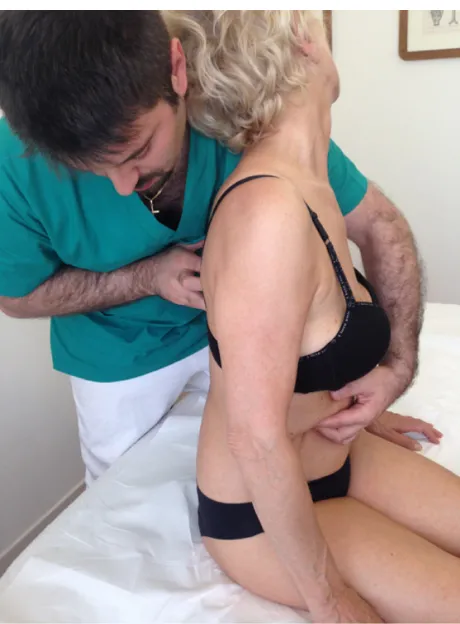
Literature does not report the use of indirect osteopathic techniques for the treatment of scars (Figure 2), although
Journal of Multidisciplinary Healthcare downloaded from https://www.dovepress.com/ by 118.70.13.36 on 24-Aug-2020
Dovepress A multidisciplinary approach to scars
these techniques are intended to loosen tissues, ie, to release the skin and the underlying layers. As already reported in various scientific studies, this results in the resetting of the peripheral neurological information (afferents).25
Naturopathic and herbal approach
to scars
Some plants are indicated as particularly interesting in the herbal and naturopathic tradition. Recently, Läuchli et al have proposed the treatment of scars on the head with exposed skull bone, with a mixture of hypericum oil (Hypericum
perforatum L.) and neem oil (Azadirachta indica), reporting
a reduction in the time of healing and consequently a reduc-tion of medical costs.26 It must be emphasized that the authors
do not compare the use of honey with a surgical procedure, which could considerably reduce the treatment times.26 This
mixture of hypericum oil (H. perforatum L.) and neem oil (A. indica) was applied to major lesions on the diabetic foot as well as in the treatment of burns in children.27,28 Other
plants such as Rosa mosqueta (Rosa aff. rubiginosa) are recommended for topical use in the treatment of scars.29 R.
mosqueta (R. aff. rubiginosa) would be particularly helpful in
reducing inflammation and therefore the altered cell prolifera-tion observed in K and HS.29 On the other hand, R. mosqueta
(R. aff. rubiginosa) seemed to be helpful in encouraging the proliferation phase and the cell regeneration phase during wound healing.29 With regard to medicinal plants used in case
of burns, Bahramsoltani et al highlighted how garlic (Allium
sativum), Aloe vera, Centella asiatica, and Hippophae rham-noides can improve the healing of burns.30
Some Ayurvedic treatments are noteworthy, which are reported in various articles. The application of Madhu (honey) is very effective for the management of Vrana (wounds), which is considered as a potent antibacterial, anti-inflamma-tory, antiviral, and antioxidant element.31–33 Site of the wound,
shape, size, floor, and margin were recorded in the healing process and till the end of the healing for the progression of granulation, scar type, shape, size, and clinical symptoms. There was significant improvement in the healing process as honey possesses antibacterial, wound cleansing, and wound healing properties, and it showed beneficiary effects.31
According to Al-Waili et al, wound healing properties Figure 2 indirect osteopathic techniques.
Notes: These techniques allow a therapist to follow a tissue in its preferential
direction, far from the restrictive barrier of inherent motion. The therapist puts the hand on the skin allowing it and the subcutaneous layers to guide the palpation.
Figure 1 Cyriax deep transverse massage.
Note: DTFM, also known as Cyriax deep transverse massage, helps to limit the
nonphysiological evolution of scars.
Abbreviation: DTFM, deep transverse friction massage.
Journal of Multidisciplinary Healthcare downloaded from https://www.dovepress.com/ by 118.70.13.36 on 24-Aug-2020
Dovepress
Zanier and Bordoni
of honey include stimulation of tissue growth, enhanced epithelialization, and minimized scar formation.32 These
effects are ascribed to honey’s acidity, hydrogen peroxide content, osmotic effect, nutritional and antioxidant contents, stimulation of immunity, and unidentified compounds.32
Prostaglandins and nitric oxide play a major role in inflam-mation, microbial killing, and healing process, and honey seems to be a regulator of these elements.32 Also, Yaghoobi
et al have shown that honey has antioxidant, antibacterial, and anti-inflammatory properties.33
Another important plant from the Ayurvedic tradition is “Tulsi” (Ocimum sanctum).34 Tulsi is an aromatic shrub of the
basil family Lamiaceae (tribe Ocimeae) and grows natively throughout the Eastern world tropics.35 This herb, with its
multiple effects, can lead to an increase in wound-breaking strength and accelerate wound healing.34,35
Conclusion
When there is an alteration in the healing process, phenom-ena that are less physiological, such as the formation of K, HS, and atrophic scars, can occur. How to manage scars? This is still an open question in modern medicine as there are no specific protocols and studies based on significant numbers. Literature also reports therapeutic possibilities in complementary and alternative medicine, which could be taken more into consideration. However, there are no scientific and unquestionable data that can be referred to. It has to be noticed that biomedical studies have improved medical treatment in the last 2 decades, and now alterna-tive medicine should move to evidence-based medicine. Research on the treatment of scars should make a greater effort to broaden therapeutic cognizance and well-being of the patients. Overall, for the treatment to be successful, a stronger cooperation of different professionals and the application of different medical disciplines would be advisable.
Acknowledgment
The authors would like to thank Philippe Caiazzo, the founder of AITOP (Accademia Italiana Terapia Osteopatica Posturale) and all the staff of AITOP, for the friendship, and the support in preparing this manuscript.
Disclosure
The authors report no other conflicts of interest in this work.
References
1. Bordoni B, Zanier E. Skin, fascias, and scars: symptoms and systemic connections. J Multidiscip Healthc. 2013;7:11–24.
2. Akaishi S, Ogawa R, Hyakusoku H. Keloid and hypertrophic scar: neurogenic inflammation hypotheses. Med Hypotheses. 2007;1(1):32–38.
3. Sheridan JF, Padgett DA, Avitsur R, Marucha PT. Experimental models of stress and wound healing. Wound J Surg. 2004;28(3):327–330. 4. Pyter LM, Yang L, McKenzie C, et al. Contrasting mechanism by
which social isolation and restraint impair healing in male mice. Stress. 2014;17(3):256–265.
5. Detillion CE, Craft TK, Glasper ER, Prendergast BJ, DeVries AC. Social facilitation of wound healing. Psychoneuroendocrinology. 2004;29(8):1004–1011.
6. Furtado F, Hochman B, Farber PL, Muller MC, Hayashi LF, Ferreira LM. Psychological stress as a risk factor for postoperative keloid recurrence. J Psychosom Res. 2012;72(4):282–287.
7. Henderson J, Terenghi G, McGrouther DA, Ferguson NM. The reinner-vation pattern of wounds and scars may explain their sensory symptoms.
J Plast Reconstr Aesthet Surg. 2006;59(9):942–950.
8. Gajendrareddy PK, Sen CK, Horn MP, Marucha PT. Hyperbaric oxygen therapy ameliorates stress-impaired dermal wound healing. Brain Behav
Immun. 2005;19:217–222.
9. Tsvetkov EA, Verevitin AG, Grinfel’d IaL, Veĭnberg TG. Hyperbaric oxygenation in the postoperative treatment of children with cicatricial laryngostenosis. Vestn Otorinolaringol. 1990;(4):44–47.
10. Martarelli D, Cocchioni M, Scuri S, Pompei P. Diaphragmatic breath-ing reduces exercise-induced oxidative stress. Evid Based Complement
Alternat Med. 2011;2011:932430.
11. Maharita C. Roles of meditation on alleviation of oxidative stress and improvement of antioxidant system. J Med Assoc Thai. 2010; 93(Suppl 6):S242–S254.
12. Bordoni B, Zanier E. Anatomic connections of the diaphragm: influence of respiration on the body system. J Multidiscip Healthc. 2013;6: 281–291.
13. Rusak A, Rybak Z. New directions of research related to chronic wound healing. Polim Med. 2013;43(3):199–204.
14. Koschwanez HE, Kerse N, Darragh M, Jarrett P, Booth RJ, Broadbent E. Expressive writing and wound healing in older adults: a randomized controlled trial. Psychosom Med. 2013;75(6):581–590.
15. Ginades C, Brooks P, Sando W, Jones C, Aker J. Can medical hypno-sis accelerate post-surgical wound healing? Results of a clinical trial.
Am J Clin Hypn. 2003;45(4):333–351.
16. Berger MM, Davadant M, Marin C, et al. Impact of a pain protocol including hypnosis in major burns. Burns. 2010;36(5):639–646. 17. Heath K, Timbrell V, Calvert P, Stiller K. Outcome measurement tools
currently used to assess pediatric burn patients: an occupational therapy and physiotherapy perspective. J Burn Care Res. 2011;32(6):600–607. 18. Cho YS, Jeon JH, Hong A, et al. The effect of burn rehabilitation
massage therapy on hypertrophic scar after burn: a randomized controlled trial. Burns. 2014;40(8):1513–1520.
19. Shin TM, Bordeaux JS. The role of massage in scar management: a literature review. Dermatol Surg. 2012;38(3):414–423.
20. Cao H, Li X, Liu J. An updated review of the efficacy of cupping therapy. PLoS One. 2012;7(2):e31793.
21. Birol A, Erkek E, Kurtipek GS, Kocak M. Keloid secondary to therapeu-tic cupping: an unusual complication. J Eur Acad Dermatol Venereol. 2005;19(4):507.
22. Hunter J. Acupuncture for keloid scar. Acupunct Med. 2011;29(1):2. 23. Cagnie B, Dewitte V, Barbe T, Timmermans F, Delrue N, Meeus M.
Physiologic effects of dry needling. Curr Pain Headache Rep. 2013;17(8):348.
24. Cummings M. Myofascial pain from pectoralis major following trans-axillary surgery. Acupunct Med. 2003;21(3):105–107.
25. Valouchová P, Lewit K. Surface electromyography of abdominal and back muscles in patients with active scars. J Bodyw Mov Ther. 2009; 13(3):262–267.
26. Läuchli S, Vannotti S, Hafner J, Hunziker T, French L. A plant-derived wound therapeutic for cost-effect treatment of post-surgical scalp wounds with exposed bone. Forsch Komplementmed. 2014;21(2):88–93.
Journal of Multidisciplinary Healthcare downloaded from https://www.dovepress.com/ by 118.70.13.36 on 24-Aug-2020
Journal of Multidisciplinary Healthcare
Publish your work in this journal
Submit your manuscript here: http://www.dovepress.com/journal-of-multidisciplinary-healthcare-journal
The Journal of Multidisciplinary Healthcare is an international, peer-reviewed open-access journal that aims to represent and publish research in healthcare areas delivered by practitioners of different disciplines. This includes studies and reviews conducted by multidisciplinary teams as well as research which evaluates the results or conduct of such teams or
healthcare processes in general. The journal covers a wide range of areas and welcomes submissions from practitioners at all levels, from all over the world. The manuscript management system is completely online and includes a very quick and fair peer-review system. Visit http://www.dove-press.com/testimonials.php to read real quotes from published authors.
Dovepress
Dove
press
A multidisciplinary approach to scars
27. Labichella ML. The use of an extract of Hypericum perforatum and Azadirachta indica in advanced diabetic foot: an unexpected outcome.
BMJ Case Rep. 2013;2013.pii:bcr2012007299.
28. Mainetti S, Carnevali F. An experience with paediatric burn wounds treated with a plant-derived wound therapeutic. J Wound Care. 2013; 22(12):681–682.
29. Santos JS, Vieira AB, Kamada I. Treatment of open wounds using Mosqueta Rose: a review. Rev Bras Enferm. 2009;62(3):457–462. 30. Bahramsoltani R, Farzaei MH, Rahimi R. Medicinal plants and their
natural component as future drugs for the treatment of burn wounds: an integrative review. Arch Dermatol Res. 2014;306(7):601–617. 31. Vijaya KK, Nishteswar K. Wound healing activity of honey: a pilot
study. Ayu. 2012;33(3):374–377.
32. Al-Waili N, Salomon K, Al-Ghamdi AA. Honey for wound healing, ulcers, and burns; data supporting its use in clinical practice. Scientific
WorldJournal. 2011;11:766–787.
33. Yaghoobi R, Kazerouni A, Kazerouni O. Evidence for clinical use of honey in wound healing as an bacterial, inflammatory, anti-oxidant and anti-viral agent: a review. Jundishapur J Nat Pharm Prod. 2013;8(3):100–104.
34. Cohen MM. Tulsi – Ocimum sanctum: a herb for all reasons. J Ayurveda
Integr Med. 2014;5(4):251–259.
35. Singh S, Taneja M, Majumdar DK. Biological activities of Ocimum
sanctum L. fixed oil – an overview. Indian J Exp Biol. 2007;45:
403–412.
Journal of Multidisciplinary Healthcare downloaded from https://www.dovepress.com/ by 118.70.13.36 on 24-Aug-2020