International Journal of Research
eISSN: 2348-6848 & pISSN:
2348-795X Vol-5 Special Issue-13
International Conference on Innovation and Research in
Engineering, Science & Technology
Held on 23rd & 24th February 2018, Organized by Tulsiramji Gaikwad Patil College of Engineering & Technology, Nagpur,
441108, Maharastra, India.
Effect Of Material Properties On The
Mechanical, Thermal And Acoustic Properties
Of Hollow Blocks: A Review
Rojasuman Tripathy
1, Anonya Chatterjee
2, Varsha Vaishali
3,
Purnachandra Saha
4, Nikesh Ganesh Rathod
51,2,3
Student, School of Civil Engineering. KIIT Deemed to be University, Bhubaneswar, Odisha.
[email protected],[email protected], [email protected]
4Faculty, School of Civil Engineering. KIIT Deemed to be University, Bhubaneswar, Odisha
[email protected]
5
Asst. Professor Civil Engineering Department, Tulsiramji Gaikwad-Patil College of Engineering and
Technology, Mohgaon, Nagpur, MH.
[email protected]
Abstract:
Masonry is one of the most commonly used constructions for the walls of buildings, retaining walls and monuments etc. At first, only clay blocks were used as masonry units, later on cement based concrete blocks were devloped. Hollow brick is defined as having greater than 25 percent and at most 60 percent void areas. Hollow unreinforced masonry walls have been popular for many applications including load-bearing construction, as long as lateral loads are small, thermal and acoustic applications. However, vertical loads, when applied eccentrically, have deleterious effects on member stability due to the flexural stresses they introduce and the associated tensile cracking that reduces effective cross-section depth. Though clay blocks are more efficient in case of thermal insulation but it is difficult to maintain the stability of hollow masonry walls..Composite blocks (like paper waste composite and compressed straw composite) are efficient for thermal and acoustic insulation but they have less compressive strength and higher moisture absorption property.
Keywords
hollow blocks, acoustic property, thermal insulation, composite hollow blocks.
1.
Introduction
Ci Masonry is commonly used for the walls of buildings, retaining walls and monument. Masonry buildings constitute a significant part of the building patrimony of the world. Structural walls of these buildings were principally designed to resist gravity loads.At first, only clay blocks were used as masonry units.After time concrete block and composite blocks
came to use.Nowadays hollow blocks are being used for masonry walls. Horizontal loads, induced by earthquakes, generate severe in-plane and out-of-plane forces in these walls[1].Use of hollow masonry blocks is setting a new trend in the sector of masonry.Hollow concrete clay bricks, hollow concrete blocks and hollow composite blocks are mostly used hollow blocks.They have greater efficiency as compared to normal masonry blocks in each case as strength, thermal properties, acoustic behavior etc.
2.
Hollow Burnt Clay Bricks
Originally, brick was formed by placing moist clay in a mold by hand. As modern industrial methods were implemented in the brick manufacturing process, the majority of production was changed from a molded process to an extrusion process. Extrusion more easily accommodates the inclusion of holes in a brick unit, which in turn can make the manufacture and use of brick more cost-effective and material-efficient. Hollow brick are defined as having greater than 25 percent and at most 60 percent void areas. Hollow brick are further classified into those with a void area not greater than 40 percent and those with greater than 40 percent voids.
Variation versus temperature of thermal characteristics of fired-clay is (a) Thermal conductivity, (b) Heat capacity, (c) Thermal expansion.
International Journal of Research
eISSN: 2348-6848 & pISSN:
2348-795X Vol-5 Special Issue-13
International Conference on Innovation and Research in
Engineering, Science & Technology
Held on 23rd & 24th February 2018, Organized by Tulsiramji Gaikwad Patil College of Engineering & Technology, Nagpur,
441108, Maharastra, India.
The most common arrangement[2], which is considered here, is known as running bond and consists of offsetting hollow masonry units (e.g., hollow concrete block or jumbo hollow clay brick) so that the cells in the units are aligned and continuous vertical cavities are formed within the wall. Thicker walls with a similar geometric configuration can also be built using solid units (e.g., clay brick) by joining wythes of solid masonry with transverse diaphragms also made using solid units (a.k.a. diaphragm walls). Hollow unreinforced masonry walls have been popular for many applications including load-bearing construction, as long as lateral loads are small. However, vertical loads, when applied eccentrically, have deleterious effects on member stability due to the flexural stresses they introduce and the associated tensile cracking that reduces effective cross-section depth. Global (member) stability is an important aspect of the design of load-bearing hollow brick masonry construction under a combination of both axial and out-of-plane lateral loads. Despite its importance, this issue has not been addressed specifically in design codes. The lack of knowledge and information in this regard has hindered the development of new design rules and analysis methods.
There exists a need to study the stability behavior of hollow brick masonry walls, and to provide a theoretical basis for improved design rules. The study summarized here was part of a larger investigation which included out-of-plane lateral loading: The computational results show that lateral loading affects the stability of slender unreinforced masonry walls much in the same way as eccentric axial loading[14] . Therefore, only the influence of axial load eccentricity is considered here. The behavior of hollow brick masonry walls subjected to in-plane bending has been investigated, both experimentally and numerically [16]. The research on the stability of solid masonry walls under out-of-plane bending is also well documented . However, papers concerning the stability of hollow brick masonry walls subjected to out-of-plane bending are rare .
Typically, cavities in hollow brick masonry walls, either diaphragm walls or walls made using concrete block or jumbo hollow brick, are distributed regularly in the mid-plane normal to the thickness direction. Masonry units with a large number of smaller cavities, as well as thinner face shells and webs, are not commonly used for load-bearing construction in the USA. Consequently, the present study is restricted to walls with the cross section. Out-of-plane bending is assumed to be resisted through one-way action of the wall spanning the vertical direction, and the additional resistance
provided by two-way bending near the proximity of cross-walls is ignored herein[12]. Consequently, the wall can be simply modeled as a beam-column, and a more general model of the resistance of masonry to multiaxial states of stress is not needed here[16] . The depth of the beam element is equal to the thickness of the wall, and the width is equal to the center-to-center distance between cavities or diaphragms[17]. Any wall strip containing the same number of cavities and diaphragms is representative of the entire wall.
The structural shear walls of a masonry building subjected to horizontal loading commonly present two types of failure[5]. The first one is out-of-plane failure, where cracks appear along the horizontal mortar joints. The second one is in-plane failure, generally characterized by a diagonal tensile crack. If the out-of-plane failure is avoided, then the structural resistance is mainly influenced by the in-plane behaviour of the shear wall. Because of the small height/width ratio , relatively large shear stresses could develop, being favourable to a non-ductile behaviour[5] . Besides, the brittle behavior of masonry units and mortar reduce the energy dissipation capabilities of the masonry element.
There is a large number of parameters that take part in the mechanical behaviour of brick masonry: mechanical properties of brick and mortar, geometry of bricks, joint arrangement, etc. The evaluation of the influence of these parameters on the overall behaviour of a masonry panel is not simple, so masonry is often assumed to be isotropic elastic.
Typical advantages are the reduction of execution time, thermal and acoustic insulation, the significant reduction of thermal bridges, the fire protection and the reduction of coating thickness, leading to a more sustainable building system by reducing energy costs[12]. With the evolution of building requirements, fired-clay masonry are being proposed in a continuous attempt to provide better solutions for fire resistance, earthquake, thermal and sound insulation, environment, etc. Innovative solutions are carried out on several aspects: composition of material, geometry, baking temperature, assembling technique, etc.
The unit comprises four chambers:
Fixed chamber for simulation of outdoor conditions. Mobile chamber for simulation of indoor conditions, mounted on wheels and rails. Measuring box, situated within the mobile chamber, and under the same conditions, so that heat only flows through the sample.
International Journal of Research
eISSN: 2348-6848 & pISSN:
2348-795X Vol-5 Special Issue-13
International Conference on Innovation and Research in
Engineering, Science & Technology
Held on 23rd & 24th February 2018, Organized by Tulsiramji Gaikwad Patil College of Engineering & Technology, Nagpur,
441108, Maharastra, India.
It is noted that the fired clay bricks are relatively random in terms of geometry and physical characteristics. The fire resistance of the wall depends totally on the spalling state, the factor which determines[29] the structural stability and integrity of the wall when exposed to flames. The determination of fire resistance of the wall is based on the spalling scenario.
3.
Light Weight Hollow Concrete
Masonry Block
Concrete block masonry is rapidly gaining popularity as a comparable material. Blocks, most of which have hollow cores, offer various possibilities in masonry construction, generally providing great compressive strength and they are generally best suited to structures with light transverse loading when the cores remain unfilled. Hollow blocks are widely used due to the good thermal insulation, lightweight acoustic insulation.
The masonry block units used in this study were brought from one local factory outside of Sana'a city. They have identical dimensions, configurations, and produced in one production batch. Standard hollow concrete block with a nominal size was 100mm×200mm ×400mm, but dimensional operational varying in the range of 0.00mm to 5.00mm for ease mold removal. So the actual dimensions are 95-100mm thickness × 195-200mm height × 395-400mm long. Mostly, the hollow concrete blocks specimens are manufactured into two types which are stretcher blocks and half blocks.[4] Figure 1 shows produced specimens' blocks. The mix ratio that used in this study was 1: 2: 3.65 by weight of cement: sand: coarse aggregate having a maximum size of 9.5 mm (3/8") blocks were produced by the manufacturing machine using vibration and pressure during the casting process. The nature of production of these blocks needs the amount of consistent water in the mix and thus standard slump is not desirable and thus zero slumps was used . With water /cement ratio of 0.38 by weight. The measurements were taken by a precision between (0.15 – 0.3 mm). The results[4] of these measurements are applied with requirements of critical dimensions needed. One type of laboratory experimental tests used physical tests only.
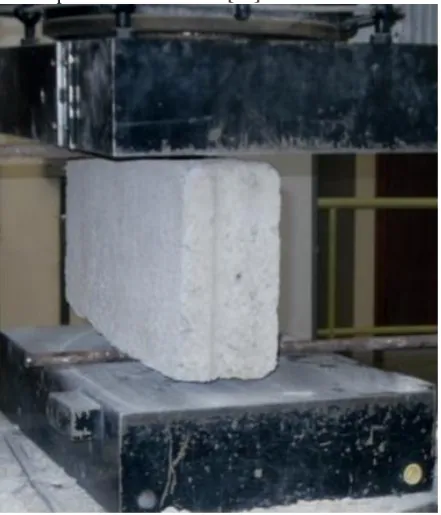
Standards explain the test method for determination of the splitting tensile strength of concrete block units. The compressive load applied on the hollow and grouted concrete block unit until failure. The load was imposed by means of bearing bars, results in a tensile stress distributed over the height of the unit for the split length of the specimen. Two bearing bars across the face shell for stretcher
block and half block were used[30]. The face-shell of stretcher block is divided by webs at the third point.
International Journal of Research
eISSN: 2348-6848 & pISSN:
2348-795X Vol-5 Special Issue-13
International Conference on Innovation and Research in
Engineering, Science & Technology
Held on 23rd & 24th February 2018, Organized by Tulsiramji Gaikwad Patil College of Engineering & Technology, Nagpur,
441108, Maharastra, India.
Experimental tests show the average maximum compressive force is 394 KN for the first type (type 1) and 374.33 KN for the second type (type 2), and compressive strength of 13.54 N/mm² for the first type (type 1) and 12.63 N/mm² the second type (type 2). Therefor we conclude that the direct loading on hollow concrete block (type 1) gives greater resistance compared to the second.
Concrete block gives more compressive strength as well as it is economic.It can be used in load bearing wall etc.It also has a better earthquake with the help of steel reinforcement. So hollow block proves itself as a modern part of construction material[1].No leakage of water during rain. These are not insulated from northern climates because the frame walls are not being insulated form the cold air.
International Journal of Research
eISSN: 2348-6848 & pISSN:
2348-795X Vol-5 Special Issue-13
International Conference on Innovation and Research in
Engineering, Science & Technology
Held on 23rd & 24th February 2018, Organized by Tulsiramji Gaikwad Patil College of Engineering & Technology, Nagpur,
441108, Maharastra, India.
Type Dimension
(mm)
Absorption %
Density (N/mm³)
10^-6
Strength (kN)
Splitting Strength (N/mm³)
Compressive Strength (N/mm³)
Standard No
test
1 100 x 200 x
40 3.53 23.57 518.78 0.127 18.08
ASTM
C140 6
2 100 x 200 x
40 2.77 24.11 509.24 0.186 17.15
ASTM
C1006 6
4.
Composite Hollow Blocks
Composite hollow blocks came into consideration due to their positive effect on economy as well as material properties like thermal and aucostic properties.Some examples are compressed hollow blocks with straw,paperwaste made from hollow bricks and sisal fiber reinforced concrete block.In this article we have discussed about their properties from some tests taking into consideration.
5.
Sisal Fiber Reinforced Concrete
Hollow Block:
The use of unconventional building materials (green materials)is rapidly increasing for the construction of sustainable buildings.Special attention is given to concrete blocks reinforced by vegetable Fibers such as sisal fiber. According to these surveys, cellulose or vegetable fibers enhance the mechanical, thermal and physical performances of cement-based composites when added to the cementous matrix, as they increase their flexural strength, toughness and impact resistance,reduce shrinkage on drying and thermal conductivity, and increase sound absorption.[3]
Compared to plain concrete specimens, sisal fibers reduce the propagation of cracks by controlling their opening, and may delay rupture of concrete elements [3]. The resulting composite has higher tensile and impact strength, higher Na and Kundu [16] used MsS for internal inspection of voids and inclusions in concrete-filled steel pipes. It was shown that the MsS system could generate different guided wave modes propagating along the steel pipe; and these waves were sensitive to the defects in the pipe. The received wave amplitudes decreased as the length of voids and inclusions increased. To overcome the major disadvantage of MsS, that is, the relatively low ultrasonic energy transmitted, Na and
Kundu [16] developed a hybrid approach combining PZT and MsS. This method was very effective for steel bar-concrete interface inspection. Bouchilloux et al. [17] measured the stress of the steel cable based on the reverse magnetostrictive effect. The accuracy of the MsS was within 3%; but the perturbation of temperature affected the accuracy. The difference between two extremes of temperature, that is, between 10◦C and 50◦C, was 6%. Rizzo and Di Scalea [18] used the discrete wavelet transform to extract damage-sensitive features from the signals detected by MsS to construct a multidimensional damage index vector. The damage index vector was then fed to an artificial neural network to provide the automatic classification of the size of the notch and the location of the notch of multi-wire strands. MsS can generate different guided wave modes by simply changing the coil or magnet geometry. They can work without any couplants. Guided waves have strong potentials for monitoring because of the capability for long-distance inspections. However, MsS is only suitable for ferromagnetic materials. Relatively low ultrasonic energy with low signal to noise ratio can be transmitted. And the induced energy is critically dependent on the probe proximity to the object being tested. energy absorption capacity and good performance even during the post cracked stage.Compared to plain concrete specimens, sisal fibers reduce the propagation of cracks by controlling their opening, and may delay rupture of concrete elements . The resulting composite has higher tensile and impact strength, higher energy absorption capacity and good performance even during the post-cracked stage. Materials and concrete mixed In the preparation of the concrete mix, cement, sand, coarse aggregates, sisal fibers and water were used. Details on the individual materials and the mix design are given hereafter.
International Journal of Research
eISSN: 2348-6848 & pISSN:
2348-795X Vol-5 Special Issue-13
International Conference on Innovation and Research in
Engineering, Science & Technology
Held on 23rd & 24th February 2018, Organized by Tulsiramji Gaikwad Patil College of Engineering & Technology, Nagpur,
441108, Maharastra, India.
and coarse aggregate[3]. The reinforcement was added in the form of individual fiber.
Apparently, adding sisal fibers has no positive effect on the mechanical properties of the blocks: in particular, the compressive strength decreases of nearly 26% compared to blocks in plain concrete.Indeed, fibers decrease the material density, increase water absorption and the number of voids in concrete. This in contrast where fibers were found to increase the tensile strength of the blocks.[3]
As the energy consumption and indoor environmental quality defers in cases ,especially in rural areas . The study on coupled heat and moisture transfer in hollow concrete block wall filled with compressed straw bricks can not only improves indoor air quality and hydro thermal environment but also provides the basis for energy conservation and marketing new materials.[19] The aim is to reveal heat and moisture coupling mechanism of hollow concrete block wall filled with compressed straw bricks by experiment.
There are two types of HCB that the basic type and the half type, which has the size of 395 × 240 × 190 mm (l × w × h) and 195 × 240 × 190 mm respectively. The basic type is the load-bearing block while half type just plays the role of supporting the basic block.[19] The hollow ratio of HCB is increased to 50.85% and the ribs are lengthened to reduce thermal bridge effect and increase thermal resistance.. The indoor environment testing results of the pilot building showed that indoor environment has good thermal performance. In mechanical performance, the compressive strength of HCBCSB is 10 Mpa.
The experiment on coupled heat and moisture transfer in hollow concrete block wall filled with compressed straw bricks was carried out .The temperature gradient has an important influence on the redistribution of relative humidity and moisture inside the wall .The results also show that filling compressed straw bricks into hollow concrete block can hinder temperature transfer and improve moisture buffering performance of tested wall. Owing to the lower water vapour permeability coefficient, compressed straw bricks can play an important role in hindering moisture transfer in multilayer wall.[19]
International Journal of Research
eISSN: 2348-6848 & pISSN:
2348-795X Vol-5 Special Issue-13
International Conference on Innovation and Research in
Engineering, Science & Technology
Held on 23rd & 24th February 2018, Organized by Tulsiramji Gaikwad Patil College of Engineering & Technology, Nagpur,
441108, Maharastra, India.
paper processing waste is used as an additive to an earthenware brick to produce the pores. Paper production inevitably produces large amounts of waste containing cellulose fibers along with calcium carbonate and clay minerals.This waste contains about 65% water and is generally dumped on land disposal sites in Turkey. Paper producers are seeking ways to eliminate this waste in an environmentally friendly way.
Brick producers use large amounts of natural clayey raw materials for production of earthenware bricks with wide composition variations. Therefore, these products can tolerate composition variations due to changes in the raw materials. Hence, in some cases they are capable of incorporating appropriate ratios of waste without significantly losing their product quality .
Composite hollow blocks can also be made by using paper waste [17].The basic qualities of paper waste bricks are that it should be free from cracks[33].They have low thermal conductivity and low water absorption quality when soaked in water[29].
Results obtained revealed that bulk densities decreased steadily with an increase in the amount of the paper waste. , which corresponds to a decrease by up to 30% compared to density of the brick without paper waste[29]. Also, their water absorption values increased depending on the mass ratio of waste addition.Thermal conductivity of the porous brick with 30% paper waste showed a reduction of 43% according to the brick without paper waste. This reduction in thermal conductivity of the materials encouraging for higher energy saving potential in building applications. The compressive strengths of fired clay brick samples were measured. Paper waste addition and the resulting porosity decreased the compressive strength of the brick samples which were still higher than the minimum standard strength values of 7 MPa[17] . Their apparent porosity and water absorption values were increased by increasing waste addition.have good conductivity[29].They provide less insulation as compared to clay blocks and when temperature increases concrete blocks also get heat
6.
Acoustic Behaviour
Hollow bricks are widely used as building structural elements. Their acoustic properties are greatly influenced by the pattern of the blocks.[15] Multilayer materials have been widely used as an effective sound attenuation material feasible prediction via a so-called transfer matrix method is often used. This method is based on a theory, which says that the relation between the pressure and bulk flow of two ends of a sound propagating route can be expressed by a matrix.In solid blocks sound insulation is very high as the sound waves cannot pass through it properly.In case of both concrete and clay hollow blocks there are two surfaces for reflection of sound wave so the may can be better insulator but with same they have higher echo effect[23].Fiberous material such as cellulose fiber or glass fiber or any other fiber can act as good acoustic insulator as they are good in absorbing the sound wave.So composite hollow blocks have better sound insulation[24].
7.
Thermal Properties
International Journal of Research
eISSN: 2348-6848 & pISSN:
2348-795X Vol-5 Special Issue-13
International Conference on Innovation and Research in
Engineering, Science & Technology
Held on 23rd & 24th February 2018, Organized by Tulsiramji Gaikwad Patil College of Engineering & Technology, Nagpur,
441108, Maharastra, India.
insulation from heat and temperature as they have higher density,while in case of light weight hollow concrete blocks they ed rising the inside temperature of the wall where they have being used.They are good conductors of heat as they have more inside voids as compared to clay blocks[24].
In case of composite blocks of hollow clay bricks filled withpaper waste,it is found that they decrease the thermal conductivity[29].Use of paper waste reduced the fired density and increased the apparent porosity and water absorption[20].It manly produced porous and lightweight clay blocks with reduced thermal conductivity and useful in tropical conditions[24].For the hollow concrete blocks filled with compressed straw it shows that they can hinder the temperature transfer and improve moisture buffering.
8.
Comparision And Discussion
Here, in this paper the different properties of hollow masonry blocks of different material are discussed. When it comes to compressive strength, hollow concrete blocks are superior to clay bricks and composite hollow blocks, whereas sisal fiber reinforced blocks provide greater tensile strength..Though clay blocks are more efficient in case of thermal insulation but it is difficult to maintain the stability of hollow masonry walls..Composite blocks (like paper waste composite and compressed straw composite) are efficient for thermal and acoustic insulation but they have less compressive strength and higher moisture absorption property. Hollow blocks,in other hand are economical for masonry walls carrying less amount of load and they can give a better architectural view to the wall.
9.
References
1. Analysis and optimization of the heat-insulating light concrete hollow brick walls design by the finite element method J. J. del Coz Dı´az a,*, P.J. Garcı´a Nieto b, C. Betego´n Biempica a, M.B. Prendes Gero aa Edificio Departamental Viesques, No 7, 33204 Gijo´n (Asturias), Spainb Departamento de Matema´ ticas, Facultad de Ciencias, C/Calvo Sotelo s/n, 33007 Oviedo (Asturias), Spain.Received 5 June 2006; accepted 1 October 2006.Available online 15 November 2006
2. Effect Of Recycled Aggreagate On Physical-Mechanical Properties And Durabilityofn Vibrocompacte Dry Mixed Concrete Hollow Blocks’.
3.Sisal fiber reinforced hollow concrete blocks for structural applications: Testing and modelingIndara Soto Izquierdo a, Orieta Soto Izquierdo a, Marcio Antonio Ramalho b, Alberto Taliercio Department of Civil Engineering, FederalUniversity of
Tocantins,77001-090 Palmas (TO),
BrazilDepartment of Structural Engineering, School of Engineering at São Carlos, University of São Paulo, 13566-590 São Carlos (SP), BraziDepartment of Civil and EnvironmentalEngineering, Politecnico di Milano, 20133 Milano, Italy.
4.Design and shape optimization of a new type of hollow concrete masonry block using the finite element methodJ.J. del Coz Díaz a,∗, P.J. García Nieto b, F.P. Álvarez Rabanal a, A. Lozano Martínez-Luengas aa Construction Department, University of Oviedo, 33204 Gijón, Spainb Department of Mathematics, University of Oviedo, 33007 Oviedo, Spain
5. nalysis and modelling of the in-plane shear behaviour of hollow brick masonry panelsA. Gabor *, E. Ferrier, E. Jacquelin, P. Hameli Laboratoire Me´canique Mate´riaux, Universite´ Claude Bernard Lyon1, 82, Boulevard Niels Bohr, Campus de la DOUA, 69622 V. Available online 21 March 2005.
6.Assessment of the actual hygrothermal performance of glass mineral wool insulation applied 25 years ago in masonry cavity wallsF. Stazi a,∗ , F. Tittarelli b , G. Politi a , C. Di Perna c , P. Munafò aa Dipartimento di Ingegneria Civile, Edile e Architettura (DICEA), Università Politecnica delle Marche, Via Brecce Bianche, 60131 Ancona, Italyb Dipartimento di Scienza e Ingegneria della Materia dell’Ambiente e Urbanistica (SIMAU), Università Politecnica delle Marche, Via Brecce Bianche, 60131 Ancona, ItalyDipartimento di Energetica, Università Politecnica delleMarche, Via Brecce Bianche, 60131 Ancona, Italy.
7. M Zukowski,G.Haese, Experimental and numerical investigation of a hollow brick filled with perlite insulation, Bialystok technical university,Poland, Hidesheimer Strasa 142D-30173 Hannover,Germany
8.Influence of cavity dimension on the stability of eccentrically loaded slender unreinforced masonry hollow wallsMu Lu a, Arturo E. Schultz b,⇑, Henryk K. Stolarski ba Structural Analysis Engineer IV, The Boeing Company, 325 J.S. McDonnell Blvd., St. Louis, MO 63042, United States b Civil Engineering, University of Minnesota, 500 Pillsbury Dr. SE, Minneapolis, MN 55455, United States.
International Journal of Research
eISSN: 2348-6848 & pISSN:
2348-795X Vol-5 Special Issue-13
International Conference on Innovation and Research in
Engineering, Science & Technology
Held on 23rd & 24th February 2018, Organized by Tulsiramji Gaikwad Patil College of Engineering & Technology, Nagpur,
441108, Maharastra, India.
Fonseca, Ad T.Vermeltfoort, Dirk R.W. Martens, Paulo B. Lourenço
aBuilding and Structure Department, Federal University of Santa Maria, Brazil
bDepartment of Civil and Environmental Engineering, Brigham Young University, 368 Clyde Building, Provo, UT 84602, USA
cDepartment of Architecture, Building and Planning, Eindhoven University, The Netherlands
dISISE, University of Minho, Department of Civil Engineering, Portugal.
10.Analysis and modelling of inplane shear behaviour of hollow brick masonary panels.A. Gabor *, E. Ferrier, E. Jacquelin, P. Hamelin.Laboratoire Me´canique Mate´riaux, Universite´ Claude Bernard Lyon1, 82, Boulevard Niels Bohr, Campus de la DOUA, 69622 Villeurbanne Cedex, France.Received 5 July 2002; received in revised form 31 October 2004; accepted 31 January 2005Available online 21 March 2005
11.Analysis of the shear and flexural behaviour of masonrywith hollow calcium silicate blocks.Bronius Jonaitis,Gediminas Mar£iukaitis, Juozas Valivonis.Department of Reinforced Concrete and Masonry Structures, Vilnius Gediminas Technical University, Saulëtekio al. 11, LT-10223 Vilnius, Lithuania
12. Behavior of hollow clay brick masonry walls during fire. Part 2: 3D finite element modeling and spalling assessment
eDuy Tân University, Department of Civil Engineering, K7/25 Quang Trung, Da Nang, Vietnam
fCentre Technique de Matériaux Naturels de Construction (CTMNC), 17 rue Letellier, 75726 Paris Cedex 15, France
gLaboratoire de Génie Civil et Génie Mécanique, INSA de Rennes, 20 Av9 - 35708 Rennes Cedex 7, France
13.Behavior of hollow clay brick masonry walls during fire. Part 2: 3D finite element modeling and spalling assessment.Thê-Duong Nguyen a,b,n, Fekri Meftah ch Duy Tân University, Department of Civil Engineering, K7/25 Quang Trung, Da Nang, Vietnam
iCentre Technique de Matériaux Naturels de Construction (CTMNC), 17 rue Letellier, 75726 Paris Cedex 15, FranceLaboratoire de Génie Civil et Génie MécaniqueINSA de Rennes, 20 Avenue des Buttes de Coesmes - CS 70839 - 35708 Rennes Cedex 7, France.
14.Steady state theoretical model of fired clay hollow bricks for enhanced external wall thermal insulattion.Ammar Bouchai.Laboratoire de
Recherche Cadre Baˆti et Environnement, De´partement d’Architecture, Faculte´ des Sciences de l’Inge´nieur, Universite´ de Jijel, BP 98 Ouled Aissa, Jijel 18000, Alge´ria. Received 29 June 2007; received in revised form 4 October 2007; accepted 10 October 2007
15.Sound transmission loss analysis through a multilayer lightweight concrete hollow brick wall by FEM and experimental validation
J.J. del Coz Díaz a, *, F.P. Álvarez Rabanal a, P.J. García Nieto b, M.A. Serrano López a
jConstruction and Manufacturing Engineering Department, University of Oviedo, 33204 Gijón, Spain
kDepartment of Mathematics, Faculty of Sciences, C/Calvo Sotelo s/n, 33007 Oviedo, Spain
16.Static and dynamic thermal characterisation of a hollow brick wall: Tests and numerical analysis.J.M. Sala a, A. Urresti a,*, K. Martı´n b, I. Flores b, A. Apaolaza b Thermal Engineering Department, Universidad del Paı´s Vasco (UPV/EHU), Alda. Urquijo s/n, 48013 Bilbao, Spainb Construction Quality Control Laboratory of the Basque Government, C/Aguirrelanda n8 10, 01013 Vitoria-Gasteiz, Spain.Received 4 January 2008; accepted 2 February 2008
17.Thermal performance optimization of hollow clay bricks made up of paper waste Mucahit Sutcu a,∗ , Juan José del Coz Díaz b , Felipe Pedro Álvarez Rabanal b , Osman Gencel c , Sedat Akkurt d a Department of Materials Science and Engineering, Izmir Kâtip C¸ elebi University, 35620 Izmir, Turkey b Department of Construction, University of Oviedo, 33204 Gijón,Spain
c Department of Civil Engineering, Bartin University, 74100,Bartin, Turkey Department of Mechanical Engineering, Izmir Institute of Technology, 35430 Izmir, Turkey
18. Development of a simplified heat transfer model of hollow blocks by using finite element method in frequency domain Anbang Li a , Xinhua Xu a , Junlong Xie b,∗ , Yongjun Sun c
a Department of Building Environment & Energy Engineering, Huazhong University of Science &Technology, Wuhan, China b Department of Refrigeration &Cryogenic Engineering,
HuazhongUniversity of Science
&Technology,Wuhan, China
c Division of Building Science and Technology, City University of Hong Kong, Kowloon, Hong Kong, China
International Journal of Research
eISSN: 2348-6848 & pISSN:
2348-795X Vol-5 Special Issue-13
International Conference on Innovation and Research in
Engineering, Science & Technology
Held on 23rd & 24th February 2018, Organized by Tulsiramji Gaikwad Patil College of Engineering & Technology, Nagpur,
441108, Maharastra, India.
Wang Hanbing Bian ba College of Water Conservancy and Civil Engineering, Shandong Agricultural University, Tai’an 271018, China b Université de Lorraine, Ile du Saulcy, 57045 Metz, France
20.The effects of tempertaure on the thermal resistance of the walls made with different shapes vertical hollow bricks.S.Lorente,M.Petite,R.Javelas LETHEM INSA-UPS, INSA D~pt G. CivilAv. de RangueiL 31077 Toulouse, France
21.The behaviour of masonry walls subjected to fire:Modelling and parametrical studies in the case of hollow burnt-clay bricks.Theˆ-Duong Nguyen , , Fekri Meftah, Rabih Chammas, Ahmed Mebarki.Universite´ Paris-Est, Laboratoire Mode´lisation et Simulation Multi Echelle, MSME FRE3160 CNRS, 5 bd Descartes, 77454 Marne-la-Valle´e, France b Centre Technique des Mate´riaux Naturels de Construction (CTMNC), 17 rue Letellier,75015 Paris, France
22.Experimental results on the retrofitting of hollow brick masonry walls with reinforced high performance mortarcoatings.F. Messali 1, G. Metelli ⇑, G. PlizzariDICATAM, University of Brescia, Via Branze 43, 25123 Brescia, Italy
23.A homogenised vibratory model for predicting the acoustic properties of hollow brick walls.Gary Jacqus a,n, Sylvain Berger b, Vincent Gibiat c, Philippe Jean d, Michel Villot d, Se´bastien CiukajCTMNC 200, avenue du Ge´ne´ral-de-Gaulle, 92140 Clamart, France b CRIR 19 rue Emile Zola, B.P.10019, 60291 Rantigny, France Laboratoire PHASE, Universite´ Paul Sabatier, Toulouse 3, 118 route de Narbonne, 31062 Toulouse Cedex 9, France d CSTB 24 rue Joseph Fourier, 38400 Saint-Martin-d’Heres, France
24. A modified transfer matrix method for prediction of transmission loss of multilayer acoustic materials C.M .Lee , Y. Xu.School of Mechanical and Automotive Engineering, University of Ulsan, 29 Mugue-Dong, Nam Gu, Ulsan 680-479, Republic of Korea
25. Mixed-mode (I + II) fracture characterization of wood bonded joints.M.F.S.F. de Moura a,⇑, J.M.Q. Oliveira b,J.J.L.Morais c, N. Dourado Departamento de Engenharia Mecânica, Faculdade de Engenharia da Universidade do Porto, Porto, Portugal b Departamento de Engenharia de Madeiras, Instituto Superior Politécnico de Viseu, Viseu,Portugal
c CITAB – Center for the Research and Technology of Agro-Environment and Biological Sciences, University of Trás-os-Montes and Alto Douro, Vila Real, Portugal
26. Numerical simulation of concrete hollow bricks by the finite volume method.Jiapeng Sun a, Liang Fang.School of Materials Science and Engineering, China University of Mining & Technology, Xuzhou 221116, Jiangsu Province, PR China b School of Mechanical & Electrical Engineering, China University of Mining & Technology, Xuzhou 221116,Jiangsu Province, PR China
27. Numerical thermal optimization of the configuration of multi-holed clay bricks used forconstructingbuilding walls by the finite volume method.L.P. Li, Z.G. Wu, Z.Y. Li, Y.L. He, W.Q. Tao.School of Energy and Power Engineering, Xi’an Jiaotong University, Xi’an, China.Received 2 March 2007,Available online 21 April 2008
28. Optimization of the configuration of 290 140 90 hollow clay bricks with 3-D numerical simulation by finite volume method.L.P. Li a, Z.G. Wu a, Y.L. He a, G. Lauriat b, W.Q. Tao.School of Energy & Power Engineering, Xi’an Jiaotong .University, Xi’an, China b LETEM, Universite de Marne-la-Valle, France
29. The use of response surface methodology to improve the thermal transmittance of lightweight concrete hollow bricks by FEM.Juan Jose del Coz Diaz a,⇑, Paulino Jose Garcia-Nieto b, Felipe Pedro Alvarez-Rabanal a, Mar Alonso-Martínez a, Javier Dominguez-Hernandez c, Jose Maria Perez-Bella c Department of Construction and Manufacturing, University of Oviedo, 33204 Gijón, SpainDepartment of Mathematics, University of Oviedo, 33007 Oviedo, Spain Construction Department, University of Zaragoza, 50018 Zaragoza, Spain
30. The Behavior of Hollow Concrete Block Masonry under Axial Compression Mohammed A.A. Al-Amoudi 1* Dr. Ahmed H. Alwathaf 2Master Student, Civil Engineering Department, Faculty of Engineering, University of Science and Technology, Yemen
m Associate Professor, Civil Engineering Department, Faculty of Engineering, Sana'a University, Yemen.
31.CLAY BRICK WALLS THERMAL
PROPERTIES Milica Arsenovic1, Zeljko Lalic2 & Zagorka Radojevic1Institute for testing of materials, IMS, Centre for materials, Bulevar vojvode Misica 43 St. Belgrade, Serbia 2 Ministry of Economy and regional development, 15, King Aleksandar Boulevard, 11000 Belgrade, Serbia
International Journal of Research
eISSN: 2348-6848 & pISSN:
2348-795X Vol-5 Special Issue-13
International Conference on Innovation and Research in
Engineering, Science & Technology
Held on 23rd & 24th February 2018, Organized by Tulsiramji Gaikwad Patil College of Engineering & Technology, Nagpur,
441108, Maharastra, India.