Available Online at www.ijcsmc.com
International Journal of Computer Science and Mobile Computing
A Monthly Journal of Computer Science and Information Technology
ISSN 2320–088X
IMPACT FACTOR: 5.258
IJCSMC, Vol. 5, Issue. 8, August 2016, pg.131 – 137
Slops and Distances for Regular
Shape Image Recognition
Dr. Saad Abdual Azize Bilal Sadeq Obaid Obaid
Associate Professor, Computer Science Dept. Head of IT and Computer Dept. Al_Mamon University College Pro-Technique Ltd Baghdad, Iraq Amman, Jordan
[email protected] www.pro-technique.com, www.unihouse.com.jo [email protected]
Abstract: The term "geometric shape" refers to any shape that remains virtually unchanged if it is moved around, flipped or reflected off of a surface. When manipulated, a geometric shape does not create a new shape; it remains intact. Such shapes include the circle, square, triangle, rectangle, hexagon and octagon. This research highlights the way common geometric shapes are recognized; this is done by scanning the image, determining eight points, calculating the distance between them, and calculating the slop; finally, the desired shape is determined.
Keywords: Shape recognition, Slop, Euclidean distance, regular shape.
Introduction
Geometrical shapeshave been found very commonly in the nature and have wide range of practical applications, they are mainly used in environment detection with robotic and artificial intelligence machines, also they are essential in geometrical images processing, monitoring and controlling systems and so on. For that, discriminate and detect the geometrical shapes is a sensitive and brilliant mission. Those shapes consider thegeometricalinformation which remains whenlocation,scale,orientationandreflectionare removed from the description of ageometric object.That is, the result of moving a shape around, enlarging it, rotating it, or reflecting it in a mirror is the same shape as the original, and not a distinct shape.
Objects that have the same shape as each other are said to besimilar. If they also have the same scale as each other, they are said to becongruent.
The four properties that govern all geometrical shapes are point, line, plane and solid. Geometry is divided into two distinct categories. Plane geometry studies two-dimensional shapes, or items on a flat surface, while solid geometry studies three-dimensional objects.
Two-dimensional shapes include polygons and curved objects. Regular polygons have straight sides which are the same length and angles with the same measurement, such as triangle, circle, square, rectangle, hexagon and octagon.
Rectangle is any quadrilateral with four right angles. It can also be defined as an equiangular quadrilateral, since equiangular means that all of its angles are equal (360°/4 = 90°). It can also be defined as a parallelogram containing a right angle. A rectangle with four sides of equal length is a square.Opposite sides are parallel and of equal length.
Square is a regular quadrilateral, which means that it has four equal sides and four equal angles (90-degree angles, or right angles).[1] It can also be defined as a rectangle in which two adjacent sides have equal length.
Triangle; There are thousands of different constructions that find a special point associated with (and often inside) a triangle, which gives it a unique properties. Often, triangles are constructed by finding three lines associated in a symmetrical way with the three sides (or vertices) and then proving that the three lines meet in a single point. An important tool for proving the existence of this is Ceva's theorem, which gives a criterion for determining when three such lines are concurrent.
Parallelogram; Recall that parallelograms are special a type of quadrilateral whose opposite sides do not intersect. Parallelograms come in the form of rectangles, rhombuses, and squares. When trying to determine the area of a parallelogram, it will be necessary to identify two main components: the base and the height of the parallelogram. The base of a parallelogram can be on any side of the figure. The height of a parallelogram is the perpendicular distance between any two parallel bases. Let's look at these different parts in the figure below. A parallelogram has opposite sides parallel and equal in length. Opposite angles are also equal.
The rhombus has the following properties:
All the properties of a parallelogram apply (the ones that matter here are parallel sides, opposite angles are congruent, and consecutive angles are supplementary).
All sides are congruent by definition. The diagonals bisect the angles.
The diagonals are perpendicular bisectors of each other.
Regular pentagon; A five-sided shape is called a pentagon. A six-sided shape is a hexagon, a
seven-sided shape a heptagon, and an eight-seven-sided shape is an octagon.While there are different names for different types of polygons, the number of sides is more important than the name of the shape. A regular polygon has equal length sides with equal angles between each side.
Line Edge detectors using slop
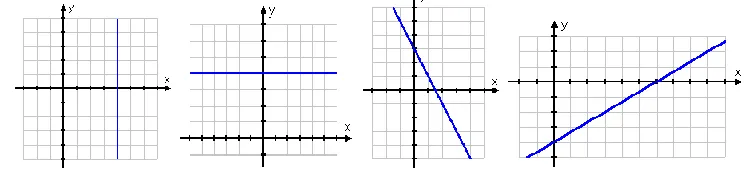
A line is increasing if it goes up from left to right. The slope is positive,. { m>0} A line is decreasing if it goes down from left to right. The slope is negative. { m<0} If a line is horizontal then the slope is zero. This is a constant function.
Figure 1: four types of lines and slops
The Proposed
AlgorithmThe proposed algorithm of recognizing geometrical shapes goes on many steps as follows: 1- Read image.
2- Scan to find 8 points which define the corner of the shape. 3- Sort the 8 point in ascending order.
4- Remove the equal points and find the number of reminding point (N). 5- If N = 4, there’s four corner points.
6- Find the Euclidean distance between the four points. 7- If the four distances are equal, then the shape is “square”
Otherwise, the shape is rectangle.
8- If N = 8, find Euclidean distance between the 8 points. 9- Remove the distances less than 5.
10-If the reminders are three distances then the shape is triangular. 11-If the reminders are four distances then find the slops between points.
a- If the two slops are positive then the shape is rhombus. b- If the two slops are zero then the shape is parallelogram.
12-If the reminders are five distances then find the slops between points.
a- If one of the slops is zero, two slops are negative and two are positive then the shape is regular pentagon.
Implementation
We apply the algorithm on different shapes as follows:
a: a square image
h = 9 6 77 6 77 6 77 74 77 74 9 74 9 74 9 6
c: Rounded values
r =
68 1 68 3 68 5 68 7
d:Finding distance
ans =
8.5000 5.5000 76.5000 5.5000 76.5000 5.5000 76.5000 73.5000 76.5000 73.5000 8.5000 73.5000 8.5000 73.5000 8.5000 5.5000
point dis slop shape 1,2 68 0
2,4 68 -inf 3,4 68 0 3,1 68 inf
e: Finding distances
Figure 2: Applying algorithm on squared shape
point dis slop shape 1,2 47 0
2,4 77 -inf 3,4 47 0 3,1 77 inf
Figure 3: Applying algorithm on Rectangular shape
ans =
18.5000 17.5000 95.5000 17.5000 95.5000 17.5000 95.5000 64.5000 95.5000 64.5000 18.5000 64.5000 18.5000 64.5000 18.5000 17.5000
h = 19 18 96 18 96 18 96 65 96 65 19 65 19 65 19 18
r =
77 1 47 3 77 5 47 7 Shape either rectangle or rhombus or square D(1,2) = 68, D(2,4) = 68, D(4,3) = 68, D(3,1) = 68. p = 1, sp = 0, p = 3, sp = -Inf, p = 5, sp = 0, p = 7, sp = Inf.
Shape is: Square
f: Shape recognition
ans =
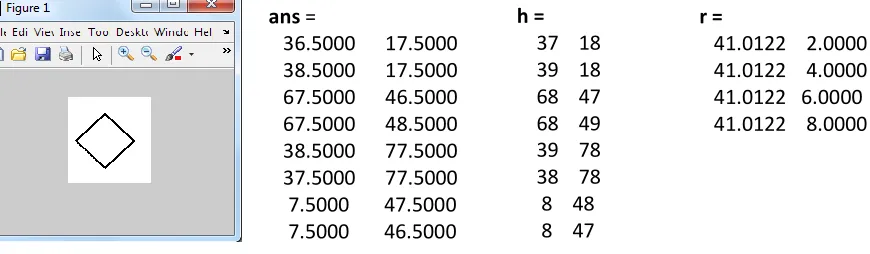
36.5000 17.5000 38.5000 17.5000 67.5000 46.5000 67.5000 48.5000 38.5000 77.5000 37.5000 77.5000 7.5000 47.5000 7.5000 46.5000
h =
37 18 39 18 68 47 68 49 39 78 38 78 8 48 8 47
r =
41.0122 2.0000 41.0122 4.0000 41.0122 6.0000 41.0122 8.0000 Shape either rectangle or rhombus or square
D(1,2) = 47, D(2,4) = 77, D(4,3) = 47, D(3,1) = 77
p =1, sp = 0, p = 3, sp = -Inf, p = 5, sp = 0, p = 7, sp = Inf
Figure 4: Applying algorithm on rhombus shape
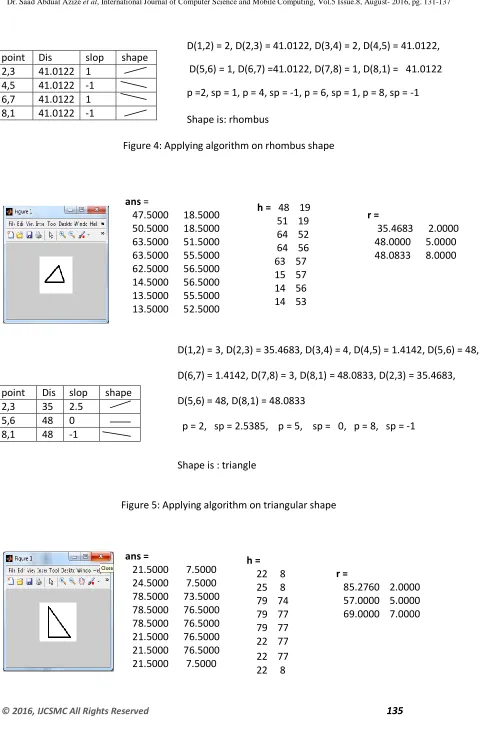
Figure 5: Applying algorithm on triangular shape
point Dis slop shape
2,3 41.0122 1
4,5 41.0122 -1
6,7 41.0122 1
8,1 41.0122 -1
point Dis slop shape
2,3 35 2.5
5,6 48 0
8,1 48 -1
ans =
47.5000 18.5000 50.5000 18.5000 63.5000 51.5000 63.5000 55.5000 62.5000 56.5000 14.5000 56.5000 13.5000 55.5000 13.5000 52.5000
ans =
21.5000 7.5000 24.5000 7.5000 78.5000 73.5000 78.5000 76.5000 78.5000 76.5000 21.5000 76.5000 21.5000 76.5000 21.5000 7.5000
h =
22 8 25 8 79 74 79 77 79 77 22 77 22 77 22 8
h = 48 19 51 19 64 52 64 56 63 57 15 57 14 56 14 53
r =
35.4683 2.0000 48.0000 5.0000 48.0833 8.0000
r =
85.2760 2.0000 57.0000 5.0000 69.0000 7.0000 D(1,2) = 2, D(2,3) = 41.0122, D(3,4) = 2, D(4,5) = 41.0122,
D(5,6) = 1, D(6,7) =41.0122, D(7,8) = 1, D(8,1) = 41.0122
p =2, sp = 1, p = 4, sp = -1, p = 6, sp = 1, p = 8, sp = -1
Shape is: rhombus
D(1,2) = 3, D(2,3) = 35.4683, D(3,4) = 4, D(4,5) = 1.4142, D(5,6) = 48,
D(6,7) = 1.4142, D(7,8) = 3, D(8,1) = 48.0833, D(2,3) = 35.4683,
D(5,6) = 48, D(8,1) = 48.0833
p = 2, sp = 2.5385, p = 5, sp = 0, p = 8, sp = -1
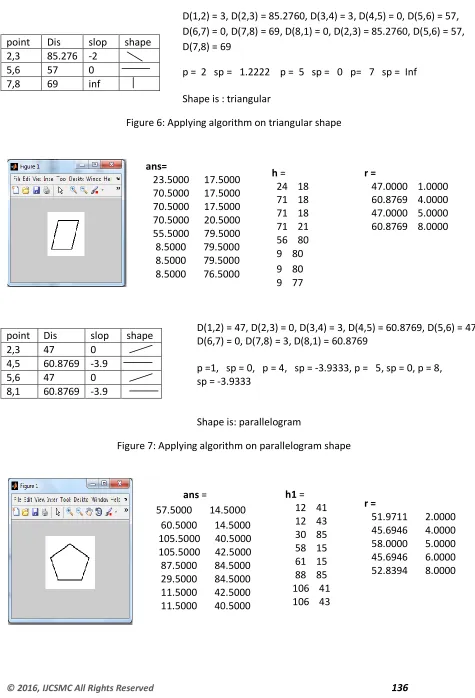
Figure 6: Applying algorithm on triangular shape
Figure 7: Applying algorithm on parallelogram shape
point Dis slop shape
2,3 85.276 -2
5,6 57 0
7,8 69 inf
point Dis slop shape
2,3 47 0
4,5 60.8769 -3.9
5,6 47 0
8,1 60.8769 -3.9
ans=
23.5000 17.5000 70.5000 17.5000 70.5000 17.5000 70.5000 20.5000 55.5000 79.5000 8.5000 79.5000 8.5000 79.5000 8.5000 76.5000
h = 24 18 71 18 71 18 71 21 56 80 9 80 9 80 9 77
ans =
57.5000 14.5000 60.5000 14.5000 105.5000 40.5000 105.5000 42.5000 87.5000 84.5000 29.5000 84.5000 11.5000 42.5000 11.5000 40.5000
h1 = 12 41 12 43 30 85 58 15 61 15 88 85 106 41 106 43
r =
47.0000 1.0000 60.8769 4.0000 47.0000 5.0000 60.8769 8.0000
r =
51.9711 2.0000 45.6946 4.0000 58.0000 5.0000 45.6946 6.0000 52.8394 8.0000 D(1,2) = 3, D(2,3) = 85.2760, D(3,4) = 3, D(4,5) = 0, D(5,6) = 57, D(6,7) = 0, D(7,8) = 69, D(8,1) = 0, D(2,3) = 85.2760, D(5,6) = 57, D(7,8) = 69
p = 2 sp = 1.2222 p = 5 sp = 0 p= 7 sp = Inf
Shape is : triangular
D(1,2) = 47, D(2,3) = 0, D(3,4) = 3, D(4,5) = 60.8769, D(5,6) = 47, D(6,7) = 0, D(7,8) = 3, D(8,1) = 60.8769
p =1, sp = 0, p = 4, sp = -3.9333, p = 5, sp = 0, p = 8, sp = -3.9333
Figure 8: Applying algorithm on regular pentagon shape
Conclusion
Geometrical shapes had been proved to be essential and important in many applications specially with the expansion of computer aided machines which need shape recognition like robotics, intelligent and controlling systems. In this paper we introduced a new technique for recognizing different shapes using line detection, depending on finding distances and slops between some points found on those shapes. The proposed method proved to be practical and easy to implement with great fidelity by applying the algorithm on plenty images.
References
1- Hearn Baker, “computer graphics with open GL”, person prentice Hall, 2004.
2- A. Collet and S. Srinivasa, “Efficient multi-view object recognition and full pose estimation”, Robotics and Automation, IEEE International Conference, 2010.
3- D. Lowe, “Distinctive image features from scale-invariant key points”, International Journal of Computer Vision, vol. 60, no. 2, 2004.
4- Krish Karthik, Snyder Wesley, " A Shape Recognition Algorithm Robust to Occlusion: Analysis and Performance Comparison" , 2007.
5- M. Weber, M. Welling, and P. Perona, “Unsupervised learning of models for recognition”, Computer Vision, European Conference, 2000.
6- S. Yang, M. Chen, D. Pomerleau, and R. Sukthankar, “Food recognition using statistics of pairwise local features”, Computer Vision and Pattern Recognition, IEEE Conference, 2010
7- http://www.skillsyouneed.com/num/curved-shapes.html#ixzz3W9xq4C57 8- http://www.skillsyouneed.com/num/polygons.html#ixzz3W9xDI8qM
point Dis Slop shape
2,3 51.9 0.5778
4,5 45.6 -2.333
5,6 58 0
6,7 45.6 2.333
8,1 52.8 -0.5778
D(1,2) = 3, D(2,3) = 51.9711, D(3,4) = 2, D(4,5) = 45.6946, D(5,6) =58, D(6,7) = 45.6946, D(7,8) = 2, D(8,1) = 52.8394
p = 2, sp = 0.5778, p = 4, sp = -2.3333, p = 5, sp = 0, p = 6, sp = 2.3333, p = 8, sp = -0.5778.