IPSL: A Database of Iconicity Patterns in Sign Languages. Creation and Use
Vadim Kimmelman, Anna Klezovich, George Moroz
University of Amsterdam, Higher School of Economics, Higher School of Economics Amsterdam (the Netherlands), Moscow (Russia), Moscow (Russia)
{vadim.kimmelman, belkannkl, agricolamz}@gmail.com
Abstract
We created the first large-scale database of signs annotated according to various parameters of iconicity. The signs represent concrete concepts in seven semantic fields in nineteen sign languages; 1542 signs in total. Each sign was annotated with respect to the type of form-image association, the presence of iconic location and movement, personification, and with respect to whether the sign depicts a salient part of the concept. We also created a website: https://sl-iconicity.shinyapps.io/iconicity patterns/ with several visualization tools to represent the data from the database. It is possible to visualize iconic properties of separate concepts or iconic properties of semantic fields on the map of the world, and to build graphs representing iconic patterns for selected semantic fields. A preliminary analysis of the data shows that iconicity patterns vary across semantic fields and across languages. The database and the website can be used to further study a variety of theoretical questions related to iconicity in sign languages.
Keywords:iconicity, sign language, linguistic typology
1.
Iconicity Patterns in Sign Languages
Iconicity is a fundamental property of human languages, both in the spoken and signed modalities (Perniss et al., 2010). Following Taub (2012), we define iconicity as a presence of a mapping (resemblance) between a mental im-age and the phonetic form of a sign (that is, sounds in spo-ken languages, or handshape, movement, and location in sign languages). For instance, the sound of the English worddingresemble the sound of a bell, and the handshape of the sign TREE in Russian Sign Language (RSL) (the palm with all fingers outstretched) resembles a crown of a tree—therefore, the word and the sign are iconic. For various reasons (see Taub (2012) for a discussion), un-til recently, iconicity has not been actively investigated even by researchers working on sign languages. However, in re-cent years, a theoretical model of iconicity has been sug-gested (Taub, 2001), and several empirical studies have compared iconicity in different sign languages and in ges-tures of hearing people (Brentari et al., 2015; Padden et al., 2013; Padden et al., 2015).
Taub (2001) develops the Analogue-Building Model of Linguistic Iconicity.1 According to this model, iconic en-coding of a concept comprises of three steps: image selec-tion (a particular image representing a concept is selected), schematization (the image is simplified), and encoding (the image is encoded using the linguistic means). For instance, to create an iconic sign for the concept ‘tree’, first an image of a prototypical tree is selected (a tree with a trunk and crown), then it is schematized (for instance, the schema-tized representation does not refer to leaves), and then it is encoded (e.g, the hand is used to represent the crown, and the arm to represent the trunk).
Based on this model, Taub (2012) discusses that iconic signs can be further classified according to the type of the concept-image association (how the image is selected to represent the concept) and the image-form association
1The model applies to both spoken and signed languages, but
we focus on the latter in this paper.
(how the phonetic shape is selected to represent the image). For instance, concerning concept-image association, some-times only a part of the object is represented by the sign (e.g. representing the whiskers of a cat for the concept ‘cat’). Concerning the image-form association, in some cases we observeobjecthandshapes where the hand repre-sents the object itself (e.g. a flat hand representing a knife, as in the Greek sign KNIFE), while in others we observe
handlinghandshapes where the hand represents the hand of an agent handling an object (e.g. a fist representing a hand of someone holding a knife, as in the British signKNIFE)).
Several recent studies focused on this latter typology, specifically, on the choice between the object and han-dling handshapes in iconic signs. For instance, Padden et al. (2013) compare iconic signs for instruments in Amer-ican Sign Language (ASL), Al-Sayyid Bedouin Sign Lan-guage (ABSL), and New Zealand Sign LanLan-guage (NZSL), as well as gestures of hearing Americans and Bedouins. They find that both groups of hearing gesturers have very strong tendency to produce handling handshapes for instru-ments, while ASL and ABSL signers have a strong ten-dency to use object handshapes in the corresponding signs; NZSL turned out to be in between in this respect. In a dif-ferent study, Padden et al. (2015) find that signers of ASL but not gesturers use the object/handling difference to en-code the difference between nouns and verbs. Brentari et al. (2015) compare signers and gesturers from two coun-tries (the US and Italy) and find similarities and differences between the groups. The research so far thus indicates that (1) there is typological variation between sign languages and languages vs. gesture variation in the choice of the form-meaning mappings and (2) there are linguistic factors that influence the choice of mappings (e.g. encoding the noun-verb distinction).
ASL-Lex database (Caselli et al., 2016) which contains approx-imately 1000 ASL signs annotated (among other features) for iconicity ratings. However, the ratings only reflect a de-gree of iconicity (on a 7 point scale) for the whole signs, and does not discuss iconic features. Furthermore, it only contains data from one sign language. The same is true for the study in Cates et al. (2013) who annotated more than 700 ASL signs for iconicity of the three major parameters: hanshape, location, and movement. However, these param-eters were only annotated as being iconic or non-iconic, without further analysis of iconicity.2
In order to study iconicity patterns in a more systematic manner, we created the database “Iconicity Patterns in Sign Languages” (IPSL).3It contains 1542 signs from seven se-mantic fields in nineteen sign languages and annotated them according to five iconic parameters. In addition, we created a website with several tools to visualize the iconicity pat-terns. In the rest of the paper we describe the creation of the database, the features of the website, and illustrate how they can be used in research on iconicity in sign languages.
2.
Creating a Database of Iconicity Patterns
2.1.
The Data
In order to create the IPSL database, we used the on-line dictionary of sign languages Spreadthesign (www.spreadthesign.com). This dictionary contains video recordings of isolated signs and signed sentences (up to 15 000 entries per language) in 31 sign languages. The dictionary has been created as a tool to facilitate learning of sign languages across the world; it has not been specifically designed for linguistic research. For instance, typically only one sign per concept is provided, while a sign lan-guage might have several signs. In addition, the procedure of data collection lead to the fact that lexical signs and multi-sign descriptions of non-lexicalized concepts are not systematically distinguished. However, since we focused only on the most basic concrete concepts, we consider the data to be good enough for our purposes.
We selected nineteen sign languages from all languages present at the website, namely Russian, French, American, British, Spanish, Italian, German, Polish, Brazilian, Turk-ish, Portuguese, Czech, Lithuanian, SwedTurk-ish, Greek, Ro-manian, Latvian, Estonian, and Icelandic Sign Languages. The choice was governed by two main considerations: (1) we only selected the languages for which a majority of the 15 000 signs were present on the website at the moment of selection (the fall of 2016); (2) we excluded Ukranian and Belorussian Sign Language due to their close related-ness to Russian Sign Language.
We included 87 concrete concepts from seven semantic fields: transport, nature, instruments (tools), house, clothes, food, and animals. We reasoned that this selection repre-sents a reasonable sample of the basic concrete concepts.4
2
The list of references on iconicity here is far from exhaustive, however, to our knowledge, no research comparable to the current project has ever been conducted.
3Note that this abbreviation is also sometimes used for
Indo-Pakistani Sign Language.
4
We did not include abstract concepts because iconic signs
ex-It turned out that some sign languages are missing signs for some of the concepts. Furthermore, we decided to exclude any entries where a concept was described by a sequence of more than two signs, as they are unlikely to be lexicalized. This resulted in the database of 1542 annotated signs (out of the 1653 theoretically possible items).
2.2.
Basic annotations
The annotation is based on Taub (2012) with some impor-tant modificaitons. First, we annotate each sign with re-spect to the form-image association (Taub, 2012). This specifically refers to the role that the handshape plays in de-picting the object. We distinguish four types of form-image association:
1. Handling: the hand of the signer represents the hand of an agent that holds or handles the object, as in the RSL signHAMMER;
2. Object: the hand depicts the shape of the object itself, as in the RSL signCHAIR;
3. Contour: the hand represents the outline or surface of an object, as in the RSL signHOUSE;
4. Tracing: the hands move to trace an outline or surface of an object, as in the RSL signMOUNTAIN;
Following an insight from Taub (2012), we introduced a bi-nary iconic feature of personification. It receives a positive value if the whole body (the hands, arms, upper body, and head) are a part of the iconic representation. A sign with a contour or tracing associations cannot involve personifica-tion by definipersonifica-tion, because the hands do not represent the hands of a person. Signs with handling handshapes nec-essarily involve personification, but a sign with an object handshape can also involve personification, for instance, in the case of the hands representing paws or wings of an ani-mal, as in the Polish Sign Language signBIRD.
Notice that the form-meaning association feature concerns the role of the handshape. However, locations and move-ments in the signs can also be iconic. We thus also in-troduced a binary iconic feature of location. It receives a positive value if the location of the sign is iconic, that is, it represents the marked location of the object that is be-ing represented. This happens with signs likeSUN,MOON, SKY(see the RSL signSUN) which are often located above the neutral space, or with pieces of clothing which are often located on the body (see the RSL signT-SHIRT).
We also introduced a binary iconic feature of associated ac-tion. It receives a positive value if the movement in the sign depicts an action (independent movement or handling) associated with the object, as in the RSL signKEY. Finally, we decided to annotate the signs according to one of the possible concept-image associations (Taub, 2012), namely we introduced the part-whole feature, which re-ceives a positive value if the sign represents not the whole
object, but only a noticeable part of the object, as in the RSL signCAT.5
The iconicity features interact with each other in intricate ways. For instance, as discussed above, the positive value of personification is only possible for object and handling handshapes. We discuss the interactions between the fea-tures and the rules that we postulated to make the annota-tions consistent in detail on the About tab of our website. The iconicity features that we selected are probably not ex-haustive. However, they represent the iconic properties of all the major parameters of a sign (handshape, movement, and location). The database can be further extended with any novel features deemed necessary by future researchers. Not all signs in the IPSL database are iconic. We distin-guish two types of non-iconic signs: those involving fin-gerspelling, and those which do not involve fingerspelling and for which we cannot find any iconic motivation. Note that this means that the signs are in fact not transparent, but not necessarily non-iconic. We also tried to be careful in assigning iconic motivation to dubious cases, which means that in cases of doubt we would use the non-iconic label in-stead of trying to come up with a far-fetched interpretation.
2.3.
Compounds and two-handed signs
Some signs have a complex morphological (or at least phonological) structure. We distinguish two cases that are annotated following additional rules, namely compounds and asymmetric two-handed signs.
Compounds are signs that have two clearly distinguishable sequential parts. For compounds, we annotate each part separately, using the “&” sign to separate the values of fea-tures: e.g. handling&objectfor a compound with the han-dling association in the first part, and the object association in the second part, as in the Italian signSPOON.
Another case of complex signs are two-handed signs. In symmetric two-handed signs, the two hands have the same handshape and movement, so the hands are also necessar-ily the same with respect to the iconicity features, and we do not annotate them separately. However, in asymmetric two-handed signs the two hands might (and often do) de-pict separate parts or aspects of the dede-picted object. For in-stance, in the RSL signHELICOPTER, one hand represents the cabin and the other hand the turning blades. Since these two-parts can be different with respect to iconicity features, we annotate them separately, using the “+” sign between the parts. The active hand is always annotated first: e.g.
handling+object, see for instance the Turkish signSPOON. Sometimes one or both parts of a compound are asymmet-ric two-handed signs. This represents the most complex type of cases in our dataset, and it is annotated following the rules described above. For instance, we annotate the form-image mapping of the sign Icelandic sign LAMP as
tracing+contour&object+contour.
5Taub (2012) also considers associated action to be a type of
concept-image association. We are agnostic with respect to the exact nature of this feature, but still consider it a useful feature to systematically describe iconicity.
2.4.
Reliability of Annotations
In order to ascertain the reliability of the annotation proce-dure, the whole data set (1542 sign tokens) has been fully annotated by Authors 1 and 2 independently. We then com-pared the annotations to calculate agreement per each of the features that we annotated.
In order to adjust the estimation for chance agreement, we calculated Cohen’s kappa statistics using the fmsb pack-age (Nakazawa, 2017) in R (R Development Core Team, 2016). We considered compounds and asymmetric two-handed signs as containing multiple observations, so we separated them into separate cells (e.g. handling+object
was turned into two observations:handlingandobject, lo-cated in separate cells in the dataset).
The resulting estimated values of Cohen’s kappa, with con-fidence intervals and qualitative characterizations (as pro-vided by thefmsbpackage) for iconic features, are summa-rized in Table 1.
Cohen’s kappa CI
Form-image 0.87 0.85-0.89
Personification 0.78 0.75-0.81 Associated action 0.8 0.78-0.83
Location 0.76 0.73-0.78
Part-whole 0.65 0.61-0.69
Table 1: Annotators’ agreement per iconic feature
From the table it should be clear that we have high agree-ment for all features, especially for the form-image map-ping. The lowest agreement is observed for the part-whole feature. This is explained by the fact that the authors orig-inally interpreted this feature in a different way for three classes of signs. Firstly, the signs for animals where the hands represent paws/wings of an animal should be ana-lyzed as [-part-whole], as the whole body represents the body of the animal. One of the authors however consis-tently glossed these signs as [+part-whole]. The other two classes are the asymmetrical signs discussed in the previous section, in which the role of the second hand is unclear with respect to this feature.
After the quantitative analysis of agreement, the two au-thors discussed the cases of disagreement and agreed upon a correct annotation for each of those cases. Therefore, the final dataset can be considered reliably annotated following the guidelines described in this paper and on the website.
3.
The IPSL Website
To make the database easily accessible to other re-searchers interested in iconicity, we created the IPSL web-site: https://sl-iconicity.shinyapps.io/iconicity patterns/, built withshiny(Chang et al., 2017). The website contains a detailed description of the creation of the IPSL database, the full database (which can be searched on-line with dt
Figure 1: Concepts on the map: the signBICYCLE.
Figure 2: Semantic fields on the map: clothes.
of the associated action, localization, personification, and part-whole features. The maps are created with the lingty-pologypackage (Moroz, 2017).
The second tool visualizes the semantic fields on the map. The user can select one of the seven semantic fields, and then specify the form-image mapping and the values of the associated action, localization, personification, and part-whole features; the signs which conform the selection ap-pear on the map (see Figure 2). In addition, a table is gen-erated containing the concepts and languages with the rele-vant feature combinations.
Finally, the third tool creates graphs (bar charts) built with
ggplot2 (Wickham and Chang, 2016). The user can se-lect a semantic field (or all semantic fields), and the charts show the distribution of concepts by the form-image map-ping feature for each language, either in absolute values or in percentages (see Figure 3).
4.
Linguistic Analysis
The database and the website can be used for various types of linguistic analyses of iconicity. The first conclusion that can be drawn from data is that iconicity patterns are influ-enced by both linguistic and semantic differences.
For instance, we can replicate the findings from Padden et al. (2013) and Brentari et al. (2015) for the form-image mappings in the domain of instruments. As Figure 3 shows, sign languages indeed vary with respect to this feature: some (e.g. ASL and RSL) prefer the object mapping, oth-ers (e.g. British and Romanian Sign Languages) prefer the
Figure 3: Form-image mappings for instruments.
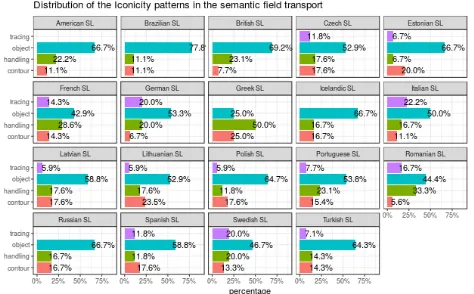
Figure 4: Form-image mappings for transport.
handling mapping, while some (e.g. Italian Sign Language) do not show a strong preference.
Another finding not previously studied in detail is that dif-ferent semantic fields have difdif-ferent preferences. For in-stance, while in the field of instruments the object and han-dling mappings are prevalent, for transport all but one sign language use predominantly the object mapping (Figure 4). Other iconic features also show some cross-linguistic vari-ation and semantic preferences. For instance, Romanian Sign Language seems to use iconic localization relatively less frequently than other sign languages, while ASL has the highest proportion of signs that uses parts of the object to represent the object. Semantically, iconic locations are used predominantly in nature-related and clothing-related concepts, while personification, in addition to being used in all signs with the handling mapping, is commonly used in signs for animals.
5.
Future Use of the IPSL Database
There is a variety of ways in which the IPSL database can be used for further research.strate-gies. Finally, we are comparing the sign languages to each other with repsect to iconicity to see whether such a mea-surement would reflect historical and geographical connec-tions between them.
The database might be further extended. It is clear that the list of iconic features is not exhaustive: for instance, we have not considered non-manual expressions. The analysis of iconicity in terms of handshape, location, and movement might be too rough: maybe these parameters should be fur-ther subdivided and analysed for iconicity in more detail. In addition, the database can be extended by adding more signs: extra signs for the existing semantic fields, concrete signs from other semantic fields, and abstract signs. It is clear that 87 concepts are not enough to generalize our find-ings to the whole lexicon.
Another possible extension would be an additon of signs for abstract concepts. As demonstrated by (Taub, 2001), abstract concepts are expressed in sign languages primarily through metaphoric-iconic signs. This means that an ab-stract concept is associated via metaphoric mapping with a concrete image, and this image is then enocded iconi-cally. For instance, a sign for FEAR might be based on a metaphorical mapping between fear and the heart beat-ing fast, and the concrete event of the heart beatbeat-ing fast is then encoded iconically (as e.g. in Austrian Sign Lan-guage: FEAR). If such signs are included in the database, we can annotate the iconic features for the concrete con-cept the usual way, but novel features describing the nature of metaphoric mapping should be added.
It would also be interesting to investigate the relationship between iconic features identified here and lexical features of these signs. This can be done by annotating further lexical information for the signs in the databse. For in-stance, these lexemes can be analyzed in terms of Puste-jovsky’s qualia structure (Pustejovsky, 1995), to find out whether certain iconic features of lexemes correspond to certain sub-features of their qualia structures.
To sum up, in this paper, we reported the process of creation of the IPSL database of iconic features in 1542 signs from nineteen sign languages and of the database website con-taining several visualization tools. We also demonstrated how the database can be use to replicate and extend previ-ous typological approaches to iconicity in sign languages, and formulated a number of research questions that can be further investigated with the database.
6.
Acknowledgements
The publication was prepared within the framework of the Academic Fund Program at the National Research Univer-sity Higher School of Economics (HSE) in 2018 (grant Nr. 18-05-0053) and by the Russian Academic Excellence Project ”5-100”. Vadim Kimmelman’s research has been supported by the the Dutch Science Foundation (NWO) grant Nr. 360-70-520.
7.
Bibliographical References
Brentari, D., Renzo, A. D., Keane, J., and Volterra, V. (2015). Cognitive, Cultural, and Linguistic Sources of a Handshape Distinction Expressing Agentivity. Topics in Cognitive Science, 7(1):95–123, January.
Caselli, N. K., Sevcikova Sehyr, Z., Cohen-Goldberg, A. M., and Emmorey, K. (2016). ASL-Lex: A lex-ical database for ASL. Behavior Research Methods, 49(2):784–801.
Cates, D., Guti´errez, E., Hafer, S., Barett, R., and Corina, D. (2013). Location, location, location. Sign Language Studies, 7(1):433–461.
Chang, W., Cheng, J., Allaire, J., Xie, Y., and McPherson, J., (2017).shiny: Web Application Framework for R. Kimmelman, V., Klezovich, A., and Moroz, G. (in
prepara-tion). Iconicity Patterns in Sign Languages. Manuscript, Moscow-Amsterdam.
Moroz, G., (2017). lingtypology: easy mapping for Lin-guistic Typology.
Nakazawa, M., (2017). fmsb: Functions for Medical Statis-tics Book with some Demographic Data.
Padden, C., Meir, I., Hwang, S.-O., Lepic, R., Seegers, S., and Sampson, T. (2013). Patterned iconicity in sign lan-guage lexicons.Gesture, 13(3):287–308.
Padden, C., Hwang, S.-O., Lepic, R., and Seegers, S. (2015). Tools for Language: Patterned Iconicity in Sign Language Nouns and Verbs. Topics in Cognitive Science, 7(1):81–94.
Perniss, P., Thompson, R. L., and Vigliocco, G. (2010). Iconicity as a General Property of Language: Evidence from Spoken and Signed Languages. Frontiers in Psy-chology, 1.
Pustejovsky, J. (1995). The Generative Lexicon. MIT press, Cambridge.
R Development Core Team, (2016). R: A Language and Environment for Statistical Computing. R Foundation for Statistical Computing, Vienna, Austria.
Taub, S. F. (2001). Language from the Body: Iconicity and Metaphor in American Sign Language. Cambridge Uni-versity Press, Cambridge.
Taub, S. F. (2012). Iconicity and metaphor. In Roland Pfau, et al., editors, Sign Language: An International Handbook, pages 388–412. De Gruyter Mouton, Berlin. Wickham, H. and Chang, W., (2016). ggplot2: Create
Ele-gant Data Visualisations Using the Grammar of Graph-ics.