Scholarship@Western
Scholarship@Western
Electronic Thesis and Dissertation Repository
11-29-2012 12:00 AM
Severity of Epilepsy and Parent-Perceived Cognitive Functioning in
Severity of Epilepsy and Parent-Perceived Cognitive Functioning in
Children with New-Onset Epilepsy: A Prospective Study of Family
Children with New-Onset Epilepsy: A Prospective Study of Family
Factors as Mediators and Moderators
Factors as Mediators and Moderators
Anastasia I. Lambrinos
The University of Western Ontario
Supervisor
Dr. Kathy Nixon Speechley
The University of Western Ontario
Graduate Program in Epidemiology and Biostatistics
A thesis submitted in partial fulfillment of the requirements for the degree in Master of Science © Anastasia I. Lambrinos 2012
Follow this and additional works at: https://ir.lib.uwo.ca/etd
Recommended Citation Recommended Citation
Lambrinos, Anastasia I., "Severity of Epilepsy and Parent-Perceived Cognitive Functioning in Children with New-Onset Epilepsy: A Prospective Study of Family Factors as Mediators and Moderators" (2012). Electronic Thesis and Dissertation Repository. 1039.
https://ir.lib.uwo.ca/etd/1039
This Dissertation/Thesis is brought to you for free and open access by Scholarship@Western. It has been accepted for inclusion in Electronic Thesis and Dissertation Repository by an authorized administrator of
A PROSPECTIVE STUDY OF FAMILY FACTORS AS MEDIATORS AND MODERATORS
(Spine Title: Mediators and Moderators of Family Factors in Children with New-onset Epilepsy)
(Thesis format: Monograph)
by
Anastasia Irene Lambrinos
Graduate Program in Epidemiology and Biostatistics
A thesis submitted in partial fulfillment of the requirements for the degree of
Master of Science
The School of Graduate and Postdoctoral Studies The University of Western Ontario
London, Ontario, Canada
ii
THE UNIVERSITY OF WESTERN ONTARIO School of Graduate and Postdoctoral Studies
CERTIFICATE OF EXAMINATION
Supervisor
______________________________ Dr. Kathy N Speechley
Supervisory Committee
______________________________ Dr. William R Avison
______________________________ Dr. Guangyong Zou
______________________________ Dr. Mark Ferro
Examiners
______________________________ Dr. Craig Campbell
______________________________ Dr. Amanda Terry
______________________________ Dr. Shauna Burke
The thesis by
Anastasia Irene Lambrinos
entitled:
Severity of epilepsy and parent-perceived cognitive functioning
in children with new-onset epilepsy:
a prospective study of family factors as mediators and
moderators
is accepted in partial fulfillment of the requirements for the degree of
Master of Science
______________________ _______________________________
iii
Abstract
Children with epilepsy are at risk for cognitive impairments. In addition to severity of epilepsy, family factors have been cited as influencing cognition in children. The relationship between severity of epilepsy and parent-perceived cognitive functioning as well as moderating and mediating effects of family resources, demands and functioning were examined. Data came from the Health-related Quality of Life of Children with Epilepsy Study (HERQULES). Multiple linear regressions were conducted to assess the relationship between severity of epilepsy and cognition, and moderating effects, while generalized estimating equations assessed mediating effects. Severity of epilepsy and parent-perceived cognitive functioning were inversely related. Family resources acted as a significant moderator in this relationship. Neither family demands nor family
functioning had a significant mediating effect, which may be due to the lack of variation in this sample. Further research should replicate the moderating results and indicate the importance of family factors in managing epilepsy.
iv
Acknowledgments
I would like to recognize the individuals who contributed to the successful completion of this thesis work and provided me with guidance and feedback throughout the process.
I would like to thank:
Dr. Kathy Speechley
Dr. Guangyong Zou
Dr. William Avison
Dr. Mark Ferro
v
Table of Contents
CERTIFICATE OF EXAMINATION ... ii
Abstract ... iii
Acknowledgments ... iv
Table of Contents ... v
List of Tables ... viii
List of Figures ... ix
List of Abbreviations ... x
List of Appendices ... xi
Chapter 1 – Introduction and Research Objectives ... 1
1 Outline ... 1
1.1 Background ... 1
1.2 Brief Overview of Cognitive Functioning in Children with Epilepsy ... 2
1.3 The Importance of Researching Cognition in the First Years after Diagnosis ... 3
1.4 Implications of Cognitive Functioning Later in Life ... 3
1.5 The Importance of Family Factors in Childhood Epilepsy ... 4
1.6 Research Objectives ... 5
1.7 Conceptual Framework ... 6
Chapter 2 – Literature Review ... 10
2 Chapter Overview ... 10
2.1 Definitions ... 10
2.2 Severity of Epilepsy and Cognitive Functioning ... 12
2.2.1 Frequency of Seizures ... 13
2.2.2 Duration of Active Epilepsy ... 15
vi
2.3.1 Simple/Complex Partial Seizures ... 18
2.3.2 Generalized Seizures ... 20
2.4 Impact of Epilepsy on the Family ... 23
2.4.1 Impact of Diagnosis and Course of Epilepsy on the Family ... 23
2.4.2 Impact of Severity of Epilepsy on the Family ... 25
2.5 Family Factors and Cognitive Functioning in Children with Epilepsy ... 26
2.5.1 Family Demands as a Mediator ... 26
2.5.2 Family Functioning as a Mediator ... 27
2.5.3 Family Resources as a Moderator ... 28
2.6 Limitations of Prior Research ... 29
Chapter 3 – Methods ... 31
3 Data Source, Sample and Data Collection Procedure ... 31
3.1 Measures ... 32
3.1.1 From Physicians ... 32
3.1.2 From Parents ... 33
3.2 Distinction between Confounding and Mediation ... 37
3.3 Data Quality Assurance ... 37
3.4 Data Analysis ... 38
3.4.1 Objective 1 – Assessing the Relationship between Severity of Epilepsy and Cognitive Functioning ... 40
3.4.2 Objective 2a – Assessing Family Resources as an Effect Measure Modifier ... 41
3.4.3 Objectives 2b and c – Assessing Family Demands and Family Functioning as Mediators ... 41
Chapter 4 – Results ... 45
4 Chapter Overview ... 45
4.1 Sample Characteristics ... 45
vii
4.3 Objective 2a – Assessing Family Resources as an Effect Measure Modifier ... 47
4.4 Objective 2b –Assessing Family Demands as a Mediator ... 48
4.5 Objective 2c – Assessing Family Functioning as a Mediator ... 49
Chapter 5 - Discussion ... 61
5 Chapter Overview ... 61
5.1 Summary of Results ... 61
5.1.1 Objective 1- Severity of Epilepsy and Cognitive Functioning ... 61
5.1.2 Objective 2(a) – Family Resources as a Moderator ... 62
5.1.3 Objective 2(b) and (c) – Family Functioning and Family Demands as Mediators ... 64
5.2 Strengths ... 65
5.3 Limitations ... 66
5.4 Recommendations for Future Research ... 67
References ... 69
Appendices ... 83
viii
List of Tables
Table 1. Comparison of Parents Completing Study and Lost to Follow-Up ... 50
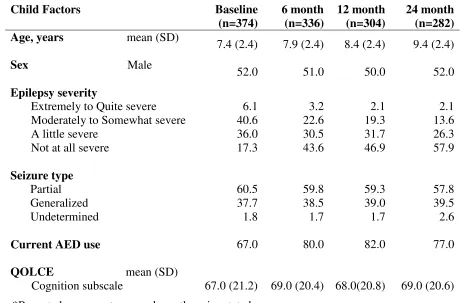
Table 2. Child Characteristics of Study Sample at Each Time-Point ... 51
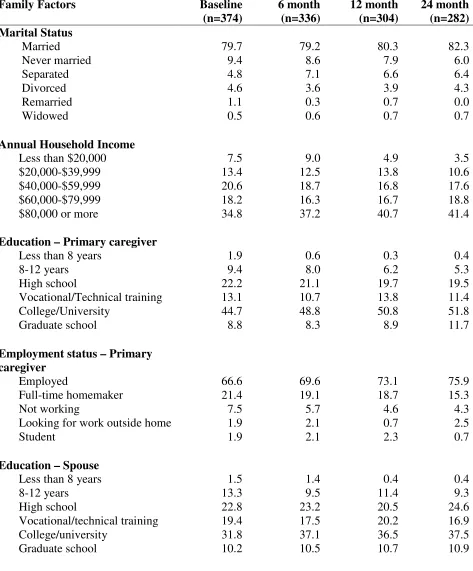
Table 3. Parent and Family Characteristics of Study Sample at Each Time-Point ... 52
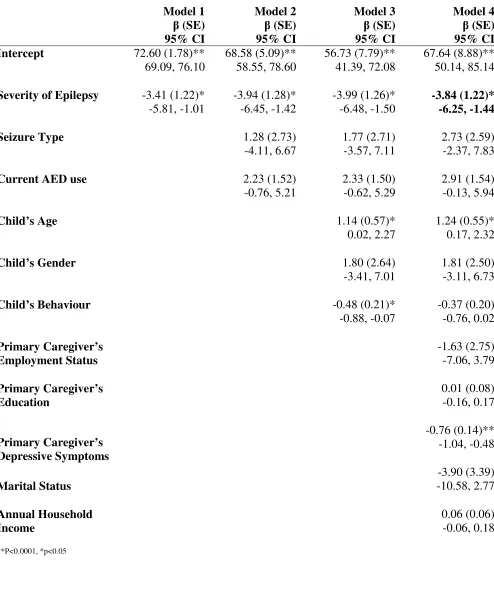
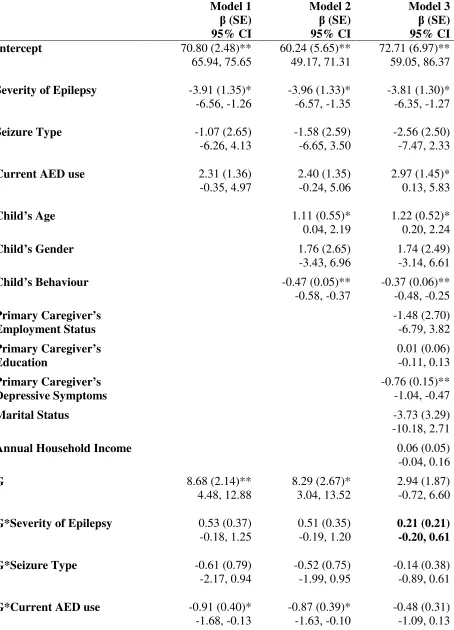
Table 4. Regressions of Severity of Epilepsy on Cognitive Functioning ... 54
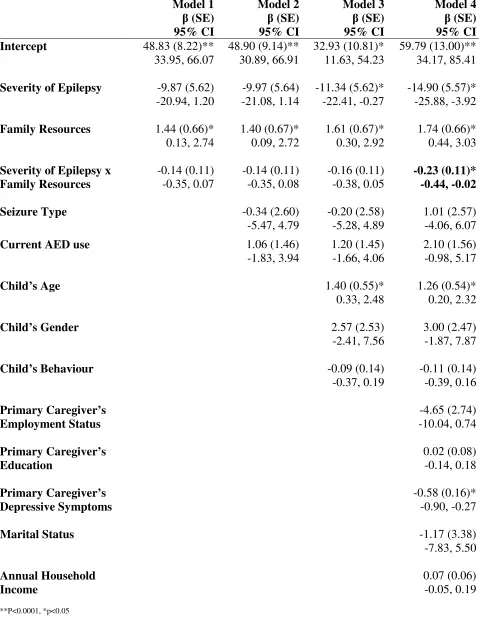
Table 5. Moderating effect of Family Resources on Relationship between Severity of Epilepsy and Cognitive Functioning ... 55
Table 6. Mediating effect of Family Demands on Relationship between Severity of Epilepsy and Cognitive Functioning. ... 56
ix
List of Figures
Figure 1. Conceptual Framework Based on a Stress Process Model used to Guide
Research in Childhood Epilepsy ... 7
Figure 2. Segment of the Stress Process Model Explored in this Thesis ... 9
Figure 3. Segment of the Stress Process Model specifying Time-Points for Modeling ... 40
Figure 4. Illustration of a Mediation Design ... 42
x
List of Abbreviations
AEDs Anti-Epileptic Drugs
APGAR Family Adaptability, Partnership, Growth, Affection, and Resolve
BECTS Benign Epilepsy with Centro-Temporal Spikes
CAE Childhood Absence Epilepsy
CES-D Centre for Epidemiological Studies Depression Scale CVLT California Verbal Learning Test
FCC Family-Centred Care
FILE Family Inventory of Life Events & Changes FIRM Family Inventory of Resources for Management FLE Frontal Lobe Epilepsy
FM Family Mastery
FSIQ Full Scale IQ
GASE Global Assessment of Severity of Epilepsy GEE Generalized Estimating Equations
HERQULES Health-Related Quality of Life in Children with Epilepsy study HRQL Health-Related Quality of Life
QOLCE Quality of Life in Childhood Epilepsy SAS Statistical Analysis Software
SD Standard Deviation
SPSS Statistical Package for the Social Sciences TDM Tailored Design Method
TLE Temporal Lobe Epilepsy
TONI-II Test of Non-Verbal Intelligence-II WISC Weschler Intelligence Scale for Children WRAT Wide Range Achievement Test
xi
List of Appendices
Appendix A:Strategy for Literature Search ... 83
Appendix B: Ethics Approval Notice ... 86
Appendix C: Physician Form ... 88
Chapter 1 – Introduction and Research Objectives
1
Outline
This thesis examines the relationship between severity of epilepsy and parent-perceived
cognitive functioning in children with new-onset epilepsy. Specifically, the study
explores the role that family factors (demands, functioning and resources) may play in
this association to improve understanding of the mechanisms behind cognitive outcomes
in children with new-onset epilepsy. The ultimate goal of this study is to further clarify
these relationships to provide insight into potential interventions that may improve the
health-related quality of life in children with epilepsy.
1.1 Background
Epilepsy is a heterogeneous collection of neurological conditions and syndromes
characterized by recurrent (two or more), unprovoked, paroxysmal seizures (Cowan,
2002; International League Against Epilepsy, 1993; Pellock, Dodson & Bourgeois,
2001). Seizures are the overt manifestation of an underlying brain abnormality occurring
from multiple causes (Cowan, 2002). Approximately 55-75% of all epilepsy cases are of
an unknown cause (Cowan, 2002).
It is estimated that worldwide, 10.5 million children under the age of 15 have active
epilepsy (Guerrini, 2006). Population-based studies on childhood-onset epilepsy estimate
that the annual incidence rates in developed countries ranges from 41 to 50 per 100,000
(Forsgren, 2004). In Canada, the prevalence of epilepsy in children 0 to 11 years of age
is estimated to be 2.5 per 1,000 (95% CI: 2.1-3.0) and 4.4 (95% CI: 3.4-5.8) per 1,000 in
children 12 to 14 years of age (Tellez-Zenteno, Pondal-Sordo, Matijevic & Wiebe, 2004).
In the United States, approximately 150,000 children and adolescents will obtain medical
attention for a newly occurring seizure disorder each year, making convulsive disorders
(including epilepsy) one of the most common neurological problems in children (Hauser,
1.2 Brief Overview of Cognitive Functioning in Children with
Epilepsy
Epilepsy is known to affect cognitive functioning in children (Jones, Siddarth, Gurbani,
Shields & Caplan, 2010). Cognition can be characterized as the capacity of the brain to
process information and to program adaptive behaviour. This includes the ability to solve
problems, to memorize information, or to focus attention (van Rijckevorsel, 2006).
When seizures occur, abnormal neuronal activity may have a significant impact on the
normal cognitive processes of affected individuals (Motamedi & Meador, 2003).
Oostrom et al. (2003) compared the cognitive development of children with newly
diagnosed epilepsy to healthy age- and sex-matched classmates and observed that
children with epilepsy obtained lower scores in components of language and attention
than control subjects (Oostrom et al., 2003). Children with a recent diagnosis of epilepsy
also have demonstrated impairments on measures of intelligence, executive function,
language and psychomotor speed (McCagh, Fisk & Baker, 2009). Although numerous
studies indicate that cognitive functioning may be impaired in children with new-onset
epilepsy, the prevalence of this impairment has not been estimated. This may in part be
due to the lack of consensus regarding what should be considered “impaired” in the
distribution of psychological test scores for cognitive functioning (Loring & Meador,
2009). Despite this, cognitive impairment is considered a core clinical feature of
paediatric epilepsy (Loring et al., 2009).
More information is needed regarding the particular mechanisms whereby epilepsy
affects cognitive functioning. There is some debate regarding which aspects of the
disorder have the greatest effect on cognition (Vingerhoets, 2006). Some researchers
have attempted to tease out the separate effects of clinical features such as seizure
frequency, age at onset, anti-epileptic drugs (AED) and duration of active epilepsy. The
results regarding the association between clinical aspects of epilepsy and cognitive
functioning, which will be reviewed more thoroughly in Chapter Two, are inconsistent.
To resolve the inconsistencies, additional research is necessary. There is evidence that
the more severe the clinical aspects of epilepsy are (i.e., high seizure frequency, long
Stabell, Henriksen & Loyning, 2001; Souza-Oliveira et al., 2010). This is why one
particular clinical aspect of epilepsy, severity, is the focus here.
In an effort to better understand the mechanisms behind cognitive outcomes in children
with new-onset epilepsy, this thesis investigates the association between severity of
epilepsy and cognitive functioning and the role of family factors in this relationship.
1.3 The Importance of Researching Cognition in the First
Years after Diagnosis
Several longitudinal studies evaluating associations between clinical aspects of epilepsy
and cognitive functioning have focused on prevalence samples of children (Aldenkamp &
Meinardi, 1992). As a result, it is difficult to know whether an observation of stable
scores on cognitive functioning over time is due to the fact that these studies were
conducted during a stable phase after the onset of epilepsy in prevalence samples, while
the critical period might be the first years after diagnosis (Aldenkamp & Meinardi, 1992;
Meinardi, Aldenkamp & Nunes, 1992). While some studies conclude that cognitive
functioning deteriorates slowly over the course of epilepsy, this interpretation of the
findings may be incorrect because of when testing took place. In studies that begin
assessments at the onset of epilepsy, retests across time actually point to a process of
deterioration in cognitive functioning beginning soon after diagnosis. Therefore, it is
important to recognize that follow-up studies of cognitive functioning in epilepsy should
continue to start as soon as possible after the onset of epilepsy to identify the true course
of cognitive functioning (Neyens, Aldenkamp & Meinardi, 1999).
1.4 Implications of Cognitive Functioning Later in Life
The presence of even static cognitive impairments in childhood and adolescence may
have long-term implications. Research in the general population has shown that lower
childhood intelligence at 11 years of age is associated with a greater risk of adverse
cognitive outcomes decades later, while higher childhood intelligence scores are
associated with better cognitive outcomes (Hermann & Seidenberg, 2007). This
developmental course of cognitive functioning can potentially predict the burden that
to take into account when treating a child with epilepsy at diagnosis. Children who show
signs of cognitive impairment shortly following the time of diagnosis can provide
compelling rationale for cognitive evaluation of all children newly diagnosed with
epilepsy. This is a window of opportunity during which effective intervention may lessen
the long-term cognitive burden of epilepsy (Loring et al., 2009).
1.5 The Importance of Family Factors in Childhood
Epilepsy
In addition to the clinical aspects of chronic conditions, family factors play an important
role in determining quality of life for children living with chronic illness. Family factors
include: coping strategies, demands and stresses, interaction, resources, functioning, and
support that influence children (Grey, Knafl & McCorkle, 2006; Hartz, Giefer & Rimm,
1977). Wallander, Varni, Babani, Banis and Wilcox (1989) reported that family
resources are an important component for better psychological adjustment in children
with chronic illnesses. A study evaluating adjustment in children with intractable
epilepsy revealed that indicators of family functioning were second only to seizure
frequency in predicting difficulties in adjustment (McCusker, Kennedy, Anderson, Hicks
& Hanrahan, 2002).
Family factors have been cited recently as influencing cognitive functioning in children
with epilepsy (Jones et al., 2010) but little research has been done in this area. Oostrom
et al. (2003) found that having parents who were thrown off balance in the time following
the diagnosis and who failed to continue their regular parenting habits was associated
with poorer cognitive and behavioural functioning in children with epilepsy. It is
important to investigate this further to potentially address problems that may occur in the
family early as a way to reduce behavioural and cognitive problems. With effective
interventions in place, family factors may change in a more positive direction following
diagnosis and minimize negative outcomes in children with epilepsy (McCusker et al.,
1.6 Research Objectives
This thesis has two objectives:
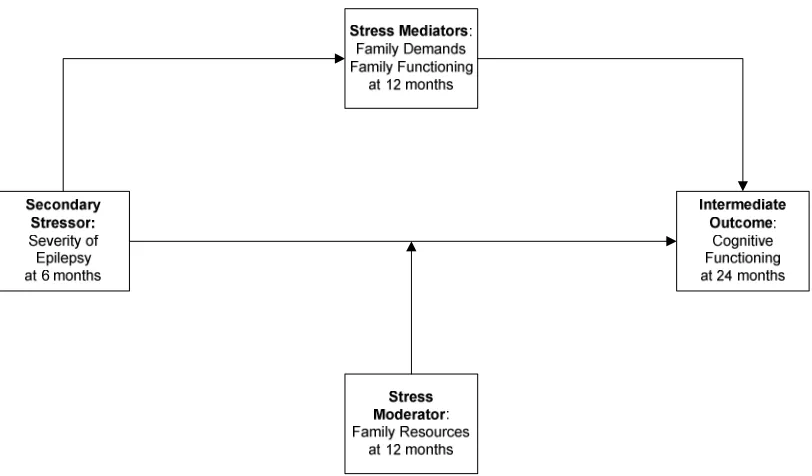
1. To assess the relationship between severity of epilepsy at six months after
diagnosis and parent-perceived cognitive functioning two years after diagnosis in
children with new-onset epilepsy.
It is hypothesized that there will be an inverse relationship between severity of
epilepsy and cognitive functioning. In cases of more severe epilepsy, cognitive
function will be lower.
2. To assess the role of three family factors one year after diagnosis in the
relationship between severity of epilepsy and parent-perceived cognitive
functioning in children with new-onset epilepsy:
It is hypothesized that:
(a) Family resources will moderate the effects of disease severity on cognitive
functioning in children with new-onset epilepsy, such that for those with more
family resources, severity of epilepsy will have a less negative effect on cognitive
functioning;
(b) Family demands will mediate the relationship between severity of epilepsy
and cognitive functioning. That is, in cases of more severe epilepsy, families will
endure more demands and this will result in poorer cognitive outcomes;
(c) Family functioning will mediate the relationship between severity of epilepsy
and cognitive functioning. That is, in cases of more severe epilepsy, families will
experience poorer family functioning, and this will result in poorer cognitive
1.7 Conceptual Framework
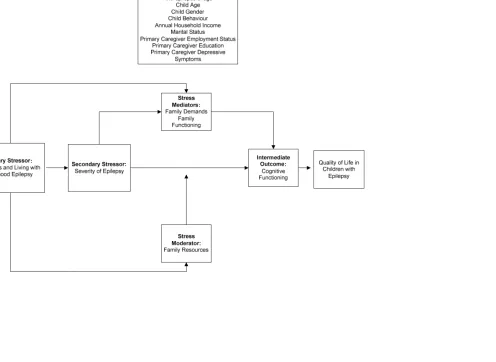
The conceptual framework used to guide this thesis was the Stress Process Model that
was adapted by Pearlin, Lieberman, Menaghan and Mullan (1981), as shown in Figure 1.
Pearlin et al. (1981) developed a stress process paradigm using social stress theory to
examine the ways in which stressors and psychosocial resources mediate and moderate
the association between social structure and an array of health outcomes (Turner &
Lloyd, 1999). This framework makes it possible for researchers to identify potential
targets for intervention to minimize or eliminate the negative effects stressors may have
on one’s health. The stress process model classifies stressors as primary and secondary,
referring to the temporal order in which stressors occur. The model presumes that
stressors do not arise concurrently, but appear consecutively as the process unfolds,
which clarifies the order between exposure and outcome. In this thesis, the role of family
factors as stress mediators and moderators will be assessed. Stress mediators are defined
as variables on a pathway that connect the exposure to stress to its manifestations (Avison
& Thomas, 2010). For example, the diagnosis of epilepsy and its severity may result in
increased family demands, and in turn these demands can lead to less attention to the
child’s development and affect cognitive functioning. Stress moderators can be seen as
variables that can buffer the effect of exposure on outcome (Avison & Thomas, 2010).
For example, the effect of severity of epilepsy on cognitive functioning may increase or
decrease dependent on the level of family resources.
Applying the stress process to the study of childhood epilepsy, the impact of the
diagnosis of epilepsy and learning to live with childhood epilepsy can be viewed as
primary stressors, and the severity of the child’s epilepsy as a secondary stressor.
Potential stress mediators are family demands and family functioning and a potential
stress moderator is family resources. In this thesis research, parent-perceived cognitive
functioning is an intermediate outcome and health related quality of life (HRQL), the
overall outcome. The model also depicts a number of potential confounding variables that
The most frequently studied stressors exist in two forms: life events and chronic
strains. Life events refer to stressors that occur at a distinct and identifiable point
in time (e.g., the diagnosis of childhood epilepsy). Chronic strains are stressors
that are persistent and likely to last over time (e.g., living with epilepsy). Pearlin
et al. (1981) state that life events and chronic strains potentially produce stress in
two ways: (1) life events lead to stress by adversely altering the meaning of
persistent life strains; (2) life events may create new strains or intensify
preexisting strains and, in turn, perpetuate stress. Role overload can be
experienced by caregivers and is defined as a condition that exists when demands
on energy and stamina exceed the individual’s capacities (Pearlin, 1989). Role
overload is common among those taking care of chronically ill relatives. This is
an important factor for this thesis as the primary caregivers are affected first hand
by the child’s epilepsy. Primary caregivers may also experience interpersonal
conflicts within set roles, which is a type of chronic strain that is reported often
(Pearlin, 1989). This type of strain often arises among those who regularly
interact with each other, such as in wife-husband and parent-child relationships
(Pearlin, 1989).
Evidence suggests that family factors can exert mediating and moderating effects
on the relationship between stressors and health outcomes. Elgar, Mills, McGrath,
Waschbusch and Brownridge (2007) showed that the quality of the child’s family
environment mediated the impact of maternal depressive symptoms on child and
adolescent maladjustment over a two-year period. Baum et al. (2007) reported that
family resources moderated the relationship between temperament and
internalizing and externalizing behavioural problems in children with epilepsy.
Lastly, Ferro, Avison, Campbell and Speechley (2011) found that family resources
moderated the association between maternal depressive symptoms and children’s
health related quality of life (HRQL) during the 24 months after diagnosis of
epilepsy.
To our knowledge, no one has examined the role that family factors play in the
with new-onset epilepsy. The theoretical foundation of the stress process model,
taken together with empirical evidence from other areas of research, support the
hypothesis that family factors may be part of the pathway between severity of
epilepsy and cognitive functioning. Family resources may act as a stress
moderator between this relationship of interest. Also, family demands and family
functioning as stress mediators represent components along the causal pathway,
that if significant, may be amenable to interventions to alleviate the potential
negative influence that epilepsy severity may have on cognitive functioning in
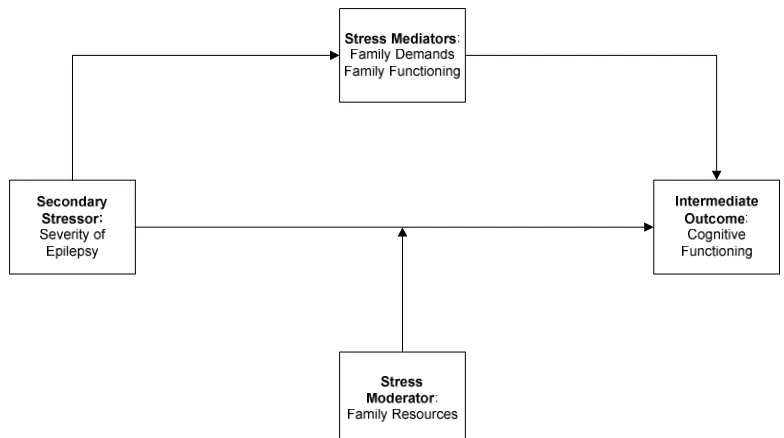
children. The specific segment of the stress process model that is explored in this
thesis is presented in Figure 2.
Chapter 2 – Literature Review
2
Chapter Overview
This chapter begins by defining some key concepts. The main goal of the chapter
is to review five separate bodies of literature relevant to this thesis as outlined in
the conceptual model presented in Figure 1. The strategy used to search the
literature is described in Appendix A. Section 2.2 reviews the relationship between
the secondary stressor, severity of epilepsy, and cognitive functioning in children
with epilepsy. Section 2.3 reviews the relationship between seizure type and
cognitive functioning in children with epilepsy. Section 2.4 explains the impact of
epilepsy on the family. Section 2.5 reviews the association between the stress
mediators and moderators on cognitive functioning. The last section (2.6)
addresses limitations of prior research from which objectives of this thesis emerge.
2.1 Definitions
It is important to define both the exposure (severity of epilepsy) and outcome
(cognitive functioning) before proceeding.
Severity of epilepsy captures many of the important aspects that comprise the
clinical condition: seizure frequency and severity, extent of seizure control,
duration of active epilepsy and treatment with anti-epileptic drugs (Speechley et
al., 2008). This is distinct from severity of seizures, which focuses exclusively on
the seizures themselves and does not incorporate any other aspects of epilepsy. In
an effort to provide a more complete clinical representation of the severity of the
patient’s condition, this thesis focuses on the more comprehensive construct of
severity of epilepsy.
The terms cognitive functioning and cognitive impairment are often used
interchangeably in reference to the health outcome in this thesis. Cognitive
functioning refers to the whole range of cognition. As outlined in Chapter One,
cognition is the brain’s capacity to process information accurately and to program
information, or focus attention (Rijckevorsel, 2006). Cognitive impairment refers
specifically to the lower end of the range of cognition, below that considered to be
normal.
There is also some confusion around distinguishing between the terms, “cognitive
functioning” and “intelligence” in the literature. Intelligence scales, such as the
Weschler Intelligence Scale for Children (WISC) (Weschler, 2004), are used to
measure cognitive functioning. Although there is considerable variability in
cognitive functioning among those diagnosed with epilepsy, it should be noted
that epilepsy patients usually have a normal distribution of intelligence scores.
Thus it is important to not simply classify children with epilepsy as having normal
or below normal intelligence, but also recognize that there will be children with
normal intelligence whose cognitive functioning can still disadvantage them.
Accordingly, it is better to use a continuous measure allowing the opportunity to
capture the full range of cognitive functioning including variation across specific
domains rather than a dichotomy that classifies children as having normal or
abnormal test scores.
The definition of intelligence has been debated for decades, and there remains a
lack of consensus (Wang, 1995). However, the definition deemed most appropriate
for this thesis was the one offered by David Wechsler (1975) viewing intelligence
as an individual’s ability to adapt and constructively solve problems in the
environment. As this definition suggests, Wechsler viewed intelligence in terms of
performance and not capacity. It may not be appropriate to assume that cognition
and intelligence represent the same concept. Since IQ-tests were not designed to
investigate brain-behaviour relationships, these measures may underestimate
changes in a broader range of cognitive functions (Vingerhoets, 2006). Measures of
intelligence were devised to predict how well children would do in a school setting
and not to identify difficulties in brain function (Dodrill, 2004). That is why
validated neuropsychological tests can clearly evaluate a broader range of
The Wechsler Intelligence Scale for Children (Wechsler, 2004) appears to be the
most commonly used measure of cognitive functioning in paediatric studies. Over
the years, the WISC has been adapted with several additions, such that intelligence
is now widely viewed as having a hierarchical structure with more specific abilities
comprising several broad cognitive domains (Wechsler, 2003a). Finally, Wechsler
avoided defining intelligence in purely cognitive terms because he believed that
other attributes, such as planning and goal awareness, enthusiasm, field dependence
and independence, impulsiveness, anxiety, and persistence allcontributed to
intelligent behaviour (Wechsler, 2003a). This can be deemed problematic because
this test is consistently used to measure cognitive abilities. These notable issues
suggest that the most recent version, the WISC-IV should be viewed as mixed
ability tests (Beal, 2004). It is important for researchers to acknowledge that
children may have underlying cognitive problems yet still have intelligence scores
within the normal range.
2.2 Severity of Epilepsy and Cognitive Functioning
Several studies have assessed the association between severity of epilepsy and
cognitive functioning in children with epilepsy. The following clinical aspects of
childhood epilepsy have been reported as associated with impaired cognitive
functioning: uncontrollable seizures, high seizure frequency, long duration of
seizures, symptomatic aetiology, early onset of epilepsy, structural cerebral damage
caused by prolonged or repetitive seizures and treatment related factors (Hoie et al.,
2005; Meador, 2002). The vast majority of research indicates that severity of
epilepsy is related to cognitive functioning.
In the subsections below, frequency, seizure control and duration are discussed
separately because the majority of studies looking at clinical aspects of epilepsy
and cognitive functioning attempt to look at these effects separately. In reality, the
independent effects of seizure duration, as independent from seizure frequency or
lack of seizure control are difficult to isolate, but it is important to recognize and
2.2.1 Frequency of Seizures
Frequent seizures have often been associated with the deterioration of cognitive
processes in children with epilepsy. Aldenkamp (1997) describes the biological
processes taking place, stating that frequent seizures can interfere with brain
development and have a long-term impact on cognition through the inhibition of
mitotic cell activity, which affects myelinization thus reducing cell numbers and
cell size. Evidence suggests that high seizure frequency and duration among those
with temporal lobe epilepsy are associated with more severe hippocampal atrophy
and cognitive impairment. Researchers believe that perhaps this may be through
secondary neuronal metabolic and structural deterioration (Motamedi et al., 2003).
Repeated magnetic resonance imaging showed progressive hippocampal reduction
following frequent seizures in several case-studies (Vingerhoets, 2006). Imaging
also showed an association between seizure frequency and hippocampal volume
loss in prospective cohort studies, although across studies this is not always
confirmed (Vingerhoets, 2006).
In a prospective cohort study, 169 patients with both generalized and partial
epilepsy were observed to evaluate the relationship between severity of epilepsy
and cognitive functioning. It was found that seizures occurring as frequently as one
or more times daily were associated with significantly lower full-scale IQ (FSIQ)
scores measured by the WISC-III (p<0.001; Nolan et al., 2003). Another
prospective cohort study involving 34 patients (17 of whom were children)
assessed at 3.5 and 6.0 years after the study began found that frequent seizures in
childhood focal epilepsies represented a considerable risk for decreased intellectual
functioning over this period as measured by the WISC (p<0.05; Bjornaes et al.,
2001). This deterioration was found in the children but not the adults studied
(Bjornaes et al., 2001). In a prospective non-randomized open clinical trial, 28
children with generalized and partial epilepsy were assessed. Aldenkamp and
Arends (2004) found that frequent seizures were associated with impairment of
alertness/mental slowing in children (F=2.539; p<0.02), but not associated with
Lack of Seizure Control. In this thesis, lack of seizure control is discussed within
the context of seizure frequency. This is because frequent seizures can be due to
lack of seizure control. In the absence of a cure for epilepsy, the goal of the
management of childhood epilepsy is to reduce or control seizures with
anti-epileptic medications (Pellock & Appleton, 1999).
Lack of seizure control can cause long-term negative effects for children with
epilepsy. Specifically, children whose seizures were not controlled showed greater
cognitive deterioration (Tamer, 1999). Explaining the effect of lack of seizure
control and cognitive functioning in biological terms, Souza-Oliveira et al. (2010)
reported that recurrent seizures can modify a wide range of cerebral processes
during development that are essential for the correct formation and functioning of
brain circuits. Therefore, patients with intractable epilepsy have more diffuse and
severe cognitive impairments than patients with good seizure control
(Souza-Oliveira et al., 2010).
Specifically, it was found that seizure control by medication can improve
performance on the following subtests: Vocabulary (p=0.04), Arithmetic (p=0.002),
Comprehension (p=0.002), Picture Completion (p=0.02), Digit Span (p=0.002),
Picture Arrangement (p=0.009) and Block Design (p=0.01) when compared to
those without medication control (Souza-Oliveira et al., 2010). Another
prospective cohort study assessed 69 children with epilepsy and 66 healthy controls
to examine the effect of epilepsy variables on cognitive functioning. Analyses
revealed that children who had a six-month seizure remission after one year could
not be distinguished from the control group on cognitive functioning (µ difference
0.52, 95% CI: 0.11, 0.94) (Schouten et al., 2002). Moreover, higher IQ was
observed in children with good seizure control (Farewell, Dodrill & Batzel, 1985).
In another prospective cohort study, 72 children with epilepsy underwent cognitive
evaluations within two weeks of initial diagnosis and yearly thereafter for an
average of 4 years (Bourgeois, Prensky, Palkes, Talent & Busch, 1983). While no
statistically significant changes in IQ were detected, 8 of the 72 (11.1%) patients
points, which is clinically relevant. These patients had epilepsy that was more
difficult to control (p<0.005), and their seizures began at an earlier age (p<0.05).
Lastly, Sogawa, Masur, O’Dell, Moshe and Shinnar (2010) conducted a
prospective cohort study that followed a sample of 258 patients after their first
unprovoked seizure, for a median of 15 years. At the time of follow-up, >50% of
children had standardized cognitive testing. Of the 163 children who completed
cognitive testing, children with a single seizure tended to score higher than children
with epilepsy on the measures of the Wide Range Achievement Test (WRAT)
(p=0.08), Test of Non-Verbal Intelligence-II (TONI-II) (p=0.02) and Weschler
Intelligence Scale for Children (WISC) (p=0.07). There was no significant
difference between children with a single seizure and sibling controls. However, a
recent study reported that even single seizures can lead to a temporary change in
cognitive performance but persists over time only when the seizure frequency is
high or postictal effects are prolonged (Tromp et al., 2003).
Evidence presented above largely supports that lack of seizure control, specifically
frequent seizures that are uncontrolled, are associated with decreased cognitive
functioning in children with epilepsy. For the majority of seizure types, there is
evidence that cognitive impairment arising from seizure activity can be reduced by
effective seizure control. Effective seizure control is especially relevant to children
with epilepsy, where the negative impact of seizures on cognitive functioning may
accumulate over time (McCagh et al., 2009). It is concluded that recurrent seizures
may represent a considerable risk for cognitive decline in children, but not in adults
due to the different stages in the development of intellectual abilities (Bjornaes et
al., 1999).
2.2.2 Duration of Active Epilepsy
Investigations of the effects associated with duration of active epilepsy have
produced similar results. Duration of active epilepsy is distinct from age of onset,
as it describes how long a child has had active seizures throughout his/her disease
course, but studies often analyze age of onset and duration of active epilepsy
that of age of onset (Carreno, Donaire & Sanchez-Carpintero, 2008). Little
research has examined the effect of duration of active epilepsy on cognitive
functioning.
Nolan et al. (2003) explained that duration of active epilepsy had a significant but
low correlation with full scale IQ (FSIQ; r=0.17, p=0.025). When age of onset was
considered, duration of active epilepsy did not have an independent effect on FSIQ
(combined r=0.42, R2=0.17, p<0.001) and no longer made a significant
contribution (p=0.27). Similar results were found in a case-control study observing
57 children with complex partial seizures and 27 sibling controls (Schoenfeld et al.,
1999). Both earlier age at onset (p<0.01) and increased percentage of lifetime with
active epilepsy (p<0.05) were associated with greater impairment on the summary
measure of overall cognitive performance. However, a stepwise regression analysis
confirmed that age at seizure onset was the only clinical seizure variable to emerge
as a significant predictor of cognitive functioning (Schoenfeld et al., 1999).
In summary, the few studies above illustrate the relationship between duration of
active epilepsy and cognitive functioning. Observational studies have shown that
duration of active epilepsy is associated with cognitive functioning when other
clinical aspects of epilepsy are not present.
2.3 Seizure Type and Cognitive Functioning
The diagnosis of epilepsy includes a classification of a seizure type. There are
multiple types of seizures with differential effects on cognitive functioning due to
the part of the brain that is active during an epileptic seizure. It is important to
consider these specific effects on cognitive processes and to note that a patient can
be diagnosed with more than one seizure type. Since multiple seizure types can be
diagnosed in one patient, it is assumed that the classifications represent the
predominant seizure type. However, some patients have seizure types that remain
unclassified, making it difficult to individually examine each seizure type
Seizures fall into two main categories: Partial (focal) or Generalized (Banerjee et
al., 2009). Partial seizures are characterized by seizures that occur in a local area of
the brain. Partial seizure types are then subdivided into simple partial seizures (no
alteration in consciousness) and complex partial (alteration of consciousness).
Benign childhood epilepsy is also characterized by partial seizures. On the other
hand, generalized seizures involve the entire brain simultaneously. Generalized
seizure type includes absence, tonic-clonic and myoclonic seizures. Epilepsy
characterized by generalized seizures may also be categorized as partial with
secondary generalization. This is if a clinical description of an antecedent
symptom (aura), or clear EEG signature of focality is indicated.
In the majority of population-based prevalence studies, partial seizures are most
prevalent with estimates at approximately 60% and generalized seizures at around
40% (Berg, Levy, Testa & Shinnar, 1999; Berg, Shinnar, Levy & Testa, 1999;
Silinpaa, Jalava & Shinnar, 1999).
It is estimated that of focal seizures such as those characterized by temporal lobe
epilepsy (TLE) and frontal lobe epilepsy (FLE), it is estimated that simple partial
seizures comprise from 6 to 12%, complex partial seizures from 8 to 31%, and
partial seizures with secondary generalization from 7 to 29% (Cowan,
Bodensteiner, Leviton & Doherty, 1989; Eriksson and Koivikko, 1997; Kramer et
al., 1998; Murphy, Trevathan & Yeargin-Allsopp, 1995; Sidenvall, Forsgren &
Heijbel, 1996; Waaler, Blom, Skeidsvoll & Mykletun, 2000). Benign childhood
epilepsy with centrotemporal spikes, also known as benign rolandic epilepsy,
represents 8 to 23% of childhood epilepsies (ILAE, 1989). In terms of generalized
seizures, absence seizure comprise from 2 to 16%, tonic-clonic seizures from 12 to
27%, and myoclonic seizures from 1 to 9% (Cowan et al., 1989; Eriksson and
Koivikko, 1997; Kramer et al., 1998; Murphy et al., 1995; Sidenvall et al., 1996;
Waaler et al., 2000).
The seizure types reviewed below are the most common in children diagnosed with
epilepsy and are ordered based on their reported prevalence in the paediatric
2.3.1 Simple/Complex Partial Seizures
Both children with Temporal Lobe Epilepsy (TLE) and Frontal Lobe Epilepsy
(FLE) are at risk for cognitive impairments. Using magnetic resonance volumetric
imaging, Hermann, Seidenberg & Bell (2002) documented generalized brain
volume loss and an associated decline in performance in intellectual (measured by
the age appropriate Weschler Intelligence Scale) and memory measures (verbal and
non-verbal selective reminding test) in childhood temporal lobe epilepsy. In this
case-control study, the sample included 53 patients with temporal lobe epilepsy (37
early age at onset vs. 16 late age onset) and 62 healthy controls. Patients with early
age onset epilepsy exhibited poorer cognitive performance than those with late
onset epilepsy (p≤0.04 on 7 of 12 measures) and 62 healthy controls (p≤0.002 on
all measures) (Hermann et al, 2002).
In a cross-sectional study, Cormack et al. (2007) assessed 79 patients with TLE.
Intellectual dysfunction (defined as IQ <79 measured by age appropriate Weschler
Intelligence scale) was present in 57% of all cases of unilateral temporal lobe
epilepsy indicating ‘low’ or ‘exceptionally low’ cognitive functioning. In another
cross-sectional study of 43 children with TLE, facial recognition was poorer in
right compared to left TLE (p=0.03) and memory impairment was frequent in
participants with both right and left TLE but there were no differences between the
two groups on any memory measure (Gonzalez, Anderson, Wood, Mitchell &
Harvey, 2007).
Frontal lobe epilepsy is the second most common type of partial epilepsy in
children. Cognitive functioning in these children is similar to that of adults with
FLE (Boone et al., 1988; Grattan & Eslinger, 1991). In a review of studies on FLE,
Patrikelis, Angelakis and Gatzonis (2009) found that there are some common
patterns in both adults and children. Both children and adults with FLE both show
deficits in attention, response inhibition, psychomotor speed, motor programming,
and planning, and they both manifest postsurgical impairments in verbal fluency
when operated in the dominant hemisphere (Patrikelis et al., 2009). Moreover,
with FLE have fewer memory problems, but more attention and response inhibition
problems (Patrikelis et al., 2009).
In a small cross sectional study of 18 patients (8 with FLE and 10 with TLE),
Auclair, Jambaque, Dulac, LaBerge and Sieroff (2005) reported a deficit in
preparatory attention in children with FLE (p<0.05). These results indicate that
FLE affects the capacity of children to resist the interference of distracters, and that
this deficit in preparatory attention is related to frontal lobe dysfunction in children
with epilepsy. Hernandez et al. (2003) compared 16 pediatric patients with FLE to
8 patients with TLE and generalized absence epilepsy. The sample in this
cross-sectional study was measured on a broad set of cognitive tests. Children with FLE
were more impaired on tasks involving motor coordination (p<0.05) and planning
abilities (p<0.05) than children with TLE or generalized absence epilepsy.
In summary, the literature indicates that temporal lobe epilepsy and frontal lobe
epilepsy are associated with a decline in specific domains in cognition such as
memory and attention.
Benign Rolandic Epilepsy. The nature of cognitive deficits reported in benign
rolandic epilepsy has been inconsistent (Northcott et al., 2005). Although benign
rolandic epilepsy usually occurs in children who are cognitively “normal”, a variety
of cognitive problems have been identified in those with active epilepsy. Verbal
(Baglietto et al., 2001; D’Alessandro et al., 1990; Massa et al., 2001), visuomotor
(D’Alessandro et al., 1990), nonverbal (Baglietto et al., 2001; Massa et al., 2001;
Stephani, 2001), attention (Massa et al., 2001; Piccirilli et al., 1994; Weglage,
Demsky, Pietsch & Kurlemann, 1997), language (Staden, Isaacs, Boyd, Brandi &
Neville, 1998), executive functioning (Croona, Kihlgren, Lundberg, Eeg-Olofsson
& Eeg-Olofsson, 1999; D’Alessandro et al., 1990; Lindgren et al., 2004), and
memory deficits (Croona et al., 1999; Massa et al., 2001) have been reported.
Northcott et al. (2005) conducted a cross-sectional study of 42 patients with benign
rolandic epilepsy. It was found that mean scores on cognitive tests of the epilepsy
group were significantly different from normative means. Researchers found
and general language, but lower scores of memory and phonological awareness in
children with benign rolandic epilepsy (range from p<0.0005 to p=0.034)
(Northcott et al., 2005). A case-control study (Fonseca et al., 2007) found that 31
out of 42 children with benign epilepsy with centro-temporal spikes (BECTS)
performed average or above average on the cognitive measure, Raven progressive
matrixes. Another case-control study by Gunduz, Demirbilek and Korkmaz (1999)
assessing 20 patients with benign rolandic epilepsy and 15 controls noted more
difficulties in attention and response testing (p<0.001), language (p=0.05), and
minor motor skills (p<0.05) compared to controls.
In a prospective cohort study involving 9 children, Baglietto et al. (2001)
documented poorer performance on tests of visuospatial short-term memory
(p<0.001), attention (p<0.001), cognitive flexibility (p<0.01), picture naming
(p<0.01), verbal fluency (p<0.001), and visuoperceptual and visuomotor
coordination (p<0.0001) in 9 children with benign epilepsy with centrotemporal or
rolandic spikes compared to 9 controls. In a longitudinal study conducted by
Deonna et al (2000), twenty-two children with benign rolandic epilepsy had
cognitive testing. All but one child had normal IQ (>80). However, four had
delayed language development and needed school support, two children had
difficulties with short-term visuospatial memory and five with long-term memory
(Deonna et al., 2000).
To summarize the literature on benign rolandic epilepsy, studies usually consist of
small samples and epilepsy varying in severity. Benign rolandic epilepsy, when
active in a child, has shown to be associated with deterioration in multiple areas of
cognitive functioning. However, when seizures are controlled, there is a good
prognosis.
2.3.2 Generalized Seizures
Considerable research has examined the relationship between generalized seizures
and cognitive functioning in children. Children with generalized seizures have
been reported to have good social adjustment but some patients have been reported
Cross-sectional studies on small samples of patients with childhood absence
epilepsy (CAE) have demonstrated that shortly after diagnosis, these children have
cognitive (Henkin et al., 2005; Mandelbaum & Burack, 1997; Pavone &
Niedermeyer, 2000; Williams et al., 1996) and linguistic problems (Caplan et al.,
2001, 2002; Henkin et al., 2005). The cognitive impairments of children with CAE
involve visual sustained attention (Levav et al., 2002), visual spatial skills (Pavone
et al., 2001), verbal and non-verbal attention (Henkin et al., 2005), as well as verbal
(Henkin et al., 2005; Hoie, Mykletun, Waaler, Skeidsvoll & Sommerfelt, 2006;
Nolan et al., 2004), and nonverbal memory (Pavone et al., 2001). Similar results
have been found in patients with short non-convulsive seizures who also experience
impaired alertness and information processing speed (Aldenkamp & Arends, 2004).
In a cross-sectional study examining 57 children with various seizure types, those
with generalized seizures demonstrated lower verbal intelligence scores than those
with focal seizures (p=0.012), and children with generalized absence seizures
performed significantly worse than those with focal seizures on a measure of
short-term auditory memory (p=0.019; Bhise, Burack & Mandelbaum, 2009). Those
with focal seizures secondarily generalized did not differ significantly on the
vocabulary measure from those with focal seizures not secondarily generalized.
Both focal groups with and without generalization scored significantly better than
the primary generalized group on the vocabulary measure (secondarily generalized
greater than primary generalized, p=0.029; non-generalized greater than primary
generalized, p=0.054; non-generalized equal to secondarily generalized, p=0.812;
Bhise et al., 2009). Children with secondarily generalized focal seizures had
significantly better response time scores than both the non-generalized group
(p=0.014) and the primary generalized seizure group (p=0.006; Bhise et al., 2009).
In a prospective cohort study of 43 children with new-onset idiopathic seizures,
where the relationship between seizure type and cognitive functioning was
assessed, Mandelbaum and Burack (1997) found at baseline, simple partial
(µ=110.07), complex partial (µ=102.18), generalized convulsive (tonic-clonic) (µ=
104.39) and generalized non-convulsive (absence) (µ=99.53) were not statistically
analysis, patients with generalized non-convulsive seizures were found to perform
more poorly on cognitive measures than simple partial or generalized convulsive
seizures (F=4.25, p=0.05). At a 6-month follow-up, there were no statistically
significant differences among the four seizure types on the cognitive scores
(F=1.15, p=0.29).
Henkin et al. (2005) examined 24 children with absence and generalized
tonic-clonic seizures and 20 healthy controls in a case-control study. Children with both
types of seizures had significantly lower performance then controls on several
domains of cognitive functioning (Henkin et al., 2005). Specifically, in the verbal
and non-verbal attention tests, the group with epilepsy performed significantly
worse than the control group (F[1,43]=8.3, p=0.006, F[1,43]=14.3, p=0.0005
respectively) on the California Verbal Learning Test measure (CVLT; Henkin et
al., 2005). The performance of the idiopathic generalized epilepsy group was
significantly poorer than that of the control group in all subscales of the test.
Further analysis revealed that the performance of the absence seizures group was
significantly poorer than the control group on all subscales of the CVLT, excluding
CVLT trial 5 (recognition memory; Henkin et al., 2005). The performance of the
generalized tonic-clonic seizure group was poorer than that of the control group in
all subscales; but, statistically significant differences were evident only in the
CVLT trial 3 (attention) and immediate cued recall subscales (Henkin et al., 2005).
In both subtests of the word fluency test (categorical, p<0.05; and phonological,
p≤0.01) the performance of the idiopathic generalized epilepsy group was
significantly poorer than the control group (Henkin et al., 2005). The comparison
between the control and study groups (absence and generalized tonic-clonic
seizures) revealed that in the categorical fluency subtest, only the performance of
the absence seizures group was significantly lower than that of the control group
(p<0.05; Henkin et al., 2005). No significant difference was found among groups in
the phonological fluency subtest (Henkin et al., 2005). Lastly, Bhise et al. (2009)
found that children with absence seizures performed significantly worse than the
To summarize, it is a commonality that previous studies usually involved small
sample sizes with a variety of measures for cognitive functioning. Results from
these studies identified that children with absence seizures perform more poorly on
cognitive tests compared to those with focal seizures, generalized convulsive
seizures and controls.
2.4 Impact of Epilepsy on the Family
When a member of the family has a serious illness, the family is confronted with
the possibility of making major changes in their usual routine to accommodate
illness demands. They are also challenged by the possibility of an altered future.
The impact of epilepsy on the family is reviewed below.
2.4.1 Impact of Diagnosis and Course of Epilepsy on the Family
The diagnosis of a chronic illness in a child is an uncertain time for families (Knafl
& Gilliss, 2002). In a study evaluating critical events for families whose children
have chronic illnesses, 70% of parents stated that the time around diagnosis was the
hardest time over the course of the illness (Clements, Copeland & Loftus, 1990).
This may be related to the unpredictability and burden the family will face over the
progression of the illness. Childhood epilepsy presents a series of consequences for
the family (Ellis, Upton & Thompson, 2000).
There is considerable variability across conditions in children with regard to
predictability of the illness course. Conditions that are characterized by an
uncertain trajectory impose greater psychosocial demands on the family (Grey et
al., 2006). Depending on the severity of the child’s condition, uncertainty may
produce a large burden on family relationships and life in general. Young children
are completely dependent on their families for care of their chronic illness, and this
dependency changes over time (Grey et al., 2006). This is the case for a chronic
illness such as epilepsy. In epilepsy, the increased burden of care is related to: the
extra needs of the child, finding and accessing medical and education services, and
uncertainty of the future (Hobbs, Perrin & Ireys, 1985; Patterson, 1988; Patterson
& Blum, 1996). Parents of children with chronic epilepsy may be stressed by
and the costs of medical care, including hospitalizations, medications, lost days at
work and observation of adverse effects of the epilepsy and anti-epileptic
medications on the child’s cognitive, educational, and/or psychological growth
(Mu, 2005; Ellis et al., 2000).
The fatigue and disease uncertainty that parents face combined with the need to
provide daily medical management regimens are likely to affect many aspects of
daily life (Barlow & Ellhard, 2006; Melnyk, Alpert-Gillis, Hensel, Cable-Beiling &
Rubenstein, 1997). They often worry and express feelings of fear and
incompetence as they manage their child’s epilepsy by monitoring and recording
seizures, adjusting medications, and supervising the safety of their child (Melnyk et
al., 1997). The feeling of helplessness may be the results of parents not being able
to control the seizures, which leads to a reduction in parental confidence and role
certainty, which leads to an increase in stress (Melnyk et al., 1997). It has been
documented that the constant adjustment to the needs of a sick child make it hard
for parents to correctly judge the child’s development capabilities (Sein, 2001).
This difficulty in day-to-day living results in lower expectations for the child with
epilepsy (Ellis et al., 2000).
Family factors that have been reported to affect families due to epilepsy are: family
stress, marital difficulties, restriction to social life and low self-esteem of primary
caregivers (McCagh et al., 2009). In a case-control study, 30 parents of children
with new-onset epilepsy and 29 parents of healthy controls were compared on
measures of parenting stress and activity patterns (Modi, 2009). A higher
percentage of parents with a child with new-onset epilepsy experienced elevated
life stress scores compared with parents of controls (p<0.05) (Modi, 2009). A
post-hoc examination of parents whose child has epilepsy compared to parents of
healthy controls revealed life stressors such as death of loved ones (n=8 vs n=4),
decreased income (n=8 vs n = 4), moving (n=5 vs n=0), and relatives moving into
their homes (n=10 vs n=5; Modi, 2009). Examining specific domains of family
stress, Modi (2009) found that parents of children with new-onset epilepsy
experienced the highest levels of stress related to finances, disciplining their child
2.4.2 Impact of Severity of Epilepsy on the Family
Families of children with epilepsy seem to have more problems with family
functioning and family stress than control families (Austin, 1988; Austin, Smith,
Risinger & McNelis, 1994; Brent, Crumrine, Varma, Allan & Allman, 1987;
Ferrari, Matthews & Barabas, 1983; Matthews, Barabas & Ferrari, 1982; Mims,
1997; Oostrom et al., 2003; Ritchie, 1981). For example, in a systematic review of
family functioning across five samples with different pediatric chronic illnesses,
including epilepsy, compared to healthy controls, Herzer et al. (2010) found that
between 13% and 36% of families endorsed levels of functioning in the
“unhealthy” range, with the greatest proportions in the following domains:
communication, family roles, and affective involvement. However, little research
has been done on the effects of severity of epilepsy on the family specifically.
Austin and Caplan (2007) synthesized the literature and identified clinical aspects
of epilepsy such as seizure frequency, type of epilepsy, age of onset, duration of
illness, and anti-epileptic drugs (AED) that were associated with family stressors,
where family stressors included stressful life events and psychopathology in a
family member. Mims (1997) also found that compared to families with a healthy
child (p=0.03) and families with a child who had infrequent seizures (p=0.02),
families with a child who had frequent seizures experienced more stress. In a
cross-sectional study, Datta et al. (2006) surveyed 132 families who had a child
with epilepsy. The clinical aspects of epilepsy identified as having the largest
impact on families were higher frequency of seizures (p=0.002) and children taking
multiple AEDs (p=0.006). Also, fewer years since diagnosis of epilepsy (p=0.05)
and fewer months since last seizure (p<0.001) were associated with high impact on
families (Datta et al., 2006). The few studies assessing the impact of severity of
epilepsy and the family may show that the more severe the child's disability, the
greater the demands and the subsequent response from the whole family
(McCubbin, 1988).
From research summarized in sections 2.4.1 and 2.4.2 addressing the burden of a
potential that the more severe the clinical characteristics of the child’s epilepsy, the
more demands and less functioning are experienced by the family.
2.5 Family Factors and Cognitive Functioning in
Children with Epilepsy
Family environment may have an important influence on the course of chronic
illness and the impact of the condition (Ellis et al., 2000). Family variables of
closeness, caregiver coping skills, mutually supportive family relationships, clear
family organization, and direct communication about the illness and its
management have been consistently linked with better family and patient outcomes
(Grey et al., 2006).
The role of family factors and cognitive functioning has not been fully explored in
the literature. However, the few studies that include family variables (parenting,
family stress, and family competence) have found significant relationships with
cognitive functioning (Jones et al., 2010; Oostrom et al., 2003). To provide a
rationale for exploring the relationship between family factors and cognitive
functioning further, additional literature examining family variables and behaviour
was reviewed. This was done because researchers have shown an association
between cognitive functioning and behaviour in the epilepsy literature (Austin and
Caplan 2007; Cornaggia, Beghi, Provenzi & Beghi, 2006). It is therefore
reasonable to think that an association would exist between family factors and
cognitive functioning.
2.5.1 Family Demands as a Mediator
Family demands may play a role in the relationship between severity of epilepsy
and cognitive functioning. Forall children, it appears that the family serves as the
primary system for mediating life events. With chronic illness, the family
environment retains the potential to serve either as a buffer to mediate the effects of
stressors on children’s psychological adaptation or as a potential stress maker for
the patients (McCubbin, Patterson & Wilson, 1991). However no research has
been done on the mediating effects of family factors between the relationship of
McCagh et al. (2009) reports that children of parents who did not adjust well to the
diagnosis of epilepsy, or children who had a history of family problems were at a
greater risk of behavioural and cognitive deficits. In a prospective cohort study
observing 51 children with epilepsy and 48 controls, Oostrom et al. (2003) found
that children with parents who had difficulty continuing their habitual parenting
style at epilepsy onset obtained worse scores in reaction times (p=0.01), location
learning (p=0.05), and attention (p=0.01). Patients from families with problems
obtained worse scores in behaviour (p=0.01) and location learning (p=0.05) than
patients from families with less problems (Oostrom et al., 2003).
In an assessment of family demands as a potential stress mediator, Ferro et al.
(2011) observed that family demands partially mediated the relationship between
maternal depressive symptoms and child health-related quality of life (HRQL)
(p=0.0006) in children with new-onset epilepsy. The proportion of the total effect
mediated by family demands was 29%.
Given that no research that has been done on the mediating effects of family
demands on cognitive functioning, it is important to explore the potential
association further.
2.5.2 Family Functioning as a Mediator
Family functioning has been demonstrated as a determinant of overall quality of
life and well-being in youth with chronic medical conditions (Herzer et al. 2010).
However, no research has been done surrounding the effects of family functioning
as a mediator between the relationship of severity of epilepsy and cognitive
functioning.
In a cross sectional study, Thornton et al. (2008) found in a sample of 82
cognitively “normal” children with epilepsy that families of cognitively normal
children with epilepsy function well, with overall family functioning not differing
significantly from the normative mean (p<0.03). In a prospective cohort study,
Ferro et al. (2011) examined family functioning in children with new-onset
and child health-related quality of life (HRQL). It was observed that family
functioning partially mediated the impact of maternal depressive symptoms on
child HRQL (p=0.0007). The proportion of the total effect of maternal depressive
symptoms on child HRQL mediated by family functioning was 20%.
With further knowledge needed on the mediating effects of family factors, finding
out the effects of family demands and family functioning on the relationship
between severity of epilepsy and cognitive functioning in children with epilepsy is
necessary to fill this gap.
2.5.3 Family Resources as a Moderator
Based on family stress theory, evidence supports that family resources serve as a
protective factor for the chronically ill child (McCubbin & Patterson, 1983;
McCubbin et al., 1991). This is because evidence has shown that this variable is
largely stationary across families of chronically ill patients, meaning family
resources stay relatively consistent over time. Family resources help the family
cope with the demands placed on them from both the secondary stressor of severity
of the illness and the events that occur in both normal and unusual circumstances
that cause family stress. No studies have investigated family resources as a
potential moderator on the relationship between severity of epilepsy and cognitive
functioning in children with new-onset epilepsy. The present study addresses this
gap in the literature. Below, the studies reviewed show that family resources can
play a moderating role in other relationships in children with epilepsy.
In a cross-sectional study conducted by Fastenau et al. (2004) family mastery (FM),
which is a subscale of the Family Inventory of Resources for Management (FIRM)
measure, was found to have a significant moderating effect on the relationship
between cognitive functioning and academic achievement in 173 children with
epilepsy. The relationship between cognitive functioning and writing achievement
varied depending on FM level; Verbal/Memory/Executive and Rapid
Naming/Working Memory Functioning were strongly related to writing
achievement in those children with less FM (i.e., with disorganization and little