Analysis of Distributed Generation: A Review
Navjeet Kaur1, Davesh bindal 2
PG Student [EE], Dept. of EE, Sri Sukhmani Institute of Engineering and Technology, Dera Bassi, Punjab, India1 Assistant Professor, Dept. of EE, Sri Sukhmani Institute of Engineering and Technology, Dera Bassi, Punjab India2
ABSTRACT: In recent decades along with escalating load demand by customers as well as obstacles concerning construction of new power plants, transmission grids and also substations, electrical power distribution mechanism is actually encountering an imperative necessity of distributed generation (DG) resources. Implementing distributed generation within a distribution network offers a variety of favorable aspects. While presenting distributed generation in a network, it is very important figure out the appropriate dimensions, number as well as location of distributed generation units. The indigent assortment of location would lead to more expensive losses compared to the losses without having distributed generation. There are lots of challenges pertaining to internally connected distributed generation towards electrical grid such as for instance voltage rise, high losses, and negative influence on power quality, consistency as well as protection. All of the challenges can be exterminated only whenever a proper consideration is provided with to discover an appropriate location of distributed generation units. The inadequate choice of location should lead to higher losses than the losses without having DISTRIBUTED GENERATION. Therefore, the purpose of this particular paper is actually find an appropriate location for the internalization of dispersed generation (DISTRIBUTED GENERATION) in an electrical power system simply by carrying out an intensive research regarding the impact of great deal variation upon active and reactive power losses. This will likely provide the knowledge of those load sensible location DG really should be installed. The evaluation of results shows that boosting load continuously leads to an uptick in losses however the penetration of increase in losses differs from the others for different load buses.
KEYWORDS:Distributed Generation,Distributed Generation Resources,Power System
I.INTRODUCTION
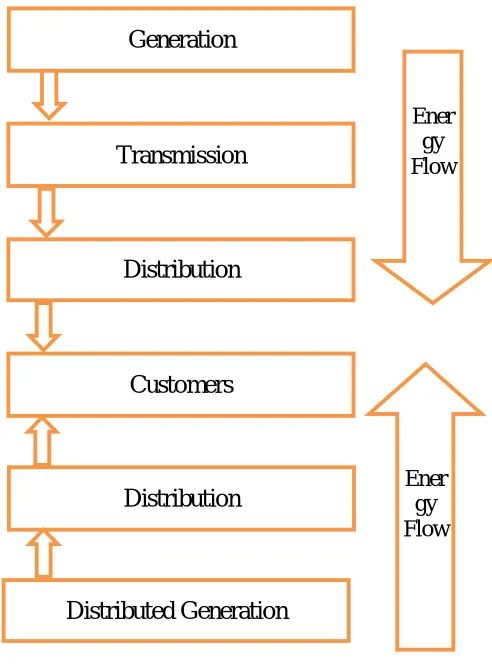
Fig.1 Block diagram representation for position of distributed generation in a power system [4]
Distributedgenerations are of various capabilities and they are split into micro, small, moderate, and major. Micro distributed generation varies from 1W to 5 KW total capacities. Small distributed generation varies from 5 KW to 5 MW. Moderate distributed generation varies from 5MW to 50 MW capabilities. Major distributed generation varies from 50 MW to 300 MW capabilities.
Fig 2: Various capabilities of distributed generation
Although introducing distributed generation within a network, it is important to identify the appropriate dimensions, number and location of Distributed generation units. TheDistributed generation unit’s needs to be positioned at the
Generation
Transmission
Distribution
Customers
Distribution
Distributed Generation
Ener gy Flow
most load sensitive points. These tend to be those points which one shows a high rate of increase of losseswhile the load rises beyond particular limit. The inferior selection of destination should lead to improved losses as compared to losseswithout Distributed generation. The irrelevant proposal of DG modifies the qualities regarding the distribution network as well as leads to manyproblems such as for instance voltage rise, high losses, as well as dis sentient influence on power quality, trustworthiness and protection.Optimum Distributed generation allocation may enhance voltage profile as well as minimize power loss, however it depends on the dimensions, furthermore location ofDistributed generation at the distribution network. It is especially important aspect in the planning as well as operation of distribution system because Distributed generationcan produce a component of real as well as reactive power towards load in close proximity which will help to further improve the voltage profile regarding thenetwork.
Therefore, in order to really embed a distributed generation (DG) unit within a distribution network, to start with we must look for an appropriate location. DG unit can be introduced within a sensitive load location that demonstrates optimum losses upon varying its load. The work of M. Raina et. al. [5] incorporates information regarding the sensitive load location. The analysis has been carried out over a 14- bus system. Overall productive as well as sensitive losses tend to be determined through the use of Newton-Raphson technique. Out of all buses, the bus showing utmost rate of improvement in losses (i.e. Bus 4) is actually considered as being a load sensitive bus, and needs an urgent penetration of distributed generation (DG) unit to be able to control losses as well as meeting customer requirements. So, the purpose of this document is always to examine the influence of insertion associated with an appropriate dimensions of DG units on a load sensitive location of the given bus system.
II. SIGNIFICANCE OF DISTRIBUTED GENERATION
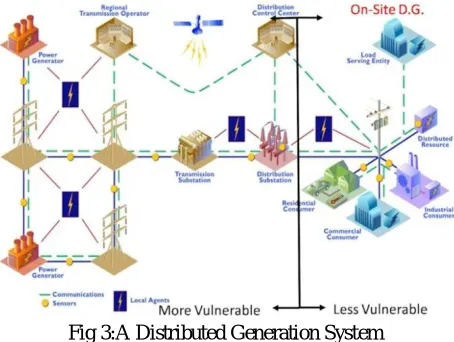
As of developing economy as well as population India requires much better cost effective and environmentally friendly solutions that accomplish the electricity requirements. Distributed Generation accomplish the requirements at this point. Distributed Generation is cost effective as well as environmentally friendly technique in order to reckon with. Distributed Generations delivers a trustworthy as well as better power quality as compared to traditional program. Distributed Generation have numerous technologies, a couple technologies can be used for high efficiency. Generally in most of the rural locations still electricity really doesn't reach because it's not affordable to put together significant transmission lines in that case distributed generation is definitely a more sensible choice to satisfy the requirement. IN India, the deregulationof the power sector hasn't established much substitute but the transmission as well as distribution losses, grid failure and the issues associated remote as well as inaccessible locations have resulted in distributed generation. Distributed Generation program could employ simultaneously renewal and non-renewal technologies it may be either off grid or.
Fig 3:A Distributed Generation System
aquaculture, greenhouse heating, desalination of seawater, increased crop growth as well as frost protection, and air preheating.
III. CHARACTERISTICS & TECHNOLOGIES OF DISTRIBUTION GENERATIONS
a)
Standby capability or peak use capacity (peak shaving):
Many distributed generation technologies are indeed flexible in several respects: operation, size and expandability. For example, making use of distributed generation allows reacting in a flexible way to electricity price evolutions. Distributed generation then serves as a hedge against these price fluctuations.b)
Reliability and Power Quality:The second major driver of Indian demand for distributed generation is quality of supply considerations. Reliability problems refer to sustained interruptions, which are voltage drops to near zero (usually called outages), in electricity supply. The liberalization of energy markets makes customers more aware of the value of reliable electricity supply. In many European countries, the reliability level has been very high, mainly because of high engineering standards. Customers do not really care about supply interruptions because they do not feel it as a great risk. This can change in liberalized markets, because a high reliability level implies high investment and maintenance costs for the network and generation infrastructure. Because of the incentives for cost-effectiveness that come from the introduction of competition in generation and from the re-regulation of the network companies, it might be that reliability levels will decrease. However, having a reliable power supply is very important for industry (chemicals, petroleum, refining, paper, metal, telecommunications…). Firms in these industries may find the reliability of the grid supplied electricity too low and they will decide to invest in distributed generation units in order to return their overall reliability of supply to present, pre-liberalized standards.c)
Environmental concerns:At present, environmental guidelines or concerns are most likely the most important driving force for the interest in distributed generation in European countries. Environmental legal guidelines force players in the electricity market to watch out for cleaner energy- and cost-efficient solutions. Here, distributed generation can also play a role, as it permits optimizing the energy consumption of firms that possess a large demand both for heat and electricityd)
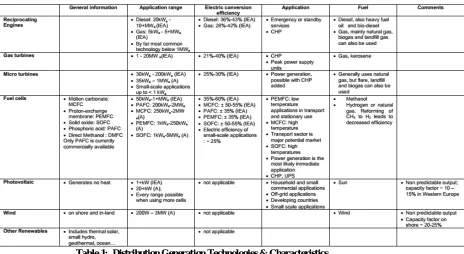
Grid support:Finally, distributed generation can also contribute in the provision of ancillary services. These include services necessary to maintain a sustained and stable operation of the grid, but not directly supplying customers. This may be the capability to generate on demand of the grid operator, for instance to stabilize a dropping frequency due to a sudden under capacity (e.g. a power plant switching off due to technical problems) or excess demand.There are a number of technologies are used for distributed generation. The Distributed Generation technologies are following [6]:
1. Wind Turbines. 2. Fuel Cells 3. Photovoltaic
4. Reciprocating Engines. 5. Combustion Gas Turbines. 6. Micro turbines.
Wind Turbines: In wind turbines the wind is used to generate electricity and it does not require long transmission lines. Wind turbines can be used for on-site generation as it does not need setting of infrastructure.
Fuel Cells: Fuel cells have very low OX and carbon dioxide emission. There are many fuel cells which are
under process.
Reciprocating Engines: Diesel and natural gas are used as fuels in the reciprocating engines, the emission output varies. Almost all engines work in four stroke intake, compression, combustion and exhaustion.
Combustion Gas Engine: The combustion gas engine is also termed as mini-turbines or industrial turbine. They can be achieved up to 15MW.
Micro-Turbines: Micro turbines consist of a compressor, combustor, turbine, and a generator. Most micro turbine units are designed for continuous operation with higher electric efficiencies [6].
Table 1: Distribution Generation Technologies & Characteristics
IV. NEED OF DISTRIBUTED GENERATION
Government of Republic of India has brought multiple guidelines for the fulfill the demand despite of it 56% of households still do not gain access to electrical energy [8].As shown in table 2,currently India has grid connected total installed capacity of 212 GW for electricity Generation [9]and it's estimated that to the rise at an average annual growth rate at 8 %, its installed electricity generation would reach up to 779 GW within two decades [7].To fulfil the huge demand of electricity centralized generation and extension of grid isn't good option. Distributed power generation, based on locally offered energy sources and offer of this additional electricity into the rural electricity grid, can be an important part of the solution to supply trustworthy supply of electricity to rural population [8].Distributed generation is clean and continuousso it is good of environment point of view, which makes it a better option. So with an eye on sustained GDP growth of 8% and to achieve the targets of electricity generation in coming years as shown in Table1, Distributed generation seemsas possible:
Year Installed Capacity(GW)(For 8% GDP Growth)
2011-12 220
2016-17 306
2021-22 425
2026-27 575
2031-32 779
V. POSITIVE ASPECTS OF DISTRIBUTED GENERATION
Environmentalists and academics suggest that DG technologies can offer supplementary positive aspects to society. Large, centralized power plants discharge significant amounts of carbon monoxide, sulfur oxides, particulate matter, hydrocarbons, and nitrogen oxides. The Environmental Protection Agency has long recognized the correlation between high levels of sulfur oxide emissions as well as the creation of acid rain. Simply because they concentrate the number of power they produce, large power plants also concentrate their pollution and waste heat, frequently destroying aquatic habitats and marine biodiversity. The essential benefits associated with Distributed Generation are given below:
Diminishes the expense because there is no usage of lengthy transmission line
Decreases the complexity
Environment-friendly
Characteristics impact associated with massive grid failure.
Very easy to maintain and straightforward to operate as it incorporate simple construction.
Much better power quality as well as reliability.
The factor of high peak load shortage eliminates.
Improves the performance of providing electric power.
Apparently operation cost fluctuates on the basis of numerous distributed technologies are employed. Distributed Generation gets rid of a number of issues which happens in conventional generation. As in distributed generation power is developed during the consumer end so that the on-site power equipment can incorporate consumer with incredibly affordable power at a more impressive range of quality.
VI DISTRIBUTED GENERATION FROM INDIAN SCENARIO
India has plentiful, unexploited renewable energy resources, incorporating a large land mass that acquires among the greatest solar radiation in the entire world, a long coastline with high wind velocities that offer adequate opportunities for both landbased and offshore wind farms, significant annual production of biomass, and various rivers and waterways that have prospective for hydropower [6].Promoting renewal energy is the greatest to cope up with limiting coal consumption and oil bill as well which will contribute to economy. Add to this the Indian economy is expected to grow at over 5% per annum up to 2030[6]. Distributed Generation is a significantly better solution for rural areas electrification. There certain aspects which lead to the ownership of distributed generation as in conventional generation there T&D losses, massive reference grid failure as well as inaccessibility to remote areas. There are a variety distributed technologies are utilized a few of which are not affordable for the rural areas electrification. Some technologies like solar PV, biomass, hydro power are suitable for such locations. Some individuals from electrified villages are also unsatisfied because of the quality of grid they can also embrace Distributed Generation. For a large and dispersed rural country, decentralized power generation systems, exactly where in electricity is generated at consumer end and thereby avoiding transmission as well as distribution costs, offers a significantly better alternative. Gokak Committee had gone into information about the concept of decentralized generation to meet the requirements of rural masses. The primary suggestions of the Gokak Committee are as under [10]:
The technique of Distributed Generation (D.G.) has been considered as decentralized generation and distribution of electrical power particularly in the rural areas. In India, the deregulation of the power sector hasn't made much headway perhaps the biggest issue of T&D losses, the unreliability of the reference grid as well as the issues associated remote and inaccessible regions have actually aggravated the controversy on the subject.
The D.G. technologies in India associate with turbines, micro turbines, wind turbines, biomass, and gasification of biomass, solar photo voltaic and hybrid systems. However, most of the decentralized plants depend on wind power, hydro power and biomass and biomass gasification. The technology of solar photo voltaic is actually costly and fuel cells are yet to be commercialized.
In so far as the 18,000 villages in remote and unreachable locations are concerned, the extension of grid power is not probably going to be cost-effective. Decentralized plants based on biomass, gasification of biomass, hydel power and solar thermal power and solar photo voltaic are considered the appropriate solution for these areas. A decision with regard to the available options will have to be taken dependent upon the feature of each site/village.
As people in many of the electrified villages are completely unsatisfied with the quality of grid power, such villages also encouraged to go ahead with the Distributed Generation Schemes. These also need to be the responsibility of the State Governments.
Though India has made considerable progress in implementing technologies based on renewable sources of energy these aren't yet capable of commercial application on a large scale.
Association of Village Panchayat with Village Level Committees is essential for the success of the program me. The fact that the Rural Electric Cooperatives which were established in the 80.s for distribution of power provided by the SEBs sustained losses does not need to prevent us from trying them out once again as these did have some positive features.
VII. CONCLUSION
This particular document is the brisk analyze of Distributed Generation, its need, importance in near future. This document includes how Traditional Generation is varying from Distributed Generation. According to present challenge the India is on the right track for the development of distributed generation. There are very different technologies in which the distributed generation works in getting effective production that can be renewal and non-renewal. Certain policies are implemented by government of India for providing energy security. Distributed generation from Indian scenario it is a more sensible choice for providing rural electrification and also provide energy security. There are certainly some key issues and challenges which happen to be trying solve in future. Fuel delivery is quite tough in developing countries like India so power generation from renewal energy resources may be excusable. Within this document we are trying to focus on the matter that in future Distributed Generation will play an enormous role in providing rural electrification
REFERENCES
[1] Hegazy YG, Salama MMA and Chikhani AY, “Adequacy assessment of distributed generation systems using Mont Carlo simulation”, IEEE Trans. Power System 18, pp. 48–52, 2003 [2] Navid Khalesi and Seyed Ali Mohammad Javadian, “Distribution system reliability with considering variation in DG and load consumption”, Indian Journal of Science and Technology, vol. 4, pp. 1285-1289, 2011 [3] Arthur D. Little, “Distributed Generation: Policy Framework and Regulators”, White Paper, 1999. [4] T.Q.D. Khoa, P.T.T. Binh, H.B. Tran, “Optimizing location and sizing of distributed generation in distribution systems”, Proceedings of IEEE PES Power Systems Conference and Exposition, pp. 725-732, 2006 [5] S Chowdhury, S. P. Chowdhury, P. Crossley, Micro grids and Active Distribution Networks, 1 st ed. London. IET
Renewable Energy Series, 2009
[6]Ministry of Power, Government of India www.powermin.nic.in.
[7] P. C. Maithani, “Renewable energy in India- A policy perspective,” 18 Jan. 2011, New Delhi. [8] World Bank, “Empowering rural India: Expanding electricity access by mobilizing local resources,” 2010, pp.6.
[9] A. K. Singh and S. K. Parida “Need of Distributed Generation for Sustainable Development in Coming Future”.2012 IEEE International Conference on Power Electronics, Drives and Energy SystemsDecember16-19, 2012, Bengaluru, India