111
International Journal in Management and Social Sciencehttp://ijmr.net.in, Email: [email protected]
EFFECTIVENESS OF STRUCTURED TEACHING PROGRAMME ON KNOWLEDGE REGARDING BLOOD DONATION AMONG ADULTS OF SELECTED AREAS OF
TAMILNADU
Ms. Swapna M K,
Assistant Professor, Amity College of Nursing, Amity University, Gurgao
Abstract
Blood transfusion saves lives and improves health, but many patients requiring transfusion do not have timely access to safe blood. Providing safe and adequate blood should be an integral part of every country’s national health care policy and infrastructure. Although half of the population in the country is medically fit to donate blood, only 4 in thousand are blood donors. Male female ratio of blood consumption is 40:60 however only 5 percent of the donors are women. Motivation and awareness activities are essential for boosting the blood stocks to meet the needs. In India, the annual collection of blood is only 5.5-6 million units against the requirement of about 8.5 million units. If only 3 percent of India’s eligible population donates their blood, there will be no shortage of blood and its components in blood banks. This would mean that a significant number of deaths could be avoided if people donate blood regularly and voluntarily. This study aims to assess the knowledge regarding Blood donation among adults. Quasi Experimental One group Pretest and Posttest design was selected to determine the effectiveness of education on Blood donation. A purposive Sampling technique was adopted to select 100 Samples. The knowledge questionnaire regarding blood donation was used to collect the data. The planned teaching Programme was developed and imparted knowledge to the adults. The result shows that Knowledge score regarding blood donation was improved after Education. The result shown that the mean post-test knowledge score was higher than the mean pre-test score. The mean pretest score was 13.5 and increased to 25.6 during post-test.
Key words: Blood donation, knowledge, Adults
Introduction
112
International Journal in Management and Social Sciencehttp://ijmr.net.in, Email: [email protected] composed to the WHO recommendation as per the latest reports. With a population of 1.3 billion to meet the one percent target issued by the WHO India would need donations of 13 million units of blood. In the year 2016- 2017 period there was a shortage of 19 million units of blood collected compared to the 13 million unit target. The shortfall was actually worse than the preceding 2015-2016 period when the deficit stood at 9% composed to 12 million unit target. India was short then of 1.1 million units of blood.
Figure.No. 1 Save a life, give a Blood.
113
International Journal in Management and Social Sciencehttp://ijmr.net.in, Email: [email protected]
Objectives
To assess the sources of Information on Blood Donation
To assess the knowledge on Blood Donation among the adults before structured teaching Programme.
To assess the knowledge on Blood Donation among the adults after structured teaching Programme
Methodology
One group pretest post-test design was adapted, 100 samples were selected through Purposive sampling technique. The planned structured Programme was administered on Blood Donation. The tool was developed by the researcher with the guidance of experts. The questionnaire contained three sections,
1. Demographic Variables
2. Sources of information on Immunization
3. Knowledge regarding the Blood donation among adults
The pilot study was conducted before the main study and it elicited the study was feasible. The tool was found to be highly reliable and valid. During the data collection, the researcher introduced herself to each subject and they were informed about the purpose of the study.
Results
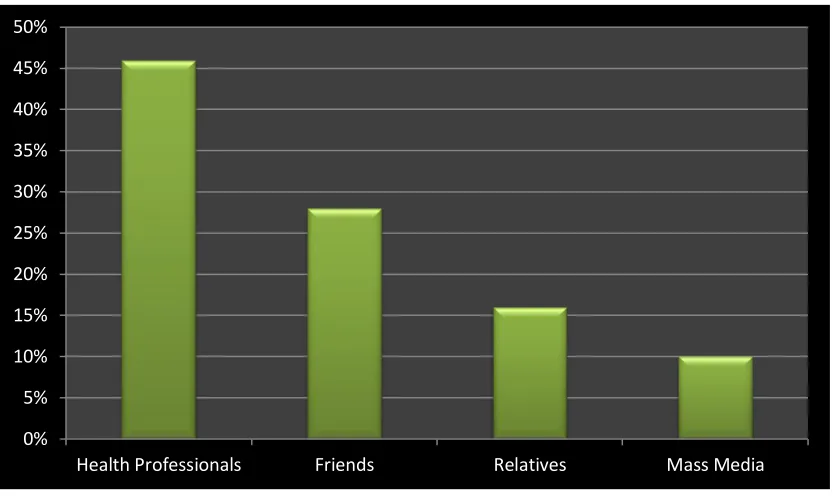
Table:1 Sources of Information regarding Blood Donation
Sources of Information Frequency
N= 100
Percentage
(%)
Health Professionals 46 46%
Friends 28 28%
Relatives 16 16%
114
International Journal in Management and Social Sciencehttp://ijmr.net.in, Email: [email protected]
Figure :2 Sources of Information regarding Blood Donation
Table. No: 2 Comparison of Knowledge score regarding Blood Donation among Adults.
Mean MD Standard
Deviation
‘t’ Value
Pre test 13.5 12.1 4.3
21.1 (p < 0.001)
Post test 25.6 1.36
0% 5% 10% 15% 20% 25% 30% 35% 40% 45% 50%
115
International Journal in Management and Social Sciencehttp://ijmr.net.in, Email: [email protected]
Figure. No: 3 Comparison of Knowledge score regarding Blood Donation among Adults.
Discussions
The Present study revealed that mean post test knowledge score was higher than the mean pretest score of respondents in Knowledge regarding Blood donation. The mean pre test score of knowledge score was 13.5 and mean post test knowledge score was increased to 25.6. In this study majority of adults source of information regarding Blood donation is from Health Professionals.
Conclusion
This study suggests that the study population has relatively good knowledge and a favorable attitude about voluntary blood donation. There is a need for ongoing, educational, and motivational activities for encouraging blood donation to donate blood.
0 5 10 15 20 25 30
116
International Journal in Management and Social Sciencehttp://ijmr.net.in, Email: [email protected]
Referrences
1. Blood Safety and Availability [Internet]. World Health Organization; 2016. Available
from: http://www.who.int/mediacentre/factsheets/fs279/en/.
2. Agravat AH, Gharia AA, Dhruva GA, Kakadia M. Knowledge, attitude, and practice of
voluntary blood donation among medical students of PDU medical college Rajkot. Int J Curr Res 2014;6:6839-41
3. Bharatwaj RS, Vijaya K, Rajaram P. A descriptive study of knowledge, attitude and
practice with regard to voluntary blood donation among medical undergraduate students in pondicherry. India J Clin Diagn Res 2012;6:602-4.
4. Garg S, Mathur DR, Garg DK. Comparison of seropositivity of HIV, HBV, HCV and
syphilis in replacement and voluntary blood donors in Western India. Indian J Pathol Microbiol 2001;44:409
5. Giri PA, Yadav S, Parhar GS, Phalke DB. Frequency of ABO and rhesus blood groups: A
study from a rural tertiary care teaching hospital in India. Int J Biol Med Res 2011;2:988-90
6. World Health Organization (WHO). Blood transfusion factsheet 2017. Available:
http://www.who.int/features/factfiles/blood_transfusion/en/.
7. Uma S, Arun R, Arumugam P. The Knowledge, Attitude and Practice towards Blood
Donation among Voluntary Blood Donors in Chennai, India. J Clin Diagnos Res. 2013;7(60):1043-46.
8. https://www.healthissuesindia.com/2019/10/02/blood-donation-india/