Preventing and managing urinary tract infections: Enhancing the role of community
pharmacists – a mixed methods study
Nathan Peiffer-Smadja1,2,3, Rosalie Allison4, Leah F Jones4, Alison Holmes1, Parvesh Patel5, Donna M Lecky4, Raheelah Ahmad1,6* Cliodna AM McNulty4*
1. National Institute for Health Research Health Protection Research Unit in Healthcare Associated
Infections and Antimicrobial Resistance, Imperial College London, London, UK.
2. Université de Paris, IAME, INSERM, F-75018 Paris, France
3. Infectious and Tropical Diseases Department, Bichat-Claude Bernard Hospital, AP-HP, F-75018
Paris, France
4. Primary Care and Interventions Unit, Public Health England, Gloucester, United Kingdom
5. Local Pharmaceutical Committee, Newham, UK
6. City University, London Division of Health Sciences, UK
*authors contributed equally
Corresponding authors: Nathan Peiffer-Smadja, Raheelah Ahmad
Keywords:
Pharmacist; Community; Urinary tract infections; Leaflet; Self-care; General Public
Abstract length: 264 words
ABSTRACT (264 words)
Background:
Community pharmacists are involved in antimicrobial stewardship through self-care advice and
delivering medications for uncomplicated infections.
Objectives
This mixed methods study aimed to identify opportunities to enhance the role of community
pharmacists in the management of patients with suspected or confirmed urinary tract infection (UTI).
Methods
Data collection was through a service user survey (n=51) and pharmacist surveys and semi-structured
interviews before (16 interviews, 22 questionnaires) and after (15 interviews, 16 questionnaires)
trialling UTI leaflets designed to be shared with patients. Data were analysed inductively using
thematic analysis and descriptive tabulation of quantitative data.
Results
Twenty-five percent (n=13/51) of service users with urinary symptoms sought help from a pharmacist
first and 65% (n=33/51) were comfortable discussing their urinary symptoms with a pharmacist in a
private space. Community pharmacists were confident as the first professional contact for service
users with uncomplicated UTI (n=13/16, 81%), but indicated the lack of a specific patient referral
pathway (n=16/16, 100%), the need for additional funding and staff (n=10/16, 62%), and the
importance of developing prescription options for pharmacists (5/16, 31%). All community pharmacists
reported playing a daily role in controlling antimicrobial resistance by educating service users about
viral and bacterial infections and promoting a healthy lifestyle. Enhancing their role will need greater
integrated working with general practices and more prescribers based in community pharmacy.
Conclusion
This study suggests that community pharmacists could play a greater role in the management of
uncomplicated UTI. The current reconfiguration of primary care in England with primary care networks
and integrated care systems could provide a real opportunity for this collaborative working with
MANUSCRIPT
INTRODUCTION
Urinary tract infections (UTIs) are the most commonly seen bacterial infection in general practice: up
to 50% of women will have a UTI in their lifetime and 30% will have recurring episodes.1 UTIs account
for as much as 15-20% of the antibiotics prescribed in primary care.2 Outcomes are usually very good
as most cases resolve in 3-4 days with empirical antibiotics,3 but as many as 60% of these women
may not have a positive urine culture.4 In contrast one-fifth of community-acquired bacteraemia in
patients admitted to an English National Health Service (NHS) Trust in 2007–08 were UTI associated.
In a recent study, 95% of women consulted a health professional for their most recent UTI: 74%
reported being prescribed an antibiotic, yet only two-thirds reported taking them, highlighting the need
for better advice about antibiotics in the community.5
Community pharmacists are involved daily in antimicrobial stewardship (AMS) by providing service
users with self-care advice, delivering medications and recommending over-the-counter treatments for
common infections. The UK 2019 5-year antimicrobial resistance (AMR) action plan states that
primary care pharmacists have a critical role in reviewing prescriptions for antimicrobials and
challenging those that may be inappropriate.6 National and local campaigns advise the general public
to first contact their pharmacist for healthcare advice.5 Community-based interventions with
pharmacists have the potential to control the rise of bacteraemia and to improve antimicrobial use for
UTIs by increasing patient knowledge and self-care skills. By enhancing self-care, preventative
measures and appropriate referral to General Practitioners (GPs), these measures could improve the
health and wellbeing of the general public. This is particularly relevant as virtually all service users with
suspected or confirmed UTI visit a community pharmacy either before their general practice or after to
collect a prescription.However, few guidelines have been developed to guide pharmacists in the
community management of suspected or confirmed UTI. The UK national action plan (NAP) for AMR
indicates a need to strengthen the links between primary care pharmacists and GP practices,6 but
further research is required to investigate the best measures to empower pharmacists in an antibiotic
This study aimed to explore the views of pharmacy staff on giving advice for women and older adults
with suspected or confirmed UTIs while assessing the feasibility and acceptability of the Public Health
England (PHE) TARGET UTI patient information leaflets9 in the community pharmacy setting. The
objective of this mixed methods study was to identify opportunities to enhance the role of community
pharmacists specifically in the management of UTI by exploring the journey of service users with
urinary symptoms.
METHODS
The TARGET UTI leaflets
The TARGET UTI leaflets are designed to be shared with patients and aim to facilitate communication
between healthcare professional and patient, and increase patient’s confidence to self-care.10 The
leaflets follow relevant National Institute for Health and Care Excellence (NICE) guidelines.
Study design
This study used mixed methods to explore the views of pharmacists, and service users with suspected
or confirmed UTI.
Questionnaires and interviews schedules
Two semi-structured questionnaires, and interview schedules to explore the role of pharmacists in the
prevention of management of UTIs (before and after trialling the leaflets) and one semi-structured
questionnaire to analyse the opinion of service users were developed by a multidisciplinary team of
clinicians and researchers at Imperial College London and PHE (Supplementary material). The
questionnaires were theoretically informed by the Consolidated Framework for Implementation
Research to understand individual level and contextual influencing factors to adoption of the leaflet.11
The questionnaires were reviewed and tested by two community-based pharmacists and were refined
according to comments. The pharmacist questionnaires collected information about demographics,
characteristics of the pharmacies, particularities of giving advice in the pharmacy setting generally and
for service users collected information about demographics, the literacy, the patient experience of their
suspected UTI, its management, self-care and resolution. This was piloted with a patient
representative and subsequently revised.
Study setting: community pharmacies in Newham
We included community pharmacies in one London borough (Newham), purposively sampled, which
would enable views from patients of different socio-economic status. An invitation, including an
information leaflet and consent form, was sent by the LPC lead pharmacist to 26 pharmacies in April
2019; researchers sent non-responders a reminder 2 weeks later.
Participant enrolment
Pharmacists agreed to participate in a phone interview and complete an electronic questionnaire
before trialling the TARGET UTI leaflets for 3 months in their pharmacy. At the end of the 3 months
the pharmacists participated in a second interview and completed a further questionnaire. The
pharmacists were provided with a £30 voucher incentive after each interview.
Service users who received the TARGET UTI leaflet at the pharmacy were invited in person when
they were given the leaflet to complete a paper or electronic survey at home. The paper survey with a
written consent form was attached to the leaflet in a prepaid envelope and the electronic survey was
accessible via the use of a QR code or a weblink. Service users were provided a £10 voucher
incentive if they completed the survey electronically or sent it by mail.
Data analysis
The interviews were recorded, anonymised and transcribed verbatim by a professional company and
checked against the interviews by a researcher. Interviews were analysed by a researcher using an
inductive thematic analysis.12 Two other authors each independently inductively coded 3 different
transcripts. The three researchers collectively reviewed and reached a consensus about the
application of themes through independent coding and group discussion, which were then reviewed
and agreed by the research team. The interviews were then coded according to the themes using the
NVivo 12 software. Data from the closed-ended questions of the surveys were imported into R
interquartile range (IQR). We used Pearson's chi-squared test to compare the results among service
users.
Ethics
The study received approval from Imperial College London and ethics committee [Imperial College
Research Ethics Committee reference: 18IC4777]. Data management was compliant with the
European General Data Protection Regulation.
RESULTS
Participants: pharmacist and service users
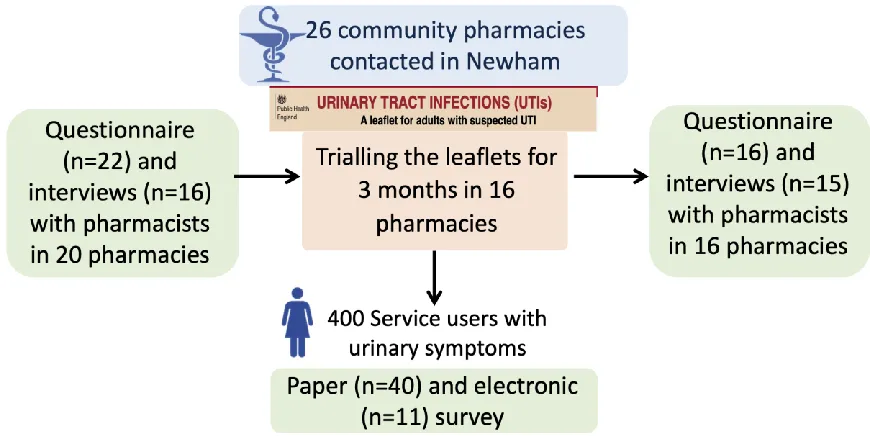
Among the 26 pharmacies contacted in Newham, 20 (77%) participated in the pre-intervention
assessment and 16 (62%) in the 3-month trial of the leaflets and the post-intervention assessment.
We conducted 16 interviews and collected 22 questionnaires before and 15 interviews and 16
questionnaires after trialling the leaflet (Figure 1). The pharmacists comprised 8 women and 14 men,
with a median of 15 years (IQR, 5-30) post qualification experience (Table 1). Fifty-one service users
participated in the survey, majority of which were female; 43 (84%). Twenty-one participants (41%)
had recurrent UTIs, 23 (45%) had had one or two UTIs before and 6 (12%) had a UTI for the first time.
Table 1: Characteristics of the participants
Pharmacists n (%) or median [IQR] (n=22)
Women 8 (36)
Job description
Non-prescribing pharmacists 18 (82)
Prescribing pharmacist 3 (14)
Pharmacy technician 1 (4)
Years since qualification 15 [5-30]
Years in the pharmacy 9.5 [5-17]
Pharmacy staff (full time equivalent) in the pharmacy 4 [3-5]
Service users per day 55 [40-100]
Estimated percentage of male service users seen in the pharmacy 61 [52-62]
Service users seen in the consultation room per day 8 [5-12]
Estimated number of service users given healthcare advice 20 [16-37]
Service users n (%) (n=51)
Women 43 (84)
Age
Children 1 (2) (completed by the mother)
18-24 8 (16)
25-34 10 (20)
35-44 4 (8)
45-54 11 (22)
55-64 7 (14)
65-74 4 (8)
>75 4 (8)
Ethnicity
White 27 (53)
Black 4 (8)
Mixed 4 (8)
UTI history
Recurrent UTIs 21 (41)
One or two before 23 (45)
First time 6 (12)
Survey results: The patient UTI journey in the community
Before seeing a healthcare professional, 15/51 (29%) service users reported consulting their family for
information on urinary symptoms and 9/51 (18%) reported consulting online sources (e.g. NHS
choices). Younger participants (aged 18–34 years versus those aged over 34 years) were more likely
to access information about UTI on the internet (50% versus 18%) (p=0.01). Two-thirds (n=31, 62%)
of the service users reported drinking more fluids before going to the pharmacy or visiting their GP, but
20 (39%) did not. Some service users reported taking painkillers (n= 15, 29%), cranberry juice or
capsules (n=12, 24%), resting (n=10, 20%), taking cystitis sachets (n=8, 16%), nonsteroidal
anti-inflammatory drugs (n=7, 14%), or time off work (n=2, 4%). Thirty-seven service users (72%) went to a
pharmacy following a GP visit after being prescribed an antibiotic and 13 (25%) went to a pharmacy
before seeking advice from another health professional (Figure 2). The results from the pharmacists’
questionnaires confirmed this finding stating that, on average, 71% of service users came to the
pharmacy following a GP visit with an antibiotic prescription and 29% visited the pharmacy first for
advice and over the counter medication. Service users rarely reported (n=2, 4%) going to the
Figure 2: Potential actions to enhance the role of community pharmacists in the management of
service users with suspected or confirmed urinary tract infection
Advice in the pharmacy
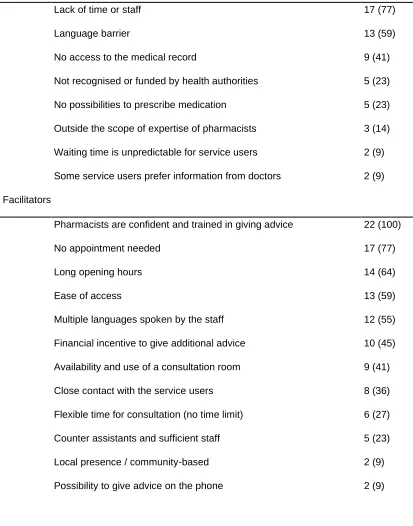
During interviews, pharmacists identified barriers and facilitators to giving healthcare advice in the
pharmacy setting compared with a GP practice (Table 2). The most cited barriers were the lack of staff
or time (n=17, 77%), the language barrier (n=13, 59%) and the absence of access to patient medical
records (n=9, 41%). On the contrary, facilitators were that pharmacists are trained and confident in
giving advice (n=22, 100%), that no appointment is needed (n=17, 77%) and that pharmacies have
long opening hours (n=14, 64%). The language barrier was mitigated by the number of languages
spoken by the pharmacists and their staff: we discussed this point with 6 pharmacists who all reported
the fluent use of 4 to 6 Asian languages in their pharmacy in addition to English.
Service users were mostly (n=33, 65%) comfortable discussing their urinary symptoms with a
(n=36, 70%) did not want to discuss urinary symptoms at the counter if they could be overheard by
other customers.
Table 2: Barriers and facilitators of giving advice in the pharmacy raised during interviews
Pharmacists n=22 (%)
Barriers
Lack of time or staff 17 (77)
Language barrier 13 (59)
No access to the medical record 9 (41)
Not recognised or funded by health authorities 5 (23)
No possibilities to prescribe medication 5 (23)
Outside the scope of expertise of pharmacists 3 (14)
Waiting time is unpredictable for service users 2 (9)
Some service users prefer information from doctors 2 (9)
Facilitators
Pharmacists are confident and trained in giving advice 22 (100)
No appointment needed 17 (77)
Long opening hours 14 (64)
Ease of access 13 (59)
Multiple languages spoken by the staff 12 (55)
Financial incentive to give additional advice 10 (45)
Availability and use of a consultation room 9 (41)
Close contact with the service users 8 (36)
Flexible time for consultation (no time limit) 6 (27)
Counter assistants and sufficient staff 5 (23)
Local presence / community-based 2 (9)
Possibility to give advice on the phone 2 (9)
When asked via questionnaires about the most important self-care advice given to service users with
over-the-counter products (e.g. cystitis sachets), 64% (n=14) recommended painkillers, 36% (n=8) discussed
red flags to visit the GP and 27% (n=6) gave preventative advice. All pharmacists interviewed agreed
that it was difficult to give comprehensive self-care advice because of the lack of time. Overall, the
pharmacists were confident in discussing UTIs with service users.
Communication with the GP
During pharmacists interviews we explored the reasons for referral to the GP (Figure 2). The
pharmacists referred all male patients, pregnant women, older people (over 65-years old) or children
(below 16-years old), patients with symptoms lasting for more than 48 hours, with lower abdominal
pain or kidney pain, with temperature, blood in the urine or severe comorbidities, and those presenting
with recurrent UTIs to the GP. However, pharmacists could only instruct patients to visit their GP and
as such, they stressed the need to develop a special referral pathway between pharmacies and GPs
(n=16, 100%). They suggested that the TARGET UTI leaflets could be used as a referral notice
between healthcare professionals:
"So, there’s not much, much of a connection between the two settings. For example, if there was a
patient that we were particularly concerned about, we can’t call up the GP practice and say, oh, could
you give them early appointment because I’ve seen them and I’ve noticed X, Y, Z. There’s not that
rapport yet or there’s not that importance [placed in] a pharmacist’s view, I feel, in community." P4.
The role of pharmacists
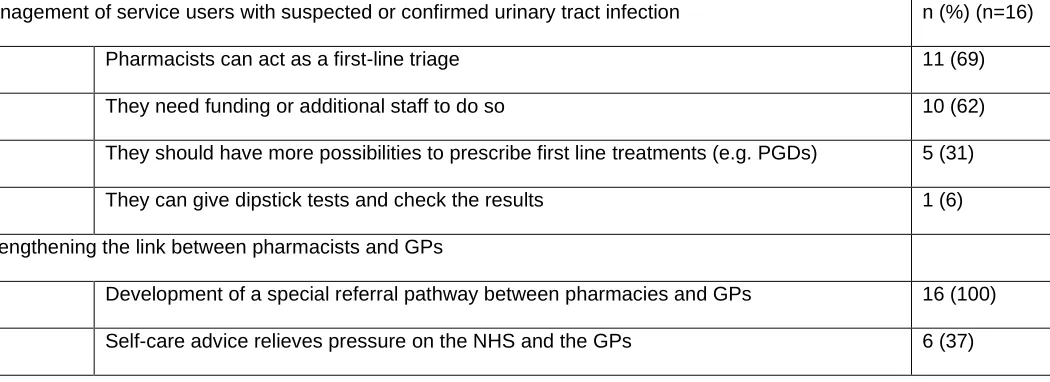
Table 3 presents the themes and sub-themes that were generated from the qualitative analysis of the
interviews with the pharmacists regarding the management of service users with suspected or
confirmed UTI. Most pharmacists interviewed (n=13, 81%) suggested that pharmacists could act as a
first-line triage for service users with UTIs:
"I don’t think [the service users] need to go directly to the GP because mostly UTIs could be
self-limiting" P1.
The pharmacists reported that if they were the first healthcare professional to give advice to service
users with suspected or confirmed UTI this could relieve pressure on other NHS services, including
GPs. However, they requested additional funding for staff to give advice for those with suspected UTI
“Yeah, but you see having a role to play is one thing but you need to be remunerated for that role.
You can’t expect pharmacists to do everything for nothing" P13.
Increasing the Patient Group Directions (PGD) to prescribe first-line treatments for uncomplicated
UTIs could help enhance this role:
“[Having a UTI PGD] …could be something which might take a bit of work off the GPs. And in that
service, we do get a consultation fee as well and we do that service for Pharmacy First or the Minor
Ailment. So, I think that’s some revenue, it works for the GP and it works for the patient" P3.
All the pharmacists interviewed (n=16, 100%) agreed that they had a major role in the control of AMR
by educating service users about antibiotics and infections for which antibiotics are not needed. They
reported giving daily self-care advice for viral infections and self-limiting UTIs, and triaging patients
and advising when they should consult a GP. They also described having an important role in
preventative measures in community care and participating in preventing bacterial infections by
promoting a healthy lifestyle:
“That is where it should all start. We [pharmacy staff] should be highly focused on prevention, and
providing advice for people to self-care and self-manage, and improve their health. And that will stop,
forget the resistance [AMR], you will not even need to prescribe antibiotics if people are living a
healthy lifestyle. (…) So, the biggest impact the pharmacist can make is in the prevention agenda"
P10.
Table 3: Themes and sub-themes of the qualitative analysis of interviews on the role of pharmacists in
the management of service users with suspected or confirmed urinary tract infection
Management of service users with suspected or confirmed urinary tract infection n (%) (n=16)
Pharmacists can act as a first-line triage 11 (69)
They need funding or additional staff to do so 10 (62)
They should have more possibilities to prescribe first line treatments (e.g. PGDs) 5 (31)
They can give dipstick tests and check the results 1 (6)
Strengthening the link between pharmacists and GPs
Development of a special referral pathway between pharmacies and GPs 16 (100)
Reducing the spread of AMR
Education of service users about infections for which antibiotics are not always needed 16 (100)
Screening patients who need to go to the GP 10 (62)
Self-care advice for viral infections and benign bacterial infections 12 (75)
Promotion of a healthy lifestyle 5 (31)
DISCUSSION
Summary
We explored the UTI patient journey with both pharmacists and patients to identify opportunities to
enhance the role of community pharmacists specifically in the management of UTIs. The self-care
management of service users with suspected UTI can still be improved as 38% of service users did
not report drinking plenty of fluids before seeing a healthcare professional. One third of service users
with suspected UTI sought help first from a pharmacy, but the majority visited to pick up their antibiotic
prescription after a consultation elsewhere. Barriers to giving advice in the pharmacy were the lack of
staff or time, the language barrier and the absence of access to patient medical records. Pharmacists
were trained and confident to give advice to patients with suspected UTI but they pointed out the lack
of a specific pathway to refer patients who need an antibiotic to GPs, and the need for additional
funding and staff to enable an increased role of community pharmacies in the management of
uncomplicated infections. Community pharmacists integrated their role to fight AMR into the wider
context of healthcare education and promotion of a healthy lifestyle.
Comparison with existing literature
The proportion of service users with urinary symptoms coming first to a pharmacy (around 30%) is
very close to what has been found in another study in which 36% of the patients presented directly in
had a UTI reported going first to a pharmacy; the rate in this study may have been lower as it included
a wide age range of participants.5 As described in recent studies, we have found support from both
patients and pharmacists for increased access to UTI management and advice through community
pharmacies.8,13 This confirms the need for interventions targeting community pharmacies to improve
the UTI patient journey including self-care advice and appropriate referral. According to our study and
the literature, the development of a PGD for uncomplicated UTIs is supported by pharmacists in order
to extend their management options.8 A recent study found that a community pharmacy-led UTI
test-and-treat service for women aged 16–64 years with urinary symptoms helped to support the
appropriate use of antibiotics and reduced demand on other NHS resources such as GP surgeries.13
However, there is a need to carefully consider the advantages of PGDs which should lead to more
timely treatment of UTI with the potential drawback of increased use of antibiotics in UTI as has been
found for chloramphenicol and eye infections.14 The risk of overuse of antibiotics for suspected UTI
leading to increased AMR could be mitigated with an increased pharmacy access to clear protocols,
accurate point-of-care testing,13 UTI culture, and shared patients records.15 Sixty-two percent of the
service users in our study took extra fluids before consulting a healthcare professional, as compared
to 35% in a study in 2014 in the UK.5 This might reflect the effect of recent interventions including
online campaigns to promote self-care advice about UTIs in the community.16,17
The barriers to giving self-care advice about UTI in the community pharmacy setting confirm findings
in a qualitative study with GPs, pharmacists, pharmacy staff and representatives from pharmacy
organisations in England and Wales.15 Clinicians reported that lack of time or staff and lack of access
to medical information was perceived as a barrier to giving effective and thorough self-care advice.
Overall, our results support increasing the collaboration between GPs and community pharmacists as
advocated in a joint statement by the Royal College of General Practitioners (RCGP) and the Royal
Pharmaceutical Society (RPS).18 The proposals of this statement include many of the measures that
have been asked for by pharmacists in our study such as a greater role for community pharmacy in
managing minor self-limiting conditions, access to health records and better links between
practice-based pharmacists (Clinical Pharmacists) and community pharmacy. This has also been highlighted in
the community pharmacy 2019 to 2024 contractual framework that encourages the development of
Strengths and limitations
Acceptance rate by community pharmacies to participate was high, and we collected information both
from pharmacists and service users’ point of views, facilitating triangulation of data. Although patients
from white ethnicity were over-represented in the user responses (53% in our sample versus 28% in
the borough according to the 2019 GLA housing-led projection), our sample of service users did have
participants representing the diversity of Newham borough. Participants age was similar to the local
population as a whole. Service user questionnaire completion was quite low as only 13% of 400
questionnaires were returned. However, this return rate is quite usual in any service evaluation by the
public and participation of the BAME (Black, Asian and Minority Ethnic) populations in research is
known to be difficult.20 The small sample size including 22 pharmacists and 51 patients as well as the
risk of recruitment bias when recruiting pharmacists or service users motivated to participate in a study
is recognised. However qualitative research aims to attain a range of views rather than necessarily
obtaining views representative of the general population. Interviewing GPs may also have provided a
more comprehensive scope and additional review regarding the role and value of community
pharmacists in antimicrobial stewardship for UTIs, but this has already been attained in other
qualitative studies.10,15
Implications for practice
Prescription options for pharmacists, levels of funding and incentives are areas to explore in policy
and contractual developments. Developing a referral pathway is a way to strengthen the link between
pharmacists and GPs and to give more importance to the place of pharmacists in the community
setting. The referral of patients from pharmacy to GPs could be improved through the use of the
TARGET UTI leaflets that highlight the management of patients with suspected UTI.22 Our results also
provide evidence for the deployment of Clinical Pharmacists working in GP surgeries as they can
represent a key link to community pharmacists6 as part of the UK NHS Long term Plan for better
integration of care.23 Primary care networks (PCN) link the local community and community-based
intend to make greater use of community pharmacists’ skills and opportunities to engage service users
for integrated out-of-hospital care for patients. These results could inform the writing of guidelines for
the management of service users with suspected or confirmed UTI in community pharmacies and
inspire future strategies and interventions in the community.
CONCLUSION
We identified opportunities and potential interventions to improve the management of service users
with suspected or confirmed UTI in community pharmacies. The current reconfiguration of primary
care in England with primary care networks and integrated care systems could provide a real
opportunity for this collaborative working with potential learning for international initiatives.
AUTHORS CONTRIBUTION
Conceptualization, N.P-S., R.A., L.J., A.H., D.L., R.Ah., C.M.;
Methodology, N.P-S., D.L., R.Ah., C.M.;
Validation, R.Ah., C.M.;
Formal Analysis, N.P-S., R.A., D.L., R.Ah., C.M.;
Investigation, N.P-S., P.P., R.Ah.,
Data Curation, N.P-S., R.Ah.,
Writing – Original Draft Preparation, N.P-S., R.Ah.,
Writing – Review & Editing, R.A.; L.J., R.Ah., C.M.;
Supervision, R.Ah., C.M.;
Project Administration, N.P-S., P.P, D.L., R.Ah.,
Funding Acquisition, A.H., R.Ah., C.M.;
FIGURE CAPTIONS
Figure 2: Potential actions to enhance the role of community pharmacists in the management of
service users with suspected or confirmed urinary tract infection
GRAPHICAL ABSTRACT
Figure 2 is proposed as a graphical abstract.
CONFLICTS OF INTEREST
Leah Jones, Rosie Allison, Donna Lecky and Cliodna McNulty all work on Public Health England’s
TARGET Antibiotics Toolkit programme of work, developing and evaluating leaflets.
All other authors: No potential conflicts of interest.
FUNDING
The research was funded by the National Institute for Health Research Health Protection Research
Unit (NIHR HPRU) in Healthcare Associated Infections and Antimicrobial Resistance at Imperial
College London in partnership with Public Health England (PHE), in collaboration with, Imperial
Healthcare Partners, University of Cambridge and University of Warwick.
This report is independent research funded by the National Institute for Health Research. The views
expressed in this publication are those of the author(s) and not necessarily those of the NHS, the
National Institute for Health Research, the Department of Health and Social Care or Public Health
England.
ACKNOWLEDGMENTS
NPS acknowledges the support of the French Association de Chimiothérapie Anti-Infectieuse (ACAI)
and the French Society for Infectious Diseases (SPILF).
Raheelah Ahmad acknowledges the support of the
NIHR Health Protection Research Unit in Healthcare
Associated Infections and Antimicrobial Resistance at Imperial College.
We thank Dr Claudette Satchell for contribution earlier in the project.
SUPPLEMENTARY MATERIAL
1. Pre-intervention interview schedule with pharmacists
2. Post-intervention interview schedule with pharmacists
3. Pre-intervention questionnaire for pharmacists
4. Post-intervention questionnaire for pharmacists
5. Questionnaire for service users
REFERENCES
1. Foxman B. Epidemiology of urinary tract infections: incidence, morbidity, and economic costs.
Am J Med. 2002;113 Suppl 1A:5S-13S. doi:10.1016/s0002-9343(02)01054-9
2. Ong DSY, Kuyvenhoven MM, van Dijk L, Verheij TJM. Antibiotics for respiratory, ear and urinary tract disorders and consistency among GPs. J Antimicrob Chemother. 2008;62(3):587-592. doi:10.1093/jac/dkn230
3. McNulty C a. M, Richards J, Livermore DM, et al. Clinical relevance of laboratory-reported antibiotic resistance in acute uncomplicated urinary tract infection in primary care. J Antimicrob
Chemother. 2006;58(5):1000-1008. doi:10.1093/jac/dkl368
4. Butler CC, Francis N, Thomas-Jones E, et al. Variations in presentation, management, and patient outcomes of urinary tract infection: a prospective four-country primary care observational cohort study. Br J Gen Pract. 2017;67(665):e830-e841. doi:10.3399/bjgp17X693641
5. Butler CC, Hawking MKD, Quigley A, McNulty CAM. Incidence, severity, help seeking, and management of uncomplicated urinary tract infection: a population-based survey. Br J Gen Pract J R
Coll Gen Pract. 2015;65(639):e702-707. doi:10.3399/bjgp15X686965
6. UK Department of Health and Social Carer. UK 5-year action plan for antimicrobial resistance 2019 to 2024. Published online January 24, 2019.
7. Overview | Patient group directions | Guidance | NICE. Accessed May 16, 2020. https://www.nice.org.uk/guidance/mpg2
8. Booth JL, Mullen AB, Thomson DA, et al. Antibiotic treatment of urinary tract infection by community pharmacists: a cross-sectional study. Br J Gen Pract. 2013;63(609):e244-e249. doi:10.3399/bjgp13X665206
9. Public Health england. Leaflets to Share with Patients: The TARGET Antibiotics Toolkit. Accessed January 28, 2020.
10. Lecky DM, Howdle J, Butler CC, McNulty CA. Optimising management of UTIs in primary care: a qualitative study of patient and GP perspectives to inform the development of an evidence-based, shared decision-making resource. Br J Gen Pract. 2020;70(694):e330-e338.
doi:10.3399/bjgp20X708173
11. Damschroder LJ, Aron DC, Keith RE, Kirsh SR, Alexander JA, Lowery JC. Fostering implementation of health services research findings into practice: a consolidated framework for advancing implementation science. Implement Sci. 2009;4(1):50. doi:10.1186/1748-5908-4-50 12. Bradley EH, Curry LA, Devers KJ. Qualitative data analysis for health services research: developing taxonomy, themes, and theory. Health Serv Res. 2007;42(4):1758-1772.
doi:10.1111/j.1475-6773.2006.00684.x
13. Thornley T, Kirkdale CL, Beech E, Howard P, Wilson P. Evaluation of a community pharmacy-led test-and-treat service for women with uncomplicated lower urinary tract infection in England.
JAC-Antimicrob Resist. 2020;2(1). doi:10.1093/jacamr/dlaa010
14. Du HCT, John DN, Walker R. An investigation of prescription and over-the-counter supply of ophthalmic chloramphenicol in Wales in the 5 years following reclassification. Int J Pharm Pract. 2014;22(1):20-27. doi:10.1111/ijpp.12033
15. Jones LF, Owens R, Sallis A, et al. Qualitative study using interviews and focus groups to explore the current and potential for antimicrobial stewardship in community pharmacy informed by the Theoretical Domains Framework. BMJ Open. 2018;8(12). doi:10.1136/bmjopen-2018-025101
16. Jones LF, Meyrick J, Bath J, Dunham O, McNulty C a. M. Effectiveness of behavioural
interventions to reduce urinary tract infections and Escherichia coli bacteraemia for older adults across all care settings: a systematic review. J Hosp Infect. 2019;102(2):200-218.
doi:10.1016/j.jhin.2018.10.013
17. Platt C, Larcombe J, Dudley J, et al. Implementation of NICE guidance on urinary tract infections in children in primary and secondary care. Acta Paediatr Oslo Nor 1992. 2015;104(6):630-637. doi:10.1111/apa.12979
18. Royal College of General Practitioners (RCGP), Royal Pharmaceutical Society (RPS). Breaking down the Barriers – How Community Pharmacists and GPs Can Work Together to Improve
Patient Care.; 2012. http://www.rpharms.com/public-affairs-pdfs/RPSRCGPjointstatement.pdf
19. Department of Health and Social Care. Community Pharmacy Contractual Framework: 2019 to 2024. Published July 22, 2019. Accessed May 16, 2020.
https://www.gov.uk/government/publications/community-pharmacy-contractual-framework-2019-to-2024
20. Redwood S, Gill PS. Under-representation of minority ethnic groups in research — call for action. Br J Gen Pract. 2013;63(612):342-343. doi:10.3399/bjgp13X668456
21. McNulty CAM, Lecky DM, Xu-McCrae L, et al. CTX-M ESBL-producing Enterobacteriaceae: estimated prevalence in adults in England in 2014. J Antimicrob Chemother. 2018;73(5):1368-1388. doi:10.1093/jac/dky007
22. Jones LF, Hawking MKD, Owens R, et al. An evaluation of the TARGET (Treat Antibiotics Responsibly; Guidance, Education, Tools) Antibiotics Toolkit to improve antimicrobial stewardship in primary care—is it fit for purpose? Fam Pract. 2017;35(4):461-467. doi:10.1093/fampra/cmx131 23. NHS. The NHS long term plan. Published online 2019. https://www.longtermplan.nhs.uk/wp-content/uploads/2019/08/nhs-long-term-plan-version-1.2.pdf