ABSTRACT
GREINER, JEFFREY ALLEN. Using the C3 Inquiry Arc to Teach Critical Issues in a Social Studies Classroom. (Under the direction of Dr. Meghan M. Manfra).
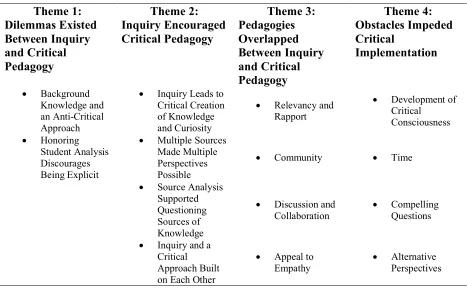
This case study found that using the C3 inquiry arc in a secondary social studies course in order to address critical issues (topics focused on equity and justice) led a teacher to embrace a more critical stance towards their practice. However, it was also found that his critical practice fell short of the standard set by critical pedagogy. This study involved two inquiry-based units, designed and taught by a teacher who had significant experience using the C3 Framework to organize and develop his units of instruction. The study paid particular to attention towards how a teacher using the C3 Framework taught about critical issues of equity and justice. Data was collected through interviews, observations, journals, and documents and was analyzed through a continuous coding procedure. Findings involved four major themes: inquiry presented dilemmas with critical pedagogy, implementing inquiry encouraged the teacher to embrace elements of critical pedagogy; the teacher used specific pedagogies that increased the overlap between of inquiry and critical pedagogy, and that obstacles existed in the form of a lack of experience using critical consciousness, a lack of time to develop critical curriculum, difficulty finding alterative perspective resources, and the struggle to craft a compelling question that served both the inquiry and the examination of a critical issue.
Using the C3 Inquiry Arc to Teach Critical Issues in a Social Studies Classroom
by
Jeffrey Allen Greiner
A dissertation submitted to the Graduate Faculty of North Carolina State University
in partial fulfillment of the requirements for the degree of
Doctor of Philosophy
Curriculum and Instruction
Raleigh, North Carolina 2019
APPROVED BY:
________________________________ ________________________________
Meghan M. Manfra, John K. Lee
Chair of Advisory Committee
________________________________ ________________________________
DEDICATION
This dissertation is dedicated to everyone in my life who helped to put me on, and keep me on, this path. To my parents, Frank and Jodi, for instilling in me a love of learning and a value for education. To my wife, Meghan, for encouraging me to start along this journey and supporting me through the entire process. To my children, Owyn and Emrys, for giving me all the more reason to want to do my best every day. To the teachers I worked with at Westside Middle School and Martin Middle School who taught me, in so many ways, what it means to be a teacher and what it means to teach social studies. To my middle school students who inspired me every single day for 14 years and showed me first-hand the power of education and social studies as well as what it means to care about each other and the world. To the late Mr.
BIOGRAPHY
Jeffrey was born in Atlantic, Iowa with all the advantages afforded to him in life by growing up in a small, but nurturing and supportive community. With parents who were known features in town, his father a banker in a local independent bank and his mother a private music instructor and leader in a local church. Through this community he developed a sense of the importance and value in people who take care of and support each other. Jeff attended Atlantic Community Schools where he was active in many programs including music and debate. He went to Iowa State University to major in History and get his license to teach social studies.
After graduation he married the love of his life and moved to Fremont, Nebraska where he worked as a substitute teacher, particularly in the Valley and the Cedar Bluffs School Districts. After two years he moved to Omaha, Nebraska and began teaching social studies at Westside Middle School. He was there for four foundational years in terms of teaching him what it meant to be a teacher and laid the groundwork for his future success. After that he moved to Raleigh, North Carolina and began a 10-year teaching career at Martin GT Magnet Middle School, where he honed his teaching and became a trusted veteran teacher. Over the course of that time two sons were born, one in Omaha and the second in Raleigh.
ACKNOWLEDGEMENTS
I would like to acknowledge the members of my committee for their support through this process. Dr. Manfra, thank you for giving me opportunities and/or encouragement to conduct and publish research, present at conferences, develop curriculum for the NC History Museum, and building my network in the field. It was not always easy, but you always made me better at the work that needed to be done. To Dr. Lee, thank you for being encouraging and supportive, and always having a kind word and a genuine curiosity every time we saw each other. Thank you to both Dr. Manfra and Dr. Lee for the advice and support you gave me and for starting me out on a path to academic success when you asked me to work on a digital textbook project in my first year. Thank you Dr. Park, your instruction and feedback regarding research proved invaluable, not only in my coursework but also through the dissertation process. I am a more prepared member of the academic community for having learned from you. Thank you Dr. DeCuir-Gunby for taking a chance on a stranger. You never taught me in class but the generous way you agreed to serve on my committee and bring a needed perspective to my work taught me not only about how to do academic work but how to do so with a generous spirit.
TABLE OF CONTENTS
LIST OF TABLES ... x
LIST OF FIGURES ...xi
Chapter 1: Introduction to the Study ... 1
Why Social Studies ... 1
Critical Pedagogy as a Standard ... 2
The Potential of Inquiry ... 2
Background ... 3
Inequity. ... 3
Role of education in perpetuating inequity. ... 4
Potential of social studies to address inequity. ... 4
Goals of critical pedagogy. ... 5
Inquiry in social studies. ... 7
Inquiry and critical pedagogy. ... 7
Statement of the Problem ... 8
Why not critical pedagogy. ... 9
Inquiry on the rise. ... 11
Inquiry for critical pedagogy. ... 13
Research Questions ... 14
Theoretical Framework ... 15
Scope of the Study ... 16
Education and Inequity ... 18
Critical Pedagogy ... 20
Freirean legacy. ... 21
Critical pedagogy and multiple forms of oppression. ... 21
Implementation Through Four Goals ... 22
Treating students as worthy of respect and legitimacy. ... 23
Questioning the World. ... 25
Recognizing the social nature of knowledge. ... 29
Development of a critical consciousness and transparency. ... 30
Difficulty in Implementation of Critical Pedagogy ... 32
Social Studies and Critical Education ... 33
Inquiry and the C3 Framework ... 35
The C3 Framework for Social Studies State Standards ... 37
The compelling question. ... 37
Supporting questions. ... 40
Taking informed action. ... 41
Summary of the C3 inquiry arc. ... 43
The Potential for Inquiry Towards Critical Pedagogy ... 43
Students creating/recreating knowledge ... 45
Relevant to student lives. ... 47
Multiple perspectives... 48
Acting in the world. ... 49
Chapter 3: Methodology ... 52
Research Perspective ... 53
Context and Participant ... 55
Participant. ... 56
Setting. ... 58
Instrumentation ... 60
Data sources. ... 61
Data collection timeline. ... 67
Data Analysis ... 68
Verification. ... 72
Ethical Considerations ... 76
Chapter 4: Findings ... 79
Theme 1: Dilemmas Existed Between Inquiry and Critical Pedagogy ... 80
Dilemma 1: Background knowledge and an anti-critical approach. ... 81
Dilemma 2: Honoring student analysis and explicit critical goals. ... 89
Dilemma 3: Honoring student analysis and examination of power and oppression. ... 92
The neutrality of dilemmas 2 and 3. ... 93
Theme 2: Inquiry Encouraged Critical Pedagogy ... 95
Area1: Inquiry led to critical creation of knowledge and curiosity. ... 96
Area 2: Multiple sources made multiple perspectives possible. ... 101
Area 3: Source analysis supported questioning sources of knowledge. ... 104
Overlapping pedagogy 1: Relevancy and rapport. ... 110
Overlapping pedagogy 2: Community. ... 120
Overlapping pedagogy 3: Discussion and collaboration. ... 123
Overlapping pedagogy 4: Appeal to empathy. ... 127
Theme 4: Obstacles Impeded Critical Implementation ... 129
Obstacle 1: Development of critical consciousness. ... 129
Obstacle 2: Time. ... 132
Obstacle 3: Compelling questions. ... 134
Obstacle 4: Alternative perspectives. ... 136
Final Thoughts on the Four Themes ... 137
Chapter 5: Discussion and Implications ... 139
Implications for Stakeholders ... 140
Social studies teachers. ... 141
Teacher educators. ... 146
The social studies education field. ... 147
Future Research ... 149
Conclusion ... 151
REFERENCES ... 153
APPENDIX ... 165
Interview Protocols ... 166
Pre-observation ... 166
Post-observation ... 168
A Priori Codes Tables ... 170
Codes for Critical Pedagogy ... 170
Codes for Anti-Critical Pedagogy ... 172
Codes for Inquiry ... 173
Journaling protocol... 174
During Baseline Inquiry ... 174
LIST OF TABLES
LIST OF FIGURES
Figure 1. Illustration of the need to address critical issues and potential of inquiry to function
in that way. ... 9
Figure 2. Theoretical overlap between the C3 inquiry arc and critical pedagogy. ... 45
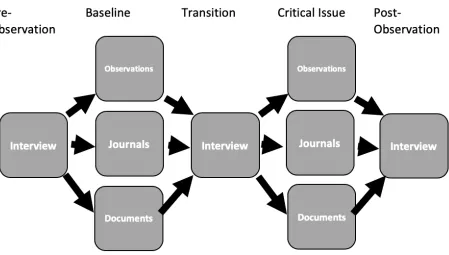
Figure 3. Data sources and collection sequence. ... 62
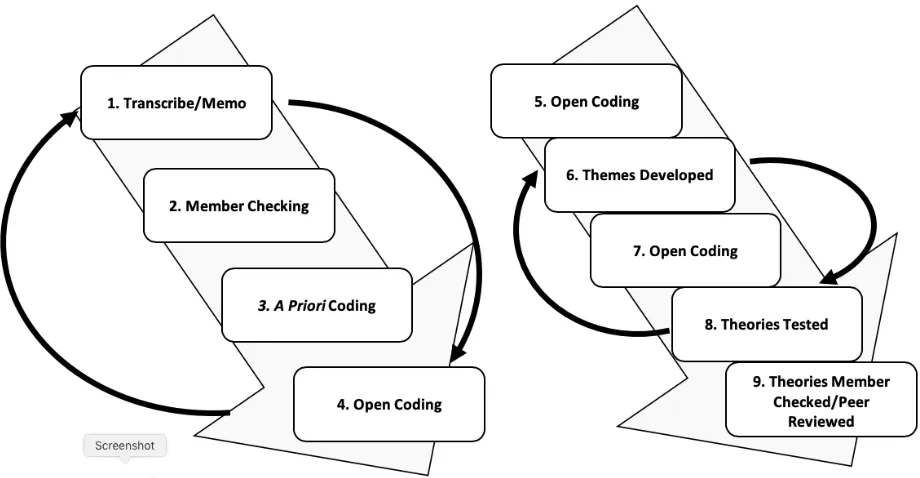
Figure 4. Visualization of analysis and verification methods. ... 72
Chapter 1: Introduction to the Study
Inequities and injustices in the world that impact people in marginalized, subordinated, or oppressed groups are well documented and accepted, and schools often serve to exacerbate or reproduce that inequity (Anyon, 2014; McLaren, 2016; Slavin, 1997; Zion, Allen, & Jean, 2015). There are historic and systemic roots to these inequities, and thus solutions are not simple nor straightforward (Berliner, 2013). Given that schools can impact this issue negatively it can also be assumed that schools have the power to have a positive impact as well. A key element of such positive impact needs to be the explicit investigation into issues of inequity in schools
(Parkhouse, 2017) but teachers are often hesitant to do so through a standard method of
addressing such issues, critical pedagogy, which faces obstacles towards implementation (Martin & Jaramillo, 2005; McLaren, 2016). This study examined the use of inquiry in social studies as a method of addressing critical issues of inequity and injustice, to determine if, or how, that
pedagogy might be used by teachers to address such issues, and compare that practice to critical pedagogy, the standard for such work that this study will utilize.
Why Social Studies
studies is to prepare students for democratic citizenship (Evans, 2004; Fallace, 2009; Hawley, Hostetler, & Mooney, 2017; Nelson, 2001; Ross, 2001). This purpose situates social studies to be a subject that has particular potential to work towards reinforcing, or disrupting, injustice in society.
Critical Pedagogy as a Standard
The purpose of critical pedagogy, as developed by Paulo Freire (2000), is to educate people towards emancipation and realizing their power to end their oppression in the world. Critical pedagogy describes methods that educators can use to reduce inequity and injustice in the world by empowering their students. Such efforts have existed within the halls of our
education system for decades. For example, problem-based learning has been part of discussions about social studies curriculum since the field of social studies was created (Evans, 2004). Harold Rugg’s textbook helped spark exposure to, and interest in, critical concepts in the 1940s (Boesenberg & Poland, 2001; Evans, 2004; Thornton, 2017; Winter, 1967). There have been more recent efforts, such as Rethinking Schools, which provides curricular materials and advice to help teachers move towards teaching for social justice (Rethinking Schools, 2017). Even though it has experienced numerous periods of piqued interest, critical pedagogy, it may have the best chance of addressing social inequity through education, and thus should be widely embraced as a standard for such progress towards justice-oriented practice in education.
The Potential of Inquiry
Carmichael, 2007; Saye, & Brush, 2005; VanSledright, 2011). Given the philosophical
connections to critical pedagogy, such inquiry-based practices may be well positioned to provide teachers with the tools for addressing critical issues in their classrooms.
Background
It is worth examining the background of issues of equity and education to better understand the problem being examined. Further, by looking at the role of social studies in the examination of such issues as well as the potential for critical pedagogy to examine them, the problem can be further contextualized in a way that justifies the need for this study.
Inequity
minorities (Limage, 2010), women (Buchmann, DiPrete, & McDaniel, 2008), and those of non-conforming sexuality (Abbott, Ellis, & Abbot, 2015), and others.
Role of education in perpetuating inequity
It is undeniable that social inequity exists and that such inequity makes academic success difficult for poor students (Apple, 2017; Au, 2012; Slavin, 1997). This, in turn, makes it harder for students to meet their potential, and makes it difficult for many students to achieve the success that they otherwise could have achieved (Berliner, 2013). Thus, the cycle of oppression and marginalization continues. Social reproduction theory explains that systems of education often serve to maintain the status quo, reinforcing inequities (Anyon, 2014; Apple, 2017,
Chander & Hawley, 2017) rather than serving as an equalizing factor in society (Berliner, 2013). The good news is that since schools have a role to play in reinforcing and maintaining social inequity then they can also serve to disrupt that inequity (Anyon, 2014). Berliner (2013), however, is quick to point out that addressing such educational changes is unlikely to address all issues of an unequal society. This is not a reason to lose hope or give up. The world can always be better, and schools can play a role in helping it be better. Even if schools do not provide a total solution they can help make progress. Thus, efforts to do so are inherently worthwhile (Berliner, 2013).
Potential of social studies to address inequity
being a citizen. If such effort is made to instill in young people the idea of their belonging to a community of which they are a citizen, social studies, it would follow, is well positioned to help students examine how they might improve that community through their citizenship. Chandler & Hawley (2017) explicitly demonstrate how this is possible through the use of social studies to address issues of race, but social studies is positioned to address a myriad of other issues of inequity and power as well.
The nature of social studies inherently involves issues of equity and justice (Brickmore, 2008). In social studies classrooms, students have space to examine issues of economics, history, and society that are particularly important towards understanding historic or systemic levels of oppression and marginalization. Examination of such topics are essential to engaging in critical analysis of society in order to achieve social progress (Giroux, 2010). Since social studies is a field that involves the examination of history and systems of society, social studies instruction is in a position to focus on content that encourages analysis from, and empowerment of, students that can serve to instill a desire to work toward social progress regarding issues of justice.
Goals of critical pedagogy
Critical pedagogy calls on teachers and students to engage in a process that empowers members of oppressed groups to lessen or end that oppression (Allen & Rossatto, 2009;
Ellsworth, 1989; Freire, 2000). This process includes ideas such as: honoring student knowledge, encouraging student curiosity, asking/answering hard questions about the world around them, authentic problem-posing/problem-based/inquiry-based learning, dialogue, a
connected to a desire to increase social justice. Further, important to all of these, is the
development of critical consciousness (Apple, 2004; Au, 2012; Ellsworth, 1989; Freire, 2000; Giroux, 2003b, 2004a, 2004b, 2010; Godfrey & Wolf, 2016; McLaren, 2009; Montero, 2009; O’Laughlin, 1995).
These elements are derived from a study of scholars, starting with Freire, and moving through researchers and scholars who have examined Freire’s ideas in other contexts, clarifying and adding to them, much as Freire envisioned (1997). By integrating these elements of critical pedagogy teachers and students engage in an educational process that leaves those students prepared to act in the world. Such action is what Freire called praxis (2000), a process by which learning and action inform each other and occur in conjunction. In a general way, teachers using critical pedagogy teach students to recognize, call out, and act against injustices (Ellsworth, 1989).
Inquiry in social studies
Inquiry scholarship in social studies describes a pedagogy that is focused, at a minimum, on the examination of important questions to drive an investigation into disciplinary topics, and then having students communicate their findings. It is sometimes likened to problem-based learning (Hmelo-Silver, Duncan, & Chinn, 2007) and has recently been energized (Newmann, et al., 2007; Saye, & Brush, 2005; VanSledright, 2011) by the College, Career, and Civic Life (C3) Framework for Social Studies State Standards (NCSS, 2013). The C3 Framework offers a specific implementation of inquiry through its inquiry arc, while staying true to the basics. The major additions the C3 inquiry arc makes to social studies methods of inquiry is to include that students explicitly use disciplinary tools (the tools of history, economics, geography, sociology, etc.) to examine sources, that students come to their own conclusions about the answers to the questions they are answering, and that they communicate their findings in the form of well supported arguments. The C3 inquiry arc also includes an element called “taking informed action” that has students taking what they have learned through the process and applying it to the world in which they live.
Inquiry and critical pedagogy
challenge official sources of knowledge, particularly if there are multiple perspectives represented in the sources that are being examined. If learning is centered around important disciplinary questions about society, that looks similar to Freire’s ideas (2000) about focusing learning on questions about the world around us. Lastly, if the goal of an inquiry-using teacher, as detailed in the C3 inquiry arc, is to have students practice taking informed action then it aligns well with teaching students to act in the world to create greater justice through praxis.
Statement of the Problem
It is crucially important that students be able to examine and analyze critical issues in society. Critical pedagogy is the theory that, arguably, has the best chance to teach students to challenge contemporary problems in society, particularly those issues that are centered around class, including the ways that it intersects with race and gender (Martin & Jaramillo, 2005). The field of social studies is a subject area uniquely qualified to address these critical issues of justice and equity. However, the most common form of instruction in social studies is focused on
traditional methods, rooted in the teacher-focused presentation of facts that that instructor has decided is important. This often involves a presentation of the world that reinforces the status quo (Loewen, 1995, VanSledright, 2011). Such teacher-focused methods are particularly anti-critical in nature because they do not empower students to create knowledge. Reliance on these teacher-focused narratives of society also fails to provide students with meaningful opportunities to practice the use of their power. Such traditional pedagogy lacks intentionality towards
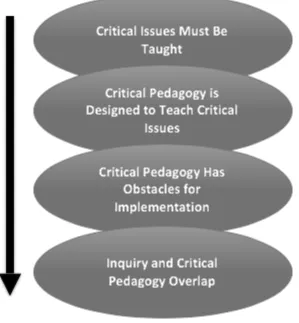
illustrated in Figure 1, there is a need for teaching critical issues, but the standard provided by critical pedagogy is problematic, so we look to inquiry as a means to solve the problem.
Figure 1. Illustration of the need to address critical issues and potential of inquiry to function in that way.
Why not critical pedagogy
world, critical pedagogy may be a way to make that impact, but the obstacles tend to be too great for teachers to embrace implementation.
Obstacles that get in the way of wider implementation of critical pedagogy seems to range through several facets. One of them is the perceived political stigma of associating with a theory that embraces philosophers like Karl Marx (Martin & Jaramillo, 2005) and calls into question basic assumptions of society, such as advocacy of a free market capitalist system (Martin & Jaramillo, 2005; McLaren, 2016). McLaren (2016) goes so far as to argue that capitalist competition has so engrained itself into our society that it has created a manufactured antagonism in the United States that makes people assume that such a system is in their best interest, even when it is used to oppress them. The recent dominance of the accountability culture in American education also presents itself as a perceived obstacle towards the use of critical pedagogy (Martin & Jaramillo, 2005). The accountability movement has led to a significant emphasis on testing and meeting standards, which discourages alternative
perspectives of society to be examined because alternatives are, by definition, less likely to be supported by standards and high-stakes testing.
McLaren (2016) argues that many who discuss a lack of educational opportunity see it as a problem of a culture of poverty. He explains that people who do not want to engage in
produce. Critical consciousness, at a definitional level, rejects simplification. Not teaching with critical pedagogy in mind is simply easier for people to wrap their heads around, and thus it is easier to implement.
Inquiry on the rise
Inquiry-based pedagogy, on the other hand, has seen a resurgence and could be poised for more widespread implementation (Newmann, et al., 2007; Saye, & Brush, 2005; VanSledright, 2011). Recent efforts towards inquiry-based instruction have gained strength, and there is a growing body of literature that demonstrates that some of those obstacles may be more
perception-based reality-based. For example, teachers may have similar concerns about inquiry-based instruction regarding high stakes testing as they do with critical pedagogy, but there is evidence that suggests that students who engage in inquiry-based instruction are likely to score at least as well as those taught with traditional methods. The learning in inquiry-based classrooms appear to be deeper and more meaningful (Parker, et al., 2013).
tendency towards revolutionary questioning/rejecting of many social norms (Martin & Jaramillo, 2005).
Teachers using inquiry in social studies have even managed to turn current trends towards accountability into somewhat of an asset (Saye, 2017). In 2013 the preeminent
professional organization for social studies education, the National Council for the Social Studies (NCSS), published a document called the College, Career, and Civic Life (C3) Framework for Social Studies State Standards (2013). This was the NCSS response to the growing trend of states adopting the Common Core State Standards (Au, 2013). The C3 Framework was designed as a way for NCSS to inject themselves into the conversation about the growing trend of states adopting the Common Core standards. It was also created to try to ensure that social studies would get proper attention during that effort in the accountability movement and to ensure that it was done in a way that encouraged the implementation of meaningful practice, rather than an emphasis on memorization of facts that make easy standardized tests.
While enthusiasm for the Common Core may have diminished, the C3 Framework was published anyway, as a document to guide states who are looking for assistance in the
development of social studies standards. The accountability movement had not come to its end, and the C3 Framework lived on as a document that was guiding not only state standards, but academic research (with hundreds of articles easily found through an online search of academic journals), and teacher preparation programs. One of the major components of the C3 Framework is the inquiry arc, a pedagogy, through four dimensions, that leads students through an inquiry process that concludes with taking informed action.
basic assumptions of modern society make inquiry easier to embrace than critical pedagogy. This is all the truer when inquiry’s potential success to achieve deeper educational outcomes is
considered. As such, this study sought to examine how an inquiry-using teacher addressed a critical issue, rather than examine how a critical pedagogy-using teacher conducted an inquiry.
Inquiry for critical pedagogy
Inquiry is a nested part of critical pedagogy. Critical pedagogy requires that students engage in some form of inquiry, even if not all inquiries are part of critical pedagogy. Given the overlaps between the two pedagogies in areas like having students engage in authentic analysis, having their perspectives and experiences regarded as legitimate, encouraging students to examine multiple perspectives including alternative ones, and giving students an opportunity to practice using their power in the world, there is reason to believe that if an inquiry-using teacher is presented with a critical issue or question to address, their practice may move towards
elements of critical pedagogy, and that, as such, the use of inquiry may enable a more
meaningful approach to addressing such a topic. The very act of engaging in an inquiry-based analysis of society means that alternative perspectives should be considered, assumptions should be questioned (albeit, perhaps not at the level that critical pedagogy would prefer), and student understanding of history should be problematized (NCSS, 2013). These are the very shifts that can contribute to the development of critical consciousness in both teachers and students (Freire, 2000).
it was examined how an inquiry-using teacher addressed a critical issue in their planning, instruction, and curriculum, which additionally, provided insight into such a process of developing a critical inquiry approach to instruction.
Research Questions
To address the topic of how an inquiry-using teacher approaches teaching a critical issue I sought answers to the following research question and two sub-questions:
• How does a social studies teacher using the C3 inquiry arc address teaching a critical issue?
o What challenges, if any, does a teacher using the C3 inquiry arc have in addressing a critical issue through an inquiry-based pedagogy?
o What methods and strategies, if any, does the C3 inquiry arc provide a teacher who is addressing a critical issue?
Theoretical Framework
Critical pedagogy served as a standard to which the use of inquiry to address a critical issue was compared. To define critical pedagogy, I have examined scholars such as
Freire,(2000), McLaren (2009), Apple (2004), Au (2012), Ellsworth (1989), Allen and Rossatto (2009), Allen (2013), Godfrey and Wolf (2016), Montero (2009), Giroux (2004a), O’Laughlin (1995), and Zion, Allen, and Jean (2015). From these scholars I have synthesized essential elements of critical pedagogy. Effort was made to ensure that the participant was well-versed in inquiry, and to make it easier to define what inquiry meant, given that it has been described in a variety of ways, the participant used the C3 model for inquiry. Choosing the right participant in this study was crucial, as the implementation of inquiry was not the primary focus of the study. Rather, the focus was on how an inquiry-using teacher approached a critical issue in their instruction. By selecting a participant who was well along in their efforts towards implementing inquiry the collection and analysis of data was able to focus on the elements of critical pedagogy that existed within the implementation of inquiry and the challenges and supports that the C3 Framework provided them in addressing a critical issue. Critical pedagogy was used as the framework that guided all elements of the study, and the lens through which everything was examined. Given that critical pedagogy is the foundational theory of engaging in critical work in an educational setting (Giroux, 2010; Jennings & Lynn, 2005) it is a meaningful way of
Scope of the Study
This study examined the way that a teacher who was already using the C3 inquiry arc as a basis for instruction in a social studies classroom addressed a critical issue in the form of a case study. The study determined what challenges were faced and how inquiry assisted the participant in their effort to address a critical issue. The study compared the way one teacher used inquiry to address critical issues to critical pedagogy, but did not seek to make generalized assessments about the relationship between the two pedagogies amongst all educators. This study also focused on critical pedagogy rather than the various other critical pedagogies that evolved from it, such as feminist pedagogy, red pedagogy, critical race pedagogy, and others. They are all worthy of examination, but as critical pedagogy is foundational it was the lens through which this examination looked at a teacher’s efforts towards critical work. Critical pedagogy is open to the oppression targeted by these other theories, and thus is valuable as a starting point, leaving all of the other pedagogies outside the scope of what this study accomplishes. This study was
Chapter 2: Review of the Literature
Social inequity is a clear issue in modern America: the gap between the wealthy and the poor appears to be growing, historically and systemically oppressed groups continue to face inequity, and education continues to serve the purpose of maintaining that inequity, rather than serving as an equalizer (McLaren, 2016; Slavin, 1997; Zion, et al., 2015). Such inequity is a critical issue that students should be able to examine and make judgements about. As Ellsworth (1989) states “…the goal is to give students the analytical skills they need to make them as free, rational, and objective as teachers supposedly are to choose positions on their objective merits” (p.306). Critical pedagogy is a pedagogy focused on how to address such critical issues with students (Freire, 2000). However, critical pedagogy faces obstacles towards implementation that have kept it out of the mainstream in American education, despite a growing call for more social justice in education (Allen & Rossatto, 2009).
Inquiry, however, is a pedagogical approach that is enjoying recent growth in support in the social studies field (Newmann, et al., 2007; Saye, & Brush, 2005; VanSledright, 2011), which may demonstrate a meaningful set of teaching methods to help teachers and students address critical issues. Inquiry and critical pedagogy seem to enjoy some overlap within their essential elements, and in some cases, inquiry exists as a nested concept within critical pedagogy.
I have then synthesized a conception of critical pedagogy, as a significant standard for addressing the problem that is grounded in the idea of several critical scholars. I have also discussed obstacles that stop the widespread implementation of the approach. I have noted the unique role that the social studies field is in to address critical issues, and finally, I have defined inquiry, as described in the C3 inquiry arc, and the potential it has to address critical issues, based on the overlap that exists between inquiry and critical pedagogy.
Education and Inequity
“Schools are deeply involved not ‘just’ in the contested reproduction of class relations, but in race and gender reproduction as well” (Apple, 2017, p. 21). The good news is that while socio-economic inequity is as bad in recent decades as it has been in a long time (McLaren, 2016; Slavin, 1997; Zion, et al., 2015), and schools help maintain that inequity (Apple, 2017), that means that schools are an ideal place to teach about that inequity (Freire, 2000). Inequity functions as a form of oppression, where socio-economic status affects the opportunities for economic attainment (McLaren, 2016; Slavin, 1997) as well as health (Au, 2012). If systems exist to create and maintain such inequity then those systems create oppression for members of certain groups.
With the prevalence of such inequity in modern society it should be a topic of high
instruction, however, students may better understand what they are facing and be better prepared to address it as active citizens of the country.
Social inequity manifests in American schooling in ways that help perpetuate inequity. According to Slavin (1997) wealthy school districts have a per pupil spending record that is at least twice that of poor districts, despite the fact that the financial needs are greater in the poorer districts (Berliner, 2013). This spending correlates to students of racial minorities and lower social classes performing worse on national assessment measures and having higher dropout rates (Slavin, 1997). Such inequity impacting academic success then serves to perpetuate the cycle that creates the inequity anew, generation after generation (Apple, 2017; Slavin, 1997). Anderson (2001) even notes that when minority students do perform well in school, officials are prone to rejecting the results and examining the assessment for being faulty, revealing a deep form of deficit thinking towards students from marginalized groups. A young person grows up facing inequity, as a result they do not have the same opportunities in school, and because of that they do not have as many opportunities after they leave the school system, reinforcing the
injustice in their lives and passing them on to their own children. Not only is such injustice reinforced in the education system, it is actively recreated there, through the process of social reproduction (Apple, 2017; O’Loughlin, 1995).
devalued and instead they become reskilled through the values that create and perpetuate this oppression (Apple, 2017). Teachers should find such social reproduction abhorrent not only because it asks them to serve as a means of oppression, but also that it de-professionalizes and devalues them as it turns them into trainers who follow instructions and priorities from those who do not have in mind the best interests of teachers nor of the students they teach.
As discussed, the education system often serves to recreate social inequity through social reproduction (Apple, 2017). Social reproduction means that the education system tends to serve the purpose of maintaining the status quo (Apple, 2017). If, however, it can generally be
acknowledged that such a status quo is rife with injustice, then it seems there is an ethical duty for schools to do a better job of teaching about that injustice. That is what this study is
examining, the way one pedagogy might be used to address the critical issues that impact our society in systemic and historic ways. Also, to further our understanding of the role of inquiry as a pedagogy and how it might function to teach about inequity so that students come to a more nuanced understanding of that inequity.
Critical Pedagogy
involves go beyond that, into other forms of oppression. Amongst the concepts critical pedagogy equips educators and students to call into question are: capitalism, imperialism, racism, and sexism (McLaren, 2016). “The political project of critical pedagogy is a redefinition of education and literacy as a means for political unification among the oppressed, with the ultimate goal being social transformation…” (Allen & Rossatto, 2009, p.169).
Freirean legacy
Freire is credited with developing his ideas around critical pedagogy in Brazil in the 1960s while working with largely illiterate farmers (Freire, 1997; Giroux, 2010; Jennings & Lynn, 2005). He called for people to take his ideas and reimagine them, revise them, and otherwise contextualize them for different settings (1997). According to Giroux (2010) “[f]or Freire, pedagogy is not a method of an a priori technique to be imposed on all students but a political and moral practice that provides the knowledge, skills, and social relations that enable students to explore the possibilities what it means to be critical citizens…” (p. 716). To
understand the theoretical framework of this study I have examined not only the Freirean legacy of critical pedagogy, but the ways that it has been reimagined by scholars in a contemporary American context.
Critical pedagogy and multiple forms of oppression
Critical pedagogy has been critiqued for being overly focused on class to the detriment of examining other forms of oppression, such as that based on gender, race, or sexuality. It is worth addressing the way critical pedagogy interacts with other forms of oppression in order to
pedagogy can also address all of those other forms of oppression. Further, Apple (1982)
describes that the problem of social reproduction in schools impacts people based on “racial and sexual oppression” (p. 6) but that those forms of oppression are intersectional and “dynamically interconnected with the relations of economic domination and exploitation that exist” (p. 6). Additionally, Hawley, et al. (2016), in discussing inequity in education, described the way that economics underpins other forms of oppression. Given this, critical pedagogy seems a worthy lens through which to examine the data in this study, although it may be worthwhile for future studies to conduct similar investigations through other critical lenses in order to determine where the results may be similar or different.
Implementation Through Four Goals
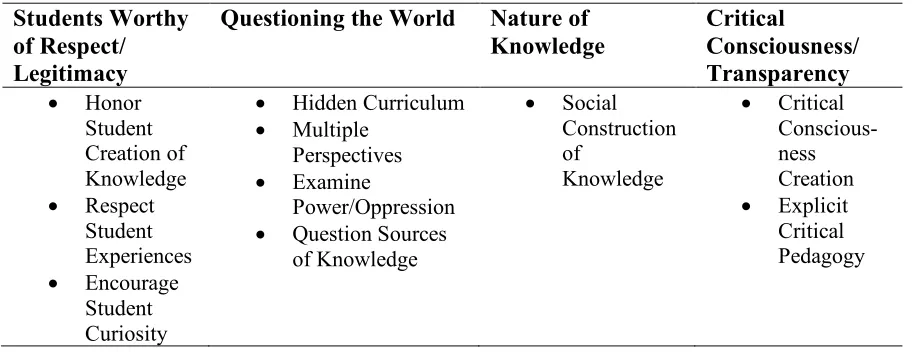
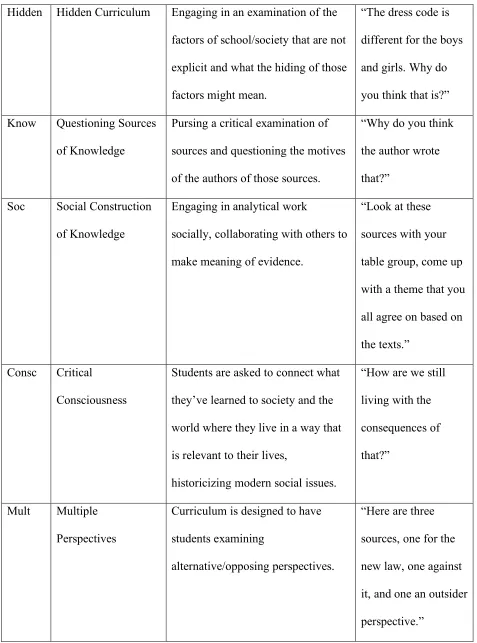
Table 1: Summary of Four Goals of Critical Pedagogy .
Summary of Four Goals of Critical Pedagogy.
Students Worthy of Respect/ Legitimacy
Questioning the World Nature of Knowledge
Critical
Consciousness/ Transparency
• Honor
Student Creation of Knowledge
• Respect
Student Experiences
• Encourage
Student Curiosity
• Hidden Curriculum
• Multiple
Perspectives
• Examine
Power/Oppression
• Question Sources
of Knowledge
• Social
Construction of
Knowledge
• Critical Conscious-ness Creation
• Explicit Critical Pedagogy
Treating students as worthy of respect and legitimacy
of student experience being meaningful, and the legitimation and encouraging of student curiosity.
Students must be able to become co-learners and co-creators of knowledge with the teacher, and further, students have to know that their experiences are meaningful and just as important as anyone else’s when it comes to making meaning of the world in which they live (Apple & Buras, 2006; Freire, 1997; Giroux, 2004b). As Freire (2000) explained, the students should teach, and the teachers should learn. If anything, the teacher should be learning about the students’ life experiences and experiences with oppression (Allen & Rossatto, 2009). Teachers should recognize the socially constructed nature of their own authority (Ellsworth, 1989). If a student comes to a different conclusion than the teacher, but is told that their analysis is wrong or not as good as the teacher’s analysis, then that has the simultaneous effect of teaching that
student that there is no point in engaging in the mental activity of analysis unless they can do it at the same level as the teacher. Furthermore, it sends the message that they have a lesser role in society to create understanding, and thus, they may conclude, a lesser role in society as a whole, with less responsibility to make manifest their power over the world.
If students are going to learn to act in such a way as to create greater justice, or otherwise positively change society, they need to learn to recognize the humanity of all people and work to ensure that that humanity is honored. Teaching students in a way that dehumanizes them, by instilling in them the idea that they are lesser, that their experiences do not count as much, that the knowledge that they create, and the analysis they engage in, are inferior, is teaching them the values of dehumanization. This is the opposite of the goal of critical education advocates. If people are treated in a dehumanizing way, they are likely to perpetuate a cycle of
such a cycle must eventually be broken. Rather the opposite of such a cycle of dehumanization is called for by scholars of critical pedagogy.
Students should have their experiences considered to be meaningful and legitimate (Ellsworth, 1989; Freire, 2000). What is more, if a student considers their experiences to be legitimate then perhaps they may be more inclined to recognize when others have different or more experiences. With that understanding they may demonstrate greater respect or empathy towards the analysis of others. When students conduct an analysis and find that it is respected and treated as legitimate, it creates a sense of their power towards the creation of knowledge and encourages them to engage in work that is socially impactful (O’Loughlin, 1995). Lastly,
students should be allowed to ask questions, to have those questions treated as being serious, and have their curiosity recognized as both legitimate and valuable. Doing so serves to empower students to continue asking questions, and that curiosity opens them up to starting to question the world in which they live (Giroux, 2004b).
Questioning the World
scholars refer to as problem-based learning, which is focused on students engaging in learning in a way that is centered around a problem that the teacher has presented (Hmelo-Silver, et al, 2005). The primary difference between problem-based learning and Freire’s problem-posing approach is that Freire requires that the problem being addressed is one that is relevant to the lives of the students. Such a problem focused/questioning approach to education is the backbone of critical pedagogy (Allen, 2013; Giroux, 2004a).
In many descriptions of critical pedagogy there is an element that involves asking hard questions centered around oppression and that students struggle to answer those hard questions (Giroux, 2003b; O’Loughlin, 1995; Ross, 2001), albeit leaving room to recognize when it is appropriate to ask such questions and what sort of questions may be too personal for some students. Simply because a question is uncomfortable or calls into question basic assumptions of society does not mean that the question should be avoided if it is meaningfully addressing social problems (Allen, 2013). For example, class lessons around racism or sexism can be
uncomfortable (perhaps taboo in some contexts); however, but if those things are essential to addressing modern problems, then they should be explored.
Critical pedagogy theorists often argue that students should address questions that
Further, there are lessons in society and in schools that are not part of the obvious
curriculum. They are demonstrated in the rules, policies, and treatment of people. If education is to help students question the world, then it must also help them examine the hidden curriculum that they encounter (Manfra, 2009; Zion, et al., 2015). The hidden curriculum includes all the lessons that are taught implicitly. Such hidden curriculum can involve a wide range of instances. For example, if a school has a gender-specific dress code, it reinforces that it is acceptable to treat people differently based on gender. Likewise, when a person of African descent is punished more harshly for the same crime that a White person committed it demonstrates the difference in the value that society places on people based on race. Engaging in practice to learn to recognize such hidden curriculum is an important part of learning to both read and question the world (Zion, et al., 2015). Doing so allows students to recognize the complexities and challenges that people face and the way that those serve to lessen the humanity of some while elevating others.
Lastly, questioning the world means challenging the construction of knowledge itself. If someone accepts all information they receive, and does not question it, they have paved the way for oppression. Those in power are always positioned to have the most say in what counts and what does not count as officially-recognized knowledge (Apple, 2004). This is crucially
important in an educational setting because such knowledge can be calcified in tests, standards, curriculum materials, professional development, textbooks, and more. Questions that should be raised include: Who is making the decisions about what knowledge students should learn? What perspectives should be examined and which are not examined? Why is a White male point of view more valuable than all other points of view, as evidenced by the domination of that
serve to maintain that power, critical pedagogy demands that such sources of knowledge be problematized and questioned (Apple, 2004). That is not to say that the traditional White male perspective does not belong in the curriculum, but it must be recognized for what it is: one point of view amongst a multitude. Critical pedagogy scholars usually argue that knowledge is
constructed more meaningfully when many perspectives are examined. Different and opposing interpretations are examined. Voices that have been marginalized (women, people of color, LGBTQ+, etc.) are raised up as equal sources of information and equally strong perspectives and interpretations of the world (Manfra, 2009). It is by the examination of such perspectives that people question the information they have been given and decide on its credibility. It is through such a determination and examination that students can engage in the analysis and construction of knowledge discussed in the previous category.
Recognizing the social nature of knowledge
Critical pedagogy theorists directly engage with the idea that knowledge is socially constructed (McLaren, 2009). They believe that the commonly shared set of ideas that we hold as true is, by its nature, decided on by society. They also subscribe to the concept that there is no singular authority that gets to decide what does and does not count as knowledge. While students are engaged in the process of challenging the official sources of knowledge they can also engage in a social process that will help them participate in the very real construction of knowledge in the world. If students have their interpretations and analysis of information respected and treated as legitimate, then it is not too much of a stretch to ask them to also engage with the idea that other people’s interpretations and analyses are also something that should be respected and treated as legitimate. Freire (2000) says that students should engage in a process of dialogue to further their interpretation of information. Through dialogue, which is more than simply a discussion, students can approach other perspectives, be open to them, and work with them in a constructive way for the benefit of all parties. Within critical pedagogy many scholars have embraced the idea that knowledge is socially constructed and that, as respected people in society, students should practice the skills of contributing to that construction (Freire, 2000). Through a process of working with other students to analyze, share ideas, and come to consensus people can learn to productively contribute to what society counts as knowledge (Ellsworth, 1989).
Such social construction of knowledge can also serve the democratic goals described in critical pedagogy scholarship. By engaging in the process of examination and knowledge creation, students learn the way that discourse develops the rules that govern us and the
through argumentation, discussion, and dialogue, emphasizes the importance of community and public engagement (Giroux, 2004a; McLaren, 2009).
Development of a critical consciousness and transparency
Fundamental to the implementation of critical pedagogy is the development of critical consciousness and being transparent toward the efforts a teacher is making in using the pedagogy. Paulo Freire used the term “conscientazação” (2000), which has largely been
translated as conscientization, or critical consciousness. Critical consciousness is about the way that people go through a process of becoming aware of, and begin to regularly perceive, the injustices in the world, how they are historically and systemically rooted, and how those injustices are valid even if they do not impact a person personally and/or negatively (Allen & Rossatto, 2009). “Critical consciousness is the mode when teachers call into question the ways in which knowledge is constructed, and/or how their fields of knowledge and work are governed” (Rodriguez, 2016, p. 84). Without the development of critical consciousness, enacting elements of critical pedagogy lacks the intentionality and focus that is likely to make it impactful,
particularly in the long term (Rodriguez, 2016). The development of critical consciousness is essential to critical pedagogy theory. The process of developing a critical consciousness is, in many ways, a reflective process that occurs as people develop a way of examining the world and building a philosophy around that examination. McLaren (2016) believes that the development of critical consciousness comes from action. He explains that it is not simply that acting to make the world more just comes as a result of critical consciousness. Rather, that acting in the world helps one perceive injustice and reflect on it meaningfully.
this, it is necessary that students engage with perspectives with which they may not otherwise be familiar. Content should be presented from multiple perspectives, and emphasize the points of view of the oppressed (Crowley & King, 2018; Manfra, 2009; McLaren, 2009). By engaging with such alternative narratives, the stranglehold of dominant narratives can be challenged and students can make meaning of the world with a more-nuanced understanding of context. Teachers must challenge common sense (Crowley & King, 2018), because common sense is rooted in dominant narratives from oppressors. Critical consciousness involves understanding that there is no such thing as a neutral narrative or apolitical knowledge (Boutte, Kelly-Jackson & Johnson, 2010; Crowley & King, 2018). Everything serves to either reinforce the status quo or challenge it (Freire, 2000).
Along with the reflective development of a critical consciousness is the need for
2000) and approaching that idea explicitly with students can serve to make the process more powerful (Giroux, 2003a).
Difficulty in Implementation of Critical Pedagogy
Martin and Jaramillo (2005) argue that critical pedagogy is the best pedagogy available to address critical issues in classrooms. However, many teachers struggle to implement critical pedagogy even though they desire to teach such critical issues (Allen, 2013). Instead of engaging in the established work of critical pedagogy, social studies teachers tend to engage in traditional methods (Loewen, 1995, VanSledright, 2011) that primarily serve anti-critical goals of
establishing knowledge that is received by students rather than created, surface level thinking, and an acceptance of a presented, often-dominant, narratives. Students are not asked to regularly formulate original or critical perspectives and arguments through such methods.
There are several reasons scholars have identified that explain why teachers who claim critical goals do not engage with critical methods when they teach. First, teachers are unsure how to handle student curiosity and are not used to legitimizing student perspectives and analysis. It is simply not something they have regularly seen in their experience as students, nor learned about as pre-service teachers (Allen, 2013). The idea that what the teacher teaches is correct, for the purposes of an individual class, seems prevalent (Cuban, 1991; Grant, 2003) and is often difficult to overcome, even for those educators who desire to take a more critical approach (Allen, 2013; Ellsworth, 1989).
their very nature, reject alternative perspectives, because such alternatives inherently resist standardization. The multiple-choice test question can have only one correct answer, and there is no room to provide evidence that supports other narratives. Critical pedagogy literature, by comparison, asks teachers to call into question, and have their students call into question, the role of some basic social assumptions such as the role of authorities and the value of free market capitalism (Martin & Jaramillo, 2005; McLaren, 2016).
There is also a prevalent social understanding that the problems of inequity cannot be solved through pedagogy and curriculum (McLaren, 2016). The argument goes that the problems of injustice are rather simple, and often, self-inflicted by the marginalized communities.
Simplified conceptions of such issues are appealing in their simplicity, especially for those who enjoy a measure of privilege in the status quo. Critical pedagogy is, by definition, resistant to simplicity. It insists that teachers engage in making the world more complex and, for those in positions of power, uncomfortable (McLaren, 2016). Traditional pedagogy is, simply put, easier to implement. It meets the expectations of parents, students, administrators, and co-workers. It is the path of least resistance, and so it remains the norm, despite educator desires to use their classroom to address social injustice. If, however, there were a pedagogy that could be used to address critical issues that conceptually overlapped with critical pedagogy, there might be value added to that pedagogy. I propose that inquiry has that potential, without the same obstacles for implementation, and thus is worthy of examination.
Social Studies and Critical Education
study to focus on social studies as a content area. Democratic citizenship in social studies has been a much-discussed issue (Evans, 2004). At its core social studies, as a subject, involves being knowledgeable about the world and knowing how to act in such a way as to bring about changes in society to achieve progress (Parker, 2008). Parkhouse (2017) notes that democratic citizenship should embrace not only the understanding of how power works in society, but also should help students come to understand how they can use that power to either maintain or transform the conditions within society.
Parkhouse (2017) describes a conception of democratic citizenship in social studies she calls “power literacy”. She develops two elements of such a democratic citizenship education in social studies that align well with the elements of critical pedagogy. Social studies instruction should explicitly critique the sources of power inequalities, and it should have students act in such a way that they develop political efficacy towards making social change. This parallels Hawley, et al.’s (2016) contention that the social studies field tends to discuss ideas of democracy as if we lived in a democracy that functions for everyone. A more critical examination of the status quo would make clear that this is not the case, and that, as such, democratic citizenship education should instead focus on how to improve democracy.
Social studies as a field is well suited for examining society in a complex and nuanced way because it adds a sense of history to the world providing context for modern issues. Through the examination of society with an eye towards multiple disciplines, as is the nature of social studies (Evans, 2004), society can be understood in a more complex way. Such complexity functions counter to the ideas of a dominant narrative in much the way that critical education requires (Au, 2009; Hawley, et al., 2017). Further, critical efforts often require that one understands the historical nature of systems of oppression (Freire, 2000) and social studies definitionally involves the examination of history (Evans, 2004). It can easily be imagined that if historicizing society is essential to critical efforts, doing so through a class that is already seeking to examine history is ideal.
Even in the face of the accountability movement and the rise of high-stakes testing, the social studies field remains uniquely qualified to take on issues of inequity. The accountability movement, perhaps, even positions social studies to address issues of inequity even more. Other core subjects tend to be more-severely impacted by testing, making it all the more important that social studies instruction address critical issues, as it is the subject most capable of doing that work (Au, 2009). Doing so is all the more difficult in a heavily tested subject. By examining the connections shared by social studies inquiry and critical pedagogy, a new understanding of how justice can be increased through education might be possible. If critical education is all about emancipation, enlightenment, and democratic society (Manfra, 2009), then it follows that the subject whose purpose lies in democratic citizenship would have potential towards critical ends. Inquiry and the C3 Framework
presented facts, dates, places, and events has been dominant throughout the history of the field, there has been advocacy for a more-open inquiry since at least the early 20th century (Evans, 2004). It enjoyed a resurgence in the 1960s (Cuban, 1991; Fenton, 1966), although has never achieved mainstream popularity. Today, a major source of advocacy for this pedagogy lives through the work of the College, Career, and Civic Life (C3) Framework for Social Studies State Standards (Saye, 2017), which includes, as one of its components, a pedagogical approach called the inquiry arc (NCSS, 2013). The C3 inquiry arc is built on a history of theory and research into inquiry and the effective teaching of social studies (Au, 2013; Grant, et al., 2015; NCSS, 2013). The advocacy for inquiry by the C3 Framework seems to coincide with a growing interest in inquiry in social studies (Newmann, et al., 2007; Saye, & Brush, 2005; VanSledright, 2011). While there are obstacles towards implementation to critical pedagogy, inquiry seems to be primed for wider implementation, and thus becomes an ideal pedagogy to be examined more deeply for its potential to engage in the teaching of critical issues.
say, “[t]he mere consumption of authorized historical knowledge…is unlikely to cultivate the habits of mind associated with active citizenship and learning” (p.20).
The C3 Framework for Social Studies State Standards
Inquiry is a broad pedagogical strategy, but the C3 Framework provides specific steps towards implementing it in social studies classrooms. Combined with its prominence in social studies discourse, the C3 inquiry arc became the ideal form of inquiry to examine for this study. The C3 Framework specifically describes inquiry as being done through an inquiry arc following a process with four dimensions (NCSS, 2013, p.17). Dimension 1 is “developing questions and planning inquiries”. Dimension 2 is “applying disciplinary tools and concepts”. Dimension 3 is “evaluating sources and using evidence”. Finally, Dimension 4 is “communicating conclusions and taking informed action”. It is also worth noting that the entire arc centers around specific types of questions developed during Dimension 1, supporting questions and a compelling question.
The compelling question
The compelling question is an overarching question that is of high interest, is rigorous, and is relevant to the students’ lives (Lee, Swan, Grant, Rothstein, & Santana, 2015; Swan, Lee, & Grant, 2018), allowing for divergent thinking (Grant et al., 2015; Grant, Swan, & Lee, 2017). It is worth noting, that while relevancy is called for in the C3 Framework, as noted here, it does not, generally, use a conception of relevancy that is quite the same as that used by critical
pedagogy (NCSS, 2013). The C3 Framework tends to address relevancy in terms of ensuring that the compelling question is relevant to the learning outcomes desired, not necessarily based on an ability to connect the learning to problems that exist in the lives of students. By contrast,
examined, more based around convergent thinking (Grant, et al., 2015; Grant, et al., 2017), but which help students support an answer to the compelling question, using the content under study, as evidence. Through this process the C3 Framework says that students should “become more prepared for the challenges of college and career…united with a third critical element:
preparation for civic life” (NCSS, 2013, p.5). The C3 Framework, while providing guidance for conducting an inquiry through a specific arc, calls for students to practice the skills that will make them good citizens.
A compelling question, developed as part of Dimension 1, is the heart of the C3 inquiry arc. The compelling question guides all other parts of the inquiry (Grant, et al., 2015; Grant, et al., 2017). It is a question that is of high interest to students that is big enough to encompass a significant amount of evidence, analysis, and effort, while also being open-ended enough to not have an assumed answer (Grant, et al., 2017; Parker, 2012). Students should find the question important and interesting, be able to examine a lot of content to address it, and be free to construct a unique argument to answer the question. Students should also be able to apply the lessons learned from answering the question to the world that they live in today (NCSS, 2013).
and citizens (Evans, 2004; Fallace, 2009). Alternatively, there have been problem-focused efforts in social studies since its inception in an effort to make it relevant to student lives by having them address real world problems (Evans, 2004). Relevancy has been discussed as a way of making learning more impactful and motivating students to learn. Such relevancy can also serve to expose students to some risk. If the relevancy hits too close to home, or if it hinders reasoned analysis as students become too empathetic to the people they are studying, it creates some potential risk (Saye, 2017).
The C3 Framework has the potential to address the goal of relevancy, in part, through the development of compelling questions (Grant, 2013; Grant, et al., 2017). It does not explicitly suggest how to make a compelling question compelling, nor in what ways it should be relevant, and so leaves some room for interpretation. Such room for interpretation is purposeful, as the C3 Framework seeks to be flexible enough to trust in the professional judgement of the educators who know the community and the students where they are working (NCSS, 2013).
Lastly, by being open-ended, a compelling question makes student investigation
meaningful and authentic, which can give students a needed sense of agency (Saye, 2017). If the compelling question is created in such a way that there is a clear correct answer (e.g., “Who won World War 2?”) or can be answered with a simple answer or a list (e.g., “Why did the Americans say they dropped the atomic bombs on Japan?”) then the students will lack agency. They are not crafting their answer to the question; rather, they are searching for the answer to the question. Giving students a sense of agency and control in their learning is a strategy that is documented to increase student engagement and motivation, as well as increase their content learning (Bruning, et al, 2011). Giving the students an authentic opportunity to craft their own answer to the
question, and actually honoring their answer as being valuable and real, mirrors methods that are known to work towards helping students learn (Saye, 2017). It also resembles many critical theories about how to empower students in the classroom for when they are seeking to act outside of the classroom (Anyon, 1981; McLaren, 2009; Shrewsbury, 1997). An open-ended question where students can give an authentic answer (e.g., “Should the US have dropped the second atomic bomb on Japan?” or “When should a country use atomic weapons?”) is an essential part of what makes inquiry relevant and meaningful.
Supporting questions
strong background knowledge of the content surrounding the inquiry are essential to having the students engage in authentic and meaningful knowledge creation (Saye, 2017).
While supporting questions may not be inherently as engaging, they borrow engagement from the compelling question, further emphasizing the role of the compelling question as both a driving force of the inquiry and improving student learning by creating greater interest in the content. Supporting questions point students to investigate answers grounded in content that is less open-ended and more focused on understanding the content being studied (Grant, 2013). If a compelling question might be “Has the French Revolution given us more rights?” then a
supporting question might be, “Why was the king of France overthrown?” There may be clear right and wrong answers to a supporting question, but there is still room for unique analysis by students about the meaning and importance of the things that they examine as they develop and support their answers.
Taking informed action
Understanding the content is, of course, necessary for students to take informed action. It is the “informed” part of the phrase and is needed to reach a level of democratic enlightenment, as Ross (2001) described the concept. Teaching students that they should, and how they can, act in a democratic society is irresponsible if it is not done following understanding of evidence and context (Parker, 2012). Acting without understanding is at best misguided and at worst dangerous and harmful (Justice & Stanley, 2016; Neumann, 2013; Ross, 2001). By the time a student has completed the formative tasks, they will have engaged with the inquiry in such a way that they are likely to be at least as well informed about the content as students who have gone through more traditional instruction, but are more prepared to think deeply about the content (Hmelo-Silver, et al., 2007; Parker, et al., 2013).
If students are able to make deep content connections as a result of inquiry, then they should be prepared to assess how that content is meaningful in other contexts. Being able to connect learning to their own lives is a goal that social studies scholars have long sought (Evans, 2004; Saye, 2017). Being able to make those connections in a way that encourages a meaningful evaluation of modern systems of power and oppression is essential to empower people to make the world better, according to critical scholars (Apple & Buras, 2006; Ellsworth, 1989; Giroux, 2004a; Jennings & Lynn, 2005; Solorzano & Bernal, 2001). What is more, this is the part of the inquiry arc that helps demonstrate to students that learning social studies is meaningful in their lives. If they are being asked to directly connect what they have learned to the life they are living perhaps they will become less likely to ask the question, “why do we have to learn this?”.
They engage in activities that help them understand the power that they have, methods of exercising that power, which actions are impactful in which situations, and how to behave in such a way as to make the world a better place. What is more, it can start to instill in students the idea that they should take such action. It seeks to teach students that they should be active
citizens who seek to improve their world as part of their duty in a democratic society. Summary of the C3 inquiry arc
In summary, inquiry is a structured, and teacher supported process, wherein students use content knowledge to examine meaningful questions (Saye, 2017). The C3 inquiry arc,
specifically, structures this around the use of sources, often primary sources, whereby students analyze information, come to conclusions, and use evidence from these sources to construct and support arguments (NCSS, 2013; Parker, 2012). Finally, the C3 Framework calls for students to use what they have learned to take informed action, applying their understanding of the content towards addressing modern societal issues (NCSS, 2013). Engaging in this pedagogy is not easy, and the modern accountability movement presents challenges to its implementation. However, a well-disciplined use of inquiry can take advantage of the challenges of accountability (Saye, 2017). Engaging in inquiry also has challenges in terms of teacher adoption, because it inherently takes a constructivist approach to knowledge that not all teachers embrace, and uses teaching methods that social studies teachers may be unfamiliar with (Saye, 2017). Even with those challenges, however, there are opportunities that inquiry presents, and the obstacles are not insurmountable.
The Potential for Inquiry Towards Critical Pedagogy