1
Multiple Groundwater Parameters and Environmental Changes using Geospatial
Techniques in the Permian Basin, Texas
Robert Nelson
Department of Geosciences, University of Texas Permian Basin, Odessa, TX 79762, USA Staff Geoscientist, Larson and Associates, Midland, TX 79701, USA
Email: [email protected]
Joonghyeok Heo*
Department of Geosciences, University of Texas Permian Basin, Odessa, TX 79762, USA
Email: [email protected]
* Corresponding Author
Abstract
This study evaluates spatial analyses of groundwater quality and environmental changes to
obtain information on the groundwater contamination in the Permian Basin, Texas. Coupled with
the U.S. government’s open data, these analyses can identify regions where environmental
change could have potentially effected groundwater quality. A total of thirty-six wells were
selected within the six counties: Andrews, Martin, Ector, Midland, Crane, and Upton. Spatial
distribution maps were created for six different parameters: pH, total dissolved solids (TDS),
chloride, fluoride, nitrate, and arsenic. Total groundwater quality maps incorporate all the
contaminants and denote regions of poor, medium, and optimum conditions. To identify spatial
changes in groundwater quality, maps were separated into two different time intervals,
1992-2005 and 2006-2019. We found that groundwater contamination resulted primarily from the
mobilization of the contaminant from natural sources or anthropogenic activities such as
chemical fertilizers. Overall, groundwater quality decreased during the study period from 1992 to
2019 as population and urban growth began to develop in the Permian Basin. This study
contributes on understanding of the response of groundwater quality associated with
environmental change in the Permian Basin. Therefore, this research provides important
information for groundwater managements in developing plans for the use of water resource in
the future for Texas.
2
Keywords
Groundwater quality; Environmental change; Permian Basin; Texas
1. Introduction
Groundwater accounts for approximately 32 percent of all water supplied by municipal water
treatment facilities. As population continues to rise, there will be a heavier reliance on this
diminishing natural resource. The Safe Water Drinking Act (SWDA), established by Congress in
1974, developed groundwater quality regulations at municipal water treatment facilities, and
supervises more than 150,000 of these facilities to ensure groundwater quality standards are meet
[1]. Citizens obtaining their water from privately owned water wells in rural areas not serviced
by local water treatment facilities should take preventative steps such as testing and
decontamination prior to consumption, as these wells are not regulated by the Environmental
Protection Agency (EPA).
Once the EPA has determined that a contaminant poses a risk to water quality, they will
develop a maximum contaminant level goal (MCLG). The maximum contaminant level goal is
achieved when the most vulnerable individuals, such as infants, children, and the elderly, would
not experience adverse health effects from exposure of the contaminant [2-3]. After the EPA has
developed a MCLG for a contaminant, then the agency sets a maximum contaminant level
(MCL). The EPA enforces MCL’s within the municipal water treatment facilities to maintain
water quality but in order to enforce the MCL, they must be both economically and
technologically viable [1, 4]. The three chemically derived contaminants that are not controlled
by the EPA in this study are chloride, pH, and total dissolved solids (TDS). The remaining three
contaminants, arsenic, fluoride, and nitrate, have specific MCLG/MCL values determined by the
EPA.
Numerous studies have been conducted to identify the effect of oil and gas production on
groundwater quality and land-use changes [5-8]. Unconventional oil and gas production provide
a variation of groundwater quality over time in the Permian Basin, West Texas [5, 6]. The
land-use changes in West and Central Texas during the shale boom of 2008-2012 are a direct result
3
other human contributing activities [7, 8]. However, no studies have combined both parameters
to identify how energy development and environmental change relate to groundwater quality.
Some studies have been undertaken to estimate the groundwater quality according to oil
and gas development in the US [9-12]. Various States, like California, Wisconsin, Ohio,
Minnesota, Pennsylvania, Arkansas, and Colorado have had studies discussing the changes to
groundwater quality since hydraulic fracturing had been introduced to each area. Long [9]
studied some challenges for groundwater quality from the oil and gas industries in the States of
Wisconsin and Minnesota. Even though it is challenging to determine the impact of oil and gas
activities to groundwater aquifers, there are evidences that important parameters like pH and
salinity are affected [10, 11]. Thus, major ions of chloride (Cl) should be monitored to ensure
groundwater quality. EPA also mention that levels of total dissolved solids (TDS) can be
affected by hydraulic fracturing practices [12].
Recent advances in oil recovery from unconventional reservoirs have drastically
increased oil production operations in the Permian Basin [13-15]. The area in which this research
is conducted is generally utilized for ranching, agriculture, and oil and gas production [14]. Due
to the importance of groundwater in the production of these valuable commodities, maintaining
stable groundwater is a necessity. As a result, a sharp increase in population and urban growth in
west Texas has altered the landscape, potentially changing groundwater quality [15]. Therefore,
further research on the Permian Basin, West Texas must be conducted in order to obtain a better
understanding of the effects of groundwater quality over time.
The purposes of this research are to 1) describe an overview of current groundwater
quality in the Permian Basin, 2) determine spatial distribution of groundwater quality parameters
such as pH, TDS, chloride, fluoride, nitrate, and arsenic concentrations, and 3) provide total
groundwater quality and environmental change maps from 1992 to 2019 in the study area. This
research contributes to understanding of the responses of groundwater resources in the Permian
Basin, Texas. Thus, this research can provide important information for groundwater resources
manager in making decision and developing plans for use of the groundwater resources in the
4
2. Study Area
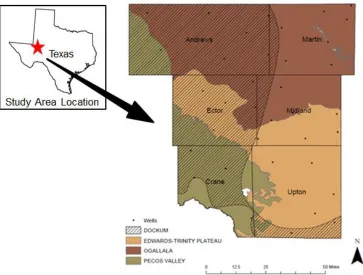
The study area is located in Western Texas which has a total area of 538.98 km2. It extends
across six counties of Texas; Andrews, Martin, Ector, Midland, Crane, and Upton (Fig 1). The
land cover of the study area consists mostly of developed, barren, bush, grass, and crop. The
alluvial environment in which the sediments were deposited consisted of interbedded sand, silt,
clay, and gravel filling prehistoric river valleys [16]. Deposition of this aquifer began during the
late Miocene to the early Pliocene and formed from eastward flowing streams originating from
the Rocky Mountains [13].
Groundwater originating from within the study area is captured from four aquifers:
Ogallala (major), Pecos Valley (major), Edwards Trinity Plateau (major), and Dockum (minor).
The Ogallala aquifer is the largest aquifer in the United States and is a major aquifer of Texas,
underlying much of the High Plains region. It consists of sand, gravel, clay, and silt and has a
maximum thickness of 800 feet. The Pecos Valley aquifer is one of major aquifer in West Texas.
Water bearing sediments include alluvial and windblown deposits in the Pecos River Valley. The
Edwards-Trinity Plateau aquifer is a major aquifer extending across much of the southwestern
part of the state. Water quality ranges from fresh to slightly saline, and most of the groundwater
is used for irrigation, municipal supplies, industrial use, and power generation. The Dockum
aquifer is a minor aquifer found in the northwest part of the state. It is a sandstone aquifer and
the basal member of the Dockum formation with the upper layers being predominantly siltstone
and claystone.
These aquifers are a valuable source of water for ranchers, farmers, and the recovery of
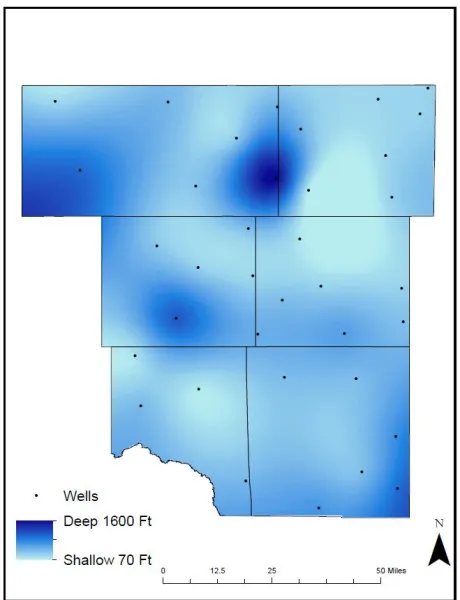
oil and gas in the region. The deepest groundwater well is within the Dockum at 1600 feet and
the Ogallala contains the shallowest at 70 feet (Fig 2). Recharge of the aquifer occurs primarily
through infiltration of precipitation. Due to the high rate of evaporation in this arid region, very
little reaches the water table. The recharge rate of this aquifer is lower than the depletion rate
with variations from state to state. The study area in West Texas is currently experiencing the
5
Fig 1. Study area map showing well locations, county and aquifer names.
The study area is categorized as a semi-arid climate, where temperatures can drastically
fluctuate throughout the day. The Permian Basin average low temperatures for January are 28° F
and July high temperatures are 95 °F [17]. The region receives on average 13-18 inches of rain
annually, mostly during the spring (March-May) and early fall months (September-October).
During the late summer and early fall months, moist air originating from the tropics begins to
rise due to the southwestern monsoon which is the primary producer for rainfall events in west
Texas [18]. With this low average rainfall, the evaporation rate is greater than the precipitation
6
Fig 2. Groundwater well depth in the study area.
3. Data and Methods
3.1. Groundwater quality parameters
All groundwater data was obtained from the Texas Water Development Board (TWDB) -
Groundwater Database (GWDB) which is an open database provided by the US government. We
collected all historically available data in our study area from TWDB-GWDB and checked the
location of their wells. To apply the interpolation analysis with GIS and evaluate the spatial
distribution of groundwater qualities, the observed wells must be uniformly distributed
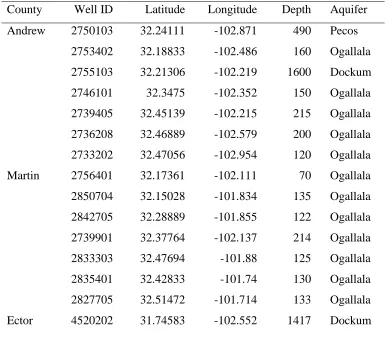
throughout the study area [7, 19-21]. For this reason, we finalized the total 36 wells to create an
even distribution throughout the study area (Table 1).
For comparing historical changes in groundwater quality, data from 1992-2005 was
correlated with data from 2006-2019. The groundwater quality parameters used for this study
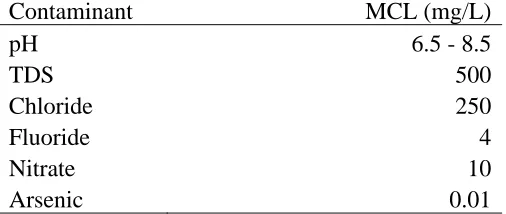
include pH, and total dissolved solid (TDS), chloride (Cl), fluoride (F), nitrate (NO3-), and
arsenic (As). The standard quality for water has been specified by EPA and World Health
7
required to provide long-term data with a relatively dense hydrological observation network.
Each well was mapped within the study area using its provided latitude/longitude coordinate and
contaminant concentration level. We followed and developed the methodology from Nas and
Berktay [7].
Spline interpolation was implemented to evaluate the spatial distribution of groundwater
concentrations in the map. The spline interpolation estimates values using a mathematical
function that minimizes overall surface curvature, resulting in a smooth surface for the study area
[21]. Once the groundwater maps were created for each different parameter, a map indicating
total groundwater quality was produced. According to Nas and Berktay [7], the mosaic to new
raster tool was performed by merging the six groundwater maps together while also adding all
the variables. The total groundwater map from poor to optimum conditions were classified to
denote regions with increasing and decreasing water quality [7, 19]. The map represents a
combination of the six groundwater parameters.
Table 1 Summary of well data used in the study area (depth unit: feet. below land surface).
County Well ID Latitude Longitude Depth Aquifer
Andrew 2750103 32.24111 -102.871 490 Pecos
2753402 32.18833 -102.486 160 Ogallala
2755103 32.21306 -102.219 1600 Dockum
2746101 32.3475 -102.352 150 Ogallala
2739405 32.45139 -102.215 215 Ogallala
2736208 32.46889 -102.579 200 Ogallala
2733202 32.47056 -102.954 120 Ogallala
Martin 2756401 32.17361 -102.111 70 Ogallala
2850704 32.15028 -101.834 135 Ogallala
2842705 32.28889 -101.855 122 Ogallala
2739901 32.37764 -102.137 214 Ogallala
2833303 32.47694 -101.88 125 Ogallala
2835401 32.42833 -101.74 130 Ogallala
2827705 32.51472 -101.714 133 Ogallala
8
4506809 31.88722 -102.297 120 Edwards
2762509 32.04667 -102.311 180 Edwards
4505705 31.91519 -102.479 140 Edwards
4504107 31.98806 -102.616 159 Edwards
Midland 4522604 31.69361 -102.28 225 Edwards
4417409 31.69417 -101.992 255 Edwards
4418214 31.73389 -101.796 176 Edwards
4515505 31.8075 -102.199 180 Edwards
2763901 32.01083 -102.141 90 Ogallala
4410211 31.84722 -101.801 135 Edwards
4516208 31.8525 -102.071 131 Edwards
Crane 4554501 31.20236 -102.32 200 Dockum
4529704 31.50833 -102.477 80 Pecos
4535506 31.45472 -102.669 190 Pecos
4527203 31.62107 -102.689 94 Pecos
Upton 4564204 31.11333 -102.077 280 Edwards
4450501 31.17639 -101.815 375 Edwards
4449201 31.23278 -101.934 180 Edwards
4442210 31.35139 -101.821 300 Edwards
4425505 31.54389 -101.953 183 Edwards
4531501 31.5488 -102.192 182 Edwards
Table 2. Standards for groundwater quality by EPA and WHO (EPA: US environmental
protection agency, WHO: world health organization, MCL: maximum contamination level)
Contaminant MCL (mg/L)
pH 6.5 - 8.5
TDS 500
Chloride 250
Fluoride 4
Nitrate 10
9
3.2. Examining the environmental change
The land-cover data was obtained from Texas Natural Resources Information System (TNRIS).
TNRIS provided the National Land Cover Data (NLCD) 1992 and 2011 in a raster format. The
data has spatial resolution at 30m for a single pixel measures 30 meters in width and length,
which is 900 meters squared. Raster data management was preformed to merge these raster data
sets together. For both images to fit inside the study area, an extract by mask process was
performed. This process extracts the raster cells of the imagery data and places them within the
county boundaries of the study area. Additionally, we applied spatial analyses to refine the data
and identify issues including edge effect, resolution change artifacts, and misclassification (Fig
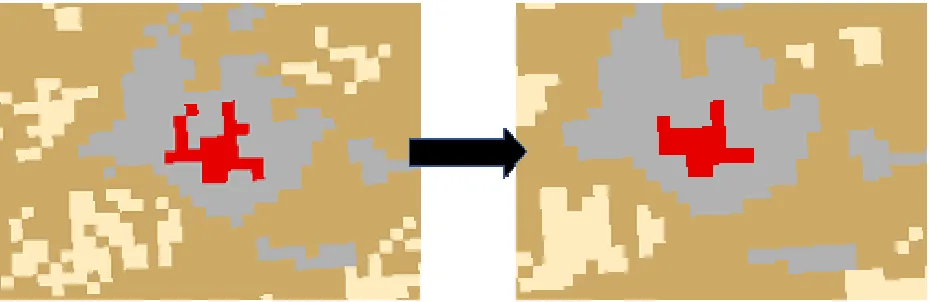
3). A majority filter was selected to smooth spatial anomalies and to provide a smoother and
clearer image [21].
Fig 3. Example of majority filter in the study area.
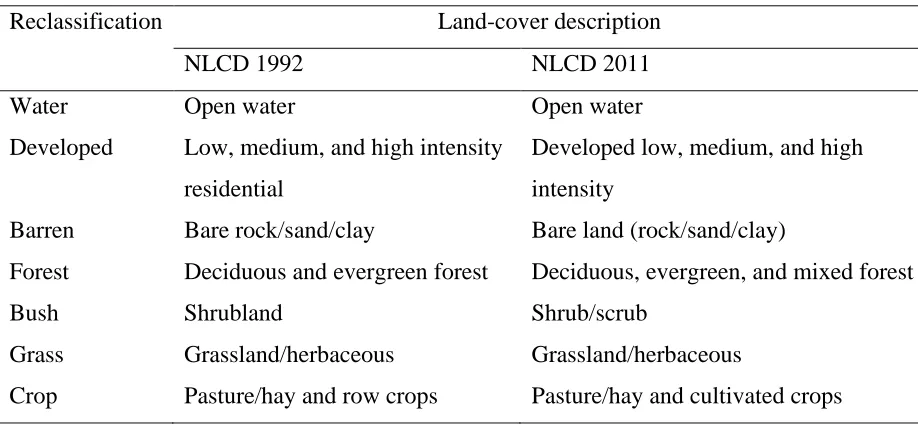
This research utilized seven different geographic features to describe variations from
1992 to 2011, which include water, developed, barren, forest, bush, grass, and crop (Table 3). In
order to correlate between the NLCD 1992 and 2011, a reclassification and grouping of the
land-cover was required [22, 23]. Developed classification grouped the open space, low, medium, and
high intensities, such as urban settlement, transportation and industrial land. Barren classification
included the bare land, rock, sand, and clay. Forest category grouped the deciduous, evergreen,
and mixed forests. Bush category grouped the shrub and scrub, which is less than six meter high.
Crop category included the pasture, hay, cultivated crop. Wetland classification was removed
10
Table 3 Reclassification and land-cover description for the NLCD 1992 and 2011.
Reclassification Land-cover description
NLCD 1992 NLCD 2011
Water Open water Open water
Developed Low, medium, and high intensity
residential
Developed low, medium, and high
intensity
Barren Bare rock/sand/clay Bare land (rock/sand/clay)
Forest Deciduous and evergreen forest Deciduous, evergreen, and mixed forest
Bush Shrubland Shrub/scrub
Grass Grassland/herbaceous Grassland/herbaceous
Crop Pasture/hay and row crops Pasture/hay and cultivated crops
4. Results and Discussion
4.1. pH
Municipal water treatment facilities must regulate and balance pH prior to its distribution, in
order to provide optimal water. The concentration of hydrogen (H+) and hydroxyl (OH-) ions in a
liquid determine the measurement of pH. These measurements decide whether the liquid is an
acid, neutral, or alkaline. For this study, it is surmised that soil pH and groundwater pH have
comparable concentration levels. Within soils, pH controls the mobility of contaminants such as
arsenic and fluoride. As soils become acidic, fluoride mobility increases allowing concentrations
to increase [24]. Alternatively, as pH shifts becoming alkaline, arsenic mobility increases,
resulting in elevated concentrations [25]. These fluctuations in pH control the concentration
11
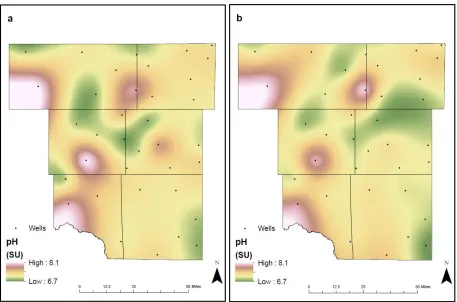
Fig 4. Spatial distribution of pH in the study area for (a) 1992-2005 and (b) 2006-2019 (SU:
standard units).
The pH in the study area ranges from 6.7 - 8.1 SU (Fig 4), where the deeper wells are
more alkaline than the shallower wells. This increase is a result of the aquifers composition,
where dissolving limestones and dolomite minerals contribute to the aquifers alkalinity.
Corrosive water (pH lower than 7) has potentially damaging effects on the municipal water
treatment facility and the local homeowner. These waters have the potential to corrode pipes and
destroy household appliances. The EPA recommends well waters be between 6.5 - 8.5 SU to
prevent these damaging effects on infrastructure [26]. Soil pH is affected by climate,
temperature, and parent material [27]. In arid climates, the low precipitation results in soils that
are closer to neutral or slightly alkaline due to the weathering and leaching effects of rainfall.
The weathering of parent material results in the formation of soil horizons and is the contributing
12
4.2. TDS
Total dissolved solids (TDS) is a measurement of the dissolved combined content of inorganic
salts and small amounts of organic matter that are dissolved in water [3]. These inorganic salts
can contaminate the groundwater through anthropogenic or natural activities. Increased
agricultural activity can result in higher concentrations of total dissolved solids. The adverse
effects of TDS on infrastructure and taste can occur due to increase concentrations (1,000 mg/L
or greater) in groundwater [26]. To prevent these effects from occurring, while also providing an
acceptable taste to the user, it is recommended that the concentration of TDS not exceed 600
mg/L [28].
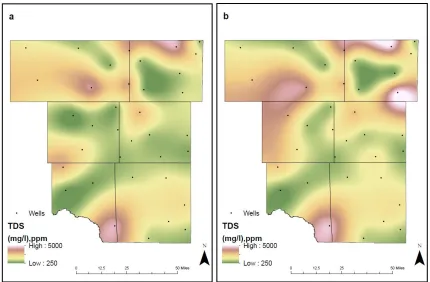
Fig 5. Spatial distribution of TDS in the study area for (a) 1992-2005 and (b) 2006-2019.
As crop land began to develop within Martin County from 1992 to 2011, the
concentration of TDS continued to rise. Between 1992-2005 and 2006-2019, concentration levels
rose from 1,140mg/L to 5,000 mg/L (Fig 5). Elevated TDS levels can result from plants uptake
of water, allowing soil to retain chlorides [28]. When additional precipitation or irrigation is
13
groundwater. Furthermore, agricultural activities as discussed in section 4.8 (environmental
change), environmental changes, chemical fertilizers and concentrated animal feeding
operations, contribute to the increase TDS levels observed.
Disposal of oilfield brines resulted in the higher concentrations of TDS levels in
northwest Ector County. Concentrations rose from 27.3 mg/L in 1992-2005 to 3,322.5 mg/L in
2006-2019 (Fig 5). The developed land-cover change from 1992 to 2011 is noticeable in this area
from the development of production pads and salt water disposal sites (Fig 10). TDS levels may
also rise from natural weathering of rocks and soils in the subsurface. Regions with limestone
and dolomite present can have naturally high levels of TDS due to the presence of calcium.
4.3. Chloride
The chloride contamination of groundwater and the water supply have the potential to threaten
the environment. The consumer may notice the prevalence of the chloride anion within drinking
water at higher concentrations, producing a salty taste. The taste thresholds can range from 200
to 1,000 mg/L and is determined by its associated cation of either sodium, calcium, or
magnesium [3]. Municipal water treatment facilities require sodium chloride concentrations to
remain below 250 mg/L to provide optimal water quality and prevent the bitter taste that the
consumer may detect [29]. Additionally, calcium or magnesium chloride concentrations may not
be detected by the consumer until they reach levels of 1,000 mg/L or greater. While chlorides in
and of itself pose little threat to human health, when paired with the cation sodium, both heart
14
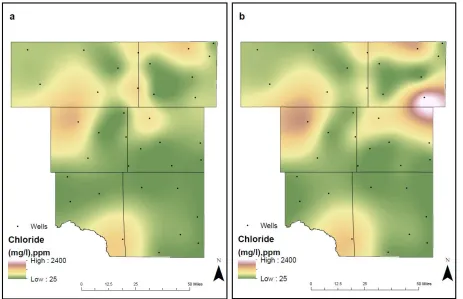
Fig 6. Spatial distribution of chloride in the study area for (a) 1992-2005 and (b) 2006-2019.
Between the two separate time intervals, chloride concentrations have remained relatively
low except for three locations: Martin County, Southern Crane County and Northwestern Ector
County. In Martin County, chloride levels have risen from 406 mg/L in 1992-2005 to 2,400
mg/L in 2006-2019 (Fig 6). This dramatic increase in concentrations is attributed to the
development of additional farmland and the pollution factors associated with the production of
cultivated crops. Furthermore, the depth of the underlying Ogallala aquifer in this region is
shallow, allowing for chlorides to penetrate through the subsurface easily. In both Southern
Crane County and Northwestern Ector County, chloride concentrations have remained high
between the two separate time intervals. Both locations have shallow depth of their underlying
aquifer making them susceptible to contamination.
Fluids associated with the production of oil and gas commonly consist of sodium chloride
(saline/brines) and contain increased concentrations of total dissolved solids [30]. These fluids
also consist of heavy metals and Naturally Occurring Radioactive Material (NORM), specifically
15
degradation of the municipal water treatment facility. Contamination of groundwater with
oilfield brines is predominantly associated with surface spills, where fluids can reach shallow
groundwaters due to leaking tanks, flowline ruptures, or other oilfield mechanical failures [6,
30]. To determine whether the groundwater has been contaminated from a spill, chloride
delineations must be obtained to identify the depth that the brines have penetrated through the
subsurface.
4.4. Fluoride
Fluoride (F) is essential for the maintenance and solidification of our bones and to prevent dental
decay. It has beneficial effects on teeth and bones when it is present at low concentration in
drinking water. Fluoride in water keeps teeth strong and reduces cavities by about 25% in
children and adults. However, it may cause mottling of the teeth depending on the concentration,
the age of the child, the amount of drinking water consumed, and the susceptibility of the
individual [31]. The presence of fluorides in groundwater is most associated with weathering
where water passing through the subsurface encounters fluorine bearing minerals [32]. Through
environmental studies of fluoride in the subsurface, there is a direct correlation between mobility
of pH and fluoride [24]. Soils that are more acidic allow for an increase of fluoride mobility and
leaching where plant roots may subsequently accumulate the additional fluoride. This
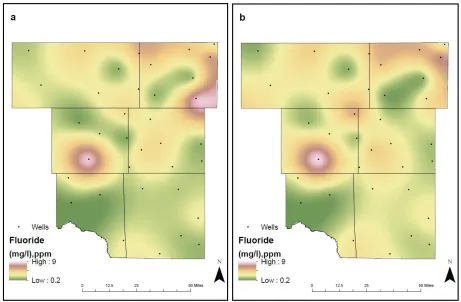
characteristic is demonstrated within the agricultural fields of southeast Martin County (Fig 7).
In this region, there is a noticeable decrease in the concentration of fluoride between the two
16
Fig 7. Spatial distribution of fluoride in the study are for (a) 1992-2005 and (b) 2006-2019.
Land-cover change from 1992 to 2011 indicates a substantial transformation of grass and
bush to an area dominated by cultivated crops (Fig 10). As land turned to crops and the pH
became acidic, plants began to uptake additional fluoride decreasing the concentration of the
contaminant within groundwater. Fluoride concentration levels decreased from 7.8 mg/L in
1992-2005 to 3.35 mg/L in 2006-2019. Regions consisting of lower annual rate of precipitation
generally have a higher concentration of fluoride than regions with a higher annual rate of
precipitation [31]. The average annual precipitation within the study area ranges from 13-18
inches, potentially increasing the concentration of fluorides in groundwater. Additionally,
“residence time”, or the time it takes for groundwater to reach a well or stream, determines
contaminant concentrations. In unconfined aquifers such as those of the Ogallala,
Edwards-Trinity Plateau, and Pecos Valley, residence time can range from days to years. This swift
migration of groundwater contributes to the overall decline in fluoride concentrations. Whereas
confined aquifers such as the Dockum, groundwater residence time can range from centuries to
17
Fig 8. Location of well (ID: 4520202) adjacent to the cement production facility in southwest
Ector County (image from Google Earth).
While fluoride concentrations have remained relatively consistent throughout the study
area, one well (ID: 4520202) within southwest Ector County accounts for the highest
accumulation of fluorides. Concentration limits have remained relatively consistent from 8.27
mg/L in 1992-2005 and 8.55 mg/L in 2006-2019, well above the MCL of 4.0 MG/L. Located at
the site of this well is a cement production facility (Fig 8). Fluorspar (calcium fluoride) is a
common mineralizing agent in the manufacturing of cement [33]. In the oilfield, casing cement is
used to isolate oil, gas, and water zones from the wellbore while also bonding the casing to the
wall. Runoff and infiltration from the production of these materials, has resulted in the elevated
readings observed. Furthermore, this well passes through the confined Dockum aquifer, where
groundwater has an increased residence time and natural attenuation of the contaminant is lower.
4.5. Nitrate
Nitrate (NO3-) is a naturally occurring compound to sustain healthy plants in the ecosystem. It is
in a more stable oxidation state than nitrite (NO2-) due to its extra oxygen, resulting in nitrite
being detected with increased concentrations in a reducing environment [34]. While nitrates are
18
anthropogenic activities [35, 36]. Contamination of the groundwater from nitrates is frequently
associated with infiltration of inorganic nitrogen fertilizers and livestock waste from agricultural
procedures [36]. Nitrogen fertilizers are commonly applied annually to increase the overall
quality of cultivated crops and increase output. These fertilizers can reach the groundwater
through nitrate leaching in the subsurface.
The Environmental Protection Agency (EPA) has established a specific MCL for nitrate
at 10 mg/L and elevated concentrations pose a small threat to human health, particularly in
infants [35]. Groundwater wells rarely exceed this limit unless located in regions with increased
agricultural activity. Well depth is an underlying factor affecting the concentration levels of
nitrate in groundwater. As well depth increases, nitrate levels decrease, whereas shallower wells
are observed to have the highest concentrations. This results from the leachate’s ability to
penetrate through the subsurface easier and reach the underlying aquifer. Groundwater wells
drawing from the deepest Dockum aquifer had the lowest levels, whereas the shallower Ogallala
contained elevated nitrate concentrations.
19
From 1992-2005 the highest nitrate levels were observed in Northwest Andrews County,
east Martin County, and south of the city of Midland. Between the two separate time intervals,
there was a noticeable shift in concentrations (Fig 9). The concentrated animal feeding operation
in northwest Andrews County experienced a reduction in nitrate levels, potentially from a
decrease in operations or through better management processes. The percentage of crop
increased within the study area, most notably in Eastern Martin County (Fig 12). Coupled with a
shallow groundwater well depth, this resulted in nitrate levels continually increasing over time in
this region. Furthermore, as the city of Midland continuously experienced urban growth, the
application of inorganic nitrate fertilizers on household lawns and public parks elevated nitrate
concentrations [37].
4.6. Arsenic
Arsenic is naturally found within the subsurface as a trace element on rocks or soils and is
commonly used in agriculture activities. The two valence states of arsenic often found in
groundwater are arsenite (As+3) and arsenate (As5+), but concentrations rarely exceed the
recommended EPA MCL of 10 µg/L [2, 38]. Arsenic poisoning (arsenicosis) can occur from
exposure of 50 µg/L or greater contaminated groundwater and can lead to harmful effects on the
human body such as an increased risk of cancer, diabetes, and damage to internal organs [6, 25].
Within alkaline environments (pH greater than 7), arsenic becomes mobilized allowing for
increased concentrations to be observed. These environments promote the release of arsenic
through the electrostatic repulsion of the negatively charged Fe oxides/hydroxides and arsenic
20
Fig 10. Spatial distribution of arsenic in the study are for (a) 1992-2005 and (b) 2006-2019.
The unconfined Ogallala aquifer contains the highest concentrations of arsenic where
levels reach 45.5 µg/L (2006-2019) in northeast Martin County (Fig 10). Between the two
separate time intervals, pH begins to shift to becoming more acidic within Northeast Midland
County and Southeast Martin County. This shift resulted in a decrease in mobility of pH and
disrupted further release of arsenic in groundwater. Water quality improved between the two
different time intervals within the city of Midland from 23.87 µg/L in 1992-2005 to 17.02 µg/L
in 2006-2019. Furthermore, as pH or alkalinity increased in Northeast Martin County, the
concentration levels remained consistent, resulting from mobility of arsenic in the subsurface.
Other potential inputs of arsenic in groundwater occur when petroleum hydrocarbon
releases create reducing environments allowing for its mobilization [39]. Microbial activity
increases the degradation of the hydrocarbons and consumes terminal electron acceptors
producing these environments. Once the microbial activity has progressed and there is a
reduction in the redox conditions, the concentration of the arsenic in groundwater will decrease
21
smaller concentrations (8-14 µg/L) can also lead to damaging effects such as skin lesions [38].
It’s important for individuals obtaining drinking water from wells to regularly test and purify for
arsenic to prevent these damaging effects.
4.7. Total groundwater quality
Water table can change over time due to changes in precipitation patterns, streamflow amount,
and human-induced changes such as groundwater pumping and land development [11, 41].
Changes in water table in wells are driven by the interplay between groundwater recharge and
discharge to and from aquifers. In general, water tables in wells decline due to increased
groundwater withdrawal and/or reduced aquifer recharge. The risk of contamination is greater
for unconfined (water-table) aquifers than for confined aquifers because they usually are nearer
to the land surface, and they lack an overlying confining layer to impeding the movement of
contaminants. Because groundwater moves slowly in the subsurface and many contaminants sorb
to the sediments, restoration of a contaminated aquifer is difficult. In unconfined aquifers,
contaminants from the soil or subsurface will directly affect the groundwater quality.
A wide range of different chemicals can be dissolved in groundwater as a result of
interactions with the atmosphere, the surficial environment, soil and bedrock. The mutual
influence of various chemical factors helps to evaluate hydrological processes responsible for
changes in the groundwater quality. Groundwater tends to have much higher concentrations of
most constituents than the surface waters do, and deep groundwater that has been in contact with
the rock for a long time tends to have higher concentrations of the constituents than the shallow
water. Shallow groundwater consists of Ca (calcium)–Na (sodium)–HCO3(bicarbonate)
dominantly formed by the interaction between atmospherically recharged meteoric water with
the soil and shallow bedrock. These waters are usually fresh but upwelling of deeper saline fluids
or saline intrusions from adjacent seawater bodies can influence their chemical composition [41].
Intermediate or deep depths groundwater rapidly increase in concentration of constituents
primarily by the addition of SO4 (sulfate) and Cl (chloride). The concentration of bicarbonate
ions decreases because of the precipitation of mineral phases such as calcite. Local variations in
chemistry and anions may be due to a variety of rock–water interactions or local processes that
result in Na– SO4, Na– HCO3, and Mg– SO4 type waters.The pH begins to rise in this zone and
22
Groundwater quality maps were created using a modified version first discussed by Ducci
[19], where thematic maps were initially produced using the interpolation method and
subsequently stacked developing the total groundwater quality map [7, 19, 24]. The modified
version utilizes a summation process, combining and calculating the six contaminants together,
and defining regions of poor, medium, and optimum groundwater conditions (Table 4). While
not all contaminants have the same unit of measurement, the conversion of micrograms in
arsenic to milligrams would result in a variable that is insignificant to the overall groundwater
quality. Furthermore, the effects of pH are minimal on the total maps, as this variable has small
fluctuations from 6.7 - 8.1.
The maps of total groundwater qualities demonstrate the changes that have occurred in
1992-2005 and 2006-2019 (Fig 11), identifying areas where additional environmental studies or
regulatory practices could be implemented to improve overall water quality. Between the two
separate time intervals, there is a moderate decrease in the amount of optimum groundwater
quality within the study area. The two regions of notably poor quality are in Eastern Martin
County and Northwest Ector County. This decrease in overall groundwater quality is attributed
to the elevated levels of TDS and chlorides associated through anthropogenic activities. Within
the city of Midland, groundwater quality has remained consistent throughout the time intervals
with medium contaminant concentrations being observed. Odessa has experienced a slight
decrease in groundwater quality due to the result of population growth and urban development.
Table 5 showed the average of all different parameters in the study area for (a) 1992-2005 and
(b) 2006-2019.
Table 4. Groundwater conditions and the corresponding total concentrations.
Groundwater conditions Total concentrations
Optimum 0 - 2,600
Medium 2,600 - 5,200
23
Fig 11. Spatial distribution of total groundwater quality from optimum to poor conditions in the
24
Table 5. The averages of six groundwater parameters in the study area for (a) 1992-2005 and (b) 2006-2019
1992-2005 2006-2019
County pH TDS Chloride Fluoride Nitrate Arsenic pH TDS Chloride Fluoride Nitrate Arsenic
(SU) (mg/L) (mg/L) (mg/L) (mg/L) (µg/L) (SU) (mg/L) (mg/L) (mg/L) (mg/L) (µg/L)
Andrew 7.3 2347.5 551.8 2.7 36.2 12.3 7.3 2283.2 478.3 2.7 21.0 10.5
Martin 7.2 1540.9 400.3 3.9 42.7 21.8 7.1 2096.3 701.4 3.5 46.4 20.9
Ector 7.2 849.0 433.9 3.0 12.5 11.1 7.2 1693.2 563.3 5.5 13.2 12.3
Midland 7.2 1110.7 213.6 2.3 11.5 9.6 7.0 1292.3 278.0 2.5 30.3 8.6
Crane 7.3 2003.3 337.9 1.5 30.2 9.7 7.3 2005.2 401.7 1.7 24.5 7.2
Upton 7.1 1347.8 82.6 1.7 20.7 2.0 7.1 1356.6 87.9 2.1 24.1 1.7
25
4.8. Environmental change
With the advancement of horizontal drilling and hydraulic fracturing, previously untouched shale
strata were now viable, greatly increasing the amount of recoverable reserves. As a result, rig
count dramatically rose to nearly 500 at the end of 2011 and oil prices peaked at over $100 per
barrel, ultimately allowing production to reach 1 million barrels per day [43]. Additionally,
associated oilfield facilities grew to account for the increase in production. These factors resulted
in a considerable change in both economic growth and land cover from 1992 to 2011 where the
amount of developed land increased by 11.78 km2 or 176% while also decreasing the percentage
of barren and grass throughout the study area (Table 6).
Fig 12. Land-cover maps of the study area; (a) NLCD 1992 and (b) NLCD 2011. NLCD:
National Land Cover Dataset
Furthermore, the shale boom resulted in a noticeable increase of well sites and production
pads scattered throughout West Texas, contributing to the growth of Developed land (Fig 12).
26
expanded from 89,699 in 1990 to 99,940 in 2010 [44]. Economic benefits associated with
horizontal drilling and hydraulic fracturing such as higher incomes and extra jobs resulted in this
flux of population growth. The increase within these two cities from 1992 to 2011 is depicted
with a denser packing of the developed land.
Table 6. The area for each land-cover type in the study area (unit: km2).
NLCD 1992 NLCD 2011 Changes
Water 0.5 (0.1%) 0.6 (0.1%) 0.1 (28.9%)
Developed 6.7 (1.2%) 18.5 (3.4%) 11.8 (176.1%)
Barren 13.1 (2.4%) 4.0 (0.7%) -9.1 (-69.5%)
Forest 0.1 (0.0%) 0.3 (0.1%) 0.2 (277%)
Bush 295.4 (54.8%) 378.5 (70.2%) 83.2 (28.2%)
Grass 184.8 (34.3%) 91.6 (17.0%) -93.2 (-50.4%)
Crop 38.5 (7.1%) 43.9 (8.1%) 5.4 (14.1%)
Others - 1.6 (0.3%) -
Total 539.0 (100%) 538.9 (100%) -
Technological advances throughout the 1990’s and 2000’s allowed for an increase in
agricultural output and quality. Global Positioning Systems (GPS) continually improved
throughout the 1990’s and into the 2000’s, resulting in automated farm equipment that efficiently
map and plan fields, increase production, and reduce the overall price from seed to harvest.
Within this arid region, the primary water source is the Ogallala aquifer, which provides the
necessary groundwater vital to produce various crops. The development of center pivot irrigation
in the 1950’s supported farmers to establish crops in these arid regions. Furthermore, genetic engineering of crops in the mid to late 1990’s, lead to plants that are more resistant to insects,
weeds, and viruses [45]. These factors, coupled with a growing demand from a rising population,
allowed the percentage of Crop from 1992 to 2011 to increase by 14%, primarily within Martin
County. To protect groundwater quality from further human activities, government agencies and
local communities should adopt the following strategies: regulating the disposal of produced
27
promoting responsible use of waste drainages in the vicinity of mining areas, and boosting the
development of rural and industrial infrastructures.
5. Conclusions
We evaluated groundwater quality parameters such as pH, TDS, chloride, fluoride, nitrate, and
arsenic from 1992-2005 and 2006-2019 and identified land cover maps where specific changes
in the environment effected groundwater quality in the Permian Basin, Texas. Utilizing advanced
geospatial techniques, these parameters described areas from optimum and poor groundwater
conditions. Factors that contribute to the level of contaminants in groundwater are natural
sources, anthropogenic activities, and aquifer depth. The mobilization of arsenic and fluoride
from natural sources resulted primarily in the fluctuations of the subsurface pH. These alterations
in pH directly resulted in varying concentrations of contaminates within the groundwater.
Anthropogenic activities such as petroleum spills and inorganic chemical fertilizers contributed
to the contaminant load in groundwater. An underlying factor for the contamination is aquifer
depth, where contaminants may reach shallower unconfined aquifers quickly, yet have a decrease
in residence time. Land cover in developed and crop significantly rose from 1992 to 2011 due to
the increase in production from unconventional natural resources and advances in crop
management. These increases consequently resulted in a decrease of overall groundwater quality
in the Permian Basin, Texas. Total groundwater quality maps demonstrate a transition of water
quality related to the advancement of urban development and population. This research provides
significant information for the management of groundwater resources and the response to these
potential changes in the Permian Basin, Texas.
Author Contributions
R.N. collected detailed information, calculated the groundwater quality, developed the
methodology, and analyzed the results with arguments. J.H. designed the overall structure, made
critical revisions and contributed for the paper. All authors reviewed and approved of the final
28
Acknowledgements
This work was supported financially by the University of Texas System Rising STARs Program
- Funding.
References
1. EPA (Environmental Protection Agency). Drinking water standard and advisory tables.
Washington, DC: EPA. 2018; Available from
https://www.epa.gov/dwstandardsregulations/2018-drinking-water-standards-and-advisory-tables.
2. EPA (Environmental Protection Agency). Parameters of water quality - Interpretation and
standards wellhead protection. Washington, DC: EPA. 2001; Available from
https://www.epa.ie/pubs/advice/water/quality/Water_Quality.pdf
3. WHO (World Health Organization). Guidelines for drinking water quality, fourth edition
incorporating the first addendum. Geneva: WHO. 2017; Available from
https://www.who.int/water_sanitation_health/publications/drinking-water-quality-guidelines-4-including-1st-addendum/en/
4. EPA (Environmental Protection Agency). Guidance on the authorisation of discharges to
groundwater. Washington, DC: EPA. 2011; Available from
https://www.epa.ie/pubs/reports/water/ground/dischgw/.
5. Fritch TG, McKnight CL, Yeldman JC, Dworkin SI, Arnold JG. A predictive modeling
approach to assessing the groundwater pollution susceptibility of the Paluxy Aquifer,
Central Texas, using a geographic information system. Environmental Geology. 2000.
39(9): 1063-1069. doi: https://doi.org/10.1007/s002549900078
6. Rodriguez J, Heo J, Park J, Lee S, Miranda K. Inorganic pollutants in the water of
Midland and Odessa, Permian Basin, west Texas. Air, Soil and Water Research. 2019;
12:1-7. doi: https://doi.org/10.1177/1178622119861089
7. Nas B, Berktay A. Groundwater quality mapping in urban groundwater using GIS.
Environmental Monitoring and Assessment. 2008; 160: 215-227. doi:
https://doi.org/10.1007/s10661-008-0689-4
8. Wolaver BD, Pierre JP, Labay BJ, LaDuc TJ, Duran CM, Ryberg WA, Hibbitts TJ. An
29
activities with implications for biotic resource management. Environmental Earth
Sciences. 2018; 77: 1-12. doi: https://doi.org/10.1007/s12665-018-7323-8
9. Long S (2014). Direct and indirect challenges for water quality from the hydraulic
fracturing industry. Journal - American Water Works Association. 106: 53–57.
10. Mehany M, Kumar S (2019). Analyzing the feasibility of fracking in the U.S. using
macro level life cycle cost analysis and assessment approaches - A foundational study.
Sustainable Production and Consumption. 20: 375–388.
11. Rodriguez J, Heo J, Kim K. The impact of hydraulic fracturing on groundwater quality in
the Permian Basin, west Texas, USA. Water. 2020; 12: 796. doi:
https://doi.org/10.3390/w12030796
12. EPA (Environmental Protection Agency) (2016). Hydraulic Fracturing for Oil and Gas:
Impacts from the Hydraulic Fracturing Water Cycle on Drinking Water Resources in the
United States. Available from
https://cfpub.epa.gov/ncea/hfstudy/recordisplay.cfm?deid=332990
13. Ashworth JB, Hopkins J. Aquifers of Texas. TWDB (Texas Water Development Board).
1995; Report 345. Available from
https://www.twdb.texas.gov/publications/reports/numbered_reports/doc/R345/R345Com
plete.pdf
14. Anaya R, Jones I. Groundwater availability model for the Edwards-Trinity (Plateau) and
Pecos Valley aquifers of Texas. TWDB (Texas Water Development Board). 2009; Report
373. Available from
https://www.twdb.texas.gov/groundwater/models/alt/eddt_p_2011/ETP_PV_One_Layer_
Model.pdf
15. George PG, Mace RE, Petrossian R. Aquifers of Texas. TWDB (Texas Water
Development Board). 2011; Report 380. Available from
https://www.twdb.texas.gov/publications/reports/numbered_reports/doc/R380_Aquiferso
fTexas.pdf
16. Ashworth JB, Christian P, Waterreus TC. Evaluation of groundwater-water resources in
the southern High Plains of Texas. TWDB (Texas Water Development Board). (1991);
30
http://www.twdb.texas.gov/publications/reports/numbered_reports/doc/R330/r330_south
ernhighplains1991.pdf
17. Hopkins J. Water-quality evaluation of the Ogallala aquifer, Texas. TWDB (Texas Water
Development Board). 1993; Report 342. Available from
http://www.twdb.texas.gov/publications/reports/numbered_reports/doc/R342/R342.pdf
18. Schmandt J, Clarkson J, North GR. The Impact of global warming on Texas: Second
edition. The University of Texas Press, 2011; 27-57.
19. Ducci D. GIS techniques for mapping groundwater contamination risk. Natural Hazards.
1999; 20: 279-294. Doi: https://doi.org/10.1023/A:1008192919933
20. Heo J. The impact of climate change on hydrology with geomorphology in northeast
Texas. Journal of Earth Science and Engineering. 2018; 8: 1-7. doi:
10.17265/2159-581X/2018.01.001
21. Heo J, DeCicco J. Spatial and temporal analysis of carbon sequestrations in the
conterminous United States. Journal of Energy and Power Engineering. 2018; 12:
169-176. doi:10.17265/1934-8975/2018.04.001
22. USGS (U.S. Geological Survey). NLCD 2011 land cover. MRLC (Multi-Resolution Land
Characteristics Consortium). Available from
https://www.mrlc.gov/data/nlcd-2011-land-cover-conus-0
23. Heo J, Yu J, Giardino JR, Cho H. Water resources response to climate and land-cover
changes in a semi-arid watershed, New Mexico, USA. Terrestrial, Atmosphere and
Oceanic Sciences. 2015; 26 (4): 463-474.
24. Chaudhary K, Saraswat PK, Khan S. Improvement in fluoride remediation technology
using GIS based mapping of fluoride contaminated groundwater and microbe assisted
phytoremediation. Ecotoxicology and Environmental Safety. 2018; 168 (30): 164-176.
doi: 10.1016/j.ecoenv.2018.10.007
25. Hamidian AH, Razeghi N, Zhang Y, Yang M. Spatial distribution of arsenic in
groundwater of Iran, a review. Journal of Geochemical Exploration. 2019; 201: 88-98.
doi: 10.1016/j.gexplo.2019.03.014
26. WHO (World Health Organization). Developing drinking-water quality regulations and
31
https://www.who.int/water_sanitation_health/publications/developing-dwq-regulations/en/
27. Hong S, Gan P, Chen A. Environmental control on soil pH in planted forest and its
response to nitrogen deposition. Environmental Research. 2019; 172: 159-165. Doi:
10.1016/j.envres.2019.02.020
28. Devesa R, Dietrich AM. Guidance for optimizing drinking water taste by adjusting
mineralization as measured by total dissolved solids (TDS). Desalination. 2018; 439:
147-154. doi: 10.1016/j.desal.2018.04.017
29. Kumar M, Puri A. A review of permissible limits of drinking water. Indian Journal of
Occupational & Environmental Medicine. 2012; 16(1): 40-44. doi:
10.4103/0019-5278.99696
30. Jackson RE, Gorody AW, Mayer B, Roy JW, Ryan MC, Van Stempvoort DR.
Groundwater protection and unconventional gas extraction: the critical need for
field-based hydrogeological research. Groundwater. 2013; 51(4): 488-510. doi:
10.1111/gwat.12074
31. Fawell J, Bailey K, Chilton J, Dahi E, Fewtrell L, Magara Y. Fluoride in drinking water.
World Health Organization (WHO) by IWA publishing, 2006; London.
32. Stephen P, Niyi A. Water fluoridation: a critical review of the physiological effects of
ingested fluoride as a public health intervention. Scientific World Journal. 2014; 1-10.
doi: 10.1155/2014/293019
33. Qunitero N. Examining the use of fluorspar in the cement industry. CEMEX Research
Group. 2013; Available from https://www.cemex.com
34. Juntakut P, Snow DD, Haacker EMK, Ray C. The long term effect of agricultural, vadose
zone and climatic factors on nitrate contamination in Nebraska’s groundwater system.
Journal of Contaminant Hydrology. 2019; 220: 33-48. doi:
https://doi.org/10.1016/j.jconhyd.2018.11.007
35. Zhang WL, Tian ZX, Zhang N, Li XQ. Nitrate pollution of groundwater in northern
China. Agriculture, Ecosystems and Environment. 1996; 59 (3): 223-231. doi:
32
36. Wang Y, Ying H, Yin Y, Zheng H, Cui Z. Estimating soil nitrate leaching of nitrogen
fertilizer from global meta-analysis. Science of the Total Environment. 2019; 657:
96-102. doi: https://doi.org/10.1016/j.scitotenv.2018.12.029
37. Carrico AR, Raja US, Fraser J, Vandenbergh MP. Household and block level influences
on residential fertilizer use. Landscape and Urban Planning. 2018; 178: 60-68. doi:
https://doi.org/10.1016/j.landurbplan.2018.05.008
38. Ng JC, Wang J, Shraim A. A global health problem caused by arsenic from natural
sources. Chemosphere; 2003; 52(9): 1353-1359. Doi:
https://doi.org/10.1016/S0045-6535(03)00470-3
39. Brown RA, Patterson KE, Zimmerman MD, Ririe GT. Attenuation of naturally occurring
arsenic at petroleum hydrocarbon-impacted sites. American Petroleum Institute (API).
2010; Groundwater Arsenic Manual 1-41. Available from
https://www.api.org/oil-and-natural-gas/environment/clean-water/ground-water/managing-arsenic-ingw
40. Medjor WO, Akpoveta VO, Adebowale ME. Remediation of hydrocarbons contaminated
groundwater by silica encapsulation technique. Water-Energy Nexus. 2018; 1(2):
134-141. doi: https://doi.org/10.1016/j.wen.2018.12.001
41. Zheng Y, Geen A, Stute M, Dhar R, Mo Z, Cheng Z, Horneman A, Gavrieli I, Simpson
H, Versteeg R, Steckler M, Grazioli-Venier A, Goodbred S, Shahnewaz M,
Shamsudduha M, Hoque M, Ahmed K. Geochemical and hydrogeological contrasts
between shallow and deeper aquifers in two villages of Araihazar, Bangladesh:
Implications for deeper aquifers as drinking water sources, Geochimica et Cosmochimica
Acta. 2005; 69: 5203–5218. doi: https://doi.org/10.1016/j.gca.2005.06.001
42. Zekâi S. Practical and Applied Hydrogeology, Elsevier. 2015; 424.
43. EIA (Energy Information Administration). Annual energy review 2011. EIA. 2012;
Available from https://www.eia.gov/totalenergy/data/annual/pdf/aer.pdf
44. Cohen DT, Hatchard GW, Wilson SG. Population trends in incorporated places 2000 to
2013. U.S. Census Bureau. 2015; Available from
https://www.census.gov/library/publications/2015/demo/p25-1142.html
45. Gaur RK, Verma RK, Khurana SMP. Genetic Engineering of Horticultural Crops.