Modified GA Based Routing Protocol for Efficient
QoS Routing for MANETs
M.L.Ravi Chandra 1, Dr.P. Chandra Sekhar Reddy2
1
Associate Professor, ECE Dept, NIET, Hyderabad, India.
2
Professor-coordinator, ECE Dept, JNTUH, Kukatpally, Hyderabad, India
Abstract: With the recognition of ad-hoc networks, several routing protocols are designed for route discovery and also the route maintenance. Because mobile ad-hoc networks differs from the traditional wired networks. They have certain unique characteristics which can cause difficulties for providing QoS in such networks. The unique characteristics are dynamically varying network topology, lack of precise state information, shared radio channel, limited resources accessibility, hidden terminal problem and insecure medium. Design of efficient routing protocol that satisfies the one QoS metric is difficult. Generally used QoS metrics are end to end delay, throughput, packet delivery ratio, and jitter. Designing of multi constrained QoS routing protocol is still difficult. Because routing protocol has to satisfies the many QoS metrics at a time. Existing genetic algorithms based routing protocols can give solution for multi constrained problem. But it is not giving efficient results. This paper proposes a modified genetic algorithm based routing protocol, and performance is compared with the existing algorithm. Simulations are performed in Network Simulator (NS-2).Simulation results shows that modified and proposed algorithm is giving optimized results than existing one for the specified scenario. While doing the simulation TCP,CBR and video sources are connected seperatly and the performance of two algorithms are compared with delay, throughput and packet delivery ration metrics TCP, UDP and video sources and connected separately and simulation is performed. Simulation results show that modified and proposed genetic algorithm is giving efficient results than existing genetic algorithm based routing algorithm.
Keywords: Genetic algorithm, delay, throughput and packet
delivery ratio
.
I. INTRODUCTION:
Major issues that affect the design of ad hoc networks are routing, multicast routing, medium access scheme, transport layer protocol, Quality of service, security, self organization, security, energy management. The brief discussion about design parameters for routing, multicast routing and Quality of service is as follows.
1.1 Routing:
The main responsibility of routing protocol is to exchange the route information, finding the feasible path to the required destination based on the required criteria shortest path, minimum energy path, less delay, minimum bandwidth.
The major challenge that has to face while designing a routing protocol are mobility of nodes, bandwidth width constraints, shared channel, computing the power, less
battery power and less buffer space, location dependent contention. The major requirements for a design of efficient routing protocol are minimum delay, minimum control overhead, quick re-configuration, providing of QoS, security and privacy. According to the requirement and according to the application, the routing protocol has to design efficiently.
1.2 Multicast routing:
In ad hoc mobile applications like emergency search and rescue operations and military communication, multicasting plays important role. In multi casting, arbitrary movement of nodes changes the topology dynamically in unpredictable manner. In this case design of multicast routing protocols is challenging issue.
The major issues for design of multi cast routing protocols are efficiency, robustness, control overhead, quality of service and security.
1.3 Quality of Service:
Quality of service is the performance level of services offered by the service provider and the network. In mobile ad hoc networks there is no central coordination and limited resource utilization is required. Different applications will have different required quality of service. For example multimedia applications, the band width and delay are the important parameters. Means for multimedia applications, the designed protocol has to occupy less band width and delay should be less. In emergency search-and-rescue operations, finding the destination quickly and transferring the required data is the key requirement.
give the good results. Genetic algorithms are present to solve the multi objective problem.
This paper is organized as follows. Section II discuss about functionalities of genetic algorithm. Section III gives the information about the multi constrained QoS parameters. Section IV gives the overview the paper. Section V gives the information about the simulation analysis. Finally conclusions are given in section VI.
II. GENETIC ALGORITHM:
Algorithm is started with a group of solutions (represented by chromosomes) referred to as population. Solutions from one population are taken and accustomed to form a new population. This can be driven by a hope that the new population is going to be efficient than the old one. Solutions which are selected to create new solution (offspring) are chosen according to their fitness - the more suitable they are the more chances they have to breed. 2.1 Features of Genetic algorithm:
The characteristics of an individual are encoded on a chromosome. Each chromosome has certain fitness. Individual’s judges stronger are able to service and produce next generation of strong individuals.
The solution of the problem is encoded on a string comparable with the chromosome of the biological system. The GA keeps a population of randomly selected chromosomes and allows filter chromosomes to combine and produce offspring with new characteristics. Genetic algorithms is randomly initializing population, determine the fitness of population. Then parents are selected from population, perform the crossover on parents creating population. After that mutation of population is selected. After that fitness function is calculated. According to our requirements fitness function is calculated. This may replace low fitness old chromosome. This repeated until we find a chromosome with best characteristics, which represent the optimal solution of the problem.
III. MULTI CONSTRAINED QOS PARAMETERS:
To calculate the fitness function in this paper, the following parameters are considered.
End to end delay: The latency or delay defines how long it takes for an entire message to completely arrive at the destination from the first bit is sent out from the source. Delay is made of four components: Transmission time, Propagation time, Queuing time and processing delay.
Band width: To transmit a packet, available band width is calculated and compared with the required band width. If the available band width is greater than required band width, packets are sent through the route, otherwise another path is selected.
Packet loss rate: Packet loss rate is the failure of one or more transmitted packets to arrive at their destination. It is defined as ratio of packets that are lost while transmitting from source to destination.
Node connectivity index: Before transmitting the packet node checks the distance between the nodes, whether the node is located within the transmission
range or not. If it is with the transmission range, that node will considered otherwise it is eliminated.
Dynamic resource availability: Before transmitting the packet, node will check whether the neighboring node is already connected with any other node or not. When the node is already in another connection, the node will be omitted. Using this usage rate metric less congested route is selected. It is defined as ratio of used resource quantity of the Available Resource quantity. Usage rate si less then that route is selected, otherwise is it omitted. So that less congested route is selected.
IV. OVERVIEW:
In this paper, the performance of normal GA based routing protocol is compared with the modified and proposed GA based routing protocol. The main functionality of algorithm in this paper is, to find the optimal path from source to destination to satisfy the multiple QoS metrics at a time. While finding the optimal path from source to destination, the path has to satisfy the multi constrained QoS metrics. The multi constrained QoS metrics considered here are delay, throughput and packet delivery ratio. The required optimal path is selected based the requirements. These requirements are defined in the form of fitness function. While calculating the fitness function combined QoS constraint is considered. High band width, high node connectivity index, less usage rate, less end to end delay and less packet loss rate are multi constrained parameters considered to find optimal path. While calculation the fitness function which is combined QoS constraints, band width and node connectivity index are taken in the numerator and usage rate, end to end delay and packet loss rate are taken in the denominator.
Fitness function has calculated for 30 times. In each iteration process fitness function is calculated. After completion of required number of iterations, the algorithm will consider the fitness function which has given highest value. The resultant path is optimal path towards to satisfies the given multi constraints problem. That means that, the resultant path is best for satisfying the given multi constraints at a time. So that the final path given by the genetic algorithm is the optimized path with respective to the given parameters for considered scenario.
The existing genetic algorithm based routing protocol, has modified such that it has to find the optimal path from the source to destination with respect to all parameter. So that the modified algorithm is giving good results than existing algorithm.
V. SIMULATION TOPOLOGY:
For the simulation, we use network with 50 nodes with a speed of 40m/s. Simulation experiments were performed in network simulator (NS2) and performance of modified and existing algorithms were compared. While doing the experiments in simulation TCP sources and CBR sources and video sources are consider each separately.
Table I. Simulation Parameters:
Area size 1250X1250
Transmission range 250m
MAC IEEE 802.11
Simulation time 50s
No.of nodes 50
Speed 40m/s
Traffic sources TCP,CBR and
video(separately)
Routing Protocol Modified GA and Normal GA based routing protocols
Rate(K) 50,100,150,200,250,300,350 Initial energy 10.3J
Transmission power 0.660 Receiving Power 0.395
5.1 Performance evaluation:
The modified genetic algorithms based routing protocol is compared with normal genetic algorithm based routing protocol. While doing the simulation, the following metrics were used for comparison.
Throughput:
The throughput is a measure of how fast data can be send through a network. It is nothing but, number of successful packets received per unit amount of time during the transmission.
Packet Delivery Ratio:
It is defined as, ratio of number of packets received to the number of packets sent.
Delay:
The delay defines how long it takes for a entire data to completely arrive at the destination from the time first bit is sent out from the source. Simply it is the time taken to transmit data from source to destination.
5.2 Results:
Experiments were conducted separately on TCP source, CBR source and video source in network simulator. For all simulations number of nodes considered are 50 and speed is taken as 40m/s. ion this simulation by varying the rate as 50,100,150,200,250,300 and 350kbits,delay,throughput and packet delivery ratio were calculated.
5.2.1 Only TCP sources:
This section describes the simulation results for only TCP source. In simulation experiments modified and proposed GA based routing algorithm is compared with the normal GA based routing protocol with respect to Delay, Packet Delivery ratio and Throughput. These are as shown below.
Fig.1 Rate Vs Delay for TCP source
Fig .1 shows the simulation results for comparative scenario of modified genetic algorithm based routing protocol and normal genetic algorithm based routing protocol. From above graph, it can conclude that, the modified GA based routing protocol performs less delay compare to normal GA based routing protocol. So modified and proposed GA based routing protocol is efficient with respective to Delay metric.
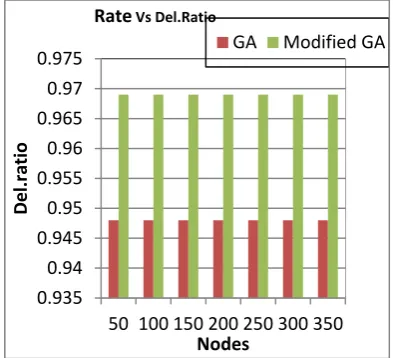
Fig 2. Rate Vs Packet Delratio for TCP source
Fig. 2 shows the simulation results for comparative scenario of modified genetic algorithm based routing protocol and normal genetic algorithm based routing protocol. From above scenario, it can conclude that modified and proposed GA based routing protocol is giving high packet delivery ratio than the normal GA based routing protocol.
0 0.2 0.4 0.6 0.8 1 1.2 1.4 1.6
50 100 150 200 250 300 350
Delay
Nodes
Rate Vs Delay
GA Modified GA
0.935 0.94 0.945 0.95 0.955 0.96 0.965 0.97 0.975
50 100 150 200 250 300 350
Del.ratio
Nodes RateVs Del.Ratio
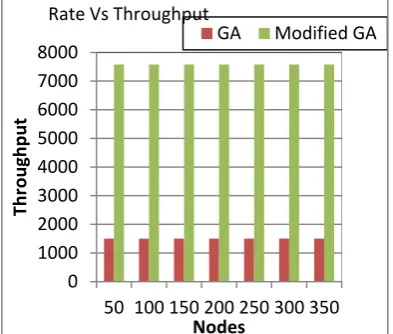
Fig. 3. Rate Vs Throughput for TCP source
Fig.3 shows the comparative scenario for modified GA based routing protocol with normal GA based routing protocol. The throughput for modified and proposed GA based routing protocol is high compare to normal existing normal GA based routing protocol.
5.2.2.Only CBR:
Similar to the above section, here only CBR sources are considered and applied for simulation. Here also performance of modified and proposed GA based routing algorithm is compared with the normal GA based routing algorithm with respect to Delay, Packet Delivery ratio and throughput.
Fig. 4. Rate Vs Delay for CBR source
Fig.4. Shows the simulation results for comparative scenario of modified and proposed GA based routing protocol and normal GA based routing protocol for CBR source for Delay metric. In this scenario Delay is calculated for different values of rate as shown in figure4.simulation results shows that delay is very less for modified routing protocol than normal routing protocol. So that modified and proposed GA routing protocol is efficient.
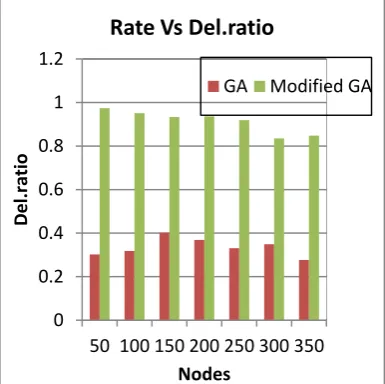
Fig. 5. Rate Vs Packet Del.ratio for CBR source
Fig.5. Shows the simulation results for comparative scenario of modified and proposed GA based routing protocol and normal GA based routing protocol for CBR source towards Packet Delivery Ratio metric. Packet Delivery ratio is calculated by varying rate as shown in figure4.simulation results shows that Packet Delivery ration is high for modified routing protocol than normal routing protocol. So that modified and proposed GA routing protocol is efficient.
Fig. 6. Rate Vs Throughput for CBR source
Figure 6. Shows the simulation results for comparative scenario of modified and proposed GA based routing protocol and normal GA based routing protocol for CBR source for Throughput metric. In this scenario Throughput is calculated for different values of rate as shown in figure6.simulation results shows that Throughput is high for modified routing protocol than normal routing protocol. So that modified and proposed GA routing protocol is efficient.
0 1000 2000 3000 4000 5000 6000 7000 8000
50 100 150 200 250 300 350
Throughpu
t
Nodes
Rate Vs Throughput
GA Modified GA
0 2 4 6 8 10 12 14
50 100 150 200 250 300 350
Delay
Nodes
Rate Vs Delay
GA Modified GA
0 0.2 0.4 0.6 0.8 1 1.2
50 100 150 200 250 300 350
Del.ratio
Nodes Rate Vs Del.ratio
GA Modified GA
0 1000 2000 3000 4000 5000 6000 7000 8000
50 100 150 200 250 300 350
Throughpu
t
Nodes Rate Vs Throughput
5.2.3 Only Video Sources:
Fig. 7. Rate Vs Delay for Video source
Fig. 7. Shows the simulation results for comparative scenario of modified and proposed GA based routing protocol and normal GA based routing protocol for Video source for Delay metric. In this scenario Delay is calculated for different values of rate as shown in figure7.simulation results shows that Delay is low for modified routing protocol than normal routing protocol. So that modified and proposed GA routing protocol is efficient.
Fig.8. Rate Vs Packet Del.ratio for Video source
Fig.8. Shows the simulation results for comparative scenario of modified and proposed GA based routing protocol and normal GA based routing protocol for Video source for Packet Delivery ratio metric. In this scenario Packet delivery ratio is calculated for different values of rate as shown in figure.8.simulation results shows that Packet delivery ratio is high for modified routing protocol than normal routing protocol. So that modified and proposed GA routing protocol is efficient.
Fig. 9. Rate Vs Throughput for TCP source
Fig.9. Shows the simulation results for comparative scenario of modified and proposed GA based routing protocol and normal GA based routing protocol for Video source for Throughput metric. In this scenario Throughput is calculated for different values of rate as shown in figure9.simulation results shows that Throughput is high for modified routing protocol than normal routing protocol. So that modified and proposed GA routing protocol is efficient.
VI. CONCLUSION:
In this paper, the normal genetic algorithm based routing protocol has modified such that, it has to give optimization route towards multi constrained QoS parameters for MANETs. While conducting the simulation experiments TCP source, CBR source and video sources were applied separately. Modified and proposed algorithm were compared with normal GA based routing protocol towards delay, throughput and packet delivery ratio metrics. From simulation results, It can be conclude that Delay of modified GA based routing protocol is less than normal GA based routing protocol for all input sources, means for TCP ,CBR and video sources. Throughput of modified GA based routing protocol is high and packet delivery ratio is also is high than normal GA based routing protocol. Modified and proposed GA based routing protocol has given optimized QoS routing which can satisfy the multi constraints parameter at a time than existing one. So that modified GA based routing protocol is efficient for the given scenarios.
REFERENCES:
[1] Mustafa A.G., A.E. Sayed,H.Kalesh,” Routing optimization using
genetic algorithm in ad-hoc networks”,IEEE international symposium,2007 on signal processing & information technology,page 497-503.
[2] Abolhasan.M,wysocki.T &Dutkiewicz.E(2004),”A Review of
routing protocols for mobile ad hoc netwoks”,vol.2,issue 1,pg:1-22.
[3] C.E.Perkins and E.M.Rayer,”ad-hoc on demand distance vector
routing”,proc.(IEEE)WMCSA’99 new orleares.L.A. Feb(1999).pp.90-100
[4] E.jung and N.H. vaidya,”A power control MAC protocol for ad-hoc
networks”,MOBICOM’02,SEPT,2002.
[5] V.Kawadia and P.R.kumar,”power control and clustering in adhoc
0 2 4 6 8 10 12 14 16
50 100 150 200 250 300 350
Delay
Nodes Rate Vs Delay
GA Modified GA
0 0.2 0.4 0.6 0.8 1 1.2
50 100 150 200 250 300 350
Del.ratio
Nodes
Rate Vs Del.ratio
GA Modified GA
0 1000 2000 3000 4000 5000 6000 7000 8000
50 100 150 200 250 300 350
Throughpu
t
Nodes Rate Vs Throughput
[6] J.J.chen,J.M.liang and Y.Tseng,” an energy efficient sleep scheduling considering QoS diversity for IEEE 802.16e wireless networks,IEEE ICC 2010 proceedings
[7] W.cher,Y.C.Tseng ,A power ufficient scheduling mechanism for
IEEE 802.11 multiple rate Ad-hoc networks”,Journal of computers,vol 19,No.2,july 2008
[8] L.Barolli,A.Koyama, K.Mastsumoto,T.Suganuma, N.Shiratori,” A
Genetic algorithm based routing method using two QoS
parameters”,Proceedings of the 13th International workshop on
Dtabase and expert systems applications(DEXA’02).
[9] B.Zhang and H.T.Mouftah,” A stateless QoS Routing Algorithm
subject to Multiple constaints”, IEEE 2003
[10] C.W.Ahn and R.S. Ramakrishna ,” A genetic algorithm for shortest
path routing problem and sizing of populations”, IEEE transactions on Evilutionary comutation,vol.6, No.,6., Dec 2002.
[11] Theodore S.Rappaport,”wireless communications principles and