ABSTRACT
VIAZIS, STELIOS. High Pressure Processing of Human Milk for Improved Nutrient Retention and Microbial Safety. (Under the direction of Dr. Brian E. Farkas).
Human milk is generally accepted as the optimal nutritional source for infants. Human milk banks govern and oversee the collection, pasteurization, and distribution of human milk to those in need. Currently, Low Temperature Long Time (LTLT)
pasteurization (30 min, 62.5 oC) is used to assure the safety of banked human milk. Studies have shown that LTLT inactivates pathogens, but also degrades important biochemical components including secretory immunoglobulin A (SIgA) and lysozyme, two of the most noted antimicrobial compounds in human milk. The kinetics of high pressure processing (HPP) favor the reduction of pathogenic microorganisms with retention of nutritional quality.
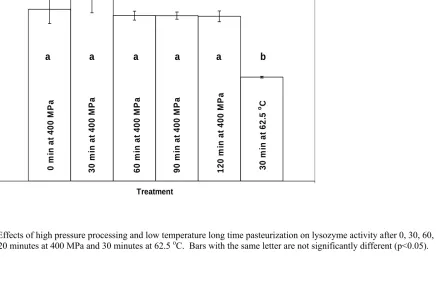
minutes retained 106.9, 96.3, 96.3, and 95.8% activity of lysozyme respectively, while LTLT pasteurization retained 78.8% activity. There was a significant difference (P<0.05) between raw human milk and LTLT pasteurized samples but not with HPP samples. These findings suggest that HPP results in improved nutrient retention of human milk when compared to traditional thermal pasteurization. However, further research was needed to study the process with respect to microbial inactivation.
suspended in buffer was achieved after 10 min of HPP, only a 2-log10 reduction was observed in human milk after the same treatment time.
HIGH PRESSURE PROCESSING OF HUMAN MILK FOR IMPROVED NUTRIENT RETENTION AND MICROBIAL SAFETY
by
STELIOS VIAZIS
A Thesis submitted to the Graduate Faculty of North Carolina State University
in partial fulfillment of the requirements for the degree of
Master of Science
FOOD SCIENCE
Raleigh
2006
APPROVED BY:
_________________________ Dr. Brian E. Farkas
Chair of Advisory Committee
_________________________ _________________________
DEDICATION
Αφιερωμενο στους γονεις μου. Σας ευξαριστω για ολα.
BIOGRAPHY
Stelios Viazis was born in New Brunswick, New Jersey, USA on April 13, 1981. He moved to Athens, Greece in 1989 where he spent his formative years along with his parents, Chris and Maria, and two younger brothers, John and Billy. Stelios attended the 4th High School of Galatsi, Athens, Greece where he graduated in June of 1999. He was admitted to the Acoustics and Music Technology undergraduate program at the Technical Professional Institute in Crete, Greece, but chose to return to the U.S.A. to pursue a higher education.
In October of 1999 he moved back to the USA and the following spring he enrolled in Middlesex County College in Edison, NJ, where he studied for a year. His goal was to transfer to Rutgers, The State University of New Jersey, which he
ACKNOWLEDGMENTS
I want to express my sincere gratitude to Dr Brian Farkas for his guidance and support during the course of this research. Dr. Farkas has been there for me not only as a mentor but as a friend as well. I am forever indebted to him for all his help and advice.
I would also like to thank Dr. Lee-Ann Jaykus for providing me with bench space in an already busy laboratory, treating me as one of her own, and offering her guidance in making important decisions. In addition, I would like to thank Dr. Jonathan Allen for providing his expert advice on my research.
Special thanks are extended to everyone from Dr. Jaykus’ laboratory that helped make my research possible through their continuous support. I would also like to thank Dr. Debra A. Clare, Dr. Thomas Wittam, Dr. Jason Osborne, Frank Edwards, Nina Chavis, Stanley Hassinger, Catherine Conway, Jillian Fishburn, Heather Hickman, Mary Rose Tully, and Marjory Mould for their help.
A special thank you goes out to Andrea J. Krause who has stood by my side through this common endeavor of pursuing a graduate degree despite the overwhelmingly stressful moments. I am grateful to my fellow food science graduate students, and
especially to the Food Science Club president Yifat Yaniv, without whom this
TABLE OF CONTENTS
LIST OF FIGURES... viii
LIST OF TABLES... ix
CHAPTER 1... 1
1.1. Introduction... 1
1.2. High Pressure Processing... 3
1.3. Human Milk ... 6
1.3.1 Benefits ... 6
1.3.2 Human Milk Bank Guidelines ... 8
1.4. Pasteurization Processes ... 10
1.5. Biochemical Nutrient Functions and Quality ... 13
1.5.1 Biochemical Components in Human Milk ... 13
1.5.2 Biochemical Components and LTLT... 16
1.5.2.1 Heating and Biochemical Assays... 21
1.5.2.1.1. Low Temperature Long Time pasteurization methods ... 21
1.5.2.1.2. Immunoglobulin A... 21
1.5.2.1.3. Lysozyme ... 23
1.5.3. Proteins and HPP ... 25
1.5.3.1 HPP and Blood Plasma ... 26
1.5.3.2 Dairy and Egg proteins ... 27
1.5.3.3 Enzymes ... 28
1.5.3.4. Kinetic destruction models ... 30
1.6. Microbiological Safety... 31
1.6.1 Pathogens of Concern and Human Milk... 31
1.6.1.1. Staphylococcus aureus... 33
1.6.1.2. Streptococcus agalactiae... 33
1.6.1.3. Human Immunodeficiency Virus... 34
1.6.1.4. Cytomegalovirus ... 34
1.6.2. Pathogens of Concern and LTLT... 35
1.6.3 Pathogens of Concern and HPP ... 37
1.6.3.1. Effect of Pressure on Microbial Cells... 37
1.6.3.2. Listeria monocytogenes... 40
1.6.3.3. Escherichia coli... 41
1.6.3.4 Staphylococcus aureus... 42
1.6.3.5. Streptococci... 42
1.6.3.6. Viruses ... 43
1.6.3.6.1. Human Milk and Viruses ... 43
1.6.3.6.2. High Pressure Processing of Viruses ... 44
1.6.3.7. Sporeformers... 45
1.6.4. Kinetic destruction models ... 45
CHAPTER 2. Effects of High Pressure Processing on Total Immunoglobulin A and
Lysozyme Activity in Human Milk ... 56
2.1. Abstract ... 56
2.2. Introduction... 59
2.3. Materials and Methods... 62
2.3.1. Overview... 62
2.3.2. Preparation of Human Milk Samples... 63
2.3.3. High Pressure Processing Treatments... 63
2.3.4. Heat Treatment... 64
2.3.5. Biochemical assays ... 65
2.3.5.1. Lysozyme... 65
2.3.5.2. BCA ... 66
2.3.5.3. Determination of total IgA activity... 67
2.3.5.4. Preparation of Escherichia coli antigen for ELISA... 67
2.3.5.5. Detection of total IgA by ELISA ... 68
2.3.5.6. Total IgA activity determination... 69
2.3.6. Statistical analysis... 69
2.4. Results and Discussion ... 69
2.4.1. Effect of high pressure processing on lysozyme activity in human milk ... 69
2.4.2. Effect of high pressure processing on total IgA activity in human milk ... 70
2.4.3. Heat treatment of lysozyme ... 71
2.4.4. Lysozyme activity after HPP ... 72
2.4.5. Heat treatment of total IgA ... 74
2.4.6. HPP of total IgA... 75
2.5. Conclusion ... 76
2.6. References... 77
CHAPTER 3. Inactivation of Bacterial Pathogens in Human Milk by High Pressure Processing ... 85
3.1. Abstract ... 85
3.2. Introduction... 87
3.3. Materials and Methods... 89
3.3.1. Preparation of Human Milk Samples... 89
3.3.2. Choice and preparation of bacterial cultures ... 90
3.3.3. Inoculation of milk... 91
3.3.4. High pressure processing studies ... 91
3.3.5. Thermal inactivation studies ... 92
3.3.6. Enumeration of microorganisms... 92
3.3.7. Statistical analysis... 93
3.4. Results... 93
3.5. Discussion ... 96
3.6. Conclusion ... 105
CHAPTER 4. Conclusion and Future Work ... 126
4.1. Conclusion ... 126
4.2. Future Work ... 128
4.3. High Pressure Processing and Pasteurization ... 129
APPENDICES... 131
Appendix A. Summary of 2003-2004 NCSU projects. ... 132
Appendix B. Survival of Staphylococcus aureus in high pressure processed human milk and peptone buffer ... 134
Appendix C.Survival of Streptococcus agalactiae in high pressured processed human milk and peptone buffer ... 135
Appendix D. Survival of Listeria monocytogenes in pressure treated human milk and 0.1% peptone buffer ... 136
Appendix E. Inactivation of Escherichia coli ATCC 25922, Listeria monocytogenes ATCC 19115, Staphylococcus aureus ATCC 6538, Staphylococcus aureus ATCC 25923, and Streptococcus agalactiae ATCC 12927 in human milk. ... 137
Appendix F. Comparison of D-values in days of pathogen inactivation following subjection to human milk for 120 minutes and plated on TSA and selective media... 138
LIST OF FIGURES CHAPTER 2.
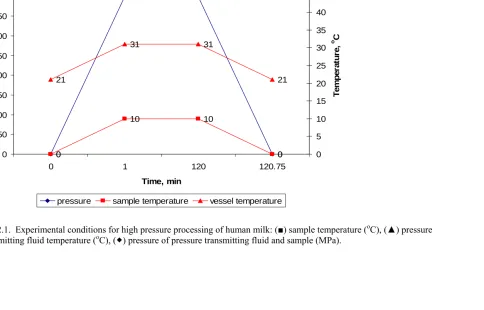
2.1. Experimental conditions for high pressure processing of human milk... 82
2.2. Effects of high pressure processing and low temperature long time pasteurization on lysozyme activity ... 83
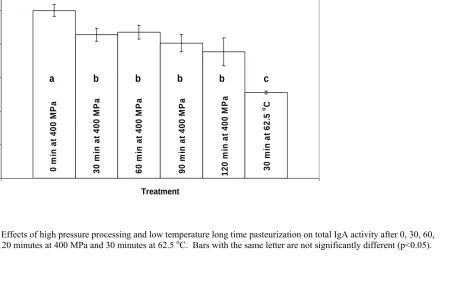
2.3. Effects of high pressure processing and low temperature long time pasteurization on total IgA activity ... 84
CHAPTER 3. 3.1. Inactivation of pathogens in human milk by LTLT pasteurization ... 119
3.2. Inactivation of Escherichia coli ATCC 25922 by HPP. ... 120
3.3. Inactivation of Listeria monocytogenes ATCC 19115 by HPP ... 121
3.4. Inactivation of Staphylococcus aureus ATCC 6538 by HPP. ... 122
3.5. Inactivation of Staphylococcus aureus ATCC 25923 by HPP ... 123
LIST OF TABLES
CHAPTER 1.
1.1. Qualitative Results from Various Treatments on Human Milk ... 12 1.2. General Summary of Immune Benefits of Human Milk. ... 15 1.3.1. Retention of key biochemical components in human milk by LTLT
pasteurization ... 18 1.3.2. Major Biochemical Component Retention in Raw and Pasteurized Human Milk .... 19 1.3.3. Effects of Pasteurization on Antmicrobial Factors in Human Milk ... 20 1.4. Antigen specificity of antibodies in human milk ... 31 1.5. Approximate Heat Resistance and Pressure Resistance of Some Pathogenic
Bacteria ... 39
CHAPTER 3.
3.1. D-values (min) of pathogens after HPP at 400 MPa in human milk and peptone
CHAPTER 1
Literature Review 1.1. Introduction
Human milk is a superior nutritional source, tailored to meet the specific
requirements of infants. It has been shown to decrease the incidence of various diseases,
such as the severity of diarrhea, bacteremia, bacterial meningitis, and urinary tract
infections. It has also been shown to provide protection against allergic and digestive
diseases. Breast milk provides the infant with immunoglobulins like Immunoglobulin A
(IgA) that serve to strengthen the immune system of the newborn by inactivating harmful
microorganisms, and generating antibacterial compounds. In addition to specific
antibodies, human milk contains non-specific beneficial factors including lactoferrin,
lysozyme, and several other biochemical compounds that help protect the infant against
pathogenic bacteria. All these factors, along with oligosaccharides, essential fatty acids,
proteins and minerals, contribute to the uniqueness of human milk as a food source for
the newborn, and provide an essential means of promoting health and growth in the early
stages of life.
Currently the Human Milk Banking Association of North America governs and
oversees the collection, pasteurization, and distribution of human milk to those in need.
Milk banks are a useful resource in helping infants that are born prematurely, that have
allergies, feeding formula intolerance, immunologic deficiencies, infectious diseases, or
can help with post-operative nutrition or treatment of inborn errors of metabolism
(Lactation Center and Mothers’ Milk Bank Wake Med, 2000). Other reasons for
from mother to the infant, or death of the mother (Human Milk Banking Association of
North America, 2000; Beckwith, 2000). The safety of the banked human milk must be
guaranteed due to the state of the patients that receive it.
One of the most serious problems that milk banks encounter is bacterial
microorganisms. Pathogenic microorganisms that may exist in human milk can be due to
clinical mastitis caused by bacteria such as Staphylococcus aureus and Streptococcus
agalactiae, which may contaminate the milk and render it unsafe for infant consumption. Furthermore, inadequate sanitation during handling could result in contamination by
pathogens such as Escherichia coli and Listeria monocytogenes. The presence of these and other microorganisms necessitates the pasteurization of human milk before its use.
Human milk banks process the donor milk using Low Temperature Long Time (LTLT)
pasteurization, a process by which it is treated at 62.5 oC for 30 minutes.
It has been shown that even though LTLT thermal pasteurization of human milk
guarantees microbial safety, it is also responsible for significant loss of basic key
biochemical components crucial to the growth and development of the infant.
Antimicrobial components in breast milk, such as IgA and lysozyme, lose their activity
by up to 20 to 30%, while lactoferrin can lose as much as 80% of its activity as a
consequence of LTLT pasteurization. High pressure processing has the potential to offer
a possible solution to this problem.
High Pressure Processing (HPP) is a non thermal process which was first
demonstrated more than a century ago, but has only recently caught the interest of food
industries around the world. Using this technology, industry is able to process solid and
quality food product with an extended shelf-life. Currently, HPP is being used
commercially to produce fruit jellies and jams, fruit juices, pourable salad dressing, foie
gras, ham, guacamole, as well as raw oysters for shucking.
The goal of this project was to provide scientific evidence that indicates whether
HPP is an acceptable alternative to LTLT pasteurization of human milk in terms of
microbial safety and retention of biochemical nutrient quality. The objectives of the
project were: a) To determine whether high pressure processing can eliminate five
relevant pathogenic microorganisms: Escherichia coli ATCC 25922, Listeria
monocytogenes ATCC 19115, Staphylococcus aureus ATCC 6538 and ATCC 25923, and Streptococcus agalactiae ATCC 12927,and b) to quantify the retention or loss of key biochemical components, such as total IgA and lysozyme, in human milk treated by HPP.
1.2. High Pressure Processing
High Pressure Processing (HPP) was first demonstrated more than a century ago,
but has only recently attracted the interest of food industries around the world. This
non-thermal process is primarily used for the large-scale production of ceramic and carbide
components, but has potential to be fully adopted by the food industry (Farr, 1990). This
recent trend is due to the demand for high quality products without additives and
extensive processing, but which are also microbiologically safe (Balci and Wilbey, 1999).
High pressure processing uses pressures of 100 to 800 MPa to treat solid and liquid foods
and provide a microbiologically safe and nutritionally high quality product (U.S. FDA,
2000). The efficacy of HPP depends on a series of factors such as pH, temperature, time,
high-value-added products, thus rendering the process relatively costly (Farr, 1990; U.S. FDA,
2000; Balci and Wilbey, 1999).
A typical HPP unit is composed of a high pressure vessel and its closure, a
pressure generation system, a temperature sensing device, and a material handling
system, along with a pressure transmitting medium, which usually is water mixed with
minute amounts of oil (Balci and Wilbey, 1999). The application of pressure acts
uniformly throughout the food mass, making a wide array of package size, shape, and
composition characteristics acceptable for processing (U.S. FDA, 2000). It has been
shown that there is minimal destruction of nutrient, color, and flavor components as HPP
only affects weak chemical bonds, and since many proteins are pressure stable, the food
quality is not jeopardized by the processing (Shook et al., 2001; Tewari et al., 1999;
Hendrickx et al., 1998). However, different foods react to high pressure in different
ways, resulting in various quality deviations, and thus their composition must be taken
under consideration and evaluated before selecting HPP as a process (Hoover et al.,
1989). Overall, HPP offers a number of advantages compared to other non-thermal and
thermal processes. These include reduced processing times, minimal heating, freshness,
flavor, texture, and color quality retention (Tewari et al., 1999). In addition, there is
insignificant vitamin C loss (Tewari et al., 1999), while Maillard reactions are not
initiated. The process also allows for production of sous vide foods even though they are
not thermally treated (Gross and Jaenicke, 1993).
There have been extensive studies on the capabilities of HPP in destroying
pathogens and maintaining food quality by denaturing certain enzymes. It has been
higher success rate in destroying bacterial cells in the growth phase when compared to
cells in the stationary phase (Mussa et al., 1999; U.S. FDA, 2000; Hoover et al., 1989;
Mussa and Ramaswamy, 1997; Smelt et al., 2002; Gross ad Jaenicke, 1993). Some of
the microorganisms studied include Listeria monocytogenes, Escherichia coli,
Staphylococcus aureus, and Salmonella spp. In general, Gram-negative microorganisms are more pressure sensitive than Gram-positive microorganisms (Smelt et al., 2002;
Mussa et al., 1999; Mussa and Ramaswamy, 1997). In addition to destroying pathogens
at pressures of 300 to 400 MPa, studies have shown that proteins can be preserved within
this pressure range, thus allowing HPP to provide a safe product of high quality (Balci
and Wilbey, 1999; Hayakawa et al., 1996; Hendrickx et al., 1998).
High pressure processing is used commercially to produce fruit jellies and jams,
fruit juices, pourable salad dressing, raw squid, rice cakes, foie gras, ham, guacamole, as
well as raw oysters for shucking (U.S. FDA, 2000; Hendrickx et al., 1998). Specifically,
small-scale production of high pressure processed foods has been established with the
production of fruit-based products in Japan, orange juice in France, and avocado dip in
the U.S.A. The processing cost at 400 MPa for 10 minutes at 20 oC ranges from 0.1 to
0.5 ECU (Economic currency unit) per kg of food, with the lower end being closer to
thermal processing ranges (Cheftel and Culioli, 1997). Even though HPP has been
suggested for the pasteurization of bovine milk, the lack of convincing, solid scientific
evidence to guarantee the effectiveness of the process has postponed the
commercialization of HPP milk pasteurization indefinitely (Mussa and Ramaswamy,
1997). It has been suggested that high pressure processing has the potential to be
combination with other treatments in order to increase its effectiveness (Hoover et al.,
1989; Ross et al., 2003).
There have been several studies designed to combine non-thermal technologies to
better control food-borne microorganisms. In particular, non thermal processes such as
HPP, pulsed electric fields, ionizing irradiation and ultrasonication have been able to
inactivate microorganisms (Ross et al., 2003). However, when these processes are
combined with traditional preservation techniques (for example the addition of
antimicrobial components like lysozyme), their antimicrobial effect is enhanced and the
intensity of the process maybe reduced (Ross et al., 2003). Other studies have shown that
the shelf life of bovine milk can be significantly extended by more than 2 months once
treated with pulsed electric fields after traditional thermal pasteurization treatment
(Sepulveda et al., 2005). High pressure processing has shown great promise for treating
foods, since it results in a product with better quality compared to thermal treatment,
while the effects on product color depend on the product itself (Matser et al., 2004).
High pressure processing has the potential to be established as a food preservation
process, when it is used in combination with other treatments (Hoover et al., 1989; Ross
et al., 2003). The bioactive antimicrobial components of human milk could potentially
provide that additional treatment to improve its effectiveness.
1.3. Human Milk
1.3.1 Benefits
According to the American Academy of Pediatrics (1997), breastfeeding of
diseases, such as the severity of diarrhea, lower respiratory infection, otitis media,
bacteremia, bacterial meningitis, and urinary tract infection, in addition to protection
against allergic diseases, digestive diseases, Crohn’s disease and many others (American
Academy of Pediatrics, 1997). Even though children acquire some immunological
assistance from the mother during pregnancy, it is during breastfeeding that the infant
gains extra protection from antibodies, other proteins and immune cells from human milk
(Newman, 1995).
The antibodies that are present in human milk are the immunoglobulins A, G, M,
D and E, with IgA being the most abundant, and these provide protection from various
pathogens (Newman, 1997). Milk- specific and plasma proteins also include beta-casein,
kappa-casein, alpha lactalbumin, serum-albumin and C3, and C4 complement fractions
(Montagne et al., 2000). In addition to the immune antibodies, human milk also contains
certain non specific beneficial factors including lactoferrin, B12-binding proteins,
lysozyme, and several other biochemical compounds that help protect the infant against
infection (Ford et al., 1977). Furthermore, there are compounds that contribute to the
intestinal health of the infant. One of the factors that are crucial to the efficacy of
digestion of milk lipids is bile-salt-stimulated lipase (BSSL) (Stromqvist, 1997;
Blackberg and Hernell, 1981). Without bile-salt-stimulated lipase, absorption of milk
lipids is decreased by 33% in preterm infants, thus rendering it critical to their health and
growth (Blackberg and Hernell, 1981). Furthermore, human milk contains transforming
growth factor alpha and beta 2, which are involved in growth differentiation and repair of
neonatal intestinal epithelia (McPherson and Wagner, 2001). The importance of human
properties but also include nutritional components such as oligosaccharides, fatty acids,
various other proteins, and an abundance of vitamins and minerals (Newman, 1997).
1.3.2. Human Milk Bank Guidelines
In the early 1900’s, the first milk bank was formed in Boston in response to the
growing recognition that human milk was associated with reduced mortality rates
amongst breast fed infants. After World War II, interest in banked donor milk decreased
dramatically due to the increase in artificial feeding options. In the 1970’s there was
resurgence in interest for human milk due to advances in neonatology. This resulted in
higher survival rates for sick or premature infants (Lactation Center and Mothers’ Milk
Bank, Wake Med, 2000). Unfortunately though, there was yet another decrease of
human milk banks in the 1980’s due to the emergence of the Human Immunodeficiency
Virus (HIV) (Beckwith, 2000). Human milk banks have come a long way since then.
There are eight milk banks in North America. They comprise what is known as the
Human Milk Banking Association of North America (HMBANA), which was established
in 1985 and includes the Lactation Center & Mothers’ Milk Bank at WakeMed Hospital
in Raleigh, North Carolina.
Some of HMBANA’s goals include the guarantee of high quality donor human
milk, and providing the opportunity for experts in the field to network on issues related to
human milk. Furthermore, HMBANA encourages research on the unique properties of
human milk and its uses, and promotes information to the medical community on the
benefits of banked donor human milk (Lactation Center and Milk Bank Wake Med,
2000). By setting these goals and adhering to the pursuit of their achievement,
of neonatology and human milk. The high quality of donor human milk must be
maintained to satisfy the needs of infants who would otherwise have had lower chances
of surviving without it.
One of the most serious problems that milk banks face is microbial
contamination, mostly by natural microflora, but also from pathogenic microorganisms
(Wills et al., 1982). The source of microbial contamination could result from poor
sanitation and handling methods, and from the donor’s state of health. To this end,
HMBANA has provided a screening protocol to monitor the state of health of the donor
before accepting their donation of human milk. Specifically, the screening process
requires that the donors be tested for Human Immunodeficiency Virus-1, Human
Immunodeficiency Virus-2, Human T-cell lymphotropic virus, Hepatitis B, and Hepatitis
C, thus minimizing the threat that these viruses will enter the human milk supply (Human
Milk Banking Association of North America, 2000). In addition, pathogenic
microorganisms that may exist due to clinical mastitis, such as Staphylococcus aureus and Streptococcus agalactiae could infect the milk and render it unsafe. Furthermore, inadequate sanitation during handling could result in contamination by pathogens such as
Escherichia coli and Listeria monocytogenes. Human milk banks have established the use of LTLT pasteurization to effectively eliminate pathogenic microorganisms.
Processing donor human milk to guarantee its safety is done using thermal
pasteurization. Donor milk is received frozen, defrosted within 48 hours, and pooled
with other donor milk for maintenance of uniform composition and processing. Each
pool of milk is screened for general microflora levels through standard plate counts,
bottle is placed in the water bath to monitor milk temperature during heat processing.
Once the control milk bottle reaches a temperature of 62.5 oC, the aliquots are held for 30
minutes following the holder pasteurization protocol. Milk temperature should never
exceed 72oC. After cooling the milk and freezing it for proper storage, it is distributed
frozen. The final product is available chilled or thawed for up to 72 hours at 4oC for
immediate use (Human Milk Banking Association of North America, 2000). Because of
the risk of viruses like human immunodeficiency virus, human T-lymphoma virus and
cytomegalovirus, using untreated, fresh donor milk for infants is almost nonexistent, with
the exception of Germany where donors’ health is closely monitored (Tully et al., 2001).
1.4. Pasteurization Processes
The most common method of human milk pasteurization today, particularly in
North America, is LTLT pasteurization. According to HMBANA, the United Kingdom
Association for Milk Banking and other national milk banking guidelines for donor milk,
LTLT pasteurization is a required method for processing donor human milk (Tully et al.,
2001). This method is the most easily applicable in terms of staff training and equipment
availability and is based on the commercial pasteurization of cow’s milk, which was
originally designed to destroy Mycobacterium tuberculosis (Wills et al., 1982). Unfortunately, the process has the disadvantage of degrading key biochemical
components of the milk (McPherson and Wagner, 2001; Ford et al., 1977; Wills at al.,
1982; Blackberg and Hernell, 1981; Young et al., 1979; Chen and Allen, 2001; Bjorksten
et al., 1980). Some of the alternative processes that have been explored include High
Temperature Short Time pasteurization (HTST) (Chen and Allen, 2001) and the use of
pasteurization has been found to be a superior alternative to LTLT with regard to
microbial safety and nutrient retention, but it is not practical for a human milk bank
setting. The reason that HTST is not suitable for a milk bank setting is that the
equipment needed for small volumes of milk are not available (Jensen, 1992), in addition
to the need for extensive training. Microwave pasteurization was found to be as effective
as LTLT pasteurization on a microbial safety level, yet inadequate with respect to
retention of biochemical components (Sigman et al., 1989). In a study conducted by
Carbonare et al. (1996), it was shown that microwave treatment, LTLT pasteurization and
lyophilization do not alter the ability of human milk and colostrum to protect from
Escherichia coli, yet IgA concentration was reduced after each treatment. The shelf life of bovine milk can be extended by more than two months using a pulsed electric field
treatment following traditional thermal pasteurization (Sepulveda et al., 2005). Similar
work has not been performed on human milk, nor could it be feasible for a milk bank
setting, but may be taken under consideration in the future.
The pasteurization process used for human milk was originally designed for
cow’s milk. However human milk contains antimicrobial components at higher levels
than present in cow’s milk. The thermal treatment from LTLT is more than required for
the microbial safety of the human milk, which can be accomplished at a lesser hold time
(Wills et al., 1982). An undesired result of LTLT pasteurization is the biochemical
degradation of human milk components. In general, several studies have indicated a
significant loss of biochemical nutrients due to LTLT pasteurization of human milk
(McPherson and Wagner, 2001; Ford et al., 1977; Wills at al., 1982; Blackberg and
human milk banks abroad have even gone as far as to prefer distributing raw donor
human milk to pasteurized human milk. This is mainly because thermal processing of
human milk makes it more susceptible to bacterial contamination if processed
improperly. This can be attributed in part to a significant loss of antimicrobial
components that would normally act against these microorganisms (Bjorksten et al.,
1980). Table 1.1 summarizes methods used to process human milk, and their effects on
its composition.
Table 1.1. Qualitative Results from Various Treatments on Human Milk (Jensen and Jensen, 1992).
Treatment Results Refrigerated storage
4oC, 72 hr Creaming, decrease in bacterial growth,
possible lipolysis
-20oC, 12 months Lipolysis, possible demulsification and
protein denaturation when thawed
-70oC, indefinite Possible demulsification and protein
denaturation when thawed Pasteurization
56oC, 30 min Inactivation of enzymes and antimicrobial
proteins, partial loss of some vitamins, destruction of microorganisms
62.5oC, 30 min Inactivation of enzymes and antimicrobial proteins, partial loss of some vitamins, destruction of microorganisms
70oC, 15 sec Inactivation of enzymes and antimicrobial
proteins, partial loss of some vitamins, destruction of microorganisms
Microwave treatment Decrease in IgA and lysozyme, substantial decrease increase in coliforms
Sonication Homogenization of milk fat globules
Selection Selection of high protein milks, use of
high-fat hindmilk
Supplementation Addition of nutrients for preterm infants
Processing Treatment of milk to isolate fats, proteins,
1.5. Biochemical Nutrient Functions and Quality
1.5.1 Biochemical Components in Human Milk
According to Newman (1995), breast-fed infants gain extra protection from
antibodies, other proteins and immune cells in human milk. Human milk contains an
abundance of beneficial biochemical components that contribute to the initial
development stages of the infant’s immune system and provide an adequate defense
mechanism against potential environmental threats. Specifically, the antibodies present
in human milk include IgA, IgD, IgE, IgG, and IgM, with IgA being the most abundant
type (Newman, 1995). Antibodies of the secretory IgA class bind to microbes in the
infant’s digestive tract and prevent them from passing through the walls of the gut and
into the body’s tissues (Newman, 1995). IgA is produced by secretory cells as a dimeric
molecule comprised of two pairs of heavy and light chains linked by a secretory
component and a J chain (Weaver et al., 1998). In particular, they help block adhesion of
microorganisms to the intestinal epithelium and neutralize microbial toxins (Bernt and
Walker, 2001). Secretory immunoglobulins are resistant to digestion in the gut and
account for the lower incidence of enteric disease among breast-fed infants when
compared to formula fed infants (Newburg, 2001; Pickering and Ruiz-Palacios, 1986).
There are several other non-specific factors that promote a healthy immune
system for the infant. B12-binding protein is known to reduce the amount of vitamin B12,
which bacteria need to grow, while lactoferrin is a glycoprotein, which binds to iron, thus
reducing the amount of iron available for bacteria to use in growth (Newman, 1995;
Newburg, 2001). Lysozyme is known to inactivate Gram-positive bacteria by disrupting
alternating beta-linked (1-4) copolymer of glucosamine and
N-acetyl-D-muramic acid (McKenzie and White, 1986). Bile salt-stimulated lipase ensures
triacylglycerol utilization, thus promoting milk lipid digestion (Blackberg and Hernell,
1981; Blackberg and Hernell, 1993; Stromqvist et al., 1997). Other components include
lactoperoxidase, which in the presence of thiocyanate and peroxide inhibits a variety of
bacteria and viruses, but exists in small concentrations in human milk (Ford et al., 1977).
Fibronectin increases the antimicrobial activity of macrophages and helps repair tissues
that have been damaged by immune reaction in the infant’s gut. Oligosaccharides bind to
microorganisms and prevent them from attaching to mucosal surfaces, while fatty acids
disrupt membranes that surround specific viruses and destroy them (Newman, 1995).
Furthermore, human milk contains transforming growth factor alpha and beta 2, which
are involved in growth differentiation and repair of neonatal intestinal epithelia
(McPherson and Wagner, 2001).
Glycoconjugates and oligosaccharides are a major class of human milk
biochemical components that provide significant assistance to the early defensive
mechanism of the infant. These are mostly indigestible and perform a non-nutritive
function (Newburg, 2001). These glycoconjugates are mostly glycosphingolipids that are
attached to the membrane of the human milk fat globule and are able to mimic the
carbohydrate structure of the host cell receptor, bind to the pathogen, and prevent
infection (Newburg, 2001). In addition to glycoconjugates, some fatty acids have been
shown to protect the infant against pathogens by disrupting virus envelopes (Bernt and
Walker, 2001). A summary of the antimicrobial components of human milk is provided
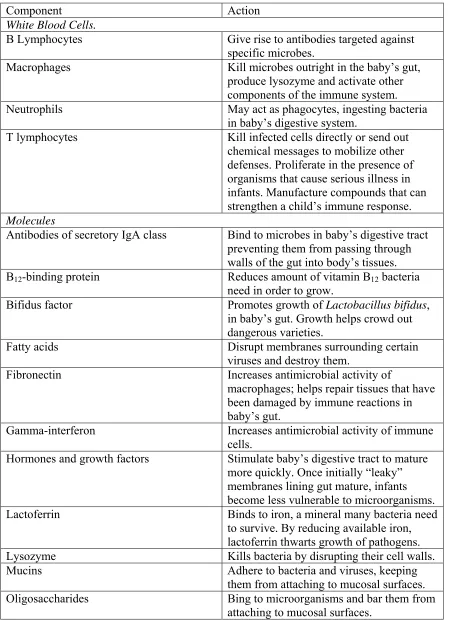
Table 1.2. Summary of Immune Benefits of Human Milk (Ford et al., 1977).
Component Action White Blood Cells.
B Lymphocytes Give rise to antibodies targeted against
specific microbes.
Macrophages Kill microbes outright in the baby’s gut,
produce lysozyme and activate other components of the immune system.
Neutrophils May act as phagocytes, ingesting bacteria
in baby’s digestive system.
T lymphocytes Kill infected cells directly or send out chemical messages to mobilize other defenses. Proliferate in the presence of organisms that cause serious illness in infants. Manufacture compounds that can strengthen a child’s immune response. Molecules
Antibodies of secretory IgA class Bind to microbes in baby’s digestive tract preventing them from passing through walls of the gut into body’s tissues. B12-binding protein Reduces amount of vitamin B12 bacteria
need in order to grow.
Bifidus factor Promotes growth of Lactobacillus bifidus, in baby’s gut. Growth helps crowd out dangerous varieties.
Fatty acids Disrupt membranes surrounding certain
viruses and destroy them.
Fibronectin Increases antimicrobial activity of
macrophages; helps repair tissues that have been damaged by immune reactions in baby’s gut.
Gamma-interferon Increases antimicrobial activity of immune cells.
Hormones and growth factors Stimulate baby’s digestive tract to mature more quickly. Once initially “leaky” membranes lining gut mature, infants become less vulnerable to microorganisms.
Lactoferrin Binds to iron, a mineral many bacteria need
to survive. By reducing available iron, lactoferrin thwarts growth of pathogens.
Lysozyme Kills bacteria by disrupting their cell walls.
Mucins Adhere to bacteria and viruses, keeping
them from attaching to mucosal surfaces.
Oligosaccharides Bing to microorganisms and bar them from
1.5.2. Biochemical Components and LTLT
One of the earliest studies conducted on the effects of heat treatment on human
milk was conducted by Ford et al. (1977), with many studies since. Ford et al. (1977)
and Blackberg and Hernell (1981), demonstrated that thermal pasteurization of human
milk leads to poor retention of key biochemical nutrients. Specifically, it was shown that
LTLT reduced IgA by 20% and completely destroyed IgM. A later study by Chen and
Allen (2001) reported thattotal IgA values in human milk were not significantly
decreased by LTLT pasteurization, but instead IgA activity towards Escherichia coli decreased with both LTLT and High Temperature Short Time (HTST) pasteurization.
Other components such as IgG and IgM were also shown to be significantly destroyed
after the same treatment (Young et al., 1979). A study performed by Wills et al. (1982)
further demonstrated the sensitivity of biochemical nutrients to thermal pasteurization,
since treating human milk for 30 minutes at 62.5 oC resulted in IgA being reduced to 67%
of its original concentration, while after reducing the treatment time to 5 minutes, 77% of
the original concentration IgA remained.
Pasteurization has been shown to also inactivate Bile-Salt-Stimulated Lipase,
leading to a decrease in absorption of milk lipids in preterm infants (Blackberg and
Hernell, 1981). In a study by Wills et al. (1982), it was shown that LTLT reduced
lactoferrin to 27% and lysozyme to 67% of their original content. Accordingly, other
studies have shown complete destruction of IgA, IgG, lactoferrin, lysozyme and C3
complement after pasteurizing human milk at 73 oC for 30 minutes (McPherson and
Wagner, 2001). B12-binding protein, lactoperoxidase and most of lactoferrin were also
process, even though at increased temperatures it was completely eliminated (Ford et al.,
1977). However, complete destruction of the components (loss of 100%) occurred at
relatively higher temperatures than the holder pasteurization protocol would allow.
Furthermore, lactoperoxidase could have possibly been non-existent during the test due to
the long interval between its collection and the assay (Ford et al., 1977). It is evident that
heat denaturation of proteins in human milk is undesirable but also unavoidable (Ford et
al., 1977).
It has been reported that both transforming growth factor alpha and beta 2 were
preserved without significant decreases in their immunoreactivity in human milk
undergoing LTLT pasteurization although the issue of bioactivity has not yet been
addressed (McPherson and Wagner, 2001). A study conducted by Lepri et al. (1997) has
shown that holder pasteurization reduced fats by 6%, L-lactate by 7% and subsequent
storage resulted in triglyceride hydrolysis, while the amount of free fatty acids that was
present doubled after the treatment and rose during storage.
The actual amount of each biochemical component that was lost from thermal
pasteurization varied among studies performed due to discrepancies in methods. In
general, the amount of IgA lost ranged from 20% to 100%; IgG from 34% to 100%; IgM
was completely lost; lactoferrin from 27% to 100%; lysozyme was relatively stable but
could also be lost at 23%, and most of B12-binding protein was lost, as was BSSL. A
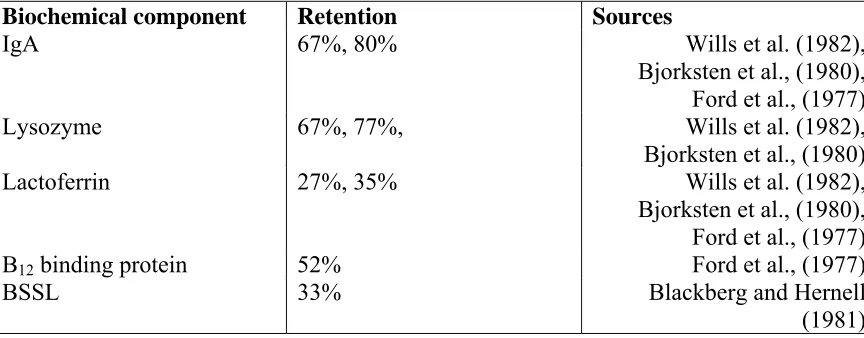
summary of the retention of key biochemical components in human milk after LTLT
Table 1.3.1. Retention of key biochemical components in human milk by LTLT pasteurization.
Biochemical component Retention Sources
IgA 67%, 80% Wills et al. (1982),
Bjorksten et al., (1980), Ford et al., (1977)
Lysozyme 67%, 77%, Wills et al. (1982),
Bjorksten et al., (1980)
Lactoferrin 27%, 35% Wills et al. (1982),
Bjorksten et al., (1980), Ford et al., (1977)
B12 binding protein 52% Ford et al., (1977)
BSSL 33% Blackberg and Hernell
Table 1.3.2. Major Biochemical Component Retention in Raw and Pasteurized Human Milk [Wills et al., (1982) and Ford et al., (1977)].
Major Biochemical Components
Raw Human Milk LTLT Pasteurized Human Milk
Activity Retention (%)
IgA (IU/ml) 19.2 (8-71.5) 13.0 (5-52) 67 (53-83)
Lysozyme (μg/ml) 101.1 (24-175) 65.8 (14.2-121) 67 (53-88) Lactoferrin (μg/ml) 3.8 (1.5-9.1) 1.0 (0.4-3.2) 27 (20-37) B12 binding protein
(ng/ml)
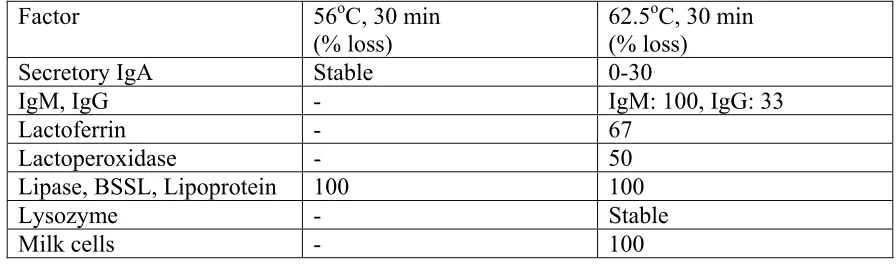
Table 1.3.3. Effects of Pasteurization on Antimicrobial Factors in Human Milk (Jensen, 1992).
Factor 56oC, 30 min
(% loss)
62.5oC, 30 min (% loss)
Secretory IgA Stable 0-30
IgM, IgG - IgM: 100, IgG: 33
Lactoferrin - 67
Lactoperoxidase - 50
Lipase, BSSL, Lipoprotein 100 100
Lysozyme - Stable
In general, studies have indicated a significant loss of biochemical nutrients due
to LTLT pasteurization of human milk (McPherson and Wagner, 2001; Ford et al., 1977;
Wills at al., 1982; Blackberg and Hernell, 1981; Young et al., 1979; Chen and Allen,
2001; Bjorksten et al., 1980). Even though LTLT pasteurization of human milk is the
most widely used method, it has been suggested that it includes redundant thermal
treatment to secure microbial safety (Wills et al., 1982) which results in diminished
nutritive value (Young et al., 1979).
1.5.2.1 Heating and Biochemical Assays
1.5.2.1.1 Low Temperature Long Time pasteurization methods
The method used by Ford et al. (1977) to heat treat milk involved obtaining 1.5
ml samples of pooled human milk, placing them into small glass ampoules, heating them
in a bath of detergent at 62.5 oC, cooling them in ice water and then storing them at -30
oC until it was time for them to be tested.
To examine the effects of LTLT pasteurization on human milk, Chen and Allen
(2001) obtained human milk from multiple donors and pooled it to a volume of 300 ml.
Heat treatment was performed in a 65 oC water-bath, while glass bottles of donor milk
were capped and placed in the water-bath for 30 minutes after reaching 63 oC internal
temperature, and were then cooled in an ice bath. The samples were kept at 4 oC or -20 oC
before any testing was performed.
1.5.2.1.2. Immunoglobulin A
Most of the studies that measure IgA use the technique developed by Mancini et
immunoassay specially developed to determine IgA activity in human milk. IgA
determinations were performed by conventional immunonephelometric assays often used
in human serum, except they were applied to human milk samples, which were
preclarified with 1,1,2-trichlorotrifluoroethane prior to dilution. Following the mixture of
the diluted human milk sample or the standard anti-human IgA with the diluent in a
microcuvette, the scattered light was measured by a Nephelia 600 nephelometer
(Montagne et al., 2000).
Ford et al. (1977) determined the activity of IgA in human milk using the
technique of Mancini et al. (1965) with Boehringer low-level ICL immunoglobulin
plates, and raising antisera against serum immunoglobulins (Ford et al., 1977).
Chen (1998) used a modified indirect enzyme linked immunosorbent assay
(ELISA), on which flat bottom, high binding microwell plates were used to bind
Escherichia coli antigens specific to IgA antibodies. Immunoglobulin A antibodies from human milk and colostrum standards were bound onto the antigen. Subsequently,
horseradish peroxidase (HRP) conjugated goat anti-human IgA (alpha-chain specific)
was bound onto the IgA antibodies and finally, 2,
2’-azinodi-3-methylbenzothiazoline-6-sulfonic acid (ABTS) was used as a substrate. A plate reader was used to measure the
absorbance at 405nm.
To prepare the antigen, the Escherichia coli serotypes O1, O2, O4, O6, O7, O8, O18, O75 were grown in nutrient broth (Tryptic Soy Broth) at 37 oC, and a pooled
Escherichia coli cocktail of concentration of approximately 108-109 cells/ml was
obtained. The bacteria were centrifuged at 4000 rpm for 10 minutes, resuspended in 0.01
minutes. The bacterial concentration was adjusted to approximately 5 x 10⁹cells/ml and
the solution was then transferred to a water bath and boiled for two hours. After cooling
for 10 to 15 minutes, the supernatant was saved and used as the antigen for the ELISA.
1.5.2.1.3. Lysozyme
Smolelis and Hartsell (1949) used a method for lysozyme assay based on a
comparison of light transmissions of crystalline lysozyme dilutions with the values for
the substance being tested, after the addition of susceptible cells and incubation. The
organism used for the assay was Micrococcus lysodeikticus (Fleming, ATCC 4698). These cells were cultured for 18 hours at 37 oC and harvested in phosphate buffer. The
suspension was then exposed to ultraviolet light which allowed for a few living cells, and
was then collected, and dried in a vacuum. At measured intervals a 5-ml quantity of the
lysozyme dilution was mixed with 5-ml of the cell suspension and the same procedure
was followed for the material being analyzed. Following 20 minutes of incubation time
at room temperature, the light transmissions for the various mixtures were recorded and
the concentration of the unknown was determined by plotting a standard curve of the
crystalline lysozyme mixtures and projecting on the same plot the unknown values on a
log scale.
McKenzie and White (1986) reported that previous methods for determination of
lysozyme in milk are not sensitive enough to accurately ensure a valid measure of the
level of lysozyme in the sample tested. This is due to the fact that previous studies used
large volumes of sample compared to the substrate thus leading to difficulties in
determining activity of lysozyme directly on milk because of opacity and other potential
milk involved using Micrococcus lysodeikticus and domestic hen egg white, along with “Desicote”, Polycarbonate tubes and a Zeiss model PM-II spectrophotometer. The
substrate was made by mixing a sample of the inactivated cell preparation with buffer.
The mixture was incubated 2 h at 37oC. A stock solution of hen egg white lysozyme was
prepared and the lysozyme concentration was measured by absorption at 280 nm. The
milk samples were skimmed by centrifugation at 2000 x g for 20 minutes at 2oC in a
Sorvall RC-5 centrifuge.
Montagne et al. (2000) used microparticle-enhanced nephelometric
immunoassays specifically developed to determined lysozyme activity in human milk.
Unknown diluted whole milk as well as serial dilutions of protein standard,
microparticle-protein conjugate and diluted specific antiserum was mixed in a reaction
microcuvette with nephelometry buffer to give a final volume of 300 μl. The scattered
light was then measured with a nephelometer equipped with a helium-neon laser.
Conventional nephelometry has two drawbacks. Its sensitivity constrains to test milk
samples at weak dilution and needs pretreatment of the sample, and samples with high
protein concentrations should be reassayed at higher dilution to minimize the risk of
underestimation by antigen excess (Montagne et al., 2000).
A lysozyme enzyme assay was developed by Sigma-Aldrich, based on the assay
used by Shugar (1952). According to this method a 2.5 ml sample of Micrococcus
lysodeikticus cell suspension is combined with a 0.1 ml sample of lysozyme enzyme solution, or an unknown solution that contains lysozyme, and mixed in a cuvette. After
5 minutes. The activity of lysozyme in the sample is determined through calculating the
maximum linear rate.
1.5.3. Proteins and HPP
There has been, and continues to be, extensive research on the influence of HPP
on proteins and their functions. There are four levels of protein structure which can be
distinguished from one another. The primary structure is the amino acid sequence that
contains covalent bonds, while the secondary structure corresponds to the formation of
alpha and beta helices by the polypeptide using hydrogen bonds (Hendrickx et al., 1998).
The tertiary structure is made of secondary structures folded into a three dimensional
structure using non-covalent bonds between the amino acid chains, while the quaternary
structure comprises the arrangement of the subunits held together by non-covalent bonds
between the polypeptides (Hendrickx et al., 1998). These structures are characterized by
a very sensitive balance of interactions, leading to a complicated response to shifting
surrounding pressure. Single-chain proteins are unlikely to undergo any significant
structural change at pressures below 400 MPa. In contrast to thermal denaturation,
pressures below 400 MPa cause reversible protein denaturation and the effect of pressure
is only temporary (Hayakawa et al., 1996).
In general, most proteins denature when exposed to pressures above 400 MPa
(Balci and Wilbey, 1999; Gross and Jaenicke, 1993). Sensitivity in pressure varies with
the type of bonds involved in the structure of the protein, and it has been shown that
structures with β-sheets are more stable to pressure than structures with α-helices (Balci
and Wilbey, 1999; Gross and Jaenicke, 1993). On the other hand, submitting proteins to
similar to that caused by thermal processing, while pressures of around 1000 MPa were
found to cause protein denaturation more extensively than seen with thermal inactivation
(Hayakawa et al., 1996; Hendrickx et al., 1998). Therefore, at room temperature, there is
a lower denaturation rate for proteins treated at pressures under 400 MPa as compared to
treatment at pressures over 400 MPa (Balci and Wilbey, 1999). It has been suggested
that water surrounding the protein may be responsible for protecting the protein from
denaturation through hydrogen bonding (Hayakawa et al., 1996).
1.5.3.1 HPP and Blood Plasma
Human milk is considered a bodily fluid, as is plasma and other secretions of the
human body. Therefore, the effects of HPP on other bodily fluids like blood plasma can
help understand how human milk could potentially respond to such a treatment. There
have been a series of studies performed on the effects of high pressure processing on
porcine blood plasma. These studies have focused on the reduction of microbial
contamination, protein functionality, the emulsifying and gelling properties of porcine
blood plasma as affected by high hydrostatic pressure (Pares et al., 2000; Pares and
Ledward, 2001; Pares et al., 2001). It was shown that a high hydrostatic pressure of 450
MPa for 15 minutes at 25oC was effective in significantly improving the microbiological
quality of porcine blood plasma (Pares et al., 2001). The initial contamination of the
blood was unavoidable, but the process could limit and control the proliferation of the
natural microflora present (Pares et al., 2001). The functionality of blood plasma proteins
was not affected at pressures of 300 MPa, while at pressures above 400 MPa there were
some changes, depending on pH (Pares and Ledward, 2001). It was shown that at pH 6.5
properties of porcine plasma without affecting the characteristics of heat-induced gels in
a negative way; at pressures over 400 MPa there was reduced emulsifying activity and
stability (Pares and Ledward, 2001). When porcine blood plasma was treated at 450 MPa
for 15 minutes at 40oC, there was more protein denaturation, and a decrease in solubility
at neutral pH than when treated at 5oC (Pares et al., 2000). This treatment was proposed
as an alternative to heat treatment with regard to microbiological quality and gelling
properties of porcine plasma (Pares et al., 2000).
1.5.3.2. Dairy and Egg proteins
The exact effect that high pressure processing has on proteins, and especially
dairy and egg proteins, depends on various factors like pH, the type of protein,
temperature, the applied pressure, and ionic strength. These factors give varied results
such as coagulating, gelling, or denaturing of the protein (Ahmed et al., 2003).
There have been studies on the effects of high pressure processing on dairy
products as well as dairy and egg proteins. These have provided results that are used to
clarify the function of proteins under high pressures. In particular, high pressure
processing causes few modifications on renneting properties and native milk enzymes, in
addition to leaving small molecules such as flavors and many nutrients unharmed
(Trujillo et al., 2000). High-pressure treated milk cheeses have higher amounts of amino
acids throughout ripening, while their fatty acid content is also higher when compared to
pasteurized milk cheeses; they also have an increased shelf life compared to untreated
cheeses. On the other hand, pressure-treated cheeses presented higher whey loss and had
a harder surface. Sandra et al. (2004) tested sensory attributes, texture profile and
fresco cheese made by raw milk, following HPP. It was shown that the high pressure
treated cheese at 400 MPa for 20 minutes at 20 oC did not have any significant textural
and compositional changes, while the cheese made using pressure-treated milk was less
firm, contained more water, was less crumbly, more sticky, and decreased in firmness
during storage. Other studies have shown increased elasticity, breaking strength and
syneresis resistance in pressure-treated skim milk due to production of acid-induced gels
(Tewari et al., 1999). Furthermore, the structure of casein micelles is disrupted, and the
whey proteins alpha lactalbumin and beta lactalbumin are denatured, with alpha
lactalbumin being more resistant (Huppertz et al., 2002).
Whole liquid egg, albumen, and yolk have been denatured by HPP, while the
structural break down of the egg protein is amplified with pressure and is complete at 300
MPa for 30 minutes at 20 oC (Ahmed et al., 2003). Specifically, egg albumen has been
shown to coagulate completely and irreversibly at 700 MPa (Tewari et al., 1999; Ahmed
et al., 2003). Van Der Plancken et al., (2004) conducted a kinetic study on the effect of
HPP on the susceptibility of egg white solutions to enzymatic hydrolysis by a mixture of
trypsin and α-chymotrypsin at 37 oC and pH 8.0. According to this study, the high
pressure treatment resulted in an increased hydrolysis after 10 minutes of enzymatic
reaction of egg white solutions.
1.5.3.3. Enzymes
The functionalities of enzymes are derived from the ability of their active sites to
perform a certain biochemical change on the substrate they act upon. Therefore, the
slightest change on the active site of the enzyme due to thermal or pressure treatment can
activity (Hendrickx et al., 1998). There have been many studies conducted on high
pressure processing of food enzymes. Some of the high pressure processing applications
used in the food industry that affect protein functionality include production of pressure
induced gels in whey protein, blood plasma, and hemoglobin protein, and increased rates
of acid hydrolysis of proteins (Tewari et al., 1999). Other applications studied involve a
variety of food enzymes such as polyphenol oxidase, which is responsible for browning
of fruits; tyronase and tyrosinases from mushrooms, potatoes and apples; pectin esterase
in citrus juices; polygalacturonase; pectin methylesterase; as well as enzyme extracts like
chymotrypsin, collagenase, cathepsin C and trypsin from fish (Tewari et al., 1999). Milk
enzymes seem to be quite resistant to high pressure processing, but other constituents of
milk are affected, thus altering some of milk’s physico-chemical characteristics
(Huppertz et al., 2002).
The stability of lipase under pressure has not been thoroughly examined and there
have been inconsistencies in various reports, but in general lipase has been found to have
a much lower rate of denaturation at below 600 MPa than at over that pressure
(Hendrickx et al., 1998). Other proteins like lipoxygenase, polyphenoloxidase, and
peroxidase have been found to be relatively stable at high pressures, since they require
pressures of 750 MPa, 800-900 MPa, and 900 MPa, respectively, to be inactivated
(Hendrickx et al., 1998). It should be noted that performing a kinetic study of alkaline
phosphatase enzyme to indicate the effectiveness of high pressure processing is not
entirely accurate since the process does not inactivate the enzyme entirely. Nonetheless,
the use of a percentage inactivation of the enzyme as a criterion of pressure pasteurization
pressure induced denaturation from pressures of 100 to 400 MPa may be reversible, while
high pressure treatment can only break down weak hydrogen bonds and Van der Waals
forces (not covalent bonds), making the effect of pressure only temporary (Hayakawa et
al., 1996). Vegetative bacterial cells are pressure sensitive and can be inactivated by
pressures of around 300-600 MPa (Hendrickx et al., 1998), while many proteins require
higher pressures to denature. This fact reinforces the concept that high pressure
processing can be used to achieve microbial safety and retain high quality when applied
to food systems.
1.5.3.4. Kinetic destruction models
Hendrickx et al. (1998) analyzed the biochemical data and the inactivation of
biochemical components by using first order kinetics, as follows:
A = Aoe-kt (1)
where A is the specified biochemical component’s activity at time t, Ao is the specified
biochemical component’s activity at time zero, and k is the inactivation rate constant at
temperature T and pressure P (Hendrickx et al., 1998).
The inactivation rate constant k was determined using the following formula:
k = katme[-Va/RT(p-Pref)] (2)
where katm is the inactivation rate constant at temperature T and atmospheric pressure
absolute temperature (K), p is pressure (MPa), and Pref is the reference pressure (0.1
MPa) (Hendrickx et al., 1998).
During the compression of an aqueous solution, the compression energy E can be
calculated approximately as:
E = 2PCVo/5 (3)
Where P is the pressure (Pa), C is the compressibility of the solution, and Vo is the initial
volume m3 (Cheftel and Culioli, 1997).
1.6. Microbiological Safety
1.6.1. Pathogens of Concern and Human Milk
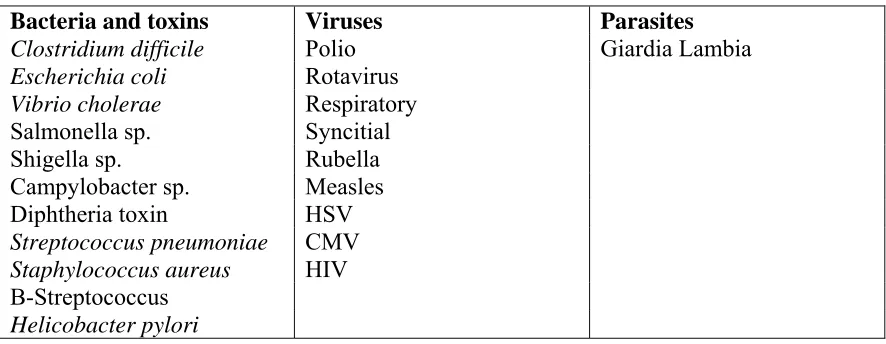
There are an abundance of pathogens that can threaten the health of the newborn;
these are summarized in Table 1.4. The transfer of antibodies from the mother to the
infant provides passive protection for the infant against infectious agents (Tully et al.,
2001).
Table 1.4. Antigen specificity of antibodies in human milk (Bernt and Walker, 2001).
Bacteria and toxins Viruses Parasites
Clostridium difficile Polio Giardia Lambia
Escherichia coli Rotavirus
Vibrio cholerae Respiratory
Salmonella sp. Syncitial
Shigella sp. Rubella
Campylobacter sp. Measles
Diphtheria toxin HSV
Streptococcus pneumoniae CMV
Staphylococcus aureus HIV
Studies have evaluated the bacteriostatic properties of human milk against
Escherichia coli, and have found that the amount of time that infants were ill with
diarrhea was inversely related to the human milk activity against the pathogen (Pickering
and Ruiz-Palacios, 1986). This inhibitory activity was partly due to the immunoglobulin
fraction of the human milk, but the non-immunoglobulin fraction has been shown to be
more effective by adhering to bacterial cells and binding to enterotoxins. Studies have
also shown that human milk is capable of neutralizing one or both toxins of Clostridium
difficile as well as agglutinating Salmonella enterica serovar Typhimurium(Pickering and Ruiz-Palacios, 1986). A study on shigellosis in infants under 2 years old found that
diarrhea in breast fed infants may be milder than in formula-fed infants. Furthermore,
anti-rotavirus activity has been found, mostly in secretory IgA and to a lesser extent in
IgG, and is able to neutralize the most common diarrhea-causing viruses (Pickering and
Ruiz-Palacios, 1986).
Bjorksten et al. (1980) identified that human milk normally contains bacteria from
the skin and duct microflora from the nipples, such as staphylococci, and sometimes
gram negative bacteria such as Escherichia coli, Serratia marcescens, and Pseudomonas
aeruginosa. Furthermore, group β-haemolytic streptococci may be present in human milk, while fecal contamination may yield Gram-negative bacteria. Viruses such as
herpes, cytomegalovirus, rubella, and hepatitis B also have been identified in human milk
1.6.1.1. Staphylococcus aureus
Staphylococcus aureus is a Gram positive facultative anaerobic bacterium with the ability to grow within a wide range of temperatures and pH (Gao et al., 2004). This
pathogen may be responsible for the occurrence of infantile septicemia, which is often
characterized by hypotension, metabolic acidosis, anemia, thrombocytopenia, and
seizures (Chamnanvanakij and Perlman, 1999). In addition, the pathogen may lead to
chronic subclinical mastitis in breastfeeding women with coagulase positive
staphylococcibeing the usual cause (Filteau, 2003).
Work conducted by Noma and Hayakawa (2003) has shown that the
barotolerance of Staphylococcus aureus increased when the pathogen was incubated at temperatures below 0 oC. This occurs due to the adaptation of the microorganism to the
low temperature during incubation which triggers and should be taken under
consideration when growing the bacterium prior to high pressure treatment.
1.6.1.2. Streptococcus agalactiae
Streptococcus agalactiae belongs to the family Streptococcaceae; it is coagulase negative, grows in chains and is the principle cause of invasive bacterial disease in the
neonatal stage of life (Spellerberg, 2000). The microorganism multiplies in the milk
ducts, a phenomenon which also occurs in cattle, and can infect the infant during breast
feeding (Kotiw et al., 2003). The pathogen’s interaction with the host tissues is
determined by a number of bacterial virulence factors such as its polysaccharide capsule,
the hemolysin, the C5a peptidase, and others. Some of the conditions caused by the
been several cases of Group B streptococcal disease in infants, and maternal milk can be
a potential source of infection (Kotiw et al., 2003).
1.6.1.3. Human Immunodeficiency Virus
HIV is an enveloped RNA virus. Breastfeeding is responsible for almost 40% of
all infant infections with HIV, yet most breastfed infants do not become infected, even
though they are exposed to HIV-1 repeatedly for an extended period of time (Kourtis,
2003). It has been suggested that there are antiviral components both in saliva and
human milk (Kennedy, 1998). It has been theorized that macrophages, abundant in
human milk, are characterized as the reservoir of HIV-1 and comprise the major route of
transmission of the virus (Kennedy, 1998). Miller et al. (2002) have suggested that a
molecular compound called erythropoietin, which is present in human milk, could be
credited with the ability to help prevent transmission of HIV; this hypothesis has yet to be
validated.
1.6.1.4. Cytomegalovirus
The human cytomegalovirus (CMV) genome is comprised of a double stranded
DNA molecule, and the virus is the largest human β-herpes virus (Numazaki, 1997).
Cytomegalovirus is one of the most common causes of prenatal infections of newborn
infants, and sources of infection include semen, maternal cell-associated viremia,
ascending genital virus, cervical secretions, breast milk and saliva (Doerr, 1987). Fetal
manifestations include damage to the central nervous system and visceral organs such as
the hematopoietic system. The virus is transmitted from mothers to infants through
antibodies to CMV that may protect against disease of the neonate by coating and
blocking viral attachment and neutralizing viral particles, however that does not
completely prevent transmission (Numazaki, 1997).
1.6.2. Pathogens of Concern and LTLT
Even though various milk banks throughout the world use different methods of
processing human milk, the most common today, particularly in North America, is LTLT
pasteurization. This method is the most easily applicable in terms of staff training and
equipment availability and is based on the commercial pasteurization of cow’s milk,
which was originally designed to destroy Mycobacterium tuberculosis (Wills et al., 1982). Once the method was adopted for human milk banks settings, there was little
regard for its lethality to other microorganisms (Bjorksten et al., 1980). The Human Milk
Bank Association of North America has established LTLT pasteurization as the thermal
processing method for human milk to effectively assure its safety (Human Milk Banking
Association of North America, 2000).
There have been studies that have reexamined the efficacy of LTLT
pasteurization with respect to microbial inactivation (Chen and Allen, 2001; Wills et al.,
1982). For example, Chen and Allen (2001) compared LTLT pasteurization to HTST
pasteurization of human milk with regard to the elimination of natural microflora. They
found that the natural microflora in raw human milk decreased during the first ten days of
storage, but was completely eliminated after LTLT pasteurization. Listeria innocua also decreased after storage of human milk samples as well as after LTLT pasteurization,
which the authors attributed to the antimicrobial activities of IgA, lactoferrin, and
pasteurization effectively eliminates pathogenic microorganisms, yet emphasized the
degradation of important antimicrobial factors in human milk after such treatment.
Wills et al. (1982) observed that heating human milk at 62.5oC for 5 min, resulted
in the complete destruction of Escherichia coli, Staphylococcus aureus, and group β-hemolytic streptococci. Five minutes of heat treatment was adequate to inactive the
microorganisms, leading to a logical assumption that 30 minutes would be sufficient to
assure microbial safety. Young et al. (1979) also demonstrated the efficacy of thermal
treatment of human milk at 73 oC for 3 min. Jones et al. (1979) expressed concerns
regarding the excessive heat treatment of holder pasteurization, and they proposed that
heating expressed milk at 62.5oC for 5 min would destroy 90% of Escherichia coli,
Staphylococcus aureus and group β-haemolytic streptococci in human milk. However, despite the shortcomings of LTLT in terms of preserving antimicrobial components, its
necessity is augmented when considering the dangers resulting from feeding
contaminated human milk to preterm infants with immature immune systems. For
example, there have been cases of Klebsiella pneumoniae bacteremia in infants due to contamination of the breast-pump tubing and safety trap (Donowitz et al., 1981). This
instance was the first documentation of nosocomial bacteremia as a major infectious
complication of feeding contaminated breast milk to premature infants. There have also
been more recent cases of bacteremia in 1999 in Malaysia, associated with human milk
contaminated by manual expression and breast pumps used by mothers of very low birth
weight infants (Boo et al., 2001). In 1995, a pair of preterm twins developed fatal

![Table 1.3.2. Major Biochemical Component Retention in Raw and Pasteurized Human Milk [Wills et al., (1982) and Ford et al., (1977)]](https://thumb-us.123doks.com/thumbv2/123dok_us/1490572.1182388/31.612.108.546.116.218/table-major-biochemical-component-retention-pasteurized-human-wills.webp)