Timely and Secure Data Transmission in
Disruption Tolerant Networks
IndhumathiSoundrarajan, Karthick Krishnamoorthy
Abstract— Disruption Tolerant Networks (DTNs) consist of mobile devices that contact each other opportunistically. In this paper, propose the original approach to support cooperative caching in DTNs, which enable the sharing and coordination of cached data among multiple nodes and reduces data access delay. The fundamental idea is to intentionally cache data at a set of network central locations (NCLs), which can be easily access by other nodes in the network. Propose an efficient method that ensures appropriate NCL selection based on a probabilistic selection metric and coordinates multiple caching nodes to optimize the tradeoff between data accessibility and caching overhead. The selected NCLs attain high chances for prompt response to user queries with low overhead in network storage and communication. A utility-based cache replacement scheme to dynamically adjust cache locations based on query history, and this scheme achieves good tradeoff between the data accessibility and access delay. A Contact Duration Aware Approach a novel caching protocol adaptive to the challenging surroundings of DTNs. To derive an adaptive caching bound for each mobile node according to its specific contact pattern with others, to limit the quantity of information it caches. In this way, both the storage space and the contact opportunities are better utilized. Extensive trace-driven simulations show that our cooperative caching protocol can significantly improve the performance of data access in DTNs.
Key words: Disruption Tolerant Networks, Cooperative caching, Data Access, Network Central Location
I. INTRODUCTION
[image:2.612.213.405.509.672.2]In Disruption Tolerant Networks (DTNs), movable nodes connect to each other using opportunistic contacts. Due to unpredictable node mobility, there is no end-to-end connection between movable nodes, which greatly impairs the performance of data access. DTNs have been prevailingly used in various scenarios, such as wildlife tracking, vehicular network, etc. Among many real life examples of DTNs, mobile social networks (MSNs), where people can communicate with their friends nearby, are of growing significance as a result of rapid and wide spread usage of mobile devices (e.g., headsets, tablets) among people and their surroundings. In mobile social networks, data accessibility, as an important application, is exerted for many different purposes. For example, it is desirable that headset users find interesting contents from close peers, meanwhile interactively share their local data with their friends. However, due to the intermittent connectivity among mobile users, the data transmission from node to node is not guaranteed and always suffering massive delays.
Technology (IJRASET)
©IJRASET 2015: All Rights are Reserved
1091
Cooperative caching has been frequently used to improve the performance of data access in both wire line and wireless networks. But, due to the unstable topology and limited contact duration in DTNs, predictable cooperative caching techniques may not be applicable to DTNs.
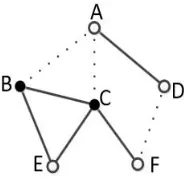
Fig. 2(a) Caching strategy based on node’s average contact probability
(a) Caching strategy based on node’s close friend set
Caching strategies based on different caching node selection schemes. The black point represents caching node and the white point is not. The solid line and dotted line between a pair of nodes indicate frequent encountering and infrequent encounter, respectively. In this paper, propose a novel scheme to address the aforementioned challenges and to efficiently support cooperative caching in DTNs. The basic idea is to by design cache data at a set of network central locations (NCLs), each of which corresponds to a group of mobile nodes beingeasily accessed by other nodes in the network. Every NCL is represented by a central node, which has high reputation in the network and is prioritized for caching data. Due to the incomplete caching buffer of central nodes, several nodes near a central node may be involved for caching, and ensure that popular data are always cached nearer to the central nodes via dynamic cache replacement based on query history.
The detailed contributions are listed as follows:
To develop an efficient approach to NCL selection in DTNs based on a probabilistic range metric. The selected NCLs achieve high chances for prompt response to user queries with low overhead in network storage and transmission.The proposed a data access scheme to probabilistically coordinate multiple caching nodes for responding to user queries. To optimize the tradeoff between data accessibility and caching overhead, to reduce the average number of cached data copies in the network.
The proposed a utility-based cache replacement system to dynamically adjust cache locations based on query history, and our scheme achieves good tradeoff between the data accessibility and access delay.
II. RELATED WORKS
[image:3.612.236.328.127.218.2]dissemination cost- effectiveness. The proposed a probabilistic model of user interest, and expand the centrality concept for effective relay selection by considering the social contact patterns and interests of mobile nodes simultaneously. In this paper [1] J. Burgess, B. Gallagher, D. Jensen, and B. Levine, In Disruption-tolerant networks (DTNs) attempt to route network messages via intermittently connected nodes. The propose Maypop, a protocol for effective routing of DTN communication. MaxProp is based on prioritizing together the schedule of packets transmitted to other peers and the schedule of packets to be dropped. These priorities are based on the pathway likelihoods to peers according to historical data and also on several balancing mechanisms, including acknowledgments, a head-start for new packets, and list of preceding intermediaries. In this paper [7] A. Balasubramanian, B. Levine, and A. Venkataramani, They proposed a routing protocol for DTNs that intentionally maximizes the performance of a specific direction-finding metric. This protocol, fast, treats DTN routing as a resource allocation problem, making use of an in-band control channel to propagated metadata. Although our approach is heuristic, to establish that the general DTN routing protocol lacks sufficient information in practice to solve optimally. In this paper [9] C. Boldrini, M. Conti, and A. Passarella, the Content Place, a system that exploits dynamically learnt information about users’ social relationships to decide where to place data objects in order to optimize content availability. In Content Place, each user advertises the data objects they are interested in upon making contact with other nodes. Also, they exchange short summaries of the data objects they are currently carrying with. This local information is exploited to implement a totally decentralized decision process about which data objects should be cached.
III. NETWORK MODEL
The basic idea is to intentionally cache data only at a specific set of NCLs, which can be easily accessed by other nodes in the network. Queries are forwarded to NCLs for information access. The big picture of our proposed scheme is illustrated in Fig. 3. Each NCL is represented by a central node, which corresponds to a star. The push and pull caching strategies conjoin at the NCLs.
[image:4.612.218.409.387.516.2]The data source S actively pushes its generated data toward the NCLs, and the central nodes C1 and C2 of NCLs are prioritized for caching data. If the buffer of a central node C1 is occupied, data are cached at another node A near C1.
Fig 3.The big picture of intentional caching
Multiple nodes at a NCL may be involved for caching, and a NCL, hence, corresponds to a connected sub graph of the network contact graph G, as the dashed circles illustrated in Fig. 3. Note that NCLs may be overlapping with each other, and a node being involved for caching may belong to multiple NCLs simultaneously. A requester R pulls data by querying NCLs, and data copies from multiple NCLs are returned to ensure prompt data access. Particularly, some NCL such as C2 may be too far from R to receive the query on time, and does not act in response with data. In this case, data accessibility is determined by both node contact frequency and data lifetime.
A. Network Central Locations
In this section, describe how to select NCLs based on a probabilistic metric evaluating the data transmission delay among nodes in DTNs; to validate the applicability of such metric in practice based on the heterogeneity of node contact pattern in realistic DTN traces.
B. Multihop Opportunistic Connection On Network
Technology (IJRASET)
©IJRASET 2015: All Rights are Reserved
1093
Fig.4. Opportunistic path
In practice, mobile nodes maintain the information about shortest opportunistic paths between each other in a distance-vector manner when they come into contact.
C. Caching Scheme
In this section, present cooperative caching scheme. The basic idea is to intentionally cache data at a set of NCLs, which can be promptly accessed by other nodes. This scheme consists of the following three components:
When a data source generates data, it pushes data to central nodes of NCLs, which are prioritized to cache data. One copy of data is cached at each NCL. If the caching buffer of a central node is full, one more node near the central node will cache the data. Such decision are by design made based on buffer conditions of nodes involved in the pushing process.
A requester multicasts a query to central nodes of NCLs to pull data, and a central node forwards the query to the caching nodes. Multiple data copies are returned to the requester, and optimize the tradeoff between data accessibility and transmission overhead by controlling the number of returned data copies.
Utility-based cache replacement is conducted whenever two caching nodes contact and ensures that popular data are cached nearer to central nodes.
Fig.5. Determining caching location at NCLs
Such determination of caching location is illustrated in Fig. 5, where the solid lines indicate opportunistic contacts used to forward data, and the dashed lines indicate data forwarding stopped by node buffer constraint. Central node C1 is able to cache data, but data copies to C2 and C3 are stopped and cached at relays R24 and R33 , respectively, because neither C2 nor R34 Have enough buffers to cache data.
D. Queries
While the central node C1 is able to return the cached data to R immediately, the caching nodes A and B simply reply to R after they receive the query from central nodes C2 and C3, respectively. The query broadcast finishes when query expires.
Fig.6. Pulling data from the NCLs
Data before query expires. However, only the first data copy received by the requester is useful, and all the others are essentially useless and waste network resources. The major challenge for solving this problem arises from the intermittent network connectivity in DTNs.
E. Ncl Load Balancing
First, the central nodes cache the most popular data in the network and respond to the frequent queries for these data. Second, the central nodes are also responsible for broadcasting all the queries they receive to other caching nodes nearby. But, such functionality may quickly consume the local resources of central nodes that include their battery life and local memory.
Fig.7. NCL load balancing
The selection may degrade the caching performance as illustrated in Fig 7. When the local resources of central node C1 are depleted, its functionality is taken over by C3. Since C3 may be far away from C1, the queries broadcasted from C3 may take a long time to reach the caching nodes A, and hence reduce the probability that the requester R receives data from A on time. From Fig. 7, it is easy to see that such performance degradation is caused by the existing data being cached at nodes near C1.
IV. EXPERIMENTAL RESULTS
A utility-based cache replacement scheme to dynamically adjust cache locations based on query history, and scheme achieves good tradeoff between the data accessibility and access delay. After a new central node is selected, the data cached at the NCL represented by the original central node needs to be adjusted correspondingly, so as to optimize the caching performance. This movement is achieved via cache replacement when caching nodes opportunistically contact each other. Each caching node at the original NCL recalculates the utilities of its cached data items with respect to the newly selected central node. In common, these data utilities will be reduced due to the changes of central nodes, and this reduction moves the cached data to the appropriate caching locations that are nearer to the newly selected central node.
For evaluate the performance of proposed caching scheme.
Successful ratio: The ratio of queries being satisfied with the requested data. This ratio evaluates the coverage of data access provided by our proposed caching schemes.
Data access delay: The average delay for receiving responses to queries.
Caching overhead: The average amount of data copies being cached in the network
Methods Successful ratio Data access delay Caching overhead
Existing method 70% 69% 85%
Technology (IJRASET)
©IJRASET 2015: All Rights are Reserved
1095
100% 90% 80% 70% 60% 50% 40% 30% 20% 10% 0% Existing Method Proposed Method
Extensive simulations Show that scheme greatly improves the ratio of Queries satisfied and reduces data access delay, when being compared with existing schemes.
V. CONCLUSIONS
In this paper, propose a novel scheme to support cooperative caching in DTNs. The basic idea is to intentionally cache data at a set of NCLs, which can be simply accessed by other nodes. To ensure appropriate NCL selection based on a probabilistic metric; our approach coordinates caching nodes to optimize the tradeoff between data accessibility and caching overhead. To identified the effects of the contact duration limitation on cooperative caching in DTNs. The theoretical analysis shows that the marginal caching benefit that a caching node can provide diminishes when it caches more data. Based on this observation, have designed a contact Duration Aware Caching (DAC) protocol, which exploits social network concepts to address the challenge of the unstable network topology in DTNs. Trace-driven simulations show that by adopting DAC, the performance of data access can be significantly improved
REFERENCES
[1] J. Burgess, B. Gallagher, D. Jensen, and B. Levine, “MaxProp: Routing for Vehicle-Based Disruption-Tolerant Networks,” Proc. IEEE INFOCOM, 2006.
[2] A. Chaintreau, P. Hui, J. Crowcroft, C. Diot, R. Gass, and J. Scott, “Impact of Human Mobility on Opportunistic Forwarding Algorithms,” IEEE Trans. Mobile Computing, vol. 6, no. 6, pp. 606-620, June 2007
[3] W. Gao and G. Cao, “On Exploiting Transient Contact Patterns for Data Forwarding in Delay Tolerant Networks,” Proc. IEEE Int’l Conf. Network Protocols (ICNP), pp. 193-202, 2010.
[4] P. Costa, C. Mascolo, M. Musolesi, and G. Picco, “Socially Aware Routing for Publish-Subscribe in Delay-Tolerant Mobile Ad Hoc Networks,” IEEE J. Selected Areas in Comm., vol. 26, no. 5, pp. 748- 760, June 2008.
[5] E. Daly and M. Haahr, “Social Network Analysis for Routing in Disconnected Delay-Tolerant MANETs,” Proc. ACM MobiHoc, 2007. [6] W. Gao and G. Cao, “User-Centric Data Dissemination in Disruption Tolerant Networks,” Proc. IEEE INFOCOM, 2011.
[7] A. Balasubramanian, B. Levine, and A. Venkataramani, “DTN Routing as a Resource Allocation Problem,” Proc. ACM SIGCOMM Conf. Applications, Technologies, Architectures, and Protocols for Computer Comm., pp. 373-384, 2007.
[8] W. Gao, G. Cao, A. Iyengar, and M. Srivatsa, “Supporting Cooperative Caching in Disruption Tolerant Networks,” Proc. Int’l Conf. Distributed Computing Systems (ICDCS), 2011.
[9] C. Boldrini, M. Conti, and A. Passarella, “ContentPlace: Social- Aware Data Dissemination in Opportunistic Networks,” Proc. 11th Int’l Symp. Modeling, Analysis and Simulation of Wireless and Mobile Systems (MSWiM), pp. 203-210, 2008.