Georgia State University Georgia State University
ScholarWorks @ Georgia State University
ScholarWorks @ Georgia State University
Public Health Theses School of Public Health
Spring 5-15-2010
Outcomes of the Implementation of the Mental Health Recovery
Outcomes of the Implementation of the Mental Health Recovery
Measure in the DeKalb Community Service Board Population
Measure in the DeKalb Community Service Board Population
Sharon H. Davis Georgia State University
Follow this and additional works at: https://scholarworks.gsu.edu/iph_theses Part of the Public Health Commons
Recommended Citation Recommended Citation
Davis, Sharon H., "Outcomes of the Implementation of the Mental Health Recovery Measure in the DeKalb Community Service Board Population." Thesis, Georgia State University, 2010.
https://scholarworks.gsu.edu/iph_theses/91
ABSTRACT
Sharon H. Davis
Outcomes of the Implementation of the Mental Health Recovery Measure in the DeKalb Community Service Board Population
(Under the direction of Dr. Francis McCarty, Faculty Member; and Fabio Van De Merwe, Director of Service Utilization, DeKalb CSB)
The relationship between mental health and public health has been debated for decades. But
when services are delivered through publically funded mental health clinics, it clearly becomes a
public health endeavor. One of the latest trends in mental health service delivery is the recovery
concept. Developed in the 1990’s, the recovery concept represents a paradigm shift where
successful treatment is defined by self-awareness, self-care, and self-fulfillment. Furthermore,
patients are encouraged to assess their own progress in the recovery process. There are currently
nine unique assessment tools to measure recovery progress, including the Mental Health
Recovery Measure (MHRM), which was used in this study. The current study followed the
implementation of the recovery model in the DeKalb Community Service Board (DeKalb CSB).
DeKalb CSB has 12 locations that serve 10,000 patients with mental illness, substance abuse,
and developmental disabilities each year. Only patients with primary diagnoses of mental health
or substance abuse disorders were considered for this study. Implementation of the MHRM
began in December 2008 and included all DeKalb CSB patients, however only new DeKalb CSB
patients were considered for this study. During 13 months of data collection 960 clients
completed 2 assessments and 196 completed 3 assessments. A new consumer is defined as
someone who has just completed the intake process and has no record of previous service at
DeKalb CSB. The current study examined trends in MHRM data in the DeKalb CSB
population; and offered recommendations for future implementation.
OUTCOMES OF THE IMPLEMENTATION OF THE MENTAL HEALTH RECOVERY MEASURE IN THE DEKALB COMMUNITY SERVICE BOARD POPULATION
By:
SHARON HENRIETTA DAVIS B.S., UNIVERSITY OF CINCINNATI
M.S., UNIVERSITY OF CALIFORNIA, BERKELEY
A Thesis Submitted to the Graduate Faculty of Georgia State University in Partial Fulfillment
of the Requirements for the Degree
APPROVALS PAGE
Outcomes of the Implementation of the Mental Health Recovery Measure in the DeKalb Community Service Board Population
by:
ACKNOWLEDGEMENTS
AUTHOR’S STATEMENT
In presenting this thesis as a partial fulfillment of the requirements for an advanced degree from Georgia State University, I agree that the Library of the University shall make it available for
inspection and circulation in accordance with its regulations governing materials of this type. I agree that permission to quote from, to copy from, or to publish this thesis may be granted by the author or, in his/her absence, by the professor under whose direction it was written, or in his/her absence, by the Associate Dean, College of Health and Human Sciences. Such quoting, copying, or publishing must be solely for scholarly purposes and will not involve potential financial gain. It is understood that any copying from or publication of this dissertation which involves potential financial gain will not be allowed without written permission of the author.
NOTICE TO BORROWERS PAGE
All theses deposited in the Georgia State University Library must be used in accordance with the stipulations prescribed by the author in the preceding statement.
The author of this thesis is:
Student’s Name: Sharon H. Davis
Street Address: 763 Ives Way
City, State, and Zip Code: Lilburn, GA 30047
The Chair of the committee for this thesis is:
Professor’s Name: Dr. Frances McCarty
Department: Institute of Public Health
College: Health and Human Services
Georgia State University P.O. Box 3995
Atlanta, Georgia 30302-3995
Users of this thesis who not regularly enrolled as students at Georgia State University are required to attest acceptance of the preceding stipulation by signing below. Libraries borrowing this thesis for the use of their patrons are required to see that each user records here the information requested.
NAME OF USER ADDRESS DATE TYPE OF USE
VITA
Sharon H. Davis, MS, MPH Candidate
763 Ives Way ● Lilburn, GA 30047 ● 678-896-5226 ● [email protected]
EDUCATION
1994 Master of Science, Materials Engineering; University of California at Berkeley.
1992 Bachelor of Science, Materials Engineering; University of Cincinnati (cum laude).
PROFESSIONAL EXPERIENCE
DeKalb County Community Service Board 2009-2010
Intern, Decatur, GA
Georgia Center for Oncology Research and Education (Georgia CORE) 2009 Graduate Intern, Atlanta, GA
American Cancer Society 1997-2008
Scientific Event Coordinator, Project Administrator, Strategic Analyst, and Web Publisher.
Atlanta, GA
World Relief Corporation 1997
Special Projects Coordinator, Clarkston, GA
BellSouth Corporation 1995-1996
IT Lead for the Olympic Hospitality Project Atlanta, GA
Wachovia Corporation 1995
Analyst, Atlanta, GA
Lawrence Berkeley Laboratories 1992-1994
Graduate Research Assistant, Berkeley, CA
General Electric, Aircraft Engines 1989-1991
TABLE OF CONTENTS
Page
ACKNOWLEDGEMENTS iii
LIST OF TABLES iv
LIST OF FIGURES iv
CHAPTER
1. INTRODUCTION 1
a. A Brief History of Mental Health Treatment in the United States b. History of Community Mental Health in Georgia
c. The Recovery Model
d. MHRM in the DeKalb CSB Population
1 2 3 4
2. REVIEW OF THE LITERATURE a. De-Institutionalization b. Community Mental Health c. Homelessness
d. Incarceration
e. Co-Occurrence of Substance Abuse and Mental Illness f. Racial and Cultural Issues
g. National Initiatives
h. Evidenced-Based Medicine i. Recovery Model
6 8 12 14 16 18 20 24 26
3. METHODS
a. Study Overview b. Study Population c. Test Instrument d. Data Collection
e. Definition of Variables f. Data Analysis
37 37 38 39 40 41
4. RESULTS 43
4. DISCUSSION AND CONCLUSION a. Discussion
b. Recommendations c. Conclusion
55
60 61
LIST OF TABLES
Table Page
1. Measures of Individual Recovery 33
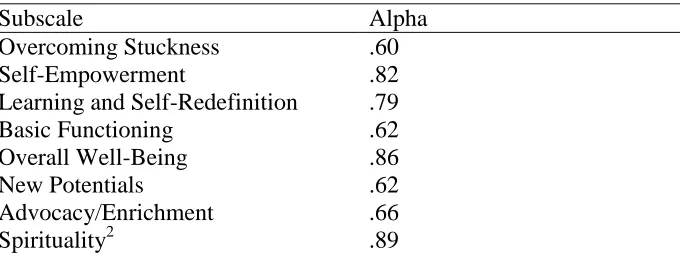
2. MHRM Subscale MHRM Subscale Internal Consistency 35
3. Correlations between MHRM Total Score and Other Measures 36
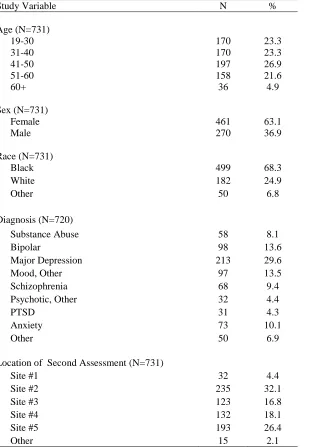
4. Descriptive Statistics of the Study Population with Two Completed
Assessments, Δ1,2 44
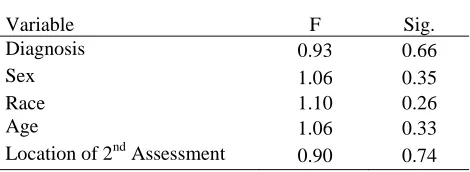
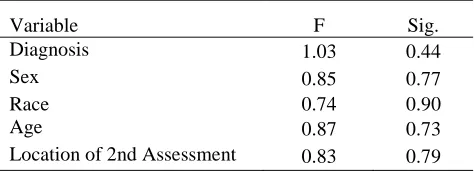
5. One Way ANOVA Results for Each Variable, Δ1,2 45
6. Statistics for Scores 1&2 45
7. Paired Sample Test Results 45
8. One Way ANOVA Results for the Time Interval 47
9. Distribution of ―Significant Score Change‖ by Study Variable, Δ1,2 48 10. Descriptive Statistics of the Study Population with Three Completed
Assessments, Δ2,3
49
11. One Way ANOVA Results for Each Variable, Δ2,3 50
12. Statistics for Scores 1&2 50
13. Paired Sample Test Results 50
14. One Way ANOVA Results for the Time Interval 53
15. Table 15. Distribution of ―Significant Score Change‖ by Study Variable, Δ2,3 55
LIST OF FIGURES
Figure Page
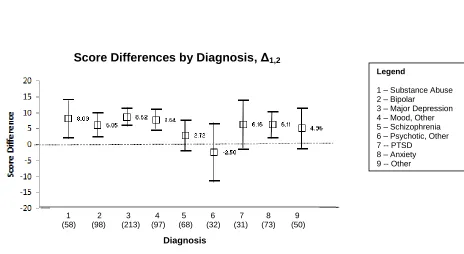
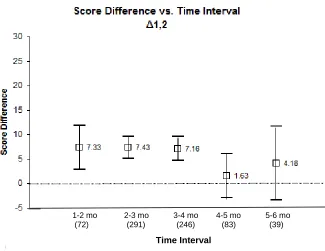
1. Score Differences (Δ1,2) by Diagnosis 46
2. Score Differences (Δ1,2) by Time Interval 47
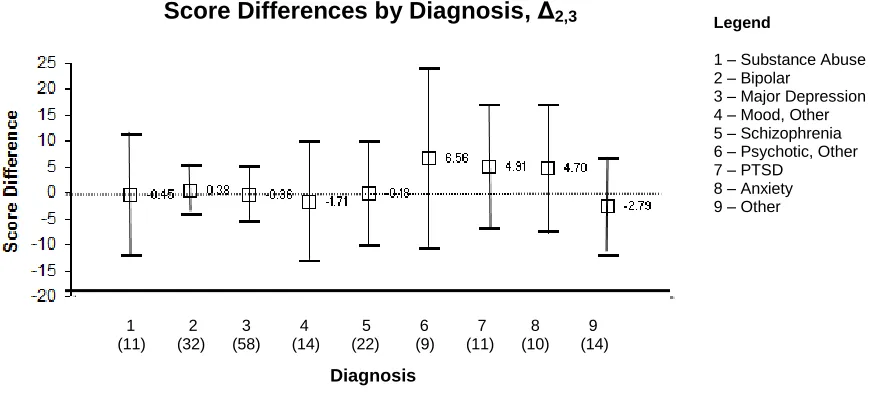
3. Score Differences (Δ2,3) by Diagnosis 51
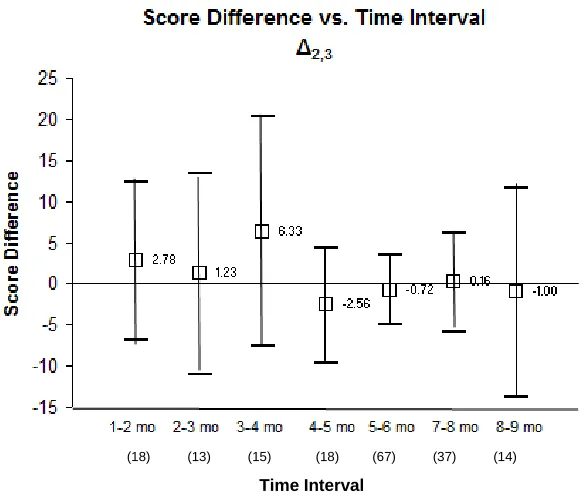
4. Score Differences (Δ2,3) by Time Interval 52
Chapter I – Introduction
A Brief History of Mental Health Treatment in the United States
For about a century (1850’s to 1950s), the mentally ill in the US lived isolated from the
rest of society in over-crowded institutions. While the conditions in these institutions varied,
many were considered inhumane and in some cases the patients were used as free labor,
performing chores to help minimize the operation costs for the institution. In this era there were
few proven therapies for the patients, so there was much experimentation (some unethical) on the
patients (Grobb, 1983). This paradigm came to a gradual halt, starting in 1963 when President
Kennedy signed The Mental Retardation Facilities and Community Mental Health Centers
Construction Act of 1963 into law. Deinstitutionalization, or the process of moving the mentally
ill from institutions to the community, had begun (Geller, 2000). Deinstitutionalization was a
product not only of legislation, but also of the first proven pharmaceutical therapy, Thorazine,
which greatly changed the treatment of mentally ill patients (Goldman, 1956).
Although there were high hopes for deinstitutionalization, this was not enough to ensure
its successful implementation. The current social welfare system simply lacked the resources to
accommodate millions of formerly institutionalized patients that entered the general community.
There was simply a lack of housing, employment, treatment, and financial resources for these
individuals. And since the new Community Mental Health Centers were administered on a state
or local level the methods and outcomes were highly variable (Geller, 2000). Some states like
Connecticut benefited from a prestigious research university (Yale University) that had a great
like California, with a very large population, cut costs by maximizing the use of contractors
(Libby, 1998). And in Texas, they recently decided to integrate community mental health into
the general scheme of public health. The expectation of this move is that mental health will be
more closely aligned with the state level resources that support community mental health (Ganju,
2008).
History of Community Mental Health in Georgia
Up until the 1990s, community mental health was delivered in many Georgia
communities, but it lacked a cohesive structure and had gaps in service. Because of the gaps in
service a few patients were kept in mental hospitals against their will because a sufficient place
in the community could not be found. After a lawsuit against the state of Georgia, it was
determined that it was unlawful to keep treated patients in the hospital against their will. Thus,
Georgia began an integrated system of community health. In 1994, 28 Community Service
Boards were created. Most service boards serve several counties, and in a few large counties the
service board serves only one county. The Georgia Community Service Board has five standing
committees and has a set of bylaws. These services boards are funded through state resources.
The DeKalb County Community Service Board (DeKalb CSB) consists of twelve
treatment centers (including a crisis center). Annually, there are about 10,000 consumers of the
DeKalb CSB, however this population is very dynamic. Approximately 150 new consumers
arrive every month. Unfortunately, there is currently no method for tracking consumers who
drop out each month. This is because although there is a formal process for entering the system,
there is not a formal process for exiting the system. However, because the consumer census
out each month. Most consumers are walk-ins or are referred from the nearest state mental
hospital (Georgia Regional Hospital - Atlanta), the Georgia Crisis and Access Line (GCAL), and
the DeKalb CSB Crisis Center and Central Access Line. Seventy percent of the DeKalb CSB
population is African American. Like most people who rely on community mental services, the
consumers of DeKalb CSB have an unemployment rate that is at least 3-5 times that of the
general population. The consumers are disproportionally uninsured, and when if they are insured
it is through Medicare or Medicaid. In the last few years the annual budget for DeKalb CSB has
either been stagnant or reduced. With a growing number of consumers and a shrinking budget, it
is imperative to maximize resources.
The Recovery Model
Based on a comprehensive study of the US Mental Health Service delivery system, the
President's New Freedom Commission on Mental Health (2003) stated that the reformation of
the mental health system should be based on two concepts. First, recovery should be the explicit
goal of the new system. Mental health recovery has become a driver of both the planning and
treatment of serious mental illness. Recovery is grounded in the belief that individuals with
serious mental disorders can and do get better and return to fulfilling, meaningful roles in their
community. Secondly, the report stated that treatment should focus on building the capacity to
cope with life stressors through building resilience, not just on managing symptoms. Thus,
recovery and resilience are the foundation of the future mental health system. Still, empirical
research leaves much to be discovered about both constructs with little or nothing known about
Recovery as an outcome is rooted in the idea of empowerment – setting an expectation
that the consumer has the capacity to influence the outcome, letting consumers define and pursue
their own life goals (Torrey, 2005). The current mental health system is an academic one, based
on professional expertise, with limited roles for consumers and family members. In this model
mental illness is presented as brain disease, biochemical or genetic in nature, with treatments
based on pharmaceuticals, and for which the prognosis is long-term maintenance. To the
contrary, the recovery model has grown out of the life experiences of people who have a mental
health diagnosis and through trial and error have learned what helps and what hinders. The
recovery model puts far more emphasis on peer support and on daily life than on medical
treatment per se, although such treatment is an important element for some people (The
Evaluation Center, 2005).
MHRM in the DeKalb CSB Population
Recovery is measured through self-assessment instruments given to mental health
consumers on a regular interval. This study examines the use of the Mental Health Recovery
Measure (MHRM) (Bullock and Young, 2003) in the population of DeKalb County Community
Service Board (CSB) consumers. The content of the MHRM and the MHRM subscales are
based upon a specific conceptual model of mental health recovery that is grounded in the
recovery experience of persons with psychiatric disabilities (Young, 1999). The development of
the MHRM was based on the experiences of individuals with psychiatric disabilities and
involved a grounded theory analysis of qualitative data to develop a model of recovery based
Implementation of the MHRM began in the DeKalb CSB population in December 2008.
Since use of the MHRM began, 960 new consumers have completed the MHRM at least twice –
once at intake and one 90 days later. The purpose of the current study is to examine the
following research questions:
1. Is there a statistically significant difference in pre-and post-test MHRM scores?
2. Are there any statistically significant differences in the score difference between pre-and post-test scores among the groups classified according to each
demographic variable?
3. Are there any statistically significant differences in the score difference between pre-and post-test scores among the different types of primary clinical diagnosis?
4. Are there any statistically significant differences in the distribution of scores among the groups classified according to each demographic variable?
The demographic variables for this study are: Age
Race Gender
Primary Diagnosis
Location of Second Assessment
Another purpose of the study is to identify the optimal time interval for re-administration
of the MHRM in this population. In addition to these research questions, an important outcome
of this study is to provide one of the first recovery model studies where a recovery measure is
administered in a population and the results are evaluated. For any assessment, the interval
between repeated measures has a large effect on the total score outcome. Currently, there is not
a recommended interval for repeat assessments of the MHRM. Hopefully this will study will
also contribute to the growing body of knowledge on the recovery model and the MHRM
assessment. Also, the study population is comprised of over 70% African Americans, which is a
Chapter II – Literature Review
De-Institutionalization
Psychiatric hospitals in the United States emerged in the late 18th century and were often
located in quiet rural areas and were small in size (Grobb, 1983). There was a great emphasis on
the physicians and assistants giving individual treatment to each patient. The hospitals had a
schedule of activities, good nutrition and hygiene and exercise (Grobb,1983). A caring ―moral
therapy," designed to treat patients with respect and dignity away from the stresses of everyday
life, was also implemented (Grobb, 1983).
While some patients showed progress and were able to return home, soon the more
chronic patients would return and fill up the existing facilities. Expansion became necessary and
soon hospitals became larger and overcrowded with a much smaller staff to patient ratio. There
was less personal attention and more energy exerted in maintaining control, with the quality of
treatment declining markedly. Rather than being places of therapy and treatment, psychiatric
hospitals became places of last resort (Grobb, 1983).
Mental hospitals continued to be places of despair into the 1950s, with the main objective
of crowd control. Then, several key events began to put a major change in motion –
deinstitutionalization – or moving the treatment of the mentally ill out of hospitals and into
outpatient community mental health centers (CMHCs). The first event was the 1949 Passage of
the National Mental Health Act (P.L. 79–87) which led to the establishment of the National
Institute of Mental Health (NIMH) (Geller, 2000). Two years later, NIMH published the Draft
(P.L. 88–164) ; it contained funds for constructing community mental health centers (CMHCs),
but no funds for staffing them (Geller, 2000).
In addition to these legislative measures, the advent of better pharmaceuticals also was a
factor in the movement to deinstitutionalization. In the early 1950s, Chlorpromazine (Thorazine)
became widely used in mental institutions, and quickly displayed unprecedented efficacy in
treating the mentally ill. However, in an era when the average state hospital was operating at a
cost of $2.70 per capita per day (Bay, 1955), the introduction of chlorpromazine put a great
strain on hospital budgets — as pharmacy costs increased 20-fold (Goldman, 1956). This
provided a great economic impetus to favor outpatient community care in lieu of the traditional
institutional model (Hyde, 1959). Underlying all of these factors was a strong belief by many
Americans that the current institutional system was inhumane and that patients would be better
off living in the community.
Between 1954 and 1996 the number of patients in state and county mental hospitals went
from 553,979 to 61,722 (Goldman, 1983;Witkin, 1996). While it is easy to quantify the
movement of patients out of institutions, quantifying the other effects of deinstitutionalization is
more complex. Although there was great enthusiasm for moving to the Community Mental
Health Centers (CMHCs) model, initially most states did not provide resources or infrastructure
to adequately serve patients. Many key components like housing and employment were not
integrated into the services offered. After many years and many iterations of providing services,
service delivery has been better defined and implemented. But even with the improvements,
many agree that the system of CMHCs remains inadequate. Other indirect policy changes in
Medicare, Medicaid, VA Benefits, and Social Security (Disability and Supplemental Income)
Community Mental Health
Community Mental Health went through many decades of refinement. There were a
series of trends in this field, which are worth exploring. In the 1960s, emerging treatments from
the 1950s were refined and fully implemented. These modes of treatment include Day hospitals,
or places where patients could get a full day of treatment, which included therapy, career
counseling, and other interventions to aid their integration into the community (Drubin,
1960;Gussen, 1960). Other areas of treatment included social rehabilitation, employment
readiness, and half-way houses (Pinsky, 1965;Harrington, 1966). In addition to these existing
treatments, other complementary services including emergency services, adequate housing,
employment of former patients in human services and better integration with other social
services provided a broader range of assistance.
In the 1970s, two new forms of service emerged – case management and assertive
community treatment. Case management provided a better continuity of care for patients, while
assertive community treatment provided a well documented program to help patients sustain a
quality life in the community (Geller, 2000). The 1980’s saw fewer new programs, but further
refinement of existing ones. In addition to this, evaluation research was implemented in the
hopes that the results would identify strengths and weaknesses of the current programs (Tessler,
1982). By 1980’s many reports documenting the large numbers of mentally ill homeless
individuals emerged. Lipton described the situation by stating that, ―The streets, trains, bus
stations, and shelters of the city have become the state hospital of yesterday‖ (Lipton, 1983).
During the 1990’s there were fewer innovations, but an emphasis on high risk populations like
the homeless and hospital recidivates (Geller, 1992). Once deinstitutionalization began, each
standards of care were implemented nationwide. Thus, the variation of care from state to state
was significant.
Connecticut
Some states like Connecticut benefited from a strong relationship with a prestigious
research university. Federick Redlich, chairman of the Yale Department of Psychiatry joined
Governor Abraham Ribicoff as the original developers of the Connecticut Mental Health Center
(CMHC) concept. After the CMHC opened in 1966, one of the first research initiatives was to
develop a service model for a division of the CMHC that served two diverse neighborhoods – the
Hill Neighborhood of New Haven and West Haven. Descriptive and analytical studies were
done, along with methodologically innovative and policy-relevant investigations (Jacobs, 2007).
By 1970, the collaboration produced a Depression Research Unit. The CMHC went on to
become a leader in psychiatric epidemiology, conducting a wide variety of research that included
bereavement, substance abuse, and the criminal justice system. But there was also research in
service delivery and prevention, education, psychopharmacology, and public health. Research is
at the cornerstone of the CMHC thanks to generous government grants and a premier research
institution. It must be noted that Connecticut is the exception, not the rule. Most states are so
overburdened in providing services that there are few resources for research. However, the
research provided by the CMHC provides a valuable resource for other community health
agencies around the country (Jacobs, 2007).
California
Like many other states, California faced the challenge of determining which level of
realignment, a legislative act, went into effect. The legislation was designed to enable the state’s
mental health system to meet the growing demand for services in the face of a large and growing
budget deficit. A central piece of the legislation granted local mental health authorities greater
fiscal and administrative responsibility for managing mental health services (Masland, 1997).
The categorical restrictions previously imposed by the state were eliminated, allowing the local
mental health authorities to use designated funds with more flexibility. Under realignment, local
mental health authorities assumed full responsibility for providing mental health services. The
realignment shifted the control and risk from state government to local mental health authorities
at the county level (Snowden, 2002).
Given that the community mental health system in California served about 1.5 million
consumers at the time, any large scale changes could have great impact on hundreds of thousands
of consumers. Recent studies have shown that realignment achieved its primary purpose: mental
health expenditures dropped dramatically (Scheffler,1998, 2000). Libby, et al did an analysis on
the economics of contracting out much of the services, accounting for the fluctuations in the
mental health market sector. They found an inverse relationship between contracting and unit
costs for all services, which was statistically significantfor all but inpatient services. However,
the optimal levelof contracting is difficult to assess for a specific local servicesystem due to the
market forces (Libby, 1998). California provided a good example of how to align services to
keep a consistent level of service, while greatly reducing cost.
Texas
In most states community health agencies operate independently from public health
of public health and early intervention efforts. One of the main goals of this initiative is to
integrate mental health services into other existing social services. There is an emphasis on
developing consumer and family networks, workforce development and training, and improved
data and technology infrastructure. The early intervention efforts include identifying potential
consumers through the juvenile justice, child welfare, and criminal justice programs (Ganju,
2008).
Health specialists, who provide training to school districts, are now located in all 20 of
the states regional education service centers. A mental health component is being added to the
mandatory health curricula. The Hogg Foundation for Mental Health is being established to
provide a center of workforce development. The goal is to develop a sustainable training
infrastructure in the state, building competencies needed to enter the workforce. There are three
mechanisms to the data and technology improvements: enhancing connectivity and coordination
of mental health care across both state and local agencies in real time, supporting infrastructure
development, and providing data to document the transformation successes and outcomes
(Ganju, 2008).
The major challenge is to integrate new initiatives, each with their own constraints.
Because this is a comprehensive initiative, it will involve capacity building across many
agencies. This requires buy-in and commitment across a large number organizations and groups
with diverse missions. A major aspect of the transformation is to shape, define, and promote the
―win-win‖ philosophy. In 2007, the Texas legislature appropriated $82 million for mental health
crisis redesign. In a similar manner, $500 million related to behavioral health services was
larger public health initiative. It should be interesting to see the future outcomes in Texas
(Ganju, 2008).
Homelessness
Two of the most disturbing outcomes of deinstitutionalization are the increase in both
homelessness and incarceration. It is estimated that 20-25% of the homeless population (which
now exceeds 3 million) is mentally ill (Link, 1994). Furthermore, mental illness is a
vulnerability that confers risk of homelessness (Susser, 1993). Sullivan, et al (2000) conducted a
study evaluating the various paths to homelessness. They found that the homeless mentally ill
resemble the general homeless population more than the mentally ill who are housed. For
example, both groups of homeless people (mentally ill and not mentally ill) contain a significant
proportion of ethnic minorities, while the housed mentally ill are 70% white. Almost one third
of the housed mentally ill are married, while less than 10% of the homeless population are
married. More than half of the housed mentally ill completed some college. This rate is much
lower among those who are homeless and mentally ill (28.1%). The mentally ill who are
homeless have twice the prevalence for alcohol misuse and six times the prevalence for drug
abuse when compared with their housed cohorts (Sullivan, 2000).
Another study done in San Diego County where 10,340 consumers from the mental
health system were categorized as homeless (N=1569) or non-homeless (N=8771) most of the
differences between the mentally ill homeless vs. mentally ill non-homeless were statistically
significant. The greatest differences between these cohorts is substance abuse – 20.9% of those
who are not homeless have a substance abuse disorder, but 60.5% of those who are homeless
while only 39.2% of those who are homeless receive these benefits. Finally, men made up a
much greater proportion of the homeless population (62%) versus the non-homeless population
(40.7%). A logistic regression revealed that African Americans have the greatest risk of being
homeless, followed by Caucasians. Interestingly, Latinos, Asian Americans and other minorities
had a much lower prevalence of homelessness. Those with schizophrenia had the highest risk of
homelessness, and those with major depression had the lowest. Those who had a substance
abuse disorder were more than five times as likely to be homeless (Folsom, 2005).
In the early 1980’s many researchers attributed the growing numbers of mentally ill
homeless people to the process of de-institutionalization. But more recent studies, like Sullivan,
et al (2000) have proposed new theories about homelessness among the mentally ill. A
commentary by Cohen, et al (1992), argues that deinstitutionalization began in the mid-1960’s,
and a dramatic increase in homelessness among the mentally ill did not begin until the late
1970’s. Cohen believes that the social, political, and economic changes of the late 1970’s to
early 1990’s are much more likely to have contributed to the rising increase of mentally ill
homeless people. He points to large decreases in affordable housing, especially single-room
occupancy housing, in many large cities like New York and San Francisco. Furthermore, by the
early 1980’s many of the existing landlords did not rent units to those who had just been
discharged from a mental hospital. Cohen also attributes this rise in homelessness to a decrease
in manufacturing and low-skill jobs, as well as the social welfare policies of the Reagan/Bush
era. To summarize, Cohen believes that changes that occurred from the late 1970’s to early
1990’s have affected all Americans. However, he believes that these changes have had a greater
impact on the poor and marginal populations, and many mentally ill people fall into this category
Incarceration
In 1988, it was estimated that over 280,000 people were suffering from a mental illness are
serving jail and prison terms. Specifically nationwide, 16.3% were in jails, 16.2% in state prisons and
7.4% in federal prisons (Heyrman, 2000). Studies done between 1996-2002 show that 15%-24% of
US inmates have a severe mental illness (Borum, 1998), and a recent report by the Bureau of Justice
Statistics indicates that half of the inmates – over one million people – have at least one mental
health condition (Carter, 1998). According to a 2003 report by the Human Rights Watch, there are
three times as many men and women with mental illness in U.S. prisons as in mental health
hospitals (Human Rights Watch, 2003). The rate of mental illness in the prison population is
three times higher than in the general population. These numbers have been on the rise for almost
30 years. Some scholars suggest that there was a 154% increase of incarcerated mentally ill offenders
(MIOs) between 1980 and 1992 (Travis, 1997).
Compounding these disturbing statistics is the fact that for many of these individuals there
will be a revolving door in and out of the prison system, as they are more likely to become repeat
offenders. There is also a strong likelihood that they these prisoners will not receive adequate
treatment during their incarceration. This lack of treatment can make the prison an environment that
exacerbates the prisoner’s mental condition. The 2003 report by the Human Rights Watch, which is
based on two years of interviews with correctional officials, mental health experts, prisoners and
lawyers, has painted a grim picture of the current state of MIOs. Security staff typically view
mentally ill prisoners as difficult and disruptive and place them in barren high-security solitary
confinement units. The lack of human interaction and the limited mental stimulus of
of adequate mental health services, dramatically aggravates the suffering that the mentally ill
must endure. Some deteriorate so severely that they must be removed to hospitals for acute
psychiatric care. But after being stabilized, they are then returned to the same segregation
conditions where the cycle begins again. The penal network serves not only as a warehouse for
the mentally ill, but, by promoting restrictive housing for mentally ill prisoners, it is acting as an
incubator for deteriorating illness and psychiatric breakdowns (Human Rights Watch, 2003).
A study done in the state of Texas assessed all new prisoners who entered the Texas
Department of Criminal Justice (TDCJ) between September 1, 2006 and August 31, 2007. The
study included 79,211 prisoners in 116 locations (Baillargeon, 2009). All incoming prisoners
underwent both a physical and psychiatric evaluation. Of this study population, 7878 persons
were identified as having one of the following psychiatric disorders: Major Depressive Disorder,
Bipolar Disorders, Schizophrenia, and Non-Schizophrenic Psychotic Disorders. The percentage
of mentally ill in this prison system is about 10%, which is less than what Heyrman (2000)
reported. In this cohort, women represented 39.7% of the prisoners with Major Depressive
Disorder and 29.3% of those with Bipolar Disorder. Women comprised a smaller portion of
psychotic disorders (8.5% of Schizophrenics and 15.9% of those with Non-schizophrenic
psychotic disorders). Those with any psychiatric disorder were also older than those without
mental illness – 73.5% of the mentally ill were 30 years or greater, while only 60.4% of those
without disorders were 30 years or greater (Baillargeon, 2009).
A logistic regression was done to measure the risk for multiple incarcerations as a
function of mental illness. The number of prior incarcerations was recorded for each prisoner.
The odds ratios were adjusted for race, gender, age, current type of offense (violent vs.
prisoners with any type of psychiatric disorder are more likely to have multiple incarcerations
than those without a psychiatric disorder (Baillargeon, 2009).
Co-Occurrence of Substance Abuse and Mental Illness
Some mental health patients experience a co-occurrence of substance abuse and mental
illness, some experts refer to this as a dual diagnosis. Although dual diagnosis patients have
likely participated in community health programs for decades, unique treatment strategies for
these patients were not considered until the 1980’s. There are few statistics about the prevalence
of patients with a dual diagnosis, however it is clear that this number is increasing and that a
critical sub-population is the young, chronically (mentally) ill patient (Drake, 1998).
Several studies have examined the prevalence of psychiatric disorders among individuals
with substance use disorders (SUDs). The estimated prevalence ranges from 18% to 70% among
those seeking treatment for SUDs (Center for Substance Abuse Treatment, 2005). Psychiatric
comorbidity is associated with more severe functional impairment, more interpersonal and social
problems, a more chronic and protracted course of illness, and less likelihood of completing and
benefiting from treatment (Schafer, 2007; Soyka, 2000). Thus, psychiatric comorbidity may
deter a successful recovery among dually diagnosed patients.
In New Hampshire, a dual diagnosis study was conducted between 1989 and 1992. One
arm of the study tracked 152 patients with a comorbidty of schizophrenia or schizo-affective
disorder and SUD; the other tracked 51 patients with a comorbidity of bipolar disorder and SUD
(Xie, 2005 and Drake 2004). Both studies sought to address the following four questions: (1)
What is the course of their hospital and outpatient treatment utilization? (3) Can we define
recovery as a set of positive outcomes consistent with consumer definitions? (4) How are
different recovery outcomes related to each other? Each of the participants was evaluated on a
six month interval. The evaluation included the following assessments: Quality of Life
Interview, the Expanded Brief Psychiatric Rating Scale, Alcohol Use Scale, Drug Use Scale,
Addiction Severity Index and the Substance Abuse Treatment Scale. The participants were also
questioned on their housing situation and the number of days that they used drugs or alcohol or
in the past six months.
Among the many characteristics measured at baseline, the two groups had similar rates of
co-occurring substance use disorders, but the bipolar participants were older, had fewer
symptoms of anergia and disorganization. The bipolar group had higher scores than the
schizophrenic group on the Substance Abuse Treatment Scale (a higher score means more
progress in treatment and movement toward a long-term remission), was more likely to have a
competitive job and had lower scores on several measures of quality of life. Over time the full
group improved on almost every measure, but the bipolar participants showed greater gains
(significant group by time interactions) in terms of staying out of the hospital, achieving
independence and on several measures of quality of life. The bipolar group also improved on
overall recovery score more than the schizophrenia group. Thus, bipolar patients started with
better functioning and also improved more over time.
Patients dually diagnosed with psychosis and a substance use disorder typically have
poorer outcomes than patients diagnosed with either disorder alone (Drake, 1993). When
compared with schizophrenic patients without substance abuse, patients with both disorders have
more relapses to psychiatric illness (Ridgeley, 1990), a higher rate of rehospitalization (Lyons,
1989), and more episodes of violent and suicidal behavior (Ridgeley, 1990). Among patients
with bipolar disorder, Greenfield et al. (1993) treated dually diagnosed patients and noted that
they: 1) often have a poor clinical course; 2) are difficult to properly diagnose; 3) are likely to
need treatments that emphasize both support and confrontation; and 4) require services that are
typically provided in different sectors of the mental health care system. They go on to suggest
that the crucial challenge in the treatment of these patients is building their motivation and
sustaining their involvement in a long-term process of healing and self-discipline.
Racial and Cultural Issues
In a supplement to the 1999 Surgeon’s General Report on Mental Illness entitled, Mental
Health: Culture, Race, and Ethnicity (DHHS, 2001) the authors begin by acknowledging that the
field of mental health is plagued by disparities in the availability of and access to itsservices.
Racial and cultural diversity, age, and gender provide the lenses in which these differences are
viewed. Based on the 1999 Surgeon General’s Report it is estimated that about 21% of adults
and children in the US suffer from a major mental disorder (DHHS,1999). This prevalence
applies to all communities, regardless of race, class or ethnicity. However, they believe that this
does not apply to people who are in vulnerable, high-needs subgroups like the homeless,
incarcerated, or institutionalized. And it is important to realize that mental illness is often
overrepresented in these subgroups. Furthermore, there has been insufficient research on other
The Supplement identifies several disparities affecting mental health care of racial and
ethnic minorities compared with whites:
• Minorities have less access to, and availability of, mental health services. • Minorities are less likely to receive needed mental health services.
• Minorities in treatment often receive a poorer quality of mental health care. • Minorities are underrepresented in mental health research.
A study by Schnittker, et al (2000), as part of the General Social Survey examined and
compared the perceptions of the etiology and treatment of mental health among whites and
blacks. As part of the study 1444 individuals were presented with a series of four vignettes, each
with the description of a hypothetical person with some sort of mental illness. The vignettes
featured a variety of different people – people of different races, sex, age, education, and income.
For each vignette, the individuals participating in the study were given a set of six possibilities
for the cause of the person’s illness and had to select the one that they thought was the most
likely cause. The causes included genetics, chemical imbalance, bad character,
environment/rearing, life stressors, and God’s will. The study participants were then given a set
of treatment options that included going to a general practice doctor, psychiatrist, counselor,
taking prescription medications, and going to a mental hospital.
The results found that blacks were less likely to accept genetics as an explanation for
mental illness than whites, but blacks were likely to accept the idea of a chemical imbalance.
Blacks were more likely to acknowledge that life stressors cause mental illness, but not family
upbringing. The authors propose that blacks are less likely to embrace the genetic cause of
mental illness due to the history of genetic theories to prove the inferiority of blacks. The
authors also believe that beliefs about the etiology of the mental illness affect the negative
attitudes about professional treatment for mental illness among blacks, when compared with
and blacks is possibly part of a bigger political debate about race, as well as a difference about
seeking professional help (Schnittker, 2000).
The National Medical Association issued an article about the impact of racism on mental
health (Carter, 1994). The author contends that as recently as the early 1990s the treatment
conceptual framework of many mental health professionals remains inappropriate and
dysfunctional for African-American patients. Non-African-American mental health scholars
have exaggerated the dynamics of violence and sexuality of African Americans to the exclusion
of the psychodynamics of mental disorders and the relationship of racism to emotional distress.
For many years, children from female-headed African-American families have been considered
to be untreatable by some child psychiatry programs and consequently, as medications became
available, African Americans have been disproportionately provided only pharmacotherapy
(Carter, 1994). While pharmacotherapy is a valuable form of treatment in psychiatry, this
modality can be challenged by the fact that African Americans are not routinely included in
clinical trials.
National Initiatives
NIMH and SAMHSA
Most community health efforts are administered at a state, county, or other local level.
The National Institute of Mental Health (NIMH) and the Substance Abuse and Mental Health
Services Administration (SAMHSA) are the two leading federal mental health agencies. NIMH
is part of the federal government of the United States and the largest research organization in the
world specializing in mental illness. It is one of the 27 component organizations of the National
Services. The stated mission of NIMH is to transform the understanding and treatment of mental
illnesses through basic and clinical research, paving the way for prevention, recovery and cure.
NIMH is particularly known for studies of genetics, neuroscience, and clinical trials of
psychiatric drugs (NIMH website, 2010). SAMHSA was founded in 1992 as part of a
reorganization of the Federal administration of mental health services; the Alcohol, Drug Abuse,
and Mental Health Administration (ADAMHA) was abolished and its service components were
transferred to the newly-organized SAMSHA. SAMHSA provides a number of services,
including block grants to agencies throughout America, publicity campaigns, and data analysis
for system reform, policy, and programs (SAMSHA website, 2010).
1999 Surgeon General’s Report
In 1999 the first ever Surgeon General’s Report on Mental Health was issued. In the
United States, mental disorders collectively account for more than 15% of the overall burden of
disease from all causes and slightly more than the burden associated with all forms of cancer
(Murray & Lopez, 1996). These data underscore the importance and urgency of treating and
preventing mental disorders and of promoting mental health in our society. The report provides
an up-to-date review of scientific advances in the study of mental health and of mental illnesses
that affect at least one in five Americans. Several important conclusions may be drawn from the
extensive scientific literature summarized in the report. One is that for the clearly defined mental
and behavioral disorders, efficacious treatments exist. Also, every person should be encouraged
to seek help when questions arise about mental health, just as each person is encouraged to seek
help when questions arise about health. Research highlighted in the report demonstrates that
much to promote and maintain overall health regardless of age, each also can do much to
promote and strengthen mental health at every stage of life (DHHS, Office of the US Surgeon
General, 1999).
Much remains to be learned about the causes, treatment, and prevention of mental and
behavioral disorders. Obstacles that may limit the availability or accessibility of mental health
services for some Americans are being dismantled, but disparities persist. The report identified
stigma as the most formidable obstacle to future progress in the arena of mental illness and
health. In the words of Surgeon General, Dr. David Satcher, ―Stigmatization of mental illness is
an excuse for inaction and discrimination that is inexcusably outmoded in 1999,‖ (DHHS, Office
of the US Surgeon General, 1999).
The burden of mental illness on health and productivity in the United States and
throughout the world has long been greatly underestimated. Data developed by the massive
Global Burden of Disease study, conducted by the World Health Organization, the World Bank,
and Harvard University, reveal that mental illness, including suicide, ranks second in the burden
of disease in established market economies, such as the United States. Mental illness emerged
from the Global Burden of Disease study as a surprisingly significant contributor to the burden
of disease. The measure of calculating disease burden in this study, called Disability Adjusted
Life Years (DALYs), allows comparison of the burden.
The report concluded with the following course of action: 1. Continue to Build the Science Base
2. Overcome Stigma
3. Improve Public Awareness of Effective Treatment
6. Tailor Treatment to Age, Gender, Race, and Culture 7. Facilitate Entry Into Treatment:
8. Reduce Financial Barriers to Treatment:
President’s New Freedom Commission on Mental Health (2002/2003)
President George W. Bush established the President’s New Freedom Commission on
Mental Health in April 2002 as part of his commitment to eliminate inequality for Americans
with disabilities. The President directed the Commission to identify policies that could be
implemented by Federal, State and local governments to maximize the utility of existing
resources, improve coordination of treatments and services, and promote successful community
integration for adults with a serious mental illness and children with a serious emotional
disturbance (President's New Freedom Commission on Mental Health 2003).
From June 2002 to April 2003, the 22 Commissioners met monthly to analyze the public
and private mental health systems, visit innovative model programs across the country and hear
testimony from the systems’ many stakeholders, including dozens of consumers of mental health
care, families, advocates, public and private providers and administrators and mental health
researchers. The Commission received feedback, comments and suggestions from nearly 2,500
people from all 50 states via personal testimony, letters, emails and a comment section on its
website. In addition to public comment, the Commission consulted with nationally recognized
professionals with expertise in diverse areas of mental health policy. The Commission
recommendations for improvement (President's New Freedom Commission on Mental Health
2003).
The final report contained six major goals:
1. Mental Health is Essential to Health – The resulting recommendations include increasing mental health awareness and aligning federal policies to mental health goals.
2. Early Mental Health Screening and Treatment in Multiple Settings – Putting more of an emphasis on early detection and use common venues like child welfare and juvenile detention to identify those who need screening.
3. Consumer/Family Centered Care: Providing consumers and families with the necessary information and the opportunity to exercise choice over the care decisions that affect them.
4. Best Care that Science Can Offer -- Accelerate research to cure or prevent mental illness. Continue research to improve mental health outcomes and support recovery.
5. Information Infrastructure: The mental health system will develop and expand its
information infrastructure. That infrastructure has many purposes: to inform consumers, providers and public policy and to improve access, quality, and accountability.
6. Eliminate disparities in mental healthcare: promote well-being for all people regardless of race, ethnicity, language, place of residence, or age and ensure equity of access, delivery of services, and improvement of outcomes for all communities.
Goal Number Four – Best Care that Science Can Offer – included an emphasis on
evidence-based practice and the emerging mental health concept of recovery. After a brief discussion
of the application of evidenced-based medicine in mental health, there will be a lengthy
discussion on the concept of mental health recovery.
Evidenced-Based Medicine
prescribed within specific parameters, training in illness-self management, assertive
community treatment, family psycho-education, supported employment and integrated
treatment for co-occurring substance abuse disorders (Drake, 2001). Research has shown
that routine mental health programs often do not provide evidenced-based treatment to their
consumers (Leff, 1994). Furthermore, it is important that the treatment offered is genuinely
evidenced-based and not just a service that resembles an evidenced-based treatment. (Drake,
2001). Drake refers to this as having a high fidelity to the practice model.
Over the past thirty years consumer advocacy groups have emerged as a force in
shaping the treatment agenda. Advocacy groups, like NAMI (National Alliance for the
Mentally Ill) have strongly championed the cause of evidenced-based treatment (Frese,
2001). This new consumer-focused paradigm emphasizes helping patients achieve outcomes
such as independence, employment, satisfying relationships, and a good quality of life; which
is different from the traditional outcomes of treatment compliance and prevention of relapse
or re-hospitalization (Drake, 2001).
The implementation of these practices is no small endeavor. First, evidence-based
treatment must be clearly defined. Open clinical trials, which lack independent comparison
groups, are not generally considered to provide sufficiently strong scientific evidence.
Clinical observations collected as expert opinion also provides insufficient scientific
evidence. The Agency for Healthcare Research and Quality (AHRQ) has identified levels of
scientific evidence, which they use to score evidence-based practices. The guidelines,
developed in the 1990s, identify three levels of evidence: Level A refers to good research
evidence, with some expert opinion, Level B refers to fair research-based evidence with
opinion, with little research-based evidence. The APA (American Psychiatric Association)
has also developed guidelines. There are also consensus guidelines developed by a
consortium of agencies.
Because a treatment decision is often a complex, multi-step process that depends on
the patient’s response at each step, treatment algorithms have been established. These
algorithms map out a series of decision points, based on responses from previous steps. A
current challenge in algorithm development is that scientific evidence supporting successive
steps becomes increasingly thin. So even the most evidenced-based algorithms typically
begin with steps supported by multiple clinical trials and evolve into steps defined through
expert consensus (Drake, 2001).
Implementation of evidenced-based practice is often done through detailed written
materials, web-based resources, training experiences, and consultation opportunities
packaged as implementation toolkits. To maximize the likelihood of a successful
implementation, the system of care must have adequate resources, must be reasonably
organized, and the efforts of stakeholders must be aligned to support the practices (Torrey,
2001). Finally, once an evidenced-based practice has been established, organized practice
feedback will help stakeholders maintain and extend the gains.
Recovery Model
Introduction
expectation that the consumer has the capacity to influence the outcome, letting consumers
define and pursue their own life goals. In this context recovery is not explicitly defined in the
literature; some feel that defining recovery success for others could be disempowering (Torrey,
2005).
Since the President’s report in 2003, the concept of recovery (which had been introduced
in the early 1990s) began to spread throughout those providing mental health services. While
many embraced this concept, others were frustrated that there seemed to be no consensus on the
exact definition of recovery in this context. Davidson, et al (2005) sought to better clarify the
concept of recovery. He first proposed four types of recovery: physical recovery, trauma
recovery, addiction recovery, and mental health recovery. The Recovery model is centered on
the belief that those with serious mental disorders can and do get better. It represents a paradigm
shift where patients are encouraged to define their recovery. It is parallel to addiction recovery
in that the consumer assumes increasing control over his or her psychiatric condition while
reclaiming responsibility for his or her own life – a life that had previously been consumed by a
mental disorder or controlled by others (Davidson, 2005). It should be noted that each consumer
has a completely unique life experience and has a unique capacity for being empowered. Thus,
outcomes will differ greatly among consumers.
Although there are differences among what constitutes recovery, the following three
statements from leaders in this field seem to sum it up best:
1. Recovery involves the development of new meaning and purpose in one’s life as one grows beyond the catastrophic effects of a psychiatric disability (Anthony, 1993)
3. Recovery is a process by which people with psychiatric disabilities rebuild and further develop important personal, social, environmental, and spiritual
connections, and confront the devastating effects of discrimination through…empowerment (Spaniol and Koehler, 1994)
This new concept of recovery is different from the previous fifty years of treatment goals,
which have been eradication of symptoms and illness, and maintenance of the person in the
community (Davidson, 2005). The current mental health system is an academic one, based on
professional expertise, with limited roles for consumers and family members. In this model
mental illness is presented as brain disease, biochemical or genetic in nature; with treatments
based on pharmaceuticals, and for which the prognosis is long-term maintenance. To the
contrary, the recovery model has grown out of the life experiences of people who have a mental
health diagnosis and through trial and error have learned what helps and what hinders. The
recovery model puts far more emphasis on peer support and on daily life than on medical
treatment per se, although such treatment is an important element for some people (The
Evaluation Center, 2005).
One main difference between these two models is the distribution of power. In the
medical model, professionals decide what the most important elements are, control funding, and
determine research priorities. In this model, consumers play the role of the compliant patient who
can only accept the treatments that are offered. On the other hand, patient expectations and roles
for the recovery model have not been sufficiently researched. Furthermore, there are few
opportunities to develop the evidence that they work. But consumers and survivors who have
lived their own recovery experiences bear witness that supports such as help from peers,
permanent integrated housing, educational and work opportunities, and, for some, medication
only a small amount of research showing the value of self-help and peer support has been
conducted. Some believe this hesitancy to conduct such research stems from the inherent bias of
the research establishment toward more academic and professionally-operated models (The
Evaluation Center, 2005).
Elements of the Recovery Process
Even though the concept of recovery is sometimes difficult to define and encompasses
many different models and measures, there are three common themes: hope, taking personal
responsibility, and getting on with life (Noordsy, 2002). Exposure to chronic, debilitating
disease often results in a loss of hope. Those who struggle with sever mental illness are often
impoverished, stigmatized, and excluded from many of the roles provided by their community.
Even the process of complying with a treatment routine emphasizes the chronic nature of the
disorder and makes some feel even more hopeless. Clients commonly describe a period of
hopelessness prior to their recovery process (Deegan, 1988). Hope is an anchor that helps to
ground many people, especially as they begin the recovery process. Although many find hope in
some type of spiritual program, spirituality is not a requisite (Noordsy, 2002).
A paradox of recovery is that acceptance of an illness may help individuals to reduce its
dominance in their lives (Kubler-Ross, 1975). Mead and Copeland (2000) observed that, the
process of taking personal responsibility was often rooted in a fundamental shift in the client’s
relationship to their illness, health and wellness (Mead, 2000). Taking personal responsibility for
health and wellness may precede or follow insight into the illness and the development of
meaningful life roles and relationships. In fact, Mead, et al have observed some clients for whom
relationships that were particularly valuable to them. Embracing responsibility for their actions
and life roles was associated with progress in recovery in consumer accounts and our clinical
experience (Mead, 2000).
In a focus group, participants identified the encouragement to get on with their life
beyond their mental illness as the professional attitude most helpful in promoting their recovery
(Torrey, 2000). As a corollary to this finding, the participants also identified that it was
important to acquire the skills needed to move on. For some consumers, the process of recovery
includes shifting the identity of oneself from a patient with a disease to identifying oneself
through one’s roles in life, in the same way those without a chronic illness would do. Getting on
with life also involves developing meaningful interpersonal relationships including those with
family, friends, and intimate relationships. Structured activity is a crucial part of getting on with
life. Most of the desire for structured activity is rooted in our Western culture that puts a high
value on one’s work role (Noordsy, 2002). In addition to this there is little doubt that having a
structured activity leaves less time for thinking negative thoughts or participating in
self-destructive activities. Finally, the last part of getting on with one’s life involves recreation. This
means that those in recovery began to participate in activities they formerly did not have access
to, motivation for, or the right participate in. As these individuals shifted toward social
inclusion, they increasingly viewed the activities as appropriate and reaped the benefits
(Noordsy, 2002).
Recovery Measurement Tools
Perhaps the true utility of the recovery concept can be demonstrated by recovery
challenging, devising a way to measure recovery is even more complex. On November 3-4,
2004, there was an invitational conference, Measuring the Promise: Assessing Recovery and
Self-Determination Instruments for Evidence-Based Practices. The conference brought together
thirty consumer/survivor and non-consumer/survivor researchers. The purpose of the conference
was to review instruments that measure 1) the degree to which consumers achieve recovery and
components of recovery and 2) the degree to which programs, services and/or systems include
processes thought to bring about recovery. The focus of the conference was to discuss measuring
recovery for research and evaluation purposes related to evidence-based practices and systems
improvement, and to identify a select number of instruments to be used for these purposes (The
Evaluation Center, 2005).
Discussion among the participants revealed the following areas of concern and potential
obstacles in measuring recovery, which were debated without conclusion.
How do we measure recovery when there is not a common definition of recovery? Where do we measure recovery, i.e. in the person, community, or the program? How do we account for program and staff values when measuring recovery? How do we take into account stages of recovery?
How do we guard against individual’s recovery scores being misused, e.g., the politics of scoring?
What constitutes evidence? (qualitative versus quantitative)
In addition to identifying obstacles, the conference participants developed a set of ―next steps‖ in
order to promote measurement that is recovery oriented and supportive of recovery oriented
programs and systems (The Evaluation Center, 2005).
Contact collaborating organizations (e.g., consumer technical assistance centers, the National Technical Assistance Center for State Mental Health Planning, the National Association of State Mental Health Program Directors Research Institute, Inc., the Mental Health Statistics Improvement Project) to discuss the possibility of
Support testing of the discriminative validity of instruments, i.e. the ability of instruments to discriminate among persons recovered to different degrees or in different stages of recovery.
Provide education and raise consciousness about recovery and its measurement to stakeholders.
Partner with conference participants and others (e.g., states) to help design and implement a multisite study to further test instruments, i.e. bottom up research approach.
Recovery Measurement Tools
The conference participants identified nine instruments measuring recovery, which are
listed in Table 1.
Table 1. Measures of Individual Recovery
1. Consumer Recovery Outcomes System (CROS 3.0) 2. Illness Management and Recovery (IMR) Scales 3. Mental Health Recovery Measure (MHRM) 4. Ohio Mental Health Consumer Outcomes System 5. Peer Outcomes Protocol (POP)
6. Reciprocal Support Scale
7. Recovery Assessment Scale (RAS)
8. Recovery Measurement Tool Version 4 (RMT)
9. Relationships and Activities that Facilitate Recovery Survey (RAFRS)
The current study will focus on the application of the Mental Health Recovery Measure
(MHRM) instrument. The MHRM was created by Drs. Young and Bullock in 2003. This
self-report instrument is designed to comprehensively assess the recovery process for individuals
with serious mental illness. The current level of the respondent’s recovery is assessed without
relying on the measurement of symptoms or symptom management (The Evaluation Center,
2005). The MHRM has the following seven sub-scales; the number in parentheses represents the
number of questions devoted to each sub-scale.
o Learning and Self-Redefinition (4) o Basic Functioning (4)
o Overall Well-Being (4) o New Potentials (4)
o Advocacy/Enrichment (4) o Spirituality1 (2)
The content of the MHRM and the MHRM subscales are based upon a specific
conceptual model of mental health recovery that is grounded in the recovery experience of
persons with psychiatric disabilities (Young, 1999). The development of the MHRM was based
on the experiences of individuals with psychiatric disabilities and involved a grounded theory
analysis of qualitative data to develop a model of recovery based upon these experiences. The
model was informed by 18 interviews in which individuals with psychiatric disabilities who
discussed their recovery experiences, which was recorded in a narrative format (Young, 1999).
In order to ensure a sample that would represent the end-users, twenty-eight percent of the
sample were African-American. Reliability and Rasch modeling (Rasch, 1980) resulted in a
series of revisions to the original instrument, which was adapted to a 41-item scale and later
revised to its current 30-item version. All items are rated using a 5-point Likert scale that ranges
from ―strongly disagree‖ to ―strongly agree‖ that are scored from 0-4. Thus the total score can
range from 0 to 120. In practice, scores have been obtained in the range from 22 – 120. The
mean for the Total MHRM = 80 (SD=20), based on an average Total MHRM score for N=215
individuals drawn from five community mental health center sites and two community-based
sites that provide peer support for individuals with serious mental illness (The Evaluation Center,
2005).
Subsequent development of the MHRM has involved testing and use with over 200
mental health consumers in a variety of inpatient, forensic, and community mental health