Georgia State University Georgia State University
ScholarWorks @ Georgia State University
ScholarWorks @ Georgia State University
Geosciences Theses Department of Geosciences
Spring 5-2-2012
A Comparison of Vegetation Composition in Urban and Rural
A Comparison of Vegetation Composition in Urban and Rural
Floodplans Following Removal of Chinese Privet (Ligustrum
Floodplans Following Removal of Chinese Privet (Ligustrum
Sinense)
Sinense)
Susan C. Morrell
Georgia State University
Follow this and additional works at: https://scholarworks.gsu.edu/geosciences_theses
Recommended Citation Recommended Citation
Morrell, Susan C., "A Comparison of Vegetation Composition in Urban and Rural Floodplans Following Removal of Chinese Privet (Ligustrum Sinense)." Thesis, Georgia State University, 2012.
https://scholarworks.gsu.edu/geosciences_theses/42
A COMPARISON OF VEGETATION COMPOSITION IN URBAN AND RURAL
FLOODPLAINS FOLLOWING REMOVAL OF CHINESE PRIVET (LIGUSTRUM SINENSE)
by
SUSAN C. MORRELL
Under the direction of Leslie A. Edwards
ABSTRACT
An important aspect of restoration ecology is the removal of non-native invasive plants. While
restorations in urban areas involve similar challenges to restorations in rural areas, urban efforts
also contend with unique issues such as increased fragmentation and decreased seed sources for
native species. This study examined efforts to eradicate Ligustrum sinense and allow native
vegetation to occupy the landscape. The herbaceous layer was inventoried at study plots in
riparian bottomlands of four Atlanta, Georgia, natural areas two years after start of treatment to
remove L. sinense. Plant taxa were described and compared to a similar study conducted in a
rural area of northeastern Georgia. Significant abundance of L. sinense was recurring at urban
sites while recurrence at rural sites was low. Other non-native invasive species, frequently used
in urban landscaping, were also occurring at urban sites and not at rural sites.
A COMPARISON OF VEGETATION COMPOSITION IN URBAN AND RURAL
FLOODPLAINS FOLLOWING REMOVAL OF CHINESE PRIVET (LIGUSTRUM SINENSE)
by
SUSAN C. MORRELL
A Thesis Submitted in Partial Fulfillment of the Requirements for a Degree of
Master of Arts
in the College of Arts & Sciences
Georgia State University
Copyright by Susan C. Morrell
A COMPARISON OF VEGETATION COMPOSITION IN URBAN AND RURAL
FLOODPLAINS FOLLOWING REMOVAL OF CHINESE PRIVET (LIGUSTRUM SINENSE)
by
SUSAN C. MORRELL
Committee Chair: Leslie A. Edwards
Committee: Katherine Hankins
Lawrence Kiage
Electronic version approved:
Office of Graduate Studies
College of Arts and Sciences
Georgia State University
iv
ACKNOWLEDGEMENTS
Several people have been instrumental in the completion of this thesis. I would first like
to thank the members of my thesis committee, Dr. Hankins and Dr. Kiage, for their support and
helpful comments and suggestions. Special thanks and great appreciation is extended to my
advisor, Dr. Leslie Edwards, whose guidance, knowledge, and vision assisted me throughout the
process. Thank you to Trees Atlanta, Blake Watkins, Steve Bowling, Terry Sutton, and Darryl
Haddock for their time, field trips, and knowledge shared with me. And thank you to Jim Hanula
who shared his research data with me and patiently answered my many questions.
I also thank friends and family who have provided encouragement and support during my
v
TABLE OF CONTENTS
ACKNOWLEDGEMENTS ... iv
LIST OF TABLES ... vii
LIST OF FIGURES ... viii
CHAPTER 1 INTRODUCTION AND LITERATURE REVIEW ... 1
Introduction ... 1
Study Purpose ... 1
Literature Review ... 4
Ecosystems and Biodiversity ... 6
Non-native Invasive Species ... 8
Restoration Science ... 11
Ligustrum sinense ... 13
CHAPTER 2 STUDY SITES AND METHODOLOGY ... 18
Site Selection ... 18
Site Descriptions ... 21
Data Collection ... 26
Data Analysis and Interpretation ... 28
CHAPTER 3 RESULTS AND DISCUSSION ... 32
Urban species composition ... 32
vi
CHAPTER 4 CONCLUSIONS AND RECOMMENDATIONS FOR FUTURE STUDIES ... 47
REFERENCES ... 51
APPENDICES ... 54
Appendix A: Urban species inventoried (using line method) ... 54
vii
LIST OF TABLES
Table 1. Summary of urban study sites ... 22
Table 2. Ten most common species inventoried on urban study plots (meter line data) ... 33
Table 3. Outdoor Activity Center inventory ... 34
Table 4. Beecher Hills Greenway inventory ... 35
Table 5. Cascade Springs Nature Preserve inventory ... 36
Table 6. Hampton Greenway inventory ... 37
Table 7. Ten most common species inventoried on urban study plots (point data)... 40
Table 8. Ten most common species inventoried on rural study plots ... 40
Table 9. Bare points at urban study sites ... 42
Table 10. Bare points at rural study sites ... 42
viii
LIST OF FIGURES
Figure 1. A map of the state of Georgia indicating location of urban and rural research sites ... 2
Figure 2. Image showing an infestation of kudzu (Pueraria montana) along Avon Drive in Atlanta, GA ... 10
Figure 3. Image of a restoration site at Hampton Tract Greenway, Atlanta, GA. Foreground has been treated for Ligustrum sinense removal while background has not ... 14
Figure 4. A map of the southwest quadrant of downtown Atlanta with locations of study sites demarcated by red circles. Green areas represent city parks and greenways ... 19
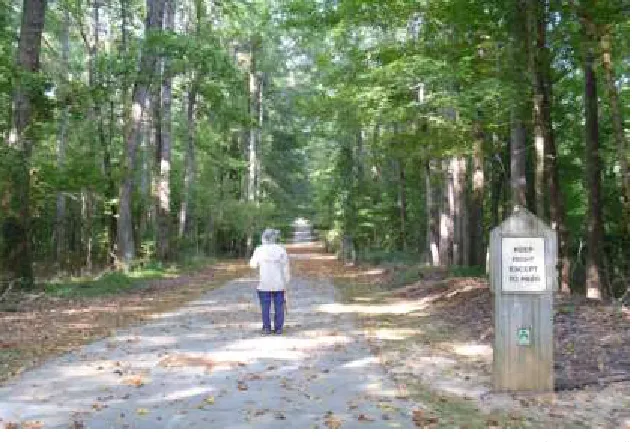
Figure 5. Image of Lionel Hampton Trail adjacent to Lionel Hampton and Beecher Hills
Greenways... 23
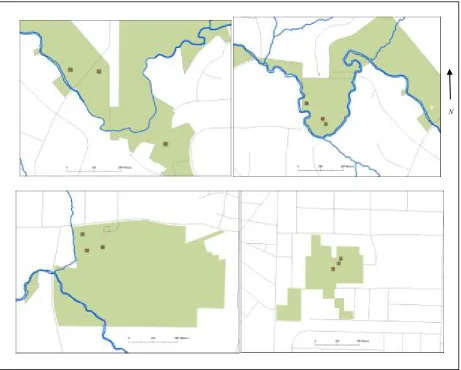
Figure 6. Maps of study areas (green), streams (blue) and study plots (brown). Clockwise from top left, Hampton Greenway, Beecher Hills Greenway, Outdoor Activity Center, and Cascade Springs Nature Preserve ... 26
Figure 7. Diagram of 20 x 20 meter study plot with two transects at randomly selected whole meter points ... 27
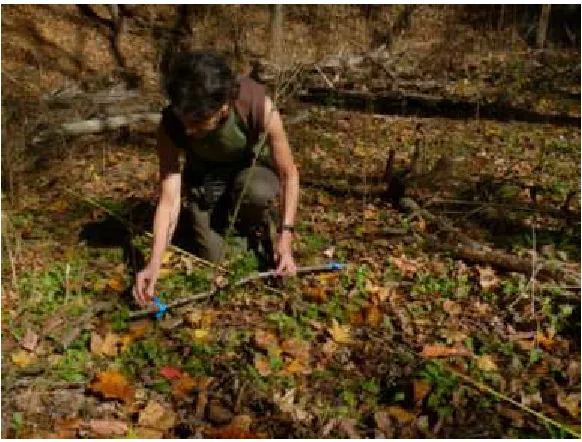
Figure 8. Image showing meter line method of inventorying plant species ... 28
Figure 9. Diagram of detrended correspondence analysis ordination graph for urban plots ... 33
Figure 10. Diagram of nonmetric multidimensional scaling ordination graph for urban and rural study sites ... 43
1
CHAPTER 1
INTRODUCTION AND LITERATURE REVIEW
Introduction
Three important trends in the study of ecosystems include the recognition of urban
ecosystems as unique habitats, the realization that non-native, invasive species are serious threats
to native plant communities in both rural and urban ecosystems, and advancements in the field of
restoration ecology, which seeks to return degraded ecosystems to a healthier condition and
improve their diversity. This research encompassed these trends, by examining vegetation
composition following initial efforts to restore an urban ecosystem through removal of the
non-native invasive plant species Ligustrum sinense.
Study Purpose
This research was undertaken with specific two goals: (1) to describe species established
in the floodplains of natural areas and greenways within Atlanta, Georgia, after removal of the
invasive plant species L. sinense; and (2) to add to the scant body of literature regarding invasive
species removal and site recovery in urban areas through a comparative analysis between species
occurring at sites treated for L. sinense removal in Atlanta, to species occurring under similar
circumstances in a rural area of Georgia studied by Hanula, Horn and Taylor (2009). The
intention of the first goal was to answer the following questions.
1. What was the species composition for each urban site, and all urban sites combined, two
years after treatment?
2
3. Were non-native species invasive?
The second goal aimed to answer research questions regarding a comparison with similar
research conducted in a rural area of Georgia (Figure 1).
1. Were more non-native invasive species colonizing urban floodplains than rural
floodplains two years after removal of L. sinense?
2. Did native species colonizing urban floodplains exhibit less diversity compared to rural
floodplains?
[image:12.612.74.342.318.672.2]3. How was the diversity of the native species reflected in species richness and evenness?
Figure 1. A map of the state of Georgia indicating location of urban and rural research sites
3
Research was conducted within the City of Atlanta, in partnership with the non-profit
organization, Trees Atlanta. In 2008 the City of Atlanta contracted with Trees Atlanta to
eradicate Ligustrum sinense and other invasive species such as Nandina domestica, Elaeagnus
pungens, kudzu (Pueraria Montana), and English ivy (Hedera helix) from Atlanta city parks,
conservation areas, and greenways. During the removal and treatment process, Trees Atlanta
faced challenges typical of restorations, such as determining the former character and ecological
diversity of treated areas, recurring invasive plants, and formulating a long term plan to maintain
treated areas. To assist with planning, Trees Atlanta staff expressed interest in determining the
species composition occurring on sites treated for L. sinense removal, and whether species
becoming established are native or non-native.
A study of species composition after L. sinense removal contributes to the literature
regarding restoration science particularly within urban ecosystems while providing information
to assist Trees Atlanta, as well as other restoration efforts, in making longer term decisions
regarding continued treatment of invasive species, and to what extent native plant species need to
be seeded or planted in order to re-establish the native plant composition. Because the field of
restoration ecology is relatively new, more research on removal of invasive species and recovery
of treated areas is needed, particularly studies that quantify results (Moser et al. 2009; Miller and
Gorchov 2004). There is also a shortage of urban restoration studies (Alberti 2008). No urban
restoration studies within the City of Atlanta were identified. The comparative analysis with
similar research conducted in a rural area adds to the body of knowledge regarding potential
4
Literature Review
Restoration of urban ecosystems through removal of non-native invasive species occurs
within the context of three areas of inquiry. The first is ecosystems and biodiversity, in order to
understand what an ecosystem is and to ascertain the desirability of attempting restoration. The
second is a description of non-native invasive species, in order to understand their negative
impact upon ecosystems. In this case, the focus is Ligustrum sinense. The third is restoration
science, to ascertain what is known about restoration techniques, particularly in terms of L.
sinense.
Urban ecosystems are recently recognized as unique environments encompassing humans
and other organisms living in urban areas, and the nonliving structures and processes with which
they interact (Cutter and Renwick 2004). With recognition as ecosystems, cities are increasingly
studied as sites encompassing human activities and the natural environment (Benton-Short and
Short 2008; Alberti 2008). Likewise as cities have grown and encroached upon surrounding
land, awareness of human impact on natural environments has increased. Human impact often
results in degradation of the natural environment as human benefits and the monetary value of
resources take precedence over other living organisms and their habitats. However, during the
past several decades conserving the natural environment and taking action to restore degraded
areas have gained priority, especially as the benefits of preserved natural areas have been
realized and more highly valued (Platt 2006). These benefits include reduced storm water
runoff, mitigated soil erosion, reduced urban heat island intensity, improved air quality,
decreased noise levels, and increased biological diversity (Boone and Modarres 2006; Manning
5
Urbanization impacts the natural environment in multiple, complex ways. Development
of roads, subdivisions, and commercial areas modifies land surfaces and form. Human activities
within urban areas utilize large quantities of natural resources, alter energy and chemical cycles,
and generate waste products. These processes disrupt nonhuman ecological systems and the
organisms that depend on them (Alberti 2008). Although undeveloped sites may be set aside to
preserve natural space for native plant and animal communities, as well as for human recreation
and enjoyment, the impacts of urbanization are still felt within these sites. Ecosystems situated
in urban areas contend with conditions altered from the environments in which they evolved,
including habitat fragmentation and isolation, changed soil structure and composition, increased
exposure to pollutants and toxins, higher temperatures, accumulations of nitrogen, and decreased
seed sources for native species (Niemela 1999; Moll 1995).
Fragmentation, where undeveloped areas are preserved but disjunctive, is a particularly
important impact. Fragmentation creates numerous forest edge environments, which are
detrimental to species requiring shade and deep forest habitats, but are favorable to some species
that favor higher light conditions. Fragmentation is particularly favorable to many non-native
invasive plants, which often thrive in sunlight and have seeds that are spread to disjunct areas
through animal droppings. In urban areas, the potential for invasion by non-native species is
amplified because urban landscaping introduces new, non-native species to the environment,
some of which are invasive (Alberti 2008). If climatic and geographical conditions are
favorable, and without their natural insect and disease predators, non-native species escape
where they were planted in the urban landscape and become established in forested areas, often
outcompeting native species and causing a decline in the abundance and biodiversity of native
6
troublesome non-native shrub species. Historically utilized as an ornamental plant in yards and
hedges, its prolific seed production is dispersed by birds and animals. With a preference for
warm, humid bottomlands, L. sinense has become widely established in riparian areas. Mature
stands of L. sinense replace native plant communities and consequently reduce the insect, bird,
and animal populations which depend on them.
An important aspect of restoration ecology is removing invasive species which have
become established and are disrupting endemic ecosystems. Human intervention is needed to
contain and remove the invaders and provide the opportunity for native plants, and the
biodiversity they support, to become re-established (Hough 1995). Restoration research has
focused on the most efficacious methods for removing the invader, as well as plant species
composition after removal. Most of this research has been conducted in rural areas. While urban
restoration efforts face similar challenges to restorations in rural areas, they also grapple with the
unique conditions of urbanized areas, such as increased storm water runoff, poor air quality, and
low biodiversity. Therefore, after the invading species is removed, restoration of the former
habitat may be slower and require more human input and subsequent management than required
in rural areas.
Ecosystems and Biodiversity
Ecosystems are systems in which materials and energy are transferred between organisms
and their environment. The characteristics of, and organisms living within ecosystems, are tied
to geologic, topological, edaphic, and climatic conditions of an area. An exchange of biotic and
abiotic elements is constantly occurring within an ecosystem as energy passes through a series of
7
or change to any of the biotic or abiotic components of an ecosystem may significantly alter the
entire ecosystem (Cutter and Renwick 2004; MacDonald 2003). Human activities are
dramatically changing the Earth’s ecosystems through landscape changes, energy transformation,
and alterations in material cycles. Such changes have accelerated during the past 50 years which
has had a significant impact on biodiversity (Alberti 2008).
Biodiversity is one of the most important considerations within any ecosystem. Bacteria,
plants, and animals are dependent on one another for the energy provided through the food chain.
Richness in diversity is a measure of both the number of different species present in an
ecosystem and genetic variability within each species. The organisms within an ecosystem have
co-evolved and have symbiotic and dependent relationships upon one another. Species planted
simply for aesthetic reasons and later escaped into natural areas, which did not co-evolve in the
ecosystem, can change the characteristics of the entire ecosystem (Primack 1998). Hough (1995)
explains changes to an ecosystem due to human activity as changes to the overall energy
availability. An ecosystem relying on fewer sources of energy becomes more vulnerable (Jose et
al. 2009). Urban landscapes are exemplars of human impact, with their altered and diminished
energy sources on which a variety of life forms depend. The addition of invasive species to
natural landscapes further exacerbates the degradation of ecosystems already impacted by
urbanization, and further erodes the dependent relationships among native species (Gaston and
Spicer 1998). In addition to reducing species richness, invasive species also impact the evenness
of species. Evenness is a measure of species dominance, represented by the number of
individuals of a given species within an area. For example, an area with low species evenness
may have many individuals of chalk maple (Acer leucoderme) and one redbud (Cersis
8
species. When a species becomes invasive to an area, evenness tends to decrease as the invader
dominates resources, outcompeting other species and reducing the number of individuals
representing a diverse variety of endemic species.
Non-native Invasive Species
In the literature on plant invasion ecology, definitions of non-native invasive species can
be complex and controversial. A non-native plant species is one that is introduced to an area
either intentionally or accidentally by humans. If conditions are highly favorable to an
introduced species, and it lacks predators and competition, it may produce reproductive offspring
which grow and proliferate in large numbers a significant distance from parent plants. A wide
distribution and dense number of an introduced species eventually interferes with an endemic
ecosystem and becomes invasive (Richardson et al. 2000). A native species is “a species that
occurs naturally in an area, and therefore one that has not been introduced either accidentally or
intentionally” (Allaby 1994). Definitions of both native and invasive species can be problematic
because they reference a temporal component. This is resolved by specifying a period during
which a species must have been present to be considered native, such as before global travel or
before the arrival of European settlers in North America (Bergman and Swearingen 2005; Luken
and Thieret 1997). For purposes of this research, a common definition of North American native
species is used, those present on the continent when the colonists arrived approximately 400
years ago. Not all species fit into such a neat classification of native. Native Americans
modified plant communities and planted squashes (Cucurbita spp.) and other foods originally
from Mesoamerica, for example, giving those foods status as native plants under this definition
9
After habitat destruction, human introduction of alien invasive species is the second main
cause of Earth’s biodiversity loss (Cutter and Renwick 2004; Jose et al. 2009; D'Antonio 1997).
Invasive species cause biodiversity loss by outcompeting native plants for resources such as
light, nutrients, and water. Other competitive advantages include alterations of soil composition
and formation, disruption of chemical processes and nutrient cycles, allelopathic properties, lack
of insect predators, or a combination of these advantages. Theories from community ecology
also suggest that site quality, disturbances such as urbanization, and phenology, or timing of leaf
emergence, flowering, and seeding, may play a role in the success of invasive species in a new
environment and climate (Wolkovich and Cleland 2011; Moser et al. 2009; Walker and Smith
1997; Fei et al. 2009; Woods 1997). Competitive advantages assist non-native invasive species
in becoming established outside their native ranges and disrupting ecological systems in an
historically short time, sometimes less than a decade (Dyer and Cowell 2009; Primack 1998).
Invasive species are destructive to entire ecosystems as insects and animals can no longer depend
on native species as sources of food and habitat.
Many invasive species in the United States have detrimentally impacted entire
geographic regions. Some of the better known examples include Chestnut blight (Cryphonectria
parasitica), accidentally introduced from Asia in the early 1900s which killed an estimated four
billion chestnut trees (Castanea dentata) in the eastern United States, a quarter of the hardwoods
present in the forest at the time (American Chestnut Foundation, http://www.acf.org/history.php)
and kudzu (Pueraria montana) a woody vine that was introduced in the United States from
China and Japan in the late 1800s to control erosion, provide feed for livestock, and shade
southern porches (Miller 2003). Government sometimes unwittingly aids establishment of an
10
Service grew 84 million P. montana seedlings and paid farmers to plant them (Jenkins and
Johnson 2009; Blaustein 2001). When successfully established, P. montana covers the ground
growing over shrubs, trees, and built structures, aptly giving it the reputation as “the vine that ate
the south” (Blaustein 2001). Although well known and highly recognizable along roadsides in
the southeastern United States (Figure 2), as of March 2008 P. montana covered approximately
220,000 acres of U.S. Forest Service land in twelve southern states. Other species are much
more problematic. The most common invasive plant on Forest Service land in the southeastern
United States is Japanese honeysuckle (Lonicera japonica), a vine covering approximately 10.3
million acres as of March 2008, also growing over trees and shrubs and replacing many native
plant species. The privets (Ligustrum spp.), an invasive shrub including Chinese, European,
Japanese and glossy together cover approximately 3.2 million acres (Miller 2008).
[image:20.612.73.341.398.632.2]
Photo by SMorrell
11
Restoration Science
Removing a non-native invasive species and restoring the natural environment present
significant challenges (Niemela 1999). The field of restoration ecology is relatively new
therefore the expertise to answer many important questions and provide the guidance needed to
ensure successful restoration outcomes is still developing (Alberti 2008). When managing a
restoration project, conditions and character of a site need to be considered as well as the desired
outcomes. Part of any restoration plan that involves removal of non-native species preferably
includes a return of the targeted site’s ecosystem to a semblance of its structure before the
invasive species became dominant, including return of both native plants and animals eliminated
or degraded (Clemants and Handel 2006). However, the former ecosystem structure may be
difficult to determine for a variety of reasons, especially in an urban environment. Historic
records may be lacking, or the land may have undergone several land use changes over time. If
an area has experienced a long period of invasion, little indication of the former ecosystem may
remain and reference sites may be difficult to locate. These challenges are significant
considerations particularly during the planning phase of a restoration project.
Various approaches to restorations are often based on different sub-disciplines of
ecology. Hough (1995) advises using forest ecology and its processes as the basis for forest
restorations, since ecosystems are not static and continue to evolve. A similarly situated
uninvaded environment, when available, should be studied to determine its components and
successional phase (Hough 1995). Clemants and Handel (2006) apply botany and community
ecology to restoration efforts and emphasize restorations involve function rather than
appearance. After the initial restoration work, changes occur over time as species become stable,
12
original appearance (Clemants and Handel 2006). Zedler (2006) recommends adaptive
management as a restoration strategy which systematically applies knowledge gained during the
restoration process at a given site as well as information from reference sites. Adjustments are
made to the project as new information is learned so that successful outcomes are more likely.
Plans and goals must be set which determine priorities, with the understanding that for highly
degraded sites, only a few objectives may be met. When funding is available and people are
motivated to work, momentum is important and should be utilized whether or not a perfect
outcome can be achieved (Zedler 2006). Often there is no quick fix and results can take years to
achieve, particularly in reestablishing historic soil composition and function. Consideration of
all factors is difficult and in some instances fundamental conditions of restoration sites change
due to outside influences, or restorations may result in unintended consequences, for example,
the clearing of a site with an infestation of Hedera helix may lead to erosion and loss of topsoil
during heavy rain events. Because restoration science is relatively new, whether a project is
successful or achieves less than optimal results, the experience and knowledge gained add to the
body of information about restorations. Monitoring, measuring, and evaluating as the project
progresses and after completion are essential (Zedler 2006; Cutter and Renwick 2004).
After eradication of an invasive species, many factors may influence the return of
desirable or native species, including light levels reaching the forest floor, temperature, rainfall,
and soil moisture and composition (Hartman and McCarthy 2004). Prolonged infestation may
have altered soil properties such as alkalinity, requiring remediation before planting native
species may occur (Hartman and McCarthy 2004; Clemants and Handel 2006). Additionally,
there must be a source of plant propagules. Several methods of reestablishing native species may
13
of invasive species by creating competition for space and resources and may speed successional
processes (Hartman and McCarthy 2004). Another method is to depend on the existing seed
bank. With exposure to light, propagules of native species that have survived the invasion may
sprout and become established. Seeds from the invader species will also likely be present in the
seed bank and other invasive species’ propagules may be present especially in an urban area with
multiple sources from urban landscaping. Clemants and Handel (2006) stress patience when
restoring a site, allowing time for species to mature and begin reproducing, which can take many
years. Their studies have shown the need for long term management of restoration sites to
continue the original goals of the project, control establishment of new colonies of invasive
species, and continually add desired seeds or replant until native species become established
(Clemants and Handel 2006).
Several of the challenges documented in the literature on restoration science were
experienced during L. sinense removal in Atlanta, Georgia, parks and greenways, including
highly altered landscapes due to multiple disturbances over time, determining the former
character of treated sites, lack of seed producing native plants, and the presence of non-native
invasive species on private property surrounding treated sites, providing continued sources of
propagules.
Ligustrum sinense
Ligustrum sinense was brought to the United States during the 1850s from temperate and
subtropical China, Vietnam and Laos for use as an ornamental species in hedges and as
individual specimens (Starr, Starr, and Loope 2003; Nesom 2009). It is the most common of the
14
April to June, hence its desirability in gardens for hedges and screening. The scent has a
distinctive muskiness and may be considered unpleasant (Godfrey 1988). Fruits form July to
March in dense ovate drupes with each fruit containing one to four seeds that ripen from pale
green to purple to blackish. Seeds are eaten by many fruit-eating bird species as well as other
animals and dispersed widely through droppings. L. sinense also sprouts from roots of mature
plants and from cut stumps. It prefers moist woods, bottomlands along streams, and disturbed
habitats. It readily colonizes, forming dense thickets and displacing populations of indigenous
herbaceous, shrub, and sapling species (Figure 3). It also tolerates mesic uplands (Miller 2003;
Godfrey 1988; Starr, Starr, and Loope 2003).
[image:24.612.74.389.344.601.2]Photo by MMorrell
Figure 3. Image of a restoration site at Hampton Tract Greenway, Atlanta, GA. Foreground has been treated for Ligustrum sinense removal while background has not
Competitive advantages of L. sinense include reaching a mature height up to thirty feet
15
arrangement which may capture more light compared to native shrubs such as Calycanthus
floridus and Forestiera ligustrina (Morris, Walck, and Hidayati 2002). Flowers are
monoclinous, with both stamens and pistils, increasing pollination success compared to native
shrubs such as C. floridus, the flowers of which are dioecious, having male stamens and female
pistils on separate individual blooms. While L. sinense is deciduous in its native range, humid
areas of eastern and southern Asia, in southeastern United States forests L. sinense is
semi-evergreen to semi-evergreen unless conditions are unusually cold or dry. This gives it photosynthesis
and resource usage advantages compared to native deciduous species (Morris, Walck, and
Hidayati 2002). Its prolific production of seeds is also advantageous. In Georgia, L. sinense is
classified as a Category I invasive species, the most problematic group, by the Georgia Exotic
Pest Plant Council (http://www.invasive.org/browse/subinfo.cfm?sub=3035). It is estimated to
cover approximately 2.69 million acres in 12 southeastern states (Miller 2008). However this is
an estimate of interior forest plots and does not include urban parks, private property, or forest
edges and therefore underestimates the extent of invasion (Hanula and Horn 2011).
Wangen and Webster (2009) recommend formulating invasive control management plans
based on an invasive species’ life-history traits. These traits encompass how an invasive species
reproduces and disperses, whether it is an annual, perennial or biennial, whether it has natural
enemies, and when it is most vulnerable to treatment compared to native species (Wangen and
Webster 2006). L. sinense exhibits many life-history traits typical of invasive species and has
few documented insect enemies (Morris, Walck, and Hidayati 2002). As a proficient space
invader, with a fast colonization rate in open, disturbed areas, L. sinense is difficult to eradicate
16
sprouts grow from cut trunks and stems, and roots left in contact with soil (Godfrey 1988; Miller
2003).
The most common treatment method for eliminating L. sinense is cutting either by
Gyrotrac® mulching machine, chainsaw, or hand, followed by chemical spraying of stumps, and
additional chemical foliar application during subsequent years to kill sprouts and seedlings
(Hanula, Horn, and Taylor 2009). Hanula, Horn and Taylor’s (2009) research compared the
efficacy of two L. sinense removal methods in the Oconee River watershed of northeastern
Georgia. One treatment method involved mechanically cutting with a Gyrotrac® mulching
machine and the other utilized hand-felling followed by chemical treatment. Results from the
two methods were compared to untreated control plots and similarly situated plots uninvaded by
L. sinense. Overall biomass was reduced by both treatment methods however neither method
resulted in a reduction of quantity of L. sinense plants. Only subsequent treatment with chemical
foliar spray a year after the initial cutting reduced plant numbers. Hanula, Horn and Taylor
(2009) also inventoried herbaceous, shrub, and tree species after L. sinense removal to analyze
recurring species diversity and abundance. Diversity and abundance for the shrub layer was not
significant between treatment methods. Although treatment methods did not affect tree cover,
they found that when compared to the uninvaded plot, tree abundance had a negative correlation
with L. sinense cover. As older trees died and created open gaps in the forest, no immature trees
were present to fill the gaps. This was due to L. sinense’s dense coverage which outcompetes
tree seedlings and saplings, giving L. sinense further opportunity to extend its coverage (Hanula,
Horn, and Taylor 2009). Hanula, Horn and Taylor (2009) also found L. sinense removal had a
high impact on the herbaceous layer two years later, with species richness similar to study plots
17
uninvaded plots. Their research showed treated sites were not reverting back to a desired former
condition within the first two years after removal (Hanula, Horn, and Taylor 2009).
A study by Merriam and Feil (2002) measured the effects of L. sinense in a mixed
hardwood forest in western North Carolina and found a negative correlation between L. sinense
cover and native plants under the L. sinense for tree seedlings and herbaceous plants. When L.
sinense was removed, both tree seedlings and herbaceous plants increased in abundance during
the subsequent growing season (Merriam and Feil 2002). Other studies conducted on the effects
of the invasive shrub, Amur honeysuckle (Lonicera maackii), have yielded similar results with
shrub density negatively impacting growth and reproduction of herbaceous native species (Miller
and Gorchov 2004).
Research in restoration science has surveyed and tested the challenges faced when
attempting to restore ecosystems devastated by an aggressive invasive species. To add to the
literature, the premise of the research for this thesis was that those challenges are magnified
when restoration sites are situated within an urban environment due to the added stresses
imposed by urbanization. The information provided by this research will assist in determining if
composition of species occurring after removal of an invasive species is affected by location
18
CHAPTER 2
STUDY SITES AND METHODOLOGY
Site Selection
Because one of the major purposes of this study was to compare urban to rural areas, the
nature preserves and greenways chosen for research were situated within the city of Atlanta,
Georgia. Sites were selected in collaboration with Trees Atlanta. Trees Atlanta’s goal was to
protect and improve Atlanta’s urban forests and trees. This goal was achieved primarily with
tree plantings and community education. The organization also included a Forest Restoration
program that focused on restoring Atlanta’s protected forests, greenspaces, and urban native
plant communities. Much of this focus was on removing invasive plant species through
neighborhood volunteer programs, contractor spraying and removal, community education, and
replanting native species (Trees Atlanta, http://www.treesatlanta.org).
Site selection was based on four factors. The first was potential for biodiversity of
recurring species after Ligustrum sinense removal. This potential was determined through
conversations with Trees Atlanta staff and based on their observations of plant species diversity
in the immediate areas where L. sinense was removed and subsequently treated. Because of the
forested characteristic and lack of development within certain natural areas where invasive
removal efforts were concentrated, Trees Atlanta staff members stated they had observed more
biodiversity in several city parks than was observed in many typical urban parks maintained for
open grassy areas, with a sparse tree layer and little to no shrub layer. Trees Atlanta staff
therefore expressed interest in the vegetation becoming established after L. sinense removal in
19
Figure 4. A map of the southwest quadrant of downtown Atlanta with locations of study sites demarcated by red circles. Green areas represent city parks and greenways
The second factor considered in site selection was timing and method of L. sinense
treatment. A Trees Atlanta subcontractor began L. sinense treatment in Atlanta city parks in
November 2008 by cutting plants and treating stumps with 13.6% triclopyr herbicide mixed with
basal oil. Cuttings were stacked in piles for on-site composting. In subsequent years, seedlings
and resproutings were treated with a foliar application of 3.7% Accord herbicide. L. sinense was
typically treated on all study sites during winter and early spring months to minimize impact to
other flora that remained in winter dormancy. To confirm consistency with L. sinense removal
20
reviewed and summarized for treatment start dates, subsequent treatment dates, and treatment
methods.
At the rural sites used for comparison with this research, researchers utilized several
treatment methods. One of those methods was hand cutting and painting stumps with 30%
triclopyr herbicide. Subsequent treatment of regrowth occurred approximately one year later
with a broadcast herbicidal spray of 2% glyphosate and surfactant (Hanula, Horn, and Taylor
2009). Although the herbicide concentrations used for initial and regrowth treatments varied
between the urban and rural areas, method and timing were similar. Treatment began
approximately two years prior to inventorying species at both the urban and rural sites.
To ensure research in both the urban and rural areas was conducted in similar natural
communities, the third consideration for study site selection was situation in riparian
bottomlands. Three of the four urban natural areas included active stream channels with
floodplain zones. The fourth included an ephemeral creek bed. Additionally, research for both
studies was conducted within the same ecoregion of Georgia.
The fourth consideration in site selection was L. sinense infestation level prior to
treatment. Trees Atlanta conducted pretreatment surveys with invasive species consultants and
the treatment subcontractor, which was documented in the subcontractor’s records. This was
compared to the pretreatment L. sinense infestation level at sites in the rural study. Study sites
for both the rural and urban studies included a medium to heavy infestation of L. sinense before
treatment began. Generally, these levels of infestation were characterized as mature stands,
growing unimpeded for at least a decade. Heavy infestation was found in bottomland areas
where L. sinense stands were 15 to 30 feet tall with density that was impassable. Medium level
21
aged stands exhibiting less height due to less light through the closed tree canopy. This level of
infestation was dense although passable.
Site Descriptions
Selected nature preserves and greenways were within the City of Atlanta boundary in
urban neighborhoods proximal to residential and business land uses. Based on the selection
criteria, the four study sites identified for this research were Cascade Springs Nature Preserve,
Outdoor Activity Center, Beecher Hills Greenway Tract, and Lionel Hampton Greenway Tract
(Table 1). Unlike many urban parks with open expanses of mown grass and built facilities, these
nature preserves and greenways were forested with little to no open areas and few built facilities.
Generally, the areas were conserved natural areas utilized for appreciation of the natural
environment and for exercising such as walking and running. The forest was fragmented due to
its situation in the urban built environment. Adjacent urban residential and private properties
included many typical urban landscaping plant species utilized in the southeastern United States
such as Euonymus spp., Impatiens spp., Begonia spp., Hedera helix, and Nandina domestica.
Landscapes also included L. sinense hedgerows, thickets, and mature individual specimens
22
Table 1. Summary of urban study sites
Park/Greenway Address Type
Total Acres
Treatment Began
Approx. L. sinense Acres
Treated Cascade Springs Nature Preserve 2852 Cascade Rd SW Nature Preserve
120 November, 2008 20
Outdoor Activity Center 1442 Richland Rd SW Nature Preserve
22 February, 2009 3
Beecher Hills
Tract Bolling Brook Dr SW Greenway Acquisition Project
60 February, 2009 17
Lionel Hampton Tract
Flamingo Rd Greenway Acquisition Project
54 January, 2009 19
Source: Clean Water Atlanta, Greenway Acquisition
http://www.cleanwateratlanta.org/greenway/Properties/default.htm and Trees Atlanta records
Cascade Springs Nature Preserve had no built facilities except a dilapidated wooden
structure and a tiled spring house once used as a resort for people to visit the springs and bathe in
the water for healing purposes. It was acquired by the city in the early 1970s and included
several hiking paths and a small waterfall. The preserve included a rich population of native
plants, with an exceptional stand of Bigleaf Magnolia (Magnolia macrophylla), on a northeastern
slope. It also appeared to have been farmed, indicated by rock terraces and fencing material on a
flatter upland area, and several older trees that perhaps provided shade to buildings no longer
present.
Lionel Hampton and Beecher Hills Greenway Tracts were adjacent properties acquired
by the city in 2002 as part of a settlement with the United States Environmental Protection
Agency, Georgia Environmental Protection Division, Upper Chattahoochee River Fund, Inc.,
and other parties for city violations of the Federal Water Pollution Control Act and Georgia
23
adjacent to rivers and streams in a natural, undisturbed state within the metro Atlanta area (City
of Atlanta, http://atlantawatershed.org/greenway). The Lionel Hampton Greenway Tract was
adjacent to the PATH Foundation’s Lionel Hampton Trail, a paved multiuse path which
[image:33.612.75.391.210.431.2]eventually will connect to the BeltLine Trail (Figure 5).
Figure 5. Image of Lionel Hampton Trail adjacent to Lionel Hampton and Beecher Hills Greenways
The only site with functioning built facilities, the Outdoor Activity Center was
established as a nature preserve and to educate the public about the natural environment. The
land was acquired by the city in the 1970s and the building, which included an educational
display, meeting area, and offices, was dedicated in 1992. In front of the building were a World
Wildlife Fund Certified Wildlife Habitat and a bio-garden project that demonstrated recycling
water between a sustainable, organic vegetable garden and adjacent fish tank. The Center
housed offices of the West Atlanta Watershed Alliance, a community based non-profit
24
discriminatory waste water treatment practices in southwest Atlanta. The Alliance’s mission was
to protect, conserve, and restore the area’s natural resources. It sponsored outdoor, natural
environment, and clean water educational and service programs particularly aimed at youth in
southwestern Atlanta’s minority and low income communities. Education is an important
component of eradicating invasive species as infestations occur on private property adjacent to
many local city parks and removal efforts take place site by site at smaller spatial scales
(Hartman and McCarthy 2004). Since L. sinense is widely spread by birds eating its numerous
propagules each year, assistance from volunteers and adjacent private property owners is
imperative for eradication from natural areas.
At each of the four selected City of Atlanta natural areas, study sites were identified in
bottomland areas near streams. South Utoy Creek flowed through Cascade Springs Nature
Preserve; North Utoy Creek flowed through the Hampton and Beecher Hills Greenway Tracts.
The two creeks merged approximately two and one-half miles west of the study parks forming
Utoy Creek which flowed into the Chattahoochee River approximately four miles to the west. At
Outdoor Activity Center an ephemeral creek bed ran through the bottomland. Streams ran
relatively low during normal to dry periods and became heavily swollen during moderate to
heavy rains. Runoff into the streams was exacerbated by surrounding urban structures and
pavement. Heavy runoff and flooding exposed the area to frequent disturbance. The streams
were means of seed dispersal and sources of nutrients, providing favorable growing conditions
for L. sinense (Schiffman 2009). Dense stands of mature L. sinense were left on stream banks
due to concerns that removal would lead to soil erosion during rain events. Sites included
canopy trees characteristic of many southeastern United States floodplains, including tulip poplar
25
box elder (Acer negundo),as well as species of mesic portions of bottomlands such as chalk bark
26
Data Collection
On each of the four selected study sites, three quadrats were randomly identified in
bottomland areas previously infested with L. sinense, for a total of 12 study plots (Figure 6). All
inventoried quadrats were located at least ten meters from stream channels to avoid including the
untreated buffer along stream edges.
[image:36.612.77.538.221.591.2]
Figure 6. Maps of study areas (green), streams (blue) and study plots (brown). Clockwise from top left, Hampton Greenway, Beecher Hills Greenway, Outdoor Activity Center, and Cascade Springs Nature Preserve
27
Each quadrat was laid out as a 20 meter by 20 meter square with two points randomly selected
[image:37.612.154.378.139.274.2]along the northern edge to run transect lines north to south within the plot (Figure 7).
Figure 7. Diagram of 20 x 20 meter study plot with two transects at randomly selected whole meter points
A modified point-line method was used to inventory the herbaceous and shrub/sapling
plant layers by laying a meter stick perpendicular to transects at each whole meter point along
the transect (Godínez-Alvarez et al. 2009). Plants intercepting the meter stick were inventoried,
including overhanging shrubs and saplings resulting in a total of 20 meters inventoried per
transect (Figure 8). To facilitate comparison with the rural study, plants intercepting each whole
point along transects were also recorded. Trees less than four meters in height (approximately 13
feet, 1.5 inches) were recorded as saplings. Each plant was identified to species where possible.
Voucher specimens were collected in cases of difficult identification. In a few instances,
identification to only genus or family taxonomic level was possible. Plants that could not be
identified because of their small size or due to insect or treatment damage were labeled as
unknown.
Plot 1
T3 T13
28
Figure 8. Image showing meter line method of inventorying plant species
Species and counts inventoried at each meter line and meter point were recorded per
quadrat. The three quadrats per site were summarized at site level by species and counts, and
assigned a native or nonnative indicator using Flora of the Southern and Mid-Atlantic States
(Weakley 2011). Species considered invasive to the region by the United States Department of
Agriculture and Southeast Exotic Pest Plant Council were also indicated.
Data Analysis and Interpretation
Quantitative data collected were compiled and mathematically compared for similarities
and dissimilarities between data sets to describe and compare community structure. Relative
density of each species, represented by the formula
was calculated per site and for all sites combined. Relative density was also calculated
separately for native and non-native species.
Photo by MMorrell
29
To fulfill the first goal of this research which was to describe urban species composition,
line data were utilized because they included more species richness and abundance than the
point data, providing a more robust representation of plants becoming established. Point data
were used for the second, comparative goal, of this research. Point data facilitated comparison
for two reasons. First, data gathered at transect points were used in the rural study. Second,
these data avoided counting clusters of plants found within a small area due to limited seed
dispersal or locally favorable germination conditions for a specific species. However, using
point data presented several limitations due to disparity in site and quadrat size between the
urban and rural research. Smaller overall size of the urban natural areas and greenways
compared to the rural watershed dictated smaller study sites within the urban natural areas and
greenways. Hence, space for plots was limited within the bottomlands of urban study sites.
Rural plots were two hectares each. One rural plot was considerably larger than the treated area
at the Outdoor Activity Center, and approximately one quarter the size of the treated areas at the
other three urban study sites.
Another limitation of the urban study sites was the discontinuous pattern of invasive
species present. For example, the section of the bottomlands in Beecher Hills Greenway where
study plots were located was treated for L. sinense, while an adjoining section was treated
primarily for an invasion of Wisteria spp. Another adjacent section was treated primarily for an
invasion of Hedera helix. Differing treatment methods were used for the different invasive
species. Timing of treatments was also different. Therefore, long transects within an area
treated consistently for L. sinense were difficult to select at most sites. The site where a strategy
of long transects may have been achievable was Hampton Greenway. Species richness was very
30
outcomes. Urban study quadrats were 20 square meters each, a reasonable size for inventorying
the urban sites within the limited total area. The ratio of individual plants inventoried on transect
points was 79 urban to 497 rural. The low ratio was partly due to a significant number of bare
points on urban study plots, limiting the abundance of individual plants inventoried within the
urban plot sizes.
A visual representation of the urban plant communities was plotted with a detrended
correspondence analysis ordination using the PAST program. Ordination is a basic ecological
technique that provides a two-dimensional representation of similarity and difference in plant
communities. Similar communities plot closely together and different communities plot farther
apart (Hammer, Harper, and Ryan 2001).
To compare native species composition between urban and rural studies, an index of
similarity was calculated which measures degree of difference. The index is a method of
determining diversity based on the presence or absence of species. The index of similarity
equation is:
Index of similarity =
A limitation of the index of similarity is that it does not consider abundance, or the number of
individuals present for each species. Therefore a single, or few species may dominate a sample
(MacDonald 2003). To determine whether native species colonizing the urban floodplains
exhibited less species richness than native species colonizing rural floodplains, the Shannon
index (H’) was calculated which takes both species richness and evenness into consideration
with number of taxa and number of individuals. The index is represented by the equation
31
where pi is the proportion of the ith species and In is the natural logarithm. An estimate of
evenness (E) alone was measured with the equation
E = H’/In S
where H’ equals the Shannon Index, In is the natural logarithm, and S is species richness
(MacDonald 2003). To visually represent the urban and rural data, a diversity profile was
plotted using the PAST program. The diversity profile compared diversity and abundance for
the two studies (Hammer, Harper, and Ryan 2001).
Non-metric multidimensional scaling is an ordination technique that preserves the ranked
differences between species. Non-metric multidimensional scaling ordination was performed for
urban and rural quadrats, and included data from desired future condition sites surveyed in the
rural study. The resulting plot visually represented differences between the urban and rural
studies, as well as differences with plots not impacted by an invasion of L. sinense. The PAST
program was used to perform this ordination with the Raup-Crick randomization method which
is a probably measure of whether samples have dissimilar species composition (Hammer,
32
CHAPTER 3
RESULTS AND DISCUSSION
Urban species composition
The first goal of this research was to describe species occurring in the floodplains of
natural areas and greenways within Atlanta, Georgia, after removal of the invasive plant species
Ligustrum sinense. The intention of this goal was to answer the following questions.
1. What was the species composition for each urban site, and all urban sites combined, two
years after treatment?
2. What was the prevalence of native versus non-native taxa at urban sites?
3. Were non-native species invasive?
At all study sites combined, the most abundantly occurring species was L. sinense at
27.3% of species inventoried (see Appendix A for a table of all species inventoried). Six of the
ten most abundant species were non-native (Table 2), of which five including L. sinense, were
classified as invasive in the state of Georgia by the Southeast Exotic Pest Plant Council
(http://www.se-eppc.org/). The four other non-native species were Hedera helix, honeysuckle
vine (Lonicera japonica), winter creeper (Euonymus fortunei), and Wisteria spp. Of the native
taxa occurring, grape vines (Vitis spp.) were the most common. The second most common
33
Table 2. Ten most common species inventoried on urban study plots (meter line data)
The detrended correspondence analysis diagram showed species composition varied
considerably among the urban study sites. Outdoor Activity Center and Beecher Hills Greenway
exhibited the most similarity and were distinctly different from Hampton Greenway and Cascade
Springs Nature Preserve (Figure 9).
Figure 9. Diagram of detrended correspondence analysis ordination graph for urban plots
Species Plantspp Type Native Invasive % of Total
Ligustrum sinense privet seedling n y 27.28
Hedera helix English ivy vine n y 19.78
Vitis spp. grape vine y na 8.37
Euonymus fortunei winter creeper vine n y 7.61
Liriodendron tulipifera tulip poplar seedling y na 7.50
Lonicera japonica honeysuckle vine vine n y 6.85
Youngia japonica false hawksbeard herbaceous n n 4.02
Parthenocissus quinquefolia Virginia creeper vine y na 2.28
Phytolacca americana pokeweed herbaceous y na 1.96
[image:43.612.86.281.453.666.2]34
Neither native nor non-native invasive species were evenly distributed across the study
sites. Each site had a different non-native invasive species most commonly occurring, and a
different native species most commonly occurring. At Outdoor Activity Center and Beecher
Hills Greenway, the two sites with the most similarity, Vitis spp. and Liriodendron tulipifera
were the most commonly occurring native species, although at Beecher Hills, Liriodendron
tulipifera was the most commonly occurring native species and at Outdoor Activity Center it
was the second most commonly occurring species. The two sites differed in the number of
overall species and the percent native versus non-native of those species. At Outdoor Activity
Center, 21 species were identified on the study plots (Table 3). Of these, five (23.8%) were
non-native, all classified as invasive in Georgia. The other 16 species inventoried (76.2%) were
native. The number of native and non-native individuals inventoried was almost evenly split at
[image:44.612.73.547.442.700.2]50.2% and 49.8%, respectively.
Table 3. Outdoor Activity Center inventory
Species Plantspp Type Total % Native Invasive Nonnative Cnt % Nonnative Native Cnt % Native Euonymus fortunei winter creeper vine 68 25.56 n y 68 51.52
Vitis spp. grape vine 56 21.05 y na 56 42.11
Hedera helix English ivy vine 53 19.92 n y 53 40.15
Liriodendron tulipifera tulip poplar seedling 33 12.41 y na 33 24.81
Parthenocissus quinquefolia Virginia creeper vine 15 5.64 y na 15 11.28
Ligustrum sinense Chinese privet shrub 8 3.01 n y 8 6.06
Sanicula canadensis black snakeroot herbaceous 5 1.88 y na 5 3.76
Phytolacca americana pokeweed herbaceous 4 1.50 y na 4 3.01
Liquidambar styraciflua sweetgum seedling 4 1.50 y na 4 3.01
Smilax bona-nox greenbrier vine 3 1.13 y na 3 2.26
Toxicodendron radicans poison ivy vine 3 1.13 y na 3 2.26
Eleagnus pungens eleagnus seedling 2 0.75 n y 2 1.52
Smilax laurifolia laurel leaf greenbrier vine 2 0.75 y na 2 1.50
Passiflora lutea yellow passionflower vine 2 0.75 y na 2 1.50
Uvularia grandiflora bellwort herbaceous 1 0.38 y na 1 0.75
Mikania scandans climbing hempweed vine 1 0.38 y na 1 0.75
Tiarella cordifolia foam flower herbaceous 1 0.38 y na 1 0.75
Lonicera japonica honeysuckle vine vine 1 0.38 n y 1 0.76
Pinus sp. pine seedling 1 0.38 y na 1 0.75
Cersis canadensis redbud seedling 1 0.38 y na 1 0.75
unknown unknown na 1 0.38 na na
Viola sp. violet herbaceous 1 0.38 y na 1 0.75
Total 266 100.00 132 100.00 133 100.00
35
At Beecher Hills Greenway, 30 total species were identified of which eight (26.7%) were
non-native (Table 4). Of these, seven were classified as invasive in Georgia. The number of
non-native individuals accounted for 76% of the total plants inventoried. Although 22 native
species (73.3%) were inventoried, native individual plants accounted for only 24% of the total
[image:45.612.72.546.263.614.2]plants inventoried.
Table 4. Beecher Hills Greenway inventory
Species Plantspp Type Total % Native Invasive Nonnative Cnt % Nonnative Native Cnt % Native
Hedera helix English ivy vine 129 38.86 n y 129 51.60
Lonicera japonica honeysuckle vine vine 58 17.47 n y 58 23.20
Ligustrum sinense Chinese privet seedling 39 11.75 n y 39 15.60
Liriodendron tulipifera tulip poplar seedling 30 9.04 y na 30 37.97
Wisteria spp. wisteria vine 16 4.82 n y 16 6.40
Vitis spp. grape vine 16 4.82 y na 16 20.25
Smilax bona-nox greenbrier vine 5 1.51 y na 5 6.33
Acer negundo box elder seedling 4 1.20 y na 4 5.06
unknown unknown seedling 3 0.90 na na
Albizia julibrissin Chinese silktree seedling 3 0.90 n y 3 1.20
Parthenocissus quinquefolia Virginia creeper vine 3 0.90 y na 3 3.80
Dioscorea alata Chinese yam vine 2 0.60 n y 2 0.80
Euonymus fortunei winter creeper vine 2 0.60 n y 2 0.80
Acer barbatum southern sugar maple seedling 2 0.60 y na 2 2.53
Athyrium asplenioides southern lady fern herbaceous 2 0.60 y na 2 2.53
Persicaria pensylvanica smartweed herbaceous 2 0.60 y na 2 2.53
Phytolacca americana pokeweed herbaceous 2 0.60 y na 2 2.53
Prunus caroliniana cherry laurel seedling 1 0.30 n n 1 0.40
Acer sp. maple seedling 1 0.30 y na 1 1.27
Acer rubrum red maple seedling 1 0.30 y na 1 1.27
Bignonia capreolata cross vine vine 1 0.30 y na 1 1.27
Carex sp. sedge sedge 1 0.30 y na 1 1.27
Carya sp. hickory seedling 1 0.30 y na 1 1.27
Clematis sp. clematis vine 1 0.30 y na 1 1.27
Erechtites hieraciifolius fireweed herbaceous 1 0.30 y na 1 1.27
Fagus grandifolia beech seedling 1 0.30 y na 1 1.27
Liquidambar styraciflua sweetgum seedling 1 0.30 y na 1 1.27
Pinus taeda loblolly pine seedling 1 0.30 y na 1 1.27
Polystichum acrostichoides christmas fern herbaceous 1 0.30 y na 1 1.27
Quercus sp. oak seedling 1 0.30 y na 1 1.27
Toxicodendron radicans poison ivy vine 1 0.30 y na 1 1.27
Total 332 100.00 250 100.00 79 100.00
36
At Cascade Springs Nature Preserve 19 plant species were identified of which five
(26.3%) were non-native (Table 5). Of these, three were classified as invasive in Georgia. The
number of non-native individuals accounted for 54.3% of the total plants inventoried. The 14
native species identified were 73.7% of the total species inventoried and 45.7% of the individual
[image:46.612.73.546.264.504.2]plants inventoried.
Table 5. Cascade Springs Nature Preserve inventory
Of the four study sites, Hampton Greenway had the lowest plant richness (Table 6). Only
ten species were identified at Hampton Greenway. Individuals of L. sinense were the most
commonly occurring at 91% of total individuals inventoried. Two other non-native species were
present, both invasive to Georgia. Therefore, non-native species were 30% of the total species
present and 93.03% of the individual plants inventoried. Seven native species (70%) were
identified of the total inventoried, representing just 6.97% of individual plants inventoried. Species Plantspp Type Total % Native Invasive Nonnative Cnt % Nonnative Native Cnt % Native Youngia japonica false hawksbeard herbaceous 37 31.62 n n 37 58.73
Ligustrum sinense Chinese privet seedling 21 17.95 n y 21 33.33
Calystegia sepium wild morning glory vine 12 10.26 y na 12 22.64
Impatiens capensis jewelweed herbaceous 10 8.55 y na 10 18.87
Acer spp. maple seedling 5 4.27 y na 5 9.43
Liriodendron tulipifera tulip poplar seedling 5 4.27 y na 5 9.43
Phylotacca americana pokeweed herbaceous 5 4.27 y na 5 9.43
Vitis spp. grape vine 4 3.42 y na 4 7.55
Pinus taeda loblolly pine seedling 3 2.56 y na 3 5.66
Prunus caroliniana cherry laurel seedling 2 1.71 n n 2 3.17
Lonicera japonica honeysuckle vine vine 2 1.71 n y 2 3.17
Parthenocissus quinquefolia Virginia creeper vine 2 1.71 y na 2 3.77
Smilax bona-nox greenbrier vine 2 1.71 y na 2 3.77
Dioscorea alata Chinese yam vine 1 0.85 n y 1 1.59
Acer negundo box elder seedling 1 0.85 y na 1 1.89
Acer rubrum red maple seedling 1 0.85 y na 1 1.89
Carya tomentosa mockernut hickory seedling 1 0.85 y na 1 1.89
Liquidambar styraciflua sweetgum seedling 1 0.85 y na 1 1.89
Toxicodendron radicans poison ivy vine 1 0.85 y na 1 1.89
unknown unknown seedling 1 0.85 na na
Total 117 100.00 63 100.00 53 100.00
37
Table 6. Hampton Greenway inventory
Low evenness between the non-native and native species existed on all study sites due to
a high number of non-native invasive individual plants in samples inventoried and a low number
of native individual plants. At Outdoor Activity Center, 16 of the 21 species occurring were
native and 13 of the 16 (81.3%) had five or fewer individuals inventoried. Of the 30 species on
the quadrats at Beecher Hills Greenway, 22 species were native and 20 of those had an
individual plant count of five or less. Abundance of native species was particularly low at
Beecher Hills. Only one individual plant was found for 13 of the 22 native species. At Cascade
Springs Nature Preserve, 19 species were identified of which 14 were native. Twelve of the
native species had five or fewer individuals represented in the samples. At Hampton Greenway,
the site with the lowest diversity, ten species were inventoried of which seven were native. Of
the native species, six had two or fewer individuals represented in the inventory. Due to the
reoccurring dominance of L. sinense present at Hampton Greenway, evenness among both
non-native invasive and non-native species was extremely low.
Species becoming established at the urban sites were a mix of non-native and native
species, with non-native invasive species more abundant than native species. Species richness
was highest at Beecher Hills Greenway and lowest at Hampton Greenway. A few non-native Species Common name Type Total % Native Invasive Nonnative Cnt % Nonnative Native Cnt % Native Ligustrum sinense Chinese privet seedling 183 89.27 n y 183 97.86
Phytolacca americana pokeweed herbaceous 7 3.41 y na 7 50.00
unknown unknown seedling 4 1.95 na na
Acer negundo box elder seedling 2 0.98 y na 2 14.29
Euonymus alatus burning bush seedling 2 0.98 n y 2 1.07
Lonicera japonica honeysuckle vine vine 2 0.98 n y 2 1.07
Vitis sp. grape vine 1 0.49 y na 1 7.14
Acer sp. maple sp. seedling 1 0.49 y na 1 7.14
Acer rubrum red maple seedling 1 0.49 y na 1 7.14
Liriodendron tulipifera tulip poplar seedling 1 0.49 y na 1 7.14
Parthenocissus quinquefolia Virginia creeper vine 1 0.49 y na 1 7.14
Total 205 100.00 187 100.00 14 100.00