2017 3rd International Conference on Electronic Information Technology and Intellectualization (ICEITI 2017) ISBN: 978-1-60595-512-4
Research on Face Recognition Algorithm
Based on LBP and DT - SVM Decision Tree
Yang Li, Yi Ling and ZhuMing Cao
ABSTRACT
In order to improve the recognition rate of face recognition, an improved face recognition algorithm is proposed. The algorithm first applies the basic principle of the local two valued model (LBP), the LBP feature histogram sequence is taken as the basic feature of the face, and then, basically, the original SVM decision algorithm (DT - SVM) is used. In this paper, an improved SVM decision tree algorithm is proposed. Finally, face recognition experiments are carried out in face database, and the experimental results are analyzed.
Key Words
Face Recognition, SVM, LBP, Recognition Rate.
INTRODUCTION
At present, most face recognition algorithms under normal conditions, the recognition effect of face recognition can be basically guaranteed, However, the recognition effect of face recognition under complex conditions is still not guaranteed, Many scholars have proposed some algorithms to eliminate the influence of these complex conditions, but these algorithms are only focused on _______________________
Yang Li, Yi Ling, College of Software and Communication, Tianjin Sino-German University of Applied Sciences, Tianjin 300350;
some aspects of illumination, pose, expression and occlusion. At present, there are relatively few algorithms for multi-complex conditions with certain universality.
In view of the above problems, this paper studies face recognition algorithms based on LBP and SVM decision tree to solve the above problems. First, the basic principle of applying the local two valued model (LBP) is introduced, The LBP feature histogram sequence is used as the face feature, and then the basic SVM decision tree algorithm (DT-SVM) is basically, An improved SVM decision tree algorithm is proposed, In the course of training, the genetic algorithm is used to optimize the decision tree, In the test process, SVM distance and KNN distance are used together to test. Finally, the experiment of face recognition is carried out in face database, and the experimental results are analyzed.
LBP ALGORITHM
The local two valued model (LBP) is an operator that can effectively describe the texture features of an image proposed by T. Ojala, a scientist in Finland, It can effectively extract and measure the local texture features in grayscale images. The main idea is that: In a local region, the gray value of the central pixel in the region is taken as a threshold, Then compare the gray values of the adjacent image points with the gray values of the central pixel, and obtain a binary encoding, which is the local texture feature of the face image.
The initial computation of the LBP operator is: First, define a field window and define the gray value of the center of the window as the threshold. The threshold is compared with the pixel values of the adjacent 8 points in turn, If the neighborhood neighborhood pixels have gray values greater than the threshold values, The location is marked 1, otherwise marked 0. According to this method, a 8 bit binary encoding can be obtained, Then different weights are assigned to each location, and each bit of the binary code is multiplied with the weight assigned by the location. The sum of the products yields an integer, which is the LBP value of the region.
T. Ojala et al. proposed a modified form of LBP, namely, unified mode “(Uniform Pattern)” LBP operator. T. Ojala thinks the LBP model in most digital images, generally, it contains only two jumps from 0 to 1, or from 1 to 0. A unified model can then be defined, The pattern can then be defined as: When a LBP operator corresponds to the cyclic binary number, it contains at most two jumps from 0 to 1, or from 1 to 0, This LBP operator is a unified model, Other modes will be excluded except the unified mode, defined as the mixed mode class. For example, 10001111, 11000111, 11111110 Unified mode class. 10010011, 10101100 is not a unified pattern class.
The following formula (1) is used to determine whether a binary model is a unified model:
1
( ) ( ) ( ) ( ) ( )
P
U G s g g s g g s g g s g g
If the value of U G( P) is less than or equal to 2, then the GP pattern is called a
unified model.
It can be seen that after T. Ojala and others proposed a unified model, Reduce the number of binary patterns from 2P to only (P P 1) 2, and does not lose any schema information. Such as: The LBP8,1 pattern was reduced from the original 256
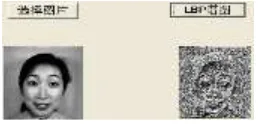
[image:3.612.233.362.257.319.2]modes to only 58. And, the unified model of LBP operator is very robust, especially the influence of high frequency noise on image quality is reduced. It is because of these advantages, LBP Operator is often used in facial expression feature extraction. The figure below is a LBP feature rendering of a person's different facial expressions in a JAFFE face library extracted using the LBP operator.
Figure 1. LBPFeature rendering.
The LBP feature spectrum of facial expression only reflects the local feature of a face, and it is not suitable for facial feature recognition directly using LBP feature spectrum. Want to get richer and more appropriate features, the general practice is to transform the LBP feature spectrum into a LBP histogram sequence. The sequence is used as discriminant feature for facial expression recognition.
In this paper, we extract histogram sequences of LBP feature spectrum. Take the following steps:
Step 1: Using the block thinking proposed by Timo Ahonen and others in the literature, divide a face into 9X9 blocks, then LBP4,1 operator is used to encode
LBP for each local sub block. Then, the LBP feature histogram of each sub block is
extracted, and the feature spectrum histograms of each sub block are combined. The histogram of feature spectrum mainly reflects the local information of human face.
Step 2: LBP8,1 operator is used to encode the whole face image by LBP, and
then LBP feature spectrum histogram of the whole face is extracted. The histogram of feature spectrum mainly reflects the whole feature of human face.
Step 4: PCA algorithm is used to reduce the dimension of LBP feature histogram sequence in Step 3, and the final LBP histogram is used as the discriminant feature of facial expression.
The specific feature extraction process of facial expression is as follows:
Figure 2. The feature extraction process of facial expression recognition.
DECISION TREE (DT SVM- )
The method first divides all the classes into two subcategories, and then further divides the two sub classes, and so on, until the subclass contains only one category so that an inverted two fork tree is obtained.
Then, each decision node is solved with a SVM two classifier. SVM Decision tree method for K class classification problem, only the construction of k-1 SVM classifier. It has higher training speed and classification speed, and there is no rejection area. But the SVM decision tree has the problem of misclassification accumulation, and the classification error is worse when the tree grows closer to the root.
RESEARCH ON FACE RECOGNITION ALGORITHM BASED ON LBP AND DECISION TREE
The facial expression recognition algorithm based on LBP and decision tree proposed in this paper can be divided into two parts: face training and recognition.
Facial expression feature extraction: the feature histogram sequence of human face is extracted by using the LBP method as mentioned above, and the sequence is used as the discriminant feature of facial expression.
Face training: a decision tree based on genetic algorithm is used to train the human face database.
FACE RECOGNITION EXPERIMENT
images contain facial expression change, illumination change and occlusion interference, facial image change involving a very comprehensive, very suitable for the test of various face recognition algorithms for face recognition performance in the complex changing conditions.
[image:5.612.104.486.203.244.2]In the experiment, 13 images of each person were randomly selected as the training set, and the other 13 images as the test set. The recognition rate of various algorithms is shown in the following table:
TABLE I. RECOGNITION RATE OF FACE RECOGNITION ALGORITHM IN AR LIBRARY. algorithm PCA KPCA LDA CFG LPP Paper
Recognition rate (%) 54.13 58.29 76.38 86.52 71.32 95.28
As can be seen in the table, the algorithm proposed in this paper has some advantages over the 5 classical algorithms, and can achieve a higher recognition rate of 95.28%. Therefore, the face recognition algorithm proposed in this paper has more advantages than the traditional face recognition algorithm under the interference of many complex conditions.
REFERENCES
1. T. Ojala, M. Pietikainen, T Maenpaa. Multiresolution gray scale and rotation invariant texture classification with local binary patterns[J]. IEEE Trans. on Pattern Analysis and Machine Intelligence,2002,24(7):971-987.
2. Chen Xiaoguang, Liu Ding. Facial expression recognition AVR and enhanced LBP feature selection method [J]. Computer engineering and response, 45 (19): 184-188. (In Chinese) 3. T. Ahonen, A. Hadid, M. Pietikainen. Face recognition with local binary patterns[C]. InProc of 4. 8th European Conference on Computer Vision, Prague, Czech, 2004:469-481.
5. T Ahonen. Face recognition based on appearance of local regions[c]//Proceedings of the 17th International Conference on Pattern Recognition (ICPR’04), 2004,3:153-156.