2016 International Conference on Computer, Mechatronics and Electronic Engineering (CMEE 2016) ISBN: 978-1-60595-406-6
Structured Compressed Sensing for Channel Estimation
under High-Speed Mobile Environment
Xiao-ping YANG* and Wen-qin ZHOU
School of Electronic Information and Electrical Engineering, TianShui Normal University, China *Corresponding author
Keywords: Channel estimation, OFDM, Time-varying channels, Temporal correlations, OMP.
Abstract. In the fourth generation wireless communication systems, channel estimation technology is very important for orthogonal frequency division multiplexing (OFDM). However, the existing schemes hardly meet the demand for Quality of Service in high-speed mobile environment. To handle this problem, in this paper, the channel sparsity characteristic and temporal correlations are exploited and displayed by the block-sparse system model. Then, the block-based orthogonal matching pursuit (OMP) algorithm is used to obtain the channel state information. Simulation results illustrate the performance of our proposed algorithm superiority.
Introduction
Increasing demand for high spectral efficiency and high performance has led to the development of fourth-generation (4G) broadband wireless systems. A potential transmission technique for 4G is orthogonal frequency-division multiplexing (OFDM) which has recently become one of the most popular modulation techniques and has been adopted as the transmission technology in many wireless communication standards such as Wireless Fidelity (Wi-Fi), Worldwide Interoperability for Microwave Access (WiMAX), Long Term Evolution (LTE) standards, and the Digital Video Broadcasting (DVB) Project [1]. In the OFDM communication systems, Channel estimation is the key techniques. In the last two decades, they have been extensively studied.
It is well known that coherent detection schemes are superior to differentially coherent or noncoherent schemes in terms of power efficiency, if channel information can be established perfectly. In time-varying channels, for computational convenience, some papers [2, 3] assume the channel is static within one or more consecutive OFDM symbols. In practice, this assumption will bring a certain amount of estimation error, especially in rapidly time-varying channels. However, the channel varies with time within a single OFDM symbol, leading to a big challenge. This is because the number of channel parameters which must be estimated is at least NL, where N and
L denote the number of subcarriers and the number of channel taps, respectively, and it is larger
than the number of the observation data in one OFDM symbol. Therefore, many existing works resort to simplify channel model as a way of reducing the required number of channel parameters.
An popular channel model is the basis expansion model (BEM). In the BEM, the time-variation of each channel tap is expressed as a superposition of a few fixed basis functions, so that only QL
BEM coefficients need to be estimated, where Q is the number of the basis functions. Several BEM variates are proposed in the literature, e.g., the complex-exponential BEM (CE-BEM) [4], the generalized CE-BEM (GCE-BEM) [5], the polynomial BEM (P-BEM) [6], the Karhunen-Loeve BEM (KL-BEM) [7] and the discrete prolate spheroidal BEM (DPS-BEM) [8]. Although the last two BEMs are closest to the true scenario, they require statistical channel knowledged, which has led to the model is usually unavailable in practice.
channel impulse responses are dominated by a relatively small number of dominant resolvable paths. As such, OFDM channel estimation could benefit from compressed sensing (CS) theory and dramatically reduce the number of pilot subcarriers. In other words, the CS technology can reduce channel estimation error at the same number of pilots. To further improve channel estimation accuracy, distributed compressed sensing based algorithm is proposed in [14]. However, the above channel estimation methods is still difficult to meet the demand for Quality of Service under high-speed mobile environments.
Recently, it is shown in [15] that wireless broadband channels still have temporal correlations even in high-speed mobile environments. That is, the path delays vary much slower than the path gains. This information is not yet employed in channel estimation in time-varying channels. Therefor, in order to obtain better estimation performance, the channel sparsity characteristic and temporal correlations are exploited in this paper. In particular, the hide information can be displayed by the block-sparse system model. Then, the block-based orthogonal matching pursuit (OMP) algorithm [16] is used to obtain the channel information.
Throughout the paper, boldface lowercase and uppercase letters are used for vectors and matrices, respectively. Superscripts T and H denote transpose and conjugate transpose, respectively. The
matrix F denotes the fast Fourier transform (FFT) matrix and the matrix FH denotes the inverse fast Fourier transform (FFT) matrix.
System Model
OFDM System Model
It is assumed that the synchronizations of frequency and time are perfect. The received signal of the
i-th OFDM symbol after removing the cyclic prefix (CP) is given by
1, ),0
( ) ( =
)
( ,
1
0 =
h d n l n n N ny inl i N i
L
l
i
(1)
where nl i
h , is the l-th channel tap at the n-th sample time of the i-th OFDM symbol, di(n) is the n -th transmitted sample, ()N represents a cyclic shift on the base of N, i(n) is the additive while
Gaussian noise (AWGN) with mean zero and variance 2
, L is the total number of channel taps.
And in order to avoid the inter-symbol interference (ISI), it is assumed that the highest values of path delays are always less than or equal to the length of CP in this paper.
Collecting the samples of the received signal to form a vector T i
i
i =[y(0),,y (N1)]
y yields the
following model
i i i i d
y =
(2)
where T
i i
i=[d(0),,d (N1)]
d , i is an NN channel impulse response matrix in the time domain, T
i i
i =[(0), ,(N1)]
. Using hi(n,l)=0 for N>lL, i can be expressed as
1
0
1
) (
L
I
I I i i diag h A
(3)
where N l T
i l i l
i h h
h =[ 0,,, 1,] represents the l-th channel tap of the i-th OFDM symbol, and A1 is the
N
Α1 = [ 0 ⋯ 1 0 0 1 ⋯ 0 ⋮ ⋱ 0 ⋯ ⋱ ⋮ 1 0 ]
Basis Expansion Model
As can be seem from (3), it is very difficult to implement channel estimation in time-varying channels. Since the number of parameters which need to be estimated is much more than that of the observed data. A BEM regarded as a simplified channel is employed, so that the number of estimated parameters is considerably reduced. Then, l
i
h can be presented as
l i q l q i Q q l i h
h
b , 1 0 = =
Bhil, (4)
where bq is the q -th basis function. B=[b0,,bQ1] is an NQ matrix that collectsQ(QN)
orthonormal basis function bq as columns, iQl T l
i l
i h h
h =[ 0,,, ,] represents the BEM coefficients for the lth tap and l
i
represents the corresponding modeling error. As shown in (4), due to the BEM, the l-th tap channel l
i
h which need to be estimated can be equivalent to l i
h . Therefore, the number of parameters for the l-th tap decreases from N to Q.
OFDM System Model Based on BEM
Substituting (4) in (3), we can obtain
F Δ F b A b A b q i H q Q q l l q i L l q Q q l q l q i Q q L l i diag h diag h diag ) ( = ) ( = ) ( = 1 0 = 1 , 1 0 = 1 0 = 1 , 1 0 = 1 0 =
(5) with
qL T
i q i L q
i diag h h
1 , ,0
, ,
= F
where FL stands for the first L columns of NF.
In the light of (5), (2) can be written as
i i q i H q Q q i diag
y
Fd Δ F b ) ( = 1 0
= (6)
After carried out an N-point FFT, (6) becomes
with
( ) ( ) , ,= 0 H i L
i Fdiag b F diag s F
P
L i H Q diagdiag b F s F
F ( 1) ( )
T L Q i Q i L i i
i h h h h
h =[ 0,0, 0, 1,, 1,0, 1, 1]
where T
i i
i=[s(0),,s(N1)]
s , which is the N-point FFT of di, represents the transmit data in the
frequency domain. T
i i
i =[v(0),,v(N1)]
υ , which is the N-point FFT of i, represents the AWGN
in the frequency domain.
In order to implement channel estimation in time-varying channels, the task is to find hi with the received ri and pilots.
Block-Based OMP Algorithm
Suppose M(ML) equally spaced pilots are inserted at mi subcarriers in each OFDM symbol,
M N k
mk = / for 0kM1. For convenience, all these pilots and the information data stacked together form the pilot vector p
s and the information data vector d i
s , respectively. Then, si can be
represented as d i T T M p T T M
i I e s I E s
s =( ) ( ) (8)
where Ii is an i-by-i identity matrix, is the Kronecker product, e represents the first column of M
N/
I , E stands for the last N/M1 columns of IN/M . We can then rewrite (7) as
, = ) ) (( diag ) ( diag ) ) (( diag ) ( diag = 1 0 = 1 0 = i i i i i d i T T M H q Q q i p T T M H q Q q i h h r
h P s E I F b F s e I F b F (9) where
diag( ) diag(( ) ), , = F b0 FH IM eT Tsp P
, ) s ) e diag((I )FFdiag(bQ1 H M T T p
i d i T T M H q Q q
i= diag( ) diag(( ) )h
1 0 = s E I F b F
.In (9), we have thus uncoupled the effect of the information data from the pilots, and put it in a separate term i.
Inorder to more accurately determine hi , specific properties of wireless channels should be
considered in the channel estimation. Firstly, wireless broadband channels have been indicated in [13] that they tend to exhibit sparsity, where the channel impulse responses are dominated by a relatively small number of dominant resolvable paths. This means that there are only some nonzero
entries in hi. Furthermore, we define a matrix A2, whose first column is
T QL 1 0 0
1 . It performs a
circular shift of length Q in each column. Then, by using A2, (9) could be written as
, ˆ ˆ = = i i i i i T i u h v h r P A PA2 2
where T
2 PA
Pˆ = , hˆi=A2hi, ui=ivi. Obviously, hˆihas block-sparse structure.
On the other hand, practical wireless channels display temporal correlations even when they are varying fast. It has been observed that the path delays vary much slower than the path gains [17], i.e., even if the path gains are varying significantly from one symbol to the next symbol, the path delays during K(K1) successive symbols typically remain unchanged. Putting together the K OFDM signals, we obtain
, ˆ =PH U
R (11) where R=
ri,,riK1
, H=
hˆi,,hˆiK1
and U=
ui,,uiK1
. We assume that ui is the additivemultivariate Gaussian noise with zero mean and covariance matrix IN. The problem of interest
here is recover the unknown matrixH from the noise-corrupted observed data R.
By letting r=vec(RT), G=PˆIK, =vec(HT) and u=vec(UT), (11) can be transformed into
,
= u
r G (12) Thus, which need to be estimated remain has block-sparse structure, where the length of each block is QK . Moreover, we assume i is the i -th block vector in . Then, according to
compressive sensing theory, the jointly sparse multiple channel impulse responds within can be simultaneously reconstructed by solving the following optimization problem [18]:
,
subject to ,
min arg = ˆ
2
0
c r G (13)
where c=
0 2,, L1 2
T . the following block-based OMP algorithm which is detailed inAlgorithm 1 can be used to obtain a feasible solution.
Algorithm 1. Block-based OMP algorithm.
Input: compressive sensing matrix G, observed vector r
Output: block-sparse vector ˆ
Initialization: i=0, ˆ0=0, r0 =r and =
0T,,TL1
T = 0TQK,,0QKT
T while >2
i
r do
1: Compute
2
= i l il
i
l r G
for all l =0QK and l{0,,L1}, where il =(GlHGl)1GlHri.
2: Search li
l
m=argmin , then set m=1QK.
3: Update ˆ by ˆi|=(GHG)1GHr and ˆi|c=0. 4: Update ri =rGˆi.
5: Update i=i1..
end while
return ˆ =ˆi.
In Algorithm 1, 0QK and 1QK represent a column vector with all the elements being zero and one,
respectively. Gl is carved out of G corresponding to l. G is extracted from G by selecting the
columns based on the updated support vector . ˆi| denotes the restriction of ˆi
to the entries indexed by .c is the complement of .
Note that, the K in (11) is unknown from the beginning. However, it can be obtained by the following coarse estimation. Firstly, hˆi can be estimated by i
H H
r
P P Pˆ ˆ)ˆ
Simulation Results
In this section, we present simulation results to evaluate the proposed channel estimation method under QPSK-OFDM systems. The parameter settings align with the standard WiMAX IEEE 802.16e. That is, the system operates with a 1.25 MHz bandwidth and is divided into 512 subcarriers. The length of CP, as well as the number of pilots, is 64. The carrier frequency is set to 3.5 GHz. The scheme given in [19] will be used for generating the time-varying channels. The typical urban (TU) channel model which is considered in the COST-207 project [20] is adopted in our simulations. Moreover, the P-BEM will be employed to simplify the time-varying channels, leading to estimated parameters reduction. As a rule of thumb, the Q depicted in (5) should satisfy
1 = 1)/2(Q fn [21], where fn represent the normalized Doppler frequency shift. Therefore, the
5 =
[image:6.595.232.361.252.354.2]Q will be selected for fn=0.2 in the following simulations.
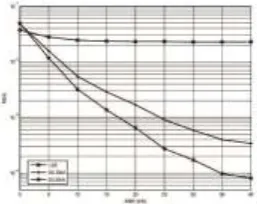
[image:6.595.230.362.395.503.2]Figure 1. MSE versus SNR for different channel estimation methods. ( fn=0.2).
Figure 2. BER versus SNR for different channel estimation methods. (fn=0.2).
Figure 1 illustrates a comparison of different channel estimation methods by the mean square error (MSE). The channel estimation methods include the LSE [9], distributed compressive sensing based algorithm (DCSBA) and our proposed structured compressed sensing based algorithm (SCSBA). These graphs indicate that the performance of our proposed method is better than the other schemes. That is, exploiting the channel sparsity characteristic and temporal correlations can improve estimation performance.
Furthermore, in order to evaluate the impact of the proposed technique on the overall system performance, the estimated channel will be equalized by the minimum mean squared error with successive detection (MMSE-SD) equalizer proposed in [22], although other equalizers [23, 24] can be employed as well. Figure 2 shows the bit error rate (BER) performance of different channel estimation methods. Comparing the results in Figure 2 with those in Figure 1, it is obvious that the equalization performance is almost in consistence with the corresponding channel estimation performance for different channel estimation methods. This further proves that our proposed SCSBA not only improves estimation performance but also improves system performance.
Conclusion
temporal correlations, which can be displayed by the block-sparse model. Then, the block-based OMP method is employed to efficiently obtain the channel information. Simulation results indicate that our proposed algorithm outperforms the existing methods.
References
[1]L. Polak and T. Kratochvil, “DVB-H and DVB-SH-A Performance and Evaluation of Transmission in Fading Channels," in Proceedings of the 34th International Conference on Telecommunication and Signal Processing (TSP2011). Budapest (Hungary), pp. 549-553, 2011.
[2]F. Sanzi, S. Jelting and J. Speidel, “A comparative study of Iterative channel estimators for mobile OFDM systems," IEEE Trans. Wireless Communications, vol. 2, no. 5, pp. 849-859, 2003.
[3]T. Al-Naffouri, “An EM-based forward–backward Kalman filter for the estimation of time-variant channels in OFDM," IEEE Trans. Signal Process., vol. 55, no. 7, pp. 3924-3930, 2007. [4]M. K. Tsatsants and G. B. Giannakis, “Modeling and equalization of rapidly fading channels,"
Proc. Int. J. Adapt. Control Signal Process., vol. 10, pp. 159-176, 1996.
[5]G. Leus, “On the estimation of rapidly time-varying channels," In Proc. Euro. Signal Process. Conf. (EUSIPCO), 2004.
[6]S. Tomasin, A. Gorokhov, H. Yang and J. P. Linnartz, “Iterative interference cancellation and channel estimation for mobile OFDM," IEEE Trans. Wireless Commun., vol. 4, no. 1, pp. 238-245, 2005.
[7]M. Visintin, “Karhunen-Loeve expansion of a fast Rayleigh fading process," IEEE Electron. Lett., vol. 32, no. 8, pp. 1712-1713, 1996.
[8]T. Zemen and C. F. Mecklembrauker, “Time-variant channel estimation using discrete prolate spheroidal sequences," IEEE Trans. Signal Process., vol. 53, no. 9, pp. 3597-3607, 2005.
[9]Z. Tang, R. C. Cannizaro, G. Leus and P. Banelli, “Pilot-assisted time-varying channel estimation for OFDM systems," IEEE Trans. Signal Process., vol. 55, no. 5, pp. 2226-2238, 2007.
[10]E. Tadmor, “Filters, mollifiers and the computation of the Gibbs phenomenon," Acta Numer., vol. 16, pp. 305-378, 2007.
[11]T. Hrycak, S. Das, G. Matz and H. Feichtinger, “Practical estimation of rapidly varying channels for OFDM systems," IEEE Trans. Commun., vol. 59, no. 11, pp. 3040-3048, 2011.
[12]T. Hrycak, S. Das, G. Matz, “Inverse methods for reconstruction of channel taps in OFDM systems," IEEE Trans. Signal Process., vol. 60, no. 5, pp. 2666-2671, 2012.
[13]V. Raghavan and A. M. Sayeed, “Sublinear capacity scaling laws for sparse MIMO channels,"
IEEE Trans. Inf. Theory, vol. 57, no. 1, pp. 345-364, Jan. 2011.
[14]P. Cheng, Z. Chen, Y. Rui, Y. J. Guo, et al., “Channel estimation for OFDM systems over doubly selective channels: a distributed compressive sensing based approach," IEEE Trans. Commun., vol. 61, no. 10, pp. 4173-4185, Oct. 2013.
[15]L. Dai, J. Wang, Z. Wang, Z. Wang, P. Tsiaflakis, and M. Moonen, “Spectrum- and energy-efficient OFDM based on simulataneous multichannel reconstruction," IEEE Trans. Signal Process., vol. 61, no. 23, pp. 6047-6059, Dec. 2013.
[16]W. Hou and C. W. Lim, “Structured compressive channel estimation for large-Scale MISO-OFDM systems," IEEE Commun. Letters, vol. 18, no. 5, pp. 765-768, May 2014.
[18]M. Duarte and Y. Eldar, “Structured compressed sensing: From theory to applications," IEEE Trans. Signal Process., vol. 59, no. 9, pp. 4053-4085, Sep. 2011.
[19]Y. R. Zheng and C. Xiao, “Simulation models with correct statistical properties for Rayleigh fading channels," IEEE Trans. Commun., vol. 51, no. 6, pp. 920-928, 2003.
[20]M. Patzold, Mobile Fading Channels. New York: Wiley-IEEE Press, 2002.
[21]P. Schniter, “Low-complexity equalization of OFDM in doubly selective channels," IEEE Trans. Signal Processing, vol. 52, pp. 1002-1011, 2004.
[22]Y. S. Choi, P. J. Voltz, and F. A. Cassara, “On channel estimation and detection for multicarrier signals in fast and selective Rayleigh fading channels," IEEE Trans. Commun., vol. 49, no. 8, pp. 1375-1387, 2001.
[23]H. W. Wang, D. W. Lin, and T. H. Sang, “OFDM signal detection in doubly selective channels with whitening of residual intercarrier interference and noise," IEEE J. Sel. Areas Commun., vol. 30, no. 4, pp. 684-694, 2012.