Putting the work-life interface into a temporal context: an
empirical study of work-life balance by life stage and the
consequences of homeworking
Esther Canonico
The London School of Economics and Political Science
Thesis submitted to the Department of Management for the Degree of Doctor of
Philosophy to the London School of Economics and Political Science
Declaration
I certify that the thesis I have presented for examination for the MPhil/PhD degree of the
London School of Economics and Political Science is solely my own work other than where I
have clearly indicated that it is the work of others (in which case the extent of any work
carried out jointly by me and any other person is clearly identified in it).
The copyright of this thesis rests with the author. Quotation from it is permitted, provided that
full acknowledgement is made. This thesis may not be reproduced without my prior written
consent.
I warrant that this authorisation does not, to the best of my belief, infringe the rights of any
third party.
I declare that my thesis consists of 73,192 words.
Statement of conjoint work
I confirm that some of the primary data analysed for this thesis was collected jointly with Dr.
Alexandra Beauregard and Dr. Kelly Basile, both of the London School of Economics and
Political Science at the time of the data collection, as part of a larger research project.
ABSTRACT
ACKNOWLEDGEMENTS
There are so many people who I would like to thank. First, I want to thank Dr. Alexandra Beauregard for giving me the chance to pursue my research interests at the LSE. Her continued enthusiasm, guidance and enormous dedication have been invaluable. I also found her quick wit and expertise very inspiring. I want to thank Professor Jackie Coyle-Shapiro for her vision, clarity and overall support. She gave me a big push when I needed it in order to complete my dissertation. I also want to thank Dr. Daniela Lup for her encouragement throughout the PhD process. In addition, I would like to thank my fellow PhD students for their friendship and support. Special thanks to Dr. Kelly Basile, for being a wonderful collaborator and friend, and sharing the PhD journey with me.
I would also like to thank all of the staff and research participants at the organisation where I conducted my fieldwork. They shared their experiences and provided access to the data that were the basis for this research. Their commitment to the research project was admirable and I am truly grateful for it.
TABLE OF CONTENTS
1. INTRODUCTION...12
1.1. Introduction...12
1.2. Goals of research...14
1.3. Contribution...17
1.4. Overall research design...18
1.4.1. A pragmatic approach...18
1.4.2. Quality of research...21
1.4.3. Case study...25
1.4.4. Researcher bias...26
1.4.5. Ethical issues...28
1.5. Organisational context and fieldwork overview...30
1.5.1. AdviceCo...30
1.5.2. Fieldwork overview...31
1.6. Structure of this dissertation...35
Table 1: Verification strategies for qualitative research...23
Table 2: Timeline of the primary data collection...31
Table 3: Profile of research participants of group I qualitative interviews...32
Table 4: Profile of research participants of online survey...33
Table 5: Primary data by paper...34
Table 6: Secondary sources of data for Paper III...34
2. REVIEW OF LITERATURE...37
2.1 The "work-life" term...39
2.2. Work-life theories...40
2.2.1. Role scarcity and work-life conflict...41
2.2.2. Role expansion and work-life enrichment...43
2.2.3. Border and boundary theories...44
2.2.4. Decision-making framework...46
2.2.5. Ecological systems theory...47
2.3. A work-life practice: homeworking...47
2.3.2. Consequences at the individual level...49
2.3.3. Consequences for the team...57
2.3.4. Consequences for the organisation...58
2.3.5. Consequences for society...60
2.3.6. Debatable benefits of homeworking ... 61
2.4. Gaps in the work-life literature...63
2.4.1. Integration of theoretical perspectives...63
2.4.2. Context matters...64
2.4.3. Bridging theory with practice...64
2.5. Additional theories...65
Table 7: Literature review outline...38
Table 8: Overview of additional theories by paper...66
3. PAPER I: INTEGRATING WORK-LIFE CONFLICT AND ENRICHMENT BY LIFE STAGE...69
3.1. Introduction...69
3.2. The work-life interface...69
3.2.1. Definition of work-life balance...69
3.2.2. Measurement of work-life balance...70
3.3. A life stage approach... 72
3.3.1. Theoretical support...72
3.3.2. Empirical evidence...74
3.4. Hypotheses...75
3.4.1. Work-life balance by life stages...76
3.4.2. Outcomes of work-life balance...80
3.4.3. The role of gender...83
3.5. Method...84
3.5.1. Sample...84
3.5.2. Measures...85
3.6. Analysis and findings...87
3.7. Discussion... ...95
3.7.1. Differences in work-life balance by life stage...95
3.7.2. Outcomes of work-life balance types...97
3.7.3. Implications for theory and practice...98
3.7.4. Limitations...100
3.7.5. Future research...100
Figure 1: Work-life balance typology (Rantanen et al., 2011)...71
Figure 2: Model of work-life balance by life stages...75
Figure 3: Hypothesised work-life balance by life stage...80
Figure 4: Work- life balance typology ...87
Table 9: Descriptive statistics and correlations among study variables...89
Figure 5: Types of work-life balance by life stage...90
Table 10: Differences in means for work-life balance types by life stage...91
Figure 6: Differences in means for work-life enrichment by life stages...92
Figure 7: Well-being by type of work-life balance...93
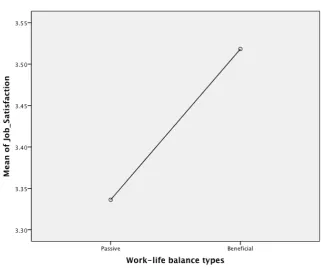
Figure 8: Job satisfaction by type of work-life balance...94
Figure 9: Employee engagement by type of work-life balance...94
4. PAPER II: WHEN HOMEWORKING AS A BENEFIT IS NOT RECIPROCATED: AN EMPIRICAL STUDY OF AN EMPLOYEE-ORGANISATION RELATIONSHIP...103
4.1. Introduction...103
4.2. The employee-organisation relationship...105
4.2.1. Rules of the exchange...105
4.2.2. Content of the exchange...109
4.2.3. Participants in the exchange...111
4.2.4. Content and process of the exchange...114
4.3. Homeworking and the EOR...115
4.3.1. Homeworking perceived as organisational support...115
4.3.2. When homeworking is not perceived as a benefit...116
4.4. Method... ...118
4.4.1. Qualitative study...118
4.5. Results...124
4.5.1. Homeworking as an employer's inducement...125
4.5.2. Employee's contribution...129
4.5.3. The employee-organisation relationship...139
4.6. Conclusion...145
4.6.1. Contribution to the homeworking literature...146
4.6.2. Contribution to the EOR literature...147
4.6.3. Implications for practice...149
4.7. Limitations...150
4.8. Future research...151
Table 12: Non-reciprocity based exchange rules...107
Figure 10: Employment relationship types by Tsui and colleagues (1997)...111
Figure 11: ER types from the perspective of employer and employees...120
Table 13: Themes of qualitative analysis...121
Table 14: From responses to "How satisfied were you with the support that you received from your line manager when you began working from home?"...129
Table 15: From responses to "How satisfied were you with the IT support that you received when you began working from home?"...129
Table 16: From responses to "Please indicate how important each of the following reasons are in your decisions to come in the office"...131
Table 17: Issues that may deter homeworkers from going to the office to work...132
Table 18: Number of reported extra working hours in a typical week by working pattern...136
Figure 12: Reported extra working hours in a typical week by managerial level...136
Table 19: Number of extra working hours by working pattern for Grade 3 employees...137
Figure 13: Number of extra working hours for Grade 3 homeworkers by years spent homeworking...138
Table 20: Views of the employee-organisation relationship...139
Figure 14: Economic exchange by working pattern...142
Figure 15: Social exchange by working pattern...143
5. PAPER III: EFFECTS OF HOMEWORKING ON ORGANISATIONAL LIFE...154
5.1. Introduction...154
5.2. Organisational culture and climate ...154
5.2.1. Overlapping or separate constructs? ...154
5.2.2. Organisational culture and climate alignment...157
5.2.3. Strength of climate...161
5.2.4. A dynamic and multi-level process...162
5.3. Method...162
5.3.1. Sample and data collection...163
5.3.2. Quantitative measures...164
5.3.3. Analysis...167
5.4. Results...169
5.4.1. Context...172
5.4.2. Culture...174
5.4.3. Creation of climate...175
5.4.4. Climate for homeworking...180
5.4.5. Outcomes of misalignment of culture with climate for homeworking..182
5.5. Conclusion...190
5.5.1. Contribution to the organisational culture and climate literature...190
5.5.2. Contribution to the homeworking literature...191
5.5.3. Contribution to practice...192
5.6. Limitations ...193
5.7. Future research...193
Table 21: Main differences between organisational culture and climate...156
Figure 17: Multi-level model of organisational culture and climate by Ostroff et al. (2012)...159
Figure 18: Data overview...163
Table 22: Thematic content coding...169
Figure 19: Model of organisational culture and climate for homeworking at AdviceCo...171
6. CONCLUSION...196
6.1. Main findings and theoretical contribution...196
6.2. Wider contribution...197
6.3. Discussion...201
6.4. A peek into the future? ...201
6.5. Temporality...204
6.6. Future research directions...204
6.7. Concluding thoughts...206
7. REFERENCES...207
APPENDIX I: Survey instrument...237
APPENDIX II: Interview guide...269
APPENDIX III: Paper I results...278
APPENDIX IV: Paper II illustrative quotes...279
APPENDIX V: Paper III illustrative quotes...286
1. INTRODUCTION 1.1. Introduction
1.2. Goals of research
1.3. Contribution
1.4. Overall research design
1.4.1. A pragmatic approach 1.4.2. Quality of research 1.4.3. Case study
1.4.4. Researcher bias 1.4.5. Ethical issues
1.5. Organisational context and fieldwork overview
1.5.1. AdviceCo
1. INTRODUCTION 1.1. Introduction
One could consider that a revolution has occurred in the workplace in the last few decades. Socio-demographic changes (e.g., increasing participation of women in the workforce, aging of the work population) and technological advancements are affecting people's expectations and needs from the workplace (e.g. (Eby, Casper, Lockwood, Bordeaux, & Brinley, 2005; Kossek, Lewis, & Hammer, 2010; Poelmans & Caligiuri, 2008). An increase in the number of women participating in the workplace has contributed to the growth of dual income households, putting additional pressure on individuals to manage work and life issues (Eby et al., 2005). New technologies allow people to work faster and perform job tasks from any location at any time, allowing for more interference of the work domain with the life domain and potentially leading to more stress among individuals. We have also witnessed a change in cultural values. The growing participation of women in the workforce may have made obsolete the traditional model of the ideal worker, who is typically male, working full-time, entirely dedicated to work and for whom private life never interferes with work (Bailyn, 1993; Williams, 1999). Furthermore, the definition of success may have changed for many workers. New generations, such as millennials, may have seen that their parents, despite dedicating long hours to work, have suffered both at work (e.g., from corporate downsizing, frequent dismissals) and home (e.g., from high divorce rates) (Loughlin & Barling, 2001). Consequently, they may be looking for a more balanced approach when managing their work-life issues, and prioritise private life over work. In addition, higher levels of education among younger workers may make them more likely to negotiate the terms under which they work and demand more flexibility in order to fulfil their work-life balance needs (McDonald & Hite, 2008).
with the life-stage of individuals with a quantitative study (N=507) conducted in an UK public sector organisation, AdviceCo2. Furthermore, it considers the whole experience of the work-life interface; that is, it takes both the positive (enrichment) and negative (conflict) sides of the work-life interface. This is also of value to expand our knowledge of the work-life interface, as the literature has mainly focused on the study of the negative side of work-life interface (conflict), largely ignoring the positive side of it (enrichment). Individuals can experience both aspects of the work-life interface at the same time with specific consequences in terms of job-related attitudes and well-being (Rantanen, Kinnunen, Mauno, & Tillemann, 2011).
In parallel to the socio-demographic and cultural changes mentioned earlier, we have also seen an increasing clash between organisations and employees regarding flexibility (Poelmans & Caligiuri, 2008). While organisations demand from employees more flexibility which requires longer hours and higher mobility to meet increasing competition, employees demand flexibility from organisations in terms of schedule and location in order to better accommodate their life needs. Work-life initiatives that bring flexibility to employees have proliferated. However, whether these work-life initiatives can successfully satisfy the needs of both the employee and the organisation is a question that remains unanswered (Poelmans & Caligiuri, 2008).
Homeworking is a work-life practice that has grown significantly in the last decade thanks largely to the technology that makes it possible for workers to perform their jobs from home (out of the office) during business hours. Although the percentage of workers who work from home is considerable (Telework Research Network, 2015), one of the questions still not altogether answered is whether homeworking is beneficial or harmful to individuals and organisations. This dissertation attempts to illuminate this discussion in different ways. First, it focuses on the employee-organisation relationship to address the question of what happens when homeworking is perceived differently by the employee and the employer. Past research has suggested that a shared agreement of the terms of the contract between employee and employer may lead to positive work-related outcomes (Dabos & Rousseau, 2004). Applying qualitative analysis (N=40) supported by quantitative analysis (N=514) in a study conducted in the same organisation, AdviceCo, I question whether the practice of homeworking is perceived as a benefit by employees after an adaptation period, leading to a disagreement of the terms of the contract between employee and employer, and a subsequent negative impact on employee attitudes and behaviours. Employees may
perceive homeworking as a “right” rather than a benefit over time and, consequently, not contribute to the organisation as expected by their employer. Second, this thesis also explores the role that the homeworking practice may play in the organisational culture-climate alignment. Alignment of organisational culture and culture-climate is important as it may impact organisational performance (Ostroff, Kinicki, & Muhammad, 2012). However, more research is needed to understand how HR practices (such as homeworking) link organisational culture and climate (Ostroff et al., 2012). Using a mixed method approach with data from multiple sources, this dissertation attempts to provide a detailed contextual explanation of the potential impact of homeworking on the functioning of the same organisation, AdviceCo. It explores potential elements of inconsistency between organisational culture and climate for homeworking and the consequences of these inconsistencies for collective attitudes and behaviours and organisational effectiveness. As such, this thesis seeks to contribute not only to the on-going debate over the consequences of homeworking but also to the organisational culture and climate literature.
1.2. Goals of the research
The primary goal of this dissertation is to make a contribution to theory and management practice in the work-life field via three empirical papers: Paper I, II and III. Specifically, the objective of Paper I is twofold: a) to understand whether work-life balance (which includes conflict and enrichment) differs by life stage and if so, what those differences are, and b) to determine the potential impact of different combinations of conflict and enrichment on employee's job related attitudes and well-being. One of the main objectives of Paper II and III is to expand our knowledge regarding the consequences of a work-life initiative, homeworking, at the individual (Paper II) and organisational (Paper III) level. Paper II aims to provide empirical evidence of potential benefits and drawbacks of homeworking at the individual level. In order to do so, it examines the impact of homeworking on the employee-organisation relationship and the subsequent effects on employees’ attitudes and behaviours. Paper III seeks to examine the role that homeworking plays in the alignment of organisational culture with climate and its effects on organisational performance.
Mitchell, 2005). Accordingly, Paper II attempts to address these gaps in the EOR literature by exploring the perspectives of both the employee and the employer and the potential outcomes of disagreement in perspectives.
Whilst Paper II seeks to contribute to the EOR literature, Paper III's goal is to contribute to the organisational culture and climate literature by exploring the role that an HR practice, homeworking, plays in the alignment of organisational culture and climate. This study follows the call for further research to explain the mechanism that links organisational culture with policies and practices and associated climate (Ostroff, Kinicki, & Muhammad, 2012; Schneider, Ehrhart, & Macey, 2013).
This dissertation also aims to address broader research gaps in the existing work-life interface literature. Specifically, this dissertation aims to contribute to theory in the work-life literature by a) integrating theoretical perspectives, b) including context and c) bridging theory with practice. Although research on the work-life interface has proliferated since the 1970's, it is very fragmented due to researchers working in various disciplines (e.g., psychology, business) and focusing on different issues. Consequently, researchers have stressed the need for more research that build on work across disciplines and/or theoretical perspectives (Allen, Herst, Bruck, & Sutton, 2000; Barnett, 1998; Greenhaus, Ten Brummelhuis, Major, & Burke, 2013). Researchers have also called for more research to include context (e.g., life-course) in order to extend our knowledge of the work-life interface (Grzywacz & Marks, 2000; Kossek & Lautsch, 2012; Ollier-Malaterre, Valcour, Den Dulk, & Kossek, 2013). They argue that contextual factors (such as national culture or life stage) have an impact on how individuals experience work and life issues and, therefore, inclusion of context is a research avenue worth pursuing. In addition, bridging theory with practice is a research priority acknowledged by researchers (Jones et al., 2006; Kossek & Michel, 2010; Poelmans & Caligiuri, 2008). Even though there is a significant body of work in the work-life research literature, sometimes it has been considered as being developed independently from the "real world" and lacking practical application (Jones et al., 2006). There is a need for future research that translates theoretical knowledge into practice, for practitioners to be informed by research when designing, managing and implementing policies and programmes that affect work and life issues of individuals (Poelmans & Caligiuri, 2008). These gaps in the work-life literature and their significance are further explained in section 2.4.
interface and/or taking a life stage perspective are unusual (Grzywacz & Marks, 2000; Huffman, Culbertson, Henning, & Goh, 2013), even though past research suggests that individuals may experience both conflict and enrichment simultaneously (Rantanen et al., 2011) and the work-life balance of an individual may be influenced by the life stage he/she occupies (Demerouti et al., 2012). Paper II includes the perspectives of both the employee and the organisation when examining the employee-organisation relationship (EOR). While consideration of the employee's and employer's view is important to further our understanding of the EOR, it is uncommon in the EOR literature (Conway & Briner, 2009; Taylor & Tekleab, 2004). Furthermore, the multi-level framework that Paper III applies to study the impact of the homeworking practice in an organisation is also innovative as most of the research in management uses a single level of analysis (Hitt, Beamish, Jackson, & Mathieu, 2007). Taking a macro or micro approach may not prove sufficient when dealing with multi-level social phenomena as most of the management issues are multilevel (Hitt et al., 2007).
Paper I and Paper III also address the call for research in work-life issues that include context (Grzywacz & Marks, 2000; Kossek & Lautsch, 2012; Kossek et al., 2010; Ollier-Malaterre et al., 2013). As noted above, Paper I uses the context of life stage to study work-life balance. Paper III analyses multiple external and internal contextual factors to better understand the impact of homeworking in an organisation.
To sum up, while the overall objective of this dissertation is to make a contribution to the work-life literature that expands theory on the work-life interface, each of the paper-based chapters have their own distinctive research goals. Each paper pursues different lines of investigation with particular research questions which are underpinned by specific theoretical frameworks. The extent of each paper's intended contribution together with the review of relevant literature are explained in the paper-based chapters (Chapters 3, 4 and 5).
1.3. Contribution
Paper I expands existing theory by revealing how job attitudes and well-being are associated with different combinations of work-life conflict and enrichment. For example, results from this study suggest that having a high level of both conflict and enrichment may not be associated with positive well-being or employee engagement, as previous research suggests. This justifies further research to continue investigating the combined outcomes of enrichment and conflict. Results from Paper I also revealed differences in work-life balance by life stage, raising new questions for future research to explore further why and how these differences occur, for example, why did younger employees experience a higher level of enrichment?
The findings from Paper II suggest that differences in perceptions of the employee-organisation relationship may produce adverse outcomes in terms of employees' attitudes and behaviour. For example, employees may perceive homeworking as a “right” rather than a benefit after an adaption period and, consequently, not meet their employer's expected contributions. This study also contributes to the employee-organisation relationship (EOR) literature by extending an existing theoretical model of the employment relationship which is limited to the employer's perspective (Tsui, Pearce, Porter, & Tripoli, 1997) to include the views of employees as well. While results support past research that shows homeworking provides benefits such a becoming more productive, they also challenge past research on the potential effects of homeworking on working longer hours and enhanced extra-role behaviour, for example.
in the organisational culture and climate literature (Ostroff et al., 2012; Schneider et al., 2013). Findings reveal that homeworking may cause some tension in the culture-climate relationship and negatively affect organisational performance, contributing to a better understanding of the consequences of homeworking.
1.4. Overall research design
As noted above, the overall goal of this dissertation is to expand our knowledge of the work-life interface and the benefits of homeworking with an emphasis on practical relevance. Furthermore, the research design of the present dissertation is based on a pragmatic approach. In this section, I discuss the philosophical perspective, pragmatism, that supports the research methods applied and explain the approach taken to ensure the quality of the research. I will also discuss researcher bias and how I managed the ethical issues that arose during the research process.
1.4.1. A pragmatic approach
I follow the actual practice of many researchers which reflects a pragmatic approach. That is, I do not adhere to a quantitative or qualitative paradigm (and the philosophical doctrine upon which they are based) but am more concerned with the adequacy of particular methods to address specific research questions. A philosophical tradition which originated in the U.S.A. in the late 19th century, pragmatism has been advocated by numerous researchers (e.g., Charles Sanders Pierce, William James, and Jon Dewey) over the last century (Shook & Margolis, 2008). From an ontological perspective, pragmatists posit that there are multiple realities (i.e., subjective, objective), rejecting the traditional dualism (objective versus subjective) (Onwuegbuzie, Johnson, & Collins, 2009). In terms of epistemology, knowledge is considered to be both socially constructed and based on the reality of the world of which we are a part (Onwuegbuzie et al., 2009). As a result, pragmatism calls for the use of mixed methods, determined by what works (Onwuegbuzie et al., 2009) (Morgan, 2007).
and methodological principles. While some researchers (Sale et al., 2002) consider the qualitative and quantitative approaches to be incompatible because they do not study the same phenomena, others (Brannen, 2005) point out that many of the distinctions between qualitative and quantitative research are not that significant. Brannen discusses how qualitative and quantitative approaches are in practice interrelated during the different research phases: research design (the type of questions leading to the choice of methods), fieldwork phase (organic, development approach) and interpretation and contextualisation (when the data is analysed and interpreted).
Consistent with the pragmatic approach, it is my view that the research questions, rather than metaphysical assumptions, should drive social research (Morgan, 2007). I also agree with the principle that 'social research, in simplest terms, involves a dialogue between ideas and evidence' (Ragin, 1994, p. 55). Following a pragmatic approach, the way I connect theory with data in this dissertation is abductive, rather than purely inductive or deductive. In other words, I apply both induction and deduction, as I go back and forth from theory to data. (Morgan, 2007). I further explain this approach in the next section.
Mixed methods is becoming one of the three dominant 'research paradigms' (quantitative research, qualitative research, and mixed methods) according to some researchers (Johnson, Onwuegbuzie, & Turner, 2007; Morgan, 2007). Mixed methods research can be defined as 'the class of research where the researcher mixes or combines quantitative and qualitative research techniques, methods, approaches, concepts or language into a single study' (Johnson & Onwuegbuzie, 2004, p. 17). Some kinds of research call for a quantitative approach, others for a qualitative one. My research questions call for both qualitative and quantitative data collection methods. Therefore, I follow a multi-strategy design and adopt a quantitative method in Paper I and mixed methods in Paper II and Paper III. Each of the paper-based chapters (Chapters 3, 4 and 5) includes the research questions and an explanation of the selected methods.
Prior to my PhD studies, I become a mother of three children. As I expected, combining motherhood while keeping a full time position in a corporate organisation was very demanding and made me become more aware of work-life issues. What I did not expect was that I experienced not only the anticipated increase in work-life conflict but also an increase in work-life enrichment. I felt that being a mother and a senior manager was both exhausting and fulfilling. Consequently, when I started my PhD, I wanted to study the combination of conflict and enrichment and its consequences on the individual, which is the subject of the first empirical study of this thesis. I was also intrigued by changes in work-life balance by life stage. Since I am in my forties, I compared myself with younger mothers and felt that my experience of work-life issues may be different from theirs. I thought that, perhaps, my longer life experience helped me to cope with the demands from family and work roles differently from younger mothers and, as a result, experience work and life issues differently. I started reading literature about the work-life interface with a life stage perspective and was surprised that there was limited research done in this area. Subsequently, I decided to investigate differences in work-life balance by life stage, also part of the phenomena studied in the first empirical study of this dissertation. My interest in the effects of homeworking practice on individuals and organisations (also the subject of study of this thesis) was also influenced by my professional background. I was a homeworking employee for several years before I decided to do a PhD. My work before starting the PhD involved managing organisational changes in an setting similar to AdviceCo (the organisation where the research fieldwork for this dissertation takes place), where the homeworking practice was well established. My experience was that alignment of multiple organisational elements (e.g. culture, practices) was essential for the optimal functioning of the organisation. When I attended a seminar by Professor Ostroff early in my PhD studies, I was exposed to the literature on organisational culture and climate and the consequences of their (mis)alignment. My working background and this seminar helped me to generate an interest in investigating the organisational culture and climate field (the subject of study in the last empirical study of this thesis). Regarding my approach to research, the fact that I was a business manager for several years before I started my PhD, rather than coming from the academic world, probably influenced my inclination for pragmatism.
1.4.2. Quality of research
'Without rigor, research is worthless, becomes fiction, and loses its utility.' (Morse, Barrett, Mayan, Olson, & Spiers, 2002, p. 14). In this section, I will discuss the approach I took to ensure and/or enhance the quality of the research with quantitative and qualitative methods. In order to do that, I will first discuss the quality criteria used. There is a wide variety of criteria for assessing quality in research. The most established criteria were designed for quantitative research and there is some debate in the research community about whether these are appropriate for qualitative research (Golafshani, 2003; Mays & Pope, 2000). The issue of quality in quantitative research versus qualitative research is part of a much larger debate of an epistemological nature. Some authors (Lincoln, Lynham, & Guba, 2011) argue that since qualitative research represents a different inquiry paradigm from quantitative research, it can not be assessed by the traditional benchmarks for rigour, such as validity and reliability. Other researchers (Golafshani, 2003; Mays & Pope, 2000; Morse et al., 2002) claim that quantitative and qualitative methods can be assessed against the same criteria of quality, although the means of assessment may be adapted to take account of the distinctive aims of qualitative methods.
Regarding the quantitative research of this dissertation, my approach was to ensure it met the conventional criteria of validity and reliability. In order to ensure construct validity (M. B. Brewer, Reis, & Judd, 2000), I made use of established scales to measure the variables of the quantitative study. The origin of the scales used in the survey to collect data is included in each paper, together with the established reliability (M. B. Brewer et al., 2000) or internal consistency scores (Cronbach's alpha). Sample items from the scales were included so that the reader can see the actual items used. The full survey instrument is also exhibited in Appendix I. With regard to external validity (M. B. Brewer et al., 2000) or generalisability of the quantitative study, I discussed the particular organisational context and characteristics of the population (included in section 1.5.) with the purpose of showing the reader the likelihood of the results obtained being generalised to other settings and their limitations (which I include in the limitations for each paper-based chapter).
in qualitative research: worthy topic, rich rigour, sincerity, credibility, resonance, significant contribution, ethics, and meaningful coherence.
Attempting to adapt the positivists’ concepts of validity and reliability to qualitative research, Mays and Pope (2000) contend that validity and relevance should be applied to qualitative research. They posit that relevance has two dimensions: a) research is relevant when it either expands knowledge or helps to validate existing knowledge, and b) the extent to which the results can be generalised from the research setting to other settings. They propose various ways to improve the validity of a qualitative study such as triangulation, clear exposition of methods and data analysis, reflexivity, and attention to negative cases. To improve relevance, one method they propose is to ensure that the research report is sufficiently detailed for the reader to be able to assess if the findings apply in similar settings.
Table 1: Verification strategies for qualitative research (Morse et al., 2002, p. 18) Verification strategy Description
Methodological coherence
Rigour in qualitative research requires ensuring "congruence between the research question and the components of the method."
Appropriate sample Sample should consist of "participants who best represent or have knowledge of the research topic."
Concurrent collection and analysis of data
The concurrent collection and analysis of data "forms a mutual interaction between what is known and what one needs to know. This pacing and the iterative interaction between data and analysis is the essence of attaining reliability and validity."
Thinking theoretically Thinking theoretically requires "macro-micro perspectives, inching forward without making cognitive leaps, constantly checking and rechecking, and building a solid foundation."
Theory development Theory development in qualitative research involves moving "with deliberation between a micro perspective of the data and a macro conceptual/theoretical understanding."
the homeworking practice from the managers (representatives of the organisation), I also showed how this lack of agreement does not happen in some cases.
The non-linear nature of the qualitative inquiry is evident in the last three verification strategies (concurrent collection of analysis and data, thinking theoretically and theory development) proposed by Morse and colleagues (2002). Good qualitative research is iterative (Morse et al., 2002), where moving back and forth between design and implementation is necessary to ensure alignment among the different stages and components of the inquiry process. As discussed earlier, the research approach taken in Paper II and Paper III is not rooted in the deductive or inductive type of analysis, but abductive. I will illustrate this point by briefly describing the research process for Paper II. After reviewing the literature on the consequences of homeworking, the initial purpose of collecting qualitative data was to explore the effects of homeworking at the individual level. While collecting the data, it became apparent that some employees held a different perspective from the managers in terms of the effects of the homeworking practice. This triggered a review of the EOR literature and new research questions (related to an EOR theoretical framework) were formulated. Consequently, data analysis was further revised. This iterative process helped to enrich the theoretical grounds of Paper II and increase the value of its contribution. Similarly, the process of cleaning and analysing the data for Paper III was interdependent. The initial data analysis was based on a specific theoretical framework, the multilevel level model by Ostroff and colleagues (2012) shown on page 159. While analysing the data, I compared it back to the initial framework. However, data that were outside of the initial theoretical framework became significant to the findings and, thus, led me to expand the literature review and include it in the discussion. Therefore, while I initially used a theoretical framework to clean and select the data for Paper II and Paper III, my approach was flexible enough to capture new ideas that allowed for a more comprehensive analysis of theoretically-driven data.
perspectives (theory triangulation) (Denzin, 1973). In this dissertation I apply different types of triangulation to increase the accuracy of the analysis. As explained in Chapters 4 and 5, Paper II and Paper III, I make use of quantitative analysis to support findings from qualitative analysis and, hence, I make use of methodological triangulation. In Paper II and, in particular in Paper III, the results of the empirical study are underpinned by multiple data collection methods (e.g., survey, interviews, internal documents). In some cases I also use multiple theories to validate the findings of this dissertation. For example, in Paper II, I use the theoretical concepts of utility margin, a sense of entitlement, and the hedonistic treadmill to support the proposition that employees may not perceive homeworking as organisational support over time (more detail is provided on pages 116 and 117).
Overall, this thesis is an in-depth study of multiple social phenomena in one organisation, AdviceCo, in a "real life" context. As such, it is a case study. Cases studies have their own challenges in terms of quality, which I discuss in the next section.
1.4.3. Case study
Case study is an "in-depth exploration from multiple perspectives of the complexity and uniqueness of a particular project, policy, institution, program or system in a 'real life' context." (Simons, 2009). Case studies (as most of the research based on qualitative methods to some extent) have been frequently criticised because of their potential limitations with regard to generalisation of results (Tsang, 2014b; Yin, 2014). This is relevant because, after all, the purpose of research is to generalise beyond one's data (Mintzberg, 2005). However, recent literature has pointed out that case studies may indeed be used for theoretical generalisation (Yin, 2014) and in fact, may have some merits over quantitative methods in some generalisation aspects (Tsang, 2014a; Yin, 2014).
generalising the results from a case study to the population from which the case is drawn, Tsang posits that results from case studies may be less generalisable than those from quantitative studies within the population concerned. This is because quantitative studies are in a better position to show that what is to be generalised is not an idiosyncratic trait of a case study. However, Tsang notes that the generalisability of the quantitative results greatly depends upon the representativeness of the sample. Regarding generalisation to other populations (cross-population generalisation), Tsang argues that there is no reason why case study results should be less generalisable than those from quantitative methods, as cross-population generalisation depends on how different or similar the two populations in question are with respect to the trait that is generalised. As a result, contrary to the popular view that case studies are weak in generalisation, one can argue that case studies are well suited to theory development.
According to Yin (2014, p. 2), a case study "investigates a contemporary phenomenon 'the case' in its real world context, especially when the boundaries between phenomenon and context may not be clearly evident". In this thesis, the context is deliberately part of the design. This is more evident in Paper III, where the theoretical model applied explicitly includes multiple contextual factors to examine the culture-climate alignment process.
One of the limitations of this dissertation is that it did not have multiple investigators or observers to confirm findings. Observer triangulation is a valuable tool to reduce researcher bias, which is also considered a threat to validity in qualitative studies (Golafshani, 2003; Mays & Pope, 2000; Robson, 2011). Research bias is discussed in next section.
1.4.4. Researcher bias
Issues of bias are present when the researcher is the instrument, as it is in the case of qualitative research. A researcher is expected to analyse data in a manner that avoids misinterpretations and leads to findings based on the evidence. Although seeking objectivity is a traditional (or positivist) approach, it is possible to strive for accuracy in interpreting qualitative data without misconstruction. Researchers have suggested different strategies to deal with researcher bias, such as reflexivity (Berger, 2015; Mays & Pope, 2000) and member confirmation (Mays & Pope, 2000; Robson, 2011).
production and the various contexts of such processes as well as the involvement of the knowledge producer' (Alvesson & Sköldberg, 2009, p. 5). A reflexive approach involves both interpretation and reflection (Alvesson & Sköldberg, 2009). According to Alvesson and Sköldberg (2009), interpretation is the process that allows the researcher to build knowledge from empirical material (observations, measurements, statements from interviews); in other words, it is the researcher's understanding of reality. The element of reflection brings the focus to the researcher or observer and how his/her personal and intellectual characteristics shape the interpretation of the empirical material. In a sense, reflection can be defined as the 'interpretation of interpretation' (Alvesson & Sköldberg, 2009, p. 6). Therefore, it is important to make explicit what I understand my personal and intellectual biases may be from the outset in order to enhance the credibility of the findings.
First, my personal background helps to explain my choice of research subjects and approach (pragmatism), as noted in Section 1.4.1. Second, in terms of employee participation in the research, there are several factors to be considered. The fact that I was part of a research team hired by the organisation to conduct the research allowed me to establish trust with the interviewees during the qualitative stages of the process. The research was part of a broader study requested by the organisation in order to evaluate the practice of homeworking, as further explained in the next section. I think the research participants had the expectation that the research would prove beneficial for the organisation and its members and consequently dedicated considerable time to it. The quantitative survey took approximately 45 minutes to complete, and the individual in-depth interviews had an approximate duration of one hour each. In addition, I believe that having a research team from a prestigious research institution, LSE, meant the interviewees had a high level of expectation from the study in terms of rigour and ultimate value and, thus, contributed to their commitment and dedication to the research. I think it was also positive that the research team was external to the organisation and were very clear about the confidentiality terms. I think this created a very good basis for the research participants to be as open and honest as possible when engaging in the research.
general, I restricted my questions to the interview guide that we designed, although the semi-structured nature of the interviews allowed some degree of deviation from the pre-prepared questions. My personal background as a former homeworking employee and manager of homeworkers may have helped me to better understand the practicalities of working from home that some of the interviewees discussed. However, as I was conducting the interviews, I also realised how different their experiences were from my own. All the interviews were conducted on the premises of the organisation. The office location together with the use of recording equipment and an interview guide provided a formal setting for the interview and helped me to keep distance from the interviewees. Walking into the premises already gave me some initial impressions on the type of organisation I was dealing with. My reflection on the physical space of the organisation is included in Chapter 5.
Lastly, during the data analysis and interpretation of the results, there were some potential sources of bias. Regarding the participants' bias, the fact that the participants knew about the general purpose of the research may have influenced their responses. For example, those employees who were interested in keeping the homeworking practice as it was, may have been more prone to highlight the benefits of homeworking than their disadvantages. I attempted to reduce the effects of this potential bias by considering the employees' working patterns when analysing and presenting the responses. Regarding my own bias, the interpretation of the data was limited by my own repertoire of interpretations, as Alvesson and Sköldberg (2009) call it. For example, the interpretive options were limited by the theoretical framework I applied. However, as I noted earlier when discussing the non-linear approach of qualitative methods, as I was analysing the data, new ideas were generated, which prompted me to expand the literature review and, in turn, enrich the findings.
An additional tactic I used to minimise researcher bias and ensure the validity of the interpretation of the data is "member checking" or respondent validation (Mays & Pope, 2000; Robson, 2011). In Paper III, the findings are driven by the interpretation of the phenomena under study by senior managers in the organisation. As I explain in Paper III, the relationship of multiple variables that is part of the findings is based on the interpretation by the senior managers who participated in a second phase of qualitative interviews.
1.4.5. Ethical issues
of the research team collecting some of the primary data for this thesis. In this section, I describe the ethical issues considered during the research process and how these were addressed.
Before discussing the specific ethical issues, I will first provide some background on the research project. This dissertation employs primary empirical data from a broader study conducted by the author and two colleagues at a public sector organisation, AdviceCo3. More information on AdviceCo is presented in next section. This broader study was commissioned by AdviceCo and its basic purpose was to evaluate the homeworking practice at the organisation in order to inform their policy and practice. As part of the agreement with the organisation, the members of the research team could expand the scope of the data to be collected in order to pursue their own lines of investigation. As a result, AdviceCo granted full support to the research team in seeking participants for the research and accessing internal organisational data. Participation in the research among employees was further facilitated by AdviceCo as all the interviews took place at AdviceCo's premises during business hours.
The ethical issues that the research team envisaged were mainly regarding the consent to use the data and confidentiality. Individuals' participation in the research was voluntary and appropriately informed. Before participating in the research, participants were informed of the general purpose of the research, likely time length that the interview or survey would take and that their identity would not be revealed. Research participants provided their informed consent to participate in the research. In the case of the qualitative interviews, permission from the interviewees was sought to record the interviews. Anonymity was also guaranteed for the individuals participating in the research. Consequently, no identifying information about the individual is revealed in written or other communication. For example, the name of the employees providing direct quotes in this dissertation are all fictional. The raw research data was not shared with AdviceCo and kept by the research team. Only the reports written by the research team were shared with AdviceCo.
Regarding the anonymity of the organisation, AdviceCo asked the members of the research team not to reveal its identity when publishing research based on the collected data and provided some guidelines to ensure anonymity. Accordingly, I have taken measures to keep the organisation's anonymity by changing some names and facts that are not essential for the purpose of the current research. A copy of this dissertation was also sent to AdviceCo to seek permission for publication as a PhD thesis.
1.5. Organisational context and fieldwork overview
As noted earlier, this dissertation makes use of primary empirical data from a broader study conducted by the author and two colleagues at a public sector organisation, AdviceCo, that provides advisory and other services to businesses and individuals across Great Britain. As the detail of the type organisation and the characteristics of its workforce are necessary to interpret the findings for all empirical studies of this dissertation, I will provide such information in this section rather than include it in each of the paper-specific chapters.
1.5.1. AdviceCo
AdviceCo employs more than 900 staff within local offices across different regions of the UK. Each member of staff belongs to a specific grade or seniority level, which is associated with a salary band. For the purpose of this dissertation, I will refer to grade 1 as the highest or most senior and grade 5 as the most junior. Employees at AdviceCo are involved in specific functions such as the provision of advisory services, finance, strategy, human resources, etc. The largest group of employees delivers advisory services. Depending on their managerial level, employees providing advisory services are Telephone Services employees (the most junior staff), advisors or senior advisors. Advisors and senior advisors interact with customers via phone, email, or face to face, while the Telephone Services employees interact with customers solely via the phone. AdviceCo monitors the volume of calls and cost per call handled by the Telephone Services employees and the volume of cases, resolution rate and cost per case managed by the advisors and senior advisors.
being technically "office-based", nevertheless make semi-regular use of opportunities to work from home. An estimated 44% of the employees work regularly from home at least 20% of their working time in a typical week. For the purpose of this dissertation, I differentiate between employees who work mostly from home (homeworkers), employees who work mostly at the office (office-based workers), and employees who work an average of two to three days away from the office (flexible workers).
Typically, the opportunity to work from home is not granted to new recruits. The career path for most employees generally starts at the call centre, where staff do not have access to flexible working. Once employees are promoted to the position of advisor, they need to wait for a year before applying for homeworking. Homeworking, with a few exceptions (e.g., due to office closure), is on a voluntary basis. Primary survey data showed that the average organisational tenure of homeworkers within this organisation is 13.9 years, with an average of 6.6 years (from a range of a few months to 24 years) spent homeworking. The average tenure for non-homeworkers is 8.9 years.
1.5.2. Fieldwork overview
The primary empirical data were collected over a period of 16 months and are both qualitative and quantitative. Anonymity was guaranteed to research participants during the whole process of data collection. A timeline of the data collection is included in Table 2.
Table 2: Timeline of the primary data collection
Data Time of collection
Informational interviews with three senior managers
February 2012
Individual interviews with forty participants (group I)
March 2012 to April 2012
Pilot test (12 participants) May 2012 Online survey (502 participants) June 2012 Individual interviews with eight
senior managers (group II)
July 2013
expanded their understanding of AdviceCo's organisational structure, history and main business objectives.
The research team then conducted individual in-depth interviews with 40 AdviceCo employees (group I) across the regions they served. The 40 participants were recruited by the organisation for a representative mix of homeworking status (43% office based and 67% working regularly from home) and gender (46% female) in three different geographical locations. These interviews were face-to-face, semi-structured, of approximately one hour duration, at different office locations. Interviews were recorded with the consent of the participants. More information on the qualitative research participants is provided in Table 3.
Table 3: Profile of research participants of group I qualitative interviews Sample 40 Participants
Employee / Manager 70.0% Employees 30.0% Managers Gender 47.5% Women
52.5% Men
Working pattern 40.0% Homeworkers 22.5% Flexible workers 37.5% Office-based workers
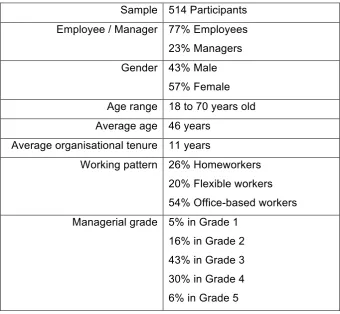
Regarding working patterns, 27% of employees reported working mostly from home, 54% were mostly based in the office and 19% worked more flexibly (working an average of two to three days away from the office). A profile of the participants can be found in Table 4.
Table 4: Profile of research participants of online survey Sample 514 Participants
Employee / Manager 77% Employees 23% Managers Gender 43% Male
57% Female
Age range 18 to 70 years old Average age 46 years
Average organisational tenure 11 years
Working pattern 26% Homeworkers 20% Flexible workers 54% Office-based workers Managerial grade 5% in Grade 1
16% in Grade 2 43% in Grade 3 30% in Grade 4 6% in Grade 5
Upon completion of the data collection, the project team worked extensively with AdviceCo to develop a series of reports that addressed the internal needs of the organisation. The research team also had a formal meeting with a group of senior managers to discuss the findings.
Analysis and results from Paper I rely on the quantitative survey data. Paper II's analysis and results are based on the qualitative data from group I supported by some of the data from the quantitative survey. Paper III is underpinned by all the primary data collected plus other secondary data (detailed in Chapter 5). Table 5 outlines the data that is used in each paper.
Table 5: Primary data by paper
Data Paper that the data supports
Individual interviews with forty
participants (group I) Paper II & Paper III
Pilot test (12 participants) Paper I, Paper II & Paper III Online survey (502 participants) Paper I, Paper II & Paper III Individual interviews with eight
senior managers (group II) Paper III
Primary data were complemented by secondary data to support the analysis for Paper III. The secondary data used was internal (such as AdviceCo's annual reports) and external (press media and relevant research literature). A list of the main secondary data sources is included in Table 6.
Table 6: Secondary sources of data for Paper III
Data Source Year
AdviceCo's annual reports AdviceCo 2005/06- 2012/13
Employee engagement survey (77% response rate)
Civil Service People Survey
2011
Employee performance AdviceCo 2011
All staff breakdown by hierarchy AdviceCo 2011
Diversity and equality reports AdviceCo 2010-2012
Disabled Employees as a proportion of all employees
AdviceCo 2011
Age distribution of employees AdviceCo 2011
are associated with behaviours (Judge, Thoresen, Bono, & Patton, 2001; Scandura & Lankau, 1997). Consequently, using employee behaviour data (such as supervisor-rated employee performance) should strengthen the analysis and enhance its validity.
1.6. Structure of this dissertation
This dissertation is structured in three separate papers, which are included in Chapter 3, 4. and 5. Drawing upon different theoretical frameworks, the papers are independent from each other as each addresses different research questions. Does life stage impact work-life balance? Paper I introduces the organisation under study in this dissertation, AdviceCo, by examining the work-life balance of their employees by life stage. Integrating the positive and negative aspects of the work-life interface, it contends that individuals' work-life balance may differ by life stage, resulting in different work-related and well-being outcomes.
What are the consequences of homeworking for both the individual employee and employer? Papers II and III aim to bring a further understanding of the work-life interface of the employees at AdviceCo by focusing on the impact of the use of homeworking, a well established work-life practice in this organisation, on both employee and employer. Attempting to shed light on the impact that homeworking may have on the employee-organisation relationship, Paper II addresses the question of what happens when homeworking is perceived differently by employee and employer and challenges the view that homeworking may result in increased productivity and engagement from employees. Paper III explores the role that homeworking may play in the organisational culture-climate alignment and provides a detailed contextual explanation of the potential adverse impact of homeworking in the functioning of the organisation.
2. REVIEW OF LITERATURE 2.1 The "work-life" term
2.2. Work-life theories
2.2.1. Role scarcity and work-life conflict 2.2.2. Role expansion and work-life enrichment 2.2.3. Border and boundary theories
2.2.4. Decision-making framework 2.2.5. Ecological systems theory 2.3. A work-life practice: homeworking
2.3.1. Introduction to the homeworking literature 2.3.2. Consequences at the individual level 2.3.3. Consequences for the team
2.3.4. Consequences for the organisation 2.3.5. Consequences for society
2.3.6. Debatable benefits of homeworking 2.4. Gaps in the work-life literature
2.4.1. Integration of theoretical perspectives 2.4.2. Context matters
2. REVIEW OF LITERATURE
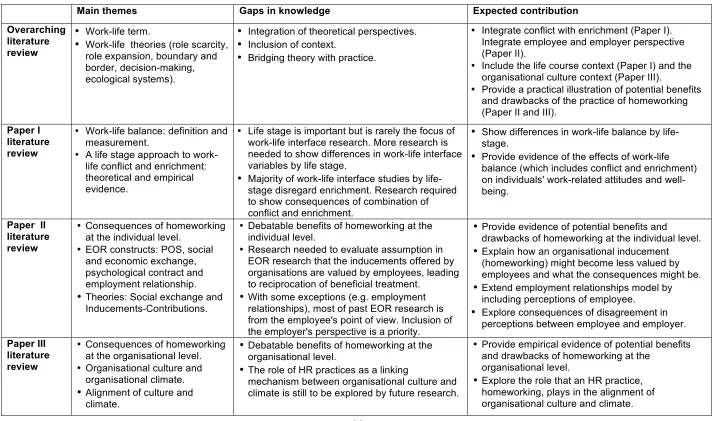
Table 7: Literature review outline
Main themes Gaps in knowledge Expected contribution
Overarching literature review
• Work-life term.
• Work-life theories (role scarcity, role expansion, boundary and border, decision-making, ecological systems).
• Integration of theoretical perspectives. • Inclusion of context.
• Bridging theory with practice.
• Integrate conflict with enrichment (Paper I). Integrate employee and employer perspective (Paper II).
• Include the life course context (Paper I) and the organisational culture context (Paper III).
• Provide a practical illustration of potential benefits and drawbacks of the practice of homeworking (Paper II and III).
Paper I literature review
• Work-life balance: definition and measurement.
• A life stage approach to work-life conflict and enrichment: theoretical and empirical evidence.
• Life stage is important but is rarely the focus of work-life interface research. More research is needed to show differences in work-life interface variables by life stage.
• Majority of work-life interface studies by life-stage disregard enrichment. Research required to show consequences of combination of conflict and enrichment.
• Show differences in work-life balance by life-stage.
• Provide evidence of the effects of work-life balance (which includes conflict and enrichment) on individuals' work-related attitudes and well-being.
Paper II literature review
• Consequences of homeworking at the individual level.
• EOR constructs: POS, social and economic exchange, psychological contract and employment relationship. • Theories: Social exchange and
Inducements-Contributions.
• Debatable benefits of homeworking at the individual level.
• Research needed to evaluate assumption in EOR research that the inducements offered by organisations are valued by employees, leading to reciprocation of beneficial treatment.
• With some exceptions (e.g. employment relationships), most of past EOR research is from the employee's point of view. Inclusion of the employer's perspective is a priority.
• Provide evidence of potential benefits and
drawbacks of homeworking at the individual level. • Explain how an organisational inducement
(homeworking) might become less valued by employees and what the consequences might be. • Extend employment relationships model by
including perceptions of employee. • Explore consequences of disagreement in
perceptions between employee and employer. Paper III
literature review
• Consequences of homeworking at the organisational level. • Organisational culture and
organisational climate. • Alignment of culture and
climate.
• Debatable benefits of homeworking at the organisational level.
• The role of HR practices as a linking
mechanism between organisational culture and climate is still to be explored by future research.
• Provide empirical evidence of potential benefits and drawbacks of homeworking at the
organisational level.
2.1. The "work-life" term
The field of academic study of the work-life interface started in the late 1970s in the U.S., when demographic changes in the workforce (growing number of employed women, dual earner parents and single parents) and a subsequent rising concern about the well-being and quality of life of employees emerged (Kossek et al., 2010) and seminal works by, for example, Kanter (1977) and Pleck (1977) were published.
Other contributing factors to the rising interest in work-life issues that are usually mentioned in the work-life research literature are changes in technology and globalisation, which potentially cause greater work-life conflict and stress among employees (Eby et al., 2005; Greenhaus et al., 2013). Work-life conflict may be greater as advances in technology help to blur the lines between work and private life. The pervasive presence of computers, mobile phones and other advances in information and communication technology have contributed to the ability for of some work to be performed 24/7, from virtually any location, and supported by an 'always on' organisational culture (Major, Germano, Jones, Burke, & Westman, 2006). This can lead to longer work hours and work intensification, which cuts into personal/family time (Valcour & Hunter, 2005). However, advances in technology can also enable employees to balance their work and life spheres successfully (Valcour & Hunter, 2005). In addition, global competition might put pressure on organisations to increase their demands on employees to become more flexible and work longer hours, and, therefore, increase employee's work-life conflict (Major et al., 2006).
Traditionally, the term commonly used for the work-life literature was 'work-family' because it was mostly dedicated to the study of the management of work and family demands. As childcare demands are the most visible non-work demands, work-family research and policies mainly concerned employees who were responsible for childcare, traditionally women. Increasingly, researchers and organisations have been recognising that all workers (whether they have family responsibilities or not) have lives outside of work that need to be supported and, accordingly, have been using the term 'work-life' (for example, McMillan, Morris, & Atchley, 2011). Strictly speaking, the terms work-life and work-family are not neutral, as work-life includes employees with and without families, whereas work-family does not. However, some authors have used the term "work-family" generically to represent work/non-work aspects (for example, Hammer & Zimmerman, 2011).
has focused on formal paid activities (Eby et al., 2005; Piotrkowski, Rapoport, & Rapoport, 1987). However, a broad definition of work encompasses participation in the formal economy (wage-labour), in the informal or "black" economy (and thus not included in the public account of wages) and in non-paid activities (e.g., housework, volunteer work) (Pahl, 1984; Piotrkowski et al., 1987). Following past work-life literature (Eby et al., 2005), this dissertation focuses on paid activities which include full-time and part-time employment.
In their review of work-family research in the industrial-organisational psychology and organisational behaviour literature, Eby and colleagues (2005) note that research scholars have put more emphasis on the measurement of different aspects of the "work" domain than on the "life" domain and that there is little progress in defining and measuring the non-work environment. Addressing this blind spot in the work-family literature, scholars have contended that "life" is multidimensional as individuals engage in multiple roles outside of work (e.g., family role, volunteer role) (Hall, Kossek, Briscoe, Pichler, & Lee, 2013). The empirical studies by Hall and colleagues suggest support for three non-work orientations (personal life, family and community service) that represent three different life roles. They also argue that life orientations may change over the life span of individuals and also vary by generations.
For the purpose of this dissertation, I will use the term "work-life" to refer to paid work activities and personal life activities, which may include different non-work pursuits (e.g., sports, unpaid care giving, religious activities, community involvement).
2.2. Work-life theories