Journal of Chemical and Pharmaceutical Research, 2013, 5(10):444-449
Research Article
CODEN(USA) : JCPRC5
ISSN : 0975-7384
Effect of particle size on solubility of limestone waste
Suruchi Gupta
1and Renu Sawal*
21Post Graduate Department of Chemistry, Government Dungar College, Maharaja Ganga Singh University, Bikaner, Rajasthan
2
Swami Keshwanand Institute of Pharmacy, Raisar, Bikaner, Rajasthan
_____________________________________________________________________________________________
ABSTRACT
Lime stone is the most common type of rock found on earth’s surface. During the process of manufacture, quick lime is produced in many sizes in the kilns. Large sized pieces find use for construction purposes, food processing and many more however, finer fractions find less utility. Such material is mostly dumped for earth filling. Suitability of such waste was evaluated as it was found to be rich source of Calcium. Lime stone processing waste was further processed to find out which fraction could be used to prepare mineral supplement for livestock as it was a rich source of Calcium. As physical attribute of materials affect its solubility and bioavailability of the element. The waste fraction of industry was fractionated into 3 fractions viz with particle size >1 mm, 0.25-1 mm and <0.25 mm. Solubility of each fraction was observed in water and in HCl (0.04N, 0.08N, 0.16N). Salts of Calcium (Calcium Chloride, Rock phosphate, Di Calcium phosphate, Tri Calcium phosphate, Calcium hydroxide and Calcium sulphate) were also tested for their solubility. Solubility of limestone fractions improved with decrease in particle size. Solubility of salts and fractions of limestone waste improved with increase in normality of HCl. Results indicate significant (P≤0.0001) increase in solubility of lime stone fractions in water with decrease in particle size (8.62, 20.20, 32.50%). Increase in solubility increased pH significantly (P≤0.05) from slightly acidic 6.27 with higher particle size to 7.36 with lowest particle size. The results reflect that fractions with lower particle size have an advantage due to their solubility in dilute HCl and even with water as solvent and they have excellent flow property, which could prove useful for preparation of mineral supplements as well ease mixing in the feed mixtures. Thus major fraction out of the limestone waste can find its use as a mineral supplement in the animal feed industry.
Key words: Limestone waste, pH, particle size, solubility, water, HCl
_____________________________________________________________________________________________
INTRODUCTION
The chemical form of a mineral is an important factor in its absorption and bioavailability, as the form in which minerals are ingested affects absorption. Particle size, surface area, and solubility of a substance affect its dilution rate. In many solid foods, elements are not free, but firmly bound in the food matrix [11]. Mineral salts are often referred as "natural", but they are not food minerals. Mineral salts are normally inorganic molecular compounds that look like rocks [14]. Mineral salts are a compound containing a mineral element, normally listed on a supplement label, and some other substance it is chemically bound to. Mineral salts are either rocks (e.g. CaCO3 exists as rock
commonly known as limestone) or they are rocks that are chemically-altered. Mineral salts are natural food for plants which can chemically change and detoxify those [16]. Chemical and physical form of the element depends upon its processing. Quicklime is produced in the lime kiln through calcinations of limestone (Calcium carbonate). Whole process of processing of limestone [9], indicates that reaction (CaCO3 + heat → CaO + CO2) takes place at
900°C (temperature at which the partial pressure of CO2 is 1 atmosphere), but a temperature around 1000°C (at
which temperature the partial pressure of CO2 is 3.8 atmospheres) is usually used to make the reaction proceed
EXPERIMENTAL SECTION
After processing in the lime kilns, samples of the waste fraction were collected from industrial units, 30 each from four districts of western arid zone namely Bikaner, Jaisalmer, Nagaur and Jodhpur. Each sample of lime was sieved through 1 mm and 0.25 mm; resulting in three fraction with particle size more than 1 mm, particle size 0.25 to 1 mm and particle size lower than 0.25 mm. Each sub fraction was weighed to observe proportion of different particle size to identify which fraction could be used directly for preparation of mineral supplements. Known quantity of each sample was taken in pre weighed glass Petri dish. The sample was dried in hot air Owen at 100oC for 8-10 hours to a constant weight. Petri dish along with sample was cooled in the desiccators and then weight was recorded. Loss of weight was expressed as moisture content from which the dry weight percentage was derived by deducting the former from 100. Weighed 0.5g of waste fraction, added it to a beaker containing 50ml of distilled water at a room temperature of 25oC. Contents of beaker were stirred with glass rod, filtered through Whatman filter paper No 1 (19 observations recorded from each category), and then pH of filtrate was recorded. Filter paper containing insoluble fraction was put into pre weighed beaker, Owen dried at 80oC for three hours and then weighed again to record dry weight of contents. The weight of sample taken was also corrected to its dry weight by drying known quantity of the sample in a pre weighed crucible. Later the samples were tested for their solubility in HCl in which waste fractions of different size of Lime stone were tested. Similarly salts of Calcium/ Phosphorus (Calcium Chloride, Rock phosphate, Di Calcium phosphate, Tri Calcium phosphate, Calcium hydroxide and Calcium sulphate) were also tested (6 observations of each salt) for their solubility in HCl. 0.5g of weighed waste fraction of lime/ salt sample was added to a beaker containing 50 ml of HCl varying in normality (0.04N, 0.08N, 0.16N). The beakers were warmed in a water bath containing luke warm water for 5 minutes, the contents were shaken well by rotating the beaker and then the contents were filtered through Whatman filter paper No 41. Filter paper containing insoluble fraction was Owen dried at 80oC for 3 hours in a pre weighed beaker and weighed again. To find the angle of repose fixed funnel method was used in which the material was poured through a funnel to form a cone. The tip of the funnel was held close to the growing cone and slowly raised as the pile grows, to minimize the impact of falling particles. Pouring of the material was stopped when the pile reached a predetermined height or the base a predetermined width. To measure the angle of the cone directly, the height of cone was divided by half the width of the base of the cone. The inverse tangent of this ratio is the angle of repose. Tan(θ) ≈µs Where: µs is the coefficient
of static friction and θ is the angle of repose [8]. Data generated during the experiment was tabulated and analyzed statistically by randomized block design [13].
RESULTS AND DISCUSSION
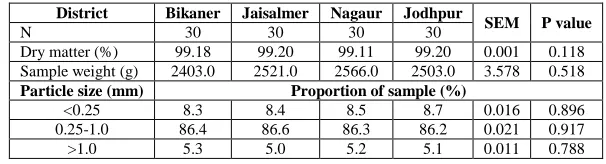
[image:2.595.153.456.549.631.2]The results indicate that moisture level was below 1% (Table 1), which was appropriate for storage and transport. No difference was observed in moisture content among samples collected from different districts. Observations on the waste fraction of limestone industry collected from different districts revealed that processing of limestone was almost similar in all the industries. Particle size greater than 1 mm was present between 4.9 to 5.4%; 0.25 to 1.0 mm was 85.9 to 86.8% and with particle size less than 0.25 mm it was between 8.1 to 8.8%. No variation was observed among different districts reflecting that raw material in the western arid zone was of near similar quality.
Table 1 Moisture content and fractionation of limestone waste samples
District Bikaner Jaisalmer Nagaur Jodhpur
SEM P value
N 30 30 30 30
Dry matter (%) 99.18 99.20 99.11 99.20 0.001 0.118
Sample weight (g) 2403.0 2521.0 2566.0 2503.0 3.578 0.518
Particle size (mm) Proportion of sample (%)
<0.25 8.3 8.4 8.5 8.7 0.016 0.896
0.25-1.0 86.4 86.6 86.3 86.2 0.021 0.917
>1.0 5.3 5.0 5.2 5.1 0.011 0.788
Table 2 Effect of particle size on flow measurements of materials
Particle size Pile Height (cm) Pile Radius (cm) Height/Radius ratio
Angle of Repose
N 30 30 30
<0.25mm 0.98 3.09 0.328 17.93
0.25-1.0mm 0.98 1.86 0.551 28.73
>1.0mm 1.08 1.70 0.708 34.43
SEM 0.002 0.010 0.002 0.105
Table 3 Effect of particle size on distribution of samples with respect to angle of repose
Particle size (mm) <0.25 0.25-1.0 >1.0
11 to 15 10
16 to 20 12 2 2
21 to 25 7 6 7
26 to 30 1 10 1
30 to 35 11
36 to 40 1 7
41 to 45 13
[image:3.595.203.408.89.286.2]Total 30 30 30
Table 4 Flow of materials
Flow property Angle of repose (degrees)
Excellent 25 – 30
Good 31 – 35
Fair-aid not needed 36 – 40
Passable – may hang up 41 – 45
Poor – must agitate, vibrate 46 – 55
Very poor 56 – 65
[image:3.595.183.430.309.411.2]Very, very poor >66
Table 5 Fractions obtained after sieving of industrial lime wastes (%)
Sieve Description < 0.25 mm 0.25-1.0 mm > 1.00 mm
n 7 7 7
10 Very coarse 19.59 0.12 0.17
22 Coarse 23.29 0.54 1.42
44 Moderately coarse 0.69 1.76 0.00
60 Coarsely fine 2.51 2.58 39.25
85 Moderately fine 25.48 23.58 0.90
100 Fine 5.66 16.94 5.00
120 Very fine 3.75 15.99 2.27
[image:3.595.189.424.435.538.2]Pan Receiving pan 19.02 38.49 51.00
Table 6 Mean solubility (%) of different fractions of lime
Particle size 0.04N HCl 0.08N HCl 0.16N HCl
<0.25 mm 45.79 48.85 58.72
0.25-1.0 mm 29.31 35.63 54.05
>1.0 mm 28.51 33.62 50.86
SEM 2.35 2.45 2.53
Dependent MSE F value P value
Intercept 300.742a 104.365 0.009
Normality 200.020b 31.053 0.004
Particle size 200.020 15.017 0.014
[image:3.595.215.398.561.661.2]Normality X Particle size 311.701c 0.642 0.634
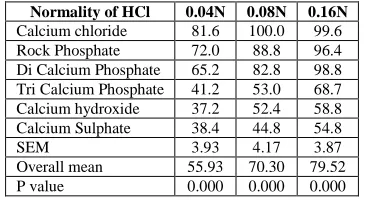
Table 7 Effect of normality of HCl on solubility of different salts
Normality of HCl 0.04N 0.08N 0.16N
Calcium chloride 81.6 100.0 99.6
Rock Phosphate 72.0 88.8 96.4
Di Calcium Phosphate 65.2 82.8 98.8
Tri Calcium Phosphate 41.2 53.0 68.7
Calcium hydroxide 37.2 52.4 58.8
Calcium Sulphate 38.4 44.8 54.8
SEM 3.93 4.17 3.87
Overall mean 55.93 70.30 79.52
P value 0.000 0.000 0.000
Table 8 Effect of particle size on pH and its solubility in water
Particle size (mm) pH Solubility (%)
>1mm 6.34 8.62
0.25-1.0mm 7.17 20.20
<0.25mm 7.36 32.50
SEM 0.016 0.186
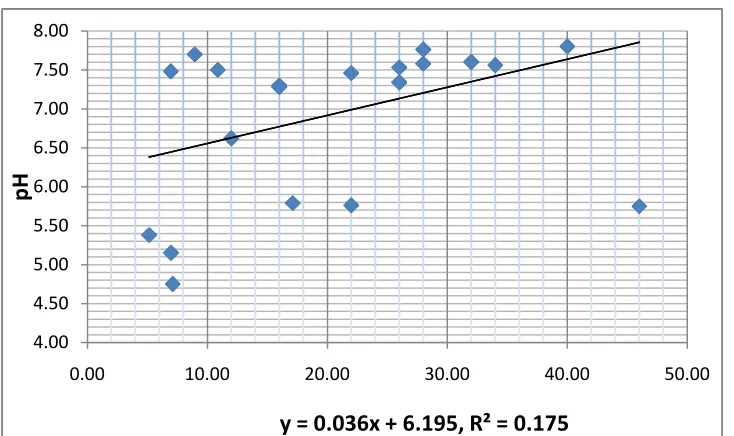
Fig 1 Solubility of limestone (%) in water
.
Studies on flow measurements of different limestone fractions (Table 2) indicated that increase in particle size decreased Pile radius, thereby increasing height to radius ratio as well as angle of repose increased. Distribution of particles indicate that within the gambit of same number of samples higher number of finer samples were present (<0.25 mm) and >1.0 mm had higher number of coarser samples (Table 3).Thus increase in particle size decreased the ability of particles to flow with ease. Test of Homogeneity of Variances also reveals significant relationship of height to radius ratio and angle of repose on flow property of materials. Angle of repose of solids reflect that values up to 25-30 have excellent flow (Table 4); thus limestone waste with particle size below 1mm can be used for preparation of mineral supplement, this would ease mixing with other salts/ feed ingredients. The results also reveal low particle size (≤0.25 mm) materials from limestone processing can be used very effectively for mixing with other salts to prepare mineral supplements as they would ease proper mixing of other materials / salts, however certain standards need to be followed [1] to maintain appropriate mineral concentration. For industrial applications there is need to have materials which need lower processing in order to reduce cost of production in the industry.
Further when samples of industrial limestone waste were passed through different sieves to get an idea of fineness of the material (Table 5), it could be inferred that with decrease in fineness of samples less material was received in the pan. Since proportion of coarse particles decreased with use of sieve with smaller size thus large particles can be sieved manually/ mechanically. Properly sieved materials with particle size < 1.0 mm could be used to prepare mineral supplements.
Solubility of lime fractions in HCl indicate (Table 6) that solubility of lime increased significantly with decrease in particle size, at all the concentration of HCl studied. Solubility of lime increased significantly with increase in HCl concentration in all particle size combinations. Solubility of different salts in HCl (Table 7) increased significantly (P≤0.01) with increase in concentration of HCl. Significant differences (P≤0.01) were also observed among different salts with respect to solubility, Calcium Chloride was found to be most soluble followed by Rock phosphate, Di Calcium phosphate, Tri Calcium phosphate, Calcium hydroxide and the least was Calcium sulphate. Solubility of lime fractions in water (Table 8) increased with decrease in particle size from >1.00 mm to <0.25 mm; observed figures were 8.62, 20.20 and 32.50; differences among values were highly significant (P≤0.0001). Increase in solubility increased pH from slightly acidic 6.27 with higher particle size to 7.36 with lowest particle size; differences among values were also significant (P≤0.05). The results reflect that fractions with lower particle size have an advantage due to their solubility even with water as solvent, which could prove useful for preparation of mineral supplements. Regression of solubility on pH indicate that pH of filtrate was significantly (P≤0.001) related to the solubility of lime stone fractions. Correlation between solubility in water and pH concentration (Fig 1) was highly significant (P≤0.001). Thus reflecting ease in its mixing when used as an ingredient in mineral supplement. Calcium solubility from different sources has been estimated [3, 15] by varying pH concentration. In the present study solubility was tested in water as well as by taking HCl of different normality. HCl is secreted by normal stomach which aids to solublize many food constituents. The test materials were soluble in water and the solubility improved with increase in concentration of HCl used for the study. Gastirc acid is a digestive fluid, formed in stomach, it has pH of 1.5 to 3.5 [6] and is composed of hydrochloric acid (around 0.5% or 5000 parts per million) as high as 0.1M and large quantities of Potassium Chloride and Sodium Chloride. The highest concentration that
y = 0.036x + 6.195, R² = 0.175
4.00 4.50 5.00 5.50 6.00 6.50 7.00 7.50 8.00
0.00 10.00 20.00 30.00 40.00 50.00
p
gastric acid reaches in the stomach is 160mM in the canaliculi. The lowest pH of the secreted acid is 0.8 [2] but the acid is diluted in the stomach lumen to a pH between 1 and 3.
Due to economical considerations, various types of ores, rocks and other locally available natural resources are used as sources of Ca and P in the manufacture of various mineral supplements in India [3]. This not only results in compositional variability of the final product but these products also do not meet the standards [4]. Solubility of Calcium has been found to increase progressively with decrease in pH concentration whereas change in pH did not markedly influence solubility of phosphorus in different sources of phosphorus [5].
Earlier reports [12] indicate that solubility of Ca and Mg in the gastro intestinal tract of sheep was inversely related to the pH of gut content. Variability in the mineral mixtures are commonly observed [7], in various countries and attention has thus been focused about the differences which need looked to optimize the quality. The flexibility needed in formulation requires more concentrated sources of one or more mineral elements to rectify dietary deficiencies. Thus there is need to closely monitor the quality assurance of commercial mineral supplements available vis-à-vis BIS standards [10].
Rajasthan state has nearly 10% share of total limestone reserves amounting to 9793 MT of all grades, thus a large proportion of wastes are generated while processing. Limestone waste was found to contain 38.5% Calcium reflecting to be a rich source for use in the mineral supplements at least for use in livestock feeds. In the present study solubility of different salts of Calcium and limestone dust was studied in Hydrochloric acid with normality ranging from 0.04 to 0.16. Concentration of HCl in stomach also increases up to 0.1M which is in the range of the present study and simulates conditions in the stomach. Thus the results have significance in context to its use. Results indicate that solubility of both lime increased significantly with decrease in particle size of limestone fraction. It can be inferred that particle size up to 1 mm could be used effectively in the mineral supplements also due to better flow property of the material. Among different salts containing Calcium, solubility of Calcium chloride was maximum followed by rock phosphate. Most of the laboratory grade salts are expensive compared to their commercial grade versions and use of Rock phosphate is limited due to presence of Fluorine, thus limestone waste is a potential resource which could be prevented from its use as earth filler but could be used as cheaper but a rich source of Calcium in the dietary supplements not for man but for animals, specially to meet requirements of milking animals, wherein large quantities of Calcium and Phosphorus from animal body are secreted into milk.
CONCLUSION
Results of the present study indicate that Limestone waste can be utilized for preparation of mineral supplements for livestock due to its solubility, flow property of the material from the industry and being a rich source of Calcium, it would ease mixing in feeds. It would also help to reduce pollution arising due to its dumping/ earth filling.
REFERENCES
[1] Mineral mixtures for supplementing cattle feed, (3rd Ed) Bureau of Indian Standards, Manak Bhavan, I. B. S. Zafar Marg, New Delhi, 1992, 4-5.
[2] AC Guyton; JE, Hall, Textbook of Medical Physiology, (11th Ed) Philadelphia, Elsevier Saunders, 2006, 797, ISBN 0-7216-0240-1.
[3] D Lall; T Prasad, Ind J Anim Nutr, 1989a, 6(4): 343-346. [4] D Lall; T Prasad, Anim Feed Sci Technl, 1989b, 23, 343. [5] D Lall; T Prasad, Ind J Anim Nutr, 1989c, 6(3), 240-244.
[6] EN Marieb; K Hoehn, Human Anatomy and Physiology, San Francisco, Benjamin Cummings, 2010, ISBN 0-8053-9591-1.
[7] L McDowell; JH Conrad, GL Ellis; JK Loosli, Mineral of Grazing Ruminants in Tropical Regions, University of Florida, USA, 1983, 65.
[8] EL Nichols; WS Franklin, The Elements of Physics, Macmillan, 1898, 101. http://books.google.com/?id=8IlCAAAAIAAJ.
[9] GD Parkes; JW Mellor, Mellor's Modern Inorganic Chemistry, Longmans, Green & Co, London, 1939. [10] S Saijpaul; P Singh; SS Sikka, Anim Nutr Feed Technol, 2012, 12: 83-90.
[11] SA Shapes; YR Schlussel; M Cifuentes, Drug nutrient interactions that affect mineral status. In: Handbook of
Drug-Nutrient Interactions, Humana Press, Totowa (NJ), 2004, 301-328.
[12] JE Storry, J Agri Sci., 1961, 57:97.
[13] Statistical Packages for the Social Sciences, Base 10, SPSS Software Products, SPSS Inc, Chicago, IL, 1997 [14] RJ Thiel, ANMA Monitor, 1999, 2, 5-10.