© 2017, IRJET | Impact Factor value: 6.171 | ISO 9001:2008 Certified Journal | Page 1559
Design Approach for Automatic Rationing Distribution System
Miss. Jayashri D. Ingale
1, Dr. P. H. Zope
21PG Student, Department of E&TC, SSBTCOET, Jalgaon, India
2Asst. Professor, Department of E&TC SSBTCOET, Jalgaon, India
---***---Abstract –Recently, the Public Ration Distribution System
structure is one of the prime government commercial schemes. Low economical group and people below scarcity line use this amenities provided by the government. Due to deception appear in a chain, such amenities do not reach to the needy people. This happens because in the existing system all the work done by physically. To computerize or automate this physical job there is no any specific unreasonable technology or tools involved. Due to this, system facing two problems firstly weight of the material that is given to the people may be inaccurate or imprecise and secondly, at the end of the, illegal wrong entries in the inventory of the shop about the amount of the material given to the consumers. To overcome this problem, we have implemented an idea to exchange the physical work by automating the distribution of product in ration shop. By using embedded system technology the ration distribution is automated with the help of RFID and GSM based paperless system. The people can acquire the material by showing RFID card into RFID reader; the controller checks the consumer database code and details of the amount on the card. After checking details, the LCD will display the consumer details on screen and list of product available for them. By using keyboard consumer needs to enter required material. With the help of GSM, the microcontroller sends the information to government administrative centre and consumer. In the absence of human, this system provides the material to consumer automatically.
Key Words: Corruption, Embedded system, GSM
Technology, Rationing System, RFID System
1. INTRODUCTION
Related to present, ration card is an official document for every resident of India and this is used for various fields such as family member essentials, also for receiving the gas connection and address verification for various purposes, etc. In the world of automation, everyone is trying to change their business to an automated system for reducing the man efforts. Civil Supplies Corporation is the responsible public sector for managing and distributing the vital commodities to the people. In that product like rice, sugar, kerosene, wheat, and oil etc are provided to the people who had ration cards and these are handled through manual ration shop system. In such system manual transactions are carried out in such scenario robbing may be possible due to adding false weight to weighing scale or doing wrong entries to their registers.
Currently, nearly all of the citizens having the ration card for governmental purpose and for buying food from ration shop on less MRP as compared to the market price. Most of the people buy that subsidized foodstuff like rice, sugar, kerosene, wheat, and oil by making entries on their ration card. Due to this, system facing two problems firstly weight of the material that is given to the people may be inaccurate or imprecise and secondly, at the end of the illegal wrong entries in the inventory of the shop about the amount of the material given to the consumers. For overcoming these problems we have proposed the Automatic Ration Materials Distribution Based on GSM and RFID System. RFID technique efficiently used to resolve some of them. RFID acts as ration card and another purpose such as RC book, insurance details, service details etc. Depending on the requirements of the consumer, GSM is used to transfer the information between two or more persons.
Radio Frequency Identification (RFID) based access control system approved or responsible persons to get the materials from ration shops. Other than RFID can’t issue the materials from the ration shop. An RFID system having an antenna or coil, a transceiver (with decoder) and a transponder (RF tag) electronically programmed with unique information. In the market, there are so many types of RFID systems are accessible. RFID classified based on their frequency ranges. Low frequency (30 to 500 kHz), mid frequency (900 kHz to1500MHz) and high frequency (2.4 to 2.5GHz) RFID kits are generally promoted. The active tags are lighter and costly than passive tags.
Global system for mobile communication (GSM) is a worldwide accepted standard for digital cellular communication and it is a most separable protocol for communication. GSM is a common European mobile telephone standard for a mobile cellular radio system operating at 900 MHz currently SIM 300 GSM modules is used. The SIM 300 modules are a Tri band GSM solution in a compact plug in modules featuring an industry standard interface. With low power consumption it delivers voice, data, and fax in a minute form aspect.
© 2017, IRJET | Impact Factor value: 6.171 | ISO 9001:2008 Certified Journal | Page 1560 2. LITERATURE SURVEY
By using the proposed system we can reduce the fraud on rationing system to a large extent by keeping transparency at each and every level as it is free of any type of manual data store in books or registers because it’s all the data is stored in the database. That’s why it is transparent higher authority to check the record at any point. So by implementing this proposed system will be helpful to needy and people below scarcity line.
S. Valarmathy et.al, has presented an Automatic Ration Materials Distribution Based on GSM (Global System for Mobile) and RFID (Radio Frequency Identification) technology instead of ration cards. This system is automated which provides ration without any interference of human. The system consists of various types of sensors which are used to measure and hand out the commodities. [1]
Kashinath Wakade et.al has represented paper “Smart Ration Distribution and Controlling”. The massive amount of Govt. money gets wasted due to corruption in the conventional Ration Distribution System. It consists of implementation of simple PDA device (personal data assistant) with RFID tag used as an e-ration card in place of a conventional ration card. This PDA device is similar to the ticket machine used by bus conductor or bank pygmy agent and the e - ration card is similar to swipe card. The Subscriber has to use this card instead of a ration card book to get ration from the dealer. Efforts are put together from our side to struggle against corruption and to have better management of Public Distribution System (PDS). [2]
Rajesh C. Pingle, P. B. Borole had developed ‘Automatic Rationing for Public Distribution System (PDS) using RFID and GSM Modules to Prevent Irregularities’. In this automated system, ordinary ration card get replaced by smart card in which all customer details are provided including their AADHAR (unique identification number) number which is used for customers authorization. This prompted to interface smart card reader (RFID Based) to the micro controller (AT89C51) and PC via RS232 to elaborate such system. In such a scenario, Government would have all required control/monitoring over the transactions at ration shop. Involvement of government in such process so for that Government, designed the central database system for keeping the records through GSM modules (SIM900D) and RS232. Hence it is possible to prevent the illegal activity and irregularities at ration shops. This would bring the glassiness in public distribution system and there will be a direct communication between people and Government. [3]
K. Balakarthik has presented paper based on Cloud-Based Ration Card System using RFID and GSM Technology, which is a competent way for the buyer to buy the products from ration shop by now flashing the card at the RFID reader in the ration shop. The customer confirmation is done by sending a random password that is one time password
(OTP) to the user mobile which has to be entered in a keypad of the system. The procurement is validated by the employee only after the details are fed in a desktop application which contains the customers confidential and procurement information. [4]
Dhanoj Mohan et. al has presented an “Automatic Ration Dispensing System which is an advanced system useful for the automatic & more efficient way of ration distribution”. The Automation in ration shop using Programmable logic controller (PLC) proposed a system for ration shop using embedded PLC. But this system further leads to problem like updating to the government database about the procurement details and the customer details were not carried out. [5]
3. METHODOLOGY
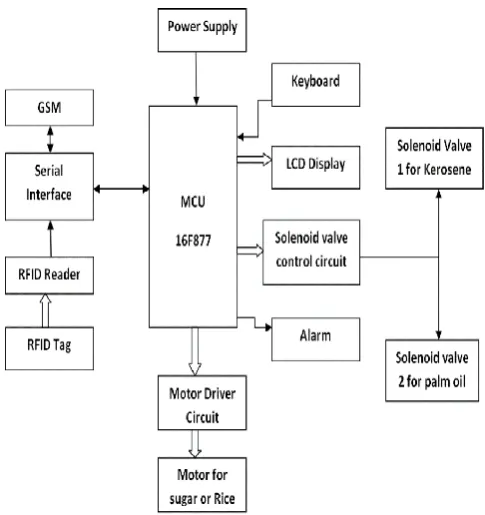
[image:2.595.310.553.322.580.2]3.1 Block Diagram of System
Fig. 1 Block Diagram of the system
A. POWER SUPPLY
© 2017, IRJET | Impact Factor value: 6.171 | ISO 9001:2008 Certified Journal | Page 1561 B. PIC MICRO CONTROLLER 16F877A
This is the heart of the system and having 40 pins to make it easier to use the peripherals as the functions are spread out over the pins. This makes it simple to decide which external devices to attach without any problem or error because there are enough pins to connect peripherals. One of the main advantages is that each pin is only shared between two or three functions so it is much simpler to decide what is the function for the pin (other devices have up to 5 functions for a pin). Therefore it is mainly used for integrating/interfacing the entire component which is connected as peripherals.
C. MAX 232
MAX 232 IC chips are normally mentioned as line drivers. The voltage levels of MAX 232 are 0V to +5V The MAX 232 is TTL to CMOS converter and also CMOS to TTL converter and thus making the system compatible with PC. MAX 232 is used for the serial communication between other devices and microcontroller. In the proposed system, MAX 232 is used to connect RFID reader serially with ARM 7.
D. KEYPAD
In the proposed system, 4x4 matrix keypad is used. It is serially connected with the ARM 7. Through a genuine person showing the RFID tag, if the material is available in the users account, user can take the required amount of material by using keypad.
E. LIQUID CRYSTAL DISPLAY (LCD)
A Liquid Crystal Display is an electronic visual display. It uses the light modulating properties of liquid crystals. A 16x2 LCD means it can display 16 characters per line and there are 2 such lines. In the proposed system, database in the tag gets accessed by the reader then it will be shown on LCD display after processing. After checking the database of the consumer, the balance material shows on LCD display. It will ask to enter the quantity required for the consumer.
F. SOLENOID VALVE
A solenoid valve is an electro mechanically operated control device. The valve is controlled by an electric current flowing through a solenoid. In the proposed system, we are using two solenoid valves for kerosene and palm oil. These valves will be controlled by solenoid valve controller circuit. Here the authentic removal of material takes place.
G. MOTOR WITH DRIVER CIRCUIT
The internal configuration of a DC motor is designed for to control the magnetic interaction between current carrying conductors and to generate rotational movement of an external magnetic field. In the proposed system, we use the
motor for the removal of sugar or rice. This circuit is used to deliver proper corresponding between motor and circuits.
H. BUZZER
Buzzer consists of piezo crystals connecting two conductors. When a potential is applied between two crystals, they push on one conductor and pull on the other. These push and pull action results in a sound wave. If the RFID tag is invalid then controller will send signal to the buzzer. Buzzer receives the signal coming from ARM 7 and it will produce some noisy sound.
I. RFID Module
Radio Frequency Identification (RFID) based access control system allows only genuine persons to get the materials from ration shops. An RFID system consists of an antenna or coil, a transceiver and a transponder automatically programmed with exclusive information. RFID tags consist of a microchip which is connected to an antenna, and this is made up of a small coil of wires. Data is stored in the IC and transmitted to a reader through the antenna. Generally RFID tags contain minimum two parts. One is an integrated circuit which is used for storing and processing the information, modulating and demodulating a (RF) signal, and other specialized functions and the second is an antenna which is used for receiving and transmitting the signal. A reader is basically a radio frequency (RF) transmitter and receiver, controlled by a microprocessor. Using an attached antenna, the reader captures data from tags, and then passes the data to the microprocessor for processing. As the database of the user is stored in the RFID tag, it will be transmitted to the reader through an antenna. The reader will access the data and send it to the ARM 7 microcontroller.
J. GSM
© 2017, IRJET | Impact Factor value: 6.171 | ISO 9001:2008 Certified Journal | Page 1562 4. FLOWCHART AND ALGORITHM
A. Flowchart
Fig.2 Flowchart
X= Expiry of card.
Y= Accessibility of material in the account of consumer.
B. Algorithm
1) START
2) Set all the devices LCD, RFID reader and DC motor. 3) Display the RFID card.
4) Confirm the expiry of card. Status X specifies the expiry of card.
If X = 0 then turn on the buzzer & go to step no 3.
If X = 1 then go to the next step.
5) Confirm the information about the card and status Y specify accessibility of material.
If Y = 0 then go to step no 3.
If Y = 1 then go to the next step. 6) Confirm for keyboard input.
7) Enter the amount of product grain in kg oil in litre and kerosene in litre.
8) Turn on particular valve, according to the amount entered.
Turn on the valve for the oil.
Turn on the valve for kerosene.
Turn the dc motor ON up to the timer is on. 9) Convey data to the PC.
10)After that system controller sends the information to government administrative centre and consumer. Go to step no 3.
5. ADVANTAGES
A. Cost effective approach B. Time saving approach.
C. The data is properly maintained with the help of this system.
D. In the government and market sector, deception or fraud can be prevented.
6. CONCLUSIONS
© 2017, IRJET | Impact Factor value: 6.171 | ISO 9001:2008 Certified Journal | Page 1563 REFERENCES
[1] R.Ramani, S.Valarmathy, “Automatic Ration Material distributions Based on GSM and RFID Technology”, I.J. Intelligent Systems and Applications, October 2013, Vol.11, pp 47-54
[2] Kashinath Wakade, Dinesh Aitwade, Pankaj Chidrawar, “Smart Ration Distribution and Controlling”, International Journal of Scientific and Research Publications, April 2015, Vol. 5, Issue 4.
[3] P. B. Borole, Rajesh C. Pingle, “Automatic Rationing for Public Distribution System (PDS) using RFID and GSM Modules to Prevent Irregularities”, HCTL Open International Journal of Technology Innovations and Research, Mar 2013, Vol. 2, pp 102-111.
[4] K. Balakarthik, “Closed Based Ration Card System using RFID and GSM Technology”, International Journal of Engineering Research & Technology (IJERT), April 2013 Vol. 2 Issue 4.