© 2017, IRJET | Impact Factor value: 5.181 | ISO 9001:2008 Certified Journal | Page 2604
PROFITABLE ITEMSET MINING USING WEIGHTS
T.Lakshmi Surekha
1, Ch.Srilekha
2, G.Madhuri
3, Ch.Sujitha
4, G.Kusumanjali
51
Assistant Professor, Department of IT, VR Siddhartha Engineering College, Andhra Pradesh, India.
2Student, Department of IT, VR Siddhartha Engineering College, Andhra Pradesh, India.
3Student, Department of IT, VR Siddhartha Engineering College, Andhra Pradesh, India.
4Student, Department of IT, VR Siddhartha Engineering College, Andhra Pradesh, India.
5Student, Department of IT, VR Siddhartha Engineering College, Andhra Pradesh, India.
---***---Abstract -
In recent years, a number of association rule mining algorithms like Apriori and FP- Growth were developed. But they are purely binary in nature. They do not consider quantity and profit (profit per unit). In these algorithms, two important measures viz., support count and confidence were used to generate the frequent item sets and their corresponding association rules. But in reality, these two measures are not sufficient for decision making in terms of profitability. In this a weighted frame work has been discussed by taking into account the profit (intensity of the item) and the quantity of each item in each transaction of the given dataset. Apriori and FP Growth algorithms are the best algorithms to generate frequent item sets, but they do not consider the profit as well as the quantity of items in the transactions of the database. Here we propose to new algorithms Profitable Apriori and Profitable FP Growth in our project which eliminate the disadvantages of traditional association rule mining algorithms and they also consider quantity and profit per unit. In this by incorporating the profit per unit and quantity measures we generate the most Profitable Itemsets and we compare the results obtained by Profitable Apriori and Profitable FP-Growth.Key Words
:
Profit, Quantity, Profitable Item sets,
Profitable Apriori, Profitable FP Growth.
1. INTRODUCTION
Mining frequent patterns or Itemsets is an important issue in the field of data mining due to its wide applications. Traditional Itemset mining is, however, done based on parameters like support and confidence. The most widely used algorithms to obtain frequent Itemsets are Apriori and Frequent pattern growth. They are binary in nature. It means that they only consider whether the product is sold or not. If the product is sold, then it is considered true and else false. And these algorithms produce frequent itemsets, which only consider the occurrence of items but do not reflect any other factors, such as price or profit. Profitable Itemset Mining has recently been proposed, in which transactions are attached with weighted values according to some criteria. It is important because if support and confidence are only the parameters assumed, we may miss some of the profitable patterns.. However, the actual significance of an Itemset cannot be easily recognized if we do not consider some of the aspects like quantity and profit per each item.. The problem of Profitable Itemset mining is to find the complete
set of Itemsets satisfying a minimum profit constraint in the database. When we are calculating the Profitable Itemsets we can consider minimum weight as constraint and we can ignore the support as our goal is to find the Profitable patterns. In the real world, there several applications where specific patterns and items have more importance or priority than the other patterns. Profitable Itemset mining has been suggested to find Profitable patterns by considering the profits as well as quantity of Items. The concept of Profitable Itemset mining is attractive in that profitable patterns are discovered. We can use the term, Profitable Itemset to represent a set of profitable items. The Itemsets we get are frequent profitable itemsets as well as infrequent profitable itemsets.
1.1 BASIC CONCEPTS
Itemset mining helps us to find the frequent patterns or itemsets . The two most widely used algorithms are Apriori and FP Growth. These two algorithms are binary in nature. They concerned about whether the product is sold or not. The measures considered by these algorithms are support and confidence. But in reality they are not sufficient for decision making in the large organizations. So In this framework we consider two measures named Quantity and Profit. By using both the parameters we calculate Weight. Consider the following two transactions:
T1: {20 Buns, 5 Chocolates} T2: {1 Bun, 1 Chocolate}
In the support-confidence frame work the above two transactions are considered to be the same, since the quantity of an item is not taken into account. But in reality, it is quite clear that the transaction T1 gives more profit than the transaction T2. Thus to make efficient marketing we take in to account the quantity of each item in each transaction. In addition we also consider the intensity of each item, which is represented using profit per item p.
Consider the following two transactions: T3: {10 Buns, 1 Chocolate}
T4: {2 Buns, 3 Chocolates}
© 2017, IRJET | Impact Factor value: 5.181 | ISO 9001:2008 Certified Journal | Page 2605
1.2 PROBLEM DEFINITION
In this paper taking into account the profit / intensity of the item and the quantity of each item in each transaction of the given database, we propose two algorithms Profitable Apriori and Profitable FP Growth. These algorithms take into account two parameters Quantity and Profit. In this by incorporating the profit per item and quantity we generate Profitable Apriori and Profitable FP Growth. In this paper, the notations corresponding to the new structure is given below.
Universal Itemset = I
I = { i1 :q1*p1 , i2 : q2*p2 , . . . , im :qm* pm } , { i1 , i2 , . . . , im } represents the items purchased, {q1,q2,q3...qm} represents quantity of purchase, {p1,p2,p3...pm} represents their respective profits. The ith transaction of the database D is of the form Ti={wir,....}
r represents item number, w = q*p.
2. PROPOSED WORK
In this paper we propose two algorithms Profitable Apriori and Profitable FP Growth. These two algorithms consider quantity as well as profit values per each unit and calculate weights. And the results of both the algorithms are compared.
2.1 PROFITABLE APRIORI ALGORITHM
This algorithm is based on one of the traditional Itemset mining algorithms namely Apriori. Here we propose an algorithm Profitable Apriori, which extends the Apriori algorithm by incorporating the weight and quantity measures and generates Profitable Itemsets. The rules are filtered based on a new measure called Minimum Profit, and then prioritized. Profitable Apriori develops an interface between the itemsets and customer characteristics for efficient target marketing.
2.1.1 ALGORITHM
It involves two steps.
• Join Step: Ck is generated by joining Lk-1with itself
• Prune Step: Any (k-1)-itemset that is not frequent cannot be a subset of a frequent k-itemset
1. C1 = {1- item candidate sets};
2. Calculate the support count and the weight of each candidate set in C1
3. L1 = {1- item frequent sets }; 4. M1 = {1- item semi-frequent sets};
5. for (k = 2; Lk-1 !=∅; k++) do begin
6. Ck = candidates generated from Lk-1; i.e., C k = Lk-1 X Lk- 1 ;
7. for each transaction t in database D do
8. increment the count of all candidates in Ck that are contained in t;
9. Calculate the support count and the weight of each candidate set in Ck;
10.end
11.Lk = {k-item freq.sets};
12.Mk = { k-item semi-frequent sets};
13.Arrange all freq.sets in Lk in the descending order of their weights.
14.Arrange all candidate sets in Mk in the descending order of their weights.
15.end
16.return ∪k Lk and ∪k Mk
2.2 PROFITABLE FP GROWTH
Profitable FP-Growth algorithm is based on FP-Growth algorithm in data mining. Generally FP-Growth algorithm is binary in nature. It doesn’t consider quantity and weight per unit in a transaction. So In our algorithm we consider quantities and profits per items in a transaction.
2.2.1 ALGORITHM
Input:
1. D, a Transactional database that also Includes quantity of items purchased.
2. Min_sup, the minimum support count threshold. 3. Profit table that displays profit earned by each Item.
Output:
The complete set of profitable patterns. Method:
Step1:
1. Scan the database and develop a new table by multiplying profit of each item with their corresponding quantity, represented as weight.
2. Calculate the frequency for each item i.e., sum of Weights of each item in all the transactions.
3. Discard infrequent items.
4. Sort frequent items in decreasing order based on their support and a new database table is generated.
© 2017, IRJET | Impact Factor value: 5.181 | ISO 9001:2008 Certified Journal | Page 2606 Step2:
Nodes correspond to items and have a counter
1. FP-Growth reads the first transaction at a time and maps it to a path.
2. Fixed order is used, so paths can overlap when transactions share items (when they have the same prefix). In this case, counters are incremented by their corresponding weights. 3. Pointers are maintained between nodes containing the same item, creating singly linked lists (dotted lines). The more paths that overlap, the higher the compression. FP-tree may fit in memory.
4. Frequent itemsets extracted from the FPTree.
3. RESULTS AND OBSERVATIONS
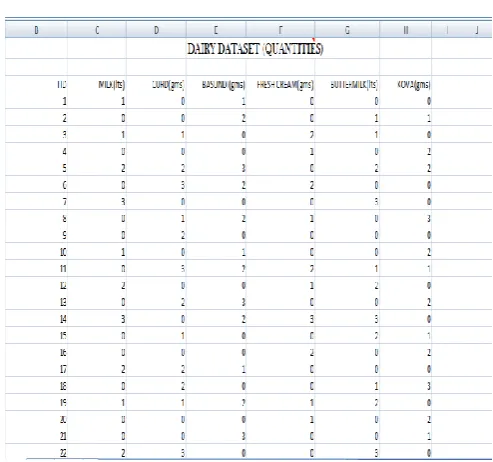
[image:3.595.36.555.120.759.2]Quantity dataset:
Fig 1: Quantity values of items.
Profit dataset:
Fig 2: Profit values of items.
The quantities and profits are multiplied in order to get weights. The weights (total profits) are obtained.
[image:3.595.311.556.155.383.2]Weighted dataset:
Fig 3: Weights of items.
Input Data Format:
[image:3.595.37.284.333.564.2]© 2017, IRJET | Impact Factor value: 5.181 | ISO 9001:2008 Certified Journal | Page 2607 The Input for the program is given in the above format. For
example consider the first transaction. 11 3:6:5 1
This means that there are two items in the transaction. They are I1(Item 1) and I3(Item 3). And the corresponding profits obtained by purchasing those items are given after the second colon. Those values are 5 and 1. So the profit obtained by I1 is 5 and I2 is 1. The total profit of the transaction is taken in the middle i.e In between the colons.
[image:4.595.308.554.118.357.2]Patterns obtained for Profitable Apriori:
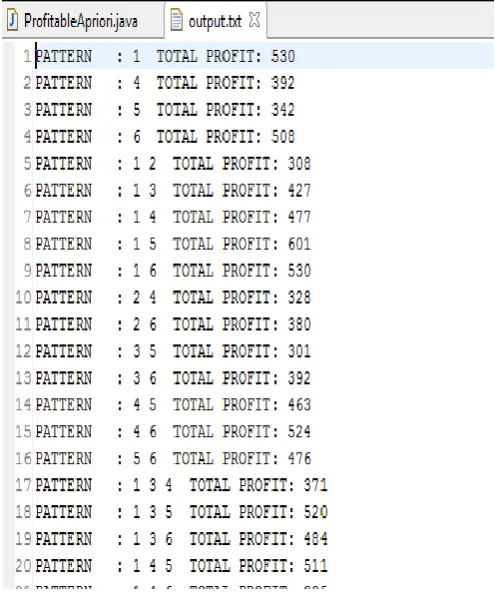
Fig 5: Profitable Patterns( Profitable Apriori)
The above figure is the output for Profitable Apriori algorithm. The output in the format
1 PATTERN : 1 TOTAL PROFIT :530
This means that the profit of the Item 1 in the entire database is 530.
5 PATTERN : 1 2 TOTAL PROFIT :308
This means that the profit of the Items 1 and 5 in the entire database is 308.
[image:4.595.306.554.121.358.2]Patterns obtained for Profitable FP Growth:
Fig 6: Profitable Patterns ( Profitable FP Growth)
Profitable FP Growth and Profitable Apriori gives the same patterns.
3.1 STATISTICS
Profitable apriori statistics
Fig 7: Statistics (Profitable Apriori)
[image:4.595.35.283.280.579.2]© 2017, IRJET | Impact Factor value: 5.181 | ISO 9001:2008 Certified Journal | Page 2608
Profitable FP Growth statistics
Fig 8: Statistics (Profitable FP Growth)
So, the above figure shows the statistics of Profitable FP Growth algorithm. The total time taken by the algorithm to produce the results is 15ms. The memory used by the algorithm to store the patterns in the text file is 1.60MB. The number of patterns produced by the algorithm which satisfy the minimum weight constraint are 33.
4. OUTPUT ANALYSIS
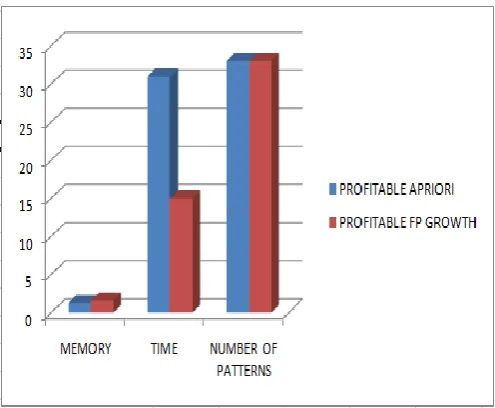
[image:5.595.36.284.456.660.2]The results of both the algorithms are compared using charts in Microsoft Excel.
Fig 9: Comparative result
The memory taken by the Profitable FP Growth is more than Profitable Apriori since FP Tree takes more space. The time taken by the Profitable Apriori is more since candidate keys are generated in Profitable Apriori. The number of patterns produced by both the algorithms are same and similar.
5. CONCLUSIONS
The profit and quantity factor given to each item in each transaction is used to find the weight of each frequent set. The weights are obtained by multiplying profits and quantities. The marketers are more interested in the profit than the frequency of a set. So, we obtained profitable Patterns using Profitable Apriori and Profitable FP-Growth algorithms. Results of both the algorithms are compared based on the parameters Memory usage, Time taken to produce the frequent patterns and the number of frequent patterns.
REFERENCES
[1] R. Agrawal, T. Imielinski and A. Swami, “Mining
Association Rules Between Sets of Items in Large Databases”, Proc. 1993 ACM SIGMOD,Washington, DC, pp. 207–216, May 1993
[2] R. Agrawal and R. Srikant, “Fast Algorithms for Mining
Association Rules”, Proc. 20th International Conference on Very Large Databases (VLDB‟94), Santiago, Chile, pp. 487–499, Sept. 1994
[3] J. Han and Micheline Kamber, “Data Mining – Concepts
and Techniques”, Morgan Kaufmann Publishers, 2001
[4] Robert J. Hilderman, Colin L. Carter, Howard J. Hamilton,
And Nick Cercone, “Mining Association Rules From Market Basket Data Using Share Measures and characterized Itemsets”
[5] Feng Tao, Fionn Murtagh, Mohsen Farid, “Weighted
Association Rule Mining using Weight ed Support and Significance framework”
[6] Wang, B-Y., Zhang, S-M.: A Mining Algorithm for Fuzzy
Weighted Association Rules. In: IEEE Conference on Machine Learning and Cybernetics, 4, pp. 2495--2499 (2003).
[7] Unil Yun, John J. Leggett, ‘WFIM: Weighted Frequent
Itemset Mining with a weight range and a minimum weight‟ SDM`05, April 2005.
[8] J.Han, J. Pei, and Y. Yin. Mining frequent patterns without
candidate generation. In Proc. of the ACM-SIGMOD Int'l Conf. on Management of Data, pp. 1-12, 2000.
[9] Y.-C. Li, J.-S. Yeh, and C.-C. Chang. Isolated items
discarding strategy for discovering high utility itemsets. In Data & Knowledge Engineering, Vol. 64, Issue 1, pp. 198-217, Jan., 2008.
[10] Y. Liu, W. Liao, and A. Choudhary. A fast high utility
itemsets mining algorithm. In Proc. of the Utility-Based Data Mining Workshop, 2005.
[11] B.-E. Shie, V. S. Tseng, and P. S. Yu. Online mining of
temporal maximal utility itemsets from data streams. In Proc. of the 25th Annual ACM Symposium on Applied Computing, Switzerland, Mar., 2010.
[12] R.Nicole, “Title of paper with only first word
capitalized,” J. Name Stand. Abbrev., in press.