© 2017, IRJET | Impact Factor value: 5.181 | ISO 9001:2008 Certified Journal
| Page 3102
AN EXPERIMENTAL STUDY ON SIFCON USING M – SAND AND
PARTIALLY REPLACING CEMENT WITH SILICA FUME
CHIRANTH GOWDA M
1, MELITIA D’MELLO
21
PG Student, Dept. of Civil Engineering, Shree Devi institute of technology, Mangalore, Karnataka, India.
2Assistant professor, Dept. of Civil Engineering, Shree Devi institute of technology, Mangalore, Karnataka, India.
---***---Abstract -
SIFCON is a high strength fiber reinforcedconcrete which has high ductility, crack resistance and impact resistance. SIFCON is produced by a process in which fibers are put into an empty mould, after which the fiber mass is infiltrated by a slurry. An experimental program is conducted in order to study the behavior of SIFCON by using M-sand and partially replacing cement with silica fume. Strength tests were conducted to study the mechanical properties of SIFCON. Non-destructive tests such as Rebound hammer and Ultrasonic pulse velocity tests are also performed.
Key Words
:
SIFCON, Steel fibers, Silica Fume, Ultrasonic pulse velocity, Rebound hammer.1. INTRODUCTION
Concrete is most basic and much of the time utilized building material in development field which is utilized everywhere throughout the world. Concrete comprise of cement, water fine aggregates and coarse aggregates, water blended with concrete structures a glue which ties the sand and aggregates. Within a couple of hours initial hardening happens. Full strength of the solid concrete is accomplished in a little while. The strength gaining procedure of solid concrete will proceed over numerous years.
Concrete which is made using Portland cement groups a few qualities such as strong in compression and weak in tension. This shortcoming can be overcome by usage of steel bars for reinforcement. Hence, for certain degree weakness can be dispensed with by expansion of certain fiber by adequate volume. The expansion of various strands in the solid blend will help in mechanical Improvement of Portland cement which is called fiber reinforced concrete (FRC).
Concrete has low strain limit thus as rigidity which assistant outcome in low resistance towards cracks. To upgrade such properties, this Fiber reinforced concrete has been created. Strands are relied upon to upgrade unbending nature, flexural quality, toughness and effect resistance and it likewise controls splitting. As to improve these properties a few strands are presented of various shapes and sizes and are created for use in Fiber reinforced concrete.
1.1 SIFCON
Slurry infiltrated fibrous concrete (SIFCON) could be said a generally another, one of a unique kind and exceptional sort of fiber reinforced concrete. SIFCON has incredible potential for application in areas where high flexibility, ductility and imperviousness to impact effect are required. SIFCON is made by preplacing short discrete filaments of steel (Steel Fibers) in to the moulds to full volume or to the desired part, consequently shaping an arrangement of network system.
The fundamental contrasts amongst FRC and SIFCON apart from fiber content, is that coarse aggregates are absent in SIFCON and SIFCON has much water and cement content when compared to FRC.
1.2 Necessity of Fibers
1. It Increases the Tensile strength, ductility and
durability of concrete as well asdecreases water
and air voids
2. Increase durability of concrete
3. Fibers has prominent role in the performance of creep
4. Minimizes the reinforcement bars used in concrete
5. Fibers will improve dynamic properties and static
properties
6. Improves resistance towards plastic shrinkage
7.
Enhances the Structural strength of concrete andfree-thaw resistance
1.3 Factors affecting the efficiency of SIFCON
The following factors affect the parameters such as ultimate strength, ductility and energy absorption of SIFCON.
i. Strength of the slurry
ii. Alignment and volume of fiber iii. Type of the fiber
© 2017, IRJET | Impact Factor value: 5.181 | ISO 9001:2008 Certified Journal
| Page 3103
1.4 Applications of SIFCON
The properties such as ductility, crack resistance, penetration and impact resistance are very high in SIFCON. This makes SIFCON best suited in few areas:
1. Precast concrete products
2. Bridge decks, overlays and pavement rehabilitation. 3. Seismic resistant structures, solar towers, offshore
and long span structures.
4. Security concrete applications such as safety vaults and strong rooms.
5.
Refractory applications such as soak-pit covers, furnace lintels and saddle piers.2. AIM AND OBJECTIVES
Aim of the present experimental work is to study the strength and behavioural characteristics of SIFCON using M-Sand and partially replacing cement with silica fume. The objectives of the study are listed below:
a) To obtain high strength concrete.
b) To produce a concrete which is self-compactable and having high resistance to environmental effects. c) To study the compatibility of fibers in obtaining a
high strength concrete.
d) To study absorption resistance characteristics and sorptivity of concrete.
e)
To study compression, tensile and flexural strength characteristics of concrete.3. MATERIALS USED
Concrete is a homogeneous mixture of cement, fine aggregate, coarse aggregate, water and admixtures in a proportioned quantity. In SIFCON coarse aggregates are absent. In the present work, cement was partially replaced with silica fume for a certain percentage and manufactured sand was used instead of natural river sand.
3.1 Cement
[image:2.595.322.540.186.297.2]In the present work, OPC 53 grade cement conforming to IS: 12269 - 1987 is used as a Binding material.
Table – 1: Properties of Cement
Particulars Results
Specific Gravity 3.16
Fineness 272 m²/kg
Initial setting time 48 minutes Final setting time 268 minutes
Normal consistency 36%
3.2 Silica Fume
It is an amorphous polymorph of silicon dioxide and silica. It’s an ultrafine powder obtained as a byproduct during the production of ferrosilicon alloy and silicon
Table – 2: Properties of Silica Fume
Odour No odour
Color Greyish white
Specific gravity 2.6
pH of 5% solution 6.95
Bulk density 616 kg/m3
3.3 Fine Aggregate
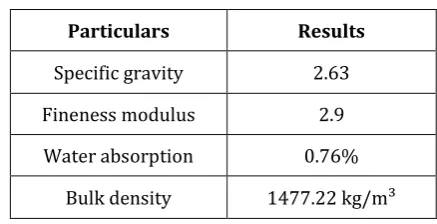
[image:2.595.322.541.398.510.2]Clean and Dry M-Sand passing through 1.1.8mm sieve and conforming to IS: 383-1970 is used as a substitute in concrete along with cement and silica fume.
Table – 3: Properties of Fine Aggregate
Particulars Results
Specific gravity 2.63
Fineness modulus 2.9
Water absorption 0.76%
Bulk density 1477.22 kg/m³
3.4 Water and Super Plasticizer
Ordinary potable water fit for human utilization available at the place is used for preparation and curing of SIFCON specimens.
The Super plasticizer utilized is Conplast SP - 430, to increase the workability of the concrete. The item has been basically manufactured for the concrete where high durability and performance is required such as High performance concrete.
Table – 4: Specifications of CONPLAST SP – 430
Parameters Results
Specific Gravity 1.25
Chloride content NIL
© 2017, IRJET | Impact Factor value: 5.181 | ISO 9001:2008 Certified Journal
| Page 3104
3.5 Steel fibers
[image:3.595.46.282.177.381.2]For the present experimental work Hooked end Steel fibers are used.
Table – 5: Properties of Steel Fibers
Diameter 0.6mm
Length 30mm
Aspect ratio 50
Fig – 1: Steel Fibers
4. MIX PROPORTION AND SPECIMEN CASTING
Generally in SIFCON the percentage of fibers can be from 4 to 20 percent eventhough, the current practical range varies from 4 to 12 percent. In conventional fiber reinforced concrete (FRC), where fiber filaments are combined with different elements of concrete, this rate is restricted to just around 2 % due to workability reasons. Normally for making SIFCON, the cement to sand ratio can be 1:1 or 1:1.5 or 1:2, and water cement ratio can vary from 0.3 to 0.45.
Different specimens are casted by varying the percentages of steel fibers and tests are performed to determine the strength of various SIFCON specimens. Specimens are casted and tests are carried out after curing periods of 7, 14 and 28 days.
Cement and M-sand = 1:1.5
Silica fume = 10 %
Super plasticizer = 6%
Water / cement = 0.4%
Steel fibers = 4%, 6%, 8% and 10%4.1 Casting and Curing of SIFCON specimens
Different test specimens such as Cubes, Beams and Cylinders were casted. Prepared slurry and steel fibers are poured into the moulds without any compaction. Specimens with different steel fiber percentages such as 4%, 6%, 8%
and
10% were prepared.
All the specimens were prepared in accordance with ISspecifications. Moulds are allowed to dry for 24hrs and then hardened specimens are de-moulded and kept in water for curing for 7days, 14days and 28 days.5. TESTS AND RESULTS
5.1 Workability test results
5.1.1 V Funnel Test
Time of flow, Tf = 8 seconds
5.1.2 L Box Test
Blocking ratio, H2/H1 = 0.85 mm.
Where, H1 = Height of concrete at horizontal portion. H2 = Height of concrete at vertical portion.
5.2 Results of Tests conducted on Hardened SIFCON
specimens
[image:3.595.312.568.408.696.2]5.2.1 Compression Strength Test
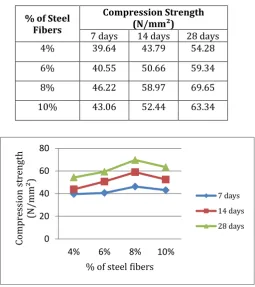
Table 6: Compression Strength Test Results
% of Steel Fibers
Compression Strength (N/mm²)
7 days 14 days 28 days
4% 39.64 43.79 54.28
6% 40.55 50.66 59.34
8% 46.22 58.97 69.65
10% 43.06 52.44 63.34
0 20 40 60 80
4% 6% 8% 10%
Com
pre
ss
io
n
stre
ngth
(N
/mm²
)
% of steel fibers
7 days 14 days 28 days
Fig – 2: Variation of Compression strength for various % of steel fibers
© 2017, IRJET | Impact Factor value: 5.181 | ISO 9001:2008 Certified Journal
| Page 3105
10% there is decrease in the compression strength. This isdue to the improper bonding between the materials due to the presence of higher amount of steel fibers in the specimen. Strength is highly influenced by the fiber volume and fiber alignment. 8% is considered as the optimum amount steel fiber volume that can be used.
[image:4.595.318.550.141.434.2]5.2.2 Split Tensile Strength Test
Table – 7: Tensile Strength test results
% of Steel Fibers Split Tensile Strength (N/mm²)
7 days 28 days
4% 4.22 6.672
6% 5.273 8.346
8% 7.036 10.346
10% 6.24 8.84
0 2 4 6 8 10 12
4% 6% 8% 10%
Sp
lit
Te
ns
ile
Str
en
gth
(N
/mm²)
% of Steel Fibers
7 days 28 days
Fig – 3: Variation of Split Tensile Strength for various % of steel fibers
Variations of tensile strength with respect to percentage of steel fibers utilized for the specimen can be observed from the above figure. It can be observed that there is good enhancement of tensile strength in SIFCON specimens, due to addition of steel fibers up to certain level. The reduction in the value of tensile strength for specimen with 10% steel fibers is due to the presence of higher volume of steel fibers, which results in improper bonding.
5.2.3 Flexural Strength Test
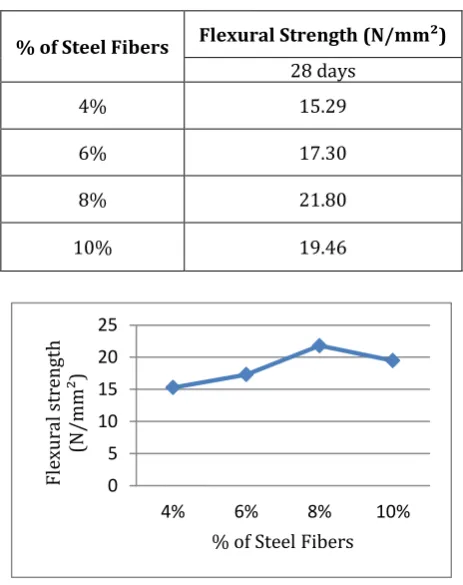
Table – 8: Flexural Strength Test Results
% of Steel Fibers Flexural Strength (N/mm²) 28 days
4% 15.29
6% 17.30
8% 21.80
10% 19.46
0 5 10 15 20 25
4% 6% 8% 10%
Fl
exur
al
s
tr
en
gth
(N
/mm²)
% of Steel Fibers
Fig – 4: Variation of Flexural Strength for various % of steel fibers
From the above figure it can be observed that flexural strength for specimens with 10% steel fibers is less than that of specimens with 8% steel fibers. It should be noted that 8% is the optimum percentage of steel fibers that can be utilized in SIFCON. As the amount of steel fibers increase, possibility of occurrence of cracks can be more and bonding will not be proper.
[image:4.595.41.282.221.561.2]5.2.4 Rebound Hammer Test
Table – 9: Rebound Hammer test results
% of Steel
Fibers Rebound No.
Compressive Strength (N/mm²)
4% 39 51.87
6% 44 58.52
8% 50 66.5
10% 46 61.18
[image:4.595.319.548.616.718.2]© 2017, IRJET | Impact Factor value: 5.181 | ISO 9001:2008 Certified Journal
| Page 3106
specimens with 8% steel fibers. For specimens with 10%steel fibers, there is a slight decrement in the rebound number.
5.2.5 Ultrasonic Pulse Velocity Test
Table – 10: UPV Test Results
% of Steel
Fibers
Pulse
velocity
(Km/sec)
Concrete
quality
4%
4.13
Good
6%
4.34
Good
8%
4.57
Excellent
10%
4.27
Good
Variation in pulse velocity in SIFCON specimens can be observed from the above figure. The pulse velocity shows the quality of the concrete. Specimens with 8% steel fibers have the maximum pulse velocity value.
6. CONCLUSIONS
Compressive strength significantly increased by using silica fume, as a partial replacement for cement. Addition of steel fiber increases the strength
parameters of SIFCON and contributes in the reduction of cracks.
The Compressive strength considerably increases as the volume of steel fibers increases upto a optimum value and then decreases. The maximum compression strength attained is 69.65 N/mm² for 8% volume of steel fibers and at the age of 28 days.
The split tensile strength test was conducted on various specimens with varying volume of steel fibers such as 4%, 6%, 8% and 10%. The tensile strength was found to be high for the specimens with 8% of steel fibers and it is 10.346 N/mm².
The flexural strength increases as the steel fiber content increases from 4% to 8%. But for specimens with 10% steel fibers, there was a decrease in the strength and the maximum Flexural strength attained was 21.80 N/mm².
The increase in rebound number up to 8% addition of steel fibers shows better surface hardness.
From the overall results obtained from Strength tests, it can be said that 8% of steel fibers by volume is the optimum amount of steel fibers that can be added to SIFCON.
From the workability tests it was observed that SIFCON is self-compactable and has better workability.
REFERENCES
[1] Pruthvi Raj. B. S, “A Case Study on effect of Fly Ash based
SIFCON on Strength of Concrete”, International Journal on Engineering research, Vol.4, Issue 3, May-June 2016
[2] Rakesh Kumar Chaudhary and R. D. Patel, “Study of
Behavior of SIFCON produced by partial replacement of cement with glass powder and low tensile strength steel fiber”, International journal for scientific research and development, Volume 3, Issue 6, 2015
[3] Arun Aniyan Thomas and Jeena Mathews, “Strength and
Behavior of SIFCON with different types of fibers”, International journal of civil engineering and technology, Volume 5, Issue 12, December 2014
[4] Kuldeep Dagar, “Slurry Infiltrated fibrous concrete
(SIFCON)”, International journal of Applied engineering and technology, Vol. 2, 2012.
[5] Dilip Kumar Singha Roy and Amitava Sil, “Effect of