ISSN: 1992-8645 www.jatit.org E-ISSN: 1817-3195
A PRELIMINARY STUDY ON REWARD MANAGEMENT
SYSTEM MODEL FOR ENCOURAGING EMPLOYEE’S
KNOWLEDGE SHARING BEHAVIOR
1NUUR ASRAM KAMAR NORDIN @ NOORDIN, 2NOREEN IZZA ARSHAD, 3KHAIRUL
SHAFEE KALID 123
Department of Computer & Information Sciences, Universiti Teknologi PETRONAS, Malaysia
E-mail: [email protected], [email protected],
3
ABSTRACT
Research in the IS areas has shared many views on technology and reward in organizations that support knowledge sharing behavior. However, these researches have not clearly mentioned how technology and reward system could be the enabler that would encourage and sustain knowledge sharing. By adopting the Theory of Reason Action and Social Exchange Theory, this paper develops a theoretical model that provides guidance on how organizations could embed reward systems as a part of their larger knowledge management systems. With this model, business and IT managers could ensure that their reward system has the mechanisms (i.e. IT Support, Quality Evaluation) that support knowledge sharing intention. It is hoped that the intrinsic rewards (i.e. reciprocity, self-efficacy, recognition, and enjoyment) gained from the reward management system could then drives a sustainable knowledge sharing behavior.
Keywords: Knowledge Sharing Behavior, Reward Management System (RMS), Intrinsic Rewards, Theory
of Reasoned Action (TRA), Social Exchange Theory (SET)
1. INTRODUCTION
Rapid advancement in Information and
Communication Technology (ICT) has made people start to value and appreciate knowledge and
information that they possessed. In the
organizational context, knowledge has become pivotal and more crucial as organizations facing permanent changes in environment due to massive challenges such as nature of work, globalization, and economic pressure. These challenges have made most of organizations start to shift from resourced-based economy to knowledge-based economy which is most of economist implied this as Knowledge Economy. Organizations start to realize the importance of managing and leveraging knowledge in order to remain competitive in this knowledge economy [1][2]. According to [3], knowledge is “the most important resource” and the Knowledge Gurus signified knowledge as “perhaps the only source to be competitive among organizations” [4]. Therefore, organizations need to develop various strategies to manage and preserve knowledge as effectively as possible. This need of industries has led to the emergence of the field of Knowledge Management (KM).
Generally, there are four (4) different processes in KM which consist of knowledge discovery discovery), knowledge capture (k-capture), knowledge sharing (k-sharing), and knowledge applications (k-application). K-sharing is the process in which individual shares knowledge with others and the incorporation of individual’s knowledge into organizational knowledge are highly depends on “employee” k-sharing behavior. The practice of k-sharing was believed as the most critical challenges and the key aspects for the firm to encourage employees to share their knowledge [5][6]. Due to some factors such as human factors, organizational complexities, and the sticky nature of knowledge itself, organization often find that is difficult to facilitate effective k-sharing practices among employees [7][8]. Since k-sharing was denoted as “unnatural” by [9], therefore employees cannot be enforced to share their knowledge. Instead, organizations need to motivate and encourage them to perform such action at organizational level [10].
ISSN: 1992-8645 www.jatit.org E-ISSN: 1817-3195 illustrated by TRA. Many researchers and
numerous studies have applied this theory to predict k-sharing behavior. However, [12] in their studies stressed out that even though an individual possess k-sharing attitude and intention, but still that individual can lack of behavior to perform k-sharing. In addition, [13] [14] believed that several external factors could have affect when intention has related to perform a behavior. Thus, there is a need for a research to highlight the knowledge gap between k-sharing intention and k-sharing behavior in the organization context. There are many external factors found in previous researches but one of the factors that extensively being investigated by researchers and industry practitioners is reward. Previous studies have come out that reward can contribute high impact to k-sharing behavior because people not share their knowledge for free [15].
Reward can be either extrinsic or intrinsic. Many researches have focused on extrinsic motivation towards k-sharing behavior rather than intrinsic motivation [12]. Hence, there is an urgent need to shed light on intrinsic rewards for encouraging employee’s k-sharing behavior in this research. On top of that, a few notable studies from [16][12][17][18][19] agreed on the need of effective IT system in k-sharing process in order to facilitate and promote k-sharing behavior.
The rest of this paper is organized as follows. We begin with a review of the literature on factors that could promote k-sharing behavior, reward management system (RMS), and underlying theories (i.e. TRA and SET). Based on the results of this review, we develop a theoretical model that represents mechanisms which could drive k-sharing intention and sustain knowledge sharing behavior. Next section, we describe our research method and present the result and discussion of the study. Finally, we conclude this paper by specifying the limitations of this study and making suggestions for future research.
2. LITERATURE REVIEW
Factors Promoting K-Sharing Behavior
In general, KM studies by IS researchers have commonly assumed that employees perceived knowledge as source of power and competitive advantage. Hence, in order to foster k-sharing among employees, the first and foremost challenge for organizations is to transform employee’s mindset towards k-sharing as hoarding of knowledge has been a rewarded practice in the past [20]. According to [21] successful implementation
of KM efforts can be measured in the organization by assessing the freedom of knowledge flow within organization and this freedom of knowledge can be denoted as knowledge sharing.
Knowledge sharing means transfer,
dissemination, and exchange of knowledge, experience, skills, and valuable information from one individual to other members within an
organization. It may occur via written
correspondence, face-to-face communications or by using electronic knowledge systems. It may occur when a colleague individually shares his or her knowledge with other peers [22]. It may also occur among team members or within and between different organizational units [23]. Generally speaking, employees are capable to re-adapt and re- construct knowledge [24] and he or she is the only entity who stores tacit and explicit knowledge at the same time, and is able to apply it to a new situation. Therefore, the personal knowledge within the organization must be shared with those employees who do needed it to perform their tasks efficiently, that is to say, to share knowledge at the right time, in the right place, and to the right person.
[25] argued that organizational instruments can nevertheless be deployed to foster k-sharing motivation and thus positively influence k-sharing. Importance of k-sharing in KM practices requires about knowing how employee can be encouraged to share their valuable knowledge and information with others in a way the intellectual capital resides in organizations can be leveraged [15].
Therefore, [12] believed that it is always important to identify factors that might promote
employee’s k-sharing behavior because the
incorporation of employee’s knowledge into organization’s knowledge is very challenging. According to [26], employees are reluctant to share their knowledge due to several reasons. Those reasons are organizational factors which closely related to the k-sharing culture in the company, stressors, and personal gains. When employees are refused to share their knowledge within the organizations, the knowledge gaps will be emerged. These knowledge gaps will act as a boundary in
achieving intended organization’s outcomes.
ISSN: 1992-8645 www.jatit.org E-ISSN: 1817-3195
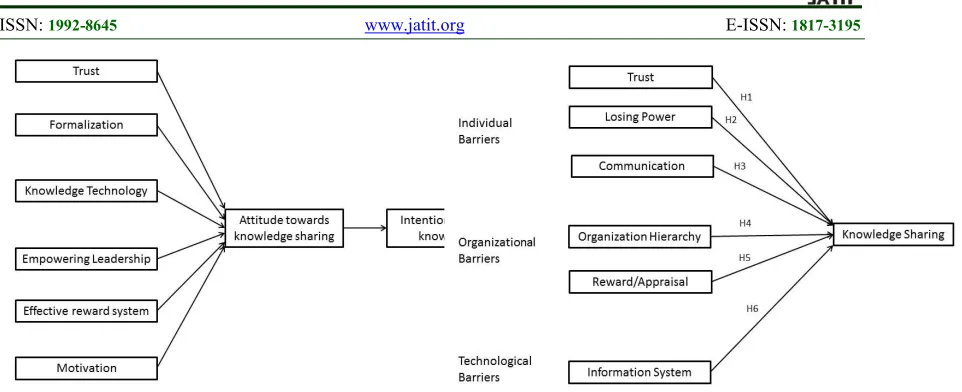
Figure 1: Conceptual Framework for the Effects on K-Sharing Attitude and Intention.
Based on the conceptual framework in figure 1, six independent variables (i.e. trust, formalization, knowledge technology, empowering leadership,
effective reward system, motivation) are
hypothesized to see their effect on k-sharing attitude and intention. The study used survey questionnaires to collect data from ICT executives and managers within the manufacturing sector in Malaysia. Based on their findings, knowledge technology (e.g. the role of computer networks, electronic contacts, and electronic bulletin boards) emerged as the most important factor for k-sharing.
In addition, [17] believed that
organizations should examine their firms and explore avenues on how and where the knowledge technology could be applied in order to obtain the most benefit from the systems. On the other hand, effective reward system also has given positive and significant impact for k-sharing attitude and intention. Thus, the knowledge technology and effective reward system can be considered as some of the factors that contribute to employee’s k-sharing in organizations [18] [19].
[image:3.612.91.572.69.265.2]However, [19] in their paper recently argued that knowledge sharing actually has the barriers and they had grouped those barriers into three different categories (i.e. individual factors, organizational factors, and technology factors) which are illustrated in figure 2.
Figure 2: Proposed Framework for K-Sharing Barriers.
Based on the framework, [19] have listed down type of k-sharing barriers according to its categories. The proposed variables are trust, losing power, communication, organization hierarchy, reward/appraisal, and information system. The data was collected by using a structured closed and
questionnaires with five point scales to
approximately 500 employees from Oil Company in the Middle East countries. From the findings, it showed that all variables have positive effect and influences in k-sharing and reward/appraisal has the least impact. Furthermore, [19] stressed out that organizational managers should consider the effect of these factors if they want to promote employee’s
k-sharing behavior and to maintain their
competitive edge.
Apart from that, many of studies acknowledged the main factors that could encourage employee’s k-sharing behavior i.e. technology [13][18][19][22],rewards [12][27][28],
organizational climate & socio-psychological
factors [25][29], ICT, long term, short term benefits, and costs [19]. Nonetheless, there are certain factors from organizational perspective on which less work have been done. Those factors are job performance, job satisfaction, job characteristics and job involvement [12]. In fact, some other
factors include psychological contract,
organizational commitment, employee turnover, and stressors. Thus, this study will not focus on those factors because they indirectly impact k-sharing behavior. Although there are several factors that may affect k-sharing behavior but technology and reward has been widely discussed among IS scholars lately.
ISSN: 1992-8645 www.jatit.org E-ISSN: 1817-3195 From the literature review mentioned above, the
study has come out with the RMS that incorporates major factors which are technology and rewards for encouraging employee’s k-sharing behavior into an electronic system. According to [23], to transform into a knowledge organization there should be a reward and recognition system to facilitate k-sharing in large organizations. Some of the studies showed that there was a significant relationship between reward system and knowledge sharing in organizations [23][30]. Such reward system should be aligned with sharing system in order to enhance knowledge sharing in organizations.
RMS is a core function of human resource and IS discipline and is a strategic partner with company managements. Moreover, it has an important role on employee’s k-sharing behavior [15]. [31] mentioned that RMS have major impact on organizations capability to catch, retain and motivate high potential employees to share their knowledge and as a result getting the high levels of k-sharing behavior [32]. From the investigation by [33] on employee’s performance and results of his study showed that we cannot verify employee’s k-sharing behavior. Even so, he also claimed that if employee’s k-sharing behavior is observable than organizations can use direct bonuses or relational contracts to motivate them based on their contributions.
[34] posited that RMS should contain the organization’s policies, processes and practices for rewarding its employees in accordance with their contribution, abilities and artifice. It is progressed within the organization’s reward philosophy, strategies and policies, and includes agreements in the form of processes, practices, structures and procedures which will provide appropriate types and levels of pay, benefits and other forms of reward. According to [35], the effectiveness of an
organization’s performance and reward
management has an impact on moral and productivity. Many organizations have found that far from complementing the stated aims of the business, their performance and RMS were actually driving k-sharing behavior. Hence, it is pivotal to ensure that technology and rewards to be integrated together for successfulness of k-sharing process.
Extrinsic and Intrinsic Rewards
Different scholars have defined rewards in different ways. Reward could be referred as external agent administered when the desire task or act is performed [36]. It has controlling and informational properties that be used by knowledge stakeholders.
The practices of rewards have been adopted by various large organization like PETRONAS, ExxonMobil, Shell, and Schlumberger as well as public sector [37]. Basically, rewards could be either extrinsic or intrinsic rewards.
Extrinsic rewards are tangible rewards and these rewards are externally related to the job or task performed by the employee. Extrinsic rewards can be in terms of salary or pay, incentives, bonuses, promotions, job security, and so forth performed [36]. According to Economic Exchange Theory, “individuals will behave by rational self-interest”. Hence, k-sharing will only occurs when rewards exceed its costs [12][22] and it is part of Social Exchange Theory. However, numerous of IS researches have focused on extrinsic reward on k-sharing process [38] [20] [18].
Meanwhile, intrinsic rewards are
intangible rewards or psychological rewards like appreciation, satisfaction, enjoyment, meeting the new challenges, positive, caring attitude from employer, and job rotation after attaining the goal [39]. Many studies from IS field claimed that intrinsic rewards have a positive effect on k-sharing behavior [15][40][41][19]. Therefore, it is essential to identify the characteristics of intrinsic rewards
that could encourage employee’s k-sharing
behavior.
3. METHODOLOGY
As described earlier, one of the most critical challenges for organizations is finding ways on how to encourage employees to contribute their knowledge. Meanwhile, [5][6] reported even with the aid of Knowledge Management System (KMS), people still reluctant to share their valuable knowledge. [16] stressed out that some employees only use other’s knowledge and they do not contribute anything in return. In the case of reward system, some studies have attempted to propose the knowledge sharing-reward model [16][26][27][22]. However, to the best of the author’s knowledge, there is no existing and standardized model for IT reward system that could be used by organizations as a guideline to implement k-sharing rewarding practice through the use of technology [41].
ISSN: 1992-8645 www.jatit.org E-ISSN: 1817-3195 research gaps found in the literature focusing the
relationship of the RMS, intrinsic rewards and k-sharing behavior.
In order to understand employee’s k-sharing behavior through the use of RMS, a theoretical model is proposed which incorporate the RMS and intrinsic rewards. This model is developed based on Theory of Reasoned Action (TRA), which is one of the prominent theory to understand human behavior and psychology. At the
same time, the model also includes the
characteristic of intrinsic rewards which are based on Social Exchange Theory (SET) to understand the
differences in k-sharing behavior among
employees. Therefore, the main objective of this paper is to develop a theoretical model as a guideline for k-sharing rewarding practices for employees in organizations.
Underlying Theories
Theory of Reasoned Action (TRA)
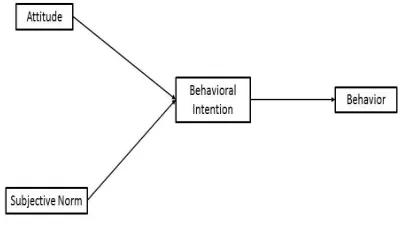
[image:5.612.96.298.526.639.2]One of the most prominent theory in understanding human behavior is Theory of Reasoned Action. TRA is the basis of this study which was proposed by [13]. Since the year 1980, the theory was extensively being used to understand human behavior in various field of studies. Until now, TRA has been cited by thousands of authors in their researchers, thus, it is highly evident this theory is appropriate and suitable to be adopted in this study. [13] proposed that an individual’s behavior is a manifestation of his intention towards performing that particular behavior and the individual’s intention is determined by his attitude and subjective norms as showed in Figure-3
Figure 3: Theory of Reasoned Action Model
According to [42], TRA focuses on intention in order to engage with a certain behavior. This intention, basically, is influenced by two factors:
• Individual’s Attitude, which is based on the
existence of prior tendencies directed at an object or human beings.
• Subjective norm, which is related to the
individual’s perception of the way in which others, who are important to him or her as well, respond to a certain behavior.
In k-sharing, TRA emphasizes the importance of how employees perceive the organization’s social norms. Many studies that have attempted to predict
employee’s k-sharing behavior through the
application of TRA. The TRA model has widely been used to explore the relationship between intention and actual behavior of individual’s k-sharing in order to explore the different type of
impact (i.e. socio-psychology factors,
organizational factors, climate factors, and extrinsic motivators) on k-sharing intention [19], individual’s tacit k-sharing and behavior within workgroup through social capital [43] socio-psychological drivers of individual’s k-sharing behavior [44] effect of social network ties, the learner’s attitude toward k-sharing [45] individual motivation to the knowledge from the perspectives of intrinsic and extrinsic motivation [36].
According to [13], TRA mentions that behavior of an individual is totally lead by intention which is ultimately depends on attitude and subjective norms. However, [12] argued even though an individual possess k-sharing intention, still that individual can lack of k-sharing behavior. The reason behind this is because there are some external factors as well that might affect or prevent an individual’s sharing intention to perform the k-sharing behavior. Therefore, this study attempt to fulfill the gap between the k-sharing intention and k-sharing behavior among employees through the use of technology and reward (i.e. intrinsic rewards).
Social Exchange Theory
ISSN: 1992-8645 www.jatit.org E-ISSN: 1817-3195 contexts can be seen as a process of social exchange
[6] and there are some motivators (reciprocity, etc.) and also inhibitors (waste of time, high-cost, etc.) in k-sharing activities among employees through the using of KMS.
[16] argued that when participants make decisions to share or use the knowledge, they will balance the benefits and costs. According to SET, there are cost and benefits of sharing knowledge. However, this study only focuses on the social benefits that employees could gain when they share their information and knowledge within the organization. Those benefits (also can be termed as
characteristic of intrinsic rewards) include
reciprocity, self-efficacy, recognition, and
enjoyment. The definition for each of four different characteristics as follows
• Reciprocity means rooted in the mutual give and take of knowledge. Employees’ desires to maintain on- going relationships with others, specifically with regard to knowledge provision and reception. Employees who are more willing to share their high-quality ideas, knowledge, and information expect others to respond to their ideas and generate new knowledge [19][48]
• Self-Efficacy can be defined as an individual’s own judgments regarding his or her capabilities of organizing and executing the courses of action required to achieve specific types of performance. Employee’s self-efficacy regarding the use of a technology has been found to have a positive influence on their intentions to repeatedly or continuously perform a specific behavior in various context (in this case, k-sharing) [37][48][49].
• Recognition means employees may feel honored that he/she created a high number of knowledge. Recognition can be in the form of award and status for those who contribute knowledge within the organization [47]
• Enjoyment refers feeling satisfied and happy about helping others. Employees will feel good once they perceive that knowledge that they shared was helpful and benefits others [50]
On top of that, these four characteristics of intrinsic rewards are highly mentioned and related to k-sharing behavior in previous research [45][16]. Therefore, it is important to identify the intrinsic rewards that employees would gain from the use of technology and rewards.
4. DISCUSSIONS
Theoretical Model
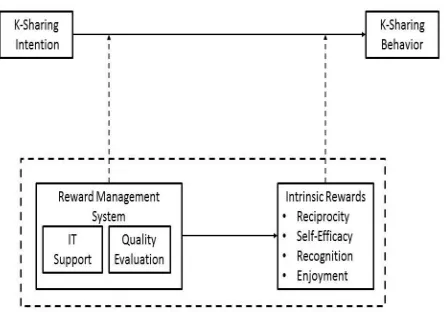
[image:6.612.318.541.217.373.2]Following the literature review and underlying theories mentioned earlier, the study develops a theoretical model for encouraging employee’s k-sharing behavior through the use of RMS. The model encapsulates the key components of k-sharing in organizational context. The theoretical model is presented in figure 4.
Figure 4: Proposed Theoretical Model.
As mentioned in earlier paragraph, k-sharing behavior is an act of an individual to perform [11] certain tasks and individual’s behavior could essentially be recognized and illustrated by TRA. Although many IS researchers have used this theory to predict k-sharing behavior, yet, there are still a research gap between employee’s k-sharing intention and employee’s k-sharing behavior. [12][13][14] pointed out that some of external components or mechanism that might contribute high impact in bridging between individual’s intention and behavior. Therefore, the proposed model tends to address this problem by incorporate the use of RMS and characteristics of intrinsic rewards as the moderating factors that could encourage employee’s k-sharing intention towards k-sharing behavior. The key components of proposed model are described as follow:
• K-Sharing Intention refers to the readiness of a
person to share his/her knowledge in near future. How much a person intends to share his/her knowledge in near future [13][51] [52][53]
• K-Sharing Behavior means actual k-sharing of
a person [47] [50].
• Reward Management System is defined as an
ISSN: 1992-8645 www.jatit.org E-ISSN: 1817-3195 organizations capability to catch, retain and
motivate high potential employees to share their knowledge and as a result getting the high levels of k-sharing behavior [7]. Rewards and recognition system is also found important. It is important to build a reward system to reward employees based on the amount of knowledge and experience they with others [18].
• IT Support - According to [16] research, IT
support is important in ensuring the effective of RMS it also can reduce cost of usage. There are three main mechanisms identified from the studies. They are classifications, search engine, and friendly interface. A well-classified knowledge or by using knowledge taxonomy and search engine will help more people get instant access of knowledge [54]. Furthermore, friendly interface also plays important in attract the knowledge sharer and knowledge user to use the RMS [55].
• Quality Evaluation - The study by [16]
suggested that Expert Review is very essential and the important key to ensuring knowledge contribution quality. She also has pointed out organizations can employ knowledge experts who will judge the quality of knowledge that being share by employee. This review by the experts are not limited to index and package knowledge only, but they can reward contribution based on the knowledge quality. One of the strategy in quality evaluation found is user voting. The user of RMS can vote on knowledge that being upload by the knowledge sharer and which they perceived as useful to them. The system will give the points to knowledge sharer for making positive comment and etc. [12] suggested system can be deployed in any large organization to facilitate k-sharing for the employees.
• Intrinsic Rewards – The term was originated
from Maslow’s higher level of needs and it proposes that people can give reward to themselves in various characteristics and forms. Employee also can literally reward them for certain kinds of behavior. Thus, this study includes 4 different kinds of characteristics of intrinsic rewards (reciprocity; self-efficacy; recognition; enjoyment). Many of previous studies [43][47][50] agreed that employees were mostly feeling motivated to share their knowledge when they feel these kind of intrinsic reward’s characteristics.
5. CONCLUSION
The study attempts to develop reward management system model for encouraging employee’s k-sharing behavior. A theoretical model is proposed based on adoption of Theory of Reasoned Action by [13] and Social Exchange Theory [56]. The components of RMS (i.e. IT Support; Quality Evaluation) and intrinsic rewards (i.e. reciprocity; self-efficacy; recognition; enjoyment) has been identified from the in-depth analysis of literature review. This model could be a guideline for any organization to implement k-sharing rewarding practices as well to sustain employee’s k-sharing
behavior. There are, of course, limitations
that must be noted: the proposed model could be a guideline and applicable to the organization that has k-sharing practices only. The mechanism or the components lies in the model have not be validated in the real-world setting (e.g. an organization). So, there could be other components that should be included in the model which is out of the author’s knowledge and control.
Therefore, the future work for this study will be the data collection process and the validation of the proposed model in organization or real-life work settings. The proposed model will be validated in the form of IT artifact (also can termed as system prototype) to the employees in the k-sharing oriented company in Malaysia.
REFERENCES:
[1] I. Nonaka, “The Knowledge Creating
Company”, Harvard Business Review, Vol. 69,
1991, pp. 96-104.
[2] S. Davis and J. Botkin, “The Conning of
Knowledge-Based Business”, Harvard Business
Review, 1994, pp. 165-170.
[3] R. Grant, “Toward a Knowledge-Based Theory
of the Firm”, Strategic Management Journal,
Vol. 17, No. S2, 1996, pp. 109-122.
[4] P.E. Drucker, “The Information Executives
True Need, Harvard Business Review,
January-February 1995, pp. 54-62.
[5] T. Davenport and L. Prusak, “Working Knowledge: How Organizations Manage What
They Know”, International Journal of
Computer Science Issues (IJCSI), Vol. 9, No. 1, 1998, pp. 1-6.
[6] A, Kankanhalli, B. Tan, and K. Wei,
Contributing Knowledge to Electronic
Knowledge Repositories: An Empirical
Investigation, MIS Quarterly, Vol. 29, No. 1,
2005, pp. 113-143.
[7] H.L. Yang and T.C. Wu, “Knowledge Sharing
ISSN: 1992-8645 www.jatit.org E-ISSN: 1817-3195
and Social Change, Vol. 75, No. 8, 2008, pp.1128-1156.
[8] M.S. Liu and N.C. Liu, “Sources of Knowledge Acquisition and Patterns of Knowledge-Sharing Behaviors-An Empirical Study of Taiwanese
High-Tech Firms”, International Journal of
Information Management, Vol. 28, No. 5, 2008, pp. 423-432.
[9] T.H. Davenport, “Putting The Enterprise into
The Enterprise System”, Harvard Business
Review, Vol. 76, No. 4, 1998, pp. 121-131. [10] M. Gibbert and H. Krause, “Practice Exchange
in A Best Practice Marketplace”, Knowledge
Management Case Book: Siemens Best Practices, 2002, pp. 89-105.
[11] I. Nonaka and N. Konno, “The Concept of" Ba": Building A Foundation for Knowledge
Creation.”, California Management Review,
Vol. 40, No. 3, 1998, pp. 40-54.
[12] M. Rehman, A.K. Mahmood, and R. Salleh, “Review of Factors Affecting Knowledge
Sharing Behavior,” Int. Conf. E-business,
Managements Economics, Vol. 3, 2010, pp. 223–227.
[13] M. Fishbein and I. Ajzen, “Belief, Attitude, Intention, and Behavior”: An Introduction to Theory and Research, 1977.
[14] I. Ajzen and M. Fishbein, “Understanding Attitudes and Predicting Social Behavior, 1980. [15] F. Barachini, “Cultural and Social Issues for
Knowledge Sharing. Journal of Knowledge
Management, Vol. 13, No. 1, 2009, pp. 98-110. [16] X. Zhang, Z. Chen, D. Vogel, M. Yuan, and C.
Guo, “Knowledge‐Sharing Reward Dynamics in
Knowledge Management Systems: Game
Theory–Based Empirical Validation.”, Human
Factors and Ergonomics in Manufacturing & Service Industries, Vol. 20, No. 2, 2010, pp. 103-122.
[17] U. Cyril Eze, G. Guan Gan Goh, C. Yih Goh, and T. Ling Tan, “Perspectives of SMEs on
Knowledge Sharing.”, Vine, Vol. 43, No. 2,
2013, pp. 210-236.
[18] C.W. Chong and J. Besharati, “Challenges of Knowledge Sharing in the Petrochemical
Industry.”, Knowledge Management &
E-Learning: An International Journal (KM&EL), Vol. 6, No.2, 2014, pp. 171-187.
[19] G.W. Bock, R.W. Zmud, Y.G. Kim, and J.N. Lee, “Behavioral Intention Formation in Knowledge Sharing: Examining the Roles of
Extrinsic Motivators, Social-Psychological
Forces, and Organizational Climate.”, MIS
quarterly, 2005, pp. 87-111.
[20] M. Patricia, “Motivation, Incentive and
Organization Culture.”, Journal of Knowledge
Management, Vol. 11, No. 6, 2007, p. 28. [21] K.S. Gupta, “A Comparative Analysis of
Knowledge Sharing Climate.”, Knowledge and
Process Management, Vol. 15, No.3, 2008, pp. 186-195.
[22] S. Šajeva, “Encouraging Knowledge Sharing Among Employees: How Reward Matters.”
Procedia-Social and Behavioral Sciences, Vol. 156, 2014, pp. 130-134.
[23] A. Ismail Al-Alawi, N. Yousif Al-Marzooqi, and Y. Fraidoon Mohammed, “Organizational Culture and Knowledge Sharing: Critical
Success Factors.”, Journal of Knowledge
Management, Vol. 1, No. 2, 2007, pp. 22-42. [24] T.J. Allen, “Managing The Flow of Technology
Transfer and the Dissemination of
Technological Information Within the R&D Organization.”, 1977.
[25] N.J. Foss, D.B. Minbaeva, T. Pedersen, and M. Reinholt, “Encouraging Knowledge Sharing Among Employees: How Job Design Matters.”,
Human Resource Management, Vol. 48, No. 6, 2009, pp. 871-893.
[26] D. Hall-Ellis, S., “Reward Systems Promote High-Performance Work Teams Achieving
Library Mission.”, The Bottom Line, Vol. 27,
No. 2, 2014, pp. 66-69.
[27] C. Rowland and R. Hall, “Management Learning, Performance and Reward: Theory and
Practice Revisited.” Journal of Management
Development, Vol. 33, No. 4, 2014 pp. 342-356. [28] W.S. Chow and L.S. Chan, “Social Network, Social Trust and Shared Goals in Organizational
Knowledge Sharing.”, Information and
Management, Vol. 45, No. 7, 2008, pp. 458– 465.
[29] S.S. Alam, Z. Abdullah, N.A. Ishak, and Z.M. Zain, “Assessing Knowledge Sharing Behavior Among Employees in SMEs: An Empirical
Study.” International Business Research, Vol.
2, No. 2, 2009, pp. 115.
[30] A.E. Barber and R.D. Bretz, “Compensation, Attraction, and Retention. Compensation in Organizations, 2000, pp. 32-60.
ISSN: 1992-8645 www.jatit.org E-ISSN: 1817-3195 [32] H. Yang, “Efficiency Wages and Subjective
Performance Pay.”, Economic Inquiry, Vol. 46,
No. 2, 2008 pp. 179-196.
[33] P. Güngör, “The Relationship Between Reward
Management System and Employee
Performance with The Mediating Role of Motivation: A Quantitative Study on Global
Banks. Procedia-Social and Behavioral
Sciences, Vol. 24, 2011, pp. 1510-1520.
[34] N.K. Yazıcı, “The Effect of Reward System Applications On Employee Performance in
Service Sector.”, Marmara University, Institute
of Social Sciences, Master Thesis, 2008. [35] M.A. Rahim and W.N.W Daud, “A Proposed
Conceptual Framework for Rewards and Motivation among Administrators of Higher
Educational Provider in Malaysia.”,
International Journal of Business and Commerce, Vol. 1, No. 9, 2012, pp. 67.
[36] A. Amin, “Framework of Extrinsic and Intrinsic Motivators of Knowledge Sharing and the Role
of Personality Attributes”, Universiti Teknologi
PETRONAS, Computer & information Sciences Department, Master Thesis, 2011.
[37] C. Chen, S. Chang, and C. Liu, “Understanding
Knowledge-Sharing Motivation, Incentive
Mechanisms, and Satisfaction in Virtual Communities.”, Vol. 40, No. 4, 2012, pp. 639– 648.
[38] N.S. Hafiza, S.S. Shah, H. Jamsheed, and K. Zaman, “Relationship Between Rewards and Employee’s Motivation in the Non-Profit
Organizations of Pakistan.”, Business
Intelligence Journal, Vol. 4, No. 2, 2011, pp. 327-334.
[39] W.T. Wang and Y.P. Hou, “Motivations of employees’ Knowledge Sharing Behaviors: A
Self-Determination Perspective.”, Information
and Organization, Vol. 25, No. 1, 2015, pp. 1-26.
[40] C. O'Dell and C. Hubert, “The New Edge In Knowledge: How Knowledge Management Is
Changing The Way We Do Business.”, John
Wiley & Sons, 2011.
[41] I. Reychav and J. Weisberg, “Bridging
Intention and Behavior of Knowledge
Sharing.”, Journal of Knowledge Management,
Vol. 14, No. 2, 2010, pp. 285-300.
[42] S.C. Yang and C.K. Farn, “Exploring Tacit Knowledge Sharing Intention and Behavior Within Workgroup from The Perspectives of
Social Capital and Behavioral Control.”, PACIS
2007 Proceedings, 2007, pp. 38.
[43] H.M. Samieh and K. Wahba, “Knowledge Sharing Behavior from Game Theory and Socio-Psychology Perspectives. In System
Sciences HICS.”, 40th Annual Hawaii
International Conference, January 2007, pp. 187c-187c.
[44] I.Y. Chen and N.S. Chen, “Examining the factors influencing participants' knowledge
sharing behavior in virtual learning
communities.”, Journal of Educational
Technology & Society, Vol. 12, No. 1, 2009, pp. 134.
[45] N.R. Quigley, P.E. Tesluk, E.A. Locke and K.M. Bartol, “A multilevel investigation of the
motivational mechanisms underlying
knowledge sharing and performance.”,
Organization Science, Vol. 18, No. 1, 2007, pp. 71-88.
[46] I.O. Williamson, M.F. Burnett, and K.M. Bartol, “The interactive effect of collectivism and organizational rewards on affective
organizational commitment.”, Cross Cultural
Management: An International Journal, Vol. 16, No. 1, 2009, pp. 28-43.
[47] S.Y. Hung, H.M. Lai, and W.W. Chang,
“Knowledge-sharing motivations affecting
R&D employees. Acceptance of electronic
knowledge repository.”, Behavior and
Information Technology, Vol. 30, 2011, pp. 213–230.
[48] Y. Li, Y. Duan, Z. Fu, and P. Alford, “An empirical study on behavioral intention to reuse
e-learning systems in rural China.”, British
Journal of Educational Technology, Vol. 43, No. 6, 2012, pp. 933–948.
[49] C. Wang, J. Harris, and P. Patterson, “The roles of habit, self-efficacy, and satisfaction in
driving continued use of self-service
technologies: A longitudinal study.”, Journal of
Service Research, Vol. 16, No. 3, 2013, pp. 400–414.
[50] A. Chennamaneni, J.T.C. Teng, and M.K. Raja, “A unified model of knowledge sharing
behaviors: Theoretical development and
empirical test.”, Behavior & Information
Technology, Vol. 31, No. 11, 2012, pp. 1097– 1115.
[51] M.S. Feldman and J.G. March, “Information in
Organizations as Signal and Symbol”,
Administrative Science Quarterly, Vol. 26, 1981, pp. 171-186.
ISSN: 1992-8645 www.jatit.org E-ISSN: 1817-3195
information sharing”, Information Systems
Research, Vol. 5, No. 4, 1994, pp. 400-421. [53] A.R. Dennis, “Information Exchange and Use in
Group Decision Making: You Can Lead a Group to Information, but You Can’t Make It
Think”, MIS Quarterly, December 1996, pp.
433- 457.
[54] W.T. Wang and Y.J. Lai, “Examining the adoption of KMS in organizations from an integrated perspective of technology, individual,
and organization.”, Computers in Human
Behavior, Vol. 38, 2014, pp. 55–67.
[55] T.L. Griffith and J.E. Sawyer, “Supporting technologies and organizational practices for the transfer of knowledge in virtual environments.”,
Group Decision and Negotiation, Vol. 15, 2006, pp. 407–423.