S T U D Y P R O T O C O L
Open Access
Does continuous endurance exercise in water
elicit a higher release of ANP and BNP and a
higher plasma concentration of FFAs in pre-obese
and obese men than high intensity intermittent
endurance exercise?
–
Study protocol for a
randomized controlled trial
Klaus Karner-Rezek
1, Beat Knechtle
2,3*, Matthias Fenzl
4, Joeri Gredig
4and Thomas Rosemann
2Abstract
Background:Atrial natriuretic peptides (ANP) and Brain natriuretic peptides (BNP) stimulate fat cell plasma membrane receptors. They are potent lipolytic agents on isolated fat cells from subcutaneous adipose tissue. The physiological effects of continuous endurance exercise on ANP release and plasma free fatty acids (FFA) concentrations have been well described. The enhancement of fat metabolism using high intensity intermittent exercise protocols has been assessed in more recent investigations. The combined effects of endurance exercise and water immersion on ANP and FFA plasma concentration and the magnitude of excess post-exercise oxygen consumption (EPOC) might be further enhanced by choosing the most effective exercise protocol. Exercise modalities may play a significant role in the future prevention and treatment of obesity.
Methods/design:The two testing trials will be performed according to a randomized and cross-over design. Twenty healthy sedentary pre-obese and obese class-1 men will be scrutinized with regard to their metabolic responses to continuous exercise in water and to high intensity endurance exercise in water. Both trials will be matched for energy expenditure. After preliminary testing, the tests will be conducted as repeated measurements. The two different exercise protocols will be compared. The aims of the study are to investigate (1) whether continuous endurance exercise or high intensity intermittent endurance exercise in water elicits both a higher release of ANP and BNP and a higher plasma concentration of glycerol and (2) to determine whether continuous endurance exercise in water or a high intensity intermittent endurance exercise in water would lead to a more pronounced short term (two hours) EPOC effect.
Discussion:If our hypothesis would be confirmed, the most effective exercise protocol based on the combined effects of high intensity endurance exercise and water immersion on ANP and BNP release and glycerol plasma concentrations can be identified. Moreover, the magnitude of the EPOC effect can be augmented. Our study would provide a major contribution for creating optimized exercise modalities in the prevention and treatment of obesity.
Trial registration:Current controlled trials, ISRCTN95488515
Keywords:Obesity, ANP, BNP, EPOC, Exercise intensity, Water immersion
* Correspondence:[email protected]
2Institute of General Practice and for Health Services Research, University of Zurich, Zurich, Switzerland
3Gesundheitszentrum St. Gallen, St. Gallen, Switzerland Full list of author information is available at the end of the article
Background
Lipolysis of adipose subcutaneous tissue is controlled by a diversity of inhibiting and stimulatory pathways. Catecholamines, natriuretic peptides (NPs) and insulin are considered as the main endocrine related factors in the regulation of lipolysis [1]. In fat cells lipolysis is acti-vated through stimulation of β-adrenergic receptors (ARs) and inhibited through activation of the α2 -adren-ergic receptor [2]. The simultaneous activation of both receptors modulates the intracellular cyclic adenosine monophoshate (cAMP)-dependent protein kinase, lead-ing to the phosphorylation and activation of perilipin and hormone-sensitive lipase [2,3].
Compared to lean subjects, obese subjects seem to have impaired exercise-induced subcutaneous adipose tissue lipolysis [3,4] - in particular obese subjects with insulin resistance or type-2 diabetes. This is mainly attributed to the activation of antilipolyticα2-adrenergic receptors during exercise. Theseα2-adrenergic receptors largely outnumber β-adrenergic receptors in subcutane-ous adipocytes and α2-adrenergic receptors density correlates with fat cell size [2,3]. In obese subjects complete blockade of fat cell receptors, however, does not suppress the exercise-induced lipolysis entirely [1-4]. Other lipolytic pathways thus stimulate lipolysis and contribute to the regulation of lipid mobilization in humans [5].
A growing body of evidence suggests that NPs play a role in the regulation of lipid metabolism via the control of adipose tissue lipolysis [6]. Atrial natriuretic peptides (ANPs) stimulate fat-cell plasma membrane receptors bearing intrinsic guanylylcyclase activity and increase intracellular levels of cyclic adenosine monophosphate (cGMP), which activates a cGMP-dependent protein kinase (PKG). ANPs are potent lipolytic agents on iso-lated fat cells from subcutaneous adipose tissue [3]. Thus, the ANP-dependent lipolytic pathway appears to be involved in the enhancement of lipolysis in subcuta-neous adipose tissue and is responsible for the residual mobilization under adrenergic receptor blockade [3]. The fall in plasma insulin during exercise could also contribute to the enhancement of lipolysis due to the re-duction of its antilipolytic effect.
The ability of mammals to resist weight gain and body fat accumulation is very closely tied, both genetically and pharmacologically, to the capacity to expand the number and activity of brown adipocytes within white fat depots, and, in most cases, this is also correlated with improved blood glucose levels, insulin sensitivity, and body composition [7]. The conversion of white to brown-like adipocytes operates under physiological con-ditions in humans; NPs could be included in the list of factors contributing to the physiological control of en-ergy dissipation. [8].
In addition, the very recent demonstration that NPs increase oxidative capacity and energy uncoupling in human skeletal muscle opens interesting perspectives. [8]. Activation of NP signaling in human skeletal muscle enhances mitochondrial oxidative metabolism and fat oxidation. NP could contribute to exercise training-induced improvement in skeletal muscle fat-oxidative capacity in humans [9]. Ideally, NP signaling in skeletal muscle, enhanced by exercise, may trigger favorable metabolic adaptations to increase fat oxidation, alleviate lipotoxicity, and enhance insulin sensitivity [8]. Chronic upregulation of adipose tissue NP receptor type C (NPR-C) expression may increase NP clearance, reduce circu-lating NP levels, and contribute to obesity-related cardiovascular and metabolic disorders. The potential relevance of insulin-induced upregulation of NPR-C on circulating NP levels in humans is still unclear and needs to be investigated in further long-term observations [8].
Endurance training improves ANP as well as beta-adrenergic-receptor-mediated lipid mobilization in the subcutaneous adipose tissue of obese subjects [1-4]. The physiological effects of continuous endurance exercise on ANP release and plasma free fatty acid (FFA) concen-trations have been well described [1,3]. The further enhancement of fat metabolism using high-intensity intermittent exercise protocols has been the focus of more recent investigations [10-13]. High intensity inter-mittent exercise provides more potent metabolic stimuli, leading to increased lactate and catecholamine levels. The accompanying rise in plasma glycerol concentra-tions suggests that fat stores may supply a significant amount of energy during this form of exercise [13]. In-vestigations have shown that circulating ANP concentra-tions increased 2- to 3-fold during short exercise bouts of increasing intensities [10]. ANP may act as a relevant physiological agent controlling exercise-induced lipolysis in endurance exercise consisting of repeated bouts [3,14]. The magnitude of the excess post-exercise oxygen consumption (EPOC) effect is also dependent on the type of the preceding exercise protocol. A curvilinear re-lationship between the magnitude and the intensity of the exercise bout has been reported [15].
The first aim of this study is to investigate whether continuous endurance exercise or high-intensity inter-mittent endurance exercise in water elicits both a higher release of ANP and a higher plasma concentration of FFAs. The second aim is to determine if continuous en-durance exercise in water or high-intensity intermittent endurance exercise in water leads to a more pronounced short term (that is, 2 hours) EPOC effect.
Methods
Trial design
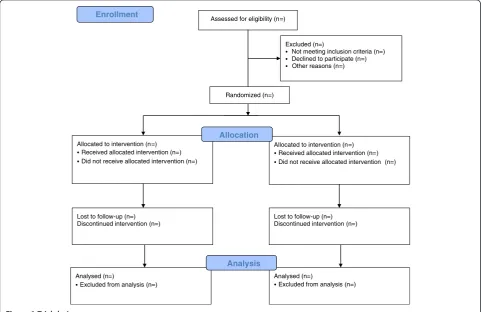
The two testing trials will be performed according to a randomized crossover design. Subjects will be allocated to one of the two intervention groups according to a prepared randomization list and will at this time be un-aware of group to which they are allocated. Implementa-tion of the random allocaImplementa-tion sequence will be done via central telephone to provide allocation concealment. The flow chart of the study is described in Figure 1.
Participants
Eligible participants will be recruited via advertisements on the websites and magazines such as FIT FOR LIFE
and Schweizerische Adipositas-Stiftung. A sample of 20 healthy sedentary pre-obese and obese class-1 men with a body mass index (BMI) ranging from 30.0 kg/m2 to
34.9 kg/m2according to the World Health Organization (WHO) 2004, will be scrutinized with regard to their metabolic responses to continuous exercise in water and to high-intensity endurance exercise in water. Partici-pants will be informed about potential risks and the trial process both verbally and in written form. Ethical ap-proval and consent was obtained by the Ethics Commit-tee in St. Gallen, Switzerland.
Inclusion criteria for participants
The inclusion criteria are: male gender (differences in es-trogen concentrations between men and woman result in greater reliance on fat oxidation during exercise in women; between the different phases of the female men-strual cycle substrate utilization also varies); BMI be-tween >30.0 kg/m2and <34.9 kg/m2; age >18 years and <50 years; verbal and written information of the partici-pants, signed declaration of consent; and no cardiovas-cular risk (completion of the Physical Activity Readiness Questionnaire (PAR-Q)).
Exclusion criteria for participants
The exclusion criteria are: female gender; cardiac insuffi-ciency >New York Heart Association (NYHA) stage 1; continuous arrhythmia; respiratory obstruction; high blood pressure ( >140/90 mmHg); BMI <30.0 kg/m2and
Assessed for eligibility (n=)
Excluded (n=)
Not meeting inclusion criteria (n=) Declined to participate (n=) Other reasons (n=)
Analysed (n=)
Excluded from analysis (n=) Lost to follow-up (n=) Discontinued intervention (n=) Allocated to intervention (n=)
Received allocated intervention (n=) Did not receive allocated intervention (n=)
Lost to follow-up (n=) Discontinued intervention (n=) Allocated to intervention (n=)
Received allocated intervention (n=) Did not receive allocated intervention (n=)
Analysed (n=)
Excluded from analysis (n=)
Allocation
Analysis
Randomized (n=)
[image:3.595.57.540.410.722.2]Enrollment
>34.9 kg/m2; age <18 years and >50 years; any medica-tion; or signed declaration of consent missing.
Intervention
The aims of the study are to investigate (1) whether con-tinuous endurance exercise or high-intensity intermit-tent endurance exercise in water elicits both a higher release of ANP and BNP and a higher plasma concentra-tion of glycerol, and (2) to determine if continuous en-durance exercise in water or high-intensity intermittent endurance exercise in water leads to a more pronounced short term (that is, 2 hours) EPOC effect.
Overview
Twenty healthy sedentary pre-obese and obese class-1 men with BMI ranging from >30 kg/m2to <34.9 kg/m2 according to WHO 2004, will be scrutinized with regard to their metabolic responses to continuous exercise in water and to high-intensity endurance exercise in water. Both trials will be matched for energy expenditure. After preliminary testing, the tests will be conducted as re-peated measurements, with 72 hours of separation time in between. The two different exercise protocols will be compared.
Environmental conditions and preparation of the subjects
All trials will be conducted under standardized environ-mental conditions in regard to the temperature of air and water (that is, the thermoneutral zone on land be-tween 23°C and 26°C at a relative humidity of 60 to 70%, equivalent to a water temperature of 28°C). Participants will be tested at 8 am after an overnight fast following a standardized two-day diet and will be asked to refrain from any physical exercise on the day before testing. Prescription drugs will be recorded.
Preliminary testing
Maximum voluntary ventilation (MVV) and forced expira-tory volume (FEV1) will be assessed initially. The ventila-tory threshold 2 (VT2) as defined by Wassermannet al. [17] will be determined in a separate testing session at least one week before the experiment. Participants will perform a ramp test on a cycle ergometer until exhaustion. An electrocardiogram (ECG) will be performed and blood pressure will be monitored simultaneously as an ergos-pirometry. The identification of the VT2 is required in order to assess the defined workloads for the trials. Lean body mass will be determined using dual-energy x-ray ab-sorptiometry (DXA).
Outcomes Primary outcomes
In addition to ANP and BNP, the primary outcomes are the respiratory exchange rate (RER) and the rating of
perceived exertion (RPE). The RER specifies the ratio of carbon dioxide (CO2) eliminated to oxygen (O2) con-sumed. The RER depends on the metabolic substrate used for generating energy. Using stoichiometric equa-tions, the RER can be applied to determine the amounts of carbohydrates and fatty acids metabolized. Energy production can also be reliably estimated in the same manner. The RPE method requires that a person sub-jectively rates how difficult the work is, using a numer-ical scale that is related to exercise intensity.
Secondary outcomes
Secondary outcomes are lactate, catecholamine (that is, adrenaline, noradrenaline, and dopamine), growth hor-mone, insulin and glycerol, all of which indicate changes in the metabolic process.
Assessment of effectiveness and proof of evidence Measurement of effectiveness
Effectiveness will be measured by the following methods:
Gas-exchange open system,
breath-by-breath-method (Viasys Jäger Master Screen CPX, PanGas AG, Dagmarsellen, Switzerland)
ECG-monitoring by means of suction electrodes
(Viasys Jäger Master Screen CPX, PanGas AG, Dagmarsellen, Switzerland)
Continuous heart-rate monitoring (Polar-S-810
heart rate monitor)
measuring of the blood pressure according to
Riva-Rocci via inflatable cuff on the upper arm Rating of perceived exertion (Borg-scale)
Sampling of blood (ANP, BNP, glycerol, FFAs,
lactate, catecholamine (adrenaline, noradrenaline, dopamine), growth hormone, insulin, and glucose).
Proof of evidence
Proof of evidence will be provided by the following parameters:
RER, VO2and CO2
ANP concentration (radioimmunoassy)
Glycerol concentration (radiometric determination)
Free fatty acids (FFAs) (enzymatic determination)
Lactate (photometric determination)
Assessment of safety
Safety parameters: measuring methods and times
examination, blood pressure values >250/130 mm Hg) and a measured heart rate (HR) above the age-based maximum (HRmax = 220–age in years).
The oxygen pulse as a correlate of the stroke volume is a relevant clinical safety parameter. When workload increases, a reduced stroke volume leads to stagnation of the oxygen pulse followed by a slow drop of the values measured. Therefore, the oxygen pulse is fundamental when estimating the myocardial function. The oxygen absorption will also be evaluated in regard to changes in the workload. Cardiovascular disease leads to low mea-sured values, and performance limitations become ob-servable. The respiratory reserve allows for estimation of pulmonary ventilation. Healthy subjects are not limited in their performance by pulmonary factors. The respira-tory reserve is still sufficient (approximately 50% MVV when exercising at their maximum. Pulmonary diseases lead to approximation of the respiratory reserve to the MVV, indicating a pulmonary limit. Respiratory gases, ECG and blood pressure will be assessed, allowing for differentiated identification of cardiac reactions. In the event of a severe and life-threatening incident, the ethics committee and the sponsor will be informed.
Blood samples will be taken by laboratory assistants who are familiar with the operating procedures and safety standards. During the trial blood samples will be taken every 15 minutes (continuous endurance exercise) or after each exercise step (high-intensity intermittent endurance exercise). Moreover, one blood sample will be taken pre- and post-exercise. Viollier laboratories (in-house) will process and analyze the blood samples.
Data collection
Data collection is described in detail in the Methods section.
Statistical methods
Figures will be presented as means ± standard error of the mean (SEM). Differences in outcomes among the groups will be tested by analysis of covariance (ANCOVA). For statistical significance (P<0.05), multiple comparisons will be adjusted for using the Tukey test.
Our assumptions for the power calculation are mainly based on the results of Fenzl et al. [18] who recently reported an increase of ANP from 29.8 ± 3.4 pmol/l to 82.5 ± 8.3 pmol/l. Assuming an increase from 35 to 55 with a SD of 10, we would need eight patients in each group to achieve 90% power at the 1% significance level (two-sided test). With an assumed drop-out rate of two in each group, we need 20 persons in total.
Hormone values that are expected to rise during the recovery period of the exercise include catecholamines, ANP, BNP, glycerol and free fatty acids. Differences in these hormones between high-intensity intermittent
exercise protocols compared to less intense protocols have not yet been analyzed; studies investigating inter-mittent bouts of exercise results were in contrast to moderate continuous exercise of the same duration. Different scores relative to the contribution of fat oxidation for repeated trials (77.6% ± 2.7%) versus single trials (62.1% ± 5.7%) were computed in the study of Goto et al. [11]. A test would require less than 10 sub-jects in each group, assuming a similar response to water immersion. Matsuo et al. [19] demonstrate that EPOC was greater when high-intensity interval training was conducted compared to aerobic types of exercise. For the power calculation, eight subjects in each group should be included into the study.
Trial-specific preventive measures and duties
Participants will be informed about any risks and the trial process both verbally and in written form.
Duties on the part of the investigator
It is hereby confirmed that ethical and scientific criteria as well as quality standards in terms of planning, trial procedure, monitoring, analysis and documentation of the trial will be fully observed and carried out in accord-ance with the protocol. All rights of the participants will be respected and the results of the trial will be handled correctly. The investigator and applicant are responsible for the wellbeing and health protection of the partici-pants. The investigator also commits to carry out the trial according to the trial protocol and to report and document deviations to the sponsor and the ethics committee.
Statement regarding damage coverage
The sponsor compensates the participant for any dam-age suffered during the clinical trial. In order to cover possible costs, insurance will be procured. The sponsor of the trial approves full compensation to all participants of the trial also beyond the coverage of the liability insurance.
Ethical principles
Evaluation of the risk-benefit ratio
water are routine, and so is the measurement of the ar-terial oxygen saturation. The examination rooms in the Medical Center permit standardized relaxation and de-fined exercise tests on the Reha Aquabike. All the planned interventions are justifiable and reasonable from a medical point of view. The measurements are non-invasive and painless. In water every participant will be protected from possible drowning by an air-filled ruff. So far, no accident has been reported worldwide.
Patient informed consent
Previous to study participation patients receive written and spoken information about the content and extent of the planned study, for instance, about potential benefits for their health and potential risks. In the case of accept-ance, they sign the informed consent form.
Description of risks
Exercise testing is not without risk. Under controlled conditions an increase of heart rate and oxygen uptake is concomitant with the increased workload. In the event of undetected myocardial disease the heart may not be sufficiently supplied with blood. Symptoms such as sud-den pallor, sweating, chest discomfort, or nausea have to be reported immediately.
The risk of undetected coronary heart disease and sud-den death will be reduced to a large extent by the pre-liminary medical check-up. The risk increases with age, therefore, the age limit is 50 years. A defibrillator will be available. Moreover, the standard emergency equipment required for ergometry laboratories will be available. Trials will only be conducted with healthy subjects with-out detected risk factors. A doctor on-call will be avail-able in the medical center at all times, who will be informed about the upcoming exercise test. Taking blood samples is part of the discomfort and risk involved in ergospirometry. In addition to a little twitch and sub-sequent small hematomas, circulatory instability may occur. Blood samples will be taken while the subject is in a semi-reclined position, which stabilizes the circula-tion. Infection, thrombosis or lesions of tissue or nerves are rare side effects and can be almost excluded when blood samples are taken by well-trained staff. An inflat-able ruff prevents drowning if the subject becomes unconscious during the trial. The subjects will be con-tinuously monitored.
Benefit for the subject
Subjects will not be given compensation in money. The individual results of the ergospirometry, ECG, and pulmonary function test will be discussed in detail with the subjects; extensive consultations about adequate health-oriented training recommendations will be given. Subjects will receive meaningful additional information
about their current level of performance by parameters assessed by invasive methods (lactate, et cetera). Thus subjects will receive reliable information concerning their current state of health. Moreover, recommenda-tions on the individual effects of water immersion and exercise modalities will allow participants a more targeted use of water as a medium. Until now, recom-mendations have been given only on an empirical basis, following across-the-board dosage criteria.
Vote of the ethics committee
The study protocol was approved by the ethics board of the Kanton St. Gallen on March 14, 2011 (EKSG 11/026/2B).
Quality control and quality assurance: description of measures
Data security/disclosure of original documents
Gathered data will be stored in anonymized form only and will be used exclusively for this trial. No conclusions can be drawn about the person affected. Each subject will be assigned an identification code, which will be kept on a separate datasheet. This code will be used dur-ing the entire trial. Personal data allowdur-ing identification of the subjects will be deleted. In addition to all mem-bers of the research staff who are bound to their profes-sional obligation to discretion, all members of the ethics committee may have access to the data at any time. All documents and data storage media containing encrypted personal data will be stowed in locked storage. The laptop computer used in the trial will be protected by a password in order to prevent access from unauthorized persons. A personal firewall will be installed by the in-ternal information technology (IT) provider. Data will be stored in databases, mainly as Excel files. The trial can be reconstructed using the encrypted data. Original files, such as protocols, will be stored with care. All relevant data will be transferred to the digital data-entry form. Thus, all results of the trial can be retraced for a five-year period on the internal server, which is protected by a password. All data on the laptop computer will be erased by the internal IT provider.
Trials status
The recruitment of subjects has not yet started.
Abbreviations
ANP:Atrial natriuretic peptide; AR: Adrenergic receptor; BMI: Body mass index; BNP: Brain natriuretic peptide; cAMP: Cyclic adenosine
Competing interests
The authors declare that they have no competing interests.
Authors’contributions
KK, BK, MF and JG designed the basic idea, KK, BK and MF drafted the manuscript, JG and TR planned the data analysis. All authors read and approved the final manuscript.
Author details
1Private University of the Principality of Liechtenstein, Triesen, Principality of Liechtenstein.2Institute of General Practice and for Health Services Research, University of Zurich, Zurich, Switzerland.3Gesundheitszentrum St. Gallen, St. Gallen, Switzerland.4Swiss Olympic Medical Center, Medizinisches Zentrum, Bad Ragaz, Switzerland.
Received: 16 March 2013 Accepted: 1 October 2013 Published: 10 October 2013
References
1. Koppa K, Larrouy D, Marques MA, Berlan M, Bajzova M, Polak J, Van de Voorde J, Bülow J, Lafontan M, Crampes F, Langin D, Stich V, Glisezinski I:
Lipid mobilization in subcutaneous adipose tissue during exercise in lean and obese humans. Roles of insulin and natriuretic peptides.
Am J Physiol Endocrinol Metab2010,299:258–265.
2. Moro C, Pillard F, de Glisezinski I, Klimcakova E, Crampes F, Thalamas C, Harant I, Marques MA, Lafontan M, Berlan M:Exercise-induced lipid mobilization in subcutaneous adipose tissue is mainly related to natriuretic peptides in overweight men.Am J Physiol Endocrinol Metab
2008,295:505–513.
3. Moro C, Pillard F, De Glisezinski I, Harant I, Rivière D, Stich V, Lafontan M, Crampes F, Berlan M:Training enhances ANP lipid-mobilizing action in adipose tissue of overweight men.Med Sci Sports Exerc2005,
37:1126–1132.
4. Stich V, De Glisezinski I, Crampes F, Hejnove J, Cottet-Emard JM, Galitzky J, Lafontan M, Riviere D, Berlan M:Activation ofα2-adrenergic receptors impairs exercise-induced lipolysis in SCAT of obese subjects.Am J Physiol Regul Integr Comp Physiol2000,279:499–504.
5. Sengenes C, Moro C, Galitzky J, Berlan M, Lafontan M:Natriuretic peptides: a new lipolytic pathway in human fat cells.Med Sci (Paris)2005,21:29–33. 6. Moro C, Smith SR:Natriuretic peptides: new players in energy
homeostasis.Diabetes2009,58:2726–272.
7. Bordicchia M, Liu D, Amri EZ, Ailhaud G, Dessi-Fulgheri P, Zhang C, Takahashi N, Sarzani R, Collins S:Cardiac natriuretic peptides act via p38 MAPK to induce the brown fat thermogenic program in mouse and human adipocytes.J Clin Invest2012,122:1022–1036.
8. Moro C, Lafontan M:Natriuretic peptides and cGMP signaling control of energy homeostasis.Am J Physiol Heart Circ Physiol2013,304:H358–H368. 9. Engeli S, Birkenfeld AL, Badin PM, Bourlier V, Louche K, Viguerie N, Viguerie N, Thalamas C, Montastier E, Larrouy D, Harant I, de Glisezinski I, Lieske S, Reinke J, Beckmann B, Langin D, Jordan J, Moro C:Natriuretic peptides enhance the oxidative capacity of human skeletal muscle.J Clin Invest
2012,122:4675–4679.
10. Goto K, Ishii N, Mizuno A, Takamatsu K:Enhancement of fat metabolism by repeated bouts of moderate endurance exercise.J Appl Physiol2007,
102:2158–2164.
11. Goto K, Tanaka K, Ishii N, Uchida S, Takamatsu K:A single versus multiple bouts of moderate-intensity exercise for fat metabolism.Clin Physiol Funct Imaging2011,31:215–220.
12. Boutcher SH:High-intensity intermittent exercise and fat loss.J Obes
2011. doi: 10.1155/2011/8683052011:868305, http://www.ncbi.nlm.nih.gov/ pubmed/21113312.
13. Trapp EG, Chisholm DJ, Boutcher SH:Metabolic response of trained and untrained women during high-intensity intermittent cycle exercise.
Am J Physiol Regul Integr Comp Physiol2007,293:2370–2375.
14. Moro C, Francois Crampes F, Coralie Sengenes C, De Glisezinski I, Galitzky J, Thalamas C, Lafontan M, Berlan M:Atrial natriuretic peptide contributes to the physiological control of lipid mobilization in humans.FASEB J2004,
18:908–910.
15. Børsheim E, Bahr R:Effect of exercise intensity, duration and mode on post-exercise oxygen consumption.Sports Med2003,33:1037–1060.
16. Wiesner S, Birkenfeld AL, Engeli S, Haufe S, Brechtel L, Wein J, Hermsdorf M, Karnahl B, Berlan M, Lafontan M, Sweep FC, Luft FC, Jordan JM:
Neurohumoral and metabolic response to exercise in water.
Horm Metab Res2010,42:334–339.
17. Wasserman K, Hansen J, Sue D, Casaburi R, Whipp B:Principles of exercise testing and interpretation.Philadelphia: Williams and Wilkings; 2005. 18. Fenzl M, Schnizer W, Aebli N, Schlegel C, Villiger B, Disch A, Gredig J, Zaugg
T, Krebs J:Release of ANP and fat oxidation in overweight persons during aerobic exercise in water.Int J Sports Med2013,34:795–799. 19. Matsuo T, Ohkawara K, Seino S, Shimojo N, Yamada S, Ohshima H, Tanaka K,
Mukai C:Cardiorespiratory fitness level correlates inversely with excess post-exercise oxygen consumption after aerobic-type interval training.
BMC Res Notes2012,5:646. doi:10.1186/1745-6215-14-328
Cite this article as:Karner-Rezeket al.:Does continuous endurance exercise in water elicit a higher release of ANP and BNP and a higher plasma concentration of FFAs in pre-obese and obese men than high intensity intermittent endurance exercise?–Study protocol for a randomized controlled trial.Trials201314:328.
Submit your next manuscript to BioMed Central and take full advantage of:
• Convenient online submission
• Thorough peer review
• No space constraints or color figure charges
• Immediate publication on acceptance
• Inclusion in PubMed, CAS, Scopus and Google Scholar
• Research which is freely available for redistribution Submit your manuscript at