ISSN 2250-3153
www.ijsrp.org
“Smart Learner” The Smart learning application.
Vithanage N.S 1, Ahamed M.I.I 2, K.D.K.C Jayathilake 3, K.H.H Thenuka 4, D.Dhammearatchi.5
Faculty of Information Technology, Sri Lanka Institute of Information Technology, Colombo, Sri Lanka
ABSTRACT-Learning is an act of acquiring new or modifying and reinforcing, values, skills, behaviors, existing knowledge or preferences and may involve synthesizing different types of information. Home is the place where early learning of the child starts, parents teach good habits, good manners, good behaviors and respect others. When starting the child to give the traditional education system the child get bored and he/she does not concentrate on the learning. There are certain applications and sites available in the internet but they cannot help the children of 3-5 years and also they cannot identify weak areas of the child, the children of this age have no experience in using a keyboard or a mouse. The research group has come with an idea to teach the children in a fun way so that the children can learn in high concentration. Using motion gestures in the leap motion controller the user/child will be able to interact with the system. The desktop application will be installed on the computer, child will be given series of exercise regarding numbers, letters, words, shapes and colors. Each category will have higher levels, the weak areas of the child can be identified by the parent or teacher and this helps the child to improve in weaker areas. Through this research we provide the children to learn with fun and high concentration towards the game, the evaluation helps the parent or the teacher to identify the weaker areas of the children.
INDEX TERMS- Leap motion; Motion gestures; Desktop application.
I. INTRODUCTION
P
eople learn and do new things and understand what is around them. This is crucial when it comes to the children between the ages 3-5 years, this is the time where the child’s brain starts developing and is considered the key development stage of the child. Children watch and learn new things every day that happens around them. This period is considered the best time to start teaching new things to the child. There are so many e-learning applications available in the internet for the children to learn, most of them require internet connection to learn and they run on different platforms and they lack the voice guidance and to assist the child to learn. There are many reasons why this system developed should exist. Children between this ages are not familiar with the keyboard, mouse or its functions. Children lose their concentration very easily to keep them concentrating the learning system is developed.The Implemented system is a desktop standalone application. The Leap motion controller is used to help the children to learn, the reason to use Leap motion is the inability of children to use the keyboard or mouse. The Leap motion device is used to track the fingers and their motion and help the children to learn. System is built using attractive images, colors and sounds.
The system consists of four parts for the beneficial of the children to learn. The first part is to enable the child to learn the English alphabet and the Sinhala alphabet, further going on the application will allow the child to learn words with voice guidance with the use of objects that is available in the environment. The second section enable the child to learn numbers, in the beginning the child be given voice instructions to identify numbers from 1-10 with their fingers, this level will allow the child to learn by interacting with the environment, further going through this level, the child will be given an exercise to distinguish between alphabets and numbers. The third section will allow the child to learn the colors, for this voice assistant is used and different object in the environment is used, further going through this level color mixing will be taught to the children. Final level will enable the child to learn the basic shapes, further going through this level the system will teach shapes with the objects available in the environment. The main aim of this research is to enable the child to learn at an early stage of their life, increase the concentration while learning, improve learning and logical skills, and to improve the knowledge in alphabets, numbers, colors and shapes.
II. BACKROUND AND RELATED WORKS
ISSN 2250-3153
www.ijsrp.org Adventure. The series is distributed in the United Kingdom. It
originally consisted of a series of educational PC games, but has expanded to include iPad apps, videos, workbooks and other media - including, perhaps most significantly, an Educational multiplayer online game available at JumpStart.com, first launched March 10, 2009. This website has lessons for students for ages between 3-10 years, the games based on a particular subject, such as reading and math. Zoodles [2] provides a good educational experience for the children, they consists of recordable storybooks. Provides access to smartphones, tablets and computers worldwide.
2
Turtle Diary [3] Introduce kids to new, exciting ways of learning with the help of our games, videos, puzzles, coloring sheets ,experiments and more. Turtle Diary activities pair with the appropriate grade level to enhance retention of material and increase success in the classroom. Consists of games related to shapes, money, typing and fractions games.
Starfall [4] is a children's website that teaches Basic English reading and writing skills. The main demographic is preschoolers, and kindergarteners. It has four reading levels to teach children from ages 2 to 15 how to read. The levels from learning from beginner to advanced are: learning ABCs for (2-6) years, early beginning reading for (2-6) years, intermediate/middle beginning reading for (6-10) years, and advanced reading. The first level teaches preschoolers about the ABCs. At this level of learning, the website provides learners/users with all the letters of the English alphabet in the upper case form and the lower case form. When the learners/users see words appearing on the screen, they will hear the sounds of all the letters that will compose that word. In the beginning level, learners create words through the addition of different word family. The letters in every word is highlighted while the system reads to the learner. In the intermediate beginning reading level, readers of ages between 7-15 years can bring the books they will read to life before they read them. Teach Your Monster [5] is an award-winning series of games that’s helps children learn to read. Covers letters and sounds to reading full sentences. Leap Motion [6] controller is a small USB peripheral device which is designed to be placed on a physical desktop. Using two monochromatic Infrared cameras and three infrared LEDs, the device will observes a roughly hemispherical area, to a distance of about 1 meter above it. The LEDs in the Leap device generate a 3D pattern of dots of IR light and the cameras generate closely to 300 frames per second of reflected data, which is sent through a USB cable to the host computer, where it is analyzed and read by the Leap Motion controller software using complex mathematics in a way that has not been disclosed by the company to the public, in some way synthesizing Three Dimensional position data by comparing the two Dimensional frames generated by the two cameras.
ISSN 2250-3153
www.ijsrp.org ZooQuest: It is a mobile game-based learning application for the
fifth graders [8] .Jacobijn Sandberg, Marinus Maris, Kaspar de Geus, Gerard Veenhof were the authors of this project. This study examined ZooQuest, a mobile game that supported fifth graders in the learning of English as a second language. ZooQuest embedded the Mobile English Learning (MEL) application and was Compared to MEL as a standalone application.
Two groups were compared in a quasi experimental pre- and posttest design. The first group had English lessons at School, used the MEL application at the zoo and used the MEL Application at home for 2 weeks. The second group solely used the ZooQuest application at home for two weeks. Fifth grade students who used the ZooQuest application spent more time on learning at home than fifth grade students that used the MEL application and obtained significantly better learning results on the posttest than they did on the pretest. The ZooQuestapplication has demonstrated its benefits in the practicing of language learning outside school. Map-Puzzle Application for the Evaluation of Children’s Spatial Knowledge [9] by Pyoung-Woo Yang, Hyun Gu Cho, JeongHye Han and Kwang Woo. In this research they have proposed a model for geographic jigsaw-puzzle for identifying and supporting spatial knowledge in young children. They implemented this application on the android platform for convenient for an easy usage in the educational Purposes. This implemented geographic puzzle application which is operatable in android smartphones and tabs is usable for educating and evaluating children’s location and spatial knowledge. Mobile Teaching and Learning in the Classroom and Online [10] by Michael M. Grant, Michael K. Barbour. They have describe a project for students registered in an online Advanced Placement course that was delivered through a mobile learning content management system. Lastly, they had discussed some of the lessons learned from these pilot projects and some of the promise and challenges of mobile teaching and learning.
A Measurement Model Based on Usability Metrics for Mobile Learning User InterfaceFor Children [11] by Rabail Tahir and FahimArif. This paper focuses on providing a measurement model for evaluating the interface of mobile educational applications designed for children .The paper has attempted to review the existing interface design guidelines and consequently in developing a measurement model. The developed model serves as a basis for comprehensive usability evaluation consisting of characteristics, guidelines, usability, goals (interface design criteria), questions, usability metrics (both objective and subjective) and two evaluation instruments (the
task list and the satisfaction questionnaire).To ensure that the reliability and effectiveness of the model, it was validated by applying the proposed usability metrics and the evaluation tools in a usability study conducted on two android based mobile educational applications for children. Results gathered from usability testing proved that the proposed Model is applicable for evaluation of mobile educational applications for children. OntoCog: A Knowledge Based Approach for Preschool Cognitive Skills Learning Application [12] by Muhammad AzeemAbbasa, Wan Fatimah Wan Ahmadb, KhairulShafeeKalid. This research tells that there are a considerable numbers of mobile applications are available for the learning child that claim educational goals but they only dispense information without considering teaching theoriesandmodels.In clear those applications that were primarily developed to achieve the educational goals are only available to a Limited audience like the researchers. Also the nature/type of existing mobile apps is static content delivery in which earlier created contents are stored for repetitive use. This static nature failed individualized and cognitive skills learning.
The main objectives of the present workings is to overcome this static natured of content delivery by proposing a knowledge model named OntoCog with mobile application for dynamic content creation that follows constructive teaching theories. A mobile application named Cognitive Skills (CogSkills) was developed to evaluate proposed model. As a result the dynamic nature of the CogSkills provides a clear advantage over existing static nature mobile applications. The application for learning launguages on the base of mobile platforms [13]. By Hadi SALEH, Osama TAHAAN, The article deals with the development of mobile application for children teaching on mobile platform base. The application represents the learning game where playing process should be as much fascinating for child as possible. The study should not be too obtrusive and less evident for the child. While the results of studying should be noticeable.
III. OUR APPROACH
ISSN 2250-3153
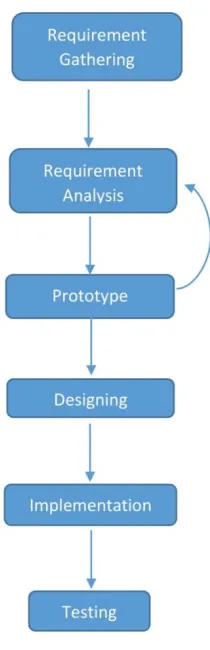
[image:4.612.85.190.69.394.2]www.ijsrp.org Figure.1 – Methodology.
The High Level diagram for the Smart learner application is shown below in Figure 2. The user of the application will have to plug in the Leap Motion Controller [6] to the pc and start using
the application. The application has several levels which include numbers, shapes, colors and alphabets. The user should use his/her hand to navigate through the application. The application will start with teaching the above mentioned level using voice and after one level is completed an exercise activity will be given to the child to complete on its own. If there is an error while doing the exercise the application will notify an error message to its users.
Figure. 2 – High Level Diagram.
[image:4.612.314.582.500.687.2]ISSN 2250-3153
[image:5.612.48.282.73.233.2] [image:5.612.54.272.279.427.2]www.ijsrp.org Figure. 3 – Main Interface.
Figure. 4 – Teach Alphabet Interface.
Figure.5 Teach Number Interface.
Figure.6- Teach Color Interface
IV.CONCLUSION
In this research, the research team has discussed several technologies such as Unity 3D, Leap motion, iTween and Hand tracking. Other researches can gain a knowledge on how to use those technologies for Windows platform. More importantly, the software application that the research team will be building, will be important to the children between the age 3-5, their parents and the teachers. Since the research team focuses on digitalization the learning process of children.it will be easier for them to learn in an effective and modern way while familiarizing with the technology. Through this system team have presented an affordable and efficient way to learn at an early stage of life. The system consist of helping the children to learn numbers, words, alphabets, colors and shapes. Furthermore the development team have used the objects around the environment to help learn the above mentioned activities.it is also developed in an attractive way for the children to be attracted to the system and also to keep their attention in learning. Finally experimental results have proved to be accurate that application like Smart Learner is necessary in this era.
V. FUTURE WORKS
The developed application is capable of teaching Alphabets, numbers shapes and colors. The project can be further developed by breaking the language barrier and by providing exercise for the children to learn and further improvement can be done to the graphical user interface.
VI. REFERENCES
[1]Jump Start Website (2014), [Online].Available: http://www.jumpstart.com. [Accessed 20-FEB-2016].
[2] Zoodles 11.2.6 (2012) Inquisitive Minds. “Zoodles”, [Online]. Available: http://www.zoodles.com [Accessed: 20-FEB-2016].
[3] Turtle Diary (2012), [Online] Available: http://www.turtlediary.com/, [Accessed 20-FEB-2016].
[4] Starfall (2002), [Online].Available: http://www.starfall.com/, [Accessed 20-FEB-2016].
[5] Teach Your Monster (2012), [Online] Available: http://www.teachyourmonstertoread.com/.
[Accessed 20-FEB-2016].
[6] Leap Motion Inc. [Online] Available: https://www.leapmotion.com. [Accessed: 20-FEB-2016].
[image:5.612.56.294.504.646.2]ISSN 2250-3153
www.ijsrp.org Available: http://www.ejel.org/issue/download.html?idArticle=233 [Accessed:
23-FEB-2016].
[8] Sandberg, J. et.al, “Mobile English learning: An evidence-based study with fifth graders”, ELSEVIER, pp. 1334-1346, 2011 [Online] Available: http://dare.uva.nl/document/363590 [Accessed: 21-FEB-2016].
[9] Yang, P. et.al, “Map-Puzzle Application for the Evaluation of Children’s Spatial Knowledge”, Indian Journal of Science and Technology, vol 8(S5), pp.
112–115, 2015 [Online] Available: www.indjst.org/index.php/indjst/article/viewFile/61603/48113 [Accessed:
21-FEB-2016].
[10] Grant, M. and Barbour, M., ”Mobile Teaching and Learning in the Classroom and Online”, Education Faculty Publication,
2013 [Online] Available: http://digitalcommons.sacredheart.edu/cgi/viewcontent.cgi?article=1094&context
=ced_fac [Accessed: 21-FEB-2016].
[11] Tahir, R. and Arif, F., “A Measurement Model Based on Usability Metrics for Mobile Learning User Interface for Children”, The International Journal of E-Learning and
Educational Technologies in the Digital Media, 2015 [Online] Available: http://sdiwc.us/digitlib/journal_paper.php?paper=00001295.pdf [Accessed: 21-FEB-2016].
[12] Abbas, M. et.al, “OntoCog: A Knowledge Based Approach for Preschool Cognitive Skills Learning Application”, International Conference on Innovation, Management and Technology Research, pp. 460-466, 2013 [Online] Available: http://ac.els-cdn.com/S1877042814028833/1-s2.0-S1877042814028833-
main.pdf?_tid=42a9a776-d41c-11e5-b9f8-00000aacb361&acdnat=1455565534_33a435cfe321a86a80fc73adf567e673 [Accessed: 21-FEB-2016].
[13] Hadi SALEH, Osama TAHAAN,“Learn Languages on Mobile Platform ” RF, LLC, Russia,.
[14] Zhang, E. and Loeb, L., ” Mobile Applications: Games that Transform Education”, Dartmouth Computer Science Technical Report, 2013 [Online]
Available:
http://digitalcommons.sacredheart.edu/cgi/viewcontent.cgi?article=1094&contex t=ced_fac [Accessed: 21-FEB-2016].
[15] Islam, M. et.al ,“Child Education Through Animation: An Experimental
study” International Journal of Computer Graphics and Animation, pp. 43-48,
2012 [Accessed: 21-FEB-2016]
AUTHORS
First Author M. I. I. Ahamed, Undergraduate, Sri LankaInstitute of Information Technology, Email: [email protected].
Second Author – Vithanage N.S, , Undergraduate, Sri LankaInstitute of Information Technology, Email:[email protected]
Third Author – K.D.K.C Jayathilake, Undergraduate, Sri LankaInstitute of Information Technology, Email:[email protected]
Fourth Author – K.H.H Thenuka, Undergraduate, Sri Lanka Institute of Information Technology, Email: [email protected]
Fifth Author - DhishanDhammearatchi, Lecturer at Sri Lanka Institute of Information Technology and Network Engineer, Sri Lanka Institute of Information Technology, Email: [email protected]
Correspondence Author –M. I. I. Ahamed, Undergraduate, Sri
LankaInstitute of Information Technology,Email:[email protected]