The Multi-Model, Metadata Driven
Approach to Personalised eLearning
Services
A thesis submitted to the
University of Dublin, Trinity College
for the degree of
Doctor of Philosophy
Owen Conlan
Knowledge and Data Engineering Group,
Department of Computer Science,
Trinity College,
Declaration
I, the undersigned, declare that this work has not been previously submitted as an
exercise for a degree at this or any other University, and that, unless otherwise stated,
it is entirely my own work.
________________________
Permission to lend or copy
I, the undersigned, agree that the Trinity College Library may lend or copy this thesis
upon request.
________________________
ACKNOWLEDGEMENTS
There are a large number of people who have influenced my life and the path I have
chosen in it. They have all, in their own way, made this thesis and work described
herein possible.
Firstly, I thank my supervisor, Vincent Wade, whose expert and broad knowledge,
coupled with his insightful guidance has made this work possible.
As importantly I thank my family - Aoife Brady whose love, kindness,
encouragement and support has given me the motivation, reason and resolve to stay
the course; my parents, Ann and Owen, for their loving assistance, unconditional
support and continued belief in my education; my sister, Jennifer, for her expert
English both in proofing this thesis and my undergraduate final year report; Brian, my
brother, for his example of what it is to work hard for what you want; my
grandparents for making all of this possible and finally Aoife's parents, Kay and
Mike, for allowing an unkempt and (usually) hairy student into her life.
I would like to thank my friends many of whom I have made along the way. They
have helped me, one way or another, in the completion of this thesis. Many thanks to
Aoife Ahern, Paul Bouchier-Hayes, Peter Branagan, Katherine Dalton, Josephine
Duggan, Niamh Flood, Elanor Foley, John Keeney, Mark Murnane, Andrew Nolan,
Maire Redmond, Olivia Walsh and all of my friends who have supported me.
I would like to express my gratitude to the members (past and present) of the
Knowledge and Data Engineering Group (KDEG) and the Centre for Learning
Technology (CLT) in Trinity College, Dublin. I would like to especially thank David
Lewis whose friendship, ability to decipher my cryptic writings and excellence as a
researcher has had a significant effect on this work. Honourable mention must also go
to Mark Gargan whose valuable contribution to this work cannot be overstated.
of KDEG are one of my families. I also thank my friends and colleagues in the
Department of Computer Science and the rest of the University.
Finally, I would like to thank the European Commission for continuing to fund the
projects that I work on, such as EASEL and iClass. By gathering high quality
researchers from around Europe into these R&D projects I have had the opportunity to
work with and learn from many wonderful people.
Before you become too entranced with gorgeous gadgets and mesmerizing video displays, let me remind you that information is not knowledge, knowledge is not wisdom, and wisdom is not foresight. Each grows out of the other and we need them all. – Arthur C. Clarke
ABSTRACT
One of the major obstacles in developing quality eLearning content is the substantial
development costs involved and development time required [Marchionini, 95].
Educational providers, such as those in the university sector and corporate learning,
are under increasing pressure to enhance the pedagogical quality and technical
richness of their course offerings while at the same time achieving improved return on
investment. One means of enhancing the educational impact of eLearning courses,
while still optimising the return on investment, is to facilitate the personalisation and
repurposing of learning objects across multiple related courses. However, eLearning
courses typically differ strongly in ethos, learning goals and pedagogical approach
whilst learners, even within the same course, may have different personal learning
goals, motivations, prior knowledge and learning style preferences. This thesis
proposes an innovative multi-model approach to the dynamic composition and
delivery of personalised learning utilising reusable learning objects. The thesis
describes a generic and extensible adaptive metadata driven engine that composes, at
runtime, tailored educational experiences across a single educational content base.
This thesis presents the theoretical models, design and implementation of an adaptive
hypermedia educational service. It also describes how this multi-model, metadata
driven approach, and the adaptive engine built in accordance with this approach, was
TABLE OF CONTENTS
ACKNOWLEDGEMENTS ... III
ABSTRACT ... V
TABLE OF CONTENTS ... VI
TABLE OF FIGURES ... XI
ABBREVIATIONS... XII
1 INTRODUCTION... 1
1.1 MOTIVATION... 1
1.2 RESEARCH QUESTION... 4
1.3 OBJECTIVE AND GOALS... 4
1.4 CONTRIBUTION TO STATE OF THE ART... 6
1.5 THESIS OVERVIEW... 6
2 STATE OF THE ART – ADULT LEARNING THEORY... 8
2.1 INTRODUCTION... 8
2.2 LEARNING THEORY... 8
2.2.1 Behaviourism ... 8
2.2.2 Cognitivism... 9
2.2.3 Constructivism ... 11
2.2.4 Analysis of Learning Theory... 13
2.3 LEARNING STYLES... 16
2.3.1 Analysis of Learning Styles... 21
2.4 LEARNER PROPERTIES AND MODELLING LEARNERS... 22
2.4.1 Learner Properties... 22
2.4.2 Modelling Learners ... 26
2.4.3 Analysis of Learner Properties and Modelling Learners ... 27
2.5 SUMMARY... 28
3 STATE OF THE ART – ADAPTIVE HYPERMEDIA... 29
3.1 INTRODUCTION... 29
3.2 WHAT IS HYPERMEDIA? ... 29
3.3 OBJECTIVES OF ADAPTIVITY IN EDUCATIONAL SYSTEMS... 30
3.4 WHAT IS ADAPTIVE HYPERMEDIA?... 30
3.4.1 What to adapt to? ... 32
3.5 METHODS OF ADAPTIVE HYPERMEDIA... 34
3.5.1 Adaptive Navigation ... 35
3.5.3 Structural Adaptation ... 37
3.5.4 Historical Adaptation ... 38
3.5.5 Analysis of the Methods of Adaptivity... 38
3.6 SURVEY OF ADAPTIVE HYPERMEDIA SYSTEMS... 38
3.6.1 Adaptive Hypermedia Systems in Education ... 39
3.6.2 PEBA-II ... 39
3.6.3 InterBook ... 40
3.6.4 AHA! ... 44
3.6.5 AHA! meets Interbook... 46
3.6.6 KnowledgeTree ... 47
3.6.7 Analysis of Adaptive Hypermedia Systems ... 48
3.6.8 Related Work ... 51
3.7 METADATA STANDARDS AND SPECIFICATIONS... 53
3.7.1 Representing Learning Resources ... 53
3.7.2 Representing the Learner ... 57
3.7.3 Packaging and Managing Learning Resources ... 59
3.7.4 Analysis of Metadata Standards and Specifications ... 61
3.8 SUMMARY... 62
4 DESIGN ... 63
4.1 INTRODUCTION... 63
4.2 INFLUENCES FROM THE STATE OF THE ART... 64
4.2.1 Adult Learning Theory... 64
4.2.2 Methods of Adaptivity and Adaptive Hypermedia Systems... 65
4.2.3 Metadata Standards and Specifications... 66
4.3 THE MULTI-MODEL,METADATA DRIVEN APPROACH... 67
4.3.1 Model Separation and Model Types ... 69
4.3.2 Metadata for Model Representation ... 71
4.3.3 Abstraction through Candidacy and Groups ... 72
4.3.4 Sub-narratives and Candidate Selection ... 74
4.3.5 The Multi-Model Architecture ... 76
4.3.6 Narrative Execution and Model Reconciliation... 77
4.4 METADATA FOR DESCRIBING ADAPTIVITY... 79
4.4.1 A Basic Generic Adaptivity Element... 79
4.4.2 A Structured Adaptivity Element... 81
4.4.3 Best Practice Lists and Vocabularies ... 82
4.5 CONTENT MODEL DESIGN ISSUES... 83
4.5.1 The Content Model ... 83
4.5.2 Content Lifespan and Granularity ... 84
4.6 DESIGNING THE LEARNER MODEL AND MODELLING THE LEARNER... 85
4.6.2 Pedagogical Considerations... 86
4.6.3 Modelling Pedagogical Information... 87
4.6.4 Describing the Learner – what to model? ... 88
4.6.5 Acquiring and Developing the Learner Model ... 89
4.7 DESCRIBING THE NARRATIVE... 90
4.7.1 Encapsulation of Domain Expertise ... 90
4.7.2 Producing Coherent Personalised Courses... 90
4.7.3 Reconciling the Learner Model and the Content Model... 91
4.7.4 Candidate Narrative Groups ... 92
4.8 TECHNOLOGIES SUPPORTING THE MULTI-MODEL APPROACH... 93
4.8.1 Data Representation using XML... 93
4.8.2 Data Modelling using JDOM ... 94
4.8.3 Data Storage using Xindice ... 94
4.8.4 Data Querying using XPath... 95
4.8.5 Data Parsing using Xerces ... 96
4.8.6 Data Transformation using Xalan ... 96
4.8.7 Rule Sets using JESS... 96
4.8.8 Content Delivery using Tomcat ... 97
4.9 SERVICE ARCHITECTURE... 97
4.9.1 Service versus System ... 98
4.9.2 Information Flow and the Service Layer ... 98
4.10 SUMMARY... 99
5 IMPLEMENTATION ... 100
5.1 INTRODUCTION... 100
5.2 ARCHITECTURE OF APELS... 100
5.2.1 Component Architecture View ... 100
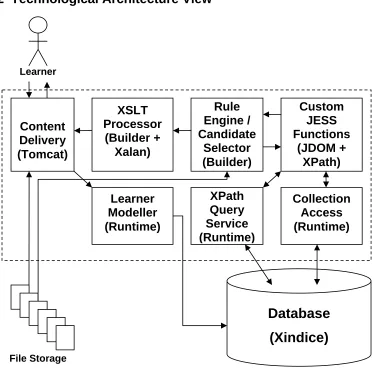
5.2.2 Technological Architecture View... 104
5.2.3 Collection Access and Metadata Comparisons ... 106
5.2.4 Pagelets ... 108
5.2.5 Learners... 112
5.2.6 Narratives ... 115
5.2.7 Candidate Groups and Candidate Selectors... 124
5.2.8 Course Rendering and Delivery ... 126
5.3 THE APELSCYCLE –CREATING A PERSONALISED COURSE... 128
5.4 APELS AS A SERVICE... 129
5.4.1 Metadata Describing the Service... 129
5.4.2 Importing the location of APeLS into a Virtual Learning Environment ... 131
5.4.3 Launching APeLS from a Virtual Learning Environment... 131
5.4.4 Communication between the AHS and the VLE... 131
5.4.6 APeLS Integration with a Commercial VLE ... 133
5.5 INSTANCES OF APELS... 135
5.5.1 Personalised Course on SQL... 135
5.5.2 Personalised Course on Physics / Mechanics... 136
5.6 SUMMARY... 137
6 TRIAL AND EVALUATION ... 138
6.1 INTRODUCTION... 138
6.2 STUDENT SATISFACTION... 139
6.2.1 Overview... 140
6.2.2 Previous Experience of Online Learning and SQL... 142
6.2.3 Usage of the Personalisation Tool... 144
6.2.4 Appropriateness of the Personalised Courses ... 146
6.2.5 Satisfaction with Navigation, Learning Content and User Interface... 148
6.2.6 Usage of the Additional Features and Performance of the Personalised Course ... 151
6.2.7 Student Performance ... 152
6.2.8 Key Findings... 153
6.3 TUTOR SATISFACTION... 154
6.3.1 Key Findings... 156
6.4 SEPARATION AND REUSABILITY OF ELEMENTS OF ADAPTIVITY... 157
6.4.1 Overview... 157
6.4.2 Reuse of Narrative ... 157
6.4.3 Reuse of Content ... 161
6.4.4 Reuse of Learner Models ... 166
6.4.5 Key Findings... 167
6.5 FLEXIBILITY AND EXTENSIBILITY OF ADAPTIVE EFFECTS... 168
6.5.1 Overview... 168
6.5.2 Using APeLS to teach SQL ... 168
6.5.3 Using APeLS to teach Physics / Mechanics... 169
6.5.4 Key Findings... 170
6.6 INTEGRATING APELS WITH A VLE ... 170
6.6.1 Overview... 170
6.6.2 Metadata... 171
6.6.3 Service Integration and Delivery ... 172
6.6.4 Key Findings... 175
6.7 SUMMARY... 176
7 CONCLUSION ... 178
7.1 INTRODUCTION... 178
7.2 OBJECTIVES AND ACHIEVEMENTS... 178
7.4 FUTURE WORK... 183
7.4.1 Narratives ... 183
7.4.2 Authoring ... 184
7.4.3 eLearning Services... 184
7.4.4 Ontologies and Repositories... 185
7.4.5 Other Areas of Future Work ... 186
BIBLIOGRAPHY... 187
GLOSSARY ... 210
APPENDICES ... 213
APPENDIXI–METADATA... 213
Metadata for describing Adaptivity Information Model ... 213
Schema for Content Model... 213
APPENDIXII–VOCABULARIES... 219
Knowledge Domain Vocabulary for SQL... 219
Knowledge Domain Vocabulary for Physics / Mechanics ... 221
APPENDIXIII–NARRATIVES AND STYLE SHEETS... 222
APeLS Narrative for SQL Course ... 222
APeLS Narrative for Physics / Mechanics Course... 224
APeLS Style sheet for SQL course ... 225
APeLS Style sheet for Physics / Mechanics course ... 226
APPENDIXIV–IMPLEMENTATION... 227
Package and Class Hierarchy of APeLS... 227
Resource Bundles... 227
JSP Interfaces ... 228
APPENDIXV–SCREENSHOTS... 231
Personalised SQL Course ... 231
Personalised Physics / Mechanics Course... 234
TABLE OF FIGURES
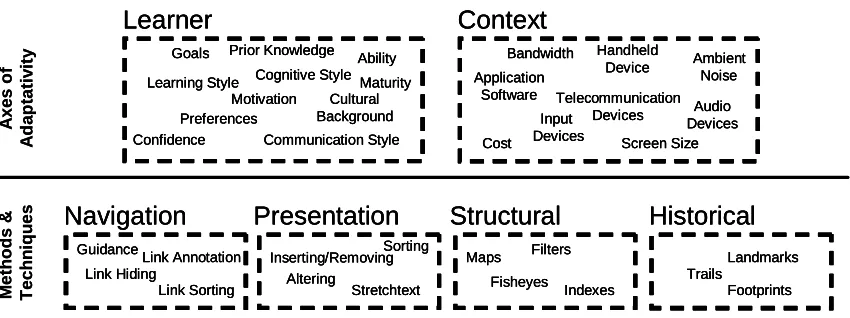
Figure 3.1, Axes and Methods of Adaptivity...34
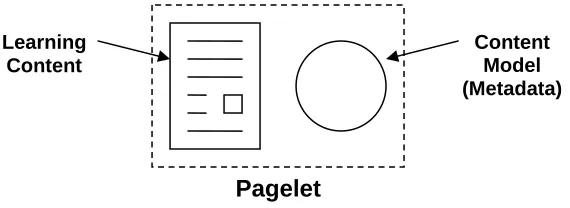
Figure 4.1, Conceptual view of a Pagelet ...70
Figure 4.2, Conceptual view of a Narrative ...70
Figure 4.3, Conceptual view of a Learner...70
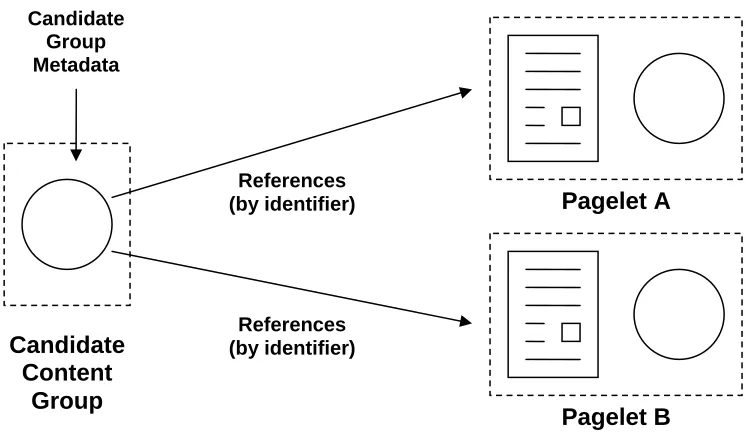
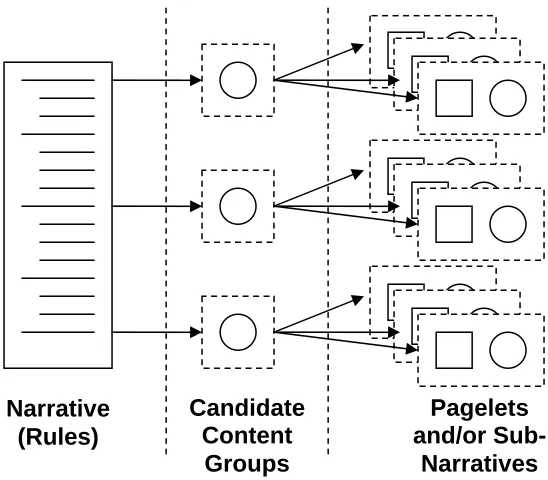
Figure 4.4, Candidate Content Group ...73
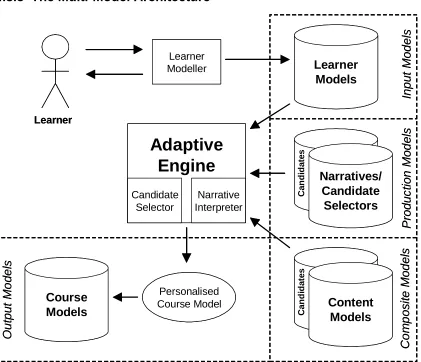
Figure 4.5, The Multi-Model Architecture ...76
Figure 4.6, Candidate Content Groups as an Abstraction Mechanism ...78
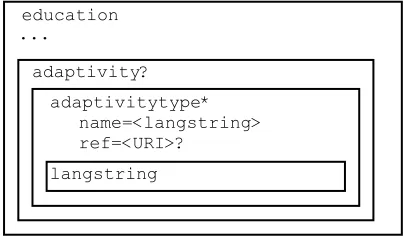
Figure 4.7, The proposed generic adaptivity metadata element ...79
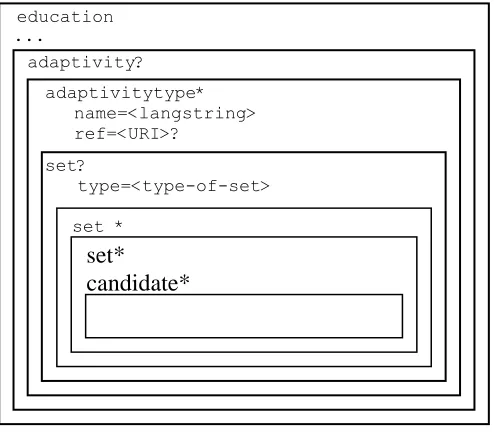
Figure 4.8, The structured generic adaptivity metadata element ...81
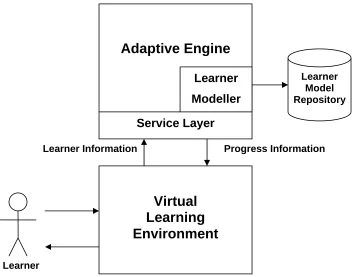
Figure 4.9, Information flow between the VLE and Adaptive Engine ...98
Figure 5.1, APeLS Component Architecture View ...101
Figure 5.2, APeLS Technological Architecture View ...104
Figure 5.3, APeLS Personalised Course Creation Process ...128
Figure 5.4, APeLS accessing the VLE data model ...132
Figure 6.1, Experience using online learning resources ...142
Figure 6.2, Experience of SQL ...143
Figure 6.3, Course rebuilds ...144
Figure 6.4, Courses reflecting questionnaire answers ...145
Figure 6.5, Control over customised courses...145
Figure 6.6, Clarity of learning objectives ...146
Figure 6.7, Suitability of courses generated...147
Figure 6.8, Completion of Objectives...147
Figure 6.9, Ease of navigation ...148
Figure 6.10, Satisfactory level of content ...149
Figure 6.11, Structure of content ...150
Figure 6.12, Ability to modify web interface ...150
ABBREVIATIONS
AH Adaptive Hypermedia
AHS Adaptive Hypermedia System
APeLS Adaptive Personalised eLearning Service
CBT Computer Based Training
CMI Computer Managed Instruction
CSS Cascade Style Sheet
DC Dublin Core
DCEd Dublin Core Education Working Group
DOM Document Object Model
DTD Document Type Definition
HCI Human Computer Interaction
ITS Intelligent Tutoring System
JDOM Java Document Object Model
JESS Java Expert System Shell
JSP Java Server Pages
LIP Learner Information Packaging
LLL Lifelong Learning
LMS Learning Management System
LO Learning Object
LOM Learning Object Model
SCORM Sharable Content Object Reference Model
SQL Structured Query Language
VARK Visual, Auditory, Read/Write, Kinaesthetic
VLE Virtual Learning Environment
XML Extensible Markup Language
1 INTRODUCTION
1.1 Motivation
Next generation eLearning systems need to provide greater dynamism, adaptability and
flexibility to support today’s increasingly pressurised learning requirements. Most
current eLearning offerings deliver the same static content to all learners, irrespective
of their prior knowledge, experience, preferences or goals. This typical problem, of
adopting a one size fits all [Conklin, 87] approach to content delivery, may be
addressed by tailoring the educational experience towards the characteristics of each
individual learner. By tailoring the educational experience to a particular learner, next
generation eLearning systems may increase the relevance, improve the intrinsic
motivation and enhance the appropriateness of that educational experience. Such
personalised eLearning systems should have a strong emphasis on learner
empowerment and control, where the learner has an active role in scrutably shaping the
educational experience.
To achieve higher levels of learner satisfaction Knowles’ theory of andragogy
[Knowles, 84] [Knowles, 98] indicates that learners, and specifically adult learners,
need to know why they need to learn something before undertaking to learn it. It also
states that they need to be responsible for their own decisions and to be treated as
capable of self-direction [Atherton, 03b]. These needs are difficult to support in a
traditional classroom as diverging interests, abilities and approaches to learning may
not be compatible. Learning delivered online gives learners a self-controlled learning
experience via a computer terminal. However, eLearning courses can also suffer from
one size fits all if such courses are not supported with appropriate external mentoring. Such eLearning offerings have witnessed high drop out rates as learners become
increasingly dissatisfied with courses that do not engage them [Meister, 02] [Frankola,
01].
A possible remedy for this dissatisfaction is to produce an adaptive eLearning course
that will tailor itself to different learner needs. Intelligent Tutoring Systems (ITS)
[Urban-Lurain, 02] and Adaptive Hypermedia (AH) [Brusilovsky, 01] solutions have
personalise the learning experience for the learner. Such systems may tailor the
educational offerings to the learner’s objectives [Kaplan et al., 93] [Grunst, 93]
[Vassileva, 96], prior knowledge [Milosavljevic, 97] [Hockemeyer et al., 98] [Kayama
and Okamoto, 98], learning style [Gilbert and Han, 99] [Specht and Oppermann, 98],
experience [Pérez et al., 95] [Vassileva, 96] and many more characteristics of the
learner. Early Intelligent Tutoring Systems (ITS) traditionally embedded experts’
knowledge in the structure of its content and applied appropriate design models.
However, such systems have continually been criticised for believing that this
embedding of expert knowledge is sufficient for effective learning to occur [Stauffer,
96]. In reality, these early systems constrained the learner and limited the opportunities
for the learner to investigate topics that the ITS deemed to be of little relevance.
Subsequent generations of ITSs used knowledge about the domain, the learner, and
about teaching strategies to support flexible individualised learning and tutoring
[Brusilovsky, 98c]. One of the goals of these ITSs was to adaptively deliver content.
The majority of such ITSs operate on specific content that has adaptive navigational
controls embedded. Similarly, the learner models utilised by such systems are highly
specific to the adaptive engine at the core of the system. This gives rise to a system that
may adapt effectively to a learner, yet is very difficult to repurpose. Repurposing
becomes difficult as the strategy for adapting the content to the learner is an
inextricable element of the adaptive engine. In this sense the early ITSs take a
integrated approach to adaptivity, where none of the elements of adaptivity (learner,
content or strategy) are represented discretely. Such systems include ELM-ART
[Brusilovsky, 98a], Interbook [Brusilovsky et al., 98d] and early versions of AHA! [De
Bra and Calvi, 98].
Adaptive Hypermedia is a newer research domain [Brusilovsky et al., 96] [De Bra, 96]
[Brusilovsky, 99b] which combines some ideas from ITS and emergent WWW
hypermedia concepts. Adaptive Hypermedia Systems (AHS) apply different types of
learner models to achieve the adaptive selection of content and linkage of hypermedia
pages to the learner [Brusilovsky, 98c]. While there tends to be a clearer separation of
the learner model and content model in AHSs than that seen in the ITSs, the
instructional approach utilised is rarely separated from the adaptive engine. This means
embedded in the content, learner model or in the adaptive engine itself. This means
that applying new or different pedagogical or instructional models, e.g. case based
learning, didactic, enquiry-based learning, etc., to the content model is more difficult
and would involve a re-authoring of the content model, learner model or adaptive
engine. Development of traditional ITS and AHS solutions, while sometimes offering
effective personalised eLearning to the learner, often embed the content sequencing
logic within the educational content. This conglomerate approach makes it difficult to
cater for different concerns by extending the axes of adaptation (the aspects of the
learner or context that the system is adapting to) or to repurpose the educational
material across many courses. Any approach used in producing personalised eLearning
courses should support the learner in their learning with sound pedagogical structures
and approaches. The technologies of adaptive systems cannot, in themselves, produce
more effective learning results without appropriate pedagogical approaches. As such,
the process of developing personalised courses or course sequences should facilitate
input from not only content authors, but also instructional designers and knowledge
domain experts.
The customisation of the learning experiences should enhance learner experience and
increase their satisfaction with the learning offered. In particular, learner satisfaction
may be heavily influenced by the appropriate tailoring of their experience of an
instructional approach. It is not always easy for a learner to determine the preferences
that may best influence this tailoring. Therefore, there needs to be flexibility in both
how the learner controls the customisation and in their rapid, dynamic1 re-composition
of the customised courses. This influence the learner has on this customisation may
take the form of explicit manipulation of their learner model or more subtle inferences
made by a modelling engine, based on their interaction with the learning material. The
challenge is, therefore, to provide a more flexible architecture for adaptive systems
which can incorporate greater flexibility in the choice of instructional model, thus
dynamically customising the learner experience of those models. Such an architecture
1
should result in personalised eLearning offerings that provide sufficient flexibility in
their adaptive axes to enable rich pedagogical courses which satisfy the learners.
1.2 Research Question
The research question posed in this thesis is whether it is feasible and beneficial to
separate the elements of personalised eLearning, such as the content, sequencing logic
and the learner model. With this separation the tailored courses produced should be
pedagogically appropriate, coherent, satisfactory and effective for the learner.
1.3 Objective and Goals
In answering the research question posed the objective of this thesis is to propose and
evaluate an architectural approach for implementing dynamic adaptive courseware
which has sufficient flexibility to support multiple instructional models and multiple
axes of adaptivity, whose selection is independent of the architectural implementation.
The axes of adaptivity are the aspects of the learner, or their context, towards which an
adaptive system may adapt. One of the primary outcomes of this objective is adaptive
courseware that provides the learner with appropriate guidance in their learning based
on these axes. The process of designing the adaptive courses should separate the
different concerns in the development lifecycle of a personalised eLearning offering,
thus enabling the course authors to utilise multiple adaptive axes and leverage
appropriate pedagogical strategies to produce learning experiences that will be
educationally satisfactory for the learner.
The main goals of a system produced, based on the architectural approach, should be
that it –
• Delivers a satisfactory and pedagogically sound eLearning experience to the
learner
• Provides different adaptive effects based on different sets of models
• Separates the different concerns and elements of learning
• Is flexible and extensible in the types of adaptivity offered
This thesis claims that through the separation and discrete modelling of the different
elements of eLearning and adaptivity, a generic, flexible and extensible architecture for
Adaptive Hypermedia Systems is possible. In particular, such a system should support
the adaptive runtime creation of coherent and educationally effective experiences.
Through genericity it is meant that the adaptive reconciliation engine, at the heart of
the Adaptive System, should not contain the strategies and knowledge of a particular
domain, but should be entirely model driven. The flexibility of the Adaptive System
can be achieved by the ability to add and remove models that impact adaptivity, thus
facilitating adaptivity across different properties, multiple axes of adaptivity and
multiple contexts. By extensible it is meant that although the engine will be trialled and
evolved using a specific set of models, new models may be added to the Adaptive
Hypermedia System to produce different adaptive learner experiences without
impacting the software engine implementation or architecture. In order to fulfil the
objective of this thesis the following activities must be achieved:
• Researching and surveying the state of the art in Adaptive Hypermedia, with
particular attention to flexibility, genericity of engine and influence of
pedagogy
• Researching and surveying the pedagogical underpinnings of adult learning,
which may be used in defining instructional models for adaptive courses
• Designing and implementing an architecture for producing Adaptive
Hypermedia Systems and Services
• Trialling and evaluating this new technique for implementing Adaptive
Hypermedia Services in the domain of personalised eLearning
The realisation of these activities involves the design and prototyping of a generic,
flexible and extensible Adaptive Hypermedia System. The approach proposed is the
multi-model, metadata driven approach. The multi-model, metadata driven approach
seeks to enable the adaptive course author to implement multiple aspects of adaptivity,
as well as diverse pedagogical approaches. The evaluation of the prototype will
determine the satisfaction levels experienced by the learners through using a
proposed by this thesis. Also as part of this work the thesis will investigate the impact
of the multi-model, metadata driven approach on the granularity of learning content2.
1.4 Contribution to State of the Art
This thesis proposes a novel approach to developing Adaptive Hypermedia Systems
called the Multi-Model, Metadata driven approach. In the proposed approach the
knowledge representation of the different aspects of eLearning are partitioned into
separate and discrete models to maximise flexibility, yet still produce satisfying and
educationally sound personalised eLearning offerings. As part of the approach a
generic and extensible adaptive engine design is proposed to allow the separate models
to be reconciled dynamically at runtime into an eLearning offering personalised for the
learner. One of the key contributions is the level of independence maintained between
the engine and the actual models. This independence allows the engine to work with
multiple adaptive course authors across heterogeneous content. The thesis also
proposes a service-driven approach to integrating the Adaptive Hypermedia System
with third party services such as Learner Management Systems.
1.5 Thesis Overview
This thesis proposes an innovative multi-model approach to the dynamic composition
and delivery of personalised learning utilising reusable learning objects. The thesis
describes the design and implementation of an adaptive metadata driven engine that
composes, at runtime, tailored educational experiences across a single content base.
Presented are the theoretical models, design and implementation of the adaptive
hypermedia educational service prototype.
The thesis begins with two chapters reviewing the state of the art. The first is a state of
the art review of adult learning theory and pedagogical approaches that support these
theories. It is vital that any approach to developing Adaptive Hypermedia Systems for
education should be pedagogically driven, rather than solely technically driven. This
chapter is followed by a state of the art review of Adaptive Hypermedia, including the
objectives and methods of adaptivity. This chapter also surveys the current state of the
2
art in Adaptive Hypermedia Systems. These two chapters provide the research
background upon which this thesis is built.
The next chapter discusses the novel design approach to Adaptive Hypermedia
Systems proposed in this thesis. The chapter discusses the multi-model approach, the
importance of appropriate metadata and the issues concerning each of the core models.
It includes an architecture for this approach and addresses the individual components
needed to fulfil the multi-model, metadata driven approach, as well as the candidacy
architecture used to support adaptivity. Also discussed in this chapter are the
technologies supporting the multi-model, metadata driven approach, the design of the
service architecture and the issues surrounding integration with third party services.
The design chapter is followed by a chapter describing a prototype implementation of
the design called the Adaptive Personalised eLearning Service (APeLS). This chapter
discusses how APeLS has been developed as a multi-model, metadata driven Adaptive
Hypermedia Service. It includes a discussion of the component and technical
architecture views of APeLS, individual sections detailing the implementation issues of
the core models, the realisation of the candidacy architecture and rendering and
delivery issues. Also discussed in this chapter are the implementation issues
surrounding integration of APeLS with third party services. Finally, the instances of
APeLS courses are outlined and discussed.
The penultimate chapter discusses the trial and evaluation of the approach taken in this
thesis. It includes details of the user and technical trials. The most significant trial is
that of the learners’ satisfaction with using a personalised eLearning offering produced
using APeLS.
Finally, this thesis is concluded with a summary of the key contributions of the
multi-model, metadata driven approach proposed and a discussion of future work that may be
2 STATE OF THE ART – ADULT LEARNING THEORY
2.1 Introduction
Evaluations of new educational technologies tend to concentrate on the learning
outcomes of instructional delivery methods rather than the pedagogical effectiveness or
differences in learning outcomes [Parson, 98] [Russell, 98]. What is frequently
forgotten is that the technology is just a medium used to attain a particular purpose;
that it is a means to an end, and researchers feel strongly that those ends should be
educational, not technological [Kirkwood, 98] [Bancroft, 01]. Technologies such as
standards for representing educational material and learner information, however,
cannot be ignored. It is through these specifications that information about the learning
material and learner may be reused between different courses and different educational
systems.
This chapter investigates the aspects of adult learning that influence the instructional
design of adaptive courses. This includes an analysis of the fundamental learning
theories of Behaviourism, Cognitivism and Constructivism, paying particular attention
to Constructivism and the ways the learner and computer may be viewed using this
approach. Also discussed in this chapter are the different properties of a learner, such
as learning style and learning preference, which may be used to influence the
personalisation of an adaptive course and how those properties may be modelled.
2.2 Learning Theory
This section discusses the fundamental learning theories of Behaviourism, Cognitivism
and Constructivism and their potential impact on adaptive eLearning.
2.2.1 Behaviourism
Behaviourism stems from the view that psychology should concern itself with the
behaviour of human beings rather than mental phenomena about which no concrete
knowledge is possible [Bechtel et al., 98] [Skinner, 76] [Skinner, 77]. Behaviour
theorists define learning as nothing more than the acquisition of new behaviour. From
an educational perspective the behaviourist learner is viewed as a passive recipient of
through rehearsal and correction [Tuckey, 92]. From a teaching perspective
behaviourism maintains that the role of a teacher is to reinforce correct behaviour.
Learning is measured by estimating the probability of a given stimulus producing the
correct response by the frequency with which it produces the correct response. With
reference to its possible application in Adaptive Hypermedia Systems behaviourism
dictates that such systems should attempt to produce appropriate stimuli that elicit
behaviour from the learner that may be correlated with the behaviour patterns
associated with successful learning.
The behaviourist theory is, however, the least popular of the three theories presented in
this section. The primary reason for the demise and lack of popularity for behaviourism
is its commitment to the principle that behaviour can be explained without reference to
mental activity [Cowie, 98]. This theory is relatively simple to understand because it
relies only on observable behaviour and describes several universal laws of behaviour.
Its positive and negative reinforcement techniques can be very effective – both in
animals, and in treatments for human disorders such as autism and antisocial
behaviour. Behaviourism is often used by teachers, who reward or punish student
behaviours. Its benefits when used to support adult learning are, however, less clear as
adult learners may be more resistant to positive or negative reinforcers to achieve the
desired behavioural outcome.
The behavioural theorists believe the teacher’s job is to establish situations which
reinforce desired behaviour from their students. The behaviourist expects the teacher to
predetermine all the skills they believe are necessary for the students to learn and then
present them to the group in a sequenced manner [Conway, 97]. The impact of this
theory on adaptive eLearning is twofold – the learning system should reinforce student
behaviour that it perceives to be correct and the learning system should also have a
predetermined view as to the best order in which skills and knowledge should be
presented.
2.2.2 Cognitivism
From the passive view of learning adopted by behaviourism, cognitivism developed
quite a different view. Cognitivism makes mental processes the primary object of study
the learning process. In cognitive theories knowledge is viewed as symbolic, mental
constructions in the minds of individuals, and learning becomes the process of
committing these symbolic representations to memory where they may be processed.
Cognitivists maintain that there is an external reality and an internal representation of
that reality. Cognitivism does recognise the existence of mental phenomena, but views
the surrounding environment as an objective reality about which we may have
knowledge. According to Bruner [Bruner, 60], information equals learning, so outward
appearances to that effect are merely communications illuminating the result of
learning rather than learning itself. As the mind seeks a view of the objective reality it
goes through a number of processes when it receives information –
• Information is selectively received by Attention
• This information is then integrated into the inherent order of memory via a
process of Encoding
• Information becomes knowledge when it is integrated into the existing
cognitive structure
• The knowledge can then be remembered in the process of Retrieval
From the educational perspective the emphasis on teaching and learning strategies
shifts to techniques to complement the attention, encoding and retrieval of knowledge
This can be achieved by the careful organisation of content, and the use of analogies
and mnemonics [Newby, 96]. Although cognitivism recognises the importance of the
learner making sense of new information, the teacher maintains a central role as a
transmitter of objectively correct information which the learner should absorb. The
function of learning in cognitivism is to create an accurate representation of the
external world in our minds.
The cognitive approach and cognitive theories emerged as a new perspective
employing "information-processing ideas" rather than the behaviouristic assumptions
that the learner is determined by his environments and so passively adapts to the
part of the learner. However, knowledge is still viewed as given and absolute just like
in the behaviouristic school.
Computers process information in a similar fashion to how cognitive scientists believe
humans process information: receive, store and retrieve. When viewed from an
adaptive eLearning perspective the role of the computer in the education perspective
would be to present a view of the information to be learned and drill the student until
they understand it. This is similar to how behaviourism may impact adaptive eLearning
except that cognitivism is also concerned with the active mental processes of the
learner. Cognitive instructional designers are concerned with what was happening in
the learners mind. This change in focus does not negate the design models of the
behaviourist instructional designers, but builds on the existing models. A Cognitivist
Instructional Design would include a lesson which bases itself on the learner’s
previous knowledge and then scaffolds towards the new learning objectives. It does not
assume that all learners have the same past experiences or learn in the same manner.
The goal is still to learn in the most efficient manner, but to break the lesson down into
chunks that move from simple to complex to build on the learner’s previous schema [Saettler, 90].
2.2.3 Constructivism
Constructivism subsumes the attention, encoding and retrieval of knowledge processes
from cognitivism, but maintains that there is no single accurate representation of the
world, only interpretations of experience. Knowledge is a collection of concepts which
fit with the experience of the individual [Tuckey, 92]. Learning becomes a change in
meaning constructed from experience [Atherton, 03a]. Learners actively take
knowledge, connect it to previously assimilated knowledge and make it theirs by
constructing their own interpretation [Cheek, 92].
Purist constructivism maintains that there is no reality. People acquire knowledge
which is constructed and relative. The degree to which proponents of constructivism
reject reality varies, but the view that knowledge is subjective and cannot be separated
As far as teaching is concerned, the teacher or instructor should try and encourage
students to discover principles by themselves. The instructor and student should
engage in an active dialog (i.e. socratic learning). The role of the instructor is to
translate and transform information to be learned into a format appropriate to the
learner's current state of understanding. Curricula that are organised in a spiral manner,
so that the student continually builds upon what they have already learned, are seen as
particularly effective in the constructivist approach. There are a number of principles
that should be adhered to to achieve effective instruction and learning within the scope
of the constructivist theories –
• Instruction must be concerned with the experiences and contexts that make the
student willing and able to learn (readiness).
• Instruction must be structured so that it can be easily grasped by the student
(spiral organisation).
• Instruction should be designed to facilitate extrapolation and or fill in the gaps
(going beyond the information given).
The teacher, or instructor, is removed from their central role of transmitting
information to that of a guide to encourage learners to construct their own
understanding. As there is no definitive solution to a problem, the guiding must be
tentative [Atherton, 03a]. Collaboration, interaction, discussion and reflection all
facilitate the acquisition and assimilation of knowledge.
From the constructivist perspective knowledge becomes an individual’s interpretation
of experience. Learning is the construction of a new or refined interpretation. Bruner
[Bruner et al., 56] emphasised the importance of cognitive structures or mental models
which must be in place to provide a structure in which the integration of new
information can occur [Holcombe et al., 98]. In other words, the meaning assigned to
new information is dependent on how it connects with the knowledge already present
in the individual's mind. The individual constructs meaning in the context of the
knowledge they already have. This construction is influenced by the individual’s belief
New information is important for different reasons to the recipients of the information
[Tuckey, 92]. From the perspective of adaptive eLearning the information being
presented should be relevant to the learner in the framework of what they have
previously learned [Henze et al., 99a] [Henze et al., 99b]. A concrete context should be
established to demonstrate the authenticity of the knowledge. This aids the learner in
identifying the link between the knowledge and real-world competencies. By
transferring the information to other problem domains the significance of the
knowledge and the generality of the concepts being applied may be demonstrated. The
information should be presented in a way that is easy to assimilate [Wade and Power,
98b].
The constructivist approach implies that learners will learn more with a teacher than
from a teacher [Newby, 96]. Similarly, learners will learn more with a computer than
from a computer [Reeves, 98]. It is argued that traditional teacher-centric approaches
to learning do not transfer successfully to technology and must be revolutionised
[Wedekind et al., 98]. The philosophy must change from computers as teaching
machines to computers as tools to empower learners and teachers [Oppenheimer, 97].
The full benefit of technology will not be achieved without making transformative
changes in the teaching and learning strategies of students and teachers or in other
words ‘what's wrong with education cannot be fixed with technology’ [Oppenheimer,
97]. While traditional teaching has required the learner to initiate cognitive tools [Katz,
96], the computer is a cognitive tool. As such, the computer can empower individuals
to design their own representations of meaning during thinking, problem solving and
learning [Reeves, 98] and encourage them to actively reflect on what is being learned,
and actively integrate new and existing knowledge [Tuckey, 92].
2.2.4 Analysis of Learning Theory
Collins [Collins et al., 96] notes that the goal of instructional delivery is to design an
educational system that transmits content and skills in a clear, well structured, and
efficient manner. It is this view that dominates most curriculum and instruction, and is
supported by standardised testing.The goal of the learner is to regurgitate the accepted
The constructivist view, however, argues that the goal of education is to help learners
construct their own understandings [Collins et al., 96]. Constructivism is concerned
with learner creation of meaning and linking of new ideas to existing knowledge, and
therefore involves a large degree of learner autonomy and initiative. The emphasis is
on facilitative environments, rather than instructional goals, where the teacher assumes
the role of mentor, or facilitator. As a mentor or facilitator the teacher’s role becomes
one of guiding mentor - stimulating initiative, play, experimentation, reasoning, and
social collaboration [DeVries and Kohlberg, 87]. Dewey [Dewey, 66] argued that
education depended on action, that children must actively construct knowledge by
drawing it out of experiences that have meaning and importance to them.
Papert calls for further distinction of the constructivist views, by focusing on the
involvement of the learner in the actual design, construction and erection of external
products or artefacts [Papert, 80] [Papert, 93] [Harel and Papert, 91]. The idea behind
using raw data, primary sources, physical, and interactive materials in real-world
possibilities is to help learners generate the abstractions that bind phenomena together.
Researchers at MIT use the word constructionism to describe the knowledge
construction process that arises from the physical creation of objects [Harel, 91].
Constructivism has emerged in the last decade as an alternate pedagogy closely related
to the advances in educational technology. Interest in constructivism has blossomed
considerably while conventional instruction and assessment techniques have been
criticised for their inflexibility [Ben-Ari, 98]. There is a turn to more flexible,
open-ended, adaptive, and multi-dimensional instructional techniques as well as more
qualitative, observation-based methods of evaluation. As a result, constructivism is
embraced by many educational technologists and this is reflected in the plethora of
multimedia and computer-based software that draw from the constructivist premises.
As such, it makes an ideal basis for building a theory of learning for open, informal,
and virtual learning environments.
There are, however, extreme implementations of constructivism, which have provoked
reactions against it. Constructivism is considered by the behaviourists as “a label for
fuzzy, unscientific thinking”, as Cunningham notes in his dialogue assessing the two
constructivism led some to believe that it supports spontaneous, uncontrolled learning,
in contrast to the systematic, organised instruction of knowledge employed by the
objectivist tradition. The open-endedness of constructivist problems can be daunting
for the entry-level learner. Similarly, it might be difficult for the teacher to incorporate
constructivism into their teaching methods [Ben-Ari, 98]. Required course content and
externally applied assessments are realities that teachers must accommodate. Changing
to constructivist instruction will mean finding the appropriate balance between the
existing instructional methods and this new educational practice. Finally, the efficiency
and reliability of evaluation methods are questioned, as constructivist learning
environments are difficult to evaluate.
In a constructivist setting, knowledge is not objective; mathematics and science are
viewed as systems with models that describe how the world might be rather than how it
is. These models derive their validity not from their accuracy in describing the real
world, but from the accuracy of any predictions which might be based on them
[Postlethwaite, 93]. The role of the teacher is to organise information around
conceptual clusters of problems, questions and discrepant situations in order to engage
the student's interest. Teachers assist the students in developing new insights and
connecting them with their previous learning. Ideas are presented holistically as broad
concepts and then broken down into parts. The activities are student centred and
students are encouraged to ask their own questions, carry out their own experiments,
make their own analogies and come to their own conclusions.
These theories of learning impact on the development of adaptive eLearning systems
by providing insights into how learners may best learn using such systems.
Behaviourism seems to provide minimal impact upon the instructional design of such
systems as many of its ideas and ideals have been included and extended by
Cognitivism. The criticism of Behaviourism for not referencing the internal mental
processes of the learner and the documented difficulties the theory has explaining
phenomena such as changes in reinforced behaviour towards related, but different
challenges [Philips and Soltis, 03] seem to preclude it as a serious candidate. It seems
to have been the basis of many Intelligent Tutoring Systems where the goal of
computer-based learning was to present a view of the information to be learned and
Cognitivism, on the other hand, is concerned not only with the observable behaviour of
the learner, but also with the non-observable mental processes that occur. In this sense,
cognitivist approaches may cater for aspects of the learner such as their prior
knowledge and scaffold the learning experience accordingly. Cognitivism still strives
to present an objective view of the knowledge domain and is ultimately aiming to
present learners with that same view. Cognitivism has potential for application in the
education of novice learners using adaptive eLearning systems as, like Behaviourism,
consistency and drilling are reinforced, but, unlike Behaviourism, individual
differences may be catered for.
Constructivism differs strongly from Cognitivism and Behaviourism as it postulates
that each learner constructs their own version of a knowledge domain, thus integrating
it into their current knowledge and experiences. This taking of ownership by the
learner places more responsibility for the control of their learning experience onto
them. This implies that constructivism may be better suited to more mature and
self-motivated learners.
For adaptive eLearning systems there is a balance between Cognitivism and
Constructivism that may be achieved as a learner moves from being a novice, where
the learning experience may be more prescriptive, to becoming an expert, where they
must take more control over their learning. Cognitivism may constrain the scope of
knowledge that may be taught, but provides more explicit scaffolding in its teaching.
Constructivism may facilitate learning in Open Corpus environments, but expects more
responsibility from the learner.
2.3 Learning Styles
Mesick [Mesick, 76] defines learning styles as "characteristic modes of perceiving,
remembering, thinking, problem solving and decision making." The learning
preferences and styles of an individual form a distinctive and distinguishing feature of
that individual. The ability to identify and adapt to a learner’s learning style may
provide a powerful personalisation mechanism. By presenting learning material in a
form that is best suited to the learner’s preferred style of learning it is hoped to
current knowledge framework. This improved ability to learn may manifest in both
shorter learning times and in a deeper understanding of the material presented
[Sadler-Smith, 96]. This section reviews a number of learning inventories and their
applicability.
Kolb’s [Kolb, 79] learning style model categorises learners on two continuums,
abstract/concrete and active/reflective, based on personal preferences for the consumption of new information. It suggests that the learner should cycle through all
four styles in order to gain a full understanding of the topic. The overview of this
model is to present the learner firstly with their preferred style of learning, based on the
two continuums and then cycle through the other 3 modes.
Bernice McCarthy [McCarthy, 87] [McCarthy, 96] has applied the original model set
out by Kolb to categorise learners in accordance to the different cycles as follows –
• Innovative Learners: concrete/reflective. This learner prefers to be shown the
practical applications of the new material being presented.
• Analytic Learners: abstract/reflective. This learner prefers to be presented with
the results of research and well ordered sequential presentation of new material
• Common Sense Learners: abstract/active. This learner is a “try it and see”
learner and would benefit from the provision of guided activities that keep them
updated on where they are in the content.
• Dynamic Learners: concrete/active. This learner prefers the ability to explore
other sources of information on the relevant topic, by providing hyperlinks to
those resources.
The basis of the Myers-Briggs [Myers and McCaulley, 85] Inventory model stems
from the theory of psychological types put forward by Carl Jung. The name comes
from Katherine Briggs and Isabelle Briggs Myers who devised the model. Jung splits
• Sensors/Intuitors - The Sensors aspect refers to well-defined detailed
procedures and practical applications of the new information. Intuitors are more
concept-oriented and prefer the possibility to explore other related sites.
• Extraverts/Introverts - The Extravert aspect refers to the more out-focused
learners, they prefer chat rooms and discussion forums to be included in the
content. Introverts would prefer a more impersonal and private learning
experience.
• Thinkers/Feelers - Thinkers prefer logical arguments and research results to be
presented when consuming new information. Feelers prefer to be shown how
this new information affects people, by using chat rooms and virtual teacher
situations.
• Judgers/Perceivers - Judgers prefer a predefined agenda or structure to their
learning experience. Perceivers, on the other hand, are more adaptive to
changing circumstances.
With this the Myers-Briggs model constructs 16 different models of learning style,
each a different compilation of the 4 types above. The behaviours and attitudes of a
person, including their approach to learning, is said to be affected by this indicator.
The basis behind the Hermann Brain Dominance Instrument theory is that people can
be categorised based on what quadrant of their brain is dominant. This quadrant model
is based on Roger Sperry’s [Sperry, 97] left/right theory and the triune brain model of
Paul MacLean [MacLean, 90]. The model suggests that this dominance has a huge
impact on all human behaviours and attitudes including their approach to learning. It
divides the brain into four different sections as follows –
• Left Cerebral - This part of the brain processes logical sequencing, analysis of
research results and factual information.
• Left Limbic - This part of the brain processes sequential and organised information (curriculum-sequencing best suits this dominance).
• Right Cerebral - This part of the brain processes emotions and the interpersonal
• Right Limbic - This part of the brain processes the visual input (presentation of
simulations would best suit this dominance).
For example, most lecturers will come under strong domination from the left
quadrants. In this case their preference in this quadrant will lead to them designing a course curriculum that is left quadrant dominant. As a result some of the right quadrant activities, such as teamwork and communications, may be neglected.
The Solomon and Felder inventory [Solomon, 92] [Solomon and Felder] consists of 44
questions that attempt to classify a learning style across four dimensions –
• Active and Reflective - Active learners tend to retain and understand information best by doing something active with it, i.e. discussing or applying it
or explaining it to others. Reflective learners prefer to think about it quietly
first.
• Sensing and Intuitive - Sensing learners tend to like learning facts, while
intuitive learners often prefer discovering possibilities and relationships.
• Visual and Verbal - Visual learners remember best when they see pictures, diagrams, flow charts, time lines, films, and demonstrations. Verbal learners
appreciate words, either written or spoken explanations. Everyone learns more
when information is presented both visually and verbally.
• Sequential and Global - Sequential learners tend to gain understanding in linear
steps, with each step following logically from the previous one. Global learners
tend to learn in large jumps, absorbing material almost randomly without
seeing connections until they can see the inter-relationships.
The Solomon and Felder Learning Style Inventory views learners as preferentially
taking in and processing information in different ways: by seeing and hearing,
reflecting and acting, reasoning logically and intuitively, analyzing and visualizing,
steadily and in fits and starts.
Although different modes of learning have been known for a long time, Fleming was
teachers to help identify these modes in the form of the VARK learning inventory
[Fleming, 87]. This inventory seeks to be advisory, rather than diagnostic and
predictive. Many researchers have focused on visual, aural and kinaesthetic
characteristics, but Fleming subdivided the visual mode into iconic (symbolic) and
text, creating four possibilities for preferences. A fifth category, multimodals, was
added when it was found that approximately 60% of respondents had preferences for
multiple modes.
[Fleming and Mills, 92] suggested four categories that seemed to reflect the
experiences of their learners: Visual, Aural, Read/write and Kinaesthetic. The results
indicate a 'rule of thumb' and should not be rigidly applied. The questionnaire is not
intended to 'box' respondents into the mindset that they have been 'diagnosed', rather it
is designed to initiate discussion about, and reflection upon, learning preferences.
It is not expected that any one preference will be dominant or that all participants will,
to some degree, be multimodal. Initial data suggests that the number of multimodal
students in a class can range from approximately 50% to 90%, depending upon the
context and class make up. Approximately 50% of academic faculty seem to be
multi-modal, although they usually show a preference for Read/Write as one choice [Bruen,
02]. Correspondingly, there will be some students or faculty that have a strong or very
strong preference that stands out from all others. The most consistent finding from
questionnaire results is that classrooms are very diverse. Faculty members cannot
assume that students learn as they do. The power of VARK is that students and faculty
understand it intuitively and it seems to correspond to practice.
Some multi-modal learners may need to process information in more than one mode in
order to get effective understanding. Learners should be encouraged to try study
strategies listed under their preferences that they may not have tried before. Experience
tells us that many learners become much more successful if they develop a range of
study strategies based upon their preferences. It also indicates that it is not helpful to
use strategies that lie outside their preferences (e.g. mind-maps may not help if they do
not have some Visual preference; mnemonics may not help if they have low scores for
Read/Write). Westernised education systems place heavy emphasis upon the
Read/Write preference, which may constrain learners with different modalities,
teachers should use a variety of modes in their presentations if they are to reach every
student.
2.3.1 Analysis of Learning Styles
Both the Myers-Briggs Inventory and the Hermann Brain Dominance Instrument deal
with psychological issues that, while they may be applied to learning, are not directly
related to how an individual processes new learning material. They deal with the
broader issue of how an individual interacts with and perceives the world. These
theories and instruments have a definite application in learning. However, they possess
features that enable them to be employed for learning differently. The Myers-Briggs
inventory is rigorous and supported by appropriate instruments to aid in the modelling
of an individual in accordance with this theory, defining the learner in accordance with
its indicators. These instruments can yield complex combinations of the indicators and
produce results that may not be intuitively understood by the learner.
The Hermann Brain Dominance Instrument is simplistic by comparison, yet can
produce results that may be intuitively understood by the learner. The separation of
behaviour and attitudes to learning into the four quadrants of the brain is a straight
forward means of explaining not only the learner’s preferred mode of learning, but also
how this mode may affect the learning material presented to them.
This balance between the learner’s understanding of the learning style theory being
presented to them and the rigorousness of that theory is central to the ideal of a learner
taking ownership and responsibility for their learning and is something that may be
applied in adaptive eLearning. Any explicit modelling of the learner that a system
attempts must have clear benefits for the learner. The balance between rigorousness
and how understandable an instrument is may also be observed in the Kolb/McCarthy
Learning Style Inventory and Solomon and Felder’s Inventory of Learning Styles. The
dimensions of Solomon and Felder’s Inventory are easier and more intuitive for a
learner to understand than the cycles of Kolb/McCarthy. Complexities arise in the
realisation of the Kolb/McCarthy cycles in the learning material presented as the
distinction and transition between the different cycles may be subtle. The distinctions
may be clearer to the learner. This, again, responds to the learner taking ownership of
their learning. If the learner perceives that the learning style instrument they are using
accurately captures their preferences and that those preferences are reflected in the
material presented to them, their ownership of the learning will be reinforced. This is
dependent on two factors. The first factor is that the learner understands the learning
style theory being presented to them. The more intuitive this understanding is the
better. The second factor is the visibility of the influence of the chosen learning style
on the material presented to the learner.
Both of these factors are strengths of the most simplistic of the learning styles
presented in this section – VARK. The VARK Learning Inventory does not influence
the sequence or structure of learning material. It merely influences the nature and form
of the delivered learning material, i.e. whether it corresponds to a Visual, Auditory,
Read/Write or Kinaesthetic aspect of the learner. This is something that the learner can
intuitively understand and appreciate the effect of in the material delivered. As such, it
supports the factors for reinforcing ownership of learning, but only does so in a limited
area of the personalised courses presented, i.e. the presented learning material and not
its sequencing or structure. From the perspective of adaptive eLearning systems,
VARK is not only easy for learners to understand, but also relatively easy for systems
to model and adapt towards.
2.4 Learner Properties and Modelling Learners
A learner/user model contains explicitly modelled assumptions that represent the
characteristics of the learner which are pertinent to the system [Fink et al., 96]. The
system can consult the learner model in order to adapt the performance of the system to
each learner’s characteristics. Learner modelling allows the system to personalise the
interaction between the learner and the content. To achieve effective learning this
personalisation should put the content in a context that the learner can understand and
to which they can relate. There are several techniques for modelling the learner and
refining this model.
2.4.1 Learner Properties
There are many properties and characteristics of the learner that the designer of an
The properties chosen to represent the learner should be pertinent to the potential
customisation by the system. The characteristics may be described in a binary,
qualitative or quantitative manner. Learner characteristics which may influence how
the learner interacts with an educational system are the learner’s objectives,
pre-knowledge, cognitive style, learning style, maturity, general ability, confidence,
motivation, preferences and background. Some examples of learner features which
have been used in educational systems are Novice/Expert, Adults/Children,
Hurry/Browsing, First Time/Revision, Language, Technology and Disability.
The objective or goal of the learner is a description of what they are trying to achieve
through a learning experience. This may be inferred by the context of the content and
include learning goals and personal objectives. For example, the learner may be a
novice wishing to aspire to intermediate level. Similarly, another learner may be an
expert who is revising. The system may infer that when a learner follows a specific
path it is because the immediate objective is to learn the piece of knowledge to which
the path leads [Eklund, 95]. The global objective of a learner will be to learn the
content of the course. The system can tailor the course to meet the differing objectives
of both novice and expert learners. By specifying their objectives explicitly the learner
is made more aware of their own learning objectives and is given more responsibility
over their learning.
Adaptive systems need to gauge the level of prior knowledge of the learner as the rate
and manner in which a learner assimilates knowledge is dependent on the learner’s
previous knowledge of the subject matter. The system must then monitor the learner’s
mastery of concepts and build upon the knowledge acquired by the learner as they
progress through the course. Direct feedback or test results may be used to infer the
knowledge of the learner at the start of the course. The system should then recognise
changes in the learner’s knowledge as they progress and update the learner model
accordingly. Support can be gradually phased out as the learner’s knowledge increases
[Paolucci, 98].
The system should ensure that prerequisite concepts are known by them before they
advance to a new topic. Technical terms should be avoided or explained until the