Young Adults’ Perceptions of Alcohol-Involved Sexual Violence:
Explicating Alcohol Expectancies Relating to Sexual Aggression and Victimisation
Louise Charlotte Starfelt
Degree of Bachelor of Social Science (Social Psychology) Graduate Diploma (Psychology)
Bachelor of Behavioural Science (Honours Psychology)
Thesis by Published Papers
Queensland University of Technology (QUT) School of Psychology and Counselling
Keywords
Social psychology, alcohol, alcohol expectancy, rape, sexual violence, young adults, perceptions, attribution, blame, Australia, scale development, consensual qualitative research.
Dedication
To my beautiful sister LineYou have been challenged by ignorance, betrayal, and pain. Your responses to these challenges are testament to true courage, selflessness, and strength. You are my inspiration and a role model to many who share your experiences. Jag älskar dig.
Abstract
The purpose of this PhD program of research was to explicate the role of alcohol-related beliefs in young Australians adults’ (i.e., 18 – 25 years) attributions for sexual violence through the application of alcohol expectancy theory (Goldman, Del Boca, & Darkes, 1999). Completed rape, a severe form of sexual assault, is a relatively common experience among Australian women (lifetime prevalence rate = 9%; Mouzos & Makkai, 2004). The research aimed to: (1) explore young adults’ understanding of, and explanations for, alcohol-involved rape; (2) explore young adults’ perceptions of the contributory role of alcohol in sexual aggression and victimisation and how these perceptions relate to alcohol’s empirically established role in sexual violence; (3) develop a reliable and valid research measure that captures young adults’ alcohol expectancies relevant to sexual aggression and victimisation; and (4) investigate the utility of the new measure in
predicting blame attributions for alcohol-involved rape. A mixed-methods developmental research program addressed these overall aims across three separate studies, using both qualitative and quantitative approaches. Four papers derived from the studies, comprising the main body of this Thesis by Published Papers.
In the first stage of this research program (Study 1), focus groups and interviews were conducted with 15 young men and women who responded to a hypothetical rape scenario in which the perpetrator and victim were intoxicated. Through a consensual qualitative research (CQR) analysis, thematic categories were identified in the data which reflected young adults’ labelling of, expected social reactions to, and responsibility and blame attributions for the alcohol-involved rape. Further, beliefs about alcohol that were thought to facilitate the perpetrator’s sexual aggression and the victim’s sexual vulnerability were conceptualised. Study 1 resulted in two papers, addressing Aims 1 and 2.
Paper 1 explores young adults’ understanding of, and attributions for, alcohol-involved rape. The paper highlights young adults’ reluctance to acknowledge the label of rape and their adherence to the idea that “real rape” involves physical violence. The paper discusses the problematic assumption that miscommunication results in unintended rape. It is
acknowledged, however, that young adults could identify the negative aftermaths of sexual assault. Nevertheless, Paper 1 illustrates how young adults subtly re-directed responsibility and blame from the perpetrator to the victim while explicitly adopting “responsibilisation” norms (Lindsay, 2009) regarding men’s and women’s intoxicated behaviour. Paper 2 examines data from the same study but focuses specifically on the perceived role of alcohol in the depicted assault. This paper identifies nine expected effects of alcohol on cognition, emotion, and behaviour which were thought to introduce, progress, and intensify risks for sexual aggression and victimisation: (1) increased confidence; (2) character
transformation; (3) impaired cognition; (4) behavioural disinhibition; (5) altered sexual negotiation; (6) enhanced self-centeredness; (7) impaired awareness of wrongdoing; (8) increased/decreased sexual assertiveness; and (9) compromised self-protection. Transcripts representing these themes and the themes themselves formed the basis for scale
development.
The second stage of the research involved the development (Study 2a) and validation (Study 2b) of the Drinking Expectancy Sexual Vulnerabilities Questionnaire (DESV-Q). Initially, a pool of alcohol expectancy items were written guided by Study 1 findings and administered online to 201 young adult university students. Items were conceptualised in terms of the targets self, men, and women to differentiate between self- and other-oriented alcohol expectancies. As a preliminary test of validity, participants also completed a personality and social desirability measure. Subsequently, a revised measure along with established measures of alcohol expectancies and impulsiveness were administered online
to 322 university students and general community members to assess the psychometric properties of the instrument. Paper 3, which addresses Aim 3, emanated from these two sub-studies. Paper 3 describes the statistical process of identifying the measure’s factor structure and most effective items. In addition, reliability estimates and convergent and discriminant validity assessments are outlined in the paper. Five target-equivalent factors are identified in the paper and labelled (1) Sexual Coercion; (2) Sexual Vulnerability; (3) Confidence; (4) Self-Centeredness; and (5) Negative Cognitive and Behavioural Changes. By showing that the DESV-Q is internally consistent and shares overlap with similar alcohol expectancy measures, but can be discriminated from general expectancy domains and personality traits, Paper 3 concludes that the DESV-Q is reliable and valid. Social desirability issues for the target self are discussed.
In the final stage of the research program, Study 3 implemented the DESV-Q to examine quantitatively the influence of context-specific alcohol expectancies on rape blame attributions. Young adults (N = 210) read the hypothetical rape scenario from Study 1, completed the DESV-Q, measures of gender role attitudes and rape myth acceptance, and rated the perpetrator’s and victim’s blameworthiness. Hierarchical regressions examined the utility of the DESV-Q in predicting rape blame. This study resulted in one paper, addressing the final overall aim. Paper 4 focuses on the theoretically relevant expectancy domains of sexual coercion and sexual vulnerability to predict perpetrator and victim blaming. It is shown that, while statistically controlling for traditional gender role conformity and rape myth acceptance, sexual coercion expectancy is a robust unique predictor of perpetrator and victim blame. Further, Paper 4 reveals that, while self-oriented expectancy is an important determinant of perpetrator blame, other-oriented expectancy exerts a strong influence on victim blame. The DESV-Q, as such, appears to be a useful tool for rape-perception researchers.
While acknowledging some limitations, such as not taking into account differential memory consolidation of self- and other-oriented alcohol expectancies and their implicit nature and activation, this research has several significant implications in individual, social, educational, and criminal justice contexts. The research findings illustrate an extended applicability of alcohol expectancy theory and, in particular, clarify the nature and impact of negative expectancy. Recognising young adults’ roles as informal helpers, consumers and co-constructers of the media, and jury-eligible individuals, the findings can elucidate negative reactions and responses to rape disclosure, the underreporting of sexual victimisation, problematic open forum discussions about alcohol and rape, and biased decision-making within the criminal justice system. Sexual assault and alcohol education which targets young adults can apply the findings to: (1) increase awareness of and
knowledge about sexual assault definitions and the meaning of positive consent; (2) inform about and model supportive responses to sexual assault disclosure; (3) debunk pervasive rape myths; (4) challenge the “real rape” myth; (5) promote respectful and ethical sexual interaction and communication; (6) increase awareness of, and challenge beliefs about, alcohol’s role in sexual violence; and (7) challenge justifications for sexual aggression and victim blaming. The implications of specialised handling of sexual offences in the criminal justice system to, potentially, reduce the influence of problematic personal beliefs and attitudes are outlined.
This thesis is the first body of work to consider context-specific alcohol expectancies to elucidate rape perceptions. The research makes an original and important contribution to knowledge by identifying key beliefs about alcohol which serve to excuse sexual
perpetrators and blame rape victims, developing a unique context-specific alcohol
expectancy measure, and illustrating the robust influence of self- and other-oriented sexual coercion expectancies on young adults’ rape blame attributions.
List of Manuscripts and Presentations
PhD Manuscripts Paper 1
Starfelt, L. C., Young, R. M., Palk, G., & White, K. M. (in press). A qualitative exploration of young Australian adults’ understanding of and explanations for alcohol-involved rape. Psychiatry, Psychology and Law. doi: 10.1080/13218719.2014.945639
Paper 2
Starfelt, L. C., Young, R. M., Palk, G. R. M., & White, K. M. (in press). Identifying young Australian adults’ beliefs about alcohol’s role in sexual aggression and
victimisation. Culture, Health & Sexuality: An International Journal for Research, Intervention and Care. doi: 10.1080/13691058.2014.950984
Paper 3
Starfelt, L. C., Young, R. M., White, K. M., & Palk, G. R. M. (2014). Development and validation of the Drinking Expectancy Sexual Vulnerabilities Questionnaire (DESV-Q): A purpose-specific instrument for rape-perception research. Manuscript accepted with revisions.
Paper 4
Starfelt, L. C., Young, R. M., White, K. M., & Palk, G. R. M. (in press). Explicating the role of sexual coercion and vulnerability alcohol expectancies in rape attributions. Journal of Interpersonal Violence. doi: 10.1177/0886260514549466
Conference Presentations
Starfelt, L. C., Young, R. M., Palk, G., & White, K. M. (2013, April). A qualitative exploration of young Australian adults’ responsibility and blame attributions for alcohol-involved rape. Paper presented at the annual meeting of the Society of Australasian Social Psychologists, Cairns, Australia.
Starfelt, L. C., Young, R. M., Palk, G., & White, K. M. (2013, October). Rape or just regrettable sex? A qualitative analysis of young Australian adults’ labelling of alcohol-involved rape. Paper presented at the 26th annual Australian and New Zealand Society of Criminology conference, Brisbane, Australia.
Starfelt, L. C., Young, R. M., White, K. M, & Palk, G. (2013, November). Exploring the factor structure of a new self- and other-oriented alcohol expectancy scale relating to sexual coercion and vulnerability. Poster presented at the Australasian Professional Society on Alcohol and Other Drugs Scientific Conference, Brisbane, Australia.
Table of Contents
Keywords ... ii
Dedication ... iii
Abstract ... iv
List of Manuscripts and Presentations ... viii
PhD Manuscripts ... viii Paper 1 ... viii Paper 2 ... viii Paper 3 ... viii Paper 4 ... viii Conference Presentations ... ix
List of Tables ... xxi
List of Figures ... xxiii
Table of Acronyms ... xxiv
Glossary of Key Terms ... xxvi
Statement of Original Authorship ... xxvii
Acknowledgements ... xxviii
Chapter 1: Introduction and Background ... 1
1.1. Conceptualising Sexual Violence ... 2
1.1.1. Sexual Violence in the Context of Australian Legislation ... 2
1.2. Introduction to the Research ... 5
1.3. Background to the Research ... 7
1.3.1. Research Problem ... 8
1.3.2. Existing Expectancy Measures ... 12
1.4. Overview of the Research Program ... 16
1.4.1. Target Population ... 16 1.4.2. Research Aims ... 18 1.4.3. Research Questions ... 19 1.4.3.1. Study 1. ... 19 1.4.3.2. Study 2. ... 19 1.4.3.3. Study 3. ... 20
1.5. Theoretical Frameworks Informing the Thesis ... 20
1.5.1. Theory Underpinning Rape Attributions ... 20
1.5.2. Theory Underpinning Alcohol Expectancy ... 23
1.6. Scope of the Thesis ... 26
1.6.1. Differentiating the Social Psychological and Feminist Perspectives on Rape and Rape Perceptions ... 27
1.6.2. Drawing on the Broader Gender Perspectives on Rape and Rape Perceptions . 29 1.6.3. Situating the Social Psychological Perspective of this Thesis ... 33
1.7. Chapter Conclusion ... 34
Chapter 2: Review of the Literature ... 36
2.1.1. Labelling ... 39
2.1.2. Responsibility and Blame ... 43
2.1.3. The Role of Individual Differences ... 47
2.1.3.1. Perceiver sex. ... 47
2.1.3.2. Adherence to traditional gender roles. ... 48
2.1.3.3. Rape myth acceptance. ... 50
2.2. Alcohol and Sexual Violence ... 51
2.2.1. Sexual Aggression ... 52
2.2.1.1. The role of alcohol use. ... 52
2.2.1.2. The role of alcohol expectancies. ... 58
2.2.1.3. Integration of research on alcohol’s role in sexual aggression. ... 60
2.2.2. Sexual Victimisation ... 61
2.2.2.1. The role of alcohol use. ... 61
2.2.2.2. The role of alcohol expectancies. ... 65
2.2.2.3. Integration of research on alcohol’s role in sexual victimisation. ... 68
2.2.3. The Research Gap ... 69
2.3. Chapter Conclusion ... 71
Chapter 3: Research Methodology and Overview of the Papers ... 73
3.1. Structure and Methodology of the Research Program ... 73
3.1.1. Study 1 ... 74
3.1.1.1. Overview of and justification for the qualitative research methodology. ... 74
3.1.2. Study 2 ... 79
3.1.3. Study 3 ... 80
3.2. Overview of the Papers and their Contribution to the Research Aims ... 81
3.2.1. Paper 1 ... 81 3.2.2. Paper 2 ... 83 3.2.3. Paper 3 ... 84 3.2.4. Paper 4 ... 85 3.3. Chapter Conclusion ... 86 Chapter 4: Paper 1 ... 87 4.1. Notes ... 87 4.2. Abstract ... 88 4.3. Introduction ... 89
4.3.1. Rationale for the Current Research ... 91
4.3.2. Target Population ... 91
4.3.3. Study Purpose and Aims ... 92
4.4. Methodology ... 93
4.4.1. Data-Collection Method ... 93
4.4.2. Participants and Procedure ... 94
4.4.3. Rigour ... 95
4.4.4. Biases and Expectations ... 96
4.4.5. Data Analysis ... 97
4.5.1. Domain 1: Labelling ... 97
4.5.1.1. It was not a “legitimate” rape. ... 99
4.5.1.2. It was a misunderstanding. ... 99
4.5.1.3. It was wrong. ... 100
4.5.1.4. It was illegal. ... 101
4.5.1.5. It was a learning experience. ... 101
4.5.1.6. It was a shameful/regretful experience. ... 102
4.5.1.7. It was a violation. ... 102
4.5.1.8. It was a trivial experience. ... 102
4.5.2. Domain 2: Social Responses ... 102
4.5.2.1. Instrumental support. ... 103
4.5.2.2. Emotional support. ... 103
4.5.2.3. Negative responses. ... 104
4.5.2.4. Asking for details. ... 104
4.5.2.5. Praise. ... 105
4.5.3. Domain 3: Risks, Responsibility, and Blame ... 105
4.5.3.1. The setting allowed for it to happen. ... 106
4.5.3.2. His choices were conscious and deliberate. ... 106
4.5.3.3. She could have prevented it. ... 106
4.6. Discussion ... 107
4.6.1. Practical Implications ... 113
4.6.3. Conclusion ... 115
Chapter 5: Paper 2 ... 117
5.1. Notes ... 117
5.2. Abstract ... 119
5.3. Introduction ... 120
5.3.1. The Current Study ... 122
5.4. Method ... 123
5.4.1. Consensual Qualitative Research ... 123
5.4.2. Sample ... 124
5.4.3. Procedure ... 124
5.4.4. Data Analysis ... 126
5.4.5. Pilot Study ... 127
5.5. Results ... 127
5.5.1. Domain 1: Introducing Risks ... 127
5.5.1.1. Increased confidence (variant). ... 128
5.5.1.2. Character transformation (typical). ... 128
5.5.2. Domain 2: Progressing Risky Cognitions and Behaviours ... 128
5.5.2.1. Impaired cognition (typical). ... 129
5.5.2.2. Behavioural disinhibition (typical). ... 129
5.5.2.3. Altered sexual negotiation (typical). ... 130
5.5.3. Domain 3: Intensifying Proximal Risks ... 131
5.5.3.2. Impaired awareness of wrongdoing (typical). ... 131
5.5.3.3. Increased/decreased sexual assertiveness (typical). ... 132
5.5.3.4. Compromised self-protection (variant). ... 132
5.6. Discussion ... 133
5.6.1. Implications ... 137
5.6.2. Limitations and Future Directions ... 137
5.6.3. Conclusion ... 139 Chapter 6: Paper 3 ... 141 6.1. Notes ... 141 6.2. Abstract ... 142 6.3. Introduction ... 143 6.3.1. Item Construction ... 144
6.4. Phase 1: Scale Development ... 145
6.4.1. Method ... 145
6.4.1.1. Participants. ... 145
6.4.1.2. Procedure and materials. ... 145
6.4.2. Results ... 147
6.4.2.1. Preliminary analyses. ... 147
6.4.2.2. Exploratory factor analysis (EFA). ... 147
6.4.2.3. Reliability, factor labels, and descriptives. ... 148
6.4.2.4. Preliminary validity assessment. ... 148
6.5.1. Method ... 151
6.5.1.1. Participants. ... 151
6.5.1.2. Procedure and materials. ... 151
6.5.2. Results ... 154
6.5.2.1. Preliminary analyses. ... 154
6.5.2.2. Confirmatory factor analysis (CFA). ... 154
6.5.2.3. Validity assessment. ... 158 6.6. Discussion ... 162 Chapter 7: Paper 4 ... 165 7.1. Notes ... 165 7.2. Abstract ... 167 7.3. Introduction ... 168 7.4. Method ... 172 7.4.1. Materials ... 172 7.4.1.1. Scenario. ... 172
7.4.1.2. Scenario and character evaluations. ... 173
7.4.1.3. Alcohol expectancies. ... 173
7.4.1.4. Gender role attitudes. ... 174
7.4.1.5. Rape myth acceptance. ... 175
7.4.2. Procedure ... 175
7.5. Results ... 176
7.5.2. Victim Blame ... 180
7.6. Discussion ... 181
7.6.1. Limitations and Future Directions ... 183
7.6.2. Conclusion ... 184
Chapter 8: General Discussion ... 185
8.1. Summary and Interpretation of Key Findings ... 186
8.2. Integration of the Key Findings in relation to the Research Aims ... 189
8.2.1. Aim 1 ... 189
8.2.1.1. Young adults’ understanding of alcohol-involved rape. ... 189
8.2.1.2. Young adults’ explanations for alcohol-involved rape. ... 191
8.2.1.3. The role of responsibility and blame. ... 192
8.2.2. Aim 2 ... 193
8.2.2.1. Comparing the perceived and evidenced role of alcohol. ... 194
8.2.2.1.1. Sexual aggression and victimisation. ... 194
8.2.2.1.2. Sexual aggression. ... 196
8.2.2.1.3. Sexual victimisation. ... 199
8.2.3. Aim 3 ... 202
8.2.3.1. The development and validation of DESV-Q. ... 203
8.2.3.2. Target- and context-specificity of the DESV-Q. ... 205
8.2.4. Aim 4 ... 207
8.2.4.1. The utility of the DESV-Q in predicting blame attributions. ... 208
8.3. Theoretical Implications of the Research ... 211
8.3.1. Rape Perceptions ... 212
8.3.2. Alcohol Expectancy Theory ... 217
8.4. Practical Implications of the Research ... 219
8.4.1. Real-World Implications of the Research Findings ... 220
8.4.1.1. Sexual assault disclosure. ... 220
8.4.1.2. Reporting. ... 221
8.4.1.3. Media coverage and social media debate. ... 223
8.4.1.4. Decision-making in the criminal justice system. ... 225
8.4.2. Real-World Applications of the Research Findings ... 227
8.4.2.1. Education and media campaigns. ... 227
8.4.2.2. Identifying strategies to counteract biased decision-making in the criminal justice system. ... 235
8.4.2.3. Applied use of the DESV-Q. ... 238
8.5. Strengths and Limitations ... 239
8.6. Future Directions ... 245
8.7. Summary and Conclusion ... 251
References ... 256
Appendix A: Study 1 Recruitment and Data-Collection Materials ... 316
A.1. Recruitment Flyer ... 316
A.2. Participant Information Sheet ... 317
A.4. Focus-Group/Interview Schedule ... 322
Appendix B: Study 2 Recruitment and Data-Collection Materials ... 325
B.1. Study 2a Recruitment Flyer ... 325
B.2. Study 2a Survey including the Participant Information Sheet ... 326
B.3. Study 2b Recruitment Flyer ... 339
B.4. Study 2b Survey including the Participant Information Sheet ... 340
Appendix C. Study 3 Recruitment and Data-Collection Materials ... 360
C.1. Recruitment Flyer ... 360
C.2. Survey including Participant Information Sheet ... 361
List of Tables
Table 4.1 Domains and Categories and their Associated Frequency Label derived from
Focus-Group and Interview Data ... 98
Table 6.1 Example Items, Means, Standard Deviations, and Cronbach’s Alphas for the DESV-Q Domains across Targets ... 149
Table 6.2 Fit Indices for Tested Measurement Models across Targets ... 157
Table 6.3 Within-Group Differences in Expectancy Endorsement across Targets ... 158
Table 6.4 Items of the Final DESV-Q and their Respective Domain ... 159
Table 6.5 Bivariate Correlations (Pearson’s r) between DESV-Q Domains across Targets and General Alcohol Expectancies, Context-Specific Alcohol Expectancies, and Impulsiveness to Test Convergent and Discriminant Validity ... 161
Table 7.1 Means (M), Standard Deviations (SD), Cronbach’s Alphas, and Bivariate Correlations (Pearson’s r) for the Study’s Control Measures and Predictor and Dependent Variables (N = 175) ... 177
Table 7.2 Coefficient Statistics in Primary and Secondary Regressions to Predict Perpetrator and Victim Blame (N = 175) ... 179
Table D.1 Study 3 Bivariate Correlations between DESV-Q Expectancy Domains for the Targets Self, Men, and Women ... 386
Table D.2 Study 3 Bivariate Correlations between DESV-Q Expectancy Domains for the Targets Self, Men, and Women and (1) Control and (2) Outcome Measures (N = 175) .. 387
Table D.3 Coefficient Statistics in the Original Secondary Regressions to Predict Perpetrator and Victim Blame (N = 175) ... 388
Table D.4 Differences in Results in Original and Reported Regressions for Perpetrator Blame ... 389 Table D.5 Differences in Results in Original and Reported Regressions for Victim Blame ... 390 Table D.6 Summary of Significant Predictors in Original and Reported Regressions ... 391
List of Figures
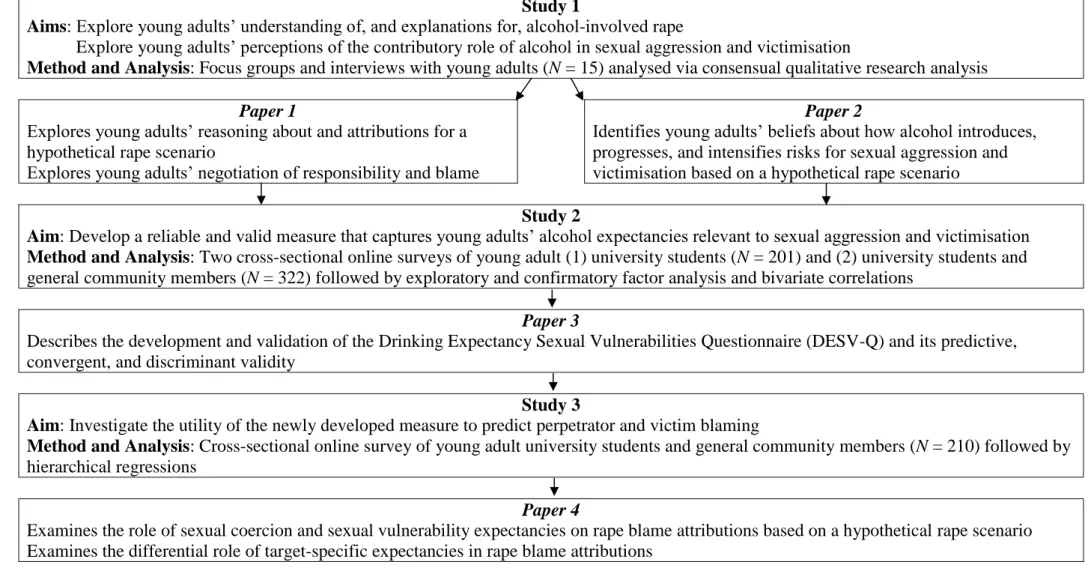
Figure 1.1. Estimated prevalence of sexual assaults (in thousands) in Australia experienced by males and females as a function of perpetrator sex. ... 5 Figure 3.1. Flowchart linking the research studies, aims, and papers. ... 82 Figure 6.1. Final measurement model with latent factor correlations and factor loadings across targets (self, men, women) (N self = 295; N men = 291; N women = 289). ... 160
Figure 8.1. Example image of the “Don’t be that guy” campaign. Image obtained with permission from the Sexual Assault Voices of Edmonton (SAVE;
Table of Acronyms
ABS Australian Bureau of StatisticsAEQ Alcohol Expectancy Questionnaire
AESASVQ Alcohol Expectancies Regarding Sex, Aggression, and Sexual Vulnerability Questionnaire
AIC Akaike’s information criterion
AUDIT Alcohol Use Disorder Identification Test BIS-Brief Barratt Impulsiveness Scale-Brief
CFA Confirmatory factor analysis CFI Comparative fit index
CPA Comprehensive process analysis CQR Consensual qualitative research DEQ Drinking Expectancy Questionnaire
DESV-Q Drinking Expectancy Sexual Vulnerabilities Questionnaire EM Estimation maximisation
EFA Exploratory factor analysis
EPQR-S Eysenck Personality Questionnaire Revised-Short GL Gender Linked (sub-scale of SRQ)
HREC Human Research Ethics Committee
IM Impression Management (sub-scale of PDS) IRMAS-SF Illinois Rape Myth Acceptance Scale-Short form PA Parallel analysis
PAF Principal axis factoring PDS Paulhus Deception Scales QPS Queensland Police Service
RMSEA Root mean-square error of approximation SDE Self-Deceptive Enhancement (sub-scale of PDS) SRMR Standardised root mean-square residual
SRQ Social Roles Questionnaire
VicHealth Victorian Health Promotion Foundation VLRC Victorian Law Research Commission WHO World Health Organization
Glossary of Key Terms
Alcohol expectancy Alcohol expectancy represents an individual’s belief about alcohol’s effect on cognition, emotion, and behaviour.
Attribution Attribution refers to the socio-cognitive process by which an individual constructs explanations for behaviour or events and extends to the assignment of responsibility and blame.
Perceiver/observer Perceiver and observer are terms used in this document to refer to an individual who judges, evaluates, or responds to perpetrators and victims of sexual assault.
Rape Rape refers to oral, anal, or vaginal penetration without consent. The legal definition of rape, as outlined in
Queensland Criminal Code Act 1899, is “carnal knowledge with or of the other person without the other person’s
consent” where consent is “freely and voluntarily given by a person with the cognitive capacity to give the consent”.
Sexual violence Sexual violence is an umbrella term to describe an array of unwanted sexual experiences, ranging from forced sexual contact (e.g., kissing) to sexual penetration without consent (i.e., rape). The terms sexual violence and sexual assault are used interchangeably in this document.
Acknowledgements
I feel truly privileged and humbled by the help, support, and guidance that I have received during my PhD candidature to complete this Thesis by Published Papers. Many people in my personal and professional life have contributed to making this experience positive and tremendously rewarding. In addition, I am very grateful to the School of Psychology and Counselling and the Queensland University of Technology for giving me the opportunity to realise my professional dream while offering me financial support to do so.
First, I would like to acknowledge and thank my exceptional supervisory team – Professor Ross Young, Professor Katherine White, and Doctor Gavan Palk – for their constant encouragement, valuable feedback, and knowledgeable direction. You believed in me when I doubted myself and challenged me to progress in my role as a researcher. I know I would not have been able to complete this PhD without your guidance. I also want to acknowledge the people who have assisted in improving the research design, analyses, and reporting by sharing their expertise and providing feedback and advice: Doctor Ioni Lewis, Doctor Janine Beck, Associate Professor Jane Shakespeare-Finch, Doctor Patricia Obst, and Associate Professor Mark Brough. I have much appreciated your time and efforts.
I would especially like to thank my husband, Rohan, for supporting and believing in me throughout these past three years. Thank you for reminding me that I could do it and for acknowledging my skills and qualities. Thank you for making me laugh when I have let the challenges get to me. Thank you for understanding when I have had to say no to
dinners, parties, and celebrations to study. Thank you for showing an interest in my
research, for attending my seminars and lectures for support, and for grounding me when it was all overwhelming. You have been, and continue to be, my source of strength.
My grandparents, Inga, Stig, Torsten, and Kerstin, my parents, Per-Olof and Agneta, and my siblings, Fredrik, Line, and Janice, have played a major role in every
accomplishment I have achieved. I am so fortunate to have a family that cares so much about me and do everything they can to show me how much they love and support me. I want to, in particular, mention my late grandfather, Stig, whose generosity, warmth, intelligence and love have been immeasurable and truly inspiring. Every good thing that I do has something to do with the person he was. I also feel a deep and humble appreciation for what my parents have done for me throughout my life to ensure my happiness and success.
I never felt alone in the huge undertaking of completing a PhD. My fellow candidates and friends deserve lots of love and attention for making this experience unforgettable. A special thanks to my “buddy” (now Doctor!) Nadine Brayley and my life-long friend Hanna Watling, who not only offered advice, caffeine, and support, but also helped me facilitate the focus groups in the initial stages of the research. I am fortunate also to have had the wonderful colleague and friend, Li Eriksson, beside me every step of the way. Regardless of having millions of things on her own to-do list, Li has always made time for me and taken a particular interest in my professional and personal aspirations and
achievements. To all of the PhD’ers in room 404 – thank you for the encouragement, information, direction, empathy, and emotional support! I want to particularly mention Sherrie-Anne Kaye and Shannon Edmed who started, and will finish, alongside of me.
Last, but not least, I want to thank the participants of this research for offering their valuable time to share their experience about the sensitive topics of alcohol and sexual violence. Your contribution enabled me to complete this research to highlight many important issues which, ultimately, can help the stigmatised victims of sexual violence.
Chapter 1: Introduction and Background
This thesis examines young Australian adults’ (18-25 years) rape perceptions from a social psychological perspective. The main objective of the research was to identify the nature and impact of alcohol expectancies relevant to the evaluation of intoxicated sexual perpetrators and victims. A three-stage research program using a mixed methodology investigated the role of context-specific alcohol expectancies in young adults’
understanding of, and attributions for, alcohol-involved rape. The three studies undertaken in this research program resulted in four papers prepared for publication in academic journals; these papers represent the main body of this thesis. This introductory chapter outlines the theoretical and conceptual background and aims of this PhD program of research. The literature and theories that have informed the aims are reviewed to identify the research problem and the scope of the thesis.
In the first section of this chapter, a brief overview of the relevant Australian legislation is presented to provide a framework for the study of sexual violence. This section further includes definitions of sexual violence terms used in this document. Second, an examination of the prevalence of, and social responses to, alcohol-involved sexual violence is presented. It will be shown that sexual violence is a common experience among Australian women, particularly in young adulthood. Because women with a history of victimisation are likely to disclose their assault experiences to peers, young adults are recognised as an important target group for the study of rape perceptions. Literature that has identified alcohol intoxication as an influential contextual factor on evaluations of sexual perpetrators and victims is discussed also to substantiate the focus on alcohol-involved sexual violence. Third, a critical assessment of existing alcohol expectancy measures is provided to highlight and justify the need for a new context-specific
victimisation. This section is followed by the specific aims and research questions that this thesis addresses. This chapter concludes with a discussion of the theoretical perspectives that underpin this research program and an outline of the scope of the thesis.
1.1. Conceptualising Sexual Violence
Defining acts of sexual violence is inherently difficult, due to an implied
understanding of the meaning of consent. Consequently, a wide spectrum of operational definitions are used in the study of sexual violence where terms such as sexual assault, sexual aggression, and sexual violence represent umbrellas for a range of non-consensual sexual experiences. Estimations of the prevalence of sexual perpetration and victimisation have, therefore, varied substantially in the literature. Acts of sexual violence as defined in research may not necessarily meet the legal requirements and elements to be considered criminal offences.
1.1.1. Sexual Violence in the Context of Australian Legislation
The legislation relating to sexual assault offences varies between Australian jurisdictions; however, three elements are required for an incident to be considered a sexual offence in Australian law (Heath, 2005). These elements are: (a) the physical act which adheres to the definition of sexual activities in that jurisdiction; (b) the victim’s non-consent; and (c) the perpetrator’s awareness that the victim was not consenting to the physical act (Heath, 2005). The former two elements signify the legal requirement of actus reus (Latin, translates “guilty act”) and the latter signifies the legal requirement of mens rea (Latin, translates “guilty mind”). In the state of Queensland, where the main part of this research was conducted, sexual assault legislation is directed by the Queensland Criminal Code Act 1899 (2013) which includes both indecent assault (i.e., non-penetrative assault) and rape (i.e., penetrative assault). The sexual offence of rape is defined as “carnal
knowledge with or of the other person without the other person’s consent” (§349) and involves oral, anal, or vaginal penetration with a thing or any part of a person’s body.
Over recent decades, major law reforms have been undertaken in Australia, leading to a broadening of sexual assault definitions (e.g., inclusion of oral and anal penetration, digital penetration, and penetration with an object) and a re-conceptualisation of the meaning of consent (Rush, 2011). This re-conceptualisation has resulted in the reliance on a model of consent where sexual autonomy and voluntary agreement are emphasised and assumes a positive state of mind (i.e., the absence of active resistance does not equate to voluntary agreement). In a court setting the defence may, therefore, be required to show that steps were taken by the defendant to obtain consent from the complainant. This model of consent has implications in cases where the complainant is in an altered state of mind (e.g., asleep, heavily intoxicated) and, therefore, unable to give consent.
Although legislative amendments have introduced positive reforms in Australia to improve the response to sexual violence from the criminal justice system, there is less evidence of a parallel change in practice by judges, jurors, and other legal professionals (Easteal, 2011). This lag is apparent in the stable and alarmingly low conviction rate for sexual assault in Australia over the past decades in spite of increases in victims’ reporting (Daly & Bouhours, 2010). Concerns about insufficient responsiveness from the criminal justice system has led to further recommendations for systematic changes such as
specialised handling of sexual assault cases (Victorian Law Reform Commission [VLRC]; 2004). The incongruity between law reform and practice partially stems from the
inefficient implementation of these reforms as well as contradictory interpretation of rape legislation (Easteal, 2011). For instance, following the abolishment of the corroboration warning (i.e., a legal requirement to warn jurors in sexual assault cases only about convicting a defendant based on uncorroborated evidence from complainant testimony)
several decades ago, judges have continued to issue the Murray warning (i.e., warning that directs the jury to scrutinise a sole witness testimony with great care) in sexual assault cases which, it is argued, reinforce the same underlying unverified assumption: Sexual assault victims represent an unreliable class of witness (Attorney General's Department NSW Criminal Law Review Division, 2006). Although the need for further reforms is recognised, it remains critical that public attitudes are addressed concurrently to improve systemic responses to sexual violence as these two processes are intertwined (Temkin & Krahé, 2008). The effectiveness of law reforms relies on the actors assigned to enforce their practical implementation. Given that police, judges, jurors, legal professionals, and support providers are likely to adhere to cultural beliefs about sexual violence, their perpetrators and victims, merely changing the law without addressing these beliefs is insufficient. Exploring the social understanding and attributions for sexual violence is imperative to hold sexual aggressors rightly accountable for their behaviour and increase responsiveness to sexual assault victims.
1.1.2. Sexual Violence Terms Used in this Document
Throughout this document, umbrella terms such as sexual violence and sexual assault are used to refer to a number of non-consensual sexual experiences, ranging from unwanted sexual contact (i.e., touching) to completed rape (i.e., oral/vaginal/anal
penetration). Acts that fall under either of these terms may, as indicated previously, not be classified as criminal under the current sexual assault legislation. However, aligned with Queensland’s legislative definition, rape refers exclusively to oral, anal, or vaginal
penetration without consent. It is acknowledged that both men and women are represented among perpetrators and victims of sexual violence; however, this document discusses exclusively men’s sexual aggression against women. The overwhelming majority of sexual assaults, including rape, are committed by male perpetrators with victims most likely to be
females (Australian Bureau of Statistics [ABS], 2013a; Queensland Police Service [QPS], 2012; Statewide Steering Committee to Reduce Sexual Assault, 2006). Based on the Personal Safety Survey conducted in Australia in 2012 (ABS, 2013a), an estimated 97.1% of all sexual assaults against women since the age of 15 years were committed by a male perpetrator (see Figure 1.1.). An estimated 18.8% of all victims were male. It is important to note, however, that while sexual violence is a relatively common experience among women (Mouzos & Makkai, 2004), a minority of men are responsible for a
disproportionate amount of sexual violence (Lisak, 2004).
Figure 1.1. Estimated prevalence of sexual assaults (in thousands) in Australia experienced by males and females as a function of perpetrator sex. Estimations are based on the 2012 Personal Safety Survey responses of 3,743 males and 13,307 females in private dwellings from random stratified samples across all Australian states.
1.2. Introduction to the Research
Men’s sexual violence against women is a pervasive societal problem associated with detrimental outcomes for those affected (World Health Organization [WHO], 2002).
0 100 200 300 400 500 600 700 800 900 Male Female E stim ated f req u en cy ( '0 0 0 ) Sex of perpetrator Male victim Female victim
Ineffective and unsupportive responses toward sexual assault victims from individuals and social systems have been demonstrated repeatedly in the literature (Campbell & Raja, 1999; Lievore, 2005; Patterson, 2011; Temkin & Krahé, 2008; Ullman, 2010). Such responses may contribute to silencing survivors or hinder their recovery (Ahrens, 2006; Lievore, 2005; Orchowski, Untied, & Gidycz, 2013b; Patterson, Greeson, & Campbell, 2009) and underscore the importance of continued efforts to improve social responses to sexual assault victims to facilitate their healing.
Given that a strong link exists between alcohol consumption and sexual assault in Western countries (e.g., Abbey, Zawacki, Buck, Clinton, & McAuslan, 2001; Abbey, Zawacki, et al., 2002; Zawacki et al., 2005), it is imperative to understand alcohol’s influence on people’s responses to sexual violence. From a social perceptions perspective, alcohol intoxication has been identified as a factor which serves to mitigate the
perpetration of rape (e.g., Cameron & Stritzke, 2003; Coates, 2004; Richardson & Campbell, 1982) and is associated further with negative evaluations of the rape victim (e.g., Hammock & Richardson, 1997; Sims, Noel, & Maisto, 2007; Untied, Orchowski, Mastroleo, & Gidycz, 2012). Although this association has been well established (Grubb & Turner, 2012), the underlying socio-cognitive processes involved in these evaluations are less clearly understood. This research program examined alcohol’s role in social
perceptions of intoxicated sexual violence through the application of alcohol expectancy theory (Goldman et al., 1999; Young & Oei, 1993) and focused on a severe form of sexual assault; completed rape.
Alcohol expectancies refer to beliefs about the effects of alcohol on cognition, emotion, and behaviour and are formed through direct and vicarious experiences
(Goldman, Brown, & Christiansen, 1987; Goldman et al., 1999; Young & Oei, 1993). The alcohol expectancy concept and the process by which expectancies predict behaviour are
widely acknowledged in the literature: However, this concept has been largely overlooked in rape-perception research. More specifically, investigations of the role of perpetrator and victim intoxication on perceivers’ judgments of sexual violence have not considered fully the potential impact of alcohol expectancies held by the perceiver. The current research program addressed this gap through exploring the link between young adults’ alcohol-related beliefs and their attributions for intoxicated sexual violence. The findings of this research may inform the development of targeted interventions for young adults to counteract justifications for sexual aggression and to reduce victim blaming.
1.3. Background to the Research
In Australia in 2012, 18,153 sexual assaults were reported to police, representing a victimisation rate of 80 victims per 100,000 persons (ABS, 2013b). However, due to the magnitude of hidden numbers, reported cases are estimated to reflect between 12-20% of actual incidents of sexual assault (Daly & Bouhours, 2010). This estimation was made possible by a number of large-scale victimisation surveys conducted in Australia since 1996. For instance, the Australian component of the International Violence Against
Women Survey revealed that 1 in 10 Australian women has experienced forced intercourse (i.e., rape) at some stage of their lives (Mouzos & Makkai, 2004). Telephone interviews were conducted with over 6,600 women and the sample was weighted by age and
geographic area to represent the Australian female population between the ages of 18 and 69 years. Sexual violence was defined as non-consensual sexual activity obtained by physical or threatened force, intimidation, or coercion. By this definition, the women between 18 and 24 years were particularly likely to have experienced sexual violence with 12% of women in this age group reporting at least one incident of sexual assault in the past 12 months. These findings are consistent with a body of research which has identified young adults as a high-risk group for sexual perpetration (e.g., ABS, 2011) and
victimisation (e.g., ABS, 1996; Statewide Steering Committee to Reduce Sexual Assault, 2006), thus, suggesting that sexual violence may be a relatively common experience among young Australians.
There are, however, important methodological issues associated with self-report data that may obscure prevalence estimates of sexual assault. Victimisation surveys hinge on participants’ willingness to self-disclose, on their victimisation experiences to be recalled and captured by the survey questions, and the sensitive management of concerns relating to confidentiality and social desirability (Cook, Gidycz, Koss, & Murphy, 2011). However, all of these issues contribute to a likely underestimation of sexual assault prevalence, signalling that actual victimisation may be more common than suggested in the literature.
1.3.1. Research Problem
Although the majority of sexual assaults remain unknown to the criminal justice system, disclosure to support providers outside of law enforcement is common (e.g., friends, counsellors, rape crises centres; Ahrens, Cabral, & Abeling, 2009; Orchowski & Gidycz, 2012). For example, in a study of sexual assault experiences among college women (Orchowski & Gidycz, 2012), 74.6% of women with a history of victimisation discussed their assault to someone: Of these disclosures, 8% were to a formal support provider while 86% were to a female peer. According to the 2012 Australian Personal Safety Survey, 59.3% of women sought help or advice following their most recent sexual assault while only 19.1% contacted police. Importantly, negative reactions from informal support providers may function to discourage further help-seeking behaviours (Ahrens, 2006). Given the impact of negative reactions, continued efforts are needed to improve responses towards victims of sexual violence. To achieve this aim, an understanding of the beliefs and socially constructed explanations (i.e., social attributions) that underpin
Social perceptions of sexual violence are influenced by a number of individual and situational characteristics which may increase the tendency for perceivers to exonerate sexual aggression or engage in victim blaming. Experimental research has identified perpetrator and victim alcohol consumption as factors which may lead perceivers to excuse or justify sexual violence: However, the nature of these attributions has, mainly, been inferred rather than explored directly. Quantitative rape-perception studies have investigated the effect of alcohol-involvement on responsibility and blame attributions (e.g., Cameron & Stritzke, 2003; Richardson & Campbell, 1982), responses from the criminal justice system (e.g., Schuller & Stewart, 2000), and mock-juror judgments (e.g., Lynch, Wasarhaley, Golding, & Simcic, 2013; Schuller & Wall, 1998). Although such investigations substantiate the “excuse value” of alcohol and its role in justifying sexual violence against women, the process by which this justification occurs cannot be derived from quantitative experimental studies. Qualitative inquiry is required to gain a richer understanding of the social reasoning which underlies justifications for alcohol-involved rape.
Some qualitative research has been undertaken to explore attributions for alcohol-involved sexual violence. In one study, 190 women with a history of sexual victimisation participated in face-to-face interviews to examine alcohol’s actual and perceived role in their victimisation (Testa & Livingston, 1999). Thematic analysis revealed that victims ascribed a contributory role to alcohol through its effects on judgment (e.g., failing to leave a dangerous situation due to drinking) and behaviour (e.g., alcohol preventing effective resistance) although these beliefs did not directly translate into self-blame. However, given that rape may have a profound impact on psychological and cognitive functioning (Koss et al., 1994), a victim’s understanding of her own assault cannot be assumed to reflect
perspective, people’s evaluations of their own character and behaviours differ considerably from the evaluation of others’ characters and behaviours (e.g., Hansen, Kimble, & Biers, 2001; Jones & Nisbett, 1987; Trafimow, Armendariz, & Madson, 2004). Nevertheless, the presumption that observers engage in qualitatively distinct social reasoning when
confronted with intoxicated sexual violence needs further investigation.
Focusing on observers’ perceptions, Finch and Munro (2007) used qualitative analysis to explore mock-jurors’ responsibility attributions across a series of simulated rape trials in which the complainant was portrayed as intoxicated. The means of administration was varied across the trials (e.g., self-administration, surreptitious administration by the defendant). Further, a sub-set of trials involving other types of intoxicants (i.e., drugs generally associated with “drug-assisted” sexual assault; Rohypnol, Estazolam), all of which depicted surreptitious administration, was presented. A methodological strength of this study was reflected in the aim to replicate a naturalistic setting by having actors and barristers enact a rape trial live in front of an audience. Study participants were 185 jury-eligible community members recruited in the UK, instructed to deliberate towards a verdict based on the defendant’s liability for rape (the criminal definition was provided to
participants).
In the deliberations that followed the alcohol-involved trials, jurors repeatedly referred to the complainant’s alcohol consumption to infer her own responsibility for being raped, even in cases where alcohol was administered to the victim without her knowledge (i.e., surreptitious administration). From the framework of attribution theory (describes how people cognitively construct causal explanations for events and behaviour; see Section 1.5.1.), the authors concluded that jurors engaged in defensive attribution (i.e., I would have done things differently) and counterfactual reasoning (i.e., If she had done things differently, it would not have happened) to hold the victim partially responsible for
alcohol-involved rape. In cases where drugs (i.e., Rohypnol or Estazolam) were
surreptitiously administered to the complainant, however, jurors were more likely to infer premeditation on part of the defendant. In these instances, jurors engaged in counterfactual reasoning that served to attribute responsibility to the defendant rather than the
complainant. Given the greater acceptance of surreptitious administration of alcohol, compared to Rohypnol and Estazolam, these findings suggest that there are meanings specific to alcohol that serve to normalise sexual violence (Finch & Munro, 2007).
Overall, the application of attribution theory allows for an analysis of the cognitions which serve to excuse alcohol-involved rape. However, because attribution theory is a general cognitive process theory which can be applied to any number of contexts, the specific aspects of alcohol intoxication which lead perceivers to excuse sexual aggression or hold the victim responsible remain unclear. The observation that counterfactual
reasoning produced responsibility attributions differently depending on whether alcohol or drugs were administered to the complainant (Finch & Munro, 2007) further validates a focus on the intoxicant per se to clarify social attributions for intoxicated sexual violence.
Although prior rape-perception research has supported the mitigating role of alcohol, people’s reasoning around, and justifications for, sexual violence are complex (see Anderson, Beattie, & Spencer, 2001; Buddie & Miller, 2001; Ellison & Munro, 2010). As such, a qualitative approach to gain an in-depth understanding of the socio-cognitive process underlying justifications for rape is warranted. With an aim of understanding social responses more broadly, however, mock-juror studies are inherently limited in that they are focused on the task of determining legal responsibility to render a verdict: Thus, findings reflect people’s understandings of rape within a legal context. A qualitative exploration of social attributions outside of a legal setting using people who are likely to respond to initial victim disclosure will provide a better basis to address this aim.
It was expected that a qualitative exploration of the alcohol-related beliefs that are associated with justifications for sexual aggression and victim blaming would generate a rich understanding. The inherent progression from having established an understanding of these beliefs is the examination of their prevalence and relation to other individual
difference constructs. As such, the development of an alcohol expectancy scale was timely. This measure could, ultimately, be used as a tool to facilitate the development of alcohol expectancy-based interventions which aim to challenge the reliance on those expectancies that have a negative impact on rape perceptions.
1.3.2. Existing Expectancy Measures
A number of alcohol expectancy measures exist that assess general beliefs about alcohol’s effect on people’s cognitions, emotions, and behaviours. With the development of the Alcohol Expectancy Questionnaire (AEQ; Brown, Goldman, Inn, & Anderson, 1980), it was first demonstrated that expected reinforcements from alcohol could be conceptualised into domains which relate to the enhancement of sexual arousal, power-aggression, sociability, and physical relaxation. Although the AEQ has been well
established in the alcohol expectancy literature, the measure has been criticised for the lack of negative expectancy domains (Adams & McNeil, 1991; Young, Connor, Ricciardelli, & Saunders, 2006). Research that has incorporated both positive and negative expectancies have generated empirical support for their theoretical distinctiveness as these beliefs relate to different patterns of alcohol use (Leigh & Stacy, 2004; McMahon, Jones, & O'Donnell, 1994; Neighbors, Lee, Lewis, Fossos, & Larimer, 2007).
The mere distinction between positive and negative alcohol expectancies, although relevant, may not adequately capture the role of expectancies in individuals’ drinking behaviours. Examining problem drinking among 733 adolescents, Gaffney, Thorpe, Young, Collet, and Occhipinti (1998) found that strong sex-related alcohol expectancies
were related to problem drinking specifically for teenage boys whereas expectancies relating to cognitive change predicted problem drinking for teenage girls. More recently, Pabst, Kraus, Piontek, Mueller, and Demmel (2014) examined the relative importance of different expectancy domains in predicting heavy episodic drinking and alcohol-related problems among groups of young and older adults. The authors found that, while social assertiveness expectancies predicted heavy episodic drinking and cognitive impairment and aggression expectancies predicted alcohol-related problems among young adults, these predictive paths were not replicated with the older adults group. Instead, older adults’ aggression-related expectancies predicted both heavy episodic drinking and alcohol-related problems.
Collectively, these findings suggest that different alcohol expectancy domains are relevant for different groups of individuals and that age- and sex-specific expectancies may be associated with harmful or risky outcomes. Similarly, more narrowly defined alcohol-related behaviours can be attributed to specific alcohol expectancy domains or patterns of these domains. The expectancy that alcohol increases aggression, for example, has been shown to mediate the relationship between general alcohol use and alcohol use prior to violent offending, suggesting that alcohol may be consumed intentionally by high aggression-expectant individuals to engage in aggressive acts (Zhang, Welte, &
Wieczorec, 2002). Thus, the development of context-specific alcohol expectancy measures is warranted to understand better alcohol-related cognitions and behaviours other than people’s frequency and level of consumption.
The necessity for context-specific alcohol expectancy measures is underscored by the influence of cultural factors on alcohol-related beliefs (Room & Bullock, 2002). Mullens, Young, Dunne, and Norton (2010) argued further for a need to understand expectancy beliefs among sub-cultural groups, leading to the development of the Cannabis Expectancy
Questionnaire for Men who have Sex with Men. Mullens et al. identified several expected reinforcers associated with Cannabis use in this group that are not captured in more general expectancy measures, supporting the cultural and sub-cultural specificity of substance use expectancies. Given that the current research focuses on narrowly conceptualised alcohol-related behaviours (i.e., alcohol-involved sexual aggression and victimisation) in a targeted population (i.e., young Australians), an exploration of expectancy domains specific to this context is required. In addition, this research focuses on more negative and extreme domains compared to general alcohol expectancy. To date, no research has been
undertaken in Australia to examine the prevalence or endorsement of alcohol expectancies relating to sexual violence.
Although no Australian research exists to link alcohol expectancies and sexual violence, the need for an alcohol expectancy measure which encompasses domains that specifically relate to sexual violence was first recognised by Abbey, McAuslan, Ross, and Zawacki (1999). The research undertaken by Abbey et al. in America resulted in the development of the Alcohol Expectancies Regarding Sex, Aggression, and Sexual
Vulnerability Questionnaire (AESASVQ). Nonetheless, this scale does not directly assess the expectancy that alcohol facilitates sexual aggression per se: Rather, it intends to capture expectancies that are thought to contribute to sexually aggressive behaviour. Thus, the items relating to aggression reflect general outcome expectancy (i.e., “When drinking alcohol, I/men/women feel angry”) which is included in the majority of existing measures. Sexual aggression represents a distinct form of aggression which is perceived differently by observers (Hilton, Harris, & Rice, 2003; Pösö, Honkatukia, & Nyqvist, 2008). A
measure intended to assess sexual aggression expectancy specifically as well as perceivers’ beliefs about how alcohol increases sexually aggressive behaviour is, therefore, needed.
The AESASVQ (Abbey et al., 1999) was developed based on research investigating the prevalence and predictors of men’s sexual aggression. In the context of the current research, it was acknowledged that perceivers’ alcohol expectancies which serve to explain or excuse sexual violence may, or may not, reflect expectancies which contribute to
sexually aggressive behaviour. For instance, alcohol expectancies relating to aggression may lead aggressive-prone men to use alcohol as a strategy to engage in violent behaviour, including sexual assault (Zhang et al., 2002). Similarly, it was considered likely that perceivers may excuse intoxicated sexual aggression if they believe that alcohol caused or facilitated this behaviour. However, perceivers may also explain or justify
alcohol-involved rape because they believe it to be less intended (Cameron & Stritzke, 2003) or due to a compromised awareness of wrongdoing (Starfelt & White, in press) (i.e., expectancies that alcohol impairs cognition was considered potentially relevant).
Therefore, an exploration of the perceived rather than the empirically established role of alcohol in sexual violence was important to understand social attributions for alcohol-involved rape and draw conclusions regarding young adults’ likely responses towards sexual perpetrators and victims.
The inclusion of a domain specifically measuring the expectancy that alcohol
increases vulnerability to sexual coercion has, to date, been unique to AESASVQ (Abbey et al., 1999). However, the expected effects of alcohol which are thought to contribute to this perceived vulnerability are not incorporated in this measure. The present research program addressed this gap and explored the alcohol-related beliefs that underpin perceptions of sexual vulnerability. In conclusion, the measure developed through this research program was designed to assess expectancies relating to sexual violence more comprehensively than the AESASVQ and was expected to differ from Abbey et al.’s scale in a number of specific ways: (1) Whereas the AESASVQ includes items which relate to
general aggression, the new measure aimed to capture sexual aggression expectancies specifically; (2) While the sexual vulnerability domain has been unique to AESASVQ and an equivalent domain was planned for the new measure, it was expected that the measure developed in this research would also capture those expected effects of alcohol which are thought to result in sexual aggression and sexual vulnerability; (3) The focus on the perceived role of alcohol in sexual aggression and victimisation were expected to differentiate the new measure from the AESASVQ which focused on the empirically established role of alcohol in sexual aggression using an item generation process based on the broader empirical literature in the field.
1.4. Overview of the Research Program
Against the backdrop of previous research, which demonstrates a tendency for
perceivers to excuse perpetrators and blame victims of intoxicated sexual violence (Grubb & Turner, 2012), this research program advanced the understanding of rape attributions by exploring the role that alcohol expectancies play in these perceptions. The application of alcohol expectancy theory (Goldman et al., 1987; Goldman et al., 1999; Young & Oei, 1993) provided an original and important contribution to this area of research. The
development of a measure resulted from this research to address the need for an instrument that assesses alcohol expectancies relating specifically to sexual aggression and sexual victimisation. The Drinking Expectancy Sexual Vulnerabilities Questionnaire (DESV-Q) was, subsequently, used to examine the effect of context-specific alcohol expectancies on attributions of blame to an intoxicated sexual perpetrator and victim.
1.4.1. Target Population
This research program targeted young adults between the ages of 18 and 25 years. This population represents a relevant focus of investigation and was expected to provide rich data based on recent reported trends relating to alcohol use and unwanted sexual
experiences in this age group. The high prevalence of problem drinking among young adults is a significant social issue that carries substantial health-related costs to the
Australian society (Milne, Bell, Lampropoulos, & Towns, 2007). Young men and women are particularly likely to drink excessively on any one occasion (i.e., "binge-drink"; operationally defined as six or more drinks on one occation; Australian Institute of Health and Welfare, 2011; Livingston & Room, 2009), placing these men and women at
heightened risk for experiencing acute alcohol-related harms (e.g., injury, assault; Kypri et al., 2009; National Health and Medical Research Council, 2009). Based on current
literature which suggests that alcohol use (i.e., frequency and amount) and misuse (e.g., dependence, binge drinking) in this age group are linked to the endorsement of alcohol expectancies (Chartier, Hesselbrock, & Hesselbrock, 2011; Pabst, Baumeister, & Kraus, 2010; Pabst et al., 2014; Young et al., 2006), the exploration of alcohol-related beliefs held by men and women in this population is timely and appropriate.
The link between alcohol expectancies and alcohol use in young adults has been explained mainly in terms of positive outcome expectancies (Bot, Engels, & Knibbe, 2005). For example, young adults who endorse the belief that alcohol enhances social and sexual experiences are more likely to drink heavily compared to older adults who endorse these expectancies (Pabst et al., 2010). However, the association between alcohol and social and sexual enhancement may place young adults, more frequently, in high-risk situations where negative outcomes, such as sexual aggression or victimisation, may occur. It is reasonable to assume that, given that young adults are likely to experience negative consequences from drinking (e.g., Felson & Burchfield, 2004; Hingson, Zha, & Weitzman, 2009; Kypri et al., 2009), context-specific negative alcohol expectancies (such as those explored in this research program) may crystallise further in young adulthood, and the association between alcohol and negative consequences may be particularly relevant to
individuals in this age group. Although negative expectancies may play a less important role in alcohol consumption among young adults (i.e., young adults may drink heavily in spite of endorsing negative alcohol expectancies; Bot et al., 2005), these expectancies may play a role in other outcomes, such as alcohol-related problems (Pabst et al., 2014). Young adults’ attributions for negative experiences under the influence of alcohol may be
influenced also by negative expectancy endorsement. This assertion was addressed in this research program.
The relevance of targeting young adults in the study of perceptions of alcohol-involved sexual violence is corroborated by the overrepresentation of women with a history of sexual victimisation in this age group (ABS, 1996; Ingemann-Hansen, Sabroe, Brink, Knudsen, & Charles, 2009; Lauritsen & White, 2001; Mouzos & Makkai, 2004). Given that sexual assault victims are particularly likely to disclose their assault to friends (Fisher, Daigle, Cullen, & Turner, 2003; Orchowski & Gidycz, 2012; Ullman, Starzynski, Long, Mason, & Long, 2008), young adults represent key support providers for victims.
1.4.2. Research Aims
The overall aim of this research was to investigate the role of alcohol expectancies in young adults’ perceptions of alcohol-involved rape. This overall aim was addressed in a developmental research program encompassing three separate studies, with initial findings informing subsequent investigations. The research program specifically aimed to: (1) explore young adults’ understanding of, and explanations for, alcohol-involved rape; (2) explore young adults’ perceptions of the contributory role of alcohol in sexual aggression and victimisation and how these perceptions relate to alcohol’s empirically established role in sexual violence; (3) develop a reliable and valid measure that captures young adults’ alcohol expectancies relevant to sexual aggression and victimisation; and (4) investigate the utility of the new measure in predicting blame attributions for alcohol-involved rape.
Four papers were prepared and submitted for publication and each addressed one of the four overall aims. As such, Study 1 resulted in two papers and Studies 2 and 3 each resulted in one paper.
1.4.3. Research Questions
To achieve the overall research aims, each study was guided by a set of research questions. These research questions informed the methodological approaches and analytical procedures that were employed in this research program.
1.4.3.1. Study 1.
1. What is young adults’ reasoning around alcohol and rape?
2. What are the expected effects of alcohol, referred to by young adults, which are seen to contribute to alcohol-involved rape?
3. Do young adults use cues relating to alcohol intoxication to excuse the perpetrator’s behaviour or to blame the victim and if so, in what ways?
4. What are the similarities and differences in young adults’ reasoning around sexual aggression, compared to sexual victimisation, in regards to alcohol’s effect on people’s cognitions, emotions, and behaviours?
5. How do young adults expect alcohol-involved rape to affect the perpetrator and victim in its aftermath?
6. How do young adults’ perceptions of the role of alcohol in sexual violence compare to the empirically established role of alcohol in sexual violence?
1.4.3.2. Study 2.
1. What items best capture young adults’ alcohol expectancies relating to sexual aggression and victimisation?
2. What is the relationship between young adults’ general alcohol expectancies and alcohol expectancies relating to sexual aggression and victimisation?
3. Are young adults’ endorsement of alcohol expectancies relating to sexual aggression and victimisation influenced by personality domains?
4. What is the relationship between young adults’ alcohol use and their endorsement of alcohol expectancies relating to sexual aggression and victimisation?
1.4.3.3. Study 3.
1. How do young adults’ alcohol expectancies relating to sexual aggression and victimisation affect blame attributions for alcohol-involved rape?
2. What is the relative importance of self- and other-oriented assessment of alcohol expectancies relating to sexual aggression and victimisation in predicting blame
attributions for alcohol-involved rape?
1.5. Theoretical Frameworks Informing the Thesis
This thesis is informed by the two major theoretical perspectives of attribution theory and alcohol expectancy theory and provides a social psychological understanding of individual beliefs and attributions. In addition, the thesis uses concepts derived from clinical and psychological substance use literature. Attribution theory and alcohol
expectancy theory are reviewed in this section to provide a theoretical framework on which the research aims of this thesis are based.
1.5.1. Theory Underpinning Rape Attributions
Attribution theory refers to a family of theories which attempts to illuminate the socio-cognitive process of people’s everyday explanations for events and behaviour. The
theoretical basis of attribution was first explored in Heider’s (1958) seminal work which main postulation was that people are active seekers and interpreters of cause-effect
relationships. Heider likened people to naïve scientists with an inherent need to understand and predict their social world as a way of maintaining control. Heider’s original proposals regarding people’s intentions to act (reasons for a behaviour) and enabling factors (factors