AGRI-2012-C4-04 - Analysis on future
developments in the milk sector
Prepared for the European Commission - DG Agriculture
and Rural Development
Final report
19 September 2013ii
Executive summary
This report proposes a prospective vision of the future of the European milk market after the removal of the quotas in 2015. The study has been conducted through consultation of a panel of independent experts. Experts have offered their opinions to describe future trends, driving factors, perspectives and challenges expected in the years to come and they have concluded by providing recommendations.
The focus of the analysis has been to define likely scenarios following the end of the quota regime in the EU27. Scenarios are described as a synthesis of experts’ opinion reports. They have been introduced by a theoretical analysis surveying literature on the topic and a descriptive chapter including data on trends in the dairy sector.
The analysis takes into account the role of market forces, organisational systems (in particular, producer organisations and inter-branch organisations) and policy measures in drawing perspectives of the milk sector in terms of:
I. Market balance and competitiveness – The analysis covers various components of the sector’s competitiveness, such as added value of products, differentiation of product portfolio, ability to promptly react to changes in domestic and world demand, market share in the world market, price of raw materials and final products, investments in the
production and processing industry. This theme has been analysed by Paolo Sckokai, Joost M.E. Pennings and Ludwig Theuvsen.
II. Sustainable milk production including territorial dimension – The analysis assesses the milk sector’s contribution to the total agricultural product value as well as its role in maintaining vibrant rural communities, especially in the most fragile areas. The analysis identifies regions at risk, also describing elements that may underpin the sustainable development of the sector including its economic and territorial dimensions and suggests appropriate actions. This second theme has been analysed by Michel de Haan (and Jelle Zijlstra), Susanne Clausen and Heikki Lehtonen.
Market balance and competitiveness
To draw most likely scenarios on the evolution of the sector, experts have considered quantitative and qualitative information on different factors. Evolution of domestic and international market forces has been considered by all experts as central elements together with changes in the agricultural and trade policies.
All experts agree that quota removal does not seem to represent a crucial element in determining market perspectives as quotas are no more binding in most of the European Member States. According to experts, most important is to consider the global evolution of market forces at the international level and how European dairy sector will adapt to it. As regards the analysis of added value and portfolio of products, experts have found it relevant to look at the evolution of international demand and dairy prices and how the organisation of the supply chain affects the distribution of added value along the supply chain. Two experts (Paolo Sckokai and Joost M.E. Pennings) predict that an increasing share of milk will be processed into high value products, with a lesser share devoted to industrial products. They add that the abolishment of milk quotas will allow for more innovation with positive effects on the variety and added value of dairy products. This will result from enhanced level of competitiveness on the market. Ludwig Theuvsen foresees no major impact of the removal of the milk quota system on product portfolios and added value. Experts also consider the role of policy measures. The milk package has been assessed mainly based on theoretical considerations due to the fact that no specific study has yet been conducted for the dairy sector. Sometimes, the analysis referred to experiences in other sectors, such as the fruit and vegetables or the meat sector. They all consider that it is useful for sharing market information and providing incentives. However, they doubt that these will have major impacts on market evolutions.
iii Experts regard the ability to react to changes in demand as something driven by the new policy framework targeting a more market-oriented milk production. To assess
competitiveness of the European Union in the world market, experts referred to the difference in production costs between Europe and its international competitors. Cost information has also been analysed to provide insight on the needs of investments in the production and processing industry. In addition, experts considered the differentiation of strategies that firms could implement to adapt at best to an increasingly demand-driven environment.
There is a broad consensus among experts on the fact that price volatility constitutes one of the greater challenges that dairy producers will have to face in the near future. Joost M.E. Pennings notices that current instruments should be refined and complemented by additional tools to face instability in the markets. In particular, well-functioning futures markets are considered as essential by this expert. All the three experts do not see in the buy-out scheme an appropriate policy instrument to face price volatility. Joost M.E. Pennings finds that the buy-out scheme could perturb the functioning of future markets. Ludwig Theuvsen suggests to critically review whether dairy farming is the most suitable farming practice for the least-favoured areas (e.g. the Alpine regions), where less intensive farming practices, such as beef production or keeping of suckler cows could be more effective in meeting society’s goals with regard to these areas. This should be also
considered given that often these areas have to adopt more intensive farming techniques to offset their competitive disadvantage.
All experts also agree on the fact that the distribution of value added along the dairy supply chain is currently unbalanced in favour of processors. Paolo Sckokai and Joost M.E.
Pennings consider that POs and IBOs could represent appropriate tools in the future to alleviate asymmetries in bargaining power between producers and processors and it is recommended that such organisations could be reinforced in the near future. However, Ludwig Theuvsen doubts that POs and IBOs will work effectively in rebalancing bargaining power between producers and processors. Paolo Sckokai recommends that adequate sizes should be fixed for POs and IBOs and that a particular effort should be put in fostering commercial POs. The size is important to have organisations highly representative and with sufficient bargaining power. Commercial POs are among the organisations that have proved more successful in pursuing the interests of their members.
Challenges Recommendations Experts in favour
Price volatility
Current instruments should be refined or complemented by further tools. A clear price and volume information platform should be instaured.
Joost M.E. Pennings
Buy-out scheme should not be implemented. Joost M.E. Pennings Ludwig Theuvsen Paolo Sckokai Strengthen the safety net for extreme market situations. Ludwig Theuvsen
Paolo Sckokai Disadvantaged
areas The current legal framework should be reinforced for less favoured areas. It could be reconsidered whether less favoured regions could possibly be reconverted to less intensive farming practices, such as e.g. beef production.
Ludwig Theuvsen
Unbalanced distribution of value added across the supply chain
The roles of POs and IBOs should be reinforced. Joost M.E. Pennings Ludwig Theuvsen Paolo Sckokai The creation of commercial POs should be stimulated.
The law should fix adequate sizes for POs and IBOs in order to make them more effective and for POs to improve their
iv
Challenges Recommendations Experts in favour
bargaining power.
Foster the coordination of farms with institutional bodies to promote PDO/PGIs.
Sustainable milk production including territorial dimension
To assess the role of milk in maintaining vibrant rural communities, experts have considered both aspects on economic development and environmental intensity of milk production. From a socioeconomic point of view, the dairy sector has a particular importance for fragile areas. Fragile areas are, in general, described as areas with few economic opportunities in addition to those offered by the dairy sector. As regards the territorial dimension, experts have looked at possible increases in production intensity following the removal of quotas and its consequences on the environment.
To identify regions and production systems which might be more challenged after 2015, experts have used different classifications. Sometimes they have preferred to clearly distinguish between the geographical and the organisational component, defining clusters of regions and different ways of organising farms production to then attribute production systems to geographical areas. In other cases, they have directly treated geographical systems as production systems.
Different measures have been used to assess the importance of the milk sector in regional economies. For example, Michel de Haan and Jelle Zijlstra assessed the weight, first looking at the dimension of the agricultural sector with respect to the regional economy and then of the whole dairy sector with respect to the agricultural sector. In addition to production, Susanne Clausen has also considered the employment dimension.
The experts tend to align on the fact that the milk sector already plays a relatively marginal role in most of regional economies. The milk sector will continue to contribute to economic growth and job creation only in a limited number of regions. No major change is expected to take place following the removal of the quotas in 2015.
Overall, after 2015, no dramatic change is expected in the trend of the restructuring process that has been taking place in the last years in Europe. The production will tend to be more concentrated in larger and more efficient farms and this will also induce a
geographical distribution towards countries characterised by the presence of more farms with such characteristics.
All experts see environmental degradation as one of the main challenges for the years to come. Michel de Haan and Jelle Zijlstra recommend to leave up to harmonised rules and environmental regulations to offset negative consequences on environment due to intensified production and, in agreement with Susanne Clausen, R&D programmes to enhance sustainability for the dairy sector.
There is also a general alignment in identifying the farmland abandonment as a major risk for certain areas in the forthcoming periods, even though this is regarded as independent from the removal of quotas. All the experts seem to agree that the mountainous regions can endeavour difficulties in various countries, such as Portugal, Italy, Greece and France. Michel de Haan, Jelle Zijlstra and Heikki Lehtonen all report Romania and Bulgaria as the possible countries endeavouring more difficulties. They also find that some regions in the Nordic areas (Northern Sweden and Northern and Eastern parts of Finland) are more at risk of suffering difficulties in the foreseeable future. There is a general consensus that regions in Central and Eastern Europe could also have regions suffering more in the years to come. Also for the Eastern countries, regions that appear to be more at risk are the mountainous ones.
In this respect, Michel de Haan and Jelle Zijlstra recommend to put in place policy instruments with the aim of preserving landscapes in regions with ecologically valuable
v habitats. They also suggest to facilitate the restructuration of the sector with less
competitive farmers moving to other more profitable (farm or non farm) sectors. Heikki Lehtonen and Susanne Clausen advise to maintain coupled payments in areas where preserving dairy farmer’s activities are perceived as a strategic objective. Heikki Lehtonen recommends to realising a precise mapping of all those areas which could be more at risk to suffer from future markets fluctuations. Nevertheless, this expert expects a more
significant decrease of milk producer prices following the milk quota abolition, at least in the long run, than anticipated in the recent literature. This will make the position of less favoured areas more difficult.
Susanne Clausen perceives lack of investment as a major challenge and suggests introducing various measures to stimulate investment in dairy activities.
All experts conclude that market trends will represent the main determinants for the future of the milk sector. Global prices of inputs and outputs and demand are becoming the main drivers with an impact on perspectives of the dairy sector development. Overall, the quota abolition is expected to have a relatively reduced impact in the short to medium run and cause only minor changes in the development of the dairy sector across the European regions.
Challenges Recommendations Experts in favour
Environmental degradation
It is recommendable to introduce R&D programmes to
enhance sustainability for the dairy sector. Michel de Haan and Jelle Zijlstra Susanne Clausen A part of land payments should be conditional to suitable
environmental criteria.
Heikki Lehtonen
Establishment of environmentally sustainable production
systems. Michel de Haan and Jelle Zijlstra
Susanne Clausen
Farmland abandonment
It is recommendable to put in place policy instruments in order to preserve regions with ecologically valuable habitats.
Michel de Haan and Jelle Zijlstra
Production coupled payments should be maintained in less favoured areas if milk production in these areas is pursued as a strategic objective.
Heikki Lehtonen Susanne Clausen
Coupled payments could be complemented by branding
support (e.g. PDOs or PGIs). Heikki Lehtonen
High vulnerability of fragile areas to prices
fluctuations
A precise mapping of fragile areas should be created and this implies the selection of clear and objective indicators to do so.
Heikki Lehtonen
Lack of investments
Follow up on the implementation of the Milk Package and support farmers with knowledge, training and advisory service on how to effectively operate producer
organisations in order to strengthen farmer's position in the value chain.
The establishment of a futures market could be a way to enable farmers better managing risks associated with volatile milk and feed prices. This will, however, require considerable amount of education and training of farmers in how to use this.
Susanne Clausen
Access to capital should be facilitated especially in more disadvantaged areas for instance by establishing a loan fund for farmers.
Political initiatives targeting young people and rendering
Susanne Clausen Michel de Haan and Jelle Zijlstra
vi
Challenges Recommendations Experts in favour
milk production attractive should be introduced.
Training and education programmes should be considered
to prepare farmers in tackling challenges, such as market instability and to become more market oriented. Know-how on the design of environmental friendly production facilities should be fostered.
Restructure programmes for regions with many small farms and dairy processors.
Lack of coordination in efforts performed through European funding programmes
Combine EU funds for regional development to create regional economic development and foster coordination in financial efforts.
Michel de Haan and Jelle Zijlstra
vii
Contents
1. Introduction ... 2
1.1 Background and objectives ... 2
1.2 Methodology ... 3
1.2.1 General approach ... 3
1.2.2 Theoretical analysis ... 4
1.2.3 Descriptive chapter ... 4
1.2.4 Reply to the analysis questions ... 5
1.2.4.1 Theme 1: Market balance and competitiveness ... 5
1.2.4.2 Theme 2: Sustainable milk production including its territorial dimension ... 6
1.2.5 Analysis of the themes, conclusions and recommendations ... 6
2. Theoretical analysis ... 8
2.1 General framework ... 8
2.1.1 Policy objectives and measures following the removal of milk quotas ... 8
2.1.2 Methodological aspects ... 9
2.2 Role of market forces in shaping the future of the milk sector ... 12
2.2.1 Presentation of market forces ... 12
2.2.2 Main assumptions characterising scenarios ... 15
2.2.3 Changes in production, demand and price of raw milk and dairy products ... 18
2.2.3.1 Change in production of raw milk ... 18
2.2.3.2 Variation in herds and yields ... 19
2.2.3.3 Evolution in milk price and produced quantities by country ... 20
2.2.3.4 Variation in production, demand and price of dairy products ... 22
2.2.4 Changes in trade ... 25
2.2.5 Change in producers’ margins ... 28
2.2.5.1 Facing lower margins and the decision to quit ... 29
2.2.5.2 Evolution in price volatility ... 29
2.2.5.3 Transmission effects on the dairy supply chain (Producers/Processors) ... 30
2.2.6 Evolution of rural communities: environmental and socioeconomic aspects ... 31
2.2.6.1 Socioeconomic development ... 31
2.2.6.2 Environmental evolution ... 32
2.3 Role of available policy measures and organisational systems ... 34
2.3.1 The Milk Package ... 34
2.3.2 Role of cooperatives ... 36
2.3.3 Direct payments to support farmers’ income ... 36
2.3.4 Measures for market stability... 37
2.3.5 Aid for regions facing natural constraints ... 37
3. Descriptive chapter ... 39
3.1 National and regional production of milk ... 39
3.1.1 At the European Union level ... 39
3.1.2 At the Member State level ... 41
3.1.3 At the regional level ... 50
3.2 National milk balance (i.e. surplus/deficit of aggregate dairy commodities in milk equivalent) ... 51
3.2.1 At the European Union level ... 51
3.2.2 At the Member State level ... 57
3.3 Differences in raw milk prices paid to milk producers in the EU and the relation with value added to explain such differences ... 63
3.3.1 At the European Union level ... 63
3.3.2 At the Member State level ... 63
3.4 Share of milk production consumed locally versus exported ... 69
3.4.1 At the European Union level ... 69
3.4.2 At the Member States level ... 70
3.5 Structure of milk producers and processors ... 78
3.5.1 Concentration ratio of the biggest milk producers and processors per Member State ... 78
3.5.2 Processed milk by dairy enterprises per Member State ... 79
3.5.3 Farm net value added per annual work unit ... 82
3.5.4 Gross margin over operating cost per tonne ... 85
3.5.5 Decoupled payments granted to milk producers ... 88
3.6 Geographical coverage of processors ... 89
3.7 Share of cooperatives versus private dairies ... 97
viii
3.8.1 Number of recognised producer organisations (POs) ... 98
3.8.2 Number of recognised inter-branch organisations (IBOs) ... 101
3.8.3 Use of written contracts for the delivery of raw milk by milk producers to processors ... 102
3.8.4 Use of supply regulation for PDO/PGI cheeses ... 103
4. Analysis of the themes and synthesis ... 105
4.1 Description of the most likely evolution of market balance and competitiveness ... 105
4.1.1 Market balance between supply and demand ... 107
4.1.2 Competitiveness of the dairy sector... 109
4.1.2.1 Ability to react to changes in demand ... 110
4.1.2.2 Improved competitive position of the European Union in the world market ... 111
4.1.3 Scenarios on the possible application of the buy-out scheme ... 111
4.2 Most likely scenarios of sustainability in the milk sector ... 113
4.2.1 Contribution of the milk sector in maintaining vibrant rural communities ... 114
4.2.2 Evolution over time of the balance between the territorial and economic dimension ... 115
4.2.3 Regions and production systems which could endeavour difficulties ... 118
5. Conclusions and recommendations ... 122
5.1 Theme 1 – Market balance and competitiveness ... 122
5.1.1 Challenges ... 122
5.1.2 Recommendations ... 122
5.1.3 Conclusions ... 123
5.2 Theme 2 – Sustainable milk production including its territorial dimension ... 124
5.2.1 Challenges ... 124
5.2.2 Recommendations ... 125
ix
List of figures
Figure 1: General approach ... 3
Figure 2: A possible effect of removing quotas on the aggregate milk market ... 13
Figure 3: Linkages between milk production and the environment ... 33
Figure 4: Share of different products in agricultural production (by value) in 2011 ... 39
Figure 5: Development of EU 27 cow’s milk production from 2000 to 2011 (1000 t) ... 40
Figure 6: Cows for the dairy industry (EU-27) in millions of animals ... 40
Figure 7: Share of milk in Member States' agricultural production (by values) in 2011 and 2000 ... 42
Figure 8: Cow’s milk producers in the EU in 2011 and map of cow’s milk collection (in 1000 t) ... 42
Figure 9: Distribution of dairy cows per Member State ... 43
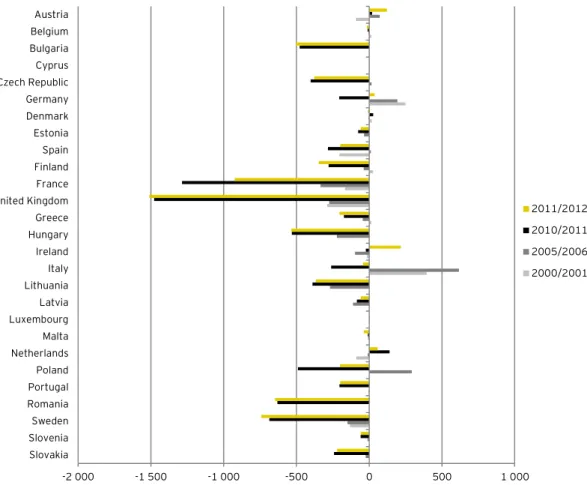
Figure 10: Excess or deficit in milk production compared to the milk quota in the Member States (in 1000 t) ... 45
Figure 11: Distribution of Member States by fat content (in percentage) and yield (in t per head) in 2011 ... 48
Figure 12: Production of cow's milk in the EU at NUTS2 level in 2011 (in 1000 t) ... 50
Figure 13: Changes in European exports of six key dairy products (2000-2011) (in 1000 t). ... 51
Figure 14: Exported value in millions of euros ... 53
Figure 15: Average export prices (in euros / t) ... 54
Figure 16: Changes in six key dairy products imported by the EU between 2000 and 2011 (in 1000 t) ... 55
Figure 17: Average import prices (in euros/t) ... 56
Figure 18: European dairy product imports in 2011 (in 1000 t and million euros) ... 58
Figure 19: European dairy product imports per capita in 2011 (in kg and euros per capita) ... 59
Figure 20: European dairy product exports in 2011 (in millions of euros) ... 60
Figure 21: European dairy product balance in 2011 ... 61
Figure 22: Weighted average of the price of raw cow’s milk (in Euro / 100 kg) ... 63
Figure 23: Share of SMP production over the total dairy production in milk equivalent in 2011 ... 65
Figure 24: Share of cheese production over the total dairy production in milk equivalent in 2011... 66
Figure 25: Share of processors and retailers for ECM milk in 2011 ... 68
Figure 26: Cooperatives’ share of the milk intake shown in Table 37 ... 82
Figure 27: FNVA/AWU by specialisation rate in 2009. The index 100 has been attributed to the threshold of 50 percent specialisation rate ... 84
Figure 28: Average gross margin over operating costs in the EU-27 (in nominal EUR/t of milk) ... 85
Figure 29: Distribution of milk collection centres by their size in 2006 ... 92
x
List of tables
Table 1: Policy objectives, measures and expected impacts ... 8
Table 2: Papers proposing scenarios after the removal of dairy quotas in 2015 ... 10
Table 3: General legal framework ... 11
Table 4: Overview of principal models ... 14
Table 5: Possible scenarios for prices and supplied quantities of dairy products following the removal of quotas in 2015 (in most of the cases, these are quotes directly sourced from the articles) ... 15
Table 6: Possible scenarios for prices and supplied quantities of milk following the removal of quotas in 2015 .... 19
Table 7: Impact of quota removal on herds and yields in the EU-27 ... 20
Table 8: Change in price and production following the removal of quotas in the EU-27 ... 21
Table 9: Quota rents by country in the EU-27 ... 22
Table 10: Comparison of scenarios for different dairy products in the EU-27 ... 23
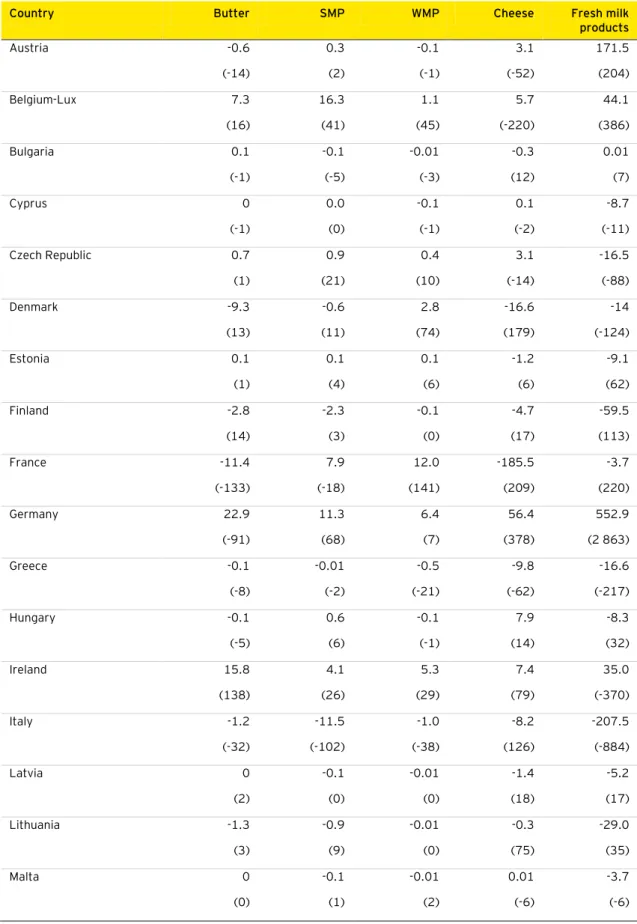
Table 11: Net variation of net trade in 1 000 t by country after the removal of quotas in the EU-27, with baselines are reported in brackets. ... 26
Table 12: Environmental impact as measured by Kempen et al. (2011) ... 34
Table 13: Production of dairy products from 2000 to 2011 ... 41
Table 14: Number of dairy cows per farm ... 43
Table 15: Proportion of cow’s milk collected as compared to cow’s milk produced from 2006 to 2010 (in percentage) ... 45
Table 16: Changes in milk yield in the EU since 2000 (in t per animal per year) ... 47
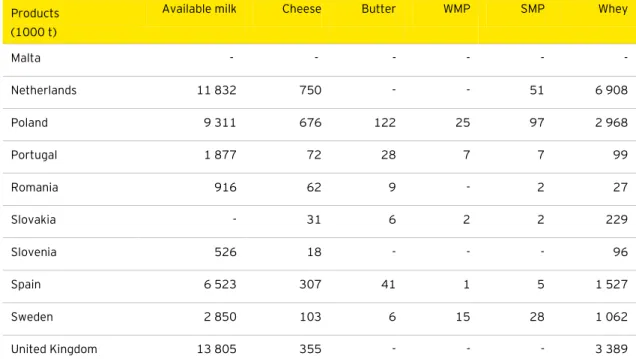
Table 17: Production of dairy products per Member State in 2011 ... 49
Table 18: European dairy product exports in milk equivalent (in percentage of the total dairy products exported and in million t) ... 52
Table 19: European dairy product exports (in percentage of total dairy product exports and in millions of euros) 52 Table 20: European dairy product imports in milk equivalent (in percentage of the total dairy products imported and in million t) ... 55
Table 21: European dairy product imports (in million euros) ... 56
Table 22: European dairy product trade balance in milk equivalent (in 10 000 t) ... 57
Table 23: European dairy product balance (in millions of euros) ... 57
Table 24: Balance in volume and value by country and product in 2011 ... 61
Table 25: Prices of raw cow's milk in euros / 100 kg... 64
Table 26: Farmer's share of the consumer price for milk (in percentage of milk consumer price) ... 67
Table 27: Share of processors and retailers (EUR / 100 kg) for ECM milk ... 68
Table 28: Per capita consumption of liquid milk in kg ... 70
Table 29: Per capita consumption of factory cheese (only from cow’s milk) in kg/capita ... 71
Table 30: Self-sufficiency ratio for cheese in EU-27, from 2000 to 2011 (in percentage) ... 72
Table 31: Percentage of cheese production exported, from 2000 to 2011 (in percentage) ... 73
Table 32: Per capita consumption of butter in kg/capita ... 74
Table 33: Self-sufficiency ratio for butter in the EU-27, from 2000 to 2009 (in percentage) ... 76
Table 34: Share of export in production for butter, from 2000 to 2011 (in percentage) ... 77
Table 35: Share of national milk delivery by processors ... 78
Table 36: Milk delivered as a percentage of total production ... 80
Table 37: Volume in thousand t of milk intake ... 81
Table 38: Farm Net Value Added per Annual Working Unit (FNVA/AWU) in thousand nominal EUR/AWU - Milk specialised farms ... 83
Table 39: Gross margin (over operating costs) for milk specialised farms (in nominal EUR/t of milk) ... 86
Table 40: Gross margin (over operating costs) including EU coupled payments and national aids, for milk specialised farms (in nominal EUR/t of milk)... 87
Table 41: Decoupled payments for milk specialised farms by Member States (in EUR/AWU) ... 88
Table 42: Milk collection – Number of collection centres ... 90
Table 43: Focus on 2009 milk’ collection – value and rank among sub-group of countries in the table ... 91
Table 44: Milk collection – Number of enterprises ... 92
Table 45: Cheese production - Number of enterprises ... 94
Table 46: Production of butter - Number of enterprises ... 95
Table 47: Production of powdered dairy products - Number of enterprises ... 96
Table 48: Minimum criteria for POs ... 99
Table 49: Minimum criteria for APOs ... 101
Table 50: Contractual relations (Art. 185f) ... 102
Table 51: Definition of the key terms concerning market balance and competitiveness ... 105
Table 52: Dairy companies’ clusters ... 109
Table 53: Definition of key terms concerning the sustainability of the milk sector ... 113
Table 54: Pattern of the autonomic development ... 116
Table 55: Clusters in terms of future developments in milk production ... 116
xi
Table 57: Summary table of regions that could experience more difficulties. ... 119 Table 58: Summary table of challenges and recommendations ... 124 Table 59: Summary table of challenges and recommendations ... 127
xii
Glossary (A-Z)
C
CAP 2020The Common Agricultural Policy is due to be reformed by 2013. After a wide-ranging public debate the Commission presented on 18 November 2010 a Communication on "The CAP towards 2020", which outlines options for the future CAP and launched the debate with the other institutions and with stakeholders. On 12 October 2011 the Commission presented a set of legal proposals designed to make the CAP a more effective policy for a more
competitive and sustainable agriculture and vibrant rural areas1. Collection
Milk collection is only a part of milk production. The other part of the milk produced generally includes domestic consumption, direct sale and cattle feed.
Collection centre
Eurostat distinguish milk collection centres from milk enterprises. The former relates only to the enterprises which purchase milk from agricultural holdings and sell it in their own names to dairies.
Comext
Official statistical database on trade managed by Eurostat.
Cooperative
A voluntary form of association of farmers. In the milk sector, cooperatives can be devoted to milk collection only or combine milk collection and processing. In the first case, the collected milk is sold to dairies for processing.
Cross-compliance
Farmers who do not comply with certain requirements in the areas of public, animal and plant health, environment and animal welfare, are subject to reductions of or exclusion from direct support. This system is an integral part of EU support under direct payments.
D
Direct paymentsDirect payments are payments granted directly to farmers under certain support schemes.
E
EurostatStatistical office of the European Union.
F
Farm net value addedIt represents the amount available to remunerate all fixed production factors (land, labour and capital). It is studied per annual work unit as an income indicator.
G
Gross marginMilk and milk products revenues minus specific costs (feed, veterinary, etc.) and other operating costs (upkeep of machinery, energy, contract work, taxes on land and buildings,
xiii etc.). The gross margin over operating costs represents an indicator to assess farmers’ income from a production.
H
Health CheckHealth Check is a set of measures which aims at simplifying the Common Agricultural Policy (CAP) and helping them to respond better to signals from the market and face new
challenges. The principal measures are phasing out of milk quotas, decoupling of support, assistance to sectors with special problems ('Article 68' measures), extending Simplified Area Payments Schemes (SAPS), additional funding for EU-12 farmers, using currently unspent money, shifting money from direct aid to rural development, investment aid for young farmers, abolition of set-aside, cross compliance and intervention mechanisms.
M
Milk PackageThe so-called ‘Milk Package’ was designed to take into account the development of the milk and milk products sector following the end of the quota system in 2015. It has been fully applicable since 3 October 2012.
Q
Quota rentThe quota rent identifies the amount of surplus generated by a restriction on supply and can be calculated as the present value of annual benefits for milk producers derived from maintaining the quota.
S
Self-sufficiency ratioGross human apparent consumption compared to production.
Single CMO
Regulation fixing the Common Market Organisation for agricultural products.
Specialisation rate
The share of milk output and subsidies in total output and coupled subsidies (forage farm use deducted).
xiv
Abbreviations used
AEC Average Economic Costs
AGMEMOD Agricultural Member States Modelling APO Association of Producer Organisations
AWU Annual Work Unit
CAP Common Agricultural Policy
CAPRI Common Agricultural Policy Regionalised Impact CAPSIM Common Agricultural Policy Simulation
COPA-COGECA
Comite des Organisations Professionnelles Agricoles de l’Union Européenne – Confédération Générale des Coopératives Agricoles de l’Union Européenne
CMO Common Market Organisation
EAAE European Association of Agricultural Economist EAFRD European Agricultural Fund for Rural Development
EC European Commission
ECM Energy Corrected Milk
EU European Union
EU-2 Member States which integrated to the EU in May 2007 EU-10 Member States which integrated to the EU in May 2004 EU-12 Member States which integrated to the EU after April 2004 EU-15 Member States of the EU from 1995 to 2004
FADN Farm Accountancy Data Network
FAO Food and Agricultural Organisation
FAPRI Food and Agricultural Policy Research Institute
FNVA Farm Net Value Added
IBO Inter Branch Organisation
IFCN International Farm Comparison Network
LFA Less Favoured Areas
LVL Latvian lats
MC Marginal Cost
MS Member State
OECD Organisation for Economic Co-operation and Development
PDO Protected Designation of Origin
PGI Protected Geographical Indication
PO Producer Organisation
SMP Skimmed Milk Powder
WMP Whole Milk Powder
Part 1:
2
1.
Introduction
1.1
Background and objectives
1.
The common market organisation in milk and milk products has undergone successive reforms during the last decade. Building on the orientations of Agenda 2000, the 2003 reform started loosening up the milk quota system in view of its end in 2015. This deadline was confirmed in 2008 by the CAP Health Check, which set out progressive increases of the quota levels, abolished aids for the seasonal storage of certain cheeses and the use of butter in pastry and ice-cream. Direct payments have been decoupled from production while maintaining the possibility for the Member States to recouple them to address specific disadvantages affecting farmers in economically vulnerable or environmentally sensitive areas. Support measures for fragile areas and for the development of higher added value and quality products have also been strengthened under the rural development policy.2.
The proposals on the CAP 2020 reform move deeper into these aspects. The MemberStates will benefit from an extended flexibility to support certain fragile areas. On the other hand, a particular focus has been put on maintaining permanent pasture under greening obligations, with a potential impact on milk production. As for market management
mechanisms, the reform proposals keep those broadly unchanged for the milk sector, while strengthening the horizontal emergency measures which will enable a quicker response to general market disturbances. In addition, a set of measures is proposed on risk
management, innovation, knowledge transfer and research cooperation, which should contribute to enhancing the long-term competitiveness of the sector.
3.
The reform confirms the end of the milk quota system in 2015. For a sector that has been used to production limitations for more than 25 years, the end of the quota system creates challenges for economic operators. In view of preparing them to the new context, the Commission has proposed measures aimed to strengthen the organisation of milk producers and their bargaining power and improve the cooperation and relations between the different stages of the supply chain. The main elements of the so-called Milk Package are (i) producer organisations allowed to collectively negotiate contract terms with processors, (ii) basic mandatory conditions for contracts in the Member States which decide to imposecompulsory contracts, (iii) stronger inter-branch organisations, (iv) reporting obligation of monthly milk deliveries and (v) possible supply regulation for cheeses benefiting from protected designations of origin (PDO) and protected geographical indications (PGI).
4.
The objective of this report is to assemble different viewpoints by a number of independentexperts concerning the EU milk sector in the future context without quotas and, based on this input, deliver a prospective analysis of the most likely evolution of the sector. The viewpoints by the independent experts have been provided to identify major future trends and driving factors and the perspectives and challenges resulting from the end of the milk quota system in 2015. In particular, the following two themes have been addressed:
► Theme 1: Market balance and competitiveness. This theme deals with various components of the sector’s competitiveness, such as the added value of products, the differentiation of the product portfolio, the ability to promptly react to
changes in domestic and world demand and to target specific outlets, the market share in the world market, the price of raw materials and final products,
investments in the production and processing industry.
► Theme 2: Sustainable milk production including its territorial dimension. This theme deals with the milk sector’s contribution to the total agricultural product value as well as its role in maintaining vibrant rural communities, especially in the most fragile areas. It identifies regions at risk, describing elements that may
3 underpin the sustainable development of the sector including its economic and territorial dimensions and suggests appropriate actions.
1.2
Methodology
1.2.1
General approach
5.
Figure 1 summarizes the approach followed to identify the most likely development of the milk sector following the removal of the milk quotas.Figure 1: General approach
6.
First, a desk review was performed to identify the existing scenarios regarding the evolution of the milk sector. The findings of this desk review are provided in the theoretical analysis. In addition, the descriptive chapter provides descriptive statistics on key issues.7.
After taking stock of this material, experts have replied to the analysis questions, expressing their independent views on the future of the milk sector. The replies to the questions are the core part of the analysis. The experts’ opinions provide primary evidence on the likely evolution of the milk sector as well as recommendations to address identified challenges. A panel of six experts has been formed and constituted in order to have multiple independent opinions on the future of the milk sector in Europe after the abolition of milk quotas. The replies to the expert opinion reports are provided in a companion document contained in the Annexe to this report.8.
The most likely scenarios regarding the future evolution of the milk sector are established and synthesised in part 4 of the present report taking into account the expert replies to the questions, the descriptive chapter and the theoretical analysis.9.
Finally, the experts have identified the main challenges to be faced by the sector and have formulated recommendations.10.
In drafting this report, we have relied on information collected and the opinions formulated by independent experts. We have not attempted to verify information apart fromcrosschecking when relevant. We are compiling and analysing only in accordance with the professional standards to which we are subject.
Recommendations Removal of milk quotas Theoretical analysis Likely scenarios identified through a desk review Descriptive chapter Current states of play of specific topics Most likely scenarios
Market balance between supply and demand
Competitiveness of dairy sector
Contribution of the milk sector in maintaining vibrant rural communities
Evolution over time of the balance between territorial and economic dimension
Regions and production systems which could endeavour difficulties Reply to the questions by the experts Theme 1 Theme 2
4
1.2.2
Theoretical analysis
11.
The desk review of the academic literature, market report and other relevant documents in the theoretical analysis provides an overview of the most likely scenarios stemming from the evolution of the milk sector following the removal of quotas in 2015. This includes the role played by market forces as well as the potential impact of additional measures set out to accompany the removal of quotas.12.
Scenarios on the evolution of the milk sector have been characterised based on the findings of previous studies2 in terms of foreseen impacts on various aspects concerning production,processing and distribution of dairy products. Most of the studies surveyed provide results based on the use of economic models on the variation of quantities and prices of dairy products; some studies also assess the environmental impact or other aspects of interest for the characterisation of scenarios. No additional modelling was carried out to support the material presented in the theoretical analysis.
13.
For a precise description of scenarios following the removal of milk quotas, we have also presented the effects of policy instruments identified by the literature, which could counteract some of the expected negative impacts. The legal framework to which we have referred is mainly regulation implemented for agricultural markets and specifically, for the milk and milk products market since 2007. It includes the Single CMO regulation with its amendments, the Health Check regulation and the Milk Package.1.2.3
Descriptive chapter
14.
In order to depict the current status of the milk sector, statistics have been gathered from different sources which are complementary. These sources have permitted to cover the seven themes quoted hereafter:► National and regional (if available) production of milk ► National milk balance
► Share of milk production consumed locally versus exported ► Structure of milk producers and processors
► Geographical coverage of processors ► Share of cooperatives versus private dairies
► Use of the Milk Package tools in the Member States and regions
15.
This chapter is not meant to give an analysis of the current situation of the dairy market. Only factual observations have been made and no particular position have been taken or defended.16.
The sources used to gather the data are the following:► Eurostat New Cronos contains macroeconomic and social statistics data covering the European Union Member States and also the main economic partners of the EU.
► The Farm Accountancy Data Network (FADN) covers all EU Member States with harmonised accounting principles. The network is based on a system of sample
5 surveys that are performed annually to collect structural and accountancy data on farms by Liaison Agencies in each Member State.
► Eurostat Comext is the official statistical database on trade of goods managed by Eurostat. It reflects the performance of the European Union economy by focusing on the size and the evolution of imports and exports. It includes data on
agricultural products trade.
► The International Farm Comparison Network (IFCN) is a global network of dairy researchers which study the milk supply chain as a whole.
► Additional sources such as COPA-COGECA have been used at very specific parts of the descriptive chapter (when needed); references have been always displayed.
1.2.4
Reply to the analysis questions
17.
The experts were provided with a template and a draft outline to reply specific questions. The aim of the outlines has been to structure the experts’ replies in a harmonised way. It has provided information on the general structure of the report without seeking to influence experts’ response content. The replies to the questions are the property of the experts. The proposed general structure was as follows:► Interpretation and comprehension of the key terms of the evaluation questions ► Indication of the analysis criteria allowing to answer the questions; validity of the
quantitative and qualitative information used
► Description of the methods used and an indication of their limitations ► Detailed description of the reasoning followed in the analysis, indicating in
particular the underlying hypotheses and validity limits
► Conclusions for each question.
18.
For each of the theme to be analysed, three experts were mandated to address the set of questions detailed hereafter. Each expert drafted an expert opinion report with their replies. These reports are contained in the companion document in the annex to this report.19.
The data provided in the Theoretical analysis and in the Descriptive chapter wereinformative to represent common grounds for all experts. The experts were free to use their own data.
1.2.4.1 Theme 1: Market balance and competitiveness
20.
The analytical questions linked to the first theme are as follows:► How will the balance between supply and demand be affected by market forces, organisational systems of the supply chain (in particular POs and IBOs) and policy measures, including market support mechanisms, in a non-quota regulatory framework?
► How will those elements affect the sector’s competitiveness in terms of added value and portfolio of products, ability to react to changes in demand, competitive position of the EU in the world market, and need of investments in the production and processing industry?
6
► How could a possible buy-out scheme be operated in a workable and effective way?
1.2.4.2 Theme 2: Sustainable milk production including its territorial dimension
21.
The analytical questions linked to the second theme are as follows:► What will be the contribution of the milk sector to maintaining vibrant rural communities, especially in the most fragile areas?
► How will the balance between the territorial and economic dimension of milk production evolve over time?
► What are the regions and production systems which could endeavour difficulties? ► What actions could be envisaged with the view to secure a sustainable balance
between the economic and territorial dimension of the milk sector?
1.2.5
Analysis of the themes, conclusions and recommendations
22.
Experts’ reports have been analysed and summarised to identify the most likely scenarios for the aspects of interests for the two main themes. Before moving to the description of scenarios, the understanding of the terms deemed key by the experts are summarised. Then the reports are summarised highlighting common findings and heterogeneous views expressed.23.
The last part of the report provides an overview of the main challenges and therecommendations to overcome them. Recommendations are exclusively based on experts’ opinions.
Part 2:
8
2.
Theoretical analysis
24.
In this section, we provide an overview of the most likely scenarios stemming from the evolution of the milk sector following the removal of quotas in 2015. Scenarios on the evolution of the milk sector are based on the findings of previous studies in terms of foreseen impacts on various aspects concerning production, processing and distribution of dairy products.2.1
General framework
2.1.1
Policy objectives and measures following the removal of milk quotas
25.
The removal of milk quotas aims at enhancing the competitiveness of European dairy producers, making production more reactive to demand impulses. The removal of milk quotas at the same time, exacerbates the economic outlook of certain areas/categories of dairy production with comparative disadvantages. Additional measures are set out to accompany the removal of quotas in order to ensure a sustainable contribution of the milk sector in maintaining vibrant rural communities. These additional measures are aimed at preserving producers’ income, protecting market stability from extreme fluctuations in prices of dairy products in the international markets, rebalancing bargaining power of producers’ vis-à-vis processors and ensuring a sustainable contribution of the milk sector in fostering rural communities, especially in the most fragile areas.26.
In Table 1, we present the main policy objectives for the development of the dairy sector foreseen to accompany the removal of the milk quotas. Along with this, we present the respective measures and expected impacts, all categorised according to the two main themes of the study – theme 1: market balance and competitiveness, and theme 2: sustainable milk production.Table 1: Policy objectives, measures and expected impacts
Policy objectives Measures Expected impacts Market balance and competitiveness
Enhancing
competitiveness through market balance with greater market orientation
Removal of quotas after the 2014/2015 marketing year
The impact of this policy has been broadly measured in the literature surveyed in this document. Precise estimates are provided for the expected variation in prices and produced quantities of dairy products following the removal of dairy quotas
Producer income Direct payments to farmers Special payments exist to protect young farmers or farms of a smaller size
Support income and profit margins for producers Market orientation
Activity of more fragile categories will be maintained
Market stability Public intervention to absorb excess supply in the market as a safety net for strong fall in prices
Possibility of fixing terms and conditions through
contractual relations between producers and processors
Price stabilization in times of severe market crises Producers will face less volatile prices in the medium term
Rebalancing bargaining power between milk producers and processors
Possibility of forming POs Improved price transmission and more fair distribution of value added along the chain
Increasing transparency Form IBOs to share information along the dairy supply chain
More equal distribution of transmission of changes in prices of dairy products among processors, producers and consumers
9 Policy objectives Measures Expected impacts
Sustainable milk production including its territorial dimension
Maintaining vibrant rural communities, especially in the most fragile areas
Form IBOs to share information along the dairy supply chain
Measure on PDO/PGI Specific support to farmers (Article 68)
Reduction of asymmetry in information Preservation of value added of niche products Addressing specific disadvantages, which affect farmers in economically vulnerable or
environmentally less favourable areas Alleviation of the risk of land abandonment Supporting regions and
systems which could encounter difficulties
Direct payments to farmers in areas with natural constraints
Alleviation of difficulties of operators in difficult areas
Maintaining a balance between the economic and territorial dimensions of the milk sector
Linking of direct payments to farmers conditional to environmental regulations
Reduction in negative impact on environment
2.1.2
Methodological aspects
27.
Scenarios on the evolution of the milk sector are characterised based on the findings of previous studies in terms of foreseen evolution of various aspects concerning production, processing and distribution of dairy products. Most of the studies surveyed provide results based on the use of economic models on the variation of quantities and prices of dairy products; some studies also assess the expected environmental impact or other aspects of interest for the characterisation of scenarios.28.
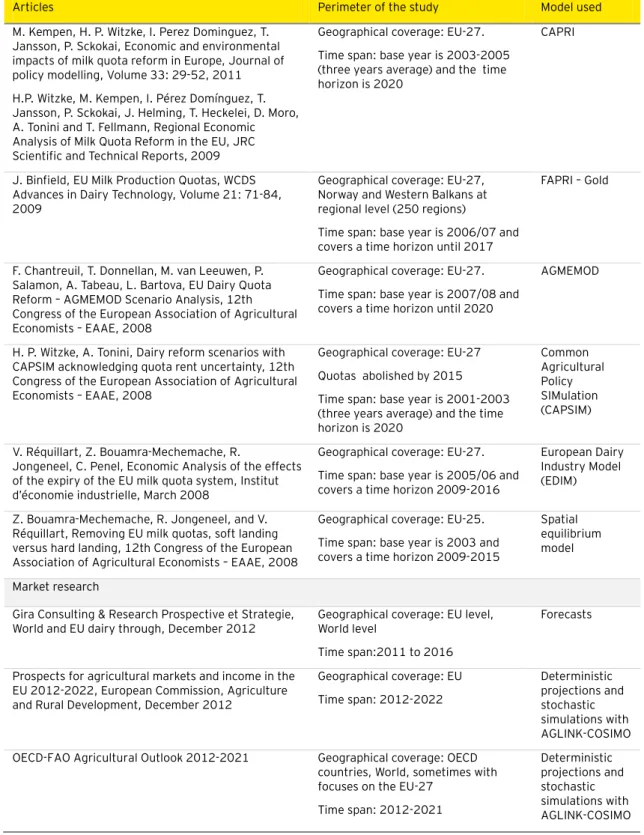
Table 2 provides an overview of the bulk of papers considered in this section specifying the perimeter of each study in terms of geographical and time coverage, and the model used to produce the results. The perimeter and the models used can lead to differences in results reported, which are usually in line as regards broad trends depicted, but might vary in magnitude.29.
Academic contributions on the impact of removing quotas in 2015 provide scenarios of reaction in the price and quantity supplied and demanded of dairy products. Results are often presented by the European Member States (MS) and sometimes also at the regional level (e.g. Witzke et al. 2009). Some studies also report variation in herds and yields and in some cases this is also accompanied by scenarios on the environmental impact (see Kempen et al. 2011). All the studies considered present scenarios following the removal of milk quotas and their produced effects after 2015: Binfield (2007) considers 2017 the last year of the time horizon; Witzke et al. (2009) have a larger horizon going until 2020, Requillart et al. (2008) view 2016 as the last year of the time horizon. Results of these works tend to be in line with each others3.30.
In addition to academic contributions, we also considered recent market studies providing projections on the dairy sector (please see the bottom part of Table 2). For instance we considered the market research conducted by Gira Consulting in December 2012 and titled "World and EU dairy markets through 2016", which is based mainly on market expertise and provides projections on production of dairy products such as butter, cheese, SMP and WMP. We also considered the 2012 edition of the “Prospects for Agricultural Markets and Income in the EU2012-2022”, which includes medium-term projections for major EU agricultural commodity markets and agricultural income until 2022 and is issued yearly by the Commission's Directorate-General for Agriculture and Rural development (since now on3 Kempen et al. (2011) is based on the JRC study Witzke et al. (2009); therefore, the results reported in these two papers often coincide. However, we deciced to include also the older version because it provides more detailed results for some aspects such as variation of net trade of dairy products by country.
10 we will refer to this document as DG AGRI (2012)). We also consider projections contained in the “OECD-FAO Agricultural Outlook 2012-2021”. Assumptions on the world market environment used to produce DG AGRI (2012) projections are based on the “OECD-FAO Agricultural Outlook 2012-2021” but also taking into account more recent global macro-economic prospects. This makes the figures of DG AGRI (2012) more up to date with respect to the ones contained in the “OECD-FAO Agricultural Outlook 2012-2021”. The OECD-FAO outlook was used to report additional projections for production, consumption import and export of selected dairy products for the EU-27 at the aggregate level
(Hereinafter, we will refer to this document as OECD-FAO (2012)).
Table 2: Papers proposing scenarios after the removal of dairy quotas in 2015
Articles Perimeter of the study Model used
M. Kempen, H. P. Witzke, I. Perez Dominguez, T. Jansson, P. Sckokai, Economic and environmental impacts of milk quota reform in Europe, Journal of policy modelling, Volume 33: 29-52, 2011 H.P. Witzke, M. Kempen, I. Pérez Domínguez, T. Jansson, P. Sckokai, J. Helming, T. Heckelei, D. Moro, A. Tonini and T. Fellmann, Regional Economic Analysis of Milk Quota Reform in the EU, JRC Scientific and Technical Reports, 2009
Geographical coverage: EU-27. Time span: base year is 2003-2005 (three years average) and the time horizon is 2020
CAPRI
J. Binfield, EU Milk Production Quotas, WCDS Advances in Dairy Technology, Volume 21: 71-84, 2009
Geographical coverage: EU-27, Norway and Western Balkans at regional level (250 regions)
Time span: base year is 2006/07 and covers a time horizon until 2017
FAPRI – Gold
F. Chantreuil, T. Donnellan, M. van Leeuwen, P. Salamon, A. Tabeau, L. Bartova, EU Dairy Quota Reform – AGMEMOD Scenario Analysis, 12th Congress of the European Association of Agricultural Economists – EAAE, 2008
Geographical coverage: EU-27. Time span: base year is 2007/08 and covers a time horizon until 2020
AGMEMOD
H. P. Witzke, A. Tonini, Dairy reform scenarios with CAPSIM acknowledging quota rent uncertainty, 12th Congress of the European Association of Agricultural Economists – EAAE, 2008
Geographical coverage: EU-27 Quotas abolished by 2015
Time span: base year is 2001-2003 (three years average) and the time horizon is 2020 Common Agricultural Policy SIMulation (CAPSIM) V. Réquillart, Z. Bouamra-Mechemache, R.
Jongeneel, C. Penel, Economic Analysis of the effects of the expiry of the EU milk quota system, Institut d’économie industrielle, March 2008
Geographical coverage: EU-27. Time span: base year is 2005/06 and covers a time horizon 2009-2016
European Dairy Industry Model (EDIM)
Z. Bouamra-Mechemache, R. Jongeneel, and V. Réquillart, Removing EU milk quotas, soft landing versus hard landing, 12th Congress of the European Association of Agricultural Economists – EAAE, 2008
Geographical coverage: EU-25. Time span: base year is 2003 and covers a time horizon 2009-2015
Spatial equilibrium model
Market research
Gira Consulting & Research Prospective et Strategie,
World and EU dairy through, December 2012 Geographical coverage: EU level, World level Time span:2011 to 2016
Forecasts
Prospects for agricultural markets and income in the EU 2012-2022, European Commission, Agriculture and Rural Development, December 2012
Geographical coverage: EU Time span: 2012-2022 Deterministic projections and stochastic simulations with AGLINK-COSIMO OECD-FAO Agricultural Outlook 2012-2021 Geographical coverage: OECD
countries, World, sometimes with focuses on the EU-27
Time span: 2012-2021 Deterministic projections and stochastic simulations with AGLINK-COSIMO
11
31.
For a precise description of scenarios following the removal of milk quotas, it is alsonecessary to present policy instruments that may be implemented to counteract some of the expected negative impacts. The legal framework to which we will refer in the remainder of this section is mainly regulation implemented for agricultural markets and specifically, for the milk and milk products market since 2007. It mainly includes the Single CMO regulation with its amendments, the Health Check regulation and the Milk Package. We also present some possible changes in legislation that are currently under consideration (Table 3).
32.
In 2009, based on the Health Check4 of the CAP, several major measures were adopted tomodernise the agricultural market. Among the major changes introduced, there is:
► progressive phasing out of the milk quotas by five consecutive annual increase of one percent of milk quotas (for Italy, it has been replaced by a unique five percent increase in 2009)
► adjustment of the fat correction factor, which resulted in a further one percent increase in quotas
► super levy changes in 2009/10 and 2010/11 (for deliveries which exceed six percent of the quota, the super levy to be paid is 150 percent of the normal super levy)
► abolishment of the compulsory set-aside (farmers do not have to leave 10 percent of their land fallow)
► assistance to sector with special problems (so-called Article 68 measures) ► extension of the Single Area Payment Scheme until 2013
► investment aid for young farmers
33.
With the milk crisis experienced in 2007/2008, a need for emergency intervention has been identified. Special intervention measures can be adopted in case of serious disturbances in the market as a safety net to support producers’ income. ‘Milk Package’ consists of a reorganisation of the dairy supply chain with contractual regulation guidance to negotiate collectively in POs and to enhance transparency in the milk market. Milk Package also contains a measure to manage the supply of cheese in PDO/PGI. Additional laws and proposals part of the CAP 2020 are underway to complete the legal framework in the next few years.Table 3: General legal framework
Regulations Objectives
EC reg 1234/2007 establishing a common organisation of agricultural markets and specific provisions for certain products (Single CMO Regulation)
To establish the Single CMO Regulation for agricultural markets
EC reg No 248/2008 amending the Regulation (EC) No 1234/2007
To increase quotas by 2 percent from 1 April 2008
Health Check
EC reg No 72/2009 amending the Regulation (EC) No 1234/2007
EC reg No 73/2009 establishing common rules for direct support schemes for farmers under the common agricultural policy and establishing certain support schemes for farmers 74/2009 amending Regulation (EC) No 1698/2005 on
To modernise the CAP and to help farmers respond better to signals from the market and face new challenges by applying measures such as the five consecutive one percent increase of quotas, the abolition of set-aside, etc.
12
Regulations Objectives
support for rural development by the European Agricultural Fund for Rural Development (EAFRD)
Milk Package: Regulation (EU) No 261/2012 amending
Regulation (EC) No 1234/2007 To establish amendments to the Single CMO Regulation concerning the milk sector Proposals for a regulation establishing a common
organisation of the markets in agricultural products (Single CMO Regulation) CMO (2011) 626
Proposal on rules for Direct payments CMO (2011) 625 Proposal on support for a rural development CMO (2011) 627 Proposal on financing, management and monitoring CMO (2011) 628
Proposal on fixing certain aids and refunds CMO (2011) 629 Proposals on the application of direct payments in respect of 2013
Legal proposals for the CAP after 2013. The principal instruments of the CMO are maintained. Private storage of butter and SMP will be optional
Specific amendment is proposed by Michel Dantin to establish a so-called “buy-out scheme” (new article 156a) in order to address eventual severe imbalances in the market for milk and milk products
34.
In the remainder of this section, we first introduce the role of market forces in shaping the future of the milk sector following the removal of quotas. We will then proceed to analyse the role of available policy measures and organizational systems in offsetting some of the collateral effects of quota removal.2.2
Role of market forces in shaping the future of the milk sector
35.
In this section, we report the main scenarios envisaged in the literature concerning the future of the milk sector and the role played by market forces, defined as the aggregate behaviour of buyers and sellers determining prices. We first present market forces and their mechanism of adjustment. We then introduce an overview of estimated variations inproduction demand and prices in the dairy sector following the removal of milk quotas. Scenarios are first reported at the aggregate level for production and price of raw milk and then presented by country and by dairy.
2.2.1
Presentation of market forces
36.
The role of market forces is presented from both an aggregated and a microeconomic perspective. We introduce the section by analysing how the removal of quotas might impact the price and quantity of dairy products. We then analyse from a microeconomicperspective, how the new level of prices will affect the individual producers/processors with specific reference to their profit margins.
37.
Market forces can be defined as the set of interactions between supply and demand which gradually lead the market towards equilibrium. We refer to supply to indicate milk produced either to be processed further by dairies or to be sold directly. The demand is determined by the final consumption of dairy products.38.
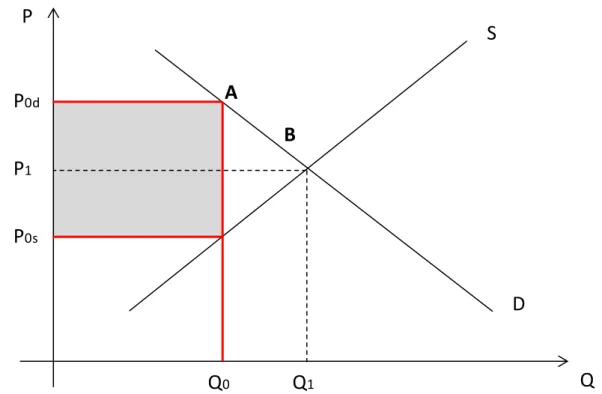
The economic theory foresees that as soon as the quotas are removed due to market forces, market equilibrium will adjust with an increase in the quantity of milk supplied, followed by a fall in prices (Figure 2). In the presence of quotas, the market cannot produce more than the quantity Q0, to which corresponds a given price P0d. If the quota is bindingwith its removal, the market would naturally adjust to the quantity and price determined by the intersection of demand and supply (P1), for which the respective quantity increases to
Q1. It should be noticed that in Figure 2, we refer to the market of raw milk, which is not
traded on international markets due to the fact that it is highly perishable and costly to transport.
39.
However, the consecutive annual increases in milk quota have led to a situation in which quotas have become less and less relevant and in most MS they have no more value (in13 quota year 2010-11, only five Member States exceeded their national ceilings). This
situation could imply that “soft landing” is on track and thus the impact should be smoother than it is presented in Figure 2. With milk quotas gradually increasing, the EU milk supply is becoming more and more responsive to price fluctuations. This has been also proved by recent events when given the favourable price conditions, milk production experienced an increase at world level both in 2010 and 2011. Increased milk supply worldwide has put downward pressure on prices that have resulted in a prompt decrease of production in the following months5.
Figure 2: A possible effect of removing quotas on the aggregate milk market
40.
In many of the academic studies considered, quotas still represent a central factor for modelling the effects of milk quota removal. The presence of binding quotas is reflected in quota rents, which would increase the probability of a positive impact on quantities of milk produced – the higher the quota rent, the higher the expected increase in milk production caused by market prices. The quota rent identifies the amount of surplus generated by a restriction on supply and can be calculated as the present value of annual benefits for milk producers derived from maintaining the quota. In Figure 2, the quota rent corresponds to the shaded area.41.
The gradual increase in quota level and the fact that quotas are no more binding and without value in many countries should be taken into account when interpreting results obtained in models that are based on quota rents as a key driving factor.42.
Each individual farm/producer faces different average economic costs (AEC), which include both average and fixed costs. There might be cases in which the new price level falls below the AEC borne by producers. In these cases, if no additional measure is in place, the farms would be naturally forced out of the market. The level of AEC is determined by various factors, such as the size and/or geographical location of the farms.5 For a complete overview of the developments on the gradual removal of quotas please consult the two editions of the soft landing reports in 2010 and 2012 – Evolution of the market situation and the consequent conditions for smoothly phasing out of milk quotas.
S
D
Q
P
P
0dA
B
P
1Q
0Q
1P
0s14
43.
Quantitative modelling is often used to assess the impact of removing quotas. Table 4provides more details on the most common models used, reporting on their characteristics, objectives and sectors/commodities covered.
Table 4: Overview of principal models6
Model General characteristics General objectives Sectors/Commodities
FAPRI GOLD, Food and Agricultural Policy Research Institute (Grains, oilseeds, livestock and dairy), FAPRI
Interconnected network of several partial-equilibrium models describing the markets for different agricultural commodities
To examine and project the area, production, usage, stocks, prices, and trade for fluid milk, butter, cheese, non-fat dry milk, and WMP for several countries and regions of the world
Major temperate crops, sugar, ethanol and biodiesel, dairy, and livestock and meat products
CAPRI, Common Agricultural Policy Regional Impact
Static, partial equilibrium model consisting of four interconnected modules
To evaluate ex ante impacts of the CAP and trade policies on production, income, markets, trade, and the environment, from global to regional scale
Fifty agricultural primary and processed products for the EU
EDIM, European Dairy Industry Model
Spatial equilibrium model of the dairy sector integrating the vertical structure of the industry Includes milk supply, processing of milk in dairy products and demand
Hedonic model distinguishing fat and protein
To simulate the impact of alternative policy scenarios for the dairy sector over a medium term period
Fourteen dairy products characterised by their fat and protein content
AGMEMOD, Agricultural Member States Modelling Econometric, dynamic, multi-product partial equilibrium model
To make projections and simulations in order to evaluate measures, programmes and policies in agriculture at the EU level as well as at the Member States level
The commodity coverage of the current version of the model extends to markets for grains, oilseeds and to the markets for their associated meals and oils, root crops, livestock and milk and dairy products (cheese, butter, whole milk powder and skim milk powder) AGLINK-COSIMO, OECD-FAO Dynamic supply-demand partial-equilibrium model of world agriculture To generate baseline projections for the OECD-FAO Agricultural Outlook
It includes annual supply, demand and prices for the principal agricultural commodities produced, consumed and traded in OECD and certain non-OECD countries
6 The information contained in this table is sourced from various papers listed here below and contained in the references at the end of this report:
“Indirect Land Use Change from increased biofuel demand – Comparison of models and results form marginal biofuels production from different feedstocks, Edwards et al. (2010)
“Modelling CAP Decoupling in the EU: A Comparison of Selected Simulation Models and Results”, Balkhausen et al. (2007)
“Documentation of the AGLINK-COSIMO Model”, OECD, Directorate for Food, Agriculture and Fisheries – Committee for Agriculture (2007)
Réquillard et al. (2008)
“Literature Review of Methodologies to Generate Baselines for Agriculture and Land Use”, Blanco-Fonseca, (draft version 05.02.2010)
15
44.
Having presented the market forces at work when discussing the removal of dairy quotas,we can now go through the various scenarios for the future of the milk sector as outlined in the studies surveyed.
2.2.2
Main assumptions characterising scenarios
45.
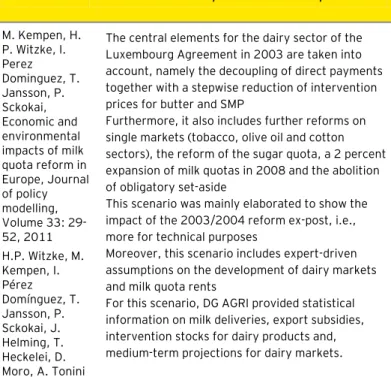
Most of the studies reviewed in this report provide their results on the removal of quotas in a comparative perspective with respect to a baseline scenario. In order to compare results, it is important to take into account the characteristics of the different benchmarks used to describe the future perspectives of dairy products. The baseline scenario is a projection of the most likely trends in the European agricultural sector under the status quo policy at the time in which the paper was written.46.
Baselines set by the different authors in terms of regulatory framework tend to have common features of the Luxembourg Agreement in 2003, namely, direct payments are usually considered to be replaced by decoupled payments and intervention prices for butter and SMP are to be gradually reduced to safety-net level. Assumptions are also made for the development in macroeconomic fundamentals of Europe and some of its main tradepartners. The baseline is used to evaluate several scenarios, but relevant for us was just the scenario characterised by the removal of quotas in 2015. This scenario entails usually all the elements of the status quo scenario with the only difference being,